
Key Insights
The Spain smart home market, currently valued at approximately €830 million (based on the provided 0.83 value unit million), is experiencing robust growth, projected to expand at a Compound Annual Growth Rate (CAGR) of 10.38% from 2025 to 2033. This growth is fueled by several key factors. Increasing disposable incomes among Spanish households are enabling greater investment in home automation technologies. Furthermore, a rising awareness of energy efficiency and sustainability, coupled with government incentives promoting smart technologies, is significantly boosting market adoption. The convenience and enhanced security features offered by smart home systems are also strong drivers, appealing to a broad range of consumers, from young professionals to older homeowners seeking assisted living solutions. Competition is fierce, with established players like Schneider Electric, ABB, and Siemens alongside tech giants such as Google and Samsung vying for market share. This competitive landscape is driving innovation and pushing prices down, making smart home technology more accessible to a wider consumer base. Challenges remain, however, including concerns about data privacy and security, the need for reliable internet connectivity, and the relatively high initial investment cost for some smart home solutions.
The forecast period of 2025-2033 presents significant opportunities for growth within specific segments. The integration of smart appliances (refrigerators, washing machines, etc.), coupled with the increasing adoption of voice assistants and AI-powered home management systems, will further propel market expansion. The market is also expected to witness increased adoption of smart security systems, smart lighting, and energy management solutions. Regional variations within Spain are likely, with urban areas showing higher adoption rates compared to rural regions. Strategic partnerships between technology providers and home builders will play a key role in accelerating market penetration over the forecast period. The development of user-friendly interfaces and streamlined installation processes will also be critical in overcoming barriers to entry and driving mainstream adoption of smart home technology in Spain.
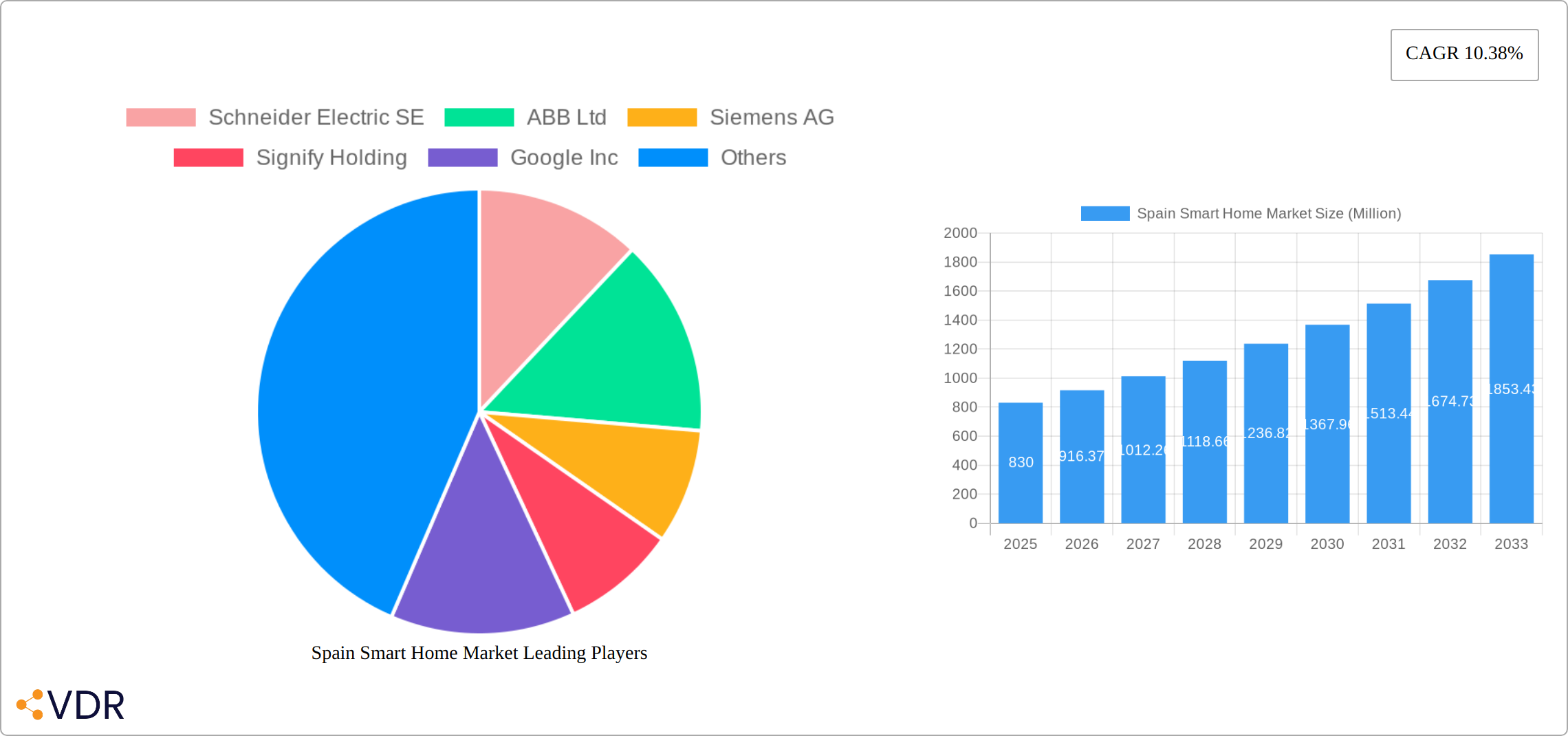
Spain Smart Home Market: A Comprehensive Report (2019-2033)
This in-depth report provides a comprehensive analysis of the Spain smart home market, encompassing market dynamics, growth trends, key players, and future outlook. With a study period spanning 2019-2033, a base year of 2025, and a forecast period of 2025-2033, this report is an essential resource for industry professionals, investors, and anyone seeking to understand this rapidly evolving market. The report analyzes the parent market of home automation and the child market of smart home devices in Spain.
Keywords: Spain smart home market, smart home devices Spain, home automation Spain, smart home technology Spain, Spain IoT market, smart home market size Spain, smart home market growth Spain, smart home industry Spain, smart home trends Spain, smart home adoption Spain
Spain Smart Home Market Market Dynamics & Structure
The Spanish smart home market is experiencing robust expansion, fueled by a confluence of technological advancements, shifting consumer preferences, and strategic industry consolidation. A growing awareness of convenience, energy efficiency, and enhanced security is driving widespread adoption of smart home devices across households. This upward trend is further supported by increasing disposable incomes, a steady pace of urbanization, and proactive government initiatives aimed at fostering digital innovation. While the regulatory environment is progressively adapting to accommodate the burgeoning Internet of Things (IoT) and smart home technologies, several critical challenges persist, shaping the market's trajectory.
- Market Concentration: The market exhibits moderate concentration, with prominent multinational corporations holding a substantial market share (estimated at XX%). These industry giants are complemented by a vibrant ecosystem of smaller, specialized players who are instrumental in driving innovation and expanding the breadth of available smart home solutions.
- Technological Innovation: Cutting-edge advancements in Artificial Intelligence (AI), the Internet of Things (IoT), and cloud computing are pivotal in enabling seamless device integration and delivering enriched user experiences. However, challenges related to interoperability between diverse devices and robust data security remain key areas for ongoing innovation and development.
- Regulatory Landscape: The Spanish government is actively engaged in cultivating a supportive regulatory framework to accelerate the adoption of smart home technologies. Nonetheless, the establishment of definitive industry standards and comprehensive privacy regulations is an evolving process.
- Competitive Product Substitutes: Traditional, standalone home automation systems are increasingly facing competition from more integrated and sophisticated smart home solutions. Price competitiveness, coupled with superior functionalities and enhanced user convenience, are critical factors in consumer purchasing decisions.
- End-User Demographics: The appeal of smart home technology is extending beyond early adopters, now attracting a broader consumer base. This expansion is primarily driven by the demonstrable benefits of convenience, enhanced home security, and the promise of energy savings.
- M&A Activity: The Spanish smart home market has witnessed a significant uptick in Mergers and Acquisitions (M&A) in recent years (XX deals in 2024, estimated). These strategic acquisitions are predominantly aimed at broadening product portfolios, fortifying market presence, and acquiring access to cutting-edge technologies.
Spain Smart Home Market Growth Trends & Insights
The Spain smart home market experienced substantial growth during the historical period (2019-2024), with a Compound Annual Growth Rate (CAGR) of xx%. This growth trajectory is projected to continue through the forecast period (2025-2033), with a forecasted CAGR of xx%. Increased affordability, user-friendly interfaces, and growing consumer awareness are driving market penetration, which currently stands at xx% and is expected to reach xx% by 2033. Technological disruptions, such as the emergence of AI-powered smart home assistants and the proliferation of smart home security solutions, are further accelerating market growth. Shifting consumer preferences towards personalized and connected homes are significantly influencing the evolution of the market.
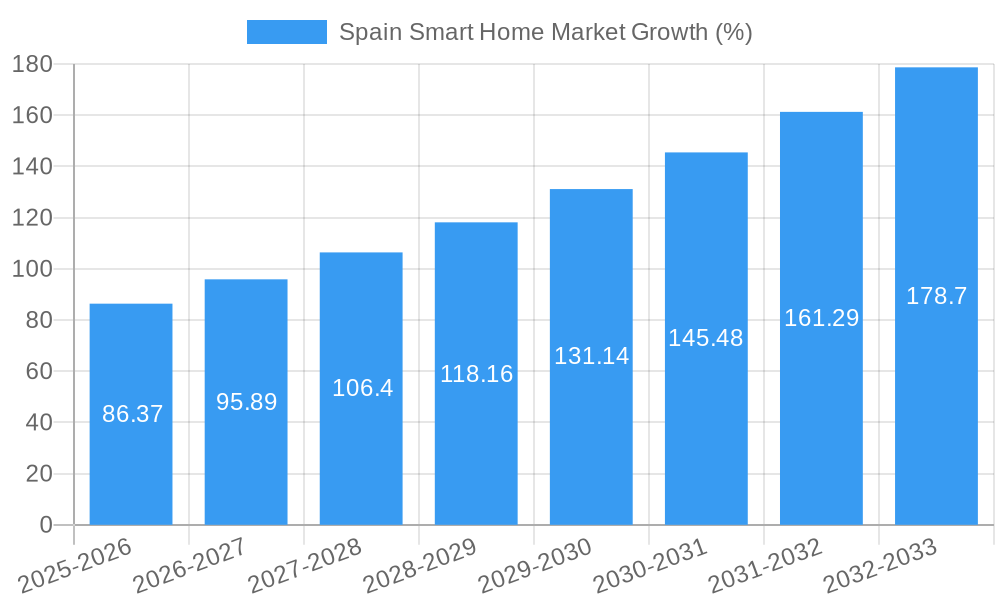
Dominant Regions, Countries, or Segments in Spain Smart Home Market
The leading segments within the Spanish smart home market are smart lighting (XX million units), smart security systems (XX million units), and smart home energy management solutions (XX million units). Major urban centers such as Madrid and Barcelona demonstrate higher adoption rates, attributed to superior internet penetration, greater consumer awareness, and a higher concentration of tech-savvy households.
- Key Drivers in Leading Regions: Robust economic growth within urban centers, coupled with advanced infrastructure and dedicated government support for technological advancements, are primary catalysts for market growth in these dominant regions.
- Market Share & Growth Potential: Madrid and Barcelona currently command the largest market share, owing to their higher purchasing power and a significant demographic of technologically inclined consumers. However, smaller cities and rural areas present considerable growth potential, driven by expanding internet accessibility and the declining cost of smart home devices.
Spain Smart Home Market Product Landscape
The Spanish smart home market is characterized by a diverse and expanding range of products, encompassing smart speakers, sophisticated lighting systems, advanced security solutions, intelligent thermostats, and an increasing array of appliances with integrated smart functionalities. These devices are distinguished by their escalating sophistication in connectivity, energy efficiency, and intuitive user interfaces. Leading manufacturers are prioritizing seamless integration, deep customization options, and advanced data analytics capabilities to offer distinctive value propositions and leverage technological innovations for an enhanced user experience. Key features appealing to consumers include voice control, comprehensive app-based management, and demonstrable improvements in energy efficiency.
Key Drivers, Barriers & Challenges in Spain Smart Home Market
Key Drivers:
- Technological advancements: AI, IoT, and improved connectivity are revolutionizing the capabilities and functionalities of smart home devices.
- Rising disposable incomes: Increased purchasing power allows consumers to invest in premium smart home solutions.
- Government support: Regulatory frameworks and incentives promote adoption of energy-efficient technologies.
Key Challenges:
- Interoperability issues: Lack of standardization and compatibility among various smart home devices hinders seamless integration.
- Data security concerns: Potential for privacy breaches and cybersecurity threats remain significant barriers for some consumers.
- High initial investment costs: The upfront cost of installing a comprehensive smart home system can be prohibitive for some users. This translates into a slower rate of penetration in certain lower-income segments.
Emerging Opportunities in Spain Smart Home Market
- Untapped markets in rural areas: Expanding smart home solutions to less developed regions presents a significant growth opportunity.
- Integration with renewable energy solutions: Growing interest in eco-friendly technologies creates demand for integrated smart home energy management.
- Development of specialized smart home solutions: Catering to niche needs, such as elderly care or accessibility features, opens up new market segments.
Growth Accelerators in the Spain Smart Home Market Industry
Technological breakthroughs, particularly in AI, are poised to significantly enhance the capabilities and appeal of smart home solutions. Strategic partnerships between technology companies and established home improvement companies will expand market reach and facilitate wider adoption. Finally, government initiatives promoting energy efficiency and the smart home sector will further accelerate market growth in the coming years.
Key Players Shaping the Spain Smart Home Market Market
- Schneider Electric SE
- ABB Ltd
- Siemens AG
- Signify Holding
- Google Inc
- GE Lighting (A Savant Company)
- EVVR
- Fibaro
- Samsung Electronics Co Ltd
- LG Electronic
Notable Milestones in Spain Smart Home Market Sector
- March 2024: Smart Monkeys Inc. partners with inWO Smart AV to expand its product distribution in Spain and Portugal.
- January 2024: Shelly Group AD unveils its Gen3 smart home devices at CES 2024, improving device interoperability.
In-Depth Spain Smart Home Market Market Outlook
The Spanish smart home market is projected for sustained and significant growth, propelled by continuous technological innovation, escalating consumer adoption rates, and supportive government policies. The deep integration of Artificial Intelligence (AI), the Internet of Things (IoT), and renewable energy solutions is set to unlock new avenues for market expansion and further accelerate its growth trajectory. Strategic collaborations and the development of innovative business models will be paramount in fully realizing the immense potential of this dynamic market. Emerging trends indicate a strong expansion of smart home applications within the healthcare and elderly care sectors, alongside ongoing improvements in device interoperability and enhanced security measures to build greater consumer trust.
Spain Smart Home Market Segmentation
-
1. Product
- 1.1. Comfort and Lighting
- 1.2. Control and Connectivity
- 1.3. Energy Management
- 1.4. Home Entertainment
- 1.5. Security
- 1.6. Smart Appliances
Spain Smart Home Market Segmentation By Geography
- 1. Spain
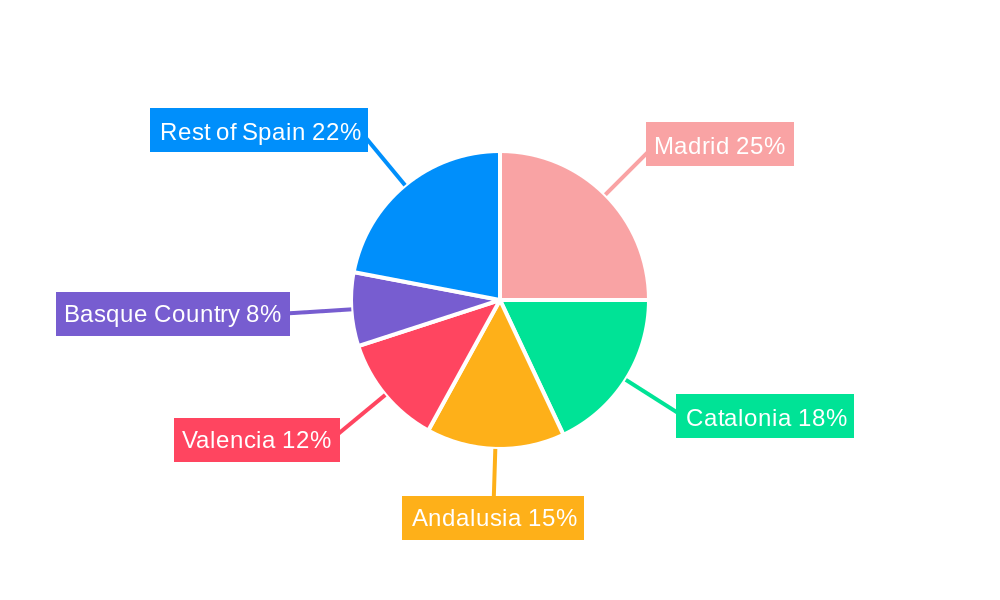
Spain Smart Home Market REPORT HIGHLIGHTS
| Aspects | Details |
|---|---|
| Study Period | 2019-2033 |
| Base Year | 2024 |
| Estimated Year | 2025 |
| Forecast Period | 2025-2033 |
| Historical Period | 2019-2024 |
| Growth Rate | CAGR of 10.38% from 2019-2033 |
| Segmentation |
|
Table of Contents
- 1. Introduction
- 1.1. Research Scope
- 1.2. Market Segmentation
- 1.3. Research Methodology
- 1.4. Definitions and Assumptions
- 2. Executive Summary
- 2.1. Introduction
- 3. Market Dynamics
- 3.1. Introduction
- 3.2. Market Drivers
- 3.2.1. Rising Use of Connected Devices and the IoT to Drive the Market; Increasing Inclination Toward Enhancing Quality of Life
- 3.3. Market Restrains
- 3.3.1. Rising Use of Connected Devices and the IoT to Drive the Market; Increasing Inclination Toward Enhancing Quality of Life
- 3.4. Market Trends
- 3.4.1. Comfort and Lighting Product Segment is Expected to Witness Significant Growth
- 4. Market Factor Analysis
- 4.1. Porters Five Forces
- 4.2. Supply/Value Chain
- 4.3. PESTEL analysis
- 4.4. Market Entropy
- 4.5. Patent/Trademark Analysis
- 5. Spain Smart Home Market Analysis, Insights and Forecast, 2019-2031
- 5.1. Market Analysis, Insights and Forecast - by Product
- 5.1.1. Comfort and Lighting
- 5.1.2. Control and Connectivity
- 5.1.3. Energy Management
- 5.1.4. Home Entertainment
- 5.1.5. Security
- 5.1.6. Smart Appliances
- 5.2. Market Analysis, Insights and Forecast - by Region
- 5.2.1. Spain
- 5.1. Market Analysis, Insights and Forecast - by Product
- 6. Competitive Analysis
- 6.1. Market Share Analysis 2024
- 6.2. Company Profiles
- 6.2.1 Schneider Electric SE
- 6.2.1.1. Overview
- 6.2.1.2. Products
- 6.2.1.3. SWOT Analysis
- 6.2.1.4. Recent Developments
- 6.2.1.5. Financials (Based on Availability)
- 6.2.2 ABB Ltd
- 6.2.2.1. Overview
- 6.2.2.2. Products
- 6.2.2.3. SWOT Analysis
- 6.2.2.4. Recent Developments
- 6.2.2.5. Financials (Based on Availability)
- 6.2.3 Siemens AG
- 6.2.3.1. Overview
- 6.2.3.2. Products
- 6.2.3.3. SWOT Analysis
- 6.2.3.4. Recent Developments
- 6.2.3.5. Financials (Based on Availability)
- 6.2.4 Signify Holding
- 6.2.4.1. Overview
- 6.2.4.2. Products
- 6.2.4.3. SWOT Analysis
- 6.2.4.4. Recent Developments
- 6.2.4.5. Financials (Based on Availability)
- 6.2.5 Google Inc
- 6.2.5.1. Overview
- 6.2.5.2. Products
- 6.2.5.3. SWOT Analysis
- 6.2.5.4. Recent Developments
- 6.2.5.5. Financials (Based on Availability)
- 6.2.6 GE Lighting (A Savant Company)
- 6.2.6.1. Overview
- 6.2.6.2. Products
- 6.2.6.3. SWOT Analysis
- 6.2.6.4. Recent Developments
- 6.2.6.5. Financials (Based on Availability)
- 6.2.7 EVVR
- 6.2.7.1. Overview
- 6.2.7.2. Products
- 6.2.7.3. SWOT Analysis
- 6.2.7.4. Recent Developments
- 6.2.7.5. Financials (Based on Availability)
- 6.2.8 Fibaro
- 6.2.8.1. Overview
- 6.2.8.2. Products
- 6.2.8.3. SWOT Analysis
- 6.2.8.4. Recent Developments
- 6.2.8.5. Financials (Based on Availability)
- 6.2.9 Samsung Electronics Co Ltd
- 6.2.9.1. Overview
- 6.2.9.2. Products
- 6.2.9.3. SWOT Analysis
- 6.2.9.4. Recent Developments
- 6.2.9.5. Financials (Based on Availability)
- 6.2.10 LG Electronic
- 6.2.10.1. Overview
- 6.2.10.2. Products
- 6.2.10.3. SWOT Analysis
- 6.2.10.4. Recent Developments
- 6.2.10.5. Financials (Based on Availability)
- 6.2.1 Schneider Electric SE
List of Figures
- Figure 1: Spain Smart Home Market Revenue Breakdown (Million, %) by Product 2024 & 2032
- Figure 2: Spain Smart Home Market Share (%) by Company 2024
List of Tables
- Table 1: Spain Smart Home Market Revenue Million Forecast, by Region 2019 & 2032
- Table 2: Spain Smart Home Market Volume Billion Forecast, by Region 2019 & 2032
- Table 3: Spain Smart Home Market Revenue Million Forecast, by Product 2019 & 2032
- Table 4: Spain Smart Home Market Volume Billion Forecast, by Product 2019 & 2032
- Table 5: Spain Smart Home Market Revenue Million Forecast, by Region 2019 & 2032
- Table 6: Spain Smart Home Market Volume Billion Forecast, by Region 2019 & 2032
- Table 7: Spain Smart Home Market Revenue Million Forecast, by Product 2019 & 2032
- Table 8: Spain Smart Home Market Volume Billion Forecast, by Product 2019 & 2032
- Table 9: Spain Smart Home Market Revenue Million Forecast, by Country 2019 & 2032
- Table 10: Spain Smart Home Market Volume Billion Forecast, by Country 2019 & 2032
Frequently Asked Questions
1. What is the projected Compound Annual Growth Rate (CAGR) of the Spain Smart Home Market?
The projected CAGR is approximately 10.38%.
2. Which companies are prominent players in the Spain Smart Home Market?
Key companies in the market include Schneider Electric SE, ABB Ltd, Siemens AG, Signify Holding, Google Inc, GE Lighting (A Savant Company), EVVR, Fibaro, Samsung Electronics Co Ltd, LG Electronic.
3. What are the main segments of the Spain Smart Home Market?
The market segments include Product.
4. Can you provide details about the market size?
The market size is estimated to be USD 0.83 Million as of 2022.
5. What are some drivers contributing to market growth?
Rising Use of Connected Devices and the IoT to Drive the Market; Increasing Inclination Toward Enhancing Quality of Life.
6. What are the notable trends driving market growth?
Comfort and Lighting Product Segment is Expected to Witness Significant Growth.
7. Are there any restraints impacting market growth?
Rising Use of Connected Devices and the IoT to Drive the Market; Increasing Inclination Toward Enhancing Quality of Life.
8. Can you provide examples of recent developments in the market?
March 2024: Smart Monkeys Inc. significantly bolstered its European footprint by forging a strategic product distribution alliance with inWO Smart AV. This partnership signifies a significant milestone for Smart Monkeys Inc. and opens up new avenues in the dynamic markets of Spain and Portugal. By tapping into inWO Smart AV's broad network and specialized knowledge, Smart Monkeys Inc. aims to bring cutting-edge management solutions to a broader regional customer base.
9. What pricing options are available for accessing the report?
Pricing options include single-user, multi-user, and enterprise licenses priced at USD 3800, USD 4500, and USD 5800 respectively.
10. Is the market size provided in terms of value or volume?
The market size is provided in terms of value, measured in Million and volume, measured in Billion.
11. Are there any specific market keywords associated with the report?
Yes, the market keyword associated with the report is "Spain Smart Home Market," which aids in identifying and referencing the specific market segment covered.
12. How do I determine which pricing option suits my needs best?
The pricing options vary based on user requirements and access needs. Individual users may opt for single-user licenses, while businesses requiring broader access may choose multi-user or enterprise licenses for cost-effective access to the report.
13. Are there any additional resources or data provided in the Spain Smart Home Market report?
While the report offers comprehensive insights, it's advisable to review the specific contents or supplementary materials provided to ascertain if additional resources or data are available.
14. How can I stay updated on further developments or reports in the Spain Smart Home Market?
To stay informed about further developments, trends, and reports in the Spain Smart Home Market, consider subscribing to industry newsletters, following relevant companies and organizations, or regularly checking reputable industry news sources and publications.
Methodology
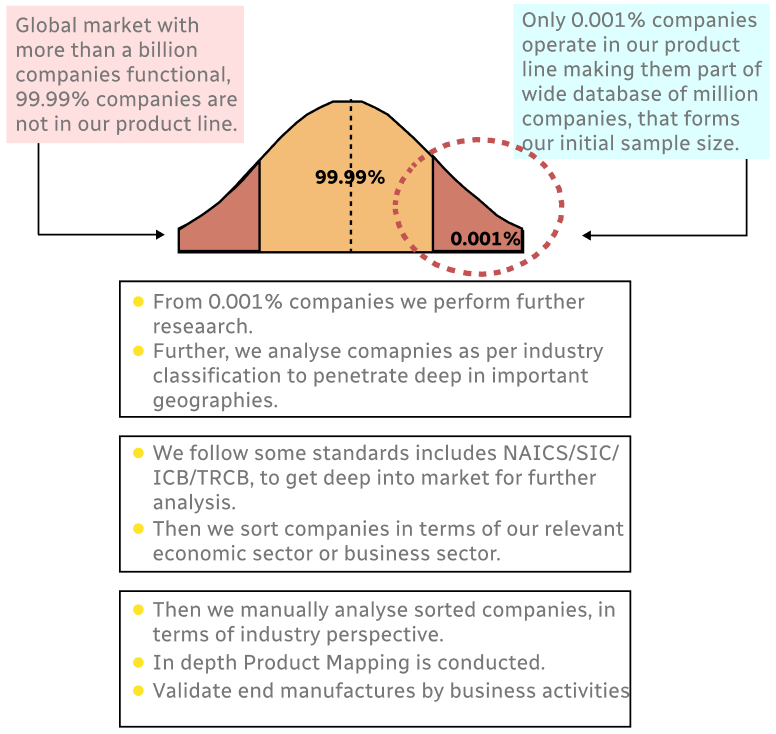
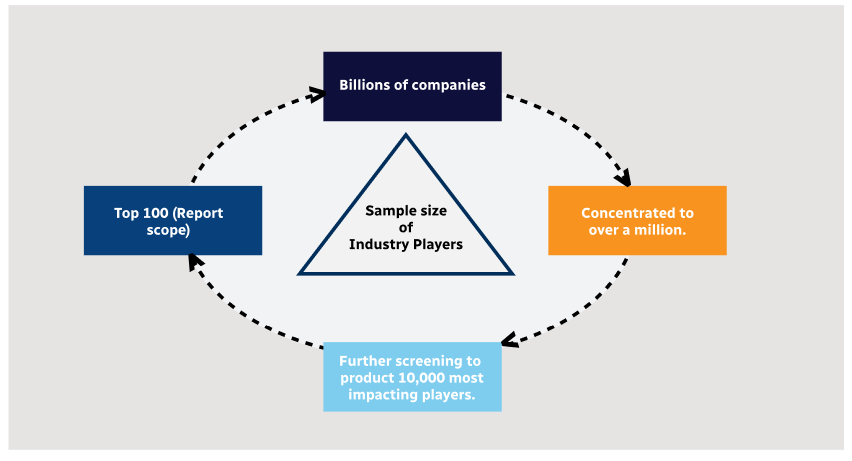
Step 1 - Identification of Relevant Samples Size from Population Database
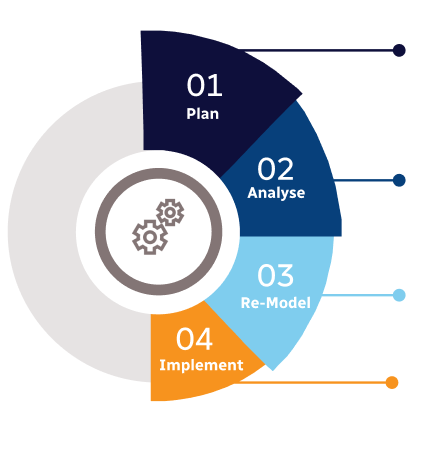
Step 2 - Approaches for Defining Global Market Size (Value, Volume* & Price*)
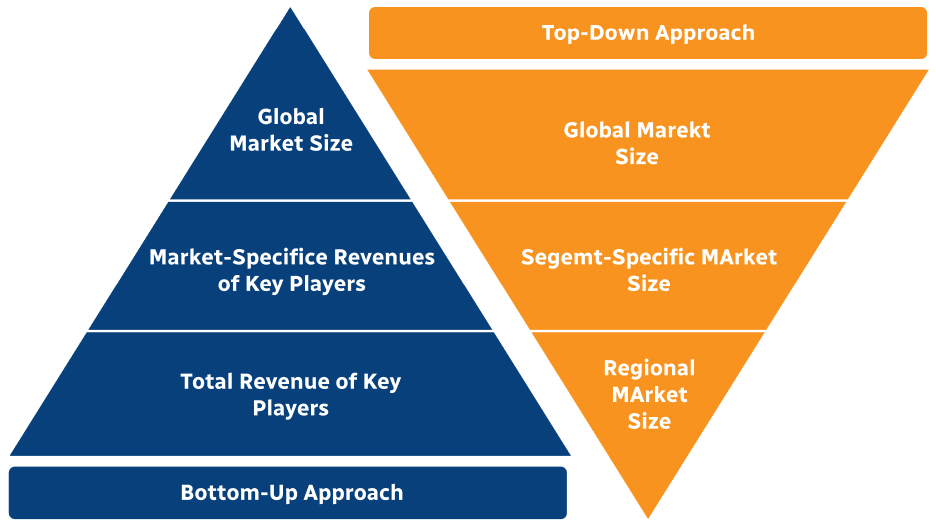
Note*: In applicable scenarios
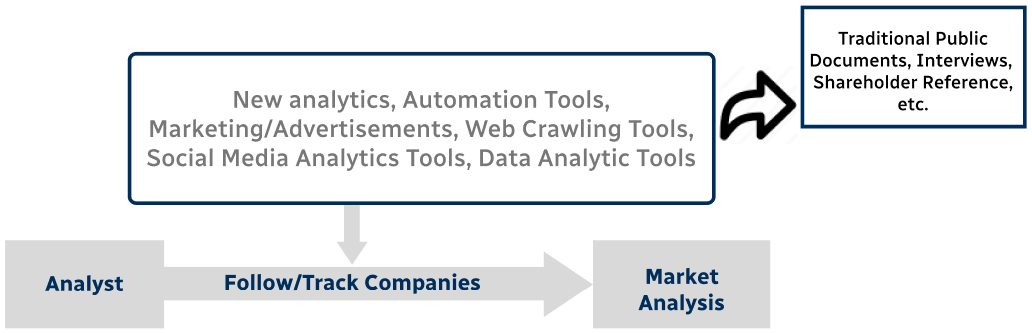
Step 3 - Data Sources
Primary Research
- Web Analytics
- Survey Reports
- Research Institute
- Latest Research Reports
- Opinion Leaders
Secondary Research
- Annual Reports
- White Paper
- Latest Press Release
- Industry Association
- Paid Database
- Investor Presentations
Step 4 - Data Triangulation
Involves using different sources of information in order to increase the validity of a study
These sources are likely to be stakeholders in a program - participants, other researchers, program staff, other community members, and so on.
Then we put all data in single framework & apply various statistical tools to find out the dynamic on the market.
During the analysis stage, feedback from the stakeholder groups would be compared to determine areas of agreement as well as areas of divergence