
Key Insights
The Indonesian road freight logistics market, valued at approximately $XX million in 2025, is projected to experience robust growth, exhibiting a Compound Annual Growth Rate (CAGR) of 7.86% from 2025 to 2033. This expansion is driven by several key factors. Firstly, Indonesia's burgeoning e-commerce sector fuels the demand for efficient last-mile delivery solutions, significantly impacting the LTL segment. Secondly, the increasing investments in infrastructure development, particularly road networks, are improving connectivity and facilitating smoother freight movement across the archipelago. Thirdly, the growth of various end-user industries, such as manufacturing, construction, and agriculture, directly correlates with a heightened reliance on road freight services for transporting raw materials and finished goods. The market segmentation reveals a diverse landscape, with Full-Truck-Load (FTL) and temperature-controlled segments experiencing comparatively faster growth due to increased demand for specialized logistics solutions. The dominance of domestic freight is expected to continue, though international trade will contribute to market expansion, particularly within the containerized segment.
However, the market faces certain constraints. Fluctuations in fuel prices pose a significant challenge, impacting operational costs and potentially reducing profit margins. Furthermore, the existing infrastructure, despite improvements, still faces challenges in certain regions, leading to occasional transportation delays. Addressing these challenges through strategic investments and technological advancements, such as improved route optimization software and real-time tracking systems, will be crucial for sustained market growth. The competitive landscape is dynamic, with both domestic and international players vying for market share. Companies like Prima Cargo and PT Samudera Indonesia Tangguh will need to adapt to emerging trends and leverage technological advancements to maintain their competitive edge. The successful players will be those who can offer efficient, reliable, and cost-effective services to meet the growing demands of the Indonesian market.

Indonesia Road Freight Logistics Market: A Comprehensive Report (2019-2033)
This comprehensive report provides an in-depth analysis of the Indonesia Road Freight Logistics Market, covering market dynamics, growth trends, key players, and future outlook. The study period spans from 2019 to 2033, with 2025 as the base and estimated year. The report segments the market by goods configuration (fluid and solid goods), temperature control (temperature controlled and non-temperature controlled), end-user industry (agriculture, fishing & forestry, construction, manufacturing, oil & gas, mining & quarrying, wholesale & retail trade, others), destination (domestic and international), truckload specification (FTL and LTL), containerization (containerized and non-containerized), and distance (long haul and short haul). Key players analyzed include Prima Cargo, PT Samudera Indonesia Tangguh, NYK (Nippon Yusen Kaisha) Line, CJ Logistics Corporation, DHL Group, PT Repex Wahana (RPX), PT Cipta Krida Bahari (CKB Logistics), Pancaran Group, PT Siba Sury, and PT Citrabati Logistics International. The report offers valuable insights for industry professionals, investors, and stakeholders seeking to understand and capitalize on the opportunities within this dynamic market. Market size is presented in Million units.
Indonesia Road Freight Logistics Market Dynamics & Structure
The Indonesian road freight logistics market is characterized by a moderately fragmented structure, with several large players and numerous smaller operators. Market concentration is expected to shift slightly towards consolidation in the coming years driven by M&A activity and the expansion of larger logistics providers. Technological innovation, particularly in areas such as telematics, GPS tracking, and route optimization software, is enhancing efficiency and transparency. However, barriers to innovation include high initial investment costs and the need for robust digital infrastructure. The regulatory framework plays a significant role, impacting operational costs and compliance requirements. Competitive pressures exist from alternative modes of transport (rail and sea freight) which present substitutes in certain scenarios. End-user demographics, particularly the growth of e-commerce and manufacturing sectors, are key drivers of demand. M&A activity has been moderate, with larger players acquiring smaller companies to expand their geographic reach and service offerings.
- Market Concentration: Moderately fragmented, with a trend towards consolidation (xx% market share held by top 5 players in 2024).
- Technological Innovation: Driven by telematics, GPS tracking, and route optimization. Barriers include high investment costs and digital infrastructure limitations.
- Regulatory Framework: Impacts operational costs and compliance; changes in regulations can influence market dynamics.
- Competitive Substitutes: Rail and sea freight offer alternatives for certain types of goods and distances.
- M&A Trends: Moderate activity, with larger players acquiring smaller companies for expansion and diversification. (xx number of deals in 2024).
- End-User Demographics: Growth in e-commerce and manufacturing fuels demand.
Indonesia Road Freight Logistics Market Growth Trends & Insights
The Indonesian road freight logistics market has demonstrated robust and consistent growth from 2019 to 2024. This upward trajectory has been propelled by a confluence of powerful economic factors, including sustained economic expansion, a surge in domestic consumption, and the exponential rise of e-commerce activities. The market size, which was approximately **[Insert Value] Million units in 2025**, is on track for continued expansion, projected to grow at a Compound Annual Growth Rate (CAGR) of **[Insert Percentage]%** throughout the forecast period spanning 2025 to 2033. This impressive growth is anticipated to culminate in a market valuation of **[Insert Value] Million units by 2033**. The primary catalysts fueling this expansion are substantial investments in infrastructure development, the burgeoning manufacturing sector, and the ever-increasing penetration of e-commerce, all of which translate to a heightened demand for efficient, reliable, and agile logistics solutions. Furthermore, the strategic implementation of technological advancements, such as cutting-edge tracking systems, sophisticated route optimization software, and data analytics, has significantly bolstered operational efficiencies and led to considerable cost reductions, thereby accelerating market growth. The adoption rate of these transformative technological solutions is expected to see a substantial uptick over the forecast period, contributing to enhanced operational efficiencies, optimized resource utilization, and an elevated level of customer service. Moreover, evolving consumer behaviors, characterized by an increasing preference for faster and more predictable delivery times, are acting as a significant driver, pushing the demand for more sophisticated and responsive logistics solutions.
Dominant Regions, Countries, or Segments in Indonesia Road Freight Logistics Market
Within the dynamic Indonesian road freight logistics market, dominance across various segments is observed depending on the specific analytical lens. When considering the goods configuration, solid goods currently command a larger market share compared to fluid goods. This is largely attributable to the substantial volume of manufactured goods, raw materials, and retail products that constitute the bulk of transportation needs. In terms of temperature control, non-temperature controlled freight remains the dominant segment, as a vast majority of goods do not necessitate specific temperature regulation during transit. However, it is crucial to note that the temperature-controlled segment is exhibiting a notably faster growth rate, driven by the escalating demand for robust cold chain logistics, particularly within the burgeoning food and beverage and pharmaceutical industries. The Manufacturing sector stands out as the leading end-user industry, closely followed by the Wholesale and Retail Trade sector, which benefits from sustained consumer spending and the ongoing boom in e-commerce. On the geographical front, domestic freight constitutes the lion's share of the market's activity. Nevertheless, international freight represents a significant and steadily growing segment, reflecting Indonesia's increasing integration into global trade networks. From a load type perspective, Full Truck Load (FTL) currently accounts for a larger portion of the market than Less than Truck Load (LTL). However, the LTL segment is experiencing substantial growth, largely propelled by the increasing shipping demands from e-commerce businesses seeking cost-effective solutions for smaller shipments. Containerized freight plays a more prominent role due to its inherent suitability for long-distance transportation and standardized handling practices. Finally, in terms of distance, short-haul transportation represents a greater share of the market, a trend driven by densely populated urban centers and vibrant regional trade. Concurrently, long-haul transportation is demonstrating stronger growth, indicating an increasing need for connectivity across wider geographical areas.
- Key Drivers:
- Sustained and robust economic growth, directly translating into increased trade volumes and higher demand for freight services.
- The rapid expansion of both the manufacturing sector and the e-commerce landscape, creating consistent demand for logistics solutions.
- Significant government investments in infrastructure development, encompassing the enhancement of road networks, ports, and intermodal connectivity, thereby improving transit times and accessibility.
- Continuous urbanization and population growth, leading to increased consumption and consequently, higher freight movement requirements.
- Dominant Segments (as of 2025):
- Solid goods (approx. **[Insert Percentage]%** market share)
- Non-temperature controlled freight (approx. **[Insert Percentage]%** market share)
- Manufacturing end-user industry (approx. **[Insert Percentage]%** market share)
- Domestic freight (approx. **[Insert Percentage]%** market share)
- Full Truck Load (FTL) (approx. **[Insert Percentage]%** market share)
- Containerized freight (approx. **[Insert Percentage]%** market share)
- Short Haul (approx. **[Insert Percentage]%** market share)
Indonesia Road Freight Logistics Market Product Landscape
The Indonesian road freight logistics market boasts a comprehensive and evolving suite of services, ranging from fundamental transportation of goods to intricately designed, end-to-end supply chain management solutions. Recent groundbreaking innovations have focused on the seamless integration of advanced GPS tracking, sophisticated telematics systems, and intelligent route optimization software. These technologies are pivotal in significantly enhancing operational efficiency, providing real-time visibility, and minimizing transit times. Leading logistics providers are making substantial investments in state-of-the-art fleet management systems and are increasingly deploying specialized vehicles tailored for the efficient and safe handling of temperature-sensitive cargo, thereby catering to the growing demands of the cold chain. The unique selling propositions (USPs) that differentiate market players often center on their ability to offer faster delivery times, superior cargo tracking capabilities with real-time updates, and the provision of highly customized logistics solutions designed to meet the specific operational needs of diverse industry sectors. A noteworthy trend is the accelerating adoption of electric vehicles (EVs) for last-mile delivery operations, signaling a strong and growing commitment to sustainability and the reduction of carbon emissions within the industry. Performance metrics are increasingly scrutinized, with a growing emphasis on key indicators such as on-time delivery rates, overall cost-effectiveness of logistics operations, and ultimately, high levels of customer satisfaction.
Key Drivers, Barriers & Challenges in Indonesia Road Freight Logistics Market
Key Drivers: Strong economic growth, expanding e-commerce, increasing infrastructure development (government initiatives), and the rise of manufacturing and industrial activity all drive market growth. Technological innovations like telematics and GPS tracking increase efficiency and visibility.
Key Challenges and Restraints: Inadequate infrastructure in certain regions (e.g., poor road conditions outside major cities) remains a significant constraint. Regulatory hurdles and bureaucratic processes add operational complexities and costs. High fuel prices and driver shortages create operational challenges. Intense competition from numerous players and fluctuating fuel costs exert pressure on margins. Security concerns and the potential for cargo theft present significant risks. The estimated cost of overcoming these challenges through infrastructure improvement and technology adoption is projected to be xx Million units over the next 5 years.
Emerging Opportunities in Indonesia Road Freight Logistics Market
Significant growth opportunities exist in the expansion of cold chain logistics to support the growing food and pharmaceutical industries. The rise of e-commerce continues to drive demand for last-mile delivery services and specialized logistics solutions. Untapped markets exist in remote areas with limited access to reliable transportation, presenting opportunities for specialized logistics providers. There's also considerable scope for innovation in areas like sustainable logistics, the adoption of electric vehicles, and the integration of advanced technologies to enhance efficiency and visibility.
Growth Accelerators in the Indonesia Road Freight Logistics Market Industry
Long-term growth in the Indonesian road freight logistics market will be fueled by continued investment in infrastructure development, particularly improving road networks in less-developed regions. Strategic partnerships between logistics providers and technology companies will enable the adoption of advanced technologies and data-driven solutions. Expansion into underserved markets and the development of specialized logistics services (e.g., cold chain and hazardous materials transport) will create new growth avenues. Government initiatives supporting the development of logistics infrastructure and the adoption of technology will further accelerate market expansion.
Key Players Shaping the Indonesia Road Freight Logistics Market Market
- Prima Cargo
- PT Samudera Indonesia Tangguh
- NYK (Nippon Yusen Kaisha) Line
- CJ Logistics Corporation
- DHL Group
- PT Repex Wahana (RPX)
- PT Cipta Krida Bahari (CKB Logistics)
- Pancaran Group
- PT Siba Sury
- PT Citrabati Logistics International
Notable Milestones in Indonesia Road Freight Logistics Market Sector
- March 2023: PT Siba Surya made a significant strategic investment by purchasing 600 FAW Trucks. This substantial acquisition underscores a strong commitment to fleet expansion, bolstering operational capacity, and enhancing their service delivery capabilities.
- June 2023: DHL Express took a pioneering step towards sustainability by deploying a fleet of electric vans in Jakarta and Bandung. This initiative highlights their dedication to reducing their carbon footprint and embracing eco-friendly logistics solutions.
- August 2023: CKB Logistics announced its strategic expansion into the nickel sector. This move demonstrates the company's growing expertise in specialized logistics and its capability to manage complex supply chains for key industries within Indonesia.
In-Depth Indonesia Road Freight Logistics Market Market Outlook
The Indonesian road freight logistics market is poised for significant and sustained long-term growth. This optimistic outlook is primarily underpinned by the projected continuation of robust economic expansion across the archipelago, coupled with ongoing and planned infrastructure enhancements that will further streamline transportation networks. The accelerating adoption of cutting-edge technologies will also play a crucial role in optimizing operations and enhancing service offerings. Strategic opportunities abound for market participants that can proactively offer innovative logistics solutions, develop specialized services tailored to niche market demands, and demonstrate a genuine commitment to sustainable operational practices. The future success and continued expansion of the market will critically depend on effectively addressing existing infrastructure limitations, simplifying and streamlining regulatory processes for logistics operations, and remaining agile in adapting to the rapid pace of technological advancements. Companies that can adeptly navigate these challenges and capitalize on emerging trends are exceptionally well-positioned to secure substantial market share and benefit from the market's strong and promising growth trajectory.
Indonesia Road Freight Logistics Market Segmentation
-
1. End User Industry
- 1.1. Agriculture, Fishing, and Forestry
- 1.2. Construction
- 1.3. Manufacturing
- 1.4. Oil and Gas, Mining and Quarrying
- 1.5. Wholesale and Retail Trade
- 1.6. Others
-
2. Destination
- 2.1. Domestic
- 2.2. International
-
3. Truckload Specification
- 3.1. Full-Truck-Load (FTL)
- 3.2. Less than-Truck-Load (LTL)
-
4. Containerization
- 4.1. Containerized
- 4.2. Non-Containerized
-
5. Distance
- 5.1. Long Haul
- 5.2. Short Haul
-
6. Goods Configuration
- 6.1. Fluid Goods
- 6.2. Solid Goods
-
7. Temperature Control
- 7.1. Non-Temperature Controlled
Indonesia Road Freight Logistics Market Segmentation By Geography
- 1. Indonesia

Indonesia Road Freight Logistics Market REPORT HIGHLIGHTS
| Aspects | Details |
|---|---|
| Study Period | 2019-2033 |
| Base Year | 2024 |
| Estimated Year | 2025 |
| Forecast Period | 2025-2033 |
| Historical Period | 2019-2024 |
| Growth Rate | CAGR of 7.86% from 2019-2033 |
| Segmentation |
|
Table of Contents
- 1. Introduction
- 1.1. Research Scope
- 1.2. Market Segmentation
- 1.3. Research Methodology
- 1.4. Definitions and Assumptions
- 2. Executive Summary
- 2.1. Introduction
- 3. Market Dynamics
- 3.1. Introduction
- 3.2. Market Drivers
- 3.2.1. 4.; Increasing demand for efficient transportation4.; Growing eCommerce industry
- 3.3. Market Restrains
- 3.3.1. 4.; Intense competition affecting the market4.; Fluctuating fuel prices
- 3.4. Market Trends
- 3.4.1. OTHER KEY INDUSTRY TRENDS COVERED IN THE REPORT
- 4. Market Factor Analysis
- 4.1. Porters Five Forces
- 4.2. Supply/Value Chain
- 4.3. PESTEL analysis
- 4.4. Market Entropy
- 4.5. Patent/Trademark Analysis
- 5. Indonesia Road Freight Logistics Market Analysis, Insights and Forecast, 2019-2031
- 5.1. Market Analysis, Insights and Forecast - by End User Industry
- 5.1.1. Agriculture, Fishing, and Forestry
- 5.1.2. Construction
- 5.1.3. Manufacturing
- 5.1.4. Oil and Gas, Mining and Quarrying
- 5.1.5. Wholesale and Retail Trade
- 5.1.6. Others
- 5.2. Market Analysis, Insights and Forecast - by Destination
- 5.2.1. Domestic
- 5.2.2. International
- 5.3. Market Analysis, Insights and Forecast - by Truckload Specification
- 5.3.1. Full-Truck-Load (FTL)
- 5.3.2. Less than-Truck-Load (LTL)
- 5.4. Market Analysis, Insights and Forecast - by Containerization
- 5.4.1. Containerized
- 5.4.2. Non-Containerized
- 5.5. Market Analysis, Insights and Forecast - by Distance
- 5.5.1. Long Haul
- 5.5.2. Short Haul
- 5.6. Market Analysis, Insights and Forecast - by Goods Configuration
- 5.6.1. Fluid Goods
- 5.6.2. Solid Goods
- 5.7. Market Analysis, Insights and Forecast - by Temperature Control
- 5.7.1. Non-Temperature Controlled
- 5.8. Market Analysis, Insights and Forecast - by Region
- 5.8.1. Indonesia
- 5.1. Market Analysis, Insights and Forecast - by End User Industry
- 6. Competitive Analysis
- 6.1. Market Share Analysis 2024
- 6.2. Company Profiles
- 6.2.1 Prima Cargo
- 6.2.1.1. Overview
- 6.2.1.2. Products
- 6.2.1.3. SWOT Analysis
- 6.2.1.4. Recent Developments
- 6.2.1.5. Financials (Based on Availability)
- 6.2.2 PT Samudera Indonesia Tangguh
- 6.2.2.1. Overview
- 6.2.2.2. Products
- 6.2.2.3. SWOT Analysis
- 6.2.2.4. Recent Developments
- 6.2.2.5. Financials (Based on Availability)
- 6.2.3 NYK (Nippon Yusen Kaisha) Line
- 6.2.3.1. Overview
- 6.2.3.2. Products
- 6.2.3.3. SWOT Analysis
- 6.2.3.4. Recent Developments
- 6.2.3.5. Financials (Based on Availability)
- 6.2.4 CJ Logistics Corporation
- 6.2.4.1. Overview
- 6.2.4.2. Products
- 6.2.4.3. SWOT Analysis
- 6.2.4.4. Recent Developments
- 6.2.4.5. Financials (Based on Availability)
- 6.2.5 DHL Group
- 6.2.5.1. Overview
- 6.2.5.2. Products
- 6.2.5.3. SWOT Analysis
- 6.2.5.4. Recent Developments
- 6.2.5.5. Financials (Based on Availability)
- 6.2.6 PT Repex Wahana (RPX)
- 6.2.6.1. Overview
- 6.2.6.2. Products
- 6.2.6.3. SWOT Analysis
- 6.2.6.4. Recent Developments
- 6.2.6.5. Financials (Based on Availability)
- 6.2.7 PT Cipta Krida Bahari (CKB Logistics)
- 6.2.7.1. Overview
- 6.2.7.2. Products
- 6.2.7.3. SWOT Analysis
- 6.2.7.4. Recent Developments
- 6.2.7.5. Financials (Based on Availability)
- 6.2.8 Pancaran Group
- 6.2.8.1. Overview
- 6.2.8.2. Products
- 6.2.8.3. SWOT Analysis
- 6.2.8.4. Recent Developments
- 6.2.8.5. Financials (Based on Availability)
- 6.2.9 PT Siba Sury
- 6.2.9.1. Overview
- 6.2.9.2. Products
- 6.2.9.3. SWOT Analysis
- 6.2.9.4. Recent Developments
- 6.2.9.5. Financials (Based on Availability)
- 6.2.10 PT Citrabati Logistics International
- 6.2.10.1. Overview
- 6.2.10.2. Products
- 6.2.10.3. SWOT Analysis
- 6.2.10.4. Recent Developments
- 6.2.10.5. Financials (Based on Availability)
- 6.2.1 Prima Cargo
List of Figures
- Figure 1: Indonesia Road Freight Logistics Market Revenue Breakdown (Million, %) by Product 2024 & 2032
- Figure 2: Indonesia Road Freight Logistics Market Share (%) by Company 2024
List of Tables
- Table 1: Indonesia Road Freight Logistics Market Revenue Million Forecast, by Region 2019 & 2032
- Table 2: Indonesia Road Freight Logistics Market Revenue Million Forecast, by End User Industry 2019 & 2032
- Table 3: Indonesia Road Freight Logistics Market Revenue Million Forecast, by Destination 2019 & 2032
- Table 4: Indonesia Road Freight Logistics Market Revenue Million Forecast, by Truckload Specification 2019 & 2032
- Table 5: Indonesia Road Freight Logistics Market Revenue Million Forecast, by Containerization 2019 & 2032
- Table 6: Indonesia Road Freight Logistics Market Revenue Million Forecast, by Distance 2019 & 2032
- Table 7: Indonesia Road Freight Logistics Market Revenue Million Forecast, by Goods Configuration 2019 & 2032
- Table 8: Indonesia Road Freight Logistics Market Revenue Million Forecast, by Temperature Control 2019 & 2032
- Table 9: Indonesia Road Freight Logistics Market Revenue Million Forecast, by Region 2019 & 2032
- Table 10: Indonesia Road Freight Logistics Market Revenue Million Forecast, by Country 2019 & 2032
- Table 11: Indonesia Road Freight Logistics Market Revenue Million Forecast, by End User Industry 2019 & 2032
- Table 12: Indonesia Road Freight Logistics Market Revenue Million Forecast, by Destination 2019 & 2032
- Table 13: Indonesia Road Freight Logistics Market Revenue Million Forecast, by Truckload Specification 2019 & 2032
- Table 14: Indonesia Road Freight Logistics Market Revenue Million Forecast, by Containerization 2019 & 2032
- Table 15: Indonesia Road Freight Logistics Market Revenue Million Forecast, by Distance 2019 & 2032
- Table 16: Indonesia Road Freight Logistics Market Revenue Million Forecast, by Goods Configuration 2019 & 2032
- Table 17: Indonesia Road Freight Logistics Market Revenue Million Forecast, by Temperature Control 2019 & 2032
- Table 18: Indonesia Road Freight Logistics Market Revenue Million Forecast, by Country 2019 & 2032
Frequently Asked Questions
1. What is the projected Compound Annual Growth Rate (CAGR) of the Indonesia Road Freight Logistics Market?
The projected CAGR is approximately 7.86%.
2. Which companies are prominent players in the Indonesia Road Freight Logistics Market?
Key companies in the market include Prima Cargo, PT Samudera Indonesia Tangguh, NYK (Nippon Yusen Kaisha) Line, CJ Logistics Corporation, DHL Group, PT Repex Wahana (RPX), PT Cipta Krida Bahari (CKB Logistics), Pancaran Group, PT Siba Sury, PT Citrabati Logistics International.
3. What are the main segments of the Indonesia Road Freight Logistics Market?
The market segments include End User Industry, Destination, Truckload Specification, Containerization, Distance, Goods Configuration, Temperature Control.
4. Can you provide details about the market size?
The market size is estimated to be USD XX Million as of 2022.
5. What are some drivers contributing to market growth?
4.; Increasing demand for efficient transportation4.; Growing eCommerce industry.
6. What are the notable trends driving market growth?
OTHER KEY INDUSTRY TRENDS COVERED IN THE REPORT.
7. Are there any restraints impacting market growth?
4.; Intense competition affecting the market4.; Fluctuating fuel prices.
8. Can you provide examples of recent developments in the market?
August 2023: CKB Logistics as a company providing integrated logistics services, is committed to expanding its business wings to advance the nickel sector in Indonesia. With this expansion, CKB Logistics acts as a contractor in fulfilling supply chain management which includes warehousing activities, consolidation, goods delivery, transhipment services , and global logistics management.June 2023: DHL Express has geared up to electrify its last-mile delivery fleet by deploying 24 electric vans in Jakarta and Bandung. The new electric vehicles will join the existing fleet which includes four electric vans and six electric bikes serving areas in Jakarta and Surabaya.March 2023: PT Siba Surya has purchased 600 FAW Trucks from PT Gaya Makmur Mobil ("GMM"). The company has received 150 FAW Trucks as the first delivery wave in March 2023. This delivery will be carried out in stages over several periods until the end of 2023, all of which can be delivered.
9. What pricing options are available for accessing the report?
Pricing options include single-user, multi-user, and enterprise licenses priced at USD 3800, USD 4500, and USD 5800 respectively.
10. Is the market size provided in terms of value or volume?
The market size is provided in terms of value, measured in Million.
11. Are there any specific market keywords associated with the report?
Yes, the market keyword associated with the report is "Indonesia Road Freight Logistics Market," which aids in identifying and referencing the specific market segment covered.
12. How do I determine which pricing option suits my needs best?
The pricing options vary based on user requirements and access needs. Individual users may opt for single-user licenses, while businesses requiring broader access may choose multi-user or enterprise licenses for cost-effective access to the report.
13. Are there any additional resources or data provided in the Indonesia Road Freight Logistics Market report?
While the report offers comprehensive insights, it's advisable to review the specific contents or supplementary materials provided to ascertain if additional resources or data are available.
14. How can I stay updated on further developments or reports in the Indonesia Road Freight Logistics Market?
To stay informed about further developments, trends, and reports in the Indonesia Road Freight Logistics Market, consider subscribing to industry newsletters, following relevant companies and organizations, or regularly checking reputable industry news sources and publications.
Methodology
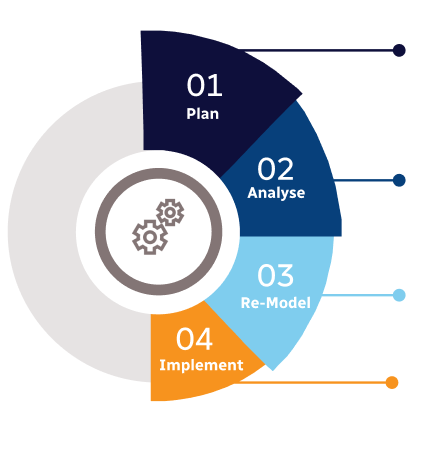
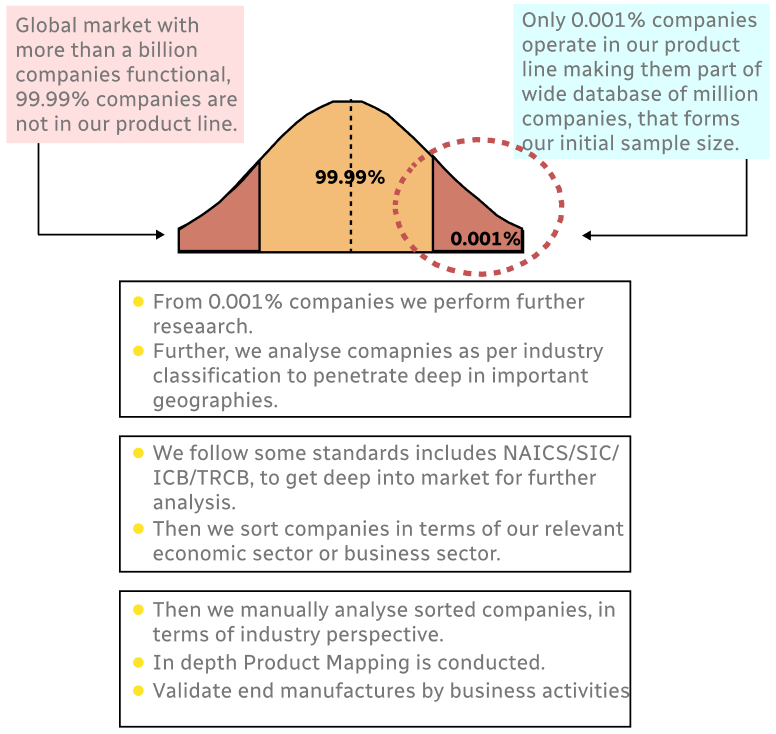
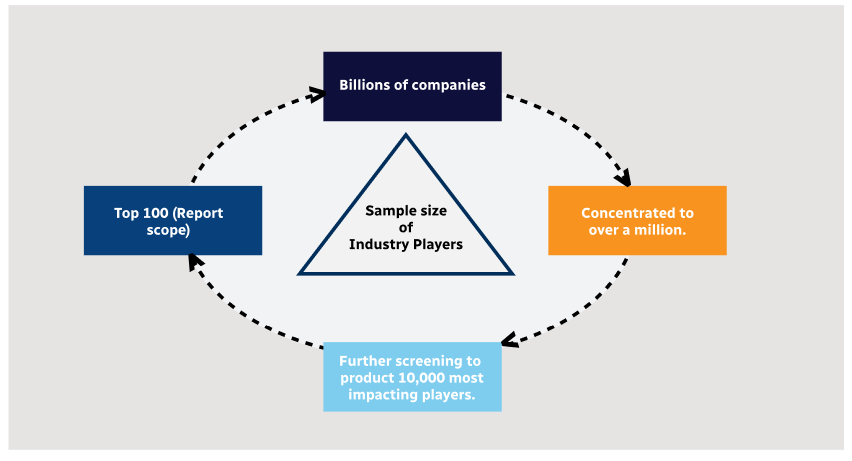
Step 1 - Identification of Relevant Samples Size from Population Database
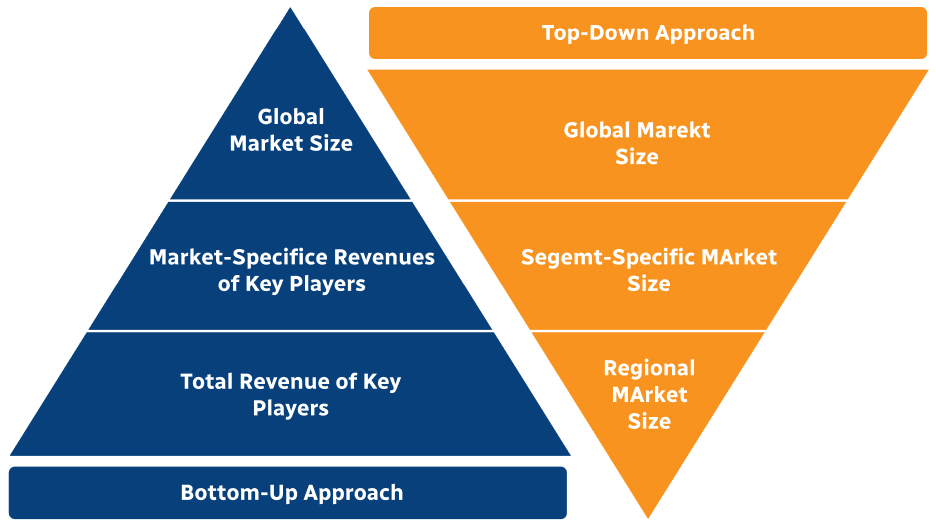
Step 2 - Approaches for Defining Global Market Size (Value, Volume* & Price*)
Note*: In applicable scenarios
Step 3 - Data Sources
Primary Research
- Web Analytics
- Survey Reports
- Research Institute
- Latest Research Reports
- Opinion Leaders
Secondary Research
- Annual Reports
- White Paper
- Latest Press Release
- Industry Association
- Paid Database
- Investor Presentations
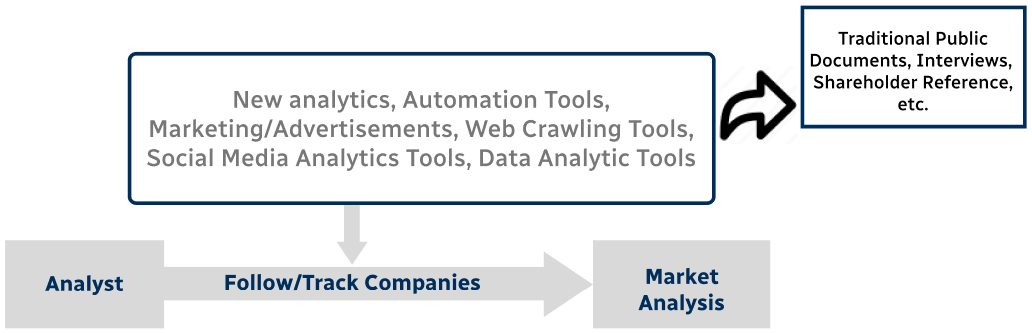
Step 4 - Data Triangulation
Involves using different sources of information in order to increase the validity of a study
These sources are likely to be stakeholders in a program - participants, other researchers, program staff, other community members, and so on.
Then we put all data in single framework & apply various statistical tools to find out the dynamic on the market.
During the analysis stage, feedback from the stakeholder groups would be compared to determine areas of agreement as well as areas of divergence