
Key Insights
The Asia-Pacific (APAC) deodorant market, valued at approximately $XX million in 2025, is projected to experience robust growth, exhibiting a Compound Annual Growth Rate (CAGR) of 4.11% from 2025 to 2033. This expansion is driven by several key factors. Rising disposable incomes, particularly in rapidly developing economies like India and China, are fueling increased consumer spending on personal care products, including deodorants. A burgeoning young population, increasingly conscious of personal hygiene and body odor, is further stimulating demand. The market is witnessing a shift towards natural and organic deodorants, reflecting a growing awareness of the potential harmful effects of certain chemicals. Furthermore, innovative product formats, such as convenient roll-ons and sprays, alongside expanding online distribution channels, are contributing to market growth. However, the market faces challenges, including the prevalence of traditional methods of odor control in certain regions and price sensitivity among a segment of the consumer base. Competition among established international brands and local players is also intense, necessitating continuous innovation and targeted marketing strategies.
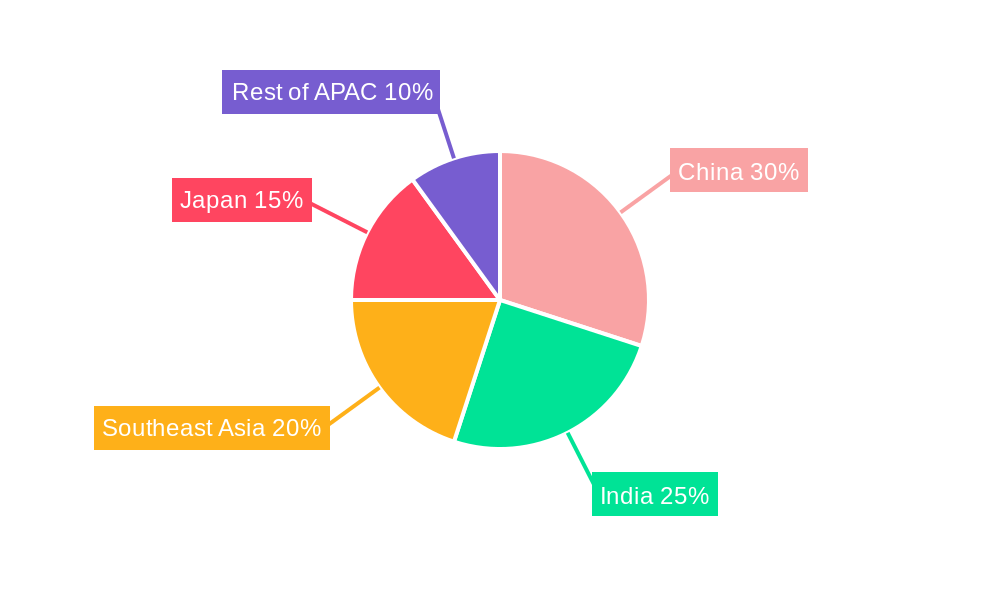
The segmentation of the APAC deodorant market reveals valuable insights into consumer preferences and market dynamics. Sprays and roll-ons currently dominate the product type segment, but sticks and other innovative formats (e.g., solid deodorants) are gaining traction. Distribution channels show a diverse landscape, with supermarkets and hypermarkets holding a significant share, while online stores are experiencing rapid growth, reflecting the increasing adoption of e-commerce in the region. Key players such as Procter & Gamble, Beiersdorf, L'Occitane, L'Oreal, Unilever, and Kao Corporation are actively competing to capture market share through product diversification, strategic partnerships, and targeted marketing campaigns. The regional breakdown within APAC reveals strong growth potential in countries like China, India, and Southeast Asia, driven by rapid urbanization and rising middle-class populations. The forecast period (2025-2033) anticipates sustained growth, with the market size exceeding $YY million by 2033 (based on a projection using the provided CAGR).
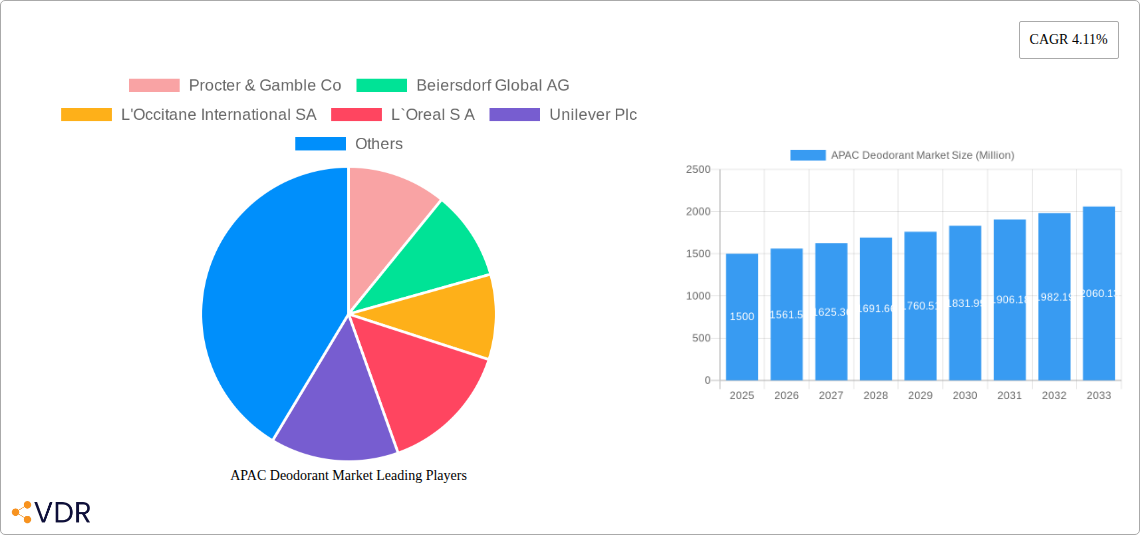
APAC Deodorant Market: A Comprehensive Report (2019-2033)
This comprehensive report provides an in-depth analysis of the Asia-Pacific (APAC) deodorant market, offering invaluable insights for industry professionals, investors, and strategic decision-makers. Covering the period from 2019 to 2033, with 2025 as the base year, this report meticulously examines market dynamics, growth trends, competitive landscapes, and future prospects. The report segments the market by product type (sprays, roll-on, sticks, others) and distribution channel (supermarkets/hypermarkets, convenience stores, pharmacies/drugstores, online stores, others), providing a granular understanding of the market's multifaceted structure. The market size is presented in million units.
APAC Deodorant Market Dynamics & Structure
This section analyzes the APAC deodorant market's competitive intensity, technological advancements, regulatory landscape, substitute products, consumer demographics, and merger & acquisition (M&A) activities. The market is moderately concentrated, with key players holding significant shares. Technological innovation, particularly in natural and organic formulations, is a major driver. Stringent regulations regarding chemical composition and labeling influence product development. The availability of alternative personal hygiene products presents competitive pressure. The demographic shift towards a younger, more health-conscious population fuels demand for specialized deodorant products. M&A activity in the sector remains moderate, with xx deals recorded between 2019 and 2024, leading to a xx% market share consolidation.
- Market Concentration: Moderately concentrated, with top 5 players holding xx% market share in 2024.
- Technological Innovation: Focus on natural ingredients, advanced fragrance technologies, and sustainable packaging.
- Regulatory Framework: Varying regulations across APAC countries regarding chemical composition and labeling.
- Competitive Substitutes: Antiperspirants, natural remedies, and other hygiene products.
- End-User Demographics: Growing young and health-conscious population driving demand for specialized deodorants.
- M&A Trends: xx M&A deals between 2019 and 2024, resulting in xx% market share consolidation.
APAC Deodorant Market Growth Trends & Insights
The APAC deodorant market experienced robust growth during the historical period (2019-2024), with a Compound Annual Growth Rate (CAGR) of xx%. This growth is attributed to rising disposable incomes, increasing awareness of personal hygiene, and changing lifestyles. Market penetration remains relatively low in several APAC countries, presenting significant growth opportunities. Technological disruptions, such as the introduction of innovative formulations and sustainable packaging, are further shaping market dynamics. Consumer behavior shifts towards natural and organic products are also influencing product development and marketing strategies. The market is projected to maintain a CAGR of xx% during the forecast period (2025-2033), reaching xx million units by 2033.
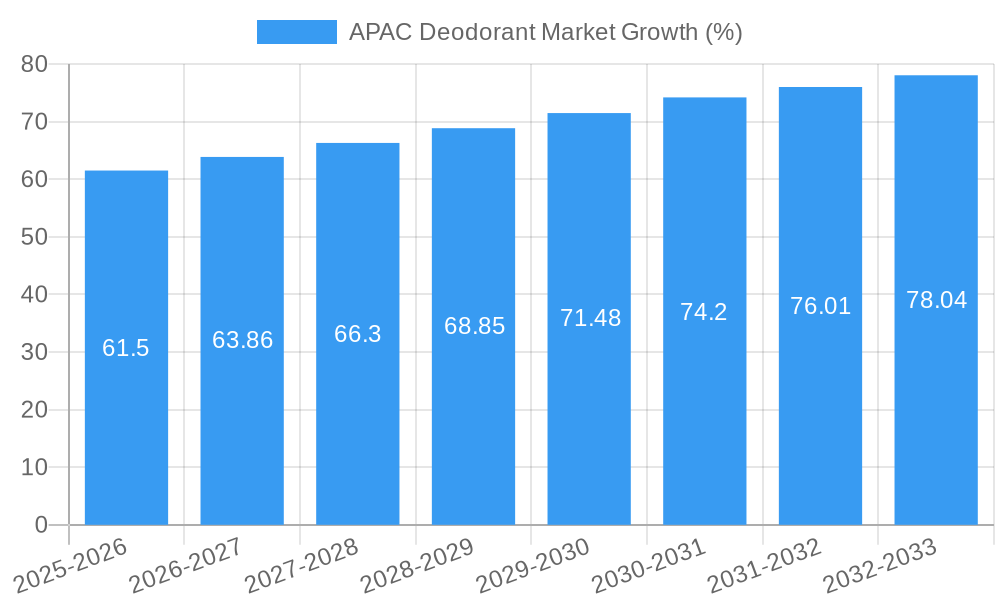
Dominant Regions, Countries, or Segments in APAC Deodorant Market
The report identifies [Specific Country/Region] as the leading region/country in the APAC deodorant market, driven by factors including high population density, strong economic growth, and rising disposable incomes. The [Specific Product Type, e.g., Spray] segment dominates the product type category, accounting for xx% of market share in 2024, fueled by convenience and efficacy. The [Specific Distribution Channel, e.g., Supermarkets and Hypermarkets] channel leads in distribution, reflecting strong retail infrastructure and consumer preference.
- Key Drivers for [Specific Country/Region]: High population density, rising disposable incomes, increasing urbanization, and strong retail infrastructure.
- Key Drivers for [Specific Product Type]: Convenience, efficacy, and widespread availability.
- Key Drivers for [Specific Distribution Channel]: Extensive retail presence, consumer familiarity, and established distribution networks.
APAC Deodorant Market Product Landscape
The APAC deodorant market is a vibrant and evolving space, characterized by a broad spectrum of product formats including convenient sprays, reliable roll-ons, solid sticks, and innovative alternatives. Manufacturers are actively responding to consumer demand by focusing on formulations with natural and ethically sourced ingredients, the development of advanced fragrance technologies for longer-lasting and more sophisticated scents, and a strong emphasis on sustainable packaging solutions. Key selling propositions that resonate with consumers include exceptional long-lasting odor protection, appealing and diverse fragrance profiles, and gentle, skin-friendly formulations suitable for various skin types. Technological advancements are primarily directed towards optimizing product efficacy, minimizing environmental footprint through eco-conscious manufacturing and materials, and addressing the diverse and often unique preferences of the region's consumer base.
Key Drivers, Barriers & Challenges in APAC Deodorant Market
Key Drivers: Rising disposable incomes, increasing awareness of personal hygiene, changing lifestyles, and technological innovations in formulations and packaging.
Challenges: Intense competition, fluctuating raw material prices, stringent regulations, and the need to address consumer concerns regarding the environmental impact of certain deodorant formulations. The supply chain experienced disruptions resulting in a xx% increase in production costs in 2022.
Emerging Opportunities in APAC Deodorant Market
Significant growth prospects within the APAC deodorant market lie in tapping into previously underserved rural areas, where a burgeoning middle class is increasingly seeking personal care solutions. The escalating consumer awareness and preference for natural and organic ingredients are creating substantial opportunities for brands offering plant-based and chemical-free deodorants. Furthermore, there is a clear demand for specialized products catering to specific consumer needs, such as those with sensitive skin, requiring hypoallergenic or fragrance-free options. The rapid expansion and increasing sophistication of online retail channels present another powerful avenue for market penetration and brand growth across the region, offering convenience and wider accessibility.
Growth Accelerators in the APAC Deodorant Market Industry
Strategic partnerships, market expansion into underserved regions, and continuous innovation in product formulations and packaging will drive long-term growth. Technological advancements, particularly in sustainable packaging and natural ingredient sourcing, are also crucial for sustainable market development.
Key Players Shaping the APAC Deodorant Market Market
- Procter & Gamble Co
- Beiersdorf Global AG
- L'Occitane International SA
- L'Oreal S A
- Unilever Plc
- Avon Products Inc
- Kao Corporation
- ITC Limited
Notable Milestones in APAC Deodorant Market Sector
- 2021 Q3: Unilever champions sustainability with the launch of a new eco-friendly deodorant range in the Indian market, emphasizing reduced plastic usage and natural ingredients.
- 2022 Q1: Procter & Gamble strategically expands its regional footprint by acquiring a promising local deodorant manufacturer in Vietnam, bolstering its presence in a key Southeast Asian market.
- 2023 Q2: A significant shift towards enhanced consumer safety and environmental responsibility is marked by the implementation of new, stringent regulations concerning deodorant ingredients across several prominent APAC nations. (Further critical milestones and strategic developments will be integrated into the comprehensive final report based on ongoing data analysis and market intelligence.)
In-Depth APAC Deodorant Market Market Outlook
The APAC deodorant market holds significant future potential, driven by continued economic growth, evolving consumer preferences, and ongoing technological advancements. Strategic opportunities exist for companies to capitalize on growing demand for natural and organic products, expand into untapped markets, and leverage the increasing adoption of e-commerce. The market is poised for sustained growth, presenting lucrative prospects for established players and new entrants alike.
APAC Deodorant Market Segmentation
-
1. Product Type
- 1.1. Sprays
- 1.2. Roll-On
- 1.3. Sticks
- 1.4. Others
-
2. Distribution Channel
- 2.1. Supermarkets and Hypermarkets
- 2.2. Convenience Stores
- 2.3. Pharmacies/Drugstore
- 2.4. Online Stores
- 2.5. Others
-
3. Geography
- 3.1. China
- 3.2. Australia
- 3.3. Japan
- 3.4. India
- 3.5. Rest of Asia-Pacific
APAC Deodorant Market Segmentation By Geography
- 1. China
- 2. Australia
- 3. Japan
- 4. India
- 5. Rest of Asia Pacific
APAC Deodorant Market REPORT HIGHLIGHTS
| Aspects | Details |
|---|---|
| Study Period | 2019-2033 |
| Base Year | 2024 |
| Estimated Year | 2025 |
| Forecast Period | 2025-2033 |
| Historical Period | 2019-2024 |
| Growth Rate | CAGR of 4.11% from 2019-2033 |
| Segmentation |
|
Table of Contents
- 1. Introduction
- 1.1. Research Scope
- 1.2. Market Segmentation
- 1.3. Research Methodology
- 1.4. Definitions and Assumptions
- 2. Executive Summary
- 2.1. Introduction
- 3. Market Dynamics
- 3.1. Introduction
- 3.2. Market Drivers
- 3.2.1. Minimalist and Clean Beauty Trend; Popularity of Effective and Smart Skincare
- 3.3. Market Restrains
- 3.3.1. Easy Access to Alternative Options
- 3.4. Market Trends
- 3.4.1. Roll-on and Deodorant Sticks Remains Popular During the Forecast Period
- 4. Market Factor Analysis
- 4.1. Porters Five Forces
- 4.2. Supply/Value Chain
- 4.3. PESTEL analysis
- 4.4. Market Entropy
- 4.5. Patent/Trademark Analysis
- 5. Global APAC Deodorant Market Analysis, Insights and Forecast, 2019-2031
- 5.1. Market Analysis, Insights and Forecast - by Product Type
- 5.1.1. Sprays
- 5.1.2. Roll-On
- 5.1.3. Sticks
- 5.1.4. Others
- 5.2. Market Analysis, Insights and Forecast - by Distribution Channel
- 5.2.1. Supermarkets and Hypermarkets
- 5.2.2. Convenience Stores
- 5.2.3. Pharmacies/Drugstore
- 5.2.4. Online Stores
- 5.2.5. Others
- 5.3. Market Analysis, Insights and Forecast - by Geography
- 5.3.1. China
- 5.3.2. Australia
- 5.3.3. Japan
- 5.3.4. India
- 5.3.5. Rest of Asia-Pacific
- 5.4. Market Analysis, Insights and Forecast - by Region
- 5.4.1. China
- 5.4.2. Australia
- 5.4.3. Japan
- 5.4.4. India
- 5.4.5. Rest of Asia Pacific
- 5.1. Market Analysis, Insights and Forecast - by Product Type
- 6. China APAC Deodorant Market Analysis, Insights and Forecast, 2019-2031
- 6.1. Market Analysis, Insights and Forecast - by Product Type
- 6.1.1. Sprays
- 6.1.2. Roll-On
- 6.1.3. Sticks
- 6.1.4. Others
- 6.2. Market Analysis, Insights and Forecast - by Distribution Channel
- 6.2.1. Supermarkets and Hypermarkets
- 6.2.2. Convenience Stores
- 6.2.3. Pharmacies/Drugstore
- 6.2.4. Online Stores
- 6.2.5. Others
- 6.3. Market Analysis, Insights and Forecast - by Geography
- 6.3.1. China
- 6.3.2. Australia
- 6.3.3. Japan
- 6.3.4. India
- 6.3.5. Rest of Asia-Pacific
- 6.1. Market Analysis, Insights and Forecast - by Product Type
- 7. Australia APAC Deodorant Market Analysis, Insights and Forecast, 2019-2031
- 7.1. Market Analysis, Insights and Forecast - by Product Type
- 7.1.1. Sprays
- 7.1.2. Roll-On
- 7.1.3. Sticks
- 7.1.4. Others
- 7.2. Market Analysis, Insights and Forecast - by Distribution Channel
- 7.2.1. Supermarkets and Hypermarkets
- 7.2.2. Convenience Stores
- 7.2.3. Pharmacies/Drugstore
- 7.2.4. Online Stores
- 7.2.5. Others
- 7.3. Market Analysis, Insights and Forecast - by Geography
- 7.3.1. China
- 7.3.2. Australia
- 7.3.3. Japan
- 7.3.4. India
- 7.3.5. Rest of Asia-Pacific
- 7.1. Market Analysis, Insights and Forecast - by Product Type
- 8. Japan APAC Deodorant Market Analysis, Insights and Forecast, 2019-2031
- 8.1. Market Analysis, Insights and Forecast - by Product Type
- 8.1.1. Sprays
- 8.1.2. Roll-On
- 8.1.3. Sticks
- 8.1.4. Others
- 8.2. Market Analysis, Insights and Forecast - by Distribution Channel
- 8.2.1. Supermarkets and Hypermarkets
- 8.2.2. Convenience Stores
- 8.2.3. Pharmacies/Drugstore
- 8.2.4. Online Stores
- 8.2.5. Others
- 8.3. Market Analysis, Insights and Forecast - by Geography
- 8.3.1. China
- 8.3.2. Australia
- 8.3.3. Japan
- 8.3.4. India
- 8.3.5. Rest of Asia-Pacific
- 8.1. Market Analysis, Insights and Forecast - by Product Type
- 9. India APAC Deodorant Market Analysis, Insights and Forecast, 2019-2031
- 9.1. Market Analysis, Insights and Forecast - by Product Type
- 9.1.1. Sprays
- 9.1.2. Roll-On
- 9.1.3. Sticks
- 9.1.4. Others
- 9.2. Market Analysis, Insights and Forecast - by Distribution Channel
- 9.2.1. Supermarkets and Hypermarkets
- 9.2.2. Convenience Stores
- 9.2.3. Pharmacies/Drugstore
- 9.2.4. Online Stores
- 9.2.5. Others
- 9.3. Market Analysis, Insights and Forecast - by Geography
- 9.3.1. China
- 9.3.2. Australia
- 9.3.3. Japan
- 9.3.4. India
- 9.3.5. Rest of Asia-Pacific
- 9.1. Market Analysis, Insights and Forecast - by Product Type
- 10. Rest of Asia Pacific APAC Deodorant Market Analysis, Insights and Forecast, 2019-2031
- 10.1. Market Analysis, Insights and Forecast - by Product Type
- 10.1.1. Sprays
- 10.1.2. Roll-On
- 10.1.3. Sticks
- 10.1.4. Others
- 10.2. Market Analysis, Insights and Forecast - by Distribution Channel
- 10.2.1. Supermarkets and Hypermarkets
- 10.2.2. Convenience Stores
- 10.2.3. Pharmacies/Drugstore
- 10.2.4. Online Stores
- 10.2.5. Others
- 10.3. Market Analysis, Insights and Forecast - by Geography
- 10.3.1. China
- 10.3.2. Australia
- 10.3.3. Japan
- 10.3.4. India
- 10.3.5. Rest of Asia-Pacific
- 10.1. Market Analysis, Insights and Forecast - by Product Type
- 11. China APAC Deodorant Market Analysis, Insights and Forecast, 2019-2031
- 12. Japan APAC Deodorant Market Analysis, Insights and Forecast, 2019-2031
- 13. India APAC Deodorant Market Analysis, Insights and Forecast, 2019-2031
- 14. South Korea APAC Deodorant Market Analysis, Insights and Forecast, 2019-2031
- 15. Southeast Asia APAC Deodorant Market Analysis, Insights and Forecast, 2019-2031
- 16. Australia APAC Deodorant Market Analysis, Insights and Forecast, 2019-2031
- 17. Indonesia APAC Deodorant Market Analysis, Insights and Forecast, 2019-2031
- 18. Phillipes APAC Deodorant Market Analysis, Insights and Forecast, 2019-2031
- 19. Singapore APAC Deodorant Market Analysis, Insights and Forecast, 2019-2031
- 20. Thailandc APAC Deodorant Market Analysis, Insights and Forecast, 2019-2031
- 21. Rest of Asia Pacific APAC Deodorant Market Analysis, Insights and Forecast, 2019-2031
- 22. Competitive Analysis
- 22.1. Global Market Share Analysis 2024
- 22.2. Company Profiles
- 22.2.1 Procter & Gamble Co
- 22.2.1.1. Overview
- 22.2.1.2. Products
- 22.2.1.3. SWOT Analysis
- 22.2.1.4. Recent Developments
- 22.2.1.5. Financials (Based on Availability)
- 22.2.2 Beiersdorf Global AG
- 22.2.2.1. Overview
- 22.2.2.2. Products
- 22.2.2.3. SWOT Analysis
- 22.2.2.4. Recent Developments
- 22.2.2.5. Financials (Based on Availability)
- 22.2.3 L'Occitane International SA
- 22.2.3.1. Overview
- 22.2.3.2. Products
- 22.2.3.3. SWOT Analysis
- 22.2.3.4. Recent Developments
- 22.2.3.5. Financials (Based on Availability)
- 22.2.4 L`Oreal S A
- 22.2.4.1. Overview
- 22.2.4.2. Products
- 22.2.4.3. SWOT Analysis
- 22.2.4.4. Recent Developments
- 22.2.4.5. Financials (Based on Availability)
- 22.2.5 Unilever Plc
- 22.2.5.1. Overview
- 22.2.5.2. Products
- 22.2.5.3. SWOT Analysis
- 22.2.5.4. Recent Developments
- 22.2.5.5. Financials (Based on Availability)
- 22.2.6 Avon Products Inc *List Not Exhaustive
- 22.2.6.1. Overview
- 22.2.6.2. Products
- 22.2.6.3. SWOT Analysis
- 22.2.6.4. Recent Developments
- 22.2.6.5. Financials (Based on Availability)
- 22.2.7 Kao Corporation
- 22.2.7.1. Overview
- 22.2.7.2. Products
- 22.2.7.3. SWOT Analysis
- 22.2.7.4. Recent Developments
- 22.2.7.5. Financials (Based on Availability)
- 22.2.8 ITC Limited
- 22.2.8.1. Overview
- 22.2.8.2. Products
- 22.2.8.3. SWOT Analysis
- 22.2.8.4. Recent Developments
- 22.2.8.5. Financials (Based on Availability)
- 22.2.1 Procter & Gamble Co
List of Figures
- Figure 1: Global APAC Deodorant Market Revenue Breakdown (Million, %) by Region 2024 & 2032
- Figure 2: Asia Pacific APAC Deodorant Market Revenue (Million), by Country 2024 & 2032
- Figure 3: Asia Pacific APAC Deodorant Market Revenue Share (%), by Country 2024 & 2032
- Figure 4: China APAC Deodorant Market Revenue (Million), by Product Type 2024 & 2032
- Figure 5: China APAC Deodorant Market Revenue Share (%), by Product Type 2024 & 2032
- Figure 6: China APAC Deodorant Market Revenue (Million), by Distribution Channel 2024 & 2032
- Figure 7: China APAC Deodorant Market Revenue Share (%), by Distribution Channel 2024 & 2032
- Figure 8: China APAC Deodorant Market Revenue (Million), by Geography 2024 & 2032
- Figure 9: China APAC Deodorant Market Revenue Share (%), by Geography 2024 & 2032
- Figure 10: China APAC Deodorant Market Revenue (Million), by Country 2024 & 2032
- Figure 11: China APAC Deodorant Market Revenue Share (%), by Country 2024 & 2032
- Figure 12: Australia APAC Deodorant Market Revenue (Million), by Product Type 2024 & 2032
- Figure 13: Australia APAC Deodorant Market Revenue Share (%), by Product Type 2024 & 2032
- Figure 14: Australia APAC Deodorant Market Revenue (Million), by Distribution Channel 2024 & 2032
- Figure 15: Australia APAC Deodorant Market Revenue Share (%), by Distribution Channel 2024 & 2032
- Figure 16: Australia APAC Deodorant Market Revenue (Million), by Geography 2024 & 2032
- Figure 17: Australia APAC Deodorant Market Revenue Share (%), by Geography 2024 & 2032
- Figure 18: Australia APAC Deodorant Market Revenue (Million), by Country 2024 & 2032
- Figure 19: Australia APAC Deodorant Market Revenue Share (%), by Country 2024 & 2032
- Figure 20: Japan APAC Deodorant Market Revenue (Million), by Product Type 2024 & 2032
- Figure 21: Japan APAC Deodorant Market Revenue Share (%), by Product Type 2024 & 2032
- Figure 22: Japan APAC Deodorant Market Revenue (Million), by Distribution Channel 2024 & 2032
- Figure 23: Japan APAC Deodorant Market Revenue Share (%), by Distribution Channel 2024 & 2032
- Figure 24: Japan APAC Deodorant Market Revenue (Million), by Geography 2024 & 2032
- Figure 25: Japan APAC Deodorant Market Revenue Share (%), by Geography 2024 & 2032
- Figure 26: Japan APAC Deodorant Market Revenue (Million), by Country 2024 & 2032
- Figure 27: Japan APAC Deodorant Market Revenue Share (%), by Country 2024 & 2032
- Figure 28: India APAC Deodorant Market Revenue (Million), by Product Type 2024 & 2032
- Figure 29: India APAC Deodorant Market Revenue Share (%), by Product Type 2024 & 2032
- Figure 30: India APAC Deodorant Market Revenue (Million), by Distribution Channel 2024 & 2032
- Figure 31: India APAC Deodorant Market Revenue Share (%), by Distribution Channel 2024 & 2032
- Figure 32: India APAC Deodorant Market Revenue (Million), by Geography 2024 & 2032
- Figure 33: India APAC Deodorant Market Revenue Share (%), by Geography 2024 & 2032
- Figure 34: India APAC Deodorant Market Revenue (Million), by Country 2024 & 2032
- Figure 35: India APAC Deodorant Market Revenue Share (%), by Country 2024 & 2032
- Figure 36: Rest of Asia Pacific APAC Deodorant Market Revenue (Million), by Product Type 2024 & 2032
- Figure 37: Rest of Asia Pacific APAC Deodorant Market Revenue Share (%), by Product Type 2024 & 2032
- Figure 38: Rest of Asia Pacific APAC Deodorant Market Revenue (Million), by Distribution Channel 2024 & 2032
- Figure 39: Rest of Asia Pacific APAC Deodorant Market Revenue Share (%), by Distribution Channel 2024 & 2032
- Figure 40: Rest of Asia Pacific APAC Deodorant Market Revenue (Million), by Geography 2024 & 2032
- Figure 41: Rest of Asia Pacific APAC Deodorant Market Revenue Share (%), by Geography 2024 & 2032
- Figure 42: Rest of Asia Pacific APAC Deodorant Market Revenue (Million), by Country 2024 & 2032
- Figure 43: Rest of Asia Pacific APAC Deodorant Market Revenue Share (%), by Country 2024 & 2032
List of Tables
- Table 1: Global APAC Deodorant Market Revenue Million Forecast, by Region 2019 & 2032
- Table 2: Global APAC Deodorant Market Revenue Million Forecast, by Product Type 2019 & 2032
- Table 3: Global APAC Deodorant Market Revenue Million Forecast, by Distribution Channel 2019 & 2032
- Table 4: Global APAC Deodorant Market Revenue Million Forecast, by Geography 2019 & 2032
- Table 5: Global APAC Deodorant Market Revenue Million Forecast, by Region 2019 & 2032
- Table 6: Global APAC Deodorant Market Revenue Million Forecast, by Country 2019 & 2032
- Table 7: China APAC Deodorant Market Revenue (Million) Forecast, by Application 2019 & 2032
- Table 8: Japan APAC Deodorant Market Revenue (Million) Forecast, by Application 2019 & 2032
- Table 9: India APAC Deodorant Market Revenue (Million) Forecast, by Application 2019 & 2032
- Table 10: South Korea APAC Deodorant Market Revenue (Million) Forecast, by Application 2019 & 2032
- Table 11: Southeast Asia APAC Deodorant Market Revenue (Million) Forecast, by Application 2019 & 2032
- Table 12: Australia APAC Deodorant Market Revenue (Million) Forecast, by Application 2019 & 2032
- Table 13: Indonesia APAC Deodorant Market Revenue (Million) Forecast, by Application 2019 & 2032
- Table 14: Phillipes APAC Deodorant Market Revenue (Million) Forecast, by Application 2019 & 2032
- Table 15: Singapore APAC Deodorant Market Revenue (Million) Forecast, by Application 2019 & 2032
- Table 16: Thailandc APAC Deodorant Market Revenue (Million) Forecast, by Application 2019 & 2032
- Table 17: Rest of Asia Pacific APAC Deodorant Market Revenue (Million) Forecast, by Application 2019 & 2032
- Table 18: Global APAC Deodorant Market Revenue Million Forecast, by Product Type 2019 & 2032
- Table 19: Global APAC Deodorant Market Revenue Million Forecast, by Distribution Channel 2019 & 2032
- Table 20: Global APAC Deodorant Market Revenue Million Forecast, by Geography 2019 & 2032
- Table 21: Global APAC Deodorant Market Revenue Million Forecast, by Country 2019 & 2032
- Table 22: Global APAC Deodorant Market Revenue Million Forecast, by Product Type 2019 & 2032
- Table 23: Global APAC Deodorant Market Revenue Million Forecast, by Distribution Channel 2019 & 2032
- Table 24: Global APAC Deodorant Market Revenue Million Forecast, by Geography 2019 & 2032
- Table 25: Global APAC Deodorant Market Revenue Million Forecast, by Country 2019 & 2032
- Table 26: Global APAC Deodorant Market Revenue Million Forecast, by Product Type 2019 & 2032
- Table 27: Global APAC Deodorant Market Revenue Million Forecast, by Distribution Channel 2019 & 2032
- Table 28: Global APAC Deodorant Market Revenue Million Forecast, by Geography 2019 & 2032
- Table 29: Global APAC Deodorant Market Revenue Million Forecast, by Country 2019 & 2032
- Table 30: Global APAC Deodorant Market Revenue Million Forecast, by Product Type 2019 & 2032
- Table 31: Global APAC Deodorant Market Revenue Million Forecast, by Distribution Channel 2019 & 2032
- Table 32: Global APAC Deodorant Market Revenue Million Forecast, by Geography 2019 & 2032
- Table 33: Global APAC Deodorant Market Revenue Million Forecast, by Country 2019 & 2032
- Table 34: Global APAC Deodorant Market Revenue Million Forecast, by Product Type 2019 & 2032
- Table 35: Global APAC Deodorant Market Revenue Million Forecast, by Distribution Channel 2019 & 2032
- Table 36: Global APAC Deodorant Market Revenue Million Forecast, by Geography 2019 & 2032
- Table 37: Global APAC Deodorant Market Revenue Million Forecast, by Country 2019 & 2032
Frequently Asked Questions
1. What is the projected Compound Annual Growth Rate (CAGR) of the APAC Deodorant Market?
The projected CAGR is approximately 4.11%.
2. Which companies are prominent players in the APAC Deodorant Market?
Key companies in the market include Procter & Gamble Co, Beiersdorf Global AG, L'Occitane International SA, L`Oreal S A, Unilever Plc, Avon Products Inc *List Not Exhaustive, Kao Corporation, ITC Limited.
3. What are the main segments of the APAC Deodorant Market?
The market segments include Product Type, Distribution Channel, Geography.
4. Can you provide details about the market size?
The market size is estimated to be USD XX Million as of 2022.
5. What are some drivers contributing to market growth?
Minimalist and Clean Beauty Trend; Popularity of Effective and Smart Skincare.
6. What are the notable trends driving market growth?
Roll-on and Deodorant Sticks Remains Popular During the Forecast Period.
7. Are there any restraints impacting market growth?
Easy Access to Alternative Options.
8. Can you provide examples of recent developments in the market?
N/A
9. What pricing options are available for accessing the report?
Pricing options include single-user, multi-user, and enterprise licenses priced at USD 4750, USD 5250, and USD 8750 respectively.
10. Is the market size provided in terms of value or volume?
The market size is provided in terms of value, measured in Million.
11. Are there any specific market keywords associated with the report?
Yes, the market keyword associated with the report is "APAC Deodorant Market," which aids in identifying and referencing the specific market segment covered.
12. How do I determine which pricing option suits my needs best?
The pricing options vary based on user requirements and access needs. Individual users may opt for single-user licenses, while businesses requiring broader access may choose multi-user or enterprise licenses for cost-effective access to the report.
13. Are there any additional resources or data provided in the APAC Deodorant Market report?
While the report offers comprehensive insights, it's advisable to review the specific contents or supplementary materials provided to ascertain if additional resources or data are available.
14. How can I stay updated on further developments or reports in the APAC Deodorant Market?
To stay informed about further developments, trends, and reports in the APAC Deodorant Market, consider subscribing to industry newsletters, following relevant companies and organizations, or regularly checking reputable industry news sources and publications.
Methodology
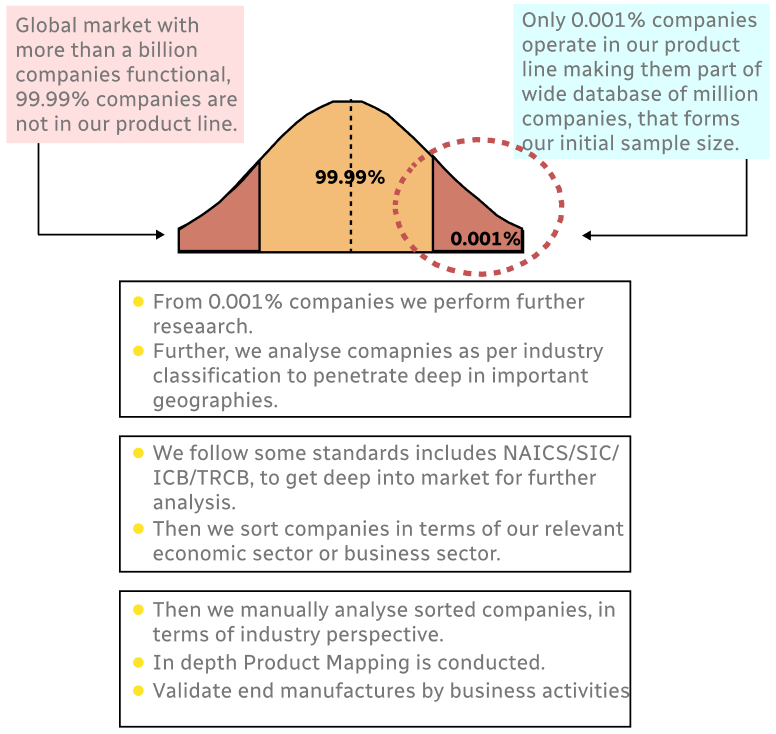
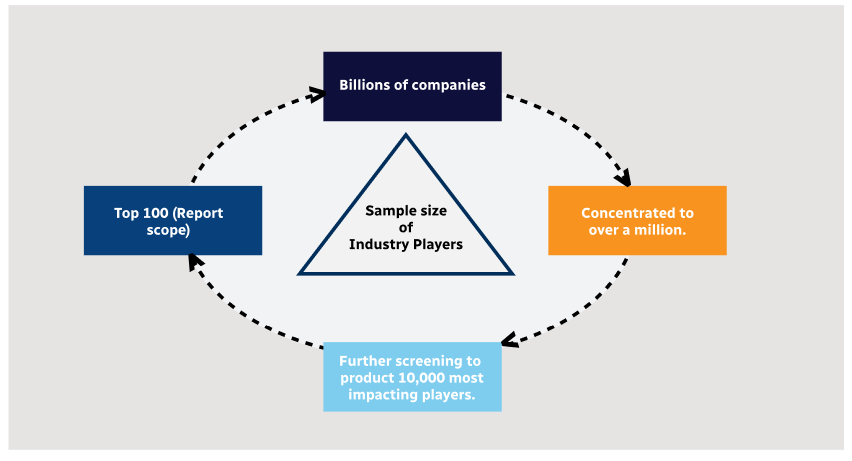
Step 1 - Identification of Relevant Samples Size from Population Database
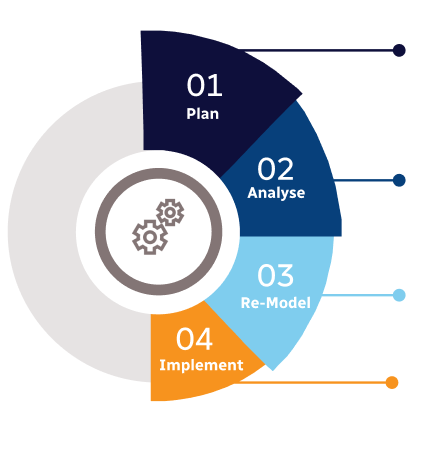
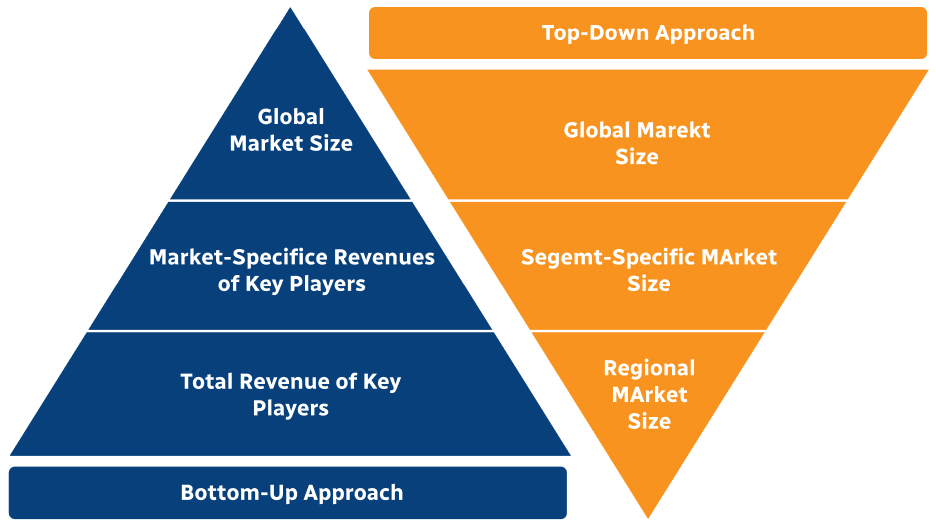
Step 2 - Approaches for Defining Global Market Size (Value, Volume* & Price*)
Note*: In applicable scenarios
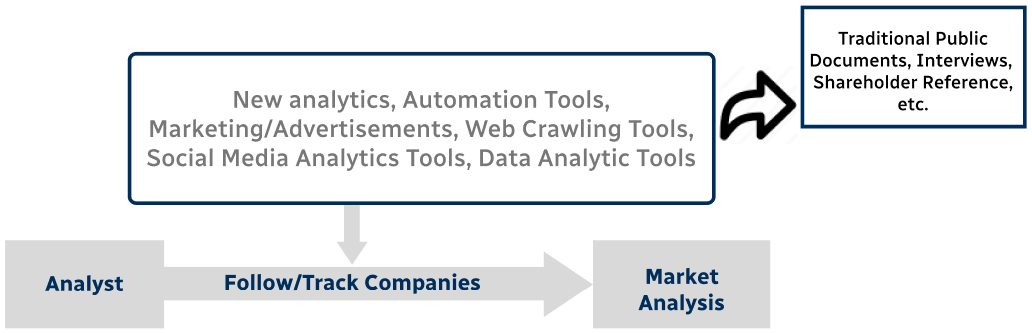
Step 3 - Data Sources
Primary Research
- Web Analytics
- Survey Reports
- Research Institute
- Latest Research Reports
- Opinion Leaders
Secondary Research
- Annual Reports
- White Paper
- Latest Press Release
- Industry Association
- Paid Database
- Investor Presentations
Step 4 - Data Triangulation
Involves using different sources of information in order to increase the validity of a study
These sources are likely to be stakeholders in a program - participants, other researchers, program staff, other community members, and so on.
Then we put all data in single framework & apply various statistical tools to find out the dynamic on the market.
During the analysis stage, feedback from the stakeholder groups would be compared to determine areas of agreement as well as areas of divergence