


Key Insights
The global truck camper market is projected to achieve a market size of $10.67 billion by 2025, driven by a compound annual growth rate (CAGR) of 6.14% from the base year 2025 through 2033. This expansion is fueled by a growing consumer desire for adaptable and adventurous travel solutions, alongside increased demand for compact and versatile living spaces. This trend is particularly strong within the residential sector, offering an economical and flexible alternative to traditional RVs for both short trips and extended journeys. The surge in outdoor recreation and off-road exploration further boosts demand, as truck campers uniquely blend daily drivability with self-contained living capabilities, enabling access to remote locations. Technological advancements in lightweight materials and enhanced features are broadening the market's appeal, attracting a wider consumer base.
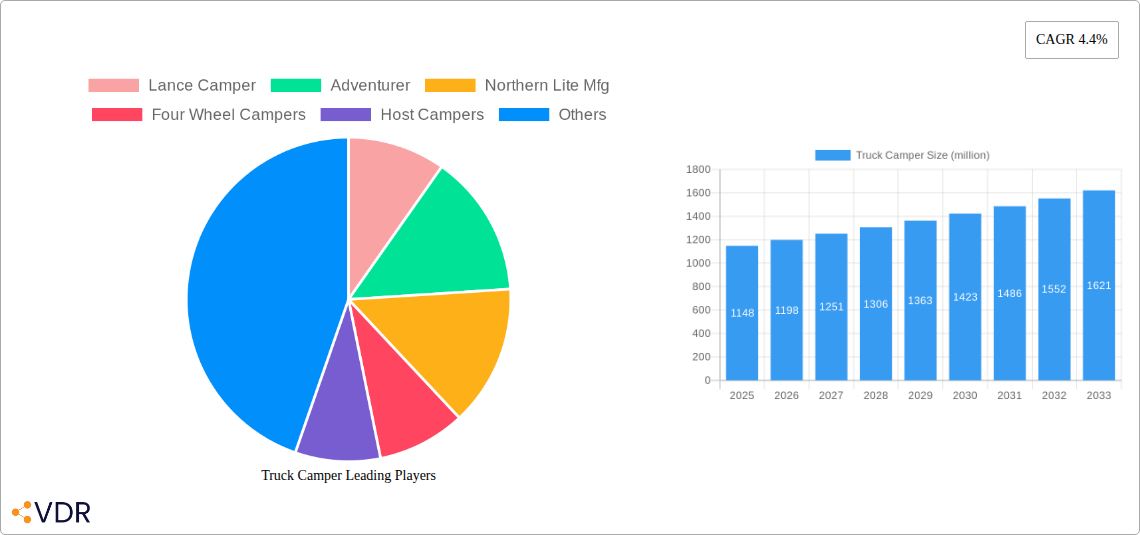
Truck Camper Market Size (In Billion)

Market segmentation reveals key growth avenues. The Commercial segment, while potentially smaller, is anticipated to expand through specialized applications such as mobile workshops, remote research facilities, and emergency response units, demonstrating the truck camper's utility beyond recreational purposes. Both Hard Side Truck Campers and Pop-up Truck Campers are expected to experience steady demand. Hard side variants offer superior durability and insulation for all-weather conditions, while pop-up models provide a lighter, more compact option, enhancing truck compatibility and fuel efficiency. Geographically, North America, spearheaded by the United States, is expected to retain its leading position, supported by a robust RV culture and extensive travel landscapes. Nonetheless, substantial growth is forecasted in other regions as market awareness and infrastructure develop, spurred by the global appeal of van life and alternative travel methods. Leading industry players are strategically investing in product innovation and market penetration to capitalize on this escalating demand.
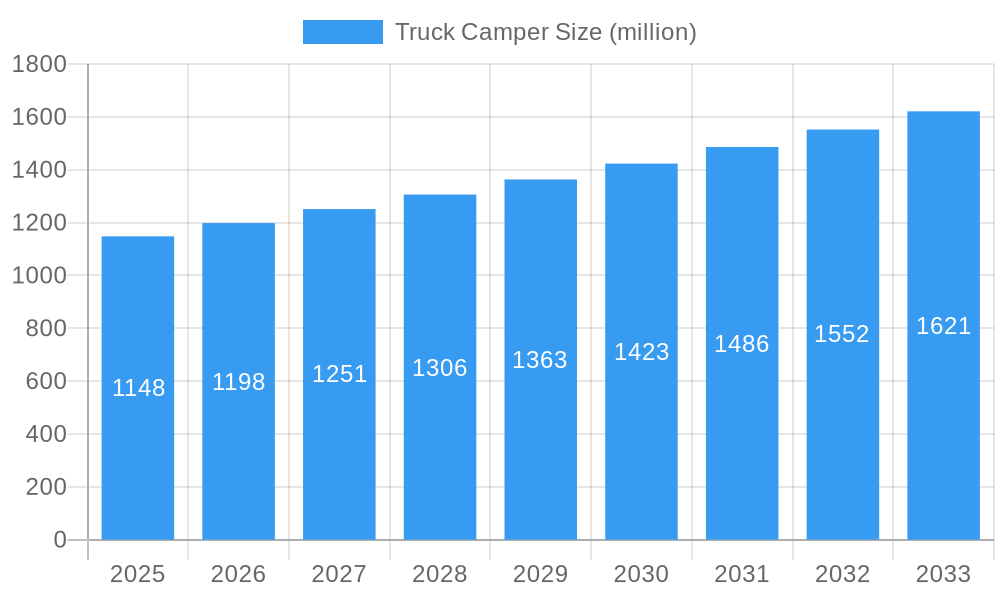
Truck Camper Company Market Share
Truck Camper Market Report: Comprehensive Analysis and Future Outlook (2019-2033)
This comprehensive report offers an in-depth analysis of the global truck camper market, providing critical insights into its dynamics, growth trajectory, and future potential. Spanning from 2019 to 2033, with a base year of 2025, this study is an indispensable resource for industry professionals, investors, and stakeholders seeking to navigate the evolving landscape of recreational vehicle (RV) and mobile living solutions. With a focus on high-traffic keywords like "truck camper," "pop-up truck camper," "hard side truck camper," and "RV market," this report is meticulously optimized for search engine visibility, ensuring maximum reach within the industry.
Truck Camper Market Dynamics & Structure
The truck camper market, a significant segment within the broader recreational vehicle industry, exhibits a moderately concentrated structure. Key players like Lance Camper, Adventurer, and Northern Lite Mfg hold substantial market share, driven by a legacy of quality and brand recognition. Technological innovation serves as a primary growth catalyst, with advancements in lightweight materials, integrated smart technologies, and sustainable power solutions increasingly influencing product development. Regulatory frameworks, primarily concerning vehicle safety and emissions standards, play a crucial role in shaping manufacturing processes and product designs. Competitive product substitutes, including traditional RVs, travel trailers, and van conversions, exert pressure on the truck camper segment, necessitating continuous innovation and differentiation. End-user demographics are shifting, with an increasing appeal to younger demographics seeking adventure and off-grid living experiences, alongside the traditional retiree market. Mergers and acquisitions (M&A) trends, while not as pronounced as in some mature industries, are observed as companies seek to expand their product portfolios and geographical reach. For instance, smaller manufacturers may be acquired by larger entities to gain access to new technologies or distribution channels. The market share of leading companies is estimated to be around 35% for the top three players collectively.
- Market Concentration: Moderately concentrated, with a few dominant players and a growing number of niche manufacturers.
- Technological Innovation: Driven by lightweight materials, smart RV technology, off-grid capabilities, and sustainable energy solutions.
- Regulatory Frameworks: Primarily focused on vehicle safety, emissions, and environmental impact, influencing design and manufacturing.
- Competitive Product Substitutes: Traditional RVs, travel trailers, van conversions, and compact motorhomes.
- End-User Demographics: Growing appeal to younger adventure seekers, digital nomads, and outdoor enthusiasts, alongside the established retiree market.
- M&A Trends: Limited but present, focusing on market expansion and technology acquisition. Estimated M&A deal volume in the RV sector in recent years is in the hundreds of millions of dollars annually.
Truck Camper Growth Trends & Insights
The truck camper market is poised for significant growth, projected to witness a Compound Annual Growth Rate (CAGR) of approximately 5.2% over the forecast period (2025–2033). This expansion is fueled by an evolving consumer preference for flexible, adventurous, and self-sufficient travel experiences. The base year 2025 estimates the global truck camper market size at around $1.5 billion units. This upward trend is bolstered by increasing disposable incomes, a desire for outdoor recreation, and the growing popularity of remote work, which allows for extended travel. Technological disruptions are playing a pivotal role, with the integration of advanced features such as solar power systems, efficient insulation, and multi-functional interior designs enhancing the appeal and practicality of truck campers.
Adoption rates for truck campers are steadily increasing, particularly among individuals who value the versatility of their existing pickup trucks. This segment offers a unique advantage by allowing owners to detach their living quarters and utilize their truck for everyday purposes or more rugged off-road exploration. Consumer behavior shifts are evident, with a noticeable surge in demand for compact, efficient, and eco-friendly recreational vehicles. The "van life" trend, while distinct, has indirectly contributed to the broader interest in mobile living solutions, including truck campers. Market penetration is expected to rise from an estimated 3% in 2025 to over 4.5% by 2033 in the overall RV market.
Key factors driving this growth include:
- Increased interest in outdoor recreation: A post-pandemic surge in camping, hiking, and adventure travel.
- Rise of the digital nomad and remote work: Enabling longer and more flexible travel arrangements.
- Versatility and maneuverability: Truck campers offer access to destinations inaccessible to larger RVs.
- Affordability: Compared to larger motorhomes, truck campers can offer a more accessible entry point into RV ownership.
- Technological advancements: Improvements in construction, amenities, and off-grid capabilities.
The market size evolution indicates a robust expansion, with the global truck camper market projected to reach an estimated $2.3 billion units by 2033. This growth trajectory is supported by a sustained demand for both hard side truck campers and pop-up truck campers, catering to different user needs and budget considerations. The residential application remains the dominant segment, but a growing interest in commercial applications, such as mobile offices or specialized field units, is also emerging.
Dominant Regions, Countries, or Segments in Truck Camper
The North American region, particularly the United States and Canada, currently dominates the global truck camper market, driven by a deeply ingrained culture of outdoor recreation and a high prevalence of pickup truck ownership. In 2025, North America is estimated to command approximately 70% of the global market share. This dominance is attributed to several key factors, including favorable economic policies that support outdoor activities, extensive national and state park systems offering numerous camping opportunities, and well-developed infrastructure for recreational vehicles. The sheer volume of pickup truck sales in these countries directly translates into a larger potential customer base for truck campers.
Within North America, the United States stands out as the single largest market, accounting for an estimated 55% of global truck camper sales. The vast geographical diversity, ranging from deserts and mountains to coastlines, appeals to a wide spectrum of truck camper users seeking various experiences. The economic landscape supports a strong middle class with disposable income for recreational pursuits. Furthermore, a mature dealership network and aftermarket support system contribute to the ease of ownership and maintenance.
Analyzing by segment, hard side truck campers represent the larger portion of the market, estimated at around 60% of global sales in 2025. These campers offer superior insulation, year-round usability, and enhanced comfort, appealing to users who prioritize living space and protection from the elements. They are particularly popular in regions with harsher climates or for those who engage in extended travel. However, pop-up truck campers are experiencing rapid growth, driven by their lighter weight, lower center of gravity, and increased off-road capabilities. Their market share, estimated at 40% in 2025, is projected to grow at a faster CAGR due to their appeal to a younger demographic and those seeking more adventurous, remote travel.
Key drivers for regional dominance and segment growth include:
North America:
- High Pickup Truck Penetration: A significant percentage of households own pickup trucks.
- Outdoor Lifestyle Culture: Strong emphasis on camping, adventure, and nature exploration.
- Extensive Park Systems: Abundant national, state, and provincial parks offering camping facilities.
- Economic Stability: Supporting discretionary spending on recreational products.
- Infrastructure: Well-developed road networks and campgrounds.
United States:
- Vast and Diverse Geography: Caters to a wide range of recreational activities and travel styles.
- Strong RV Industry Ecosystem: Robust manufacturing, sales, and service networks.
- Consumer Demand for Freedom and Flexibility: Truck campers align with these desires.
Segment Dominance (Hard Side vs. Pop-up):
- Hard Side: Comfort, all-weather capability, greater amenities, security.
- Pop-up: Lightweight, maneuverability, off-road access, lower cost of entry, easier storage.
The residential application is the overwhelmingly dominant use case, representing over 95% of the truck camper market. However, emerging commercial applications, such as mobile veterinary clinics, remote work offices, or specialized research units, are showing nascent growth, albeit from a very small base.
Truck Camper Product Landscape
The truck camper product landscape is characterized by continuous innovation focused on enhancing user experience, optimizing weight, and expanding functionality. Manufacturers are increasingly integrating advanced materials like aluminum framing and composite exteriors to reduce overall camper weight, making them compatible with a wider range of pickup trucks and improving fuel efficiency. Hard side truck campers are seeing advancements in insulation technologies, featuring multi-pane windows and enhanced sealing for superior thermal performance, enabling comfortable use in diverse climates. Pop-up truck campers are benefiting from more robust and user-friendly lifting mechanisms, along with improved fabric durability and waterproofing. The integration of smart RV technologies, including remote monitoring of battery levels, climate control, and security systems via mobile apps, is becoming a standard offering. Unique selling propositions often revolve around compact yet feature-rich interiors, efficient storage solutions, and specialized designs for off-road adventures. For instance, models with reinforced chassis and higher ground clearance cater to the overlanding segment.
Key Drivers, Barriers & Challenges in Truck Camper
Key Drivers:
The truck camper market is propelled by a confluence of technological, economic, and societal factors. The burgeoning interest in outdoor recreation, amplified by a desire for personal freedom and escape, remains a primary driver. Advances in lightweight construction materials and energy-efficient systems, such as solar power and efficient battery storage, are making truck campers more practical and accessible. The rise of remote work and flexible employment models further fuels demand, enabling individuals to live and travel simultaneously. Furthermore, the inherent versatility of truck campers, allowing for detachment and dual use of the pickup truck, appeals to a broad consumer base. The residential application of truck campers is directly benefiting from these trends.
Barriers & Challenges:
Despite robust growth, the truck camper market faces several challenges. Supply chain disruptions, particularly in the availability of raw materials and components, can impact production timelines and costs. Stringent manufacturing regulations and evolving safety standards can necessitate costly redesigns and compliance efforts. The competitive landscape, while not overly saturated, includes established RV manufacturers and emerging competitors, leading to price pressures. Moreover, the specialized nature of truck campers means they are dependent on the availability and payload capacity of pickup trucks, creating a potential bottleneck if pickup truck production or sales falter. The cost of specialized pickup trucks that can adequately carry larger truck campers can also be a barrier for some consumers.
Emerging Opportunities in Truck Camper
Emerging opportunities in the truck camper market lie in tapping into niche segments and expanding technological integration. The growing overlanding and off-grid living trends present a significant avenue for growth, with demand for ruggedized campers equipped for extreme conditions and extended self-sufficiency. There's an increasing demand for truck campers specifically designed for electric pickup trucks, aligning with the global shift towards sustainable transportation. Innovations in modular design, allowing for customizable interiors and adaptable living spaces, could attract a wider demographic. Furthermore, exploring the commercial application of truck campers for specialized mobile services, such as remote medical units or mobile workshops, offers untapped potential. The development of lightweight, aerodynamic designs for improved fuel economy remains a continuous opportunity for differentiation.
Growth Accelerators in the Truck Camper Industry
Several factors are accelerating long-term growth within the truck camper industry. Technological breakthroughs in battery technology and solar integration are significantly enhancing the off-grid capabilities of these vehicles, appealing to a growing segment of adventurers seeking remote destinations. Strategic partnerships between truck manufacturers and truck camper companies, offering bundled packages or tailored compatibility, can streamline the purchasing process and boost sales. Market expansion into previously underserved geographical regions, particularly in Europe and Asia where pickup truck culture is growing, presents substantial growth potential. The increasing prevalence of online communities and social media platforms dedicated to truck camper life is also fostering brand awareness and community engagement, indirectly driving sales.
Key Players Shaping the Truck Camper Market
- Lance Camper
- Adventurer
- Northern Lite Mfg
- Four Wheel Campers
- Host Campers
- LIVEZONE
- Northstar Camper
- Travel Lite RV
- Tischer
- Outfitter Mfg
- Alaskan
- Bigfoot
- Phoenix
- Tommy Campers
Notable Milestones in Truck Camper Sector
- 2019: Increased adoption of composite materials in construction leading to lighter, more durable campers.
- 2020: Surge in outdoor recreation demand due to global events, boosting truck camper sales.
- 2021: Growing interest in advanced solar power integration and energy-efficient appliances.
- 2022: Introduction of smart home technology features in select high-end models.
- 2023: Focus on aerodynamic designs for improved fuel efficiency, especially with rising fuel costs.
- 2024: Growing trend towards modular and customizable interior layouts in new models.
In-Depth Truck Camper Market Outlook
The future outlook for the truck camper market is exceptionally bright, fueled by ongoing technological innovation and evolving consumer lifestyles. Growth accelerators such as enhanced off-grid capabilities through advanced battery and solar solutions, coupled with strategic collaborations with pickup truck manufacturers, are set to drive significant market expansion. Untapped geographical markets and emerging commercial applications represent substantial future opportunities. The continuous refinement of lightweight materials and user-centric designs will ensure truck campers remain a highly desirable and versatile option for adventurers and mobile living enthusiasts, solidifying their position in the recreational vehicle sector. The market is projected to see robust growth driven by a persistent demand for freedom, flexibility, and connection with nature, with an estimated market size of $2.3 billion units by 2033.
Truck Camper Segmentation
-
1. Application
- 1.1. Commercial
- 1.2. Residential
-
2. Types
- 2.1. Hard Side Truck Campers
- 2.2. Pop-up Truck Campers
Truck Camper Segmentation By Geography
-
1. North America
- 1.1. United States
- 1.2. Canada
- 1.3. Mexico
-
2. South America
- 2.1. Brazil
- 2.2. Argentina
- 2.3. Rest of South America
-
3. Europe
- 3.1. United Kingdom
- 3.2. Germany
- 3.3. France
- 3.4. Italy
- 3.5. Spain
- 3.6. Russia
- 3.7. Benelux
- 3.8. Nordics
- 3.9. Rest of Europe
-
4. Middle East & Africa
- 4.1. Turkey
- 4.2. Israel
- 4.3. GCC
- 4.4. North Africa
- 4.5. South Africa
- 4.6. Rest of Middle East & Africa
-
5. Asia Pacific
- 5.1. China
- 5.2. India
- 5.3. Japan
- 5.4. South Korea
- 5.5. ASEAN
- 5.6. Oceania
- 5.7. Rest of Asia Pacific
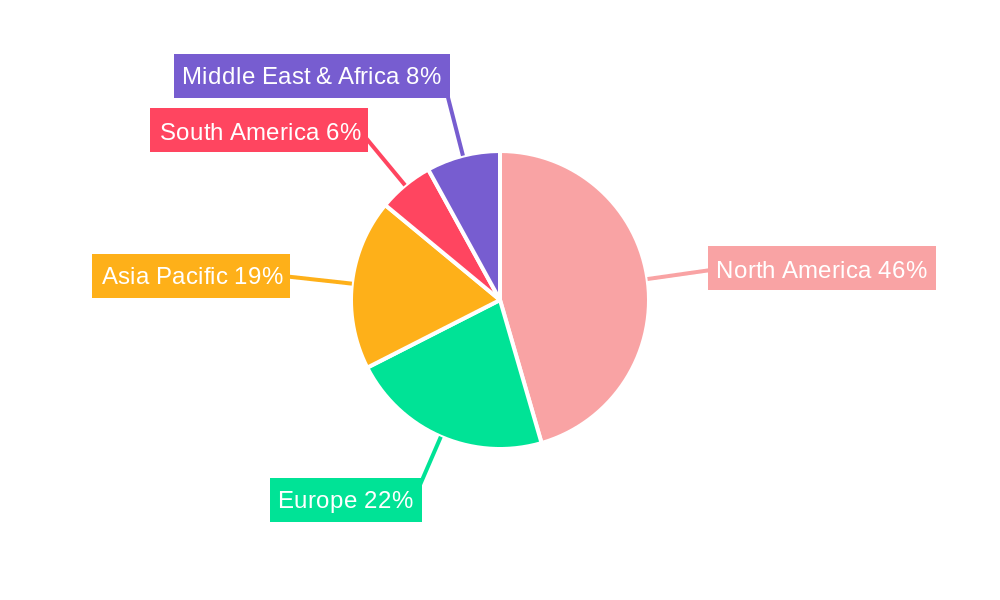
Truck Camper Regional Market Share
Geographic Coverage of Truck Camper
Truck Camper REPORT HIGHLIGHTS
| Aspects | Details |
|---|---|
| Study Period | 2020-2034 |
| Base Year | 2025 |
| Estimated Year | 2026 |
| Forecast Period | 2026-2034 |
| Historical Period | 2020-2025 |
| Growth Rate | CAGR of 6.14% from 2020-2034 |
| Segmentation |
|
Table of Contents
- 1. Introduction
- 1.1. Research Scope
- 1.2. Market Segmentation
- 1.3. Research Methodology
- 1.4. Definitions and Assumptions
- 2. Executive Summary
- 2.1. Introduction
- 3. Market Dynamics
- 3.1. Introduction
- 3.2. Market Drivers
- 3.3. Market Restrains
- 3.4. Market Trends
- 4. Market Factor Analysis
- 4.1. Porters Five Forces
- 4.2. Supply/Value Chain
- 4.3. PESTEL analysis
- 4.4. Market Entropy
- 4.5. Patent/Trademark Analysis
- 5. Global Truck Camper Analysis, Insights and Forecast, 2020-2032
- 5.1. Market Analysis, Insights and Forecast - by Application
- 5.1.1. Commercial
- 5.1.2. Residential
- 5.2. Market Analysis, Insights and Forecast - by Types
- 5.2.1. Hard Side Truck Campers
- 5.2.2. Pop-up Truck Campers
- 5.3. Market Analysis, Insights and Forecast - by Region
- 5.3.1. North America
- 5.3.2. South America
- 5.3.3. Europe
- 5.3.4. Middle East & Africa
- 5.3.5. Asia Pacific
- 5.1. Market Analysis, Insights and Forecast - by Application
- 6. North America Truck Camper Analysis, Insights and Forecast, 2020-2032
- 6.1. Market Analysis, Insights and Forecast - by Application
- 6.1.1. Commercial
- 6.1.2. Residential
- 6.2. Market Analysis, Insights and Forecast - by Types
- 6.2.1. Hard Side Truck Campers
- 6.2.2. Pop-up Truck Campers
- 6.1. Market Analysis, Insights and Forecast - by Application
- 7. South America Truck Camper Analysis, Insights and Forecast, 2020-2032
- 7.1. Market Analysis, Insights and Forecast - by Application
- 7.1.1. Commercial
- 7.1.2. Residential
- 7.2. Market Analysis, Insights and Forecast - by Types
- 7.2.1. Hard Side Truck Campers
- 7.2.2. Pop-up Truck Campers
- 7.1. Market Analysis, Insights and Forecast - by Application
- 8. Europe Truck Camper Analysis, Insights and Forecast, 2020-2032
- 8.1. Market Analysis, Insights and Forecast - by Application
- 8.1.1. Commercial
- 8.1.2. Residential
- 8.2. Market Analysis, Insights and Forecast - by Types
- 8.2.1. Hard Side Truck Campers
- 8.2.2. Pop-up Truck Campers
- 8.1. Market Analysis, Insights and Forecast - by Application
- 9. Middle East & Africa Truck Camper Analysis, Insights and Forecast, 2020-2032
- 9.1. Market Analysis, Insights and Forecast - by Application
- 9.1.1. Commercial
- 9.1.2. Residential
- 9.2. Market Analysis, Insights and Forecast - by Types
- 9.2.1. Hard Side Truck Campers
- 9.2.2. Pop-up Truck Campers
- 9.1. Market Analysis, Insights and Forecast - by Application
- 10. Asia Pacific Truck Camper Analysis, Insights and Forecast, 2020-2032
- 10.1. Market Analysis, Insights and Forecast - by Application
- 10.1.1. Commercial
- 10.1.2. Residential
- 10.2. Market Analysis, Insights and Forecast - by Types
- 10.2.1. Hard Side Truck Campers
- 10.2.2. Pop-up Truck Campers
- 10.1. Market Analysis, Insights and Forecast - by Application
- 11. Competitive Analysis
- 11.1. Global Market Share Analysis 2025
- 11.2. Company Profiles
- 11.2.1 Lance Camper
- 11.2.1.1. Overview
- 11.2.1.2. Products
- 11.2.1.3. SWOT Analysis
- 11.2.1.4. Recent Developments
- 11.2.1.5. Financials (Based on Availability)
- 11.2.2 Adventurer
- 11.2.2.1. Overview
- 11.2.2.2. Products
- 11.2.2.3. SWOT Analysis
- 11.2.2.4. Recent Developments
- 11.2.2.5. Financials (Based on Availability)
- 11.2.3 Northern Lite Mfg
- 11.2.3.1. Overview
- 11.2.3.2. Products
- 11.2.3.3. SWOT Analysis
- 11.2.3.4. Recent Developments
- 11.2.3.5. Financials (Based on Availability)
- 11.2.4 Four Wheel Campers
- 11.2.4.1. Overview
- 11.2.4.2. Products
- 11.2.4.3. SWOT Analysis
- 11.2.4.4. Recent Developments
- 11.2.4.5. Financials (Based on Availability)
- 11.2.5 Host Campers
- 11.2.5.1. Overview
- 11.2.5.2. Products
- 11.2.5.3. SWOT Analysis
- 11.2.5.4. Recent Developments
- 11.2.5.5. Financials (Based on Availability)
- 11.2.6 LIVEZONE
- 11.2.6.1. Overview
- 11.2.6.2. Products
- 11.2.6.3. SWOT Analysis
- 11.2.6.4. Recent Developments
- 11.2.6.5. Financials (Based on Availability)
- 11.2.7 Northstar Camper
- 11.2.7.1. Overview
- 11.2.7.2. Products
- 11.2.7.3. SWOT Analysis
- 11.2.7.4. Recent Developments
- 11.2.7.5. Financials (Based on Availability)
- 11.2.8 Travel Lite RV
- 11.2.8.1. Overview
- 11.2.8.2. Products
- 11.2.8.3. SWOT Analysis
- 11.2.8.4. Recent Developments
- 11.2.8.5. Financials (Based on Availability)
- 11.2.9 Tischer
- 11.2.9.1. Overview
- 11.2.9.2. Products
- 11.2.9.3. SWOT Analysis
- 11.2.9.4. Recent Developments
- 11.2.9.5. Financials (Based on Availability)
- 11.2.10 Outfitter Mfg
- 11.2.10.1. Overview
- 11.2.10.2. Products
- 11.2.10.3. SWOT Analysis
- 11.2.10.4. Recent Developments
- 11.2.10.5. Financials (Based on Availability)
- 11.2.11 Alaskan
- 11.2.11.1. Overview
- 11.2.11.2. Products
- 11.2.11.3. SWOT Analysis
- 11.2.11.4. Recent Developments
- 11.2.11.5. Financials (Based on Availability)
- 11.2.12 Bigfoot
- 11.2.12.1. Overview
- 11.2.12.2. Products
- 11.2.12.3. SWOT Analysis
- 11.2.12.4. Recent Developments
- 11.2.12.5. Financials (Based on Availability)
- 11.2.13 Phoenix
- 11.2.13.1. Overview
- 11.2.13.2. Products
- 11.2.13.3. SWOT Analysis
- 11.2.13.4. Recent Developments
- 11.2.13.5. Financials (Based on Availability)
- 11.2.14 Tommy Campers
- 11.2.14.1. Overview
- 11.2.14.2. Products
- 11.2.14.3. SWOT Analysis
- 11.2.14.4. Recent Developments
- 11.2.14.5. Financials (Based on Availability)
- 11.2.1 Lance Camper
List of Figures
- Figure 1: Global Truck Camper Revenue Breakdown (billion, %) by Region 2025 & 2033
- Figure 2: North America Truck Camper Revenue (billion), by Application 2025 & 2033
- Figure 3: North America Truck Camper Revenue Share (%), by Application 2025 & 2033
- Figure 4: North America Truck Camper Revenue (billion), by Types 2025 & 2033
- Figure 5: North America Truck Camper Revenue Share (%), by Types 2025 & 2033
- Figure 6: North America Truck Camper Revenue (billion), by Country 2025 & 2033
- Figure 7: North America Truck Camper Revenue Share (%), by Country 2025 & 2033
- Figure 8: South America Truck Camper Revenue (billion), by Application 2025 & 2033
- Figure 9: South America Truck Camper Revenue Share (%), by Application 2025 & 2033
- Figure 10: South America Truck Camper Revenue (billion), by Types 2025 & 2033
- Figure 11: South America Truck Camper Revenue Share (%), by Types 2025 & 2033
- Figure 12: South America Truck Camper Revenue (billion), by Country 2025 & 2033
- Figure 13: South America Truck Camper Revenue Share (%), by Country 2025 & 2033
- Figure 14: Europe Truck Camper Revenue (billion), by Application 2025 & 2033
- Figure 15: Europe Truck Camper Revenue Share (%), by Application 2025 & 2033
- Figure 16: Europe Truck Camper Revenue (billion), by Types 2025 & 2033
- Figure 17: Europe Truck Camper Revenue Share (%), by Types 2025 & 2033
- Figure 18: Europe Truck Camper Revenue (billion), by Country 2025 & 2033
- Figure 19: Europe Truck Camper Revenue Share (%), by Country 2025 & 2033
- Figure 20: Middle East & Africa Truck Camper Revenue (billion), by Application 2025 & 2033
- Figure 21: Middle East & Africa Truck Camper Revenue Share (%), by Application 2025 & 2033
- Figure 22: Middle East & Africa Truck Camper Revenue (billion), by Types 2025 & 2033
- Figure 23: Middle East & Africa Truck Camper Revenue Share (%), by Types 2025 & 2033
- Figure 24: Middle East & Africa Truck Camper Revenue (billion), by Country 2025 & 2033
- Figure 25: Middle East & Africa Truck Camper Revenue Share (%), by Country 2025 & 2033
- Figure 26: Asia Pacific Truck Camper Revenue (billion), by Application 2025 & 2033
- Figure 27: Asia Pacific Truck Camper Revenue Share (%), by Application 2025 & 2033
- Figure 28: Asia Pacific Truck Camper Revenue (billion), by Types 2025 & 2033
- Figure 29: Asia Pacific Truck Camper Revenue Share (%), by Types 2025 & 2033
- Figure 30: Asia Pacific Truck Camper Revenue (billion), by Country 2025 & 2033
- Figure 31: Asia Pacific Truck Camper Revenue Share (%), by Country 2025 & 2033
List of Tables
- Table 1: Global Truck Camper Revenue billion Forecast, by Application 2020 & 2033
- Table 2: Global Truck Camper Revenue billion Forecast, by Types 2020 & 2033
- Table 3: Global Truck Camper Revenue billion Forecast, by Region 2020 & 2033
- Table 4: Global Truck Camper Revenue billion Forecast, by Application 2020 & 2033
- Table 5: Global Truck Camper Revenue billion Forecast, by Types 2020 & 2033
- Table 6: Global Truck Camper Revenue billion Forecast, by Country 2020 & 2033
- Table 7: United States Truck Camper Revenue (billion) Forecast, by Application 2020 & 2033
- Table 8: Canada Truck Camper Revenue (billion) Forecast, by Application 2020 & 2033
- Table 9: Mexico Truck Camper Revenue (billion) Forecast, by Application 2020 & 2033
- Table 10: Global Truck Camper Revenue billion Forecast, by Application 2020 & 2033
- Table 11: Global Truck Camper Revenue billion Forecast, by Types 2020 & 2033
- Table 12: Global Truck Camper Revenue billion Forecast, by Country 2020 & 2033
- Table 13: Brazil Truck Camper Revenue (billion) Forecast, by Application 2020 & 2033
- Table 14: Argentina Truck Camper Revenue (billion) Forecast, by Application 2020 & 2033
- Table 15: Rest of South America Truck Camper Revenue (billion) Forecast, by Application 2020 & 2033
- Table 16: Global Truck Camper Revenue billion Forecast, by Application 2020 & 2033
- Table 17: Global Truck Camper Revenue billion Forecast, by Types 2020 & 2033
- Table 18: Global Truck Camper Revenue billion Forecast, by Country 2020 & 2033
- Table 19: United Kingdom Truck Camper Revenue (billion) Forecast, by Application 2020 & 2033
- Table 20: Germany Truck Camper Revenue (billion) Forecast, by Application 2020 & 2033
- Table 21: France Truck Camper Revenue (billion) Forecast, by Application 2020 & 2033
- Table 22: Italy Truck Camper Revenue (billion) Forecast, by Application 2020 & 2033
- Table 23: Spain Truck Camper Revenue (billion) Forecast, by Application 2020 & 2033
- Table 24: Russia Truck Camper Revenue (billion) Forecast, by Application 2020 & 2033
- Table 25: Benelux Truck Camper Revenue (billion) Forecast, by Application 2020 & 2033
- Table 26: Nordics Truck Camper Revenue (billion) Forecast, by Application 2020 & 2033
- Table 27: Rest of Europe Truck Camper Revenue (billion) Forecast, by Application 2020 & 2033
- Table 28: Global Truck Camper Revenue billion Forecast, by Application 2020 & 2033
- Table 29: Global Truck Camper Revenue billion Forecast, by Types 2020 & 2033
- Table 30: Global Truck Camper Revenue billion Forecast, by Country 2020 & 2033
- Table 31: Turkey Truck Camper Revenue (billion) Forecast, by Application 2020 & 2033
- Table 32: Israel Truck Camper Revenue (billion) Forecast, by Application 2020 & 2033
- Table 33: GCC Truck Camper Revenue (billion) Forecast, by Application 2020 & 2033
- Table 34: North Africa Truck Camper Revenue (billion) Forecast, by Application 2020 & 2033
- Table 35: South Africa Truck Camper Revenue (billion) Forecast, by Application 2020 & 2033
- Table 36: Rest of Middle East & Africa Truck Camper Revenue (billion) Forecast, by Application 2020 & 2033
- Table 37: Global Truck Camper Revenue billion Forecast, by Application 2020 & 2033
- Table 38: Global Truck Camper Revenue billion Forecast, by Types 2020 & 2033
- Table 39: Global Truck Camper Revenue billion Forecast, by Country 2020 & 2033
- Table 40: China Truck Camper Revenue (billion) Forecast, by Application 2020 & 2033
- Table 41: India Truck Camper Revenue (billion) Forecast, by Application 2020 & 2033
- Table 42: Japan Truck Camper Revenue (billion) Forecast, by Application 2020 & 2033
- Table 43: South Korea Truck Camper Revenue (billion) Forecast, by Application 2020 & 2033
- Table 44: ASEAN Truck Camper Revenue (billion) Forecast, by Application 2020 & 2033
- Table 45: Oceania Truck Camper Revenue (billion) Forecast, by Application 2020 & 2033
- Table 46: Rest of Asia Pacific Truck Camper Revenue (billion) Forecast, by Application 2020 & 2033
Frequently Asked Questions
1. What is the projected Compound Annual Growth Rate (CAGR) of the Truck Camper?
The projected CAGR is approximately 6.14%.
2. Which companies are prominent players in the Truck Camper?
Key companies in the market include Lance Camper, Adventurer, Northern Lite Mfg, Four Wheel Campers, Host Campers, LIVEZONE, Northstar Camper, Travel Lite RV, Tischer, Outfitter Mfg, Alaskan, Bigfoot, Phoenix, Tommy Campers.
3. What are the main segments of the Truck Camper?
The market segments include Application, Types.
4. Can you provide details about the market size?
The market size is estimated to be USD 10.67 billion as of 2022.
5. What are some drivers contributing to market growth?
N/A
6. What are the notable trends driving market growth?
N/A
7. Are there any restraints impacting market growth?
N/A
8. Can you provide examples of recent developments in the market?
N/A
9. What pricing options are available for accessing the report?
Pricing options include single-user, multi-user, and enterprise licenses priced at USD 2900.00, USD 4350.00, and USD 5800.00 respectively.
10. Is the market size provided in terms of value or volume?
The market size is provided in terms of value, measured in billion.
11. Are there any specific market keywords associated with the report?
Yes, the market keyword associated with the report is "Truck Camper," which aids in identifying and referencing the specific market segment covered.
12. How do I determine which pricing option suits my needs best?
The pricing options vary based on user requirements and access needs. Individual users may opt for single-user licenses, while businesses requiring broader access may choose multi-user or enterprise licenses for cost-effective access to the report.
13. Are there any additional resources or data provided in the Truck Camper report?
While the report offers comprehensive insights, it's advisable to review the specific contents or supplementary materials provided to ascertain if additional resources or data are available.
14. How can I stay updated on further developments or reports in the Truck Camper?
To stay informed about further developments, trends, and reports in the Truck Camper, consider subscribing to industry newsletters, following relevant companies and organizations, or regularly checking reputable industry news sources and publications.
Methodology
Step 1 - Identification of Relevant Samples Size from Population Database



Step 2 - Approaches for Defining Global Market Size (Value, Volume* & Price*)

Note*: In applicable scenarios
Step 3 - Data Sources
Primary Research
- Web Analytics
- Survey Reports
- Research Institute
- Latest Research Reports
- Opinion Leaders
Secondary Research
- Annual Reports
- White Paper
- Latest Press Release
- Industry Association
- Paid Database
- Investor Presentations

Step 4 - Data Triangulation
Involves using different sources of information in order to increase the validity of a study
These sources are likely to be stakeholders in a program - participants, other researchers, program staff, other community members, and so on.
Then we put all data in single framework & apply various statistical tools to find out the dynamic on the market.
During the analysis stage, feedback from the stakeholder groups would be compared to determine areas of agreement as well as areas of divergence