


Key Insights
The global training software market is experiencing robust growth, driven by the increasing adoption of e-learning and online training programs across various industries. The market's expansion is fueled by several factors, including the rising need for upskilling and reskilling initiatives within organizations, the growing demand for personalized learning experiences, and the increasing accessibility of affordable and user-friendly training software solutions. The shift towards remote work and hybrid work models has further accelerated the adoption of these platforms, as businesses seek to maintain employee training and development efforts effectively. Key market trends include the integration of artificial intelligence (AI) for personalized learning paths and performance tracking, the growing use of gamification to enhance engagement, and the increasing demand for mobile-accessible learning platforms. Companies are focusing on developing comprehensive solutions that offer features like learning management systems (LMS), authoring tools, and reporting dashboards to cater to diverse organizational needs.
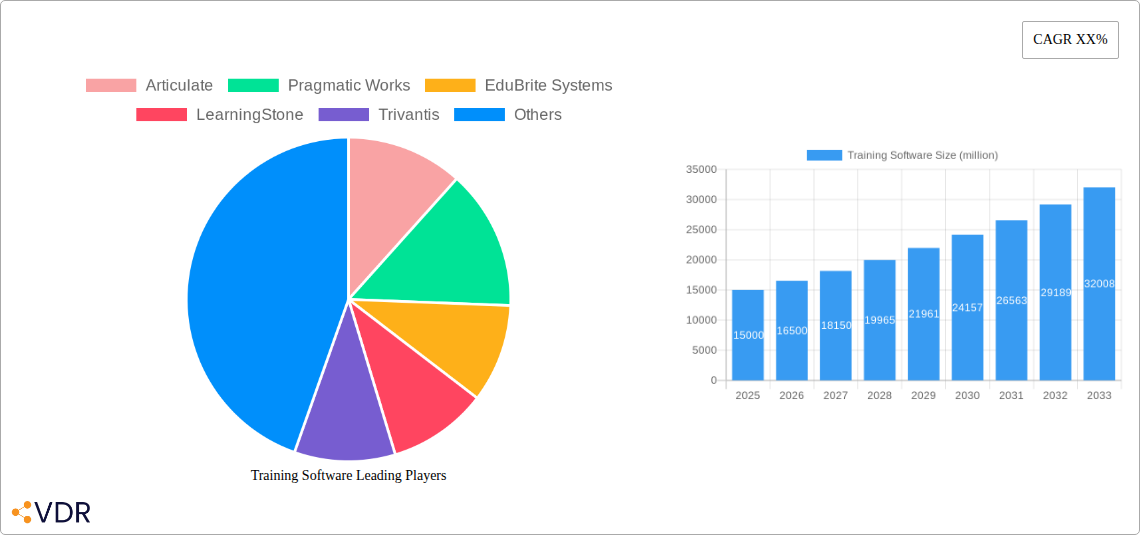
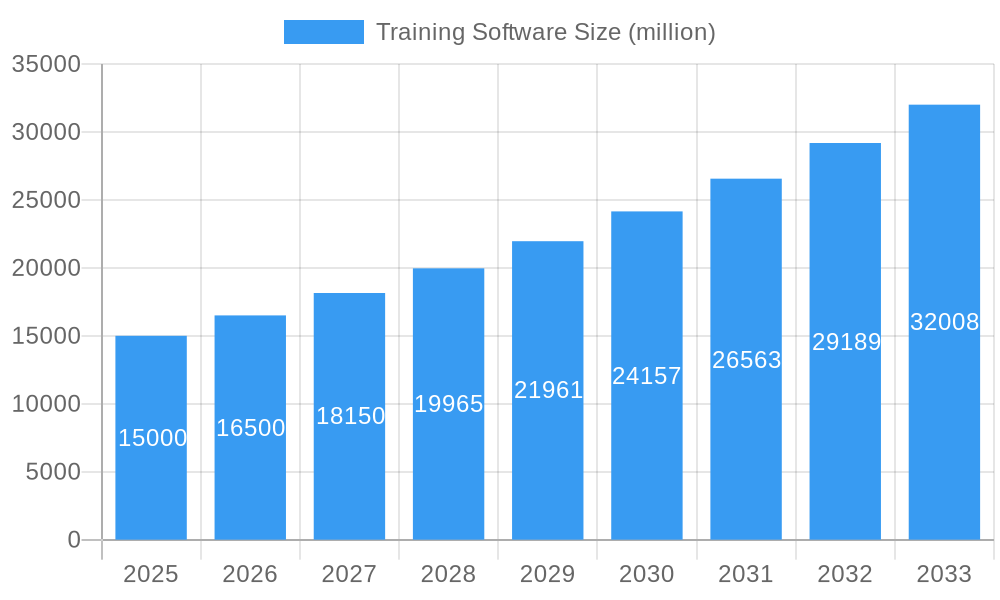
Training Software Market Size (In Billion)

Competition in the training software market is intensifying, with established players like Articulate, Pragmatic Works, and CallidusCloud vying for market share alongside emerging providers such as Easygenerator and Schoox. While the market offers significant opportunities for growth, challenges remain. These include the need for ongoing software updates and maintenance, ensuring data security and privacy, and effectively integrating training software with existing organizational systems. Despite these challenges, the market's upward trajectory is anticipated to continue through 2033, driven by the aforementioned factors and the ongoing demand for efficient and effective employee training solutions. We estimate the market to show continued expansion, demonstrating a strong potential for investment and further innovation within the sector.
Training Software Company Market Share
Training Software Market Report: 2019-2033
This comprehensive report provides a detailed analysis of the Training Software market, covering historical data (2019-2024), the base year (2025), and a forecast period (2025-2033). It delves into market dynamics, growth trends, regional analysis, competitive landscape, and future opportunities, offering valuable insights for industry professionals, investors, and strategic decision-makers. The report segments the market by various factors to provide a holistic understanding of this rapidly evolving sector. The total market size is projected to reach xx million by 2033.
Training Software Market Dynamics & Structure
The Training Software market, encompassing both corporate learning management systems (LMS) and individual educational platforms, is experiencing significant transformation driven by technological innovation and increasing demand for online learning solutions. Market concentration is moderate, with a few dominant players and a large number of niche providers. The market size reached xx million in 2024.
- Market Concentration: The top 5 players hold approximately xx% of the market share in 2025.
- Technological Innovation: AI-powered learning platforms, gamification, and microlearning are key innovation drivers. Significant investments in R&D are boosting this trend, as shown by a xx% increase in investment in 2024.
- Regulatory Frameworks: Data privacy regulations (GDPR, CCPA) are shaping the market by influencing data security practices and requiring compliance efforts.
- Competitive Product Substitutes: Traditional classroom training and self-learning resources pose some competition, though the convenience and scalability of software solutions are increasing their adoption.
- End-User Demographics: Businesses of all sizes and educational institutions are key users, with a growing emphasis on upskilling and reskilling initiatives.
- M&A Trends: The number of M&A deals increased to xx in 2024, indicating consolidation within the market. These mergers and acquisitions are primarily focused on expanding geographical reach and technological capabilities.
Training Software Growth Trends & Insights
The global Training Software market exhibits robust growth, driven by the rising adoption of online learning, a growing preference for personalized learning experiences, and the increasing need for workforce upskilling and reskilling. The market experienced a CAGR of xx% during the historical period (2019-2024) and is projected to maintain a CAGR of xx% from 2025 to 2033. Market penetration, especially in emerging economies, remains relatively low, presenting significant opportunities for growth. The market size is expected to reach xx million by 2033. Technological advancements, including AI-driven personalized learning and immersive VR/AR experiences, are accelerating market growth and reshaping consumer behavior. The shift towards remote and hybrid work models further fuels this market expansion.
Dominant Regions, Countries, or Segments in Training Software
North America currently holds the largest market share, driven by high technology adoption rates and a strong focus on corporate training. However, the Asia-Pacific region is projected to experience the fastest growth in the forecast period, owing to increasing internet penetration and government initiatives promoting digital literacy. Europe follows in market share, showing strong growth with a focus on eLearning compliance and regulations.
- North America: Strong regulatory framework for online learning, high technology adoption, and large corporate sector contribute to its leading position.
- Asia-Pacific: Rapid economic growth, rising internet penetration, and government investments in education drive substantial growth potential.
- Europe: Stringent data privacy regulations, combined with a strong focus on compliance training and upskilling initiatives, fuel market growth.
Training Software Product Landscape
Training software solutions have evolved beyond basic LMS platforms to include sophisticated features like AI-powered learning recommendations, gamified modules, and mobile-first accessibility. Many platforms offer integrations with existing HR and business management systems, boosting efficiency. These systems leverage various learning methodologies, from video-based training to interactive simulations, maximizing engagement and knowledge retention. The focus is on providing personalized and engaging learning experiences that adapt to individual learner needs and learning styles. The use of analytics and reporting features provides data-driven insights for optimization of training programs.
Key Drivers, Barriers & Challenges in Training Software
Key Drivers:
- Increased demand for upskilling and reskilling: The need for a constantly evolving workforce drives substantial investment in training solutions.
- Technological advancements: AI, VR/AR, and gamification enhance learning experiences and effectiveness.
- Remote work and hybrid models: Remote working necessitates accessible and engaging online training platforms.
Key Challenges:
- High initial investment costs: Implementing new training software can be expensive, particularly for smaller businesses.
- Integration challenges: Integrating with existing systems can be complex and time-consuming.
- Competition: A highly competitive landscape requires constant innovation and adaptation. The market competition is estimated to cause price reductions in xx% in the next three years.
Emerging Opportunities in Training Software
- Expansion into untapped markets: Emerging economies present significant opportunities for growth.
- Integration of extended reality (XR) technologies: VR/AR offer immersive and engaging learning experiences.
- Personalized learning pathways: AI-powered platforms can tailor training to individual learner needs.
Growth Accelerators in the Training Software Industry
Strategic partnerships between training software providers and educational institutions accelerate market adoption and innovation. Technological breakthroughs, especially in AI and personalized learning, continue to drive long-term growth. Government initiatives and incentives supporting digital literacy and workforce development are contributing factors. The expansion of the training software market into previously underserved sectors, such as healthcare and manufacturing, also represents a growth accelerator.
Key Players Shaping the Training Software Market
- Articulate
- Pragmatic Works
- EduBrite Systems
- LearningStone
- Trivantis
- Initiafy
- BizLibrary
- ProProfs
- Schoox
- Easygenerator
- CallidusCloud
- JoomlaLMS
Notable Milestones in Training Software Sector
- 2020: Increased adoption of online training due to the COVID-19 pandemic.
- 2021: Significant investments in AI-powered learning platforms.
- 2022: Launch of several new gamified training applications.
- 2023: Growing focus on microlearning and personalized learning experiences.
- 2024: Several mergers and acquisitions consolidating the market.
In-Depth Training Software Market Outlook
The Training Software market is poised for continued strong growth, driven by several factors. Technological advancements will continue to shape the market, with a greater focus on AI-powered personalization, immersive experiences, and data analytics for optimized learning outcomes. Strategic partnerships, global expansion, and a continued shift towards digital learning will fuel long-term growth. The market’s potential is vast, particularly in emerging economies and underserved sectors, offering significant opportunities for both established players and new entrants.
Training Software Segmentation
-
1. Application
- 1.1. School
- 1.2. Training Institution
- 1.3. Enterprise
- 1.4. Other
-
2. Types
- 2.1. Cloud-based
- 2.2. On-premises
Training Software Segmentation By Geography
-
1. North America
- 1.1. United States
- 1.2. Canada
- 1.3. Mexico
-
2. South America
- 2.1. Brazil
- 2.2. Argentina
- 2.3. Rest of South America
-
3. Europe
- 3.1. United Kingdom
- 3.2. Germany
- 3.3. France
- 3.4. Italy
- 3.5. Spain
- 3.6. Russia
- 3.7. Benelux
- 3.8. Nordics
- 3.9. Rest of Europe
-
4. Middle East & Africa
- 4.1. Turkey
- 4.2. Israel
- 4.3. GCC
- 4.4. North Africa
- 4.5. South Africa
- 4.6. Rest of Middle East & Africa
-
5. Asia Pacific
- 5.1. China
- 5.2. India
- 5.3. Japan
- 5.4. South Korea
- 5.5. ASEAN
- 5.6. Oceania
- 5.7. Rest of Asia Pacific
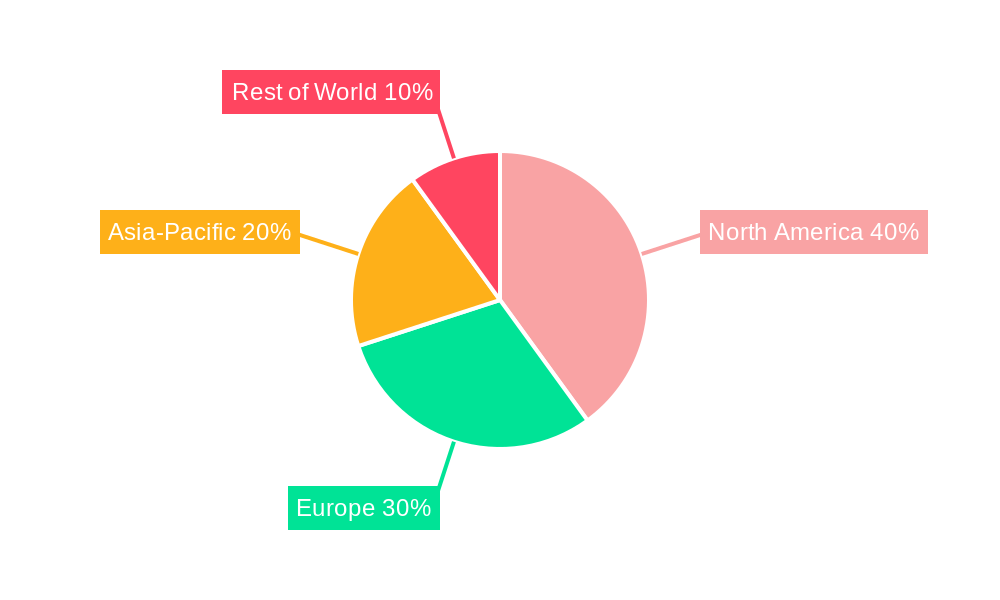
Training Software Regional Market Share
Geographic Coverage of Training Software
Training Software REPORT HIGHLIGHTS
| Aspects | Details |
|---|---|
| Study Period | 2020-2034 |
| Base Year | 2025 |
| Estimated Year | 2026 |
| Forecast Period | 2026-2034 |
| Historical Period | 2020-2025 |
| Growth Rate | CAGR of XX% from 2020-2034 |
| Segmentation |
|
Table of Contents
- 1. Introduction
- 1.1. Research Scope
- 1.2. Market Segmentation
- 1.3. Research Methodology
- 1.4. Definitions and Assumptions
- 2. Executive Summary
- 2.1. Introduction
- 3. Market Dynamics
- 3.1. Introduction
- 3.2. Market Drivers
- 3.3. Market Restrains
- 3.4. Market Trends
- 4. Market Factor Analysis
- 4.1. Porters Five Forces
- 4.2. Supply/Value Chain
- 4.3. PESTEL analysis
- 4.4. Market Entropy
- 4.5. Patent/Trademark Analysis
- 5. Global Training Software Analysis, Insights and Forecast, 2020-2032
- 5.1. Market Analysis, Insights and Forecast - by Application
- 5.1.1. School
- 5.1.2. Training Institution
- 5.1.3. Enterprise
- 5.1.4. Other
- 5.2. Market Analysis, Insights and Forecast - by Types
- 5.2.1. Cloud-based
- 5.2.2. On-premises
- 5.3. Market Analysis, Insights and Forecast - by Region
- 5.3.1. North America
- 5.3.2. South America
- 5.3.3. Europe
- 5.3.4. Middle East & Africa
- 5.3.5. Asia Pacific
- 5.1. Market Analysis, Insights and Forecast - by Application
- 6. North America Training Software Analysis, Insights and Forecast, 2020-2032
- 6.1. Market Analysis, Insights and Forecast - by Application
- 6.1.1. School
- 6.1.2. Training Institution
- 6.1.3. Enterprise
- 6.1.4. Other
- 6.2. Market Analysis, Insights and Forecast - by Types
- 6.2.1. Cloud-based
- 6.2.2. On-premises
- 6.1. Market Analysis, Insights and Forecast - by Application
- 7. South America Training Software Analysis, Insights and Forecast, 2020-2032
- 7.1. Market Analysis, Insights and Forecast - by Application
- 7.1.1. School
- 7.1.2. Training Institution
- 7.1.3. Enterprise
- 7.1.4. Other
- 7.2. Market Analysis, Insights and Forecast - by Types
- 7.2.1. Cloud-based
- 7.2.2. On-premises
- 7.1. Market Analysis, Insights and Forecast - by Application
- 8. Europe Training Software Analysis, Insights and Forecast, 2020-2032
- 8.1. Market Analysis, Insights and Forecast - by Application
- 8.1.1. School
- 8.1.2. Training Institution
- 8.1.3. Enterprise
- 8.1.4. Other
- 8.2. Market Analysis, Insights and Forecast - by Types
- 8.2.1. Cloud-based
- 8.2.2. On-premises
- 8.1. Market Analysis, Insights and Forecast - by Application
- 9. Middle East & Africa Training Software Analysis, Insights and Forecast, 2020-2032
- 9.1. Market Analysis, Insights and Forecast - by Application
- 9.1.1. School
- 9.1.2. Training Institution
- 9.1.3. Enterprise
- 9.1.4. Other
- 9.2. Market Analysis, Insights and Forecast - by Types
- 9.2.1. Cloud-based
- 9.2.2. On-premises
- 9.1. Market Analysis, Insights and Forecast - by Application
- 10. Asia Pacific Training Software Analysis, Insights and Forecast, 2020-2032
- 10.1. Market Analysis, Insights and Forecast - by Application
- 10.1.1. School
- 10.1.2. Training Institution
- 10.1.3. Enterprise
- 10.1.4. Other
- 10.2. Market Analysis, Insights and Forecast - by Types
- 10.2.1. Cloud-based
- 10.2.2. On-premises
- 10.1. Market Analysis, Insights and Forecast - by Application
- 11. Competitive Analysis
- 11.1. Global Market Share Analysis 2025
- 11.2. Company Profiles
- 11.2.1 Articulate
- 11.2.1.1. Overview
- 11.2.1.2. Products
- 11.2.1.3. SWOT Analysis
- 11.2.1.4. Recent Developments
- 11.2.1.5. Financials (Based on Availability)
- 11.2.2 Pragmatic Works
- 11.2.2.1. Overview
- 11.2.2.2. Products
- 11.2.2.3. SWOT Analysis
- 11.2.2.4. Recent Developments
- 11.2.2.5. Financials (Based on Availability)
- 11.2.3 EduBrite Systems
- 11.2.3.1. Overview
- 11.2.3.2. Products
- 11.2.3.3. SWOT Analysis
- 11.2.3.4. Recent Developments
- 11.2.3.5. Financials (Based on Availability)
- 11.2.4 LearningStone
- 11.2.4.1. Overview
- 11.2.4.2. Products
- 11.2.4.3. SWOT Analysis
- 11.2.4.4. Recent Developments
- 11.2.4.5. Financials (Based on Availability)
- 11.2.5 Trivantis
- 11.2.5.1. Overview
- 11.2.5.2. Products
- 11.2.5.3. SWOT Analysis
- 11.2.5.4. Recent Developments
- 11.2.5.5. Financials (Based on Availability)
- 11.2.6 Initiafy
- 11.2.6.1. Overview
- 11.2.6.2. Products
- 11.2.6.3. SWOT Analysis
- 11.2.6.4. Recent Developments
- 11.2.6.5. Financials (Based on Availability)
- 11.2.7 BizLibrary
- 11.2.7.1. Overview
- 11.2.7.2. Products
- 11.2.7.3. SWOT Analysis
- 11.2.7.4. Recent Developments
- 11.2.7.5. Financials (Based on Availability)
- 11.2.8 ProProfs
- 11.2.8.1. Overview
- 11.2.8.2. Products
- 11.2.8.3. SWOT Analysis
- 11.2.8.4. Recent Developments
- 11.2.8.5. Financials (Based on Availability)
- 11.2.9 Schoox
- 11.2.9.1. Overview
- 11.2.9.2. Products
- 11.2.9.3. SWOT Analysis
- 11.2.9.4. Recent Developments
- 11.2.9.5. Financials (Based on Availability)
- 11.2.10 Easygenerator
- 11.2.10.1. Overview
- 11.2.10.2. Products
- 11.2.10.3. SWOT Analysis
- 11.2.10.4. Recent Developments
- 11.2.10.5. Financials (Based on Availability)
- 11.2.11 CallidusCloud
- 11.2.11.1. Overview
- 11.2.11.2. Products
- 11.2.11.3. SWOT Analysis
- 11.2.11.4. Recent Developments
- 11.2.11.5. Financials (Based on Availability)
- 11.2.12 JoomlaLMS
- 11.2.12.1. Overview
- 11.2.12.2. Products
- 11.2.12.3. SWOT Analysis
- 11.2.12.4. Recent Developments
- 11.2.12.5. Financials (Based on Availability)
- 11.2.1 Articulate
List of Figures
- Figure 1: Global Training Software Revenue Breakdown (million, %) by Region 2025 & 2033
- Figure 2: North America Training Software Revenue (million), by Application 2025 & 2033
- Figure 3: North America Training Software Revenue Share (%), by Application 2025 & 2033
- Figure 4: North America Training Software Revenue (million), by Types 2025 & 2033
- Figure 5: North America Training Software Revenue Share (%), by Types 2025 & 2033
- Figure 6: North America Training Software Revenue (million), by Country 2025 & 2033
- Figure 7: North America Training Software Revenue Share (%), by Country 2025 & 2033
- Figure 8: South America Training Software Revenue (million), by Application 2025 & 2033
- Figure 9: South America Training Software Revenue Share (%), by Application 2025 & 2033
- Figure 10: South America Training Software Revenue (million), by Types 2025 & 2033
- Figure 11: South America Training Software Revenue Share (%), by Types 2025 & 2033
- Figure 12: South America Training Software Revenue (million), by Country 2025 & 2033
- Figure 13: South America Training Software Revenue Share (%), by Country 2025 & 2033
- Figure 14: Europe Training Software Revenue (million), by Application 2025 & 2033
- Figure 15: Europe Training Software Revenue Share (%), by Application 2025 & 2033
- Figure 16: Europe Training Software Revenue (million), by Types 2025 & 2033
- Figure 17: Europe Training Software Revenue Share (%), by Types 2025 & 2033
- Figure 18: Europe Training Software Revenue (million), by Country 2025 & 2033
- Figure 19: Europe Training Software Revenue Share (%), by Country 2025 & 2033
- Figure 20: Middle East & Africa Training Software Revenue (million), by Application 2025 & 2033
- Figure 21: Middle East & Africa Training Software Revenue Share (%), by Application 2025 & 2033
- Figure 22: Middle East & Africa Training Software Revenue (million), by Types 2025 & 2033
- Figure 23: Middle East & Africa Training Software Revenue Share (%), by Types 2025 & 2033
- Figure 24: Middle East & Africa Training Software Revenue (million), by Country 2025 & 2033
- Figure 25: Middle East & Africa Training Software Revenue Share (%), by Country 2025 & 2033
- Figure 26: Asia Pacific Training Software Revenue (million), by Application 2025 & 2033
- Figure 27: Asia Pacific Training Software Revenue Share (%), by Application 2025 & 2033
- Figure 28: Asia Pacific Training Software Revenue (million), by Types 2025 & 2033
- Figure 29: Asia Pacific Training Software Revenue Share (%), by Types 2025 & 2033
- Figure 30: Asia Pacific Training Software Revenue (million), by Country 2025 & 2033
- Figure 31: Asia Pacific Training Software Revenue Share (%), by Country 2025 & 2033
List of Tables
- Table 1: Global Training Software Revenue million Forecast, by Application 2020 & 2033
- Table 2: Global Training Software Revenue million Forecast, by Types 2020 & 2033
- Table 3: Global Training Software Revenue million Forecast, by Region 2020 & 2033
- Table 4: Global Training Software Revenue million Forecast, by Application 2020 & 2033
- Table 5: Global Training Software Revenue million Forecast, by Types 2020 & 2033
- Table 6: Global Training Software Revenue million Forecast, by Country 2020 & 2033
- Table 7: United States Training Software Revenue (million) Forecast, by Application 2020 & 2033
- Table 8: Canada Training Software Revenue (million) Forecast, by Application 2020 & 2033
- Table 9: Mexico Training Software Revenue (million) Forecast, by Application 2020 & 2033
- Table 10: Global Training Software Revenue million Forecast, by Application 2020 & 2033
- Table 11: Global Training Software Revenue million Forecast, by Types 2020 & 2033
- Table 12: Global Training Software Revenue million Forecast, by Country 2020 & 2033
- Table 13: Brazil Training Software Revenue (million) Forecast, by Application 2020 & 2033
- Table 14: Argentina Training Software Revenue (million) Forecast, by Application 2020 & 2033
- Table 15: Rest of South America Training Software Revenue (million) Forecast, by Application 2020 & 2033
- Table 16: Global Training Software Revenue million Forecast, by Application 2020 & 2033
- Table 17: Global Training Software Revenue million Forecast, by Types 2020 & 2033
- Table 18: Global Training Software Revenue million Forecast, by Country 2020 & 2033
- Table 19: United Kingdom Training Software Revenue (million) Forecast, by Application 2020 & 2033
- Table 20: Germany Training Software Revenue (million) Forecast, by Application 2020 & 2033
- Table 21: France Training Software Revenue (million) Forecast, by Application 2020 & 2033
- Table 22: Italy Training Software Revenue (million) Forecast, by Application 2020 & 2033
- Table 23: Spain Training Software Revenue (million) Forecast, by Application 2020 & 2033
- Table 24: Russia Training Software Revenue (million) Forecast, by Application 2020 & 2033
- Table 25: Benelux Training Software Revenue (million) Forecast, by Application 2020 & 2033
- Table 26: Nordics Training Software Revenue (million) Forecast, by Application 2020 & 2033
- Table 27: Rest of Europe Training Software Revenue (million) Forecast, by Application 2020 & 2033
- Table 28: Global Training Software Revenue million Forecast, by Application 2020 & 2033
- Table 29: Global Training Software Revenue million Forecast, by Types 2020 & 2033
- Table 30: Global Training Software Revenue million Forecast, by Country 2020 & 2033
- Table 31: Turkey Training Software Revenue (million) Forecast, by Application 2020 & 2033
- Table 32: Israel Training Software Revenue (million) Forecast, by Application 2020 & 2033
- Table 33: GCC Training Software Revenue (million) Forecast, by Application 2020 & 2033
- Table 34: North Africa Training Software Revenue (million) Forecast, by Application 2020 & 2033
- Table 35: South Africa Training Software Revenue (million) Forecast, by Application 2020 & 2033
- Table 36: Rest of Middle East & Africa Training Software Revenue (million) Forecast, by Application 2020 & 2033
- Table 37: Global Training Software Revenue million Forecast, by Application 2020 & 2033
- Table 38: Global Training Software Revenue million Forecast, by Types 2020 & 2033
- Table 39: Global Training Software Revenue million Forecast, by Country 2020 & 2033
- Table 40: China Training Software Revenue (million) Forecast, by Application 2020 & 2033
- Table 41: India Training Software Revenue (million) Forecast, by Application 2020 & 2033
- Table 42: Japan Training Software Revenue (million) Forecast, by Application 2020 & 2033
- Table 43: South Korea Training Software Revenue (million) Forecast, by Application 2020 & 2033
- Table 44: ASEAN Training Software Revenue (million) Forecast, by Application 2020 & 2033
- Table 45: Oceania Training Software Revenue (million) Forecast, by Application 2020 & 2033
- Table 46: Rest of Asia Pacific Training Software Revenue (million) Forecast, by Application 2020 & 2033
Frequently Asked Questions
1. What is the projected Compound Annual Growth Rate (CAGR) of the Training Software?
The projected CAGR is approximately XX%.
2. Which companies are prominent players in the Training Software?
Key companies in the market include Articulate, Pragmatic Works, EduBrite Systems, LearningStone, Trivantis, Initiafy, BizLibrary, ProProfs, Schoox, Easygenerator, CallidusCloud, JoomlaLMS.
3. What are the main segments of the Training Software?
The market segments include Application, Types.
4. Can you provide details about the market size?
The market size is estimated to be USD XXX million as of 2022.
5. What are some drivers contributing to market growth?
N/A
6. What are the notable trends driving market growth?
N/A
7. Are there any restraints impacting market growth?
N/A
8. Can you provide examples of recent developments in the market?
N/A
9. What pricing options are available for accessing the report?
Pricing options include single-user, multi-user, and enterprise licenses priced at USD 2900.00, USD 4350.00, and USD 5800.00 respectively.
10. Is the market size provided in terms of value or volume?
The market size is provided in terms of value, measured in million.
11. Are there any specific market keywords associated with the report?
Yes, the market keyword associated with the report is "Training Software," which aids in identifying and referencing the specific market segment covered.
12. How do I determine which pricing option suits my needs best?
The pricing options vary based on user requirements and access needs. Individual users may opt for single-user licenses, while businesses requiring broader access may choose multi-user or enterprise licenses for cost-effective access to the report.
13. Are there any additional resources or data provided in the Training Software report?
While the report offers comprehensive insights, it's advisable to review the specific contents or supplementary materials provided to ascertain if additional resources or data are available.
14. How can I stay updated on further developments or reports in the Training Software?
To stay informed about further developments, trends, and reports in the Training Software, consider subscribing to industry newsletters, following relevant companies and organizations, or regularly checking reputable industry news sources and publications.
Methodology
Step 1 - Identification of Relevant Samples Size from Population Database



Step 2 - Approaches for Defining Global Market Size (Value, Volume* & Price*)

Note*: In applicable scenarios
Step 3 - Data Sources
Primary Research
- Web Analytics
- Survey Reports
- Research Institute
- Latest Research Reports
- Opinion Leaders
Secondary Research
- Annual Reports
- White Paper
- Latest Press Release
- Industry Association
- Paid Database
- Investor Presentations

Step 4 - Data Triangulation
Involves using different sources of information in order to increase the validity of a study
These sources are likely to be stakeholders in a program - participants, other researchers, program staff, other community members, and so on.
Then we put all data in single framework & apply various statistical tools to find out the dynamic on the market.
During the analysis stage, feedback from the stakeholder groups would be compared to determine areas of agreement as well as areas of divergence