


Key Insights
The Trachoma Treatment Market is projected for significant expansion, reaching an estimated market size of $0.6 billion by 2024, with a Compound Annual Growth Rate (CAGR) of 6.24% through 2033. This growth is propelled by intensified global health initiatives targeting trachoma elimination, alongside advancements in pharmaceutical formulations and delivery systems. Key drivers include the rising incidence of bacterial eye infections and the continuous demand for effective anti-infective therapies. Increased awareness among healthcare professionals and public health organizations regarding the socio-economic impact of trachoma is also stimulating demand for accessible and affordable treatment options. The market is segmented by administration route, with oral and topical treatments playing pivotal roles. Major drug classes include Macrolides and Tetracyclines, critical for combating Chlamydia trachomatis, the principal pathogen. Ophthalmic Anti-infectives and Sulfonamides offer complementary therapeutic solutions. Leading pharmaceutical entities such as Merck & Co. Inc., Pfizer Inc., and AbbVie Inc. (via Allergan) are actively contributing to market dynamics through research, development, and distribution.
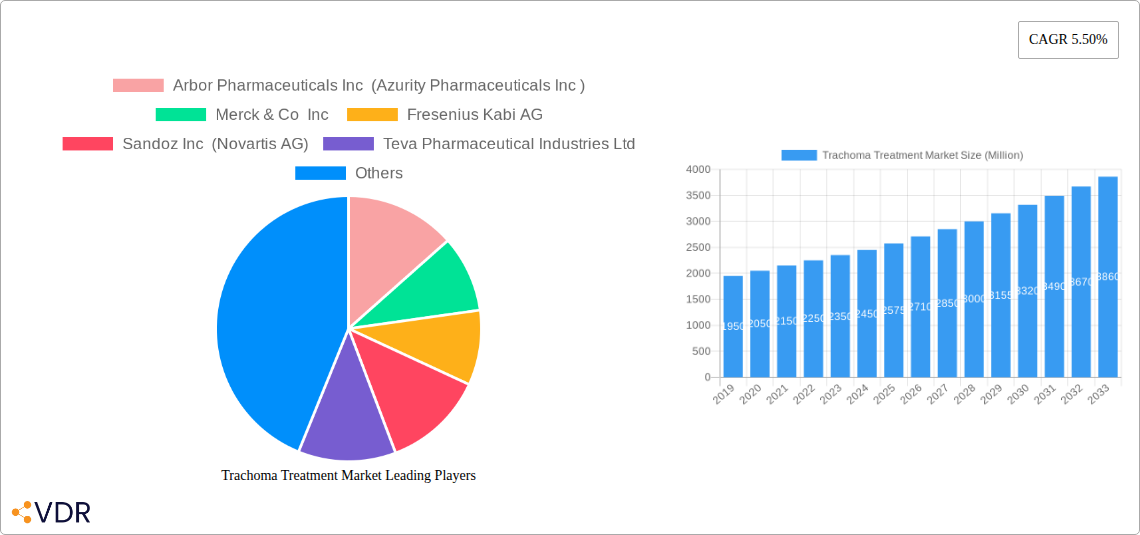
Trachoma Treatment Market Market Size (In Million)

Market evolution is further influenced by trends such as the development of convenient, patient-centric drug formulations, including single-dose oral antibiotics that enhance compliance and treatment efficacy, particularly in endemic regions. The integration of telemedicine and digital health platforms for remote diagnosis and follow-up care is emerging as a significant trend, improving accessibility in underserved areas. However, growth may be tempered by challenges such as inconsistent access to healthcare infrastructure in remote and low-income countries, the potential for antibiotic resistance, and the cost of advanced treatments. Effective implementation of large-scale public health programs and sustained funding are critical for widespread trachoma eradication. Geographically, the Asia Pacific region, notably China and India, presents a substantial market due to high trachoma prevalence. North America and Europe, despite lower prevalence, are significant markets for advanced treatments and research. Ongoing efforts to implement the World Health Organization's "S.A.F.E." strategy (Surgery, Antibiotics, Facial cleanliness, and Environmental improvements) are expected to sustain strong demand for antibiotic treatments.

Trachoma Treatment Market Company Market Share
This comprehensive report delivers an in-depth analysis of the global Trachoma Treatment Market, offering critical insights into market dynamics, growth trends, regional influence, product landscape, key drivers, barriers, opportunities, and the competitive environment. Covering the study period from 2024 to 2033, with 2024 as the base year, this report is an essential resource for stakeholders seeking to understand and capitalize on the evolving trachoma treatment landscape. We analyze both the parent Trachoma Treatment Market and its sub-markets for a holistic perspective.
Trachoma Treatment Market Dynamics & Structure
The Trachoma Treatment Market, a critical segment within the ophthalmic anti-infective and macrolide drug classes, exhibits a moderately concentrated market structure, with a few key players holding significant market share. Technological innovation remains a primary driver, particularly in the development of more effective and accessible antibiotic formulations and delivery methods. Regulatory frameworks, spearheaded by organizations like the World Health Organization (WHO), play a pivotal role in shaping treatment guidelines and driving drug approvals, influencing both the parent Trachoma Treatment Market and its child segments. Competitive product substitutes are limited, primarily revolving around different antibiotic classes and their efficacy against Chlamydia trachomatis. End-user demographics are heavily skewed towards populations in low-income and middle-income countries, where trachoma prevalence is highest, necessitating accessible and affordable treatment solutions. Mergers and acquisitions (M&A) trends are observed as companies seek to consolidate their market position and expand their product portfolios. For instance, XX M&A deals were recorded in the historical period (2019-2024), indicating a strategic consolidation. Innovation barriers include the high cost of clinical trials and the challenge of reaching remote populations with essential medicines.
- Market Concentration: Moderate to High among leading pharmaceutical giants.
- Technological Innovation Drivers: Novel drug delivery systems, improved antibiotic formulations, and combination therapies.
- Regulatory Frameworks: WHO guidelines, national health policies, and stringent drug approval processes.
- Competitive Product Substitutes: Primarily other antibiotic classes and surgical interventions for advanced stages.
- End-User Demographics: Predominantly in endemic regions of Africa, Asia, and Latin America, impacting the Oral and Topical segments.
- M&A Trends: Strategic acquisitions to bolster market presence and product portfolios.
- Innovation Barriers: High R&D costs, regulatory complexities, and challenges in widespread accessibility.
Trachoma Treatment Market Growth Trends & Insights
The global Trachoma Treatment Market is projected to experience robust growth driven by increased awareness, sustained public health initiatives, and ongoing pharmaceutical research. The market size is expected to evolve from XX Million units in 2025 to XX Million units by 2033, demonstrating a Compound Annual Growth Rate (CAGR) of approximately XX% during the forecast period (2025-2033). Adoption rates for key treatments, particularly oral azithromycin, remain high due to its effectiveness and WHO endorsement within the S.A.F.E. strategy. Technological disruptions, while slower in this specific therapeutic area compared to some others, are focused on improving patient adherence and reducing treatment duration. Consumer behavior shifts are less pronounced, as treatment access and affordability remain the primary determinants for end-users. The market penetration is steadily increasing in endemic regions, fueled by non-governmental organization (NGO) and government-led programs. The market's trajectory is also influenced by the demand for both oral macrolides and topical ophthalmic anti-infectives, reflecting diverse treatment approaches.
- Market Size Evolution: Significant expansion anticipated due to ongoing global health efforts.
- Adoption Rates: High for WHO-recommended treatments, particularly oral macrolides.
- Technological Disruptions: Focus on improving drug delivery and patient compliance.
- Consumer Behavior Shifts: Primarily driven by treatment accessibility and affordability.
- Market Penetration: Steadily increasing in endemic low- and middle-income countries.
- CAGR (2025-2033): Estimated at XX%.
Dominant Regions, Countries, or Segments in Trachoma Treatment Market
The Macrolides drug class, particularly azithromycin, is the dominant force driving growth within the Trachoma Treatment Market. This dominance stems from its widespread recommendation by the WHO as part of the S.A.F.E. strategy, which significantly influences treatment protocols globally. In terms of regions, Sub-Saharan Africa remains the epicenter for trachoma prevalence, making it the most significant market for treatments. Within this region, countries like Ethiopia, Nigeria, and Tanzania have historically accounted for a substantial portion of the demand. The Oral route of administration, facilitated by macrolides, is overwhelmingly preferred due to its ease of administration and mass drug administration (MDA) programs, which are crucial for disease control in resource-limited settings.
The market share for macrolides in the overall trachoma treatment market is estimated at XX%. This segment's growth is propelled by sustained funding from international health organizations and national governments focused on trachoma elimination goals. Economic policies in endemic countries that prioritize public health spending and the establishment of robust healthcare infrastructure further bolster this segment. The Ophthalmic Anti-infective segment, while important for treating individual cases and complications, plays a secondary role in mass eradication efforts compared to oral macrolides. The Tetracycline and Sulfonamides drug classes, historically significant, have seen their market share diminish with the advent of more effective and convenient macrolide-based treatments, though they may still find application in specific treatment-resistant cases or alternative regimens. The geographical concentration of trachoma cases in specific belt regions, characterized by poor sanitation and limited access to clean water, directly correlates with the demand for oral treatments.
- Dominant Drug Class: Macrolides (e.g., Azithromycin) with an estimated XX% market share.
- Dominant Route of Administration: Oral, facilitating mass drug administration.
- Leading Region: Sub-Saharan Africa, accounting for the highest disease burden.
- Key Country Drivers: Ethiopia, Nigeria, Tanzania, and other highly endemic nations.
- Economic Policies: Government investment in public health and disease eradication programs.
- Infrastructure: Development of healthcare access in rural and remote areas.
- Growth Potential: High in regions with persistent endemicity and ongoing control initiatives.
Trachoma Treatment Market Product Landscape
The Trachoma Treatment Market product landscape is largely defined by antibiotic formulations designed to combat Chlamydia trachomatis. The primary product innovation revolves around the efficacy and accessibility of these antibiotics. Azithromycin, a macrolide antibiotic, dominates the market due to its broad-spectrum activity, long half-life, and high cure rates, particularly in single-dose oral regimens. Pfizer Inc.'s Zithromax (azithromycin) has been a cornerstone of treatment, with the company's commitment to donation programs significantly impacting global access. Other products include topical ophthalmic antibiotics like tetracycline and erythromycin ointments, which are often used for milder cases or as adjunct therapy. The unique selling proposition of leading products lies in their proven efficacy, WHO recommendation, and large-scale availability through global health partnerships.
Key Drivers, Barriers & Challenges in Trachoma Treatment Market
Key Drivers:
- Global Health Initiatives: Continued funding and strategic support from WHO and other international bodies for trachoma elimination.
- Mass Drug Administration (MDA) Programs: The effectiveness and scalability of oral antibiotic distribution in endemic regions.
- Increased Disease Awareness: Growing recognition of trachoma's impact on blindness and vision impairment.
- Pharmaceutical Donations: Commitment from key manufacturers, such as Pfizer Inc., to donate essential medicines.
- Improved Diagnostic Capabilities: Advancements in identifying and monitoring trachoma cases.
Barriers & Challenges:
- Poverty and Infrastructure Gaps: Limited access to healthcare and clean water in highly endemic areas.
- Drug Resistance: The potential for Chlamydia trachomatis to develop resistance to antibiotics over time.
- Logistical Challenges: Distributing medicines to remote and underserved populations.
- Funding Sustainability: Ensuring long-term financial commitment for ongoing treatment and prevention efforts.
- Regulatory Hurdles: Navigating diverse national drug registration processes.
- Supply Chain Disruptions: Potential for stockouts and delays in medicine delivery, estimated to impact XX% of planned distributions in challenging regions.
Emerging Opportunities in Trachoma Treatment Market
Emerging opportunities in the Trachoma Treatment Market lie in enhancing the sustainability of control programs and exploring novel therapeutic approaches. The development of more potent and longer-acting antibiotic formulations could further simplify treatment regimens and improve patient adherence, particularly in remote areas. There is also an opportunity to leverage digital health technologies for better disease surveillance, patient tracking, and educational outreach, especially in regions where traditional healthcare infrastructure is weak. Furthermore, research into co-infections and the potential for integrated Neglected Tropical Disease (NTD) control programs presents a synergistic avenue for growth and impact. The increasing focus on a "one health" approach could also lead to innovative strategies for tackling zoonotic aspects that may contribute to trachoma prevalence.
Growth Accelerators in the Trachoma Treatment Market Industry
Several key catalysts are poised to accelerate long-term growth in the Trachoma Treatment Market. Technological breakthroughs in drug formulation, such as sustained-release mechanisms, could revolutionize treatment administration, reducing the frequency of doses required. Strategic partnerships between pharmaceutical companies, NGOs, and governments are crucial for expanding reach and ensuring equitable access to treatments. Market expansion strategies, including focused public awareness campaigns and integrated health service delivery, will further drive demand. The continued commitment of organizations like the International Trachoma Initiative (ITI) to supporting global elimination efforts acts as a significant growth accelerator. Furthermore, research into potential vaccines or novel preventative measures, though in early stages, holds long-term promise.
Key Players Shaping the Trachoma Treatment Market Market
- Arbor Pharmaceuticals Inc (Azurity Pharmaceuticals Inc )
- Merck & Co Inc
- Fresenius Kabi AG
- Sandoz Inc (Novartis AG)
- Teva Pharmaceutical Industries Ltd
- Allergan (AbbVie Inc )
- Apotex
- Pfizer Inc
Notable Milestones in Trachoma Treatment Market Sector
- January 2023: Pfizer Inc. and the International Trachoma Initiative (ITI) announced the donation of the one billionth Zithromax (azithromycin) dose, a significant contribution to WHO's recommended S.A.F.E. strategy for trachoma prevention and treatment.
- January 2023: The World Health Organization (WHO) emphasized the urgent need for increased investment in combating neglected tropical diseases, highlighting that over 1.6 billion people required treatment in 2021, many in least-developed countries, underscoring the ongoing global health imperative for trachoma control.
In-Depth Trachoma Treatment Market Market Outlook
The Trachoma Treatment Market is poised for sustained growth driven by a confluence of factors including unwavering global health commitments and pharmaceutical innovations. The strong foundation laid by mass drug administration programs, particularly with macrolide antibiotics, will continue to underpin market expansion. Future potential lies in refining treatment delivery systems to enhance accessibility in challenging terrains and exploring synergistic approaches to combat neglected tropical diseases. Strategic alliances and continued investment in research for more advanced therapies will be pivotal in achieving trachoma elimination goals, solidifying the market's trajectory towards comprehensive global control.
Trachoma Treatment Market Segmentation
-
1. Route of Administration
- 1.1. Oral
- 1.2. Topical
-
2. Drug Class
- 2.1. Macrolides
- 2.2. Tetracycline
- 2.3. Ophthalmic Anti-infective
- 2.4. Sulfonamides
Trachoma Treatment Market Segmentation By Geography
-
1. North America
- 1.1. United States
- 1.2. Canada
- 1.3. Mexico
-
2. Europe
- 2.1. Germany
- 2.2. United Kingdom
- 2.3. France
- 2.4. Italy
- 2.5. Spain
- 2.6. Rest of Europe
-
3. Asia Pacific
- 3.1. China
- 3.2. Japan
- 3.3. India
- 3.4. Australia
- 3.5. South Korea
- 3.6. Rest of Asia Pacific
-
4. Middle East and Africa
- 4.1. GCC
- 4.2. South Africa
- 4.3. Rest of Middle East and Africa
-
5. South America
- 5.1. Brazil
- 5.2. Argentina
- 5.3. Rest of South America
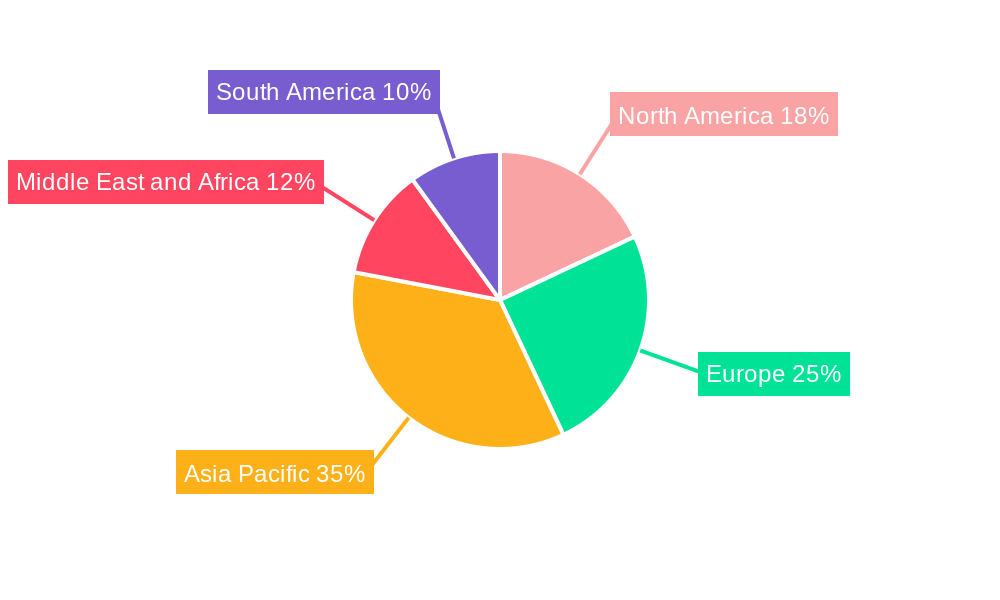
Trachoma Treatment Market Regional Market Share
Geographic Coverage of Trachoma Treatment Market
Trachoma Treatment Market REPORT HIGHLIGHTS
| Aspects | Details |
|---|---|
| Study Period | 2020-2034 |
| Base Year | 2025 |
| Estimated Year | 2026 |
| Forecast Period | 2026-2034 |
| Historical Period | 2020-2025 |
| Growth Rate | CAGR of 6.24% from 2020-2034 |
| Segmentation |
|
Table of Contents
- 1. Introduction
- 1.1. Research Scope
- 1.2. Market Segmentation
- 1.3. Research Methodology
- 1.4. Definitions and Assumptions
- 2. Executive Summary
- 2.1. Introduction
- 3. Market Dynamics
- 3.1. Introduction
- 3.2. Market Drivers
- 3.2.1. Increasing Incidence and Prevalence of Trachoma; Favourable Government Initiative
- 3.3. Market Restrains
- 3.3.1. Lack of Awareness About Trachoma; Side Effects Associated with the Drugs
- 3.4. Market Trends
- 3.4.1. Oral Route of Administration is Expected to Hold a Significant Share of the Market Over the Forecast Period
- 4. Market Factor Analysis
- 4.1. Porters Five Forces
- 4.2. Supply/Value Chain
- 4.3. PESTEL analysis
- 4.4. Market Entropy
- 4.5. Patent/Trademark Analysis
- 5. Global Trachoma Treatment Market Analysis, Insights and Forecast, 2020-2032
- 5.1. Market Analysis, Insights and Forecast - by Route of Administration
- 5.1.1. Oral
- 5.1.2. Topical
- 5.2. Market Analysis, Insights and Forecast - by Drug Class
- 5.2.1. Macrolides
- 5.2.2. Tetracycline
- 5.2.3. Ophthalmic Anti-infective
- 5.2.4. Sulfonamides
- 5.3. Market Analysis, Insights and Forecast - by Region
- 5.3.1. North America
- 5.3.2. Europe
- 5.3.3. Asia Pacific
- 5.3.4. Middle East and Africa
- 5.3.5. South America
- 5.1. Market Analysis, Insights and Forecast - by Route of Administration
- 6. North America Trachoma Treatment Market Analysis, Insights and Forecast, 2020-2032
- 6.1. Market Analysis, Insights and Forecast - by Route of Administration
- 6.1.1. Oral
- 6.1.2. Topical
- 6.2. Market Analysis, Insights and Forecast - by Drug Class
- 6.2.1. Macrolides
- 6.2.2. Tetracycline
- 6.2.3. Ophthalmic Anti-infective
- 6.2.4. Sulfonamides
- 6.1. Market Analysis, Insights and Forecast - by Route of Administration
- 7. Europe Trachoma Treatment Market Analysis, Insights and Forecast, 2020-2032
- 7.1. Market Analysis, Insights and Forecast - by Route of Administration
- 7.1.1. Oral
- 7.1.2. Topical
- 7.2. Market Analysis, Insights and Forecast - by Drug Class
- 7.2.1. Macrolides
- 7.2.2. Tetracycline
- 7.2.3. Ophthalmic Anti-infective
- 7.2.4. Sulfonamides
- 7.1. Market Analysis, Insights and Forecast - by Route of Administration
- 8. Asia Pacific Trachoma Treatment Market Analysis, Insights and Forecast, 2020-2032
- 8.1. Market Analysis, Insights and Forecast - by Route of Administration
- 8.1.1. Oral
- 8.1.2. Topical
- 8.2. Market Analysis, Insights and Forecast - by Drug Class
- 8.2.1. Macrolides
- 8.2.2. Tetracycline
- 8.2.3. Ophthalmic Anti-infective
- 8.2.4. Sulfonamides
- 8.1. Market Analysis, Insights and Forecast - by Route of Administration
- 9. Middle East and Africa Trachoma Treatment Market Analysis, Insights and Forecast, 2020-2032
- 9.1. Market Analysis, Insights and Forecast - by Route of Administration
- 9.1.1. Oral
- 9.1.2. Topical
- 9.2. Market Analysis, Insights and Forecast - by Drug Class
- 9.2.1. Macrolides
- 9.2.2. Tetracycline
- 9.2.3. Ophthalmic Anti-infective
- 9.2.4. Sulfonamides
- 9.1. Market Analysis, Insights and Forecast - by Route of Administration
- 10. South America Trachoma Treatment Market Analysis, Insights and Forecast, 2020-2032
- 10.1. Market Analysis, Insights and Forecast - by Route of Administration
- 10.1.1. Oral
- 10.1.2. Topical
- 10.2. Market Analysis, Insights and Forecast - by Drug Class
- 10.2.1. Macrolides
- 10.2.2. Tetracycline
- 10.2.3. Ophthalmic Anti-infective
- 10.2.4. Sulfonamides
- 10.1. Market Analysis, Insights and Forecast - by Route of Administration
- 11. Competitive Analysis
- 11.1. Global Market Share Analysis 2025
- 11.2. Company Profiles
- 11.2.1 Arbor Pharmaceuticals Inc (Azurity Pharmaceuticals Inc )
- 11.2.1.1. Overview
- 11.2.1.2. Products
- 11.2.1.3. SWOT Analysis
- 11.2.1.4. Recent Developments
- 11.2.1.5. Financials (Based on Availability)
- 11.2.2 Merck & Co Inc
- 11.2.2.1. Overview
- 11.2.2.2. Products
- 11.2.2.3. SWOT Analysis
- 11.2.2.4. Recent Developments
- 11.2.2.5. Financials (Based on Availability)
- 11.2.3 Fresenius Kabi AG
- 11.2.3.1. Overview
- 11.2.3.2. Products
- 11.2.3.3. SWOT Analysis
- 11.2.3.4. Recent Developments
- 11.2.3.5. Financials (Based on Availability)
- 11.2.4 Sandoz Inc (Novartis AG)
- 11.2.4.1. Overview
- 11.2.4.2. Products
- 11.2.4.3. SWOT Analysis
- 11.2.4.4. Recent Developments
- 11.2.4.5. Financials (Based on Availability)
- 11.2.5 Teva Pharmaceutical Industries Ltd
- 11.2.5.1. Overview
- 11.2.5.2. Products
- 11.2.5.3. SWOT Analysis
- 11.2.5.4. Recent Developments
- 11.2.5.5. Financials (Based on Availability)
- 11.2.6 Allergan (AbbVie Inc )
- 11.2.6.1. Overview
- 11.2.6.2. Products
- 11.2.6.3. SWOT Analysis
- 11.2.6.4. Recent Developments
- 11.2.6.5. Financials (Based on Availability)
- 11.2.7 Apotex
- 11.2.7.1. Overview
- 11.2.7.2. Products
- 11.2.7.3. SWOT Analysis
- 11.2.7.4. Recent Developments
- 11.2.7.5. Financials (Based on Availability)
- 11.2.8 Pfizer Inc
- 11.2.8.1. Overview
- 11.2.8.2. Products
- 11.2.8.3. SWOT Analysis
- 11.2.8.4. Recent Developments
- 11.2.8.5. Financials (Based on Availability)
- 11.2.1 Arbor Pharmaceuticals Inc (Azurity Pharmaceuticals Inc )
List of Figures
- Figure 1: Global Trachoma Treatment Market Revenue Breakdown (billion, %) by Region 2025 & 2033
- Figure 2: Global Trachoma Treatment Market Volume Breakdown (K Unit, %) by Region 2025 & 2033
- Figure 3: North America Trachoma Treatment Market Revenue (billion), by Route of Administration 2025 & 2033
- Figure 4: North America Trachoma Treatment Market Volume (K Unit), by Route of Administration 2025 & 2033
- Figure 5: North America Trachoma Treatment Market Revenue Share (%), by Route of Administration 2025 & 2033
- Figure 6: North America Trachoma Treatment Market Volume Share (%), by Route of Administration 2025 & 2033
- Figure 7: North America Trachoma Treatment Market Revenue (billion), by Drug Class 2025 & 2033
- Figure 8: North America Trachoma Treatment Market Volume (K Unit), by Drug Class 2025 & 2033
- Figure 9: North America Trachoma Treatment Market Revenue Share (%), by Drug Class 2025 & 2033
- Figure 10: North America Trachoma Treatment Market Volume Share (%), by Drug Class 2025 & 2033
- Figure 11: North America Trachoma Treatment Market Revenue (billion), by Country 2025 & 2033
- Figure 12: North America Trachoma Treatment Market Volume (K Unit), by Country 2025 & 2033
- Figure 13: North America Trachoma Treatment Market Revenue Share (%), by Country 2025 & 2033
- Figure 14: North America Trachoma Treatment Market Volume Share (%), by Country 2025 & 2033
- Figure 15: Europe Trachoma Treatment Market Revenue (billion), by Route of Administration 2025 & 2033
- Figure 16: Europe Trachoma Treatment Market Volume (K Unit), by Route of Administration 2025 & 2033
- Figure 17: Europe Trachoma Treatment Market Revenue Share (%), by Route of Administration 2025 & 2033
- Figure 18: Europe Trachoma Treatment Market Volume Share (%), by Route of Administration 2025 & 2033
- Figure 19: Europe Trachoma Treatment Market Revenue (billion), by Drug Class 2025 & 2033
- Figure 20: Europe Trachoma Treatment Market Volume (K Unit), by Drug Class 2025 & 2033
- Figure 21: Europe Trachoma Treatment Market Revenue Share (%), by Drug Class 2025 & 2033
- Figure 22: Europe Trachoma Treatment Market Volume Share (%), by Drug Class 2025 & 2033
- Figure 23: Europe Trachoma Treatment Market Revenue (billion), by Country 2025 & 2033
- Figure 24: Europe Trachoma Treatment Market Volume (K Unit), by Country 2025 & 2033
- Figure 25: Europe Trachoma Treatment Market Revenue Share (%), by Country 2025 & 2033
- Figure 26: Europe Trachoma Treatment Market Volume Share (%), by Country 2025 & 2033
- Figure 27: Asia Pacific Trachoma Treatment Market Revenue (billion), by Route of Administration 2025 & 2033
- Figure 28: Asia Pacific Trachoma Treatment Market Volume (K Unit), by Route of Administration 2025 & 2033
- Figure 29: Asia Pacific Trachoma Treatment Market Revenue Share (%), by Route of Administration 2025 & 2033
- Figure 30: Asia Pacific Trachoma Treatment Market Volume Share (%), by Route of Administration 2025 & 2033
- Figure 31: Asia Pacific Trachoma Treatment Market Revenue (billion), by Drug Class 2025 & 2033
- Figure 32: Asia Pacific Trachoma Treatment Market Volume (K Unit), by Drug Class 2025 & 2033
- Figure 33: Asia Pacific Trachoma Treatment Market Revenue Share (%), by Drug Class 2025 & 2033
- Figure 34: Asia Pacific Trachoma Treatment Market Volume Share (%), by Drug Class 2025 & 2033
- Figure 35: Asia Pacific Trachoma Treatment Market Revenue (billion), by Country 2025 & 2033
- Figure 36: Asia Pacific Trachoma Treatment Market Volume (K Unit), by Country 2025 & 2033
- Figure 37: Asia Pacific Trachoma Treatment Market Revenue Share (%), by Country 2025 & 2033
- Figure 38: Asia Pacific Trachoma Treatment Market Volume Share (%), by Country 2025 & 2033
- Figure 39: Middle East and Africa Trachoma Treatment Market Revenue (billion), by Route of Administration 2025 & 2033
- Figure 40: Middle East and Africa Trachoma Treatment Market Volume (K Unit), by Route of Administration 2025 & 2033
- Figure 41: Middle East and Africa Trachoma Treatment Market Revenue Share (%), by Route of Administration 2025 & 2033
- Figure 42: Middle East and Africa Trachoma Treatment Market Volume Share (%), by Route of Administration 2025 & 2033
- Figure 43: Middle East and Africa Trachoma Treatment Market Revenue (billion), by Drug Class 2025 & 2033
- Figure 44: Middle East and Africa Trachoma Treatment Market Volume (K Unit), by Drug Class 2025 & 2033
- Figure 45: Middle East and Africa Trachoma Treatment Market Revenue Share (%), by Drug Class 2025 & 2033
- Figure 46: Middle East and Africa Trachoma Treatment Market Volume Share (%), by Drug Class 2025 & 2033
- Figure 47: Middle East and Africa Trachoma Treatment Market Revenue (billion), by Country 2025 & 2033
- Figure 48: Middle East and Africa Trachoma Treatment Market Volume (K Unit), by Country 2025 & 2033
- Figure 49: Middle East and Africa Trachoma Treatment Market Revenue Share (%), by Country 2025 & 2033
- Figure 50: Middle East and Africa Trachoma Treatment Market Volume Share (%), by Country 2025 & 2033
- Figure 51: South America Trachoma Treatment Market Revenue (billion), by Route of Administration 2025 & 2033
- Figure 52: South America Trachoma Treatment Market Volume (K Unit), by Route of Administration 2025 & 2033
- Figure 53: South America Trachoma Treatment Market Revenue Share (%), by Route of Administration 2025 & 2033
- Figure 54: South America Trachoma Treatment Market Volume Share (%), by Route of Administration 2025 & 2033
- Figure 55: South America Trachoma Treatment Market Revenue (billion), by Drug Class 2025 & 2033
- Figure 56: South America Trachoma Treatment Market Volume (K Unit), by Drug Class 2025 & 2033
- Figure 57: South America Trachoma Treatment Market Revenue Share (%), by Drug Class 2025 & 2033
- Figure 58: South America Trachoma Treatment Market Volume Share (%), by Drug Class 2025 & 2033
- Figure 59: South America Trachoma Treatment Market Revenue (billion), by Country 2025 & 2033
- Figure 60: South America Trachoma Treatment Market Volume (K Unit), by Country 2025 & 2033
- Figure 61: South America Trachoma Treatment Market Revenue Share (%), by Country 2025 & 2033
- Figure 62: South America Trachoma Treatment Market Volume Share (%), by Country 2025 & 2033
List of Tables
- Table 1: Global Trachoma Treatment Market Revenue billion Forecast, by Route of Administration 2020 & 2033
- Table 2: Global Trachoma Treatment Market Volume K Unit Forecast, by Route of Administration 2020 & 2033
- Table 3: Global Trachoma Treatment Market Revenue billion Forecast, by Drug Class 2020 & 2033
- Table 4: Global Trachoma Treatment Market Volume K Unit Forecast, by Drug Class 2020 & 2033
- Table 5: Global Trachoma Treatment Market Revenue billion Forecast, by Region 2020 & 2033
- Table 6: Global Trachoma Treatment Market Volume K Unit Forecast, by Region 2020 & 2033
- Table 7: Global Trachoma Treatment Market Revenue billion Forecast, by Route of Administration 2020 & 2033
- Table 8: Global Trachoma Treatment Market Volume K Unit Forecast, by Route of Administration 2020 & 2033
- Table 9: Global Trachoma Treatment Market Revenue billion Forecast, by Drug Class 2020 & 2033
- Table 10: Global Trachoma Treatment Market Volume K Unit Forecast, by Drug Class 2020 & 2033
- Table 11: Global Trachoma Treatment Market Revenue billion Forecast, by Country 2020 & 2033
- Table 12: Global Trachoma Treatment Market Volume K Unit Forecast, by Country 2020 & 2033
- Table 13: United States Trachoma Treatment Market Revenue (billion) Forecast, by Application 2020 & 2033
- Table 14: United States Trachoma Treatment Market Volume (K Unit) Forecast, by Application 2020 & 2033
- Table 15: Canada Trachoma Treatment Market Revenue (billion) Forecast, by Application 2020 & 2033
- Table 16: Canada Trachoma Treatment Market Volume (K Unit) Forecast, by Application 2020 & 2033
- Table 17: Mexico Trachoma Treatment Market Revenue (billion) Forecast, by Application 2020 & 2033
- Table 18: Mexico Trachoma Treatment Market Volume (K Unit) Forecast, by Application 2020 & 2033
- Table 19: Global Trachoma Treatment Market Revenue billion Forecast, by Route of Administration 2020 & 2033
- Table 20: Global Trachoma Treatment Market Volume K Unit Forecast, by Route of Administration 2020 & 2033
- Table 21: Global Trachoma Treatment Market Revenue billion Forecast, by Drug Class 2020 & 2033
- Table 22: Global Trachoma Treatment Market Volume K Unit Forecast, by Drug Class 2020 & 2033
- Table 23: Global Trachoma Treatment Market Revenue billion Forecast, by Country 2020 & 2033
- Table 24: Global Trachoma Treatment Market Volume K Unit Forecast, by Country 2020 & 2033
- Table 25: Germany Trachoma Treatment Market Revenue (billion) Forecast, by Application 2020 & 2033
- Table 26: Germany Trachoma Treatment Market Volume (K Unit) Forecast, by Application 2020 & 2033
- Table 27: United Kingdom Trachoma Treatment Market Revenue (billion) Forecast, by Application 2020 & 2033
- Table 28: United Kingdom Trachoma Treatment Market Volume (K Unit) Forecast, by Application 2020 & 2033
- Table 29: France Trachoma Treatment Market Revenue (billion) Forecast, by Application 2020 & 2033
- Table 30: France Trachoma Treatment Market Volume (K Unit) Forecast, by Application 2020 & 2033
- Table 31: Italy Trachoma Treatment Market Revenue (billion) Forecast, by Application 2020 & 2033
- Table 32: Italy Trachoma Treatment Market Volume (K Unit) Forecast, by Application 2020 & 2033
- Table 33: Spain Trachoma Treatment Market Revenue (billion) Forecast, by Application 2020 & 2033
- Table 34: Spain Trachoma Treatment Market Volume (K Unit) Forecast, by Application 2020 & 2033
- Table 35: Rest of Europe Trachoma Treatment Market Revenue (billion) Forecast, by Application 2020 & 2033
- Table 36: Rest of Europe Trachoma Treatment Market Volume (K Unit) Forecast, by Application 2020 & 2033
- Table 37: Global Trachoma Treatment Market Revenue billion Forecast, by Route of Administration 2020 & 2033
- Table 38: Global Trachoma Treatment Market Volume K Unit Forecast, by Route of Administration 2020 & 2033
- Table 39: Global Trachoma Treatment Market Revenue billion Forecast, by Drug Class 2020 & 2033
- Table 40: Global Trachoma Treatment Market Volume K Unit Forecast, by Drug Class 2020 & 2033
- Table 41: Global Trachoma Treatment Market Revenue billion Forecast, by Country 2020 & 2033
- Table 42: Global Trachoma Treatment Market Volume K Unit Forecast, by Country 2020 & 2033
- Table 43: China Trachoma Treatment Market Revenue (billion) Forecast, by Application 2020 & 2033
- Table 44: China Trachoma Treatment Market Volume (K Unit) Forecast, by Application 2020 & 2033
- Table 45: Japan Trachoma Treatment Market Revenue (billion) Forecast, by Application 2020 & 2033
- Table 46: Japan Trachoma Treatment Market Volume (K Unit) Forecast, by Application 2020 & 2033
- Table 47: India Trachoma Treatment Market Revenue (billion) Forecast, by Application 2020 & 2033
- Table 48: India Trachoma Treatment Market Volume (K Unit) Forecast, by Application 2020 & 2033
- Table 49: Australia Trachoma Treatment Market Revenue (billion) Forecast, by Application 2020 & 2033
- Table 50: Australia Trachoma Treatment Market Volume (K Unit) Forecast, by Application 2020 & 2033
- Table 51: South Korea Trachoma Treatment Market Revenue (billion) Forecast, by Application 2020 & 2033
- Table 52: South Korea Trachoma Treatment Market Volume (K Unit) Forecast, by Application 2020 & 2033
- Table 53: Rest of Asia Pacific Trachoma Treatment Market Revenue (billion) Forecast, by Application 2020 & 2033
- Table 54: Rest of Asia Pacific Trachoma Treatment Market Volume (K Unit) Forecast, by Application 2020 & 2033
- Table 55: Global Trachoma Treatment Market Revenue billion Forecast, by Route of Administration 2020 & 2033
- Table 56: Global Trachoma Treatment Market Volume K Unit Forecast, by Route of Administration 2020 & 2033
- Table 57: Global Trachoma Treatment Market Revenue billion Forecast, by Drug Class 2020 & 2033
- Table 58: Global Trachoma Treatment Market Volume K Unit Forecast, by Drug Class 2020 & 2033
- Table 59: Global Trachoma Treatment Market Revenue billion Forecast, by Country 2020 & 2033
- Table 60: Global Trachoma Treatment Market Volume K Unit Forecast, by Country 2020 & 2033
- Table 61: GCC Trachoma Treatment Market Revenue (billion) Forecast, by Application 2020 & 2033
- Table 62: GCC Trachoma Treatment Market Volume (K Unit) Forecast, by Application 2020 & 2033
- Table 63: South Africa Trachoma Treatment Market Revenue (billion) Forecast, by Application 2020 & 2033
- Table 64: South Africa Trachoma Treatment Market Volume (K Unit) Forecast, by Application 2020 & 2033
- Table 65: Rest of Middle East and Africa Trachoma Treatment Market Revenue (billion) Forecast, by Application 2020 & 2033
- Table 66: Rest of Middle East and Africa Trachoma Treatment Market Volume (K Unit) Forecast, by Application 2020 & 2033
- Table 67: Global Trachoma Treatment Market Revenue billion Forecast, by Route of Administration 2020 & 2033
- Table 68: Global Trachoma Treatment Market Volume K Unit Forecast, by Route of Administration 2020 & 2033
- Table 69: Global Trachoma Treatment Market Revenue billion Forecast, by Drug Class 2020 & 2033
- Table 70: Global Trachoma Treatment Market Volume K Unit Forecast, by Drug Class 2020 & 2033
- Table 71: Global Trachoma Treatment Market Revenue billion Forecast, by Country 2020 & 2033
- Table 72: Global Trachoma Treatment Market Volume K Unit Forecast, by Country 2020 & 2033
- Table 73: Brazil Trachoma Treatment Market Revenue (billion) Forecast, by Application 2020 & 2033
- Table 74: Brazil Trachoma Treatment Market Volume (K Unit) Forecast, by Application 2020 & 2033
- Table 75: Argentina Trachoma Treatment Market Revenue (billion) Forecast, by Application 2020 & 2033
- Table 76: Argentina Trachoma Treatment Market Volume (K Unit) Forecast, by Application 2020 & 2033
- Table 77: Rest of South America Trachoma Treatment Market Revenue (billion) Forecast, by Application 2020 & 2033
- Table 78: Rest of South America Trachoma Treatment Market Volume (K Unit) Forecast, by Application 2020 & 2033
Frequently Asked Questions
1. What is the projected Compound Annual Growth Rate (CAGR) of the Trachoma Treatment Market?
The projected CAGR is approximately 6.24%.
2. Which companies are prominent players in the Trachoma Treatment Market?
Key companies in the market include Arbor Pharmaceuticals Inc (Azurity Pharmaceuticals Inc ), Merck & Co Inc , Fresenius Kabi AG, Sandoz Inc (Novartis AG), Teva Pharmaceutical Industries Ltd, Allergan (AbbVie Inc ), Apotex, Pfizer Inc.
3. What are the main segments of the Trachoma Treatment Market?
The market segments include Route of Administration, Drug Class.
4. Can you provide details about the market size?
The market size is estimated to be USD 0.6 billion as of 2022.
5. What are some drivers contributing to market growth?
Increasing Incidence and Prevalence of Trachoma; Favourable Government Initiative.
6. What are the notable trends driving market growth?
Oral Route of Administration is Expected to Hold a Significant Share of the Market Over the Forecast Period.
7. Are there any restraints impacting market growth?
Lack of Awareness About Trachoma; Side Effects Associated with the Drugs.
8. Can you provide examples of recent developments in the market?
January 2023: Pfizer Inc. and the International Trachoma Initiative (ITI), a program of the independent nonprofit Task Force for Global Health, announced the donation of the one billionth Zithromax (azithromycin) dose as part of WHO's recommended S.A.F.E. strategy to help prevent and treat trachoma.
9. What pricing options are available for accessing the report?
Pricing options include single-user, multi-user, and enterprise licenses priced at USD 4750, USD 5250, and USD 8750 respectively.
10. Is the market size provided in terms of value or volume?
The market size is provided in terms of value, measured in billion and volume, measured in K Unit.
11. Are there any specific market keywords associated with the report?
Yes, the market keyword associated with the report is "Trachoma Treatment Market," which aids in identifying and referencing the specific market segment covered.
12. How do I determine which pricing option suits my needs best?
The pricing options vary based on user requirements and access needs. Individual users may opt for single-user licenses, while businesses requiring broader access may choose multi-user or enterprise licenses for cost-effective access to the report.
13. Are there any additional resources or data provided in the Trachoma Treatment Market report?
While the report offers comprehensive insights, it's advisable to review the specific contents or supplementary materials provided to ascertain if additional resources or data are available.
14. How can I stay updated on further developments or reports in the Trachoma Treatment Market?
To stay informed about further developments, trends, and reports in the Trachoma Treatment Market, consider subscribing to industry newsletters, following relevant companies and organizations, or regularly checking reputable industry news sources and publications.
Methodology
Step 1 - Identification of Relevant Samples Size from Population Database



Step 2 - Approaches for Defining Global Market Size (Value, Volume* & Price*)

Note*: In applicable scenarios
Step 3 - Data Sources
Primary Research
- Web Analytics
- Survey Reports
- Research Institute
- Latest Research Reports
- Opinion Leaders
Secondary Research
- Annual Reports
- White Paper
- Latest Press Release
- Industry Association
- Paid Database
- Investor Presentations

Step 4 - Data Triangulation
Involves using different sources of information in order to increase the validity of a study
These sources are likely to be stakeholders in a program - participants, other researchers, program staff, other community members, and so on.
Then we put all data in single framework & apply various statistical tools to find out the dynamic on the market.
During the analysis stage, feedback from the stakeholder groups would be compared to determine areas of agreement as well as areas of divergence