


Key Insights
The global Thermophotovoltaics (TPV) market is set for substantial growth, driven by its crucial role in waste heat recovery and the increasing demand for efficient energy solutions across industries. With an estimated market size of $0.55 billion in 2025, the TPV sector is projected to experience a Compound Annual Growth Rate (CAGR) of approximately 16.13% from the base year 2025 through 2033. This strong growth is largely attributable to the rising adoption of TPV systems in industrial processes for converting waste heat into electricity, enhancing energy efficiency, and reducing operational costs. Advancements in TPV cell technology, leading to improved conversion efficiencies and reduced manufacturing costs, are also key drivers of market expansion. The growing focus on sustainable energy and stringent environmental regulations further boost demand for TPV solutions, positioning them as vital components in the global shift towards a greener economy.
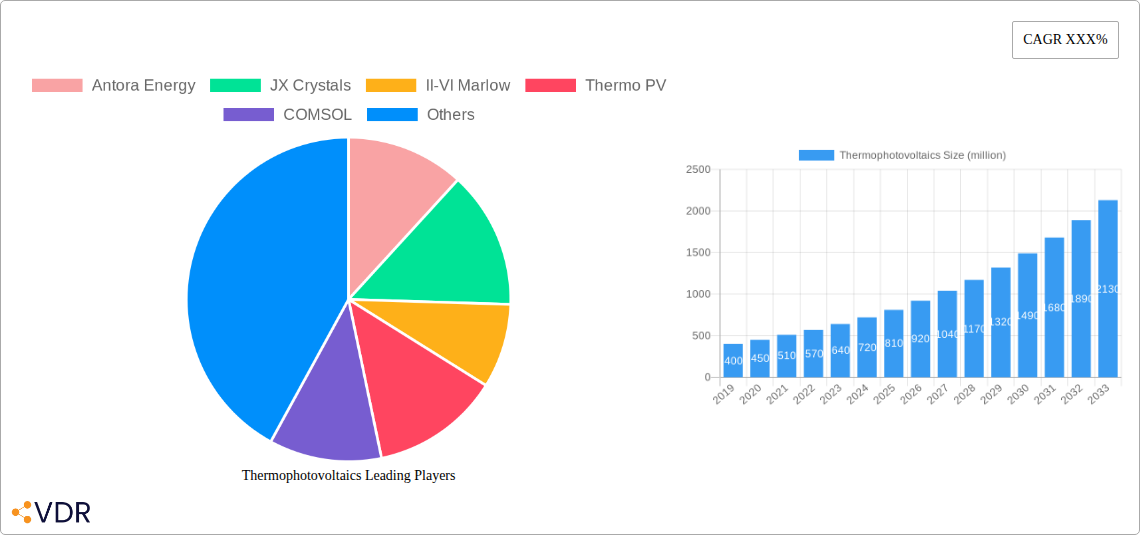
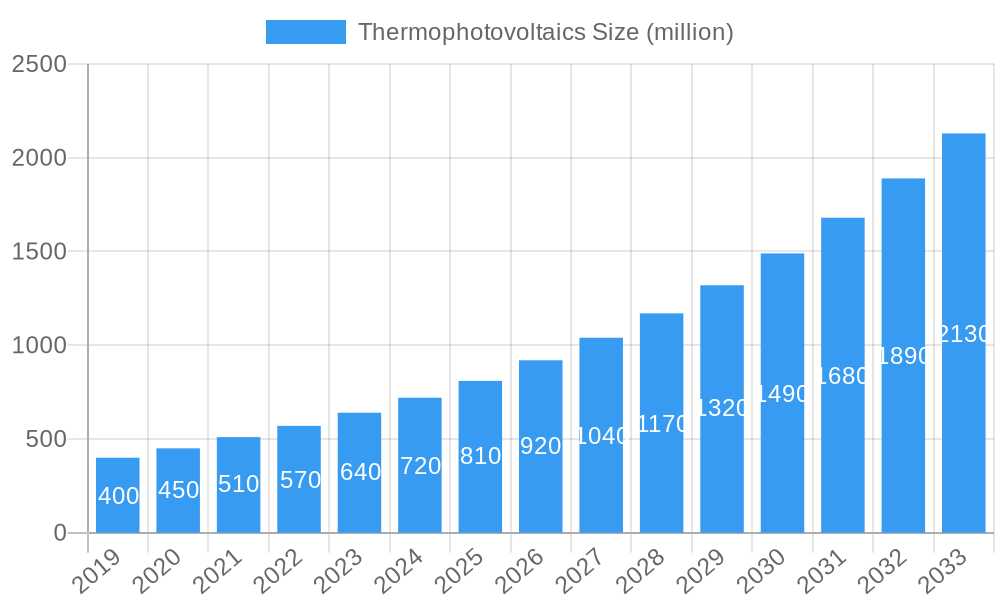
Thermophotovoltaics Market Size (In Million)

The TPV market is segmented by application, including industrial waste heat recovery, concentrated solar power (CSP), and auxiliary power units (APUs), with industrial waste heat recovery being the leading segment due to its broad applicability. By technology, the market is categorized into near-infrared (NIR) and mid-infrared (MIR) TPV systems. Leading companies like Antora Energy, JX Crystals, II-VI Marlow, and Tesla Energy are actively investing in research and development to innovate and expand their product offerings, accelerating market growth. While significant opportunities exist, challenges such as the initial cost of TPV systems and the need for further technological maturation in specific applications may present minor limitations. Nonetheless, the overarching trend towards energy conservation and the pursuit of novel renewable energy technologies point to a highly promising future for the TPV market.
Thermophotovoltaics Company Market Share
Comprehensive Thermophotovoltaics (TPV) Market Report: Dynamics, Trends, and Future Outlook (2019-2033)
This in-depth report provides a thorough analysis of the global Thermophotovoltaics (TPV) market, offering critical insights into its current state, growth trajectory, and future potential. Covering the period from 2019 to 2033, with a base year of 2025 and a forecast period of 2025–2033, this report is an essential resource for stakeholders seeking to understand and capitalize on the evolving TPV landscape. We meticulously examine market dynamics, growth trends, regional dominance, product innovations, key drivers, barriers, emerging opportunities, and the competitive environment. This report leverages extensive data and expert analysis to deliver actionable intelligence for businesses, investors, and researchers.
Thermophotovoltaics Market Dynamics & Structure
The Thermophotovoltaics market is characterized by a moderate to high concentration, with a few key players dominating technological advancements and production capabilities. Innovation is primarily driven by the relentless pursuit of higher conversion efficiencies, improved emitter materials, and cost-effective manufacturing processes. Regulatory frameworks, particularly in areas related to waste heat recovery and renewable energy integration, are increasingly shaping market adoption. Competitive product substitutes, such as traditional thermoelectric generators and advanced solar thermal technologies, present ongoing challenges, necessitating continuous differentiation through superior performance and specialized applications. End-user demographics are diverse, spanning industrial manufacturing, aerospace, automotive, and niche power generation sectors, each with distinct performance and cost requirements. Mergers and acquisitions (M&A) trends, while not yet at peak levels, are anticipated to accelerate as companies seek to consolidate intellectual property, expand manufacturing capacity, and gain market access.
- Market Concentration: Dominated by a select group of innovators, but with increasing fragmentation due to specialized application development.
- Technological Innovation Drivers: Increased efficiency (XX%), enhanced material durability (XX%), reduced manufacturing costs (XX%).
- Regulatory Frameworks: Incentives for waste heat utilization (e.g., carbon emission reduction targets), renewable energy integration policies.
- Competitive Product Substitutes: Thermoelectric Generators (TEGs), advanced solar thermal collectors, traditional heat engines.
- End-User Demographics: Industrial waste heat recovery (XX% market share), aerospace and defense (XX%), automotive (XX%), remote power generation (XX%).
- M&A Trends: Expected increase in strategic acquisitions for IP and market entry, with an estimated XX M&A deals anticipated in the forecast period.
Thermophotovoltaics Growth Trends & Insights
The Thermophotovoltaics market is poised for significant expansion, driven by increasing global energy demands and a growing imperative for efficient energy conversion solutions. The market size is projected to evolve from approximately $XXX million in 2024 to an estimated $XXX million by 2033, exhibiting a Compound Annual Growth Rate (CAGR) of XX%. Adoption rates are currently in their nascent stages, particularly within the industrial sector, where the potential for waste heat recovery is substantial. Technological disruptions are at the forefront, with ongoing research in advanced emitter materials (e.g., rare-earth oxides, photonic crystals) and semiconductor absorber technologies (e.g., GaSb, InGaAs) promising dramatic improvements in efficiency and operating temperatures. Consumer behavior shifts, influenced by environmental consciousness and the rising cost of conventional energy, are increasingly favoring solutions that offer energy independence and sustainability. The integration of TPV systems into hybrid energy solutions, combining them with other renewable sources, represents a key area of market penetration. The market is also seeing increased interest from the child market segments focusing on specialized portable power solutions and advanced electronics cooling. The parent market, driven by large-scale industrial applications and grid-scale energy storage, is expected to pave the way for these niche segments.
- Market Size Evolution: From $XXX million (2024) to $XXX million (2033).
- CAGR: XX% (2025-2033).
- Adoption Rates: Currently XX% penetration in industrial waste heat recovery, with significant room for growth.
- Technological Disruptions: Advancements in high-temperature emitters, novel semiconductor absorbers, and system integration.
- Consumer Behavior Shifts: Growing demand for energy efficiency, sustainability, and decentralized power solutions.
- Market Penetration: Expected to accelerate with successful pilot projects and increased commercialization efforts across various applications.
Dominant Regions, Countries, or Segments in Thermophotovoltaics
The Application segment of industrial waste heat recovery is currently the dominant driver of growth within the Thermophotovoltaics market. This is primarily due to the immense untapped potential for energy savings and emissions reduction in manufacturing, power generation, and heavy industries. Countries with strong industrial bases and stringent environmental regulations are leading the adoption.
Key Drivers for Dominance in Industrial Waste Heat Recovery:
- Economic Policies: Government incentives for energy efficiency and carbon footprint reduction are compelling industries to explore TPV solutions. For instance, tax credits for waste heat utilization in countries like Germany and Japan have been instrumental.
- Infrastructure: Existing industrial infrastructure provides readily available heat sources, reducing the complexity and cost of TPV system integration.
- Technological Advancements: Improved durability and efficiency of TPV cells operating at higher temperatures make them suitable for harsh industrial environments.
- Market Share: This application segment is estimated to hold approximately XX% of the total TPV market revenue in the base year 2025.
- Growth Potential: The global industrial waste heat potential is vast, estimated at over XX exajoules annually, indicating significant room for TPV market penetration.
Within the Type segment, Thermophotovoltaic systems utilizing high-temperature emitters (above 1000°C) are showing the most promising growth trajectory. These systems are essential for capturing and converting high-grade waste heat efficiently. The market share for these high-temperature systems is projected to reach XX% by 2033.
Key Drivers for Dominance of High-Temperature Emitters:
- Efficiency Gains: Higher operating temperatures enable more efficient conversion of thermal energy into electricity.
- Application Suitability: Crucial for sectors like metallurgical industries, cement production, and concentrated solar power systems, which generate high-temperature heat.
- Material Innovation: Breakthroughs in refractory materials and photonic crystals are enabling the creation of highly efficient and durable high-temperature emitters.
- Market Share: Currently estimated at XX% of the TPV market, with significant expansion expected.
- Growth Potential: The increasing focus on recovering high-grade heat for industrial processes and advanced power generation underpins this segment's rapid ascent.
Thermophotovoltaics Product Landscape
The Thermophotovoltaics product landscape is characterized by rapid innovation, focusing on enhancing conversion efficiencies and expanding application versatility. Current product developments include advanced emitter materials like rare-earth oxides and engineered photonic crystals, designed to optimize thermal radiation for specific photovoltaic cell bandgaps. Photovoltaic cells, primarily based on III-V semiconductor alloys such as Gallium Antimonide (GaSb) and Indium Gallium Arsenide (InGaAs), are being engineered for higher operating temperatures and improved spectral selectivity. Unique selling propositions include the ability to convert low-grade heat sources efficiently and the potential for silent, reliable operation in remote or critical applications. Technological advancements are geared towards miniaturization for portable devices and modularization for scalable industrial solutions.
Key Drivers, Barriers & Challenges in Thermophotovoltaics
The Thermophotovoltaics market is propelled by several key drivers, including the growing demand for waste heat recovery, the need for efficient and reliable off-grid power solutions, and advancements in materials science leading to higher conversion efficiencies. The imperative to reduce carbon emissions and improve energy security further bolsters market growth.
- Key Drivers:
- Waste Heat Recovery Potential: Global industrial waste heat estimated at over XX exajoules annually.
- Energy Efficiency Mandates: Driven by environmental regulations and cost-saving objectives.
- Decentralized Power Needs: Essential for remote locations, aerospace, and defense applications.
- Technological Advancements: Innovations in emitter and PV cell materials.
Key barriers and challenges include the high initial cost of TPV systems, the need for advanced materials with extreme temperature resistance, and the limited commercial deployment experience. Supply chain complexities for specialized materials and the competition from established energy technologies also pose restraints.
- Key Barriers & Challenges:
- High Capital Costs: Initial investment can be a significant hurdle for widespread adoption.
- Material Durability: Ensuring long-term performance at extreme operating temperatures remains a challenge, impacting lifespan and maintenance costs.
- Market Awareness & Education: Limited understanding of TPV technology among potential end-users.
- Scalability of Manufacturing: Achieving mass production at competitive price points.
- Integration Complexity: Seamless integration into existing industrial processes can be technically demanding.
Emerging Opportunities in Thermophotovoltaics
Emerging opportunities in Thermophotovoltaics lie in niche applications and synergistic integrations. The development of compact, high-efficiency TPV systems for portable power generation in consumer electronics and electric vehicles presents a significant untapped market. Furthermore, the integration of TPV technology with existing renewable energy systems, such as solar thermal plants or geothermal energy, can enhance overall energy output and reliability. The growing demand for reliable power in remote areas and disaster relief scenarios also opens doors for specialized TPV solutions.
Growth Accelerators in the Thermophotovoltaics Industry
Growth accelerators for the Thermophotovoltaics industry include significant breakthroughs in materials science, particularly the development of metamaterials and advanced photonic structures for highly efficient thermal emission. Strategic partnerships between TPV manufacturers and large industrial conglomerates are crucial for pilot projects and market penetration. Government funding for research and development, coupled with favorable policy incentives for clean energy technologies, will also significantly accelerate industry growth.
Key Players Shaping the Thermophotovoltaics Market
- Antora Energy
- JX Crystals
- II-VI Marlow
- Thermo PV
- COMSOL
- Exide Technologies
- Tesla Energy
- General Electric
- Curtiss-Wright Nuclear
- Vattenfall
Notable Milestones in Thermophotovoltaics Sector
- 2022: Antora Energy secures funding to scale up its waste heat to electricity technology.
- 2023: JX Crystals announces significant efficiency improvements in its TPV cell technology.
- 2023: II-VI Marlow develops novel emitter materials for enhanced TPV performance.
- 2024: Thermo PV demonstrates a prototype TPV system for industrial waste heat recovery with XX% efficiency.
- 2024: COMSOL releases advanced simulation software tailored for TPV system design.
- 2025 (Estimated): Exide Technologies explores TPV integration for battery thermal management systems.
- 2026 (Projected): Tesla Energy investigates TPV for advanced thermal management in its vehicles.
- 2027 (Projected): General Electric pilots TPV for power generation from industrial exhaust.
- 2028 (Projected): Curtiss-Wright Nuclear explores TPV for auxiliary power in nuclear facilities.
- 2029 (Projected): Vattenfall investigates TPV for waste heat utilization in district heating systems.
In-Depth Thermophotovoltaics Market Outlook
The future outlook for the Thermophotovoltaics market is exceptionally promising, driven by the convergence of increasing energy demands and the urgent need for sustainable energy solutions. Growth accelerators such as continuous technological breakthroughs in materials science and device engineering will unlock new application frontiers. Strategic alliances and the supportive policy landscape will foster wider market adoption. The market is on the cusp of significant expansion, with projected growth driven by both large-scale industrial applications and emerging niche markets, positioning TPV as a vital component of the future energy ecosystem.
Thermophotovoltaics Segmentation
-
1. Application
- 1.1. undefined
-
2. Type
- 2.1. undefined
Thermophotovoltaics Segmentation By Geography
- 1. undefined
- 2. undefined
- 3. undefined
- 4. undefined
- 5. undefined
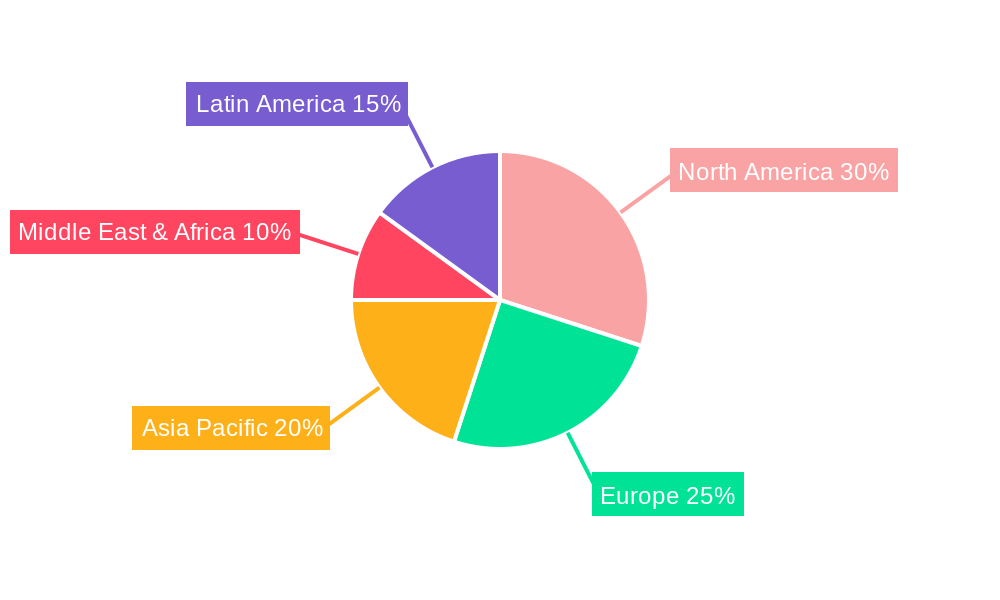
Thermophotovoltaics Regional Market Share
Geographic Coverage of Thermophotovoltaics
Thermophotovoltaics REPORT HIGHLIGHTS
| Aspects | Details |
|---|---|
| Study Period | 2020-2034 |
| Base Year | 2025 |
| Estimated Year | 2026 |
| Forecast Period | 2026-2034 |
| Historical Period | 2020-2025 |
| Growth Rate | CAGR of 16.13% from 2020-2034 |
| Segmentation |
|
Table of Contents
- 1. Introduction
- 1.1. Research Scope
- 1.2. Market Segmentation
- 1.3. Research Methodology
- 1.4. Definitions and Assumptions
- 2. Executive Summary
- 2.1. Introduction
- 3. Market Dynamics
- 3.1. Introduction
- 3.2. Market Drivers
- 3.3. Market Restrains
- 3.4. Market Trends
- 4. Market Factor Analysis
- 4.1. Porters Five Forces
- 4.2. Supply/Value Chain
- 4.3. PESTEL analysis
- 4.4. Market Entropy
- 4.5. Patent/Trademark Analysis
- 5. Global Thermophotovoltaics Analysis, Insights and Forecast, 2020-2032
- 5.1. Market Analysis, Insights and Forecast - by Application
- 5.1.1.
- 5.2. Market Analysis, Insights and Forecast - by Type
- 5.2.1.
- 5.3. Market Analysis, Insights and Forecast - by Region
- 5.3.1.
- 5.3.2.
- 5.3.3.
- 5.3.4.
- 5.3.5.
- 5.1. Market Analysis, Insights and Forecast - by Application
- 6. undefined Thermophotovoltaics Analysis, Insights and Forecast, 2020-2032
- 6.1. Market Analysis, Insights and Forecast - by Application
- 6.1.1.
- 6.2. Market Analysis, Insights and Forecast - by Type
- 6.2.1.
- 6.1. Market Analysis, Insights and Forecast - by Application
- 7. undefined Thermophotovoltaics Analysis, Insights and Forecast, 2020-2032
- 7.1. Market Analysis, Insights and Forecast - by Application
- 7.1.1.
- 7.2. Market Analysis, Insights and Forecast - by Type
- 7.2.1.
- 7.1. Market Analysis, Insights and Forecast - by Application
- 8. undefined Thermophotovoltaics Analysis, Insights and Forecast, 2020-2032
- 8.1. Market Analysis, Insights and Forecast - by Application
- 8.1.1.
- 8.2. Market Analysis, Insights and Forecast - by Type
- 8.2.1.
- 8.1. Market Analysis, Insights and Forecast - by Application
- 9. undefined Thermophotovoltaics Analysis, Insights and Forecast, 2020-2032
- 9.1. Market Analysis, Insights and Forecast - by Application
- 9.1.1.
- 9.2. Market Analysis, Insights and Forecast - by Type
- 9.2.1.
- 9.1. Market Analysis, Insights and Forecast - by Application
- 10. undefined Thermophotovoltaics Analysis, Insights and Forecast, 2020-2032
- 10.1. Market Analysis, Insights and Forecast - by Application
- 10.1.1.
- 10.2. Market Analysis, Insights and Forecast - by Type
- 10.2.1.
- 10.1. Market Analysis, Insights and Forecast - by Application
- 11. Competitive Analysis
- 11.1. Global Market Share Analysis 2025
- 11.2. Company Profiles
- 11.2.1 Antora Energy
- 11.2.1.1. Overview
- 11.2.1.2. Products
- 11.2.1.3. SWOT Analysis
- 11.2.1.4. Recent Developments
- 11.2.1.5. Financials (Based on Availability)
- 11.2.2 JX Crystals
- 11.2.2.1. Overview
- 11.2.2.2. Products
- 11.2.2.3. SWOT Analysis
- 11.2.2.4. Recent Developments
- 11.2.2.5. Financials (Based on Availability)
- 11.2.3 II-VI Marlow
- 11.2.3.1. Overview
- 11.2.3.2. Products
- 11.2.3.3. SWOT Analysis
- 11.2.3.4. Recent Developments
- 11.2.3.5. Financials (Based on Availability)
- 11.2.4 Thermo PV
- 11.2.4.1. Overview
- 11.2.4.2. Products
- 11.2.4.3. SWOT Analysis
- 11.2.4.4. Recent Developments
- 11.2.4.5. Financials (Based on Availability)
- 11.2.5 COMSOL
- 11.2.5.1. Overview
- 11.2.5.2. Products
- 11.2.5.3. SWOT Analysis
- 11.2.5.4. Recent Developments
- 11.2.5.5. Financials (Based on Availability)
- 11.2.6 Exide Technologies
- 11.2.6.1. Overview
- 11.2.6.2. Products
- 11.2.6.3. SWOT Analysis
- 11.2.6.4. Recent Developments
- 11.2.6.5. Financials (Based on Availability)
- 11.2.7 Tesla Energy
- 11.2.7.1. Overview
- 11.2.7.2. Products
- 11.2.7.3. SWOT Analysis
- 11.2.7.4. Recent Developments
- 11.2.7.5. Financials (Based on Availability)
- 11.2.8 General Electric
- 11.2.8.1. Overview
- 11.2.8.2. Products
- 11.2.8.3. SWOT Analysis
- 11.2.8.4. Recent Developments
- 11.2.8.5. Financials (Based on Availability)
- 11.2.9 Curtiss-Wright Nuclear
- 11.2.9.1. Overview
- 11.2.9.2. Products
- 11.2.9.3. SWOT Analysis
- 11.2.9.4. Recent Developments
- 11.2.9.5. Financials (Based on Availability)
- 11.2.10 Vattenfall
- 11.2.10.1. Overview
- 11.2.10.2. Products
- 11.2.10.3. SWOT Analysis
- 11.2.10.4. Recent Developments
- 11.2.10.5. Financials (Based on Availability)
- 11.2.1 Antora Energy
List of Figures
- Figure 1: Global Thermophotovoltaics Revenue Breakdown (billion, %) by Region 2025 & 2033
- Figure 2: undefined Thermophotovoltaics Revenue (billion), by Application 2025 & 2033
- Figure 3: undefined Thermophotovoltaics Revenue Share (%), by Application 2025 & 2033
- Figure 4: undefined Thermophotovoltaics Revenue (billion), by Type 2025 & 2033
- Figure 5: undefined Thermophotovoltaics Revenue Share (%), by Type 2025 & 2033
- Figure 6: undefined Thermophotovoltaics Revenue (billion), by Country 2025 & 2033
- Figure 7: undefined Thermophotovoltaics Revenue Share (%), by Country 2025 & 2033
- Figure 8: undefined Thermophotovoltaics Revenue (billion), by Application 2025 & 2033
- Figure 9: undefined Thermophotovoltaics Revenue Share (%), by Application 2025 & 2033
- Figure 10: undefined Thermophotovoltaics Revenue (billion), by Type 2025 & 2033
- Figure 11: undefined Thermophotovoltaics Revenue Share (%), by Type 2025 & 2033
- Figure 12: undefined Thermophotovoltaics Revenue (billion), by Country 2025 & 2033
- Figure 13: undefined Thermophotovoltaics Revenue Share (%), by Country 2025 & 2033
- Figure 14: undefined Thermophotovoltaics Revenue (billion), by Application 2025 & 2033
- Figure 15: undefined Thermophotovoltaics Revenue Share (%), by Application 2025 & 2033
- Figure 16: undefined Thermophotovoltaics Revenue (billion), by Type 2025 & 2033
- Figure 17: undefined Thermophotovoltaics Revenue Share (%), by Type 2025 & 2033
- Figure 18: undefined Thermophotovoltaics Revenue (billion), by Country 2025 & 2033
- Figure 19: undefined Thermophotovoltaics Revenue Share (%), by Country 2025 & 2033
- Figure 20: undefined Thermophotovoltaics Revenue (billion), by Application 2025 & 2033
- Figure 21: undefined Thermophotovoltaics Revenue Share (%), by Application 2025 & 2033
- Figure 22: undefined Thermophotovoltaics Revenue (billion), by Type 2025 & 2033
- Figure 23: undefined Thermophotovoltaics Revenue Share (%), by Type 2025 & 2033
- Figure 24: undefined Thermophotovoltaics Revenue (billion), by Country 2025 & 2033
- Figure 25: undefined Thermophotovoltaics Revenue Share (%), by Country 2025 & 2033
- Figure 26: undefined Thermophotovoltaics Revenue (billion), by Application 2025 & 2033
- Figure 27: undefined Thermophotovoltaics Revenue Share (%), by Application 2025 & 2033
- Figure 28: undefined Thermophotovoltaics Revenue (billion), by Type 2025 & 2033
- Figure 29: undefined Thermophotovoltaics Revenue Share (%), by Type 2025 & 2033
- Figure 30: undefined Thermophotovoltaics Revenue (billion), by Country 2025 & 2033
- Figure 31: undefined Thermophotovoltaics Revenue Share (%), by Country 2025 & 2033
List of Tables
- Table 1: Global Thermophotovoltaics Revenue billion Forecast, by Application 2020 & 2033
- Table 2: Global Thermophotovoltaics Revenue billion Forecast, by Type 2020 & 2033
- Table 3: Global Thermophotovoltaics Revenue billion Forecast, by Region 2020 & 2033
- Table 4: Global Thermophotovoltaics Revenue billion Forecast, by Application 2020 & 2033
- Table 5: Global Thermophotovoltaics Revenue billion Forecast, by Type 2020 & 2033
- Table 6: Global Thermophotovoltaics Revenue billion Forecast, by Country 2020 & 2033
- Table 7: Global Thermophotovoltaics Revenue billion Forecast, by Application 2020 & 2033
- Table 8: Global Thermophotovoltaics Revenue billion Forecast, by Type 2020 & 2033
- Table 9: Global Thermophotovoltaics Revenue billion Forecast, by Country 2020 & 2033
- Table 10: Global Thermophotovoltaics Revenue billion Forecast, by Application 2020 & 2033
- Table 11: Global Thermophotovoltaics Revenue billion Forecast, by Type 2020 & 2033
- Table 12: Global Thermophotovoltaics Revenue billion Forecast, by Country 2020 & 2033
- Table 13: Global Thermophotovoltaics Revenue billion Forecast, by Application 2020 & 2033
- Table 14: Global Thermophotovoltaics Revenue billion Forecast, by Type 2020 & 2033
- Table 15: Global Thermophotovoltaics Revenue billion Forecast, by Country 2020 & 2033
- Table 16: Global Thermophotovoltaics Revenue billion Forecast, by Application 2020 & 2033
- Table 17: Global Thermophotovoltaics Revenue billion Forecast, by Type 2020 & 2033
- Table 18: Global Thermophotovoltaics Revenue billion Forecast, by Country 2020 & 2033
Frequently Asked Questions
1. What is the projected Compound Annual Growth Rate (CAGR) of the Thermophotovoltaics?
The projected CAGR is approximately 16.13%.
2. Which companies are prominent players in the Thermophotovoltaics?
Key companies in the market include Antora Energy, JX Crystals, II-VI Marlow, Thermo PV, COMSOL, Exide Technologies, Tesla Energy, General Electric, Curtiss-Wright Nuclear, Vattenfall.
3. What are the main segments of the Thermophotovoltaics?
The market segments include Application, Type.
4. Can you provide details about the market size?
The market size is estimated to be USD 0.55 billion as of 2022.
5. What are some drivers contributing to market growth?
N/A
6. What are the notable trends driving market growth?
N/A
7. Are there any restraints impacting market growth?
N/A
8. Can you provide examples of recent developments in the market?
N/A
9. What pricing options are available for accessing the report?
Pricing options include single-user, multi-user, and enterprise licenses priced at USD 2900.00, USD 4350.00, and USD 5800.00 respectively.
10. Is the market size provided in terms of value or volume?
The market size is provided in terms of value, measured in billion.
11. Are there any specific market keywords associated with the report?
Yes, the market keyword associated with the report is "Thermophotovoltaics," which aids in identifying and referencing the specific market segment covered.
12. How do I determine which pricing option suits my needs best?
The pricing options vary based on user requirements and access needs. Individual users may opt for single-user licenses, while businesses requiring broader access may choose multi-user or enterprise licenses for cost-effective access to the report.
13. Are there any additional resources or data provided in the Thermophotovoltaics report?
While the report offers comprehensive insights, it's advisable to review the specific contents or supplementary materials provided to ascertain if additional resources or data are available.
14. How can I stay updated on further developments or reports in the Thermophotovoltaics?
To stay informed about further developments, trends, and reports in the Thermophotovoltaics, consider subscribing to industry newsletters, following relevant companies and organizations, or regularly checking reputable industry news sources and publications.
Methodology
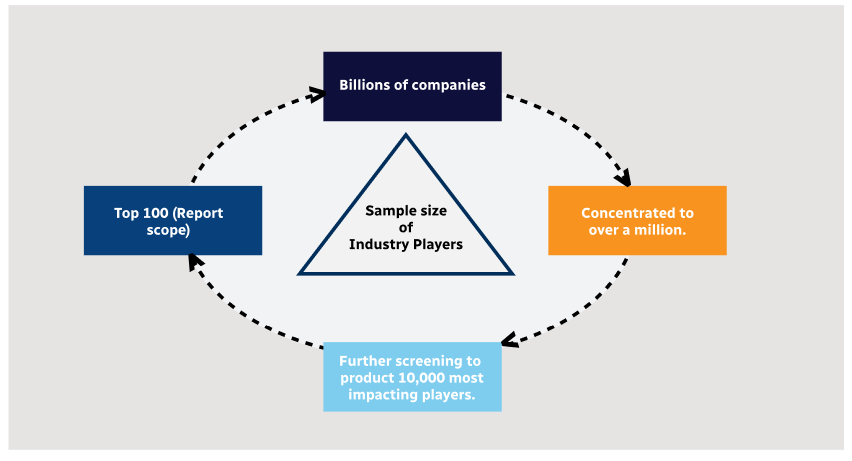
Step 1 - Identification of Relevant Samples Size from Population Database

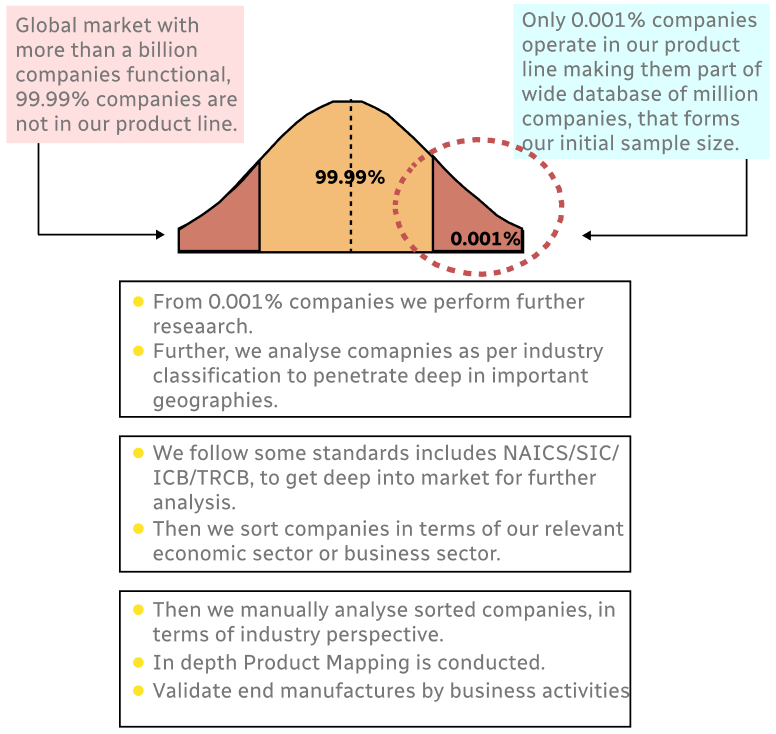
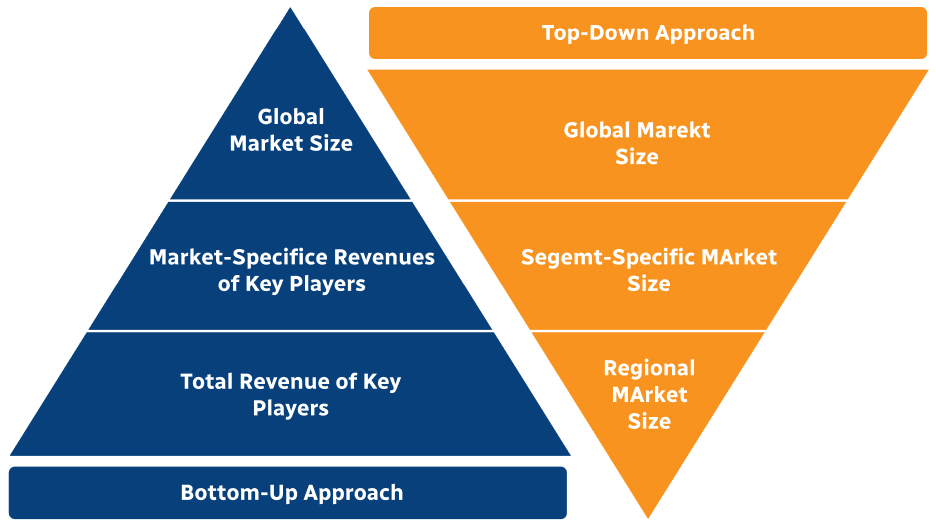
Step 2 - Approaches for Defining Global Market Size (Value, Volume* & Price*)
Note*: In applicable scenarios
Step 3 - Data Sources
Primary Research
- Web Analytics
- Survey Reports
- Research Institute
- Latest Research Reports
- Opinion Leaders
Secondary Research
- Annual Reports
- White Paper
- Latest Press Release
- Industry Association
- Paid Database
- Investor Presentations

Step 4 - Data Triangulation
Involves using different sources of information in order to increase the validity of a study
These sources are likely to be stakeholders in a program - participants, other researchers, program staff, other community members, and so on.
Then we put all data in single framework & apply various statistical tools to find out the dynamic on the market.
During the analysis stage, feedback from the stakeholder groups would be compared to determine areas of agreement as well as areas of divergence