


Key Insights
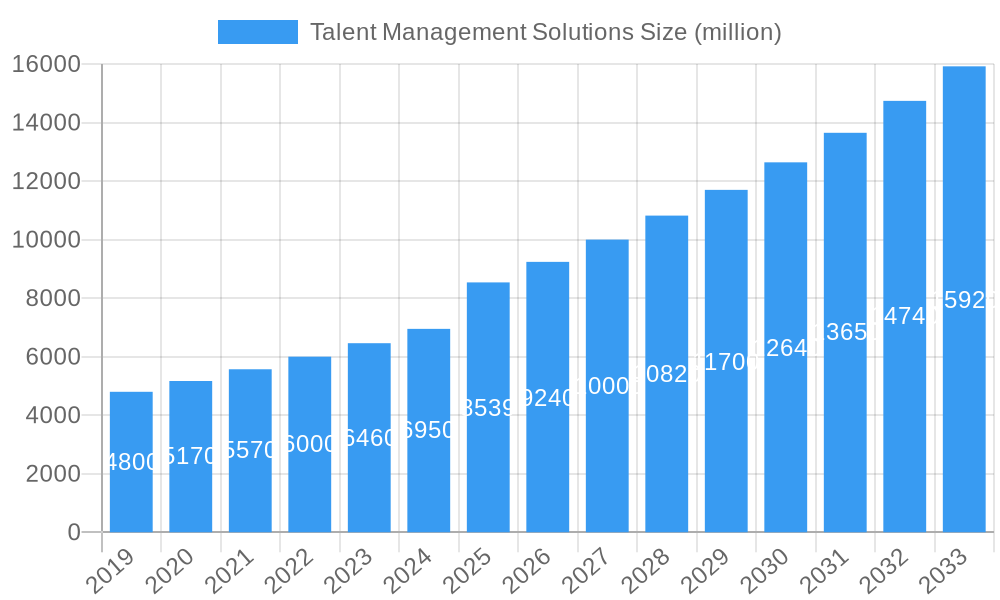
The global Talent Management Solutions market is poised for robust expansion, projected to reach an estimated USD 8,539 million by 2025, with a compelling Compound Annual Growth Rate (CAGR) of 8.2% anticipated throughout the forecast period of 2025-2033. This significant growth trajectory is fueled by a confluence of critical business imperatives and technological advancements. Organizations worldwide are increasingly recognizing the strategic importance of attracting, developing, engaging, and retaining top talent to maintain a competitive edge. This realization is driving substantial investment in integrated talent management platforms that offer end-to-end solutions, from recruitment and onboarding to performance management, learning and development, and succession planning. The digital transformation across industries is also a major catalyst, as businesses seek sophisticated tools to manage their human capital more effectively in an increasingly dynamic and complex global landscape. Furthermore, the growing emphasis on employee experience and well-being, coupled with the rise of remote and hybrid work models, necessitates advanced solutions for fostering collaboration, engagement, and continuous skill enhancement.
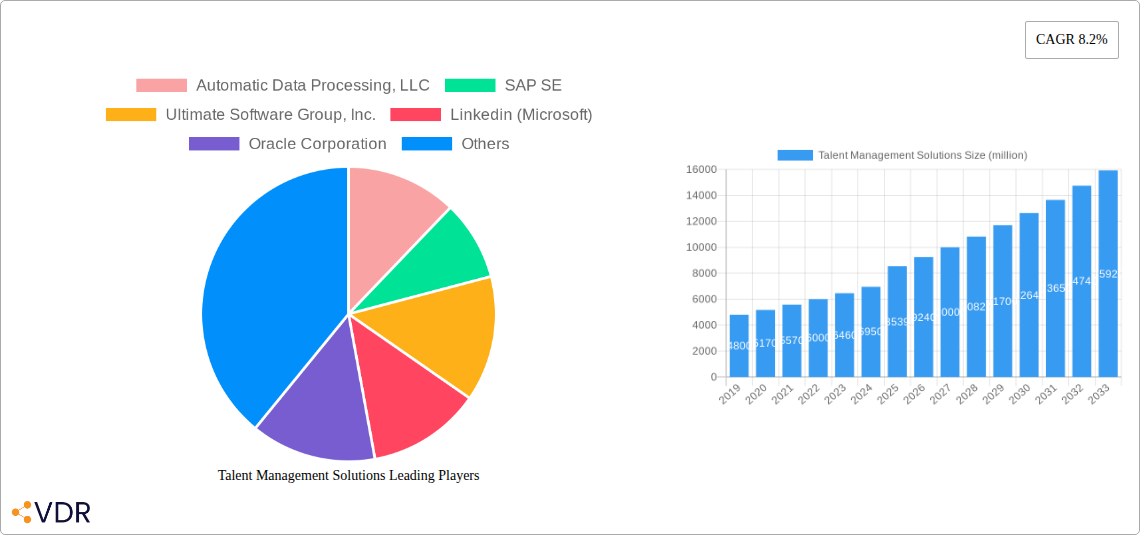
Talent Management Solutions Market Size (In Billion)

The market segmentation reveals a diverse range of applications and solution types catering to distinct organizational needs. In terms of application, the Healthcare sector is a prominent driver, alongside Financial Services and Government/Non-Profit organizations, all grappling with specialized talent acquisition and retention challenges. The Retail/Wholesale and Manufacturing sectors are also significant contributors, focusing on optimizing workforce productivity and skill development. Professionally, the market is segmented into critical areas such as Performance & Succession, Compensation Management, and Learning, Training & Development, reflecting the holistic approach organizations are taking towards talent lifecycle management. The demand for sophisticated Rewards & Recognition programs is also on the rise, underscoring the focus on employee motivation and retention. Key players like Automatic Data Processing, SAP SE, Oracle Corporation, and Workday are at the forefront, offering comprehensive suites and innovative features that address these evolving demands, further stimulating market growth and innovation.
Talent Management Solutions Company Market Share
This in-depth report provides a critical analysis of the global Talent Management Solutions market, a dynamic sector essential for organizational success. Covering the historical period of 2019-2024, base year 2025, and a forecast period from 2025-2033, this comprehensive study delves into market dynamics, growth trends, regional dominance, product innovations, key players, and emerging opportunities. With a focus on parent and child market segments, this report is an indispensable resource for industry professionals, investors, and strategists seeking to navigate and capitalize on the evolving landscape of human capital management software, HR tech solutions, employee engagement platforms, and performance management systems.
Talent Management Solutions Market Dynamics & Structure
The global Talent Management Solutions market is characterized by a moderately concentrated structure, with key players like SAP SE, Oracle Corporation, and Workday dominating a significant portion of the market share. Technological innovation serves as a primary driver, fueled by advancements in AI, machine learning, and big data analytics that enable more sophisticated talent insights and automated processes. Regulatory frameworks, particularly concerning data privacy (e.g., GDPR, CCPA) and labor laws, significantly influence product development and market entry strategies. Competitive product substitutes, such as in-house HR departments and traditional HR consulting services, continue to exist but are increasingly challenged by the efficiency and scalability of integrated talent management platforms. End-user demographics are shifting, with a growing demand for solutions that cater to a multi-generational workforce, remote workforces, and a greater emphasis on employee experience. Mergers and acquisitions (M&A) activity remains a key strategic imperative for market consolidation and the acquisition of innovative technologies. For instance, the historical period of 2019-2024 witnessed an average of 15 M&A deals per year, valued in the hundreds of millions of dollars, as larger players sought to expand their offerings and market reach.
- Market Concentration: Top 5 players hold an estimated 65% of the market share.
- Technological Innovation Drivers: AI for predictive analytics, ML for personalized learning, cloud adoption for scalability.
- Regulatory Frameworks: Data privacy, compliance with labor laws, and anti-discrimination regulations.
- Competitive Product Substitutes: In-house HR, HR consulting firms, standalone HR software.
- End-User Demographics: Growing demand for employee well-being, diversity & inclusion features, and mobile accessibility.
- M&A Trends: Strategic acquisitions of niche solution providers and innovative technologies.
Talent Management Solutions Growth Trends & Insights
The Talent Management Solutions market size is poised for substantial growth, projected to reach an estimated $30,500 million by 2025 and expand to $65,000 million by 2033, exhibiting a robust Compound Annual Growth Rate (CAGR) of approximately 9.8% during the forecast period. This growth trajectory is underpinned by several key trends. The increasing adoption of cloud-based solutions has democratized access to advanced talent management capabilities, making them accessible to organizations of all sizes. Technological disruptions, including the integration of artificial intelligence (AI) and machine learning (ML), are revolutionizing how organizations attract, develop, and retain talent. AI-powered recruitment tools are streamlining candidate sourcing and screening, while ML algorithms are personalizing learning and development pathways. Consumer behavior shifts are also playing a significant role, with employees increasingly expecting personalized experiences, continuous feedback, and opportunities for growth, driving demand for platforms that foster employee engagement and well-being. The base year 2025 is expected to see a market penetration of around 60% for integrated talent management solutions within large enterprises.
The transition to hybrid and remote work models has further accelerated the need for digital HR solutions that can manage distributed teams effectively. This includes features for remote onboarding, virtual training, and performance monitoring. Furthermore, the growing emphasis on data-driven decision-making within HR departments is driving demand for analytics capabilities that provide actionable insights into workforce productivity, engagement levels, and skill gaps. The market size evolution from 2019 to 2024 saw a steady increase from approximately $20,000 million to $27,500 million, indicating a consistent upward trend. This historical growth has laid a strong foundation for the projected expansion. The adoption rates of specialized modules, such as advanced learning management systems and sophisticated succession planning tools, are expected to surge as organizations recognize the critical role of talent in achieving their strategic objectives. The estimated year 2025 will likely see a significant uptake in analytics-driven talent insights, with over 70% of surveyed companies reporting increased investment in this area.
- Market Size Evolution: From approximately $20,000 million (2019) to $27,500 million (2024), projected to reach $30,500 million (2025) and $65,000 million (2033).
- CAGR: Approximately 9.8% during the forecast period (2025–2033).
- Adoption Rates: High for cloud-based HR tech, increasing for AI/ML-driven modules.
- Technological Disruptions: AI for recruitment and analytics, ML for personalized development.
- Consumer Behavior Shifts: Demand for personalized employee experiences, continuous feedback, and career growth.
- Market Penetration (2025): Estimated 60% for integrated solutions in large enterprises.
Dominant Regions, Countries, or Segments in Talent Management Solutions
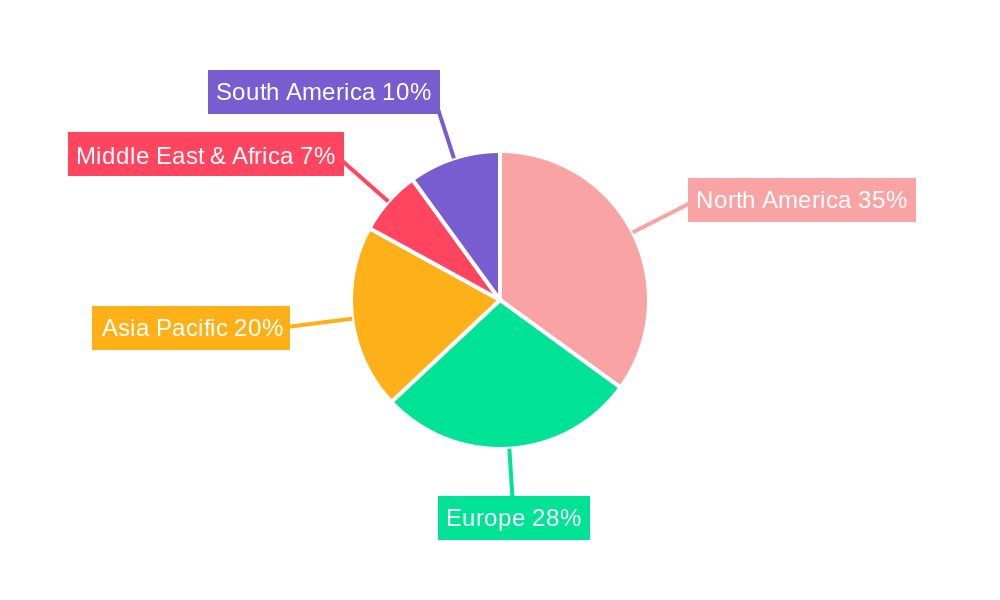
North America, particularly the United States, stands out as the dominant region in the global Talent Management Solutions market. This dominance is attributed to several key drivers, including a mature business ecosystem, a high concentration of leading technology companies, and a proactive adoption of advanced HR technologies. The Professional/Technical Services segment, along with Financial Services, are the leading application segments, driven by the need for specialized skills, continuous professional development, and robust talent pipelines. In the Type segmentation, Performance & Succession solutions are paramount, reflecting the strategic importance of identifying and developing high-potential employees for leadership roles. The historical period of 2019-2024 saw North America consistently account for over 40% of the global market revenue.
- Dominant Region: North America (primarily the United States).
- Leading Application Segments:
- Professional/Technical Services: High demand for skill development, talent acquisition, and retention in a competitive landscape.
- Financial Services: Emphasis on regulatory compliance, risk management, and specialized expertise.
- Leading Type Segments:
- Performance & Succession: Critical for leadership development, career pathing, and organizational continuity.
- Learning, Training & Development: Essential for upskilling and reskilling the workforce to adapt to evolving industry demands.
The market in North America is further bolstered by a strong emphasis on employee experience and engagement, leading to significant investment in comprehensive talent management suites. Government initiatives promoting digital transformation and workforce development also contribute to the region's leadership. The growth potential in this region is further amplified by the presence of major HR technology providers and a robust venture capital landscape that fuels innovation. In the forecast period 2025–2033, North America is projected to maintain its leadership, with an estimated market share of 42%.
- Key Drivers in North America: Mature technology market, strong HR tech innovation, focus on employee experience, government support for digital transformation.
- Market Share (North America): Estimated 42% during the forecast period (2025–2033).
- Growth Potential: High due to continuous technological advancements and organizational focus on human capital.
Europe, particularly Western Europe, is the second-largest market, driven by stringent labor laws and a focus on employee welfare and development. Asia Pacific is emerging as a rapidly growing market, fueled by increasing digitalization, a growing middle class, and a rising demand for sophisticated HR solutions in emerging economies. The Healthcare and Retail/Wholesale sectors are also showing considerable growth potential globally, as these industries grapple with talent shortages and the need for efficient workforce management.
- Emerging Regions: Asia Pacific, with rapid digitalization and increasing HR tech adoption.
- Growing Application Segments: Healthcare (due to staff shortages and retention needs), Retail/Wholesale (for workforce optimization and customer service training).
Talent Management Solutions Product Landscape
The Talent Management Solutions product landscape is characterized by a high degree of integration and sophisticated functionality, driven by the need to streamline the entire employee lifecycle. Leading platforms offer comprehensive modules for recruitment and applicant tracking systems (ATS), onboarding, performance management, learning and development (L&D), compensation management, and succession planning. Innovations are heavily focused on leveraging AI and machine learning for predictive analytics, personalized employee experiences, and automated workflow optimization. For example, advanced ATS can now predict candidate success based on behavioral analysis, while AI-powered L&D platforms tailor training content to individual skill gaps and career aspirations. The unique selling proposition of many solutions lies in their ability to provide a unified view of talent data, enabling data-driven HR decision-making. Performance metrics are increasingly focused on employee engagement scores, retention rates, and the impact of talent initiatives on business outcomes.
Key Drivers, Barriers & Challenges in Talent Management Solutions
Key Drivers:
- Digital Transformation Imperative: Organizations are increasingly relying on technology to manage their workforce efficiently and effectively, especially with the rise of remote and hybrid work models.
- Focus on Employee Experience & Engagement: Companies are recognizing that a positive employee experience is crucial for attracting and retaining top talent, driving demand for solutions that support engagement and development.
- Data-Driven HR Decision-Making: The availability of advanced analytics and AI capabilities enables HR professionals to make more strategic, data-backed decisions regarding talent acquisition, development, and retention.
- Need for Skill Agility and Upskilling: Rapid technological advancements and evolving business landscapes necessitate continuous learning and development, making L&D solutions a critical component of talent management.
Key Barriers & Challenges:
- High Implementation Costs and Complexity: Large-scale talent management system implementations can be expensive and require significant internal resources and expertise, posing a barrier for smaller organizations.
- Data Security and Privacy Concerns: With sensitive employee data being handled, ensuring robust data security and compliance with evolving privacy regulations (e.g., GDPR, CCPA) remains a significant challenge.
- Resistance to Change and User Adoption: Successfully integrating new HR technology requires effective change management strategies to ensure buy-in and adoption from employees and HR teams.
- Integration with Existing HR Systems: Many organizations have legacy HR systems, and integrating new talent management solutions with these existing infrastructures can be technically challenging and time-consuming.
- Talent Shortage in HR Technology Expertise: There is a growing demand for skilled HR technology professionals to manage, implement, and leverage these complex systems, creating a talent gap.
Emerging Opportunities in Talent Management Solutions
Emerging opportunities within the Talent Management Solutions market lie in the increasing demand for personalized employee development paths driven by AI and ML, and the growing need for solutions that support diversity, equity, and inclusion (DEI) initiatives. The rise of the gig economy and contingent workforce management presents a significant untapped market for specialized talent solutions. Furthermore, the integration of well-being and mental health support features into talent management platforms is becoming a key differentiator. The expansion of these solutions into emerging economies, with tailored offerings that address local market needs and regulatory environments, represents substantial growth potential.
Growth Accelerators in the Talent Management Solutions Industry
Growth in the Talent Management Solutions industry is being significantly accelerated by breakthroughs in artificial intelligence and machine learning, enabling predictive analytics for talent needs and personalized employee development. Strategic partnerships between HR tech providers and other enterprise software vendors are expanding solution capabilities and market reach. The increasing focus on employee experience and continuous feedback loops is driving demand for integrated platforms that foster engagement and productivity. Moreover, market expansion strategies targeting mid-market and small and medium-sized enterprises (SMEs) are opening up new avenues for revenue growth.
Key Players Shaping the Talent Management Solutions Market
- Automatic Data Processing, LLC
- SAP SE
- Ultimate Software Group, Inc.
- Linkedin (Microsoft)
- Oracle Corporation
- Workday
- Ceridian HCM, Inc.
- Kronos, Inc.
- Infor
- IBM Corporation
- Cornerstone OnDemand
- Paycom Software, Inc.
- Intuit
- SumTotal Systems, LLC (SkillSoft)
- Sage
- Epicor Software
- Accenture
- Workforce Software
- Zenefits
- Ramco Systems
- EPAY Systems
- PeopleStrategy, Inc.
Notable Milestones in Talent Management Solutions Sector
- 2019: Increased M&A activity with several large tech companies acquiring niche HR tech startups focusing on AI and employee engagement.
- 2020: Accelerated adoption of remote work solutions and virtual onboarding tools due to the global pandemic.
- 2021: Growing emphasis on DEI analytics and reporting features within talent management platforms.
- 2022: Significant investment in AI-powered recruitment and candidate experience enhancement technologies.
- 2023: Introduction of integrated well-being and mental health support features into comprehensive HR suites.
- 2024: Enhanced focus on skills-based talent management and continuous learning platforms to address the evolving future of work.
In-Depth Talent Management Solutions Market Outlook
The Talent Management Solutions market is poised for continued robust growth, driven by the strategic imperative for organizations to effectively manage their human capital in an increasingly complex and dynamic business environment. Future growth accelerators include the pervasive integration of AI and ML for advanced predictive analytics and hyper-personalized employee experiences, along with the expanding role of these solutions in fostering diversity, equity, and inclusion. The market will witness further consolidation through strategic acquisitions and an increased focus on delivering integrated, end-to-end talent solutions that address the entire employee lifecycle. Emerging market penetration in developing economies and the development of specialized solutions for contingent workforces represent significant future opportunities for market expansion.
Talent Management Solutions Segmentation
-
1. Application
- 1.1. Healthcare
- 1.2. Financial Services
- 1.3. Government/Non-Profit
- 1.4. Retail/Wholesale
- 1.5. Professional/Technical Services
- 1.6. Manufacturing
-
2. Type
- 2.1. Performance & Succession
- 2.2. Compensation Management
- 2.3. Learning, Training & Development
- 2.4. Rewards & Recognition
Talent Management Solutions Segmentation By Geography
-
1. North America
- 1.1. United States
- 1.2. Canada
- 1.3. Mexico
-
2. South America
- 2.1. Brazil
- 2.2. Argentina
- 2.3. Rest of South America
-
3. Europe
- 3.1. United Kingdom
- 3.2. Germany
- 3.3. France
- 3.4. Italy
- 3.5. Spain
- 3.6. Russia
- 3.7. Benelux
- 3.8. Nordics
- 3.9. Rest of Europe
-
4. Middle East & Africa
- 4.1. Turkey
- 4.2. Israel
- 4.3. GCC
- 4.4. North Africa
- 4.5. South Africa
- 4.6. Rest of Middle East & Africa
-
5. Asia Pacific
- 5.1. China
- 5.2. India
- 5.3. Japan
- 5.4. South Korea
- 5.5. ASEAN
- 5.6. Oceania
- 5.7. Rest of Asia Pacific
Talent Management Solutions Regional Market Share
Geographic Coverage of Talent Management Solutions
Talent Management Solutions REPORT HIGHLIGHTS
| Aspects | Details |
|---|---|
| Study Period | 2020-2034 |
| Base Year | 2025 |
| Estimated Year | 2026 |
| Forecast Period | 2026-2034 |
| Historical Period | 2020-2025 |
| Growth Rate | CAGR of 8.2% from 2020-2034 |
| Segmentation |
|
Table of Contents
- 1. Introduction
- 1.1. Research Scope
- 1.2. Market Segmentation
- 1.3. Research Methodology
- 1.4. Definitions and Assumptions
- 2. Executive Summary
- 2.1. Introduction
- 3. Market Dynamics
- 3.1. Introduction
- 3.2. Market Drivers
- 3.3. Market Restrains
- 3.4. Market Trends
- 4. Market Factor Analysis
- 4.1. Porters Five Forces
- 4.2. Supply/Value Chain
- 4.3. PESTEL analysis
- 4.4. Market Entropy
- 4.5. Patent/Trademark Analysis
- 5. Global Talent Management Solutions Analysis, Insights and Forecast, 2020-2032
- 5.1. Market Analysis, Insights and Forecast - by Application
- 5.1.1. Healthcare
- 5.1.2. Financial Services
- 5.1.3. Government/Non-Profit
- 5.1.4. Retail/Wholesale
- 5.1.5. Professional/Technical Services
- 5.1.6. Manufacturing
- 5.2. Market Analysis, Insights and Forecast - by Type
- 5.2.1. Performance & Succession
- 5.2.2. Compensation Management
- 5.2.3. Learning, Training & Development
- 5.2.4. Rewards & Recognition
- 5.3. Market Analysis, Insights and Forecast - by Region
- 5.3.1. North America
- 5.3.2. South America
- 5.3.3. Europe
- 5.3.4. Middle East & Africa
- 5.3.5. Asia Pacific
- 5.1. Market Analysis, Insights and Forecast - by Application
- 6. North America Talent Management Solutions Analysis, Insights and Forecast, 2020-2032
- 6.1. Market Analysis, Insights and Forecast - by Application
- 6.1.1. Healthcare
- 6.1.2. Financial Services
- 6.1.3. Government/Non-Profit
- 6.1.4. Retail/Wholesale
- 6.1.5. Professional/Technical Services
- 6.1.6. Manufacturing
- 6.2. Market Analysis, Insights and Forecast - by Type
- 6.2.1. Performance & Succession
- 6.2.2. Compensation Management
- 6.2.3. Learning, Training & Development
- 6.2.4. Rewards & Recognition
- 6.1. Market Analysis, Insights and Forecast - by Application
- 7. South America Talent Management Solutions Analysis, Insights and Forecast, 2020-2032
- 7.1. Market Analysis, Insights and Forecast - by Application
- 7.1.1. Healthcare
- 7.1.2. Financial Services
- 7.1.3. Government/Non-Profit
- 7.1.4. Retail/Wholesale
- 7.1.5. Professional/Technical Services
- 7.1.6. Manufacturing
- 7.2. Market Analysis, Insights and Forecast - by Type
- 7.2.1. Performance & Succession
- 7.2.2. Compensation Management
- 7.2.3. Learning, Training & Development
- 7.2.4. Rewards & Recognition
- 7.1. Market Analysis, Insights and Forecast - by Application
- 8. Europe Talent Management Solutions Analysis, Insights and Forecast, 2020-2032
- 8.1. Market Analysis, Insights and Forecast - by Application
- 8.1.1. Healthcare
- 8.1.2. Financial Services
- 8.1.3. Government/Non-Profit
- 8.1.4. Retail/Wholesale
- 8.1.5. Professional/Technical Services
- 8.1.6. Manufacturing
- 8.2. Market Analysis, Insights and Forecast - by Type
- 8.2.1. Performance & Succession
- 8.2.2. Compensation Management
- 8.2.3. Learning, Training & Development
- 8.2.4. Rewards & Recognition
- 8.1. Market Analysis, Insights and Forecast - by Application
- 9. Middle East & Africa Talent Management Solutions Analysis, Insights and Forecast, 2020-2032
- 9.1. Market Analysis, Insights and Forecast - by Application
- 9.1.1. Healthcare
- 9.1.2. Financial Services
- 9.1.3. Government/Non-Profit
- 9.1.4. Retail/Wholesale
- 9.1.5. Professional/Technical Services
- 9.1.6. Manufacturing
- 9.2. Market Analysis, Insights and Forecast - by Type
- 9.2.1. Performance & Succession
- 9.2.2. Compensation Management
- 9.2.3. Learning, Training & Development
- 9.2.4. Rewards & Recognition
- 9.1. Market Analysis, Insights and Forecast - by Application
- 10. Asia Pacific Talent Management Solutions Analysis, Insights and Forecast, 2020-2032
- 10.1. Market Analysis, Insights and Forecast - by Application
- 10.1.1. Healthcare
- 10.1.2. Financial Services
- 10.1.3. Government/Non-Profit
- 10.1.4. Retail/Wholesale
- 10.1.5. Professional/Technical Services
- 10.1.6. Manufacturing
- 10.2. Market Analysis, Insights and Forecast - by Type
- 10.2.1. Performance & Succession
- 10.2.2. Compensation Management
- 10.2.3. Learning, Training & Development
- 10.2.4. Rewards & Recognition
- 10.1. Market Analysis, Insights and Forecast - by Application
- 11. Competitive Analysis
- 11.1. Global Market Share Analysis 2025
- 11.2. Company Profiles
- 11.2.1 Automatic Data Processing LLC
- 11.2.1.1. Overview
- 11.2.1.2. Products
- 11.2.1.3. SWOT Analysis
- 11.2.1.4. Recent Developments
- 11.2.1.5. Financials (Based on Availability)
- 11.2.2 SAP SE
- 11.2.2.1. Overview
- 11.2.2.2. Products
- 11.2.2.3. SWOT Analysis
- 11.2.2.4. Recent Developments
- 11.2.2.5. Financials (Based on Availability)
- 11.2.3 Ultimate Software Group Inc.
- 11.2.3.1. Overview
- 11.2.3.2. Products
- 11.2.3.3. SWOT Analysis
- 11.2.3.4. Recent Developments
- 11.2.3.5. Financials (Based on Availability)
- 11.2.4 Linkedin (Microsoft)
- 11.2.4.1. Overview
- 11.2.4.2. Products
- 11.2.4.3. SWOT Analysis
- 11.2.4.4. Recent Developments
- 11.2.4.5. Financials (Based on Availability)
- 11.2.5 Oracle Corporation
- 11.2.5.1. Overview
- 11.2.5.2. Products
- 11.2.5.3. SWOT Analysis
- 11.2.5.4. Recent Developments
- 11.2.5.5. Financials (Based on Availability)
- 11.2.6 Workday
- 11.2.6.1. Overview
- 11.2.6.2. Products
- 11.2.6.3. SWOT Analysis
- 11.2.6.4. Recent Developments
- 11.2.6.5. Financials (Based on Availability)
- 11.2.7 Ceridian HCM Inc.
- 11.2.7.1. Overview
- 11.2.7.2. Products
- 11.2.7.3. SWOT Analysis
- 11.2.7.4. Recent Developments
- 11.2.7.5. Financials (Based on Availability)
- 11.2.8 Kronos Inc.
- 11.2.8.1. Overview
- 11.2.8.2. Products
- 11.2.8.3. SWOT Analysis
- 11.2.8.4. Recent Developments
- 11.2.8.5. Financials (Based on Availability)
- 11.2.9 Infor
- 11.2.9.1. Overview
- 11.2.9.2. Products
- 11.2.9.3. SWOT Analysis
- 11.2.9.4. Recent Developments
- 11.2.9.5. Financials (Based on Availability)
- 11.2.10 IBM Corporation
- 11.2.10.1. Overview
- 11.2.10.2. Products
- 11.2.10.3. SWOT Analysis
- 11.2.10.4. Recent Developments
- 11.2.10.5. Financials (Based on Availability)
- 11.2.11 Cornerstone OnDemand
- 11.2.11.1. Overview
- 11.2.11.2. Products
- 11.2.11.3. SWOT Analysis
- 11.2.11.4. Recent Developments
- 11.2.11.5. Financials (Based on Availability)
- 11.2.12 Paycom Software Inc.
- 11.2.12.1. Overview
- 11.2.12.2. Products
- 11.2.12.3. SWOT Analysis
- 11.2.12.4. Recent Developments
- 11.2.12.5. Financials (Based on Availability)
- 11.2.13 Intuit
- 11.2.13.1. Overview
- 11.2.13.2. Products
- 11.2.13.3. SWOT Analysis
- 11.2.13.4. Recent Developments
- 11.2.13.5. Financials (Based on Availability)
- 11.2.14 SumTotal Systems LLC (SkillSoft)
- 11.2.14.1. Overview
- 11.2.14.2. Products
- 11.2.14.3. SWOT Analysis
- 11.2.14.4. Recent Developments
- 11.2.14.5. Financials (Based on Availability)
- 11.2.15 Sage
- 11.2.15.1. Overview
- 11.2.15.2. Products
- 11.2.15.3. SWOT Analysis
- 11.2.15.4. Recent Developments
- 11.2.15.5. Financials (Based on Availability)
- 11.2.16 Epicor Software
- 11.2.16.1. Overview
- 11.2.16.2. Products
- 11.2.16.3. SWOT Analysis
- 11.2.16.4. Recent Developments
- 11.2.16.5. Financials (Based on Availability)
- 11.2.17 Accenture
- 11.2.17.1. Overview
- 11.2.17.2. Products
- 11.2.17.3. SWOT Analysis
- 11.2.17.4. Recent Developments
- 11.2.17.5. Financials (Based on Availability)
- 11.2.18 Workforce Software
- 11.2.18.1. Overview
- 11.2.18.2. Products
- 11.2.18.3. SWOT Analysis
- 11.2.18.4. Recent Developments
- 11.2.18.5. Financials (Based on Availability)
- 11.2.19 Zenefits
- 11.2.19.1. Overview
- 11.2.19.2. Products
- 11.2.19.3. SWOT Analysis
- 11.2.19.4. Recent Developments
- 11.2.19.5. Financials (Based on Availability)
- 11.2.20 Ramco Systems
- 11.2.20.1. Overview
- 11.2.20.2. Products
- 11.2.20.3. SWOT Analysis
- 11.2.20.4. Recent Developments
- 11.2.20.5. Financials (Based on Availability)
- 11.2.21 EPAY Systems
- 11.2.21.1. Overview
- 11.2.21.2. Products
- 11.2.21.3. SWOT Analysis
- 11.2.21.4. Recent Developments
- 11.2.21.5. Financials (Based on Availability)
- 11.2.22 PeopleStrategy Inc.
- 11.2.22.1. Overview
- 11.2.22.2. Products
- 11.2.22.3. SWOT Analysis
- 11.2.22.4. Recent Developments
- 11.2.22.5. Financials (Based on Availability)
- 11.2.1 Automatic Data Processing LLC
List of Figures
- Figure 1: Global Talent Management Solutions Revenue Breakdown (million, %) by Region 2025 & 2033
- Figure 2: North America Talent Management Solutions Revenue (million), by Application 2025 & 2033
- Figure 3: North America Talent Management Solutions Revenue Share (%), by Application 2025 & 2033
- Figure 4: North America Talent Management Solutions Revenue (million), by Type 2025 & 2033
- Figure 5: North America Talent Management Solutions Revenue Share (%), by Type 2025 & 2033
- Figure 6: North America Talent Management Solutions Revenue (million), by Country 2025 & 2033
- Figure 7: North America Talent Management Solutions Revenue Share (%), by Country 2025 & 2033
- Figure 8: South America Talent Management Solutions Revenue (million), by Application 2025 & 2033
- Figure 9: South America Talent Management Solutions Revenue Share (%), by Application 2025 & 2033
- Figure 10: South America Talent Management Solutions Revenue (million), by Type 2025 & 2033
- Figure 11: South America Talent Management Solutions Revenue Share (%), by Type 2025 & 2033
- Figure 12: South America Talent Management Solutions Revenue (million), by Country 2025 & 2033
- Figure 13: South America Talent Management Solutions Revenue Share (%), by Country 2025 & 2033
- Figure 14: Europe Talent Management Solutions Revenue (million), by Application 2025 & 2033
- Figure 15: Europe Talent Management Solutions Revenue Share (%), by Application 2025 & 2033
- Figure 16: Europe Talent Management Solutions Revenue (million), by Type 2025 & 2033
- Figure 17: Europe Talent Management Solutions Revenue Share (%), by Type 2025 & 2033
- Figure 18: Europe Talent Management Solutions Revenue (million), by Country 2025 & 2033
- Figure 19: Europe Talent Management Solutions Revenue Share (%), by Country 2025 & 2033
- Figure 20: Middle East & Africa Talent Management Solutions Revenue (million), by Application 2025 & 2033
- Figure 21: Middle East & Africa Talent Management Solutions Revenue Share (%), by Application 2025 & 2033
- Figure 22: Middle East & Africa Talent Management Solutions Revenue (million), by Type 2025 & 2033
- Figure 23: Middle East & Africa Talent Management Solutions Revenue Share (%), by Type 2025 & 2033
- Figure 24: Middle East & Africa Talent Management Solutions Revenue (million), by Country 2025 & 2033
- Figure 25: Middle East & Africa Talent Management Solutions Revenue Share (%), by Country 2025 & 2033
- Figure 26: Asia Pacific Talent Management Solutions Revenue (million), by Application 2025 & 2033
- Figure 27: Asia Pacific Talent Management Solutions Revenue Share (%), by Application 2025 & 2033
- Figure 28: Asia Pacific Talent Management Solutions Revenue (million), by Type 2025 & 2033
- Figure 29: Asia Pacific Talent Management Solutions Revenue Share (%), by Type 2025 & 2033
- Figure 30: Asia Pacific Talent Management Solutions Revenue (million), by Country 2025 & 2033
- Figure 31: Asia Pacific Talent Management Solutions Revenue Share (%), by Country 2025 & 2033
List of Tables
- Table 1: Global Talent Management Solutions Revenue million Forecast, by Application 2020 & 2033
- Table 2: Global Talent Management Solutions Revenue million Forecast, by Type 2020 & 2033
- Table 3: Global Talent Management Solutions Revenue million Forecast, by Region 2020 & 2033
- Table 4: Global Talent Management Solutions Revenue million Forecast, by Application 2020 & 2033
- Table 5: Global Talent Management Solutions Revenue million Forecast, by Type 2020 & 2033
- Table 6: Global Talent Management Solutions Revenue million Forecast, by Country 2020 & 2033
- Table 7: United States Talent Management Solutions Revenue (million) Forecast, by Application 2020 & 2033
- Table 8: Canada Talent Management Solutions Revenue (million) Forecast, by Application 2020 & 2033
- Table 9: Mexico Talent Management Solutions Revenue (million) Forecast, by Application 2020 & 2033
- Table 10: Global Talent Management Solutions Revenue million Forecast, by Application 2020 & 2033
- Table 11: Global Talent Management Solutions Revenue million Forecast, by Type 2020 & 2033
- Table 12: Global Talent Management Solutions Revenue million Forecast, by Country 2020 & 2033
- Table 13: Brazil Talent Management Solutions Revenue (million) Forecast, by Application 2020 & 2033
- Table 14: Argentina Talent Management Solutions Revenue (million) Forecast, by Application 2020 & 2033
- Table 15: Rest of South America Talent Management Solutions Revenue (million) Forecast, by Application 2020 & 2033
- Table 16: Global Talent Management Solutions Revenue million Forecast, by Application 2020 & 2033
- Table 17: Global Talent Management Solutions Revenue million Forecast, by Type 2020 & 2033
- Table 18: Global Talent Management Solutions Revenue million Forecast, by Country 2020 & 2033
- Table 19: United Kingdom Talent Management Solutions Revenue (million) Forecast, by Application 2020 & 2033
- Table 20: Germany Talent Management Solutions Revenue (million) Forecast, by Application 2020 & 2033
- Table 21: France Talent Management Solutions Revenue (million) Forecast, by Application 2020 & 2033
- Table 22: Italy Talent Management Solutions Revenue (million) Forecast, by Application 2020 & 2033
- Table 23: Spain Talent Management Solutions Revenue (million) Forecast, by Application 2020 & 2033
- Table 24: Russia Talent Management Solutions Revenue (million) Forecast, by Application 2020 & 2033
- Table 25: Benelux Talent Management Solutions Revenue (million) Forecast, by Application 2020 & 2033
- Table 26: Nordics Talent Management Solutions Revenue (million) Forecast, by Application 2020 & 2033
- Table 27: Rest of Europe Talent Management Solutions Revenue (million) Forecast, by Application 2020 & 2033
- Table 28: Global Talent Management Solutions Revenue million Forecast, by Application 2020 & 2033
- Table 29: Global Talent Management Solutions Revenue million Forecast, by Type 2020 & 2033
- Table 30: Global Talent Management Solutions Revenue million Forecast, by Country 2020 & 2033
- Table 31: Turkey Talent Management Solutions Revenue (million) Forecast, by Application 2020 & 2033
- Table 32: Israel Talent Management Solutions Revenue (million) Forecast, by Application 2020 & 2033
- Table 33: GCC Talent Management Solutions Revenue (million) Forecast, by Application 2020 & 2033
- Table 34: North Africa Talent Management Solutions Revenue (million) Forecast, by Application 2020 & 2033
- Table 35: South Africa Talent Management Solutions Revenue (million) Forecast, by Application 2020 & 2033
- Table 36: Rest of Middle East & Africa Talent Management Solutions Revenue (million) Forecast, by Application 2020 & 2033
- Table 37: Global Talent Management Solutions Revenue million Forecast, by Application 2020 & 2033
- Table 38: Global Talent Management Solutions Revenue million Forecast, by Type 2020 & 2033
- Table 39: Global Talent Management Solutions Revenue million Forecast, by Country 2020 & 2033
- Table 40: China Talent Management Solutions Revenue (million) Forecast, by Application 2020 & 2033
- Table 41: India Talent Management Solutions Revenue (million) Forecast, by Application 2020 & 2033
- Table 42: Japan Talent Management Solutions Revenue (million) Forecast, by Application 2020 & 2033
- Table 43: South Korea Talent Management Solutions Revenue (million) Forecast, by Application 2020 & 2033
- Table 44: ASEAN Talent Management Solutions Revenue (million) Forecast, by Application 2020 & 2033
- Table 45: Oceania Talent Management Solutions Revenue (million) Forecast, by Application 2020 & 2033
- Table 46: Rest of Asia Pacific Talent Management Solutions Revenue (million) Forecast, by Application 2020 & 2033
Frequently Asked Questions
1. What is the projected Compound Annual Growth Rate (CAGR) of the Talent Management Solutions?
The projected CAGR is approximately 8.2%.
2. Which companies are prominent players in the Talent Management Solutions?
Key companies in the market include Automatic Data Processing, LLC, SAP SE, Ultimate Software Group, Inc., Linkedin (Microsoft), Oracle Corporation, Workday, Ceridian HCM, Inc., Kronos, Inc., Infor, IBM Corporation, Cornerstone OnDemand, Paycom Software, Inc., Intuit, SumTotal Systems, LLC (SkillSoft), Sage, Epicor Software, Accenture, Workforce Software, Zenefits, Ramco Systems, EPAY Systems, PeopleStrategy, Inc..
3. What are the main segments of the Talent Management Solutions?
The market segments include Application, Type.
4. Can you provide details about the market size?
The market size is estimated to be USD 8539 million as of 2022.
5. What are some drivers contributing to market growth?
N/A
6. What are the notable trends driving market growth?
N/A
7. Are there any restraints impacting market growth?
N/A
8. Can you provide examples of recent developments in the market?
N/A
9. What pricing options are available for accessing the report?
Pricing options include single-user, multi-user, and enterprise licenses priced at USD 3950.00, USD 5925.00, and USD 7900.00 respectively.
10. Is the market size provided in terms of value or volume?
The market size is provided in terms of value, measured in million.
11. Are there any specific market keywords associated with the report?
Yes, the market keyword associated with the report is "Talent Management Solutions," which aids in identifying and referencing the specific market segment covered.
12. How do I determine which pricing option suits my needs best?
The pricing options vary based on user requirements and access needs. Individual users may opt for single-user licenses, while businesses requiring broader access may choose multi-user or enterprise licenses for cost-effective access to the report.
13. Are there any additional resources or data provided in the Talent Management Solutions report?
While the report offers comprehensive insights, it's advisable to review the specific contents or supplementary materials provided to ascertain if additional resources or data are available.
14. How can I stay updated on further developments or reports in the Talent Management Solutions?
To stay informed about further developments, trends, and reports in the Talent Management Solutions, consider subscribing to industry newsletters, following relevant companies and organizations, or regularly checking reputable industry news sources and publications.
Methodology
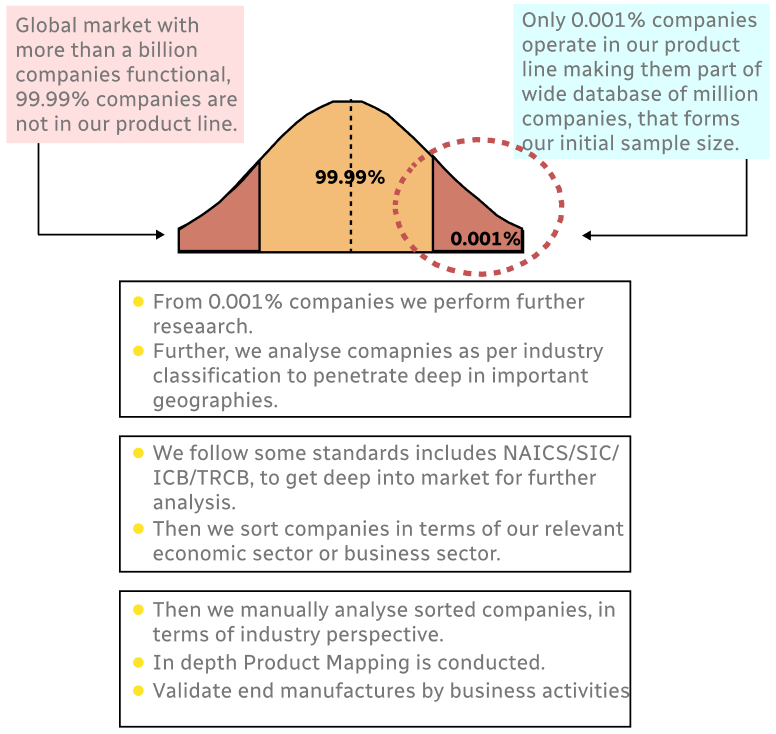
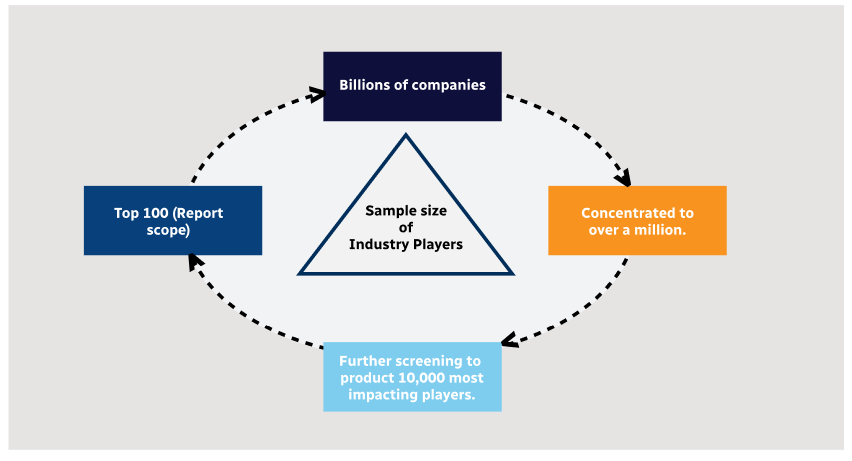
Step 1 - Identification of Relevant Samples Size from Population Database
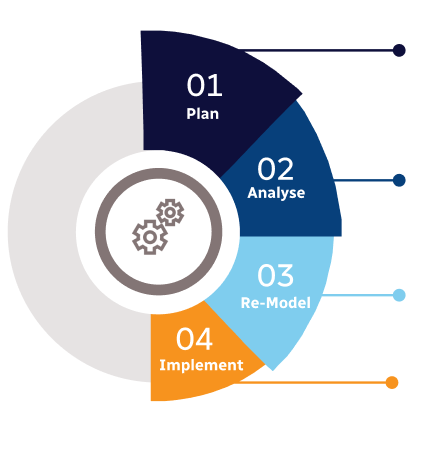
Step 2 - Approaches for Defining Global Market Size (Value, Volume* & Price*)
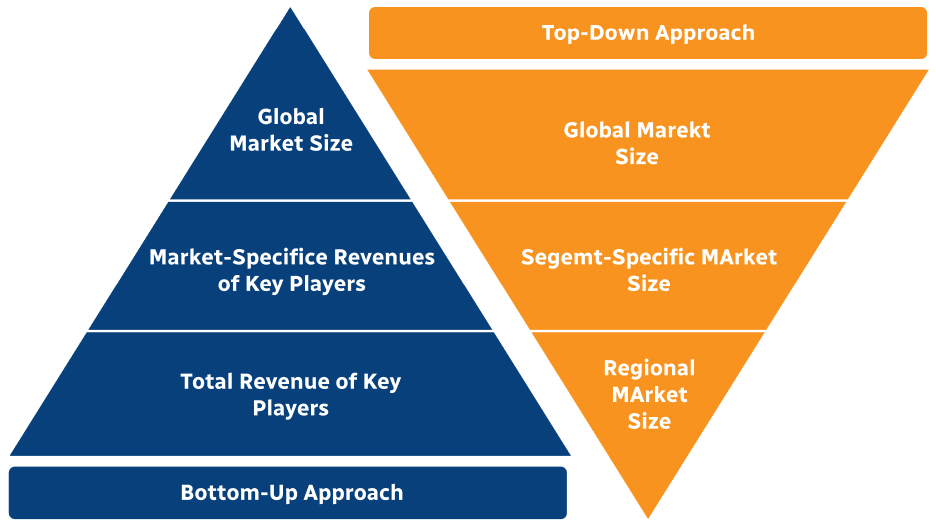
Note*: In applicable scenarios
Step 3 - Data Sources
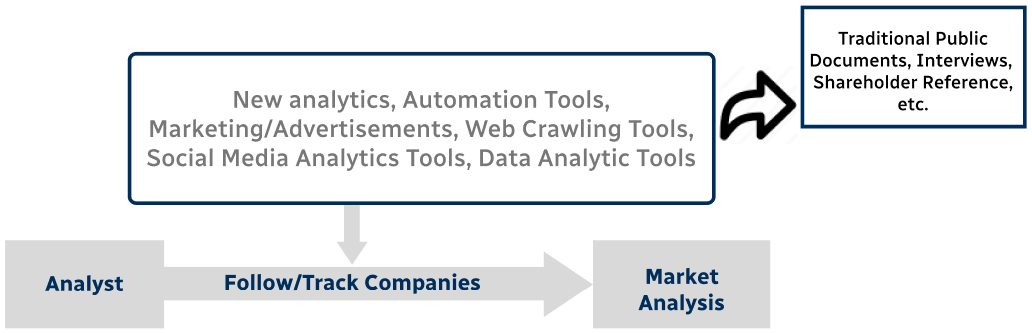
Primary Research
- Web Analytics
- Survey Reports
- Research Institute
- Latest Research Reports
- Opinion Leaders
Secondary Research
- Annual Reports
- White Paper
- Latest Press Release
- Industry Association
- Paid Database
- Investor Presentations
Step 4 - Data Triangulation
Involves using different sources of information in order to increase the validity of a study
These sources are likely to be stakeholders in a program - participants, other researchers, program staff, other community members, and so on.
Then we put all data in single framework & apply various statistical tools to find out the dynamic on the market.
During the analysis stage, feedback from the stakeholder groups would be compared to determine areas of agreement as well as areas of divergence