


Key Insights
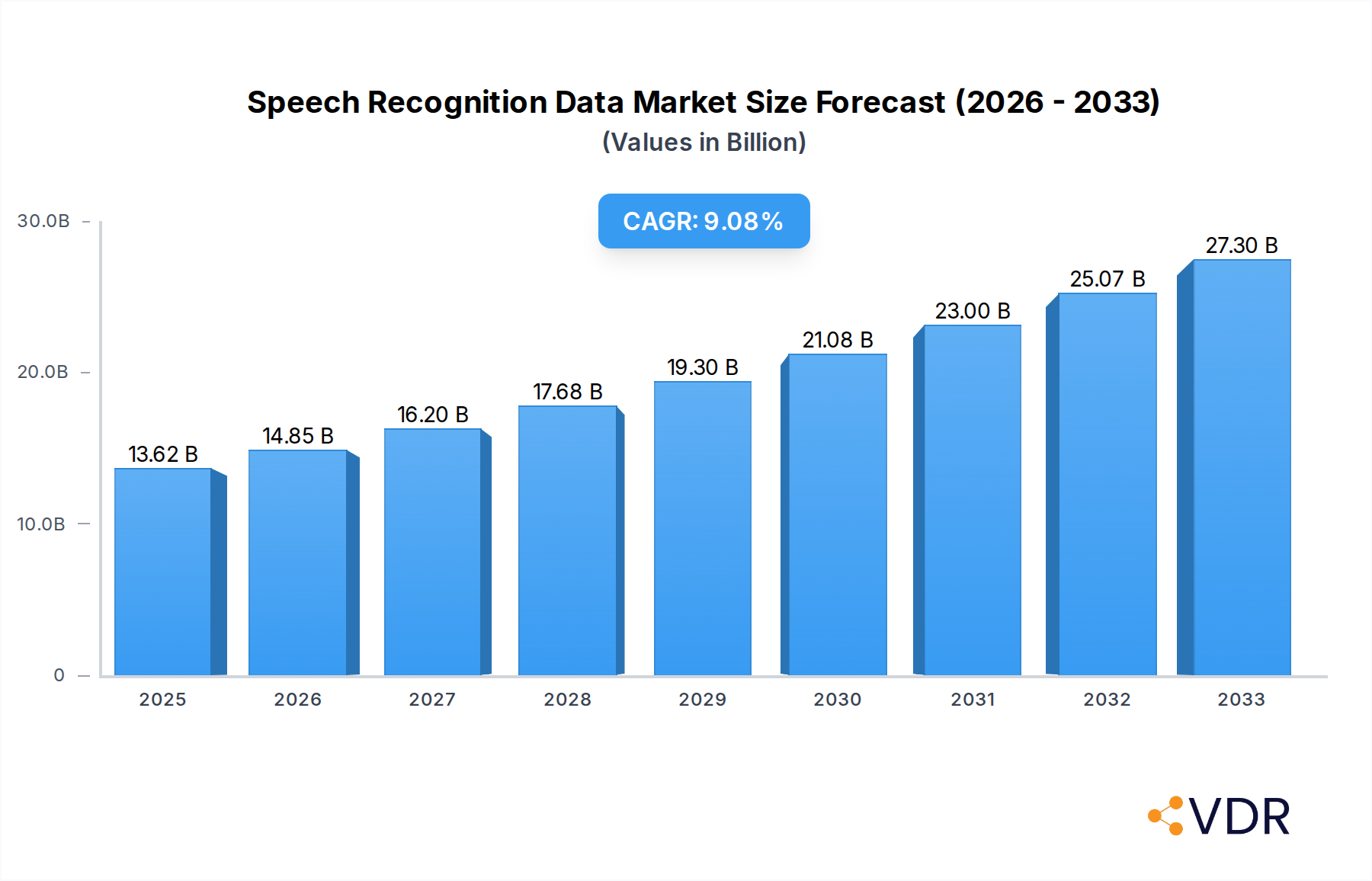
The global Speech Recognition Data market is poised for robust expansion, projected to reach an estimated USD 18.5 billion by 2025, with a compound annual growth rate (CAGR) of approximately 18.7% during the forecast period of 2025-2033. This substantial growth is fueled by the escalating demand for AI-powered voice interfaces across diverse applications, ranging from smart assistants and customer service automation to enhanced accessibility tools. The increasing adoption of sophisticated speech recognition technologies in commercial sectors, including retail, healthcare, and automotive, is a significant driver, enabling more intuitive human-computer interactions and data-driven insights. Furthermore, academic institutions are increasingly leveraging these technologies for research and educational purposes, contributing to the overall market momentum.
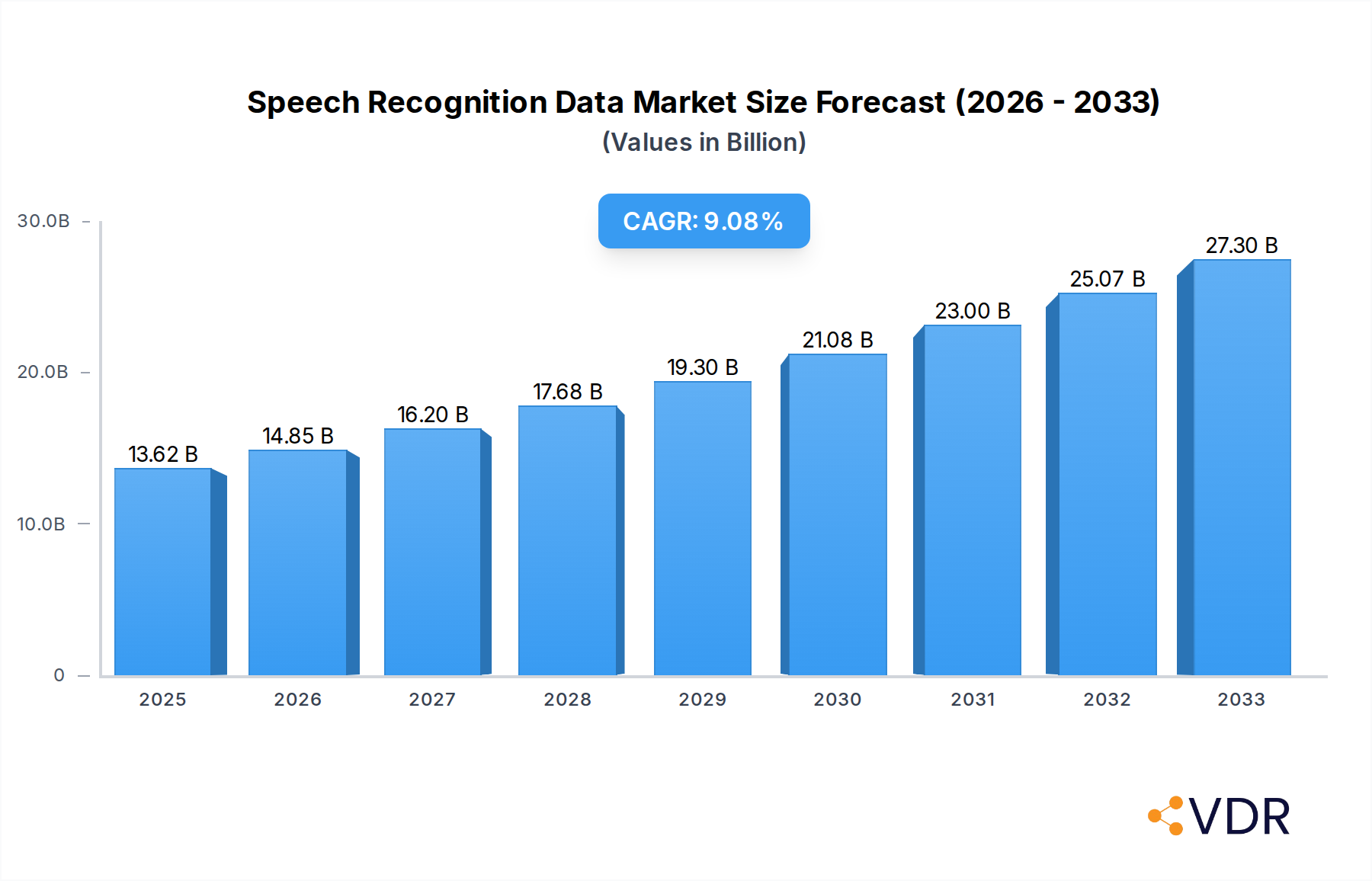
Speech Recognition Data Market Size (In Billion)

The market's trajectory is further shaped by key trends such as the advancement of natural language processing (NLP) and machine learning algorithms, leading to improved accuracy and nuanced understanding of human speech. The proliferation of voice-enabled devices, coupled with the growing comfort and preference for voice commands among consumers, are creating a fertile ground for market growth. However, challenges such as the need for extensive and diverse training datasets to ensure accuracy across multiple languages and accents, as well as data privacy and security concerns, need to be carefully addressed by market players. Key companies like Google, Baidu, and Iflytek are at the forefront of innovation, continuously refining their offerings to capture a larger share of this dynamic and rapidly evolving market.
Speech Recognition Data Company Market Share
Speech Recognition Data Market Dynamics & Structure
The global speech recognition data market exhibits a dynamic and evolving structure, characterized by a moderate to high concentration driven by a handful of tech giants and a growing number of specialized players. Technological innovation remains the primary engine of growth, with advancements in deep learning, natural language processing (NLP), and edge AI continuously enhancing accuracy and reducing latency. Regulatory frameworks, while still developing, are increasingly focusing on data privacy and ethical AI deployment, influencing how speech data is collected, stored, and utilized. Competitive product substitutes, primarily manual data entry and less sophisticated voice command systems, are rapidly being outpaced by the accuracy and efficiency of advanced speech recognition solutions. End-user demographics are broadening, spanning both commercial enterprises seeking automation and efficiency gains, and academic institutions engaged in research and development. Mergers and acquisitions (M&A) are a notable trend, as larger players acquire innovative startups to bolster their technological capabilities and market reach. The market is projected to see significant activity with an estimated xx deal volumes in the coming years.
- Market Concentration: Dominated by global technology leaders, but with a growing landscape of specialized AI and NLP firms.
- Technological Innovation Drivers: Deep learning algorithms, neural networks, advancements in acoustic modeling, and natural language understanding are key.
- Regulatory Frameworks: Data privacy regulations (e.g., GDPR, CCPA) and ethical AI guidelines are shaping data handling practices.
- Competitive Product Substitutes: Enhanced automation tools, improved user interfaces, and existing manual processes.
- End-User Demographics: Businesses across various sectors (BFSI, healthcare, retail), government agencies, and academic researchers.
- M&A Trends: Strategic acquisitions to gain access to proprietary algorithms, specialized datasets, and talent.
Speech Recognition Data Growth Trends & Insights
The speech recognition data market is on an exponential growth trajectory, fueled by a widening array of applications and an increasing demand for more natural and intuitive human-computer interaction. The market size is projected to expand significantly, driven by widespread adoption across both established and emerging industries. Adoption rates are accelerating as businesses recognize the transformative potential of voice-enabled technologies for customer service, operational efficiency, and data analysis. Technological disruptions, such as the development of more robust noise cancellation, speaker diarization, and sentiment analysis capabilities, are continuously pushing the boundaries of what's possible, making speech recognition solutions more practical and versatile. Consumer behavior is also shifting, with a growing preference for voice-activated devices and services, ranging from smart home assistants to in-car infotainment systems, further driving the demand for high-quality speech recognition data. The market is anticipated to witness a compound annual growth rate (CAGR) of xx% during the forecast period. Market penetration is expected to reach xx% by 2033, indicating a substantial integration into daily life and business operations.
The evolution of speech recognition technology is intrinsically linked to the continuous improvement of its underlying data. As algorithms become more sophisticated, they require larger, more diverse, and more meticulously labeled datasets to achieve higher accuracy and robustness. This symbiotic relationship between data and technology is a core driver of market expansion. The increasing availability of cloud computing resources has democratized access to the powerful processing capabilities needed to train and deploy complex speech recognition models, further lowering the barrier to entry for new applications and services. Furthermore, the growing realization of the untapped potential within voice data—from customer insights gleaned from call center recordings to accessibility enhancements for individuals with disabilities—is spurring investment and innovation. The shift from on-premise, specialized solutions to cloud-based, scalable services is also a significant trend, enabling broader adoption across businesses of all sizes. The ethical considerations surrounding data privacy and bias are also increasingly influencing the market, leading to a greater emphasis on transparent data sourcing and bias mitigation techniques in the development of speech recognition systems. This focus on responsible AI development is crucial for sustained long-term growth and public trust. The historical period from 2019-2024 saw substantial foundational growth, with the base year of 2025 marking a critical inflection point for accelerated expansion, propelled by the estimated value of the market reaching xx million units.
Dominant Regions, Countries, or Segments in Speech Recognition Data
The Commercial Use segment within the Application category is the undisputed leader in the speech recognition data market, commanding a significant market share and exhibiting robust growth potential. This dominance is attributed to the widespread integration of speech recognition technology into business operations across diverse industries, including customer service, healthcare, finance, retail, and manufacturing. Businesses are leveraging voice-to-text capabilities for automated call center solutions, voice-enabled data entry, transcription services, virtual assistants, and enhanced user interfaces, all of which rely heavily on high-quality speech recognition data. The pursuit of operational efficiency, cost reduction, and improved customer experiences are primary drivers for this segment's expansion. Furthermore, the burgeoning field of AI-powered analytics, which extracts valuable insights from spoken interactions, further solidifies the importance of commercial use cases. The estimated market share for commercial use is xx% in 2025, with an anticipated growth rate that outpaces other segments.
Among the linguistic types, English and Chinese Mandarin stand out as the most dominant segments, driven by their massive user bases and extensive adoption in global technology markets. The sheer volume of English speakers worldwide, coupled with its prevalence in international business, technology, and media, makes English speech data a critical component of the global market. Similarly, the vast population of Chinese speakers, coupled with the rapid technological advancements and widespread adoption of voice-enabled services in China, positions Chinese Mandarin as a cornerstone segment. Baidu and iFlytek, prominent Chinese technology companies, are key players in developing and utilizing vast datasets of Chinese speech. The estimated market share for English in 2025 is xx%, and for Chinese Mandarin, it is xx%. The rapid growth in these segments is supported by significant investment in research and development, as well as government initiatives promoting AI adoption. The availability of extensive, high-quality training data for these languages is crucial for the development of accurate and reliable speech recognition models, further reinforcing their market leadership. The demand for Spanish and French speech data is also growing, albeit at a slower pace, driven by their significant user bases in specific geographical regions and their increasing use in globalized services. The "Others" category, while diverse, represents a collection of languages with smaller but growing markets, often catering to niche applications or specific regional demands.
Speech Recognition Data Product Landscape
The speech recognition data product landscape is characterized by a continuous stream of innovative solutions designed to cater to increasingly sophisticated demands. Companies are developing specialized datasets optimized for specific accents, noisy environments, and diverse acoustic conditions, significantly enhancing the accuracy and reliability of speech recognition systems. Advanced product offerings include real-time transcription engines, sentiment analysis tools, speaker identification modules, and highly accurate voice command interfaces. These products leverage cutting-edge machine learning algorithms and are often offered as cloud-based APIs or on-premise solutions, providing flexibility and scalability for businesses. Unique selling propositions often revolve around superior accuracy rates, faster processing speeds, lower latency, and robust privacy features, ensuring data security and compliance. Technological advancements are focusing on reducing bias in datasets, improving performance on low-resource languages, and enabling more natural and contextual understanding of spoken language.
Key Drivers, Barriers & Challenges in Speech Recognition Data
The speech recognition data market is propelled by several key drivers. The relentless pursuit of automation and efficiency across industries is a primary motivator, as businesses seek to streamline operations and reduce manual labor. The increasing adoption of voice-enabled devices, from smartphones and smart speakers to automotive systems, expands the demand for accurate speech recognition. Advancements in artificial intelligence, particularly deep learning and natural language processing, are continuously improving the capabilities and accessibility of speech recognition technology. Growing investments in AI research and development by major tech corporations and governments further fuel innovation.
However, several barriers and challenges temper market growth. The high cost and complexity of acquiring and annotating large, diverse speech datasets remain significant hurdles. Ensuring data privacy and compliance with evolving regulations, such as GDPR and CCPA, presents ongoing challenges. The presence of linguistic and acoustic variations across different demographics and environments can lead to bias and reduced accuracy, requiring extensive fine-tuning. Fierce competition among established players and emerging startups can lead to pricing pressures. Supply chain issues related to the availability of skilled data annotators and specialized hardware can also impact deployment timelines.
Emerging Opportunities in Speech Recognition Data
Emerging opportunities in the speech recognition data market are vast and largely untapped. The expansion of voice assistants into specialized enterprise applications, such as medical dictation and legal transcription, presents significant growth potential. The development of hyper-personalized voice experiences, where systems adapt to individual user speech patterns and preferences, is a promising frontier. Furthermore, the growing demand for accessibility solutions for individuals with disabilities, leveraging speech recognition for communication and control, represents a socially impactful and commercially viable opportunity. The integration of speech recognition with augmented and virtual reality environments for more immersive user interactions is another area ripe for innovation.
Growth Accelerators in the Speech Recognition Data Industry
Several factors are accelerating growth in the speech recognition data industry. Technological breakthroughs, particularly in areas like few-shot learning and unsupervised learning, are reducing the reliance on massive labeled datasets, thus speeding up model development and deployment. Strategic partnerships between technology providers and industry-specific software developers are enabling the creation of tailored solutions for niche markets. Market expansion into emerging economies, where the adoption of voice technology is rapidly growing, provides a substantial growth avenue. The increasing focus on edge AI, enabling speech recognition processing on local devices without constant cloud connectivity, enhances privacy and reduces latency, driving adoption in sensitive applications.
Key Players Shaping the Speech Recognition Data Market
- Baidu
- Iflytek
- Amazon
- Apple Inc.
- IBM
- Microsoft
- Brianasoft
- Neurotechnology
- Sensory Inc.
- VoiceBase
- Auraya
- LumenVox
- Speechocean
Notable Milestones in Speech Recognition Data Sector
- 2019: Significant advancements in transformer-based models (e.g., BERT) led to improved natural language understanding, impacting speech recognition accuracy.
- 2020: Increased focus on privacy-preserving techniques for speech data collection and processing due to heightened global data protection regulations.
- 2021: Emergence of highly accurate speaker diarization technologies, enabling better separation of multiple speakers in conversations, a critical need for call center analytics.
- 2022: Widespread adoption of on-device speech recognition for faster and more private interactions, particularly in mobile and IoT devices.
- 2023: Introduction of low-resource language models, expanding the reach of speech recognition to underserved linguistic communities.
- 2024: Growing integration of speech recognition with multimodal AI, combining voice with visual and textual information for richer context understanding.
In-Depth Speech Recognition Data Market Outlook
The in-depth market outlook for speech recognition data is exceptionally promising, characterized by sustained high growth and continuous innovation. The foundational growth accelerators—technological advancements, strategic partnerships, and market expansion—will continue to drive the industry forward. The increasing demand for voice-enabled solutions across both the commercial and academic sectors, coupled with the linguistic diversity of global populations, ensures a broad and expanding addressable market. Future growth will also be fueled by the development of more nuanced and contextual understanding of spoken language, moving beyond simple transcription to genuine comprehension and intent recognition. The ethical imperative to develop unbiased and secure speech recognition systems will also shape future product development, leading to more robust and trustworthy solutions. Overall, the speech recognition data market is poised for continued expansion, offering significant opportunities for stakeholders to leverage the power of voice in an increasingly connected world, with the estimated market value reaching xx million units by the end of the forecast period.
Speech Recognition Data Segmentation
-
1. Application
- 1.1. Commercial Use
- 1.2. Academic Use
-
2. Type
- 2.1. Chinese Mandarin
- 2.2. English
- 2.3. Spanish
- 2.4. French
- 2.5. Others
Speech Recognition Data Segmentation By Geography
-
1. North America
- 1.1. United States
- 1.2. Canada
- 1.3. Mexico
-
2. South America
- 2.1. Brazil
- 2.2. Argentina
- 2.3. Rest of South America
-
3. Europe
- 3.1. United Kingdom
- 3.2. Germany
- 3.3. France
- 3.4. Italy
- 3.5. Spain
- 3.6. Russia
- 3.7. Benelux
- 3.8. Nordics
- 3.9. Rest of Europe
-
4. Middle East & Africa
- 4.1. Turkey
- 4.2. Israel
- 4.3. GCC
- 4.4. North Africa
- 4.5. South Africa
- 4.6. Rest of Middle East & Africa
-
5. Asia Pacific
- 5.1. China
- 5.2. India
- 5.3. Japan
- 5.4. South Korea
- 5.5. ASEAN
- 5.6. Oceania
- 5.7. Rest of Asia Pacific

Speech Recognition Data Regional Market Share
Geographic Coverage of Speech Recognition Data
Speech Recognition Data REPORT HIGHLIGHTS
| Aspects | Details |
|---|---|
| Study Period | 2020-2034 |
| Base Year | 2025 |
| Estimated Year | 2026 |
| Forecast Period | 2026-2034 |
| Historical Period | 2020-2025 |
| Growth Rate | CAGR of 8.99% from 2020-2034 |
| Segmentation |
|
Table of Contents
- 1. Introduction
- 1.1. Research Scope
- 1.2. Market Segmentation
- 1.3. Research Methodology
- 1.4. Definitions and Assumptions
- 2. Executive Summary
- 2.1. Introduction
- 3. Market Dynamics
- 3.1. Introduction
- 3.2. Market Drivers
- 3.3. Market Restrains
- 3.4. Market Trends
- 4. Market Factor Analysis
- 4.1. Porters Five Forces
- 4.2. Supply/Value Chain
- 4.3. PESTEL analysis
- 4.4. Market Entropy
- 4.5. Patent/Trademark Analysis
- 5. Global Speech Recognition Data Analysis, Insights and Forecast, 2020-2032
- 5.1. Market Analysis, Insights and Forecast - by Application
- 5.1.1. Commercial Use
- 5.1.2. Academic Use
- 5.2. Market Analysis, Insights and Forecast - by Type
- 5.2.1. Chinese Mandarin
- 5.2.2. English
- 5.2.3. Spanish
- 5.2.4. French
- 5.2.5. Others
- 5.3. Market Analysis, Insights and Forecast - by Region
- 5.3.1. North America
- 5.3.2. South America
- 5.3.3. Europe
- 5.3.4. Middle East & Africa
- 5.3.5. Asia Pacific
- 5.1. Market Analysis, Insights and Forecast - by Application
- 6. North America Speech Recognition Data Analysis, Insights and Forecast, 2020-2032
- 6.1. Market Analysis, Insights and Forecast - by Application
- 6.1.1. Commercial Use
- 6.1.2. Academic Use
- 6.2. Market Analysis, Insights and Forecast - by Type
- 6.2.1. Chinese Mandarin
- 6.2.2. English
- 6.2.3. Spanish
- 6.2.4. French
- 6.2.5. Others
- 6.1. Market Analysis, Insights and Forecast - by Application
- 7. South America Speech Recognition Data Analysis, Insights and Forecast, 2020-2032
- 7.1. Market Analysis, Insights and Forecast - by Application
- 7.1.1. Commercial Use
- 7.1.2. Academic Use
- 7.2. Market Analysis, Insights and Forecast - by Type
- 7.2.1. Chinese Mandarin
- 7.2.2. English
- 7.2.3. Spanish
- 7.2.4. French
- 7.2.5. Others
- 7.1. Market Analysis, Insights and Forecast - by Application
- 8. Europe Speech Recognition Data Analysis, Insights and Forecast, 2020-2032
- 8.1. Market Analysis, Insights and Forecast - by Application
- 8.1.1. Commercial Use
- 8.1.2. Academic Use
- 8.2. Market Analysis, Insights and Forecast - by Type
- 8.2.1. Chinese Mandarin
- 8.2.2. English
- 8.2.3. Spanish
- 8.2.4. French
- 8.2.5. Others
- 8.1. Market Analysis, Insights and Forecast - by Application
- 9. Middle East & Africa Speech Recognition Data Analysis, Insights and Forecast, 2020-2032
- 9.1. Market Analysis, Insights and Forecast - by Application
- 9.1.1. Commercial Use
- 9.1.2. Academic Use
- 9.2. Market Analysis, Insights and Forecast - by Type
- 9.2.1. Chinese Mandarin
- 9.2.2. English
- 9.2.3. Spanish
- 9.2.4. French
- 9.2.5. Others
- 9.1. Market Analysis, Insights and Forecast - by Application
- 10. Asia Pacific Speech Recognition Data Analysis, Insights and Forecast, 2020-2032
- 10.1. Market Analysis, Insights and Forecast - by Application
- 10.1.1. Commercial Use
- 10.1.2. Academic Use
- 10.2. Market Analysis, Insights and Forecast - by Type
- 10.2.1. Chinese Mandarin
- 10.2.2. English
- 10.2.3. Spanish
- 10.2.4. French
- 10.2.5. Others
- 10.1. Market Analysis, Insights and Forecast - by Application
- 11. Competitive Analysis
- 11.1. Global Market Share Analysis 2025
- 11.2. Company Profiles
- 11.2.1 Google
- 11.2.1.1. Overview
- 11.2.1.2. Products
- 11.2.1.3. SWOT Analysis
- 11.2.1.4. Recent Developments
- 11.2.1.5. Financials (Based on Availability)
- 11.2.2 Baidu
- 11.2.2.1. Overview
- 11.2.2.2. Products
- 11.2.2.3. SWOT Analysis
- 11.2.2.4. Recent Developments
- 11.2.2.5. Financials (Based on Availability)
- 11.2.3 Iflytek
- 11.2.3.1. Overview
- 11.2.3.2. Products
- 11.2.3.3. SWOT Analysis
- 11.2.3.4. Recent Developments
- 11.2.3.5. Financials (Based on Availability)
- 11.2.4 Facebook
- 11.2.4.1. Overview
- 11.2.4.2. Products
- 11.2.4.3. SWOT Analysis
- 11.2.4.4. Recent Developments
- 11.2.4.5. Financials (Based on Availability)
- 11.2.5 Amazon
- 11.2.5.1. Overview
- 11.2.5.2. Products
- 11.2.5.3. SWOT Analysis
- 11.2.5.4. Recent Developments
- 11.2.5.5. Financials (Based on Availability)
- 11.2.6 Apple Inc
- 11.2.6.1. Overview
- 11.2.6.2. Products
- 11.2.6.3. SWOT Analysis
- 11.2.6.4. Recent Developments
- 11.2.6.5. Financials (Based on Availability)
- 11.2.7 IBM
- 11.2.7.1. Overview
- 11.2.7.2. Products
- 11.2.7.3. SWOT Analysis
- 11.2.7.4. Recent Developments
- 11.2.7.5. Financials (Based on Availability)
- 11.2.8 Microsoft
- 11.2.8.1. Overview
- 11.2.8.2. Products
- 11.2.8.3. SWOT Analysis
- 11.2.8.4. Recent Developments
- 11.2.8.5. Financials (Based on Availability)
- 11.2.9 Brianasoft
- 11.2.9.1. Overview
- 11.2.9.2. Products
- 11.2.9.3. SWOT Analysis
- 11.2.9.4. Recent Developments
- 11.2.9.5. Financials (Based on Availability)
- 11.2.10 Neurotechnology
- 11.2.10.1. Overview
- 11.2.10.2. Products
- 11.2.10.3. SWOT Analysis
- 11.2.10.4. Recent Developments
- 11.2.10.5. Financials (Based on Availability)
- 11.2.11 Sensory Inc.
- 11.2.11.1. Overview
- 11.2.11.2. Products
- 11.2.11.3. SWOT Analysis
- 11.2.11.4. Recent Developments
- 11.2.11.5. Financials (Based on Availability)
- 11.2.12 VoiceBase
- 11.2.12.1. Overview
- 11.2.12.2. Products
- 11.2.12.3. SWOT Analysis
- 11.2.12.4. Recent Developments
- 11.2.12.5. Financials (Based on Availability)
- 11.2.13 Auraya
- 11.2.13.1. Overview
- 11.2.13.2. Products
- 11.2.13.3. SWOT Analysis
- 11.2.13.4. Recent Developments
- 11.2.13.5. Financials (Based on Availability)
- 11.2.14 LumenVox
- 11.2.14.1. Overview
- 11.2.14.2. Products
- 11.2.14.3. SWOT Analysis
- 11.2.14.4. Recent Developments
- 11.2.14.5. Financials (Based on Availability)
- 11.2.15 Speechocean
- 11.2.15.1. Overview
- 11.2.15.2. Products
- 11.2.15.3. SWOT Analysis
- 11.2.15.4. Recent Developments
- 11.2.15.5. Financials (Based on Availability)
- 11.2.1 Google
List of Figures
- Figure 1: Global Speech Recognition Data Revenue Breakdown (undefined, %) by Region 2025 & 2033
- Figure 2: North America Speech Recognition Data Revenue (undefined), by Application 2025 & 2033
- Figure 3: North America Speech Recognition Data Revenue Share (%), by Application 2025 & 2033
- Figure 4: North America Speech Recognition Data Revenue (undefined), by Type 2025 & 2033
- Figure 5: North America Speech Recognition Data Revenue Share (%), by Type 2025 & 2033
- Figure 6: North America Speech Recognition Data Revenue (undefined), by Country 2025 & 2033
- Figure 7: North America Speech Recognition Data Revenue Share (%), by Country 2025 & 2033
- Figure 8: South America Speech Recognition Data Revenue (undefined), by Application 2025 & 2033
- Figure 9: South America Speech Recognition Data Revenue Share (%), by Application 2025 & 2033
- Figure 10: South America Speech Recognition Data Revenue (undefined), by Type 2025 & 2033
- Figure 11: South America Speech Recognition Data Revenue Share (%), by Type 2025 & 2033
- Figure 12: South America Speech Recognition Data Revenue (undefined), by Country 2025 & 2033
- Figure 13: South America Speech Recognition Data Revenue Share (%), by Country 2025 & 2033
- Figure 14: Europe Speech Recognition Data Revenue (undefined), by Application 2025 & 2033
- Figure 15: Europe Speech Recognition Data Revenue Share (%), by Application 2025 & 2033
- Figure 16: Europe Speech Recognition Data Revenue (undefined), by Type 2025 & 2033
- Figure 17: Europe Speech Recognition Data Revenue Share (%), by Type 2025 & 2033
- Figure 18: Europe Speech Recognition Data Revenue (undefined), by Country 2025 & 2033
- Figure 19: Europe Speech Recognition Data Revenue Share (%), by Country 2025 & 2033
- Figure 20: Middle East & Africa Speech Recognition Data Revenue (undefined), by Application 2025 & 2033
- Figure 21: Middle East & Africa Speech Recognition Data Revenue Share (%), by Application 2025 & 2033
- Figure 22: Middle East & Africa Speech Recognition Data Revenue (undefined), by Type 2025 & 2033
- Figure 23: Middle East & Africa Speech Recognition Data Revenue Share (%), by Type 2025 & 2033
- Figure 24: Middle East & Africa Speech Recognition Data Revenue (undefined), by Country 2025 & 2033
- Figure 25: Middle East & Africa Speech Recognition Data Revenue Share (%), by Country 2025 & 2033
- Figure 26: Asia Pacific Speech Recognition Data Revenue (undefined), by Application 2025 & 2033
- Figure 27: Asia Pacific Speech Recognition Data Revenue Share (%), by Application 2025 & 2033
- Figure 28: Asia Pacific Speech Recognition Data Revenue (undefined), by Type 2025 & 2033
- Figure 29: Asia Pacific Speech Recognition Data Revenue Share (%), by Type 2025 & 2033
- Figure 30: Asia Pacific Speech Recognition Data Revenue (undefined), by Country 2025 & 2033
- Figure 31: Asia Pacific Speech Recognition Data Revenue Share (%), by Country 2025 & 2033
List of Tables
- Table 1: Global Speech Recognition Data Revenue undefined Forecast, by Application 2020 & 2033
- Table 2: Global Speech Recognition Data Revenue undefined Forecast, by Type 2020 & 2033
- Table 3: Global Speech Recognition Data Revenue undefined Forecast, by Region 2020 & 2033
- Table 4: Global Speech Recognition Data Revenue undefined Forecast, by Application 2020 & 2033
- Table 5: Global Speech Recognition Data Revenue undefined Forecast, by Type 2020 & 2033
- Table 6: Global Speech Recognition Data Revenue undefined Forecast, by Country 2020 & 2033
- Table 7: United States Speech Recognition Data Revenue (undefined) Forecast, by Application 2020 & 2033
- Table 8: Canada Speech Recognition Data Revenue (undefined) Forecast, by Application 2020 & 2033
- Table 9: Mexico Speech Recognition Data Revenue (undefined) Forecast, by Application 2020 & 2033
- Table 10: Global Speech Recognition Data Revenue undefined Forecast, by Application 2020 & 2033
- Table 11: Global Speech Recognition Data Revenue undefined Forecast, by Type 2020 & 2033
- Table 12: Global Speech Recognition Data Revenue undefined Forecast, by Country 2020 & 2033
- Table 13: Brazil Speech Recognition Data Revenue (undefined) Forecast, by Application 2020 & 2033
- Table 14: Argentina Speech Recognition Data Revenue (undefined) Forecast, by Application 2020 & 2033
- Table 15: Rest of South America Speech Recognition Data Revenue (undefined) Forecast, by Application 2020 & 2033
- Table 16: Global Speech Recognition Data Revenue undefined Forecast, by Application 2020 & 2033
- Table 17: Global Speech Recognition Data Revenue undefined Forecast, by Type 2020 & 2033
- Table 18: Global Speech Recognition Data Revenue undefined Forecast, by Country 2020 & 2033
- Table 19: United Kingdom Speech Recognition Data Revenue (undefined) Forecast, by Application 2020 & 2033
- Table 20: Germany Speech Recognition Data Revenue (undefined) Forecast, by Application 2020 & 2033
- Table 21: France Speech Recognition Data Revenue (undefined) Forecast, by Application 2020 & 2033
- Table 22: Italy Speech Recognition Data Revenue (undefined) Forecast, by Application 2020 & 2033
- Table 23: Spain Speech Recognition Data Revenue (undefined) Forecast, by Application 2020 & 2033
- Table 24: Russia Speech Recognition Data Revenue (undefined) Forecast, by Application 2020 & 2033
- Table 25: Benelux Speech Recognition Data Revenue (undefined) Forecast, by Application 2020 & 2033
- Table 26: Nordics Speech Recognition Data Revenue (undefined) Forecast, by Application 2020 & 2033
- Table 27: Rest of Europe Speech Recognition Data Revenue (undefined) Forecast, by Application 2020 & 2033
- Table 28: Global Speech Recognition Data Revenue undefined Forecast, by Application 2020 & 2033
- Table 29: Global Speech Recognition Data Revenue undefined Forecast, by Type 2020 & 2033
- Table 30: Global Speech Recognition Data Revenue undefined Forecast, by Country 2020 & 2033
- Table 31: Turkey Speech Recognition Data Revenue (undefined) Forecast, by Application 2020 & 2033
- Table 32: Israel Speech Recognition Data Revenue (undefined) Forecast, by Application 2020 & 2033
- Table 33: GCC Speech Recognition Data Revenue (undefined) Forecast, by Application 2020 & 2033
- Table 34: North Africa Speech Recognition Data Revenue (undefined) Forecast, by Application 2020 & 2033
- Table 35: South Africa Speech Recognition Data Revenue (undefined) Forecast, by Application 2020 & 2033
- Table 36: Rest of Middle East & Africa Speech Recognition Data Revenue (undefined) Forecast, by Application 2020 & 2033
- Table 37: Global Speech Recognition Data Revenue undefined Forecast, by Application 2020 & 2033
- Table 38: Global Speech Recognition Data Revenue undefined Forecast, by Type 2020 & 2033
- Table 39: Global Speech Recognition Data Revenue undefined Forecast, by Country 2020 & 2033
- Table 40: China Speech Recognition Data Revenue (undefined) Forecast, by Application 2020 & 2033
- Table 41: India Speech Recognition Data Revenue (undefined) Forecast, by Application 2020 & 2033
- Table 42: Japan Speech Recognition Data Revenue (undefined) Forecast, by Application 2020 & 2033
- Table 43: South Korea Speech Recognition Data Revenue (undefined) Forecast, by Application 2020 & 2033
- Table 44: ASEAN Speech Recognition Data Revenue (undefined) Forecast, by Application 2020 & 2033
- Table 45: Oceania Speech Recognition Data Revenue (undefined) Forecast, by Application 2020 & 2033
- Table 46: Rest of Asia Pacific Speech Recognition Data Revenue (undefined) Forecast, by Application 2020 & 2033
Frequently Asked Questions
1. What is the projected Compound Annual Growth Rate (CAGR) of the Speech Recognition Data?
The projected CAGR is approximately 8.99%.
2. Which companies are prominent players in the Speech Recognition Data?
Key companies in the market include Google, Baidu, Iflytek, Facebook, Amazon, Apple Inc, IBM, Microsoft, Brianasoft, Neurotechnology, Sensory Inc., VoiceBase, Auraya, LumenVox, Speechocean.
3. What are the main segments of the Speech Recognition Data?
The market segments include Application, Type.
4. Can you provide details about the market size?
The market size is estimated to be USD XXX N/A as of 2022.
5. What are some drivers contributing to market growth?
N/A
6. What are the notable trends driving market growth?
N/A
7. Are there any restraints impacting market growth?
N/A
8. Can you provide examples of recent developments in the market?
N/A
9. What pricing options are available for accessing the report?
Pricing options include single-user, multi-user, and enterprise licenses priced at USD 3950.00, USD 5925.00, and USD 7900.00 respectively.
10. Is the market size provided in terms of value or volume?
The market size is provided in terms of value, measured in N/A.
11. Are there any specific market keywords associated with the report?
Yes, the market keyword associated with the report is "Speech Recognition Data," which aids in identifying and referencing the specific market segment covered.
12. How do I determine which pricing option suits my needs best?
The pricing options vary based on user requirements and access needs. Individual users may opt for single-user licenses, while businesses requiring broader access may choose multi-user or enterprise licenses for cost-effective access to the report.
13. Are there any additional resources or data provided in the Speech Recognition Data report?
While the report offers comprehensive insights, it's advisable to review the specific contents or supplementary materials provided to ascertain if additional resources or data are available.
14. How can I stay updated on further developments or reports in the Speech Recognition Data?
To stay informed about further developments, trends, and reports in the Speech Recognition Data, consider subscribing to industry newsletters, following relevant companies and organizations, or regularly checking reputable industry news sources and publications.
Methodology
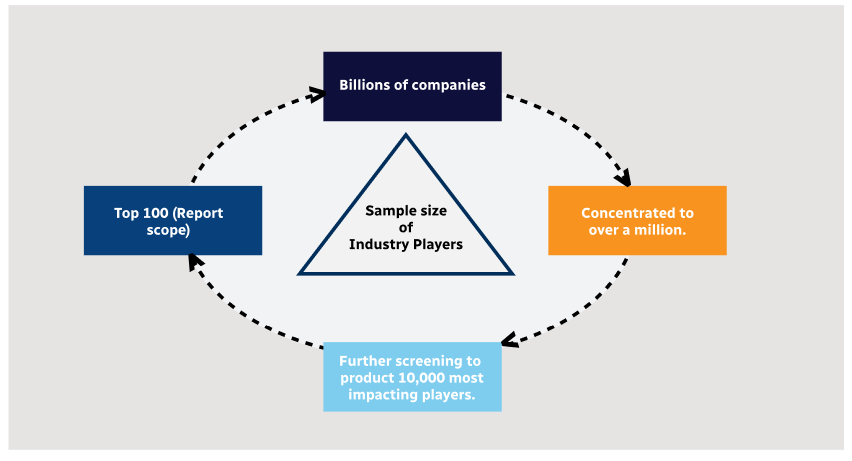
Step 1 - Identification of Relevant Samples Size from Population Database
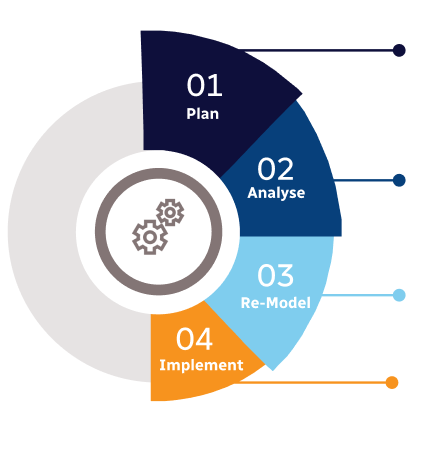
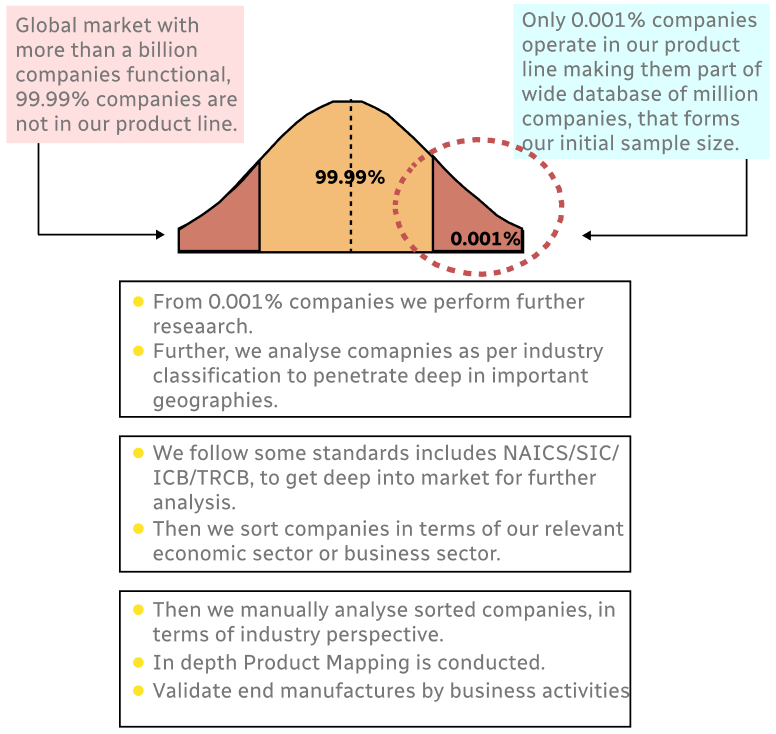
Step 2 - Approaches for Defining Global Market Size (Value, Volume* & Price*)
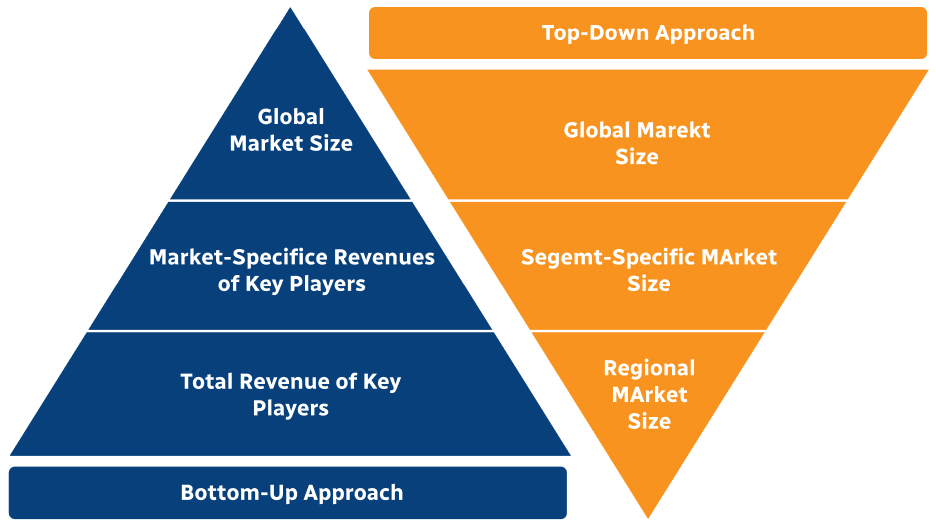
Note*: In applicable scenarios
Step 3 - Data Sources
Primary Research
- Web Analytics
- Survey Reports
- Research Institute
- Latest Research Reports
- Opinion Leaders
Secondary Research
- Annual Reports
- White Paper
- Latest Press Release
- Industry Association
- Paid Database
- Investor Presentations
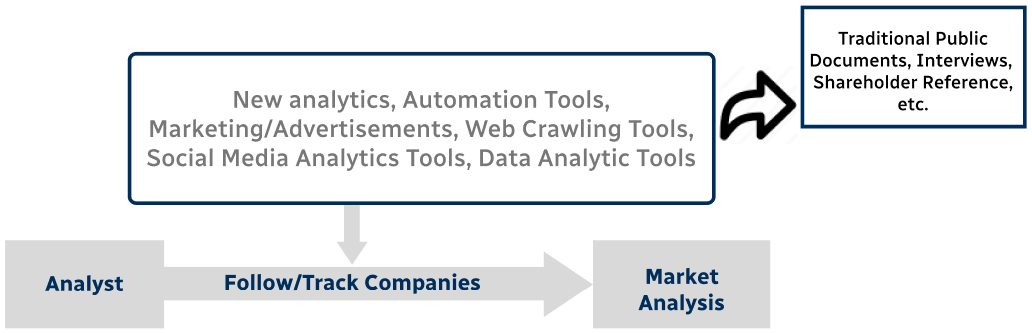
Step 4 - Data Triangulation
Involves using different sources of information in order to increase the validity of a study
These sources are likely to be stakeholders in a program - participants, other researchers, program staff, other community members, and so on.
Then we put all data in single framework & apply various statistical tools to find out the dynamic on the market.
During the analysis stage, feedback from the stakeholder groups would be compared to determine areas of agreement as well as areas of divergence