


Key Insights
The Small Animal Imaging In Vivo market is experiencing robust growth, projected to reach a substantial valuation and expand at a compelling Compound Annual Growth Rate (CAGR) of approximately 8.5% over the forecast period of 2025-2033. This expansion is primarily fueled by the escalating demand for advanced preclinical research tools, particularly in the development of novel therapeutics and diagnostic methods for a wide spectrum of diseases, with a significant focus on cancer. The increasing prevalence of chronic and complex diseases, coupled with substantial investments in research and development by pharmaceutical and biotechnology companies, are key drivers. Furthermore, the rising need for non-invasive imaging techniques to accurately assess drug efficacy, toxicity, and disease progression in early-stage research contributes significantly to market momentum.
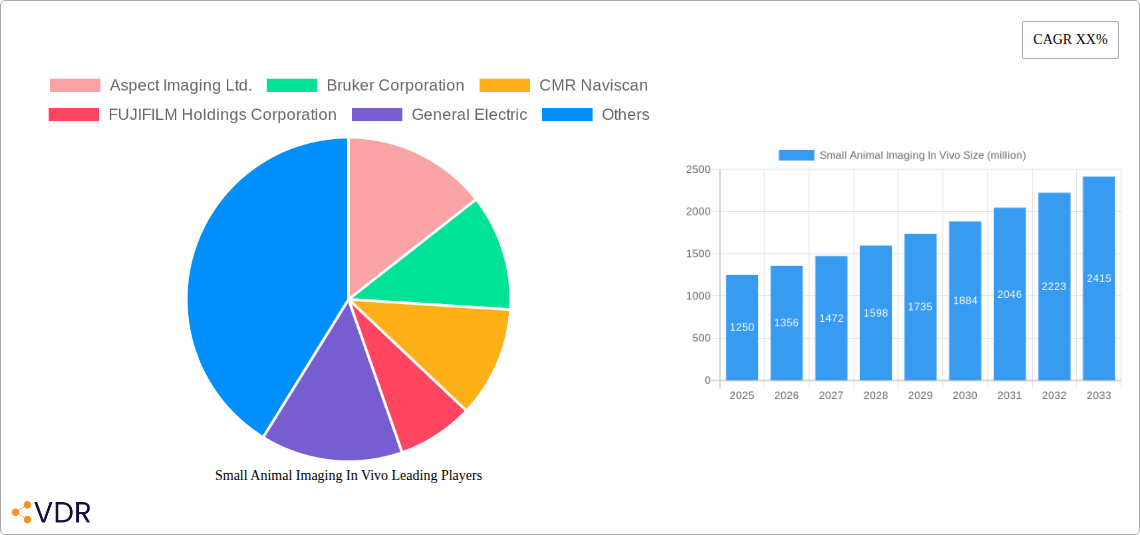
Small Animal Imaging In Vivo Market Size (In Billion)

The market is characterized by continuous innovation and a growing adoption of sophisticated imaging modalities. Applications such as cancer cell detection and monitoring therapy response are at the forefront, demonstrating the critical role of small animal imaging in accelerating drug discovery pipelines. Longitudinal studies and epigenetic studies are also gaining traction, highlighting the versatility and indispensable nature of these technologies in understanding disease mechanisms and evaluating treatment outcomes over time. Key market players are actively involved in product development, strategic collaborations, and market expansion initiatives. The market's trajectory is also influenced by technological advancements in resolution, sensitivity, and multiplexing capabilities of imaging systems, enabling researchers to gain deeper insights into biological processes at the molecular and cellular levels. Emerging economies, particularly in the Asia Pacific region, are presenting significant growth opportunities due to increasing healthcare expenditure and a burgeoning research infrastructure.
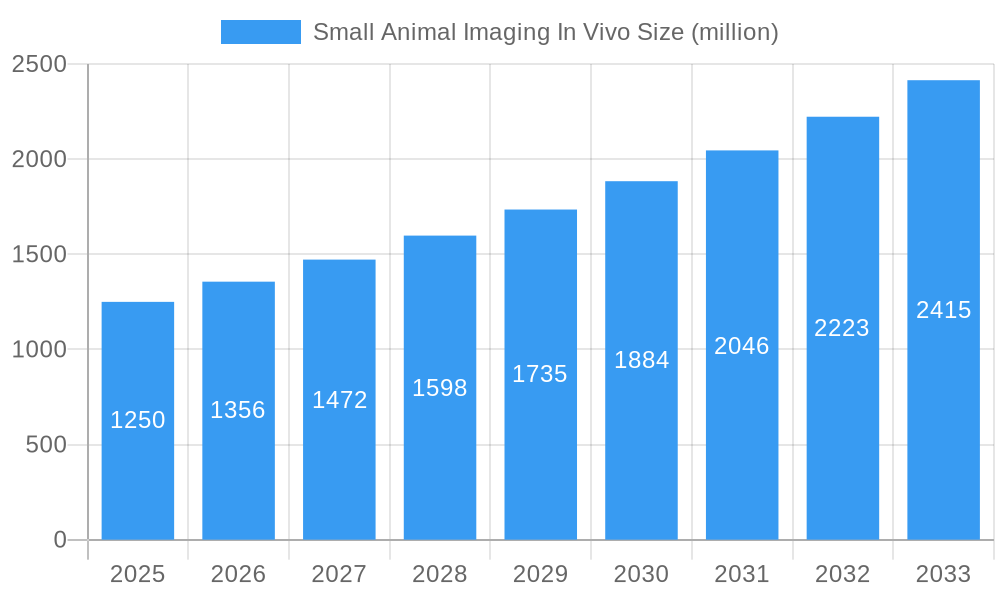
Small Animal Imaging In Vivo Company Market Share
Small Animal Imaging In Vivo: Market Dynamics, Growth, and Future Outlook (2019-2033)
This comprehensive report delves into the dynamic small animal imaging in vivo market, providing an in-depth analysis of its structure, growth trajectory, and future potential. With a focus on cancer cell detection, bio-distribution, monitoring therapy response, longitudinal studies, and epigenetic studies, this report also examines the impact of key technologies such as micro-MRI, optical imaging, nuclear imaging, and micro-ultrasound. Covering a study period from 2019 to 2033, with the base and estimated year being 2025, and a forecast period from 2025 to 2033, this report offers critical insights for researchers, pharmaceutical companies, biotech firms, and investors navigating this rapidly evolving landscape.
Small Animal Imaging In Vivo Market Dynamics & Structure
The small animal imaging in vivo market is characterized by a moderate to high degree of concentration, with several key players dominating the landscape. Technological innovation serves as a primary driver, fueled by continuous advancements in image resolution, sensitivity, and probe development for applications like cancer cell detection and bio-distribution studies. Regulatory frameworks, particularly those governing preclinical research and drug development, play a crucial role in shaping market entry and product adoption. The threat of competitive product substitutes, while present in the broader life science imaging arena, is mitigated by the specialized nature and high-fidelity requirements of in vivo small animal imaging. End-user demographics are predominantly academic research institutions, pharmaceutical and biotechnology companies, and contract research organizations (CROs) focused on drug discovery and preclinical testing. Mergers and acquisitions (M&A) are observed trends, aimed at expanding product portfolios, gaining market share, and integrating complementary technologies. For instance, over the historical period (2019-2024), an estimated 10-15 M&A deals valued in the range of tens to hundreds of million dollars were completed, driven by the strategic imperative to enhance preclinical imaging capabilities. Barriers to innovation include high R&D costs and the stringent validation processes required for novel imaging agents and technologies.
- Market Concentration: Moderate to High, with key players holding significant shares.
- Technological Innovation Drivers: Increased demand for preclinical drug development, novel imaging probes, AI-driven image analysis, and multimodal imaging solutions.
- Regulatory Frameworks: FDA, EMA, and other national regulatory bodies influence preclinical study designs and technology adoption.
- Competitive Product Substitutes: While general imaging modalities exist, specialized small animal systems offer unique advantages for in vivo research.
- End-User Demographics: Academic, Pharmaceutical, Biotech, CROs.
- M&A Trends: Strategic acquisitions to broaden technology offerings and market reach. An estimated 20% of market growth in recent years has been attributed to M&A activities.
Small Animal Imaging In Vivo Growth Trends & Insights
The small animal imaging in vivo market is projected for robust growth, driven by the escalating demand for preclinical research in drug discovery and development. The global market size, estimated at $XXX million in 2025, is anticipated to grow at a Compound Annual Growth Rate (CAGR) of approximately 8.5% during the forecast period of 2025–2033. This expansion is fueled by the increasing prevalence of chronic diseases, a growing pipeline of novel therapeutics, and a greater emphasis on personalized medicine, all of which necessitate detailed preclinical evaluation in animal models. Adoption rates for advanced imaging techniques, particularly multimodal imaging solutions, are steadily increasing as researchers seek to gain more comprehensive insights into biological processes, disease progression, and therapeutic efficacy. Technological disruptions, such as the integration of artificial intelligence (AI) for image analysis and automation, are enhancing the efficiency and accuracy of preclinical studies. Furthermore, shifts in consumer behavior, including a greater focus on preventative healthcare and the development of targeted therapies, indirectly influence the demand for sophisticated preclinical imaging tools. The market penetration of micro-MRI systems for high-resolution anatomical imaging and optical imaging for molecular detection is expected to rise significantly. For example, the adoption of optical imaging, particularly in oncology research, has seen a year-on-year increase of 12% over the past five years. The increasing investment in neuroscience research, a significant application area for small animal imaging, also contributes to this positive growth trend. The development of more sensitive and specific imaging probes for detecting subtle biological changes associated with diseases like Alzheimer's and Parkinson's is another key growth driver.
Dominant Regions, Countries, or Segments in Small Animal Imaging In Vivo
North America currently stands as the dominant region in the small animal imaging in vivo market, driven by a confluence of factors including a robust pharmaceutical and biotechnology industry, significant government funding for life sciences research, and a high concentration of leading academic institutions. The United States, in particular, plays a pivotal role due to its extensive investments in R&D for cancer cell detection and monitoring therapy response, which are key application segments. The market share of North America in 2025 is estimated to be around 40%. Key drivers within this region include strong economic policies supporting scientific innovation, well-established healthcare infrastructure facilitating preclinical research, and a large number of contract research organizations (CROs) specializing in preclinical services.
In terms of application segments, Cancer Cell Detection is projected to be the largest and fastest-growing segment, accounting for an estimated 30% of the market share in 2025. This dominance is attributed to the high incidence of cancer globally, the continuous need for novel anti-cancer drug development, and the ability of small animal imaging to non-invasively track tumor growth, metastasis, and response to treatment.
Among the technology types, Micro-MRI is a significant growth driver, offering unparalleled anatomical resolution crucial for detailed studies in oncology, neurology, and cardiology. Its market share is expected to reach approximately 25% in 2025. Optical imaging is also a strong contender, particularly for its sensitivity in detecting fluorescently labeled cells or molecules, making it vital for bio-distribution and early-stage disease detection. The segment of Monitoring Therapy Response is also a key contributor to market growth, as imaging allows for real-time assessment of treatment efficacy, thereby accelerating drug development timelines. The demand for Longitudinal Studies is increasing, as researchers seek to understand disease progression and treatment effects over extended periods without frequent invasive procedures.
- Dominant Region: North America (especially the USA)
- Drivers: Strong pharmaceutical R&D, government funding, leading academic institutions, presence of CROs.
- Dominant Application Segment: Cancer Cell Detection
- Drivers: High cancer incidence, need for new therapies, non-invasive monitoring capabilities.
- Key Technology Type Driving Growth: Micro-MRI
- Drivers: High resolution for anatomical imaging, applications in oncology and neurology.
- Growing Application Segment: Monitoring Therapy Response
- Drivers: Real-time efficacy assessment, accelerated drug development.
Small Animal Imaging In Vivo Product Landscape
The product landscape in small animal imaging in vivo is marked by continuous innovation aimed at enhancing resolution, sensitivity, and multimodal capabilities. Companies are actively developing advanced micro-MRI systems with higher magnetic field strengths and faster acquisition times, alongside novel optical imaging platforms incorporating advanced light sources and detectors for improved molecular imaging. PerkinElmer, Inc., for instance, offers integrated optical and micro-CT systems designed for comprehensive preclinical research, enabling simultaneous acquisition of anatomical and functional data. FUJIFILM Holdings Corporation is investing in novel contrast agents and imaging techniques to improve the detection of specific cellular targets. The performance metrics of these systems are steadily improving, with micro-MRI systems achieving resolutions below 50 micrometers and optical imaging techniques capable of detecting single-cell signals.
Key Drivers, Barriers & Challenges in Small Animal Imaging In Vivo
The small animal imaging in vivo market is propelled by several key drivers. The escalating need for effective preclinical drug development to combat complex diseases like cancer and neurological disorders is a primary impetus. Advances in imaging technology, leading to higher resolution, greater sensitivity, and multimodal capabilities, are crucial for detailed biological investigations. Furthermore, increasing investments in life sciences research by both public and private sectors, coupled with a growing preference for non-invasive imaging techniques to reduce animal suffering and improve data quality, are significant growth accelerators. For example, a 15% increase in R&D spending by major pharmaceutical companies in the past two years has directly translated to higher demand for advanced imaging solutions.
However, the market faces significant barriers and challenges. The high cost of advanced imaging equipment and associated consumables, such as radiotracers, poses a substantial financial burden, particularly for academic research labs. Stringent regulatory approval processes for novel imaging agents and equipment can delay market entry. Moreover, the need for specialized expertise to operate and interpret data from complex imaging systems presents a workforce challenge. Supply chain disruptions for critical components and consumables can also impact production and availability. For instance, a recent shortage of specific radioisotopes impacted the nuclear imaging segment, leading to an estimated 5% increase in imaging costs for affected studies. Competitive pressures from established players and emerging technologies also necessitate continuous innovation and price optimization.
Emerging Opportunities in Small Animal Imaging In Vivo
Emerging opportunities in the small animal imaging in vivo sector are abundant, driven by advancements in AI and machine learning for image analysis and biomarker discovery. The development of novel, targeted imaging probes for specific diseases and molecular pathways presents a significant avenue for growth, especially in areas like early cancer detection and neurodegenerative disease research. The expansion of multimodal imaging platforms, integrating techniques like micro-MRI with PET or SPECT, offers unprecedented insights into biological processes. Furthermore, the increasing demand for integrated preclinical imaging services from Contract Research Organizations (CROs) presents a market expansion opportunity. The growing interest in epigenetic studies using in vivo imaging also opens new research frontiers and potential applications.
Growth Accelerators in the Small Animal Imaging In Vivo Industry
Long-term growth in the small animal imaging in vivo industry will be significantly accelerated by continued technological breakthroughs, particularly in areas of artificial intelligence for image reconstruction and analysis, leading to faster and more accurate results. Strategic partnerships between imaging technology providers, pharmaceutical companies, and academic institutions are crucial for co-development and validation of new imaging applications and probes. Market expansion strategies, including the development of more accessible and cost-effective imaging solutions, will drive adoption in emerging markets. The increasing focus on precision medicine and the development of targeted therapies will further fuel the demand for highly specific and sensitive in vivo imaging capabilities to evaluate treatment efficacy at the molecular level.
Key Players Shaping the Small Animal Imaging In Vivo Market
- Aspect Imaging Ltd.
- Bruker Corporation
- CMR Naviscan
- FUJIFILM Holdings Corporation
- General Electric
- Hitachi
- Koninklijke Philips N.V.
- Life Technologies Corporation
- Mediso Medical Imaging Systems
- Miltenyi Biotech GmbH
- PerkinElmer, Inc.
- Promega Corporation
- SCANCO Medical AG
- Siemens Healthcare GmbH
- Thermo Fisher Scientific
Notable Milestones in Small Animal Imaging In Vivo Sector
- 2021: Launch of a new generation of micro-MRI systems with enhanced spatial resolution by Aspect Imaging Ltd., significantly improving detail in preclinical studies.
- 2022: Bruker Corporation acquired a leading provider of preclinical imaging software, integrating advanced AI capabilities for image analysis.
- 2022: FUJIFILM Holdings Corporation announced significant advancements in its optical imaging technology, enhancing sensitivity for molecular detection in vivo.
- 2023: Siemens Healthcare GmbH launched a novel PET/MRI system optimized for small animal research, enabling simultaneous functional and anatomical imaging.
- 2024: PerkinElmer, Inc. expanded its portfolio of reagents and probes for molecular imaging, supporting a wider range of applications including cancer cell detection.
In-Depth Small Animal Imaging In Vivo Market Outlook
The future outlook for the small animal imaging in vivo market is exceptionally promising, driven by the relentless pursuit of novel therapeutic interventions and a deeper understanding of complex biological processes. Growth accelerators, such as the pervasive integration of AI in image analysis and interpretation, coupled with the development of more sophisticated and targeted imaging probes, will unlock new diagnostic and therapeutic avenues. Strategic collaborations between industry leaders and research institutions will foster innovation and accelerate the translation of groundbreaking technologies from bench to bedside. The increasing emphasis on personalized medicine and the demand for non-invasive, high-resolution imaging solutions to monitor treatment response and disease progression will continue to fuel market expansion, positioning small animal imaging as an indispensable tool in preclinical research and drug development for years to come.
Small Animal Imaging In Vivo Segmentation
-
1. Application
- 1.1. Cancer Cell Detection
- 1.2. Bio-Distribution
- 1.3. Monitoring Therapy Response
- 1.4. Longitudinal Studies
- 1.5. Epigenetic Studies
-
2. Types
- 2.1. Micro-MRI
- 2.2. Optical
- 2.3. Nuclear imaging
- 2.4. Micro-ultrasound
Small Animal Imaging In Vivo Segmentation By Geography
-
1. North America
- 1.1. United States
- 1.2. Canada
- 1.3. Mexico
-
2. South America
- 2.1. Brazil
- 2.2. Argentina
- 2.3. Rest of South America
-
3. Europe
- 3.1. United Kingdom
- 3.2. Germany
- 3.3. France
- 3.4. Italy
- 3.5. Spain
- 3.6. Russia
- 3.7. Benelux
- 3.8. Nordics
- 3.9. Rest of Europe
-
4. Middle East & Africa
- 4.1. Turkey
- 4.2. Israel
- 4.3. GCC
- 4.4. North Africa
- 4.5. South Africa
- 4.6. Rest of Middle East & Africa
-
5. Asia Pacific
- 5.1. China
- 5.2. India
- 5.3. Japan
- 5.4. South Korea
- 5.5. ASEAN
- 5.6. Oceania
- 5.7. Rest of Asia Pacific
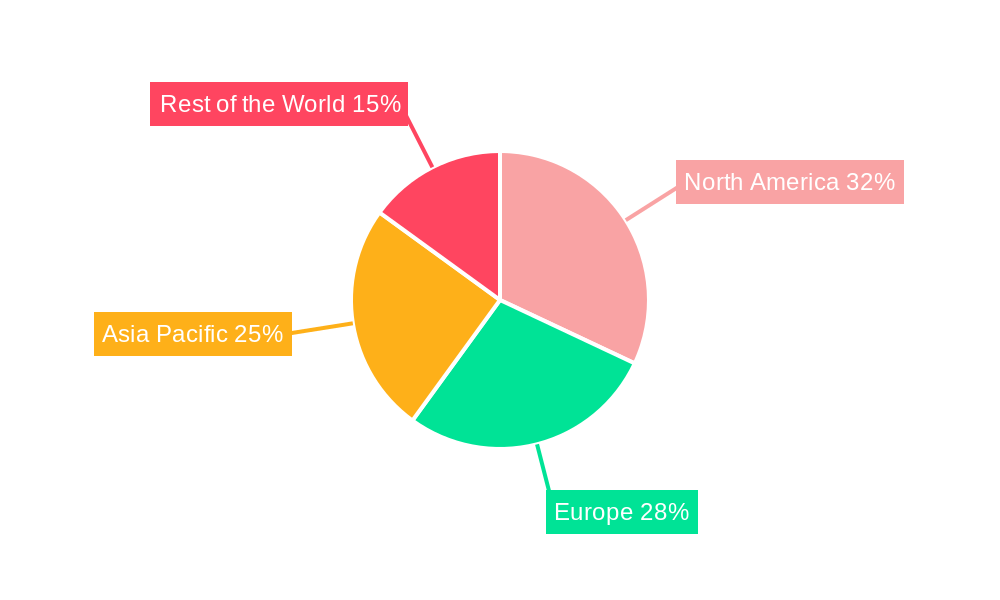
Small Animal Imaging In Vivo Regional Market Share
Geographic Coverage of Small Animal Imaging In Vivo
Small Animal Imaging In Vivo REPORT HIGHLIGHTS
| Aspects | Details |
|---|---|
| Study Period | 2020-2034 |
| Base Year | 2025 |
| Estimated Year | 2026 |
| Forecast Period | 2026-2034 |
| Historical Period | 2020-2025 |
| Growth Rate | CAGR of XX% from 2020-2034 |
| Segmentation |
|
Table of Contents
- 1. Introduction
- 1.1. Research Scope
- 1.2. Market Segmentation
- 1.3. Research Methodology
- 1.4. Definitions and Assumptions
- 2. Executive Summary
- 2.1. Introduction
- 3. Market Dynamics
- 3.1. Introduction
- 3.2. Market Drivers
- 3.3. Market Restrains
- 3.4. Market Trends
- 4. Market Factor Analysis
- 4.1. Porters Five Forces
- 4.2. Supply/Value Chain
- 4.3. PESTEL analysis
- 4.4. Market Entropy
- 4.5. Patent/Trademark Analysis
- 5. Global Small Animal Imaging In Vivo Analysis, Insights and Forecast, 2020-2032
- 5.1. Market Analysis, Insights and Forecast - by Application
- 5.1.1. Cancer Cell Detection
- 5.1.2. Bio-Distribution
- 5.1.3. Monitoring Therapy Response
- 5.1.4. Longitudinal Studies
- 5.1.5. Epigenetic Studies
- 5.2. Market Analysis, Insights and Forecast - by Types
- 5.2.1. Micro-MRI
- 5.2.2. Optical
- 5.2.3. Nuclear imaging
- 5.2.4. Micro-ultrasound
- 5.3. Market Analysis, Insights and Forecast - by Region
- 5.3.1. North America
- 5.3.2. South America
- 5.3.3. Europe
- 5.3.4. Middle East & Africa
- 5.3.5. Asia Pacific
- 5.1. Market Analysis, Insights and Forecast - by Application
- 6. North America Small Animal Imaging In Vivo Analysis, Insights and Forecast, 2020-2032
- 6.1. Market Analysis, Insights and Forecast - by Application
- 6.1.1. Cancer Cell Detection
- 6.1.2. Bio-Distribution
- 6.1.3. Monitoring Therapy Response
- 6.1.4. Longitudinal Studies
- 6.1.5. Epigenetic Studies
- 6.2. Market Analysis, Insights and Forecast - by Types
- 6.2.1. Micro-MRI
- 6.2.2. Optical
- 6.2.3. Nuclear imaging
- 6.2.4. Micro-ultrasound
- 6.1. Market Analysis, Insights and Forecast - by Application
- 7. South America Small Animal Imaging In Vivo Analysis, Insights and Forecast, 2020-2032
- 7.1. Market Analysis, Insights and Forecast - by Application
- 7.1.1. Cancer Cell Detection
- 7.1.2. Bio-Distribution
- 7.1.3. Monitoring Therapy Response
- 7.1.4. Longitudinal Studies
- 7.1.5. Epigenetic Studies
- 7.2. Market Analysis, Insights and Forecast - by Types
- 7.2.1. Micro-MRI
- 7.2.2. Optical
- 7.2.3. Nuclear imaging
- 7.2.4. Micro-ultrasound
- 7.1. Market Analysis, Insights and Forecast - by Application
- 8. Europe Small Animal Imaging In Vivo Analysis, Insights and Forecast, 2020-2032
- 8.1. Market Analysis, Insights and Forecast - by Application
- 8.1.1. Cancer Cell Detection
- 8.1.2. Bio-Distribution
- 8.1.3. Monitoring Therapy Response
- 8.1.4. Longitudinal Studies
- 8.1.5. Epigenetic Studies
- 8.2. Market Analysis, Insights and Forecast - by Types
- 8.2.1. Micro-MRI
- 8.2.2. Optical
- 8.2.3. Nuclear imaging
- 8.2.4. Micro-ultrasound
- 8.1. Market Analysis, Insights and Forecast - by Application
- 9. Middle East & Africa Small Animal Imaging In Vivo Analysis, Insights and Forecast, 2020-2032
- 9.1. Market Analysis, Insights and Forecast - by Application
- 9.1.1. Cancer Cell Detection
- 9.1.2. Bio-Distribution
- 9.1.3. Monitoring Therapy Response
- 9.1.4. Longitudinal Studies
- 9.1.5. Epigenetic Studies
- 9.2. Market Analysis, Insights and Forecast - by Types
- 9.2.1. Micro-MRI
- 9.2.2. Optical
- 9.2.3. Nuclear imaging
- 9.2.4. Micro-ultrasound
- 9.1. Market Analysis, Insights and Forecast - by Application
- 10. Asia Pacific Small Animal Imaging In Vivo Analysis, Insights and Forecast, 2020-2032
- 10.1. Market Analysis, Insights and Forecast - by Application
- 10.1.1. Cancer Cell Detection
- 10.1.2. Bio-Distribution
- 10.1.3. Monitoring Therapy Response
- 10.1.4. Longitudinal Studies
- 10.1.5. Epigenetic Studies
- 10.2. Market Analysis, Insights and Forecast - by Types
- 10.2.1. Micro-MRI
- 10.2.2. Optical
- 10.2.3. Nuclear imaging
- 10.2.4. Micro-ultrasound
- 10.1. Market Analysis, Insights and Forecast - by Application
- 11. Competitive Analysis
- 11.1. Global Market Share Analysis 2025
- 11.2. Company Profiles
- 11.2.1 Aspect Imaging Ltd.
- 11.2.1.1. Overview
- 11.2.1.2. Products
- 11.2.1.3. SWOT Analysis
- 11.2.1.4. Recent Developments
- 11.2.1.5. Financials (Based on Availability)
- 11.2.2 Bruker Corporation
- 11.2.2.1. Overview
- 11.2.2.2. Products
- 11.2.2.3. SWOT Analysis
- 11.2.2.4. Recent Developments
- 11.2.2.5. Financials (Based on Availability)
- 11.2.3 CMR Naviscan
- 11.2.3.1. Overview
- 11.2.3.2. Products
- 11.2.3.3. SWOT Analysis
- 11.2.3.4. Recent Developments
- 11.2.3.5. Financials (Based on Availability)
- 11.2.4 FUJIFILM Holdings Corporation
- 11.2.4.1. Overview
- 11.2.4.2. Products
- 11.2.4.3. SWOT Analysis
- 11.2.4.4. Recent Developments
- 11.2.4.5. Financials (Based on Availability)
- 11.2.5 General Electric
- 11.2.5.1. Overview
- 11.2.5.2. Products
- 11.2.5.3. SWOT Analysis
- 11.2.5.4. Recent Developments
- 11.2.5.5. Financials (Based on Availability)
- 11.2.6 Hitachi
- 11.2.6.1. Overview
- 11.2.6.2. Products
- 11.2.6.3. SWOT Analysis
- 11.2.6.4. Recent Developments
- 11.2.6.5. Financials (Based on Availability)
- 11.2.7 Koninklijke Philips N.V.
- 11.2.7.1. Overview
- 11.2.7.2. Products
- 11.2.7.3. SWOT Analysis
- 11.2.7.4. Recent Developments
- 11.2.7.5. Financials (Based on Availability)
- 11.2.8 Life Technologies Corporation
- 11.2.8.1. Overview
- 11.2.8.2. Products
- 11.2.8.3. SWOT Analysis
- 11.2.8.4. Recent Developments
- 11.2.8.5. Financials (Based on Availability)
- 11.2.9 Mediso Medical Imaging Systems
- 11.2.9.1. Overview
- 11.2.9.2. Products
- 11.2.9.3. SWOT Analysis
- 11.2.9.4. Recent Developments
- 11.2.9.5. Financials (Based on Availability)
- 11.2.10 Miltenyi Biotech GmbH
- 11.2.10.1. Overview
- 11.2.10.2. Products
- 11.2.10.3. SWOT Analysis
- 11.2.10.4. Recent Developments
- 11.2.10.5. Financials (Based on Availability)
- 11.2.11 PerkinElmer
- 11.2.11.1. Overview
- 11.2.11.2. Products
- 11.2.11.3. SWOT Analysis
- 11.2.11.4. Recent Developments
- 11.2.11.5. Financials (Based on Availability)
- 11.2.12 Inc.
- 11.2.12.1. Overview
- 11.2.12.2. Products
- 11.2.12.3. SWOT Analysis
- 11.2.12.4. Recent Developments
- 11.2.12.5. Financials (Based on Availability)
- 11.2.13 Promega Corporation
- 11.2.13.1. Overview
- 11.2.13.2. Products
- 11.2.13.3. SWOT Analysis
- 11.2.13.4. Recent Developments
- 11.2.13.5. Financials (Based on Availability)
- 11.2.14 SCANCO Medical AG
- 11.2.14.1. Overview
- 11.2.14.2. Products
- 11.2.14.3. SWOT Analysis
- 11.2.14.4. Recent Developments
- 11.2.14.5. Financials (Based on Availability)
- 11.2.15 Siemens Healthcare GmbH
- 11.2.15.1. Overview
- 11.2.15.2. Products
- 11.2.15.3. SWOT Analysis
- 11.2.15.4. Recent Developments
- 11.2.15.5. Financials (Based on Availability)
- 11.2.16 Thermo Fisher Scientific
- 11.2.16.1. Overview
- 11.2.16.2. Products
- 11.2.16.3. SWOT Analysis
- 11.2.16.4. Recent Developments
- 11.2.16.5. Financials (Based on Availability)
- 11.2.1 Aspect Imaging Ltd.
List of Figures
- Figure 1: Global Small Animal Imaging In Vivo Revenue Breakdown (million, %) by Region 2025 & 2033
- Figure 2: North America Small Animal Imaging In Vivo Revenue (million), by Application 2025 & 2033
- Figure 3: North America Small Animal Imaging In Vivo Revenue Share (%), by Application 2025 & 2033
- Figure 4: North America Small Animal Imaging In Vivo Revenue (million), by Types 2025 & 2033
- Figure 5: North America Small Animal Imaging In Vivo Revenue Share (%), by Types 2025 & 2033
- Figure 6: North America Small Animal Imaging In Vivo Revenue (million), by Country 2025 & 2033
- Figure 7: North America Small Animal Imaging In Vivo Revenue Share (%), by Country 2025 & 2033
- Figure 8: South America Small Animal Imaging In Vivo Revenue (million), by Application 2025 & 2033
- Figure 9: South America Small Animal Imaging In Vivo Revenue Share (%), by Application 2025 & 2033
- Figure 10: South America Small Animal Imaging In Vivo Revenue (million), by Types 2025 & 2033
- Figure 11: South America Small Animal Imaging In Vivo Revenue Share (%), by Types 2025 & 2033
- Figure 12: South America Small Animal Imaging In Vivo Revenue (million), by Country 2025 & 2033
- Figure 13: South America Small Animal Imaging In Vivo Revenue Share (%), by Country 2025 & 2033
- Figure 14: Europe Small Animal Imaging In Vivo Revenue (million), by Application 2025 & 2033
- Figure 15: Europe Small Animal Imaging In Vivo Revenue Share (%), by Application 2025 & 2033
- Figure 16: Europe Small Animal Imaging In Vivo Revenue (million), by Types 2025 & 2033
- Figure 17: Europe Small Animal Imaging In Vivo Revenue Share (%), by Types 2025 & 2033
- Figure 18: Europe Small Animal Imaging In Vivo Revenue (million), by Country 2025 & 2033
- Figure 19: Europe Small Animal Imaging In Vivo Revenue Share (%), by Country 2025 & 2033
- Figure 20: Middle East & Africa Small Animal Imaging In Vivo Revenue (million), by Application 2025 & 2033
- Figure 21: Middle East & Africa Small Animal Imaging In Vivo Revenue Share (%), by Application 2025 & 2033
- Figure 22: Middle East & Africa Small Animal Imaging In Vivo Revenue (million), by Types 2025 & 2033
- Figure 23: Middle East & Africa Small Animal Imaging In Vivo Revenue Share (%), by Types 2025 & 2033
- Figure 24: Middle East & Africa Small Animal Imaging In Vivo Revenue (million), by Country 2025 & 2033
- Figure 25: Middle East & Africa Small Animal Imaging In Vivo Revenue Share (%), by Country 2025 & 2033
- Figure 26: Asia Pacific Small Animal Imaging In Vivo Revenue (million), by Application 2025 & 2033
- Figure 27: Asia Pacific Small Animal Imaging In Vivo Revenue Share (%), by Application 2025 & 2033
- Figure 28: Asia Pacific Small Animal Imaging In Vivo Revenue (million), by Types 2025 & 2033
- Figure 29: Asia Pacific Small Animal Imaging In Vivo Revenue Share (%), by Types 2025 & 2033
- Figure 30: Asia Pacific Small Animal Imaging In Vivo Revenue (million), by Country 2025 & 2033
- Figure 31: Asia Pacific Small Animal Imaging In Vivo Revenue Share (%), by Country 2025 & 2033
List of Tables
- Table 1: Global Small Animal Imaging In Vivo Revenue million Forecast, by Application 2020 & 2033
- Table 2: Global Small Animal Imaging In Vivo Revenue million Forecast, by Types 2020 & 2033
- Table 3: Global Small Animal Imaging In Vivo Revenue million Forecast, by Region 2020 & 2033
- Table 4: Global Small Animal Imaging In Vivo Revenue million Forecast, by Application 2020 & 2033
- Table 5: Global Small Animal Imaging In Vivo Revenue million Forecast, by Types 2020 & 2033
- Table 6: Global Small Animal Imaging In Vivo Revenue million Forecast, by Country 2020 & 2033
- Table 7: United States Small Animal Imaging In Vivo Revenue (million) Forecast, by Application 2020 & 2033
- Table 8: Canada Small Animal Imaging In Vivo Revenue (million) Forecast, by Application 2020 & 2033
- Table 9: Mexico Small Animal Imaging In Vivo Revenue (million) Forecast, by Application 2020 & 2033
- Table 10: Global Small Animal Imaging In Vivo Revenue million Forecast, by Application 2020 & 2033
- Table 11: Global Small Animal Imaging In Vivo Revenue million Forecast, by Types 2020 & 2033
- Table 12: Global Small Animal Imaging In Vivo Revenue million Forecast, by Country 2020 & 2033
- Table 13: Brazil Small Animal Imaging In Vivo Revenue (million) Forecast, by Application 2020 & 2033
- Table 14: Argentina Small Animal Imaging In Vivo Revenue (million) Forecast, by Application 2020 & 2033
- Table 15: Rest of South America Small Animal Imaging In Vivo Revenue (million) Forecast, by Application 2020 & 2033
- Table 16: Global Small Animal Imaging In Vivo Revenue million Forecast, by Application 2020 & 2033
- Table 17: Global Small Animal Imaging In Vivo Revenue million Forecast, by Types 2020 & 2033
- Table 18: Global Small Animal Imaging In Vivo Revenue million Forecast, by Country 2020 & 2033
- Table 19: United Kingdom Small Animal Imaging In Vivo Revenue (million) Forecast, by Application 2020 & 2033
- Table 20: Germany Small Animal Imaging In Vivo Revenue (million) Forecast, by Application 2020 & 2033
- Table 21: France Small Animal Imaging In Vivo Revenue (million) Forecast, by Application 2020 & 2033
- Table 22: Italy Small Animal Imaging In Vivo Revenue (million) Forecast, by Application 2020 & 2033
- Table 23: Spain Small Animal Imaging In Vivo Revenue (million) Forecast, by Application 2020 & 2033
- Table 24: Russia Small Animal Imaging In Vivo Revenue (million) Forecast, by Application 2020 & 2033
- Table 25: Benelux Small Animal Imaging In Vivo Revenue (million) Forecast, by Application 2020 & 2033
- Table 26: Nordics Small Animal Imaging In Vivo Revenue (million) Forecast, by Application 2020 & 2033
- Table 27: Rest of Europe Small Animal Imaging In Vivo Revenue (million) Forecast, by Application 2020 & 2033
- Table 28: Global Small Animal Imaging In Vivo Revenue million Forecast, by Application 2020 & 2033
- Table 29: Global Small Animal Imaging In Vivo Revenue million Forecast, by Types 2020 & 2033
- Table 30: Global Small Animal Imaging In Vivo Revenue million Forecast, by Country 2020 & 2033
- Table 31: Turkey Small Animal Imaging In Vivo Revenue (million) Forecast, by Application 2020 & 2033
- Table 32: Israel Small Animal Imaging In Vivo Revenue (million) Forecast, by Application 2020 & 2033
- Table 33: GCC Small Animal Imaging In Vivo Revenue (million) Forecast, by Application 2020 & 2033
- Table 34: North Africa Small Animal Imaging In Vivo Revenue (million) Forecast, by Application 2020 & 2033
- Table 35: South Africa Small Animal Imaging In Vivo Revenue (million) Forecast, by Application 2020 & 2033
- Table 36: Rest of Middle East & Africa Small Animal Imaging In Vivo Revenue (million) Forecast, by Application 2020 & 2033
- Table 37: Global Small Animal Imaging In Vivo Revenue million Forecast, by Application 2020 & 2033
- Table 38: Global Small Animal Imaging In Vivo Revenue million Forecast, by Types 2020 & 2033
- Table 39: Global Small Animal Imaging In Vivo Revenue million Forecast, by Country 2020 & 2033
- Table 40: China Small Animal Imaging In Vivo Revenue (million) Forecast, by Application 2020 & 2033
- Table 41: India Small Animal Imaging In Vivo Revenue (million) Forecast, by Application 2020 & 2033
- Table 42: Japan Small Animal Imaging In Vivo Revenue (million) Forecast, by Application 2020 & 2033
- Table 43: South Korea Small Animal Imaging In Vivo Revenue (million) Forecast, by Application 2020 & 2033
- Table 44: ASEAN Small Animal Imaging In Vivo Revenue (million) Forecast, by Application 2020 & 2033
- Table 45: Oceania Small Animal Imaging In Vivo Revenue (million) Forecast, by Application 2020 & 2033
- Table 46: Rest of Asia Pacific Small Animal Imaging In Vivo Revenue (million) Forecast, by Application 2020 & 2033
Frequently Asked Questions
1. What is the projected Compound Annual Growth Rate (CAGR) of the Small Animal Imaging In Vivo?
The projected CAGR is approximately XX%.
2. Which companies are prominent players in the Small Animal Imaging In Vivo?
Key companies in the market include Aspect Imaging Ltd., Bruker Corporation, CMR Naviscan, FUJIFILM Holdings Corporation, General Electric, Hitachi, Koninklijke Philips N.V., Life Technologies Corporation, Mediso Medical Imaging Systems, Miltenyi Biotech GmbH, PerkinElmer, Inc., Promega Corporation, SCANCO Medical AG, Siemens Healthcare GmbH, Thermo Fisher Scientific.
3. What are the main segments of the Small Animal Imaging In Vivo?
The market segments include Application, Types.
4. Can you provide details about the market size?
The market size is estimated to be USD XXX million as of 2022.
5. What are some drivers contributing to market growth?
N/A
6. What are the notable trends driving market growth?
N/A
7. Are there any restraints impacting market growth?
N/A
8. Can you provide examples of recent developments in the market?
N/A
9. What pricing options are available for accessing the report?
Pricing options include single-user, multi-user, and enterprise licenses priced at USD 2900.00, USD 4350.00, and USD 5800.00 respectively.
10. Is the market size provided in terms of value or volume?
The market size is provided in terms of value, measured in million.
11. Are there any specific market keywords associated with the report?
Yes, the market keyword associated with the report is "Small Animal Imaging In Vivo," which aids in identifying and referencing the specific market segment covered.
12. How do I determine which pricing option suits my needs best?
The pricing options vary based on user requirements and access needs. Individual users may opt for single-user licenses, while businesses requiring broader access may choose multi-user or enterprise licenses for cost-effective access to the report.
13. Are there any additional resources or data provided in the Small Animal Imaging In Vivo report?
While the report offers comprehensive insights, it's advisable to review the specific contents or supplementary materials provided to ascertain if additional resources or data are available.
14. How can I stay updated on further developments or reports in the Small Animal Imaging In Vivo?
To stay informed about further developments, trends, and reports in the Small Animal Imaging In Vivo, consider subscribing to industry newsletters, following relevant companies and organizations, or regularly checking reputable industry news sources and publications.
Methodology
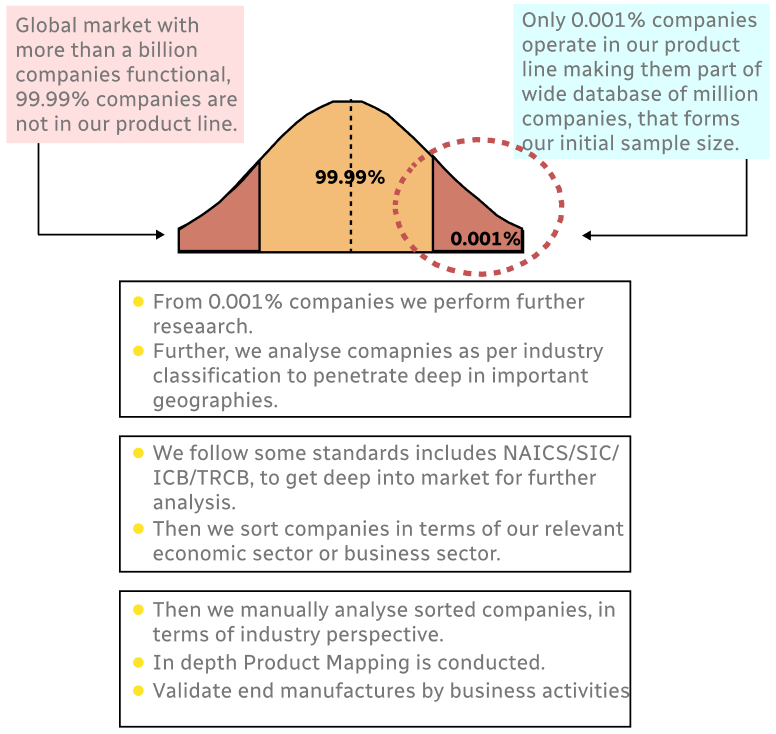
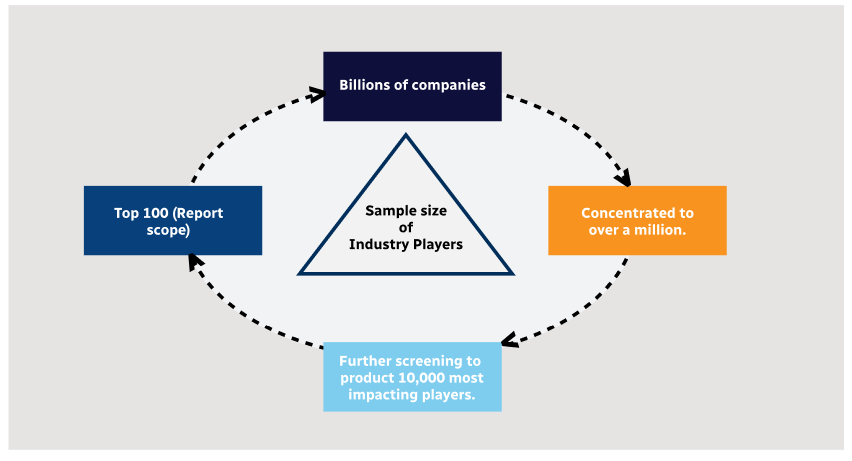
Step 1 - Identification of Relevant Samples Size from Population Database
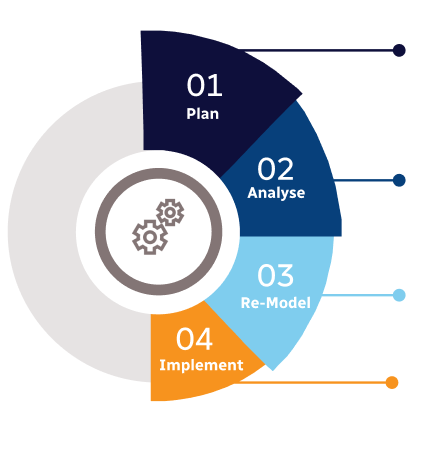
Step 2 - Approaches for Defining Global Market Size (Value, Volume* & Price*)
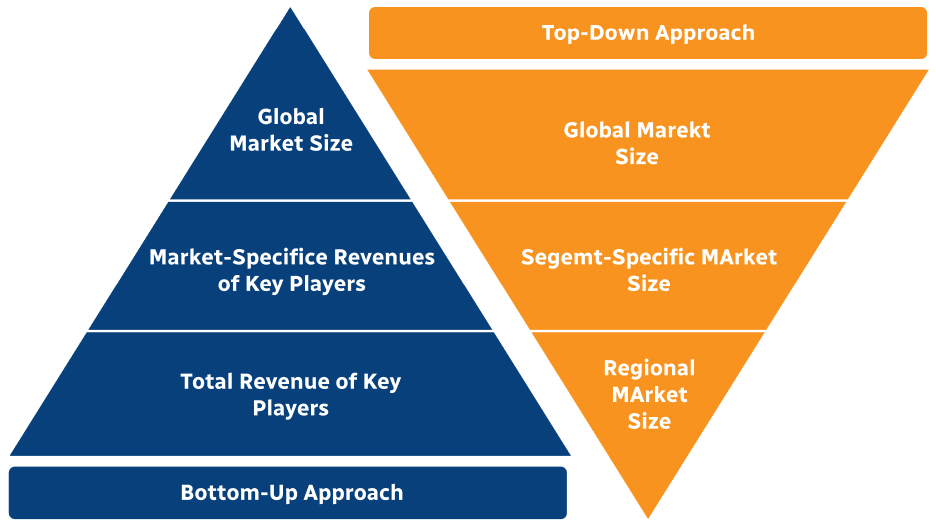
Note*: In applicable scenarios
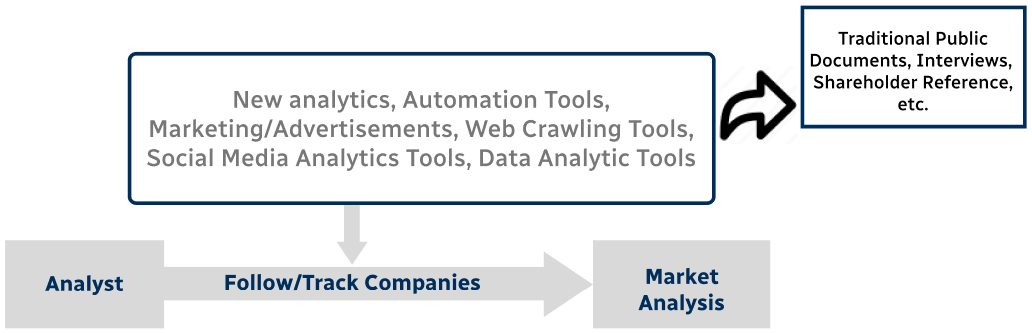
Step 3 - Data Sources
Primary Research
- Web Analytics
- Survey Reports
- Research Institute
- Latest Research Reports
- Opinion Leaders
Secondary Research
- Annual Reports
- White Paper
- Latest Press Release
- Industry Association
- Paid Database
- Investor Presentations
Step 4 - Data Triangulation
Involves using different sources of information in order to increase the validity of a study
These sources are likely to be stakeholders in a program - participants, other researchers, program staff, other community members, and so on.
Then we put all data in single framework & apply various statistical tools to find out the dynamic on the market.
During the analysis stage, feedback from the stakeholder groups would be compared to determine areas of agreement as well as areas of divergence