
Key Insights
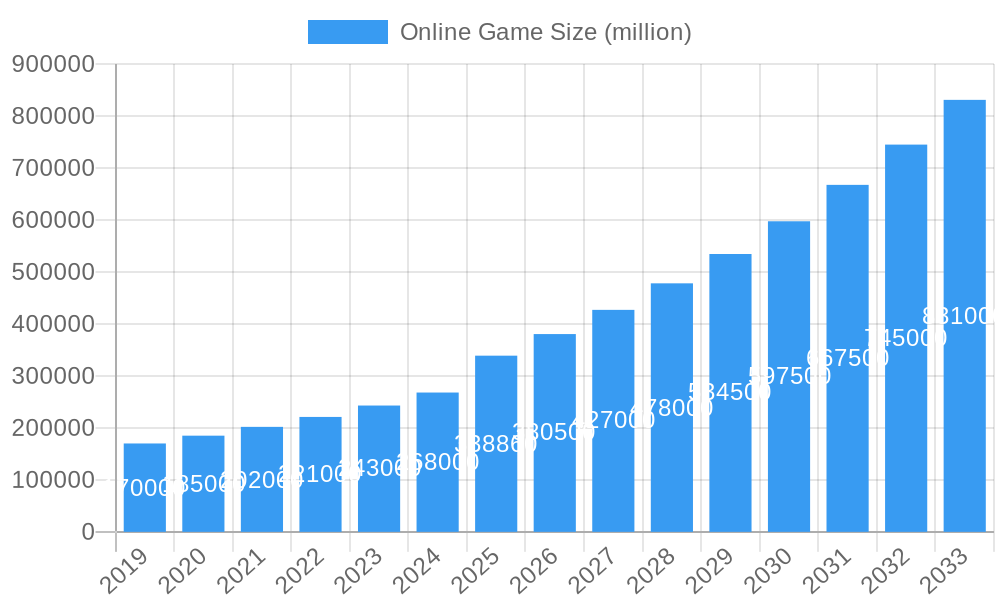
The global online gaming market is poised for substantial expansion, projected to reach $188.8 billion by 2025, driven by a compelling Compound Annual Growth Rate (CAGR) of 11.57%. This growth is underpinned by increasing internet accessibility, widespread smartphone adoption, and the rising prominence of esports. Key demographics driving this market include the 18-35 year old segments. The popularity of Massively Multiplayer Online (MMO) and Role-Playing Games (RPG) signifies a demand for immersive interactive experiences. Major industry players such as Microsoft, Nintendo, and Sony are instrumental in this expansion through continuous innovation and platform development.
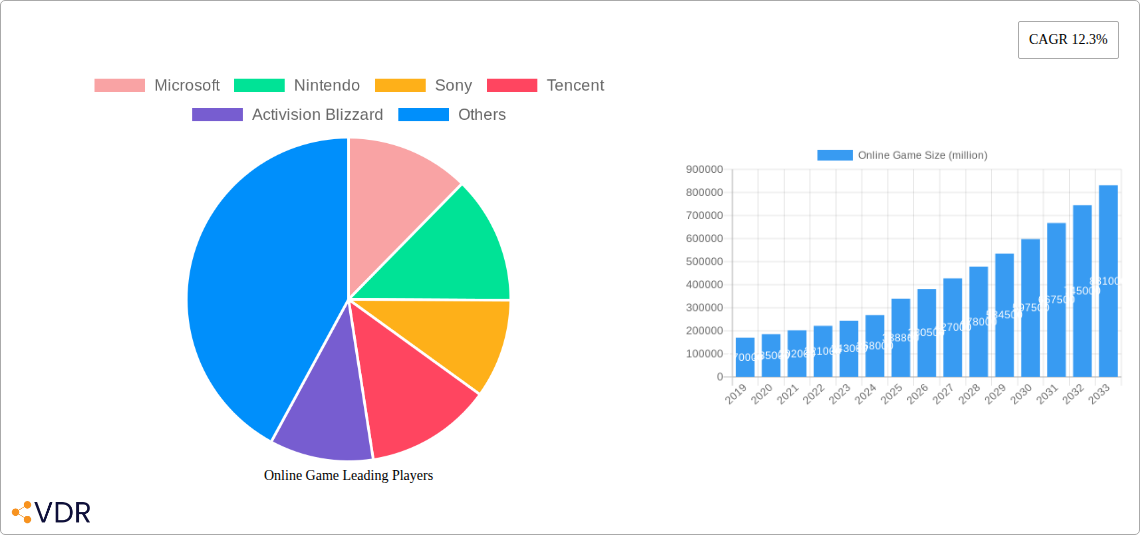
Online Game Market Size (In Billion)

Future market trajectory will be influenced by emerging technologies like cloud gaming and virtual reality, promising enhanced player engagement and new revenue opportunities. The Asia Pacific region, led by China and India, is anticipated to be a primary growth engine due to its large population and advancing digital infrastructure. While factors like increasing disposable income and a strong appetite for digital entertainment are positive indicators, industry stakeholders must strategically address potential challenges including evolving regulations and concerns surrounding online addiction. Nevertheless, the inherent dynamism of online gaming, coupled with ongoing diversification in game genres and applications, forecasts a robust and extensive future for the sector.
Online Game Company Market Share
Unlocking the Future of Interactive Entertainment: A Comprehensive Report on the Global Online Game Market
This in-depth report provides an indispensable analysis of the global online game market, charting its trajectory from 2019 through 2033. With a base year of 2025 and a forecast period extending to 2033, this study delves into the intricate dynamics shaping this rapidly evolving industry. We meticulously examine market concentration, the powerful forces of technological innovation, evolving regulatory landscapes, the impact of competitive substitutes, detailed end-user demographics across all age segments, and the strategic implications of mergers and acquisitions. This report is meticulously crafted to empower industry professionals, investors, and stakeholders with actionable insights, presented through concise paragraphs and targeted bullet points for immediate comprehension.
Online Game Market Dynamics & Structure
The global online game market is characterized by a dynamic blend of concentrated powerhouses and a burgeoning ecosystem of innovative studios. Microsoft, Sony, and Tencent stand as titans, wielding significant influence through their extensive game libraries, platform ecosystems, and cutting-edge cloud gaming solutions. The market concentration is further underscored by strategic acquisitions, with companies like Activision Blizzard being integrated into larger conglomerates, altering the competitive landscape. Technological innovation is the primary engine of growth, driven by advancements in cloud computing, artificial intelligence for game development and player engagement, and the immersive potential of virtual and augmented reality. Regulatory frameworks, though still developing, are increasingly focusing on player safety, data privacy, and fair monetization practices, posing both challenges and opportunities for established and emerging players. Competitive product substitutes, including mobile gaming, social gaming, and other forms of digital entertainment, exert constant pressure, demanding continuous innovation and unique selling propositions from online game developers.
- Market Concentration: Dominated by a few key players, but with a growing number of independent studios contributing to innovation.
- Technological Innovation Drivers: Cloud gaming, AI in development, VR/AR integration, and advanced graphics.
- Regulatory Frameworks: Evolving policies on player protection, data privacy, and loot box regulation.
- Competitive Product Substitutes: Mobile games, social media platforms, streaming services, and esports viewership.
- End-User Demographics: A broad spectrum, with significant engagement from below 18 years old to the 36-45 years old segments.
- M&A Trends: Significant consolidation activity as major players seek to expand their portfolios and market reach.
Online Game Growth Trends & Insights
The online game market has witnessed an unprecedented surge in growth, fueled by an ever-expanding global player base and a continuous stream of innovative content and accessible platforms. The historical period from 2019–2024 saw a robust Compound Annual Growth Rate (CAGR) as digital infrastructure improved and gaming became more mainstream. Microsoft's aggressive push into cloud gaming with Xbox Cloud Gaming and Sony's PlayStation Now (now part of PlayStation Plus) have significantly lowered the barrier to entry for premium gaming experiences, accelerating adoption rates. Tencent's dominance in mobile gaming, particularly in Asia, alongside its investments in Western studios, showcases the power of localized strategies and diverse genre offerings. The shift towards free-to-play models with in-game purchases and battle passes, refined by companies like Activision Blizzard and Electronic Arts, has proven exceptionally lucrative, driving substantial revenue streams.
Technological disruptions, such as the widespread adoption of 5G networks, are enabling more seamless and immersive online multiplayer experiences, particularly for Massively Multiplayer Online (MMO) and Action/Adventure genres. Consumer behavior has profoundly shifted, with gaming evolving from a niche hobby to a primary form of social interaction and entertainment for a significant portion of the global population. The rise of esports, heavily influenced by titles from Riot Games (a subsidiary of Tencent) and Valve, has further amplified engagement and created new avenues for monetization and brand partnerships. Apple's App Store and Google Play have become vital distribution channels, fostering a vibrant mobile gaming ecosystem that caters to a diverse range of preferences, from casual Simulation Games to in-depth Role-Playing Games (RPG). The accessibility and social connectivity inherent in online gaming continue to drive its impressive market penetration across various demographics.
Dominant Regions, Countries, or Segments in Online Game
The global online game market’s dominance is a multifaceted phenomenon, with distinct regions, countries, and game types exhibiting exceptional growth and influence. Asia-Pacific, spearheaded by China and South Korea, stands as the undisputed leader in terms of market revenue and player base. Tencent and NetEase Games are instrumental in this regional supremacy, dominating the mobile gaming landscape with titles that appeal to billions. Their success is underpinned by robust digital infrastructure, a young and tech-savvy population, and a cultural affinity for online interactive entertainment, particularly in the Massively Multiplayer Online (MMO) and Role-Playing (RPG) segments.
Within the Application segments, the Below 18 years old demographic remains a cornerstone of the online game market, exhibiting high engagement rates and a significant influence on trends, often driven by popular esports titles and community-focused games. However, the 18-25 years old and 26-35 years old segments are rapidly expanding, representing a core audience for premium gaming experiences, demanding intricate storylines and competitive multiplayer modes in Action/Adventure and Strategy Games. The 36-45 years old segment is also showing remarkable growth, with a rising disposable income and a desire for immersive experiences that offer both relaxation and challenge, such as Simulation Games and sophisticated RPGs.
- Dominant Region: Asia-Pacific, driven by China and South Korea.
- Key Asian Players: Tencent, NetEase Games, NEXON, NCSoft.
- Dominant Application Segment (by sheer volume and influence): Below 18 years old, with significant and growing contributions from 18-25 years old and 26-35 years old.
- Growth Driver in Application: The increasing engagement of older demographics (36-45 years old and Above 45 years old) seeking diverse entertainment options.
- Dominant Type (by revenue and engagement): Massively Multiplayer Online (MMO) and Role-Playing (RPG) genres continue to capture significant market share, with Action/Adventure games experiencing substantial growth.
- Emerging Type Strength: Simulation Games and Sports Games are gaining traction across broader age groups.
- Underlying Growth Factors: High internet penetration, widespread smartphone adoption, strong influencer culture, and the increasing acceptance of gaming as a legitimate form of entertainment and social interaction.
Online Game Product Landscape
The online game product landscape is a vibrant tapestry of innovation, catering to an incredibly diverse global audience. From the expansive worlds of Square Enix's Final Fantasy series to the competitive arenas of Activision Blizzard's Call of Duty, games are pushing the boundaries of narrative depth, visual fidelity, and interactive gameplay. Cloud gaming platforms like Microsoft's Xbox Game Pass Ultimate and Sony's PlayStation Plus are democratizing access to high-end gaming experiences, allowing users to play AAA titles on a wider range of devices without the need for expensive hardware. Mobile gaming, dominated by giants like Tencent and Zynga, continues to evolve with increasingly sophisticated titles that blend casual accessibility with deep engagement mechanics. The introduction of novel gameplay loops, persistent online worlds, and AI-driven dynamic content ensures that products remain fresh and engaging.
- Key Product Innovations: Cloud-native game development, AI-powered procedural content generation, and cross-platform play.
- Application Focus: Tailored experiences for different age groups, from educational games for younger audiences to complex simulations for adults.
- Performance Metrics: Focus on low latency, high frame rates, and seamless multiplayer integration.
- Unique Selling Propositions: Compelling storytelling, deep customization options, strong social features, and competitive esports potential.
- Technological Advancements: Ray tracing for hyper-realistic graphics, advanced haptic feedback for immersive experiences, and sophisticated matchmaking algorithms.
Key Drivers, Barriers & Challenges in Online Game
The online game industry is propelled by a confluence of powerful drivers, but it also navigates significant barriers and challenges that shape its trajectory.
Key Drivers:
- Technological Advancements: The relentless progress in graphics processing, cloud computing, AI, and mobile hardware continues to enable more immersive and accessible gaming experiences.
- Ubiquitous Internet Connectivity: Widespread broadband and 5G availability globally makes online gaming a readily accessible form of entertainment.
- Social Integration: Gaming's evolution into a primary social platform for many, fostering communities and shared experiences.
- Free-to-Play Models & Monetization Innovation: The success of free-to-play games with in-app purchases, battle passes, and cosmetic items has significantly broadened revenue streams and player acquisition.
- Esports Growth: The professionalization of competitive gaming drives engagement, viewership, and brand interest.
Key Barriers & Challenges:
- High Development Costs & Time: Producing high-quality, AAA online games requires substantial investment and long development cycles, increasing financial risk.
- Intense Competition: The market is highly saturated, making it difficult for new titles to gain traction and for established games to maintain player engagement.
- Player Retention & Churn: Keeping players engaged over the long term is a constant challenge, requiring continuous content updates and community management.
- Cybersecurity Threats: Online games are susceptible to hacking, cheating, and data breaches, which can damage reputation and player trust.
- Regulatory Scrutiny: Increasing attention from governments regarding loot boxes, in-game advertising, and data privacy can lead to compliance burdens and market restrictions.
- Supply Chain Issues: For hardware-dependent gaming (e.g., consoles, high-end PCs), component shortages can impact hardware availability and thus game sales.
Emerging Opportunities in Online Game
The online game industry is ripe with emerging opportunities, fueled by evolving consumer preferences and untapped technological potential. The burgeoning Metaverse concept presents a significant frontier, offering persistent, interconnected virtual worlds where gaming, social interaction, and commerce converge. Companies like Roblox are already demonstrating the power of user-generated content within these spaces. The continued advancements in cloud gaming are poised to unlock new markets by reducing hardware dependency, making high-fidelity gaming accessible on an unprecedented scale. Furthermore, the increasing sophistication of AI offers opportunities for personalized gaming experiences, dynamic storytelling, and more intelligent non-player characters, enhancing player immersion. The integration of blockchain technology, while still in its nascent stages, could revolutionize digital ownership and create new economic models within games.
- Metaverse Development: Creation of persistent, interconnected virtual worlds for gaming and social experiences.
- Cloud Gaming Expansion: Reaching new audiences by lowering hardware barriers to entry.
- AI-Powered Personalization: Tailoring gameplay, narratives, and challenges to individual players.
- Web3 & Blockchain Integration: Exploring new models for digital asset ownership and player-driven economies.
- Cross-Platform Play Expansion: Seamless gaming experiences across consoles, PC, and mobile devices.
Growth Accelerators in the Online Game Industry
Several key accelerators are poised to drive sustained and significant growth within the online game industry. The ongoing innovation in hardware, particularly with next-generation consoles and high-performance mobile devices, provides the foundation for increasingly sophisticated and visually stunning gaming experiences. Strategic partnerships between game developers, hardware manufacturers, and content creators are crucial for expanding reach and engagement. For instance, collaborations between game publishers and streaming platforms or social media influencers amplify marketing efforts and drive player acquisition. The continued global expansion of high-speed internet infrastructure, especially 5G, is a critical accelerator, enabling seamless cloud gaming and low-latency multiplayer interactions, thereby broadening accessibility across emerging markets. Furthermore, the increasing acceptance of gaming as a legitimate form of entertainment and social interaction, coupled with the growing influence of esports, continues to attract new demographics and investment into the sector.
Key Players Shaping the Online Game Market
- Microsoft
- Nintendo
- Sony
- Tencent
- Activision Blizzard
- Sega
- Electronic Arts
- Apple
- Ubisoft
- Zynga
- Square Enix
- NetEase Games
- NEXON
- NCSoft
- Bandai Namco Holdings
Notable Milestones in Online Game Sector
- 2019: Release of Google Stadia, a significant early attempt at mainstream cloud gaming.
- 2020: Launch of next-generation consoles PlayStation 5 and Xbox Series X/S, ushering in an era of enhanced graphical capabilities and faster loading times.
- 2020: The surge in demand for online gaming and entertainment due to global lockdowns, leading to record player numbers and revenue.
- 2020: Epic Games Store's aggressive free game giveaways and exclusive titles driving significant user acquisition.
- 2021: Microsoft's acquisition of Bethesda Softworks for $7.5 billion, strengthening its first-party studio portfolio.
- 2022: Announced acquisition of Activision Blizzard by Microsoft for $68.7 billion, a landmark deal in the gaming industry.
- 2022: Continued growth and investment in the esports sector, with major tournaments and leagues attracting significant viewership and sponsorship.
- 2023: Increased focus on cross-platform play and progression, breaking down barriers between different gaming ecosystems.
- 2023: Significant advancements in AI and machine learning being integrated into game development for more dynamic and personalized experiences.
- 2024: Emerging trends in Web3 gaming and the exploration of blockchain technology for digital asset ownership and player economies.
In-Depth Online Game Market Outlook
The outlook for the global online game market remains exceptionally strong, driven by a combination of persistent technological innovation, expanding digital accessibility, and evolving consumer engagement. Growth accelerators such as the widespread adoption of cloud gaming solutions, the continued maturation of the esports ecosystem, and the increasing integration of AI for personalized player experiences are set to fuel substantial market expansion. The demographic reach of online gaming is also broadening, with older age groups showing increasing interest, further diversifying the player base and revenue streams. Strategic investments in new intellectual properties, alongside aggressive M&A activity, will continue to shape the competitive landscape, ensuring a dynamic and evolving industry. Unlocking untapped potential in emerging markets and leveraging innovative monetization strategies will be key for sustained long-term growth, positioning the online game market as a dominant force in global entertainment for the foreseeable future.
Online Game Segmentation
-
1. Application
- 1.1. Below 18 years old
- 1.2. 18-25 years old
- 1.3. 26-35 years old
- 1.4. 36-45 years old
- 1.5. Above 45 years old
-
2. Type
- 2.1. Massively Multiplayer Online (MMO)
- 2.2. Simulation Games
- 2.3. Action/Adventure
- 2.4. Strategy Games
- 2.5. Sports Games
- 2.6. Role-Playing (RPG)
- 2.7. Educational Games
Online Game Segmentation By Geography
-
1. North America
- 1.1. United States
- 1.2. Canada
- 1.3. Mexico
-
2. South America
- 2.1. Brazil
- 2.2. Argentina
- 2.3. Rest of South America
-
3. Europe
- 3.1. United Kingdom
- 3.2. Germany
- 3.3. France
- 3.4. Italy
- 3.5. Spain
- 3.6. Russia
- 3.7. Benelux
- 3.8. Nordics
- 3.9. Rest of Europe
-
4. Middle East & Africa
- 4.1. Turkey
- 4.2. Israel
- 4.3. GCC
- 4.4. North Africa
- 4.5. South Africa
- 4.6. Rest of Middle East & Africa
-
5. Asia Pacific
- 5.1. China
- 5.2. India
- 5.3. Japan
- 5.4. South Korea
- 5.5. ASEAN
- 5.6. Oceania
- 5.7. Rest of Asia Pacific
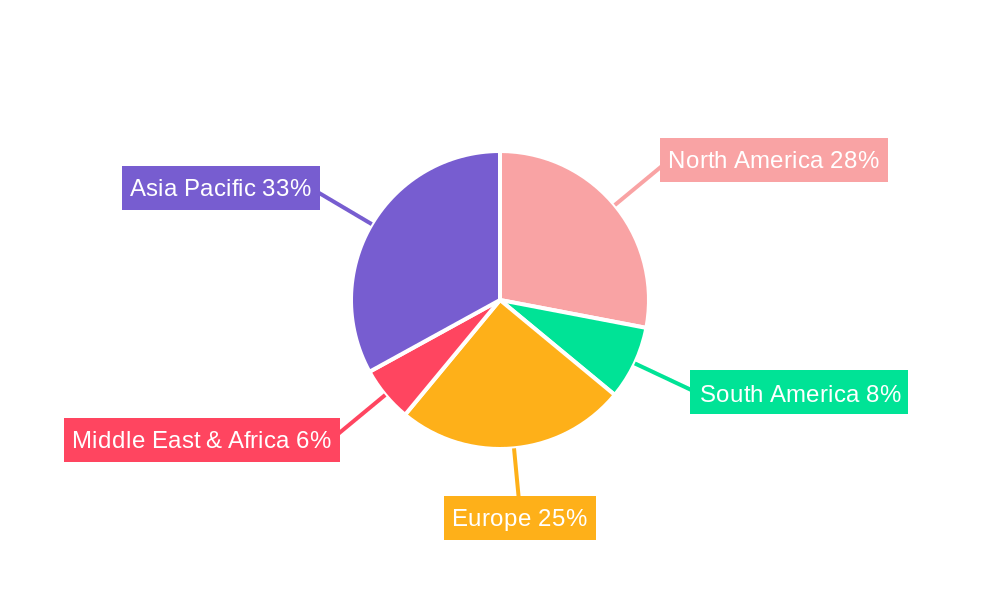
Online Game Regional Market Share
Geographic Coverage of Online Game
Online Game REPORT HIGHLIGHTS
| Aspects | Details |
|---|---|
| Study Period | 2020-2034 |
| Base Year | 2025 |
| Estimated Year | 2026 |
| Forecast Period | 2026-2034 |
| Historical Period | 2020-2025 |
| Growth Rate | CAGR of 11.57% from 2020-2034 |
| Segmentation |
|
Table of Contents
- 1. Introduction
- 1.1. Research Scope
- 1.2. Market Segmentation
- 1.3. Research Methodology
- 1.4. Definitions and Assumptions
- 2. Executive Summary
- 2.1. Introduction
- 3. Market Dynamics
- 3.1. Introduction
- 3.2. Market Drivers
- 3.3. Market Restrains
- 3.4. Market Trends
- 4. Market Factor Analysis
- 4.1. Porters Five Forces
- 4.2. Supply/Value Chain
- 4.3. PESTEL analysis
- 4.4. Market Entropy
- 4.5. Patent/Trademark Analysis
- 5. Global Online Game Analysis, Insights and Forecast, 2020-2032
- 5.1. Market Analysis, Insights and Forecast - by Application
- 5.1.1. Below 18 years old
- 5.1.2. 18-25 years old
- 5.1.3. 26-35 years old
- 5.1.4. 36-45 years old
- 5.1.5. Above 45 years old
- 5.2. Market Analysis, Insights and Forecast - by Type
- 5.2.1. Massively Multiplayer Online (MMO)
- 5.2.2. Simulation Games
- 5.2.3. Action/Adventure
- 5.2.4. Strategy Games
- 5.2.5. Sports Games
- 5.2.6. Role-Playing (RPG)
- 5.2.7. Educational Games
- 5.3. Market Analysis, Insights and Forecast - by Region
- 5.3.1. North America
- 5.3.2. South America
- 5.3.3. Europe
- 5.3.4. Middle East & Africa
- 5.3.5. Asia Pacific
- 5.1. Market Analysis, Insights and Forecast - by Application
- 6. North America Online Game Analysis, Insights and Forecast, 2020-2032
- 6.1. Market Analysis, Insights and Forecast - by Application
- 6.1.1. Below 18 years old
- 6.1.2. 18-25 years old
- 6.1.3. 26-35 years old
- 6.1.4. 36-45 years old
- 6.1.5. Above 45 years old
- 6.2. Market Analysis, Insights and Forecast - by Type
- 6.2.1. Massively Multiplayer Online (MMO)
- 6.2.2. Simulation Games
- 6.2.3. Action/Adventure
- 6.2.4. Strategy Games
- 6.2.5. Sports Games
- 6.2.6. Role-Playing (RPG)
- 6.2.7. Educational Games
- 6.1. Market Analysis, Insights and Forecast - by Application
- 7. South America Online Game Analysis, Insights and Forecast, 2020-2032
- 7.1. Market Analysis, Insights and Forecast - by Application
- 7.1.1. Below 18 years old
- 7.1.2. 18-25 years old
- 7.1.3. 26-35 years old
- 7.1.4. 36-45 years old
- 7.1.5. Above 45 years old
- 7.2. Market Analysis, Insights and Forecast - by Type
- 7.2.1. Massively Multiplayer Online (MMO)
- 7.2.2. Simulation Games
- 7.2.3. Action/Adventure
- 7.2.4. Strategy Games
- 7.2.5. Sports Games
- 7.2.6. Role-Playing (RPG)
- 7.2.7. Educational Games
- 7.1. Market Analysis, Insights and Forecast - by Application
- 8. Europe Online Game Analysis, Insights and Forecast, 2020-2032
- 8.1. Market Analysis, Insights and Forecast - by Application
- 8.1.1. Below 18 years old
- 8.1.2. 18-25 years old
- 8.1.3. 26-35 years old
- 8.1.4. 36-45 years old
- 8.1.5. Above 45 years old
- 8.2. Market Analysis, Insights and Forecast - by Type
- 8.2.1. Massively Multiplayer Online (MMO)
- 8.2.2. Simulation Games
- 8.2.3. Action/Adventure
- 8.2.4. Strategy Games
- 8.2.5. Sports Games
- 8.2.6. Role-Playing (RPG)
- 8.2.7. Educational Games
- 8.1. Market Analysis, Insights and Forecast - by Application
- 9. Middle East & Africa Online Game Analysis, Insights and Forecast, 2020-2032
- 9.1. Market Analysis, Insights and Forecast - by Application
- 9.1.1. Below 18 years old
- 9.1.2. 18-25 years old
- 9.1.3. 26-35 years old
- 9.1.4. 36-45 years old
- 9.1.5. Above 45 years old
- 9.2. Market Analysis, Insights and Forecast - by Type
- 9.2.1. Massively Multiplayer Online (MMO)
- 9.2.2. Simulation Games
- 9.2.3. Action/Adventure
- 9.2.4. Strategy Games
- 9.2.5. Sports Games
- 9.2.6. Role-Playing (RPG)
- 9.2.7. Educational Games
- 9.1. Market Analysis, Insights and Forecast - by Application
- 10. Asia Pacific Online Game Analysis, Insights and Forecast, 2020-2032
- 10.1. Market Analysis, Insights and Forecast - by Application
- 10.1.1. Below 18 years old
- 10.1.2. 18-25 years old
- 10.1.3. 26-35 years old
- 10.1.4. 36-45 years old
- 10.1.5. Above 45 years old
- 10.2. Market Analysis, Insights and Forecast - by Type
- 10.2.1. Massively Multiplayer Online (MMO)
- 10.2.2. Simulation Games
- 10.2.3. Action/Adventure
- 10.2.4. Strategy Games
- 10.2.5. Sports Games
- 10.2.6. Role-Playing (RPG)
- 10.2.7. Educational Games
- 10.1. Market Analysis, Insights and Forecast - by Application
- 11. Competitive Analysis
- 11.1. Global Market Share Analysis 2025
- 11.2. Company Profiles
- 11.2.1 Microsoft
- 11.2.1.1. Overview
- 11.2.1.2. Products
- 11.2.1.3. SWOT Analysis
- 11.2.1.4. Recent Developments
- 11.2.1.5. Financials (Based on Availability)
- 11.2.2 Nintendo
- 11.2.2.1. Overview
- 11.2.2.2. Products
- 11.2.2.3. SWOT Analysis
- 11.2.2.4. Recent Developments
- 11.2.2.5. Financials (Based on Availability)
- 11.2.3 Sony
- 11.2.3.1. Overview
- 11.2.3.2. Products
- 11.2.3.3. SWOT Analysis
- 11.2.3.4. Recent Developments
- 11.2.3.5. Financials (Based on Availability)
- 11.2.4 Tencent
- 11.2.4.1. Overview
- 11.2.4.2. Products
- 11.2.4.3. SWOT Analysis
- 11.2.4.4. Recent Developments
- 11.2.4.5. Financials (Based on Availability)
- 11.2.5 Activision Blizzard
- 11.2.5.1. Overview
- 11.2.5.2. Products
- 11.2.5.3. SWOT Analysis
- 11.2.5.4. Recent Developments
- 11.2.5.5. Financials (Based on Availability)
- 11.2.6 Sega
- 11.2.6.1. Overview
- 11.2.6.2. Products
- 11.2.6.3. SWOT Analysis
- 11.2.6.4. Recent Developments
- 11.2.6.5. Financials (Based on Availability)
- 11.2.7 Electronic Arts
- 11.2.7.1. Overview
- 11.2.7.2. Products
- 11.2.7.3. SWOT Analysis
- 11.2.7.4. Recent Developments
- 11.2.7.5. Financials (Based on Availability)
- 11.2.8 Apple
- 11.2.8.1. Overview
- 11.2.8.2. Products
- 11.2.8.3. SWOT Analysis
- 11.2.8.4. Recent Developments
- 11.2.8.5. Financials (Based on Availability)
- 11.2.9 Ubisoft
- 11.2.9.1. Overview
- 11.2.9.2. Products
- 11.2.9.3. SWOT Analysis
- 11.2.9.4. Recent Developments
- 11.2.9.5. Financials (Based on Availability)
- 11.2.10 Zynga
- 11.2.10.1. Overview
- 11.2.10.2. Products
- 11.2.10.3. SWOT Analysis
- 11.2.10.4. Recent Developments
- 11.2.10.5. Financials (Based on Availability)
- 11.2.11 Square Enix
- 11.2.11.1. Overview
- 11.2.11.2. Products
- 11.2.11.3. SWOT Analysis
- 11.2.11.4. Recent Developments
- 11.2.11.5. Financials (Based on Availability)
- 11.2.12 NetEase Games
- 11.2.12.1. Overview
- 11.2.12.2. Products
- 11.2.12.3. SWOT Analysis
- 11.2.12.4. Recent Developments
- 11.2.12.5. Financials (Based on Availability)
- 11.2.13 NEXON
- 11.2.13.1. Overview
- 11.2.13.2. Products
- 11.2.13.3. SWOT Analysis
- 11.2.13.4. Recent Developments
- 11.2.13.5. Financials (Based on Availability)
- 11.2.14 NCSoft
- 11.2.14.1. Overview
- 11.2.14.2. Products
- 11.2.14.3. SWOT Analysis
- 11.2.14.4. Recent Developments
- 11.2.14.5. Financials (Based on Availability)
- 11.2.15 Bandai Namco Holdings
- 11.2.15.1. Overview
- 11.2.15.2. Products
- 11.2.15.3. SWOT Analysis
- 11.2.15.4. Recent Developments
- 11.2.15.5. Financials (Based on Availability)
- 11.2.1 Microsoft
List of Figures
- Figure 1: Global Online Game Revenue Breakdown (billion, %) by Region 2025 & 2033
- Figure 2: North America Online Game Revenue (billion), by Application 2025 & 2033
- Figure 3: North America Online Game Revenue Share (%), by Application 2025 & 2033
- Figure 4: North America Online Game Revenue (billion), by Type 2025 & 2033
- Figure 5: North America Online Game Revenue Share (%), by Type 2025 & 2033
- Figure 6: North America Online Game Revenue (billion), by Country 2025 & 2033
- Figure 7: North America Online Game Revenue Share (%), by Country 2025 & 2033
- Figure 8: South America Online Game Revenue (billion), by Application 2025 & 2033
- Figure 9: South America Online Game Revenue Share (%), by Application 2025 & 2033
- Figure 10: South America Online Game Revenue (billion), by Type 2025 & 2033
- Figure 11: South America Online Game Revenue Share (%), by Type 2025 & 2033
- Figure 12: South America Online Game Revenue (billion), by Country 2025 & 2033
- Figure 13: South America Online Game Revenue Share (%), by Country 2025 & 2033
- Figure 14: Europe Online Game Revenue (billion), by Application 2025 & 2033
- Figure 15: Europe Online Game Revenue Share (%), by Application 2025 & 2033
- Figure 16: Europe Online Game Revenue (billion), by Type 2025 & 2033
- Figure 17: Europe Online Game Revenue Share (%), by Type 2025 & 2033
- Figure 18: Europe Online Game Revenue (billion), by Country 2025 & 2033
- Figure 19: Europe Online Game Revenue Share (%), by Country 2025 & 2033
- Figure 20: Middle East & Africa Online Game Revenue (billion), by Application 2025 & 2033
- Figure 21: Middle East & Africa Online Game Revenue Share (%), by Application 2025 & 2033
- Figure 22: Middle East & Africa Online Game Revenue (billion), by Type 2025 & 2033
- Figure 23: Middle East & Africa Online Game Revenue Share (%), by Type 2025 & 2033
- Figure 24: Middle East & Africa Online Game Revenue (billion), by Country 2025 & 2033
- Figure 25: Middle East & Africa Online Game Revenue Share (%), by Country 2025 & 2033
- Figure 26: Asia Pacific Online Game Revenue (billion), by Application 2025 & 2033
- Figure 27: Asia Pacific Online Game Revenue Share (%), by Application 2025 & 2033
- Figure 28: Asia Pacific Online Game Revenue (billion), by Type 2025 & 2033
- Figure 29: Asia Pacific Online Game Revenue Share (%), by Type 2025 & 2033
- Figure 30: Asia Pacific Online Game Revenue (billion), by Country 2025 & 2033
- Figure 31: Asia Pacific Online Game Revenue Share (%), by Country 2025 & 2033
List of Tables
- Table 1: Global Online Game Revenue billion Forecast, by Application 2020 & 2033
- Table 2: Global Online Game Revenue billion Forecast, by Type 2020 & 2033
- Table 3: Global Online Game Revenue billion Forecast, by Region 2020 & 2033
- Table 4: Global Online Game Revenue billion Forecast, by Application 2020 & 2033
- Table 5: Global Online Game Revenue billion Forecast, by Type 2020 & 2033
- Table 6: Global Online Game Revenue billion Forecast, by Country 2020 & 2033
- Table 7: United States Online Game Revenue (billion) Forecast, by Application 2020 & 2033
- Table 8: Canada Online Game Revenue (billion) Forecast, by Application 2020 & 2033
- Table 9: Mexico Online Game Revenue (billion) Forecast, by Application 2020 & 2033
- Table 10: Global Online Game Revenue billion Forecast, by Application 2020 & 2033
- Table 11: Global Online Game Revenue billion Forecast, by Type 2020 & 2033
- Table 12: Global Online Game Revenue billion Forecast, by Country 2020 & 2033
- Table 13: Brazil Online Game Revenue (billion) Forecast, by Application 2020 & 2033
- Table 14: Argentina Online Game Revenue (billion) Forecast, by Application 2020 & 2033
- Table 15: Rest of South America Online Game Revenue (billion) Forecast, by Application 2020 & 2033
- Table 16: Global Online Game Revenue billion Forecast, by Application 2020 & 2033
- Table 17: Global Online Game Revenue billion Forecast, by Type 2020 & 2033
- Table 18: Global Online Game Revenue billion Forecast, by Country 2020 & 2033
- Table 19: United Kingdom Online Game Revenue (billion) Forecast, by Application 2020 & 2033
- Table 20: Germany Online Game Revenue (billion) Forecast, by Application 2020 & 2033
- Table 21: France Online Game Revenue (billion) Forecast, by Application 2020 & 2033
- Table 22: Italy Online Game Revenue (billion) Forecast, by Application 2020 & 2033
- Table 23: Spain Online Game Revenue (billion) Forecast, by Application 2020 & 2033
- Table 24: Russia Online Game Revenue (billion) Forecast, by Application 2020 & 2033
- Table 25: Benelux Online Game Revenue (billion) Forecast, by Application 2020 & 2033
- Table 26: Nordics Online Game Revenue (billion) Forecast, by Application 2020 & 2033
- Table 27: Rest of Europe Online Game Revenue (billion) Forecast, by Application 2020 & 2033
- Table 28: Global Online Game Revenue billion Forecast, by Application 2020 & 2033
- Table 29: Global Online Game Revenue billion Forecast, by Type 2020 & 2033
- Table 30: Global Online Game Revenue billion Forecast, by Country 2020 & 2033
- Table 31: Turkey Online Game Revenue (billion) Forecast, by Application 2020 & 2033
- Table 32: Israel Online Game Revenue (billion) Forecast, by Application 2020 & 2033
- Table 33: GCC Online Game Revenue (billion) Forecast, by Application 2020 & 2033
- Table 34: North Africa Online Game Revenue (billion) Forecast, by Application 2020 & 2033
- Table 35: South Africa Online Game Revenue (billion) Forecast, by Application 2020 & 2033
- Table 36: Rest of Middle East & Africa Online Game Revenue (billion) Forecast, by Application 2020 & 2033
- Table 37: Global Online Game Revenue billion Forecast, by Application 2020 & 2033
- Table 38: Global Online Game Revenue billion Forecast, by Type 2020 & 2033
- Table 39: Global Online Game Revenue billion Forecast, by Country 2020 & 2033
- Table 40: China Online Game Revenue (billion) Forecast, by Application 2020 & 2033
- Table 41: India Online Game Revenue (billion) Forecast, by Application 2020 & 2033
- Table 42: Japan Online Game Revenue (billion) Forecast, by Application 2020 & 2033
- Table 43: South Korea Online Game Revenue (billion) Forecast, by Application 2020 & 2033
- Table 44: ASEAN Online Game Revenue (billion) Forecast, by Application 2020 & 2033
- Table 45: Oceania Online Game Revenue (billion) Forecast, by Application 2020 & 2033
- Table 46: Rest of Asia Pacific Online Game Revenue (billion) Forecast, by Application 2020 & 2033
Frequently Asked Questions
1. What is the projected Compound Annual Growth Rate (CAGR) of the Online Game?
The projected CAGR is approximately 11.57%.
2. Which companies are prominent players in the Online Game?
Key companies in the market include Microsoft, Nintendo, Sony, Tencent, Activision Blizzard, Sega, Electronic Arts, Apple, Ubisoft, Zynga, Square Enix, NetEase Games, NEXON, NCSoft, Bandai Namco Holdings.
3. What are the main segments of the Online Game?
The market segments include Application, Type.
4. Can you provide details about the market size?
The market size is estimated to be USD 188.8 billion as of 2022.
5. What are some drivers contributing to market growth?
N/A
6. What are the notable trends driving market growth?
N/A
7. Are there any restraints impacting market growth?
N/A
8. Can you provide examples of recent developments in the market?
N/A
9. What pricing options are available for accessing the report?
Pricing options include single-user, multi-user, and enterprise licenses priced at USD 3950.00, USD 5925.00, and USD 7900.00 respectively.
10. Is the market size provided in terms of value or volume?
The market size is provided in terms of value, measured in billion.
11. Are there any specific market keywords associated with the report?
Yes, the market keyword associated with the report is "Online Game," which aids in identifying and referencing the specific market segment covered.
12. How do I determine which pricing option suits my needs best?
The pricing options vary based on user requirements and access needs. Individual users may opt for single-user licenses, while businesses requiring broader access may choose multi-user or enterprise licenses for cost-effective access to the report.
13. Are there any additional resources or data provided in the Online Game report?
While the report offers comprehensive insights, it's advisable to review the specific contents or supplementary materials provided to ascertain if additional resources or data are available.
14. How can I stay updated on further developments or reports in the Online Game?
To stay informed about further developments, trends, and reports in the Online Game, consider subscribing to industry newsletters, following relevant companies and organizations, or regularly checking reputable industry news sources and publications.
Methodology
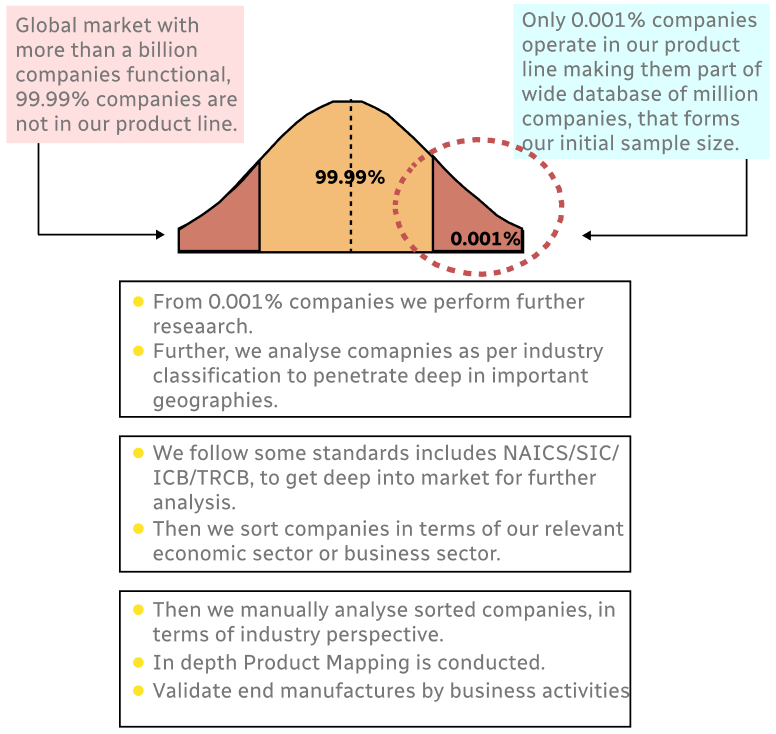
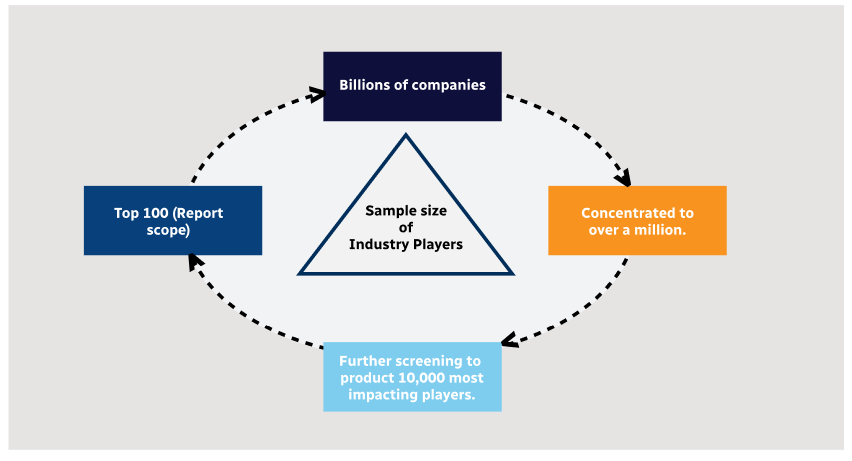
Step 1 - Identification of Relevant Samples Size from Population Database
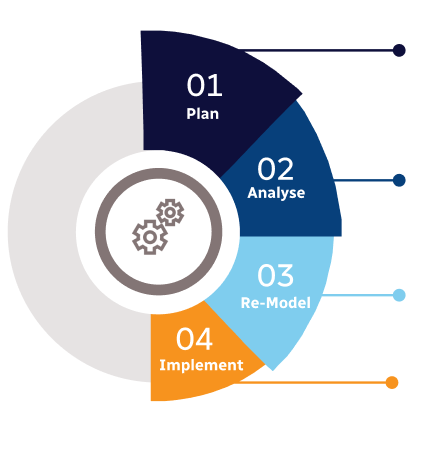
Step 2 - Approaches for Defining Global Market Size (Value, Volume* & Price*)
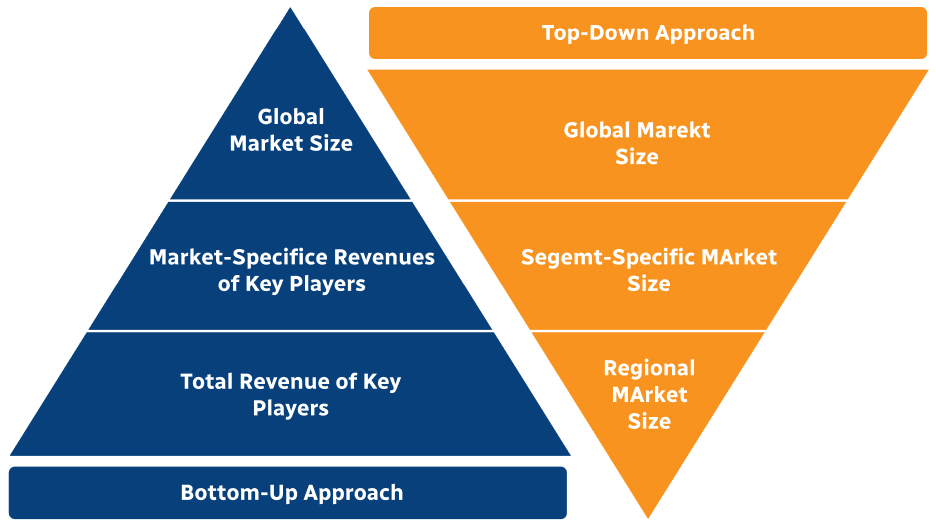
Note*: In applicable scenarios
Step 3 - Data Sources
Primary Research
- Web Analytics
- Survey Reports
- Research Institute
- Latest Research Reports
- Opinion Leaders
Secondary Research
- Annual Reports
- White Paper
- Latest Press Release
- Industry Association
- Paid Database
- Investor Presentations
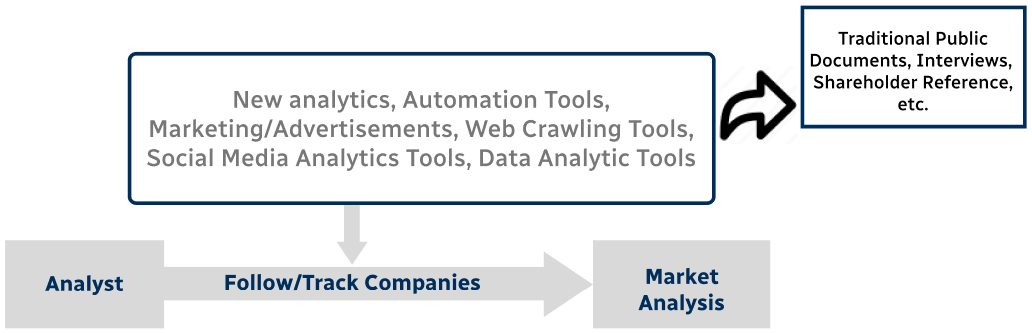
Step 4 - Data Triangulation
Involves using different sources of information in order to increase the validity of a study
These sources are likely to be stakeholders in a program - participants, other researchers, program staff, other community members, and so on.
Then we put all data in single framework & apply various statistical tools to find out the dynamic on the market.
During the analysis stage, feedback from the stakeholder groups would be compared to determine areas of agreement as well as areas of divergence