


Key Insights
The global heart stent market is experiencing robust expansion, projected to reach a valuation of approximately USD 25,000 million by 2025 and continue its upward trajectory. This growth is underpinned by a Compound Annual Growth Rate (CAGR) of around 8%, indicating sustained momentum in the sector. The increasing prevalence of cardiovascular diseases, including acute myocardial infarction and angina pectoris, coupled with an aging global population, are the primary drivers fueling this demand. Advancements in stent technology, such as the development of drug-eluting and bioactive stents offering improved patient outcomes and reduced restenosis rates, are further stimulating market penetration. Furthermore, rising healthcare expenditure, improved access to advanced medical facilities, and greater patient awareness regarding cardiac health contribute significantly to the market's positive outlook. The market is segmented by application, with Acute Myocardial Infarction and Unstable Angina representing significant patient populations, and by stent type, where Drug-Eluting Stents (DES) are currently dominant due to their superior efficacy.
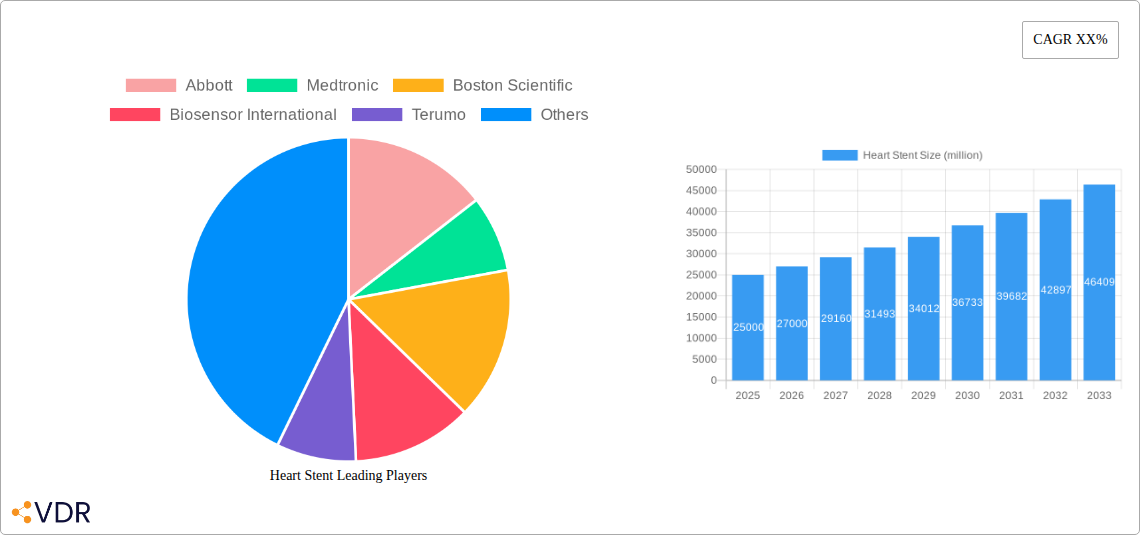
Heart Stent Market Size (In Billion)

Geographically, North America and Europe currently lead the market, driven by high rates of cardiovascular disease, advanced healthcare infrastructure, and early adoption of innovative medical devices. However, the Asia Pacific region is emerging as a key growth area, fueled by rapidly developing economies, increasing healthcare investments, and a growing number of interventional cardiology procedures. Restrains such as the high cost of advanced stent technologies and the need for stringent regulatory approvals can pose challenges. Nevertheless, ongoing research and development efforts focused on cost-effectiveness and novel stent designs, alongside a concerted effort by leading companies like Abbott, Medtronic, and Boston Scientific to expand their market reach, are expected to propel the heart stent market to new heights in the coming years. The market is poised for significant innovation, with a focus on personalized treatment approaches and minimally invasive procedures.
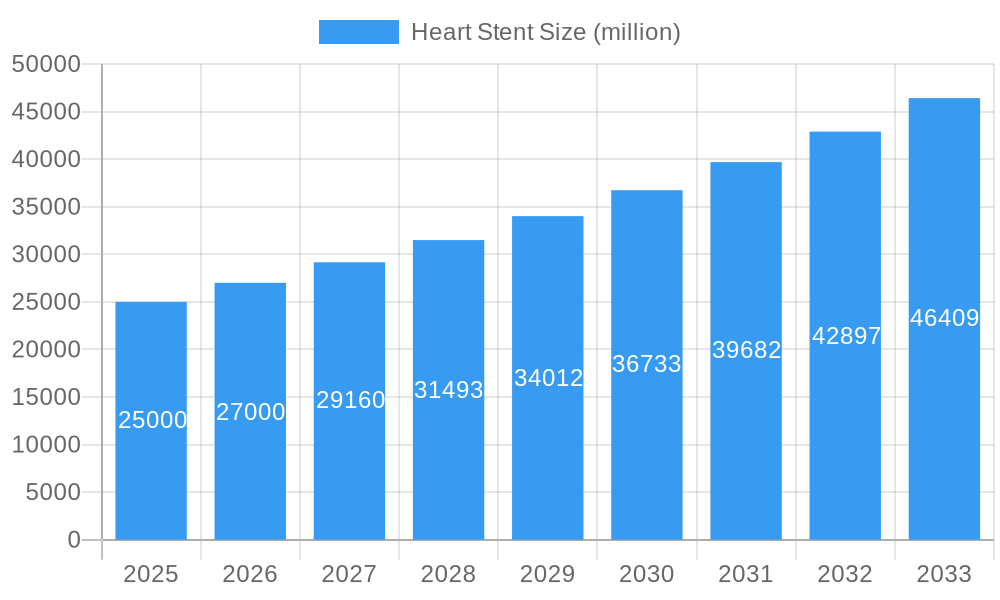
Heart Stent Company Market Share
This comprehensive report provides an in-depth analysis of the global Heart Stent market, offering a detailed forecast from 2025 to 2033. Leveraging extensive historical data (2019-2024) and a base year of 2025, this report is an indispensable resource for stakeholders seeking to understand market dynamics, growth drivers, regional dominance, competitive landscape, and emerging opportunities within the cardiovascular interventional devices sector. We meticulously examine various stent types, including Drug-Eluting Stents (DES), Bare Metal Stents (BMS), Bioactive Stents, and Radioactive Stents, alongside key applications such as Acute Myocardial Infarction, Unstable Angina, and Angina Pectoris. Our analysis incorporates market size in million units, market share percentages, CAGR, and penetration rates to deliver actionable intelligence.
Heart Stent Market Dynamics & Structure
The global Heart Stent market exhibits a moderate to high degree of concentration, with leading players such as Abbott, Medtronic, and Boston Scientific holding significant market shares. Technological innovation serves as a primary driver, fueled by advancements in stent coatings, deliverability, and biocompatibility. Regulatory frameworks, including stringent approvals from bodies like the FDA and EMA, play a crucial role in shaping market access and product development. Competitive product substitutes, while limited for primary stenting procedures, include balloon angioplasty and bypass surgery, though stents remain the preferred intervention for many conditions. End-user demographics are increasingly influenced by an aging global population and a rising prevalence of cardiovascular diseases. Mergers and acquisitions (M&A) trends are evident, with larger companies acquiring innovative startups to bolster their product portfolios and expand market reach. For instance, over the historical period 2019-2024, approximately 15 M&A deals were observed in the cardiovascular device sector, with a notable focus on stent technology. Innovation barriers include the high cost of R&D, lengthy clinical trial processes, and reimbursement complexities.
- Market Concentration: Top 3 players account for approximately 65% of the global market share.
- Technological Innovation: Focus on bioresorbable scaffolds and drug-eluting technologies with improved safety profiles.
- Regulatory Frameworks: Strict FDA and EMA approvals impact time-to-market and product differentiation.
- Competitive Substitutes: Balloon angioplasty and CABG, though less favored for acute interventions.
- End-User Demographics: Aging population and increasing incidence of coronary artery disease drive demand.
- M&A Trends: Strategic acquisitions to gain access to novel technologies and expand product portfolios.
- Innovation Barriers: High R&D costs, rigorous clinical validation, and reimbursement challenges.
Heart Stent Growth Trends & Insights
The global Heart Stent market is projected to experience robust growth, driven by a confluence of factors including increasing incidence of cardiovascular diseases, a growing aging population, and continuous technological advancements. The market size, estimated at XXX million units in the base year 2025, is anticipated to expand at a Compound Annual Growth Rate (CAGR) of approximately 5.5% during the forecast period 2025–2033. This expansion is underpinned by a steady increase in the adoption rates of advanced stent technologies, particularly Drug-Eluting Stents (DES), which offer superior outcomes in preventing restenosis compared to Bare Metal Stents (BMS). Technological disruptions, such as the development of bioresorbable stents and stents with enhanced drug delivery mechanisms, are further stimulating market penetration. Consumer behavior shifts, influenced by greater awareness of cardiac health and a preference for minimally invasive procedures, also contribute significantly to the market's upward trajectory.
The historical period (2019–2024) witnessed a market evolution marked by increased utilization of DES in complex procedures, alongside ongoing research into novel stent materials and drug formulations. The prevalence of conditions like coronary artery disease (CAD) has consistently risen, making heart stenting a cornerstone of interventional cardiology. Global health initiatives and improved diagnostic capabilities have led to earlier detection and intervention, further boosting demand for heart stents.
In the forecast period, market penetration is expected to deepen, particularly in emerging economies where access to advanced healthcare infrastructure is rapidly improving. The development of personalized stent solutions and the integration of smart stent technologies are poised to revolutionize patient care and drive further market expansion. The increasing focus on preventing recurrent cardiac events will continue to favor the adoption of DES and next-generation bioactive stents. Furthermore, the growing demand for less invasive treatment options in cardiology will reinforce the dominance of percutaneous coronary intervention (PCI) procedures, thereby fueling the demand for heart stents. The market's resilience is also attributed to the essential nature of these devices in managing life-threatening cardiac conditions, ensuring sustained demand even in challenging economic environments. Research and development efforts are consistently focused on improving stent efficacy, reducing complications such as stent thrombosis, and enhancing patient recovery times, all of which are critical for sustained market growth and adoption. The increasing investment by both public and private entities in healthcare infrastructure, especially in developing nations, is creating a fertile ground for the expansion of the heart stent market. The rising disposable incomes in many regions also play a crucial role in enhancing patients' ability to afford these life-saving medical devices, thereby contributing to broader market penetration.
Dominant Regions, Countries, or Segments in Heart Stent
North America currently stands as the dominant region in the global Heart Stent market, driven by a highly developed healthcare infrastructure, a significant prevalence of cardiovascular diseases, and strong reimbursement policies. The United States, in particular, accounts for a substantial portion of the regional market share, attributed to high per capita healthcare expenditure, advanced medical technology adoption, and a robust clinical research ecosystem. The country's commitment to innovation in interventional cardiology, coupled with a large aging population susceptible to coronary artery disease, solidifies its leading position.
Within the application segments, Acute Myocardial Infarction (AMI) represents a critical and high-demand area, often necessitating immediate intervention with heart stents to restore blood flow and minimize myocardial damage. The increasing incidence of AMI, particularly among older demographics, directly translates into significant market growth for stents used in emergency procedures.
In terms of stent types, Drug-Eluting Stents (DES) are leading the market growth and adoption. Their superior efficacy in inhibiting neointimal hyperplasia and reducing the risk of restenosis and subsequent revascularization procedures compared to Bare Metal Stents (BMS) has made them the preferred choice for a majority of interventional cardiologists. The continuous evolution of DES with advanced drug formulations and polymer technologies further solidifies their dominance. The global market for DES is estimated to be XXX million units in 2025, with a projected CAGR of XX% during the forecast period.
Key drivers for dominance in North America include:
- High Prevalence of Cardiovascular Diseases: An aging population and lifestyle factors contribute to a high incidence of CAD.
- Advanced Healthcare Infrastructure: Well-equipped hospitals and advanced interventional cardiology centers.
- Strong Reimbursement Policies: Comprehensive insurance coverage for cardiac procedures.
- Technological Innovation Hub: Leading research institutions and medical device manufacturers drive innovation.
- Early Adoption of Advanced Technologies: Rapid uptake of DES and newer stent generations.
The market share for Acute Myocardial Infarction procedures requiring stenting is estimated at XX% of the total stent market, reflecting its critical role. The market penetration of DES in AMI cases is over XX%, highlighting their indispensable role in managing this life-threatening condition. Economic policies promoting healthcare access and investment in cardiovascular research further bolster the market in this region.
Heart Stent Product Landscape
The heart stent product landscape is characterized by continuous innovation, focusing on enhanced efficacy, safety, and patient outcomes. Drug-Eluting Stents (DES) remain at the forefront, featuring advanced polymer coatings and a diverse range of therapeutic drugs designed to prevent tissue growth within the stent and reduce the risk of restenosis. Bare Metal Stents (BMS) offer a cost-effective solution for specific patient profiles, while emerging Bioactive Stents are exploring novel materials and surface modifications to promote vascular healing and reduce inflammatory responses. Radioactive Stents, though a niche segment, are also being researched for their potential in localized radiation therapy to prevent restenosis. Key performance metrics include deliverability, radial strength, and long-term patency rates, with a constant push towards thinner struts and more flexible stent designs to improve compatibility with complex anatomies and facilitate easier implantation.
Key Drivers, Barriers & Challenges in Heart Stent
The heart stent market is primarily propelled by the escalating global burden of cardiovascular diseases, an aging demographic, and significant advancements in stent technology, particularly Drug-Eluting Stents (DES). These technological innovations offer improved patient outcomes by reducing restenosis rates and the need for repeat interventions. Favorable reimbursement policies in developed nations and increasing healthcare expenditure in emerging economies further fuel market growth. The minimally invasive nature of stenting procedures also contributes to their widespread adoption.
- Drivers:
- Rising prevalence of coronary artery disease (CAD) and heart failure.
- Aging global population.
- Technological advancements in DES and novel stent materials.
- Increasing preference for minimally invasive cardiac procedures.
- Growing healthcare expenditure and improved reimbursement.
However, the market faces considerable barriers and challenges. High research and development costs associated with new stent technologies, coupled with lengthy and rigorous regulatory approval processes, can impede market entry for innovative products. Supply chain disruptions and the need for robust cold chain logistics for certain advanced stent coatings can pose operational challenges. Competitive pressures and the threat of emerging therapeutic alternatives, though limited, also influence market dynamics. Moreover, healthcare policy changes and varying reimbursement rates across different regions can create market access hurdles.
- Barriers & Challenges:
- High R&D costs and stringent regulatory approval pathways.
- Supply chain complexities and logistical demands.
- Intense competition and pricing pressures.
- Variability in reimbursement policies and healthcare reforms.
- Risk of adverse events like stent thrombosis and allergic reactions.
Emerging Opportunities in Heart Stent
Emerging opportunities in the heart stent market lie in the development and adoption of next-generation technologies that address unmet clinical needs. The expansion of the market into underdeveloped and emerging economies presents significant growth potential, driven by increasing healthcare investments and a rising middle class. Innovations in bioresorbable scaffolds, which gradually dissolve after supporting vessel healing, offer a promising avenue for reducing long-term complications. Personalized medicine approaches, including the development of drug-eluting stents tailored to individual patient profiles and genetic predispositions, also represent a burgeoning area. Furthermore, the integration of nanotechnology and smart stent technologies for real-time monitoring of vascular health and drug release control are poised to revolutionize patient care and create new market segments.
Growth Accelerators in the Heart Stent Industry
Long-term growth in the heart stent industry is being significantly accelerated by several key catalysts. Breakthroughs in drug delivery systems for drug-eluting stents are leading to more effective and sustained inhibition of restenosis, improving patient outcomes. Strategic partnerships and collaborations between medical device manufacturers and pharmaceutical companies are fostering the development of advanced stent coatings and therapeutic agents. Market expansion strategies targeting underserved regions, coupled with growing investments in healthcare infrastructure, are opening up new avenues for demand. The increasing focus on value-based healthcare and the demonstration of improved long-term cost-effectiveness of advanced stenting procedures also act as significant growth accelerators, encouraging wider adoption by healthcare providers and payers.
Key Players Shaping the Heart Stent Market
- Abbott
- Medtronic
- Boston Scientific
- Biosensor International
- Terumo
- MicroPort Scientific
- Lepu Medical
- B.Braun
- HEXACATH
- Biotronik AG
- ClearStream
Notable Milestones in Heart Stent Sector
- 2019: Launch of the first-in-class bioresorbable scaffold with improved mechanical properties.
- 2020: FDA approval of a novel drug-eluting stent with enhanced antiproliferative drug elution.
- 2021: Significant increase in M&A activities, with larger players acquiring innovative stent technology startups.
- 2022: Advancements in stent coating technologies to further reduce thrombogenicity.
- 2023: Growing research and development in the area of localized drug delivery via specialized stent designs.
- 2024 (Early): Emergence of interest in AI-driven stent selection for personalized patient care.
In-Depth Heart Stent Market Outlook
The future of the heart stent market is exceptionally promising, driven by sustained innovation and an expanding global need for cardiovascular interventions. Growth accelerators such as advancements in bioresorbable technologies, personalized stent solutions, and the integration of smart functionalities will continue to redefine patient care. Strategic market expansion into emerging economies, supported by increasing healthcare infrastructure and disposable incomes, will unlock substantial untapped potential. The ongoing commitment of key players to research and development, focusing on improving stent safety profiles and reducing long-term complications, will ensure continued market evolution. The industry is poised for continued robust growth, offering significant strategic opportunities for stakeholders invested in improving global cardiovascular health outcomes.
Heart Stent Segmentation
-
1. Application
- 1.1. Acute Myocardial Infarction
- 1.2. Unstable Angina
- 1.3. Angina Pectoris
-
2. Types
- 2.1. Drug-Eluting Stent
- 2.2. Bare Metal Stent
- 2.3. Bioactive Stent
- 2.4. Radioactive Stent
Heart Stent Segmentation By Geography
-
1. North America
- 1.1. United States
- 1.2. Canada
- 1.3. Mexico
-
2. South America
- 2.1. Brazil
- 2.2. Argentina
- 2.3. Rest of South America
-
3. Europe
- 3.1. United Kingdom
- 3.2. Germany
- 3.3. France
- 3.4. Italy
- 3.5. Spain
- 3.6. Russia
- 3.7. Benelux
- 3.8. Nordics
- 3.9. Rest of Europe
-
4. Middle East & Africa
- 4.1. Turkey
- 4.2. Israel
- 4.3. GCC
- 4.4. North Africa
- 4.5. South Africa
- 4.6. Rest of Middle East & Africa
-
5. Asia Pacific
- 5.1. China
- 5.2. India
- 5.3. Japan
- 5.4. South Korea
- 5.5. ASEAN
- 5.6. Oceania
- 5.7. Rest of Asia Pacific
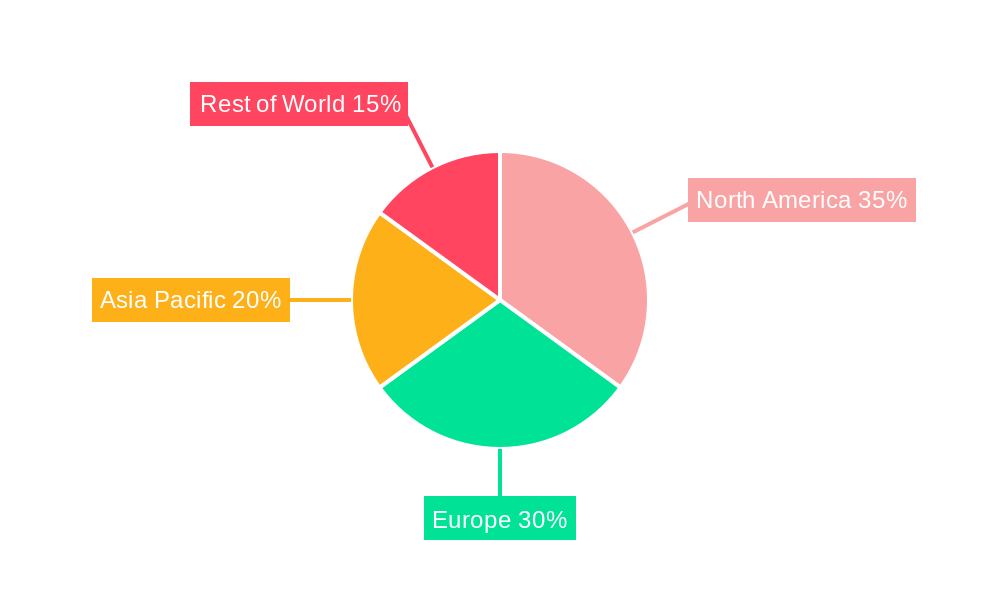
Heart Stent Regional Market Share
Geographic Coverage of Heart Stent
Heart Stent REPORT HIGHLIGHTS
| Aspects | Details |
|---|---|
| Study Period | 2020-2034 |
| Base Year | 2025 |
| Estimated Year | 2026 |
| Forecast Period | 2026-2034 |
| Historical Period | 2020-2025 |
| Growth Rate | CAGR of 5.3% from 2020-2034 |
| Segmentation |
|
Table of Contents
- 1. Introduction
- 1.1. Research Scope
- 1.2. Market Segmentation
- 1.3. Research Methodology
- 1.4. Definitions and Assumptions
- 2. Executive Summary
- 2.1. Introduction
- 3. Market Dynamics
- 3.1. Introduction
- 3.2. Market Drivers
- 3.3. Market Restrains
- 3.4. Market Trends
- 4. Market Factor Analysis
- 4.1. Porters Five Forces
- 4.2. Supply/Value Chain
- 4.3. PESTEL analysis
- 4.4. Market Entropy
- 4.5. Patent/Trademark Analysis
- 5. Global Heart Stent Analysis, Insights and Forecast, 2020-2032
- 5.1. Market Analysis, Insights and Forecast - by Application
- 5.1.1. Acute Myocardial Infarction
- 5.1.2. Unstable Angina
- 5.1.3. Angina Pectoris
- 5.2. Market Analysis, Insights and Forecast - by Types
- 5.2.1. Drug-Eluting Stent
- 5.2.2. Bare Metal Stent
- 5.2.3. Bioactive Stent
- 5.2.4. Radioactive Stent
- 5.3. Market Analysis, Insights and Forecast - by Region
- 5.3.1. North America
- 5.3.2. South America
- 5.3.3. Europe
- 5.3.4. Middle East & Africa
- 5.3.5. Asia Pacific
- 5.1. Market Analysis, Insights and Forecast - by Application
- 6. North America Heart Stent Analysis, Insights and Forecast, 2020-2032
- 6.1. Market Analysis, Insights and Forecast - by Application
- 6.1.1. Acute Myocardial Infarction
- 6.1.2. Unstable Angina
- 6.1.3. Angina Pectoris
- 6.2. Market Analysis, Insights and Forecast - by Types
- 6.2.1. Drug-Eluting Stent
- 6.2.2. Bare Metal Stent
- 6.2.3. Bioactive Stent
- 6.2.4. Radioactive Stent
- 6.1. Market Analysis, Insights and Forecast - by Application
- 7. South America Heart Stent Analysis, Insights and Forecast, 2020-2032
- 7.1. Market Analysis, Insights and Forecast - by Application
- 7.1.1. Acute Myocardial Infarction
- 7.1.2. Unstable Angina
- 7.1.3. Angina Pectoris
- 7.2. Market Analysis, Insights and Forecast - by Types
- 7.2.1. Drug-Eluting Stent
- 7.2.2. Bare Metal Stent
- 7.2.3. Bioactive Stent
- 7.2.4. Radioactive Stent
- 7.1. Market Analysis, Insights and Forecast - by Application
- 8. Europe Heart Stent Analysis, Insights and Forecast, 2020-2032
- 8.1. Market Analysis, Insights and Forecast - by Application
- 8.1.1. Acute Myocardial Infarction
- 8.1.2. Unstable Angina
- 8.1.3. Angina Pectoris
- 8.2. Market Analysis, Insights and Forecast - by Types
- 8.2.1. Drug-Eluting Stent
- 8.2.2. Bare Metal Stent
- 8.2.3. Bioactive Stent
- 8.2.4. Radioactive Stent
- 8.1. Market Analysis, Insights and Forecast - by Application
- 9. Middle East & Africa Heart Stent Analysis, Insights and Forecast, 2020-2032
- 9.1. Market Analysis, Insights and Forecast - by Application
- 9.1.1. Acute Myocardial Infarction
- 9.1.2. Unstable Angina
- 9.1.3. Angina Pectoris
- 9.2. Market Analysis, Insights and Forecast - by Types
- 9.2.1. Drug-Eluting Stent
- 9.2.2. Bare Metal Stent
- 9.2.3. Bioactive Stent
- 9.2.4. Radioactive Stent
- 9.1. Market Analysis, Insights and Forecast - by Application
- 10. Asia Pacific Heart Stent Analysis, Insights and Forecast, 2020-2032
- 10.1. Market Analysis, Insights and Forecast - by Application
- 10.1.1. Acute Myocardial Infarction
- 10.1.2. Unstable Angina
- 10.1.3. Angina Pectoris
- 10.2. Market Analysis, Insights and Forecast - by Types
- 10.2.1. Drug-Eluting Stent
- 10.2.2. Bare Metal Stent
- 10.2.3. Bioactive Stent
- 10.2.4. Radioactive Stent
- 10.1. Market Analysis, Insights and Forecast - by Application
- 11. Competitive Analysis
- 11.1. Global Market Share Analysis 2025
- 11.2. Company Profiles
- 11.2.1 Abbott
- 11.2.1.1. Overview
- 11.2.1.2. Products
- 11.2.1.3. SWOT Analysis
- 11.2.1.4. Recent Developments
- 11.2.1.5. Financials (Based on Availability)
- 11.2.2 Medtronic
- 11.2.2.1. Overview
- 11.2.2.2. Products
- 11.2.2.3. SWOT Analysis
- 11.2.2.4. Recent Developments
- 11.2.2.5. Financials (Based on Availability)
- 11.2.3 Boston Scientific
- 11.2.3.1. Overview
- 11.2.3.2. Products
- 11.2.3.3. SWOT Analysis
- 11.2.3.4. Recent Developments
- 11.2.3.5. Financials (Based on Availability)
- 11.2.4 Biosensor International
- 11.2.4.1. Overview
- 11.2.4.2. Products
- 11.2.4.3. SWOT Analysis
- 11.2.4.4. Recent Developments
- 11.2.4.5. Financials (Based on Availability)
- 11.2.5 Terumo
- 11.2.5.1. Overview
- 11.2.5.2. Products
- 11.2.5.3. SWOT Analysis
- 11.2.5.4. Recent Developments
- 11.2.5.5. Financials (Based on Availability)
- 11.2.6 MicroPort Scientific
- 11.2.6.1. Overview
- 11.2.6.2. Products
- 11.2.6.3. SWOT Analysis
- 11.2.6.4. Recent Developments
- 11.2.6.5. Financials (Based on Availability)
- 11.2.7 Lepu Medical
- 11.2.7.1. Overview
- 11.2.7.2. Products
- 11.2.7.3. SWOT Analysis
- 11.2.7.4. Recent Developments
- 11.2.7.5. Financials (Based on Availability)
- 11.2.8 B.Braun
- 11.2.8.1. Overview
- 11.2.8.2. Products
- 11.2.8.3. SWOT Analysis
- 11.2.8.4. Recent Developments
- 11.2.8.5. Financials (Based on Availability)
- 11.2.9 HEXACATH
- 11.2.9.1. Overview
- 11.2.9.2. Products
- 11.2.9.3. SWOT Analysis
- 11.2.9.4. Recent Developments
- 11.2.9.5. Financials (Based on Availability)
- 11.2.10 Biotronik AG
- 11.2.10.1. Overview
- 11.2.10.2. Products
- 11.2.10.3. SWOT Analysis
- 11.2.10.4. Recent Developments
- 11.2.10.5. Financials (Based on Availability)
- 11.2.11 ClearStream
- 11.2.11.1. Overview
- 11.2.11.2. Products
- 11.2.11.3. SWOT Analysis
- 11.2.11.4. Recent Developments
- 11.2.11.5. Financials (Based on Availability)
- 11.2.1 Abbott
List of Figures
- Figure 1: Global Heart Stent Revenue Breakdown (undefined, %) by Region 2025 & 2033
- Figure 2: North America Heart Stent Revenue (undefined), by Application 2025 & 2033
- Figure 3: North America Heart Stent Revenue Share (%), by Application 2025 & 2033
- Figure 4: North America Heart Stent Revenue (undefined), by Types 2025 & 2033
- Figure 5: North America Heart Stent Revenue Share (%), by Types 2025 & 2033
- Figure 6: North America Heart Stent Revenue (undefined), by Country 2025 & 2033
- Figure 7: North America Heart Stent Revenue Share (%), by Country 2025 & 2033
- Figure 8: South America Heart Stent Revenue (undefined), by Application 2025 & 2033
- Figure 9: South America Heart Stent Revenue Share (%), by Application 2025 & 2033
- Figure 10: South America Heart Stent Revenue (undefined), by Types 2025 & 2033
- Figure 11: South America Heart Stent Revenue Share (%), by Types 2025 & 2033
- Figure 12: South America Heart Stent Revenue (undefined), by Country 2025 & 2033
- Figure 13: South America Heart Stent Revenue Share (%), by Country 2025 & 2033
- Figure 14: Europe Heart Stent Revenue (undefined), by Application 2025 & 2033
- Figure 15: Europe Heart Stent Revenue Share (%), by Application 2025 & 2033
- Figure 16: Europe Heart Stent Revenue (undefined), by Types 2025 & 2033
- Figure 17: Europe Heart Stent Revenue Share (%), by Types 2025 & 2033
- Figure 18: Europe Heart Stent Revenue (undefined), by Country 2025 & 2033
- Figure 19: Europe Heart Stent Revenue Share (%), by Country 2025 & 2033
- Figure 20: Middle East & Africa Heart Stent Revenue (undefined), by Application 2025 & 2033
- Figure 21: Middle East & Africa Heart Stent Revenue Share (%), by Application 2025 & 2033
- Figure 22: Middle East & Africa Heart Stent Revenue (undefined), by Types 2025 & 2033
- Figure 23: Middle East & Africa Heart Stent Revenue Share (%), by Types 2025 & 2033
- Figure 24: Middle East & Africa Heart Stent Revenue (undefined), by Country 2025 & 2033
- Figure 25: Middle East & Africa Heart Stent Revenue Share (%), by Country 2025 & 2033
- Figure 26: Asia Pacific Heart Stent Revenue (undefined), by Application 2025 & 2033
- Figure 27: Asia Pacific Heart Stent Revenue Share (%), by Application 2025 & 2033
- Figure 28: Asia Pacific Heart Stent Revenue (undefined), by Types 2025 & 2033
- Figure 29: Asia Pacific Heart Stent Revenue Share (%), by Types 2025 & 2033
- Figure 30: Asia Pacific Heart Stent Revenue (undefined), by Country 2025 & 2033
- Figure 31: Asia Pacific Heart Stent Revenue Share (%), by Country 2025 & 2033
List of Tables
- Table 1: Global Heart Stent Revenue undefined Forecast, by Application 2020 & 2033
- Table 2: Global Heart Stent Revenue undefined Forecast, by Types 2020 & 2033
- Table 3: Global Heart Stent Revenue undefined Forecast, by Region 2020 & 2033
- Table 4: Global Heart Stent Revenue undefined Forecast, by Application 2020 & 2033
- Table 5: Global Heart Stent Revenue undefined Forecast, by Types 2020 & 2033
- Table 6: Global Heart Stent Revenue undefined Forecast, by Country 2020 & 2033
- Table 7: United States Heart Stent Revenue (undefined) Forecast, by Application 2020 & 2033
- Table 8: Canada Heart Stent Revenue (undefined) Forecast, by Application 2020 & 2033
- Table 9: Mexico Heart Stent Revenue (undefined) Forecast, by Application 2020 & 2033
- Table 10: Global Heart Stent Revenue undefined Forecast, by Application 2020 & 2033
- Table 11: Global Heart Stent Revenue undefined Forecast, by Types 2020 & 2033
- Table 12: Global Heart Stent Revenue undefined Forecast, by Country 2020 & 2033
- Table 13: Brazil Heart Stent Revenue (undefined) Forecast, by Application 2020 & 2033
- Table 14: Argentina Heart Stent Revenue (undefined) Forecast, by Application 2020 & 2033
- Table 15: Rest of South America Heart Stent Revenue (undefined) Forecast, by Application 2020 & 2033
- Table 16: Global Heart Stent Revenue undefined Forecast, by Application 2020 & 2033
- Table 17: Global Heart Stent Revenue undefined Forecast, by Types 2020 & 2033
- Table 18: Global Heart Stent Revenue undefined Forecast, by Country 2020 & 2033
- Table 19: United Kingdom Heart Stent Revenue (undefined) Forecast, by Application 2020 & 2033
- Table 20: Germany Heart Stent Revenue (undefined) Forecast, by Application 2020 & 2033
- Table 21: France Heart Stent Revenue (undefined) Forecast, by Application 2020 & 2033
- Table 22: Italy Heart Stent Revenue (undefined) Forecast, by Application 2020 & 2033
- Table 23: Spain Heart Stent Revenue (undefined) Forecast, by Application 2020 & 2033
- Table 24: Russia Heart Stent Revenue (undefined) Forecast, by Application 2020 & 2033
- Table 25: Benelux Heart Stent Revenue (undefined) Forecast, by Application 2020 & 2033
- Table 26: Nordics Heart Stent Revenue (undefined) Forecast, by Application 2020 & 2033
- Table 27: Rest of Europe Heart Stent Revenue (undefined) Forecast, by Application 2020 & 2033
- Table 28: Global Heart Stent Revenue undefined Forecast, by Application 2020 & 2033
- Table 29: Global Heart Stent Revenue undefined Forecast, by Types 2020 & 2033
- Table 30: Global Heart Stent Revenue undefined Forecast, by Country 2020 & 2033
- Table 31: Turkey Heart Stent Revenue (undefined) Forecast, by Application 2020 & 2033
- Table 32: Israel Heart Stent Revenue (undefined) Forecast, by Application 2020 & 2033
- Table 33: GCC Heart Stent Revenue (undefined) Forecast, by Application 2020 & 2033
- Table 34: North Africa Heart Stent Revenue (undefined) Forecast, by Application 2020 & 2033
- Table 35: South Africa Heart Stent Revenue (undefined) Forecast, by Application 2020 & 2033
- Table 36: Rest of Middle East & Africa Heart Stent Revenue (undefined) Forecast, by Application 2020 & 2033
- Table 37: Global Heart Stent Revenue undefined Forecast, by Application 2020 & 2033
- Table 38: Global Heart Stent Revenue undefined Forecast, by Types 2020 & 2033
- Table 39: Global Heart Stent Revenue undefined Forecast, by Country 2020 & 2033
- Table 40: China Heart Stent Revenue (undefined) Forecast, by Application 2020 & 2033
- Table 41: India Heart Stent Revenue (undefined) Forecast, by Application 2020 & 2033
- Table 42: Japan Heart Stent Revenue (undefined) Forecast, by Application 2020 & 2033
- Table 43: South Korea Heart Stent Revenue (undefined) Forecast, by Application 2020 & 2033
- Table 44: ASEAN Heart Stent Revenue (undefined) Forecast, by Application 2020 & 2033
- Table 45: Oceania Heart Stent Revenue (undefined) Forecast, by Application 2020 & 2033
- Table 46: Rest of Asia Pacific Heart Stent Revenue (undefined) Forecast, by Application 2020 & 2033
Frequently Asked Questions
1. What is the projected Compound Annual Growth Rate (CAGR) of the Heart Stent?
The projected CAGR is approximately 5.3%.
2. Which companies are prominent players in the Heart Stent?
Key companies in the market include Abbott, Medtronic, Boston Scientific, Biosensor International, Terumo, MicroPort Scientific, Lepu Medical, B.Braun, HEXACATH, Biotronik AG, ClearStream.
3. What are the main segments of the Heart Stent?
The market segments include Application, Types.
4. Can you provide details about the market size?
The market size is estimated to be USD XXX N/A as of 2022.
5. What are some drivers contributing to market growth?
N/A
6. What are the notable trends driving market growth?
N/A
7. Are there any restraints impacting market growth?
N/A
8. Can you provide examples of recent developments in the market?
N/A
9. What pricing options are available for accessing the report?
Pricing options include single-user, multi-user, and enterprise licenses priced at USD 2900.00, USD 4350.00, and USD 5800.00 respectively.
10. Is the market size provided in terms of value or volume?
The market size is provided in terms of value, measured in N/A.
11. Are there any specific market keywords associated with the report?
Yes, the market keyword associated with the report is "Heart Stent," which aids in identifying and referencing the specific market segment covered.
12. How do I determine which pricing option suits my needs best?
The pricing options vary based on user requirements and access needs. Individual users may opt for single-user licenses, while businesses requiring broader access may choose multi-user or enterprise licenses for cost-effective access to the report.
13. Are there any additional resources or data provided in the Heart Stent report?
While the report offers comprehensive insights, it's advisable to review the specific contents or supplementary materials provided to ascertain if additional resources or data are available.
14. How can I stay updated on further developments or reports in the Heart Stent?
To stay informed about further developments, trends, and reports in the Heart Stent, consider subscribing to industry newsletters, following relevant companies and organizations, or regularly checking reputable industry news sources and publications.
Methodology
Step 1 - Identification of Relevant Samples Size from Population Database



Step 2 - Approaches for Defining Global Market Size (Value, Volume* & Price*)

Note*: In applicable scenarios
Step 3 - Data Sources
Primary Research
- Web Analytics
- Survey Reports
- Research Institute
- Latest Research Reports
- Opinion Leaders
Secondary Research
- Annual Reports
- White Paper
- Latest Press Release
- Industry Association
- Paid Database
- Investor Presentations

Step 4 - Data Triangulation
Involves using different sources of information in order to increase the validity of a study
These sources are likely to be stakeholders in a program - participants, other researchers, program staff, other community members, and so on.
Then we put all data in single framework & apply various statistical tools to find out the dynamic on the market.
During the analysis stage, feedback from the stakeholder groups would be compared to determine areas of agreement as well as areas of divergence