


Key Insights
The Global Electric Passenger Car Market is projected for significant expansion, anticipated to reach $303.6 billion by 2032. This growth is propelled by increasing environmental consciousness, supportive government regulations for zero-emission vehicles, and advancements in battery technology, enhancing vehicle range and reducing charging durations. The rising adoption of Battery Electric Vehicles (BEVs) and Plug-in Hybrid Electric Vehicles (PHEVs) for diverse purposes, from daily commutes to long-distance travel, signifies this positive trend. Consumers are increasingly choosing electric vehicles (EVs) for their reduced operating expenses, available government incentives, and a growing preference for sustainable mobility. The expansion of charging infrastructure is also crucial in mitigating range anxiety and building consumer trust.
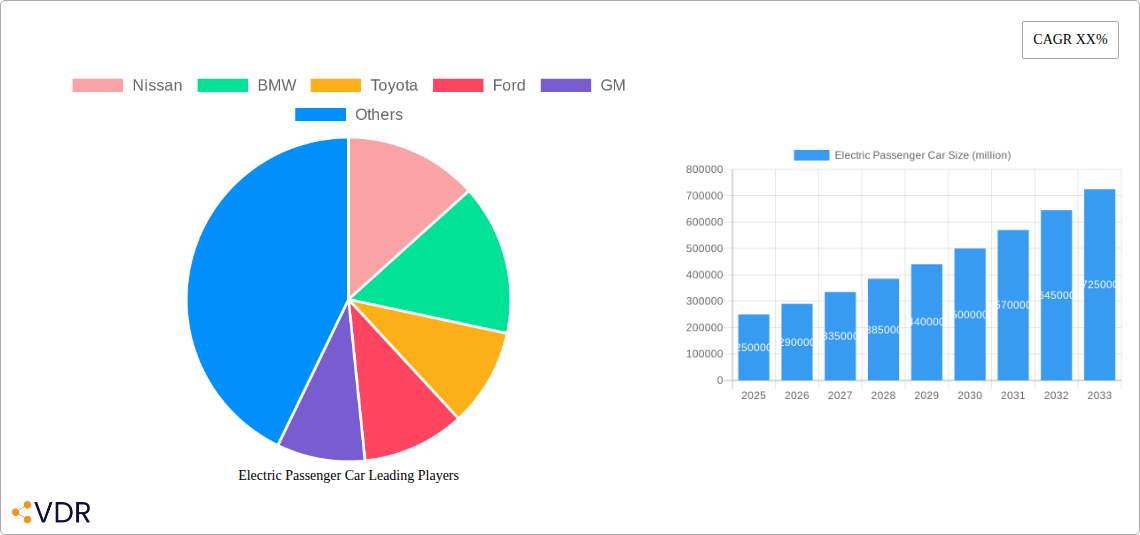
Electric Passenger Car Market Size (In Billion)

The market's dynamism is further stimulated by robust competition among leading automotive manufacturers, including Tesla, Volkswagen, BYD, and others, who are consistently launching innovative EV models with advanced features and competitive pricing. Emerging trends such as autonomous driving integration, connected car technologies, and the development of next-generation batteries are set to redefine the future of the electric passenger car sector. While considerable growth potential exists, challenges such as the initial purchase cost of EVs compared to traditional vehicles, localized charging infrastructure limitations, and reliance on raw materials for battery production require ongoing attention and innovative solutions to ensure sustained market development.
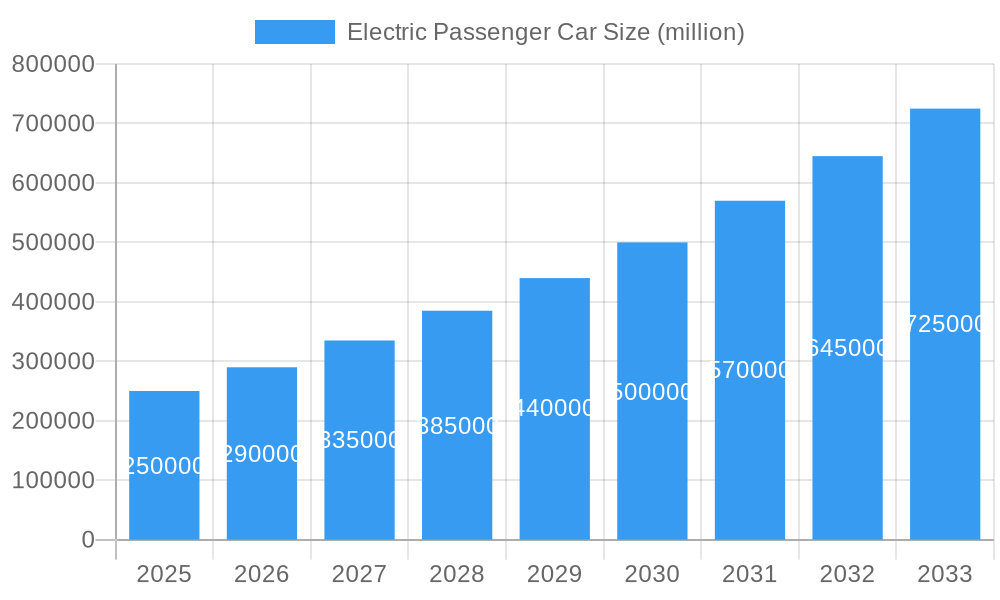
Electric Passenger Car Company Market Share
Electric Passenger Car Market Report: Unveiling Future Trends and Opportunities (2019–2033)
This comprehensive report offers an in-depth analysis of the global Electric Passenger Car market, covering historical trends, current dynamics, and future projections from 2019 to 2033, with a base and estimated year of 2025. It provides critical insights into market structure, growth drivers, regional dominance, product innovation, challenges, and opportunities, making it an essential resource for industry professionals, investors, and strategists navigating this rapidly evolving sector. The report encompasses key players like Nissan, BMW, Toyota, Ford, GM, Audi, Tesla, Hyundai, Volkswagen, Renault, and BYD, and analyzes its impact across segments like Commute, Tourism, and Business, and types including PHEV and BEV. All values are presented in million units.
Electric Passenger Car Market Dynamics & Structure
The Electric Passenger Car market is characterized by a dynamic interplay of technological innovation, evolving consumer preferences, and stringent regulatory frameworks, leading to a competitive landscape with both concentrated and fragmented elements. The rising demand for sustainable mobility solutions, coupled with government incentives and favorable policies promoting EV adoption, acts as a primary catalyst for market growth. Technological advancements in battery technology, charging infrastructure, and vehicle performance are continuously pushing the boundaries of what's possible, driving innovation across the industry.
- Market Concentration: While a few dominant players, such as Tesla and BYD, hold significant market share, the landscape is increasingly becoming more competitive with traditional automakers like Volkswagen, GM, and Ford making substantial investments in their EV portfolios.
- Technological Innovation Drivers: Advancements in battery energy density, faster charging capabilities, and enhanced vehicle range are key drivers of innovation, directly impacting consumer adoption and vehicle performance. The development of autonomous driving features integrated into electric vehicles also presents a significant innovation frontier.
- Regulatory Frameworks: Government mandates for emissions reduction, tax credits, subsidies for EV purchases, and investments in charging infrastructure play a pivotal role in shaping market dynamics and accelerating adoption rates globally.
- Competitive Product Substitutes: While ICE vehicles remain a substitute, the growing maturity and affordability of EVs are steadily eroding their market position. The increasing availability of diverse EV models across various price points and segments further intensifies competition.
- End-User Demographics: The market is witnessing a shift towards broader demographic adoption, moving beyond early adopters to mainstream consumers driven by environmental consciousness, lower running costs, and improved vehicle performance.
- M&A Trends: Strategic mergers and acquisitions, as well as significant investments in battery technology and charging infrastructure companies, are observed as major players aim to secure supply chains, enhance technological capabilities, and expand their market reach. The volume of M&A deals is projected to increase as the market matures and consolidation opportunities arise.
Electric Passenger Car Growth Trends & Insights
The Electric Passenger Car market is poised for unprecedented expansion, fueled by a confluence of technological breakthroughs, policy support, and a paradigm shift in consumer consciousness towards sustainable transportation. The market size evolution is marked by exponential growth, with adoption rates accelerating across all major economies. This growth trajectory is not merely incremental but transformative, driven by advancements that address previous barriers to EV adoption, such as range anxiety and charging time. The increasing availability of charging infrastructure, coupled with falling battery costs, is making electric vehicles a more practical and appealing choice for a wider consumer base.
Technological disruptions are at the heart of this growth. Innovations in solid-state batteries promise higher energy densities, faster charging, and improved safety, potentially revolutionizing EV performance and affordability. Furthermore, the integration of advanced software and connectivity features, including over-the-air updates and sophisticated infotainment systems, is enhancing the user experience and creating new value propositions for electric vehicles. This digital integration is transforming the car from a mere mode of transport into a connected living space.
Consumer behavior shifts are profoundly impacting the market. A growing awareness of environmental issues, coupled with a desire for lower operating costs and a superior driving experience (instant torque, quiet operation), is compelling more consumers to consider EVs for their next purchase. The "total cost of ownership" is increasingly becoming a favorable metric for EVs, as reduced maintenance needs and lower energy prices offset initial purchase price differences. The rise of subscription models and flexible ownership options is also making EVs more accessible, further democratizing their adoption.
The market penetration of Electric Passenger Cars is steadily climbing. Projections indicate a significant increase in market share over the forecast period, with some regions expected to reach near-complete electrification of new vehicle sales. This sustained growth is underpinned by robust CAGR figures, reflecting the dynamism and inherent strength of the EV market. The ongoing evolution of the electric passenger car sector is not just about the vehicles themselves but also encompasses the entire ecosystem, including charging networks, grid management solutions, and battery recycling initiatives, all of which are maturing rapidly to support this transition. The projected market size for electric passenger cars is expected to reach substantial figures, reflecting its emergence as the dominant form of personal mobility in the coming decade.
Dominant Regions, Countries, or Segments in Electric Passenger Car
The global Electric Passenger Car market is experiencing robust growth, with specific regions, countries, and segments emerging as key drivers of this expansion. Among the Applications, the Commute segment is currently the dominant force, reflecting the primary use case for many early and mainstream EV adopters who prioritize daily travel efficiency and reduced running costs. However, the Tourism and Business segments are showing remarkable growth potential, driven by increasing corporate sustainability initiatives and the desire for longer-range, more versatile electric vehicles. The "Other" application, encompassing diverse niche uses, is also contributing to overall market expansion as EV technology matures.
In terms of vehicle types, BEV (Battery Electric Vehicle) is clearly leading the market and is projected to continue its dominance throughout the forecast period. The technological advancements in battery range, coupled with the growing charging infrastructure, are making BEVs increasingly attractive and practical for a wider audience. While PHEVs (Plug-in Hybrid Electric Vehicles) currently hold a significant share, their role is anticipated to gradually diminish as BEV technology becomes more accessible and capable.
- Leading Region: Asia-Pacific, particularly China, is the undisputed leader in the Electric Passenger Car market. This dominance is attributed to strong government support, substantial manufacturing capabilities, rapid urbanization, and a large consumer base eager to embrace new technologies.
- Market Share: Asia-Pacific accounts for over 50% of the global electric passenger car sales, with China alone representing a significant portion.
- Growth Potential: The region's continued investment in charging infrastructure and battery production ensures sustained high growth rates.
- Leading Country: China stands out as the largest and fastest-growing market for electric passenger cars globally. Its comprehensive policy support, including subsidies, tax breaks, and manufacturing incentives, has fostered a thriving domestic EV industry and driven widespread consumer adoption.
- Key Drivers: Government mandates for EV quotas, extensive public and private charging networks, and a wide array of affordable EV models are crucial drivers.
- Dominant Segment (Application): Commute is currently the primary application driving electric passenger car sales.
- Market Share: A substantial portion of EV sales are for daily commuting, owing to their lower running costs and environmental benefits.
- Growth Potential: While dominant, growth in this segment is expected to stabilize as other applications gain traction.
- Dominant Segment (Type): BEV (Battery Electric Vehicle) is the leading type of electric passenger car.
- Market Share: BEVs have consistently captured a larger share of the market, projected to exceed 80% by the end of the forecast period.
- Growth Potential: Continuous improvements in battery technology and charging infrastructure are fueling the rapid growth of BEVs.
Other regions, such as Europe and North America, are also witnessing significant growth, driven by ambitious climate targets and supportive government policies. However, the scale and pace of development in Asia-Pacific, especially China, continue to set the benchmark for global EV market expansion. The interplay of economic policies, technological advancements, and consumer acceptance will continue to shape the dominance patterns in this dynamic market.
Electric Passenger Car Product Landscape
The electric passenger car product landscape is defined by rapid innovation and an expanding array of offerings designed to meet diverse consumer needs. Manufacturers are consistently introducing vehicles with longer ranges, faster charging capabilities, and advanced technological features. From sleek sedans and sporty SUVs to practical hatchbacks, the variety of electric passenger cars available is growing exponentially. Key product innovations include advancements in battery management systems for optimized performance and longevity, as well as the integration of sophisticated driver-assistance systems and intuitive infotainment interfaces. The unique selling propositions often lie in a combination of eco-friendliness, cost savings on fuel and maintenance, exhilarating driving performance due to instant torque, and the latest in connectivity and digital services.
Key Drivers, Barriers & Challenges in Electric Passenger Car
The Electric Passenger Car market is propelled by several key drivers, including increasing environmental consciousness among consumers, stringent government regulations aimed at reducing carbon emissions, and significant technological advancements in battery technology and charging infrastructure. The falling costs of batteries and the expanding range of electric vehicles are also crucial economic drivers.
- Technological Advancements: Improved battery energy density, faster charging speeds, and enhanced vehicle performance.
- Government Policies: Subsidies, tax credits, emissions mandates, and investments in charging infrastructure.
- Environmental Concerns: Growing public awareness and demand for sustainable transportation solutions.
- Lower Operating Costs: Reduced fuel and maintenance expenses compared to internal combustion engine vehicles.
Despite the positive momentum, the market faces significant barriers and challenges. The initial higher purchase price of EVs, coupled with the ongoing development of a ubiquitous and reliable charging infrastructure, remains a hurdle for widespread adoption. Range anxiety, though diminishing, still influences consumer decisions. Supply chain disruptions, particularly for critical battery materials, can impact production volumes and costs.
- High Initial Cost: EVs can still have a higher upfront purchase price compared to comparable ICE vehicles.
- Charging Infrastructure Gaps: Inadequate availability and standardization of charging stations in certain regions.
- Range Anxiety: Consumer concerns about the driving range on a single charge, especially for long journeys.
- Supply Chain Issues: Volatility in the raw material prices and availability for batteries.
- Grid Capacity: The potential strain on electricity grids with widespread EV adoption.
Emerging Opportunities in Electric Passenger Car
Emerging opportunities in the Electric Passenger Car sector are vast and varied. The development of Vehicle-to-Grid (V2G) technology presents a significant avenue, allowing EVs to not only consume electricity but also feed it back into the grid, creating new revenue streams for owners and supporting grid stability. The expansion of subscription-based EV models and mobility-as-a-service platforms caters to evolving consumer preferences for flexible and hassle-free transportation. Furthermore, advancements in battery recycling and second-life applications for used EV batteries offer sustainable solutions and create new economic possibilities. The integration of advanced AI and autonomous driving capabilities into electric passenger cars will unlock new dimensions of safety, convenience, and personalized mobility experiences.
Growth Accelerators in the Electric Passenger Car Industry
Several key catalysts are accelerating the long-term growth of the Electric Passenger Car industry. Continuous breakthroughs in battery chemistry and manufacturing are leading to higher energy densities, faster charging, and significantly lower costs, making EVs more competitive with traditional vehicles. Strategic partnerships between automakers, battery manufacturers, and technology firms are crucial for streamlining innovation, securing supply chains, and developing integrated solutions. Market expansion strategies, including the introduction of more affordable EV models and the penetration into emerging markets, are broadening the consumer base. Furthermore, the growing maturity and expansion of charging infrastructure networks globally are directly mitigating range anxiety and enhancing the practicality of EV ownership, acting as a powerful growth accelerator.
Key Players Shaping the Electric Passenger Car Market
- Nissan
- BMW
- Toyota
- Ford
- GM
- Audi
- Tesla
- Hyundai
- Volkswagen
- Renault
- BYD
Notable Milestones in Electric Passenger Car Sector
- 2019: Significant increase in BEV sales driven by new model introductions and government incentives globally.
- 2020: Tesla surpasses traditional automakers in market capitalization, signaling the growing importance of EVs.
- 2021: European Union strengthens emissions regulations, further accelerating EV adoption in the region.
- 2022: Major automakers commit billions of dollars to electrify their vehicle lineups and establish battery production facilities.
- 2023: Global charging infrastructure investment sees a substantial uptick, with new charging technologies emerging.
- 2024: Advancements in battery technology promise longer ranges and faster charging times, approaching parity with ICE refueling.
- 2025 (Estimated): BEVs projected to capture a significant majority of new electric passenger car sales globally.
In-Depth Electric Passenger Car Market Outlook
The future of the Electric Passenger Car market is exceptionally bright, characterized by sustained high growth and transformative innovation. The ongoing development of solid-state batteries, coupled with widespread advancements in charging technology, will fundamentally redefine performance and convenience, further diminishing adoption barriers. The market is projected to see increased consolidation and strategic alliances as companies strive to secure competitive advantages and navigate complex supply chains. Opportunities in emerging markets and for specialized EV applications will expand, driven by increasing global awareness of sustainability and the pursuit of efficient mobility solutions. The Electric Passenger Car market is not just a segment of the automotive industry; it represents the future of personal transportation, poised for remarkable expansion and technological evolution over the coming years.
Electric Passenger Car Segmentation
-
1. Application
- 1.1. Commute
- 1.2. Tourism
- 1.3. Business
- 1.4. Other
-
2. Types
- 2.1. PHEV
- 2.2. BEV
Electric Passenger Car Segmentation By Geography
-
1. North America
- 1.1. United States
- 1.2. Canada
- 1.3. Mexico
-
2. South America
- 2.1. Brazil
- 2.2. Argentina
- 2.3. Rest of South America
-
3. Europe
- 3.1. United Kingdom
- 3.2. Germany
- 3.3. France
- 3.4. Italy
- 3.5. Spain
- 3.6. Russia
- 3.7. Benelux
- 3.8. Nordics
- 3.9. Rest of Europe
-
4. Middle East & Africa
- 4.1. Turkey
- 4.2. Israel
- 4.3. GCC
- 4.4. North Africa
- 4.5. South Africa
- 4.6. Rest of Middle East & Africa
-
5. Asia Pacific
- 5.1. China
- 5.2. India
- 5.3. Japan
- 5.4. South Korea
- 5.5. ASEAN
- 5.6. Oceania
- 5.7. Rest of Asia Pacific
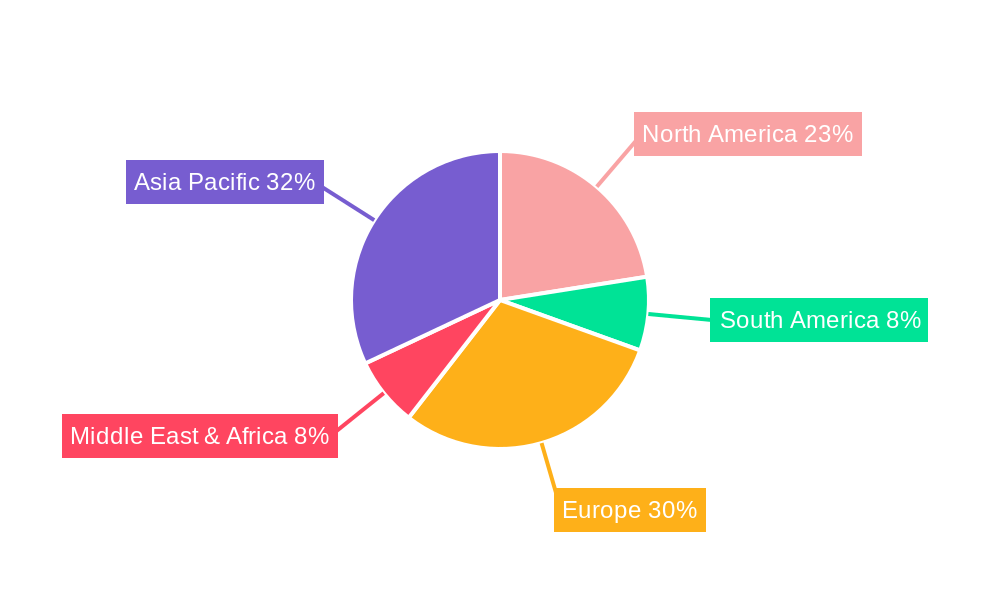
Electric Passenger Car Regional Market Share
Geographic Coverage of Electric Passenger Car
Electric Passenger Car REPORT HIGHLIGHTS
| Aspects | Details |
|---|---|
| Study Period | 2020-2034 |
| Base Year | 2025 |
| Estimated Year | 2026 |
| Forecast Period | 2026-2034 |
| Historical Period | 2020-2025 |
| Growth Rate | CAGR of 39.4% from 2020-2034 |
| Segmentation |
|
Table of Contents
- 1. Introduction
- 1.1. Research Scope
- 1.2. Market Segmentation
- 1.3. Research Methodology
- 1.4. Definitions and Assumptions
- 2. Executive Summary
- 2.1. Introduction
- 3. Market Dynamics
- 3.1. Introduction
- 3.2. Market Drivers
- 3.3. Market Restrains
- 3.4. Market Trends
- 4. Market Factor Analysis
- 4.1. Porters Five Forces
- 4.2. Supply/Value Chain
- 4.3. PESTEL analysis
- 4.4. Market Entropy
- 4.5. Patent/Trademark Analysis
- 5. Global Electric Passenger Car Analysis, Insights and Forecast, 2020-2032
- 5.1. Market Analysis, Insights and Forecast - by Application
- 5.1.1. Commute
- 5.1.2. Tourism
- 5.1.3. Business
- 5.1.4. Other
- 5.2. Market Analysis, Insights and Forecast - by Types
- 5.2.1. PHEV
- 5.2.2. BEV
- 5.3. Market Analysis, Insights and Forecast - by Region
- 5.3.1. North America
- 5.3.2. South America
- 5.3.3. Europe
- 5.3.4. Middle East & Africa
- 5.3.5. Asia Pacific
- 5.1. Market Analysis, Insights and Forecast - by Application
- 6. North America Electric Passenger Car Analysis, Insights and Forecast, 2020-2032
- 6.1. Market Analysis, Insights and Forecast - by Application
- 6.1.1. Commute
- 6.1.2. Tourism
- 6.1.3. Business
- 6.1.4. Other
- 6.2. Market Analysis, Insights and Forecast - by Types
- 6.2.1. PHEV
- 6.2.2. BEV
- 6.1. Market Analysis, Insights and Forecast - by Application
- 7. South America Electric Passenger Car Analysis, Insights and Forecast, 2020-2032
- 7.1. Market Analysis, Insights and Forecast - by Application
- 7.1.1. Commute
- 7.1.2. Tourism
- 7.1.3. Business
- 7.1.4. Other
- 7.2. Market Analysis, Insights and Forecast - by Types
- 7.2.1. PHEV
- 7.2.2. BEV
- 7.1. Market Analysis, Insights and Forecast - by Application
- 8. Europe Electric Passenger Car Analysis, Insights and Forecast, 2020-2032
- 8.1. Market Analysis, Insights and Forecast - by Application
- 8.1.1. Commute
- 8.1.2. Tourism
- 8.1.3. Business
- 8.1.4. Other
- 8.2. Market Analysis, Insights and Forecast - by Types
- 8.2.1. PHEV
- 8.2.2. BEV
- 8.1. Market Analysis, Insights and Forecast - by Application
- 9. Middle East & Africa Electric Passenger Car Analysis, Insights and Forecast, 2020-2032
- 9.1. Market Analysis, Insights and Forecast - by Application
- 9.1.1. Commute
- 9.1.2. Tourism
- 9.1.3. Business
- 9.1.4. Other
- 9.2. Market Analysis, Insights and Forecast - by Types
- 9.2.1. PHEV
- 9.2.2. BEV
- 9.1. Market Analysis, Insights and Forecast - by Application
- 10. Asia Pacific Electric Passenger Car Analysis, Insights and Forecast, 2020-2032
- 10.1. Market Analysis, Insights and Forecast - by Application
- 10.1.1. Commute
- 10.1.2. Tourism
- 10.1.3. Business
- 10.1.4. Other
- 10.2. Market Analysis, Insights and Forecast - by Types
- 10.2.1. PHEV
- 10.2.2. BEV
- 10.1. Market Analysis, Insights and Forecast - by Application
- 11. Competitive Analysis
- 11.1. Global Market Share Analysis 2025
- 11.2. Company Profiles
- 11.2.1 Nissan
- 11.2.1.1. Overview
- 11.2.1.2. Products
- 11.2.1.3. SWOT Analysis
- 11.2.1.4. Recent Developments
- 11.2.1.5. Financials (Based on Availability)
- 11.2.2 BMW
- 11.2.2.1. Overview
- 11.2.2.2. Products
- 11.2.2.3. SWOT Analysis
- 11.2.2.4. Recent Developments
- 11.2.2.5. Financials (Based on Availability)
- 11.2.3 Toyota
- 11.2.3.1. Overview
- 11.2.3.2. Products
- 11.2.3.3. SWOT Analysis
- 11.2.3.4. Recent Developments
- 11.2.3.5. Financials (Based on Availability)
- 11.2.4 Ford
- 11.2.4.1. Overview
- 11.2.4.2. Products
- 11.2.4.3. SWOT Analysis
- 11.2.4.4. Recent Developments
- 11.2.4.5. Financials (Based on Availability)
- 11.2.5 GM
- 11.2.5.1. Overview
- 11.2.5.2. Products
- 11.2.5.3. SWOT Analysis
- 11.2.5.4. Recent Developments
- 11.2.5.5. Financials (Based on Availability)
- 11.2.6 Audi
- 11.2.6.1. Overview
- 11.2.6.2. Products
- 11.2.6.3. SWOT Analysis
- 11.2.6.4. Recent Developments
- 11.2.6.5. Financials (Based on Availability)
- 11.2.7 Tesla
- 11.2.7.1. Overview
- 11.2.7.2. Products
- 11.2.7.3. SWOT Analysis
- 11.2.7.4. Recent Developments
- 11.2.7.5. Financials (Based on Availability)
- 11.2.8 Hyundai
- 11.2.8.1. Overview
- 11.2.8.2. Products
- 11.2.8.3. SWOT Analysis
- 11.2.8.4. Recent Developments
- 11.2.8.5. Financials (Based on Availability)
- 11.2.9 Volkswagen
- 11.2.9.1. Overview
- 11.2.9.2. Products
- 11.2.9.3. SWOT Analysis
- 11.2.9.4. Recent Developments
- 11.2.9.5. Financials (Based on Availability)
- 11.2.10 Renault
- 11.2.10.1. Overview
- 11.2.10.2. Products
- 11.2.10.3. SWOT Analysis
- 11.2.10.4. Recent Developments
- 11.2.10.5. Financials (Based on Availability)
- 11.2.11 BYD
- 11.2.11.1. Overview
- 11.2.11.2. Products
- 11.2.11.3. SWOT Analysis
- 11.2.11.4. Recent Developments
- 11.2.11.5. Financials (Based on Availability)
- 11.2.1 Nissan
List of Figures
- Figure 1: Global Electric Passenger Car Revenue Breakdown (billion, %) by Region 2025 & 2033
- Figure 2: North America Electric Passenger Car Revenue (billion), by Application 2025 & 2033
- Figure 3: North America Electric Passenger Car Revenue Share (%), by Application 2025 & 2033
- Figure 4: North America Electric Passenger Car Revenue (billion), by Types 2025 & 2033
- Figure 5: North America Electric Passenger Car Revenue Share (%), by Types 2025 & 2033
- Figure 6: North America Electric Passenger Car Revenue (billion), by Country 2025 & 2033
- Figure 7: North America Electric Passenger Car Revenue Share (%), by Country 2025 & 2033
- Figure 8: South America Electric Passenger Car Revenue (billion), by Application 2025 & 2033
- Figure 9: South America Electric Passenger Car Revenue Share (%), by Application 2025 & 2033
- Figure 10: South America Electric Passenger Car Revenue (billion), by Types 2025 & 2033
- Figure 11: South America Electric Passenger Car Revenue Share (%), by Types 2025 & 2033
- Figure 12: South America Electric Passenger Car Revenue (billion), by Country 2025 & 2033
- Figure 13: South America Electric Passenger Car Revenue Share (%), by Country 2025 & 2033
- Figure 14: Europe Electric Passenger Car Revenue (billion), by Application 2025 & 2033
- Figure 15: Europe Electric Passenger Car Revenue Share (%), by Application 2025 & 2033
- Figure 16: Europe Electric Passenger Car Revenue (billion), by Types 2025 & 2033
- Figure 17: Europe Electric Passenger Car Revenue Share (%), by Types 2025 & 2033
- Figure 18: Europe Electric Passenger Car Revenue (billion), by Country 2025 & 2033
- Figure 19: Europe Electric Passenger Car Revenue Share (%), by Country 2025 & 2033
- Figure 20: Middle East & Africa Electric Passenger Car Revenue (billion), by Application 2025 & 2033
- Figure 21: Middle East & Africa Electric Passenger Car Revenue Share (%), by Application 2025 & 2033
- Figure 22: Middle East & Africa Electric Passenger Car Revenue (billion), by Types 2025 & 2033
- Figure 23: Middle East & Africa Electric Passenger Car Revenue Share (%), by Types 2025 & 2033
- Figure 24: Middle East & Africa Electric Passenger Car Revenue (billion), by Country 2025 & 2033
- Figure 25: Middle East & Africa Electric Passenger Car Revenue Share (%), by Country 2025 & 2033
- Figure 26: Asia Pacific Electric Passenger Car Revenue (billion), by Application 2025 & 2033
- Figure 27: Asia Pacific Electric Passenger Car Revenue Share (%), by Application 2025 & 2033
- Figure 28: Asia Pacific Electric Passenger Car Revenue (billion), by Types 2025 & 2033
- Figure 29: Asia Pacific Electric Passenger Car Revenue Share (%), by Types 2025 & 2033
- Figure 30: Asia Pacific Electric Passenger Car Revenue (billion), by Country 2025 & 2033
- Figure 31: Asia Pacific Electric Passenger Car Revenue Share (%), by Country 2025 & 2033
List of Tables
- Table 1: Global Electric Passenger Car Revenue billion Forecast, by Application 2020 & 2033
- Table 2: Global Electric Passenger Car Revenue billion Forecast, by Types 2020 & 2033
- Table 3: Global Electric Passenger Car Revenue billion Forecast, by Region 2020 & 2033
- Table 4: Global Electric Passenger Car Revenue billion Forecast, by Application 2020 & 2033
- Table 5: Global Electric Passenger Car Revenue billion Forecast, by Types 2020 & 2033
- Table 6: Global Electric Passenger Car Revenue billion Forecast, by Country 2020 & 2033
- Table 7: United States Electric Passenger Car Revenue (billion) Forecast, by Application 2020 & 2033
- Table 8: Canada Electric Passenger Car Revenue (billion) Forecast, by Application 2020 & 2033
- Table 9: Mexico Electric Passenger Car Revenue (billion) Forecast, by Application 2020 & 2033
- Table 10: Global Electric Passenger Car Revenue billion Forecast, by Application 2020 & 2033
- Table 11: Global Electric Passenger Car Revenue billion Forecast, by Types 2020 & 2033
- Table 12: Global Electric Passenger Car Revenue billion Forecast, by Country 2020 & 2033
- Table 13: Brazil Electric Passenger Car Revenue (billion) Forecast, by Application 2020 & 2033
- Table 14: Argentina Electric Passenger Car Revenue (billion) Forecast, by Application 2020 & 2033
- Table 15: Rest of South America Electric Passenger Car Revenue (billion) Forecast, by Application 2020 & 2033
- Table 16: Global Electric Passenger Car Revenue billion Forecast, by Application 2020 & 2033
- Table 17: Global Electric Passenger Car Revenue billion Forecast, by Types 2020 & 2033
- Table 18: Global Electric Passenger Car Revenue billion Forecast, by Country 2020 & 2033
- Table 19: United Kingdom Electric Passenger Car Revenue (billion) Forecast, by Application 2020 & 2033
- Table 20: Germany Electric Passenger Car Revenue (billion) Forecast, by Application 2020 & 2033
- Table 21: France Electric Passenger Car Revenue (billion) Forecast, by Application 2020 & 2033
- Table 22: Italy Electric Passenger Car Revenue (billion) Forecast, by Application 2020 & 2033
- Table 23: Spain Electric Passenger Car Revenue (billion) Forecast, by Application 2020 & 2033
- Table 24: Russia Electric Passenger Car Revenue (billion) Forecast, by Application 2020 & 2033
- Table 25: Benelux Electric Passenger Car Revenue (billion) Forecast, by Application 2020 & 2033
- Table 26: Nordics Electric Passenger Car Revenue (billion) Forecast, by Application 2020 & 2033
- Table 27: Rest of Europe Electric Passenger Car Revenue (billion) Forecast, by Application 2020 & 2033
- Table 28: Global Electric Passenger Car Revenue billion Forecast, by Application 2020 & 2033
- Table 29: Global Electric Passenger Car Revenue billion Forecast, by Types 2020 & 2033
- Table 30: Global Electric Passenger Car Revenue billion Forecast, by Country 2020 & 2033
- Table 31: Turkey Electric Passenger Car Revenue (billion) Forecast, by Application 2020 & 2033
- Table 32: Israel Electric Passenger Car Revenue (billion) Forecast, by Application 2020 & 2033
- Table 33: GCC Electric Passenger Car Revenue (billion) Forecast, by Application 2020 & 2033
- Table 34: North Africa Electric Passenger Car Revenue (billion) Forecast, by Application 2020 & 2033
- Table 35: South Africa Electric Passenger Car Revenue (billion) Forecast, by Application 2020 & 2033
- Table 36: Rest of Middle East & Africa Electric Passenger Car Revenue (billion) Forecast, by Application 2020 & 2033
- Table 37: Global Electric Passenger Car Revenue billion Forecast, by Application 2020 & 2033
- Table 38: Global Electric Passenger Car Revenue billion Forecast, by Types 2020 & 2033
- Table 39: Global Electric Passenger Car Revenue billion Forecast, by Country 2020 & 2033
- Table 40: China Electric Passenger Car Revenue (billion) Forecast, by Application 2020 & 2033
- Table 41: India Electric Passenger Car Revenue (billion) Forecast, by Application 2020 & 2033
- Table 42: Japan Electric Passenger Car Revenue (billion) Forecast, by Application 2020 & 2033
- Table 43: South Korea Electric Passenger Car Revenue (billion) Forecast, by Application 2020 & 2033
- Table 44: ASEAN Electric Passenger Car Revenue (billion) Forecast, by Application 2020 & 2033
- Table 45: Oceania Electric Passenger Car Revenue (billion) Forecast, by Application 2020 & 2033
- Table 46: Rest of Asia Pacific Electric Passenger Car Revenue (billion) Forecast, by Application 2020 & 2033
Frequently Asked Questions
1. What is the projected Compound Annual Growth Rate (CAGR) of the Electric Passenger Car?
The projected CAGR is approximately 39.4%.
2. Which companies are prominent players in the Electric Passenger Car?
Key companies in the market include Nissan, BMW, Toyota, Ford, GM, Audi, Tesla, Hyundai, Volkswagen, Renault, BYD.
3. What are the main segments of the Electric Passenger Car?
The market segments include Application, Types.
4. Can you provide details about the market size?
The market size is estimated to be USD 303.6 billion as of 2022.
5. What are some drivers contributing to market growth?
N/A
6. What are the notable trends driving market growth?
N/A
7. Are there any restraints impacting market growth?
N/A
8. Can you provide examples of recent developments in the market?
N/A
9. What pricing options are available for accessing the report?
Pricing options include single-user, multi-user, and enterprise licenses priced at USD 4900.00, USD 7350.00, and USD 9800.00 respectively.
10. Is the market size provided in terms of value or volume?
The market size is provided in terms of value, measured in billion.
11. Are there any specific market keywords associated with the report?
Yes, the market keyword associated with the report is "Electric Passenger Car," which aids in identifying and referencing the specific market segment covered.
12. How do I determine which pricing option suits my needs best?
The pricing options vary based on user requirements and access needs. Individual users may opt for single-user licenses, while businesses requiring broader access may choose multi-user or enterprise licenses for cost-effective access to the report.
13. Are there any additional resources or data provided in the Electric Passenger Car report?
While the report offers comprehensive insights, it's advisable to review the specific contents or supplementary materials provided to ascertain if additional resources or data are available.
14. How can I stay updated on further developments or reports in the Electric Passenger Car?
To stay informed about further developments, trends, and reports in the Electric Passenger Car, consider subscribing to industry newsletters, following relevant companies and organizations, or regularly checking reputable industry news sources and publications.
Methodology
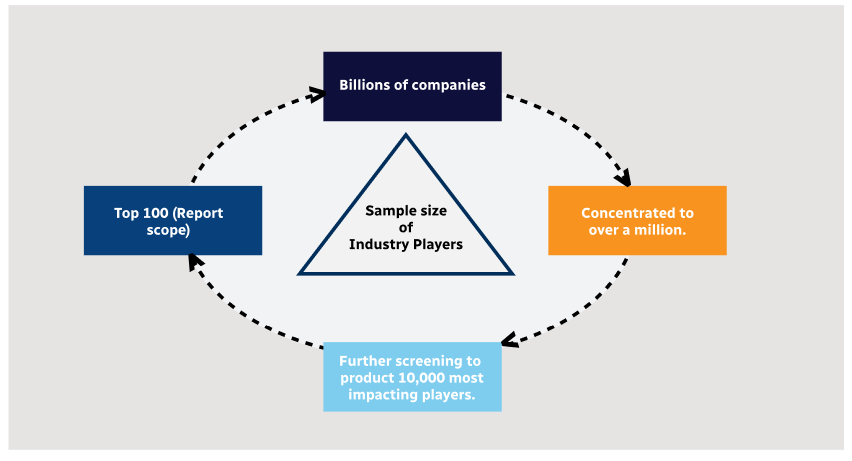
Step 1 - Identification of Relevant Samples Size from Population Database

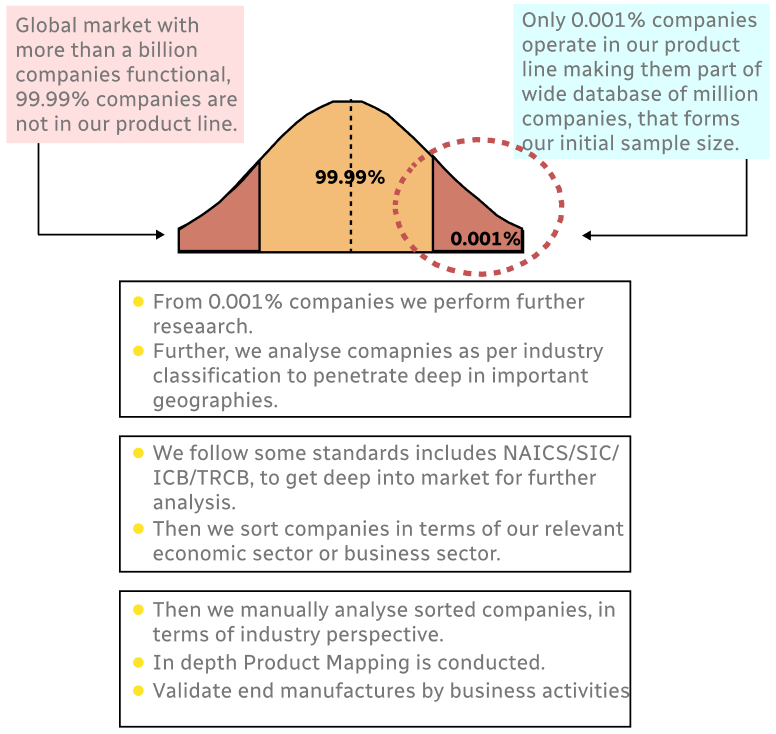
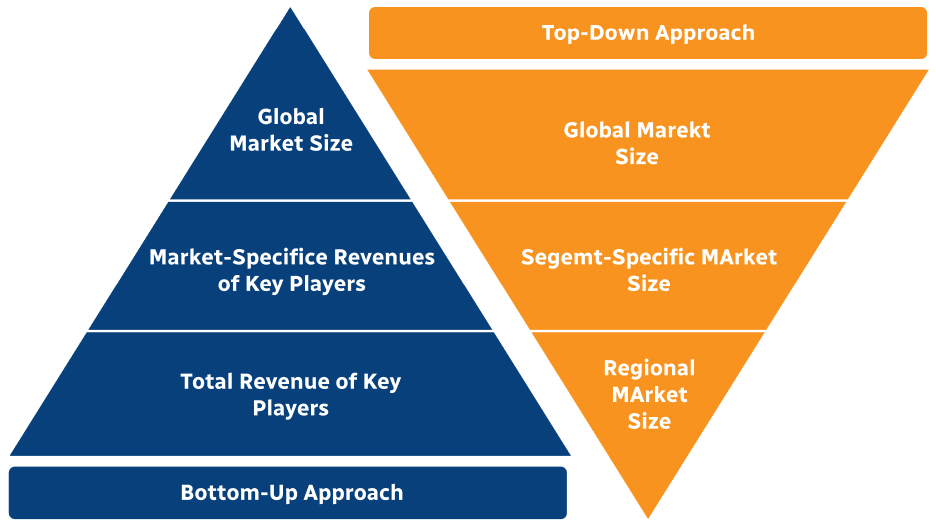
Step 2 - Approaches for Defining Global Market Size (Value, Volume* & Price*)
Note*: In applicable scenarios
Step 3 - Data Sources
Primary Research
- Web Analytics
- Survey Reports
- Research Institute
- Latest Research Reports
- Opinion Leaders
Secondary Research
- Annual Reports
- White Paper
- Latest Press Release
- Industry Association
- Paid Database
- Investor Presentations

Step 4 - Data Triangulation
Involves using different sources of information in order to increase the validity of a study
These sources are likely to be stakeholders in a program - participants, other researchers, program staff, other community members, and so on.
Then we put all data in single framework & apply various statistical tools to find out the dynamic on the market.
During the analysis stage, feedback from the stakeholder groups would be compared to determine areas of agreement as well as areas of divergence