


Key Insights
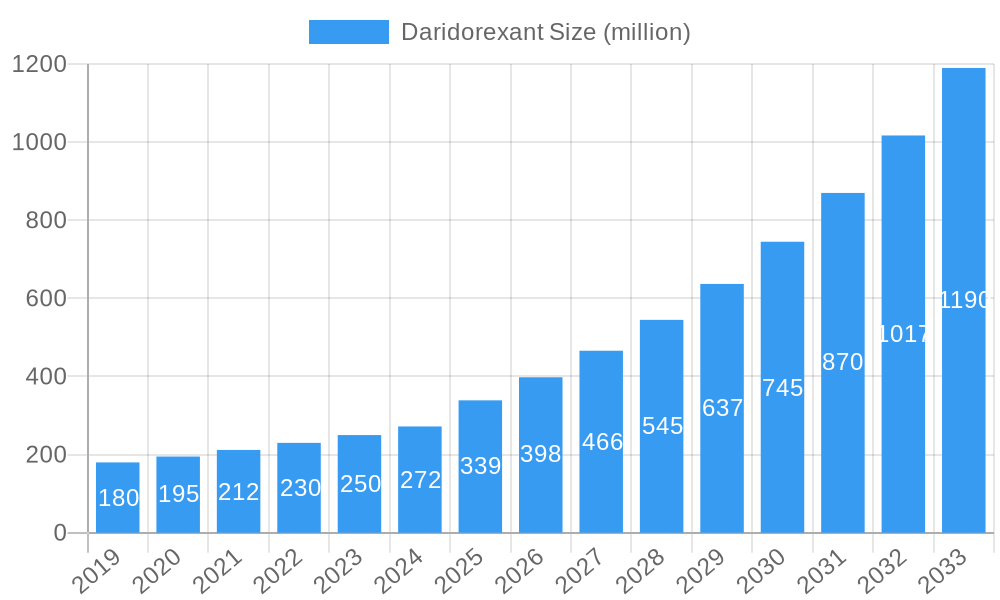
The global Daridorexant market is poised for substantial growth, projected to reach an estimated USD 339 million by 2025, with a remarkable Compound Annual Growth Rate (CAGR) of 17.2% anticipated over the forecast period of 2025-2033. This robust expansion is driven by a confluence of factors, including the increasing prevalence of sleep disorders such as insomnia, a growing awareness of the benefits of dual orexin receptor antagonists (DORAs) like Daridorexant, and advancements in diagnostic tools that facilitate earlier and more accurate identification of patients. The market's dynamism is further fueled by ongoing research and development efforts focused on exploring new therapeutic applications and improving existing formulations, alongside strategic collaborations and partnerships among key industry players to enhance market penetration and accessibility. The growing demand for effective and well-tolerated treatments for chronic insomnia is a primary catalyst for this upward trajectory.
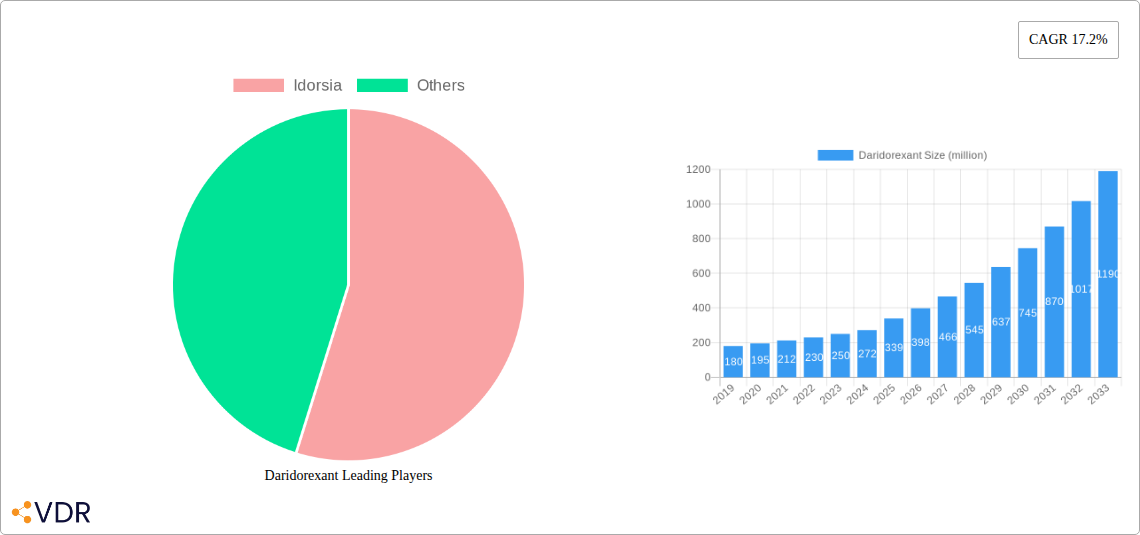
Daridorexant Market Size (In Million)

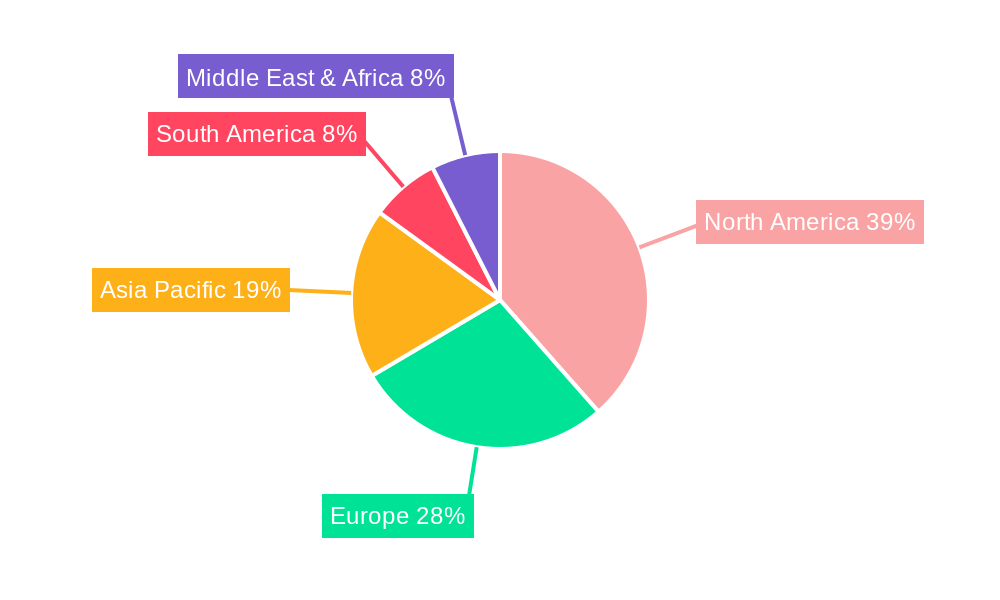
The market is segmented by application into Hospital and Clinic, Retail Pharmacies, and Other. Hospital and Clinic settings are expected to represent a significant share due to the direct administration and physician oversight crucial for DORA therapies. Retail Pharmacies will also witness considerable growth as prescriptions become more widespread. The market is further segmented by type, with 25mg and 50mg dosages being prominent. Geographically, North America is anticipated to lead the market in 2025, driven by high healthcare expenditure, a strong regulatory framework, and a large patient pool experiencing sleep disorders. Europe and Asia Pacific are also expected to exhibit strong growth, propelled by an aging population, increasing disposable incomes, and a rising emphasis on mental health and well-being. The market faces certain restraints, including the potential for side effects and the evolving regulatory landscape for sleep aids. However, the inherent advantages of Daridorexant in addressing the underlying mechanisms of insomnia are expected to outweigh these challenges, ensuring sustained market development.
Daridorexant Company Market Share
Daridorexant Market Research Report: Driving Insomnia Treatment Innovation 2019-2033
This comprehensive Daridorexant market research report provides an in-depth analysis of the global market for this novel dual orexin receptor antagonist. Focusing on insomnia treatment, the report covers market dynamics, growth trends, regional dominance, product landscape, key drivers, barriers, opportunities, growth accelerators, key players, notable milestones, and a future market outlook. With a study period from 2019 to 2033, a base year of 2025, and a forecast period of 2025-2033, this report offers actionable insights for stakeholders in the pharmaceutical industry, including manufacturers, investors, researchers, and healthcare providers. The report leverages high-traffic keywords such as "insomnia treatment," "sleep disorders," "pharmaceutical market," "drug development," "market analysis," and "healthcare industry" to maximize search engine visibility.
Daridorexant Market Dynamics & Structure
The Daridorexant market is characterized by a moderate level of concentration, with Idorsia Pharmaceuticals currently holding a significant position as the primary innovator and manufacturer. Technological innovation is a key driver, fueled by ongoing research into orexin receptor antagonism and its efficacy in treating various forms of insomnia. The regulatory framework plays a crucial role, with stringent approval processes by health authorities like the FDA and EMA shaping market entry and product development. Competitive product substitutes, primarily existing hypnotics and other insomnia medications, present a challenge, necessitating clear differentiation for Daridorexant. End-user demographics are broad, encompassing adult patients experiencing chronic insomnia. Mergers and acquisitions (M&A) are nascent, reflecting the early stage of market development for this specific compound.
- Market Concentration: Currently moderate, dominated by the innovator company.
- Technological Innovation Drivers: Advancements in understanding orexin pathways, novel drug delivery systems, and clinical trial data demonstrating efficacy and safety.
- Regulatory Frameworks: Strict FDA and EMA approval processes, post-market surveillance requirements, and evolving guidelines for sleep disorder treatments.
- Competitive Product Substitutes: Benzodiazepines, Z-drugs (e.g., zolpidem, zopiclone), melatonin agonists, and sedating antidepressants.
- End-User Demographics: Primarily adults suffering from chronic insomnia, with potential expansion to specific subpopulations based on clinical data.
- M&A Trends: Expected to increase as the market matures and partnerships or acquisitions are sought to expand market reach and leverage manufacturing capabilities.
Daridorexant Growth Trends & Insights
The Daridorexant market is poised for significant growth, driven by an increasing global prevalence of insomnia and a growing demand for novel, non-habit-forming sleep aids. Market size is projected to expand considerably from its current nascent stage, with substantial CAGR expected during the forecast period. Adoption rates are anticipated to accelerate as clinical evidence solidifies and healthcare professionals become more familiar with Daridorexant's unique mechanism of action. Technological disruptions, such as personalized medicine approaches to insomnia treatment and advancements in pharmacogenomics, will likely influence market penetration. Consumer behavior shifts, including a greater emphasis on non-pharmacological interventions and a preference for medications with favorable safety profiles, will also contribute to market evolution. The penetration of Daridorexant into the broader sleep disorder market is expected to be robust, addressing unmet needs in chronic insomnia management.
Dominant Regions, Countries, or Segments in Daridorexant
North America, particularly the United States, is anticipated to be a dominant region in the Daridorexant market. This dominance is attributed to a robust healthcare infrastructure, high healthcare expenditure, a large patient population suffering from insomnia, and a well-established pharmaceutical market with rapid adoption of innovative therapies. In terms of application, Retail Pharmacies are expected to drive significant market growth due to direct patient access and widespread prescription fulfillment. The 25mg dosage is likely to see higher initial adoption for its broader applicability and potentially milder side effect profile, though the 50 mg dosage will cater to patients requiring more potent treatment. Economic policies that support pharmaceutical innovation and access to advanced healthcare services further bolster North America's leading position. The country's proactive regulatory environment, while stringent, also facilitates the introduction and uptake of novel therapeutics.
- Leading Region: North America (primarily the United States).
- Dominant Application Segment: Retail Pharmacies.
- Key Drivers for Dominance (North America):
- High prevalence of insomnia.
- Advanced healthcare infrastructure and high per capita healthcare spending.
- Strong pharmaceutical research and development ecosystem.
- Widespread insurance coverage for prescription medications.
- Aggressive marketing and physician education initiatives.
- Dominant Type: 25mg.
- Drivers for Dominant Type (25mg):
- Broader patient applicability.
- Potentially favorable safety and tolerability profile for initial treatment.
- Flexibility in titration and personalized dosing.
Daridorexant Product Landscape
The Daridorexant product landscape is defined by its innovative dual orexin receptor antagonist mechanism, offering a unique approach to treating insomnia by targeting wakefulness pathways. Its primary application lies in addressing chronic insomnia in adults, differentiating it from sedatives that primarily act on inhibitory neurotransmitters. Performance metrics focus on improving sleep onset latency, wakefulness after sleep onset, and overall sleep quality, with a favorable safety profile demonstrated in clinical trials. Unique selling propositions include its non-benzodiazepine and non-z-drug classification, aiming to reduce the risk of dependence and withdrawal symptoms associated with older insomnia medications. Technological advancements are centered on optimizing its pharmacokinetic and pharmacodynamic properties for sustained efficacy throughout the night.
Key Drivers, Barriers & Challenges in Daridorexant
Key Drivers: The primary forces propelling the Daridorexant market include the escalating global burden of insomnia, creating a substantial unmet medical need. Advancements in neuroscience, particularly the understanding of orexin system's role in sleep-wake regulation, have been instrumental. Favorable clinical trial results showcasing efficacy and a potentially improved safety profile compared to existing treatments also act as significant drivers. Furthermore, a growing patient and physician preference for novel therapeutic mechanisms that offer reduced risks of dependence and cognitive impairment further fuels market expansion.
Key Barriers & Challenges: Despite its potential, the Daridorexant market faces several challenges. High drug development costs and lengthy regulatory approval processes pose significant hurdles. The existing competitive landscape, populated by established insomnia medications with widespread familiarity, presents a barrier to rapid market penetration. Concerns regarding long-term efficacy and potential rare side effects, even if infrequent, can influence prescriber confidence. Supply chain complexities and manufacturing scalability to meet global demand will also require careful management. The cost of the new therapy relative to older, generic alternatives could also impact patient access and payer reimbursement, potentially limiting its market share.
Emerging Opportunities in Daridorexant
Emerging opportunities in the Daridorexant market lie in its potential expansion into niche patient populations with specific insomnia subtypes, such as those with comorbid conditions like anxiety or depression, provided further clinical evidence supports its use. Untapped markets in developing regions with a growing middle class and increasing awareness of sleep health present significant growth potential. Innovative applications could include exploring its efficacy in circadian rhythm disorders or jet lag. Evolving consumer preferences for evidence-based, non-addictive sleep solutions align perfectly with Daridorexant's profile, creating an opportunity for targeted patient education and marketing campaigns.
Growth Accelerators in the Daridorexant Industry
Growth accelerators for the Daridorexant industry will be primarily driven by continued positive long-term clinical data confirming its safety and efficacy, reinforcing physician trust and patient adoption. Strategic partnerships with established pharmaceutical distributors and healthcare providers will be crucial for expanding market reach and ensuring efficient distribution. Furthermore, successful market expansion into new geographical territories and the development of value-added services or companion diagnostics will catalyze sustained growth. Education of healthcare professionals about the unique benefits and prescribing guidelines of Daridorexant will also be a significant growth accelerant.
Key Players Shaping the Daridorexant Market
- Idorsia Pharmaceuticals
Notable Milestones in Daridorexant Sector
- 2019: Initiation of pivotal Phase 3 clinical trials for Daridorexant.
- 2021 (Month/Year): Submission of New Drug Application (NDA) to the U.S. Food and Drug Administration (FDA).
- 2022 (Month/Year): Marketing Authorization Application (MAA) submitted to the European Medicines Agency (EMA).
- 2023 (Month/Year): FDA approval of Daridorexant for the treatment of insomnia.
- 2023 (Month/Year): EMA approval of Daridorexant for the treatment of insomnia.
- 2023 (Month/Year): First commercial launch of Daridorexant in key markets.
In-Depth Daridorexant Market Outlook
The future market potential for Daridorexant appears robust, with significant growth accelerators in place. The ongoing shift towards targeted therapies in sleep medicine and the increasing demand for non-addictive insomnia solutions position Daridorexant favorably. Strategic opportunities include expanding its indication to a wider range of insomnia patients, potentially including those with sleep disturbances related to other chronic conditions. Continued investment in post-market surveillance and real-world evidence generation will further solidify its position. The market is expected to see continued evolution with potential for life cycle management strategies and geographic expansion, ensuring its long-term relevance and contribution to improving patient sleep quality globally.
Daridorexant Segmentation
-
1. Application
- 1.1. Hospital and Clinic
- 1.2. Retail Pharmacies
- 1.3. Other
-
2. Type
- 2.1. 25mg
- 2.2. 50 mg
Daridorexant Segmentation By Geography
-
1. North America
- 1.1. United States
- 1.2. Canada
- 1.3. Mexico
-
2. South America
- 2.1. Brazil
- 2.2. Argentina
- 2.3. Rest of South America
-
3. Europe
- 3.1. United Kingdom
- 3.2. Germany
- 3.3. France
- 3.4. Italy
- 3.5. Spain
- 3.6. Russia
- 3.7. Benelux
- 3.8. Nordics
- 3.9. Rest of Europe
-
4. Middle East & Africa
- 4.1. Turkey
- 4.2. Israel
- 4.3. GCC
- 4.4. North Africa
- 4.5. South Africa
- 4.6. Rest of Middle East & Africa
-
5. Asia Pacific
- 5.1. China
- 5.2. India
- 5.3. Japan
- 5.4. South Korea
- 5.5. ASEAN
- 5.6. Oceania
- 5.7. Rest of Asia Pacific
Daridorexant Regional Market Share
Geographic Coverage of Daridorexant
Daridorexant REPORT HIGHLIGHTS
| Aspects | Details |
|---|---|
| Study Period | 2020-2034 |
| Base Year | 2025 |
| Estimated Year | 2026 |
| Forecast Period | 2026-2034 |
| Historical Period | 2020-2025 |
| Growth Rate | CAGR of 17.2% from 2020-2034 |
| Segmentation |
|
Table of Contents
- 1. Introduction
- 1.1. Research Scope
- 1.2. Market Segmentation
- 1.3. Research Methodology
- 1.4. Definitions and Assumptions
- 2. Executive Summary
- 2.1. Introduction
- 3. Market Dynamics
- 3.1. Introduction
- 3.2. Market Drivers
- 3.3. Market Restrains
- 3.4. Market Trends
- 4. Market Factor Analysis
- 4.1. Porters Five Forces
- 4.2. Supply/Value Chain
- 4.3. PESTEL analysis
- 4.4. Market Entropy
- 4.5. Patent/Trademark Analysis
- 5. Global Daridorexant Analysis, Insights and Forecast, 2020-2032
- 5.1. Market Analysis, Insights and Forecast - by Application
- 5.1.1. Hospital and Clinic
- 5.1.2. Retail Pharmacies
- 5.1.3. Other
- 5.2. Market Analysis, Insights and Forecast - by Type
- 5.2.1. 25mg
- 5.2.2. 50 mg
- 5.3. Market Analysis, Insights and Forecast - by Region
- 5.3.1. North America
- 5.3.2. South America
- 5.3.3. Europe
- 5.3.4. Middle East & Africa
- 5.3.5. Asia Pacific
- 5.1. Market Analysis, Insights and Forecast - by Application
- 6. North America Daridorexant Analysis, Insights and Forecast, 2020-2032
- 6.1. Market Analysis, Insights and Forecast - by Application
- 6.1.1. Hospital and Clinic
- 6.1.2. Retail Pharmacies
- 6.1.3. Other
- 6.2. Market Analysis, Insights and Forecast - by Type
- 6.2.1. 25mg
- 6.2.2. 50 mg
- 6.1. Market Analysis, Insights and Forecast - by Application
- 7. South America Daridorexant Analysis, Insights and Forecast, 2020-2032
- 7.1. Market Analysis, Insights and Forecast - by Application
- 7.1.1. Hospital and Clinic
- 7.1.2. Retail Pharmacies
- 7.1.3. Other
- 7.2. Market Analysis, Insights and Forecast - by Type
- 7.2.1. 25mg
- 7.2.2. 50 mg
- 7.1. Market Analysis, Insights and Forecast - by Application
- 8. Europe Daridorexant Analysis, Insights and Forecast, 2020-2032
- 8.1. Market Analysis, Insights and Forecast - by Application
- 8.1.1. Hospital and Clinic
- 8.1.2. Retail Pharmacies
- 8.1.3. Other
- 8.2. Market Analysis, Insights and Forecast - by Type
- 8.2.1. 25mg
- 8.2.2. 50 mg
- 8.1. Market Analysis, Insights and Forecast - by Application
- 9. Middle East & Africa Daridorexant Analysis, Insights and Forecast, 2020-2032
- 9.1. Market Analysis, Insights and Forecast - by Application
- 9.1.1. Hospital and Clinic
- 9.1.2. Retail Pharmacies
- 9.1.3. Other
- 9.2. Market Analysis, Insights and Forecast - by Type
- 9.2.1. 25mg
- 9.2.2. 50 mg
- 9.1. Market Analysis, Insights and Forecast - by Application
- 10. Asia Pacific Daridorexant Analysis, Insights and Forecast, 2020-2032
- 10.1. Market Analysis, Insights and Forecast - by Application
- 10.1.1. Hospital and Clinic
- 10.1.2. Retail Pharmacies
- 10.1.3. Other
- 10.2. Market Analysis, Insights and Forecast - by Type
- 10.2.1. 25mg
- 10.2.2. 50 mg
- 10.1. Market Analysis, Insights and Forecast - by Application
- 11. Competitive Analysis
- 11.1. Global Market Share Analysis 2025
- 11.2. Company Profiles
- 11.2.1. Idorsia
List of Figures
- Figure 1: Global Daridorexant Revenue Breakdown (million, %) by Region 2025 & 2033
- Figure 2: North America Daridorexant Revenue (million), by Application 2025 & 2033
- Figure 3: North America Daridorexant Revenue Share (%), by Application 2025 & 2033
- Figure 4: North America Daridorexant Revenue (million), by Type 2025 & 2033
- Figure 5: North America Daridorexant Revenue Share (%), by Type 2025 & 2033
- Figure 6: North America Daridorexant Revenue (million), by Country 2025 & 2033
- Figure 7: North America Daridorexant Revenue Share (%), by Country 2025 & 2033
- Figure 8: South America Daridorexant Revenue (million), by Application 2025 & 2033
- Figure 9: South America Daridorexant Revenue Share (%), by Application 2025 & 2033
- Figure 10: South America Daridorexant Revenue (million), by Type 2025 & 2033
- Figure 11: South America Daridorexant Revenue Share (%), by Type 2025 & 2033
- Figure 12: South America Daridorexant Revenue (million), by Country 2025 & 2033
- Figure 13: South America Daridorexant Revenue Share (%), by Country 2025 & 2033
- Figure 14: Europe Daridorexant Revenue (million), by Application 2025 & 2033
- Figure 15: Europe Daridorexant Revenue Share (%), by Application 2025 & 2033
- Figure 16: Europe Daridorexant Revenue (million), by Type 2025 & 2033
- Figure 17: Europe Daridorexant Revenue Share (%), by Type 2025 & 2033
- Figure 18: Europe Daridorexant Revenue (million), by Country 2025 & 2033
- Figure 19: Europe Daridorexant Revenue Share (%), by Country 2025 & 2033
- Figure 20: Middle East & Africa Daridorexant Revenue (million), by Application 2025 & 2033
- Figure 21: Middle East & Africa Daridorexant Revenue Share (%), by Application 2025 & 2033
- Figure 22: Middle East & Africa Daridorexant Revenue (million), by Type 2025 & 2033
- Figure 23: Middle East & Africa Daridorexant Revenue Share (%), by Type 2025 & 2033
- Figure 24: Middle East & Africa Daridorexant Revenue (million), by Country 2025 & 2033
- Figure 25: Middle East & Africa Daridorexant Revenue Share (%), by Country 2025 & 2033
- Figure 26: Asia Pacific Daridorexant Revenue (million), by Application 2025 & 2033
- Figure 27: Asia Pacific Daridorexant Revenue Share (%), by Application 2025 & 2033
- Figure 28: Asia Pacific Daridorexant Revenue (million), by Type 2025 & 2033
- Figure 29: Asia Pacific Daridorexant Revenue Share (%), by Type 2025 & 2033
- Figure 30: Asia Pacific Daridorexant Revenue (million), by Country 2025 & 2033
- Figure 31: Asia Pacific Daridorexant Revenue Share (%), by Country 2025 & 2033
List of Tables
- Table 1: Global Daridorexant Revenue million Forecast, by Application 2020 & 2033
- Table 2: Global Daridorexant Revenue million Forecast, by Type 2020 & 2033
- Table 3: Global Daridorexant Revenue million Forecast, by Region 2020 & 2033
- Table 4: Global Daridorexant Revenue million Forecast, by Application 2020 & 2033
- Table 5: Global Daridorexant Revenue million Forecast, by Type 2020 & 2033
- Table 6: Global Daridorexant Revenue million Forecast, by Country 2020 & 2033
- Table 7: United States Daridorexant Revenue (million) Forecast, by Application 2020 & 2033
- Table 8: Canada Daridorexant Revenue (million) Forecast, by Application 2020 & 2033
- Table 9: Mexico Daridorexant Revenue (million) Forecast, by Application 2020 & 2033
- Table 10: Global Daridorexant Revenue million Forecast, by Application 2020 & 2033
- Table 11: Global Daridorexant Revenue million Forecast, by Type 2020 & 2033
- Table 12: Global Daridorexant Revenue million Forecast, by Country 2020 & 2033
- Table 13: Brazil Daridorexant Revenue (million) Forecast, by Application 2020 & 2033
- Table 14: Argentina Daridorexant Revenue (million) Forecast, by Application 2020 & 2033
- Table 15: Rest of South America Daridorexant Revenue (million) Forecast, by Application 2020 & 2033
- Table 16: Global Daridorexant Revenue million Forecast, by Application 2020 & 2033
- Table 17: Global Daridorexant Revenue million Forecast, by Type 2020 & 2033
- Table 18: Global Daridorexant Revenue million Forecast, by Country 2020 & 2033
- Table 19: United Kingdom Daridorexant Revenue (million) Forecast, by Application 2020 & 2033
- Table 20: Germany Daridorexant Revenue (million) Forecast, by Application 2020 & 2033
- Table 21: France Daridorexant Revenue (million) Forecast, by Application 2020 & 2033
- Table 22: Italy Daridorexant Revenue (million) Forecast, by Application 2020 & 2033
- Table 23: Spain Daridorexant Revenue (million) Forecast, by Application 2020 & 2033
- Table 24: Russia Daridorexant Revenue (million) Forecast, by Application 2020 & 2033
- Table 25: Benelux Daridorexant Revenue (million) Forecast, by Application 2020 & 2033
- Table 26: Nordics Daridorexant Revenue (million) Forecast, by Application 2020 & 2033
- Table 27: Rest of Europe Daridorexant Revenue (million) Forecast, by Application 2020 & 2033
- Table 28: Global Daridorexant Revenue million Forecast, by Application 2020 & 2033
- Table 29: Global Daridorexant Revenue million Forecast, by Type 2020 & 2033
- Table 30: Global Daridorexant Revenue million Forecast, by Country 2020 & 2033
- Table 31: Turkey Daridorexant Revenue (million) Forecast, by Application 2020 & 2033
- Table 32: Israel Daridorexant Revenue (million) Forecast, by Application 2020 & 2033
- Table 33: GCC Daridorexant Revenue (million) Forecast, by Application 2020 & 2033
- Table 34: North Africa Daridorexant Revenue (million) Forecast, by Application 2020 & 2033
- Table 35: South Africa Daridorexant Revenue (million) Forecast, by Application 2020 & 2033
- Table 36: Rest of Middle East & Africa Daridorexant Revenue (million) Forecast, by Application 2020 & 2033
- Table 37: Global Daridorexant Revenue million Forecast, by Application 2020 & 2033
- Table 38: Global Daridorexant Revenue million Forecast, by Type 2020 & 2033
- Table 39: Global Daridorexant Revenue million Forecast, by Country 2020 & 2033
- Table 40: China Daridorexant Revenue (million) Forecast, by Application 2020 & 2033
- Table 41: India Daridorexant Revenue (million) Forecast, by Application 2020 & 2033
- Table 42: Japan Daridorexant Revenue (million) Forecast, by Application 2020 & 2033
- Table 43: South Korea Daridorexant Revenue (million) Forecast, by Application 2020 & 2033
- Table 44: ASEAN Daridorexant Revenue (million) Forecast, by Application 2020 & 2033
- Table 45: Oceania Daridorexant Revenue (million) Forecast, by Application 2020 & 2033
- Table 46: Rest of Asia Pacific Daridorexant Revenue (million) Forecast, by Application 2020 & 2033
Frequently Asked Questions
1. What is the projected Compound Annual Growth Rate (CAGR) of the Daridorexant?
The projected CAGR is approximately 17.2%.
2. Which companies are prominent players in the Daridorexant?
Key companies in the market include Idorsia.
3. What are the main segments of the Daridorexant?
The market segments include Application, Type.
4. Can you provide details about the market size?
The market size is estimated to be USD 339 million as of 2022.
5. What are some drivers contributing to market growth?
N/A
6. What are the notable trends driving market growth?
N/A
7. Are there any restraints impacting market growth?
N/A
8. Can you provide examples of recent developments in the market?
N/A
9. What pricing options are available for accessing the report?
Pricing options include single-user, multi-user, and enterprise licenses priced at USD 4900.00, USD 7350.00, and USD 9800.00 respectively.
10. Is the market size provided in terms of value or volume?
The market size is provided in terms of value, measured in million.
11. Are there any specific market keywords associated with the report?
Yes, the market keyword associated with the report is "Daridorexant," which aids in identifying and referencing the specific market segment covered.
12. How do I determine which pricing option suits my needs best?
The pricing options vary based on user requirements and access needs. Individual users may opt for single-user licenses, while businesses requiring broader access may choose multi-user or enterprise licenses for cost-effective access to the report.
13. Are there any additional resources or data provided in the Daridorexant report?
While the report offers comprehensive insights, it's advisable to review the specific contents or supplementary materials provided to ascertain if additional resources or data are available.
14. How can I stay updated on further developments or reports in the Daridorexant?
To stay informed about further developments, trends, and reports in the Daridorexant, consider subscribing to industry newsletters, following relevant companies and organizations, or regularly checking reputable industry news sources and publications.
Methodology
Step 1 - Identification of Relevant Samples Size from Population Database



Step 2 - Approaches for Defining Global Market Size (Value, Volume* & Price*)

Note*: In applicable scenarios
Step 3 - Data Sources
Primary Research
- Web Analytics
- Survey Reports
- Research Institute
- Latest Research Reports
- Opinion Leaders
Secondary Research
- Annual Reports
- White Paper
- Latest Press Release
- Industry Association
- Paid Database
- Investor Presentations

Step 4 - Data Triangulation
Involves using different sources of information in order to increase the validity of a study
These sources are likely to be stakeholders in a program - participants, other researchers, program staff, other community members, and so on.
Then we put all data in single framework & apply various statistical tools to find out the dynamic on the market.
During the analysis stage, feedback from the stakeholder groups would be compared to determine areas of agreement as well as areas of divergence