


Key Insights
The CRISPR gene editing therapy market is experiencing robust growth, projected to reach a substantial USD 662 million by 2025, with a compelling Compound Annual Growth Rate (CAGR) of 5.4% anticipated from 2025 to 2033. This expansion is primarily fueled by the groundbreaking potential of CRISPR technology in addressing previously intractable genetic diseases. Key drivers include increasing investments in research and development, a growing understanding of gene functions and disease pathways, and the expanding pipeline of CRISPR-based therapeutics. The market is witnessing significant advancements in its application across various medical domains, with a strong emphasis on hospital settings and specialized clinics for administering these complex therapies. The development of novel delivery mechanisms, including both external use preparations and injections, is crucial for enhancing therapeutic efficacy and patient accessibility. Furthermore, strategic collaborations between academic institutions and leading biopharmaceutical companies are accelerating the translation of laboratory discoveries into clinical applications, solidifying the market's upward trajectory.
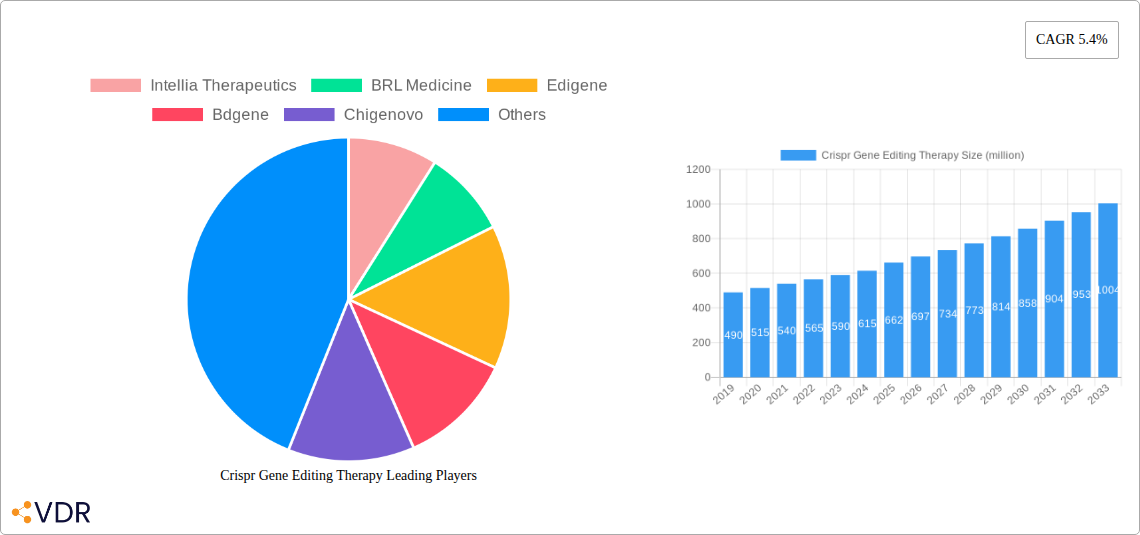
Crispr Gene Editing Therapy Market Size (In Million)

The market's evolution is characterized by several notable trends, including the increasing focus on ex vivo gene editing for hematological disorders and certain cancers, alongside the burgeoning interest in in vivo editing for a broader range of conditions affecting organs like the liver and eyes. While the therapeutic landscape is expanding, certain restraints, such as the high cost of development and treatment, regulatory hurdles, and ethical considerations surrounding germline editing, warrant careful navigation. However, the sustained innovation from key players like Intellia Therapeutics, CRISPR Therapeutics, and Verve Therapeutics, among others, in developing advanced CRISPR systems and novel therapeutic strategies, is poised to overcome these challenges. The geographical distribution of the market indicates a strong presence in North America and Europe, driven by advanced healthcare infrastructure and significant R&D funding. Asia Pacific, particularly China and Japan, is emerging as a significant growth region due to increasing healthcare expenditure and a rising burden of genetic diseases. The ongoing refinement of gene editing precision and safety profiles will be pivotal in unlocking the full therapeutic potential of CRISPR gene editing.
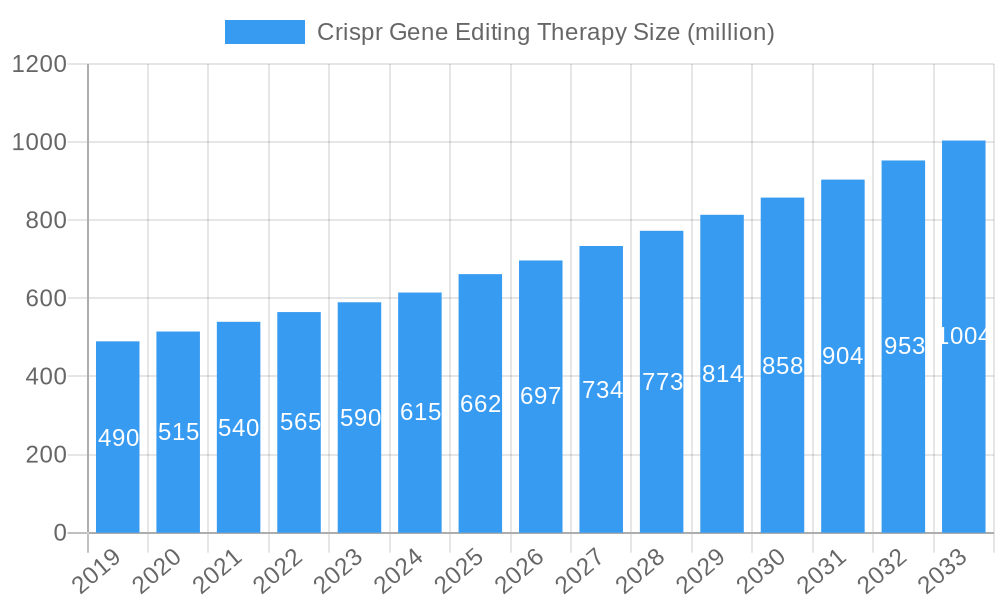
Crispr Gene Editing Therapy Company Market Share
Here is a compelling, SEO-optimized report description for CRISPR Gene Editing Therapy, meticulously crafted to maximize search engine visibility and engage industry professionals, while adhering to all specified requirements:
CRISPR Gene Editing Therapy Market Dynamics & Structure
The global CRISPR gene editing therapy market is characterized by a dynamic interplay of technological innovation, robust regulatory evolution, and increasing investment, shaping its competitive landscape. Market concentration is moderate, with several key players actively pursuing therapeutic advancements, though a degree of consolidation is anticipated as promising therapies move closer to commercialization. Technological innovation drivers are primarily centered on enhancing editing precision, delivery mechanisms, and off-target effect minimization, propelling advancements in the treatment of genetic disorders. Regulatory frameworks, while still maturing, are becoming more defined, offering clearer pathways for therapeutic approval. Competitive product substitutes, while nascent, include other gene editing technologies and traditional treatment modalities, posing a challenge for widespread adoption. End-user demographics are shifting towards patient populations with unmet needs for rare genetic diseases and increasingly sophisticated healthcare providers within hospital and clinic settings. Mergers and acquisitions (M&A) are a significant trend, fueled by the need for integrated capabilities and the acquisition of promising early-stage pipelines. The volume of M&A deals is projected to increase by xx% over the forecast period. Innovation barriers include the high cost of research and development, the complexity of in vivo delivery, and ethical considerations surrounding germline editing.
- Market Concentration: Moderate, with increasing consolidation potential.
- Technological Innovation Drivers: Precision editing, delivery systems, off-target reduction.
- Regulatory Frameworks: Evolving, with clearer approval pathways.
- Competitive Product Substitutes: Other gene editing platforms, conventional therapies.
- End-User Demographics: Patients with rare genetic diseases, advanced healthcare facilities.
- M&A Trends: Increasing deal volume driven by pipeline acquisition and capability integration.
- Innovation Barriers: R&D costs, delivery challenges, ethical concerns.
CRISPR Gene Editing Therapy Growth Trends & Insights
The CRISPR gene editing therapy market is poised for exponential growth, projected to expand from an estimated $5,500 million in the Base Year 2025 to $25,000 million by 2033, exhibiting a Compound Annual Growth Rate (CAGR) of approximately 20.5% during the Forecast Period 2025–2033. This remarkable growth is underpinned by a confluence of factors, including groundbreaking scientific discoveries, a surge in clinical trial advancements, and a growing understanding of the therapeutic potential of gene editing for a wide spectrum of diseases. The Historical Period 2019–2024 witnessed foundational research and early-stage development, laying the groundwork for the current acceleration. Market penetration is expected to deepen as more therapies gain regulatory approval and demonstrate robust clinical efficacy. Technological disruptions are continuously emerging, with advancements in prime editing, base editing, and novel delivery systems promising greater specificity and reduced immunogenicity. Consumer behavior shifts are also playing a crucial role, with increasing patient advocacy and a growing demand for personalized and curative treatment options for previously intractable genetic conditions. The global market size has seen a steady increase, moving from $1,200 million in 2019 to an estimated $5,500 million by the Base Year 2025. This trajectory reflects a maturing understanding of CRISPR's potential and the successful translation of laboratory breakthroughs into tangible therapeutic prospects. The ongoing advancements in in vivo and ex vivo gene editing techniques are further broadening the addressable patient populations and expanding the therapeutic applications, from monogenic diseases to more complex conditions like cancer and infectious diseases. The increasing focus on rare genetic disorders, where conventional treatments often fall short, is a significant driver of adoption. Furthermore, the growing investment from venture capital and pharmaceutical giants signals strong confidence in the long-term viability and transformative impact of CRISPR gene editing therapies on global healthcare. The development of safer and more efficient delivery systems, such as lipid nanoparticles and adeno-associated viruses (AAVs), is crucial for overcoming biological barriers and achieving therapeutic targets effectively, further accelerating market adoption.
Dominant Regions, Countries, or Segments in Crispr Gene Editing Therapy
North America, particularly the United States, is anticipated to be the dominant region in the CRISPR gene editing therapy market, driven by its robust R&D infrastructure, significant venture capital investments, and a proactive regulatory environment conducive to scientific innovation. The region's dominance stems from a combination of factors, including the presence of leading research institutions and biopharmaceutical companies, a high prevalence of genetic diseases necessitating advanced therapeutic solutions, and strong government funding for scientific research. In 2025, North America is projected to hold an estimated 45% market share. The Application: Hospital segment is expected to lead the market growth within this region, owing to the complex nature of CRISPR therapies that often require specialized facilities and expert medical teams for administration and monitoring. Hospitals are equipped to manage the intricate treatment protocols and patient follow-up required for these advanced therapies. The market size for hospital applications in North America is estimated at $2,500 million in 2025.
Key drivers for North America's dominance include:
- Advanced R&D Ecosystem: Numerous leading universities and research centers are at the forefront of CRISPR technology development.
- Venture Capital Investment: Significant influx of capital fuels early-stage research and clinical development.
- Favorable Regulatory Landscape: The U.S. Food and Drug Administration (FDA) has established pathways for gene therapy approvals, fostering innovation.
- High Disease Burden: A significant patient population suffering from rare genetic disorders drives demand for novel treatments.
- Technological Infrastructure: Well-established healthcare infrastructure supports the adoption of advanced medical technologies.
Within the Type segment, Injection is predicted to be the most significant modality, given the systemic or localized delivery requirements for most CRISPR-based therapeutics aimed at genetic disorders. The market for injection-based CRISPR therapies in North America is estimated at $2,200 million in 2025.
- Injection as Primary Delivery: Essential for systemic or targeted therapeutic delivery.
- Ex Vivo vs. In Vivo: Both approaches are prevalent, with injections being key for in vivo administration.
- Technological Advancements in Delivery: Continuous innovation in viral and non-viral vectors enhances efficacy and safety.
Europe is expected to be the second-largest market, exhibiting a steady growth trajectory driven by increasing R&D investments and supportive government initiatives. Asia Pacific, particularly China and Japan, is emerging as a significant growth region due to expanding healthcare expenditure, a growing focus on biotechnology, and a burgeoning patient population. The market share for Europe is projected at 30% in 2025, with Asia Pacific at 20%.
Crispr Gene Editing Therapy Product Landscape
The CRISPR gene editing therapy product landscape is defined by groundbreaking innovations targeting a spectrum of genetic diseases. Companies are developing novel CRISPR-Cas9 and CRISPR-Cas12 systems with enhanced precision and reduced off-target effects. Therapeutic applications span rare monogenic disorders such as sickle cell disease and beta-thalassemia, with promising pipeline candidates for cystic fibrosis, Huntington's disease, and various cancers. Performance metrics are increasingly focused on durable therapeutic effects, patient quality of life improvements, and favorable safety profiles. Unique selling propositions include the potential for one-time curative treatments, addressing the root cause of genetic ailments. Technological advancements are centered on improving delivery vectors (e.g., AAVs, LNPs) for efficient and targeted gene delivery, and exploring alternative CRISPR systems for broader editing capabilities.
Key Drivers, Barriers & Challenges in Crispr Gene Editing Therapy
Key Drivers:
- Unmet Medical Needs: The inherent potential of CRISPR gene editing to address previously untreatable genetic disorders is the primary growth catalyst.
- Technological Advancements: Continuous improvements in editing efficiency, specificity, and delivery systems are expanding therapeutic possibilities.
- Increasing R&D Investment: Significant funding from both public and private sectors accelerates research and clinical development.
- Favorable Regulatory Initiatives: Evolving regulatory pathways are providing clearer routes for therapeutic approval.
- Growing Patient Advocacy: Increased awareness and demand for advanced therapies are driving market adoption.
Key Barriers and Challenges:
- High Development and Manufacturing Costs: The complex nature of gene editing therapies results in substantial R&D and production expenses, impacting accessibility. The estimated cost per treatment can range from $500,000 to over $1,000,000.
- Delivery System Efficacy and Safety: Efficient and targeted delivery of gene editing components to specific cells remains a significant hurdle, with concerns regarding immunogenicity and off-target effects.
- Regulatory Hurdles and Ethical Considerations: Navigating evolving regulatory frameworks and addressing ethical debates surrounding gene editing, especially germline editing, pose challenges.
- Scalability of Manufacturing: Producing these complex biologics at a commercial scale presents significant manufacturing challenges.
- Reimbursement Policies: Securing adequate reimbursement from healthcare payers for these novel and high-cost therapies is crucial for market penetration.
Emerging Opportunities in Crispr Gene Editing Therapy
Emerging opportunities in the CRISPR gene editing therapy sector are vast and multifaceted. The expansion of CRISPR applications beyond rare monogenic diseases to treat more prevalent conditions like cardiovascular diseases, neurodegenerative disorders (e.g., Alzheimer's, Parkinson's), and certain types of cancer presents a significant untapped market. Advancements in in vivo editing technologies are opening doors for non-invasive or minimally invasive treatment strategies, potentially reducing treatment complexity and cost. Furthermore, the development of personalized CRISPR therapies tailored to individual patient genetic profiles holds immense promise for precision medicine. The exploration of CRISPR for infectious disease treatment, such as HIV and hepatitis B, is another burgeoning area with substantial global health implications. The integration of AI and machine learning in identifying novel gene targets and optimizing editing strategies will also be a key growth accelerator.
Growth Accelerators in the Crispr Gene Editing Therapy Industry
Several key catalysts are accelerating the growth of the CRISPR gene editing therapy industry. Technological breakthroughs, such as the development of ultra-precise editing tools and improved delivery methods, are continuously expanding the therapeutic potential and safety profile of these treatments. Strategic partnerships between academic institutions, biotechnology startups, and large pharmaceutical companies are crucial for de-risking development, leveraging specialized expertise, and accelerating clinical translation. Market expansion strategies, including collaborations for global regulatory approvals and the establishment of manufacturing partnerships, are vital for increasing patient access. The increasing number of positive clinical trial outcomes and the subsequent regulatory approvals for groundbreaking therapies will further fuel investor confidence and market adoption. The ongoing refinement of ex vivo editing for cell-based therapies, coupled with advancements in in vivo delivery, are both driving significant growth.
Key Players Shaping the Crispr Gene Editing Therapy Market
- Intellia Therapeutics
- BRL Medicine
- Edigene
- Bdgene
- Chigenovo
- Reforgene Medicine
- Verve Therapeutics
- Beam Therapeutics
- CRISPR Therapeutics
- Branca Bunús
- Excision BioTherapeutics
Notable Milestones in Crispr Gene Editing Therapy Sector
- 2023 (Q4): CRISPR Therapeutics' Casgevy (exagamglogene autotemcel) receives regulatory approval in the UK for sickle cell disease and transfusion-dependent beta-thalassemia, marking a historic milestone as the first CRISPR-based therapy approved globally.
- 2023 (Q3): Intellia Therapeutics announces promising interim results from its Phase 1 study of NTLA-2001 for transthyretin amyloidosis, demonstrating sustained efficacy and safety.
- 2022 (Q4): Verve Therapeutics presents positive pre-clinical data for its lead candidate VERVE-101, targeting heterozygous familial hypercholesterolemia, showcasing in vivo gene editing for cardiovascular disease.
- 2022 (Q2): Beam Therapeutics advances its lead candidates for sickle cell disease and beta-thalassemia into clinical trials, utilizing base editing technology.
- 2021 (Q1): Editas Medicine receives FDA Fast Track designation for its EDIT-101 program for Leber congenital amaurosis, an inherited eye disease.
- 2020 (Q4): CRISPR Therapeutics and Vertex Pharmaceuticals expand their collaboration to develop novel CRISPR-based therapies for additional diseases.
- 2019 (Q3): Early-stage clinical trials for various CRISPR therapies targeting rare genetic diseases commence, demonstrating the transition from laboratory research to human application.
In-Depth Crispr Gene Editing Therapy Market Outlook
The future market outlook for CRISPR gene editing therapy is exceptionally robust, driven by ongoing scientific innovation and increasing therapeutic successes. Growth accelerators such as the expansion into larger patient populations for chronic diseases, the development of more sophisticated and targeted delivery systems, and the establishment of streamlined regulatory pathways will continue to fuel market expansion. Strategic opportunities lie in developing combination therapies that leverage CRISPR's curative potential with existing treatment modalities and in forging strategic alliances to navigate the complex global market entry. The sustained investment from venture capital and major pharmaceutical players underscores the immense confidence in CRISPR's transformative power to revolutionize healthcare and create a new paradigm for disease treatment. The projected market value of $25,000 million by 2033 highlights the significant economic and societal impact of this cutting-edge technology.
Crispr Gene Editing Therapy Segmentation
-
1. Application
- 1.1. Hospital
- 1.2. Clinic
- 1.3. Others
-
2. Type
- 2.1. External Use Preparations
- 2.2. Injection
- 2.3. Others
Crispr Gene Editing Therapy Segmentation By Geography
-
1. North America
- 1.1. United States
- 1.2. Canada
- 1.3. Mexico
-
2. South America
- 2.1. Brazil
- 2.2. Argentina
- 2.3. Rest of South America
-
3. Europe
- 3.1. United Kingdom
- 3.2. Germany
- 3.3. France
- 3.4. Italy
- 3.5. Spain
- 3.6. Russia
- 3.7. Benelux
- 3.8. Nordics
- 3.9. Rest of Europe
-
4. Middle East & Africa
- 4.1. Turkey
- 4.2. Israel
- 4.3. GCC
- 4.4. North Africa
- 4.5. South Africa
- 4.6. Rest of Middle East & Africa
-
5. Asia Pacific
- 5.1. China
- 5.2. India
- 5.3. Japan
- 5.4. South Korea
- 5.5. ASEAN
- 5.6. Oceania
- 5.7. Rest of Asia Pacific
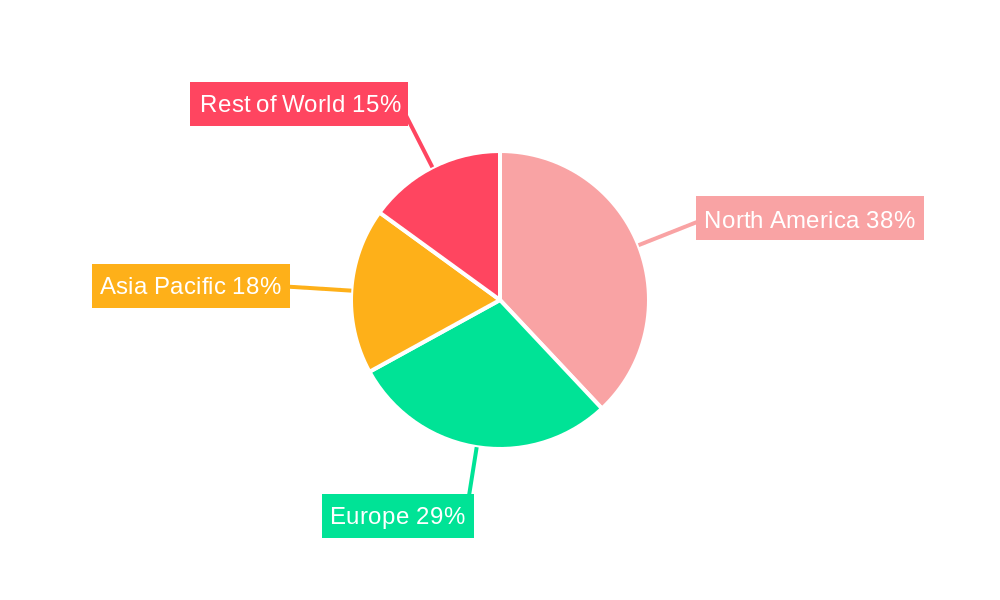
Crispr Gene Editing Therapy Regional Market Share
Geographic Coverage of Crispr Gene Editing Therapy
Crispr Gene Editing Therapy REPORT HIGHLIGHTS
| Aspects | Details |
|---|---|
| Study Period | 2020-2034 |
| Base Year | 2025 |
| Estimated Year | 2026 |
| Forecast Period | 2026-2034 |
| Historical Period | 2020-2025 |
| Growth Rate | CAGR of 5.4% from 2020-2034 |
| Segmentation |
|
Table of Contents
- 1. Introduction
- 1.1. Research Scope
- 1.2. Market Segmentation
- 1.3. Research Methodology
- 1.4. Definitions and Assumptions
- 2. Executive Summary
- 2.1. Introduction
- 3. Market Dynamics
- 3.1. Introduction
- 3.2. Market Drivers
- 3.3. Market Restrains
- 3.4. Market Trends
- 4. Market Factor Analysis
- 4.1. Porters Five Forces
- 4.2. Supply/Value Chain
- 4.3. PESTEL analysis
- 4.4. Market Entropy
- 4.5. Patent/Trademark Analysis
- 5. Global Crispr Gene Editing Therapy Analysis, Insights and Forecast, 2020-2032
- 5.1. Market Analysis, Insights and Forecast - by Application
- 5.1.1. Hospital
- 5.1.2. Clinic
- 5.1.3. Others
- 5.2. Market Analysis, Insights and Forecast - by Type
- 5.2.1. External Use Preparations
- 5.2.2. Injection
- 5.2.3. Others
- 5.3. Market Analysis, Insights and Forecast - by Region
- 5.3.1. North America
- 5.3.2. South America
- 5.3.3. Europe
- 5.3.4. Middle East & Africa
- 5.3.5. Asia Pacific
- 5.1. Market Analysis, Insights and Forecast - by Application
- 6. North America Crispr Gene Editing Therapy Analysis, Insights and Forecast, 2020-2032
- 6.1. Market Analysis, Insights and Forecast - by Application
- 6.1.1. Hospital
- 6.1.2. Clinic
- 6.1.3. Others
- 6.2. Market Analysis, Insights and Forecast - by Type
- 6.2.1. External Use Preparations
- 6.2.2. Injection
- 6.2.3. Others
- 6.1. Market Analysis, Insights and Forecast - by Application
- 7. South America Crispr Gene Editing Therapy Analysis, Insights and Forecast, 2020-2032
- 7.1. Market Analysis, Insights and Forecast - by Application
- 7.1.1. Hospital
- 7.1.2. Clinic
- 7.1.3. Others
- 7.2. Market Analysis, Insights and Forecast - by Type
- 7.2.1. External Use Preparations
- 7.2.2. Injection
- 7.2.3. Others
- 7.1. Market Analysis, Insights and Forecast - by Application
- 8. Europe Crispr Gene Editing Therapy Analysis, Insights and Forecast, 2020-2032
- 8.1. Market Analysis, Insights and Forecast - by Application
- 8.1.1. Hospital
- 8.1.2. Clinic
- 8.1.3. Others
- 8.2. Market Analysis, Insights and Forecast - by Type
- 8.2.1. External Use Preparations
- 8.2.2. Injection
- 8.2.3. Others
- 8.1. Market Analysis, Insights and Forecast - by Application
- 9. Middle East & Africa Crispr Gene Editing Therapy Analysis, Insights and Forecast, 2020-2032
- 9.1. Market Analysis, Insights and Forecast - by Application
- 9.1.1. Hospital
- 9.1.2. Clinic
- 9.1.3. Others
- 9.2. Market Analysis, Insights and Forecast - by Type
- 9.2.1. External Use Preparations
- 9.2.2. Injection
- 9.2.3. Others
- 9.1. Market Analysis, Insights and Forecast - by Application
- 10. Asia Pacific Crispr Gene Editing Therapy Analysis, Insights and Forecast, 2020-2032
- 10.1. Market Analysis, Insights and Forecast - by Application
- 10.1.1. Hospital
- 10.1.2. Clinic
- 10.1.3. Others
- 10.2. Market Analysis, Insights and Forecast - by Type
- 10.2.1. External Use Preparations
- 10.2.2. Injection
- 10.2.3. Others
- 10.1. Market Analysis, Insights and Forecast - by Application
- 11. Competitive Analysis
- 11.1. Global Market Share Analysis 2025
- 11.2. Company Profiles
- 11.2.1 Intellia Therapeutics
- 11.2.1.1. Overview
- 11.2.1.2. Products
- 11.2.1.3. SWOT Analysis
- 11.2.1.4. Recent Developments
- 11.2.1.5. Financials (Based on Availability)
- 11.2.2 BRL Medicine
- 11.2.2.1. Overview
- 11.2.2.2. Products
- 11.2.2.3. SWOT Analysis
- 11.2.2.4. Recent Developments
- 11.2.2.5. Financials (Based on Availability)
- 11.2.3 Edigene
- 11.2.3.1. Overview
- 11.2.3.2. Products
- 11.2.3.3. SWOT Analysis
- 11.2.3.4. Recent Developments
- 11.2.3.5. Financials (Based on Availability)
- 11.2.4 Bdgene
- 11.2.4.1. Overview
- 11.2.4.2. Products
- 11.2.4.3. SWOT Analysis
- 11.2.4.4. Recent Developments
- 11.2.4.5. Financials (Based on Availability)
- 11.2.5 Chigenovo
- 11.2.5.1. Overview
- 11.2.5.2. Products
- 11.2.5.3. SWOT Analysis
- 11.2.5.4. Recent Developments
- 11.2.5.5. Financials (Based on Availability)
- 11.2.6 Reforgene Medicine
- 11.2.6.1. Overview
- 11.2.6.2. Products
- 11.2.6.3. SWOT Analysis
- 11.2.6.4. Recent Developments
- 11.2.6.5. Financials (Based on Availability)
- 11.2.7 Verve Therapeutics
- 11.2.7.1. Overview
- 11.2.7.2. Products
- 11.2.7.3. SWOT Analysis
- 11.2.7.4. Recent Developments
- 11.2.7.5. Financials (Based on Availability)
- 11.2.8 Beam Therapeutics
- 11.2.8.1. Overview
- 11.2.8.2. Products
- 11.2.8.3. SWOT Analysis
- 11.2.8.4. Recent Developments
- 11.2.8.5. Financials (Based on Availability)
- 11.2.9 CRISPR Therapeutics
- 11.2.9.1. Overview
- 11.2.9.2. Products
- 11.2.9.3. SWOT Analysis
- 11.2.9.4. Recent Developments
- 11.2.9.5. Financials (Based on Availability)
- 11.2.10 Branca Bunús
- 11.2.10.1. Overview
- 11.2.10.2. Products
- 11.2.10.3. SWOT Analysis
- 11.2.10.4. Recent Developments
- 11.2.10.5. Financials (Based on Availability)
- 11.2.11 Excision BioTherapeutics
- 11.2.11.1. Overview
- 11.2.11.2. Products
- 11.2.11.3. SWOT Analysis
- 11.2.11.4. Recent Developments
- 11.2.11.5. Financials (Based on Availability)
- 11.2.1 Intellia Therapeutics
List of Figures
- Figure 1: Global Crispr Gene Editing Therapy Revenue Breakdown (million, %) by Region 2025 & 2033
- Figure 2: North America Crispr Gene Editing Therapy Revenue (million), by Application 2025 & 2033
- Figure 3: North America Crispr Gene Editing Therapy Revenue Share (%), by Application 2025 & 2033
- Figure 4: North America Crispr Gene Editing Therapy Revenue (million), by Type 2025 & 2033
- Figure 5: North America Crispr Gene Editing Therapy Revenue Share (%), by Type 2025 & 2033
- Figure 6: North America Crispr Gene Editing Therapy Revenue (million), by Country 2025 & 2033
- Figure 7: North America Crispr Gene Editing Therapy Revenue Share (%), by Country 2025 & 2033
- Figure 8: South America Crispr Gene Editing Therapy Revenue (million), by Application 2025 & 2033
- Figure 9: South America Crispr Gene Editing Therapy Revenue Share (%), by Application 2025 & 2033
- Figure 10: South America Crispr Gene Editing Therapy Revenue (million), by Type 2025 & 2033
- Figure 11: South America Crispr Gene Editing Therapy Revenue Share (%), by Type 2025 & 2033
- Figure 12: South America Crispr Gene Editing Therapy Revenue (million), by Country 2025 & 2033
- Figure 13: South America Crispr Gene Editing Therapy Revenue Share (%), by Country 2025 & 2033
- Figure 14: Europe Crispr Gene Editing Therapy Revenue (million), by Application 2025 & 2033
- Figure 15: Europe Crispr Gene Editing Therapy Revenue Share (%), by Application 2025 & 2033
- Figure 16: Europe Crispr Gene Editing Therapy Revenue (million), by Type 2025 & 2033
- Figure 17: Europe Crispr Gene Editing Therapy Revenue Share (%), by Type 2025 & 2033
- Figure 18: Europe Crispr Gene Editing Therapy Revenue (million), by Country 2025 & 2033
- Figure 19: Europe Crispr Gene Editing Therapy Revenue Share (%), by Country 2025 & 2033
- Figure 20: Middle East & Africa Crispr Gene Editing Therapy Revenue (million), by Application 2025 & 2033
- Figure 21: Middle East & Africa Crispr Gene Editing Therapy Revenue Share (%), by Application 2025 & 2033
- Figure 22: Middle East & Africa Crispr Gene Editing Therapy Revenue (million), by Type 2025 & 2033
- Figure 23: Middle East & Africa Crispr Gene Editing Therapy Revenue Share (%), by Type 2025 & 2033
- Figure 24: Middle East & Africa Crispr Gene Editing Therapy Revenue (million), by Country 2025 & 2033
- Figure 25: Middle East & Africa Crispr Gene Editing Therapy Revenue Share (%), by Country 2025 & 2033
- Figure 26: Asia Pacific Crispr Gene Editing Therapy Revenue (million), by Application 2025 & 2033
- Figure 27: Asia Pacific Crispr Gene Editing Therapy Revenue Share (%), by Application 2025 & 2033
- Figure 28: Asia Pacific Crispr Gene Editing Therapy Revenue (million), by Type 2025 & 2033
- Figure 29: Asia Pacific Crispr Gene Editing Therapy Revenue Share (%), by Type 2025 & 2033
- Figure 30: Asia Pacific Crispr Gene Editing Therapy Revenue (million), by Country 2025 & 2033
- Figure 31: Asia Pacific Crispr Gene Editing Therapy Revenue Share (%), by Country 2025 & 2033
List of Tables
- Table 1: Global Crispr Gene Editing Therapy Revenue million Forecast, by Application 2020 & 2033
- Table 2: Global Crispr Gene Editing Therapy Revenue million Forecast, by Type 2020 & 2033
- Table 3: Global Crispr Gene Editing Therapy Revenue million Forecast, by Region 2020 & 2033
- Table 4: Global Crispr Gene Editing Therapy Revenue million Forecast, by Application 2020 & 2033
- Table 5: Global Crispr Gene Editing Therapy Revenue million Forecast, by Type 2020 & 2033
- Table 6: Global Crispr Gene Editing Therapy Revenue million Forecast, by Country 2020 & 2033
- Table 7: United States Crispr Gene Editing Therapy Revenue (million) Forecast, by Application 2020 & 2033
- Table 8: Canada Crispr Gene Editing Therapy Revenue (million) Forecast, by Application 2020 & 2033
- Table 9: Mexico Crispr Gene Editing Therapy Revenue (million) Forecast, by Application 2020 & 2033
- Table 10: Global Crispr Gene Editing Therapy Revenue million Forecast, by Application 2020 & 2033
- Table 11: Global Crispr Gene Editing Therapy Revenue million Forecast, by Type 2020 & 2033
- Table 12: Global Crispr Gene Editing Therapy Revenue million Forecast, by Country 2020 & 2033
- Table 13: Brazil Crispr Gene Editing Therapy Revenue (million) Forecast, by Application 2020 & 2033
- Table 14: Argentina Crispr Gene Editing Therapy Revenue (million) Forecast, by Application 2020 & 2033
- Table 15: Rest of South America Crispr Gene Editing Therapy Revenue (million) Forecast, by Application 2020 & 2033
- Table 16: Global Crispr Gene Editing Therapy Revenue million Forecast, by Application 2020 & 2033
- Table 17: Global Crispr Gene Editing Therapy Revenue million Forecast, by Type 2020 & 2033
- Table 18: Global Crispr Gene Editing Therapy Revenue million Forecast, by Country 2020 & 2033
- Table 19: United Kingdom Crispr Gene Editing Therapy Revenue (million) Forecast, by Application 2020 & 2033
- Table 20: Germany Crispr Gene Editing Therapy Revenue (million) Forecast, by Application 2020 & 2033
- Table 21: France Crispr Gene Editing Therapy Revenue (million) Forecast, by Application 2020 & 2033
- Table 22: Italy Crispr Gene Editing Therapy Revenue (million) Forecast, by Application 2020 & 2033
- Table 23: Spain Crispr Gene Editing Therapy Revenue (million) Forecast, by Application 2020 & 2033
- Table 24: Russia Crispr Gene Editing Therapy Revenue (million) Forecast, by Application 2020 & 2033
- Table 25: Benelux Crispr Gene Editing Therapy Revenue (million) Forecast, by Application 2020 & 2033
- Table 26: Nordics Crispr Gene Editing Therapy Revenue (million) Forecast, by Application 2020 & 2033
- Table 27: Rest of Europe Crispr Gene Editing Therapy Revenue (million) Forecast, by Application 2020 & 2033
- Table 28: Global Crispr Gene Editing Therapy Revenue million Forecast, by Application 2020 & 2033
- Table 29: Global Crispr Gene Editing Therapy Revenue million Forecast, by Type 2020 & 2033
- Table 30: Global Crispr Gene Editing Therapy Revenue million Forecast, by Country 2020 & 2033
- Table 31: Turkey Crispr Gene Editing Therapy Revenue (million) Forecast, by Application 2020 & 2033
- Table 32: Israel Crispr Gene Editing Therapy Revenue (million) Forecast, by Application 2020 & 2033
- Table 33: GCC Crispr Gene Editing Therapy Revenue (million) Forecast, by Application 2020 & 2033
- Table 34: North Africa Crispr Gene Editing Therapy Revenue (million) Forecast, by Application 2020 & 2033
- Table 35: South Africa Crispr Gene Editing Therapy Revenue (million) Forecast, by Application 2020 & 2033
- Table 36: Rest of Middle East & Africa Crispr Gene Editing Therapy Revenue (million) Forecast, by Application 2020 & 2033
- Table 37: Global Crispr Gene Editing Therapy Revenue million Forecast, by Application 2020 & 2033
- Table 38: Global Crispr Gene Editing Therapy Revenue million Forecast, by Type 2020 & 2033
- Table 39: Global Crispr Gene Editing Therapy Revenue million Forecast, by Country 2020 & 2033
- Table 40: China Crispr Gene Editing Therapy Revenue (million) Forecast, by Application 2020 & 2033
- Table 41: India Crispr Gene Editing Therapy Revenue (million) Forecast, by Application 2020 & 2033
- Table 42: Japan Crispr Gene Editing Therapy Revenue (million) Forecast, by Application 2020 & 2033
- Table 43: South Korea Crispr Gene Editing Therapy Revenue (million) Forecast, by Application 2020 & 2033
- Table 44: ASEAN Crispr Gene Editing Therapy Revenue (million) Forecast, by Application 2020 & 2033
- Table 45: Oceania Crispr Gene Editing Therapy Revenue (million) Forecast, by Application 2020 & 2033
- Table 46: Rest of Asia Pacific Crispr Gene Editing Therapy Revenue (million) Forecast, by Application 2020 & 2033
Frequently Asked Questions
1. What is the projected Compound Annual Growth Rate (CAGR) of the Crispr Gene Editing Therapy?
The projected CAGR is approximately 5.4%.
2. Which companies are prominent players in the Crispr Gene Editing Therapy?
Key companies in the market include Intellia Therapeutics, BRL Medicine, Edigene, Bdgene, Chigenovo, Reforgene Medicine, Verve Therapeutics, Beam Therapeutics, CRISPR Therapeutics, Branca Bunús, Excision BioTherapeutics.
3. What are the main segments of the Crispr Gene Editing Therapy?
The market segments include Application, Type.
4. Can you provide details about the market size?
The market size is estimated to be USD 662 million as of 2022.
5. What are some drivers contributing to market growth?
N/A
6. What are the notable trends driving market growth?
N/A
7. Are there any restraints impacting market growth?
N/A
8. Can you provide examples of recent developments in the market?
N/A
9. What pricing options are available for accessing the report?
Pricing options include single-user, multi-user, and enterprise licenses priced at USD 4250.00, USD 6375.00, and USD 8500.00 respectively.
10. Is the market size provided in terms of value or volume?
The market size is provided in terms of value, measured in million.
11. Are there any specific market keywords associated with the report?
Yes, the market keyword associated with the report is "Crispr Gene Editing Therapy," which aids in identifying and referencing the specific market segment covered.
12. How do I determine which pricing option suits my needs best?
The pricing options vary based on user requirements and access needs. Individual users may opt for single-user licenses, while businesses requiring broader access may choose multi-user or enterprise licenses for cost-effective access to the report.
13. Are there any additional resources or data provided in the Crispr Gene Editing Therapy report?
While the report offers comprehensive insights, it's advisable to review the specific contents or supplementary materials provided to ascertain if additional resources or data are available.
14. How can I stay updated on further developments or reports in the Crispr Gene Editing Therapy?
To stay informed about further developments, trends, and reports in the Crispr Gene Editing Therapy, consider subscribing to industry newsletters, following relevant companies and organizations, or regularly checking reputable industry news sources and publications.
Methodology
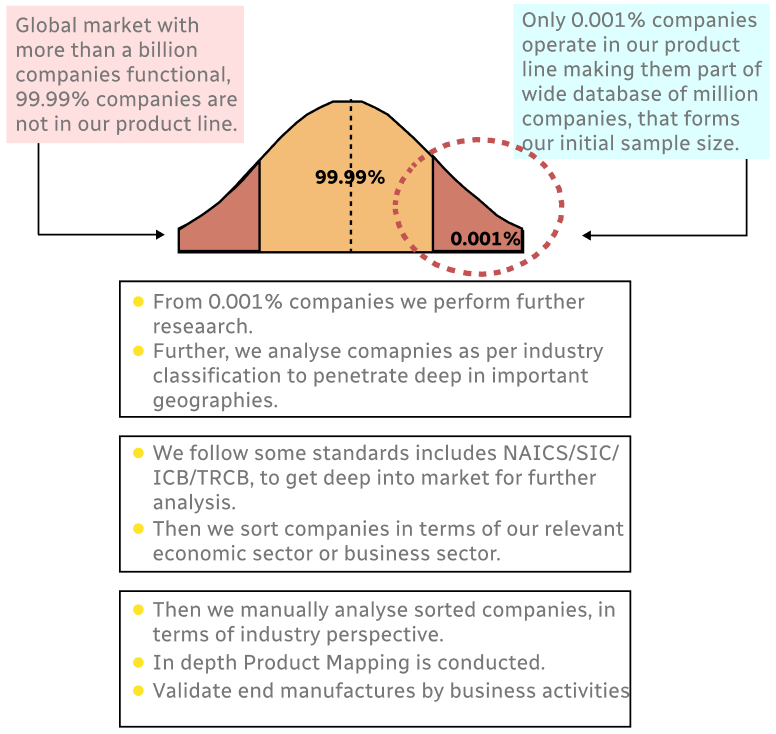
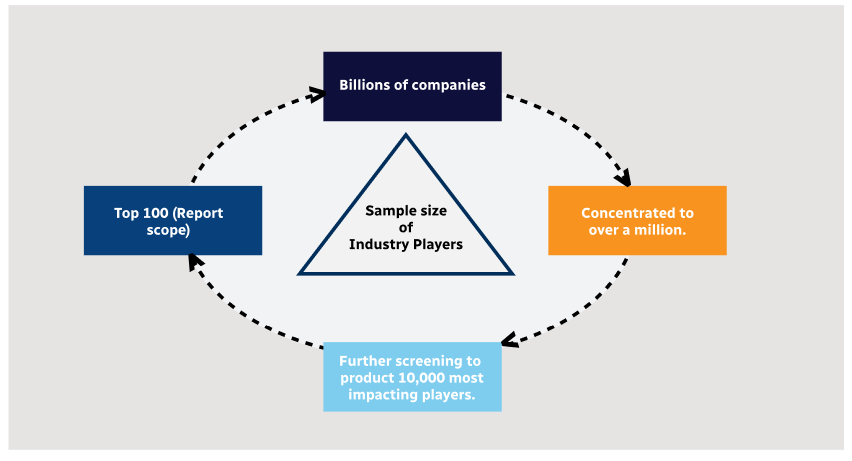
Step 1 - Identification of Relevant Samples Size from Population Database
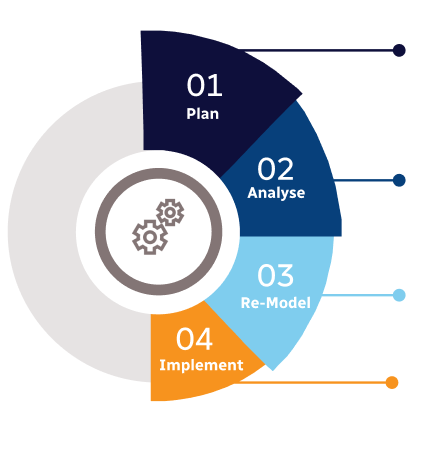
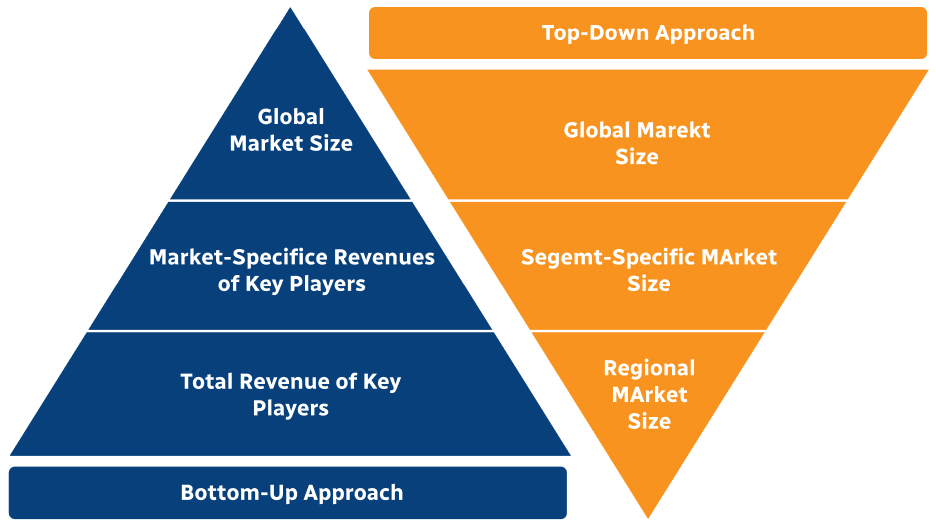
Step 2 - Approaches for Defining Global Market Size (Value, Volume* & Price*)
Note*: In applicable scenarios
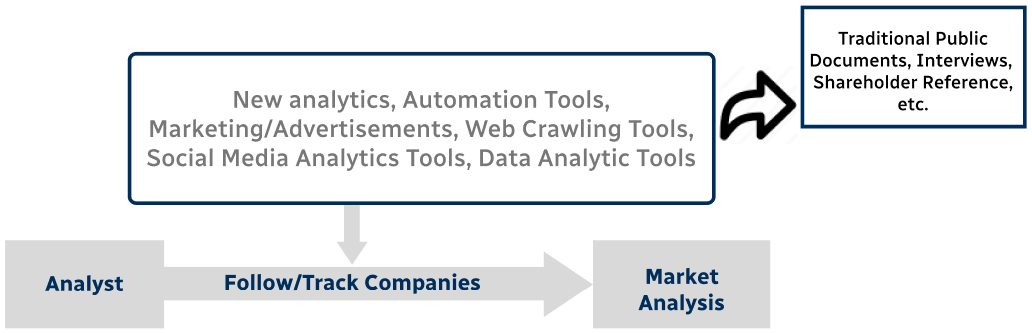
Step 3 - Data Sources
Primary Research
- Web Analytics
- Survey Reports
- Research Institute
- Latest Research Reports
- Opinion Leaders
Secondary Research
- Annual Reports
- White Paper
- Latest Press Release
- Industry Association
- Paid Database
- Investor Presentations
Step 4 - Data Triangulation
Involves using different sources of information in order to increase the validity of a study
These sources are likely to be stakeholders in a program - participants, other researchers, program staff, other community members, and so on.
Then we put all data in single framework & apply various statistical tools to find out the dynamic on the market.
During the analysis stage, feedback from the stakeholder groups would be compared to determine areas of agreement as well as areas of divergence