


Key Insights
The global Cloud-Based Cold Chain Management market is poised for significant expansion, projected to reach a substantial USD 8311 million by 2025. This robust growth is fueled by an impressive Compound Annual Growth Rate (CAGR) of 12%, indicating a dynamic and rapidly evolving industry. A primary driver for this surge is the increasing demand for stringent temperature control across the pharmaceutical and food & beverage sectors, where product integrity and safety are paramount. The growing complexity of global supply chains and the imperative to minimize spoilage and waste are also significant contributors. Furthermore, advancements in IoT technology, including real-time sensor data collection and cloud-based analytics, are enabling more efficient and transparent cold chain operations. This technological integration allows for proactive issue identification and resolution, thereby enhancing overall supply chain reliability and reducing economic losses associated with temperature excursions.
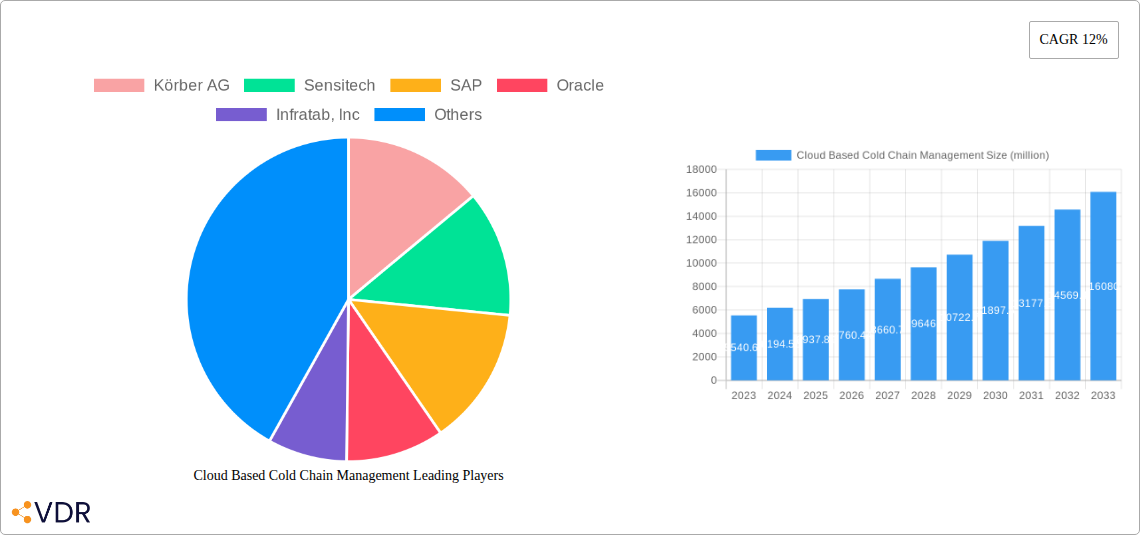
Cloud Based Cold Chain Management Market Size (In Billion)

The market's expansion is further supported by a growing adoption of advanced monitoring solutions, encompassing both storage and transportation phases. Segments like storage monitoring, crucial for maintaining product quality within warehouses and distribution centers, and transportation monitoring, vital for ensuring product integrity during transit, are witnessing increased investment. Leading companies like Körber AG, Sensitech, SAP, and Oracle are at the forefront, offering innovative cloud-based solutions that provide end-to-end visibility and control over the cold chain. While the market exhibits strong growth potential, certain restraints might include the initial implementation costs of sophisticated systems and the need for skilled personnel to manage and interpret the data generated. However, the long-term benefits of reduced product loss, improved compliance, and enhanced customer satisfaction are expected to outweigh these challenges, driving sustained market penetration across North America, Europe, Asia Pacific, and other emerging regions.
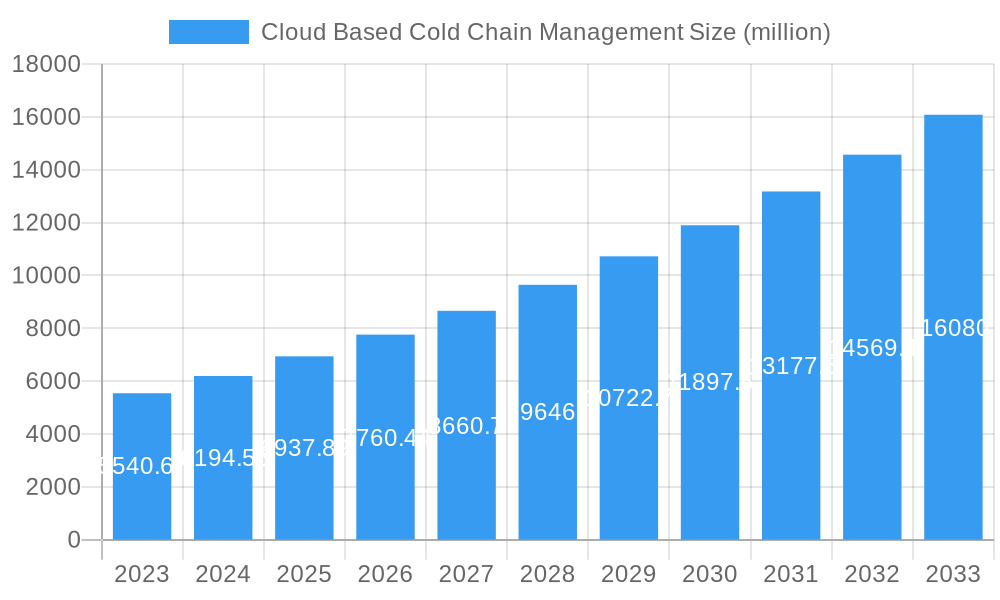
Cloud Based Cold Chain Management Company Market Share
Comprehensive Report: Cloud-Based Cold Chain Management – Market Dynamics, Growth Trends, and Future Outlook (2019-2033)
This in-depth report provides an exhaustive analysis of the global Cloud-Based Cold Chain Management market, offering critical insights for stakeholders seeking to navigate this dynamic and rapidly expanding sector. Covering the historical period from 2019 to 2024, base year 2025, and a comprehensive forecast period up to 2033, this report leverages extensive data and expert analysis to present a clear and actionable roadmap. We delve into market size, CAGR, growth drivers, challenges, regional dominance, competitive landscapes, and emerging opportunities, with all quantitative values presented in million units for clarity.
Cloud Based Cold Chain Management Market Dynamics & Structure
The global Cloud-Based Cold Chain Management market is characterized by a moderately concentrated structure, with key players like Körber AG, Sensitech, SAP, Oracle, Infratab, Inc., Zebra Technologies Corp, Accent Advanced Systems, Savi Technology, ELPRO-BUCHS AG, and Emerson Electric Co. actively shaping its trajectory. Technological innovation is a primary driver, fueled by advancements in IoT sensors, AI-powered analytics, and blockchain integration for enhanced traceability and data security. Regulatory frameworks, particularly in the pharmaceutical and food industries, mandating stringent temperature control and supply chain integrity, further propel adoption. Competitive product substitutes, such as on-premise solutions and less sophisticated monitoring systems, are gradually being phased out as the benefits of cloud-based agility and scalability become apparent. End-user demographics are increasingly sophisticated, with a demand for real-time visibility, predictive analytics, and compliance reporting. Mergers and acquisitions (M&A) activity is on the rise, with companies seeking to consolidate their market positions and expand their technological portfolios. In the historical period (2019-2024), an estimated 5-7 M&A deals, valued in the hundreds of millions, were observed, indicating a strong consolidation trend. Innovation barriers, though diminishing, include the initial investment costs for small and medium-sized enterprises and the need for specialized IT infrastructure.
- Market Concentration: Moderate, with a few dominant global players.
- Technological Drivers: IoT sensors, AI/ML analytics, blockchain, cloud computing infrastructure.
- Regulatory Landscape: Stringent compliance requirements for pharmaceuticals and food industries driving adoption.
- Competitive Landscape: Shift towards cloud-based solutions over traditional methods; potential for new entrants in niche segments.
- End-User Sophistication: Increasing demand for advanced features like predictive maintenance and real-time alerts.
- M&A Activity: Expected to remain robust, focusing on technology acquisition and market expansion.
Cloud Based Cold Chain Management Growth Trends & Insights
The Cloud-Based Cold Chain Management market is poised for significant expansion, driven by an escalating demand for stringent temperature control across critical supply chains. The market size, estimated at approximately \$7,850 million in the base year of 2025, is projected to witness a robust Compound Annual Growth Rate (CAGR) of 15.5% during the forecast period of 2025–2033, reaching an estimated value of \$24,050 million by 2033. This impressive growth is underpinned by increasing adoption rates across both the parent market (pharmaceuticals and food) and emerging child markets like specialized biologics and high-value chemicals. Technological disruptions, including the miniaturization and cost reduction of IoT sensors, enhanced data analytics capabilities through artificial intelligence and machine learning, and the growing acceptance of cloud infrastructure for mission-critical operations, are revolutionizing cold chain logistics. Consumer behavior is also shifting, with a heightened awareness of product quality and safety, particularly for temperature-sensitive goods like vaccines and fresh produce, compelling businesses to invest in advanced monitoring solutions. The historical period from 2019 to 2024 saw a steady growth trajectory, with market penetration increasing from an estimated 25% to 40% within key segments. This growth was primarily driven by a series of high-profile cold chain breaches and recalls that highlighted the vulnerabilities of traditional systems. The increasing complexity of global supply chains, coupled with the rise of e-commerce for perishable goods, further accentuates the need for reliable and transparent cloud-based cold chain management. The integration of predictive analytics for proactive issue identification and mitigation is becoming a standard expectation, moving beyond basic temperature logging. Early adopters have demonstrated tangible benefits, including reduced product spoilage (estimated savings of up to 10-15% of logistics costs), improved compliance adherence, and enhanced brand reputation. The scalability and flexibility offered by cloud platforms enable businesses of all sizes to implement sophisticated cold chain solutions without significant upfront capital expenditure on hardware. Furthermore, the increasing availability of skilled personnel for managing these advanced systems is alleviating adoption hurdles. The shift from reactive to proactive cold chain management is a defining trend, with businesses actively seeking solutions that can predict potential temperature excursions before they occur. This proactive approach not only minimizes losses but also ensures the efficacy and safety of sensitive products, building greater trust among consumers and regulatory bodies.
Dominant Regions, Countries, or Segments in Cloud Based Cold Chain Management
The Cloud-Based Cold Chain Management market's dominance is currently led by the Pharmaceuticals segment within the Application category, and Transportation Monitoring within the Type category. North America, particularly the United States, stands out as the leading region, driven by a highly developed pharmaceutical and biotechnology industry, stringent regulatory oversight from agencies like the FDA, and a robust technological infrastructure. The market size for pharmaceuticals in cold chain management in North America was estimated at approximately \$3,200 million in 2025, with a projected CAGR of 16.0% through 2033. This dominance is further amplified by significant investments in cold chain logistics for vaccines, biologics, and specialized drugs, which constitute a substantial portion of the parent market.
Key drivers of this regional and segment dominance include:
- Economic Policies: Favorable government policies supporting the pharmaceutical R&D and manufacturing sectors, alongside incentives for technological adoption in healthcare logistics.
- Infrastructure: Advanced transportation networks, including refrigerated trucking, air cargo, and specialized warehousing facilities, are well-established in North America.
- Regulatory Frameworks: The U.S. Food and Drug Administration (FDA) mandates strict adherence to Good Distribution Practices (GDP), heavily influencing the demand for robust, cloud-based cold chain monitoring solutions to ensure product integrity and patient safety.
- Technological Adoption: High readiness and capacity for adopting cutting-edge technologies like IoT, AI, and blockchain for real-time tracking and data analytics, as demonstrated by leading companies like Sensitech and Savi Technology.
- Market Share: The pharmaceutical segment, particularly for biologics and vaccines, accounted for an estimated 45% of the total cloud-based cold chain management market in 2025, with transportation monitoring holding approximately 55% of the market share due to its critical role in ensuring uninterrupted temperature control during transit.
Within the broader market, the Food segment is a significant contributor, with a market size estimated at \$2,800 million in 2025 and a CAGR of 14.5%, driven by increasing consumer demand for fresh, frozen, and processed food products, coupled with a growing awareness of food safety regulations. The "Others" segment, encompassing high-value chemicals and industrial goods requiring specific temperature controls, is an emerging market with considerable growth potential. Storage monitoring, while crucial, accounts for an estimated 45% of the market share, complementing the dominant transportation monitoring. The interplay between these segments and application areas creates a complex but lucrative ecosystem for cloud-based cold chain solutions. The increasing globalization of supply chains further necessitates sophisticated monitoring, especially for cross-border transportation of temperature-sensitive goods.
Cloud Based Cold Chain Management Product Landscape
The product landscape for cloud-based cold chain management is rapidly evolving with a focus on integrated, intelligent, and user-friendly solutions. Key product innovations include advanced IoT sensor devices capable of real-time data collection on temperature, humidity, and shock, seamlessly integrated with cloud platforms for centralized data aggregation and analysis. Sophisticated software platforms offer predictive analytics, anomaly detection, and automated compliance reporting, enhancing operational efficiency and reducing product spoilage. Unique selling propositions often lie in the ability to provide end-to-end visibility across the entire cold chain, from manufacturing to final delivery, with granular control and alert mechanisms. Technological advancements are driving the development of more compact, energy-efficient, and cost-effective sensor technologies, making these solutions accessible to a wider range of businesses.
Key Drivers, Barriers & Challenges in Cloud Based Cold Chain Management
Key Drivers: The primary forces propelling the Cloud-Based Cold Chain Management market are stringent regulatory mandates for product integrity in pharmaceuticals and food, the increasing global demand for temperature-sensitive goods, and the continuous technological advancements in IoT, AI, and cloud computing. The desire for enhanced supply chain visibility, reduced product spoilage, and improved operational efficiency are also significant motivators. For instance, the pharmaceutical industry's need to maintain the efficacy of vaccines and biologics, valued in the billions of dollars annually, directly fuels the adoption of these technologies.
Key Barriers & Challenges: Despite the strong growth, several challenges impede market expansion. These include the initial investment costs for implementing cloud-based systems, particularly for small and medium-sized enterprises (SMEs), which can amount to an average of \$50,000 - \$150,000 for initial setup. Supply chain complexities and the integration of disparate legacy systems pose technical hurdles. Data security and privacy concerns, though diminishing with robust cloud security measures, remain a consideration. Fierce competition among providers necessitates continuous innovation and competitive pricing strategies. Regulatory compliance in diverse global markets also adds a layer of complexity, requiring adaptable solutions. The lack of a skilled workforce to manage and interpret the data generated by these systems can also be a constraint.
Emerging Opportunities in Cloud Based Cold Chain Management
Emerging opportunities in the Cloud-Based Cold Chain Management sector are ripe for exploitation. The burgeoning e-commerce sector for groceries and pharmaceuticals presents a significant untapped market, demanding efficient and reliable cold chain logistics for last-mile delivery. The development of specialized cloud solutions for niche segments like advanced therapeutics, cell and gene therapies, and rare disease medications, which require ultra-low temperature storage and handling, offers substantial growth potential. Evolving consumer preferences for ethically sourced and sustainably produced food products are also driving demand for transparent and traceable cold chains. Furthermore, the integration of blockchain technology for enhanced data immutability and counterfeit prevention offers a promising avenue for further development and adoption. The increasing focus on preventative maintenance and remote diagnostics for cold chain equipment, powered by AI, is another lucrative area for innovation.
Growth Accelerators in the Cloud Based Cold Chain Management Industry
The Cloud-Based Cold Chain Management industry is experiencing significant growth acceleration driven by several key catalysts. Technological breakthroughs, such as the development of more sophisticated AI algorithms for predictive analytics and anomaly detection, are empowering businesses to proactively manage their cold chains and minimize losses. Strategic partnerships between technology providers, logistics companies, and manufacturers are creating integrated ecosystems that streamline operations and enhance customer value. For instance, collaborations focused on real-time data sharing and joint development of innovative solutions are fostering rapid market penetration. Market expansion strategies, including the increasing adoption of these solutions in emerging economies and developing regions, are further contributing to the industry's robust growth trajectory. The growing emphasis on sustainability and reduced carbon footprint in logistics also indirectly fuels the demand for efficient cold chain management, as it minimizes product spoilage and associated waste.
Key Players Shaping the Cloud Based Cold Chain Management Market
- Körber AG
- Sensitech
- SAP
- Oracle
- Infratab, Inc.
- Zebra Technologies Corp
- Accent Advanced Systems
- Savi Technology
- ELPRO-BUCHS AG
- Emerson Electric Co
Notable Milestones in Cloud Based Cold Chain Management Sector
- 2019: Increased adoption of IoT sensors for real-time temperature monitoring in pharmaceutical supply chains.
- 2020: Expansion of cloud-based cold chain solutions into the rapidly growing e-commerce grocery sector.
- 2021: Significant investments in AI and machine learning for predictive analytics in cold chain management.
- 2022: Growing integration of blockchain technology for enhanced traceability and data security.
- 2023: Launch of specialized cloud solutions for ultra-low temperature biologics and vaccines.
- 2024: Increased focus on sustainability reporting and carbon footprint reduction within cold chain logistics.
In-Depth Cloud Based Cold Chain Management Market Outlook
The future outlook for the Cloud-Based Cold Chain Management market is exceptionally bright, characterized by sustained high growth and continuous innovation. The market is expected to be a critical enabler for global health and food security, with an estimated market potential reaching beyond \$24,000 million by 2033. Growth accelerators will include the widespread adoption of AI-driven predictive analytics for proactive risk management, the increasing integration of IoT devices for granular, end-to-end visibility, and the expansion into underserved markets and specialized applications like cell and gene therapies. Strategic partnerships and mergers will continue to consolidate the market, fostering integrated solutions and driving technological advancements. The evolving regulatory landscape will also mandate higher standards of cold chain integrity, further fueling demand. Businesses that invest in robust, scalable, and intelligent cloud-based cold chain management solutions will be well-positioned to capitalize on the immense opportunities within this vital sector.
Cloud Based Cold Chain Management Segmentation
-
1. Application
- 1.1. Food
- 1.2. Pharmaceuticals
- 1.3. Others
-
2. Type
- 2.1. Storage Monitoring
- 2.2. Transportation Monitoring
Cloud Based Cold Chain Management Segmentation By Geography
-
1. North America
- 1.1. United States
- 1.2. Canada
- 1.3. Mexico
-
2. South America
- 2.1. Brazil
- 2.2. Argentina
- 2.3. Rest of South America
-
3. Europe
- 3.1. United Kingdom
- 3.2. Germany
- 3.3. France
- 3.4. Italy
- 3.5. Spain
- 3.6. Russia
- 3.7. Benelux
- 3.8. Nordics
- 3.9. Rest of Europe
-
4. Middle East & Africa
- 4.1. Turkey
- 4.2. Israel
- 4.3. GCC
- 4.4. North Africa
- 4.5. South Africa
- 4.6. Rest of Middle East & Africa
-
5. Asia Pacific
- 5.1. China
- 5.2. India
- 5.3. Japan
- 5.4. South Korea
- 5.5. ASEAN
- 5.6. Oceania
- 5.7. Rest of Asia Pacific
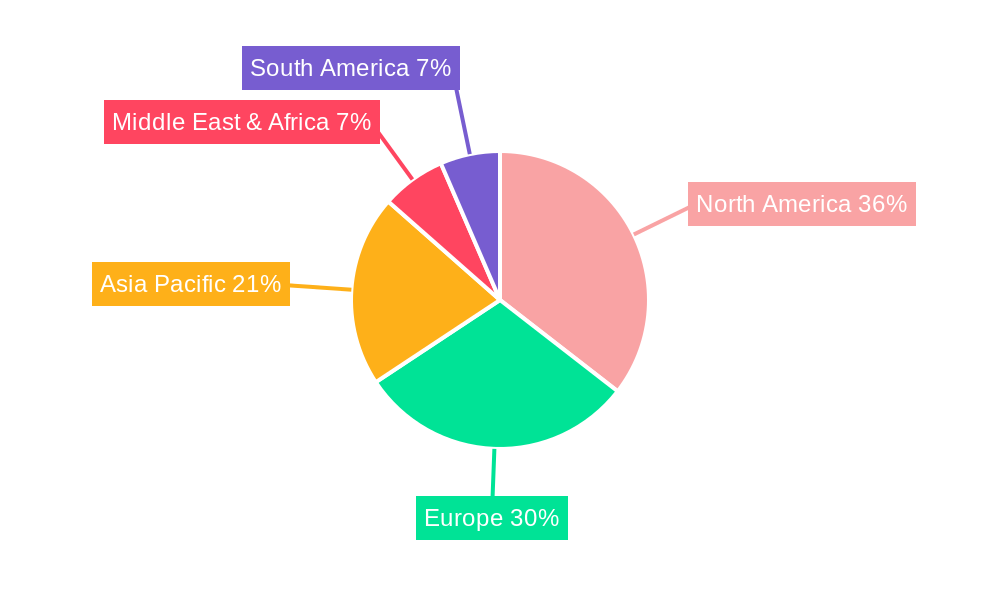
Cloud Based Cold Chain Management Regional Market Share
Geographic Coverage of Cloud Based Cold Chain Management
Cloud Based Cold Chain Management REPORT HIGHLIGHTS
| Aspects | Details |
|---|---|
| Study Period | 2020-2034 |
| Base Year | 2025 |
| Estimated Year | 2026 |
| Forecast Period | 2026-2034 |
| Historical Period | 2020-2025 |
| Growth Rate | CAGR of 12% from 2020-2034 |
| Segmentation |
|
Table of Contents
- 1. Introduction
- 1.1. Research Scope
- 1.2. Market Segmentation
- 1.3. Research Methodology
- 1.4. Definitions and Assumptions
- 2. Executive Summary
- 2.1. Introduction
- 3. Market Dynamics
- 3.1. Introduction
- 3.2. Market Drivers
- 3.3. Market Restrains
- 3.4. Market Trends
- 4. Market Factor Analysis
- 4.1. Porters Five Forces
- 4.2. Supply/Value Chain
- 4.3. PESTEL analysis
- 4.4. Market Entropy
- 4.5. Patent/Trademark Analysis
- 5. Global Cloud Based Cold Chain Management Analysis, Insights and Forecast, 2020-2032
- 5.1. Market Analysis, Insights and Forecast - by Application
- 5.1.1. Food
- 5.1.2. Pharmaceuticals
- 5.1.3. Others
- 5.2. Market Analysis, Insights and Forecast - by Type
- 5.2.1. Storage Monitoring
- 5.2.2. Transportation Monitoring
- 5.3. Market Analysis, Insights and Forecast - by Region
- 5.3.1. North America
- 5.3.2. South America
- 5.3.3. Europe
- 5.3.4. Middle East & Africa
- 5.3.5. Asia Pacific
- 5.1. Market Analysis, Insights and Forecast - by Application
- 6. North America Cloud Based Cold Chain Management Analysis, Insights and Forecast, 2020-2032
- 6.1. Market Analysis, Insights and Forecast - by Application
- 6.1.1. Food
- 6.1.2. Pharmaceuticals
- 6.1.3. Others
- 6.2. Market Analysis, Insights and Forecast - by Type
- 6.2.1. Storage Monitoring
- 6.2.2. Transportation Monitoring
- 6.1. Market Analysis, Insights and Forecast - by Application
- 7. South America Cloud Based Cold Chain Management Analysis, Insights and Forecast, 2020-2032
- 7.1. Market Analysis, Insights and Forecast - by Application
- 7.1.1. Food
- 7.1.2. Pharmaceuticals
- 7.1.3. Others
- 7.2. Market Analysis, Insights and Forecast - by Type
- 7.2.1. Storage Monitoring
- 7.2.2. Transportation Monitoring
- 7.1. Market Analysis, Insights and Forecast - by Application
- 8. Europe Cloud Based Cold Chain Management Analysis, Insights and Forecast, 2020-2032
- 8.1. Market Analysis, Insights and Forecast - by Application
- 8.1.1. Food
- 8.1.2. Pharmaceuticals
- 8.1.3. Others
- 8.2. Market Analysis, Insights and Forecast - by Type
- 8.2.1. Storage Monitoring
- 8.2.2. Transportation Monitoring
- 8.1. Market Analysis, Insights and Forecast - by Application
- 9. Middle East & Africa Cloud Based Cold Chain Management Analysis, Insights and Forecast, 2020-2032
- 9.1. Market Analysis, Insights and Forecast - by Application
- 9.1.1. Food
- 9.1.2. Pharmaceuticals
- 9.1.3. Others
- 9.2. Market Analysis, Insights and Forecast - by Type
- 9.2.1. Storage Monitoring
- 9.2.2. Transportation Monitoring
- 9.1. Market Analysis, Insights and Forecast - by Application
- 10. Asia Pacific Cloud Based Cold Chain Management Analysis, Insights and Forecast, 2020-2032
- 10.1. Market Analysis, Insights and Forecast - by Application
- 10.1.1. Food
- 10.1.2. Pharmaceuticals
- 10.1.3. Others
- 10.2. Market Analysis, Insights and Forecast - by Type
- 10.2.1. Storage Monitoring
- 10.2.2. Transportation Monitoring
- 10.1. Market Analysis, Insights and Forecast - by Application
- 11. Competitive Analysis
- 11.1. Global Market Share Analysis 2025
- 11.2. Company Profiles
- 11.2.1 Körber AG
- 11.2.1.1. Overview
- 11.2.1.2. Products
- 11.2.1.3. SWOT Analysis
- 11.2.1.4. Recent Developments
- 11.2.1.5. Financials (Based on Availability)
- 11.2.2 Sensitech
- 11.2.2.1. Overview
- 11.2.2.2. Products
- 11.2.2.3. SWOT Analysis
- 11.2.2.4. Recent Developments
- 11.2.2.5. Financials (Based on Availability)
- 11.2.3 SAP
- 11.2.3.1. Overview
- 11.2.3.2. Products
- 11.2.3.3. SWOT Analysis
- 11.2.3.4. Recent Developments
- 11.2.3.5. Financials (Based on Availability)
- 11.2.4 Oracle
- 11.2.4.1. Overview
- 11.2.4.2. Products
- 11.2.4.3. SWOT Analysis
- 11.2.4.4. Recent Developments
- 11.2.4.5. Financials (Based on Availability)
- 11.2.5 Infratab Inc
- 11.2.5.1. Overview
- 11.2.5.2. Products
- 11.2.5.3. SWOT Analysis
- 11.2.5.4. Recent Developments
- 11.2.5.5. Financials (Based on Availability)
- 11.2.6 Zebra Technologies Corp
- 11.2.6.1. Overview
- 11.2.6.2. Products
- 11.2.6.3. SWOT Analysis
- 11.2.6.4. Recent Developments
- 11.2.6.5. Financials (Based on Availability)
- 11.2.7 Accent Advanced Systems
- 11.2.7.1. Overview
- 11.2.7.2. Products
- 11.2.7.3. SWOT Analysis
- 11.2.7.4. Recent Developments
- 11.2.7.5. Financials (Based on Availability)
- 11.2.8 Savi Technology
- 11.2.8.1. Overview
- 11.2.8.2. Products
- 11.2.8.3. SWOT Analysis
- 11.2.8.4. Recent Developments
- 11.2.8.5. Financials (Based on Availability)
- 11.2.9 ELPRO-BUCHS AG
- 11.2.9.1. Overview
- 11.2.9.2. Products
- 11.2.9.3. SWOT Analysis
- 11.2.9.4. Recent Developments
- 11.2.9.5. Financials (Based on Availability)
- 11.2.10 Emerson Electric Co
- 11.2.10.1. Overview
- 11.2.10.2. Products
- 11.2.10.3. SWOT Analysis
- 11.2.10.4. Recent Developments
- 11.2.10.5. Financials (Based on Availability)
- 11.2.1 Körber AG
List of Figures
- Figure 1: Global Cloud Based Cold Chain Management Revenue Breakdown (million, %) by Region 2025 & 2033
- Figure 2: North America Cloud Based Cold Chain Management Revenue (million), by Application 2025 & 2033
- Figure 3: North America Cloud Based Cold Chain Management Revenue Share (%), by Application 2025 & 2033
- Figure 4: North America Cloud Based Cold Chain Management Revenue (million), by Type 2025 & 2033
- Figure 5: North America Cloud Based Cold Chain Management Revenue Share (%), by Type 2025 & 2033
- Figure 6: North America Cloud Based Cold Chain Management Revenue (million), by Country 2025 & 2033
- Figure 7: North America Cloud Based Cold Chain Management Revenue Share (%), by Country 2025 & 2033
- Figure 8: South America Cloud Based Cold Chain Management Revenue (million), by Application 2025 & 2033
- Figure 9: South America Cloud Based Cold Chain Management Revenue Share (%), by Application 2025 & 2033
- Figure 10: South America Cloud Based Cold Chain Management Revenue (million), by Type 2025 & 2033
- Figure 11: South America Cloud Based Cold Chain Management Revenue Share (%), by Type 2025 & 2033
- Figure 12: South America Cloud Based Cold Chain Management Revenue (million), by Country 2025 & 2033
- Figure 13: South America Cloud Based Cold Chain Management Revenue Share (%), by Country 2025 & 2033
- Figure 14: Europe Cloud Based Cold Chain Management Revenue (million), by Application 2025 & 2033
- Figure 15: Europe Cloud Based Cold Chain Management Revenue Share (%), by Application 2025 & 2033
- Figure 16: Europe Cloud Based Cold Chain Management Revenue (million), by Type 2025 & 2033
- Figure 17: Europe Cloud Based Cold Chain Management Revenue Share (%), by Type 2025 & 2033
- Figure 18: Europe Cloud Based Cold Chain Management Revenue (million), by Country 2025 & 2033
- Figure 19: Europe Cloud Based Cold Chain Management Revenue Share (%), by Country 2025 & 2033
- Figure 20: Middle East & Africa Cloud Based Cold Chain Management Revenue (million), by Application 2025 & 2033
- Figure 21: Middle East & Africa Cloud Based Cold Chain Management Revenue Share (%), by Application 2025 & 2033
- Figure 22: Middle East & Africa Cloud Based Cold Chain Management Revenue (million), by Type 2025 & 2033
- Figure 23: Middle East & Africa Cloud Based Cold Chain Management Revenue Share (%), by Type 2025 & 2033
- Figure 24: Middle East & Africa Cloud Based Cold Chain Management Revenue (million), by Country 2025 & 2033
- Figure 25: Middle East & Africa Cloud Based Cold Chain Management Revenue Share (%), by Country 2025 & 2033
- Figure 26: Asia Pacific Cloud Based Cold Chain Management Revenue (million), by Application 2025 & 2033
- Figure 27: Asia Pacific Cloud Based Cold Chain Management Revenue Share (%), by Application 2025 & 2033
- Figure 28: Asia Pacific Cloud Based Cold Chain Management Revenue (million), by Type 2025 & 2033
- Figure 29: Asia Pacific Cloud Based Cold Chain Management Revenue Share (%), by Type 2025 & 2033
- Figure 30: Asia Pacific Cloud Based Cold Chain Management Revenue (million), by Country 2025 & 2033
- Figure 31: Asia Pacific Cloud Based Cold Chain Management Revenue Share (%), by Country 2025 & 2033
List of Tables
- Table 1: Global Cloud Based Cold Chain Management Revenue million Forecast, by Application 2020 & 2033
- Table 2: Global Cloud Based Cold Chain Management Revenue million Forecast, by Type 2020 & 2033
- Table 3: Global Cloud Based Cold Chain Management Revenue million Forecast, by Region 2020 & 2033
- Table 4: Global Cloud Based Cold Chain Management Revenue million Forecast, by Application 2020 & 2033
- Table 5: Global Cloud Based Cold Chain Management Revenue million Forecast, by Type 2020 & 2033
- Table 6: Global Cloud Based Cold Chain Management Revenue million Forecast, by Country 2020 & 2033
- Table 7: United States Cloud Based Cold Chain Management Revenue (million) Forecast, by Application 2020 & 2033
- Table 8: Canada Cloud Based Cold Chain Management Revenue (million) Forecast, by Application 2020 & 2033
- Table 9: Mexico Cloud Based Cold Chain Management Revenue (million) Forecast, by Application 2020 & 2033
- Table 10: Global Cloud Based Cold Chain Management Revenue million Forecast, by Application 2020 & 2033
- Table 11: Global Cloud Based Cold Chain Management Revenue million Forecast, by Type 2020 & 2033
- Table 12: Global Cloud Based Cold Chain Management Revenue million Forecast, by Country 2020 & 2033
- Table 13: Brazil Cloud Based Cold Chain Management Revenue (million) Forecast, by Application 2020 & 2033
- Table 14: Argentina Cloud Based Cold Chain Management Revenue (million) Forecast, by Application 2020 & 2033
- Table 15: Rest of South America Cloud Based Cold Chain Management Revenue (million) Forecast, by Application 2020 & 2033
- Table 16: Global Cloud Based Cold Chain Management Revenue million Forecast, by Application 2020 & 2033
- Table 17: Global Cloud Based Cold Chain Management Revenue million Forecast, by Type 2020 & 2033
- Table 18: Global Cloud Based Cold Chain Management Revenue million Forecast, by Country 2020 & 2033
- Table 19: United Kingdom Cloud Based Cold Chain Management Revenue (million) Forecast, by Application 2020 & 2033
- Table 20: Germany Cloud Based Cold Chain Management Revenue (million) Forecast, by Application 2020 & 2033
- Table 21: France Cloud Based Cold Chain Management Revenue (million) Forecast, by Application 2020 & 2033
- Table 22: Italy Cloud Based Cold Chain Management Revenue (million) Forecast, by Application 2020 & 2033
- Table 23: Spain Cloud Based Cold Chain Management Revenue (million) Forecast, by Application 2020 & 2033
- Table 24: Russia Cloud Based Cold Chain Management Revenue (million) Forecast, by Application 2020 & 2033
- Table 25: Benelux Cloud Based Cold Chain Management Revenue (million) Forecast, by Application 2020 & 2033
- Table 26: Nordics Cloud Based Cold Chain Management Revenue (million) Forecast, by Application 2020 & 2033
- Table 27: Rest of Europe Cloud Based Cold Chain Management Revenue (million) Forecast, by Application 2020 & 2033
- Table 28: Global Cloud Based Cold Chain Management Revenue million Forecast, by Application 2020 & 2033
- Table 29: Global Cloud Based Cold Chain Management Revenue million Forecast, by Type 2020 & 2033
- Table 30: Global Cloud Based Cold Chain Management Revenue million Forecast, by Country 2020 & 2033
- Table 31: Turkey Cloud Based Cold Chain Management Revenue (million) Forecast, by Application 2020 & 2033
- Table 32: Israel Cloud Based Cold Chain Management Revenue (million) Forecast, by Application 2020 & 2033
- Table 33: GCC Cloud Based Cold Chain Management Revenue (million) Forecast, by Application 2020 & 2033
- Table 34: North Africa Cloud Based Cold Chain Management Revenue (million) Forecast, by Application 2020 & 2033
- Table 35: South Africa Cloud Based Cold Chain Management Revenue (million) Forecast, by Application 2020 & 2033
- Table 36: Rest of Middle East & Africa Cloud Based Cold Chain Management Revenue (million) Forecast, by Application 2020 & 2033
- Table 37: Global Cloud Based Cold Chain Management Revenue million Forecast, by Application 2020 & 2033
- Table 38: Global Cloud Based Cold Chain Management Revenue million Forecast, by Type 2020 & 2033
- Table 39: Global Cloud Based Cold Chain Management Revenue million Forecast, by Country 2020 & 2033
- Table 40: China Cloud Based Cold Chain Management Revenue (million) Forecast, by Application 2020 & 2033
- Table 41: India Cloud Based Cold Chain Management Revenue (million) Forecast, by Application 2020 & 2033
- Table 42: Japan Cloud Based Cold Chain Management Revenue (million) Forecast, by Application 2020 & 2033
- Table 43: South Korea Cloud Based Cold Chain Management Revenue (million) Forecast, by Application 2020 & 2033
- Table 44: ASEAN Cloud Based Cold Chain Management Revenue (million) Forecast, by Application 2020 & 2033
- Table 45: Oceania Cloud Based Cold Chain Management Revenue (million) Forecast, by Application 2020 & 2033
- Table 46: Rest of Asia Pacific Cloud Based Cold Chain Management Revenue (million) Forecast, by Application 2020 & 2033
Frequently Asked Questions
1. What is the projected Compound Annual Growth Rate (CAGR) of the Cloud Based Cold Chain Management?
The projected CAGR is approximately 12%.
2. Which companies are prominent players in the Cloud Based Cold Chain Management?
Key companies in the market include Körber AG, Sensitech, SAP, Oracle, Infratab, Inc, Zebra Technologies Corp, Accent Advanced Systems, Savi Technology, ELPRO-BUCHS AG, Emerson Electric Co.
3. What are the main segments of the Cloud Based Cold Chain Management?
The market segments include Application, Type.
4. Can you provide details about the market size?
The market size is estimated to be USD 8311 million as of 2022.
5. What are some drivers contributing to market growth?
N/A
6. What are the notable trends driving market growth?
N/A
7. Are there any restraints impacting market growth?
N/A
8. Can you provide examples of recent developments in the market?
N/A
9. What pricing options are available for accessing the report?
Pricing options include single-user, multi-user, and enterprise licenses priced at USD 2900.00, USD 4350.00, and USD 5800.00 respectively.
10. Is the market size provided in terms of value or volume?
The market size is provided in terms of value, measured in million.
11. Are there any specific market keywords associated with the report?
Yes, the market keyword associated with the report is "Cloud Based Cold Chain Management," which aids in identifying and referencing the specific market segment covered.
12. How do I determine which pricing option suits my needs best?
The pricing options vary based on user requirements and access needs. Individual users may opt for single-user licenses, while businesses requiring broader access may choose multi-user or enterprise licenses for cost-effective access to the report.
13. Are there any additional resources or data provided in the Cloud Based Cold Chain Management report?
While the report offers comprehensive insights, it's advisable to review the specific contents or supplementary materials provided to ascertain if additional resources or data are available.
14. How can I stay updated on further developments or reports in the Cloud Based Cold Chain Management?
To stay informed about further developments, trends, and reports in the Cloud Based Cold Chain Management, consider subscribing to industry newsletters, following relevant companies and organizations, or regularly checking reputable industry news sources and publications.
Methodology
Step 1 - Identification of Relevant Samples Size from Population Database



Step 2 - Approaches for Defining Global Market Size (Value, Volume* & Price*)

Note*: In applicable scenarios
Step 3 - Data Sources
Primary Research
- Web Analytics
- Survey Reports
- Research Institute
- Latest Research Reports
- Opinion Leaders
Secondary Research
- Annual Reports
- White Paper
- Latest Press Release
- Industry Association
- Paid Database
- Investor Presentations

Step 4 - Data Triangulation
Involves using different sources of information in order to increase the validity of a study
These sources are likely to be stakeholders in a program - participants, other researchers, program staff, other community members, and so on.
Then we put all data in single framework & apply various statistical tools to find out the dynamic on the market.
During the analysis stage, feedback from the stakeholder groups would be compared to determine areas of agreement as well as areas of divergence