


Key Insights
The global antidepressant market, valued at $17.9 billion in the base year 2025, is projected to achieve a compound annual growth rate (CAGR) of 2.7%. This expansion is propelled by increasing global prevalence of depression and anxiety disorders, heightened mental health awareness, and the development of novel antidepressants with improved safety and efficacy profiles. Key market segments include Major Depressive Disorder (MDD) and Generalized Anxiety Disorder (GAD) due to their high incidence. Selective Serotonin Reuptake Inhibitors (SSRIs) and Serotonin-Norepinephrine Reuptake Inhibitors (SNRIs) currently dominate the product segment, though emerging therapies and personalized medicine approaches offer significant future growth potential.
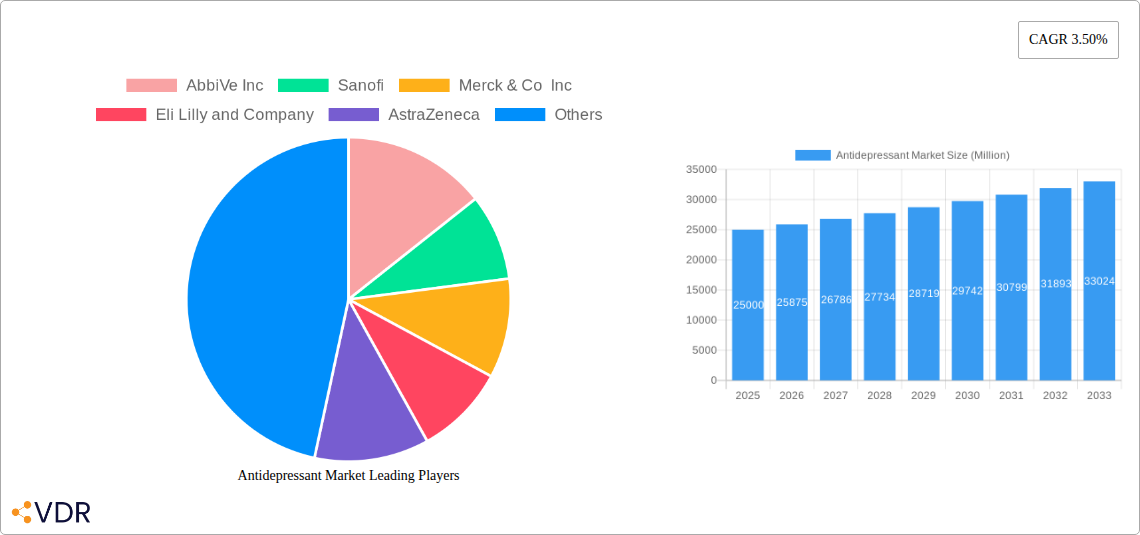
Antidepressant Market Market Size (In Billion)

Geographically, North America and Europe represent the largest markets, attributed to robust healthcare spending and advanced infrastructure. Asia-Pacific, particularly China and India, presents substantial growth opportunities driven by rising mental health awareness and increasing disposable incomes. Market challenges include potential side effects, the necessity for long-term treatment, and medication adherence concerns. Nevertheless, continuous research and development are poised to enhance treatment efficacy and patient outcomes. Leading market participants include AbbVie, Sanofi, Merck & Co, Eli Lilly, and AstraZeneca, who are instrumental in driving innovation and market competition.
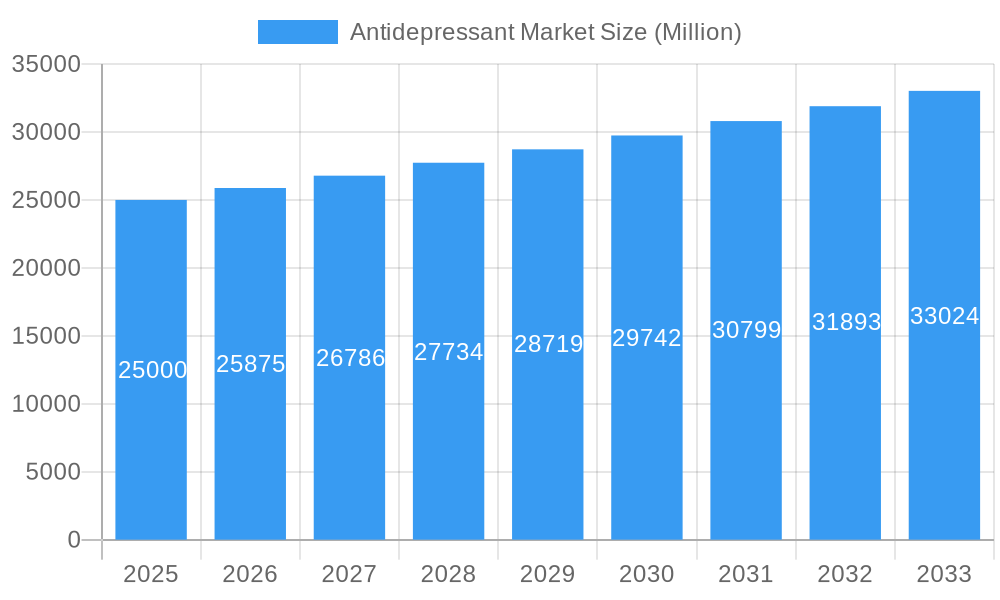
Antidepressant Market Company Market Share
This report offers an in-depth analysis of the global antidepressant market, detailing market dynamics, growth trajectories, regional performance, product segmentation, and key industry players. The analysis covers the period from 2019 to 2033, with 2025 as the base year and a forecast period from 2025 to 2033. Market segmentation includes depressive disorder types (MDD, OCD, GAD, PD, Other Depressive Disorders) and product types (SSRI, SNRI, TCA, MAOI, Other Products). Market value is reported in billions.
Antidepressant Market Dynamics & Structure
The antidepressant market is characterized by a moderately concentrated landscape, with several multinational pharmaceutical companies holding significant market share. Technological innovation, particularly in the development of novel drug mechanisms and formulations, is a key driver. Regulatory frameworks, including FDA approvals and pricing policies, significantly influence market access and growth. The market faces competition from alternative therapies, such as psychotherapy and lifestyle interventions. End-user demographics, including age and gender distribution, impact demand. Mergers and acquisitions (M&A) activity is frequent, driven by companies seeking to expand their portfolios and market reach. During the historical period (2019-2024), approximately xx M&A deals were recorded in the antidepressant sector, resulting in a xx% market share shift among top players. Innovation barriers include high R&D costs and stringent regulatory hurdles.
- Market Concentration: Moderately concentrated, with top 10 players holding xx% market share in 2024.
- Technological Innovation: Focus on novel mechanisms of action, improved efficacy, and faster onset of action.
- Regulatory Frameworks: Stringent approval processes and pricing regulations influence market access.
- Competitive Substitutes: Psychotherapy, lifestyle interventions, and other psychiatric medications.
- End-User Demographics: Predominantly adults, with varying prevalence rates across age and gender groups.
- M&A Trends: Frequent acquisitions and partnerships to expand product portfolios and geographical reach.
Antidepressant Market Growth Trends & Insights
The global antidepressant market experienced robust growth during the historical period (2019-2024), driven by rising prevalence of depressive disorders and increased awareness about mental health. The market size reached xx million units in 2024 and is projected to reach xx million units by 2033, exhibiting a CAGR of xx% during the forecast period (2025-2033). Technological advancements, such as the development of faster-acting antidepressants, have significantly impacted market adoption rates. Shifting consumer preferences towards personalized medicine and non-invasive treatments are also influencing market dynamics.
Dominant Regions, Countries, or Segments in Antidepressant Market
North America currently leads the antidepressant market, primarily attributed to its high incidence of depressive disorders, well-established healthcare infrastructure, and significant per capita healthcare expenditure. Within this region, the United States stands out as the dominant market, followed by Canada. Major Depressive Disorder (MDD) continues to be the most prevalent segment within the broader category of depressive disorders, estimated to account for approximately 65-70% of the market in 2024. Selective Serotonin Reuptake Inhibitors (SSRIs) remain the most frequently prescribed class of antidepressants, capturing an estimated 55-60% market share, owing to their proven efficacy and generally manageable side effect profiles compared to other classes.
- Key Drivers in North America: Elevated prevalence rates of mental health disorders, sophisticated healthcare systems, and substantial healthcare spending.
- Dominant Segment (Depressive Disorder): Major Depressive Disorder (MDD) remains the primary focus.
- Dominant Product Type: Selective Serotonin Reuptake Inhibitors (SSRIs) continue to be the frontrunners.
- Growth Potential: Significant untapped growth potential is observed in emerging markets, fueled by increasing mental health awareness and improving access to comprehensive healthcare services.
Antidepressant Market Product Landscape
The antidepressant market is characterized by a diverse range of products, including SSRIs, SNRIs, TCAs, and MAOIs. Recent innovations have focused on developing faster-acting antidepressants with improved efficacy and tolerability profiles. This includes the recent FDA approval of novel mechanisms of action, aiming to address unmet medical needs in specific patient populations. Several products are differentiated by their unique mechanisms of action, improved side effect profiles, and targeted delivery systems.
Key Drivers, Barriers & Challenges in Antidepressant Market
Key Drivers:
- Rising prevalence of depressive disorders globally.
- Increased awareness and reduced stigma surrounding mental health.
- Technological advancements leading to improved efficacy and faster-acting drugs.
- Growing demand for personalized medicine approaches.
Key Challenges & Restraints:
- High R&D costs associated with developing new antidepressants.
- Stringent regulatory pathways for drug approval.
- Potential side effects and drug interactions limiting patient adherence.
- Competition from alternative therapies, such as psychotherapy and lifestyle interventions. The high cost of these medications can also create access barriers for certain populations, negatively impacting market penetration.
Emerging Opportunities in Antidepressant Market
- Expansion into underserved markets with unmet needs.
- Development of innovative drug delivery systems (e.g., long-acting formulations).
- Personalized medicine approaches based on genetic and phenotypic characteristics.
- Integration of digital health technologies to enhance treatment adherence and patient monitoring.
Growth Accelerators in the Antidepressant Market Industry
The long-term expansion of the antidepressant market will be propelled by ongoing advancements in pharmaceutical research and development, leading to the creation of more effective and better-tolerated treatment options. Strategic collaborations between leading pharmaceutical entities and innovative digital health companies are expected to foster integrated care solutions. Furthermore, the penetration into and development of emerging markets, characterized by a growing recognition of mental health issues and expanding access to specialized care, will be a significant growth engine. The trend towards personalized treatment regimens, tailored to individual patient genetic profiles, symptom severity, and lifestyle, is poised to become a critical factor in accelerating market growth and improving patient outcomes.
Key Players Shaping the Antidepressant Market Market
- AbbVie Inc.
- Sanofi S.A.
- Merck & Co., Inc.
- Eli Lilly and Company
- AstraZeneca PLC
- H. Lundbeck A/S
- Johnson & Johnson
- Sun Pharmaceutical Industries Ltd.
- Dr. Reddy's Laboratories Ltd.
- GlaxoSmithKline PLC
- Pfizer Inc.
Notable Milestones in Antidepressant Market Sector
- April 2022: Lundbeck's vortioxetine (Trintellix/Brintellix) exhibited superior efficacy compared to desvenlafaxine (Pristiq) in a head-to-head clinical trial involving patients with Major Depressive Disorder (MDD) who had shown a partial response to SSRIs, highlighting advancements in treatment options for resistant cases.
- August 2022: The U.S. Food and Drug Administration (FDA) granted approval to Axsome Therapeutics' Auvelity (dextromethorphan-bupropion) for the treatment of major depressive disorder. This approval marked a significant advancement as Auvelity is recognized as the first rapid-acting oral antidepressant, offering a new paradigm for acute symptom relief.
In-Depth Antidepressant Market Market Outlook
The antidepressant market is projected to experience sustained growth, driven by a multifaceted combination of factors. The escalating global prevalence of mental health conditions, coupled with significant advancements in pharmacological and digital therapeutic technologies, will be instrumental. Furthermore, enhanced accessibility to mental healthcare services, particularly in emerging economies, presents a substantial opportunity for market expansion. Key strategic initiatives for industry participants include forging robust partnerships to integrate treatment modalities, investing in personalized medicine approaches that leverage biomarkers for treatment selection, and developing innovative drug delivery systems to improve patient adherence and therapeutic outcomes. The market's trajectory will increasingly emphasize the development of treatments that offer faster symptom relief, comprehensive strategies to bolster patient compliance, and a more holistic integration of mental and physical healthcare, thereby creating fertile ground for future innovation and market penetration.
Antidepressant Market Segmentation
-
1. Product
- 1.1. Selective Serotonin Reuptake Inhibitor (SSRI)
- 1.2. Serotonin-norepinephrine Reuptake Inhibitor (SNRI)
- 1.3. Tricyclic Antidepressant (TCA)
- 1.4. Monoamine Oxidase Inhibitor (MAOI)
- 1.5. Other Products
-
2. Depressive Disorder
- 2.1. Major Depressive Disorder
- 2.2. Obsessive-compulsive Disorder (OCD)
- 2.3. Generalized Anxiety Disorder (GAD)
- 2.4. Panic Disorder (PD)
- 2.5. Other Depressive Disorders
Antidepressant Market Segmentation By Geography
-
1. North America
- 1.1. United States
- 1.2. Canada
- 1.3. Mexico
-
2. Europe
- 2.1. Germany
- 2.2. United Kingdom
- 2.3. France
- 2.4. Italy
- 2.5. Spain
- 2.6. Rest of Europe
-
3. Asia Pacific
- 3.1. China
- 3.2. Japan
- 3.3. India
- 3.4. Australia
- 3.5. South Korea
- 3.6. Rest of Asia Pacific
- 4. Middle East
-
5. GCC
- 5.1. South Africa
- 5.2. Rest of Middle East
-
6. South America
- 6.1. Brazil
- 6.2. Argentina
- 6.3. Rest of South America
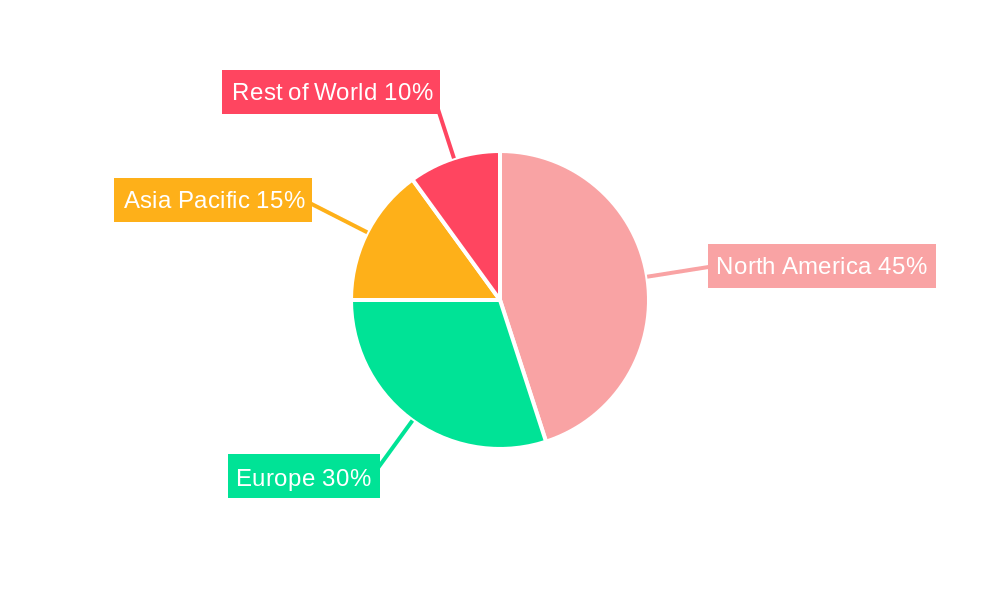
Antidepressant Market Regional Market Share
Geographic Coverage of Antidepressant Market
Antidepressant Market REPORT HIGHLIGHTS
| Aspects | Details |
|---|---|
| Study Period | 2020-2034 |
| Base Year | 2025 |
| Estimated Year | 2026 |
| Forecast Period | 2026-2034 |
| Historical Period | 2020-2025 |
| Growth Rate | CAGR of 2.7% from 2020-2034 |
| Segmentation |
|
Table of Contents
- 1. Introduction
- 1.1. Research Scope
- 1.2. Market Segmentation
- 1.3. Research Methodology
- 1.4. Definitions and Assumptions
- 2. Executive Summary
- 2.1. Introduction
- 3. Market Dynamics
- 3.1. Introduction
- 3.2. Market Drivers
- 3.2.1. Increasing Number of Cases of Depression Around the World; Increasing Awareness About Depression; Emergence of Novel Biologics
- 3.3. Market Restrains
- 3.3.1. Preference of Non-pharmacological Therapies over Pharmacological Therapies; Side Effects and Patent Expiry of Antidepressant Drugs
- 3.4. Market Trends
- 3.4.1. Major Depressive Disorder Segment is Expected to Witness Considerable Growth Over the Forecast Period
- 4. Market Factor Analysis
- 4.1. Porters Five Forces
- 4.2. Supply/Value Chain
- 4.3. PESTEL analysis
- 4.4. Market Entropy
- 4.5. Patent/Trademark Analysis
- 5. Global Antidepressant Market Analysis, Insights and Forecast, 2020-2032
- 5.1. Market Analysis, Insights and Forecast - by Product
- 5.1.1. Selective Serotonin Reuptake Inhibitor (SSRI)
- 5.1.2. Serotonin-norepinephrine Reuptake Inhibitor (SNRI)
- 5.1.3. Tricyclic Antidepressant (TCA)
- 5.1.4. Monoamine Oxidase Inhibitor (MAOI)
- 5.1.5. Other Products
- 5.2. Market Analysis, Insights and Forecast - by Depressive Disorder
- 5.2.1. Major Depressive Disorder
- 5.2.2. Obsessive-compulsive Disorder (OCD)
- 5.2.3. Generalized Anxiety Disorder (GAD)
- 5.2.4. Panic Disorder (PD)
- 5.2.5. Other Depressive Disorders
- 5.3. Market Analysis, Insights and Forecast - by Region
- 5.3.1. North America
- 5.3.2. Europe
- 5.3.3. Asia Pacific
- 5.3.4. Middle East
- 5.3.5. GCC
- 5.3.6. South America
- 5.1. Market Analysis, Insights and Forecast - by Product
- 6. North America Antidepressant Market Analysis, Insights and Forecast, 2020-2032
- 6.1. Market Analysis, Insights and Forecast - by Product
- 6.1.1. Selective Serotonin Reuptake Inhibitor (SSRI)
- 6.1.2. Serotonin-norepinephrine Reuptake Inhibitor (SNRI)
- 6.1.3. Tricyclic Antidepressant (TCA)
- 6.1.4. Monoamine Oxidase Inhibitor (MAOI)
- 6.1.5. Other Products
- 6.2. Market Analysis, Insights and Forecast - by Depressive Disorder
- 6.2.1. Major Depressive Disorder
- 6.2.2. Obsessive-compulsive Disorder (OCD)
- 6.2.3. Generalized Anxiety Disorder (GAD)
- 6.2.4. Panic Disorder (PD)
- 6.2.5. Other Depressive Disorders
- 6.1. Market Analysis, Insights and Forecast - by Product
- 7. Europe Antidepressant Market Analysis, Insights and Forecast, 2020-2032
- 7.1. Market Analysis, Insights and Forecast - by Product
- 7.1.1. Selective Serotonin Reuptake Inhibitor (SSRI)
- 7.1.2. Serotonin-norepinephrine Reuptake Inhibitor (SNRI)
- 7.1.3. Tricyclic Antidepressant (TCA)
- 7.1.4. Monoamine Oxidase Inhibitor (MAOI)
- 7.1.5. Other Products
- 7.2. Market Analysis, Insights and Forecast - by Depressive Disorder
- 7.2.1. Major Depressive Disorder
- 7.2.2. Obsessive-compulsive Disorder (OCD)
- 7.2.3. Generalized Anxiety Disorder (GAD)
- 7.2.4. Panic Disorder (PD)
- 7.2.5. Other Depressive Disorders
- 7.1. Market Analysis, Insights and Forecast - by Product
- 8. Asia Pacific Antidepressant Market Analysis, Insights and Forecast, 2020-2032
- 8.1. Market Analysis, Insights and Forecast - by Product
- 8.1.1. Selective Serotonin Reuptake Inhibitor (SSRI)
- 8.1.2. Serotonin-norepinephrine Reuptake Inhibitor (SNRI)
- 8.1.3. Tricyclic Antidepressant (TCA)
- 8.1.4. Monoamine Oxidase Inhibitor (MAOI)
- 8.1.5. Other Products
- 8.2. Market Analysis, Insights and Forecast - by Depressive Disorder
- 8.2.1. Major Depressive Disorder
- 8.2.2. Obsessive-compulsive Disorder (OCD)
- 8.2.3. Generalized Anxiety Disorder (GAD)
- 8.2.4. Panic Disorder (PD)
- 8.2.5. Other Depressive Disorders
- 8.1. Market Analysis, Insights and Forecast - by Product
- 9. Middle East Antidepressant Market Analysis, Insights and Forecast, 2020-2032
- 9.1. Market Analysis, Insights and Forecast - by Product
- 9.1.1. Selective Serotonin Reuptake Inhibitor (SSRI)
- 9.1.2. Serotonin-norepinephrine Reuptake Inhibitor (SNRI)
- 9.1.3. Tricyclic Antidepressant (TCA)
- 9.1.4. Monoamine Oxidase Inhibitor (MAOI)
- 9.1.5. Other Products
- 9.2. Market Analysis, Insights and Forecast - by Depressive Disorder
- 9.2.1. Major Depressive Disorder
- 9.2.2. Obsessive-compulsive Disorder (OCD)
- 9.2.3. Generalized Anxiety Disorder (GAD)
- 9.2.4. Panic Disorder (PD)
- 9.2.5. Other Depressive Disorders
- 9.1. Market Analysis, Insights and Forecast - by Product
- 10. GCC Antidepressant Market Analysis, Insights and Forecast, 2020-2032
- 10.1. Market Analysis, Insights and Forecast - by Product
- 10.1.1. Selective Serotonin Reuptake Inhibitor (SSRI)
- 10.1.2. Serotonin-norepinephrine Reuptake Inhibitor (SNRI)
- 10.1.3. Tricyclic Antidepressant (TCA)
- 10.1.4. Monoamine Oxidase Inhibitor (MAOI)
- 10.1.5. Other Products
- 10.2. Market Analysis, Insights and Forecast - by Depressive Disorder
- 10.2.1. Major Depressive Disorder
- 10.2.2. Obsessive-compulsive Disorder (OCD)
- 10.2.3. Generalized Anxiety Disorder (GAD)
- 10.2.4. Panic Disorder (PD)
- 10.2.5. Other Depressive Disorders
- 10.1. Market Analysis, Insights and Forecast - by Product
- 11. South America Antidepressant Market Analysis, Insights and Forecast, 2020-2032
- 11.1. Market Analysis, Insights and Forecast - by Product
- 11.1.1. Selective Serotonin Reuptake Inhibitor (SSRI)
- 11.1.2. Serotonin-norepinephrine Reuptake Inhibitor (SNRI)
- 11.1.3. Tricyclic Antidepressant (TCA)
- 11.1.4. Monoamine Oxidase Inhibitor (MAOI)
- 11.1.5. Other Products
- 11.2. Market Analysis, Insights and Forecast - by Depressive Disorder
- 11.2.1. Major Depressive Disorder
- 11.2.2. Obsessive-compulsive Disorder (OCD)
- 11.2.3. Generalized Anxiety Disorder (GAD)
- 11.2.4. Panic Disorder (PD)
- 11.2.5. Other Depressive Disorders
- 11.1. Market Analysis, Insights and Forecast - by Product
- 12. Competitive Analysis
- 12.1. Global Market Share Analysis 2025
- 12.2. Company Profiles
- 12.2.1 AbbiVe Inc
- 12.2.1.1. Overview
- 12.2.1.2. Products
- 12.2.1.3. SWOT Analysis
- 12.2.1.4. Recent Developments
- 12.2.1.5. Financials (Based on Availability)
- 12.2.2 Sanofi
- 12.2.2.1. Overview
- 12.2.2.2. Products
- 12.2.2.3. SWOT Analysis
- 12.2.2.4. Recent Developments
- 12.2.2.5. Financials (Based on Availability)
- 12.2.3 Merck & Co Inc
- 12.2.3.1. Overview
- 12.2.3.2. Products
- 12.2.3.3. SWOT Analysis
- 12.2.3.4. Recent Developments
- 12.2.3.5. Financials (Based on Availability)
- 12.2.4 Eli Lilly and Company
- 12.2.4.1. Overview
- 12.2.4.2. Products
- 12.2.4.3. SWOT Analysis
- 12.2.4.4. Recent Developments
- 12.2.4.5. Financials (Based on Availability)
- 12.2.5 AstraZeneca
- 12.2.5.1. Overview
- 12.2.5.2. Products
- 12.2.5.3. SWOT Analysis
- 12.2.5.4. Recent Developments
- 12.2.5.5. Financials (Based on Availability)
- 12.2.6 H Lundbeck AS
- 12.2.6.1. Overview
- 12.2.6.2. Products
- 12.2.6.3. SWOT Analysis
- 12.2.6.4. Recent Developments
- 12.2.6.5. Financials (Based on Availability)
- 12.2.7 Johnson & Johnson
- 12.2.7.1. Overview
- 12.2.7.2. Products
- 12.2.7.3. SWOT Analysis
- 12.2.7.4. Recent Developments
- 12.2.7.5. Financials (Based on Availability)
- 12.2.8 Sun Pharmaceuticals Pvt Ltd
- 12.2.8.1. Overview
- 12.2.8.2. Products
- 12.2.8.3. SWOT Analysis
- 12.2.8.4. Recent Developments
- 12.2.8.5. Financials (Based on Availability)
- 12.2.9 Dr Reddy's Laboratories*List Not Exhaustive
- 12.2.9.1. Overview
- 12.2.9.2. Products
- 12.2.9.3. SWOT Analysis
- 12.2.9.4. Recent Developments
- 12.2.9.5. Financials (Based on Availability)
- 12.2.10 GlaxoSmithKline PLC
- 12.2.10.1. Overview
- 12.2.10.2. Products
- 12.2.10.3. SWOT Analysis
- 12.2.10.4. Recent Developments
- 12.2.10.5. Financials (Based on Availability)
- 12.2.11 Pfizer Inc
- 12.2.11.1. Overview
- 12.2.11.2. Products
- 12.2.11.3. SWOT Analysis
- 12.2.11.4. Recent Developments
- 12.2.11.5. Financials (Based on Availability)
- 12.2.1 AbbiVe Inc
List of Figures
- Figure 1: Global Antidepressant Market Revenue Breakdown (billion, %) by Region 2025 & 2033
- Figure 2: North America Antidepressant Market Revenue (billion), by Product 2025 & 2033
- Figure 3: North America Antidepressant Market Revenue Share (%), by Product 2025 & 2033
- Figure 4: North America Antidepressant Market Revenue (billion), by Depressive Disorder 2025 & 2033
- Figure 5: North America Antidepressant Market Revenue Share (%), by Depressive Disorder 2025 & 2033
- Figure 6: North America Antidepressant Market Revenue (billion), by Country 2025 & 2033
- Figure 7: North America Antidepressant Market Revenue Share (%), by Country 2025 & 2033
- Figure 8: Europe Antidepressant Market Revenue (billion), by Product 2025 & 2033
- Figure 9: Europe Antidepressant Market Revenue Share (%), by Product 2025 & 2033
- Figure 10: Europe Antidepressant Market Revenue (billion), by Depressive Disorder 2025 & 2033
- Figure 11: Europe Antidepressant Market Revenue Share (%), by Depressive Disorder 2025 & 2033
- Figure 12: Europe Antidepressant Market Revenue (billion), by Country 2025 & 2033
- Figure 13: Europe Antidepressant Market Revenue Share (%), by Country 2025 & 2033
- Figure 14: Asia Pacific Antidepressant Market Revenue (billion), by Product 2025 & 2033
- Figure 15: Asia Pacific Antidepressant Market Revenue Share (%), by Product 2025 & 2033
- Figure 16: Asia Pacific Antidepressant Market Revenue (billion), by Depressive Disorder 2025 & 2033
- Figure 17: Asia Pacific Antidepressant Market Revenue Share (%), by Depressive Disorder 2025 & 2033
- Figure 18: Asia Pacific Antidepressant Market Revenue (billion), by Country 2025 & 2033
- Figure 19: Asia Pacific Antidepressant Market Revenue Share (%), by Country 2025 & 2033
- Figure 20: Middle East Antidepressant Market Revenue (billion), by Product 2025 & 2033
- Figure 21: Middle East Antidepressant Market Revenue Share (%), by Product 2025 & 2033
- Figure 22: Middle East Antidepressant Market Revenue (billion), by Depressive Disorder 2025 & 2033
- Figure 23: Middle East Antidepressant Market Revenue Share (%), by Depressive Disorder 2025 & 2033
- Figure 24: Middle East Antidepressant Market Revenue (billion), by Country 2025 & 2033
- Figure 25: Middle East Antidepressant Market Revenue Share (%), by Country 2025 & 2033
- Figure 26: GCC Antidepressant Market Revenue (billion), by Product 2025 & 2033
- Figure 27: GCC Antidepressant Market Revenue Share (%), by Product 2025 & 2033
- Figure 28: GCC Antidepressant Market Revenue (billion), by Depressive Disorder 2025 & 2033
- Figure 29: GCC Antidepressant Market Revenue Share (%), by Depressive Disorder 2025 & 2033
- Figure 30: GCC Antidepressant Market Revenue (billion), by Country 2025 & 2033
- Figure 31: GCC Antidepressant Market Revenue Share (%), by Country 2025 & 2033
- Figure 32: South America Antidepressant Market Revenue (billion), by Product 2025 & 2033
- Figure 33: South America Antidepressant Market Revenue Share (%), by Product 2025 & 2033
- Figure 34: South America Antidepressant Market Revenue (billion), by Depressive Disorder 2025 & 2033
- Figure 35: South America Antidepressant Market Revenue Share (%), by Depressive Disorder 2025 & 2033
- Figure 36: South America Antidepressant Market Revenue (billion), by Country 2025 & 2033
- Figure 37: South America Antidepressant Market Revenue Share (%), by Country 2025 & 2033
List of Tables
- Table 1: Global Antidepressant Market Revenue billion Forecast, by Product 2020 & 2033
- Table 2: Global Antidepressant Market Revenue billion Forecast, by Depressive Disorder 2020 & 2033
- Table 3: Global Antidepressant Market Revenue billion Forecast, by Region 2020 & 2033
- Table 4: Global Antidepressant Market Revenue billion Forecast, by Product 2020 & 2033
- Table 5: Global Antidepressant Market Revenue billion Forecast, by Depressive Disorder 2020 & 2033
- Table 6: Global Antidepressant Market Revenue billion Forecast, by Country 2020 & 2033
- Table 7: United States Antidepressant Market Revenue (billion) Forecast, by Application 2020 & 2033
- Table 8: Canada Antidepressant Market Revenue (billion) Forecast, by Application 2020 & 2033
- Table 9: Mexico Antidepressant Market Revenue (billion) Forecast, by Application 2020 & 2033
- Table 10: Global Antidepressant Market Revenue billion Forecast, by Product 2020 & 2033
- Table 11: Global Antidepressant Market Revenue billion Forecast, by Depressive Disorder 2020 & 2033
- Table 12: Global Antidepressant Market Revenue billion Forecast, by Country 2020 & 2033
- Table 13: Germany Antidepressant Market Revenue (billion) Forecast, by Application 2020 & 2033
- Table 14: United Kingdom Antidepressant Market Revenue (billion) Forecast, by Application 2020 & 2033
- Table 15: France Antidepressant Market Revenue (billion) Forecast, by Application 2020 & 2033
- Table 16: Italy Antidepressant Market Revenue (billion) Forecast, by Application 2020 & 2033
- Table 17: Spain Antidepressant Market Revenue (billion) Forecast, by Application 2020 & 2033
- Table 18: Rest of Europe Antidepressant Market Revenue (billion) Forecast, by Application 2020 & 2033
- Table 19: Global Antidepressant Market Revenue billion Forecast, by Product 2020 & 2033
- Table 20: Global Antidepressant Market Revenue billion Forecast, by Depressive Disorder 2020 & 2033
- Table 21: Global Antidepressant Market Revenue billion Forecast, by Country 2020 & 2033
- Table 22: China Antidepressant Market Revenue (billion) Forecast, by Application 2020 & 2033
- Table 23: Japan Antidepressant Market Revenue (billion) Forecast, by Application 2020 & 2033
- Table 24: India Antidepressant Market Revenue (billion) Forecast, by Application 2020 & 2033
- Table 25: Australia Antidepressant Market Revenue (billion) Forecast, by Application 2020 & 2033
- Table 26: South Korea Antidepressant Market Revenue (billion) Forecast, by Application 2020 & 2033
- Table 27: Rest of Asia Pacific Antidepressant Market Revenue (billion) Forecast, by Application 2020 & 2033
- Table 28: Global Antidepressant Market Revenue billion Forecast, by Product 2020 & 2033
- Table 29: Global Antidepressant Market Revenue billion Forecast, by Depressive Disorder 2020 & 2033
- Table 30: Global Antidepressant Market Revenue billion Forecast, by Country 2020 & 2033
- Table 31: Global Antidepressant Market Revenue billion Forecast, by Product 2020 & 2033
- Table 32: Global Antidepressant Market Revenue billion Forecast, by Depressive Disorder 2020 & 2033
- Table 33: Global Antidepressant Market Revenue billion Forecast, by Country 2020 & 2033
- Table 34: South Africa Antidepressant Market Revenue (billion) Forecast, by Application 2020 & 2033
- Table 35: Rest of Middle East Antidepressant Market Revenue (billion) Forecast, by Application 2020 & 2033
- Table 36: Global Antidepressant Market Revenue billion Forecast, by Product 2020 & 2033
- Table 37: Global Antidepressant Market Revenue billion Forecast, by Depressive Disorder 2020 & 2033
- Table 38: Global Antidepressant Market Revenue billion Forecast, by Country 2020 & 2033
- Table 39: Brazil Antidepressant Market Revenue (billion) Forecast, by Application 2020 & 2033
- Table 40: Argentina Antidepressant Market Revenue (billion) Forecast, by Application 2020 & 2033
- Table 41: Rest of South America Antidepressant Market Revenue (billion) Forecast, by Application 2020 & 2033
Frequently Asked Questions
1. What is the projected Compound Annual Growth Rate (CAGR) of the Antidepressant Market?
The projected CAGR is approximately 2.7%.
2. Which companies are prominent players in the Antidepressant Market?
Key companies in the market include AbbiVe Inc, Sanofi, Merck & Co Inc, Eli Lilly and Company, AstraZeneca, H Lundbeck AS, Johnson & Johnson, Sun Pharmaceuticals Pvt Ltd, Dr Reddy's Laboratories*List Not Exhaustive, GlaxoSmithKline PLC, Pfizer Inc.
3. What are the main segments of the Antidepressant Market?
The market segments include Product, Depressive Disorder.
4. Can you provide details about the market size?
The market size is estimated to be USD 17.9 billion as of 2022.
5. What are some drivers contributing to market growth?
Increasing Number of Cases of Depression Around the World; Increasing Awareness About Depression; Emergence of Novel Biologics.
6. What are the notable trends driving market growth?
Major Depressive Disorder Segment is Expected to Witness Considerable Growth Over the Forecast Period.
7. Are there any restraints impacting market growth?
Preference of Non-pharmacological Therapies over Pharmacological Therapies; Side Effects and Patent Expiry of Antidepressant Drugs.
8. Can you provide examples of recent developments in the market?
August 2022- the U.S. FDA approved dextromethorphan-bupropion, or Auvelity of Axsome Therapeutics, a drug used to treat major depressive disorder in adults. It is the first that works within a week of taking it.
9. What pricing options are available for accessing the report?
Pricing options include single-user, multi-user, and enterprise licenses priced at USD 4750, USD 5250, and USD 8750 respectively.
10. Is the market size provided in terms of value or volume?
The market size is provided in terms of value, measured in billion.
11. Are there any specific market keywords associated with the report?
Yes, the market keyword associated with the report is "Antidepressant Market," which aids in identifying and referencing the specific market segment covered.
12. How do I determine which pricing option suits my needs best?
The pricing options vary based on user requirements and access needs. Individual users may opt for single-user licenses, while businesses requiring broader access may choose multi-user or enterprise licenses for cost-effective access to the report.
13. Are there any additional resources or data provided in the Antidepressant Market report?
While the report offers comprehensive insights, it's advisable to review the specific contents or supplementary materials provided to ascertain if additional resources or data are available.
14. How can I stay updated on further developments or reports in the Antidepressant Market?
To stay informed about further developments, trends, and reports in the Antidepressant Market, consider subscribing to industry newsletters, following relevant companies and organizations, or regularly checking reputable industry news sources and publications.
Methodology
Step 1 - Identification of Relevant Samples Size from Population Database



Step 2 - Approaches for Defining Global Market Size (Value, Volume* & Price*)

Note*: In applicable scenarios
Step 3 - Data Sources
Primary Research
- Web Analytics
- Survey Reports
- Research Institute
- Latest Research Reports
- Opinion Leaders
Secondary Research
- Annual Reports
- White Paper
- Latest Press Release
- Industry Association
- Paid Database
- Investor Presentations

Step 4 - Data Triangulation
Involves using different sources of information in order to increase the validity of a study
These sources are likely to be stakeholders in a program - participants, other researchers, program staff, other community members, and so on.
Then we put all data in single framework & apply various statistical tools to find out the dynamic on the market.
During the analysis stage, feedback from the stakeholder groups would be compared to determine areas of agreement as well as areas of divergence