
Key Insights
The global wooden pallet collars market is poised for significant expansion, driven by increasing demand across diverse industrial applications. Estimated to be valued at approximately $1.5 billion in 2025, the market is projected to grow at a Compound Annual Growth Rate (CAGR) of around 6.5% through 2033. This robust growth is primarily fueled by the burgeoning food and beverage sector, where wooden pallet collars offer superior hygiene and protection for packaged goods, as well as the chemicals and pharmaceutical industries, which prioritize secure and robust containment solutions. The inherent sustainability and reusability of wooden pallet collars further contribute to their appeal, aligning with global environmental consciousness and regulatory pressures towards eco-friendly packaging. The trend towards foldable collars, offering enhanced storage efficiency and ease of handling, is also a key driver, catering to the logistical needs of modern supply chains.
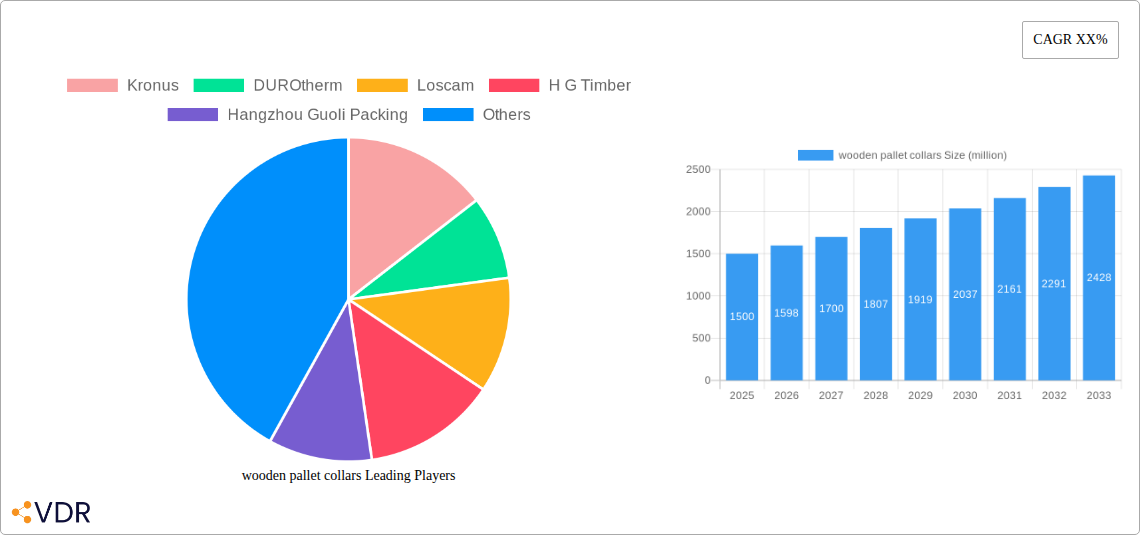
wooden pallet collars Market Size (In Billion)

However, the market faces certain restraints that could temper its growth trajectory. The increasing adoption of alternative packaging materials, such as plastic or metal, presents a competitive challenge. Additionally, fluctuating raw material prices for wood and potential supply chain disruptions can impact manufacturing costs and availability. Despite these challenges, the inherent advantages of wooden pallet collars, including their durability, load-bearing capacity, and cost-effectiveness in many applications, are expected to maintain their strong market position. The ongoing innovation in design and manufacturing processes, aimed at improving performance and reducing environmental impact, will be crucial for sustained market dominance.
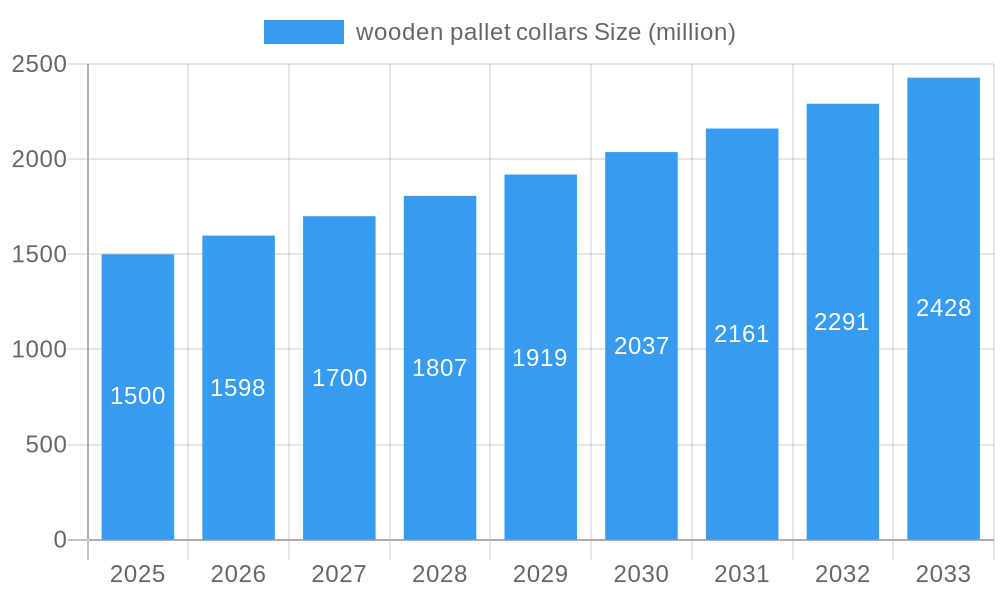
wooden pallet collars Company Market Share
Wooden Pallet Collars Market Dynamics & Structure
The global wooden pallet collars market exhibits a moderate level of concentration, with key players like Kronus, DUROtherm, Loscam, H G Timber, Hangzhou Guoli Packing, CABKA Group, Eredi Caimi, Nefab, GEBHARDT Logistic Solutions, and Midland Wood Products holding significant shares. Technological innovation is a primary driver, with advancements in wood treatment, interlocking mechanisms, and foldable designs enhancing durability, reusability, and ease of handling. Regulatory frameworks, particularly concerning sustainable forestry practices and material handling standards, are influencing product development and adoption. Competitive product substitutes, such as plastic or metal pallet collars, pose a threat, but the eco-friendly and cost-effectiveness of wood continues to drive demand. End-user demographics span a broad spectrum, from large-scale industrial manufacturers in Food and Beverages, Chemicals, and Pharmaceutical sectors to smaller enterprises in Machinery and Others. Mergers and acquisitions (M&A) are a notable trend, as companies seek to expand their product portfolios, geographic reach, and market share. For instance, there were an estimated 5 M&A deals in the historical period (2019-2024) valued at approximately $70 million, signaling consolidation and strategic growth. Innovation barriers include the capital investment required for advanced manufacturing and the need for consistent quality control in raw material sourcing.
- Market Concentration: Moderate, with leading players dominating specific regional or application segments.
- Technological Innovation: Focus on enhanced durability, reusability, and sustainable sourcing.
- Regulatory Frameworks: Driving adoption of eco-friendly materials and stringent handling standards.
- Competitive Substitutes: Plastic and metal collars present ongoing competition.
- End-User Demographics: Diverse, with strong demand from industrial sectors.
- M&A Trends: Active consolidation to enhance market position and product offerings.
Wooden Pallet Collars Growth Trends & Insights
The wooden pallet collars market is poised for significant expansion, driven by a confluence of escalating global trade, the burgeoning e-commerce sector, and an increasing emphasis on sustainable packaging solutions. The market size is projected to witness a Compound Annual Growth Rate (CAGR) of approximately 5.8% during the forecast period of 2025–2033. In the historical period (2019–2024), the market experienced steady growth, reaching an estimated value of $5.2 billion by 2024, fueled by increased industrial activity and a growing awareness of the benefits of reusable packaging. The base year of 2025 is estimated to see the market valued at $5.5 billion. Adoption rates for wooden pallet collars are on an upward trajectory, particularly within the Food and Beverages and Pharmaceutical segments, where hygiene, durability, and product protection are paramount. The versatility of wooden pallet collars, accommodating a wide range of product dimensions and weights, makes them a preferred choice for logistics and supply chain management.
Technological disruptions, while present in the form of advanced material treatments that enhance moisture resistance and insect repellency, are largely evolutionary rather than revolutionary within this segment. The primary focus remains on optimizing existing designs for greater efficiency and sustainability. Consumer behavior shifts are playing a crucial role, with businesses increasingly prioritizing environmentally responsible packaging options. The recyclability and biodegradability of wooden pallet collars align perfectly with these evolving preferences, offering a compelling alternative to less sustainable materials. Furthermore, the rise of foldable wooden pallet collars has significantly improved storage and transportation efficiency, reducing empty return logistics costs and contributing to their growing market penetration. This has seen the adoption rate of foldable variants climb by an estimated 15% annually in recent years. The global demand for robust, cost-effective, and eco-conscious material handling solutions will continue to be the bedrock of this market’s growth.
Dominant Regions, Countries, or Segments in Wooden Pallet Collars
The Asia-Pacific region stands out as the dominant force in the global wooden pallet collars market, driven by a powerful combination of rapid industrialization, a burgeoning manufacturing sector, and a growing e-commerce landscape. Within this region, China emerges as a leading country, boasting the largest market share due to its extensive manufacturing capabilities across various industries, including Food and Beverages, Chemicals, and Machinery. The sheer volume of goods produced and exported from China necessitates a robust and reliable packaging infrastructure, where wooden pallet collars play a critical role.
The Food and Beverages segment also holds a dominant position within the application landscape of the wooden pallet collars market. This dominance is attributed to the sector's stringent requirements for product protection, hygiene, and temperature control during transit and storage. Wooden pallet collars provide a secure enclosure that safeguards perishable goods from damage, contamination, and pilferage. The growing global population and the expanding middle class worldwide further fuel the demand for processed and packaged food items, thereby directly impacting the consumption of wooden pallet collars. Estimated market share for Food and Beverages application in 2025 is projected to be 28%.
Among the types, Unfoldable wooden pallet collars currently lead the market due to their robust construction and inherent strength, making them ideal for heavy-duty applications and long-haul transportation. However, the Foldable segment is witnessing substantial growth, projected at a CAGR of 6.5% from 2025 to 2033, driven by increasing demand for space-saving solutions in warehousing and logistics. The estimated market share for Foldable types in 2025 is 35%.
Key drivers contributing to the dominance of Asia-Pacific and specific segments include:
- Economic Policies: Favorable government policies promoting manufacturing and exports in countries like China and India.
- Infrastructure Development: Significant investments in ports, logistics networks, and warehousing facilities across the region.
- E-commerce Boom: The explosive growth of online retail necessitates efficient and secure packaging solutions.
- Sustainability Initiatives: Growing awareness and adoption of eco-friendly packaging materials, where wood excels.
- Cost-Effectiveness: The competitive pricing of wooden pallet collars compared to alternatives in high-volume manufacturing hubs.
- Application-Specific Needs: The inherent requirements of industries like Food and Beverages for safe and hygienic transportation.
The market share within the Asia-Pacific region is estimated to be 32% of the global market in 2025. The dominance of China within this region is projected to account for roughly 50% of the Asia-Pacific market share.
Wooden Pallet Collars Product Landscape
Wooden pallet collars are evolving to meet diverse industry demands, with innovations focusing on enhanced durability, modularity, and sustainability. Manufacturers are increasingly offering treated wood options that provide superior resistance to moisture, pests, and decay, extending the lifespan of the collars and reducing replacement frequency. The development of precisely engineered interlocking mechanisms ensures secure assembly and dis-assembly, crucial for efficient handling and storage. Furthermore, advancements in foldable designs are optimizing space utilization during transit and warehousing, offering a significant logistical advantage. Applications span across the demanding Food and Beverages, Chemicals, and Pharmaceutical industries, where product integrity and safety are paramount, as well as the Machinery sector for secure transportation of components. The performance metrics of modern wooden pallet collars are characterized by high load-bearing capacities, excellent stacking strength, and a reduced environmental footprint due to their reusability and biodegradability.
Key Drivers, Barriers & Challenges in Wooden Pallet Collars
Key Drivers:
- Growing Global Trade & E-commerce: Increased movement of goods necessitates robust and reliable packaging.
- Sustainability Mandates: Rising environmental consciousness and demand for eco-friendly packaging solutions.
- Cost-Effectiveness: Wooden pallet collars offer a competitive price point compared to some alternatives.
- Durability & Reusability: Their long lifespan and ability to be reused multiple times reduce overall packaging costs.
- Versatility: Adaptable to various product sizes and shapes, making them suitable for diverse industries.
Key Barriers & Challenges:
- Competition from Alternatives: Plastic and metal pallet collars offer specific advantages like water resistance and uniform dimensions, posing a competitive threat.
- Supply Chain Volatility: Fluctuations in timber prices and availability can impact production costs and lead times, with an estimated 10% impact on production costs during periods of scarcity.
- Regulatory Hurdles: Varying international regulations regarding wood treatments, fumigation, and phytosanitary measures can complicate cross-border trade.
- Moisture & Pest Susceptibility: Without proper treatment, wood can be vulnerable to moisture damage and insect infestation, potentially affecting product integrity.
- Infrastructure Limitations: In certain developing regions, inadequate handling equipment might hinder the optimal utilization of pallet collars.
Emerging Opportunities in Wooden Pallet Collars
The wooden pallet collars market is ripe with emerging opportunities, particularly in the expansion of sustainable packaging initiatives and the development of smart logistics solutions. The growing demand for circular economy practices presents a significant opportunity for manufacturers to offer pallet collar leasing and refurbishment services, enhancing their revenue streams and customer loyalty. Furthermore, the integration of RFID tags or QR codes onto wooden pallet collars can enable enhanced tracking, inventory management, and supply chain visibility, catering to the evolving needs of the digitalized logistics landscape. Untapped markets in emerging economies with developing industrial sectors also represent substantial growth potential. Innovative applications, such as specialized collars for the booming vertical farming industry or for the safe transport of sensitive electronics, are also on the horizon. The increasing consumer preference for brands that demonstrate environmental responsibility will further drive adoption.
Growth Accelerators in the Wooden Pallet Collars Industry
The long-term growth of the wooden pallet collars industry will be significantly accelerated by continuous innovation in wood treatment technologies, leading to enhanced durability and resistance against environmental factors. Strategic partnerships between timber suppliers and packaging manufacturers will ensure a stable and cost-effective supply chain, mitigating price volatility. The development and adoption of standardized designs and specifications across the industry will facilitate interoperability and streamline logistics operations globally. Moreover, an increased focus on developing highly customizable pallet collar solutions tailored to specific industry needs and product requirements will unlock new market segments. The growing emphasis on corporate social responsibility and sustainable sourcing practices will also act as a powerful catalyst, pushing more businesses towards eco-friendly packaging alternatives.
Key Players Shaping the Wooden Pallet Collars Market
- Kronus
- DUROtherm
- Loscam
- H G Timber
- Hangzhou Guoli Packing
- CABKA Group
- Eredi Caimi
- Nefab
- GEBHARDT Logistic Solutions
- Midland Wood Products
Notable Milestones in Wooden Pallet Collars Sector
- 2019: Increased adoption of eco-friendly packaging drives innovation in wood treatment for enhanced durability.
- 2020: Surge in e-commerce fuels demand for reliable and cost-effective pallet collar solutions.
- 2021: Introduction of advanced interlocking mechanisms for easier assembly and disassembly of foldable collars.
- 2022: Major players invest in sustainable forestry certifications to meet growing market demand for eco-conscious products.
- 2023: Development of smart pallet collars with integrated tracking capabilities begins to gain traction.
- 2024: Increased M&A activity as companies seek to consolidate market share and expand product offerings.
In-Depth Wooden Pallet Collars Market Outlook
The outlook for the wooden pallet collars market remains exceptionally positive, driven by sustained global economic growth, the unceasing expansion of e-commerce, and a deeply ingrained shift towards sustainability in corporate practices. The industry is set to experience robust expansion, fueled by ongoing technological advancements in material science and manufacturing processes that will further enhance the performance and appeal of wooden pallet collars. Strategic collaborations between key stakeholders, coupled with an aggressive pursuit of untapped market potential in developing economies, will act as significant growth accelerators. The increasing emphasis on circular economy principles will also create opportunities for value-added services, solidifying the long-term growth trajectory and profitability of this vital sector.
wooden pallet collars Segmentation
-
1. Application
- 1.1. Food and Beverages
- 1.2. Chemicals
- 1.3. Pharmaceutical
- 1.4. Machinery
- 1.5. Others
-
2. Types
- 2.1. Foldable
- 2.2. Unfoldble
wooden pallet collars Segmentation By Geography
- 1. CA
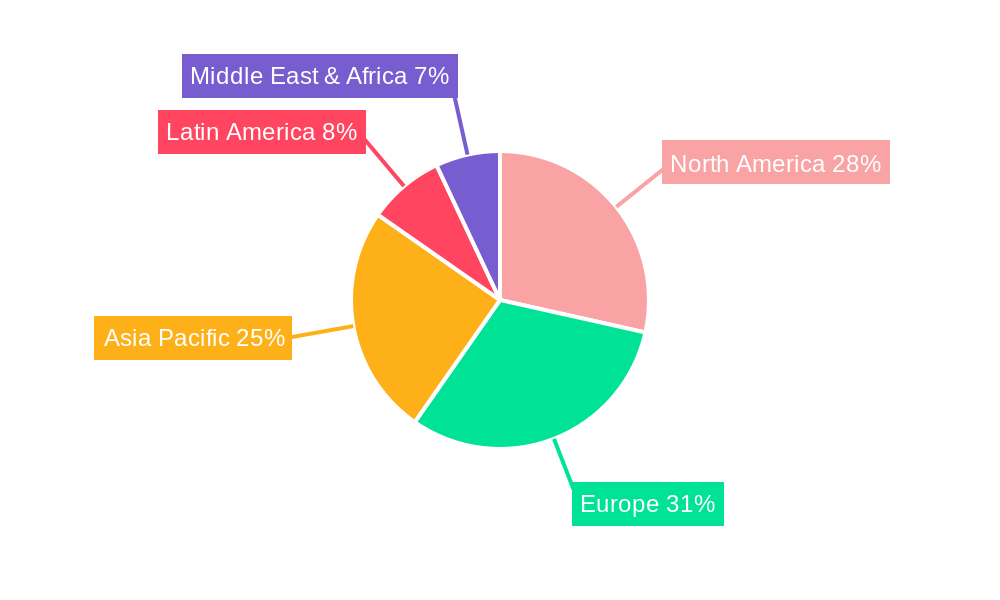
wooden pallet collars Regional Market Share
Geographic Coverage of wooden pallet collars
wooden pallet collars REPORT HIGHLIGHTS
| Aspects | Details |
|---|---|
| Study Period | 2020-2034 |
| Base Year | 2025 |
| Estimated Year | 2026 |
| Forecast Period | 2026-2034 |
| Historical Period | 2020-2025 |
| Growth Rate | CAGR of 11.8399999999999% from 2020-2034 |
| Segmentation |
|
Table of Contents
- 1. Introduction
- 1.1. Research Scope
- 1.2. Market Segmentation
- 1.3. Research Methodology
- 1.4. Definitions and Assumptions
- 2. Executive Summary
- 2.1. Introduction
- 3. Market Dynamics
- 3.1. Introduction
- 3.2. Market Drivers
- 3.3. Market Restrains
- 3.4. Market Trends
- 4. Market Factor Analysis
- 4.1. Porters Five Forces
- 4.2. Supply/Value Chain
- 4.3. PESTEL analysis
- 4.4. Market Entropy
- 4.5. Patent/Trademark Analysis
- 5. wooden pallet collars Analysis, Insights and Forecast, 2020-2032
- 5.1. Market Analysis, Insights and Forecast - by Application
- 5.1.1. Food and Beverages
- 5.1.2. Chemicals
- 5.1.3. Pharmaceutical
- 5.1.4. Machinery
- 5.1.5. Others
- 5.2. Market Analysis, Insights and Forecast - by Types
- 5.2.1. Foldable
- 5.2.2. Unfoldble
- 5.3. Market Analysis, Insights and Forecast - by Region
- 5.3.1. CA
- 5.1. Market Analysis, Insights and Forecast - by Application
- 6. Competitive Analysis
- 6.1. Market Share Analysis 2025
- 6.2. Company Profiles
- 6.2.1 Kronus
- 6.2.1.1. Overview
- 6.2.1.2. Products
- 6.2.1.3. SWOT Analysis
- 6.2.1.4. Recent Developments
- 6.2.1.5. Financials (Based on Availability)
- 6.2.2 DUROtherm
- 6.2.2.1. Overview
- 6.2.2.2. Products
- 6.2.2.3. SWOT Analysis
- 6.2.2.4. Recent Developments
- 6.2.2.5. Financials (Based on Availability)
- 6.2.3 Loscam
- 6.2.3.1. Overview
- 6.2.3.2. Products
- 6.2.3.3. SWOT Analysis
- 6.2.3.4. Recent Developments
- 6.2.3.5. Financials (Based on Availability)
- 6.2.4 H G Timber
- 6.2.4.1. Overview
- 6.2.4.2. Products
- 6.2.4.3. SWOT Analysis
- 6.2.4.4. Recent Developments
- 6.2.4.5. Financials (Based on Availability)
- 6.2.5 Hangzhou Guoli Packing
- 6.2.5.1. Overview
- 6.2.5.2. Products
- 6.2.5.3. SWOT Analysis
- 6.2.5.4. Recent Developments
- 6.2.5.5. Financials (Based on Availability)
- 6.2.6 CABKA Group
- 6.2.6.1. Overview
- 6.2.6.2. Products
- 6.2.6.3. SWOT Analysis
- 6.2.6.4. Recent Developments
- 6.2.6.5. Financials (Based on Availability)
- 6.2.7 Eredi Caimi
- 6.2.7.1. Overview
- 6.2.7.2. Products
- 6.2.7.3. SWOT Analysis
- 6.2.7.4. Recent Developments
- 6.2.7.5. Financials (Based on Availability)
- 6.2.8 Nefab
- 6.2.8.1. Overview
- 6.2.8.2. Products
- 6.2.8.3. SWOT Analysis
- 6.2.8.4. Recent Developments
- 6.2.8.5. Financials (Based on Availability)
- 6.2.9 GEBHARDT Logistic Solutions
- 6.2.9.1. Overview
- 6.2.9.2. Products
- 6.2.9.3. SWOT Analysis
- 6.2.9.4. Recent Developments
- 6.2.9.5. Financials (Based on Availability)
- 6.2.10 Midland Wood Products
- 6.2.10.1. Overview
- 6.2.10.2. Products
- 6.2.10.3. SWOT Analysis
- 6.2.10.4. Recent Developments
- 6.2.10.5. Financials (Based on Availability)
- 6.2.1 Kronus
List of Figures
- Figure 1: wooden pallet collars Revenue Breakdown (undefined, %) by Product 2025 & 2033
- Figure 2: wooden pallet collars Share (%) by Company 2025
List of Tables
- Table 1: wooden pallet collars Revenue undefined Forecast, by Application 2020 & 2033
- Table 2: wooden pallet collars Revenue undefined Forecast, by Types 2020 & 2033
- Table 3: wooden pallet collars Revenue undefined Forecast, by Region 2020 & 2033
- Table 4: wooden pallet collars Revenue undefined Forecast, by Application 2020 & 2033
- Table 5: wooden pallet collars Revenue undefined Forecast, by Types 2020 & 2033
- Table 6: wooden pallet collars Revenue undefined Forecast, by Country 2020 & 2033
Frequently Asked Questions
1. What is the projected Compound Annual Growth Rate (CAGR) of the wooden pallet collars?
The projected CAGR is approximately 11.8399999999999%.
2. Which companies are prominent players in the wooden pallet collars?
Key companies in the market include Kronus, DUROtherm, Loscam, H G Timber, Hangzhou Guoli Packing, CABKA Group, Eredi Caimi, Nefab, GEBHARDT Logistic Solutions, Midland Wood Products.
3. What are the main segments of the wooden pallet collars?
The market segments include Application, Types.
4. Can you provide details about the market size?
The market size is estimated to be USD XXX N/A as of 2022.
5. What are some drivers contributing to market growth?
N/A
6. What are the notable trends driving market growth?
N/A
7. Are there any restraints impacting market growth?
N/A
8. Can you provide examples of recent developments in the market?
N/A
9. What pricing options are available for accessing the report?
Pricing options include single-user, multi-user, and enterprise licenses priced at USD 3400.00, USD 5100.00, and USD 6800.00 respectively.
10. Is the market size provided in terms of value or volume?
The market size is provided in terms of value, measured in N/A.
11. Are there any specific market keywords associated with the report?
Yes, the market keyword associated with the report is "wooden pallet collars," which aids in identifying and referencing the specific market segment covered.
12. How do I determine which pricing option suits my needs best?
The pricing options vary based on user requirements and access needs. Individual users may opt for single-user licenses, while businesses requiring broader access may choose multi-user or enterprise licenses for cost-effective access to the report.
13. Are there any additional resources or data provided in the wooden pallet collars report?
While the report offers comprehensive insights, it's advisable to review the specific contents or supplementary materials provided to ascertain if additional resources or data are available.
14. How can I stay updated on further developments or reports in the wooden pallet collars?
To stay informed about further developments, trends, and reports in the wooden pallet collars, consider subscribing to industry newsletters, following relevant companies and organizations, or regularly checking reputable industry news sources and publications.
Methodology
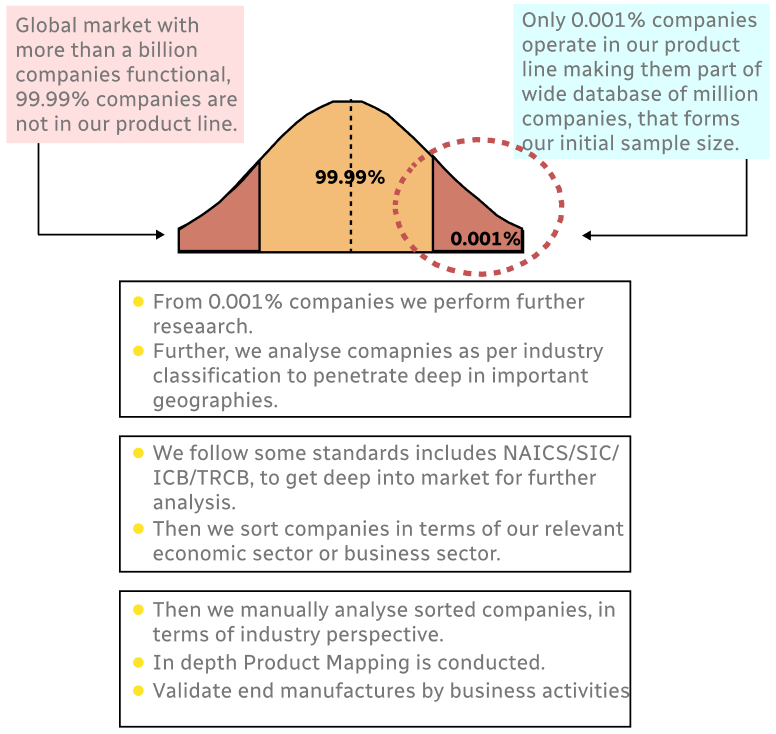
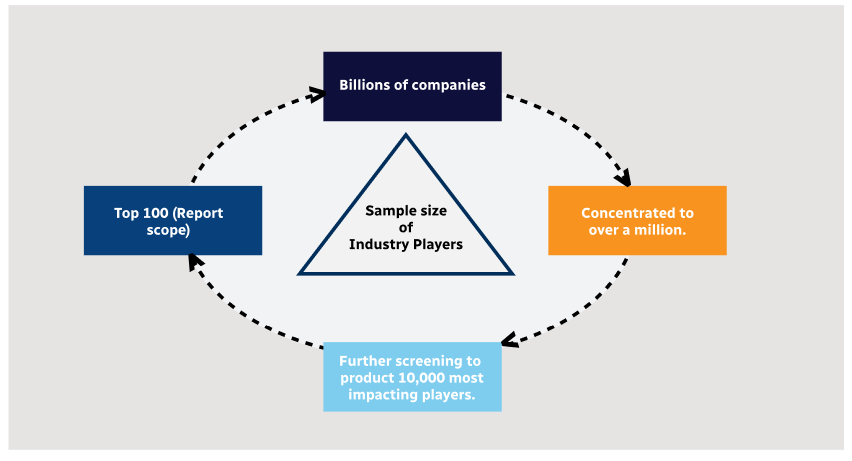
Step 1 - Identification of Relevant Samples Size from Population Database
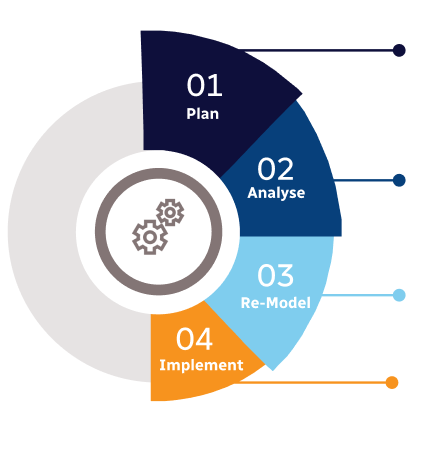
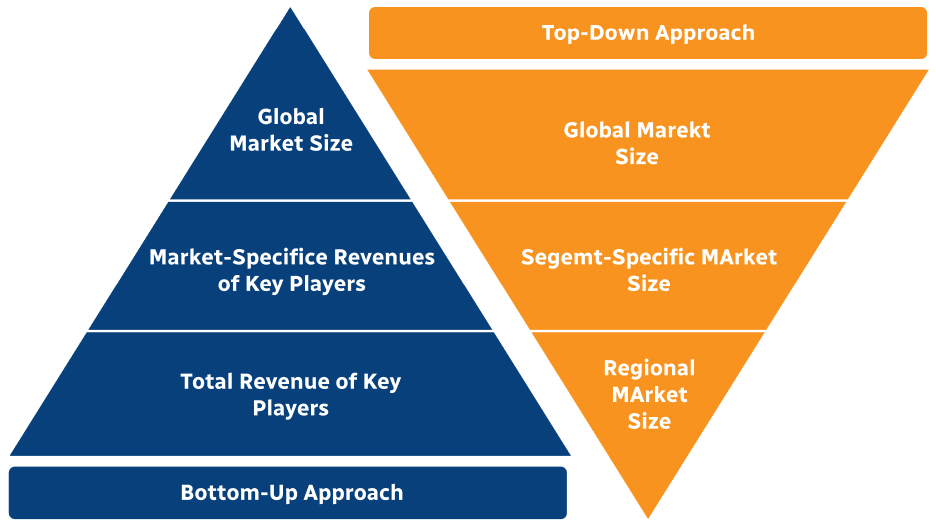
Step 2 - Approaches for Defining Global Market Size (Value, Volume* & Price*)
Note*: In applicable scenarios
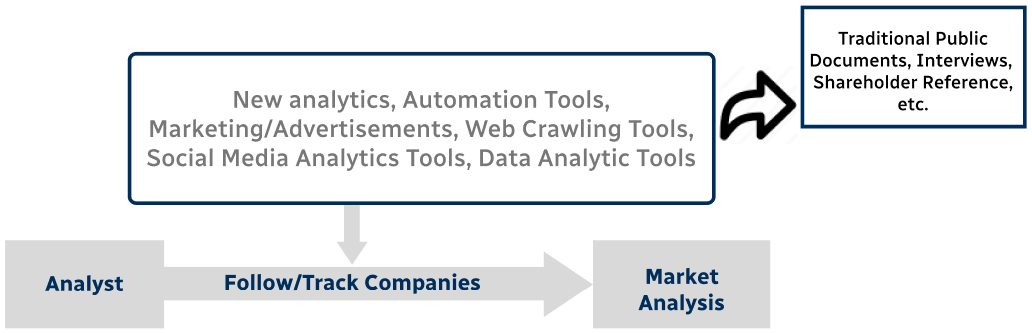
Step 3 - Data Sources
Primary Research
- Web Analytics
- Survey Reports
- Research Institute
- Latest Research Reports
- Opinion Leaders
Secondary Research
- Annual Reports
- White Paper
- Latest Press Release
- Industry Association
- Paid Database
- Investor Presentations
Step 4 - Data Triangulation
Involves using different sources of information in order to increase the validity of a study
These sources are likely to be stakeholders in a program - participants, other researchers, program staff, other community members, and so on.
Then we put all data in single framework & apply various statistical tools to find out the dynamic on the market.
During the analysis stage, feedback from the stakeholder groups would be compared to determine areas of agreement as well as areas of divergence