


Key Insights
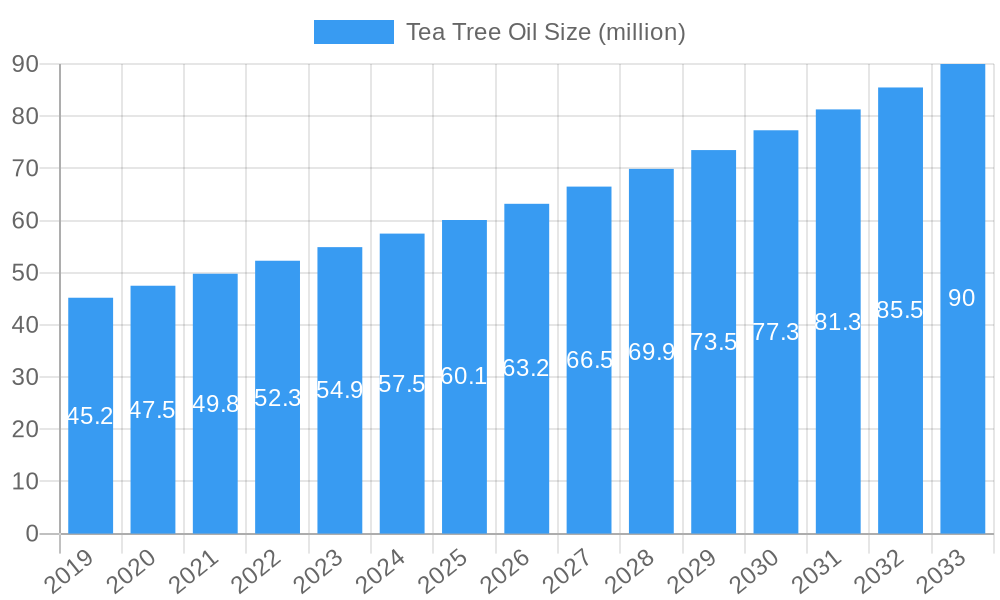
The global Tea Tree Oil market is poised for robust growth, projected to reach a significant valuation of USD 60.1 million by 2025. This expansion is driven by a burgeoning demand for natural and organic ingredients across various consumer-facing industries. The market is expected to witness a Compound Annual Growth Rate (CAGR) of 5.3% during the forecast period of 2025-2033, indicating a sustained upward trajectory. Key growth drivers include the increasing consumer awareness regarding the therapeutic and antimicrobial properties of tea tree oil, leading to its widespread adoption in medicinal applications for treating skin infections, acne, and fungal ailments. Furthermore, the escalating popularity of natural skincare products, fueled by a desire for chemical-free alternatives, is a major impetus for market expansion. The versatility of tea tree oil also extends to its use in aromatherapy, household cleaning products, and even as an insect repellent, further broadening its market appeal. The market segmentation reveals a strong emphasis on both "Medicine" and "Skincare Products" applications, highlighting their dominant roles in driving demand.
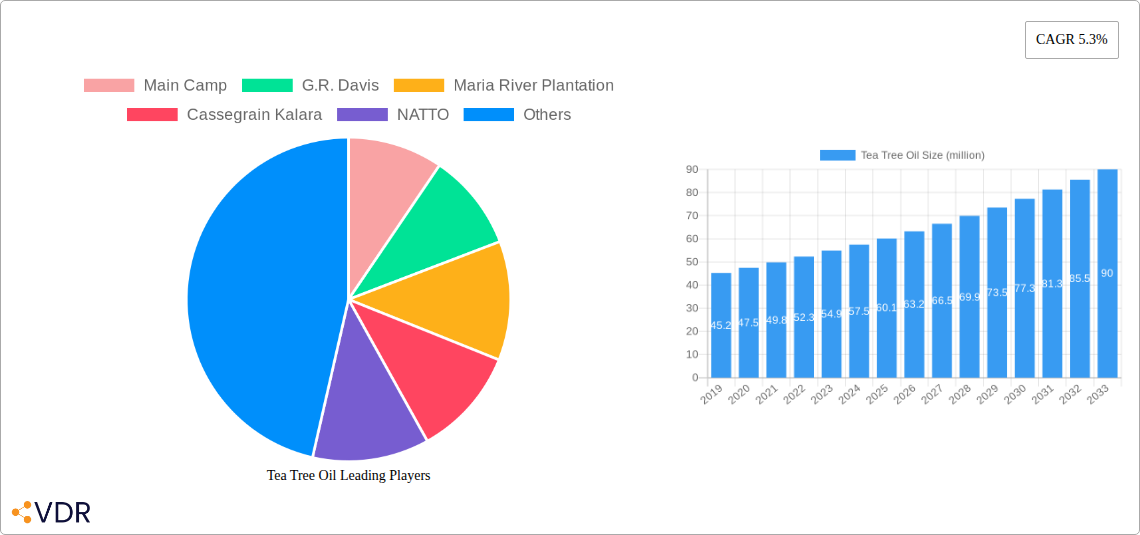
Tea Tree Oil Market Size (In Million)

The market dynamics are further shaped by evolving consumer preferences and technological advancements in extraction and purification processes. While the market exhibits substantial growth potential, certain factors could influence its pace. These restraints, likely stemming from price volatility of raw materials, stringent regulatory landscapes concerning its use in specific applications, and the emergence of effective synthetic alternatives, warrant careful consideration by market participants. However, the inherent advantages of tea tree oil, such as its natural origin and proven efficacy, are expected to outweigh these challenges. The dominance of pharmaceutical-grade and premium-grade oils within the "Type" segmentation underscores the market's focus on high-quality, pure tea tree oil. Geographically, the Asia Pacific region, with its strong agricultural base and growing demand for natural products, is expected to be a significant contributor, alongside established markets in North America and Europe. Key players in this market are actively investing in research and development to innovate product offerings and expand their global reach.
Tea Tree Oil Company Market Share
Certainly! Here is a compelling, SEO-optimized report description for Tea Tree Oil, designed to attract industry professionals and maximize search engine visibility.
This in-depth report provides a strategic overview of the global Tea Tree Oil market, encompassing a detailed historical analysis from 2019 to 2024, a robust base year assessment for 2025, and an extensive forecast period extending to 2033. We deliver critical insights into market dynamics, growth trends, regional dominance, product innovation, key drivers, barriers, and emerging opportunities within the natural essential oils market, specifically focusing on tea tree oil applications in medicine, skincare products, and other sectors.
The report is meticulously structured for industry professionals, offering actionable intelligence on pharmaceutical grade tea tree oil, premium grade tea tree oil, and the competitive landscape. Leveraging advanced analytical methodologies, this report will equip stakeholders with the knowledge to navigate the evolving botanical extracts market and capitalize on future growth trajectories.
Tea Tree Oil Market Dynamics & Structure
The global Tea Tree Oil market is characterized by moderate concentration, with key players like Main Camp, G.R. Davis, Maria River Plantation, and Thursday Plantation holding significant influence. Technological innovation is a primary driver, with advancements in extraction techniques, particularly steam distillation and CO2 extraction, enhancing oil purity and yield, thus impacting the essential oils market share. Regulatory frameworks, especially those governing cosmetic ingredients and pharmaceutical applications in regions like Europe and North America, play a crucial role in shaping product development and market entry strategies for organic tea tree oil. Competitive product substitutes, such as eucalyptus oil and other antiseptic essential oils, present a constant challenge, necessitating clear differentiation based on efficacy and sustainability. End-user demographics are increasingly favoring natural and organic products, driving demand for pure tea tree oil among health-conscious consumers. Mergers and acquisitions (M&A) trends, while not overtly dominant, are observed as companies seek to expand their product portfolios and secure raw material supply chains.
- Market Concentration: Moderate, with a few key players dominating production and distribution.
- Technological Innovation: Focus on improved extraction methods and purity enhancement.
- Regulatory Influence: Stringent standards for pharmaceutical and cosmetic applications in developed economies.
- Competitive Landscape: Competition from other antiseptic essential oils.
- End-User Demographics: Growing preference for natural and organic ingredients.
- M&A Activity: Strategic acquisitions to consolidate market position and expand reach.
Tea Tree Oil Growth Trends & Insights
The global tea tree oil market size is projected for substantial growth, fueled by escalating consumer demand for natural healthcare solutions and premium skincare formulations. Throughout the historical period (2019–2024), the market demonstrated a consistent upward trajectory, driven by increasing awareness of tea tree oil's potent antimicrobial, antifungal, and anti-inflammatory properties. This awareness has translated into higher adoption rates across various applications. The base year (2025) sets a strong foundation for future expansion, with an estimated market value of $xxx million. The forecast period (2025–2033) is anticipated to witness a Compound Annual Growth Rate (CAGR) of xx%, driven by technological disruptions and evolving consumer behavior. Innovations in extraction and purification technologies are enhancing the quality and efficacy of melaleuca alternifolia oil, leading to its wider acceptance in pharmaceutical and cosmetic industries. Consumer behavior shifts, including a greater inclination towards holistic wellness and a preference for ethically sourced, sustainable tea tree oil, are significant growth accelerators. The market penetration of tea tree oil is expanding beyond traditional remedies into mainstream health and beauty products, including acne treatments, shampoos, and natural disinfectants. The essential oils industry outlook indicates a sustained demand for high-quality, traceable tea tree oil.
- Market Size Evolution: Steady growth from 2019-2024, with significant expansion projected from 2025-2033.
- Adoption Rates: Increasing across medical, cosmetic, and personal care segments.
- Technological Disruptions: Advancements in extraction and formulation enhancing product quality and application diversity.
- Consumer Behavior Shifts: Growing preference for natural, organic, and sustainably sourced ingredients, impacting demand for therapeutic grade tea tree oil.
- Market Penetration: Expansion into new product categories and geographical markets.
- CAGR Projection: Estimated at xx% for the forecast period (2025–2033).
Dominant Regions, Countries, or Segments in Tea Tree Oil
The Skincare Products segment, particularly within the Premium Grade Oil category, is a dominant force driving the global Tea Tree Oil market. This dominance is fueled by a confluence of factors, including a massive consumer base actively seeking natural and effective solutions for dermatological concerns like acne, blemishes, and fungal infections. The robust growth of the premium skincare market in developed regions like North America and Europe, coupled with a burgeoning middle class in Asia-Pacific actively embracing advanced skincare routines, significantly amplifies demand for high-quality tea tree oil. Countries such as the United States, Australia, and the United Kingdom are leading consumers, driven by strong regulatory support for natural ingredients in cosmetics and a well-established market for essential oils. The economic policies in these regions often encourage the use of plant-based products, further bolstering the tea tree oil skincare applications. Market share within this segment is substantial, estimated at over $xxx million in 2025, with a projected growth potential exceeding xx% during the forecast period. The perceived efficacy and versatility of tea tree oil in formulations ranging from cleansers and toners to specialized spot treatments position it as a key ingredient for premium brands.
- Dominant Segment: Skincare Products, specifically Premium Grade Oil.
- Key Regions: North America, Europe, and increasingly, Asia-Pacific.
- Leading Countries: United States, Australia, United Kingdom.
- Market Share (Skincare): Over $xxx million in 2025.
- Growth Potential (Skincare): Exceeding xx% during the forecast period.
- Drivers: Consumer demand for natural acne treatments, anti-fungal properties, and holistic beauty solutions.
- Economic Policies: Supportive of natural and organic ingredient usage in cosmetics.
Tea Tree Oil Product Landscape
The product landscape of the Tea Tree Oil market is evolving with a focus on purity, efficacy, and specialized applications. Manufacturers are increasingly offering pharmaceutical grade tea tree oil and premium grade tea tree oil, distinguished by stringent quality control measures, higher terpinen-4-ol content, and lower cineole levels. Innovations in extraction and refining processes have led to enhanced product stability and reduced allergenic potential. Unique selling propositions often revolve around organic certification, ethical sourcing, and traceability, appealing to environmentally conscious consumers. Technological advancements in microencapsulation and controlled-release formulations are also emerging, promising improved delivery and efficacy in skincare and topical medicinal products. The performance metrics for melaleuca oil are consistently being refined to meet the growing demand for scientifically validated natural remedies.
Key Drivers, Barriers & Challenges in Tea Tree Oil
Key Drivers:
- Growing Consumer Preference for Natural Products: Increasing demand for natural ingredients in healthcare and personal care products.
- Antimicrobial and Antifungal Properties: Well-established efficacy in treating various skin conditions and infections.
- Expanding Applications in Skincare: Widespread use in acne treatments, anti-dandruff shampoos, and other dermatological formulations.
- Rising Disposable Income: Enabling consumers in emerging economies to opt for premium natural products.
- Technological Advancements: Improved extraction and purification methods enhancing oil quality and yield.
Barriers & Challenges:
- Supply Chain Volatility: Dependence on agricultural output and susceptibility to climate change and pest infestations.
- Regulatory Hurdles: Stringent approval processes for pharmaceutical applications and varying standards across regions.
- Price Fluctuations: Subject to seasonal availability and agricultural yields, impacting cost-effectiveness.
- Competition from Synthetic Alternatives: Availability of cost-effective synthetic ingredients with similar purported benefits.
- Potential for Skin Irritation: Misuse or undiluted application can lead to adverse skin reactions, necessitating consumer education.
- Sustainability Concerns: Ensuring responsible sourcing and environmentally friendly cultivation practices.
Emerging Opportunities in Tea Tree Oil
Emerging opportunities in the Tea Tree Oil industry lie in the burgeoning demand for natural and organic personal care products, particularly in the rapidly expanding Asia-Pacific market. The exploration of new therapeutic applications, such as in oral hygiene products for its antiseptic properties and in veterinary care, presents significant untapped potential. Furthermore, the development of advanced delivery systems for tea tree oil, such as nano-emulsions and liposomes, can enhance its bioavailability and efficacy, opening doors for more sophisticated formulations. The increasing consumer interest in aromatherapy and its associated wellness benefits also creates a niche for high-purity, ethically sourced tea tree oil. The integration of tea tree oil into household cleaning products as a natural disinfectant alternative also represents a growing segment.
Growth Accelerators in the Tea Tree Oil Industry
Long-term growth in the Tea Tree Oil industry is being propelled by a multi-faceted approach involving technological breakthroughs, strategic market expansion, and evolving consumer consciousness. Continued research and development into the antimicrobial and anti-inflammatory mechanisms of tea tree oil are validating its efficacy and paving the way for wider medical and pharmaceutical acceptance. Strategic partnerships between raw material suppliers and cosmetic and pharmaceutical manufacturers are ensuring a stable supply chain and fostering innovation in product development. Market expansion into underdeveloped geographies, coupled with targeted marketing campaigns highlighting the benefits of pure tea tree oil, is crucial for increasing global penetration. The growing trend towards natural and sustainable living is a powerful catalyst, driving consumer preference and encouraging brands to invest in ethically sourced and environmentally friendly tea tree oil production.
Key Players Shaping the Tea Tree Oil Market
- Main Camp
- G.R. Davis
- Maria River Plantation
- Cassegrain Kalara
- NATTO
- Jenbrook
- LvHuan Technology
- Coromandel Mountains
- Fuyang Biotechnology
- Oribi Oils
- Nandu Biology
- Bestdo Technology
- Thursday Plantation
- SOiL
- Parent Market: Global Essential Oils Market
- Child Market: Natural Essential Oils Market, Australian Tea Tree Oil Market
Notable Milestones in Tea Tree Oil Sector
- 2019: Increased consumer awareness and online discourse around the benefits of natural skincare, boosting demand for tea tree oil.
- 2020: Significant surge in demand for natural disinfectants and home care products, with tea tree oil gaining traction for its antimicrobial properties.
- 2021: Growing emphasis on sustainable and organic sourcing in the beauty industry, leading to increased certifications for tea tree oil producers.
- 2022: Advancements in extraction technology leading to higher purity and efficacy of tea tree oil, enhancing its appeal for pharmaceutical applications.
- 2023: Expansion of tea tree oil into novel product categories beyond skincare, including oral care and pet care.
- 2024: Increased investment in research and development to explore the full therapeutic potential of tea tree oil.
In-Depth Tea Tree Oil Market Outlook
The outlook for the Tea Tree Oil market remains exceptionally positive, driven by persistent consumer demand for natural and effective ingredients. Growth accelerators such as ongoing scientific validation of its medicinal properties, coupled with the expanding global footprint of the natural personal care and wellness industries, will continue to fuel market expansion. Strategic investments in sustainable farming practices and advanced extraction technologies will not only ensure a stable supply of high-quality Australian tea tree oil but also enhance its competitive edge. The forecast period is poised for significant growth, driven by emerging markets and innovative product applications. The market is expected to witness robust growth, presenting lucrative opportunities for stakeholders to capitalize on the increasing global preference for natural, therapeutic, and premium-grade essential oils.
Tea Tree Oil Segmentation
-
1. Application
- 1.1. Medicine
- 1.2. Skincare Products
- 1.3. Other Use
-
2. Type
- 2.1. Pharmaceutical Grade Oil
- 2.2. Premium Grade Oil
Tea Tree Oil Segmentation By Geography
-
1. North America
- 1.1. United States
- 1.2. Canada
- 1.3. Mexico
-
2. South America
- 2.1. Brazil
- 2.2. Argentina
- 2.3. Rest of South America
-
3. Europe
- 3.1. United Kingdom
- 3.2. Germany
- 3.3. France
- 3.4. Italy
- 3.5. Spain
- 3.6. Russia
- 3.7. Benelux
- 3.8. Nordics
- 3.9. Rest of Europe
-
4. Middle East & Africa
- 4.1. Turkey
- 4.2. Israel
- 4.3. GCC
- 4.4. North Africa
- 4.5. South Africa
- 4.6. Rest of Middle East & Africa
-
5. Asia Pacific
- 5.1. China
- 5.2. India
- 5.3. Japan
- 5.4. South Korea
- 5.5. ASEAN
- 5.6. Oceania
- 5.7. Rest of Asia Pacific
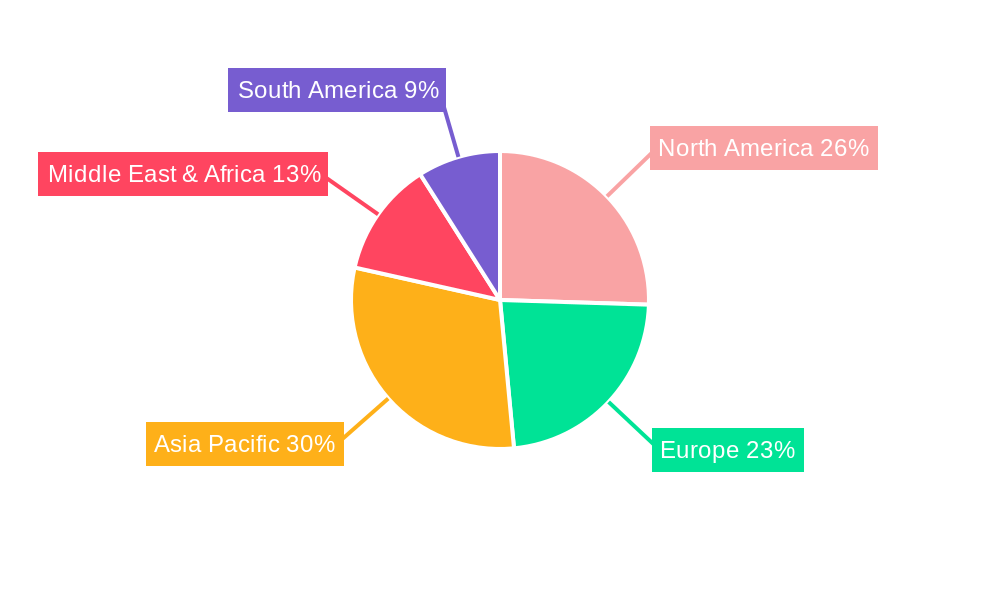
Tea Tree Oil Regional Market Share
Geographic Coverage of Tea Tree Oil
Tea Tree Oil REPORT HIGHLIGHTS
| Aspects | Details |
|---|---|
| Study Period | 2020-2034 |
| Base Year | 2025 |
| Estimated Year | 2026 |
| Forecast Period | 2026-2034 |
| Historical Period | 2020-2025 |
| Growth Rate | CAGR of 5.3% from 2020-2034 |
| Segmentation |
|
Table of Contents
- 1. Introduction
- 1.1. Research Scope
- 1.2. Market Segmentation
- 1.3. Research Methodology
- 1.4. Definitions and Assumptions
- 2. Executive Summary
- 2.1. Introduction
- 3. Market Dynamics
- 3.1. Introduction
- 3.2. Market Drivers
- 3.3. Market Restrains
- 3.4. Market Trends
- 4. Market Factor Analysis
- 4.1. Porters Five Forces
- 4.2. Supply/Value Chain
- 4.3. PESTEL analysis
- 4.4. Market Entropy
- 4.5. Patent/Trademark Analysis
- 5. Global Tea Tree Oil Analysis, Insights and Forecast, 2020-2032
- 5.1. Market Analysis, Insights and Forecast - by Application
- 5.1.1. Medicine
- 5.1.2. Skincare Products
- 5.1.3. Other Use
- 5.2. Market Analysis, Insights and Forecast - by Type
- 5.2.1. Pharmaceutical Grade Oil
- 5.2.2. Premium Grade Oil
- 5.3. Market Analysis, Insights and Forecast - by Region
- 5.3.1. North America
- 5.3.2. South America
- 5.3.3. Europe
- 5.3.4. Middle East & Africa
- 5.3.5. Asia Pacific
- 5.1. Market Analysis, Insights and Forecast - by Application
- 6. North America Tea Tree Oil Analysis, Insights and Forecast, 2020-2032
- 6.1. Market Analysis, Insights and Forecast - by Application
- 6.1.1. Medicine
- 6.1.2. Skincare Products
- 6.1.3. Other Use
- 6.2. Market Analysis, Insights and Forecast - by Type
- 6.2.1. Pharmaceutical Grade Oil
- 6.2.2. Premium Grade Oil
- 6.1. Market Analysis, Insights and Forecast - by Application
- 7. South America Tea Tree Oil Analysis, Insights and Forecast, 2020-2032
- 7.1. Market Analysis, Insights and Forecast - by Application
- 7.1.1. Medicine
- 7.1.2. Skincare Products
- 7.1.3. Other Use
- 7.2. Market Analysis, Insights and Forecast - by Type
- 7.2.1. Pharmaceutical Grade Oil
- 7.2.2. Premium Grade Oil
- 7.1. Market Analysis, Insights and Forecast - by Application
- 8. Europe Tea Tree Oil Analysis, Insights and Forecast, 2020-2032
- 8.1. Market Analysis, Insights and Forecast - by Application
- 8.1.1. Medicine
- 8.1.2. Skincare Products
- 8.1.3. Other Use
- 8.2. Market Analysis, Insights and Forecast - by Type
- 8.2.1. Pharmaceutical Grade Oil
- 8.2.2. Premium Grade Oil
- 8.1. Market Analysis, Insights and Forecast - by Application
- 9. Middle East & Africa Tea Tree Oil Analysis, Insights and Forecast, 2020-2032
- 9.1. Market Analysis, Insights and Forecast - by Application
- 9.1.1. Medicine
- 9.1.2. Skincare Products
- 9.1.3. Other Use
- 9.2. Market Analysis, Insights and Forecast - by Type
- 9.2.1. Pharmaceutical Grade Oil
- 9.2.2. Premium Grade Oil
- 9.1. Market Analysis, Insights and Forecast - by Application
- 10. Asia Pacific Tea Tree Oil Analysis, Insights and Forecast, 2020-2032
- 10.1. Market Analysis, Insights and Forecast - by Application
- 10.1.1. Medicine
- 10.1.2. Skincare Products
- 10.1.3. Other Use
- 10.2. Market Analysis, Insights and Forecast - by Type
- 10.2.1. Pharmaceutical Grade Oil
- 10.2.2. Premium Grade Oil
- 10.1. Market Analysis, Insights and Forecast - by Application
- 11. Competitive Analysis
- 11.1. Global Market Share Analysis 2025
- 11.2. Company Profiles
- 11.2.1 Main Camp
- 11.2.1.1. Overview
- 11.2.1.2. Products
- 11.2.1.3. SWOT Analysis
- 11.2.1.4. Recent Developments
- 11.2.1.5. Financials (Based on Availability)
- 11.2.2 G.R. Davis
- 11.2.2.1. Overview
- 11.2.2.2. Products
- 11.2.2.3. SWOT Analysis
- 11.2.2.4. Recent Developments
- 11.2.2.5. Financials (Based on Availability)
- 11.2.3 Maria River Plantation
- 11.2.3.1. Overview
- 11.2.3.2. Products
- 11.2.3.3. SWOT Analysis
- 11.2.3.4. Recent Developments
- 11.2.3.5. Financials (Based on Availability)
- 11.2.4 Cassegrain Kalara
- 11.2.4.1. Overview
- 11.2.4.2. Products
- 11.2.4.3. SWOT Analysis
- 11.2.4.4. Recent Developments
- 11.2.4.5. Financials (Based on Availability)
- 11.2.5 NATTO
- 11.2.5.1. Overview
- 11.2.5.2. Products
- 11.2.5.3. SWOT Analysis
- 11.2.5.4. Recent Developments
- 11.2.5.5. Financials (Based on Availability)
- 11.2.6 Jenbrook
- 11.2.6.1. Overview
- 11.2.6.2. Products
- 11.2.6.3. SWOT Analysis
- 11.2.6.4. Recent Developments
- 11.2.6.5. Financials (Based on Availability)
- 11.2.7 LvHuan Technology
- 11.2.7.1. Overview
- 11.2.7.2. Products
- 11.2.7.3. SWOT Analysis
- 11.2.7.4. Recent Developments
- 11.2.7.5. Financials (Based on Availability)
- 11.2.8 Coromandel Mountains
- 11.2.8.1. Overview
- 11.2.8.2. Products
- 11.2.8.3. SWOT Analysis
- 11.2.8.4. Recent Developments
- 11.2.8.5. Financials (Based on Availability)
- 11.2.9 Fuyang Biotechnology
- 11.2.9.1. Overview
- 11.2.9.2. Products
- 11.2.9.3. SWOT Analysis
- 11.2.9.4. Recent Developments
- 11.2.9.5. Financials (Based on Availability)
- 11.2.10 Oribi Oils
- 11.2.10.1. Overview
- 11.2.10.2. Products
- 11.2.10.3. SWOT Analysis
- 11.2.10.4. Recent Developments
- 11.2.10.5. Financials (Based on Availability)
- 11.2.11 Nandu Biology
- 11.2.11.1. Overview
- 11.2.11.2. Products
- 11.2.11.3. SWOT Analysis
- 11.2.11.4. Recent Developments
- 11.2.11.5. Financials (Based on Availability)
- 11.2.12 Bestdo Technology
- 11.2.12.1. Overview
- 11.2.12.2. Products
- 11.2.12.3. SWOT Analysis
- 11.2.12.4. Recent Developments
- 11.2.12.5. Financials (Based on Availability)
- 11.2.13 Thursday Plantation
- 11.2.13.1. Overview
- 11.2.13.2. Products
- 11.2.13.3. SWOT Analysis
- 11.2.13.4. Recent Developments
- 11.2.13.5. Financials (Based on Availability)
- 11.2.14 SOiL
- 11.2.14.1. Overview
- 11.2.14.2. Products
- 11.2.14.3. SWOT Analysis
- 11.2.14.4. Recent Developments
- 11.2.14.5. Financials (Based on Availability)
- 11.2.1 Main Camp
List of Figures
- Figure 1: Global Tea Tree Oil Revenue Breakdown (million, %) by Region 2025 & 2033
- Figure 2: North America Tea Tree Oil Revenue (million), by Application 2025 & 2033
- Figure 3: North America Tea Tree Oil Revenue Share (%), by Application 2025 & 2033
- Figure 4: North America Tea Tree Oil Revenue (million), by Type 2025 & 2033
- Figure 5: North America Tea Tree Oil Revenue Share (%), by Type 2025 & 2033
- Figure 6: North America Tea Tree Oil Revenue (million), by Country 2025 & 2033
- Figure 7: North America Tea Tree Oil Revenue Share (%), by Country 2025 & 2033
- Figure 8: South America Tea Tree Oil Revenue (million), by Application 2025 & 2033
- Figure 9: South America Tea Tree Oil Revenue Share (%), by Application 2025 & 2033
- Figure 10: South America Tea Tree Oil Revenue (million), by Type 2025 & 2033
- Figure 11: South America Tea Tree Oil Revenue Share (%), by Type 2025 & 2033
- Figure 12: South America Tea Tree Oil Revenue (million), by Country 2025 & 2033
- Figure 13: South America Tea Tree Oil Revenue Share (%), by Country 2025 & 2033
- Figure 14: Europe Tea Tree Oil Revenue (million), by Application 2025 & 2033
- Figure 15: Europe Tea Tree Oil Revenue Share (%), by Application 2025 & 2033
- Figure 16: Europe Tea Tree Oil Revenue (million), by Type 2025 & 2033
- Figure 17: Europe Tea Tree Oil Revenue Share (%), by Type 2025 & 2033
- Figure 18: Europe Tea Tree Oil Revenue (million), by Country 2025 & 2033
- Figure 19: Europe Tea Tree Oil Revenue Share (%), by Country 2025 & 2033
- Figure 20: Middle East & Africa Tea Tree Oil Revenue (million), by Application 2025 & 2033
- Figure 21: Middle East & Africa Tea Tree Oil Revenue Share (%), by Application 2025 & 2033
- Figure 22: Middle East & Africa Tea Tree Oil Revenue (million), by Type 2025 & 2033
- Figure 23: Middle East & Africa Tea Tree Oil Revenue Share (%), by Type 2025 & 2033
- Figure 24: Middle East & Africa Tea Tree Oil Revenue (million), by Country 2025 & 2033
- Figure 25: Middle East & Africa Tea Tree Oil Revenue Share (%), by Country 2025 & 2033
- Figure 26: Asia Pacific Tea Tree Oil Revenue (million), by Application 2025 & 2033
- Figure 27: Asia Pacific Tea Tree Oil Revenue Share (%), by Application 2025 & 2033
- Figure 28: Asia Pacific Tea Tree Oil Revenue (million), by Type 2025 & 2033
- Figure 29: Asia Pacific Tea Tree Oil Revenue Share (%), by Type 2025 & 2033
- Figure 30: Asia Pacific Tea Tree Oil Revenue (million), by Country 2025 & 2033
- Figure 31: Asia Pacific Tea Tree Oil Revenue Share (%), by Country 2025 & 2033
List of Tables
- Table 1: Global Tea Tree Oil Revenue million Forecast, by Application 2020 & 2033
- Table 2: Global Tea Tree Oil Revenue million Forecast, by Type 2020 & 2033
- Table 3: Global Tea Tree Oil Revenue million Forecast, by Region 2020 & 2033
- Table 4: Global Tea Tree Oil Revenue million Forecast, by Application 2020 & 2033
- Table 5: Global Tea Tree Oil Revenue million Forecast, by Type 2020 & 2033
- Table 6: Global Tea Tree Oil Revenue million Forecast, by Country 2020 & 2033
- Table 7: United States Tea Tree Oil Revenue (million) Forecast, by Application 2020 & 2033
- Table 8: Canada Tea Tree Oil Revenue (million) Forecast, by Application 2020 & 2033
- Table 9: Mexico Tea Tree Oil Revenue (million) Forecast, by Application 2020 & 2033
- Table 10: Global Tea Tree Oil Revenue million Forecast, by Application 2020 & 2033
- Table 11: Global Tea Tree Oil Revenue million Forecast, by Type 2020 & 2033
- Table 12: Global Tea Tree Oil Revenue million Forecast, by Country 2020 & 2033
- Table 13: Brazil Tea Tree Oil Revenue (million) Forecast, by Application 2020 & 2033
- Table 14: Argentina Tea Tree Oil Revenue (million) Forecast, by Application 2020 & 2033
- Table 15: Rest of South America Tea Tree Oil Revenue (million) Forecast, by Application 2020 & 2033
- Table 16: Global Tea Tree Oil Revenue million Forecast, by Application 2020 & 2033
- Table 17: Global Tea Tree Oil Revenue million Forecast, by Type 2020 & 2033
- Table 18: Global Tea Tree Oil Revenue million Forecast, by Country 2020 & 2033
- Table 19: United Kingdom Tea Tree Oil Revenue (million) Forecast, by Application 2020 & 2033
- Table 20: Germany Tea Tree Oil Revenue (million) Forecast, by Application 2020 & 2033
- Table 21: France Tea Tree Oil Revenue (million) Forecast, by Application 2020 & 2033
- Table 22: Italy Tea Tree Oil Revenue (million) Forecast, by Application 2020 & 2033
- Table 23: Spain Tea Tree Oil Revenue (million) Forecast, by Application 2020 & 2033
- Table 24: Russia Tea Tree Oil Revenue (million) Forecast, by Application 2020 & 2033
- Table 25: Benelux Tea Tree Oil Revenue (million) Forecast, by Application 2020 & 2033
- Table 26: Nordics Tea Tree Oil Revenue (million) Forecast, by Application 2020 & 2033
- Table 27: Rest of Europe Tea Tree Oil Revenue (million) Forecast, by Application 2020 & 2033
- Table 28: Global Tea Tree Oil Revenue million Forecast, by Application 2020 & 2033
- Table 29: Global Tea Tree Oil Revenue million Forecast, by Type 2020 & 2033
- Table 30: Global Tea Tree Oil Revenue million Forecast, by Country 2020 & 2033
- Table 31: Turkey Tea Tree Oil Revenue (million) Forecast, by Application 2020 & 2033
- Table 32: Israel Tea Tree Oil Revenue (million) Forecast, by Application 2020 & 2033
- Table 33: GCC Tea Tree Oil Revenue (million) Forecast, by Application 2020 & 2033
- Table 34: North Africa Tea Tree Oil Revenue (million) Forecast, by Application 2020 & 2033
- Table 35: South Africa Tea Tree Oil Revenue (million) Forecast, by Application 2020 & 2033
- Table 36: Rest of Middle East & Africa Tea Tree Oil Revenue (million) Forecast, by Application 2020 & 2033
- Table 37: Global Tea Tree Oil Revenue million Forecast, by Application 2020 & 2033
- Table 38: Global Tea Tree Oil Revenue million Forecast, by Type 2020 & 2033
- Table 39: Global Tea Tree Oil Revenue million Forecast, by Country 2020 & 2033
- Table 40: China Tea Tree Oil Revenue (million) Forecast, by Application 2020 & 2033
- Table 41: India Tea Tree Oil Revenue (million) Forecast, by Application 2020 & 2033
- Table 42: Japan Tea Tree Oil Revenue (million) Forecast, by Application 2020 & 2033
- Table 43: South Korea Tea Tree Oil Revenue (million) Forecast, by Application 2020 & 2033
- Table 44: ASEAN Tea Tree Oil Revenue (million) Forecast, by Application 2020 & 2033
- Table 45: Oceania Tea Tree Oil Revenue (million) Forecast, by Application 2020 & 2033
- Table 46: Rest of Asia Pacific Tea Tree Oil Revenue (million) Forecast, by Application 2020 & 2033
Frequently Asked Questions
1. What is the projected Compound Annual Growth Rate (CAGR) of the Tea Tree Oil?
The projected CAGR is approximately 5.3%.
2. Which companies are prominent players in the Tea Tree Oil?
Key companies in the market include Main Camp, G.R. Davis, Maria River Plantation, Cassegrain Kalara, NATTO, Jenbrook, LvHuan Technology, Coromandel Mountains, Fuyang Biotechnology, Oribi Oils, Nandu Biology, Bestdo Technology, Thursday Plantation, SOiL.
3. What are the main segments of the Tea Tree Oil?
The market segments include Application, Type.
4. Can you provide details about the market size?
The market size is estimated to be USD 60.1 million as of 2022.
5. What are some drivers contributing to market growth?
N/A
6. What are the notable trends driving market growth?
N/A
7. Are there any restraints impacting market growth?
N/A
8. Can you provide examples of recent developments in the market?
N/A
9. What pricing options are available for accessing the report?
Pricing options include single-user, multi-user, and enterprise licenses priced at USD 5900.00, USD 8850.00, and USD 11800.00 respectively.
10. Is the market size provided in terms of value or volume?
The market size is provided in terms of value, measured in million.
11. Are there any specific market keywords associated with the report?
Yes, the market keyword associated with the report is "Tea Tree Oil," which aids in identifying and referencing the specific market segment covered.
12. How do I determine which pricing option suits my needs best?
The pricing options vary based on user requirements and access needs. Individual users may opt for single-user licenses, while businesses requiring broader access may choose multi-user or enterprise licenses for cost-effective access to the report.
13. Are there any additional resources or data provided in the Tea Tree Oil report?
While the report offers comprehensive insights, it's advisable to review the specific contents or supplementary materials provided to ascertain if additional resources or data are available.
14. How can I stay updated on further developments or reports in the Tea Tree Oil?
To stay informed about further developments, trends, and reports in the Tea Tree Oil, consider subscribing to industry newsletters, following relevant companies and organizations, or regularly checking reputable industry news sources and publications.
Methodology
Step 1 - Identification of Relevant Samples Size from Population Database



Step 2 - Approaches for Defining Global Market Size (Value, Volume* & Price*)

Note*: In applicable scenarios
Step 3 - Data Sources
Primary Research
- Web Analytics
- Survey Reports
- Research Institute
- Latest Research Reports
- Opinion Leaders
Secondary Research
- Annual Reports
- White Paper
- Latest Press Release
- Industry Association
- Paid Database
- Investor Presentations

Step 4 - Data Triangulation
Involves using different sources of information in order to increase the validity of a study
These sources are likely to be stakeholders in a program - participants, other researchers, program staff, other community members, and so on.
Then we put all data in single framework & apply various statistical tools to find out the dynamic on the market.
During the analysis stage, feedback from the stakeholder groups would be compared to determine areas of agreement as well as areas of divergence