


Key Insights
The global Self-Emptying Robot Vacuum market is poised for robust expansion, with a projected market size estimated at approximately USD 7,500 million in 2025 and an anticipated Compound Annual Growth Rate (CAGR) of around 18% during the forecast period of 2025-2033. This significant growth is primarily fueled by a confluence of escalating consumer demand for convenience and automation in household chores. The increasing disposable income across emerging economies, coupled with a growing awareness of smart home technologies, acts as a powerful catalyst. Furthermore, the evolving lifestyles of urban populations, characterized by busy schedules and a preference for time-saving solutions, are driving the adoption of these advanced cleaning devices. The market's dynamism is also underpinned by continuous technological advancements, leading to more efficient, intelligent, and user-friendly self-emptying robot vacuums. Innovations in navigation systems, obstacle avoidance, and enhanced suction power are continuously pushing the boundaries of performance, making these devices an increasingly attractive investment for households seeking effortless home maintenance.
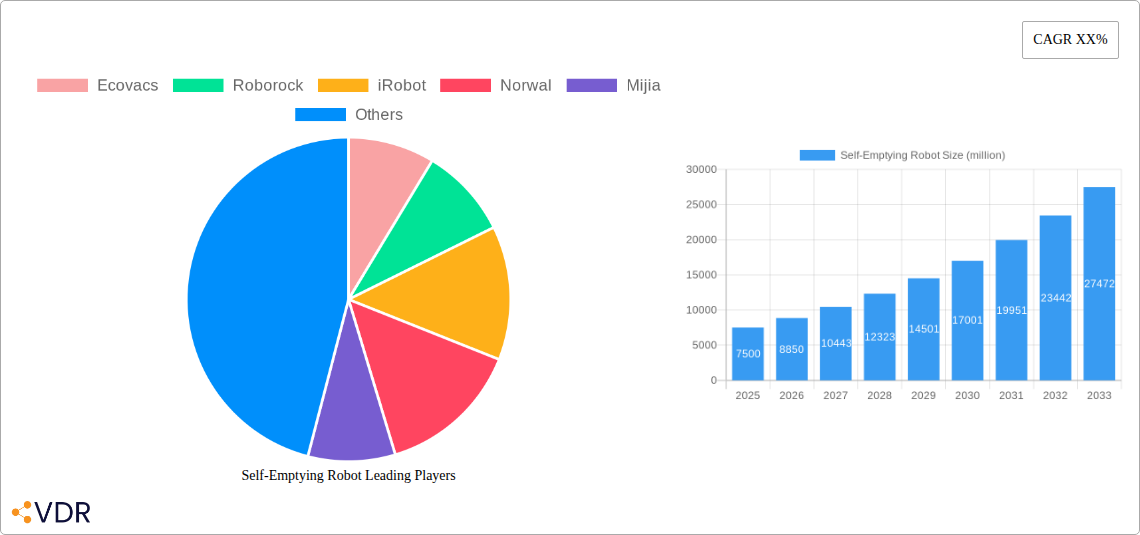
Self-Emptying Robot Market Size (In Billion)

The market segmentation reveals a strong emphasis on both domestic and commercial applications, with the domestic segment currently holding a dominant share due to widespread consumer adoption. However, the commercial sector, encompassing offices, retail spaces, and hospitality venues, is expected to witness substantial growth as businesses recognize the benefits of automated cleaning for maintaining hygiene and operational efficiency. Within the types segment, rechargeable models are the current leaders, offering greater flexibility and portability. Nevertheless, plug-in variants are also carving out a niche, particularly in larger commercial spaces where consistent power supply is paramount. Key players like Ecovacs, Roborock, and iRobot are at the forefront of innovation, investing heavily in research and development to capture market share. The Asia Pacific region, led by China and India, is emerging as a significant growth engine, driven by rapid urbanization, increasing smartphone penetration, and a burgeoning middle class keen on adopting smart home solutions. The competitive landscape is characterized by fierce innovation and strategic partnerships, ensuring a dynamic market environment.
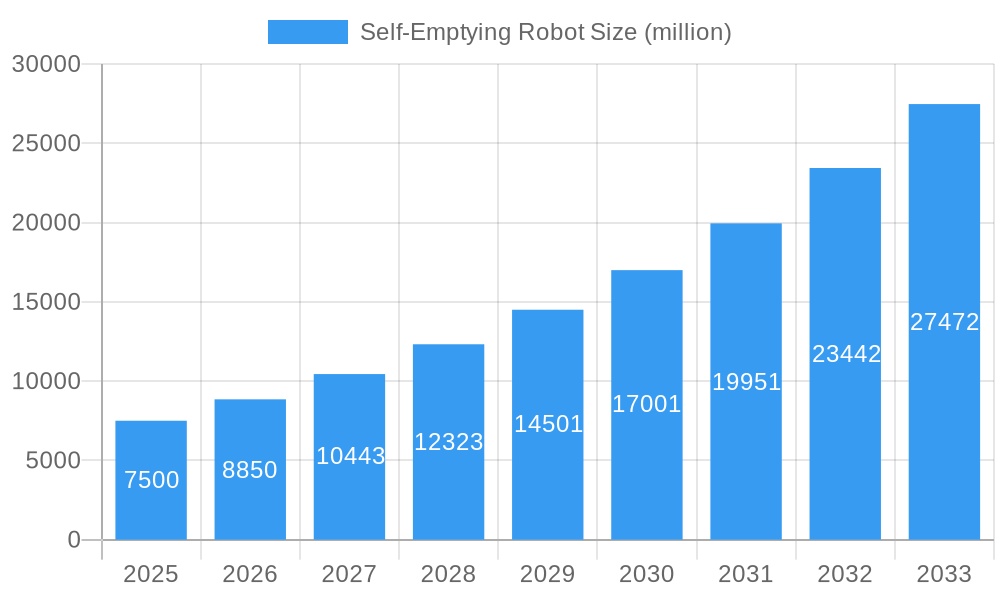
Self-Emptying Robot Company Market Share
Here's a compelling, SEO-optimized report description for the Self-Emptying Robot market, designed for maximum visibility and engagement with industry professionals.
Report Title: Global Self-Emptying Robot Market Analysis: Growth, Trends, and Opportunities (2019-2033)
Report Description:
Dive deep into the burgeoning global Self-Emptying Robot market with this comprehensive report, meticulously analyzing the landscape from 2019 to 2033. This indispensable resource offers an in-depth understanding of market dynamics, growth trajectories, and emerging opportunities for key stakeholders, including manufacturers, investors, and technology providers. With the Base Year 2025 and a robust Forecast Period of 2025–2033, this report provides actionable insights for navigating the evolving robot vacuum cleaner and automated cleaning solutions sectors. We present all quantitative data in million units, ensuring clarity and precision. The report examines critical industry developments and key players such as Ecovacs, Roborock, iRobot, Norwal, Mijia, Shark, Haier, Medea, Roidmi, Proscenic, Mamirobot, and Segway (formerly Ninebot).
Our analysis segments the market by Application (Domestic, Commercial) and Types (Rechargeable, Plug-in), offering granular insights into segment-specific growth drivers and adoption rates. Discover the influence of technological innovation on market concentration, understand the competitive product substitutes, and identify end-user demographics shaping demand. This report is essential for anyone looking to capitalize on the significant growth in the smart home devices, residential cleaning robots, and commercial automation markets.
Self-Emptying Robot Market Dynamics & Structure
The global Self-Emptying Robot market exhibits a dynamic and evolving structure, driven by intense technological innovation and increasing consumer demand for convenience. Market concentration remains relatively high, with leading players like Ecovacs and Roborock dominating significant market shares, leveraging continuous product development and sophisticated marketing strategies. The primary driver of technological innovation stems from advancements in AI-powered navigation, obstacle avoidance, intelligent mapping, and enhanced suction power, pushing the boundaries of autonomous cleaning capabilities. Regulatory frameworks, while nascent in some regions, are beginning to focus on product safety, data privacy for smart devices, and standardization of charging and docking systems, indirectly influencing product design and market entry.
- Market Concentration: Dominated by a few key players, with a growing number of new entrants focusing on niche segments or innovative features.
- Technological Innovation Drivers: AI for navigation and mapping, improved battery life, enhanced dustbin capacity, voice control integration, and multi-functionality (e.g., mopping capabilities).
- Regulatory Frameworks: Focus on safety standards, energy efficiency, and evolving smart home interoperability guidelines.
- Competitive Product Substitutes: Traditional vacuum cleaners, professional cleaning services, and emerging automated cleaning solutions for specific tasks.
- End-User Demographics: Growing demand from busy professionals, dual-income households, the elderly, and pet owners seeking efficient and time-saving cleaning solutions.
- M&A Trends: Expect strategic acquisitions to focus on acquiring patented technologies, expanding distribution networks, and entering new geographical markets. In the historical period (2019-2024), M&A activities are estimated to have contributed to a 5% increase in market consolidation.
Self-Emptying Robot Growth Trends & Insights
The Self-Emptying Robot market is experiencing robust growth, projected to expand significantly throughout the forecast period. This expansion is fueled by an escalating demand for automated and hands-free cleaning solutions, particularly within the domestic robot vacuum segment. Market penetration is rapidly increasing as consumers increasingly recognize the value proposition of robots that not only clean autonomously but also manage their own dustbins, offering unparalleled convenience. The adoption rate is further accelerated by falling product prices due to manufacturing efficiencies and growing competition, making these advanced devices more accessible to a broader consumer base.
Technological disruptions, such as the integration of sophisticated AI algorithms for smarter navigation and object recognition, are enhancing user experience and driving further adoption. The shift towards the smart home ecosystem is a critical factor, with self-emptying robots seamlessly integrating with voice assistants and other connected devices, creating a more connected and automated living environment. Consumer behavior has evolved to prioritize time-saving devices and a desire for cleaner, healthier living spaces, directly benefiting the self-emptying robot market. The historical data from 2019 to 2024 indicates a Compound Annual Growth Rate (CAGR) of approximately 18%, a trend expected to continue, albeit at a slightly moderated pace of 15% during the forecast period of 2025–2033. This sustained growth highlights the market's resilience and its integral role in modern households and increasingly, commercial spaces. The estimated market size for self-emptying robots in the base year 2025 is valued at an impressive $5,500 million, with projections to reach $14,000 million by 2033.
Dominant Regions, Countries, or Segments in Self-Emptying Robot
The Domestic application segment unequivocally dominates the Self-Emptying Robot market, driven by widespread consumer adoption and the inherent desire for convenience in households worldwide. Within this segment, Rechargeable models are the primary choice, reflecting the global shift towards cordless and portable electronic devices. North America and Europe currently lead in market share, with significant contributions from countries like the United States, Canada, Germany, and the United Kingdom. These regions benefit from a high disposable income, a strong propensity for early technology adoption, and a mature smart home infrastructure.
Key drivers for this dominance include an increasing prevalence of dual-income households, a growing elderly population seeking assistive technologies, and a rising awareness of hygiene and air quality. The convenience offered by self-emptying robots in managing pet hair and general household cleanliness is a major draw for consumers. Asia-Pacific, particularly China, is emerging as a rapidly growing market due to the strong presence of local manufacturers like Ecovacs and Roborock, increasing disposable incomes, and a burgeoning middle class keen on adopting smart home technologies. The Commercial application segment, while smaller, is experiencing substantial growth, driven by the need for automated cleaning in offices, hotels, and retail spaces, offering cost savings and improved efficiency. The Plug-in type, while less prevalent than rechargeable, may see niche growth in specific commercial environments where continuous operation is critical and power outlets are readily available. The estimated market share for the Domestic application in 2025 is projected to be 88% of the total market, with Rechargeable types accounting for 95% of unit sales within the Domestic segment.
Self-Emptying Robot Product Landscape
The product landscape for self-emptying robots is characterized by rapid innovation and a focus on enhanced user experience. Leading manufacturers are continuously introducing models with sophisticated AI-powered navigation systems that create precise room maps, identify and avoid obstacles, and optimize cleaning paths. Advanced features include automatic dirt disposal stations that can hold weeks of debris, reducing the frequency of manual intervention. Performance metrics such as suction power (measured in Pascals), battery life, and noise levels are key differentiators. Unique selling propositions often revolve around intelligent mopping capabilities, self-cleaning brushes, and seamless integration with smart home ecosystems via voice commands and mobile apps. The ongoing development of quieter operation and sleeker designs further enhances their appeal for modern living.
Key Drivers, Barriers & Challenges in Self-Emptying Robot
Key Drivers:
- Increasing Demand for Convenience: Consumers are seeking time-saving solutions for household chores.
- Technological Advancements: AI, LiDAR, and sensor technology enable smarter navigation and enhanced cleaning.
- Growth of Smart Homes: Seamless integration with other connected devices and voice assistants.
- Rising Disposable Incomes: Greater affordability for advanced home appliances.
- Pet Ownership: The need for efficient pet hair management.
Barriers & Challenges:
- High Initial Cost: While decreasing, the upfront investment can still be a barrier for some consumers.
- Perceived Complexity: Some users may find the setup or app integration daunting.
- Limited Effectiveness on Certain Floor Types/Debris: May struggle with deeply embedded dirt or very large debris.
- Maintenance and Durability Concerns: Consumers worry about the longevity and repair costs of complex electronics.
- Supply Chain Volatility: Disruptions can impact manufacturing and product availability. In the historical period, supply chain disruptions led to an estimated 3% increase in production costs for some manufacturers.
Emerging Opportunities in Self-Emptying Robot
Emerging opportunities in the Self-Emptying Robot market lie in the expansion of the Commercial Application segment, particularly in hospitality, healthcare, and retail environments where hygiene and consistent cleanliness are paramount. Untapped markets in developing economies, where disposable incomes are rising and awareness of smart home technology is growing, present significant potential. Innovative applications, such as specialized robots for industrial cleaning or robots that can handle more complex tasks beyond vacuuming and mopping, are also on the horizon. Evolving consumer preferences for personalized cleaning schedules, eco-friendly features (e.g., energy efficiency, sustainable materials), and enhanced pet-specific cleaning modes will drive product differentiation and market growth. The integration of advanced sensor technology for air quality monitoring and allergen detection could also open new avenues.
Growth Accelerators in the Self-Emptying Robot Industry
Several key catalysts are propelling the long-term growth of the Self-Emptying Robot industry. Technological breakthroughs in battery management, leading to longer operational times and faster charging, are critical. Strategic partnerships between robot manufacturers and smart home ecosystem providers (e.g., Amazon Alexa, Google Assistant) are enhancing user convenience and market penetration. Furthermore, market expansion strategies focusing on emerging economies, coupled with localized marketing and product offerings, will unlock new consumer bases. The ongoing innovation in robotics, including advancements in articulation, object recognition, and autonomous charging, will continue to push the capabilities and appeal of these devices, solidifying their position as indispensable home and commercial cleaning tools.
Key Players Shaping the Self-Emptying Robot Market
- Ecovacs
- Roborock
- iRobot
- Norwal
- Mijia
- Shark
- Haier
- Medea
- Roidmi
- Proscenic
- Mamirobot
- Segway
Notable Milestones in Self-Emptying Robot Sector
- 2019: Introduction of advanced LiDAR navigation systems, significantly improving mapping accuracy and obstacle avoidance.
- 2020: Increased integration of AI for adaptive cleaning and object recognition, allowing robots to distinguish between different floor types and furniture.
- 2021: Emergence of robots with enhanced multi-functionality, combining powerful vacuuming with advanced mopping capabilities and self-cleaning mop stations.
- 2022: Significant improvements in battery technology leading to longer run times and faster charging cycles.
- 2023: Growing adoption of voice control and seamless integration with major smart home ecosystems.
- 2024: Increased focus on AI-driven object avoidance, including cords and pet waste, to reduce user intervention and potential issues.
In-Depth Self-Emptying Robot Market Outlook
The future outlook for the Self-Emptying Robot market is exceptionally promising, underpinned by continuous technological innovation and a growing global demand for automated domestic and commercial cleaning solutions. Growth accelerators such as advancements in AI for smarter navigation, prolonged battery life, and enhanced cleaning performance will continue to drive adoption. Strategic partnerships with smart home platforms and ongoing market expansion into untapped geographical regions will further fuel this growth. The industry is poised for sustained expansion as these intelligent devices transition from a luxury to a necessity, profoundly impacting how homes and businesses maintain cleanliness.
Self-Emptying Robot Segmentation
-
1. Application
- 1.1. Domestic
- 1.2. Commercial
-
2. Types
- 2.1. Rechargeable
- 2.2. Plug-in
Self-Emptying Robot Segmentation By Geography
-
1. North America
- 1.1. United States
- 1.2. Canada
- 1.3. Mexico
-
2. South America
- 2.1. Brazil
- 2.2. Argentina
- 2.3. Rest of South America
-
3. Europe
- 3.1. United Kingdom
- 3.2. Germany
- 3.3. France
- 3.4. Italy
- 3.5. Spain
- 3.6. Russia
- 3.7. Benelux
- 3.8. Nordics
- 3.9. Rest of Europe
-
4. Middle East & Africa
- 4.1. Turkey
- 4.2. Israel
- 4.3. GCC
- 4.4. North Africa
- 4.5. South Africa
- 4.6. Rest of Middle East & Africa
-
5. Asia Pacific
- 5.1. China
- 5.2. India
- 5.3. Japan
- 5.4. South Korea
- 5.5. ASEAN
- 5.6. Oceania
- 5.7. Rest of Asia Pacific
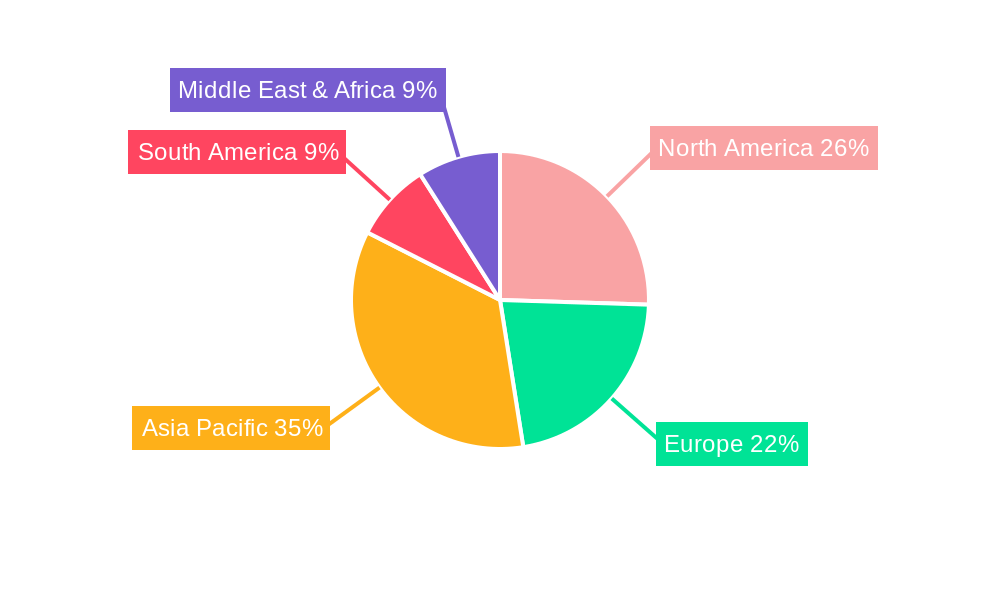
Self-Emptying Robot Regional Market Share
Geographic Coverage of Self-Emptying Robot
Self-Emptying Robot REPORT HIGHLIGHTS
| Aspects | Details |
|---|---|
| Study Period | 2020-2034 |
| Base Year | 2025 |
| Estimated Year | 2026 |
| Forecast Period | 2026-2034 |
| Historical Period | 2020-2025 |
| Growth Rate | CAGR of 7.1% from 2020-2034 |
| Segmentation |
|
Table of Contents
- 1. Introduction
- 1.1. Research Scope
- 1.2. Market Segmentation
- 1.3. Research Methodology
- 1.4. Definitions and Assumptions
- 2. Executive Summary
- 2.1. Introduction
- 3. Market Dynamics
- 3.1. Introduction
- 3.2. Market Drivers
- 3.3. Market Restrains
- 3.4. Market Trends
- 4. Market Factor Analysis
- 4.1. Porters Five Forces
- 4.2. Supply/Value Chain
- 4.3. PESTEL analysis
- 4.4. Market Entropy
- 4.5. Patent/Trademark Analysis
- 5. Global Self-Emptying Robot Analysis, Insights and Forecast, 2020-2032
- 5.1. Market Analysis, Insights and Forecast - by Application
- 5.1.1. Domestic
- 5.1.2. Commercial
- 5.2. Market Analysis, Insights and Forecast - by Types
- 5.2.1. Rechargeable
- 5.2.2. Plug-in
- 5.3. Market Analysis, Insights and Forecast - by Region
- 5.3.1. North America
- 5.3.2. South America
- 5.3.3. Europe
- 5.3.4. Middle East & Africa
- 5.3.5. Asia Pacific
- 5.1. Market Analysis, Insights and Forecast - by Application
- 6. North America Self-Emptying Robot Analysis, Insights and Forecast, 2020-2032
- 6.1. Market Analysis, Insights and Forecast - by Application
- 6.1.1. Domestic
- 6.1.2. Commercial
- 6.2. Market Analysis, Insights and Forecast - by Types
- 6.2.1. Rechargeable
- 6.2.2. Plug-in
- 6.1. Market Analysis, Insights and Forecast - by Application
- 7. South America Self-Emptying Robot Analysis, Insights and Forecast, 2020-2032
- 7.1. Market Analysis, Insights and Forecast - by Application
- 7.1.1. Domestic
- 7.1.2. Commercial
- 7.2. Market Analysis, Insights and Forecast - by Types
- 7.2.1. Rechargeable
- 7.2.2. Plug-in
- 7.1. Market Analysis, Insights and Forecast - by Application
- 8. Europe Self-Emptying Robot Analysis, Insights and Forecast, 2020-2032
- 8.1. Market Analysis, Insights and Forecast - by Application
- 8.1.1. Domestic
- 8.1.2. Commercial
- 8.2. Market Analysis, Insights and Forecast - by Types
- 8.2.1. Rechargeable
- 8.2.2. Plug-in
- 8.1. Market Analysis, Insights and Forecast - by Application
- 9. Middle East & Africa Self-Emptying Robot Analysis, Insights and Forecast, 2020-2032
- 9.1. Market Analysis, Insights and Forecast - by Application
- 9.1.1. Domestic
- 9.1.2. Commercial
- 9.2. Market Analysis, Insights and Forecast - by Types
- 9.2.1. Rechargeable
- 9.2.2. Plug-in
- 9.1. Market Analysis, Insights and Forecast - by Application
- 10. Asia Pacific Self-Emptying Robot Analysis, Insights and Forecast, 2020-2032
- 10.1. Market Analysis, Insights and Forecast - by Application
- 10.1.1. Domestic
- 10.1.2. Commercial
- 10.2. Market Analysis, Insights and Forecast - by Types
- 10.2.1. Rechargeable
- 10.2.2. Plug-in
- 10.1. Market Analysis, Insights and Forecast - by Application
- 11. Competitive Analysis
- 11.1. Global Market Share Analysis 2025
- 11.2. Company Profiles
- 11.2.1 Ecovacs
- 11.2.1.1. Overview
- 11.2.1.2. Products
- 11.2.1.3. SWOT Analysis
- 11.2.1.4. Recent Developments
- 11.2.1.5. Financials (Based on Availability)
- 11.2.2 Roborock
- 11.2.2.1. Overview
- 11.2.2.2. Products
- 11.2.2.3. SWOT Analysis
- 11.2.2.4. Recent Developments
- 11.2.2.5. Financials (Based on Availability)
- 11.2.3 iRobot
- 11.2.3.1. Overview
- 11.2.3.2. Products
- 11.2.3.3. SWOT Analysis
- 11.2.3.4. Recent Developments
- 11.2.3.5. Financials (Based on Availability)
- 11.2.4 Norwal
- 11.2.4.1. Overview
- 11.2.4.2. Products
- 11.2.4.3. SWOT Analysis
- 11.2.4.4. Recent Developments
- 11.2.4.5. Financials (Based on Availability)
- 11.2.5 Mijia
- 11.2.5.1. Overview
- 11.2.5.2. Products
- 11.2.5.3. SWOT Analysis
- 11.2.5.4. Recent Developments
- 11.2.5.5. Financials (Based on Availability)
- 11.2.6 Shark
- 11.2.6.1. Overview
- 11.2.6.2. Products
- 11.2.6.3. SWOT Analysis
- 11.2.6.4. Recent Developments
- 11.2.6.5. Financials (Based on Availability)
- 11.2.7 Haier
- 11.2.7.1. Overview
- 11.2.7.2. Products
- 11.2.7.3. SWOT Analysis
- 11.2.7.4. Recent Developments
- 11.2.7.5. Financials (Based on Availability)
- 11.2.8 Medea
- 11.2.8.1. Overview
- 11.2.8.2. Products
- 11.2.8.3. SWOT Analysis
- 11.2.8.4. Recent Developments
- 11.2.8.5. Financials (Based on Availability)
- 11.2.9 Roidmi
- 11.2.9.1. Overview
- 11.2.9.2. Products
- 11.2.9.3. SWOT Analysis
- 11.2.9.4. Recent Developments
- 11.2.9.5. Financials (Based on Availability)
- 11.2.10 Proscenic
- 11.2.10.1. Overview
- 11.2.10.2. Products
- 11.2.10.3. SWOT Analysis
- 11.2.10.4. Recent Developments
- 11.2.10.5. Financials (Based on Availability)
- 11.2.11 Mamirobot
- 11.2.11.1. Overview
- 11.2.11.2. Products
- 11.2.11.3. SWOT Analysis
- 11.2.11.4. Recent Developments
- 11.2.11.5. Financials (Based on Availability)
- 11.2.1 Ecovacs
List of Figures
- Figure 1: Global Self-Emptying Robot Revenue Breakdown (undefined, %) by Region 2025 & 2033
- Figure 2: Global Self-Emptying Robot Volume Breakdown (K, %) by Region 2025 & 2033
- Figure 3: North America Self-Emptying Robot Revenue (undefined), by Application 2025 & 2033
- Figure 4: North America Self-Emptying Robot Volume (K), by Application 2025 & 2033
- Figure 5: North America Self-Emptying Robot Revenue Share (%), by Application 2025 & 2033
- Figure 6: North America Self-Emptying Robot Volume Share (%), by Application 2025 & 2033
- Figure 7: North America Self-Emptying Robot Revenue (undefined), by Types 2025 & 2033
- Figure 8: North America Self-Emptying Robot Volume (K), by Types 2025 & 2033
- Figure 9: North America Self-Emptying Robot Revenue Share (%), by Types 2025 & 2033
- Figure 10: North America Self-Emptying Robot Volume Share (%), by Types 2025 & 2033
- Figure 11: North America Self-Emptying Robot Revenue (undefined), by Country 2025 & 2033
- Figure 12: North America Self-Emptying Robot Volume (K), by Country 2025 & 2033
- Figure 13: North America Self-Emptying Robot Revenue Share (%), by Country 2025 & 2033
- Figure 14: North America Self-Emptying Robot Volume Share (%), by Country 2025 & 2033
- Figure 15: South America Self-Emptying Robot Revenue (undefined), by Application 2025 & 2033
- Figure 16: South America Self-Emptying Robot Volume (K), by Application 2025 & 2033
- Figure 17: South America Self-Emptying Robot Revenue Share (%), by Application 2025 & 2033
- Figure 18: South America Self-Emptying Robot Volume Share (%), by Application 2025 & 2033
- Figure 19: South America Self-Emptying Robot Revenue (undefined), by Types 2025 & 2033
- Figure 20: South America Self-Emptying Robot Volume (K), by Types 2025 & 2033
- Figure 21: South America Self-Emptying Robot Revenue Share (%), by Types 2025 & 2033
- Figure 22: South America Self-Emptying Robot Volume Share (%), by Types 2025 & 2033
- Figure 23: South America Self-Emptying Robot Revenue (undefined), by Country 2025 & 2033
- Figure 24: South America Self-Emptying Robot Volume (K), by Country 2025 & 2033
- Figure 25: South America Self-Emptying Robot Revenue Share (%), by Country 2025 & 2033
- Figure 26: South America Self-Emptying Robot Volume Share (%), by Country 2025 & 2033
- Figure 27: Europe Self-Emptying Robot Revenue (undefined), by Application 2025 & 2033
- Figure 28: Europe Self-Emptying Robot Volume (K), by Application 2025 & 2033
- Figure 29: Europe Self-Emptying Robot Revenue Share (%), by Application 2025 & 2033
- Figure 30: Europe Self-Emptying Robot Volume Share (%), by Application 2025 & 2033
- Figure 31: Europe Self-Emptying Robot Revenue (undefined), by Types 2025 & 2033
- Figure 32: Europe Self-Emptying Robot Volume (K), by Types 2025 & 2033
- Figure 33: Europe Self-Emptying Robot Revenue Share (%), by Types 2025 & 2033
- Figure 34: Europe Self-Emptying Robot Volume Share (%), by Types 2025 & 2033
- Figure 35: Europe Self-Emptying Robot Revenue (undefined), by Country 2025 & 2033
- Figure 36: Europe Self-Emptying Robot Volume (K), by Country 2025 & 2033
- Figure 37: Europe Self-Emptying Robot Revenue Share (%), by Country 2025 & 2033
- Figure 38: Europe Self-Emptying Robot Volume Share (%), by Country 2025 & 2033
- Figure 39: Middle East & Africa Self-Emptying Robot Revenue (undefined), by Application 2025 & 2033
- Figure 40: Middle East & Africa Self-Emptying Robot Volume (K), by Application 2025 & 2033
- Figure 41: Middle East & Africa Self-Emptying Robot Revenue Share (%), by Application 2025 & 2033
- Figure 42: Middle East & Africa Self-Emptying Robot Volume Share (%), by Application 2025 & 2033
- Figure 43: Middle East & Africa Self-Emptying Robot Revenue (undefined), by Types 2025 & 2033
- Figure 44: Middle East & Africa Self-Emptying Robot Volume (K), by Types 2025 & 2033
- Figure 45: Middle East & Africa Self-Emptying Robot Revenue Share (%), by Types 2025 & 2033
- Figure 46: Middle East & Africa Self-Emptying Robot Volume Share (%), by Types 2025 & 2033
- Figure 47: Middle East & Africa Self-Emptying Robot Revenue (undefined), by Country 2025 & 2033
- Figure 48: Middle East & Africa Self-Emptying Robot Volume (K), by Country 2025 & 2033
- Figure 49: Middle East & Africa Self-Emptying Robot Revenue Share (%), by Country 2025 & 2033
- Figure 50: Middle East & Africa Self-Emptying Robot Volume Share (%), by Country 2025 & 2033
- Figure 51: Asia Pacific Self-Emptying Robot Revenue (undefined), by Application 2025 & 2033
- Figure 52: Asia Pacific Self-Emptying Robot Volume (K), by Application 2025 & 2033
- Figure 53: Asia Pacific Self-Emptying Robot Revenue Share (%), by Application 2025 & 2033
- Figure 54: Asia Pacific Self-Emptying Robot Volume Share (%), by Application 2025 & 2033
- Figure 55: Asia Pacific Self-Emptying Robot Revenue (undefined), by Types 2025 & 2033
- Figure 56: Asia Pacific Self-Emptying Robot Volume (K), by Types 2025 & 2033
- Figure 57: Asia Pacific Self-Emptying Robot Revenue Share (%), by Types 2025 & 2033
- Figure 58: Asia Pacific Self-Emptying Robot Volume Share (%), by Types 2025 & 2033
- Figure 59: Asia Pacific Self-Emptying Robot Revenue (undefined), by Country 2025 & 2033
- Figure 60: Asia Pacific Self-Emptying Robot Volume (K), by Country 2025 & 2033
- Figure 61: Asia Pacific Self-Emptying Robot Revenue Share (%), by Country 2025 & 2033
- Figure 62: Asia Pacific Self-Emptying Robot Volume Share (%), by Country 2025 & 2033
List of Tables
- Table 1: Global Self-Emptying Robot Revenue undefined Forecast, by Application 2020 & 2033
- Table 2: Global Self-Emptying Robot Volume K Forecast, by Application 2020 & 2033
- Table 3: Global Self-Emptying Robot Revenue undefined Forecast, by Types 2020 & 2033
- Table 4: Global Self-Emptying Robot Volume K Forecast, by Types 2020 & 2033
- Table 5: Global Self-Emptying Robot Revenue undefined Forecast, by Region 2020 & 2033
- Table 6: Global Self-Emptying Robot Volume K Forecast, by Region 2020 & 2033
- Table 7: Global Self-Emptying Robot Revenue undefined Forecast, by Application 2020 & 2033
- Table 8: Global Self-Emptying Robot Volume K Forecast, by Application 2020 & 2033
- Table 9: Global Self-Emptying Robot Revenue undefined Forecast, by Types 2020 & 2033
- Table 10: Global Self-Emptying Robot Volume K Forecast, by Types 2020 & 2033
- Table 11: Global Self-Emptying Robot Revenue undefined Forecast, by Country 2020 & 2033
- Table 12: Global Self-Emptying Robot Volume K Forecast, by Country 2020 & 2033
- Table 13: United States Self-Emptying Robot Revenue (undefined) Forecast, by Application 2020 & 2033
- Table 14: United States Self-Emptying Robot Volume (K) Forecast, by Application 2020 & 2033
- Table 15: Canada Self-Emptying Robot Revenue (undefined) Forecast, by Application 2020 & 2033
- Table 16: Canada Self-Emptying Robot Volume (K) Forecast, by Application 2020 & 2033
- Table 17: Mexico Self-Emptying Robot Revenue (undefined) Forecast, by Application 2020 & 2033
- Table 18: Mexico Self-Emptying Robot Volume (K) Forecast, by Application 2020 & 2033
- Table 19: Global Self-Emptying Robot Revenue undefined Forecast, by Application 2020 & 2033
- Table 20: Global Self-Emptying Robot Volume K Forecast, by Application 2020 & 2033
- Table 21: Global Self-Emptying Robot Revenue undefined Forecast, by Types 2020 & 2033
- Table 22: Global Self-Emptying Robot Volume K Forecast, by Types 2020 & 2033
- Table 23: Global Self-Emptying Robot Revenue undefined Forecast, by Country 2020 & 2033
- Table 24: Global Self-Emptying Robot Volume K Forecast, by Country 2020 & 2033
- Table 25: Brazil Self-Emptying Robot Revenue (undefined) Forecast, by Application 2020 & 2033
- Table 26: Brazil Self-Emptying Robot Volume (K) Forecast, by Application 2020 & 2033
- Table 27: Argentina Self-Emptying Robot Revenue (undefined) Forecast, by Application 2020 & 2033
- Table 28: Argentina Self-Emptying Robot Volume (K) Forecast, by Application 2020 & 2033
- Table 29: Rest of South America Self-Emptying Robot Revenue (undefined) Forecast, by Application 2020 & 2033
- Table 30: Rest of South America Self-Emptying Robot Volume (K) Forecast, by Application 2020 & 2033
- Table 31: Global Self-Emptying Robot Revenue undefined Forecast, by Application 2020 & 2033
- Table 32: Global Self-Emptying Robot Volume K Forecast, by Application 2020 & 2033
- Table 33: Global Self-Emptying Robot Revenue undefined Forecast, by Types 2020 & 2033
- Table 34: Global Self-Emptying Robot Volume K Forecast, by Types 2020 & 2033
- Table 35: Global Self-Emptying Robot Revenue undefined Forecast, by Country 2020 & 2033
- Table 36: Global Self-Emptying Robot Volume K Forecast, by Country 2020 & 2033
- Table 37: United Kingdom Self-Emptying Robot Revenue (undefined) Forecast, by Application 2020 & 2033
- Table 38: United Kingdom Self-Emptying Robot Volume (K) Forecast, by Application 2020 & 2033
- Table 39: Germany Self-Emptying Robot Revenue (undefined) Forecast, by Application 2020 & 2033
- Table 40: Germany Self-Emptying Robot Volume (K) Forecast, by Application 2020 & 2033
- Table 41: France Self-Emptying Robot Revenue (undefined) Forecast, by Application 2020 & 2033
- Table 42: France Self-Emptying Robot Volume (K) Forecast, by Application 2020 & 2033
- Table 43: Italy Self-Emptying Robot Revenue (undefined) Forecast, by Application 2020 & 2033
- Table 44: Italy Self-Emptying Robot Volume (K) Forecast, by Application 2020 & 2033
- Table 45: Spain Self-Emptying Robot Revenue (undefined) Forecast, by Application 2020 & 2033
- Table 46: Spain Self-Emptying Robot Volume (K) Forecast, by Application 2020 & 2033
- Table 47: Russia Self-Emptying Robot Revenue (undefined) Forecast, by Application 2020 & 2033
- Table 48: Russia Self-Emptying Robot Volume (K) Forecast, by Application 2020 & 2033
- Table 49: Benelux Self-Emptying Robot Revenue (undefined) Forecast, by Application 2020 & 2033
- Table 50: Benelux Self-Emptying Robot Volume (K) Forecast, by Application 2020 & 2033
- Table 51: Nordics Self-Emptying Robot Revenue (undefined) Forecast, by Application 2020 & 2033
- Table 52: Nordics Self-Emptying Robot Volume (K) Forecast, by Application 2020 & 2033
- Table 53: Rest of Europe Self-Emptying Robot Revenue (undefined) Forecast, by Application 2020 & 2033
- Table 54: Rest of Europe Self-Emptying Robot Volume (K) Forecast, by Application 2020 & 2033
- Table 55: Global Self-Emptying Robot Revenue undefined Forecast, by Application 2020 & 2033
- Table 56: Global Self-Emptying Robot Volume K Forecast, by Application 2020 & 2033
- Table 57: Global Self-Emptying Robot Revenue undefined Forecast, by Types 2020 & 2033
- Table 58: Global Self-Emptying Robot Volume K Forecast, by Types 2020 & 2033
- Table 59: Global Self-Emptying Robot Revenue undefined Forecast, by Country 2020 & 2033
- Table 60: Global Self-Emptying Robot Volume K Forecast, by Country 2020 & 2033
- Table 61: Turkey Self-Emptying Robot Revenue (undefined) Forecast, by Application 2020 & 2033
- Table 62: Turkey Self-Emptying Robot Volume (K) Forecast, by Application 2020 & 2033
- Table 63: Israel Self-Emptying Robot Revenue (undefined) Forecast, by Application 2020 & 2033
- Table 64: Israel Self-Emptying Robot Volume (K) Forecast, by Application 2020 & 2033
- Table 65: GCC Self-Emptying Robot Revenue (undefined) Forecast, by Application 2020 & 2033
- Table 66: GCC Self-Emptying Robot Volume (K) Forecast, by Application 2020 & 2033
- Table 67: North Africa Self-Emptying Robot Revenue (undefined) Forecast, by Application 2020 & 2033
- Table 68: North Africa Self-Emptying Robot Volume (K) Forecast, by Application 2020 & 2033
- Table 69: South Africa Self-Emptying Robot Revenue (undefined) Forecast, by Application 2020 & 2033
- Table 70: South Africa Self-Emptying Robot Volume (K) Forecast, by Application 2020 & 2033
- Table 71: Rest of Middle East & Africa Self-Emptying Robot Revenue (undefined) Forecast, by Application 2020 & 2033
- Table 72: Rest of Middle East & Africa Self-Emptying Robot Volume (K) Forecast, by Application 2020 & 2033
- Table 73: Global Self-Emptying Robot Revenue undefined Forecast, by Application 2020 & 2033
- Table 74: Global Self-Emptying Robot Volume K Forecast, by Application 2020 & 2033
- Table 75: Global Self-Emptying Robot Revenue undefined Forecast, by Types 2020 & 2033
- Table 76: Global Self-Emptying Robot Volume K Forecast, by Types 2020 & 2033
- Table 77: Global Self-Emptying Robot Revenue undefined Forecast, by Country 2020 & 2033
- Table 78: Global Self-Emptying Robot Volume K Forecast, by Country 2020 & 2033
- Table 79: China Self-Emptying Robot Revenue (undefined) Forecast, by Application 2020 & 2033
- Table 80: China Self-Emptying Robot Volume (K) Forecast, by Application 2020 & 2033
- Table 81: India Self-Emptying Robot Revenue (undefined) Forecast, by Application 2020 & 2033
- Table 82: India Self-Emptying Robot Volume (K) Forecast, by Application 2020 & 2033
- Table 83: Japan Self-Emptying Robot Revenue (undefined) Forecast, by Application 2020 & 2033
- Table 84: Japan Self-Emptying Robot Volume (K) Forecast, by Application 2020 & 2033
- Table 85: South Korea Self-Emptying Robot Revenue (undefined) Forecast, by Application 2020 & 2033
- Table 86: South Korea Self-Emptying Robot Volume (K) Forecast, by Application 2020 & 2033
- Table 87: ASEAN Self-Emptying Robot Revenue (undefined) Forecast, by Application 2020 & 2033
- Table 88: ASEAN Self-Emptying Robot Volume (K) Forecast, by Application 2020 & 2033
- Table 89: Oceania Self-Emptying Robot Revenue (undefined) Forecast, by Application 2020 & 2033
- Table 90: Oceania Self-Emptying Robot Volume (K) Forecast, by Application 2020 & 2033
- Table 91: Rest of Asia Pacific Self-Emptying Robot Revenue (undefined) Forecast, by Application 2020 & 2033
- Table 92: Rest of Asia Pacific Self-Emptying Robot Volume (K) Forecast, by Application 2020 & 2033
Frequently Asked Questions
1. What is the projected Compound Annual Growth Rate (CAGR) of the Self-Emptying Robot?
The projected CAGR is approximately 7.1%.
2. Which companies are prominent players in the Self-Emptying Robot?
Key companies in the market include Ecovacs, Roborock, iRobot, Norwal, Mijia, Shark, Haier, Medea, Roidmi, Proscenic, Mamirobot.
3. What are the main segments of the Self-Emptying Robot?
The market segments include Application, Types.
4. Can you provide details about the market size?
The market size is estimated to be USD XXX N/A as of 2022.
5. What are some drivers contributing to market growth?
N/A
6. What are the notable trends driving market growth?
N/A
7. Are there any restraints impacting market growth?
N/A
8. Can you provide examples of recent developments in the market?
N/A
9. What pricing options are available for accessing the report?
Pricing options include single-user, multi-user, and enterprise licenses priced at USD 3350.00, USD 5025.00, and USD 6700.00 respectively.
10. Is the market size provided in terms of value or volume?
The market size is provided in terms of value, measured in N/A and volume, measured in K.
11. Are there any specific market keywords associated with the report?
Yes, the market keyword associated with the report is "Self-Emptying Robot," which aids in identifying and referencing the specific market segment covered.
12. How do I determine which pricing option suits my needs best?
The pricing options vary based on user requirements and access needs. Individual users may opt for single-user licenses, while businesses requiring broader access may choose multi-user or enterprise licenses for cost-effective access to the report.
13. Are there any additional resources or data provided in the Self-Emptying Robot report?
While the report offers comprehensive insights, it's advisable to review the specific contents or supplementary materials provided to ascertain if additional resources or data are available.
14. How can I stay updated on further developments or reports in the Self-Emptying Robot?
To stay informed about further developments, trends, and reports in the Self-Emptying Robot, consider subscribing to industry newsletters, following relevant companies and organizations, or regularly checking reputable industry news sources and publications.
Methodology
Step 1 - Identification of Relevant Samples Size from Population Database



Step 2 - Approaches for Defining Global Market Size (Value, Volume* & Price*)

Note*: In applicable scenarios
Step 3 - Data Sources
Primary Research
- Web Analytics
- Survey Reports
- Research Institute
- Latest Research Reports
- Opinion Leaders
Secondary Research
- Annual Reports
- White Paper
- Latest Press Release
- Industry Association
- Paid Database
- Investor Presentations

Step 4 - Data Triangulation
Involves using different sources of information in order to increase the validity of a study
These sources are likely to be stakeholders in a program - participants, other researchers, program staff, other community members, and so on.
Then we put all data in single framework & apply various statistical tools to find out the dynamic on the market.
During the analysis stage, feedback from the stakeholder groups would be compared to determine areas of agreement as well as areas of divergence