


Key Insights
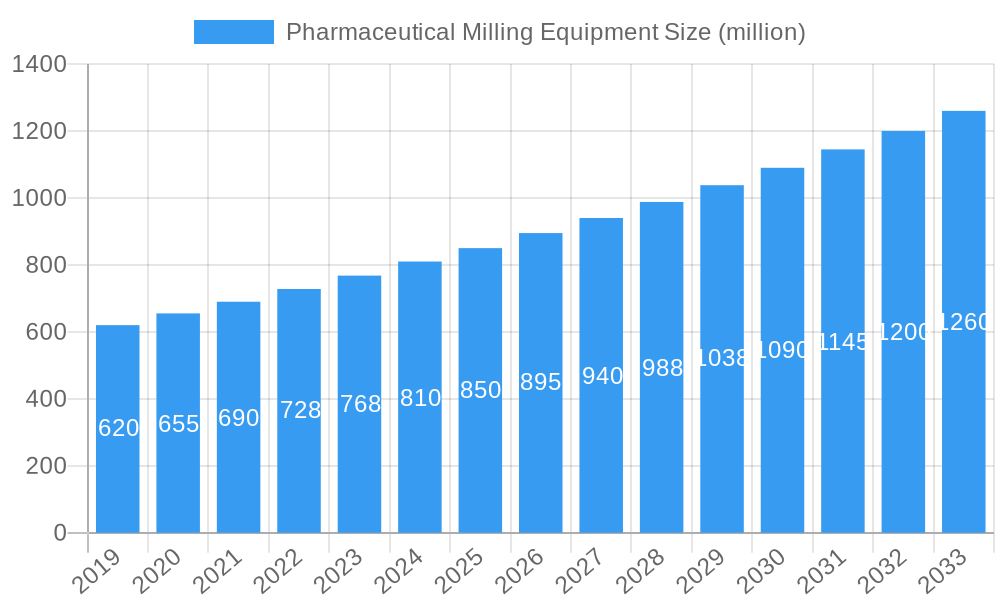
The global pharmaceutical milling equipment market is projected for significant expansion, anticipated to reach $81.09 billion by 2025, with a projected Compound Annual Growth Rate (CAGR) of 3.8% from 2025 to 2033. This growth is propelled by the increasing demand for precisely milled pharmaceutical ingredients crucial for advanced drug formulations, including injectables, oral solid doses, and controlled-release medications. The rising incidence of chronic diseases and the subsequent surge in pharmaceutical production necessitate efficient, high-throughput milling solutions. Additionally, stringent regulatory mandates for particle size distribution and uniformity to ensure drug efficacy and safety are driving pharmaceutical manufacturers to adopt sophisticated milling technologies. Key growth catalysts include expanding pharmaceutical R&D, a robust generic drug market, and continuous innovation in milling equipment offering enhanced precision, energy efficiency, and containment.
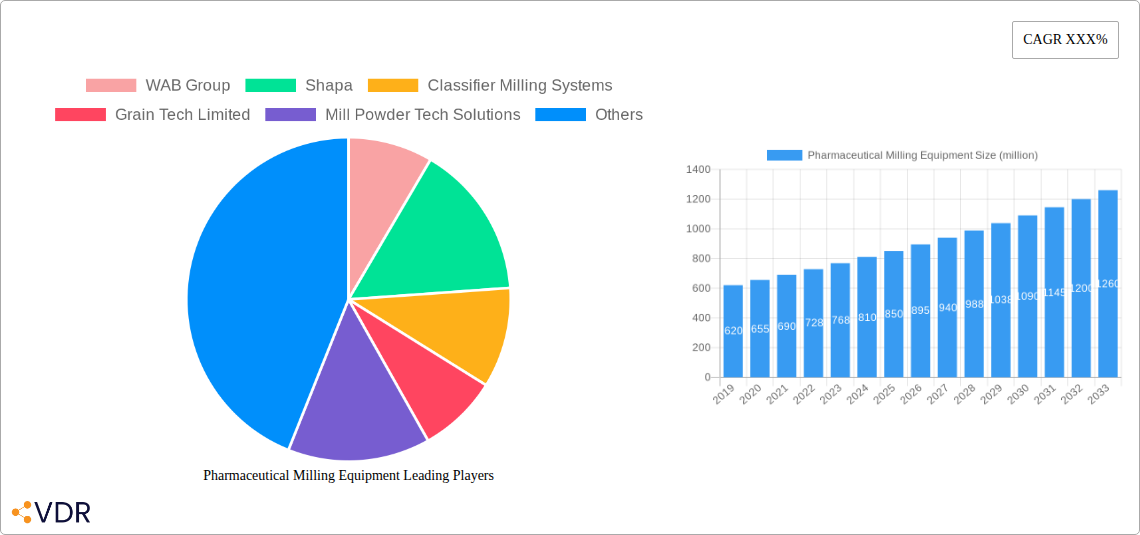
Pharmaceutical Milling Equipment Market Size (In Billion)

The market is segmented by application and equipment type. Pharmaceutical companies represent the largest segment due to their extensive manufacturing operations, with Medical Contract Manufacturing Organizations (CMOs) also showing substantial growth driven by industry outsourcing trends. Cone Mills and Hammer Mills are expected to lead in equipment type, addressing diverse milling requirements from coarse grinding to fine pulverization. Geographically, the Asia Pacific region is a high-growth market, fueled by rapid industrialization, increasing healthcare expenditure, and a developing pharmaceutical manufacturing base in countries like China and India. North America and Europe remain substantial markets, characterized by mature pharmaceutical industries and a strong emphasis on technological advancements. However, high initial investment costs for advanced equipment and complex process validation present market restraints.
Pharmaceutical Milling Equipment Company Market Share
This comprehensive report offers an in-depth analysis of the global Pharmaceutical Milling Equipment market, covering the historical period of 2019–2024, with 2025 as the base year. The extensive forecast period extends from 2025 to 2033, providing crucial insights into market dynamics, growth trajectories, and competitive strategies. Focusing on key milling technologies such as Cone Mills and Hammer Mills, and essential segments including Pharma Companies, Medical Contract Manufacturing Organizations, and Research Laboratories, this report serves as an indispensable resource for industry stakeholders navigating the evolving pharmaceutical powder processing landscape.
Pharmaceutical Milling Equipment Market Dynamics & Structure
The Pharmaceutical Milling Equipment market exhibits a moderately concentrated structure, driven by significant technological innovation and stringent regulatory frameworks. The parent market, encompassing all industrial milling equipment, is vast, with the child market for pharmaceutical milling equipment representing a specialized, high-value segment. Technological advancements, particularly in particle size reduction, containment, and automation, are primary drivers. Regulatory bodies like the FDA and EMA enforce strict GMP guidelines, influencing equipment design and validation processes. Competitive product substitutes, though limited within the highly specialized pharmaceutical domain, include advanced granulation and micronization techniques. End-user demographics are shifting towards greater outsourcing to Medical Contract Manufacturing Organisations (CMOs) and increased R&D investment in specialized research laboratories. Mergers & Acquisitions (M&A) activity is moderate, focusing on expanding technological portfolios and geographical reach.
- Market Concentration: Dominated by a few key global players, with emerging regional manufacturers gaining traction.
- Technological Innovation Drivers: Demand for ultra-fine particle size reduction, enhanced containment for potent compounds, and Industry 4.0 integration (e.g., IoT, AI) for process optimization.
- Regulatory Frameworks: Strict adherence to cGMP, FDA, and EMA guidelines; focus on validation, serialization, and data integrity.
- Competitive Product Substitutes: While direct substitutes are few, alternative particle engineering techniques such as spray drying and controlled crystallization present indirect competition.
- End-User Demographics: Increasing reliance on CMOs for specialized milling needs, and growth in R&D labs requiring flexible, high-performance equipment.
- M&A Trends: Focus on acquiring innovative technologies and expanding service offerings in containment and process automation. In 2023, an estimated 5 major M&A deals occurred within the industrial milling sector, with a portion directly impacting the pharmaceutical segment.
Pharmaceutical Milling Equipment Growth Trends & Insights
The global Pharmaceutical Milling Equipment market is poised for robust expansion, driven by an escalating demand for precisely engineered drug formulations and the increasing complexity of active pharmaceutical ingredients (APIs). The market size is projected to grow from an estimated $XXX million in 2025 to $XXX million by 2033, exhibiting a Compound Annual Growth Rate (CAGR) of approximately 6.5%. This growth is fueled by the continuous need for advanced milling technologies that can achieve specific particle size distributions, improve bioavailability, and ensure consistent drug product quality. Adoption rates of advanced milling systems are accelerating as pharmaceutical manufacturers prioritize efficiency, safety, and compliance. Technological disruptions, including the integration of artificial intelligence for predictive maintenance and real-time process monitoring, are transforming operational paradigms. Consumer behavior shifts, characterized by a growing preference for orally disintegrating tablets and nanoparticle-based drug delivery systems, further underscore the importance of sophisticated milling solutions.
The increasing prevalence of chronic diseases and the rising global healthcare expenditure are fundamental drivers behind the demand for pharmaceutical products, consequently boosting the need for specialized milling equipment. Furthermore, the development of novel drug delivery systems, such as inhaled medications and advanced parenteral formulations, requires micronization and nano-milling capabilities that were less critical in the past. The trend towards personalized medicine also necessitates flexible milling solutions capable of handling smaller batch sizes and a wider variety of APIs with diverse physical properties.
Research and development activities in the pharmaceutical sector are intensifying, with significant investments being channeled into the discovery of new APIs and the optimization of existing drug formulations. This surge in R&D directly translates into a higher demand for versatile and precise milling equipment that can support various stages of drug development, from preclinical studies to commercial manufacturing. The growing complexity of APIs, often characterized by poor solubility and low bioavailability, further accentuates the need for advanced milling techniques to enhance their therapeutic efficacy.
The regulatory landscape, while posing challenges, also acts as a catalyst for innovation. Stricter guidelines concerning particle size control, containment for highly potent APIs (HPAPIs), and process validation are pushing manufacturers to adopt cutting-edge milling technologies that offer superior precision, reproducibility, and safety features. Equipment manufacturers are responding by developing intelligent milling systems that incorporate advanced sensors, automation, and data analytics to ensure compliance and optimize production processes.
The shift in manufacturing paradigms, particularly the rise of continuous manufacturing and modular production facilities, is also influencing the adoption of pharmaceutical milling equipment. Manufacturers are seeking compact, integrated, and highly efficient milling solutions that can seamlessly fit into these modern production environments. The increasing outsourcing of pharmaceutical manufacturing to Contract Manufacturing Organizations (CMOs) further consolidates demand, as these organizations often invest in a diverse range of milling technologies to cater to their broad client base.
Dominant Regions, Countries, or Segments in Pharmaceutical Milling Equipment
North America currently stands as the dominant region in the Pharmaceutical Milling Equipment market, driven by a confluence of factors including a robust pharmaceutical industry, substantial R&D investments, and a high degree of regulatory compliance. The United States, in particular, leads the charge due to its large concentration of pharmaceutical giants, leading academic research institutions, and a well-established ecosystem for medical contract manufacturing. The Application: Pharma Companies segment is the primary growth engine within North America, accounting for an estimated 45% of the regional market share. These companies are at the forefront of developing innovative drug formulations, requiring highly specialized and efficient milling solutions for their extensive R&D and manufacturing operations.
The Type: Cone Mill segment is experiencing significant traction within North America, projected to capture approximately 30% of the total market value. Cone mills are favored for their gentle milling action, precise particle size control, and excellent containment capabilities, making them ideal for processing sensitive APIs and achieving specific particle morphologies crucial for advanced drug delivery systems. The ability of cone mills to handle a wide range of materials, from fine powders to sticky agglomerates, further solidifies their position.
Key Drivers in North America:
- Economic Policies: Favorable government incentives for pharmaceutical research and manufacturing, coupled with substantial private sector investment.
- Infrastructure: Advanced manufacturing facilities and a sophisticated supply chain network supporting the adoption of high-end milling technologies.
- Technological Adoption: High propensity to invest in and adopt cutting-edge milling solutions, including those with advanced automation and containment features.
- Regulatory Environment: Stringent but supportive regulatory framework that encourages the development and use of advanced, compliant milling equipment.
- Contract Manufacturing Growth: A thriving medical contract manufacturing sector that requires diverse milling capabilities to serve a broad clientele.
The Pharma Companies segment's dominance is further amplified by their continuous pursuit of novel drug formulations and therapies, which often involve complex APIs requiring precise particle size reduction to enhance bioavailability and efficacy. This necessitates investment in state-of-the-art milling equipment that can achieve micronization and even nano-milling.
The Cone Mill segment's growth is also propelled by the increasing focus on producing solid oral dosage forms, where particle size distribution significantly impacts dissolution rates and therapeutic outcomes. The gentle processing offered by cone mills is particularly advantageous for heat-sensitive or shear-sensitive materials, a common characteristic of many modern APIs. Furthermore, advancements in containment technology for cone mills, crucial for handling highly potent APIs (HPAPIs), are driving their adoption in specialized pharmaceutical manufacturing.
Pharmaceutical Milling Equipment Product Landscape
The pharmaceutical milling equipment product landscape is characterized by continuous innovation focused on enhancing precision, efficiency, and containment. Leading manufacturers are introducing advanced Cone Mills and Hammer Mills equipped with intelligent control systems, enabling real-time process monitoring and optimization. Applications range from wet and dry milling of APIs to size reduction of excipients and the processing of potent compounds. Performance metrics such as particle size distribution, throughput, energy efficiency, and cleanability are key differentiators. Unique selling propositions often lie in integrated containment solutions, compliance with stringent GMP standards, and customizable designs to meet specific process requirements. Technological advancements include the development of self-cleaning mechanisms and enhanced vibration dampening for greater operational stability.
Key Drivers, Barriers & Challenges in Pharmaceutical Milling Equipment
Key Drivers:
- Rising demand for specialized drug formulations: The growing need for micronized and nano-milled APIs to enhance bioavailability and efficacy in complex therapeutics.
- Increasing prevalence of highly potent APIs (HPAPIs): This necessitates advanced containment milling solutions to ensure operator safety and prevent cross-contamination.
- Stringent regulatory requirements: Compliance with GMP and other international standards drives investment in precision and validated milling equipment.
- Growth of Contract Manufacturing Organizations (CMOs): CMOs require versatile milling capabilities to serve a diverse client base, fueling market expansion.
Key Barriers & Challenges:
- High initial investment cost: Advanced pharmaceutical milling equipment represents a significant capital expenditure for many organizations.
- Complex validation processes: Obtaining regulatory approval for new milling equipment can be time-consuming and resource-intensive.
- Supply chain disruptions: Global events can impact the availability of critical components and raw materials for equipment manufacturing.
- Technological obsolescence: The rapid pace of innovation requires continuous upgrades and investments to maintain competitiveness. An estimated 15% of existing equipment may become obsolete within 5-7 years without significant upgrades.
Emerging Opportunities in Pharmaceutical Milling Equipment
Emerging opportunities in the Pharmaceutical Milling Equipment sector lie in the development of integrated, automated milling systems that leverage AI and IoT for predictive maintenance and real-time process control. The growing demand for single-use milling technologies and the expansion of biopharmaceutical manufacturing present new avenues for innovation. Furthermore, the increasing focus on sustainable manufacturing practices is driving the demand for energy-efficient milling solutions. Untapped markets in emerging economies with expanding pharmaceutical sectors also offer significant growth potential.
Growth Accelerators in the Pharmaceutical Milling Equipment Industry
Catalysts driving long-term growth include technological breakthroughs in nanoparticle milling, the widespread adoption of continuous manufacturing processes, and strategic partnerships between equipment manufacturers and pharmaceutical innovators. Market expansion into regions with burgeoning pharmaceutical industries and the development of specialized milling solutions for biologics and advanced therapies are also key accelerators. The increasing outsourcing trend to CMOs, driven by cost efficiencies and specialized expertise, continues to fuel demand for a wide array of milling equipment.
Key Players Shaping the Pharmaceutical Milling Equipment Market
- WAB Group
- Shapa
- Classifier Milling Systems
- Grain Tech Limited
- Mill Powder Tech Solutions
- MCS Machinery
- Quadro Engineering
- Hanningfield
- IDEX Corporation
Notable Milestones in Pharmaceutical Milling Equipment Sector
- 2022: Introduction of advanced containment milling solutions for HPAPIs, significantly improving operator safety and environmental protection.
- 2023: Development of AI-powered milling systems offering predictive maintenance and real-time process optimization, leading to enhanced efficiency.
- 2023: Increased adoption of integrated wet milling and drying technologies for improved API processing.
- 2024: Focus on developing energy-efficient milling equipment to align with sustainability initiatives.
- 2024: Expansion of product portfolios to include specialized equipment for biopharmaceutical applications.
In-Depth Pharmaceutical Milling Equipment Market Outlook
The future of the Pharmaceutical Milling Equipment market is exceptionally promising, propelled by continued advancements in precision engineering and the increasing complexity of pharmaceutical research and development. Growth accelerators such as the development of sophisticated nano-milling technologies, the integration of smart manufacturing principles (Industry 4.0), and strategic collaborations will define the market's trajectory. The burgeoning biopharmaceutical sector and the persistent demand for effective drug delivery systems will create sustained opportunities for innovative milling solutions. As regulatory landscapes evolve and patient needs diversify, the market is set to witness significant expansion driven by the relentless pursuit of pharmaceutical excellence.
Pharmaceutical Milling Equipment Segmentation
-
1. Application
- 1.1. Pharma Companies
- 1.2. Medical Contract Manufacturing Organisations
- 1.3. Research Laboratory
-
2. Type
- 2.1. Cone Mill
- 2.2. Hammer Mill
Pharmaceutical Milling Equipment Segmentation By Geography
-
1. North America
- 1.1. United States
- 1.2. Canada
- 1.3. Mexico
-
2. South America
- 2.1. Brazil
- 2.2. Argentina
- 2.3. Rest of South America
-
3. Europe
- 3.1. United Kingdom
- 3.2. Germany
- 3.3. France
- 3.4. Italy
- 3.5. Spain
- 3.6. Russia
- 3.7. Benelux
- 3.8. Nordics
- 3.9. Rest of Europe
-
4. Middle East & Africa
- 4.1. Turkey
- 4.2. Israel
- 4.3. GCC
- 4.4. North Africa
- 4.5. South Africa
- 4.6. Rest of Middle East & Africa
-
5. Asia Pacific
- 5.1. China
- 5.2. India
- 5.3. Japan
- 5.4. South Korea
- 5.5. ASEAN
- 5.6. Oceania
- 5.7. Rest of Asia Pacific
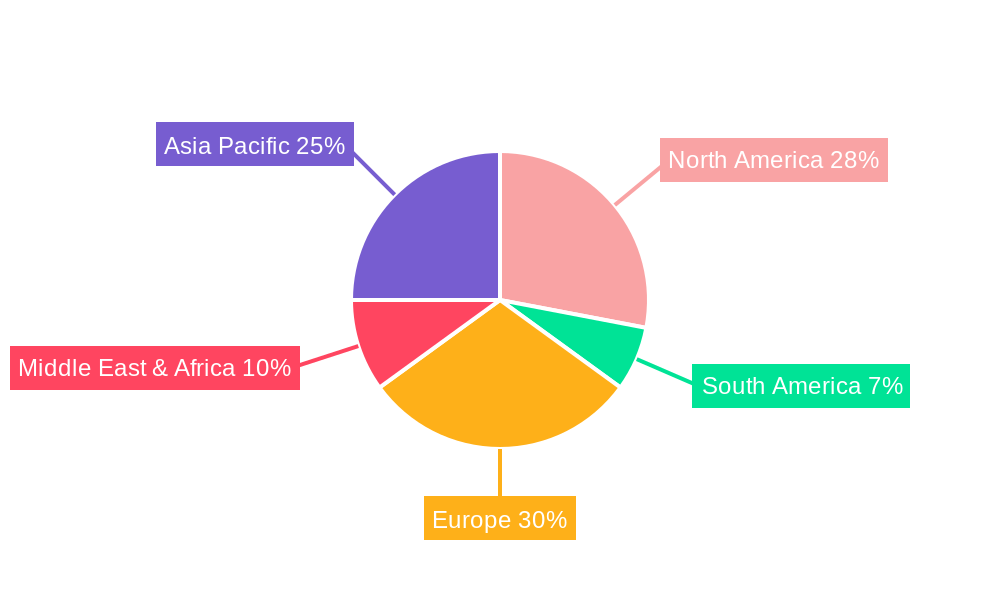
Pharmaceutical Milling Equipment Regional Market Share
Geographic Coverage of Pharmaceutical Milling Equipment
Pharmaceutical Milling Equipment REPORT HIGHLIGHTS
| Aspects | Details |
|---|---|
| Study Period | 2020-2034 |
| Base Year | 2025 |
| Estimated Year | 2026 |
| Forecast Period | 2026-2034 |
| Historical Period | 2020-2025 |
| Growth Rate | CAGR of 3.8% from 2020-2034 |
| Segmentation |
|
Table of Contents
- 1. Introduction
- 1.1. Research Scope
- 1.2. Market Segmentation
- 1.3. Research Methodology
- 1.4. Definitions and Assumptions
- 2. Executive Summary
- 2.1. Introduction
- 3. Market Dynamics
- 3.1. Introduction
- 3.2. Market Drivers
- 3.3. Market Restrains
- 3.4. Market Trends
- 4. Market Factor Analysis
- 4.1. Porters Five Forces
- 4.2. Supply/Value Chain
- 4.3. PESTEL analysis
- 4.4. Market Entropy
- 4.5. Patent/Trademark Analysis
- 5. Global Pharmaceutical Milling Equipment Analysis, Insights and Forecast, 2020-2032
- 5.1. Market Analysis, Insights and Forecast - by Application
- 5.1.1. Pharma Companies
- 5.1.2. Medical Contract Manufacturing Organisations
- 5.1.3. Research Laboratory
- 5.2. Market Analysis, Insights and Forecast - by Type
- 5.2.1. Cone Mill
- 5.2.2. Hammer Mill
- 5.3. Market Analysis, Insights and Forecast - by Region
- 5.3.1. North America
- 5.3.2. South America
- 5.3.3. Europe
- 5.3.4. Middle East & Africa
- 5.3.5. Asia Pacific
- 5.1. Market Analysis, Insights and Forecast - by Application
- 6. North America Pharmaceutical Milling Equipment Analysis, Insights and Forecast, 2020-2032
- 6.1. Market Analysis, Insights and Forecast - by Application
- 6.1.1. Pharma Companies
- 6.1.2. Medical Contract Manufacturing Organisations
- 6.1.3. Research Laboratory
- 6.2. Market Analysis, Insights and Forecast - by Type
- 6.2.1. Cone Mill
- 6.2.2. Hammer Mill
- 6.1. Market Analysis, Insights and Forecast - by Application
- 7. South America Pharmaceutical Milling Equipment Analysis, Insights and Forecast, 2020-2032
- 7.1. Market Analysis, Insights and Forecast - by Application
- 7.1.1. Pharma Companies
- 7.1.2. Medical Contract Manufacturing Organisations
- 7.1.3. Research Laboratory
- 7.2. Market Analysis, Insights and Forecast - by Type
- 7.2.1. Cone Mill
- 7.2.2. Hammer Mill
- 7.1. Market Analysis, Insights and Forecast - by Application
- 8. Europe Pharmaceutical Milling Equipment Analysis, Insights and Forecast, 2020-2032
- 8.1. Market Analysis, Insights and Forecast - by Application
- 8.1.1. Pharma Companies
- 8.1.2. Medical Contract Manufacturing Organisations
- 8.1.3. Research Laboratory
- 8.2. Market Analysis, Insights and Forecast - by Type
- 8.2.1. Cone Mill
- 8.2.2. Hammer Mill
- 8.1. Market Analysis, Insights and Forecast - by Application
- 9. Middle East & Africa Pharmaceutical Milling Equipment Analysis, Insights and Forecast, 2020-2032
- 9.1. Market Analysis, Insights and Forecast - by Application
- 9.1.1. Pharma Companies
- 9.1.2. Medical Contract Manufacturing Organisations
- 9.1.3. Research Laboratory
- 9.2. Market Analysis, Insights and Forecast - by Type
- 9.2.1. Cone Mill
- 9.2.2. Hammer Mill
- 9.1. Market Analysis, Insights and Forecast - by Application
- 10. Asia Pacific Pharmaceutical Milling Equipment Analysis, Insights and Forecast, 2020-2032
- 10.1. Market Analysis, Insights and Forecast - by Application
- 10.1.1. Pharma Companies
- 10.1.2. Medical Contract Manufacturing Organisations
- 10.1.3. Research Laboratory
- 10.2. Market Analysis, Insights and Forecast - by Type
- 10.2.1. Cone Mill
- 10.2.2. Hammer Mill
- 10.1. Market Analysis, Insights and Forecast - by Application
- 11. Competitive Analysis
- 11.1. Global Market Share Analysis 2025
- 11.2. Company Profiles
- 11.2.1 WAB Group
- 11.2.1.1. Overview
- 11.2.1.2. Products
- 11.2.1.3. SWOT Analysis
- 11.2.1.4. Recent Developments
- 11.2.1.5. Financials (Based on Availability)
- 11.2.2 Shapa
- 11.2.2.1. Overview
- 11.2.2.2. Products
- 11.2.2.3. SWOT Analysis
- 11.2.2.4. Recent Developments
- 11.2.2.5. Financials (Based on Availability)
- 11.2.3 Classifier Milling Systems
- 11.2.3.1. Overview
- 11.2.3.2. Products
- 11.2.3.3. SWOT Analysis
- 11.2.3.4. Recent Developments
- 11.2.3.5. Financials (Based on Availability)
- 11.2.4 Grain Tech Limited
- 11.2.4.1. Overview
- 11.2.4.2. Products
- 11.2.4.3. SWOT Analysis
- 11.2.4.4. Recent Developments
- 11.2.4.5. Financials (Based on Availability)
- 11.2.5 Mill Powder Tech Solutions
- 11.2.5.1. Overview
- 11.2.5.2. Products
- 11.2.5.3. SWOT Analysis
- 11.2.5.4. Recent Developments
- 11.2.5.5. Financials (Based on Availability)
- 11.2.6 MCS Machinery
- 11.2.6.1. Overview
- 11.2.6.2. Products
- 11.2.6.3. SWOT Analysis
- 11.2.6.4. Recent Developments
- 11.2.6.5. Financials (Based on Availability)
- 11.2.7 Quadro Engineering
- 11.2.7.1. Overview
- 11.2.7.2. Products
- 11.2.7.3. SWOT Analysis
- 11.2.7.4. Recent Developments
- 11.2.7.5. Financials (Based on Availability)
- 11.2.8 Hanningfield
- 11.2.8.1. Overview
- 11.2.8.2. Products
- 11.2.8.3. SWOT Analysis
- 11.2.8.4. Recent Developments
- 11.2.8.5. Financials (Based on Availability)
- 11.2.9 IDEX Corporation
- 11.2.9.1. Overview
- 11.2.9.2. Products
- 11.2.9.3. SWOT Analysis
- 11.2.9.4. Recent Developments
- 11.2.9.5. Financials (Based on Availability)
- 11.2.1 WAB Group
List of Figures
- Figure 1: Global Pharmaceutical Milling Equipment Revenue Breakdown (billion, %) by Region 2025 & 2033
- Figure 2: North America Pharmaceutical Milling Equipment Revenue (billion), by Application 2025 & 2033
- Figure 3: North America Pharmaceutical Milling Equipment Revenue Share (%), by Application 2025 & 2033
- Figure 4: North America Pharmaceutical Milling Equipment Revenue (billion), by Type 2025 & 2033
- Figure 5: North America Pharmaceutical Milling Equipment Revenue Share (%), by Type 2025 & 2033
- Figure 6: North America Pharmaceutical Milling Equipment Revenue (billion), by Country 2025 & 2033
- Figure 7: North America Pharmaceutical Milling Equipment Revenue Share (%), by Country 2025 & 2033
- Figure 8: South America Pharmaceutical Milling Equipment Revenue (billion), by Application 2025 & 2033
- Figure 9: South America Pharmaceutical Milling Equipment Revenue Share (%), by Application 2025 & 2033
- Figure 10: South America Pharmaceutical Milling Equipment Revenue (billion), by Type 2025 & 2033
- Figure 11: South America Pharmaceutical Milling Equipment Revenue Share (%), by Type 2025 & 2033
- Figure 12: South America Pharmaceutical Milling Equipment Revenue (billion), by Country 2025 & 2033
- Figure 13: South America Pharmaceutical Milling Equipment Revenue Share (%), by Country 2025 & 2033
- Figure 14: Europe Pharmaceutical Milling Equipment Revenue (billion), by Application 2025 & 2033
- Figure 15: Europe Pharmaceutical Milling Equipment Revenue Share (%), by Application 2025 & 2033
- Figure 16: Europe Pharmaceutical Milling Equipment Revenue (billion), by Type 2025 & 2033
- Figure 17: Europe Pharmaceutical Milling Equipment Revenue Share (%), by Type 2025 & 2033
- Figure 18: Europe Pharmaceutical Milling Equipment Revenue (billion), by Country 2025 & 2033
- Figure 19: Europe Pharmaceutical Milling Equipment Revenue Share (%), by Country 2025 & 2033
- Figure 20: Middle East & Africa Pharmaceutical Milling Equipment Revenue (billion), by Application 2025 & 2033
- Figure 21: Middle East & Africa Pharmaceutical Milling Equipment Revenue Share (%), by Application 2025 & 2033
- Figure 22: Middle East & Africa Pharmaceutical Milling Equipment Revenue (billion), by Type 2025 & 2033
- Figure 23: Middle East & Africa Pharmaceutical Milling Equipment Revenue Share (%), by Type 2025 & 2033
- Figure 24: Middle East & Africa Pharmaceutical Milling Equipment Revenue (billion), by Country 2025 & 2033
- Figure 25: Middle East & Africa Pharmaceutical Milling Equipment Revenue Share (%), by Country 2025 & 2033
- Figure 26: Asia Pacific Pharmaceutical Milling Equipment Revenue (billion), by Application 2025 & 2033
- Figure 27: Asia Pacific Pharmaceutical Milling Equipment Revenue Share (%), by Application 2025 & 2033
- Figure 28: Asia Pacific Pharmaceutical Milling Equipment Revenue (billion), by Type 2025 & 2033
- Figure 29: Asia Pacific Pharmaceutical Milling Equipment Revenue Share (%), by Type 2025 & 2033
- Figure 30: Asia Pacific Pharmaceutical Milling Equipment Revenue (billion), by Country 2025 & 2033
- Figure 31: Asia Pacific Pharmaceutical Milling Equipment Revenue Share (%), by Country 2025 & 2033
List of Tables
- Table 1: Global Pharmaceutical Milling Equipment Revenue billion Forecast, by Application 2020 & 2033
- Table 2: Global Pharmaceutical Milling Equipment Revenue billion Forecast, by Type 2020 & 2033
- Table 3: Global Pharmaceutical Milling Equipment Revenue billion Forecast, by Region 2020 & 2033
- Table 4: Global Pharmaceutical Milling Equipment Revenue billion Forecast, by Application 2020 & 2033
- Table 5: Global Pharmaceutical Milling Equipment Revenue billion Forecast, by Type 2020 & 2033
- Table 6: Global Pharmaceutical Milling Equipment Revenue billion Forecast, by Country 2020 & 2033
- Table 7: United States Pharmaceutical Milling Equipment Revenue (billion) Forecast, by Application 2020 & 2033
- Table 8: Canada Pharmaceutical Milling Equipment Revenue (billion) Forecast, by Application 2020 & 2033
- Table 9: Mexico Pharmaceutical Milling Equipment Revenue (billion) Forecast, by Application 2020 & 2033
- Table 10: Global Pharmaceutical Milling Equipment Revenue billion Forecast, by Application 2020 & 2033
- Table 11: Global Pharmaceutical Milling Equipment Revenue billion Forecast, by Type 2020 & 2033
- Table 12: Global Pharmaceutical Milling Equipment Revenue billion Forecast, by Country 2020 & 2033
- Table 13: Brazil Pharmaceutical Milling Equipment Revenue (billion) Forecast, by Application 2020 & 2033
- Table 14: Argentina Pharmaceutical Milling Equipment Revenue (billion) Forecast, by Application 2020 & 2033
- Table 15: Rest of South America Pharmaceutical Milling Equipment Revenue (billion) Forecast, by Application 2020 & 2033
- Table 16: Global Pharmaceutical Milling Equipment Revenue billion Forecast, by Application 2020 & 2033
- Table 17: Global Pharmaceutical Milling Equipment Revenue billion Forecast, by Type 2020 & 2033
- Table 18: Global Pharmaceutical Milling Equipment Revenue billion Forecast, by Country 2020 & 2033
- Table 19: United Kingdom Pharmaceutical Milling Equipment Revenue (billion) Forecast, by Application 2020 & 2033
- Table 20: Germany Pharmaceutical Milling Equipment Revenue (billion) Forecast, by Application 2020 & 2033
- Table 21: France Pharmaceutical Milling Equipment Revenue (billion) Forecast, by Application 2020 & 2033
- Table 22: Italy Pharmaceutical Milling Equipment Revenue (billion) Forecast, by Application 2020 & 2033
- Table 23: Spain Pharmaceutical Milling Equipment Revenue (billion) Forecast, by Application 2020 & 2033
- Table 24: Russia Pharmaceutical Milling Equipment Revenue (billion) Forecast, by Application 2020 & 2033
- Table 25: Benelux Pharmaceutical Milling Equipment Revenue (billion) Forecast, by Application 2020 & 2033
- Table 26: Nordics Pharmaceutical Milling Equipment Revenue (billion) Forecast, by Application 2020 & 2033
- Table 27: Rest of Europe Pharmaceutical Milling Equipment Revenue (billion) Forecast, by Application 2020 & 2033
- Table 28: Global Pharmaceutical Milling Equipment Revenue billion Forecast, by Application 2020 & 2033
- Table 29: Global Pharmaceutical Milling Equipment Revenue billion Forecast, by Type 2020 & 2033
- Table 30: Global Pharmaceutical Milling Equipment Revenue billion Forecast, by Country 2020 & 2033
- Table 31: Turkey Pharmaceutical Milling Equipment Revenue (billion) Forecast, by Application 2020 & 2033
- Table 32: Israel Pharmaceutical Milling Equipment Revenue (billion) Forecast, by Application 2020 & 2033
- Table 33: GCC Pharmaceutical Milling Equipment Revenue (billion) Forecast, by Application 2020 & 2033
- Table 34: North Africa Pharmaceutical Milling Equipment Revenue (billion) Forecast, by Application 2020 & 2033
- Table 35: South Africa Pharmaceutical Milling Equipment Revenue (billion) Forecast, by Application 2020 & 2033
- Table 36: Rest of Middle East & Africa Pharmaceutical Milling Equipment Revenue (billion) Forecast, by Application 2020 & 2033
- Table 37: Global Pharmaceutical Milling Equipment Revenue billion Forecast, by Application 2020 & 2033
- Table 38: Global Pharmaceutical Milling Equipment Revenue billion Forecast, by Type 2020 & 2033
- Table 39: Global Pharmaceutical Milling Equipment Revenue billion Forecast, by Country 2020 & 2033
- Table 40: China Pharmaceutical Milling Equipment Revenue (billion) Forecast, by Application 2020 & 2033
- Table 41: India Pharmaceutical Milling Equipment Revenue (billion) Forecast, by Application 2020 & 2033
- Table 42: Japan Pharmaceutical Milling Equipment Revenue (billion) Forecast, by Application 2020 & 2033
- Table 43: South Korea Pharmaceutical Milling Equipment Revenue (billion) Forecast, by Application 2020 & 2033
- Table 44: ASEAN Pharmaceutical Milling Equipment Revenue (billion) Forecast, by Application 2020 & 2033
- Table 45: Oceania Pharmaceutical Milling Equipment Revenue (billion) Forecast, by Application 2020 & 2033
- Table 46: Rest of Asia Pacific Pharmaceutical Milling Equipment Revenue (billion) Forecast, by Application 2020 & 2033
Frequently Asked Questions
1. What is the projected Compound Annual Growth Rate (CAGR) of the Pharmaceutical Milling Equipment?
The projected CAGR is approximately 3.8%.
2. Which companies are prominent players in the Pharmaceutical Milling Equipment?
Key companies in the market include WAB Group, Shapa, Classifier Milling Systems, Grain Tech Limited, Mill Powder Tech Solutions, MCS Machinery, Quadro Engineering, Hanningfield, IDEX Corporation.
3. What are the main segments of the Pharmaceutical Milling Equipment?
The market segments include Application, Type.
4. Can you provide details about the market size?
The market size is estimated to be USD 81.09 billion as of 2022.
5. What are some drivers contributing to market growth?
N/A
6. What are the notable trends driving market growth?
N/A
7. Are there any restraints impacting market growth?
N/A
8. Can you provide examples of recent developments in the market?
N/A
9. What pricing options are available for accessing the report?
Pricing options include single-user, multi-user, and enterprise licenses priced at USD 2900.00, USD 4350.00, and USD 5800.00 respectively.
10. Is the market size provided in terms of value or volume?
The market size is provided in terms of value, measured in billion.
11. Are there any specific market keywords associated with the report?
Yes, the market keyword associated with the report is "Pharmaceutical Milling Equipment," which aids in identifying and referencing the specific market segment covered.
12. How do I determine which pricing option suits my needs best?
The pricing options vary based on user requirements and access needs. Individual users may opt for single-user licenses, while businesses requiring broader access may choose multi-user or enterprise licenses for cost-effective access to the report.
13. Are there any additional resources or data provided in the Pharmaceutical Milling Equipment report?
While the report offers comprehensive insights, it's advisable to review the specific contents or supplementary materials provided to ascertain if additional resources or data are available.
14. How can I stay updated on further developments or reports in the Pharmaceutical Milling Equipment?
To stay informed about further developments, trends, and reports in the Pharmaceutical Milling Equipment, consider subscribing to industry newsletters, following relevant companies and organizations, or regularly checking reputable industry news sources and publications.
Methodology
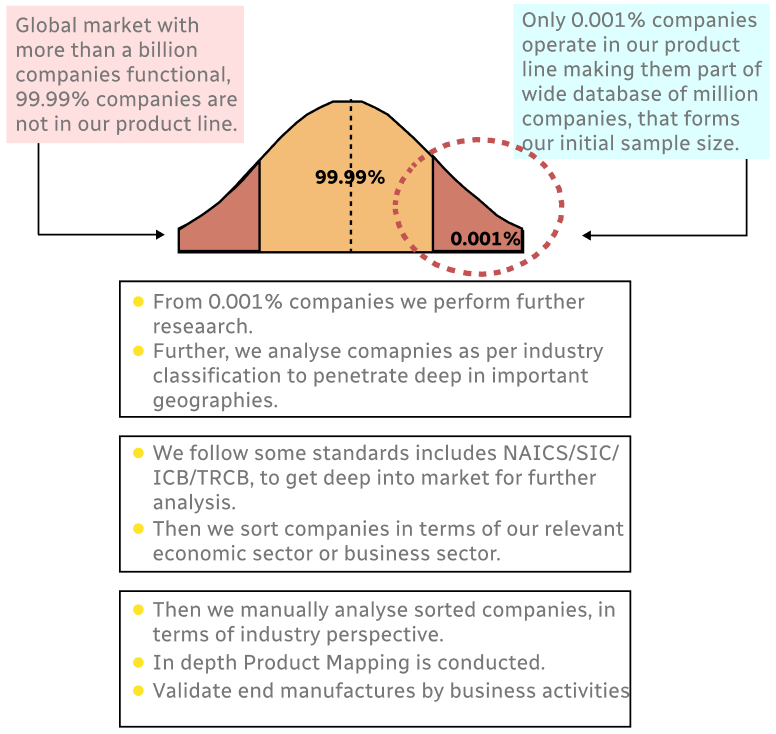
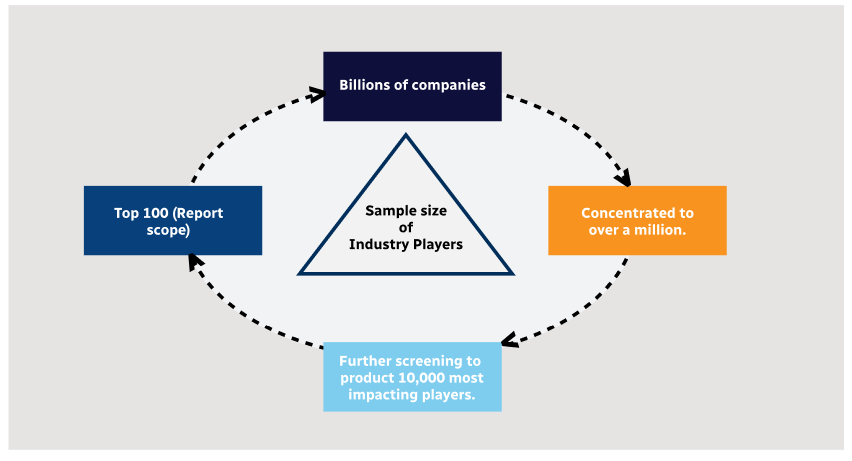
Step 1 - Identification of Relevant Samples Size from Population Database
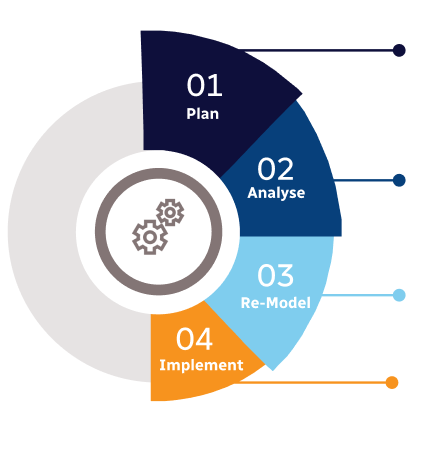
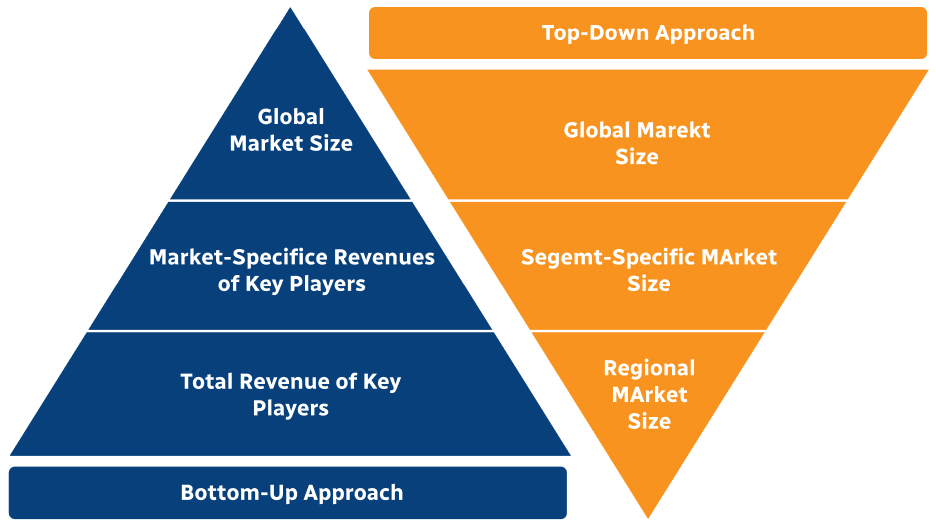
Step 2 - Approaches for Defining Global Market Size (Value, Volume* & Price*)
Note*: In applicable scenarios
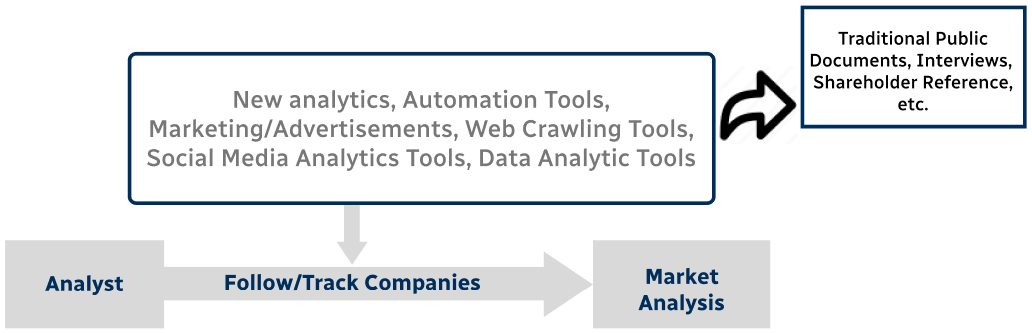
Step 3 - Data Sources
Primary Research
- Web Analytics
- Survey Reports
- Research Institute
- Latest Research Reports
- Opinion Leaders
Secondary Research
- Annual Reports
- White Paper
- Latest Press Release
- Industry Association
- Paid Database
- Investor Presentations
Step 4 - Data Triangulation
Involves using different sources of information in order to increase the validity of a study
These sources are likely to be stakeholders in a program - participants, other researchers, program staff, other community members, and so on.
Then we put all data in single framework & apply various statistical tools to find out the dynamic on the market.
During the analysis stage, feedback from the stakeholder groups would be compared to determine areas of agreement as well as areas of divergence