
Key Insights
The global market for Non Insulated Quick Disconnect Terminals is poised for substantial growth, estimated to reach approximately $1.2 billion by 2025 and projected to expand at a robust Compound Annual Growth Rate (CAGR) of around 7.5% through 2033. This significant expansion is primarily driven by the escalating demand for reliable and efficient electrical connections across a multitude of industries. Key sectors like automotive, industrial automation, telecommunications, and consumer electronics are witnessing an increased adoption of these terminals due to their inherent benefits, including ease of installation, secure connections, and cost-effectiveness. The continuous innovation in terminal design, focusing on enhanced durability, higher current carrying capacities, and improved material science, further fuels market penetration. Furthermore, the growing trend towards miniaturization in electronics and the proliferation of smart devices necessitate smaller, more efficient connector solutions, a niche that non-insulated quick disconnect terminals are well-positioned to fill.
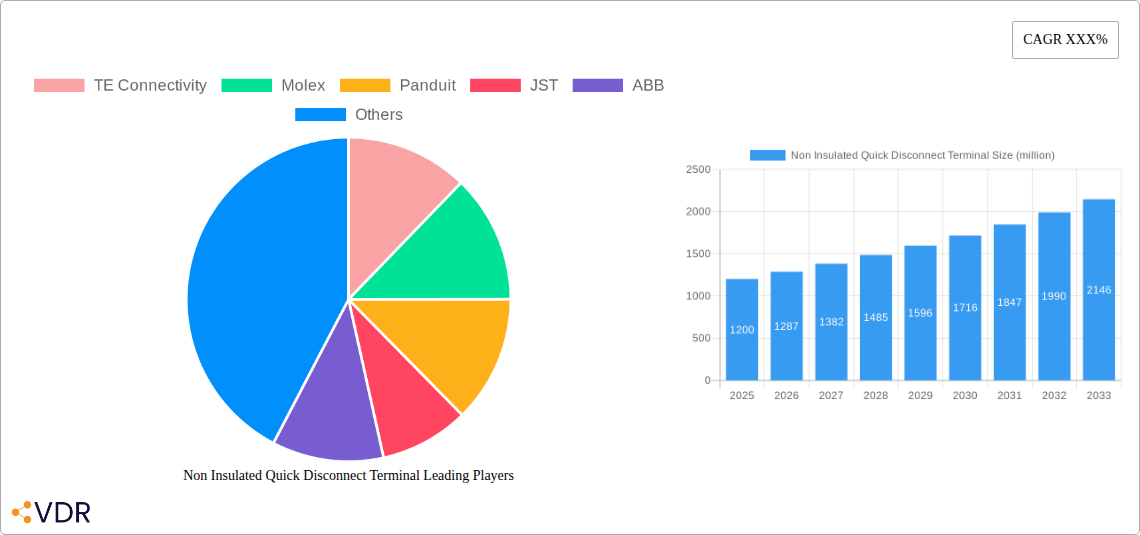
Non Insulated Quick Disconnect Terminal Market Size (In Billion)

The market, however, is not without its challenges. The stringent regulatory landscape concerning electrical safety standards and the ongoing development of alternative, more advanced insulation technologies could pose some restraints. Nevertheless, the inherent simplicity and proven performance of non-insulated quick disconnect terminals ensure their continued relevance. The market can be broadly segmented by application, including wire-to-wire, wire-to-board, and panel mount connections, with each segment experiencing varying growth trajectories based on industry-specific demands. By type, spade, ring, and bullet terminals represent key product categories. Leading players such as TE Connectivity, Molex, and Panduit are actively investing in research and development and strategic partnerships to maintain their competitive edge and capitalize on emerging market opportunities across diverse geographical regions.
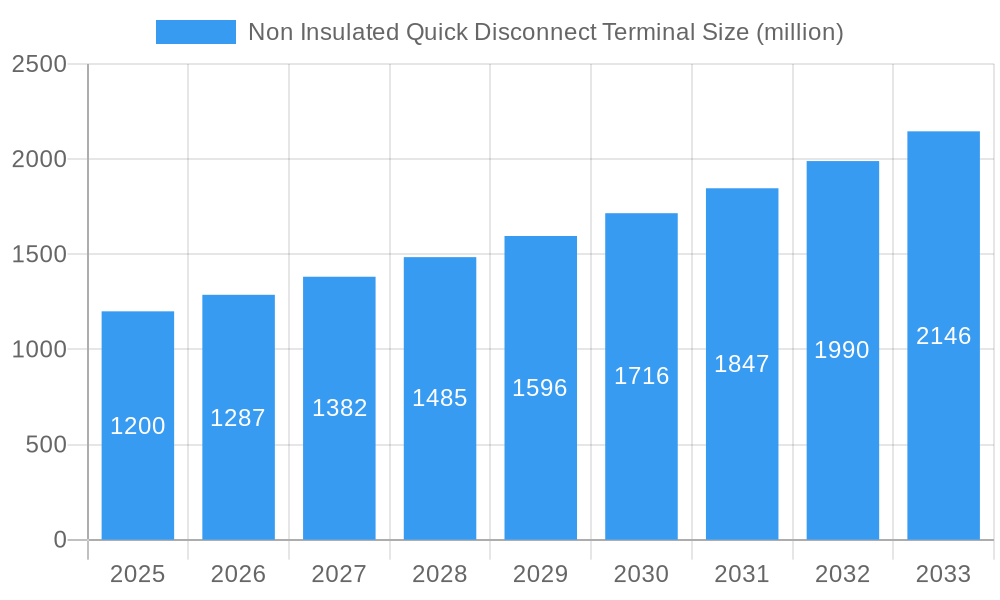
Non Insulated Quick Disconnect Terminal Company Market Share
This in-depth market research report offers a granular analysis of the Non Insulated Quick Disconnect Terminal market, providing critical insights for stakeholders across various industries. With a comprehensive study period spanning 2019–2033, a base year of 2025, and a forecast period of 2025–2033, this report delves into market dynamics, growth trends, regional dominance, product landscape, key players, and future opportunities. The analysis is meticulously structured to enhance readability and deliver actionable intelligence, incorporating high-traffic keywords and addressing both parent and child markets to maximize search engine visibility and appeal to industry professionals. All quantitative values are presented in million units for clear comprehension.
Non Insulated Quick Disconnect Terminal Market Dynamics & Structure
The non insulated quick disconnect terminal market is characterized by a moderate to high degree of concentration, with established players like TE Connectivity, Molex, and Panduit holding significant market share. Technological innovation is a primary driver, fueled by the increasing demand for efficient, reliable, and cost-effective electrical connections in burgeoning sectors. Regulatory frameworks, particularly those concerning electrical safety and environmental compliance, play a crucial role in shaping product development and market access. Competitive product substitutes, such as insulated terminals and solder connections, exist but are often outmatched by the speed and ease of installation offered by non insulated quick disconnects in specific applications. End-user demographics are diverse, ranging from large-scale industrial manufacturers to smaller repair and maintenance operations. Mergers and acquisition (M&A) trends, estimated at approximately 5 M&A deals annually over the historical period, are consolidating the market and fostering innovation through the integration of new technologies and expanded product portfolios. Innovation barriers include the inherent cost of R&D for specialized terminal designs and the lengthy certification processes for new electrical components.
Non Insulated Quick Disconnect Terminal Growth Trends & Insights
The non insulated quick disconnect terminal market is projected to experience robust growth, driven by the escalating adoption of advanced electrical systems across numerous industries. The global market size for these terminals is anticipated to grow from an estimated $1,250 million in 2025 to $1,800 million by 2033, exhibiting a Compound Annual Growth Rate (CAGR) of approximately 4.7% during the forecast period. This expansion is underpinned by significant technological disruptions, including advancements in material science leading to improved conductivity and durability, and the integration of automation in manufacturing processes to meet rising demand. Consumer behavior shifts are also contributing, with an increasing preference for plug-and-play solutions that reduce assembly time and labor costs in both original equipment manufacturing (OEM) and aftermarket applications. The market penetration of non insulated quick disconnect terminals is steadily rising, particularly in sectors like automotive, industrial automation, and consumer electronics, where rapid assembly and reliable connections are paramount. Emerging applications in renewable energy infrastructure and electric vehicle charging stations are further propelling adoption rates. The focus on standardization and miniaturization of electrical components also supports the growth trajectory of this market.
Dominant Regions, Countries, or Segments in Non Insulated Quick Disconnect Terminal
North America currently dominates the non insulated quick disconnect terminal market, with an estimated market share of 30% in 2025, primarily driven by its advanced manufacturing sector and robust infrastructure development. Within North America, the United States leads, supported by strong economic policies favoring industrial growth and significant investments in automotive and aerospace industries where these terminals are extensively used. The Application: segment of Industrial Automation is a key growth driver, accounting for an estimated 35% of the market share in 2025. This dominance is fueled by the widespread implementation of automated machinery and control systems in factories, demanding reliable and fast electrical connections for various components. The Type: segment of Tab Terminals, particularly those with widths of 0.250 inches, represents another significant contributor, holding approximately 40% of the market in 2025 due to their versatility and widespread use in control panels and electrical enclosures.
Key Drivers in North America:
- Strong emphasis on industrial automation and smart manufacturing initiatives.
- Significant investments in the automotive sector, including electric vehicle production.
- Extensive research and development in advanced electrical components.
- Established infrastructure for electrical distribution and maintenance.
Dominance Factors for Industrial Automation:
- High demand for efficient and reliable connections in complex machinery.
- Need for quick assembly and disassembly for maintenance and upgrades.
- Adherence to stringent safety and performance standards in industrial environments.
Growth Potential for Tab Terminals:
- Versatility across various voltage and current ratings.
- Cost-effectiveness compared to specialized connectors.
- Ease of integration into existing electrical systems.
Non Insulated Quick Disconnect Terminal Product Landscape
The non insulated quick disconnect terminal product landscape is evolving with a focus on enhanced durability, conductivity, and ease of use. Innovations include advanced plating techniques for improved corrosion resistance and reduced contact resistance, ensuring optimal electrical performance over extended periods. New terminal designs are emerging that offer superior vibration resistance and higher temperature tolerance, crucial for demanding industrial applications. The primary applications span industrial controls, automotive wiring harnesses, consumer electronics, and power distribution systems. Performance metrics such as insertion and extraction force, dielectric strength, and current carrying capacity are key differentiators. Unique selling propositions revolve around reliability under harsh conditions and cost-effective solutions for high-volume manufacturing. Technological advancements are also addressing miniaturization to accommodate increasingly compact electronic devices.
Key Drivers, Barriers & Challenges in Non Insulated Quick Disconnect Terminal
Key Drivers:
- Technological Advancements: Innovations in materials and design are enhancing performance and reliability.
- Industrial Automation Growth: Increased adoption of automated systems across industries drives demand for efficient connectors.
- Automotive Electrification: The shift towards electric vehicles necessitates robust and easy-to-install electrical connections.
- Cost-Effectiveness: Non insulated terminals offer a compelling price-performance ratio for mass production.
- Ease of Installation: Quick connect features significantly reduce assembly time and labor costs.
Barriers & Challenges:
- Supply Chain Disruptions: Volatility in raw material prices and availability can impact production costs and lead times. Global supply chain issues are projected to affect approximately 15% of manufacturers in the coming years.
- Regulatory Compliance: Meeting evolving electrical safety and environmental standards requires continuous R&D investment.
- Competition from Insulated Variants: In applications where electrical insulation is critical, insulated terminals pose a direct competitive threat.
- Skilled Labor Shortages: While installation is simple, complex assembly lines still require a skilled workforce, which can be a constraint.
- Price Sensitivity: In highly competitive markets, price remains a significant factor, limiting margins for manufacturers.
Emerging Opportunities in Non Insulated Quick Disconnect Terminal
Emerging opportunities in the non insulated quick disconnect terminal sector are significantly driven by the expansion of the renewable energy sector, particularly solar and wind power installations, which require numerous reliable electrical connections. The ongoing development of smart grid technologies presents a substantial avenue for growth, as these systems rely on a vast network of interconnected components. Furthermore, the increasing trend towards modular construction in various industries, from construction to electronics, creates a demand for easily connectable and disconnectable components. The burgeoning IoT (Internet of Things) ecosystem, with its proliferation of sensor networks and connected devices, offers untapped potential for specialized, compact non insulated quick disconnect terminals. The electrification of public transportation systems, including trains and buses, also represents a considerable growth area.
Growth Accelerators in the Non Insulated Quick Disconnect Terminal Industry
The non insulated quick disconnect terminal industry is poised for accelerated growth fueled by several key catalysts. Technological breakthroughs in areas like advanced polymer materials for housing and improved contact alloys are continually enhancing product performance and durability, making them suitable for even more demanding applications. Strategic partnerships between terminal manufacturers and major OEMs in sectors like automotive and industrial automation are crucial, ensuring product integration from the design stage and securing long-term supply agreements. Market expansion strategies, including targeting developing economies with a growing industrial base and focusing on niche applications within specialized industries, will further broaden the market reach. The increasing emphasis on electrification across all sectors, from transportation to home appliances, acts as a broad-based growth accelerator, creating a sustained demand for reliable and efficient electrical connection solutions.
Key Players Shaping the Non Insulated Quick Disconnect Terminal Market
- TE Connectivity
- Molex
- Panduit
- JST
- ABB
- 3M
- ETTINGER
- ELK Products
- Keystone Electronics
- Hoffmann Group
- Mueller Electric
- IDEAL Electrical
- Phoenix Contact
- Master Appliance
- NTE Electronics
- TPC Wire
Notable Milestones in Non Insulated Quick Disconnect Terminal Sector
- 2019: Introduction of enhanced high-temperature resistant non insulated terminals by TE Connectivity, expanding application possibilities in demanding environments.
- 2020: Molex launches a new series of ultra-compact non insulated quick disconnect terminals, catering to the miniaturization trend in consumer electronics.
- 2021: Panduit introduces innovative tooling solutions that significantly reduce installation time for their non insulated terminal offerings.
- 2022: JST expands its global manufacturing capacity to meet the surging demand from the automotive sector for efficient electrical connectors.
- 2023: ABB announces strategic investments in R&D for advanced materials to improve the conductivity and durability of their non insulated terminal range.
- 2024: 3M develops novel plating technologies to enhance corrosion resistance in their non insulated quick disconnect terminal product line.
In-Depth Non Insulated Quick Disconnect Terminal Market Outlook
The future market outlook for non insulated quick disconnect terminals is exceptionally promising, driven by a confluence of powerful growth accelerators. The sustained global push towards electrification across transportation, energy, and consumer goods sectors will continue to be a primary demand driver. Continued advancements in material science and manufacturing automation will lead to even more efficient, reliable, and cost-effective products. Strategic collaborations between key players and industry leaders, particularly in emerging technologies like electric vehicles and renewable energy, will solidify market positions and foster innovation. The expanding industrial base in developing economies presents significant untapped market potential, offering substantial opportunities for growth. Ultimately, the market is set for robust expansion, with strategic investments in R&D and market penetration in high-growth sectors being crucial for capitalizing on future potential.
Non Insulated Quick Disconnect Terminal Segmentation
-
1. Application
- 1.1. undefined
-
2. Type
- 2.1. undefined
Non Insulated Quick Disconnect Terminal Segmentation By Geography
- 1. undefined
- 2. undefined
- 3. undefined
- 4. undefined
- 5. undefined
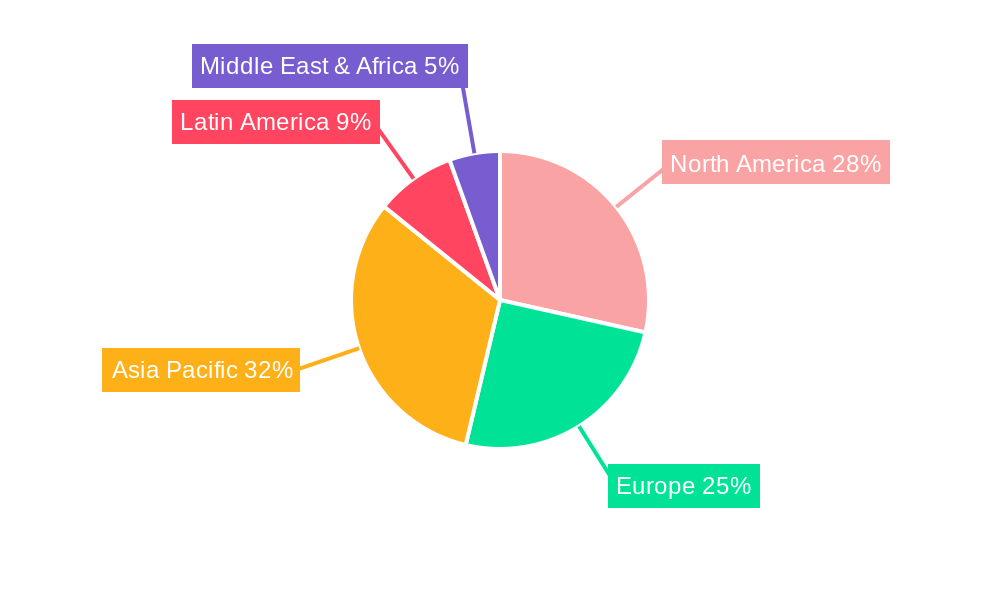
Non Insulated Quick Disconnect Terminal Regional Market Share
Geographic Coverage of Non Insulated Quick Disconnect Terminal
Non Insulated Quick Disconnect Terminal REPORT HIGHLIGHTS
| Aspects | Details |
|---|---|
| Study Period | 2020-2034 |
| Base Year | 2025 |
| Estimated Year | 2026 |
| Forecast Period | 2026-2034 |
| Historical Period | 2020-2025 |
| Growth Rate | CAGR of XXX% from 2020-2034 |
| Segmentation |
|
Table of Contents
- 1. Introduction
- 1.1. Research Scope
- 1.2. Market Segmentation
- 1.3. Research Methodology
- 1.4. Definitions and Assumptions
- 2. Executive Summary
- 2.1. Introduction
- 3. Market Dynamics
- 3.1. Introduction
- 3.2. Market Drivers
- 3.3. Market Restrains
- 3.4. Market Trends
- 4. Market Factor Analysis
- 4.1. Porters Five Forces
- 4.2. Supply/Value Chain
- 4.3. PESTEL analysis
- 4.4. Market Entropy
- 4.5. Patent/Trademark Analysis
- 5. Global Non Insulated Quick Disconnect Terminal Analysis, Insights and Forecast, 2020-2032
- 5.1. Market Analysis, Insights and Forecast - by Application
- 5.1.1.
- 5.2. Market Analysis, Insights and Forecast - by Type
- 5.2.1.
- 5.3. Market Analysis, Insights and Forecast - by Region
- 5.3.1.
- 5.3.2.
- 5.3.3.
- 5.3.4.
- 5.3.5.
- 5.1. Market Analysis, Insights and Forecast - by Application
- 6. undefined Non Insulated Quick Disconnect Terminal Analysis, Insights and Forecast, 2020-2032
- 6.1. Market Analysis, Insights and Forecast - by Application
- 6.1.1.
- 6.2. Market Analysis, Insights and Forecast - by Type
- 6.2.1.
- 6.1. Market Analysis, Insights and Forecast - by Application
- 7. undefined Non Insulated Quick Disconnect Terminal Analysis, Insights and Forecast, 2020-2032
- 7.1. Market Analysis, Insights and Forecast - by Application
- 7.1.1.
- 7.2. Market Analysis, Insights and Forecast - by Type
- 7.2.1.
- 7.1. Market Analysis, Insights and Forecast - by Application
- 8. undefined Non Insulated Quick Disconnect Terminal Analysis, Insights and Forecast, 2020-2032
- 8.1. Market Analysis, Insights and Forecast - by Application
- 8.1.1.
- 8.2. Market Analysis, Insights and Forecast - by Type
- 8.2.1.
- 8.1. Market Analysis, Insights and Forecast - by Application
- 9. undefined Non Insulated Quick Disconnect Terminal Analysis, Insights and Forecast, 2020-2032
- 9.1. Market Analysis, Insights and Forecast - by Application
- 9.1.1.
- 9.2. Market Analysis, Insights and Forecast - by Type
- 9.2.1.
- 9.1. Market Analysis, Insights and Forecast - by Application
- 10. undefined Non Insulated Quick Disconnect Terminal Analysis, Insights and Forecast, 2020-2032
- 10.1. Market Analysis, Insights and Forecast - by Application
- 10.1.1.
- 10.2. Market Analysis, Insights and Forecast - by Type
- 10.2.1.
- 10.1. Market Analysis, Insights and Forecast - by Application
- 11. Competitive Analysis
- 11.1. Global Market Share Analysis 2025
- 11.2. Company Profiles
- 11.2.1 TE Connectivity
- 11.2.1.1. Overview
- 11.2.1.2. Products
- 11.2.1.3. SWOT Analysis
- 11.2.1.4. Recent Developments
- 11.2.1.5. Financials (Based on Availability)
- 11.2.2 Molex
- 11.2.2.1. Overview
- 11.2.2.2. Products
- 11.2.2.3. SWOT Analysis
- 11.2.2.4. Recent Developments
- 11.2.2.5. Financials (Based on Availability)
- 11.2.3 Panduit
- 11.2.3.1. Overview
- 11.2.3.2. Products
- 11.2.3.3. SWOT Analysis
- 11.2.3.4. Recent Developments
- 11.2.3.5. Financials (Based on Availability)
- 11.2.4 JST
- 11.2.4.1. Overview
- 11.2.4.2. Products
- 11.2.4.3. SWOT Analysis
- 11.2.4.4. Recent Developments
- 11.2.4.5. Financials (Based on Availability)
- 11.2.5 ABB
- 11.2.5.1. Overview
- 11.2.5.2. Products
- 11.2.5.3. SWOT Analysis
- 11.2.5.4. Recent Developments
- 11.2.5.5. Financials (Based on Availability)
- 11.2.6 3M
- 11.2.6.1. Overview
- 11.2.6.2. Products
- 11.2.6.3. SWOT Analysis
- 11.2.6.4. Recent Developments
- 11.2.6.5. Financials (Based on Availability)
- 11.2.7 ETTINGER
- 11.2.7.1. Overview
- 11.2.7.2. Products
- 11.2.7.3. SWOT Analysis
- 11.2.7.4. Recent Developments
- 11.2.7.5. Financials (Based on Availability)
- 11.2.8 ELK Products
- 11.2.8.1. Overview
- 11.2.8.2. Products
- 11.2.8.3. SWOT Analysis
- 11.2.8.4. Recent Developments
- 11.2.8.5. Financials (Based on Availability)
- 11.2.9 Keystone Electronics
- 11.2.9.1. Overview
- 11.2.9.2. Products
- 11.2.9.3. SWOT Analysis
- 11.2.9.4. Recent Developments
- 11.2.9.5. Financials (Based on Availability)
- 11.2.10 Hoffmann Group
- 11.2.10.1. Overview
- 11.2.10.2. Products
- 11.2.10.3. SWOT Analysis
- 11.2.10.4. Recent Developments
- 11.2.10.5. Financials (Based on Availability)
- 11.2.11 Mueller Electric
- 11.2.11.1. Overview
- 11.2.11.2. Products
- 11.2.11.3. SWOT Analysis
- 11.2.11.4. Recent Developments
- 11.2.11.5. Financials (Based on Availability)
- 11.2.12 IDEAL Electrical
- 11.2.12.1. Overview
- 11.2.12.2. Products
- 11.2.12.3. SWOT Analysis
- 11.2.12.4. Recent Developments
- 11.2.12.5. Financials (Based on Availability)
- 11.2.13 Phoenix Contact
- 11.2.13.1. Overview
- 11.2.13.2. Products
- 11.2.13.3. SWOT Analysis
- 11.2.13.4. Recent Developments
- 11.2.13.5. Financials (Based on Availability)
- 11.2.14 Master Appliance
- 11.2.14.1. Overview
- 11.2.14.2. Products
- 11.2.14.3. SWOT Analysis
- 11.2.14.4. Recent Developments
- 11.2.14.5. Financials (Based on Availability)
- 11.2.15 NTE Electronics
- 11.2.15.1. Overview
- 11.2.15.2. Products
- 11.2.15.3. SWOT Analysis
- 11.2.15.4. Recent Developments
- 11.2.15.5. Financials (Based on Availability)
- 11.2.16 TPC Wire
- 11.2.16.1. Overview
- 11.2.16.2. Products
- 11.2.16.3. SWOT Analysis
- 11.2.16.4. Recent Developments
- 11.2.16.5. Financials (Based on Availability)
- 11.2.1 TE Connectivity
List of Figures
- Figure 1: Global Non Insulated Quick Disconnect Terminal Revenue Breakdown (million, %) by Region 2025 & 2033
- Figure 2: undefined Non Insulated Quick Disconnect Terminal Revenue (million), by Application 2025 & 2033
- Figure 3: undefined Non Insulated Quick Disconnect Terminal Revenue Share (%), by Application 2025 & 2033
- Figure 4: undefined Non Insulated Quick Disconnect Terminal Revenue (million), by Type 2025 & 2033
- Figure 5: undefined Non Insulated Quick Disconnect Terminal Revenue Share (%), by Type 2025 & 2033
- Figure 6: undefined Non Insulated Quick Disconnect Terminal Revenue (million), by Country 2025 & 2033
- Figure 7: undefined Non Insulated Quick Disconnect Terminal Revenue Share (%), by Country 2025 & 2033
- Figure 8: undefined Non Insulated Quick Disconnect Terminal Revenue (million), by Application 2025 & 2033
- Figure 9: undefined Non Insulated Quick Disconnect Terminal Revenue Share (%), by Application 2025 & 2033
- Figure 10: undefined Non Insulated Quick Disconnect Terminal Revenue (million), by Type 2025 & 2033
- Figure 11: undefined Non Insulated Quick Disconnect Terminal Revenue Share (%), by Type 2025 & 2033
- Figure 12: undefined Non Insulated Quick Disconnect Terminal Revenue (million), by Country 2025 & 2033
- Figure 13: undefined Non Insulated Quick Disconnect Terminal Revenue Share (%), by Country 2025 & 2033
- Figure 14: undefined Non Insulated Quick Disconnect Terminal Revenue (million), by Application 2025 & 2033
- Figure 15: undefined Non Insulated Quick Disconnect Terminal Revenue Share (%), by Application 2025 & 2033
- Figure 16: undefined Non Insulated Quick Disconnect Terminal Revenue (million), by Type 2025 & 2033
- Figure 17: undefined Non Insulated Quick Disconnect Terminal Revenue Share (%), by Type 2025 & 2033
- Figure 18: undefined Non Insulated Quick Disconnect Terminal Revenue (million), by Country 2025 & 2033
- Figure 19: undefined Non Insulated Quick Disconnect Terminal Revenue Share (%), by Country 2025 & 2033
- Figure 20: undefined Non Insulated Quick Disconnect Terminal Revenue (million), by Application 2025 & 2033
- Figure 21: undefined Non Insulated Quick Disconnect Terminal Revenue Share (%), by Application 2025 & 2033
- Figure 22: undefined Non Insulated Quick Disconnect Terminal Revenue (million), by Type 2025 & 2033
- Figure 23: undefined Non Insulated Quick Disconnect Terminal Revenue Share (%), by Type 2025 & 2033
- Figure 24: undefined Non Insulated Quick Disconnect Terminal Revenue (million), by Country 2025 & 2033
- Figure 25: undefined Non Insulated Quick Disconnect Terminal Revenue Share (%), by Country 2025 & 2033
- Figure 26: undefined Non Insulated Quick Disconnect Terminal Revenue (million), by Application 2025 & 2033
- Figure 27: undefined Non Insulated Quick Disconnect Terminal Revenue Share (%), by Application 2025 & 2033
- Figure 28: undefined Non Insulated Quick Disconnect Terminal Revenue (million), by Type 2025 & 2033
- Figure 29: undefined Non Insulated Quick Disconnect Terminal Revenue Share (%), by Type 2025 & 2033
- Figure 30: undefined Non Insulated Quick Disconnect Terminal Revenue (million), by Country 2025 & 2033
- Figure 31: undefined Non Insulated Quick Disconnect Terminal Revenue Share (%), by Country 2025 & 2033
List of Tables
- Table 1: Global Non Insulated Quick Disconnect Terminal Revenue million Forecast, by Application 2020 & 2033
- Table 2: Global Non Insulated Quick Disconnect Terminal Revenue million Forecast, by Type 2020 & 2033
- Table 3: Global Non Insulated Quick Disconnect Terminal Revenue million Forecast, by Region 2020 & 2033
- Table 4: Global Non Insulated Quick Disconnect Terminal Revenue million Forecast, by Application 2020 & 2033
- Table 5: Global Non Insulated Quick Disconnect Terminal Revenue million Forecast, by Type 2020 & 2033
- Table 6: Global Non Insulated Quick Disconnect Terminal Revenue million Forecast, by Country 2020 & 2033
- Table 7: Global Non Insulated Quick Disconnect Terminal Revenue million Forecast, by Application 2020 & 2033
- Table 8: Global Non Insulated Quick Disconnect Terminal Revenue million Forecast, by Type 2020 & 2033
- Table 9: Global Non Insulated Quick Disconnect Terminal Revenue million Forecast, by Country 2020 & 2033
- Table 10: Global Non Insulated Quick Disconnect Terminal Revenue million Forecast, by Application 2020 & 2033
- Table 11: Global Non Insulated Quick Disconnect Terminal Revenue million Forecast, by Type 2020 & 2033
- Table 12: Global Non Insulated Quick Disconnect Terminal Revenue million Forecast, by Country 2020 & 2033
- Table 13: Global Non Insulated Quick Disconnect Terminal Revenue million Forecast, by Application 2020 & 2033
- Table 14: Global Non Insulated Quick Disconnect Terminal Revenue million Forecast, by Type 2020 & 2033
- Table 15: Global Non Insulated Quick Disconnect Terminal Revenue million Forecast, by Country 2020 & 2033
- Table 16: Global Non Insulated Quick Disconnect Terminal Revenue million Forecast, by Application 2020 & 2033
- Table 17: Global Non Insulated Quick Disconnect Terminal Revenue million Forecast, by Type 2020 & 2033
- Table 18: Global Non Insulated Quick Disconnect Terminal Revenue million Forecast, by Country 2020 & 2033
Frequently Asked Questions
1. What is the projected Compound Annual Growth Rate (CAGR) of the Non Insulated Quick Disconnect Terminal?
The projected CAGR is approximately XXX%.
2. Which companies are prominent players in the Non Insulated Quick Disconnect Terminal?
Key companies in the market include TE Connectivity, Molex, Panduit, JST, ABB, 3M, ETTINGER, ELK Products, Keystone Electronics, Hoffmann Group, Mueller Electric, IDEAL Electrical, Phoenix Contact, Master Appliance, NTE Electronics, TPC Wire.
3. What are the main segments of the Non Insulated Quick Disconnect Terminal?
The market segments include Application, Type.
4. Can you provide details about the market size?
The market size is estimated to be USD XXX million as of 2022.
5. What are some drivers contributing to market growth?
N/A
6. What are the notable trends driving market growth?
N/A
7. Are there any restraints impacting market growth?
N/A
8. Can you provide examples of recent developments in the market?
N/A
9. What pricing options are available for accessing the report?
Pricing options include single-user, multi-user, and enterprise licenses priced at USD 4250.00, USD 6375.00, and USD 8500.00 respectively.
10. Is the market size provided in terms of value or volume?
The market size is provided in terms of value, measured in million.
11. Are there any specific market keywords associated with the report?
Yes, the market keyword associated with the report is "Non Insulated Quick Disconnect Terminal," which aids in identifying and referencing the specific market segment covered.
12. How do I determine which pricing option suits my needs best?
The pricing options vary based on user requirements and access needs. Individual users may opt for single-user licenses, while businesses requiring broader access may choose multi-user or enterprise licenses for cost-effective access to the report.
13. Are there any additional resources or data provided in the Non Insulated Quick Disconnect Terminal report?
While the report offers comprehensive insights, it's advisable to review the specific contents or supplementary materials provided to ascertain if additional resources or data are available.
14. How can I stay updated on further developments or reports in the Non Insulated Quick Disconnect Terminal?
To stay informed about further developments, trends, and reports in the Non Insulated Quick Disconnect Terminal, consider subscribing to industry newsletters, following relevant companies and organizations, or regularly checking reputable industry news sources and publications.
Methodology
Step 1 - Identification of Relevant Samples Size from Population Database



Step 2 - Approaches for Defining Global Market Size (Value, Volume* & Price*)

Note*: In applicable scenarios
Step 3 - Data Sources
Primary Research
- Web Analytics
- Survey Reports
- Research Institute
- Latest Research Reports
- Opinion Leaders
Secondary Research
- Annual Reports
- White Paper
- Latest Press Release
- Industry Association
- Paid Database
- Investor Presentations

Step 4 - Data Triangulation
Involves using different sources of information in order to increase the validity of a study
These sources are likely to be stakeholders in a program - participants, other researchers, program staff, other community members, and so on.
Then we put all data in single framework & apply various statistical tools to find out the dynamic on the market.
During the analysis stage, feedback from the stakeholder groups would be compared to determine areas of agreement as well as areas of divergence

