


Key Insights
The Next Generation Sequencing (NGS) market is poised for robust expansion, projected to reach a substantial USD 4,977 million. This impressive growth is underpinned by a Compound Annual Growth Rate (CAGR) of 3.4% over the forecast period. This steady upward trajectory is primarily fueled by the increasing adoption of NGS technologies in clinical diagnostics, precision medicine initiatives, and advancements in genomic research. The declining cost of sequencing, coupled with expanding applications in areas like rare disease diagnosis, cancer research, and infectious disease surveillance, are significant drivers. Furthermore, the growing volume of genomic data being generated is necessitating sophisticated analysis tools and platforms, creating further opportunities for market players. The increasing focus on personalized healthcare, where individual genetic makeup dictates treatment strategies, is a pivotal factor propelling the demand for NGS solutions across various healthcare segments.
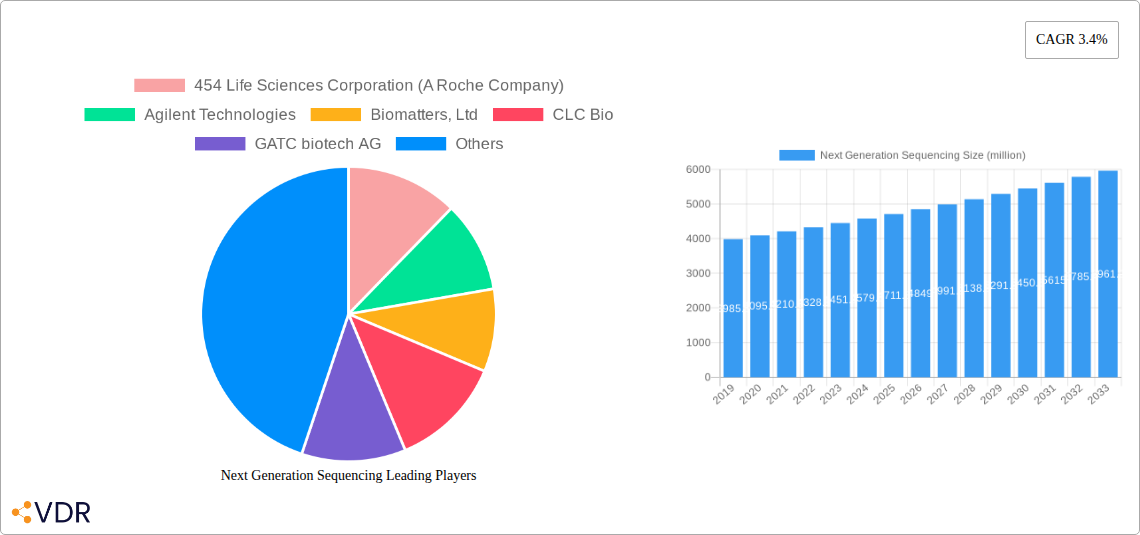
Next Generation Sequencing Market Size (In Billion)

The NGS market is segmented across diverse applications and types, reflecting its broad utility. Key applications include Whole-genome Sequencing, Exome Sequencing, Targeted Resequencing, and RNA Sequencing, each catering to specific research and diagnostic needs. Targeted Sequencing & Resequencing and Whole Genome Sequencing represent major segments by type, indicative of their widespread use in both research and clinical settings. Geographically, North America, led by the United States, is anticipated to maintain a dominant market share, driven by substantial investments in genomics research and advanced healthcare infrastructure. Asia Pacific is expected to witness the fastest growth, propelled by increasing healthcare expenditure, a burgeoning research ecosystem, and supportive government initiatives in countries like China and India. While the market enjoys strong growth, potential restraints such as the high initial cost of advanced NGS platforms and the need for specialized bioinformatics expertise could temper rapid widespread adoption in certain emerging markets.
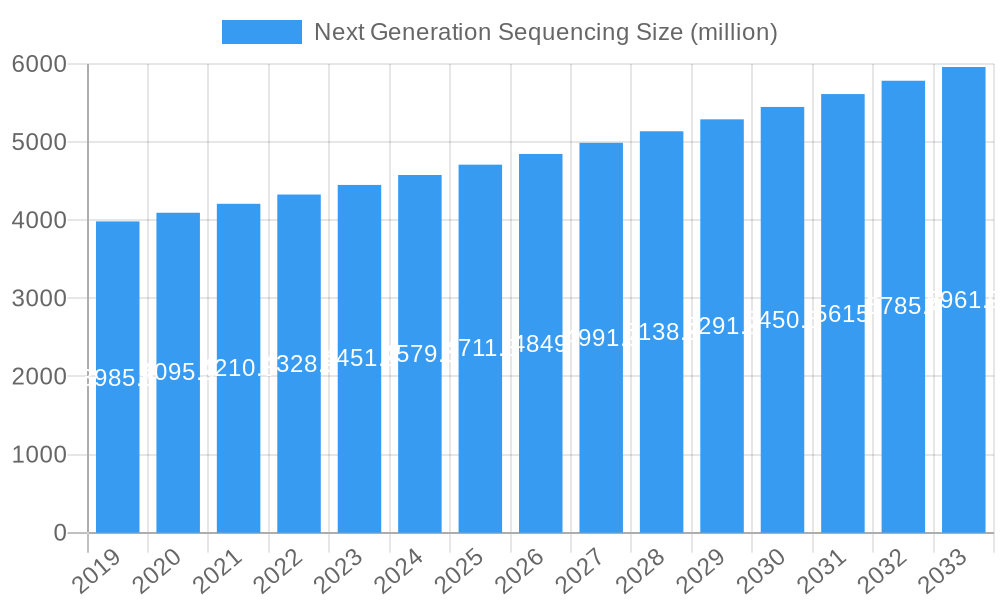
Next Generation Sequencing Company Market Share
This comprehensive report delves into the dynamic Next Generation Sequencing (NGS) market, offering an in-depth analysis of its current state, future projections, and the intricate market structure that defines this rapidly evolving field. With a focus on high-traffic keywords such as genomics, genetic sequencing, DNA sequencing, personalized medicine, and bioinformatics, this report is optimized for maximum search engine visibility, attracting industry professionals, researchers, investors, and decision-makers. We explore the intricate parent and child market relationships within NGS, highlighting how advancements in foundational technologies are driving innovation across specialized applications.
Next Generation Sequencing Market Dynamics & Structure
The global Next Generation Sequencing market exhibits a dynamic interplay of forces shaping its trajectory. While dominated by a few key players, the market is characterized by a high degree of technological innovation and increasing application diversity. The market concentration is moderate, with Illumina holding a significant, though not absolute, market share, followed by companies like Thermo Fisher Scientific (Life Technologies Corporation) and Pacific Biosciences. The parent market, encompassing all DNA sequencing technologies, is witnessing a substantial shift towards NGS due to its superior throughput, accuracy, and cost-effectiveness compared to Sanger sequencing. This transition fuels the growth of child markets like whole-genome sequencing and exome sequencing.
Technological innovation remains the primary driver, fueled by advancements in enzyme engineering, reagent chemistry, and bioinformatics algorithms. The development of longer read lengths, improved accuracy, and reduced sequencing costs are continuously pushing the boundaries of what's possible. Regulatory frameworks, particularly in diagnostic applications, are becoming more defined, albeit with regional variations. For instance, the FDA's evolving stance on laboratory-developed tests (LDTs) impacts the commercialization of NGS-based diagnostics. Competitive product substitutes are minimal in the direct NGS market, but advancements in single-cell analysis and spatial transcriptomics are emerging as complementary technologies. End-user demographics are expanding beyond traditional research institutions to include clinical diagnostics, pharmaceutical research, agriculture, and even forensics. Mergers and acquisitions (M&A) are a significant trend, with larger companies acquiring innovative startups to expand their technology portfolios and market reach. Notable M&A activities contribute to market consolidation and accelerated innovation.
- Market Concentration: Moderate, with key players like Illumina and Thermo Fisher Scientific leading.
- Technological Innovation Drivers: Increased throughput, enhanced accuracy, reduced costs, longer read lengths, and advanced bioinformatics.
- Regulatory Frameworks: Evolving, with a focus on diagnostic applications and varying regional guidelines.
- Competitive Product Substitutes: Limited within core NGS, but complementary technologies are emerging.
- End-User Demographics: Expanding from research to clinical, agricultural, and forensic sectors.
- M&A Trends: Active, with strategic acquisitions to enhance technology portfolios.
Next Generation Sequencing Growth Trends & Insights
The Next Generation Sequencing market is poised for robust growth, driven by an escalating demand for genomic insights across diverse fields. The global NGS market size is projected to witness a substantial expansion from approximately $10,000 million in 2024 to an estimated $35,000 million by 2033, exhibiting a Compound Annual Growth Rate (CAGR) of 15.5% during the forecast period of 2025–2033. This impressive growth trajectory is underpinned by a confluence of factors, including the increasing adoption of personalized medicine, advancements in cancer genomics, and the expanding applications in rare disease diagnosis and infectious disease surveillance. The base year of 2025 sees the market already a significant player, with an estimated value of $15,000 million.
The adoption rates for NGS technologies are accelerating exponentially. Historically, from 2019 to 2024, the market has seen consistent year-over-year growth, fueled by decreasing sequencing costs and an expanding suite of validated applications. Technological disruptions, such as the advent of longer read sequencing technologies (e.g., PacBio and Oxford Nanopore) and improvements in short-read sequencing platforms, are democratizing access to genomic data and enabling more complex research questions to be addressed. Consumer behavior shifts are also playing a crucial role, with a growing awareness among patients and healthcare providers about the potential of genomic information in guiding treatment decisions and predicting disease risk. This has spurred the development of direct-to-consumer genetic testing services and the integration of NGS into routine clinical practice. The market penetration of NGS is steadily increasing, moving beyond academic research into mainstream clinical diagnostics and drug discovery. The demand for RNA sequencing for gene expression analysis and ChIP sequencing for understanding protein-DNA interactions is also witnessing significant growth, reflecting the expanding utility of NGS beyond simple DNA sequencing.
Dominant Regions, Countries, or Segments in Next Generation Sequencing
North America currently dominates the Next Generation Sequencing market, driven by substantial investments in genomics research, a well-established healthcare infrastructure, and a high prevalence of chronic diseases requiring advanced diagnostic solutions. The United States, in particular, is a powerhouse, accounting for a significant share of the global NGS market due to its robust biopharmaceutical industry, leading research institutions, and supportive government initiatives for genomic research. The parent market for DNA sequencing in North America is mature, with a rapid transition to NGS, further solidifying its dominance.
Within the application segment, Whole-genome Sequencing (WGS) and Exome Sequencing are the primary growth engines, particularly in oncology and rare disease diagnostics. The market for WGS is projected to reach $8,000 million by 2033, while Exome Sequencing is estimated to reach $6,500 million. These applications are directly benefiting from the decreasing cost of sequencing and the growing availability of reference genomes. The targeted resequencing segment also remains strong, especially for specific gene panels used in clinical diagnostics.
- Dominant Region: North America, led by the United States.
- Key Drivers: Significant investment in genomics research, advanced healthcare infrastructure, high disease burden, and supportive government policies.
- Market Share: Estimated at 40% of the global NGS market in 2025.
- Growth Potential: Continued expansion driven by precision medicine initiatives and increasing clinical adoption.
- Dominant Application Segment: Whole-genome Sequencing and Exome Sequencing.
- Key Drivers: Advancements in oncology, rare disease diagnostics, and increasing cost-effectiveness.
- Market Share: WGS (estimated 25%), Exome Sequencing (estimated 20%) in 2025.
- Growth Potential: Significant growth expected with the expansion of personalized medicine.
- Dominant Type: Targeted Sequencing & Resequencing and Whole Genome Sequencing.
- Key Drivers: Clinical utility, research applications, and ongoing technological improvements.
- Market Share: Targeted Sequencing & Resequencing (estimated 30%), Whole Genome Sequencing (estimated 25%) in 2025.
- Growth Potential: Steady growth driven by specific disease indications and research needs.
Next Generation Sequencing Product Landscape
The NGS product landscape is characterized by continuous innovation, offering researchers and clinicians a diverse range of platforms, reagents, and software solutions. Leading companies like Illumina provide high-throughput short-read sequencers such as the NovaSeq and MiSeq series, renowned for their accuracy and scalability. Pacific Biosciences and Oxford Nanopore Technologies are at the forefront of long-read sequencing, enabling the assembly of complex genomes and the detection of structural variations. The market also features a wide array of specialized reagents for various applications, including library preparation kits for RNA sequencing, ChIP sequencing, and methyl sequencing, which are crucial for specific research objectives. Software solutions for data analysis, variant calling, and interpretation are equally vital, with companies like Biomatters and CLC Bio offering advanced bioinformatics pipelines.
Key Drivers, Barriers & Challenges in Next Generation Sequencing
Key Drivers:
- Advancements in Personalized Medicine: The growing demand for tailored treatments based on individual genetic makeup is a significant catalyst.
- Decreasing Sequencing Costs: Making NGS accessible to a wider range of researchers and institutions.
- Expanding Clinical Applications: Increased use in cancer diagnostics, rare disease identification, and infectious disease monitoring.
- Technological Innovations: Development of higher throughput, accuracy, and longer read lengths.
- Government Initiatives and Funding: Support for genomics research and infrastructure development.
Key Barriers & Challenges:
- Data Analysis and Interpretation: The sheer volume of NGS data presents challenges in processing, analyzing, and interpreting meaningful insights, requiring sophisticated bioinformatics expertise and infrastructure.
- High Initial Investment: Despite decreasing costs, the initial capital expenditure for advanced NGS equipment can still be a barrier for some smaller institutions.
- Regulatory Hurdles: Navigating the complex and evolving regulatory landscape, especially for diagnostic applications, can be time-consuming and costly.
- Data Storage and Management: The massive datasets generated by NGS require robust and secure data storage solutions, posing logistical and financial challenges.
- Skilled Workforce Shortage: A lack of trained bioinformaticians and geneticists capable of effectively utilizing NGS technologies.
- Supply Chain Disruptions: Global supply chain issues can impact the availability of reagents and consumables, affecting research timelines and operational efficiency, with potential impacts on market growth estimated at 2-3% reduction if persistent.
Emerging Opportunities in Next Generation Sequencing
Emerging opportunities in the NGS market are vast and transformative. The integration of NGS with artificial intelligence (AI) and machine learning (ML) for predictive diagnostics and drug discovery presents a significant growth avenue. The expansion of liquid biopsy applications, enabling non-invasive cancer detection and monitoring, is another key area of development. Furthermore, the application of NGS in microbiome research is gaining momentum, offering insights into the complex interactions between host and microbial communities and their impact on health and disease. The growing adoption of NGS in agriculture for crop improvement and disease resistance is also a burgeoning opportunity.
Growth Accelerators in the Next Generation Sequencing Industry
Several catalysts are accelerating the growth of the NGS industry. Technological breakthroughs in areas like nanopore sequencing, offering real-time analysis and portability, are expanding accessibility. Strategic partnerships between technology providers, research institutions, and pharmaceutical companies are fostering collaboration and accelerating the translation of genomic discoveries into clinical applications. Market expansion strategies, including increased penetration into emerging economies and the development of user-friendly NGS solutions for a broader audience, are also playing a crucial role. The increasing focus on preventive healthcare and proactive disease management is further fueling the demand for genomic profiling.
Key Players Shaping the Next Generation Sequencing Market
- 454 Life Sciences Corporation (A Roche Company)
- Agilent Technologies
- Biomatters, Ltd
- BGI (Beijing Genomics Institute)
- Illumina
- Life Technology Corporation (now part of Thermo Fisher Scientific)
- EMC Corporation (now Dell EMC)
- Dnastar
- GATC biotech AG
- Macrogen
Notable Milestones in Next Generation Sequencing Sector
- 2019: Launch of NovaSeq 6000 v1.5 by Illumina, enhancing throughput and data quality.
- 2020: Significant advancements in portable nanopore sequencing devices, enabling field-based genomic surveillance.
- 2021: Increased FDA approvals for NGS-based companion diagnostics, accelerating personalized medicine adoption.
- 2022: Major breakthroughs in long-read sequencing, improving the assembly of complex and repetitive genomic regions.
- 2023: Expansion of liquid biopsy applications for early cancer detection and monitoring.
- 2024: Growing integration of AI and ML in NGS data analysis for enhanced predictive capabilities.
In-Depth Next Generation Sequencing Market Outlook
The future of the Next Generation Sequencing market is exceptionally bright, characterized by sustained innovation and expanding applications. Growth accelerators such as the continuous refinement of sequencing technologies, leading to even greater accuracy and cost-effectiveness, will democratize access further. Strategic partnerships between academic institutions and industry players will accelerate the translation of research findings into tangible clinical benefits and therapeutic interventions. Market expansion into underserved regions and the development of user-friendly platforms will broaden the adoption base. The increasing emphasis on precision medicine, preventive healthcare, and the burgeoning field of pharmacogenomics will continue to drive demand, solidifying NGS as an indispensable tool in modern healthcare and scientific discovery. The market outlook is one of robust and sustained growth, transforming how we understand, diagnose, and treat diseases.
Next Generation Sequencing Segmentation
-
1. Application
- 1.1. Whole-genome Sequencing
- 1.2. Exome Sequencing
- 1.3. Targeted Resequencing
- 1.4. De Novo Sequencing
- 1.5. RNA Sequencing
- 1.6. ChIP Sequencing
- 1.7. Methyl Sequencing
- 1.8. Others
-
2. Type
- 2.1. Targeted Sequencing & Resequencing
- 2.2. Whole Genome Sequencing
- 2.3. Whole Exome Sequencing
Next Generation Sequencing Segmentation By Geography
-
1. North America
- 1.1. United States
- 1.2. Canada
- 1.3. Mexico
-
2. South America
- 2.1. Brazil
- 2.2. Argentina
- 2.3. Rest of South America
-
3. Europe
- 3.1. United Kingdom
- 3.2. Germany
- 3.3. France
- 3.4. Italy
- 3.5. Spain
- 3.6. Russia
- 3.7. Benelux
- 3.8. Nordics
- 3.9. Rest of Europe
-
4. Middle East & Africa
- 4.1. Turkey
- 4.2. Israel
- 4.3. GCC
- 4.4. North Africa
- 4.5. South Africa
- 4.6. Rest of Middle East & Africa
-
5. Asia Pacific
- 5.1. China
- 5.2. India
- 5.3. Japan
- 5.4. South Korea
- 5.5. ASEAN
- 5.6. Oceania
- 5.7. Rest of Asia Pacific
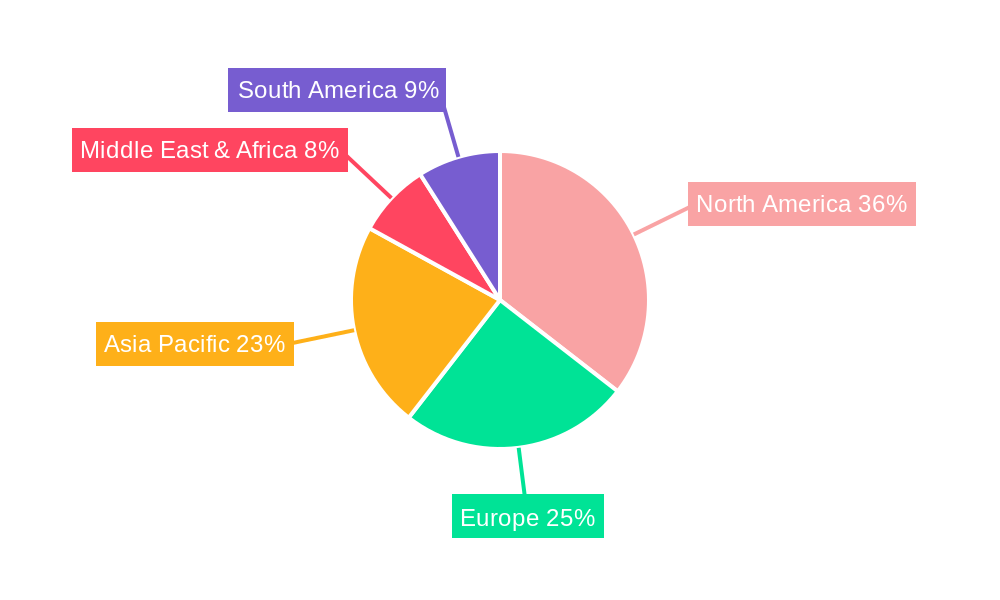
Next Generation Sequencing Regional Market Share
Geographic Coverage of Next Generation Sequencing
Next Generation Sequencing REPORT HIGHLIGHTS
| Aspects | Details |
|---|---|
| Study Period | 2020-2034 |
| Base Year | 2025 |
| Estimated Year | 2026 |
| Forecast Period | 2026-2034 |
| Historical Period | 2020-2025 |
| Growth Rate | CAGR of 3.4% from 2020-2034 |
| Segmentation |
|
Table of Contents
- 1. Introduction
- 1.1. Research Scope
- 1.2. Market Segmentation
- 1.3. Research Methodology
- 1.4. Definitions and Assumptions
- 2. Executive Summary
- 2.1. Introduction
- 3. Market Dynamics
- 3.1. Introduction
- 3.2. Market Drivers
- 3.3. Market Restrains
- 3.4. Market Trends
- 4. Market Factor Analysis
- 4.1. Porters Five Forces
- 4.2. Supply/Value Chain
- 4.3. PESTEL analysis
- 4.4. Market Entropy
- 4.5. Patent/Trademark Analysis
- 5. Global Next Generation Sequencing Analysis, Insights and Forecast, 2020-2032
- 5.1. Market Analysis, Insights and Forecast - by Application
- 5.1.1. Whole-genome Sequencing
- 5.1.2. Exome Sequencing
- 5.1.3. Targeted Resequencing
- 5.1.4. De Novo Sequencing
- 5.1.5. RNA Sequencing
- 5.1.6. ChIP Sequencing
- 5.1.7. Methyl Sequencing
- 5.1.8. Others
- 5.2. Market Analysis, Insights and Forecast - by Type
- 5.2.1. Targeted Sequencing & Resequencing
- 5.2.2. Whole Genome Sequencing
- 5.2.3. Whole Exome Sequencing
- 5.3. Market Analysis, Insights and Forecast - by Region
- 5.3.1. North America
- 5.3.2. South America
- 5.3.3. Europe
- 5.3.4. Middle East & Africa
- 5.3.5. Asia Pacific
- 5.1. Market Analysis, Insights and Forecast - by Application
- 6. North America Next Generation Sequencing Analysis, Insights and Forecast, 2020-2032
- 6.1. Market Analysis, Insights and Forecast - by Application
- 6.1.1. Whole-genome Sequencing
- 6.1.2. Exome Sequencing
- 6.1.3. Targeted Resequencing
- 6.1.4. De Novo Sequencing
- 6.1.5. RNA Sequencing
- 6.1.6. ChIP Sequencing
- 6.1.7. Methyl Sequencing
- 6.1.8. Others
- 6.2. Market Analysis, Insights and Forecast - by Type
- 6.2.1. Targeted Sequencing & Resequencing
- 6.2.2. Whole Genome Sequencing
- 6.2.3. Whole Exome Sequencing
- 6.1. Market Analysis, Insights and Forecast - by Application
- 7. South America Next Generation Sequencing Analysis, Insights and Forecast, 2020-2032
- 7.1. Market Analysis, Insights and Forecast - by Application
- 7.1.1. Whole-genome Sequencing
- 7.1.2. Exome Sequencing
- 7.1.3. Targeted Resequencing
- 7.1.4. De Novo Sequencing
- 7.1.5. RNA Sequencing
- 7.1.6. ChIP Sequencing
- 7.1.7. Methyl Sequencing
- 7.1.8. Others
- 7.2. Market Analysis, Insights and Forecast - by Type
- 7.2.1. Targeted Sequencing & Resequencing
- 7.2.2. Whole Genome Sequencing
- 7.2.3. Whole Exome Sequencing
- 7.1. Market Analysis, Insights and Forecast - by Application
- 8. Europe Next Generation Sequencing Analysis, Insights and Forecast, 2020-2032
- 8.1. Market Analysis, Insights and Forecast - by Application
- 8.1.1. Whole-genome Sequencing
- 8.1.2. Exome Sequencing
- 8.1.3. Targeted Resequencing
- 8.1.4. De Novo Sequencing
- 8.1.5. RNA Sequencing
- 8.1.6. ChIP Sequencing
- 8.1.7. Methyl Sequencing
- 8.1.8. Others
- 8.2. Market Analysis, Insights and Forecast - by Type
- 8.2.1. Targeted Sequencing & Resequencing
- 8.2.2. Whole Genome Sequencing
- 8.2.3. Whole Exome Sequencing
- 8.1. Market Analysis, Insights and Forecast - by Application
- 9. Middle East & Africa Next Generation Sequencing Analysis, Insights and Forecast, 2020-2032
- 9.1. Market Analysis, Insights and Forecast - by Application
- 9.1.1. Whole-genome Sequencing
- 9.1.2. Exome Sequencing
- 9.1.3. Targeted Resequencing
- 9.1.4. De Novo Sequencing
- 9.1.5. RNA Sequencing
- 9.1.6. ChIP Sequencing
- 9.1.7. Methyl Sequencing
- 9.1.8. Others
- 9.2. Market Analysis, Insights and Forecast - by Type
- 9.2.1. Targeted Sequencing & Resequencing
- 9.2.2. Whole Genome Sequencing
- 9.2.3. Whole Exome Sequencing
- 9.1. Market Analysis, Insights and Forecast - by Application
- 10. Asia Pacific Next Generation Sequencing Analysis, Insights and Forecast, 2020-2032
- 10.1. Market Analysis, Insights and Forecast - by Application
- 10.1.1. Whole-genome Sequencing
- 10.1.2. Exome Sequencing
- 10.1.3. Targeted Resequencing
- 10.1.4. De Novo Sequencing
- 10.1.5. RNA Sequencing
- 10.1.6. ChIP Sequencing
- 10.1.7. Methyl Sequencing
- 10.1.8. Others
- 10.2. Market Analysis, Insights and Forecast - by Type
- 10.2.1. Targeted Sequencing & Resequencing
- 10.2.2. Whole Genome Sequencing
- 10.2.3. Whole Exome Sequencing
- 10.1. Market Analysis, Insights and Forecast - by Application
- 11. Competitive Analysis
- 11.1. Global Market Share Analysis 2025
- 11.2. Company Profiles
- 11.2.1 454 Life Sciences Corporation (A Roche Company)
- 11.2.1.1. Overview
- 11.2.1.2. Products
- 11.2.1.3. SWOT Analysis
- 11.2.1.4. Recent Developments
- 11.2.1.5. Financials (Based on Availability)
- 11.2.2 Agilent Technologies
- 11.2.2.1. Overview
- 11.2.2.2. Products
- 11.2.2.3. SWOT Analysis
- 11.2.2.4. Recent Developments
- 11.2.2.5. Financials (Based on Availability)
- 11.2.3 Biomatters Ltd
- 11.2.3.1. Overview
- 11.2.3.2. Products
- 11.2.3.3. SWOT Analysis
- 11.2.3.4. Recent Developments
- 11.2.3.5. Financials (Based on Availability)
- 11.2.4 CLC Bio
- 11.2.4.1. Overview
- 11.2.4.2. Products
- 11.2.4.3. SWOT Analysis
- 11.2.4.4. Recent Developments
- 11.2.4.5. Financials (Based on Availability)
- 11.2.5 GATC biotech AG
- 11.2.5.1. Overview
- 11.2.5.2. Products
- 11.2.5.3. SWOT Analysis
- 11.2.5.4. Recent Developments
- 11.2.5.5. Financials (Based on Availability)
- 11.2.6 Macrogen
- 11.2.6.1. Overview
- 11.2.6.2. Products
- 11.2.6.3. SWOT Analysis
- 11.2.6.4. Recent Developments
- 11.2.6.5. Financials (Based on Availability)
- 11.2.7 BGI (Beijing Genomics Institute)
- 11.2.7.1. Overview
- 11.2.7.2. Products
- 11.2.7.3. SWOT Analysis
- 11.2.7.4. Recent Developments
- 11.2.7.5. Financials (Based on Availability)
- 11.2.8 Illumina
- 11.2.8.1. Overview
- 11.2.8.2. Products
- 11.2.8.3. SWOT Analysis
- 11.2.8.4. Recent Developments
- 11.2.8.5. Financials (Based on Availability)
- 11.2.9 Life Technology Corporation
- 11.2.9.1. Overview
- 11.2.9.2. Products
- 11.2.9.3. SWOT Analysis
- 11.2.9.4. Recent Developments
- 11.2.9.5. Financials (Based on Availability)
- 11.2.10 EMC Corporation
- 11.2.10.1. Overview
- 11.2.10.2. Products
- 11.2.10.3. SWOT Analysis
- 11.2.10.4. Recent Developments
- 11.2.10.5. Financials (Based on Availability)
- 11.2.11 Dnastar
- 11.2.11.1. Overview
- 11.2.11.2. Products
- 11.2.11.3. SWOT Analysis
- 11.2.11.4. Recent Developments
- 11.2.11.5. Financials (Based on Availability)
- 11.2.1 454 Life Sciences Corporation (A Roche Company)
List of Figures
- Figure 1: Global Next Generation Sequencing Revenue Breakdown (million, %) by Region 2025 & 2033
- Figure 2: North America Next Generation Sequencing Revenue (million), by Application 2025 & 2033
- Figure 3: North America Next Generation Sequencing Revenue Share (%), by Application 2025 & 2033
- Figure 4: North America Next Generation Sequencing Revenue (million), by Type 2025 & 2033
- Figure 5: North America Next Generation Sequencing Revenue Share (%), by Type 2025 & 2033
- Figure 6: North America Next Generation Sequencing Revenue (million), by Country 2025 & 2033
- Figure 7: North America Next Generation Sequencing Revenue Share (%), by Country 2025 & 2033
- Figure 8: South America Next Generation Sequencing Revenue (million), by Application 2025 & 2033
- Figure 9: South America Next Generation Sequencing Revenue Share (%), by Application 2025 & 2033
- Figure 10: South America Next Generation Sequencing Revenue (million), by Type 2025 & 2033
- Figure 11: South America Next Generation Sequencing Revenue Share (%), by Type 2025 & 2033
- Figure 12: South America Next Generation Sequencing Revenue (million), by Country 2025 & 2033
- Figure 13: South America Next Generation Sequencing Revenue Share (%), by Country 2025 & 2033
- Figure 14: Europe Next Generation Sequencing Revenue (million), by Application 2025 & 2033
- Figure 15: Europe Next Generation Sequencing Revenue Share (%), by Application 2025 & 2033
- Figure 16: Europe Next Generation Sequencing Revenue (million), by Type 2025 & 2033
- Figure 17: Europe Next Generation Sequencing Revenue Share (%), by Type 2025 & 2033
- Figure 18: Europe Next Generation Sequencing Revenue (million), by Country 2025 & 2033
- Figure 19: Europe Next Generation Sequencing Revenue Share (%), by Country 2025 & 2033
- Figure 20: Middle East & Africa Next Generation Sequencing Revenue (million), by Application 2025 & 2033
- Figure 21: Middle East & Africa Next Generation Sequencing Revenue Share (%), by Application 2025 & 2033
- Figure 22: Middle East & Africa Next Generation Sequencing Revenue (million), by Type 2025 & 2033
- Figure 23: Middle East & Africa Next Generation Sequencing Revenue Share (%), by Type 2025 & 2033
- Figure 24: Middle East & Africa Next Generation Sequencing Revenue (million), by Country 2025 & 2033
- Figure 25: Middle East & Africa Next Generation Sequencing Revenue Share (%), by Country 2025 & 2033
- Figure 26: Asia Pacific Next Generation Sequencing Revenue (million), by Application 2025 & 2033
- Figure 27: Asia Pacific Next Generation Sequencing Revenue Share (%), by Application 2025 & 2033
- Figure 28: Asia Pacific Next Generation Sequencing Revenue (million), by Type 2025 & 2033
- Figure 29: Asia Pacific Next Generation Sequencing Revenue Share (%), by Type 2025 & 2033
- Figure 30: Asia Pacific Next Generation Sequencing Revenue (million), by Country 2025 & 2033
- Figure 31: Asia Pacific Next Generation Sequencing Revenue Share (%), by Country 2025 & 2033
List of Tables
- Table 1: Global Next Generation Sequencing Revenue million Forecast, by Application 2020 & 2033
- Table 2: Global Next Generation Sequencing Revenue million Forecast, by Type 2020 & 2033
- Table 3: Global Next Generation Sequencing Revenue million Forecast, by Region 2020 & 2033
- Table 4: Global Next Generation Sequencing Revenue million Forecast, by Application 2020 & 2033
- Table 5: Global Next Generation Sequencing Revenue million Forecast, by Type 2020 & 2033
- Table 6: Global Next Generation Sequencing Revenue million Forecast, by Country 2020 & 2033
- Table 7: United States Next Generation Sequencing Revenue (million) Forecast, by Application 2020 & 2033
- Table 8: Canada Next Generation Sequencing Revenue (million) Forecast, by Application 2020 & 2033
- Table 9: Mexico Next Generation Sequencing Revenue (million) Forecast, by Application 2020 & 2033
- Table 10: Global Next Generation Sequencing Revenue million Forecast, by Application 2020 & 2033
- Table 11: Global Next Generation Sequencing Revenue million Forecast, by Type 2020 & 2033
- Table 12: Global Next Generation Sequencing Revenue million Forecast, by Country 2020 & 2033
- Table 13: Brazil Next Generation Sequencing Revenue (million) Forecast, by Application 2020 & 2033
- Table 14: Argentina Next Generation Sequencing Revenue (million) Forecast, by Application 2020 & 2033
- Table 15: Rest of South America Next Generation Sequencing Revenue (million) Forecast, by Application 2020 & 2033
- Table 16: Global Next Generation Sequencing Revenue million Forecast, by Application 2020 & 2033
- Table 17: Global Next Generation Sequencing Revenue million Forecast, by Type 2020 & 2033
- Table 18: Global Next Generation Sequencing Revenue million Forecast, by Country 2020 & 2033
- Table 19: United Kingdom Next Generation Sequencing Revenue (million) Forecast, by Application 2020 & 2033
- Table 20: Germany Next Generation Sequencing Revenue (million) Forecast, by Application 2020 & 2033
- Table 21: France Next Generation Sequencing Revenue (million) Forecast, by Application 2020 & 2033
- Table 22: Italy Next Generation Sequencing Revenue (million) Forecast, by Application 2020 & 2033
- Table 23: Spain Next Generation Sequencing Revenue (million) Forecast, by Application 2020 & 2033
- Table 24: Russia Next Generation Sequencing Revenue (million) Forecast, by Application 2020 & 2033
- Table 25: Benelux Next Generation Sequencing Revenue (million) Forecast, by Application 2020 & 2033
- Table 26: Nordics Next Generation Sequencing Revenue (million) Forecast, by Application 2020 & 2033
- Table 27: Rest of Europe Next Generation Sequencing Revenue (million) Forecast, by Application 2020 & 2033
- Table 28: Global Next Generation Sequencing Revenue million Forecast, by Application 2020 & 2033
- Table 29: Global Next Generation Sequencing Revenue million Forecast, by Type 2020 & 2033
- Table 30: Global Next Generation Sequencing Revenue million Forecast, by Country 2020 & 2033
- Table 31: Turkey Next Generation Sequencing Revenue (million) Forecast, by Application 2020 & 2033
- Table 32: Israel Next Generation Sequencing Revenue (million) Forecast, by Application 2020 & 2033
- Table 33: GCC Next Generation Sequencing Revenue (million) Forecast, by Application 2020 & 2033
- Table 34: North Africa Next Generation Sequencing Revenue (million) Forecast, by Application 2020 & 2033
- Table 35: South Africa Next Generation Sequencing Revenue (million) Forecast, by Application 2020 & 2033
- Table 36: Rest of Middle East & Africa Next Generation Sequencing Revenue (million) Forecast, by Application 2020 & 2033
- Table 37: Global Next Generation Sequencing Revenue million Forecast, by Application 2020 & 2033
- Table 38: Global Next Generation Sequencing Revenue million Forecast, by Type 2020 & 2033
- Table 39: Global Next Generation Sequencing Revenue million Forecast, by Country 2020 & 2033
- Table 40: China Next Generation Sequencing Revenue (million) Forecast, by Application 2020 & 2033
- Table 41: India Next Generation Sequencing Revenue (million) Forecast, by Application 2020 & 2033
- Table 42: Japan Next Generation Sequencing Revenue (million) Forecast, by Application 2020 & 2033
- Table 43: South Korea Next Generation Sequencing Revenue (million) Forecast, by Application 2020 & 2033
- Table 44: ASEAN Next Generation Sequencing Revenue (million) Forecast, by Application 2020 & 2033
- Table 45: Oceania Next Generation Sequencing Revenue (million) Forecast, by Application 2020 & 2033
- Table 46: Rest of Asia Pacific Next Generation Sequencing Revenue (million) Forecast, by Application 2020 & 2033
Frequently Asked Questions
1. What is the projected Compound Annual Growth Rate (CAGR) of the Next Generation Sequencing?
The projected CAGR is approximately 3.4%.
2. Which companies are prominent players in the Next Generation Sequencing?
Key companies in the market include 454 Life Sciences Corporation (A Roche Company), Agilent Technologies, Biomatters, Ltd, CLC Bio, GATC biotech AG, Macrogen, BGI (Beijing Genomics Institute), Illumina, Life Technology Corporation, EMC Corporation, Dnastar.
3. What are the main segments of the Next Generation Sequencing?
The market segments include Application, Type.
4. Can you provide details about the market size?
The market size is estimated to be USD 4977 million as of 2022.
5. What are some drivers contributing to market growth?
N/A
6. What are the notable trends driving market growth?
N/A
7. Are there any restraints impacting market growth?
N/A
8. Can you provide examples of recent developments in the market?
N/A
9. What pricing options are available for accessing the report?
Pricing options include single-user, multi-user, and enterprise licenses priced at USD 3950.00, USD 5925.00, and USD 7900.00 respectively.
10. Is the market size provided in terms of value or volume?
The market size is provided in terms of value, measured in million.
11. Are there any specific market keywords associated with the report?
Yes, the market keyword associated with the report is "Next Generation Sequencing," which aids in identifying and referencing the specific market segment covered.
12. How do I determine which pricing option suits my needs best?
The pricing options vary based on user requirements and access needs. Individual users may opt for single-user licenses, while businesses requiring broader access may choose multi-user or enterprise licenses for cost-effective access to the report.
13. Are there any additional resources or data provided in the Next Generation Sequencing report?
While the report offers comprehensive insights, it's advisable to review the specific contents or supplementary materials provided to ascertain if additional resources or data are available.
14. How can I stay updated on further developments or reports in the Next Generation Sequencing?
To stay informed about further developments, trends, and reports in the Next Generation Sequencing, consider subscribing to industry newsletters, following relevant companies and organizations, or regularly checking reputable industry news sources and publications.
Methodology
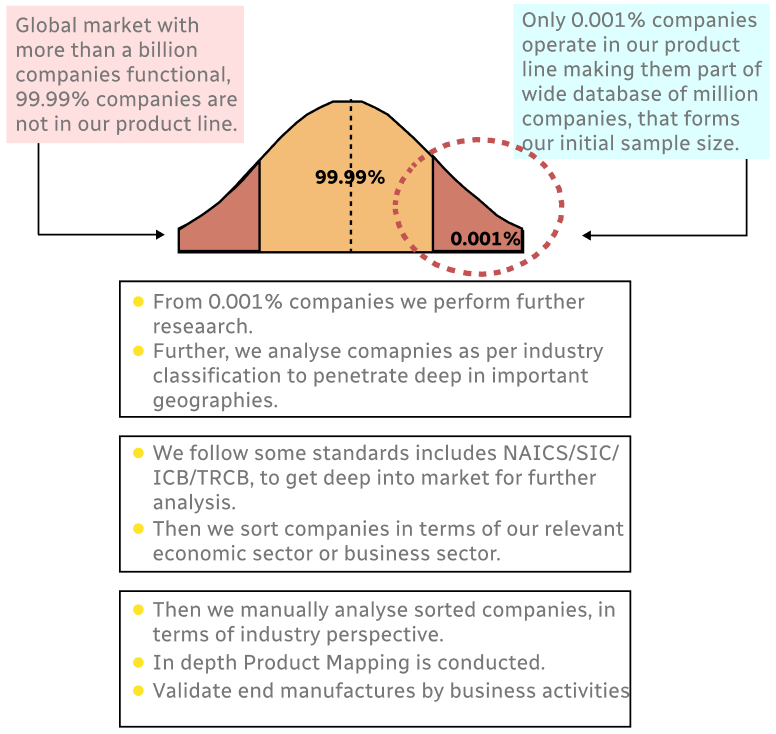
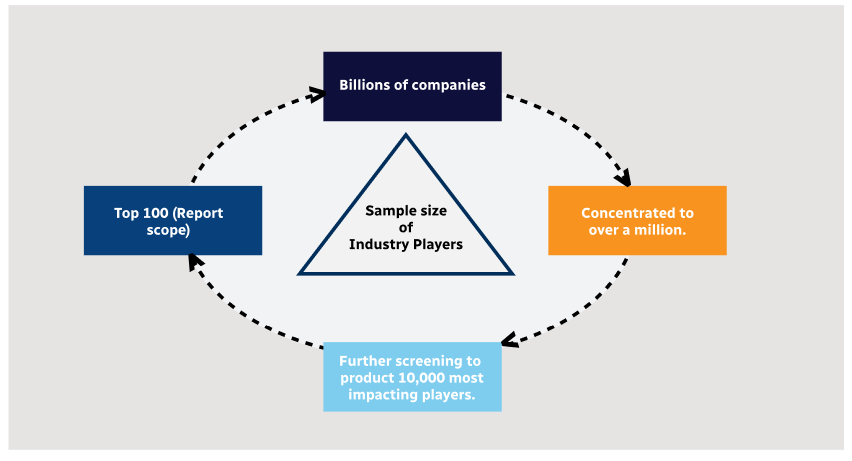
Step 1 - Identification of Relevant Samples Size from Population Database
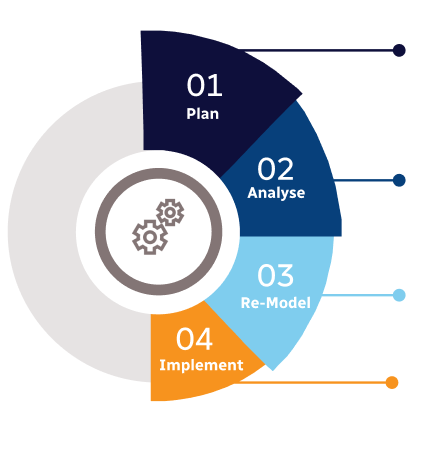
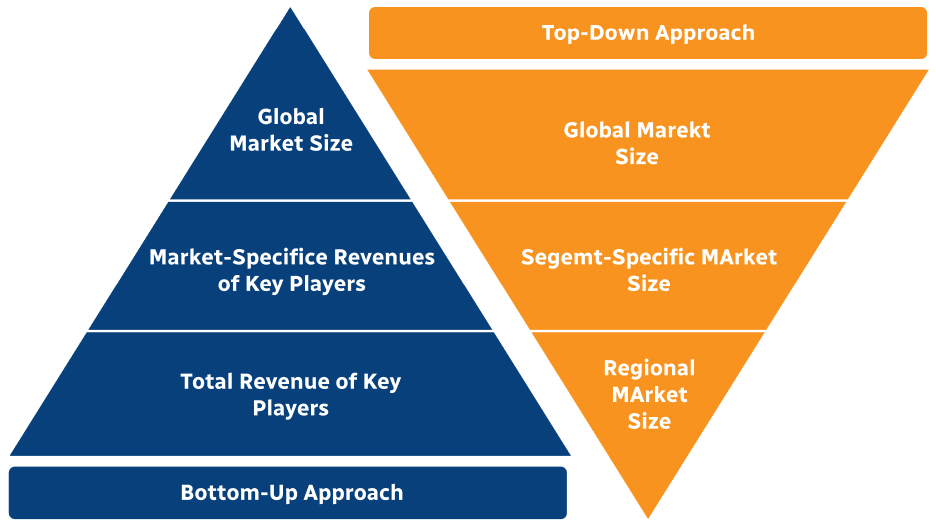
Step 2 - Approaches for Defining Global Market Size (Value, Volume* & Price*)
Note*: In applicable scenarios
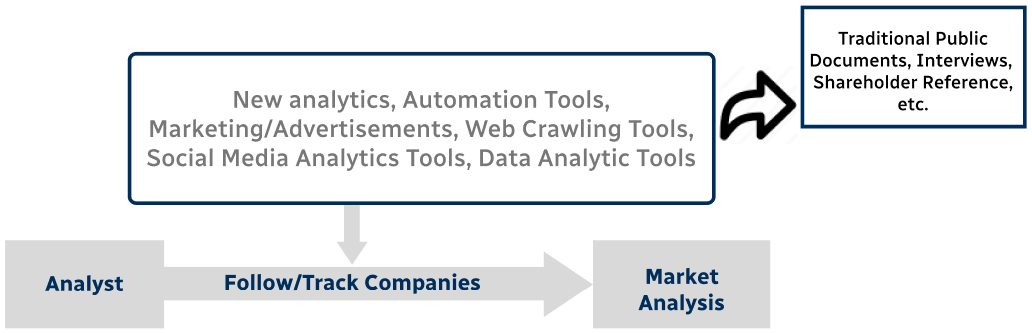
Step 3 - Data Sources
Primary Research
- Web Analytics
- Survey Reports
- Research Institute
- Latest Research Reports
- Opinion Leaders
Secondary Research
- Annual Reports
- White Paper
- Latest Press Release
- Industry Association
- Paid Database
- Investor Presentations
Step 4 - Data Triangulation
Involves using different sources of information in order to increase the validity of a study
These sources are likely to be stakeholders in a program - participants, other researchers, program staff, other community members, and so on.
Then we put all data in single framework & apply various statistical tools to find out the dynamic on the market.
During the analysis stage, feedback from the stakeholder groups would be compared to determine areas of agreement as well as areas of divergence