


Key Insights
The global Molecular Influenza Diagnostic market is poised for significant expansion, projected to reach an estimated $2,500 million by 2025, with a robust Compound Annual Growth Rate (CAGR) of 12% during the forecast period of 2025-2033. This growth is primarily propelled by the increasing incidence of influenza outbreaks, heightened awareness regarding rapid and accurate diagnostics, and the growing demand for point-of-care testing (POCT) solutions. The shift towards molecular diagnostics, particularly RT-PCR, is a key driver, offering superior sensitivity and specificity compared to traditional methods, leading to earlier detection and more effective treatment strategies. Furthermore, advancements in nucleic acid amplification techniques, such as NASBA and LAMP assays, are enhancing the speed and accessibility of influenza diagnostics, making them suitable for a wider range of healthcare settings. The market is also benefiting from supportive government initiatives aimed at improving infectious disease surveillance and preparedness.
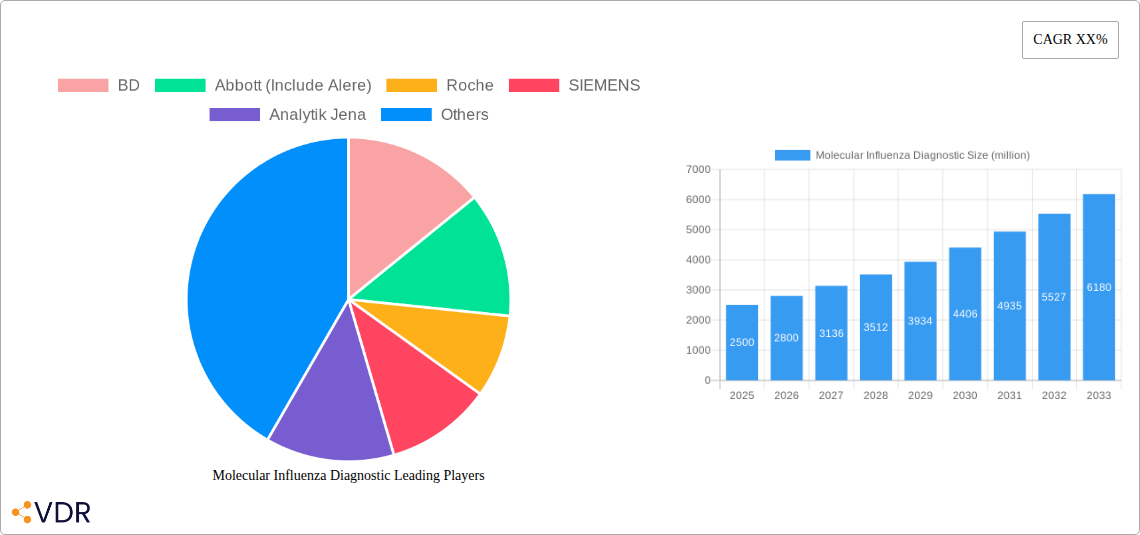
Molecular Influenza Diagnostic Market Size (In Billion)

The market's growth trajectory is further supported by an expanding application base, with hospitals being the dominant segment, followed by the rapidly growing POCT segment. The rising adoption of sophisticated diagnostic platforms in clinical laboratories and emergency departments underscores the critical role of molecular influenza diagnostics in public health. However, certain factors may pose challenges, including the relatively high cost of some molecular diagnostic platforms and the need for skilled personnel to operate them. Despite these restraints, the continuous innovation in assay development, coupled with the expanding product portfolios of key players like Abbott, Roche, and Thermo Fisher, is expected to sustain the market's upward momentum. Geographically, North America is anticipated to lead the market due to its advanced healthcare infrastructure and high adoption rates of new technologies, followed closely by Europe and the Asia Pacific region, which presents significant growth opportunities driven by increasing healthcare investments and rising disease prevalence.
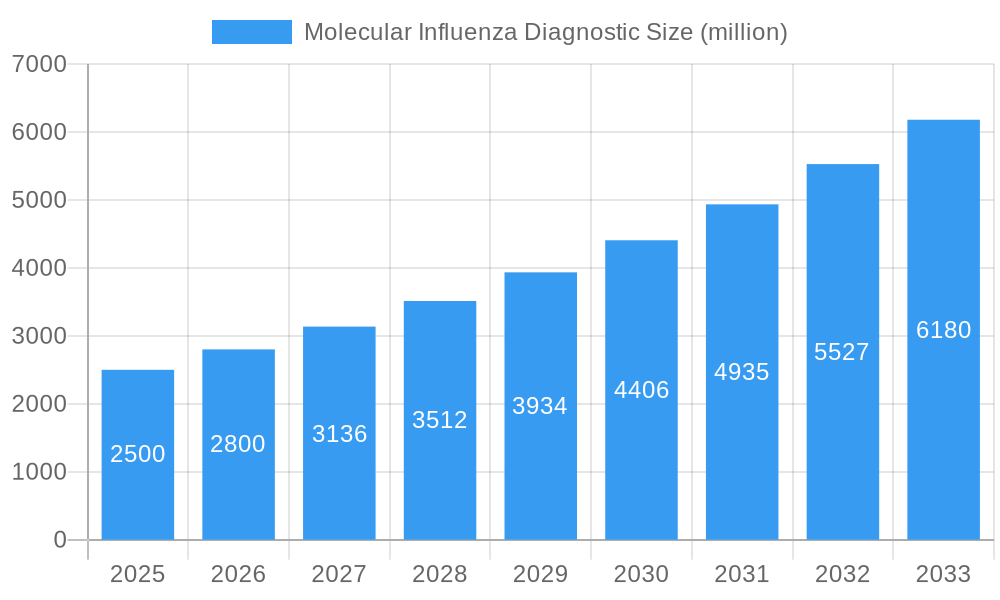
Molecular Influenza Diagnostic Company Market Share
Comprehensive Report: Molecular Influenza Diagnostic Market Dynamics, Growth, and Future Outlook (2019-2033)
This in-depth report provides a definitive analysis of the global Molecular Influenza Diagnostic market, offering critical insights for industry stakeholders. Covering the period from 2019 to 2033, with a base year of 2025, this research delves into market dynamics, growth trends, regional dominance, product landscapes, key drivers, challenges, opportunities, and future outlook. Leveraging high-traffic keywords and structured for maximum SEO visibility, this report is an essential resource for understanding the evolving molecular influenza diagnostic landscape.
Molecular Influenza Diagnostic Market Dynamics & Structure
The global Molecular Influenza Diagnostic market exhibits a moderately concentrated structure, with key players like BD, Abbott (including Alere), Roche, and Thermo Fisher dominating a significant share of the market. Technological innovation remains a primary driver, with continuous advancements in assay sensitivity, multiplexing capabilities, and speed of results pushing the adoption of molecular diagnostic platforms. Regulatory frameworks, such as FDA approvals and CE marking, play a crucial role in market entry and product validation, influencing the pace of innovation and commercialization. Competitive product substitutes, including traditional antigen tests and serological assays, exert pressure, necessitating ongoing differentiation through superior accuracy and timely results offered by molecular methods. End-user demographics are shifting towards increased demand from Point-of-Care Testing (POCT) settings and hospitals, driven by the need for rapid and accurate diagnosis for effective patient management and public health surveillance. Mergers and acquisitions (M&A) activity is a notable trend, with companies consolidating to expand their product portfolios, enhance technological capabilities, and gain wider market access. For instance, the acquisition of Alere by Abbott significantly bolstered its diagnostics division.
- Market Concentration: Moderately concentrated, with key players holding substantial market share.
- Technological Innovation: Driven by advancements in RT-PCR, NASBA, LAMP, and SAMBA assay technologies, improving sensitivity, specificity, and turnaround time.
- Regulatory Frameworks: FDA, CE marking, and other regional regulatory approvals are critical for market access and product legitimacy.
- Competitive Landscape: Coexistence of molecular diagnostics with traditional antigen and serological tests, driving innovation and cost-effectiveness.
- End-User Demand: Growing preference for POCT and hospital-based molecular diagnostics for rapid and accurate influenza detection.
- M&A Trends: Strategic acquisitions and mergers to gain market share, broaden product offerings, and acquire new technologies.
Molecular Influenza Diagnostic Growth Trends & Insights
The Molecular Influenza Diagnostic market is poised for robust growth, driven by an increasing awareness of the importance of accurate and timely influenza diagnosis for effective patient management and public health control. The market size is projected to expand significantly, fueled by rising incidence of influenza outbreaks, growing demand for advanced diagnostic solutions, and supportive government initiatives. Adoption rates of molecular diagnostic techniques are escalating, particularly in developed regions, as healthcare providers recognize their superior accuracy and ability to differentiate between various influenza strains and co-infections. Technological disruptions, such as the development of rapid molecular assays and integrated diagnostic platforms, are transforming the market by enabling faster turnaround times and facilitating decentralized testing in POCT settings. Consumer behavior shifts are also influencing market growth, with patients and healthcare professionals increasingly preferring molecular diagnostics for their reliability and ability to guide treatment decisions. The COVID-19 pandemic significantly accelerated the adoption and acceptance of molecular testing technologies, creating a lasting positive impact on the molecular influenza diagnostic market by raising public and professional awareness and infrastructure development. For the forecast period (2025–2033), a Compound Annual Growth Rate (CAGR) of approximately xx% is anticipated, reflecting the sustained demand and innovation within this sector. Market penetration of molecular influenza diagnostics, currently at around xx% in developed markets, is expected to climb higher as cost efficiencies improve and accessibility expands to emerging economies.
Dominant Regions, Countries, or Segments in Molecular Influenza Diagnostic
North America currently stands as the dominant region in the global Molecular Influenza Diagnostic market, driven by a confluence of factors including high healthcare expenditure, well-established healthcare infrastructure, and proactive government initiatives promoting advanced diagnostics. The United States, in particular, leads in market share due to a robust research and development ecosystem, the presence of major diagnostic companies, and a high prevalence of influenza cases necessitating accurate diagnostic tools.
Within the application segment, Hospitals represent a significant driver of growth. The critical need for rapid and accurate diagnosis in inpatient settings to manage patient care, prevent outbreaks, and guide antiviral therapy makes molecular influenza diagnostics indispensable. Hospitals are increasingly investing in advanced molecular diagnostic platforms to improve their diagnostic capabilities.
Simultaneously, the POCT (Point-of-Care Testing) segment is exhibiting exceptional growth. The demand for decentralized testing, enabling diagnosis directly at the patient's bedside, in clinics, or even in community settings, is surging. This is particularly crucial during influenza season when rapid decision-making is paramount. The convenience, speed, and reduced turnaround time offered by POCT molecular diagnostics are key enablers of this segment's expansion.
Among the types of molecular diagnostic technologies, Reverse Transcription Polymerase Chain Reaction (RT-PCR) remains the gold standard and the most dominant. Its high sensitivity, specificity, and ability to detect low viral loads make it the preferred method for influenza diagnosis. The established infrastructure and widespread availability of RT-PCR platforms further solidify its leadership. However, other technologies like Loop-mediated Isothermal Amplification-Based Assays (LAMP) are gaining traction due to their isothermal nature, which simplifies instrumentation and can offer faster results, making them increasingly attractive for POCT applications.
- North America: Leading region due to high healthcare spending, advanced infrastructure, and strong R&D.
- United States: Spearheads market growth with significant influenza burden and strong diagnostic industry.
- Hospitals (Application): Major segment driven by the need for accurate diagnosis in patient management and infection control.
- POCT (Application): Rapidly growing segment due to demand for decentralized, rapid testing, enhancing accessibility and timely intervention.
- RT-PCR (Type): Dominant technology owing to its high sensitivity, specificity, and established infrastructure.
- Technological Advancements in RT-PCR: Continuous improvements in multiplexing and speed are further strengthening its position.
- LAMP (Type): Emerging technology with potential for faster, simplified diagnostics, particularly in POCT.
Molecular Influenza Diagnostic Product Landscape
The Molecular Influenza Diagnostic product landscape is characterized by a spectrum of innovative solutions designed for enhanced accuracy, speed, and ease of use. Companies are continually refining their offerings, with a focus on multiplexing capabilities to detect multiple respiratory pathogens simultaneously, reducing the need for separate tests. The integration of advanced chemistries and automation is leading to improved assay performance, including lower limits of detection and reduced cross-reactivity. Emerging products leverage advancements in isothermal amplification techniques, such as LAMP, to offer rapid, near-patient testing solutions that require less complex instrumentation. These innovations are geared towards expanding the reach of molecular diagnostics beyond centralized laboratories into more accessible settings like clinics and physician offices, directly impacting patient care pathways and public health surveillance efforts by providing critical diagnostic information at the earliest possible stage.
Key Drivers, Barriers & Challenges in Molecular Influenza Diagnostic
Key Drivers:
The Molecular Influenza Diagnostic market is propelled by several key drivers. The increasing global burden of influenza, coupled with its significant morbidity and mortality, necessitates accurate and rapid diagnostic tools. Advancements in molecular diagnostic technologies, particularly in RT-PCR and isothermal amplification methods, have significantly improved sensitivity and specificity, making them the preferred choice for influenza detection. Furthermore, the growing trend towards personalized medicine and the need for effective antiviral treatment guided by precise diagnosis are fueling demand. Supportive government initiatives aimed at enhancing public health surveillance and preparedness for pandemics also play a crucial role. The COVID-19 pandemic also served as a significant catalyst, accelerating the adoption and widespread acceptance of molecular diagnostic platforms.
Key Barriers & Challenges:
Despite its growth potential, the Molecular Influenza Diagnostic market faces several barriers and challenges. The high cost associated with molecular diagnostic instrumentation and reagents remains a significant hurdle, particularly in resource-limited settings. Stringent regulatory requirements for new diagnostic test approvals can lead to extended development timelines and increased costs. Furthermore, the availability of simpler, less expensive rapid antigen tests, while less sensitive, presents a competitive challenge. Supply chain vulnerabilities for critical reagents and components can also impact production and availability, especially during periods of high demand. Ensuring widespread accessibility and user-friendliness for non-specialized healthcare professionals in POCT settings also presents an ongoing challenge.
Emerging Opportunities in Molecular Influenza Diagnostic
Emerging opportunities in the Molecular Influenza Diagnostic market lie in the expansion of multiplexing capabilities to detect a broader spectrum of respiratory pathogens, including other viruses and bacteria, within a single test. This will cater to the growing demand for comprehensive respiratory illness diagnostics. The development of more affordable and user-friendly molecular assays, particularly for Point-of-Care Testing (POCT) applications in underserved regions, presents a significant untapped market. Advancements in AI-powered data analysis for diagnostic interpretation and predictive epidemiology also offer promising avenues. Furthermore, the integration of molecular diagnostics with digital health platforms for real-time reporting and enhanced surveillance systems is poised to transform public health responses.
Growth Accelerators in the Molecular Influenza Diagnostic Industry
Several catalysts are accelerating growth in the Molecular Influenza Diagnostic industry. Technological breakthroughs in sample preparation and amplification methods are leading to faster turnaround times and improved sensitivity, making molecular diagnostics more competitive. Strategic partnerships between diagnostic companies, pharmaceutical firms, and research institutions are fostering innovation and accelerating product development. The increasing focus on pandemic preparedness and biosecurity by governments worldwide is creating sustained demand and investment in advanced diagnostic infrastructure. Furthermore, the growing recognition of the economic impact of influenza, both in terms of healthcare costs and lost productivity, is driving greater investment in early and accurate diagnosis. The successful deployment of molecular diagnostics during the COVID-19 pandemic has also built confidence and paved the way for wider adoption in future public health crises.
Key Players Shaping the Molecular Influenza Diagnostic Market
- BD
- Abbott (Include Alere)
- Roche
- SIEMENS
- Analytik Jena
- Quidel
- Thermo Fisher
- Meridian Bioscience
- BioMerieux
- Sekisui Diagnostics
- Response Biomedical
- SA Scientific
Notable Milestones in Molecular Influenza Diagnostic Sector
- 2019: Launch of advanced multiplex RT-PCR panels capable of detecting multiple respiratory pathogens, including influenza A and B, RSV, and other common viruses.
- 2020: Accelerated development and widespread deployment of rapid molecular diagnostic tests for influenza, coinciding with the global response to novel respiratory threats.
- 2021: Introduction of fully automated, high-throughput molecular diagnostic platforms designed for large-scale surveillance and clinical laboratory use.
- 2022: Significant advancements in isothermal amplification technologies (e.g., LAMP) leading to the development of more portable and user-friendly POCT devices for influenza diagnostics.
- 2023: Increased integration of artificial intelligence (AI) and machine learning (ML) in diagnostic software for enhanced data interpretation and predictive analytics of influenza outbreaks.
In-Depth Molecular Influenza Diagnostic Market Outlook
The future outlook for the Molecular Influenza Diagnostic market is exceptionally bright, fueled by a confluence of enduring growth accelerators. Continued technological innovation, particularly in developing more cost-effective and accessible molecular platforms, will drive market expansion into emerging economies. Strategic collaborations and partnerships will foster the development of novel diagnostic solutions and expand market reach. The increasing emphasis on proactive public health strategies and pandemic preparedness will ensure sustained demand for advanced molecular diagnostics. Furthermore, the evolving landscape of infectious disease surveillance, coupled with a growing appreciation for the clinical and economic benefits of accurate, timely influenza diagnosis, positions the market for significant long-term growth and strategic opportunities.
Molecular Influenza Diagnostic Segmentation
-
1. Application
- 1.1. Hospitals
- 1.2. POCT
- 1.3. Others
-
2. Types
- 2.1. Reverse Transcription Polymerase Chain Reaction (RT-PCR)
- 2.2. Nucleic Acid Sequence Based Amplification (NASBA) Tests
- 2.3. Loop-mediated Isothermal Amplification-Based Assays (LAMP)
- 2.4. Simple Amplification-based Assays (SAMBA)
Molecular Influenza Diagnostic Segmentation By Geography
-
1. North America
- 1.1. United States
- 1.2. Canada
- 1.3. Mexico
-
2. South America
- 2.1. Brazil
- 2.2. Argentina
- 2.3. Rest of South America
-
3. Europe
- 3.1. United Kingdom
- 3.2. Germany
- 3.3. France
- 3.4. Italy
- 3.5. Spain
- 3.6. Russia
- 3.7. Benelux
- 3.8. Nordics
- 3.9. Rest of Europe
-
4. Middle East & Africa
- 4.1. Turkey
- 4.2. Israel
- 4.3. GCC
- 4.4. North Africa
- 4.5. South Africa
- 4.6. Rest of Middle East & Africa
-
5. Asia Pacific
- 5.1. China
- 5.2. India
- 5.3. Japan
- 5.4. South Korea
- 5.5. ASEAN
- 5.6. Oceania
- 5.7. Rest of Asia Pacific
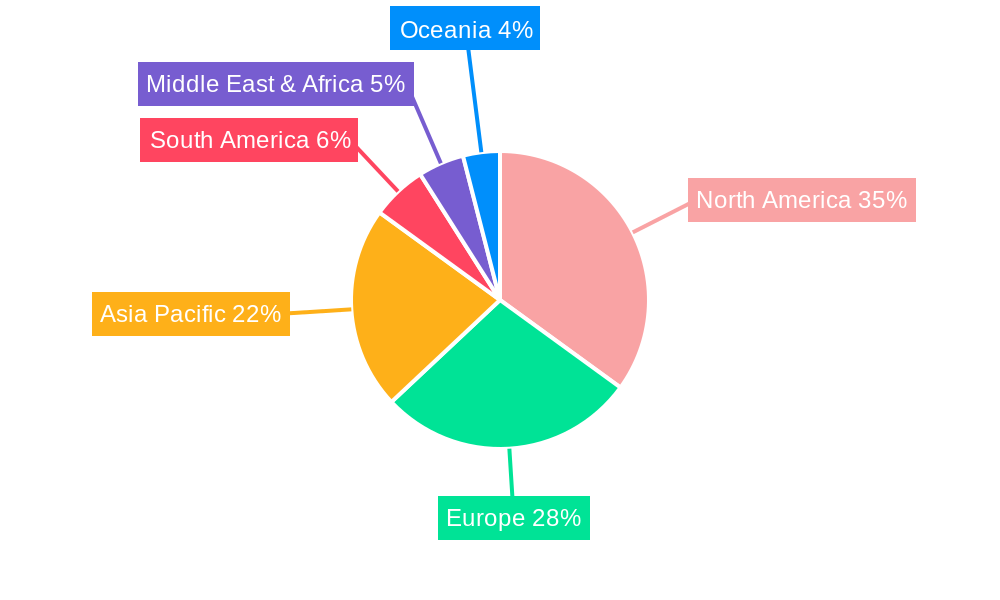
Molecular Influenza Diagnostic Regional Market Share
Geographic Coverage of Molecular Influenza Diagnostic
Molecular Influenza Diagnostic REPORT HIGHLIGHTS
| Aspects | Details |
|---|---|
| Study Period | 2020-2034 |
| Base Year | 2025 |
| Estimated Year | 2026 |
| Forecast Period | 2026-2034 |
| Historical Period | 2020-2025 |
| Growth Rate | CAGR of 14.84% from 2020-2034 |
| Segmentation |
|
Table of Contents
- 1. Introduction
- 1.1. Research Scope
- 1.2. Market Segmentation
- 1.3. Research Methodology
- 1.4. Definitions and Assumptions
- 2. Executive Summary
- 2.1. Introduction
- 3. Market Dynamics
- 3.1. Introduction
- 3.2. Market Drivers
- 3.3. Market Restrains
- 3.4. Market Trends
- 4. Market Factor Analysis
- 4.1. Porters Five Forces
- 4.2. Supply/Value Chain
- 4.3. PESTEL analysis
- 4.4. Market Entropy
- 4.5. Patent/Trademark Analysis
- 5. Global Molecular Influenza Diagnostic Analysis, Insights and Forecast, 2020-2032
- 5.1. Market Analysis, Insights and Forecast - by Application
- 5.1.1. Hospitals
- 5.1.2. POCT
- 5.1.3. Others
- 5.2. Market Analysis, Insights and Forecast - by Types
- 5.2.1. Reverse Transcription Polymerase Chain Reaction (RT-PCR)
- 5.2.2. Nucleic Acid Sequence Based Amplification (NASBA) Tests
- 5.2.3. Loop-mediated Isothermal Amplification-Based Assays (LAMP)
- 5.2.4. Simple Amplification-based Assays (SAMBA)
- 5.3. Market Analysis, Insights and Forecast - by Region
- 5.3.1. North America
- 5.3.2. South America
- 5.3.3. Europe
- 5.3.4. Middle East & Africa
- 5.3.5. Asia Pacific
- 5.1. Market Analysis, Insights and Forecast - by Application
- 6. North America Molecular Influenza Diagnostic Analysis, Insights and Forecast, 2020-2032
- 6.1. Market Analysis, Insights and Forecast - by Application
- 6.1.1. Hospitals
- 6.1.2. POCT
- 6.1.3. Others
- 6.2. Market Analysis, Insights and Forecast - by Types
- 6.2.1. Reverse Transcription Polymerase Chain Reaction (RT-PCR)
- 6.2.2. Nucleic Acid Sequence Based Amplification (NASBA) Tests
- 6.2.3. Loop-mediated Isothermal Amplification-Based Assays (LAMP)
- 6.2.4. Simple Amplification-based Assays (SAMBA)
- 6.1. Market Analysis, Insights and Forecast - by Application
- 7. South America Molecular Influenza Diagnostic Analysis, Insights and Forecast, 2020-2032
- 7.1. Market Analysis, Insights and Forecast - by Application
- 7.1.1. Hospitals
- 7.1.2. POCT
- 7.1.3. Others
- 7.2. Market Analysis, Insights and Forecast - by Types
- 7.2.1. Reverse Transcription Polymerase Chain Reaction (RT-PCR)
- 7.2.2. Nucleic Acid Sequence Based Amplification (NASBA) Tests
- 7.2.3. Loop-mediated Isothermal Amplification-Based Assays (LAMP)
- 7.2.4. Simple Amplification-based Assays (SAMBA)
- 7.1. Market Analysis, Insights and Forecast - by Application
- 8. Europe Molecular Influenza Diagnostic Analysis, Insights and Forecast, 2020-2032
- 8.1. Market Analysis, Insights and Forecast - by Application
- 8.1.1. Hospitals
- 8.1.2. POCT
- 8.1.3. Others
- 8.2. Market Analysis, Insights and Forecast - by Types
- 8.2.1. Reverse Transcription Polymerase Chain Reaction (RT-PCR)
- 8.2.2. Nucleic Acid Sequence Based Amplification (NASBA) Tests
- 8.2.3. Loop-mediated Isothermal Amplification-Based Assays (LAMP)
- 8.2.4. Simple Amplification-based Assays (SAMBA)
- 8.1. Market Analysis, Insights and Forecast - by Application
- 9. Middle East & Africa Molecular Influenza Diagnostic Analysis, Insights and Forecast, 2020-2032
- 9.1. Market Analysis, Insights and Forecast - by Application
- 9.1.1. Hospitals
- 9.1.2. POCT
- 9.1.3. Others
- 9.2. Market Analysis, Insights and Forecast - by Types
- 9.2.1. Reverse Transcription Polymerase Chain Reaction (RT-PCR)
- 9.2.2. Nucleic Acid Sequence Based Amplification (NASBA) Tests
- 9.2.3. Loop-mediated Isothermal Amplification-Based Assays (LAMP)
- 9.2.4. Simple Amplification-based Assays (SAMBA)
- 9.1. Market Analysis, Insights and Forecast - by Application
- 10. Asia Pacific Molecular Influenza Diagnostic Analysis, Insights and Forecast, 2020-2032
- 10.1. Market Analysis, Insights and Forecast - by Application
- 10.1.1. Hospitals
- 10.1.2. POCT
- 10.1.3. Others
- 10.2. Market Analysis, Insights and Forecast - by Types
- 10.2.1. Reverse Transcription Polymerase Chain Reaction (RT-PCR)
- 10.2.2. Nucleic Acid Sequence Based Amplification (NASBA) Tests
- 10.2.3. Loop-mediated Isothermal Amplification-Based Assays (LAMP)
- 10.2.4. Simple Amplification-based Assays (SAMBA)
- 10.1. Market Analysis, Insights and Forecast - by Application
- 11. Competitive Analysis
- 11.1. Global Market Share Analysis 2025
- 11.2. Company Profiles
- 11.2.1 BD
- 11.2.1.1. Overview
- 11.2.1.2. Products
- 11.2.1.3. SWOT Analysis
- 11.2.1.4. Recent Developments
- 11.2.1.5. Financials (Based on Availability)
- 11.2.2 Abbott (Include Alere)
- 11.2.2.1. Overview
- 11.2.2.2. Products
- 11.2.2.3. SWOT Analysis
- 11.2.2.4. Recent Developments
- 11.2.2.5. Financials (Based on Availability)
- 11.2.3 Roche
- 11.2.3.1. Overview
- 11.2.3.2. Products
- 11.2.3.3. SWOT Analysis
- 11.2.3.4. Recent Developments
- 11.2.3.5. Financials (Based on Availability)
- 11.2.4 SIEMENS
- 11.2.4.1. Overview
- 11.2.4.2. Products
- 11.2.4.3. SWOT Analysis
- 11.2.4.4. Recent Developments
- 11.2.4.5. Financials (Based on Availability)
- 11.2.5 Analytik Jena
- 11.2.5.1. Overview
- 11.2.5.2. Products
- 11.2.5.3. SWOT Analysis
- 11.2.5.4. Recent Developments
- 11.2.5.5. Financials (Based on Availability)
- 11.2.6 Quidel
- 11.2.6.1. Overview
- 11.2.6.2. Products
- 11.2.6.3. SWOT Analysis
- 11.2.6.4. Recent Developments
- 11.2.6.5. Financials (Based on Availability)
- 11.2.7 Thermo Fisher
- 11.2.7.1. Overview
- 11.2.7.2. Products
- 11.2.7.3. SWOT Analysis
- 11.2.7.4. Recent Developments
- 11.2.7.5. Financials (Based on Availability)
- 11.2.8 Meridian Bioscience
- 11.2.8.1. Overview
- 11.2.8.2. Products
- 11.2.8.3. SWOT Analysis
- 11.2.8.4. Recent Developments
- 11.2.8.5. Financials (Based on Availability)
- 11.2.9 BioMerieux
- 11.2.9.1. Overview
- 11.2.9.2. Products
- 11.2.9.3. SWOT Analysis
- 11.2.9.4. Recent Developments
- 11.2.9.5. Financials (Based on Availability)
- 11.2.10 Sekisui Diagnostics
- 11.2.10.1. Overview
- 11.2.10.2. Products
- 11.2.10.3. SWOT Analysis
- 11.2.10.4. Recent Developments
- 11.2.10.5. Financials (Based on Availability)
- 11.2.11 Response Biomedical
- 11.2.11.1. Overview
- 11.2.11.2. Products
- 11.2.11.3. SWOT Analysis
- 11.2.11.4. Recent Developments
- 11.2.11.5. Financials (Based on Availability)
- 11.2.12 SA Scientific
- 11.2.12.1. Overview
- 11.2.12.2. Products
- 11.2.12.3. SWOT Analysis
- 11.2.12.4. Recent Developments
- 11.2.12.5. Financials (Based on Availability)
- 11.2.1 BD
List of Figures
- Figure 1: Global Molecular Influenza Diagnostic Revenue Breakdown (undefined, %) by Region 2025 & 2033
- Figure 2: North America Molecular Influenza Diagnostic Revenue (undefined), by Application 2025 & 2033
- Figure 3: North America Molecular Influenza Diagnostic Revenue Share (%), by Application 2025 & 2033
- Figure 4: North America Molecular Influenza Diagnostic Revenue (undefined), by Types 2025 & 2033
- Figure 5: North America Molecular Influenza Diagnostic Revenue Share (%), by Types 2025 & 2033
- Figure 6: North America Molecular Influenza Diagnostic Revenue (undefined), by Country 2025 & 2033
- Figure 7: North America Molecular Influenza Diagnostic Revenue Share (%), by Country 2025 & 2033
- Figure 8: South America Molecular Influenza Diagnostic Revenue (undefined), by Application 2025 & 2033
- Figure 9: South America Molecular Influenza Diagnostic Revenue Share (%), by Application 2025 & 2033
- Figure 10: South America Molecular Influenza Diagnostic Revenue (undefined), by Types 2025 & 2033
- Figure 11: South America Molecular Influenza Diagnostic Revenue Share (%), by Types 2025 & 2033
- Figure 12: South America Molecular Influenza Diagnostic Revenue (undefined), by Country 2025 & 2033
- Figure 13: South America Molecular Influenza Diagnostic Revenue Share (%), by Country 2025 & 2033
- Figure 14: Europe Molecular Influenza Diagnostic Revenue (undefined), by Application 2025 & 2033
- Figure 15: Europe Molecular Influenza Diagnostic Revenue Share (%), by Application 2025 & 2033
- Figure 16: Europe Molecular Influenza Diagnostic Revenue (undefined), by Types 2025 & 2033
- Figure 17: Europe Molecular Influenza Diagnostic Revenue Share (%), by Types 2025 & 2033
- Figure 18: Europe Molecular Influenza Diagnostic Revenue (undefined), by Country 2025 & 2033
- Figure 19: Europe Molecular Influenza Diagnostic Revenue Share (%), by Country 2025 & 2033
- Figure 20: Middle East & Africa Molecular Influenza Diagnostic Revenue (undefined), by Application 2025 & 2033
- Figure 21: Middle East & Africa Molecular Influenza Diagnostic Revenue Share (%), by Application 2025 & 2033
- Figure 22: Middle East & Africa Molecular Influenza Diagnostic Revenue (undefined), by Types 2025 & 2033
- Figure 23: Middle East & Africa Molecular Influenza Diagnostic Revenue Share (%), by Types 2025 & 2033
- Figure 24: Middle East & Africa Molecular Influenza Diagnostic Revenue (undefined), by Country 2025 & 2033
- Figure 25: Middle East & Africa Molecular Influenza Diagnostic Revenue Share (%), by Country 2025 & 2033
- Figure 26: Asia Pacific Molecular Influenza Diagnostic Revenue (undefined), by Application 2025 & 2033
- Figure 27: Asia Pacific Molecular Influenza Diagnostic Revenue Share (%), by Application 2025 & 2033
- Figure 28: Asia Pacific Molecular Influenza Diagnostic Revenue (undefined), by Types 2025 & 2033
- Figure 29: Asia Pacific Molecular Influenza Diagnostic Revenue Share (%), by Types 2025 & 2033
- Figure 30: Asia Pacific Molecular Influenza Diagnostic Revenue (undefined), by Country 2025 & 2033
- Figure 31: Asia Pacific Molecular Influenza Diagnostic Revenue Share (%), by Country 2025 & 2033
List of Tables
- Table 1: Global Molecular Influenza Diagnostic Revenue undefined Forecast, by Application 2020 & 2033
- Table 2: Global Molecular Influenza Diagnostic Revenue undefined Forecast, by Types 2020 & 2033
- Table 3: Global Molecular Influenza Diagnostic Revenue undefined Forecast, by Region 2020 & 2033
- Table 4: Global Molecular Influenza Diagnostic Revenue undefined Forecast, by Application 2020 & 2033
- Table 5: Global Molecular Influenza Diagnostic Revenue undefined Forecast, by Types 2020 & 2033
- Table 6: Global Molecular Influenza Diagnostic Revenue undefined Forecast, by Country 2020 & 2033
- Table 7: United States Molecular Influenza Diagnostic Revenue (undefined) Forecast, by Application 2020 & 2033
- Table 8: Canada Molecular Influenza Diagnostic Revenue (undefined) Forecast, by Application 2020 & 2033
- Table 9: Mexico Molecular Influenza Diagnostic Revenue (undefined) Forecast, by Application 2020 & 2033
- Table 10: Global Molecular Influenza Diagnostic Revenue undefined Forecast, by Application 2020 & 2033
- Table 11: Global Molecular Influenza Diagnostic Revenue undefined Forecast, by Types 2020 & 2033
- Table 12: Global Molecular Influenza Diagnostic Revenue undefined Forecast, by Country 2020 & 2033
- Table 13: Brazil Molecular Influenza Diagnostic Revenue (undefined) Forecast, by Application 2020 & 2033
- Table 14: Argentina Molecular Influenza Diagnostic Revenue (undefined) Forecast, by Application 2020 & 2033
- Table 15: Rest of South America Molecular Influenza Diagnostic Revenue (undefined) Forecast, by Application 2020 & 2033
- Table 16: Global Molecular Influenza Diagnostic Revenue undefined Forecast, by Application 2020 & 2033
- Table 17: Global Molecular Influenza Diagnostic Revenue undefined Forecast, by Types 2020 & 2033
- Table 18: Global Molecular Influenza Diagnostic Revenue undefined Forecast, by Country 2020 & 2033
- Table 19: United Kingdom Molecular Influenza Diagnostic Revenue (undefined) Forecast, by Application 2020 & 2033
- Table 20: Germany Molecular Influenza Diagnostic Revenue (undefined) Forecast, by Application 2020 & 2033
- Table 21: France Molecular Influenza Diagnostic Revenue (undefined) Forecast, by Application 2020 & 2033
- Table 22: Italy Molecular Influenza Diagnostic Revenue (undefined) Forecast, by Application 2020 & 2033
- Table 23: Spain Molecular Influenza Diagnostic Revenue (undefined) Forecast, by Application 2020 & 2033
- Table 24: Russia Molecular Influenza Diagnostic Revenue (undefined) Forecast, by Application 2020 & 2033
- Table 25: Benelux Molecular Influenza Diagnostic Revenue (undefined) Forecast, by Application 2020 & 2033
- Table 26: Nordics Molecular Influenza Diagnostic Revenue (undefined) Forecast, by Application 2020 & 2033
- Table 27: Rest of Europe Molecular Influenza Diagnostic Revenue (undefined) Forecast, by Application 2020 & 2033
- Table 28: Global Molecular Influenza Diagnostic Revenue undefined Forecast, by Application 2020 & 2033
- Table 29: Global Molecular Influenza Diagnostic Revenue undefined Forecast, by Types 2020 & 2033
- Table 30: Global Molecular Influenza Diagnostic Revenue undefined Forecast, by Country 2020 & 2033
- Table 31: Turkey Molecular Influenza Diagnostic Revenue (undefined) Forecast, by Application 2020 & 2033
- Table 32: Israel Molecular Influenza Diagnostic Revenue (undefined) Forecast, by Application 2020 & 2033
- Table 33: GCC Molecular Influenza Diagnostic Revenue (undefined) Forecast, by Application 2020 & 2033
- Table 34: North Africa Molecular Influenza Diagnostic Revenue (undefined) Forecast, by Application 2020 & 2033
- Table 35: South Africa Molecular Influenza Diagnostic Revenue (undefined) Forecast, by Application 2020 & 2033
- Table 36: Rest of Middle East & Africa Molecular Influenza Diagnostic Revenue (undefined) Forecast, by Application 2020 & 2033
- Table 37: Global Molecular Influenza Diagnostic Revenue undefined Forecast, by Application 2020 & 2033
- Table 38: Global Molecular Influenza Diagnostic Revenue undefined Forecast, by Types 2020 & 2033
- Table 39: Global Molecular Influenza Diagnostic Revenue undefined Forecast, by Country 2020 & 2033
- Table 40: China Molecular Influenza Diagnostic Revenue (undefined) Forecast, by Application 2020 & 2033
- Table 41: India Molecular Influenza Diagnostic Revenue (undefined) Forecast, by Application 2020 & 2033
- Table 42: Japan Molecular Influenza Diagnostic Revenue (undefined) Forecast, by Application 2020 & 2033
- Table 43: South Korea Molecular Influenza Diagnostic Revenue (undefined) Forecast, by Application 2020 & 2033
- Table 44: ASEAN Molecular Influenza Diagnostic Revenue (undefined) Forecast, by Application 2020 & 2033
- Table 45: Oceania Molecular Influenza Diagnostic Revenue (undefined) Forecast, by Application 2020 & 2033
- Table 46: Rest of Asia Pacific Molecular Influenza Diagnostic Revenue (undefined) Forecast, by Application 2020 & 2033
Frequently Asked Questions
1. What is the projected Compound Annual Growth Rate (CAGR) of the Molecular Influenza Diagnostic?
The projected CAGR is approximately 14.84%.
2. Which companies are prominent players in the Molecular Influenza Diagnostic?
Key companies in the market include BD, Abbott (Include Alere), Roche, SIEMENS, Analytik Jena, Quidel, Thermo Fisher, Meridian Bioscience, BioMerieux, Sekisui Diagnostics, Response Biomedical, SA Scientific.
3. What are the main segments of the Molecular Influenza Diagnostic?
The market segments include Application, Types.
4. Can you provide details about the market size?
The market size is estimated to be USD XXX N/A as of 2022.
5. What are some drivers contributing to market growth?
N/A
6. What are the notable trends driving market growth?
N/A
7. Are there any restraints impacting market growth?
N/A
8. Can you provide examples of recent developments in the market?
N/A
9. What pricing options are available for accessing the report?
Pricing options include single-user, multi-user, and enterprise licenses priced at USD 4900.00, USD 7350.00, and USD 9800.00 respectively.
10. Is the market size provided in terms of value or volume?
The market size is provided in terms of value, measured in N/A.
11. Are there any specific market keywords associated with the report?
Yes, the market keyword associated with the report is "Molecular Influenza Diagnostic," which aids in identifying and referencing the specific market segment covered.
12. How do I determine which pricing option suits my needs best?
The pricing options vary based on user requirements and access needs. Individual users may opt for single-user licenses, while businesses requiring broader access may choose multi-user or enterprise licenses for cost-effective access to the report.
13. Are there any additional resources or data provided in the Molecular Influenza Diagnostic report?
While the report offers comprehensive insights, it's advisable to review the specific contents or supplementary materials provided to ascertain if additional resources or data are available.
14. How can I stay updated on further developments or reports in the Molecular Influenza Diagnostic?
To stay informed about further developments, trends, and reports in the Molecular Influenza Diagnostic, consider subscribing to industry newsletters, following relevant companies and organizations, or regularly checking reputable industry news sources and publications.
Methodology
Step 1 - Identification of Relevant Samples Size from Population Database



Step 2 - Approaches for Defining Global Market Size (Value, Volume* & Price*)

Note*: In applicable scenarios
Step 3 - Data Sources
Primary Research
- Web Analytics
- Survey Reports
- Research Institute
- Latest Research Reports
- Opinion Leaders
Secondary Research
- Annual Reports
- White Paper
- Latest Press Release
- Industry Association
- Paid Database
- Investor Presentations

Step 4 - Data Triangulation
Involves using different sources of information in order to increase the validity of a study
These sources are likely to be stakeholders in a program - participants, other researchers, program staff, other community members, and so on.
Then we put all data in single framework & apply various statistical tools to find out the dynamic on the market.
During the analysis stage, feedback from the stakeholder groups would be compared to determine areas of agreement as well as areas of divergence