


Key Insights
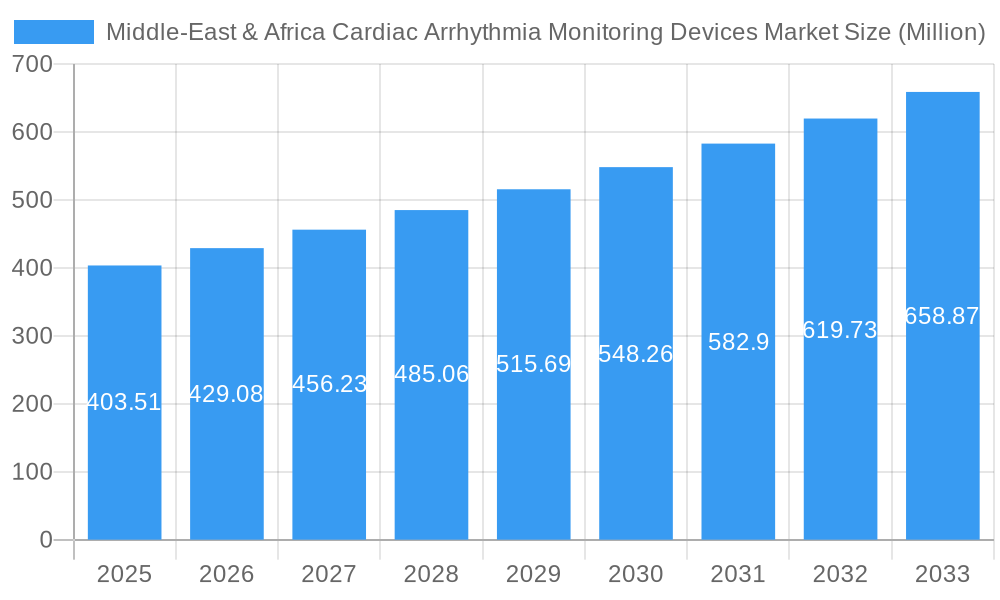
The Middle-East & Africa Cardiac Arrhythmia Monitoring Devices Market is poised for significant expansion, with a current market size estimated at USD 403.51 million in the base year of 2025. This robust growth is projected to continue at a Compound Annual Growth Rate (CAGR) of 6.43% throughout the forecast period of 2025-2033. The increasing prevalence of cardiovascular diseases and cardiac arrhythmias across the region, coupled with rising healthcare expenditure and a growing awareness of early detection and management, are primary drivers fueling this upward trajectory. Furthermore, technological advancements in wearable monitoring devices, remote patient monitoring solutions, and the increasing adoption of these technologies by healthcare providers are contributing to market momentum. The demand for accurate and continuous cardiac monitoring is also being amplified by an aging population and a higher incidence of lifestyle-related health issues.
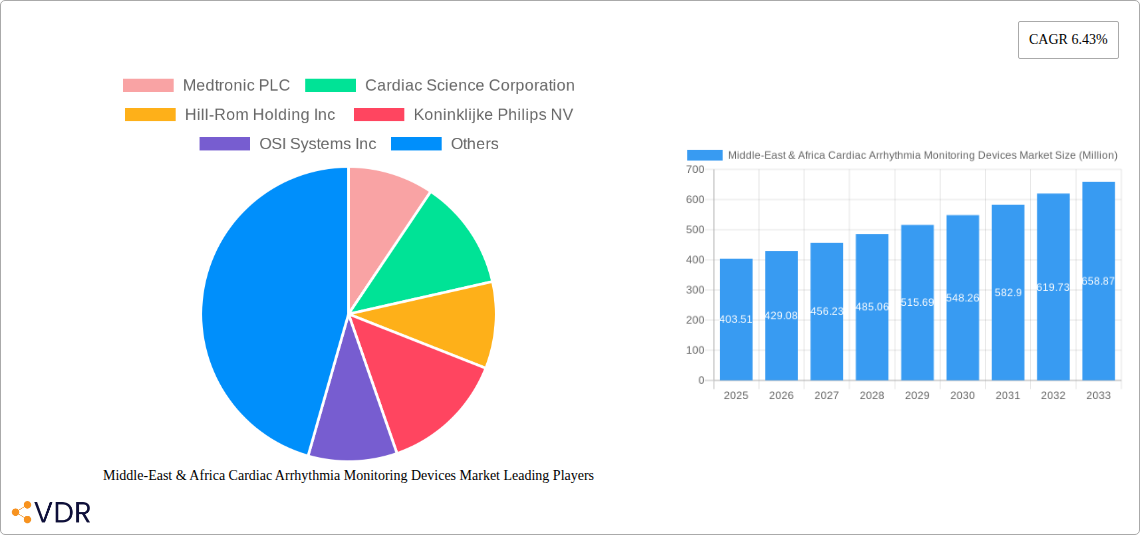
Middle-East & Africa Cardiac Arrhythmia Monitoring Devices Market Market Size (In Million)

The market is segmented by service providers, with Mobile Cardiac Telemetry (MCT) services and Independent Diagnostic Testing Facilities/Clinics emerging as key segments. Geographically, the market is concentrated across the GCC, South Africa, and the Rest of the Middle East and Africa. While the market benefits from strong growth drivers, certain restraints such as the high cost of advanced monitoring devices and limited healthcare infrastructure in some sub-regions may present challenges. However, the competitive landscape features prominent players like Medtronic PLC, Koninklijke Philips NV, and GE Healthcare, who are actively investing in research and development, strategic collaborations, and market expansion initiatives to capitalize on the burgeoning opportunities within this vital healthcare sector. The ongoing efforts to improve access to advanced cardiac care and diagnostic tools are expected to further propel the market forward.
Middle-East & Africa Cardiac Arrhythmia Monitoring Devices Market Company Market Share
Unlock critical insights into the burgeoning Middle-East & Africa (MEA) Cardiac Arrhythmia Monitoring Devices Market. This in-depth report analyzes parent and child market segments, providing a granular view of market dynamics, growth trends, product innovations, and competitive landscapes. With a study period spanning from 2019–2033 and a base year of 2025, this research leverages high-traffic keywords to equip industry professionals, investors, and stakeholders with actionable intelligence for strategic decision-making. Gain a competitive edge by understanding market size evolution, adoption rates, technological disruptions, and regional dominance within the MEA region, focusing on services providers like Mobile C and Independent Diagnostic Testing Facilities/Clinics, and key geographies including GCC, South Africa, and the Rest of Middle East and Africa.
Middle-East & Africa Cardiac Arrhythmia Monitoring Devices Market Market Dynamics & Structure
The MEA cardiac arrhythmia monitoring devices market is characterized by a dynamic interplay of technological innovation, evolving healthcare infrastructure, and a growing awareness of cardiovascular health. Market concentration varies, with established global players like Medtronic PLC and Koninklijke Philips NV holding significant shares, alongside emerging regional contenders. Technological innovation is a primary driver, fueled by advancements in wearable technology and remote patient monitoring solutions, promising early detection and improved patient outcomes. Regulatory frameworks are progressively aligning with international standards, fostering market growth, yet varying implementation across countries presents a challenge. Competitive product substitutes are increasing, ranging from basic ECG devices to sophisticated implantable loop recorders and AI-powered analytics platforms, forcing manufacturers to continuously innovate. End-user demographics are shifting, with an aging population and a rise in lifestyle-related diseases like diabetes and hypertension contributing to a higher prevalence of cardiac arrhythmias. Mergers and Acquisitions (M&A) trends indicate consolidation and strategic partnerships aimed at expanding product portfolios and geographic reach. For instance, the acquisition of smaller, innovative startups by larger corporations is a notable trend. The overall market structure is transitioning towards more integrated and data-driven solutions.
- Market Concentration: Moderate to high, with a few dominant global players and a growing number of niche providers.
- Technological Innovation Drivers: Wearable tech, AI-driven analytics, miniaturization of devices, remote patient monitoring.
- Regulatory Frameworks: Increasingly supportive, but fragmented across MEA nations.
- Competitive Product Substitutes: Holter monitors, event recorders, implantable loop recorders, smartwatches with ECG capabilities.
- End-User Demographics: Aging population, rising prevalence of chronic diseases (hypertension, diabetes), increasing demand for home-based monitoring.
- M&A Trends: Strategic acquisitions of innovative startups by larger players, partnerships for market penetration.
- Estimated M&A Deal Volume (2019-2024): xx deals.
Middle-East & Africa Cardiac Arrhythmia Monitoring Devices Market Growth Trends & Insights
The Middle-East & Africa Cardiac Arrhythmia Monitoring Devices Market is poised for substantial growth, projected to expand at a Compound Annual Growth Rate (CAGR) of xx% between 2025 and 2033. This robust growth trajectory is underpinned by increasing healthcare expenditure across the region, a rising burden of cardiovascular diseases, and the accelerating adoption of advanced diagnostic technologies. The market size, estimated at $xxx million units in 2025, is expected to reach $xxx million units by 2033, reflecting a significant expansion in volume and value. Technological disruptions are playing a pivotal role, with the integration of artificial intelligence (AI) and machine learning (ML) into monitoring devices enabling more accurate and timely detection of arrhythmias. Wearable and miniaturized devices are gaining traction, shifting the paradigm towards continuous, unobtrusive monitoring outside of traditional clinical settings. Consumer behavior is also evolving, with a growing preference for convenient and accessible healthcare solutions, driving demand for remote patient monitoring and home-based diagnostic tools. Market penetration, currently at xx%, is projected to increase significantly as awareness campaigns and government initiatives promote early cardiovascular disease detection. The forecast period will witness a surge in demand for sophisticated diagnostic solutions, including implantable cardiac monitors and advanced Holter monitoring systems, driven by the increasing incidence of atrial fibrillation and other irregular heart rhythms. The shift from reactive treatment to proactive management of cardiac conditions will further fuel the adoption of these essential monitoring devices.
Dominant Regions, Countries, or Segments in Middle-East & Africa Cardiac Arrhythmia Monitoring Devices Market
The GCC (Gulf Cooperation Council) region is emerging as the dominant force within the Middle-East & Africa Cardiac Arrhythmia Monitoring Devices Market, driven by a confluence of high disposable incomes, significant investments in healthcare infrastructure, and a proactive approach to adopting cutting-edge medical technologies. Countries like the UAE and Saudi Arabia are at the forefront, with governments actively promoting digital health initiatives and investing in state-of-the-art hospitals and diagnostic centers. This economic prowess allows for greater accessibility to advanced cardiac arrhythmia monitoring devices, including sophisticated Holter monitors, event recorders, and wearable continuous monitoring solutions. The Rest of Middle East and Africa region, while exhibiting a more fragmented market, presents significant untapped potential due to a growing population and increasing awareness of cardiovascular health. Countries within this segment are witnessing a gradual rise in healthcare spending, coupled with efforts to improve access to basic diagnostic services, which indirectly boosts the demand for simpler arrhythmia monitoring devices. South Africa stands as a key market within the African continent, characterized by a more developed healthcare system compared to many other African nations, driving demand for advanced diagnostic tools.
In terms of service providers, Independent Diagnostic Testing Facilities/Clinics are playing an increasingly crucial role in the MEA cardiac arrhythmia monitoring devices market. These facilities offer specialized diagnostic services, providing accessible and often more affordable alternatives to hospital-based testing. They are instrumental in increasing the reach of arrhythmia monitoring, particularly in urban and semi-urban areas. Mobile C services, though nascent, are also gaining traction, especially in remote or underserved regions, offering crucial diagnostic capabilities closer to patients. The market share within these segments is being shaped by factors such as the availability of trained medical professionals, government reimbursements for diagnostic procedures, and the strategic location of these service providers. The growth potential in the GCC for advanced monitoring devices is high, while the Rest of Middle East and Africa offers a vast landscape for the penetration of more basic and mid-range monitoring solutions.
- Dominant Region: GCC
- Key Drivers: High per capita income, significant government investment in healthcare, rapid adoption of advanced medical technologies, strong focus on preventative healthcare.
- Market Share: Estimated at xx% of the MEA market.
- Growth Potential: High, driven by continuous infrastructure development and patient demand.
- Key Country in GCC: UAE, Saudi Arabia
- Dominant Service Provider Segment: Independent Diagnostic Testing Facilities/Clinics
- Key Drivers: Increased accessibility to diagnostics, specialized services, cost-effectiveness.
- Impact: Facilitates broader market reach and early detection.
- Emerging Service Provider Segment: Mobile C
- Key Drivers: Reaching remote populations, convenience, addressing healthcare access gaps.
- Impact: Expanding the geographical footprint of cardiac monitoring.
Middle-East & Africa Cardiac Arrhythmia Monitoring Devices Market Product Landscape
The product landscape for cardiac arrhythmia monitoring devices in the MEA region is rapidly evolving, emphasizing portability, continuous monitoring capabilities, and data integration. Innovations range from advanced Holter monitors with extended recording times and improved patient comfort to sophisticated event recorders and implantable loop recorders for long-term surveillance. The increasing integration of AI and ML algorithms is enhancing diagnostic accuracy by automating data analysis and identifying subtle abnormalities. Wearable devices, such as smartwatches and patches, are emerging as significant contributors, offering beat-by-beat monitoring and real-time alerts for critical events like Atrial Fibrillation (AFib). These devices offer unique selling propositions through their non-invasiveness, user-friendliness, and seamless connectivity with healthcare providers' platforms, enabling proactive patient management and reducing hospital readmissions. The focus is shifting towards personalized monitoring solutions tailored to individual patient needs and risk profiles.
Key Drivers, Barriers & Challenges in Middle-East & Africa Cardiac Arrhythmia Monitoring Devices Market
Key Drivers:
The MEA cardiac arrhythmia monitoring devices market is propelled by several critical drivers. A significant factor is the escalating prevalence of cardiovascular diseases, including hypertension and diabetes, which are leading causes of arrhythmias. Growing awareness among the public and healthcare professionals about the importance of early detection and continuous monitoring further fuels demand. Technological advancements in miniaturization and wearable technology are making devices more accessible and user-friendly. Government initiatives and increasing healthcare expenditure across various MEA nations are also crucial enablers, improving access to advanced diagnostic tools.
Key Barriers & Challenges:
Despite the promising growth, the market faces significant challenges. The high cost of advanced monitoring devices can be a major barrier, particularly in lower-income countries within the MEA region. Inadequate healthcare infrastructure and a shortage of trained healthcare professionals in some areas can hinder widespread adoption. Stringent regulatory approvals and varying compliance standards across different countries add complexity. Furthermore, data security and privacy concerns related to the transmission and storage of sensitive patient data present ongoing challenges that need to be addressed. Supply chain disruptions and the availability of spare parts can also impact market performance.
Emerging Opportunities in Middle-East & Africa Cardiac Arrhythmia Monitoring Devices Market
Emerging opportunities in the MEA cardiac arrhythmia monitoring devices market are ripe for exploration. The untapped potential of remote patient monitoring (RPM) solutions is immense, particularly in connecting rural and underserved populations with specialized cardiac care. The growing demand for non-invasive, wearable diagnostic tools presents a significant avenue for innovation and market penetration. Furthermore, the increasing adoption of AI and machine learning in analyzing cardiac data opens up opportunities for predictive diagnostics and personalized treatment plans. Partnerships between technology providers, healthcare institutions, and insurance companies can unlock new business models and expand market access. The focus on preventative healthcare and early disease management creates a fertile ground for the proliferation of continuous monitoring devices.
Growth Accelerators in the Middle-East & Africa Cardiac Arrhythmia Monitoring Devices Market Industry
Several catalysts are accelerating the growth of the MEA cardiac arrhythmia monitoring devices industry. The continuous technological breakthroughs in sensor technology and battery life for wearable devices are enhancing their efficacy and patient compliance. Strategic partnerships between global manufacturers and local distributors are crucial for expanding market reach and overcoming logistical challenges. The increasing government focus on developing robust digital health ecosystems across MEA nations provides a supportive environment for the adoption of connected monitoring solutions. Furthermore, the growing body of clinical evidence demonstrating the benefits of early arrhythmia detection and management is influencing healthcare provider prescribing patterns and patient demand.
Key Players Shaping the Middle-East & Africa Cardiac Arrhythmia Monitoring Devices Market Market
- Medtronic PLC
- Cardiac Science Corporation
- Hill-Rom Holding Inc
- Koninklijke Philips NV
- OSI Systems Inc
- BioTelemetry Inc
- GE Healthcare
- Spacelabs Healthcare
- Nihon Kohden Corporation
- Abbott Laboratories
Notable Milestones in Middle-East & Africa Cardiac Arrhythmia Monitoring Devices Market Sector
- July 2022: Xplore Lifestyle collaborated with an Israeli company to launch Cardiac Sense, a medical-grade, wearable continuous monitoring device in the form of a watch capable of detecting and reading heart activity beat by beat. This innovation allows for the detection of fatal arrhythmias like AFib and provides instant notifications to doctors and family members.
- August 2022: Thumbay University Hospital UAE, a prominent healthcare service provider, launched a state-of-the-art facility specializing in chest pain. This center offers comprehensive non-invasive cardiac care diagnostics, including coronary catheterization, EKG-ECG, stent follow-up, 24-hour Holter monitoring, dobutamine stress echocardiography, Ex-ECG, congestive heart failure diagnosis and management, complete executive physicals, exercise stress tests, cholesterol treatment, and carotid and peripheral doppler services, addressing critical patient concerns.
In-Depth Middle-East & Africa Cardiac Arrhythmia Monitoring Devices Market Market Outlook
The Middle-East & Africa Cardiac Arrhythmia Monitoring Devices Market is on a strong upward trajectory, driven by a confluence of factors including increasing cardiovascular disease burden, technological advancements, and growing healthcare investments. The future market potential is significant, particularly with the expanding adoption of wearable and continuous monitoring devices that facilitate early detection and proactive management of arrhythmias. Strategic opportunities lie in addressing the unmet needs of underserved populations through innovative and affordable solutions. The market is expected to witness continued growth in the GCC region, while other parts of MEA will see increasing penetration of mid-range and basic monitoring devices. The ongoing digital transformation of healthcare in the region will further accelerate the demand for connected and data-driven cardiac monitoring solutions.
Middle-East & Africa Cardiac Arrhythmia Monitoring Devices Market Segmentation
-
1. Service Providers
- 1.1. Mobile C
- 1.2. Independent Diagnostic Testing Facilities/Clinics
-
2. Geography
- 2.1. GCC
- 2.2. South Africa
- 2.3. Rest of Middle East and Africa
Middle-East & Africa Cardiac Arrhythmia Monitoring Devices Market Segmentation By Geography
- 1. GCC
- 2. South Africa
- 3. Rest of Middle East and Africa
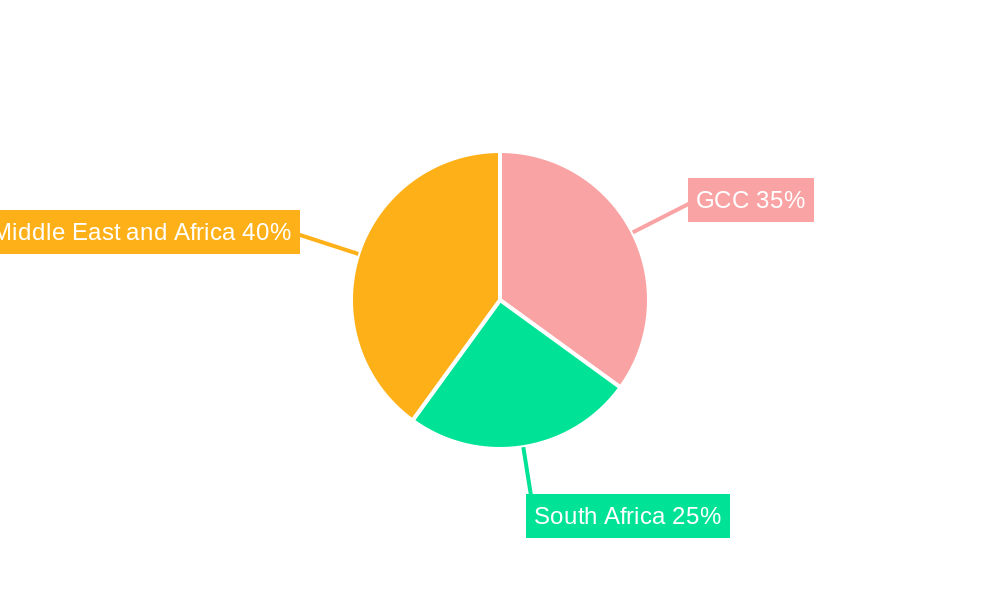
Middle-East & Africa Cardiac Arrhythmia Monitoring Devices Market Regional Market Share
Geographic Coverage of Middle-East & Africa Cardiac Arrhythmia Monitoring Devices Market
Middle-East & Africa Cardiac Arrhythmia Monitoring Devices Market REPORT HIGHLIGHTS
| Aspects | Details |
|---|---|
| Study Period | 2020-2034 |
| Base Year | 2025 |
| Estimated Year | 2026 |
| Forecast Period | 2026-2034 |
| Historical Period | 2020-2025 |
| Growth Rate | CAGR of 6.43% from 2020-2034 |
| Segmentation |
|
Table of Contents
- 1. Introduction
- 1.1. Research Scope
- 1.2. Market Segmentation
- 1.3. Research Methodology
- 1.4. Definitions and Assumptions
- 2. Executive Summary
- 2.1. Introduction
- 3. Market Dynamics
- 3.1. Introduction
- 3.2. Market Drivers
- 3.2.1. Increasing Prevalence of Cardiovascular diseases and Risk Factors; Technological Advancements and Growing Adoption of Cardiac Arrhythmia Monitoring Devices
- 3.3. Market Restrains
- 3.3.1. Poor Reimbursement Scenario
- 3.4. Market Trends
- 3.4.1. Continuous Rhythm Monitoring Devices Segment Expected to Hold Significant Market Share over the Forecast Period
- 4. Market Factor Analysis
- 4.1. Porters Five Forces
- 4.2. Supply/Value Chain
- 4.3. PESTEL analysis
- 4.4. Market Entropy
- 4.5. Patent/Trademark Analysis
- 5. Middle-East & Africa Cardiac Arrhythmia Monitoring Devices Market Analysis, Insights and Forecast, 2020-2032
- 5.1. Market Analysis, Insights and Forecast - by Service Providers
- 5.1.1. Mobile C
- 5.1.2. Independent Diagnostic Testing Facilities/Clinics
- 5.2. Market Analysis, Insights and Forecast - by Geography
- 5.2.1. GCC
- 5.2.2. South Africa
- 5.2.3. Rest of Middle East and Africa
- 5.3. Market Analysis, Insights and Forecast - by Region
- 5.3.1. GCC
- 5.3.2. South Africa
- 5.3.3. Rest of Middle East and Africa
- 5.1. Market Analysis, Insights and Forecast - by Service Providers
- 6. GCC Middle-East & Africa Cardiac Arrhythmia Monitoring Devices Market Analysis, Insights and Forecast, 2020-2032
- 6.1. Market Analysis, Insights and Forecast - by Service Providers
- 6.1.1. Mobile C
- 6.1.2. Independent Diagnostic Testing Facilities/Clinics
- 6.2. Market Analysis, Insights and Forecast - by Geography
- 6.2.1. GCC
- 6.2.2. South Africa
- 6.2.3. Rest of Middle East and Africa
- 6.1. Market Analysis, Insights and Forecast - by Service Providers
- 7. South Africa Middle-East & Africa Cardiac Arrhythmia Monitoring Devices Market Analysis, Insights and Forecast, 2020-2032
- 7.1. Market Analysis, Insights and Forecast - by Service Providers
- 7.1.1. Mobile C
- 7.1.2. Independent Diagnostic Testing Facilities/Clinics
- 7.2. Market Analysis, Insights and Forecast - by Geography
- 7.2.1. GCC
- 7.2.2. South Africa
- 7.2.3. Rest of Middle East and Africa
- 7.1. Market Analysis, Insights and Forecast - by Service Providers
- 8. Rest of Middle East and Africa Middle-East & Africa Cardiac Arrhythmia Monitoring Devices Market Analysis, Insights and Forecast, 2020-2032
- 8.1. Market Analysis, Insights and Forecast - by Service Providers
- 8.1.1. Mobile C
- 8.1.2. Independent Diagnostic Testing Facilities/Clinics
- 8.2. Market Analysis, Insights and Forecast - by Geography
- 8.2.1. GCC
- 8.2.2. South Africa
- 8.2.3. Rest of Middle East and Africa
- 8.1. Market Analysis, Insights and Forecast - by Service Providers
- 9. Competitive Analysis
- 9.1. Market Share Analysis 2025
- 9.2. Company Profiles
- 9.2.1 Medtronic PLC
- 9.2.1.1. Overview
- 9.2.1.2. Products
- 9.2.1.3. SWOT Analysis
- 9.2.1.4. Recent Developments
- 9.2.1.5. Financials (Based on Availability)
- 9.2.2 Cardiac Science Corporation
- 9.2.2.1. Overview
- 9.2.2.2. Products
- 9.2.2.3. SWOT Analysis
- 9.2.2.4. Recent Developments
- 9.2.2.5. Financials (Based on Availability)
- 9.2.3 Hill-Rom Holding Inc
- 9.2.3.1. Overview
- 9.2.3.2. Products
- 9.2.3.3. SWOT Analysis
- 9.2.3.4. Recent Developments
- 9.2.3.5. Financials (Based on Availability)
- 9.2.4 Koninklijke Philips NV
- 9.2.4.1. Overview
- 9.2.4.2. Products
- 9.2.4.3. SWOT Analysis
- 9.2.4.4. Recent Developments
- 9.2.4.5. Financials (Based on Availability)
- 9.2.5 OSI Systems Inc
- 9.2.5.1. Overview
- 9.2.5.2. Products
- 9.2.5.3. SWOT Analysis
- 9.2.5.4. Recent Developments
- 9.2.5.5. Financials (Based on Availability)
- 9.2.6 BioTelemetry Inc
- 9.2.6.1. Overview
- 9.2.6.2. Products
- 9.2.6.3. SWOT Analysis
- 9.2.6.4. Recent Developments
- 9.2.6.5. Financials (Based on Availability)
- 9.2.7 GE Healthcare
- 9.2.7.1. Overview
- 9.2.7.2. Products
- 9.2.7.3. SWOT Analysis
- 9.2.7.4. Recent Developments
- 9.2.7.5. Financials (Based on Availability)
- 9.2.8 Spacelabs Healthcare
- 9.2.8.1. Overview
- 9.2.8.2. Products
- 9.2.8.3. SWOT Analysis
- 9.2.8.4. Recent Developments
- 9.2.8.5. Financials (Based on Availability)
- 9.2.9 Nihon Kohden Corporation
- 9.2.9.1. Overview
- 9.2.9.2. Products
- 9.2.9.3. SWOT Analysis
- 9.2.9.4. Recent Developments
- 9.2.9.5. Financials (Based on Availability)
- 9.2.10 Abbott Laboratories
- 9.2.10.1. Overview
- 9.2.10.2. Products
- 9.2.10.3. SWOT Analysis
- 9.2.10.4. Recent Developments
- 9.2.10.5. Financials (Based on Availability)
- 9.2.1 Medtronic PLC
List of Figures
- Figure 1: Middle-East & Africa Cardiac Arrhythmia Monitoring Devices Market Revenue Breakdown (Million, %) by Product 2025 & 2033
- Figure 2: Middle-East & Africa Cardiac Arrhythmia Monitoring Devices Market Share (%) by Company 2025
List of Tables
- Table 1: Middle-East & Africa Cardiac Arrhythmia Monitoring Devices Market Revenue Million Forecast, by Service Providers 2020 & 2033
- Table 2: Middle-East & Africa Cardiac Arrhythmia Monitoring Devices Market Volume K Unit Forecast, by Service Providers 2020 & 2033
- Table 3: Middle-East & Africa Cardiac Arrhythmia Monitoring Devices Market Revenue Million Forecast, by Geography 2020 & 2033
- Table 4: Middle-East & Africa Cardiac Arrhythmia Monitoring Devices Market Volume K Unit Forecast, by Geography 2020 & 2033
- Table 5: Middle-East & Africa Cardiac Arrhythmia Monitoring Devices Market Revenue Million Forecast, by Region 2020 & 2033
- Table 6: Middle-East & Africa Cardiac Arrhythmia Monitoring Devices Market Volume K Unit Forecast, by Region 2020 & 2033
- Table 7: Middle-East & Africa Cardiac Arrhythmia Monitoring Devices Market Revenue Million Forecast, by Service Providers 2020 & 2033
- Table 8: Middle-East & Africa Cardiac Arrhythmia Monitoring Devices Market Volume K Unit Forecast, by Service Providers 2020 & 2033
- Table 9: Middle-East & Africa Cardiac Arrhythmia Monitoring Devices Market Revenue Million Forecast, by Geography 2020 & 2033
- Table 10: Middle-East & Africa Cardiac Arrhythmia Monitoring Devices Market Volume K Unit Forecast, by Geography 2020 & 2033
- Table 11: Middle-East & Africa Cardiac Arrhythmia Monitoring Devices Market Revenue Million Forecast, by Country 2020 & 2033
- Table 12: Middle-East & Africa Cardiac Arrhythmia Monitoring Devices Market Volume K Unit Forecast, by Country 2020 & 2033
- Table 13: Middle-East & Africa Cardiac Arrhythmia Monitoring Devices Market Revenue Million Forecast, by Service Providers 2020 & 2033
- Table 14: Middle-East & Africa Cardiac Arrhythmia Monitoring Devices Market Volume K Unit Forecast, by Service Providers 2020 & 2033
- Table 15: Middle-East & Africa Cardiac Arrhythmia Monitoring Devices Market Revenue Million Forecast, by Geography 2020 & 2033
- Table 16: Middle-East & Africa Cardiac Arrhythmia Monitoring Devices Market Volume K Unit Forecast, by Geography 2020 & 2033
- Table 17: Middle-East & Africa Cardiac Arrhythmia Monitoring Devices Market Revenue Million Forecast, by Country 2020 & 2033
- Table 18: Middle-East & Africa Cardiac Arrhythmia Monitoring Devices Market Volume K Unit Forecast, by Country 2020 & 2033
- Table 19: Middle-East & Africa Cardiac Arrhythmia Monitoring Devices Market Revenue Million Forecast, by Service Providers 2020 & 2033
- Table 20: Middle-East & Africa Cardiac Arrhythmia Monitoring Devices Market Volume K Unit Forecast, by Service Providers 2020 & 2033
- Table 21: Middle-East & Africa Cardiac Arrhythmia Monitoring Devices Market Revenue Million Forecast, by Geography 2020 & 2033
- Table 22: Middle-East & Africa Cardiac Arrhythmia Monitoring Devices Market Volume K Unit Forecast, by Geography 2020 & 2033
- Table 23: Middle-East & Africa Cardiac Arrhythmia Monitoring Devices Market Revenue Million Forecast, by Country 2020 & 2033
- Table 24: Middle-East & Africa Cardiac Arrhythmia Monitoring Devices Market Volume K Unit Forecast, by Country 2020 & 2033
Frequently Asked Questions
1. What is the projected Compound Annual Growth Rate (CAGR) of the Middle-East & Africa Cardiac Arrhythmia Monitoring Devices Market?
The projected CAGR is approximately 6.43%.
2. Which companies are prominent players in the Middle-East & Africa Cardiac Arrhythmia Monitoring Devices Market?
Key companies in the market include Medtronic PLC, Cardiac Science Corporation, Hill-Rom Holding Inc , Koninklijke Philips NV, OSI Systems Inc, BioTelemetry Inc, GE Healthcare, Spacelabs Healthcare, Nihon Kohden Corporation, Abbott Laboratories.
3. What are the main segments of the Middle-East & Africa Cardiac Arrhythmia Monitoring Devices Market?
The market segments include Service Providers, Geography.
4. Can you provide details about the market size?
The market size is estimated to be USD 403.51 Million as of 2022.
5. What are some drivers contributing to market growth?
Increasing Prevalence of Cardiovascular diseases and Risk Factors; Technological Advancements and Growing Adoption of Cardiac Arrhythmia Monitoring Devices.
6. What are the notable trends driving market growth?
Continuous Rhythm Monitoring Devices Segment Expected to Hold Significant Market Share over the Forecast Period.
7. Are there any restraints impacting market growth?
Poor Reimbursement Scenario.
8. Can you provide examples of recent developments in the market?
July 2022: Xplore Lifestyle collaborated with an Israeli company to launch Cardiac Sense, the medical grade and wearable continuous monitoring device in the form of a watch that will. The watch can detect and read heart activity beat by beat. As a result, it can detect fatal arrhythmia like AFib and instantly notify doctors and family members of patients.
9. What pricing options are available for accessing the report?
Pricing options include single-user, multi-user, and enterprise licenses priced at USD 4750, USD 5250, and USD 8750 respectively.
10. Is the market size provided in terms of value or volume?
The market size is provided in terms of value, measured in Million and volume, measured in K Unit.
11. Are there any specific market keywords associated with the report?
Yes, the market keyword associated with the report is "Middle-East & Africa Cardiac Arrhythmia Monitoring Devices Market," which aids in identifying and referencing the specific market segment covered.
12. How do I determine which pricing option suits my needs best?
The pricing options vary based on user requirements and access needs. Individual users may opt for single-user licenses, while businesses requiring broader access may choose multi-user or enterprise licenses for cost-effective access to the report.
13. Are there any additional resources or data provided in the Middle-East & Africa Cardiac Arrhythmia Monitoring Devices Market report?
While the report offers comprehensive insights, it's advisable to review the specific contents or supplementary materials provided to ascertain if additional resources or data are available.
14. How can I stay updated on further developments or reports in the Middle-East & Africa Cardiac Arrhythmia Monitoring Devices Market?
To stay informed about further developments, trends, and reports in the Middle-East & Africa Cardiac Arrhythmia Monitoring Devices Market, consider subscribing to industry newsletters, following relevant companies and organizations, or regularly checking reputable industry news sources and publications.
Methodology
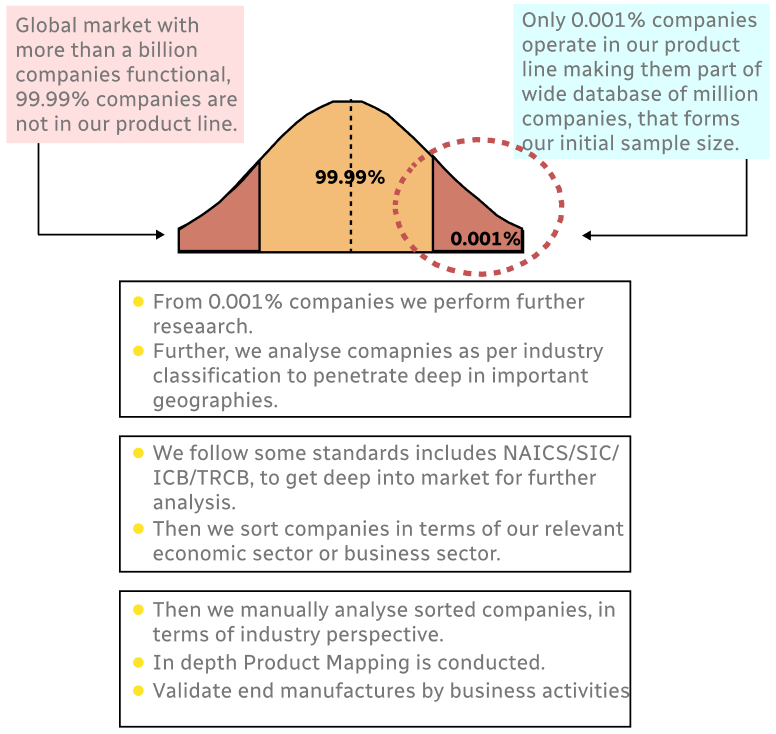
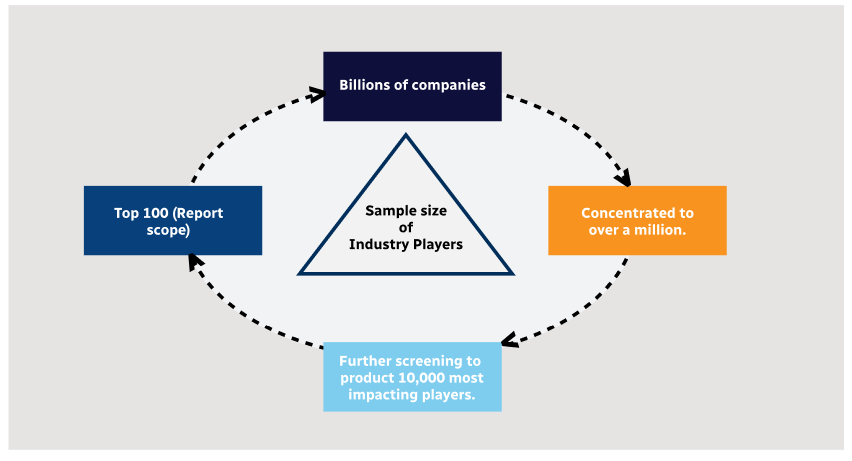
Step 1 - Identification of Relevant Samples Size from Population Database
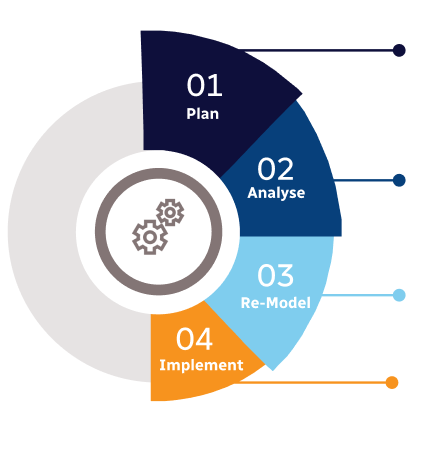
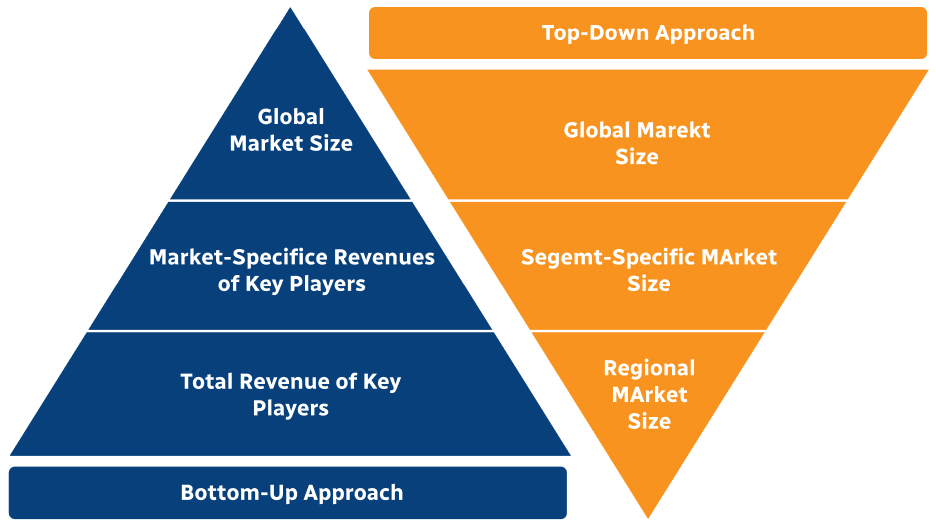
Step 2 - Approaches for Defining Global Market Size (Value, Volume* & Price*)
Note*: In applicable scenarios
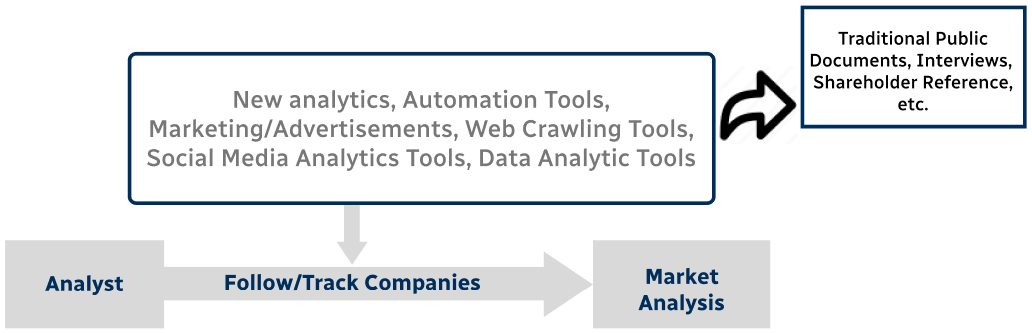
Step 3 - Data Sources
Primary Research
- Web Analytics
- Survey Reports
- Research Institute
- Latest Research Reports
- Opinion Leaders
Secondary Research
- Annual Reports
- White Paper
- Latest Press Release
- Industry Association
- Paid Database
- Investor Presentations
Step 4 - Data Triangulation
Involves using different sources of information in order to increase the validity of a study
These sources are likely to be stakeholders in a program - participants, other researchers, program staff, other community members, and so on.
Then we put all data in single framework & apply various statistical tools to find out the dynamic on the market.
During the analysis stage, feedback from the stakeholder groups would be compared to determine areas of agreement as well as areas of divergence