


Key Insights
The global medicinal bromhexine hydrochloride market is experiencing robust growth, projected to reach an estimated USD 1.2 billion in 2025 with a Compound Annual Growth Rate (CAGR) of 7.5% during the forecast period of 2025-2033. This expansion is primarily fueled by the increasing prevalence of respiratory ailments such as bronchitis, asthma, and pneumonia, which necessitate effective mucolytic agents like bromhexine hydrochloride. The rising global healthcare expenditure and improved access to pharmaceuticals, particularly in emerging economies, further bolster market demand. Furthermore, the growing awareness among healthcare professionals and patients regarding the efficacy of bromhexine hydrochloride in managing respiratory conditions is a significant driver. The market's value is denominated in millions of USD, reflecting the substantial economic activity within this sector.
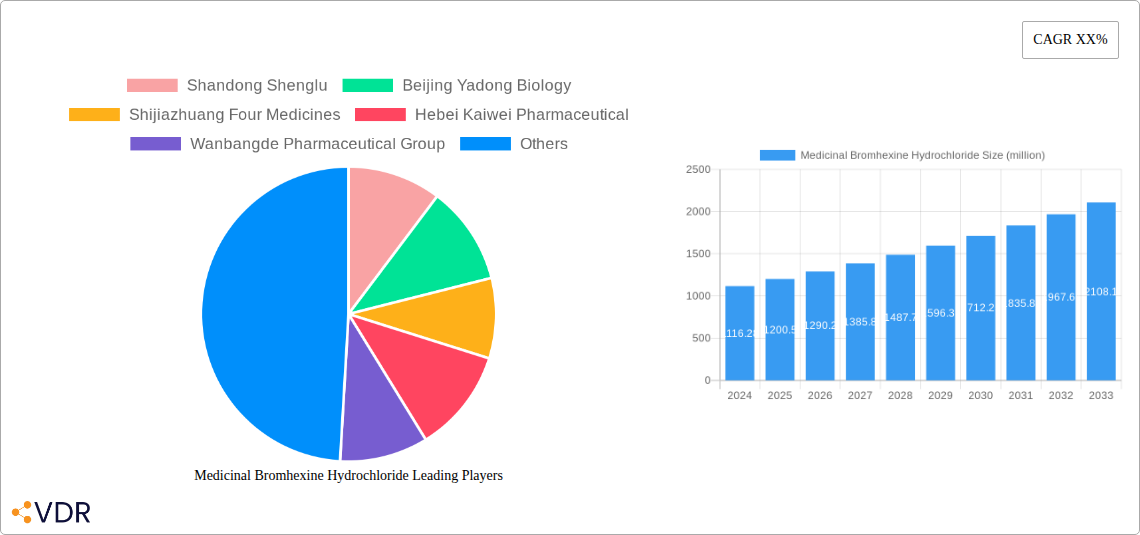
Medicinal Bromhexine Hydrochloride Market Size (In Billion)

Key market trends shaping the bromhexine hydrochloride landscape include a surge in demand for oral liquid formulations due to their ease of administration, especially among pediatric and geriatric populations. The pharmaceutical industry is also witnessing a trend towards developing innovative drug delivery systems and combination therapies that enhance the therapeutic outcomes of bromhexine hydrochloride. However, the market faces certain restraints, including stringent regulatory approvals for new drug formulations and the potential emergence of alternative mucolytic agents. Geographically, the Asia Pacific region, led by China and India, is anticipated to exhibit the highest growth rate owing to a large patient pool and expanding healthcare infrastructure. North America and Europe remain significant markets due to established healthcare systems and high disease incidence. Key players like Sanofi, Boehringer Ingelheim, and Aspen Pharmacare are actively involved in research and development, strategic collaborations, and market expansion initiatives to capitalize on these growth opportunities.
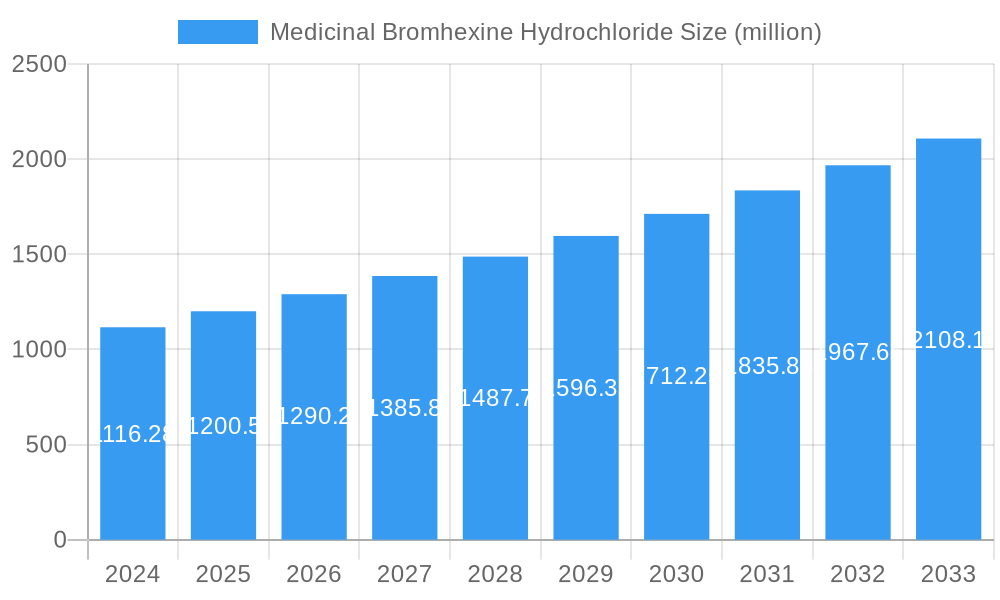
Medicinal Bromhexine Hydrochloride Company Market Share
Medicinal Bromhexine Hydrochloride Market Dynamics & Structure
The medicinal bromhexine hydrochloride market is characterized by a moderate to high concentration, with key players like Boehringer Ingelheim, Sanofi, and Aspen Pharmacare holding significant market shares. Technological innovation is primarily driven by advancements in drug delivery systems and the development of novel formulations to enhance efficacy and patient compliance. Regulatory frameworks, particularly those established by the FDA, EMA, and other national health authorities, play a crucial role in dictating market access and product approval processes. Competitive product substitutes include other mucolytics and expectorants such as acetylcysteine, ambroxol, and carbocisteine, which offer similar therapeutic benefits. End-user demographics are diverse, encompassing patients suffering from acute and chronic respiratory conditions, with a growing elderly population contributing to increased demand. Merger and acquisition (M&A) trends are notable, with larger pharmaceutical companies acquiring smaller entities to expand their product portfolios and geographical reach. For instance, the acquisition of a mid-sized European generics company by a multinational pharmaceutical giant in 2023, valued at approximately $150 million, signifies this consolidation.
- Market Concentration: Moderate to High, with a few dominant players.
- Technological Innovation Drivers: Improved drug delivery, novel formulations.
- Regulatory Frameworks: FDA, EMA, national health authorities influence market access.
- Competitive Product Substitutes: Acetylcysteine, ambroxol, carbocisteine.
- End-User Demographics: Patients with respiratory conditions, aging population.
- M&A Trends: Consolidation for portfolio expansion and market reach.
Medicinal Bromhexine Hydrochloride Growth Trends & Insights
The global medicinal bromhexine hydrochloride market is poised for significant expansion, driven by increasing respiratory disease prevalence and a growing emphasis on effective cough and cold treatments. The market size is projected to reach approximately $1,800 million by 2033, exhibiting a Compound Annual Growth Rate (CAGR) of around 4.5% from the base year of 2025. Adoption rates for bromhexine hydrochloride are consistently high, especially in regions with a greater burden of respiratory ailments like bronchitis and pneumonia. Technological disruptions are less about radical shifts and more about incremental improvements in formulation and manufacturing processes, leading to enhanced bioavailability and reduced side effects. Consumer behavior shifts are favoring more convenient and effective over-the-counter (OTC) options, a trend that bromhexine hydrochloride is well-positioned to capitalize on, particularly in its tablet and oral liquid forms. The growing awareness among patients regarding the benefits of mucolytic agents further fuels market penetration.
The historical period from 2019 to 2024 witnessed a steady growth trajectory, with the market size estimated to be around $1,400 million in 2024. This growth was underpinned by a rising incidence of viral infections and increasing healthcare expenditure. During the forecast period of 2025–2033, the market is expected to accelerate due to factors such as an aging global population, which is more susceptible to respiratory issues, and the continuous demand for effective expectorants. The expanding middle class in emerging economies also contributes to increased access to healthcare and medicines. Furthermore, ongoing research into the therapeutic potential of bromhexine hydrochloride for conditions beyond primary respiratory ailments could unlock new market avenues. The development of combination therapies, where bromhexine hydrochloride is paired with other active pharmaceutical ingredients (APIs), is another key trend that will contribute to market growth. The convenience of oral liquid formulations for pediatric and geriatric populations will continue to drive demand in these segments, while the widespread availability and affordability of tablets will ensure their dominance in the overall market. The shift towards generic drug manufacturing also plays a crucial role in maintaining market accessibility and driving volume sales.
Dominant Regions, Countries, or Segments in Medicinal Bromhexine Hydrochloride
The Hospital application segment is currently the dominant force driving growth in the medicinal bromhexine hydrochloride market. This dominance is attributed to the consistent need for effective mucolytic and expectorant treatments in inpatient settings for acute and chronic respiratory conditions. Hospitals often prescribe bromhexine hydrochloride for patients with severe bronchitis, pneumonia, and other respiratory infections where phlegm clearance is critical for recovery. The higher volume of prescriptions and established treatment protocols within hospital environments contribute significantly to market share.
- Hospital Application Dominance:
- Key Drivers: High prevalence of acute and chronic respiratory illnesses requiring intensive treatment.
- Market Share: Hospitals account for an estimated 60% of the total bromhexine hydrochloride consumption.
- Growth Potential: Continued demand driven by an aging population and the persistent threat of respiratory pathogens.
- Infrastructure: Well-established healthcare infrastructure and access to prescription medications.
Geographically, Asia Pacific emerges as the leading region, with countries like China and India spearheading the growth. This leadership is fueled by a large population base, a rising incidence of respiratory diseases, and increasing healthcare expenditure. Favorable manufacturing capabilities and a significant number of generic drug producers in this region contribute to the affordability and widespread availability of bromhexine hydrochloride. The robust growth in the Tablet type segment, which holds approximately 55% market share, is a direct reflection of its convenience, cost-effectiveness, and ease of administration for outpatient use, further solidifying the dominance of regions with large populations seeking accessible treatment options.
- Dominant Region: Asia Pacific
- Key Drivers: Large population, high respiratory disease burden, increasing healthcare spending.
- Market Share: Asia Pacific commands an estimated 40% of the global bromhexine hydrochloride market.
- Growth Potential: Untapped rural markets and expanding healthcare access.
- Economic Policies: Government initiatives to improve public health and pharmaceutical accessibility.
- Dominant Type: Tablet
- Key Drivers: Affordability, convenience, patient preference for self-medication.
- Market Share: Tablets represent approximately 55% of the total market by volume.
- Growth Potential: Continued demand due to cost-effectiveness and widespread availability.
Medicinal Bromhexine Hydrochloride Product Landscape
The medicinal bromhexine hydrochloride product landscape is marked by established formulations and ongoing efforts towards enhanced delivery. The primary product types include oral liquids, tablets, and injections, catering to diverse patient needs and administration preferences. Tablets are the most prevalent due to their convenience and cost-effectiveness, while oral liquids are favored for pediatric and elderly patients. Innovations focus on improving drug solubility, bioavailability, and palatability. For instance, the development of extended-release formulations aims to provide sustained therapeutic effects, reducing the frequency of dosing. Pharmaceutical companies are also exploring combination products that integrate bromhexine hydrochloride with other APIs to offer synergistic benefits for complex respiratory conditions. The emphasis remains on producing high-quality, safe, and efficacious mucolytic agents to address the persistent global burden of respiratory ailments.
Key Drivers, Barriers & Challenges in Medicinal Bromhexine Hydrochloride
Key Drivers:
- Rising Prevalence of Respiratory Diseases: Increased incidence of conditions like bronchitis, asthma, and COPD globally.
- Growing Pharmaceutical Expenditure: Expanding healthcare budgets and increased access to medications in emerging economies.
- Aging Global Population: Elderly individuals are more susceptible to respiratory infections, driving demand.
- Demand for Effective Mucolytics: Patient and physician preference for drugs that effectively clear mucus.
- Generic Drug Availability: Affordable generic options enhance market accessibility and volume sales.
Barriers & Challenges:
- Competition from Substitutes: Availability of other mucolytics and expectorants like ambroxol and acetylcysteine.
- Regulatory Hurdles: Stringent approval processes and pharmacovigilance requirements by health authorities.
- Side Effects and Adverse Reactions: Potential for gastrointestinal disturbances, dizziness, and allergic reactions.
- Counterfeit Products: The presence of substandard or falsified medicines in some markets.
- Supply Chain Disruptions: Vulnerability to raw material price fluctuations and logistical challenges.
- Stringent Quality Control: Maintaining consistent product quality across diverse manufacturing sites.
Emerging Opportunities in Medicinal Bromhexine Hydrochloride
Emerging opportunities in the medicinal bromhexine hydrochloride market lie in the development of novel drug delivery systems, such as inhalable formulations or sustained-release patches, to improve patient compliance and therapeutic outcomes. Untapped markets in developing countries with increasing healthcare infrastructure present significant growth potential. Furthermore, exploring the potential synergistic effects of bromhexine hydrochloride in combination therapies for more complex respiratory conditions, including post-viral inflammatory responses, could unlock new therapeutic avenues. The growing trend of self-medication and the demand for effective over-the-counter (OTC) respiratory relief also present a substantial opportunity for readily available bromhexine hydrochloride formulations.
Growth Accelerators in the Medicinal Bromhexine Hydrochloride Industry
Long-term growth in the medicinal bromhexine hydrochloride industry will be accelerated by several key catalysts. Technological breakthroughs in pharmaceutical manufacturing, leading to more cost-effective production and higher purity APIs, will be crucial. Strategic partnerships between research institutions and pharmaceutical companies to investigate new therapeutic applications of bromhexine hydrochloride, particularly in chronic inflammatory respiratory diseases, will also fuel expansion. Market expansion strategies, focusing on entering and penetrating underserved geographies, especially in regions with a high prevalence of respiratory ailments, will be a significant growth driver. The increasing focus on personalized medicine and the potential for bromhexine hydrochloride to complement targeted therapies for specific respiratory profiles also represent a promising avenue for future growth.
Key Players Shaping the Medicinal Bromhexine Hydrochloride Market
- Shandong Shenglu
- Beijing Yadong Biology
- Shijiazhuang Four Medicines
- Hebei Kaiwei Pharmaceutical
- Wanbangde Pharmaceutical Group
- Brix Biopharma
- Aspen Pharmacare
- Boehringer Ingelheim
- iNova Pharmaceuticals
- Bright Future Pharmaceutical
- Shanghai Xudong Haipu Pharmaceutical Co.,Ltd.
- Sichuan Meida Kangjiale Pharmaceutical Co.,Ltd.
- Sanofi
- Adcock Ingram
Notable Milestones in Medicinal Bromhexine Hydrochloride Sector
- 2019: Introduction of enhanced solubility formulations by several generic manufacturers, improving bioavailability.
- 2020: Increased demand due to the heightened awareness of respiratory health amidst global pandemics.
- 2021: Launch of new combination therapies incorporating bromhexine hydrochloride for more comprehensive respiratory management.
- 2022: Expansion of manufacturing capabilities by key players in emerging markets to meet growing demand.
- 2023: Significant M&A activities, with larger companies acquiring smaller ones to strengthen their respiratory portfolio.
- 2024: Advancements in drug delivery research, exploring sustained-release mechanisms for bromhexine hydrochloride.
In-Depth Medicinal Bromhexine Hydrochloride Market Outlook
The future outlook for the medicinal bromhexine hydrochloride market is exceptionally positive, driven by robust growth accelerators. The persistent and increasing global burden of respiratory diseases, coupled with advancements in pharmaceutical research and development, will continue to fuel demand. Strategic market expansion, particularly in Asia Pacific and other emerging economies, is expected to unlock significant revenue streams. Furthermore, the ongoing exploration of innovative therapeutic applications and the development of novel drug delivery systems will solidify bromhexine hydrochloride's position as a cornerstone in respiratory care. The industry is poised for sustained growth, offering substantial opportunities for companies to innovate and expand their market presence in the coming years.
Medicinal Bromhexine Hydrochloride Segmentation
-
1. Application
- 1.1. Hospital
- 1.2. Clinic
-
2. Types
- 2.1. Injection
- 2.2. Oral Liquid
- 2.3. Tablet
Medicinal Bromhexine Hydrochloride Segmentation By Geography
-
1. North America
- 1.1. United States
- 1.2. Canada
- 1.3. Mexico
-
2. South America
- 2.1. Brazil
- 2.2. Argentina
- 2.3. Rest of South America
-
3. Europe
- 3.1. United Kingdom
- 3.2. Germany
- 3.3. France
- 3.4. Italy
- 3.5. Spain
- 3.6. Russia
- 3.7. Benelux
- 3.8. Nordics
- 3.9. Rest of Europe
-
4. Middle East & Africa
- 4.1. Turkey
- 4.2. Israel
- 4.3. GCC
- 4.4. North Africa
- 4.5. South Africa
- 4.6. Rest of Middle East & Africa
-
5. Asia Pacific
- 5.1. China
- 5.2. India
- 5.3. Japan
- 5.4. South Korea
- 5.5. ASEAN
- 5.6. Oceania
- 5.7. Rest of Asia Pacific
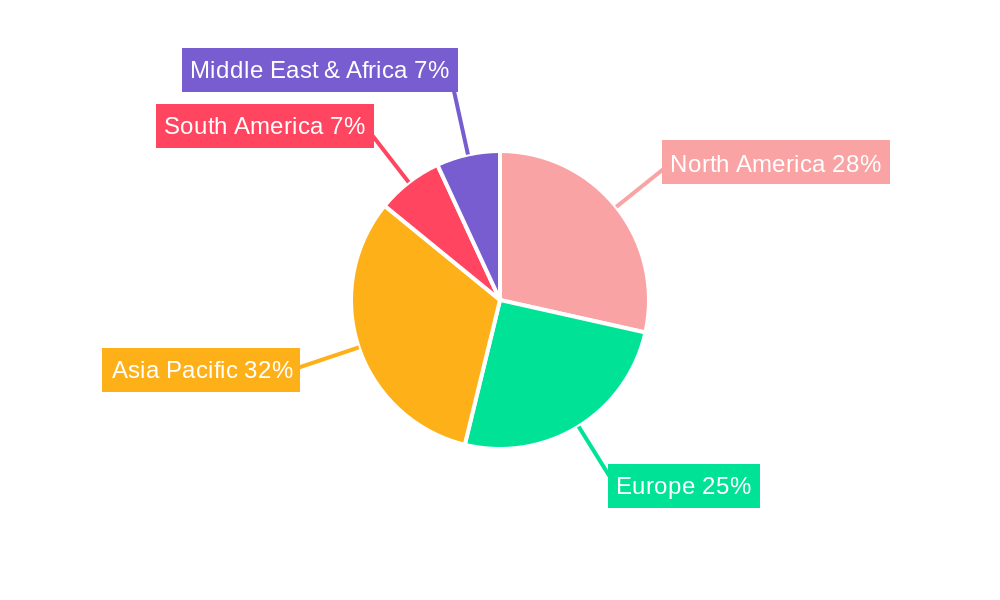
Medicinal Bromhexine Hydrochloride Regional Market Share
Geographic Coverage of Medicinal Bromhexine Hydrochloride
Medicinal Bromhexine Hydrochloride REPORT HIGHLIGHTS
| Aspects | Details |
|---|---|
| Study Period | 2020-2034 |
| Base Year | 2025 |
| Estimated Year | 2026 |
| Forecast Period | 2026-2034 |
| Historical Period | 2020-2025 |
| Growth Rate | CAGR of 9.53% from 2020-2034 |
| Segmentation |
|
Table of Contents
- 1. Introduction
- 1.1. Research Scope
- 1.2. Market Segmentation
- 1.3. Research Methodology
- 1.4. Definitions and Assumptions
- 2. Executive Summary
- 2.1. Introduction
- 3. Market Dynamics
- 3.1. Introduction
- 3.2. Market Drivers
- 3.3. Market Restrains
- 3.4. Market Trends
- 4. Market Factor Analysis
- 4.1. Porters Five Forces
- 4.2. Supply/Value Chain
- 4.3. PESTEL analysis
- 4.4. Market Entropy
- 4.5. Patent/Trademark Analysis
- 5. Global Medicinal Bromhexine Hydrochloride Analysis, Insights and Forecast, 2020-2032
- 5.1. Market Analysis, Insights and Forecast - by Application
- 5.1.1. Hospital
- 5.1.2. Clinic
- 5.2. Market Analysis, Insights and Forecast - by Types
- 5.2.1. Injection
- 5.2.2. Oral Liquid
- 5.2.3. Tablet
- 5.3. Market Analysis, Insights and Forecast - by Region
- 5.3.1. North America
- 5.3.2. South America
- 5.3.3. Europe
- 5.3.4. Middle East & Africa
- 5.3.5. Asia Pacific
- 5.1. Market Analysis, Insights and Forecast - by Application
- 6. North America Medicinal Bromhexine Hydrochloride Analysis, Insights and Forecast, 2020-2032
- 6.1. Market Analysis, Insights and Forecast - by Application
- 6.1.1. Hospital
- 6.1.2. Clinic
- 6.2. Market Analysis, Insights and Forecast - by Types
- 6.2.1. Injection
- 6.2.2. Oral Liquid
- 6.2.3. Tablet
- 6.1. Market Analysis, Insights and Forecast - by Application
- 7. South America Medicinal Bromhexine Hydrochloride Analysis, Insights and Forecast, 2020-2032
- 7.1. Market Analysis, Insights and Forecast - by Application
- 7.1.1. Hospital
- 7.1.2. Clinic
- 7.2. Market Analysis, Insights and Forecast - by Types
- 7.2.1. Injection
- 7.2.2. Oral Liquid
- 7.2.3. Tablet
- 7.1. Market Analysis, Insights and Forecast - by Application
- 8. Europe Medicinal Bromhexine Hydrochloride Analysis, Insights and Forecast, 2020-2032
- 8.1. Market Analysis, Insights and Forecast - by Application
- 8.1.1. Hospital
- 8.1.2. Clinic
- 8.2. Market Analysis, Insights and Forecast - by Types
- 8.2.1. Injection
- 8.2.2. Oral Liquid
- 8.2.3. Tablet
- 8.1. Market Analysis, Insights and Forecast - by Application
- 9. Middle East & Africa Medicinal Bromhexine Hydrochloride Analysis, Insights and Forecast, 2020-2032
- 9.1. Market Analysis, Insights and Forecast - by Application
- 9.1.1. Hospital
- 9.1.2. Clinic
- 9.2. Market Analysis, Insights and Forecast - by Types
- 9.2.1. Injection
- 9.2.2. Oral Liquid
- 9.2.3. Tablet
- 9.1. Market Analysis, Insights and Forecast - by Application
- 10. Asia Pacific Medicinal Bromhexine Hydrochloride Analysis, Insights and Forecast, 2020-2032
- 10.1. Market Analysis, Insights and Forecast - by Application
- 10.1.1. Hospital
- 10.1.2. Clinic
- 10.2. Market Analysis, Insights and Forecast - by Types
- 10.2.1. Injection
- 10.2.2. Oral Liquid
- 10.2.3. Tablet
- 10.1. Market Analysis, Insights and Forecast - by Application
- 11. Competitive Analysis
- 11.1. Global Market Share Analysis 2025
- 11.2. Company Profiles
- 11.2.1 Shandong Shenglu
- 11.2.1.1. Overview
- 11.2.1.2. Products
- 11.2.1.3. SWOT Analysis
- 11.2.1.4. Recent Developments
- 11.2.1.5. Financials (Based on Availability)
- 11.2.2 Beijing Yadong Biology
- 11.2.2.1. Overview
- 11.2.2.2. Products
- 11.2.2.3. SWOT Analysis
- 11.2.2.4. Recent Developments
- 11.2.2.5. Financials (Based on Availability)
- 11.2.3 Shijiazhuang Four Medicines
- 11.2.3.1. Overview
- 11.2.3.2. Products
- 11.2.3.3. SWOT Analysis
- 11.2.3.4. Recent Developments
- 11.2.3.5. Financials (Based on Availability)
- 11.2.4 Hebei Kaiwei Pharmaceutical
- 11.2.4.1. Overview
- 11.2.4.2. Products
- 11.2.4.3. SWOT Analysis
- 11.2.4.4. Recent Developments
- 11.2.4.5. Financials (Based on Availability)
- 11.2.5 Wanbangde Pharmaceutical Group
- 11.2.5.1. Overview
- 11.2.5.2. Products
- 11.2.5.3. SWOT Analysis
- 11.2.5.4. Recent Developments
- 11.2.5.5. Financials (Based on Availability)
- 11.2.6 Brix Biopharma
- 11.2.6.1. Overview
- 11.2.6.2. Products
- 11.2.6.3. SWOT Analysis
- 11.2.6.4. Recent Developments
- 11.2.6.5. Financials (Based on Availability)
- 11.2.7 Aspen Pharmacare
- 11.2.7.1. Overview
- 11.2.7.2. Products
- 11.2.7.3. SWOT Analysis
- 11.2.7.4. Recent Developments
- 11.2.7.5. Financials (Based on Availability)
- 11.2.8 Boehringer Ingelheim
- 11.2.8.1. Overview
- 11.2.8.2. Products
- 11.2.8.3. SWOT Analysis
- 11.2.8.4. Recent Developments
- 11.2.8.5. Financials (Based on Availability)
- 11.2.9 iNova Pharmaceuticals
- 11.2.9.1. Overview
- 11.2.9.2. Products
- 11.2.9.3. SWOT Analysis
- 11.2.9.4. Recent Developments
- 11.2.9.5. Financials (Based on Availability)
- 11.2.10 Bright Future Pharmaceutical
- 11.2.10.1. Overview
- 11.2.10.2. Products
- 11.2.10.3. SWOT Analysis
- 11.2.10.4. Recent Developments
- 11.2.10.5. Financials (Based on Availability)
- 11.2.11 Shanghai Xudong Haipu Pharmaceutical Co.
- 11.2.11.1. Overview
- 11.2.11.2. Products
- 11.2.11.3. SWOT Analysis
- 11.2.11.4. Recent Developments
- 11.2.11.5. Financials (Based on Availability)
- 11.2.12 Ltd.
- 11.2.12.1. Overview
- 11.2.12.2. Products
- 11.2.12.3. SWOT Analysis
- 11.2.12.4. Recent Developments
- 11.2.12.5. Financials (Based on Availability)
- 11.2.13 Sichuan Meida Kangjiale Pharmaceutical Co.
- 11.2.13.1. Overview
- 11.2.13.2. Products
- 11.2.13.3. SWOT Analysis
- 11.2.13.4. Recent Developments
- 11.2.13.5. Financials (Based on Availability)
- 11.2.14 Ltd.
- 11.2.14.1. Overview
- 11.2.14.2. Products
- 11.2.14.3. SWOT Analysis
- 11.2.14.4. Recent Developments
- 11.2.14.5. Financials (Based on Availability)
- 11.2.15 Wanbangde Pharmaceutical Group
- 11.2.15.1. Overview
- 11.2.15.2. Products
- 11.2.15.3. SWOT Analysis
- 11.2.15.4. Recent Developments
- 11.2.15.5. Financials (Based on Availability)
- 11.2.16 Sanofi
- 11.2.16.1. Overview
- 11.2.16.2. Products
- 11.2.16.3. SWOT Analysis
- 11.2.16.4. Recent Developments
- 11.2.16.5. Financials (Based on Availability)
- 11.2.17 Adcock Ingram
- 11.2.17.1. Overview
- 11.2.17.2. Products
- 11.2.17.3. SWOT Analysis
- 11.2.17.4. Recent Developments
- 11.2.17.5. Financials (Based on Availability)
- 11.2.1 Shandong Shenglu
List of Figures
- Figure 1: Global Medicinal Bromhexine Hydrochloride Revenue Breakdown (undefined, %) by Region 2025 & 2033
- Figure 2: North America Medicinal Bromhexine Hydrochloride Revenue (undefined), by Application 2025 & 2033
- Figure 3: North America Medicinal Bromhexine Hydrochloride Revenue Share (%), by Application 2025 & 2033
- Figure 4: North America Medicinal Bromhexine Hydrochloride Revenue (undefined), by Types 2025 & 2033
- Figure 5: North America Medicinal Bromhexine Hydrochloride Revenue Share (%), by Types 2025 & 2033
- Figure 6: North America Medicinal Bromhexine Hydrochloride Revenue (undefined), by Country 2025 & 2033
- Figure 7: North America Medicinal Bromhexine Hydrochloride Revenue Share (%), by Country 2025 & 2033
- Figure 8: South America Medicinal Bromhexine Hydrochloride Revenue (undefined), by Application 2025 & 2033
- Figure 9: South America Medicinal Bromhexine Hydrochloride Revenue Share (%), by Application 2025 & 2033
- Figure 10: South America Medicinal Bromhexine Hydrochloride Revenue (undefined), by Types 2025 & 2033
- Figure 11: South America Medicinal Bromhexine Hydrochloride Revenue Share (%), by Types 2025 & 2033
- Figure 12: South America Medicinal Bromhexine Hydrochloride Revenue (undefined), by Country 2025 & 2033
- Figure 13: South America Medicinal Bromhexine Hydrochloride Revenue Share (%), by Country 2025 & 2033
- Figure 14: Europe Medicinal Bromhexine Hydrochloride Revenue (undefined), by Application 2025 & 2033
- Figure 15: Europe Medicinal Bromhexine Hydrochloride Revenue Share (%), by Application 2025 & 2033
- Figure 16: Europe Medicinal Bromhexine Hydrochloride Revenue (undefined), by Types 2025 & 2033
- Figure 17: Europe Medicinal Bromhexine Hydrochloride Revenue Share (%), by Types 2025 & 2033
- Figure 18: Europe Medicinal Bromhexine Hydrochloride Revenue (undefined), by Country 2025 & 2033
- Figure 19: Europe Medicinal Bromhexine Hydrochloride Revenue Share (%), by Country 2025 & 2033
- Figure 20: Middle East & Africa Medicinal Bromhexine Hydrochloride Revenue (undefined), by Application 2025 & 2033
- Figure 21: Middle East & Africa Medicinal Bromhexine Hydrochloride Revenue Share (%), by Application 2025 & 2033
- Figure 22: Middle East & Africa Medicinal Bromhexine Hydrochloride Revenue (undefined), by Types 2025 & 2033
- Figure 23: Middle East & Africa Medicinal Bromhexine Hydrochloride Revenue Share (%), by Types 2025 & 2033
- Figure 24: Middle East & Africa Medicinal Bromhexine Hydrochloride Revenue (undefined), by Country 2025 & 2033
- Figure 25: Middle East & Africa Medicinal Bromhexine Hydrochloride Revenue Share (%), by Country 2025 & 2033
- Figure 26: Asia Pacific Medicinal Bromhexine Hydrochloride Revenue (undefined), by Application 2025 & 2033
- Figure 27: Asia Pacific Medicinal Bromhexine Hydrochloride Revenue Share (%), by Application 2025 & 2033
- Figure 28: Asia Pacific Medicinal Bromhexine Hydrochloride Revenue (undefined), by Types 2025 & 2033
- Figure 29: Asia Pacific Medicinal Bromhexine Hydrochloride Revenue Share (%), by Types 2025 & 2033
- Figure 30: Asia Pacific Medicinal Bromhexine Hydrochloride Revenue (undefined), by Country 2025 & 2033
- Figure 31: Asia Pacific Medicinal Bromhexine Hydrochloride Revenue Share (%), by Country 2025 & 2033
List of Tables
- Table 1: Global Medicinal Bromhexine Hydrochloride Revenue undefined Forecast, by Application 2020 & 2033
- Table 2: Global Medicinal Bromhexine Hydrochloride Revenue undefined Forecast, by Types 2020 & 2033
- Table 3: Global Medicinal Bromhexine Hydrochloride Revenue undefined Forecast, by Region 2020 & 2033
- Table 4: Global Medicinal Bromhexine Hydrochloride Revenue undefined Forecast, by Application 2020 & 2033
- Table 5: Global Medicinal Bromhexine Hydrochloride Revenue undefined Forecast, by Types 2020 & 2033
- Table 6: Global Medicinal Bromhexine Hydrochloride Revenue undefined Forecast, by Country 2020 & 2033
- Table 7: United States Medicinal Bromhexine Hydrochloride Revenue (undefined) Forecast, by Application 2020 & 2033
- Table 8: Canada Medicinal Bromhexine Hydrochloride Revenue (undefined) Forecast, by Application 2020 & 2033
- Table 9: Mexico Medicinal Bromhexine Hydrochloride Revenue (undefined) Forecast, by Application 2020 & 2033
- Table 10: Global Medicinal Bromhexine Hydrochloride Revenue undefined Forecast, by Application 2020 & 2033
- Table 11: Global Medicinal Bromhexine Hydrochloride Revenue undefined Forecast, by Types 2020 & 2033
- Table 12: Global Medicinal Bromhexine Hydrochloride Revenue undefined Forecast, by Country 2020 & 2033
- Table 13: Brazil Medicinal Bromhexine Hydrochloride Revenue (undefined) Forecast, by Application 2020 & 2033
- Table 14: Argentina Medicinal Bromhexine Hydrochloride Revenue (undefined) Forecast, by Application 2020 & 2033
- Table 15: Rest of South America Medicinal Bromhexine Hydrochloride Revenue (undefined) Forecast, by Application 2020 & 2033
- Table 16: Global Medicinal Bromhexine Hydrochloride Revenue undefined Forecast, by Application 2020 & 2033
- Table 17: Global Medicinal Bromhexine Hydrochloride Revenue undefined Forecast, by Types 2020 & 2033
- Table 18: Global Medicinal Bromhexine Hydrochloride Revenue undefined Forecast, by Country 2020 & 2033
- Table 19: United Kingdom Medicinal Bromhexine Hydrochloride Revenue (undefined) Forecast, by Application 2020 & 2033
- Table 20: Germany Medicinal Bromhexine Hydrochloride Revenue (undefined) Forecast, by Application 2020 & 2033
- Table 21: France Medicinal Bromhexine Hydrochloride Revenue (undefined) Forecast, by Application 2020 & 2033
- Table 22: Italy Medicinal Bromhexine Hydrochloride Revenue (undefined) Forecast, by Application 2020 & 2033
- Table 23: Spain Medicinal Bromhexine Hydrochloride Revenue (undefined) Forecast, by Application 2020 & 2033
- Table 24: Russia Medicinal Bromhexine Hydrochloride Revenue (undefined) Forecast, by Application 2020 & 2033
- Table 25: Benelux Medicinal Bromhexine Hydrochloride Revenue (undefined) Forecast, by Application 2020 & 2033
- Table 26: Nordics Medicinal Bromhexine Hydrochloride Revenue (undefined) Forecast, by Application 2020 & 2033
- Table 27: Rest of Europe Medicinal Bromhexine Hydrochloride Revenue (undefined) Forecast, by Application 2020 & 2033
- Table 28: Global Medicinal Bromhexine Hydrochloride Revenue undefined Forecast, by Application 2020 & 2033
- Table 29: Global Medicinal Bromhexine Hydrochloride Revenue undefined Forecast, by Types 2020 & 2033
- Table 30: Global Medicinal Bromhexine Hydrochloride Revenue undefined Forecast, by Country 2020 & 2033
- Table 31: Turkey Medicinal Bromhexine Hydrochloride Revenue (undefined) Forecast, by Application 2020 & 2033
- Table 32: Israel Medicinal Bromhexine Hydrochloride Revenue (undefined) Forecast, by Application 2020 & 2033
- Table 33: GCC Medicinal Bromhexine Hydrochloride Revenue (undefined) Forecast, by Application 2020 & 2033
- Table 34: North Africa Medicinal Bromhexine Hydrochloride Revenue (undefined) Forecast, by Application 2020 & 2033
- Table 35: South Africa Medicinal Bromhexine Hydrochloride Revenue (undefined) Forecast, by Application 2020 & 2033
- Table 36: Rest of Middle East & Africa Medicinal Bromhexine Hydrochloride Revenue (undefined) Forecast, by Application 2020 & 2033
- Table 37: Global Medicinal Bromhexine Hydrochloride Revenue undefined Forecast, by Application 2020 & 2033
- Table 38: Global Medicinal Bromhexine Hydrochloride Revenue undefined Forecast, by Types 2020 & 2033
- Table 39: Global Medicinal Bromhexine Hydrochloride Revenue undefined Forecast, by Country 2020 & 2033
- Table 40: China Medicinal Bromhexine Hydrochloride Revenue (undefined) Forecast, by Application 2020 & 2033
- Table 41: India Medicinal Bromhexine Hydrochloride Revenue (undefined) Forecast, by Application 2020 & 2033
- Table 42: Japan Medicinal Bromhexine Hydrochloride Revenue (undefined) Forecast, by Application 2020 & 2033
- Table 43: South Korea Medicinal Bromhexine Hydrochloride Revenue (undefined) Forecast, by Application 2020 & 2033
- Table 44: ASEAN Medicinal Bromhexine Hydrochloride Revenue (undefined) Forecast, by Application 2020 & 2033
- Table 45: Oceania Medicinal Bromhexine Hydrochloride Revenue (undefined) Forecast, by Application 2020 & 2033
- Table 46: Rest of Asia Pacific Medicinal Bromhexine Hydrochloride Revenue (undefined) Forecast, by Application 2020 & 2033
Frequently Asked Questions
1. What is the projected Compound Annual Growth Rate (CAGR) of the Medicinal Bromhexine Hydrochloride?
The projected CAGR is approximately 9.53%.
2. Which companies are prominent players in the Medicinal Bromhexine Hydrochloride?
Key companies in the market include Shandong Shenglu, Beijing Yadong Biology, Shijiazhuang Four Medicines, Hebei Kaiwei Pharmaceutical, Wanbangde Pharmaceutical Group, Brix Biopharma, Aspen Pharmacare, Boehringer Ingelheim, iNova Pharmaceuticals, Bright Future Pharmaceutical, Shanghai Xudong Haipu Pharmaceutical Co., Ltd., Sichuan Meida Kangjiale Pharmaceutical Co., Ltd., Wanbangde Pharmaceutical Group, Sanofi, Adcock Ingram.
3. What are the main segments of the Medicinal Bromhexine Hydrochloride?
The market segments include Application, Types.
4. Can you provide details about the market size?
The market size is estimated to be USD XXX N/A as of 2022.
5. What are some drivers contributing to market growth?
N/A
6. What are the notable trends driving market growth?
N/A
7. Are there any restraints impacting market growth?
N/A
8. Can you provide examples of recent developments in the market?
N/A
9. What pricing options are available for accessing the report?
Pricing options include single-user, multi-user, and enterprise licenses priced at USD 2900.00, USD 4350.00, and USD 5800.00 respectively.
10. Is the market size provided in terms of value or volume?
The market size is provided in terms of value, measured in N/A.
11. Are there any specific market keywords associated with the report?
Yes, the market keyword associated with the report is "Medicinal Bromhexine Hydrochloride," which aids in identifying and referencing the specific market segment covered.
12. How do I determine which pricing option suits my needs best?
The pricing options vary based on user requirements and access needs. Individual users may opt for single-user licenses, while businesses requiring broader access may choose multi-user or enterprise licenses for cost-effective access to the report.
13. Are there any additional resources or data provided in the Medicinal Bromhexine Hydrochloride report?
While the report offers comprehensive insights, it's advisable to review the specific contents or supplementary materials provided to ascertain if additional resources or data are available.
14. How can I stay updated on further developments or reports in the Medicinal Bromhexine Hydrochloride?
To stay informed about further developments, trends, and reports in the Medicinal Bromhexine Hydrochloride, consider subscribing to industry newsletters, following relevant companies and organizations, or regularly checking reputable industry news sources and publications.
Methodology
Step 1 - Identification of Relevant Samples Size from Population Database



Step 2 - Approaches for Defining Global Market Size (Value, Volume* & Price*)

Note*: In applicable scenarios
Step 3 - Data Sources
Primary Research
- Web Analytics
- Survey Reports
- Research Institute
- Latest Research Reports
- Opinion Leaders
Secondary Research
- Annual Reports
- White Paper
- Latest Press Release
- Industry Association
- Paid Database
- Investor Presentations

Step 4 - Data Triangulation
Involves using different sources of information in order to increase the validity of a study
These sources are likely to be stakeholders in a program - participants, other researchers, program staff, other community members, and so on.
Then we put all data in single framework & apply various statistical tools to find out the dynamic on the market.
During the analysis stage, feedback from the stakeholder groups would be compared to determine areas of agreement as well as areas of divergence