
Key Insights
The global manual espresso maker market is poised for significant expansion, projected to reach an estimated market size of approximately $XXX million by 2025, with a robust Compound Annual Growth Rate (CAGR) of XX% during the forecast period of 2025-2033. This growth is primarily fueled by an increasing consumer appreciation for artisanal coffee experiences and the desire for high-quality espresso at home without the substantial investment in complex automatic machines. Key drivers include the rising disposable incomes in emerging economies, a growing trend towards home brewing as a hobby, and the inherent portability and simplicity of manual espresso makers, making them ideal for travel and small living spaces. The market also benefits from continuous innovation in design and functionality, with manufacturers introducing lighter, more durable, and aesthetically pleasing models. Furthermore, the strong presence of established brands alongside agile startups offering specialized brewing solutions contributes to market dynamism and consumer choice.
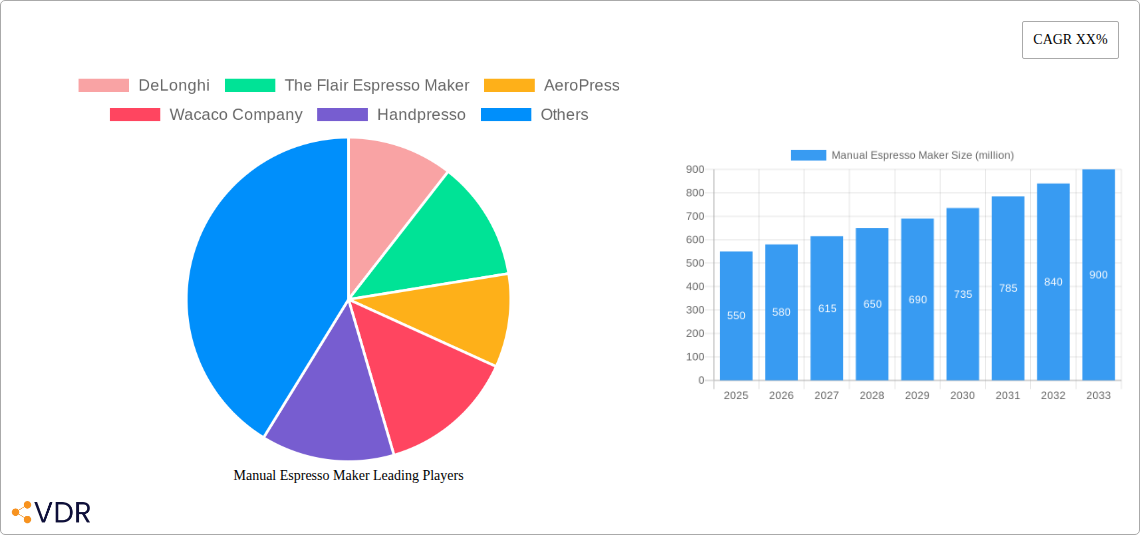
Manual Espresso Maker Market Size (In Million)

The manual espresso maker market is segmented into Household and Office applications, with the Household segment dominating due to the widespread adoption of home coffee culture. Within product types, both "Below 3 Cups Capacity" and "Above 3 Cups Capacity" segments are witnessing demand, catering to individual users and small gatherings, respectively. Geographically, the Asia Pacific region, particularly China and India, is emerging as a high-growth area, driven by rapid urbanization and a burgeoning middle class with a taste for premium coffee. Europe and North America remain mature yet significant markets, characterized by a discerning consumer base prioritizing quality and convenience. However, certain restraints such as the perceived complexity for novice users and competition from increasingly affordable semi-automatic machines could temper the growth trajectory. Nevertheless, the sustained demand for authentic espresso and the inherent sustainability and control offered by manual brewing are expected to propel the market forward.
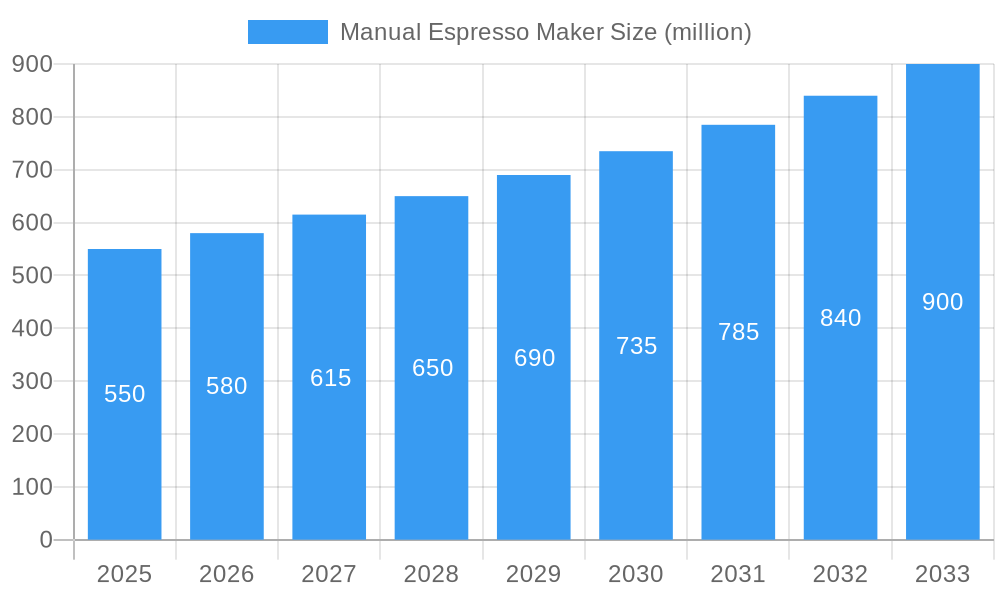
Manual Espresso Maker Company Market Share
Report Title: Manual Espresso Maker Market Analysis & Forecast: Trends, Drivers, and Opportunities (2019-2033)
This comprehensive report offers an in-depth analysis of the global manual espresso maker market, providing actionable insights for industry stakeholders. Leveraging extensive market data and expert analysis, we explore the intricate dynamics, growth trajectories, and future potential of this evolving sector.
Manual Espresso Maker Market Dynamics & Structure
The manual espresso maker market exhibits a moderately concentrated structure, characterized by a blend of established giants and innovative niche players. Technological innovation serves as a significant driver, with advancements in material science, brewing mechanics, and portability continuously shaping product offerings. Regulatory frameworks, while generally permissive, may influence product safety standards and import/export regulations across different regions. Competitive product substitutes, including automatic espresso machines, pod-based systems, and even advanced drip coffee makers, present a constant challenge, necessitating differentiation through superior performance, user experience, and aesthetic appeal. End-user demographics are increasingly diverse, encompassing both novice home baristas and experienced enthusiasts seeking artisanal control over their espresso extraction. Mergers and acquisitions (M&A) are present, albeit at a lower volume than in more mature appliance markets, often driven by companies seeking to acquire specific technological expertise or expand their distribution networks. The market share of leading manual espresso maker manufacturers is estimated to be around 15-20 million units annually, with the top 5-7 players holding a collective share of approximately 60-70%. Innovation barriers include the inherent complexity of achieving consistent, high-quality espresso extraction with manual control and the cost associated with advanced material development.
Manual Espresso Maker Growth Trends & Insights
The manual espresso maker market is poised for robust growth, fueled by an escalating consumer appreciation for artisanal coffee experiences and the desire for greater control over brewing parameters. The global market size for manual espresso makers is projected to expand from approximately 45 million units in 2019 to over 70 million units by 2033, exhibiting a Compound Annual Growth Rate (CAGR) of around 3.5%. Adoption rates are steadily increasing, particularly within the household segment, as consumers seek to replicate café-quality beverages at home, driven by a combination of cost savings and personalized taste preferences. Technological disruptions are manifesting in innovative designs that enhance ease of use, improve thermal stability, and offer greater pressure control, thereby widening the appeal beyond seasoned enthusiasts. Consumer behavior shifts are evident in the growing demand for portable, durable, and aesthetically pleasing manual espresso makers, reflecting an active lifestyle and a desire for premium at-home or on-the-go coffee solutions. Market penetration is expected to reach approximately 25% in developed economies by 2033, with emerging markets showing significant untapped potential. The increasing popularity of specialty coffee culture further bolsters the demand for manual espresso makers that allow for precise control over every variable of the brewing process.
Dominant Regions, Countries, or Segments in Manual Espresso Maker
The Household application segment, specifically for manual espresso makers with Below 3 Cups Capacity, is currently the dominant force driving market growth. This dominance is attributed to several key factors. Economically, the rising disposable incomes in developed and rapidly developing countries have empowered consumers to invest in premium kitchen appliances and specialty coffee equipment. Infrastructure development, while less critical than for commercial machines, plays a role in the availability of high-quality beans and related accessories, further supporting home brewing. Market share within this segment is substantial, estimated to account for over 65% of the total manual espresso maker market. The growth potential is immense as more households embrace the concept of home baristas and seek to elevate their daily coffee ritual.
Key drivers for this dominance include:
- Cost-Effectiveness: Manual espresso makers offer a more affordable entry point into the world of espresso compared to their automatic counterparts, making them accessible to a broader demographic.
- Control and Customization: Consumers are increasingly valuing the ability to meticulously control every aspect of the espresso brewing process, from grind size and dose to water temperature and pressure.
- Portability and Compactness: Many manual espresso makers are designed for portability, appealing to travelers, outdoor enthusiasts, and those with limited kitchen space.
- Specialty Coffee Culture: The growing global appreciation for specialty coffee and its intricate flavor profiles drives demand for tools that allow for precise extraction and experimentation.
In terms of types, manual espresso makers with a capacity of Below 3 Cups are particularly favored due to their suitability for individual servings and small households. This aligns with the trend of personalized consumption and reduced waste. The market share for this sub-segment is estimated to be around 55 million units in 2025, with a projected CAGR of 4.2% over the forecast period.
Manual Espresso Maker Product Landscape
The manual espresso maker product landscape is characterized by continuous innovation aimed at enhancing user experience, brew quality, and durability. Companies like Flair Espresso Maker and Wacaco Company are at the forefront, introducing groundbreaking designs that optimize pressure application and thermal stability, leading to superior espresso extraction. AeroPress, renowned for its versatility, continues to evolve its offerings with accessories that cater to a wider range of brewing preferences. Staresso and Handpresso are pushing the boundaries of portability and ease of use, making artisanal espresso accessible in diverse settings. Performance metrics such as consistent pressure, temperature retention, and minimal heat loss are key differentiators. Unique selling propositions often revolve around achieving cafe-quality espresso with minimal components, fostering a deeper connection between the user and the brewing process.
Key Drivers, Barriers & Challenges in Manual Espresso Maker
Key Drivers: The primary forces propelling the manual espresso maker market include the burgeoning specialty coffee culture, increasing consumer demand for personalized at-home coffee experiences, and the inherent affordability and portability of these devices. Technological advancements in material science and brewing mechanics, leading to improved espresso quality, also act as significant drivers. Economic factors such as rising disposable incomes in key markets further fuel demand.
Key Barriers & Challenges: Despite the positive outlook, the market faces several challenges. Supply chain disruptions, particularly for specialized components, can impact production volumes and lead times. Regulatory hurdles related to material safety and international trade can add complexity. Intense competition from the rapidly growing automatic espresso machine segment and even advanced pod-based systems presents a significant challenge, as does the learning curve associated with mastering manual espresso brewing techniques, which can deter some potential consumers.
Emerging Opportunities in Manual Espresso Maker
Emerging opportunities lie in the development of smart manual espresso makers that integrate digital assistance for brewing guidance, the expansion into emerging markets with tailored product offerings, and the creation of sustainable and eco-friendly manual espresso maker options. Furthermore, targeting specific niche markets, such as outdoor adventure enthusiasts or compact urban living segments, presents untapped potential. Collaborations with specialty coffee roasters for bundled offerings and educational content also represent a significant growth avenue.
Growth Accelerators in the Manual Espresso Maker Industry
Growth accelerators in the manual espresso maker industry are predominantly driven by technological breakthroughs that simplify the brewing process while maintaining high quality, such as improved pressure profiling systems and enhanced thermal regulation. Strategic partnerships between manual espresso maker manufacturers and specialty coffee roasters or lifestyle brands can significantly expand market reach and brand visibility. Furthermore, aggressive market expansion strategies targeting developing economies, coupled with localized product development and marketing efforts, are poised to catalyze long-term growth. The increasing focus on experiential consumption and the desire for hands-on craftsmanship in everyday activities also act as powerful accelerators.
Key Players Shaping the Manual Espresso Maker Market
- DeLonghi
- The Flair Espresso Maker
- AeroPress
- Wacaco Company
- Handpresso
- Philips
- La Marzocco
- Presso
- Nuova Simonelli
- Panasonic
- Bosch
- Staresso
Notable Milestones in Manual Espresso Maker Sector
- 2019: Increased consumer adoption of manual espresso makers for home use driven by specialty coffee trends.
- 2020: Launch of innovative portable manual espresso maker designs, enhancing market reach beyond traditional home users.
- 2021: Growing online communities and forums dedicated to manual espresso brewing, fostering knowledge sharing and brand engagement.
- 2022: Introduction of advanced material science in key components, improving durability and heat retention.
- 2023: Significant investment in research and development by leading players to enhance user experience and brew consistency.
- 2024: Expansion of distribution networks into emerging markets, catering to a growing middle class interested in premium coffee experiences.
In-Depth Manual Espresso Maker Market Outlook
The manual espresso maker market is characterized by a promising outlook, driven by sustained consumer interest in artisanal coffee and personalized brewing experiences. Future growth will be significantly accelerated by continuous technological innovation that bridges the gap between manual control and user-friendliness, alongside strategic market expansions into regions with burgeoning coffee cultures. The increasing demand for sustainable and portable coffee solutions presents considerable untapped potential, positioning the market for robust expansion and enduring relevance in the global beverage appliance landscape.
Manual Espresso Maker Segmentation
-
1. Application
- 1.1. Household
- 1.2. Office
- 1.3. Others
-
2. Types
- 2.1. Below 3 Cups Capacity
- 2.2. Above 3 Cups Capacity
Manual Espresso Maker Segmentation By Geography
-
1. North America
- 1.1. United States
- 1.2. Canada
- 1.3. Mexico
-
2. South America
- 2.1. Brazil
- 2.2. Argentina
- 2.3. Rest of South America
-
3. Europe
- 3.1. United Kingdom
- 3.2. Germany
- 3.3. France
- 3.4. Italy
- 3.5. Spain
- 3.6. Russia
- 3.7. Benelux
- 3.8. Nordics
- 3.9. Rest of Europe
-
4. Middle East & Africa
- 4.1. Turkey
- 4.2. Israel
- 4.3. GCC
- 4.4. North Africa
- 4.5. South Africa
- 4.6. Rest of Middle East & Africa
-
5. Asia Pacific
- 5.1. China
- 5.2. India
- 5.3. Japan
- 5.4. South Korea
- 5.5. ASEAN
- 5.6. Oceania
- 5.7. Rest of Asia Pacific
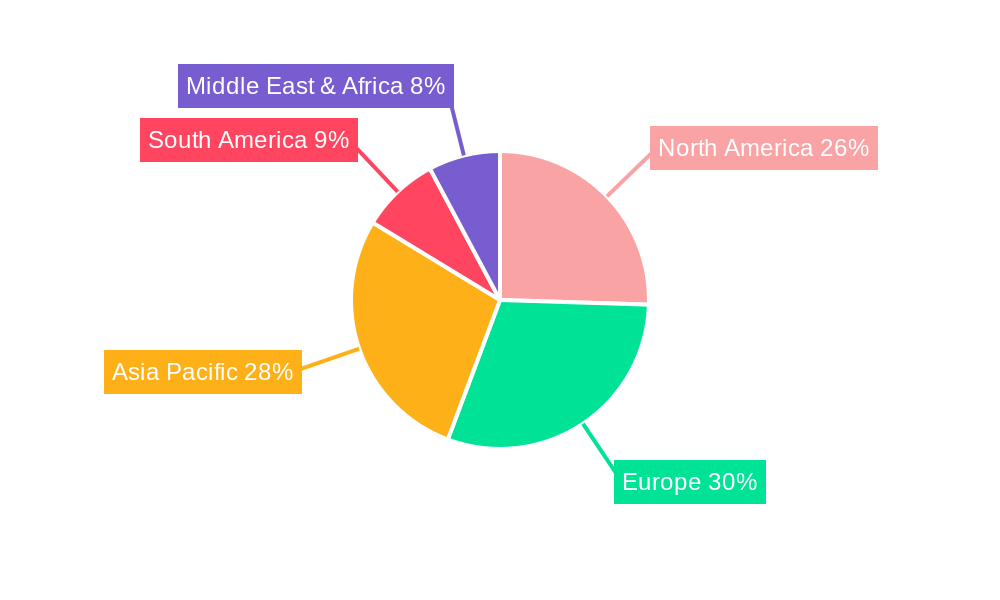
Manual Espresso Maker Regional Market Share
Geographic Coverage of Manual Espresso Maker
Manual Espresso Maker REPORT HIGHLIGHTS
| Aspects | Details |
|---|---|
| Study Period | 2020-2034 |
| Base Year | 2025 |
| Estimated Year | 2026 |
| Forecast Period | 2026-2034 |
| Historical Period | 2020-2025 |
| Growth Rate | CAGR of 6.5% from 2020-2034 |
| Segmentation |
|
Table of Contents
- 1. Introduction
- 1.1. Research Scope
- 1.2. Market Segmentation
- 1.3. Research Methodology
- 1.4. Definitions and Assumptions
- 2. Executive Summary
- 2.1. Introduction
- 3. Market Dynamics
- 3.1. Introduction
- 3.2. Market Drivers
- 3.3. Market Restrains
- 3.4. Market Trends
- 4. Market Factor Analysis
- 4.1. Porters Five Forces
- 4.2. Supply/Value Chain
- 4.3. PESTEL analysis
- 4.4. Market Entropy
- 4.5. Patent/Trademark Analysis
- 5. Global Manual Espresso Maker Analysis, Insights and Forecast, 2020-2032
- 5.1. Market Analysis, Insights and Forecast - by Application
- 5.1.1. Household
- 5.1.2. Office
- 5.1.3. Others
- 5.2. Market Analysis, Insights and Forecast - by Types
- 5.2.1. Below 3 Cups Capacity
- 5.2.2. Above 3 Cups Capacity
- 5.3. Market Analysis, Insights and Forecast - by Region
- 5.3.1. North America
- 5.3.2. South America
- 5.3.3. Europe
- 5.3.4. Middle East & Africa
- 5.3.5. Asia Pacific
- 5.1. Market Analysis, Insights and Forecast - by Application
- 6. North America Manual Espresso Maker Analysis, Insights and Forecast, 2020-2032
- 6.1. Market Analysis, Insights and Forecast - by Application
- 6.1.1. Household
- 6.1.2. Office
- 6.1.3. Others
- 6.2. Market Analysis, Insights and Forecast - by Types
- 6.2.1. Below 3 Cups Capacity
- 6.2.2. Above 3 Cups Capacity
- 6.1. Market Analysis, Insights and Forecast - by Application
- 7. South America Manual Espresso Maker Analysis, Insights and Forecast, 2020-2032
- 7.1. Market Analysis, Insights and Forecast - by Application
- 7.1.1. Household
- 7.1.2. Office
- 7.1.3. Others
- 7.2. Market Analysis, Insights and Forecast - by Types
- 7.2.1. Below 3 Cups Capacity
- 7.2.2. Above 3 Cups Capacity
- 7.1. Market Analysis, Insights and Forecast - by Application
- 8. Europe Manual Espresso Maker Analysis, Insights and Forecast, 2020-2032
- 8.1. Market Analysis, Insights and Forecast - by Application
- 8.1.1. Household
- 8.1.2. Office
- 8.1.3. Others
- 8.2. Market Analysis, Insights and Forecast - by Types
- 8.2.1. Below 3 Cups Capacity
- 8.2.2. Above 3 Cups Capacity
- 8.1. Market Analysis, Insights and Forecast - by Application
- 9. Middle East & Africa Manual Espresso Maker Analysis, Insights and Forecast, 2020-2032
- 9.1. Market Analysis, Insights and Forecast - by Application
- 9.1.1. Household
- 9.1.2. Office
- 9.1.3. Others
- 9.2. Market Analysis, Insights and Forecast - by Types
- 9.2.1. Below 3 Cups Capacity
- 9.2.2. Above 3 Cups Capacity
- 9.1. Market Analysis, Insights and Forecast - by Application
- 10. Asia Pacific Manual Espresso Maker Analysis, Insights and Forecast, 2020-2032
- 10.1. Market Analysis, Insights and Forecast - by Application
- 10.1.1. Household
- 10.1.2. Office
- 10.1.3. Others
- 10.2. Market Analysis, Insights and Forecast - by Types
- 10.2.1. Below 3 Cups Capacity
- 10.2.2. Above 3 Cups Capacity
- 10.1. Market Analysis, Insights and Forecast - by Application
- 11. Competitive Analysis
- 11.1. Global Market Share Analysis 2025
- 11.2. Company Profiles
- 11.2.1 DeLonghi
- 11.2.1.1. Overview
- 11.2.1.2. Products
- 11.2.1.3. SWOT Analysis
- 11.2.1.4. Recent Developments
- 11.2.1.5. Financials (Based on Availability)
- 11.2.2 The Flair Espresso Maker
- 11.2.2.1. Overview
- 11.2.2.2. Products
- 11.2.2.3. SWOT Analysis
- 11.2.2.4. Recent Developments
- 11.2.2.5. Financials (Based on Availability)
- 11.2.3 AeroPress
- 11.2.3.1. Overview
- 11.2.3.2. Products
- 11.2.3.3. SWOT Analysis
- 11.2.3.4. Recent Developments
- 11.2.3.5. Financials (Based on Availability)
- 11.2.4 Wacaco Company
- 11.2.4.1. Overview
- 11.2.4.2. Products
- 11.2.4.3. SWOT Analysis
- 11.2.4.4. Recent Developments
- 11.2.4.5. Financials (Based on Availability)
- 11.2.5 Handpresso
- 11.2.5.1. Overview
- 11.2.5.2. Products
- 11.2.5.3. SWOT Analysis
- 11.2.5.4. Recent Developments
- 11.2.5.5. Financials (Based on Availability)
- 11.2.6 Philips
- 11.2.6.1. Overview
- 11.2.6.2. Products
- 11.2.6.3. SWOT Analysis
- 11.2.6.4. Recent Developments
- 11.2.6.5. Financials (Based on Availability)
- 11.2.7 La Marzocco
- 11.2.7.1. Overview
- 11.2.7.2. Products
- 11.2.7.3. SWOT Analysis
- 11.2.7.4. Recent Developments
- 11.2.7.5. Financials (Based on Availability)
- 11.2.8 Presso
- 11.2.8.1. Overview
- 11.2.8.2. Products
- 11.2.8.3. SWOT Analysis
- 11.2.8.4. Recent Developments
- 11.2.8.5. Financials (Based on Availability)
- 11.2.9 Nuova Simonelli
- 11.2.9.1. Overview
- 11.2.9.2. Products
- 11.2.9.3. SWOT Analysis
- 11.2.9.4. Recent Developments
- 11.2.9.5. Financials (Based on Availability)
- 11.2.10 Panasonic
- 11.2.10.1. Overview
- 11.2.10.2. Products
- 11.2.10.3. SWOT Analysis
- 11.2.10.4. Recent Developments
- 11.2.10.5. Financials (Based on Availability)
- 11.2.11 Bosch
- 11.2.11.1. Overview
- 11.2.11.2. Products
- 11.2.11.3. SWOT Analysis
- 11.2.11.4. Recent Developments
- 11.2.11.5. Financials (Based on Availability)
- 11.2.12 Staresso
- 11.2.12.1. Overview
- 11.2.12.2. Products
- 11.2.12.3. SWOT Analysis
- 11.2.12.4. Recent Developments
- 11.2.12.5. Financials (Based on Availability)
- 11.2.1 DeLonghi
List of Figures
- Figure 1: Global Manual Espresso Maker Revenue Breakdown (undefined, %) by Region 2025 & 2033
- Figure 2: Global Manual Espresso Maker Volume Breakdown (K, %) by Region 2025 & 2033
- Figure 3: North America Manual Espresso Maker Revenue (undefined), by Application 2025 & 2033
- Figure 4: North America Manual Espresso Maker Volume (K), by Application 2025 & 2033
- Figure 5: North America Manual Espresso Maker Revenue Share (%), by Application 2025 & 2033
- Figure 6: North America Manual Espresso Maker Volume Share (%), by Application 2025 & 2033
- Figure 7: North America Manual Espresso Maker Revenue (undefined), by Types 2025 & 2033
- Figure 8: North America Manual Espresso Maker Volume (K), by Types 2025 & 2033
- Figure 9: North America Manual Espresso Maker Revenue Share (%), by Types 2025 & 2033
- Figure 10: North America Manual Espresso Maker Volume Share (%), by Types 2025 & 2033
- Figure 11: North America Manual Espresso Maker Revenue (undefined), by Country 2025 & 2033
- Figure 12: North America Manual Espresso Maker Volume (K), by Country 2025 & 2033
- Figure 13: North America Manual Espresso Maker Revenue Share (%), by Country 2025 & 2033
- Figure 14: North America Manual Espresso Maker Volume Share (%), by Country 2025 & 2033
- Figure 15: South America Manual Espresso Maker Revenue (undefined), by Application 2025 & 2033
- Figure 16: South America Manual Espresso Maker Volume (K), by Application 2025 & 2033
- Figure 17: South America Manual Espresso Maker Revenue Share (%), by Application 2025 & 2033
- Figure 18: South America Manual Espresso Maker Volume Share (%), by Application 2025 & 2033
- Figure 19: South America Manual Espresso Maker Revenue (undefined), by Types 2025 & 2033
- Figure 20: South America Manual Espresso Maker Volume (K), by Types 2025 & 2033
- Figure 21: South America Manual Espresso Maker Revenue Share (%), by Types 2025 & 2033
- Figure 22: South America Manual Espresso Maker Volume Share (%), by Types 2025 & 2033
- Figure 23: South America Manual Espresso Maker Revenue (undefined), by Country 2025 & 2033
- Figure 24: South America Manual Espresso Maker Volume (K), by Country 2025 & 2033
- Figure 25: South America Manual Espresso Maker Revenue Share (%), by Country 2025 & 2033
- Figure 26: South America Manual Espresso Maker Volume Share (%), by Country 2025 & 2033
- Figure 27: Europe Manual Espresso Maker Revenue (undefined), by Application 2025 & 2033
- Figure 28: Europe Manual Espresso Maker Volume (K), by Application 2025 & 2033
- Figure 29: Europe Manual Espresso Maker Revenue Share (%), by Application 2025 & 2033
- Figure 30: Europe Manual Espresso Maker Volume Share (%), by Application 2025 & 2033
- Figure 31: Europe Manual Espresso Maker Revenue (undefined), by Types 2025 & 2033
- Figure 32: Europe Manual Espresso Maker Volume (K), by Types 2025 & 2033
- Figure 33: Europe Manual Espresso Maker Revenue Share (%), by Types 2025 & 2033
- Figure 34: Europe Manual Espresso Maker Volume Share (%), by Types 2025 & 2033
- Figure 35: Europe Manual Espresso Maker Revenue (undefined), by Country 2025 & 2033
- Figure 36: Europe Manual Espresso Maker Volume (K), by Country 2025 & 2033
- Figure 37: Europe Manual Espresso Maker Revenue Share (%), by Country 2025 & 2033
- Figure 38: Europe Manual Espresso Maker Volume Share (%), by Country 2025 & 2033
- Figure 39: Middle East & Africa Manual Espresso Maker Revenue (undefined), by Application 2025 & 2033
- Figure 40: Middle East & Africa Manual Espresso Maker Volume (K), by Application 2025 & 2033
- Figure 41: Middle East & Africa Manual Espresso Maker Revenue Share (%), by Application 2025 & 2033
- Figure 42: Middle East & Africa Manual Espresso Maker Volume Share (%), by Application 2025 & 2033
- Figure 43: Middle East & Africa Manual Espresso Maker Revenue (undefined), by Types 2025 & 2033
- Figure 44: Middle East & Africa Manual Espresso Maker Volume (K), by Types 2025 & 2033
- Figure 45: Middle East & Africa Manual Espresso Maker Revenue Share (%), by Types 2025 & 2033
- Figure 46: Middle East & Africa Manual Espresso Maker Volume Share (%), by Types 2025 & 2033
- Figure 47: Middle East & Africa Manual Espresso Maker Revenue (undefined), by Country 2025 & 2033
- Figure 48: Middle East & Africa Manual Espresso Maker Volume (K), by Country 2025 & 2033
- Figure 49: Middle East & Africa Manual Espresso Maker Revenue Share (%), by Country 2025 & 2033
- Figure 50: Middle East & Africa Manual Espresso Maker Volume Share (%), by Country 2025 & 2033
- Figure 51: Asia Pacific Manual Espresso Maker Revenue (undefined), by Application 2025 & 2033
- Figure 52: Asia Pacific Manual Espresso Maker Volume (K), by Application 2025 & 2033
- Figure 53: Asia Pacific Manual Espresso Maker Revenue Share (%), by Application 2025 & 2033
- Figure 54: Asia Pacific Manual Espresso Maker Volume Share (%), by Application 2025 & 2033
- Figure 55: Asia Pacific Manual Espresso Maker Revenue (undefined), by Types 2025 & 2033
- Figure 56: Asia Pacific Manual Espresso Maker Volume (K), by Types 2025 & 2033
- Figure 57: Asia Pacific Manual Espresso Maker Revenue Share (%), by Types 2025 & 2033
- Figure 58: Asia Pacific Manual Espresso Maker Volume Share (%), by Types 2025 & 2033
- Figure 59: Asia Pacific Manual Espresso Maker Revenue (undefined), by Country 2025 & 2033
- Figure 60: Asia Pacific Manual Espresso Maker Volume (K), by Country 2025 & 2033
- Figure 61: Asia Pacific Manual Espresso Maker Revenue Share (%), by Country 2025 & 2033
- Figure 62: Asia Pacific Manual Espresso Maker Volume Share (%), by Country 2025 & 2033
List of Tables
- Table 1: Global Manual Espresso Maker Revenue undefined Forecast, by Application 2020 & 2033
- Table 2: Global Manual Espresso Maker Volume K Forecast, by Application 2020 & 2033
- Table 3: Global Manual Espresso Maker Revenue undefined Forecast, by Types 2020 & 2033
- Table 4: Global Manual Espresso Maker Volume K Forecast, by Types 2020 & 2033
- Table 5: Global Manual Espresso Maker Revenue undefined Forecast, by Region 2020 & 2033
- Table 6: Global Manual Espresso Maker Volume K Forecast, by Region 2020 & 2033
- Table 7: Global Manual Espresso Maker Revenue undefined Forecast, by Application 2020 & 2033
- Table 8: Global Manual Espresso Maker Volume K Forecast, by Application 2020 & 2033
- Table 9: Global Manual Espresso Maker Revenue undefined Forecast, by Types 2020 & 2033
- Table 10: Global Manual Espresso Maker Volume K Forecast, by Types 2020 & 2033
- Table 11: Global Manual Espresso Maker Revenue undefined Forecast, by Country 2020 & 2033
- Table 12: Global Manual Espresso Maker Volume K Forecast, by Country 2020 & 2033
- Table 13: United States Manual Espresso Maker Revenue (undefined) Forecast, by Application 2020 & 2033
- Table 14: United States Manual Espresso Maker Volume (K) Forecast, by Application 2020 & 2033
- Table 15: Canada Manual Espresso Maker Revenue (undefined) Forecast, by Application 2020 & 2033
- Table 16: Canada Manual Espresso Maker Volume (K) Forecast, by Application 2020 & 2033
- Table 17: Mexico Manual Espresso Maker Revenue (undefined) Forecast, by Application 2020 & 2033
- Table 18: Mexico Manual Espresso Maker Volume (K) Forecast, by Application 2020 & 2033
- Table 19: Global Manual Espresso Maker Revenue undefined Forecast, by Application 2020 & 2033
- Table 20: Global Manual Espresso Maker Volume K Forecast, by Application 2020 & 2033
- Table 21: Global Manual Espresso Maker Revenue undefined Forecast, by Types 2020 & 2033
- Table 22: Global Manual Espresso Maker Volume K Forecast, by Types 2020 & 2033
- Table 23: Global Manual Espresso Maker Revenue undefined Forecast, by Country 2020 & 2033
- Table 24: Global Manual Espresso Maker Volume K Forecast, by Country 2020 & 2033
- Table 25: Brazil Manual Espresso Maker Revenue (undefined) Forecast, by Application 2020 & 2033
- Table 26: Brazil Manual Espresso Maker Volume (K) Forecast, by Application 2020 & 2033
- Table 27: Argentina Manual Espresso Maker Revenue (undefined) Forecast, by Application 2020 & 2033
- Table 28: Argentina Manual Espresso Maker Volume (K) Forecast, by Application 2020 & 2033
- Table 29: Rest of South America Manual Espresso Maker Revenue (undefined) Forecast, by Application 2020 & 2033
- Table 30: Rest of South America Manual Espresso Maker Volume (K) Forecast, by Application 2020 & 2033
- Table 31: Global Manual Espresso Maker Revenue undefined Forecast, by Application 2020 & 2033
- Table 32: Global Manual Espresso Maker Volume K Forecast, by Application 2020 & 2033
- Table 33: Global Manual Espresso Maker Revenue undefined Forecast, by Types 2020 & 2033
- Table 34: Global Manual Espresso Maker Volume K Forecast, by Types 2020 & 2033
- Table 35: Global Manual Espresso Maker Revenue undefined Forecast, by Country 2020 & 2033
- Table 36: Global Manual Espresso Maker Volume K Forecast, by Country 2020 & 2033
- Table 37: United Kingdom Manual Espresso Maker Revenue (undefined) Forecast, by Application 2020 & 2033
- Table 38: United Kingdom Manual Espresso Maker Volume (K) Forecast, by Application 2020 & 2033
- Table 39: Germany Manual Espresso Maker Revenue (undefined) Forecast, by Application 2020 & 2033
- Table 40: Germany Manual Espresso Maker Volume (K) Forecast, by Application 2020 & 2033
- Table 41: France Manual Espresso Maker Revenue (undefined) Forecast, by Application 2020 & 2033
- Table 42: France Manual Espresso Maker Volume (K) Forecast, by Application 2020 & 2033
- Table 43: Italy Manual Espresso Maker Revenue (undefined) Forecast, by Application 2020 & 2033
- Table 44: Italy Manual Espresso Maker Volume (K) Forecast, by Application 2020 & 2033
- Table 45: Spain Manual Espresso Maker Revenue (undefined) Forecast, by Application 2020 & 2033
- Table 46: Spain Manual Espresso Maker Volume (K) Forecast, by Application 2020 & 2033
- Table 47: Russia Manual Espresso Maker Revenue (undefined) Forecast, by Application 2020 & 2033
- Table 48: Russia Manual Espresso Maker Volume (K) Forecast, by Application 2020 & 2033
- Table 49: Benelux Manual Espresso Maker Revenue (undefined) Forecast, by Application 2020 & 2033
- Table 50: Benelux Manual Espresso Maker Volume (K) Forecast, by Application 2020 & 2033
- Table 51: Nordics Manual Espresso Maker Revenue (undefined) Forecast, by Application 2020 & 2033
- Table 52: Nordics Manual Espresso Maker Volume (K) Forecast, by Application 2020 & 2033
- Table 53: Rest of Europe Manual Espresso Maker Revenue (undefined) Forecast, by Application 2020 & 2033
- Table 54: Rest of Europe Manual Espresso Maker Volume (K) Forecast, by Application 2020 & 2033
- Table 55: Global Manual Espresso Maker Revenue undefined Forecast, by Application 2020 & 2033
- Table 56: Global Manual Espresso Maker Volume K Forecast, by Application 2020 & 2033
- Table 57: Global Manual Espresso Maker Revenue undefined Forecast, by Types 2020 & 2033
- Table 58: Global Manual Espresso Maker Volume K Forecast, by Types 2020 & 2033
- Table 59: Global Manual Espresso Maker Revenue undefined Forecast, by Country 2020 & 2033
- Table 60: Global Manual Espresso Maker Volume K Forecast, by Country 2020 & 2033
- Table 61: Turkey Manual Espresso Maker Revenue (undefined) Forecast, by Application 2020 & 2033
- Table 62: Turkey Manual Espresso Maker Volume (K) Forecast, by Application 2020 & 2033
- Table 63: Israel Manual Espresso Maker Revenue (undefined) Forecast, by Application 2020 & 2033
- Table 64: Israel Manual Espresso Maker Volume (K) Forecast, by Application 2020 & 2033
- Table 65: GCC Manual Espresso Maker Revenue (undefined) Forecast, by Application 2020 & 2033
- Table 66: GCC Manual Espresso Maker Volume (K) Forecast, by Application 2020 & 2033
- Table 67: North Africa Manual Espresso Maker Revenue (undefined) Forecast, by Application 2020 & 2033
- Table 68: North Africa Manual Espresso Maker Volume (K) Forecast, by Application 2020 & 2033
- Table 69: South Africa Manual Espresso Maker Revenue (undefined) Forecast, by Application 2020 & 2033
- Table 70: South Africa Manual Espresso Maker Volume (K) Forecast, by Application 2020 & 2033
- Table 71: Rest of Middle East & Africa Manual Espresso Maker Revenue (undefined) Forecast, by Application 2020 & 2033
- Table 72: Rest of Middle East & Africa Manual Espresso Maker Volume (K) Forecast, by Application 2020 & 2033
- Table 73: Global Manual Espresso Maker Revenue undefined Forecast, by Application 2020 & 2033
- Table 74: Global Manual Espresso Maker Volume K Forecast, by Application 2020 & 2033
- Table 75: Global Manual Espresso Maker Revenue undefined Forecast, by Types 2020 & 2033
- Table 76: Global Manual Espresso Maker Volume K Forecast, by Types 2020 & 2033
- Table 77: Global Manual Espresso Maker Revenue undefined Forecast, by Country 2020 & 2033
- Table 78: Global Manual Espresso Maker Volume K Forecast, by Country 2020 & 2033
- Table 79: China Manual Espresso Maker Revenue (undefined) Forecast, by Application 2020 & 2033
- Table 80: China Manual Espresso Maker Volume (K) Forecast, by Application 2020 & 2033
- Table 81: India Manual Espresso Maker Revenue (undefined) Forecast, by Application 2020 & 2033
- Table 82: India Manual Espresso Maker Volume (K) Forecast, by Application 2020 & 2033
- Table 83: Japan Manual Espresso Maker Revenue (undefined) Forecast, by Application 2020 & 2033
- Table 84: Japan Manual Espresso Maker Volume (K) Forecast, by Application 2020 & 2033
- Table 85: South Korea Manual Espresso Maker Revenue (undefined) Forecast, by Application 2020 & 2033
- Table 86: South Korea Manual Espresso Maker Volume (K) Forecast, by Application 2020 & 2033
- Table 87: ASEAN Manual Espresso Maker Revenue (undefined) Forecast, by Application 2020 & 2033
- Table 88: ASEAN Manual Espresso Maker Volume (K) Forecast, by Application 2020 & 2033
- Table 89: Oceania Manual Espresso Maker Revenue (undefined) Forecast, by Application 2020 & 2033
- Table 90: Oceania Manual Espresso Maker Volume (K) Forecast, by Application 2020 & 2033
- Table 91: Rest of Asia Pacific Manual Espresso Maker Revenue (undefined) Forecast, by Application 2020 & 2033
- Table 92: Rest of Asia Pacific Manual Espresso Maker Volume (K) Forecast, by Application 2020 & 2033
Frequently Asked Questions
1. What is the projected Compound Annual Growth Rate (CAGR) of the Manual Espresso Maker?
The projected CAGR is approximately 6.5%.
2. Which companies are prominent players in the Manual Espresso Maker?
Key companies in the market include DeLonghi, The Flair Espresso Maker, AeroPress, Wacaco Company, Handpresso, Philips, La Marzocco, Presso, Nuova Simonelli, Panasonic, Bosch, Staresso.
3. What are the main segments of the Manual Espresso Maker?
The market segments include Application, Types.
4. Can you provide details about the market size?
The market size is estimated to be USD XXX N/A as of 2022.
5. What are some drivers contributing to market growth?
N/A
6. What are the notable trends driving market growth?
N/A
7. Are there any restraints impacting market growth?
N/A
8. Can you provide examples of recent developments in the market?
N/A
9. What pricing options are available for accessing the report?
Pricing options include single-user, multi-user, and enterprise licenses priced at USD 3350.00, USD 5025.00, and USD 6700.00 respectively.
10. Is the market size provided in terms of value or volume?
The market size is provided in terms of value, measured in N/A and volume, measured in K.
11. Are there any specific market keywords associated with the report?
Yes, the market keyword associated with the report is "Manual Espresso Maker," which aids in identifying and referencing the specific market segment covered.
12. How do I determine which pricing option suits my needs best?
The pricing options vary based on user requirements and access needs. Individual users may opt for single-user licenses, while businesses requiring broader access may choose multi-user or enterprise licenses for cost-effective access to the report.
13. Are there any additional resources or data provided in the Manual Espresso Maker report?
While the report offers comprehensive insights, it's advisable to review the specific contents or supplementary materials provided to ascertain if additional resources or data are available.
14. How can I stay updated on further developments or reports in the Manual Espresso Maker?
To stay informed about further developments, trends, and reports in the Manual Espresso Maker, consider subscribing to industry newsletters, following relevant companies and organizations, or regularly checking reputable industry news sources and publications.
Methodology
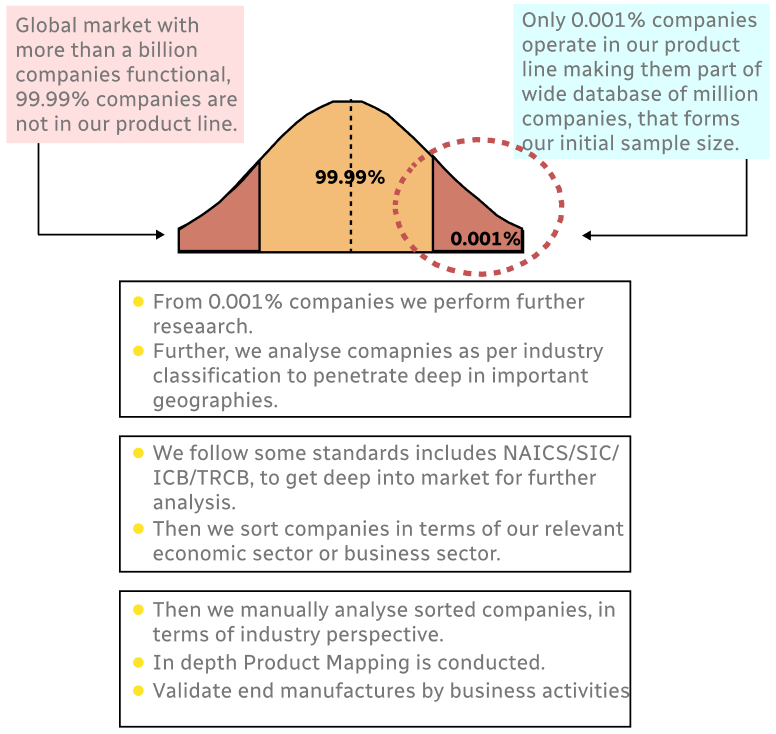
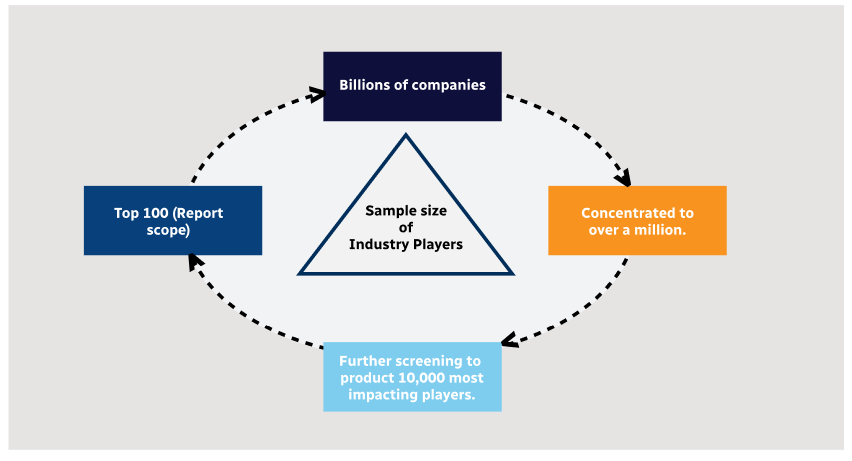
Step 1 - Identification of Relevant Samples Size from Population Database
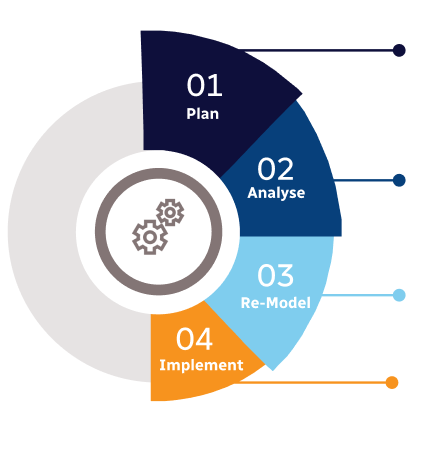
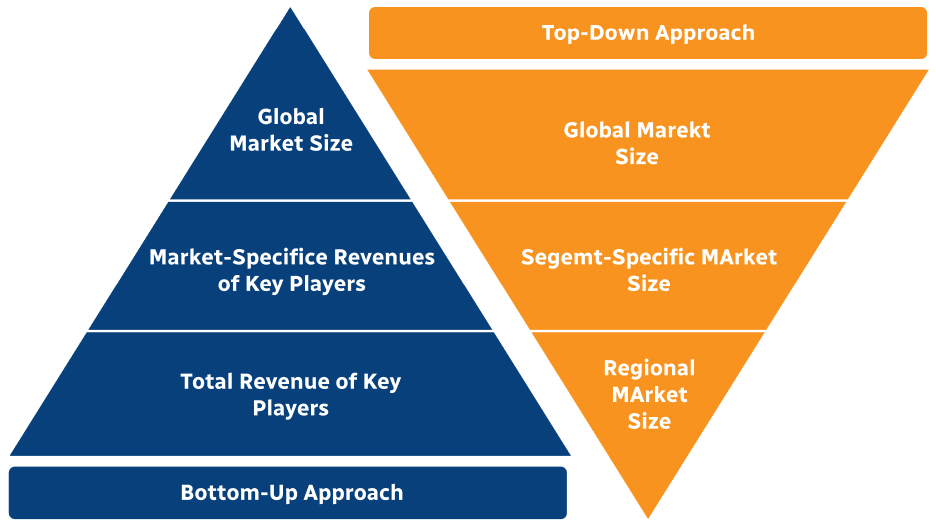
Step 2 - Approaches for Defining Global Market Size (Value, Volume* & Price*)
Note*: In applicable scenarios
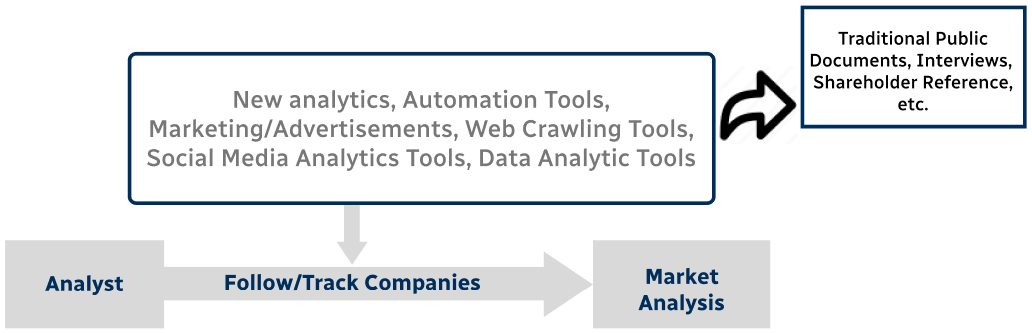
Step 3 - Data Sources
Primary Research
- Web Analytics
- Survey Reports
- Research Institute
- Latest Research Reports
- Opinion Leaders
Secondary Research
- Annual Reports
- White Paper
- Latest Press Release
- Industry Association
- Paid Database
- Investor Presentations
Step 4 - Data Triangulation
Involves using different sources of information in order to increase the validity of a study
These sources are likely to be stakeholders in a program - participants, other researchers, program staff, other community members, and so on.
Then we put all data in single framework & apply various statistical tools to find out the dynamic on the market.
During the analysis stage, feedback from the stakeholder groups would be compared to determine areas of agreement as well as areas of divergence