


Key Insights
The global Low Iron Ultra-White Photovoltaic Glass market is projected for substantial expansion, with an estimated market size of $53.5 billion in the base year 2024. This growth is anticipated to be driven by a Compound Annual Growth Rate (CAGR) of 7.9%, indicating a robust market trajectory. The primary impetus for this surge is the increasing global adoption of clean and renewable energy sources, with solar photovoltaic (PV) power generation systems being the key application. Supportive government policies and renewable energy targets worldwide are accelerating solar panel deployment, consequently boosting demand for high-performance photovoltaic glass. Technological advancements in glass manufacturing, yielding improved light transmittance and enhanced durability, further solidify the material's appeal in solar applications. The architectural glass curtain wall sector also contributes to market growth as sustainable building designs increasingly integrate solar energy solutions.
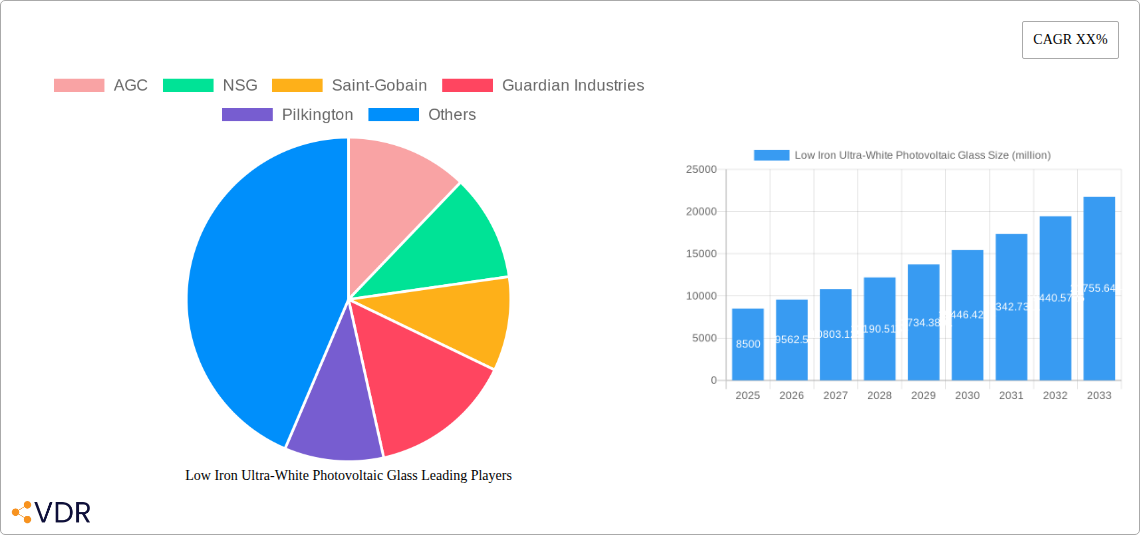
Low Iron Ultra-White Photovoltaic Glass Market Size (In Billion)

Key market trends include innovations in tempered low iron ultra-white photovoltaic glass, delivering superior performance and extended lifespan. The availability of half-sheet and stainless steel variants addresses specific application requirements and performance demands, broadening market opportunities. Potential challenges include raw material price volatility and the energy-intensive nature of glass production, which can affect manufacturing costs and environmental impact. Nevertheless, continuous research and development efforts focused on sustainable manufacturing processes and cost-efficient solutions are expected to counteract these restraints. The competitive environment comprises established global leaders such as AGC, NSG, and Saint-Gobain, alongside emerging regional manufacturers, all competing through product innovation and strategic alliances. Asia Pacific, particularly China and India, is identified as a pivotal growth region, driven by ambitious solar installation goals and expanding production capacities.
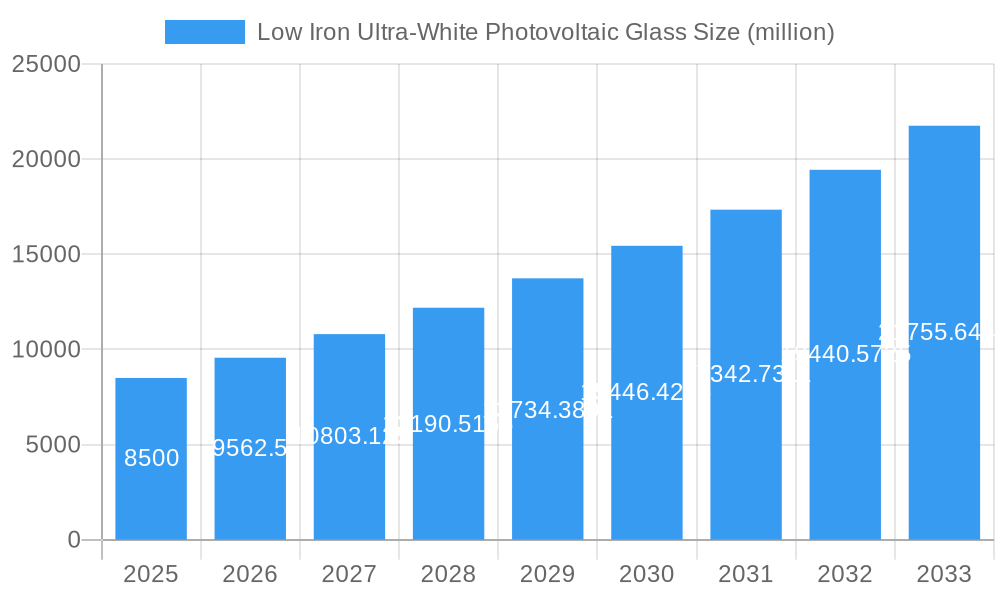
Low Iron Ultra-White Photovoltaic Glass Company Market Share
Low Iron Ultra-White Photovoltaic Glass Market Report: Comprehensive Analysis 2019-2033
This report offers an in-depth analysis of the global Low Iron Ultra-White Photovoltaic Glass market, providing critical insights for stakeholders within the solar energy, construction, and building materials industries. Covering the historical period of 2019-2024, the base year of 2025, and a forecast period extending to 2033, this study delivers a complete market picture. We dissect market dynamics, growth trends, regional dominance, product landscapes, key drivers, opportunities, and the competitive ecosystem, empowering strategic decision-making. The report is structured to provide actionable intelligence, focusing on the vital role of Low Iron Ultra-White Photovoltaic Glass in advancing renewable energy and sustainable building solutions.
Low Iron Ultra-White Photovoltaic Glass Market Dynamics & Structure
The global Low Iron Ultra-White Photovoltaic Glass market exhibits a moderately concentrated structure, characterized by the presence of several large, established players alongside a growing number of regional manufacturers. Technological innovation remains a primary driver, with ongoing research focused on enhancing light transmittance, durability, and cost-effectiveness of photovoltaic glass. Regulatory frameworks, particularly those promoting renewable energy adoption and stringent building efficiency standards, significantly influence market growth. Competitive product substitutes, such as standard float glass in less demanding applications or alternative thin-film solar technologies, pose a challenge, yet the superior performance of ultra-white glass in solar applications secures its premium positioning. End-user demographics are shifting towards environmentally conscious consumers and businesses, driving demand for sustainable energy solutions. Mergers and acquisitions (M&A) activity has been modest in recent years, with key players consolidating their market positions and expanding their technological capabilities.
- Market Concentration: Moderately concentrated, with top players holding substantial market share.
- Technological Innovation: Driven by advancements in glass manufacturing and solar cell efficiency.
- Regulatory Frameworks: Government incentives for solar energy, building codes mandating energy efficiency.
- Competitive Product Substitutes: Standard float glass, alternative solar technologies.
- End-User Demographics: Growing demand from environmentally conscious sectors.
- M&A Trends: Limited but strategic acquisitions aimed at expanding product portfolios and geographical reach.
Low Iron Ultra-White Photovoltaic Glass Growth Trends & Insights
The Low Iron Ultra-White Photovoltaic Glass market is poised for robust expansion, driven by the escalating global demand for renewable energy solutions and the increasing integration of solar technology into modern architecture. The market size for Low Iron Ultra-White Photovoltaic Glass is projected to grow from an estimated $8,500 million in the base year of 2025 to reach approximately $15,000 million by 2033, exhibiting a Compound Annual Growth Rate (CAGR) of around 7.5% during the forecast period of 2025-2033. This impressive growth trajectory is fueled by a confluence of factors, including supportive government policies, declining costs of solar energy systems, and a heightened awareness of climate change, all of which are accelerating the adoption rates of photovoltaic technologies.
Technological disruptions are continuously reshaping the landscape. Advancements in glass manufacturing processes are leading to higher light transmittance, improved durability, and reduced embodied carbon in ultra-white photovoltaic glass. These innovations are crucial for maximizing energy generation efficiency of solar panels, making them more attractive to both residential and commercial consumers. Furthermore, the development of advanced coating technologies, such as anti-reflective and self-cleaning coatings, is enhancing the performance and longevity of photovoltaic glass, further driving adoption.
Consumer behavior is also undergoing a significant shift. There is a palpable move towards sustainable living and a preference for products and services that minimize environmental impact. This translates into a growing demand for solar power generation systems, where Low Iron Ultra-White Photovoltaic Glass plays a critical role as the protective and light-transmitting layer. The aesthetic appeal and architectural integration capabilities of this specialized glass are also becoming increasingly important, particularly in the building-integrated photovoltaics (BIPV) segment. As urban populations grow and the need for efficient energy solutions intensifies, the market penetration of Low Iron Ultra-White Photovoltaic Glass is expected to deepen significantly across various applications.
Dominant Regions, Countries, or Segments in Low Iron Ultra-White Photovoltaic Glass
The Solar Photovoltaic Power Generation System segment stands as the dominant force driving growth within the Low Iron Ultra-White Photovoltaic Glass market. This segment is projected to account for over 70% of the total market revenue during the forecast period. The burgeoning global renewable energy transition, spurred by ambitious climate targets and the decreasing cost of solar electricity, directly fuels the demand for high-performance photovoltaic modules. Countries with strong governmental support for solar energy, such as China, the United States, and various European nations, are leading this charge.
Within this dominant application, the Tempered Low Iron Ultra-White Photovoltaic Glass type is particularly prominent. Its inherent strength, durability, and superior light transmission capabilities make it the go-to choice for most crystalline silicon photovoltaic panels, which currently hold the largest share of the solar market. The strict quality and safety requirements of the solar industry necessitate the use of tempered glass to withstand environmental stressors like wind, hail, and extreme temperatures.
Geographically, Asia Pacific is the leading region in the Low Iron Ultra-White Photovoltaic Glass market. This dominance is attributed to China's unparalleled manufacturing capacity for solar panels and its substantial domestic solar energy deployment. The region benefits from robust economic policies supporting renewable energy, significant investment in manufacturing infrastructure, and a large domestic market. The consistent increase in solar power generation capacity in countries like China, India, and Southeast Asian nations directly translates into substantial demand for photovoltaic glass.
- Dominant Application: Solar Photovoltaic Power Generation System, driven by global renewable energy mandates and cost competitiveness.
- Dominant Type: Tempered Low Iron Ultra-White Photovoltaic Glass, offering essential durability and light transmission for solar modules.
- Leading Region: Asia Pacific, primarily driven by China's manufacturing prowess and extensive solar deployments.
- Key Drivers in Dominant Segments:
- Economic Policies: Government subsidies, tax incentives, and renewable energy targets.
- Infrastructure Development: Expansion of solar farms and grid integration.
- Technological Advancements: Increased solar cell efficiency requiring high-performance glass.
- Cost Reductions: Decreasing levelized cost of electricity (LCOE) from solar.
- Environmental Awareness: Growing global commitment to decarbonization.
Low Iron Ultra-White Photovoltaic Glass Product Landscape
The Low Iron Ultra-White Photovoltaic Glass product landscape is characterized by continuous innovation aimed at maximizing energy capture and enhancing durability. Key product offerings include Tempered Low Iron Ultra-White Photovoltaic Glass, which forms the backbone of most solar panel constructions due to its inherent strength and high light transmittance, typically exceeding 91.5%. Tempered Half-Sheet Low Iron Ultra-White Photovoltaic Glass is gaining traction for its application in bifacial solar modules, optimizing light absorption from both sides. Products incorporating advanced coatings, such as anti-reflective (AR) coatings, are crucial for minimizing light loss and boosting energy yield by an estimated 2-3%. The market is also seeing advancements in glass with improved thermal performance and self-cleaning properties, further differentiating offerings and providing unique selling propositions for manufacturers seeking to cater to evolving performance demands in solar energy and architectural applications.
Key Drivers, Barriers & Challenges in Low Iron Ultra-White Photovoltaic Glass
The Low Iron Ultra-White Photovoltaic Glass market is propelled by several key drivers. The accelerating global transition towards renewable energy sources, driven by climate change concerns and government mandates for carbon emission reduction, is the primary catalyst. Technological advancements in solar cell efficiency, which require glass with higher light transmittance and durability, further boost demand. Supportive government policies, including tax incentives and subsidies for solar installations, directly impact market growth. Furthermore, the increasing integration of solar technology into architectural designs (BIPV) opens new avenues for expansion.
- Technological Advancements: Improved solar cell efficiency and glass manufacturing.
- Government Policies: Renewable energy targets, subsidies, and tax credits.
- Environmental Concerns: Growing awareness of climate change and decarbonization efforts.
- Cost Competitiveness: Declining solar electricity generation costs.
Key barriers and challenges within the Low Iron Ultra-White Photovoltaic Glass sector include raw material price volatility, particularly for silica sand and other essential components, which can impact manufacturing costs. Supply chain disruptions, as witnessed in recent global events, can lead to production delays and increased logistics expenses. The high initial investment required for advanced manufacturing facilities also presents a barrier for new entrants. Intense competition among established players and the emergence of low-cost producers from developing economies can exert downward pressure on profit margins. Additionally, evolving technical standards and certifications for photovoltaic glass can necessitate ongoing investment in research and development to ensure compliance.
- Raw Material Price Volatility: Fluctuations in the cost of silica sand and other key inputs.
- Supply Chain Disruptions: Geopolitical events and logistical challenges.
- High Capital Investment: Costs associated with advanced manufacturing facilities.
- Intense Competition: Price pressures from both established and emerging players.
- Evolving Technical Standards: Need for continuous R&D to meet updated certifications.
Emerging Opportunities in Low Iron Ultra-White Photovoltaic Glass
Emerging opportunities for Low Iron Ultra-White Photovoltaic Glass lie in the burgeoning market for building-integrated photovoltaics (BIPV), where the glass serves as both a structural element and an energy generator. The development of ultra-thin and flexible photovoltaic glass presents avenues for integration into a wider array of consumer electronics and portable devices. Furthermore, advancements in smart glass technologies, which can dynamically adjust transparency and thermal insulation properties, offer potential for enhanced building energy efficiency beyond solar power generation. The growing demand for durable and aesthetically pleasing solar solutions in residential and commercial construction also presents significant untapped market potential, especially in regions with stricter energy efficiency regulations.
Growth Accelerators in the Low Iron Ultra-White Photovoltaic Glass Industry
The growth of the Low Iron Ultra-White Photovoltaic Glass industry is significantly accelerated by ongoing technological breakthroughs in solar cell efficiency, necessitating complementary advancements in glass performance. Strategic partnerships between glass manufacturers and solar module producers are crucial for co-developing customized solutions that optimize energy yield and product longevity. Market expansion into developing economies with increasing renewable energy targets and infrastructure investments also acts as a key growth accelerator. Continuous innovation in manufacturing processes, leading to reduced production costs and improved product quality, further fuels market penetration.
Key Players Shaping the Low Iron Ultra-White Photovoltaic Glass Market
- AGC
- NSG
- Saint-Gobain
- Guardian Industries
- Pilkington
- Euroglas
- Vitro
- Taiwan Glass
- Schott
- Nippon Sheet Glass
- Fuyao Glass
- Xinyi Glass
- CSG Group
- Shanghai Yaopi Glass Group Co.,Ltd.
Notable Milestones in Low Iron Ultra-White Photovoltaic Glass Sector
- 2019: Increased adoption of bifacial solar modules, driving demand for specialized half-sheet photovoltaic glass.
- 2020: Significant investment in R&D for enhanced anti-reflective coatings on photovoltaic glass to boost energy yield.
- 2021: Growing emphasis on recycled content and sustainable manufacturing practices in glass production.
- 2022: Expansion of manufacturing capacities by leading players to meet escalating global solar demand.
- 2023: Introduction of new architectural glass solutions integrating photovoltaic capabilities for building facades.
- 2024: Continued advancements in tempering technologies for improved glass durability and safety in extreme weather conditions.
In-Depth Low Iron Ultra-White Photovoltaic Glass Market Outlook
The future outlook for the Low Iron Ultra-White Photovoltaic Glass market is exceptionally bright, underpinned by sustained global commitments to renewable energy and decarbonization. Growth accelerators, including continuous technological innovations in both solar cells and glass manufacturing, will ensure that ultra-white photovoltaic glass remains a critical component for maximizing energy efficiency. Strategic partnerships and market expansion into emerging economies offer significant avenues for future growth. The increasing demand for building-integrated photovoltaics (BIPV) and smart glass solutions presents novel opportunities for product diversification and value creation. Overall, the market is well-positioned for continued robust expansion, driven by technological advancements, supportive policies, and an unwavering global drive towards a sustainable energy future.
Low Iron Ultra-White Photovoltaic Glass Segmentation
-
1. Application
- 1.1. Solar Photovoltaic Power Generation System
- 1.2. Architectural Glass Curtain Wall
- 1.3. Solar Water Heaters
-
2. Types
- 2.1. Tempered Low Iron Ultra-White Photovoltaic Glass
- 2.2. Tempered Half-Sheet Low Iron Ultra-White Photovoltaic Glass
- 2.3. Stainless Steel Low Iron Ultra White Photovoltaic Glass
Low Iron Ultra-White Photovoltaic Glass Segmentation By Geography
-
1. North America
- 1.1. United States
- 1.2. Canada
- 1.3. Mexico
-
2. South America
- 2.1. Brazil
- 2.2. Argentina
- 2.3. Rest of South America
-
3. Europe
- 3.1. United Kingdom
- 3.2. Germany
- 3.3. France
- 3.4. Italy
- 3.5. Spain
- 3.6. Russia
- 3.7. Benelux
- 3.8. Nordics
- 3.9. Rest of Europe
-
4. Middle East & Africa
- 4.1. Turkey
- 4.2. Israel
- 4.3. GCC
- 4.4. North Africa
- 4.5. South Africa
- 4.6. Rest of Middle East & Africa
-
5. Asia Pacific
- 5.1. China
- 5.2. India
- 5.3. Japan
- 5.4. South Korea
- 5.5. ASEAN
- 5.6. Oceania
- 5.7. Rest of Asia Pacific
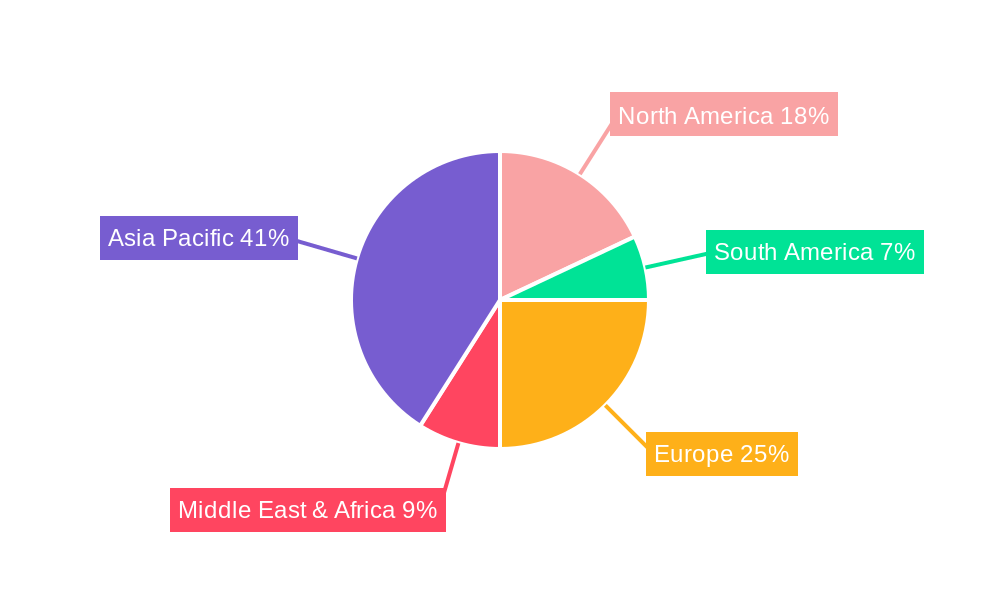
Low Iron Ultra-White Photovoltaic Glass Regional Market Share
Geographic Coverage of Low Iron Ultra-White Photovoltaic Glass
Low Iron Ultra-White Photovoltaic Glass REPORT HIGHLIGHTS
| Aspects | Details |
|---|---|
| Study Period | 2020-2034 |
| Base Year | 2025 |
| Estimated Year | 2026 |
| Forecast Period | 2026-2034 |
| Historical Period | 2020-2025 |
| Growth Rate | CAGR of 7.9% from 2020-2034 |
| Segmentation |
|
Table of Contents
- 1. Introduction
- 1.1. Research Scope
- 1.2. Market Segmentation
- 1.3. Research Methodology
- 1.4. Definitions and Assumptions
- 2. Executive Summary
- 2.1. Introduction
- 3. Market Dynamics
- 3.1. Introduction
- 3.2. Market Drivers
- 3.3. Market Restrains
- 3.4. Market Trends
- 4. Market Factor Analysis
- 4.1. Porters Five Forces
- 4.2. Supply/Value Chain
- 4.3. PESTEL analysis
- 4.4. Market Entropy
- 4.5. Patent/Trademark Analysis
- 5. Global Low Iron Ultra-White Photovoltaic Glass Analysis, Insights and Forecast, 2020-2032
- 5.1. Market Analysis, Insights and Forecast - by Application
- 5.1.1. Solar Photovoltaic Power Generation System
- 5.1.2. Architectural Glass Curtain Wall
- 5.1.3. Solar Water Heaters
- 5.2. Market Analysis, Insights and Forecast - by Types
- 5.2.1. Tempered Low Iron Ultra-White Photovoltaic Glass
- 5.2.2. Tempered Half-Sheet Low Iron Ultra-White Photovoltaic Glass
- 5.2.3. Stainless Steel Low Iron Ultra White Photovoltaic Glass
- 5.3. Market Analysis, Insights and Forecast - by Region
- 5.3.1. North America
- 5.3.2. South America
- 5.3.3. Europe
- 5.3.4. Middle East & Africa
- 5.3.5. Asia Pacific
- 5.1. Market Analysis, Insights and Forecast - by Application
- 6. North America Low Iron Ultra-White Photovoltaic Glass Analysis, Insights and Forecast, 2020-2032
- 6.1. Market Analysis, Insights and Forecast - by Application
- 6.1.1. Solar Photovoltaic Power Generation System
- 6.1.2. Architectural Glass Curtain Wall
- 6.1.3. Solar Water Heaters
- 6.2. Market Analysis, Insights and Forecast - by Types
- 6.2.1. Tempered Low Iron Ultra-White Photovoltaic Glass
- 6.2.2. Tempered Half-Sheet Low Iron Ultra-White Photovoltaic Glass
- 6.2.3. Stainless Steel Low Iron Ultra White Photovoltaic Glass
- 6.1. Market Analysis, Insights and Forecast - by Application
- 7. South America Low Iron Ultra-White Photovoltaic Glass Analysis, Insights and Forecast, 2020-2032
- 7.1. Market Analysis, Insights and Forecast - by Application
- 7.1.1. Solar Photovoltaic Power Generation System
- 7.1.2. Architectural Glass Curtain Wall
- 7.1.3. Solar Water Heaters
- 7.2. Market Analysis, Insights and Forecast - by Types
- 7.2.1. Tempered Low Iron Ultra-White Photovoltaic Glass
- 7.2.2. Tempered Half-Sheet Low Iron Ultra-White Photovoltaic Glass
- 7.2.3. Stainless Steel Low Iron Ultra White Photovoltaic Glass
- 7.1. Market Analysis, Insights and Forecast - by Application
- 8. Europe Low Iron Ultra-White Photovoltaic Glass Analysis, Insights and Forecast, 2020-2032
- 8.1. Market Analysis, Insights and Forecast - by Application
- 8.1.1. Solar Photovoltaic Power Generation System
- 8.1.2. Architectural Glass Curtain Wall
- 8.1.3. Solar Water Heaters
- 8.2. Market Analysis, Insights and Forecast - by Types
- 8.2.1. Tempered Low Iron Ultra-White Photovoltaic Glass
- 8.2.2. Tempered Half-Sheet Low Iron Ultra-White Photovoltaic Glass
- 8.2.3. Stainless Steel Low Iron Ultra White Photovoltaic Glass
- 8.1. Market Analysis, Insights and Forecast - by Application
- 9. Middle East & Africa Low Iron Ultra-White Photovoltaic Glass Analysis, Insights and Forecast, 2020-2032
- 9.1. Market Analysis, Insights and Forecast - by Application
- 9.1.1. Solar Photovoltaic Power Generation System
- 9.1.2. Architectural Glass Curtain Wall
- 9.1.3. Solar Water Heaters
- 9.2. Market Analysis, Insights and Forecast - by Types
- 9.2.1. Tempered Low Iron Ultra-White Photovoltaic Glass
- 9.2.2. Tempered Half-Sheet Low Iron Ultra-White Photovoltaic Glass
- 9.2.3. Stainless Steel Low Iron Ultra White Photovoltaic Glass
- 9.1. Market Analysis, Insights and Forecast - by Application
- 10. Asia Pacific Low Iron Ultra-White Photovoltaic Glass Analysis, Insights and Forecast, 2020-2032
- 10.1. Market Analysis, Insights and Forecast - by Application
- 10.1.1. Solar Photovoltaic Power Generation System
- 10.1.2. Architectural Glass Curtain Wall
- 10.1.3. Solar Water Heaters
- 10.2. Market Analysis, Insights and Forecast - by Types
- 10.2.1. Tempered Low Iron Ultra-White Photovoltaic Glass
- 10.2.2. Tempered Half-Sheet Low Iron Ultra-White Photovoltaic Glass
- 10.2.3. Stainless Steel Low Iron Ultra White Photovoltaic Glass
- 10.1. Market Analysis, Insights and Forecast - by Application
- 11. Competitive Analysis
- 11.1. Global Market Share Analysis 2025
- 11.2. Company Profiles
- 11.2.1 AGC
- 11.2.1.1. Overview
- 11.2.1.2. Products
- 11.2.1.3. SWOT Analysis
- 11.2.1.4. Recent Developments
- 11.2.1.5. Financials (Based on Availability)
- 11.2.2 NSG
- 11.2.2.1. Overview
- 11.2.2.2. Products
- 11.2.2.3. SWOT Analysis
- 11.2.2.4. Recent Developments
- 11.2.2.5. Financials (Based on Availability)
- 11.2.3 Saint-Gobain
- 11.2.3.1. Overview
- 11.2.3.2. Products
- 11.2.3.3. SWOT Analysis
- 11.2.3.4. Recent Developments
- 11.2.3.5. Financials (Based on Availability)
- 11.2.4 Guardian Industries
- 11.2.4.1. Overview
- 11.2.4.2. Products
- 11.2.4.3. SWOT Analysis
- 11.2.4.4. Recent Developments
- 11.2.4.5. Financials (Based on Availability)
- 11.2.5 Pilkington
- 11.2.5.1. Overview
- 11.2.5.2. Products
- 11.2.5.3. SWOT Analysis
- 11.2.5.4. Recent Developments
- 11.2.5.5. Financials (Based on Availability)
- 11.2.6 Euroglas
- 11.2.6.1. Overview
- 11.2.6.2. Products
- 11.2.6.3. SWOT Analysis
- 11.2.6.4. Recent Developments
- 11.2.6.5. Financials (Based on Availability)
- 11.2.7 Vitro
- 11.2.7.1. Overview
- 11.2.7.2. Products
- 11.2.7.3. SWOT Analysis
- 11.2.7.4. Recent Developments
- 11.2.7.5. Financials (Based on Availability)
- 11.2.8 Taiwan Glass
- 11.2.8.1. Overview
- 11.2.8.2. Products
- 11.2.8.3. SWOT Analysis
- 11.2.8.4. Recent Developments
- 11.2.8.5. Financials (Based on Availability)
- 11.2.9 Schott
- 11.2.9.1. Overview
- 11.2.9.2. Products
- 11.2.9.3. SWOT Analysis
- 11.2.9.4. Recent Developments
- 11.2.9.5. Financials (Based on Availability)
- 11.2.10 Nippon Sheet Glass
- 11.2.10.1. Overview
- 11.2.10.2. Products
- 11.2.10.3. SWOT Analysis
- 11.2.10.4. Recent Developments
- 11.2.10.5. Financials (Based on Availability)
- 11.2.11 Fuyao Glass
- 11.2.11.1. Overview
- 11.2.11.2. Products
- 11.2.11.3. SWOT Analysis
- 11.2.11.4. Recent Developments
- 11.2.11.5. Financials (Based on Availability)
- 11.2.12 Xinyi Glass
- 11.2.12.1. Overview
- 11.2.12.2. Products
- 11.2.12.3. SWOT Analysis
- 11.2.12.4. Recent Developments
- 11.2.12.5. Financials (Based on Availability)
- 11.2.13 CSG Group
- 11.2.13.1. Overview
- 11.2.13.2. Products
- 11.2.13.3. SWOT Analysis
- 11.2.13.4. Recent Developments
- 11.2.13.5. Financials (Based on Availability)
- 11.2.14 Shanghai Yaopi Glass Group Co.
- 11.2.14.1. Overview
- 11.2.14.2. Products
- 11.2.14.3. SWOT Analysis
- 11.2.14.4. Recent Developments
- 11.2.14.5. Financials (Based on Availability)
- 11.2.15 Ltd.
- 11.2.15.1. Overview
- 11.2.15.2. Products
- 11.2.15.3. SWOT Analysis
- 11.2.15.4. Recent Developments
- 11.2.15.5. Financials (Based on Availability)
- 11.2.1 AGC
List of Figures
- Figure 1: Global Low Iron Ultra-White Photovoltaic Glass Revenue Breakdown (billion, %) by Region 2025 & 2033
- Figure 2: Global Low Iron Ultra-White Photovoltaic Glass Volume Breakdown (K, %) by Region 2025 & 2033
- Figure 3: North America Low Iron Ultra-White Photovoltaic Glass Revenue (billion), by Application 2025 & 2033
- Figure 4: North America Low Iron Ultra-White Photovoltaic Glass Volume (K), by Application 2025 & 2033
- Figure 5: North America Low Iron Ultra-White Photovoltaic Glass Revenue Share (%), by Application 2025 & 2033
- Figure 6: North America Low Iron Ultra-White Photovoltaic Glass Volume Share (%), by Application 2025 & 2033
- Figure 7: North America Low Iron Ultra-White Photovoltaic Glass Revenue (billion), by Types 2025 & 2033
- Figure 8: North America Low Iron Ultra-White Photovoltaic Glass Volume (K), by Types 2025 & 2033
- Figure 9: North America Low Iron Ultra-White Photovoltaic Glass Revenue Share (%), by Types 2025 & 2033
- Figure 10: North America Low Iron Ultra-White Photovoltaic Glass Volume Share (%), by Types 2025 & 2033
- Figure 11: North America Low Iron Ultra-White Photovoltaic Glass Revenue (billion), by Country 2025 & 2033
- Figure 12: North America Low Iron Ultra-White Photovoltaic Glass Volume (K), by Country 2025 & 2033
- Figure 13: North America Low Iron Ultra-White Photovoltaic Glass Revenue Share (%), by Country 2025 & 2033
- Figure 14: North America Low Iron Ultra-White Photovoltaic Glass Volume Share (%), by Country 2025 & 2033
- Figure 15: South America Low Iron Ultra-White Photovoltaic Glass Revenue (billion), by Application 2025 & 2033
- Figure 16: South America Low Iron Ultra-White Photovoltaic Glass Volume (K), by Application 2025 & 2033
- Figure 17: South America Low Iron Ultra-White Photovoltaic Glass Revenue Share (%), by Application 2025 & 2033
- Figure 18: South America Low Iron Ultra-White Photovoltaic Glass Volume Share (%), by Application 2025 & 2033
- Figure 19: South America Low Iron Ultra-White Photovoltaic Glass Revenue (billion), by Types 2025 & 2033
- Figure 20: South America Low Iron Ultra-White Photovoltaic Glass Volume (K), by Types 2025 & 2033
- Figure 21: South America Low Iron Ultra-White Photovoltaic Glass Revenue Share (%), by Types 2025 & 2033
- Figure 22: South America Low Iron Ultra-White Photovoltaic Glass Volume Share (%), by Types 2025 & 2033
- Figure 23: South America Low Iron Ultra-White Photovoltaic Glass Revenue (billion), by Country 2025 & 2033
- Figure 24: South America Low Iron Ultra-White Photovoltaic Glass Volume (K), by Country 2025 & 2033
- Figure 25: South America Low Iron Ultra-White Photovoltaic Glass Revenue Share (%), by Country 2025 & 2033
- Figure 26: South America Low Iron Ultra-White Photovoltaic Glass Volume Share (%), by Country 2025 & 2033
- Figure 27: Europe Low Iron Ultra-White Photovoltaic Glass Revenue (billion), by Application 2025 & 2033
- Figure 28: Europe Low Iron Ultra-White Photovoltaic Glass Volume (K), by Application 2025 & 2033
- Figure 29: Europe Low Iron Ultra-White Photovoltaic Glass Revenue Share (%), by Application 2025 & 2033
- Figure 30: Europe Low Iron Ultra-White Photovoltaic Glass Volume Share (%), by Application 2025 & 2033
- Figure 31: Europe Low Iron Ultra-White Photovoltaic Glass Revenue (billion), by Types 2025 & 2033
- Figure 32: Europe Low Iron Ultra-White Photovoltaic Glass Volume (K), by Types 2025 & 2033
- Figure 33: Europe Low Iron Ultra-White Photovoltaic Glass Revenue Share (%), by Types 2025 & 2033
- Figure 34: Europe Low Iron Ultra-White Photovoltaic Glass Volume Share (%), by Types 2025 & 2033
- Figure 35: Europe Low Iron Ultra-White Photovoltaic Glass Revenue (billion), by Country 2025 & 2033
- Figure 36: Europe Low Iron Ultra-White Photovoltaic Glass Volume (K), by Country 2025 & 2033
- Figure 37: Europe Low Iron Ultra-White Photovoltaic Glass Revenue Share (%), by Country 2025 & 2033
- Figure 38: Europe Low Iron Ultra-White Photovoltaic Glass Volume Share (%), by Country 2025 & 2033
- Figure 39: Middle East & Africa Low Iron Ultra-White Photovoltaic Glass Revenue (billion), by Application 2025 & 2033
- Figure 40: Middle East & Africa Low Iron Ultra-White Photovoltaic Glass Volume (K), by Application 2025 & 2033
- Figure 41: Middle East & Africa Low Iron Ultra-White Photovoltaic Glass Revenue Share (%), by Application 2025 & 2033
- Figure 42: Middle East & Africa Low Iron Ultra-White Photovoltaic Glass Volume Share (%), by Application 2025 & 2033
- Figure 43: Middle East & Africa Low Iron Ultra-White Photovoltaic Glass Revenue (billion), by Types 2025 & 2033
- Figure 44: Middle East & Africa Low Iron Ultra-White Photovoltaic Glass Volume (K), by Types 2025 & 2033
- Figure 45: Middle East & Africa Low Iron Ultra-White Photovoltaic Glass Revenue Share (%), by Types 2025 & 2033
- Figure 46: Middle East & Africa Low Iron Ultra-White Photovoltaic Glass Volume Share (%), by Types 2025 & 2033
- Figure 47: Middle East & Africa Low Iron Ultra-White Photovoltaic Glass Revenue (billion), by Country 2025 & 2033
- Figure 48: Middle East & Africa Low Iron Ultra-White Photovoltaic Glass Volume (K), by Country 2025 & 2033
- Figure 49: Middle East & Africa Low Iron Ultra-White Photovoltaic Glass Revenue Share (%), by Country 2025 & 2033
- Figure 50: Middle East & Africa Low Iron Ultra-White Photovoltaic Glass Volume Share (%), by Country 2025 & 2033
- Figure 51: Asia Pacific Low Iron Ultra-White Photovoltaic Glass Revenue (billion), by Application 2025 & 2033
- Figure 52: Asia Pacific Low Iron Ultra-White Photovoltaic Glass Volume (K), by Application 2025 & 2033
- Figure 53: Asia Pacific Low Iron Ultra-White Photovoltaic Glass Revenue Share (%), by Application 2025 & 2033
- Figure 54: Asia Pacific Low Iron Ultra-White Photovoltaic Glass Volume Share (%), by Application 2025 & 2033
- Figure 55: Asia Pacific Low Iron Ultra-White Photovoltaic Glass Revenue (billion), by Types 2025 & 2033
- Figure 56: Asia Pacific Low Iron Ultra-White Photovoltaic Glass Volume (K), by Types 2025 & 2033
- Figure 57: Asia Pacific Low Iron Ultra-White Photovoltaic Glass Revenue Share (%), by Types 2025 & 2033
- Figure 58: Asia Pacific Low Iron Ultra-White Photovoltaic Glass Volume Share (%), by Types 2025 & 2033
- Figure 59: Asia Pacific Low Iron Ultra-White Photovoltaic Glass Revenue (billion), by Country 2025 & 2033
- Figure 60: Asia Pacific Low Iron Ultra-White Photovoltaic Glass Volume (K), by Country 2025 & 2033
- Figure 61: Asia Pacific Low Iron Ultra-White Photovoltaic Glass Revenue Share (%), by Country 2025 & 2033
- Figure 62: Asia Pacific Low Iron Ultra-White Photovoltaic Glass Volume Share (%), by Country 2025 & 2033
List of Tables
- Table 1: Global Low Iron Ultra-White Photovoltaic Glass Revenue billion Forecast, by Application 2020 & 2033
- Table 2: Global Low Iron Ultra-White Photovoltaic Glass Volume K Forecast, by Application 2020 & 2033
- Table 3: Global Low Iron Ultra-White Photovoltaic Glass Revenue billion Forecast, by Types 2020 & 2033
- Table 4: Global Low Iron Ultra-White Photovoltaic Glass Volume K Forecast, by Types 2020 & 2033
- Table 5: Global Low Iron Ultra-White Photovoltaic Glass Revenue billion Forecast, by Region 2020 & 2033
- Table 6: Global Low Iron Ultra-White Photovoltaic Glass Volume K Forecast, by Region 2020 & 2033
- Table 7: Global Low Iron Ultra-White Photovoltaic Glass Revenue billion Forecast, by Application 2020 & 2033
- Table 8: Global Low Iron Ultra-White Photovoltaic Glass Volume K Forecast, by Application 2020 & 2033
- Table 9: Global Low Iron Ultra-White Photovoltaic Glass Revenue billion Forecast, by Types 2020 & 2033
- Table 10: Global Low Iron Ultra-White Photovoltaic Glass Volume K Forecast, by Types 2020 & 2033
- Table 11: Global Low Iron Ultra-White Photovoltaic Glass Revenue billion Forecast, by Country 2020 & 2033
- Table 12: Global Low Iron Ultra-White Photovoltaic Glass Volume K Forecast, by Country 2020 & 2033
- Table 13: United States Low Iron Ultra-White Photovoltaic Glass Revenue (billion) Forecast, by Application 2020 & 2033
- Table 14: United States Low Iron Ultra-White Photovoltaic Glass Volume (K) Forecast, by Application 2020 & 2033
- Table 15: Canada Low Iron Ultra-White Photovoltaic Glass Revenue (billion) Forecast, by Application 2020 & 2033
- Table 16: Canada Low Iron Ultra-White Photovoltaic Glass Volume (K) Forecast, by Application 2020 & 2033
- Table 17: Mexico Low Iron Ultra-White Photovoltaic Glass Revenue (billion) Forecast, by Application 2020 & 2033
- Table 18: Mexico Low Iron Ultra-White Photovoltaic Glass Volume (K) Forecast, by Application 2020 & 2033
- Table 19: Global Low Iron Ultra-White Photovoltaic Glass Revenue billion Forecast, by Application 2020 & 2033
- Table 20: Global Low Iron Ultra-White Photovoltaic Glass Volume K Forecast, by Application 2020 & 2033
- Table 21: Global Low Iron Ultra-White Photovoltaic Glass Revenue billion Forecast, by Types 2020 & 2033
- Table 22: Global Low Iron Ultra-White Photovoltaic Glass Volume K Forecast, by Types 2020 & 2033
- Table 23: Global Low Iron Ultra-White Photovoltaic Glass Revenue billion Forecast, by Country 2020 & 2033
- Table 24: Global Low Iron Ultra-White Photovoltaic Glass Volume K Forecast, by Country 2020 & 2033
- Table 25: Brazil Low Iron Ultra-White Photovoltaic Glass Revenue (billion) Forecast, by Application 2020 & 2033
- Table 26: Brazil Low Iron Ultra-White Photovoltaic Glass Volume (K) Forecast, by Application 2020 & 2033
- Table 27: Argentina Low Iron Ultra-White Photovoltaic Glass Revenue (billion) Forecast, by Application 2020 & 2033
- Table 28: Argentina Low Iron Ultra-White Photovoltaic Glass Volume (K) Forecast, by Application 2020 & 2033
- Table 29: Rest of South America Low Iron Ultra-White Photovoltaic Glass Revenue (billion) Forecast, by Application 2020 & 2033
- Table 30: Rest of South America Low Iron Ultra-White Photovoltaic Glass Volume (K) Forecast, by Application 2020 & 2033
- Table 31: Global Low Iron Ultra-White Photovoltaic Glass Revenue billion Forecast, by Application 2020 & 2033
- Table 32: Global Low Iron Ultra-White Photovoltaic Glass Volume K Forecast, by Application 2020 & 2033
- Table 33: Global Low Iron Ultra-White Photovoltaic Glass Revenue billion Forecast, by Types 2020 & 2033
- Table 34: Global Low Iron Ultra-White Photovoltaic Glass Volume K Forecast, by Types 2020 & 2033
- Table 35: Global Low Iron Ultra-White Photovoltaic Glass Revenue billion Forecast, by Country 2020 & 2033
- Table 36: Global Low Iron Ultra-White Photovoltaic Glass Volume K Forecast, by Country 2020 & 2033
- Table 37: United Kingdom Low Iron Ultra-White Photovoltaic Glass Revenue (billion) Forecast, by Application 2020 & 2033
- Table 38: United Kingdom Low Iron Ultra-White Photovoltaic Glass Volume (K) Forecast, by Application 2020 & 2033
- Table 39: Germany Low Iron Ultra-White Photovoltaic Glass Revenue (billion) Forecast, by Application 2020 & 2033
- Table 40: Germany Low Iron Ultra-White Photovoltaic Glass Volume (K) Forecast, by Application 2020 & 2033
- Table 41: France Low Iron Ultra-White Photovoltaic Glass Revenue (billion) Forecast, by Application 2020 & 2033
- Table 42: France Low Iron Ultra-White Photovoltaic Glass Volume (K) Forecast, by Application 2020 & 2033
- Table 43: Italy Low Iron Ultra-White Photovoltaic Glass Revenue (billion) Forecast, by Application 2020 & 2033
- Table 44: Italy Low Iron Ultra-White Photovoltaic Glass Volume (K) Forecast, by Application 2020 & 2033
- Table 45: Spain Low Iron Ultra-White Photovoltaic Glass Revenue (billion) Forecast, by Application 2020 & 2033
- Table 46: Spain Low Iron Ultra-White Photovoltaic Glass Volume (K) Forecast, by Application 2020 & 2033
- Table 47: Russia Low Iron Ultra-White Photovoltaic Glass Revenue (billion) Forecast, by Application 2020 & 2033
- Table 48: Russia Low Iron Ultra-White Photovoltaic Glass Volume (K) Forecast, by Application 2020 & 2033
- Table 49: Benelux Low Iron Ultra-White Photovoltaic Glass Revenue (billion) Forecast, by Application 2020 & 2033
- Table 50: Benelux Low Iron Ultra-White Photovoltaic Glass Volume (K) Forecast, by Application 2020 & 2033
- Table 51: Nordics Low Iron Ultra-White Photovoltaic Glass Revenue (billion) Forecast, by Application 2020 & 2033
- Table 52: Nordics Low Iron Ultra-White Photovoltaic Glass Volume (K) Forecast, by Application 2020 & 2033
- Table 53: Rest of Europe Low Iron Ultra-White Photovoltaic Glass Revenue (billion) Forecast, by Application 2020 & 2033
- Table 54: Rest of Europe Low Iron Ultra-White Photovoltaic Glass Volume (K) Forecast, by Application 2020 & 2033
- Table 55: Global Low Iron Ultra-White Photovoltaic Glass Revenue billion Forecast, by Application 2020 & 2033
- Table 56: Global Low Iron Ultra-White Photovoltaic Glass Volume K Forecast, by Application 2020 & 2033
- Table 57: Global Low Iron Ultra-White Photovoltaic Glass Revenue billion Forecast, by Types 2020 & 2033
- Table 58: Global Low Iron Ultra-White Photovoltaic Glass Volume K Forecast, by Types 2020 & 2033
- Table 59: Global Low Iron Ultra-White Photovoltaic Glass Revenue billion Forecast, by Country 2020 & 2033
- Table 60: Global Low Iron Ultra-White Photovoltaic Glass Volume K Forecast, by Country 2020 & 2033
- Table 61: Turkey Low Iron Ultra-White Photovoltaic Glass Revenue (billion) Forecast, by Application 2020 & 2033
- Table 62: Turkey Low Iron Ultra-White Photovoltaic Glass Volume (K) Forecast, by Application 2020 & 2033
- Table 63: Israel Low Iron Ultra-White Photovoltaic Glass Revenue (billion) Forecast, by Application 2020 & 2033
- Table 64: Israel Low Iron Ultra-White Photovoltaic Glass Volume (K) Forecast, by Application 2020 & 2033
- Table 65: GCC Low Iron Ultra-White Photovoltaic Glass Revenue (billion) Forecast, by Application 2020 & 2033
- Table 66: GCC Low Iron Ultra-White Photovoltaic Glass Volume (K) Forecast, by Application 2020 & 2033
- Table 67: North Africa Low Iron Ultra-White Photovoltaic Glass Revenue (billion) Forecast, by Application 2020 & 2033
- Table 68: North Africa Low Iron Ultra-White Photovoltaic Glass Volume (K) Forecast, by Application 2020 & 2033
- Table 69: South Africa Low Iron Ultra-White Photovoltaic Glass Revenue (billion) Forecast, by Application 2020 & 2033
- Table 70: South Africa Low Iron Ultra-White Photovoltaic Glass Volume (K) Forecast, by Application 2020 & 2033
- Table 71: Rest of Middle East & Africa Low Iron Ultra-White Photovoltaic Glass Revenue (billion) Forecast, by Application 2020 & 2033
- Table 72: Rest of Middle East & Africa Low Iron Ultra-White Photovoltaic Glass Volume (K) Forecast, by Application 2020 & 2033
- Table 73: Global Low Iron Ultra-White Photovoltaic Glass Revenue billion Forecast, by Application 2020 & 2033
- Table 74: Global Low Iron Ultra-White Photovoltaic Glass Volume K Forecast, by Application 2020 & 2033
- Table 75: Global Low Iron Ultra-White Photovoltaic Glass Revenue billion Forecast, by Types 2020 & 2033
- Table 76: Global Low Iron Ultra-White Photovoltaic Glass Volume K Forecast, by Types 2020 & 2033
- Table 77: Global Low Iron Ultra-White Photovoltaic Glass Revenue billion Forecast, by Country 2020 & 2033
- Table 78: Global Low Iron Ultra-White Photovoltaic Glass Volume K Forecast, by Country 2020 & 2033
- Table 79: China Low Iron Ultra-White Photovoltaic Glass Revenue (billion) Forecast, by Application 2020 & 2033
- Table 80: China Low Iron Ultra-White Photovoltaic Glass Volume (K) Forecast, by Application 2020 & 2033
- Table 81: India Low Iron Ultra-White Photovoltaic Glass Revenue (billion) Forecast, by Application 2020 & 2033
- Table 82: India Low Iron Ultra-White Photovoltaic Glass Volume (K) Forecast, by Application 2020 & 2033
- Table 83: Japan Low Iron Ultra-White Photovoltaic Glass Revenue (billion) Forecast, by Application 2020 & 2033
- Table 84: Japan Low Iron Ultra-White Photovoltaic Glass Volume (K) Forecast, by Application 2020 & 2033
- Table 85: South Korea Low Iron Ultra-White Photovoltaic Glass Revenue (billion) Forecast, by Application 2020 & 2033
- Table 86: South Korea Low Iron Ultra-White Photovoltaic Glass Volume (K) Forecast, by Application 2020 & 2033
- Table 87: ASEAN Low Iron Ultra-White Photovoltaic Glass Revenue (billion) Forecast, by Application 2020 & 2033
- Table 88: ASEAN Low Iron Ultra-White Photovoltaic Glass Volume (K) Forecast, by Application 2020 & 2033
- Table 89: Oceania Low Iron Ultra-White Photovoltaic Glass Revenue (billion) Forecast, by Application 2020 & 2033
- Table 90: Oceania Low Iron Ultra-White Photovoltaic Glass Volume (K) Forecast, by Application 2020 & 2033
- Table 91: Rest of Asia Pacific Low Iron Ultra-White Photovoltaic Glass Revenue (billion) Forecast, by Application 2020 & 2033
- Table 92: Rest of Asia Pacific Low Iron Ultra-White Photovoltaic Glass Volume (K) Forecast, by Application 2020 & 2033
Frequently Asked Questions
1. What is the projected Compound Annual Growth Rate (CAGR) of the Low Iron Ultra-White Photovoltaic Glass?
The projected CAGR is approximately 7.9%.
2. Which companies are prominent players in the Low Iron Ultra-White Photovoltaic Glass?
Key companies in the market include AGC, NSG, Saint-Gobain, Guardian Industries, Pilkington, Euroglas, Vitro, Taiwan Glass, Schott, Nippon Sheet Glass, Fuyao Glass, Xinyi Glass, CSG Group, Shanghai Yaopi Glass Group Co., Ltd..
3. What are the main segments of the Low Iron Ultra-White Photovoltaic Glass?
The market segments include Application, Types.
4. Can you provide details about the market size?
The market size is estimated to be USD 53.5 billion as of 2022.
5. What are some drivers contributing to market growth?
N/A
6. What are the notable trends driving market growth?
N/A
7. Are there any restraints impacting market growth?
N/A
8. Can you provide examples of recent developments in the market?
N/A
9. What pricing options are available for accessing the report?
Pricing options include single-user, multi-user, and enterprise licenses priced at USD 3950.00, USD 5925.00, and USD 7900.00 respectively.
10. Is the market size provided in terms of value or volume?
The market size is provided in terms of value, measured in billion and volume, measured in K.
11. Are there any specific market keywords associated with the report?
Yes, the market keyword associated with the report is "Low Iron Ultra-White Photovoltaic Glass," which aids in identifying and referencing the specific market segment covered.
12. How do I determine which pricing option suits my needs best?
The pricing options vary based on user requirements and access needs. Individual users may opt for single-user licenses, while businesses requiring broader access may choose multi-user or enterprise licenses for cost-effective access to the report.
13. Are there any additional resources or data provided in the Low Iron Ultra-White Photovoltaic Glass report?
While the report offers comprehensive insights, it's advisable to review the specific contents or supplementary materials provided to ascertain if additional resources or data are available.
14. How can I stay updated on further developments or reports in the Low Iron Ultra-White Photovoltaic Glass?
To stay informed about further developments, trends, and reports in the Low Iron Ultra-White Photovoltaic Glass, consider subscribing to industry newsletters, following relevant companies and organizations, or regularly checking reputable industry news sources and publications.
Methodology
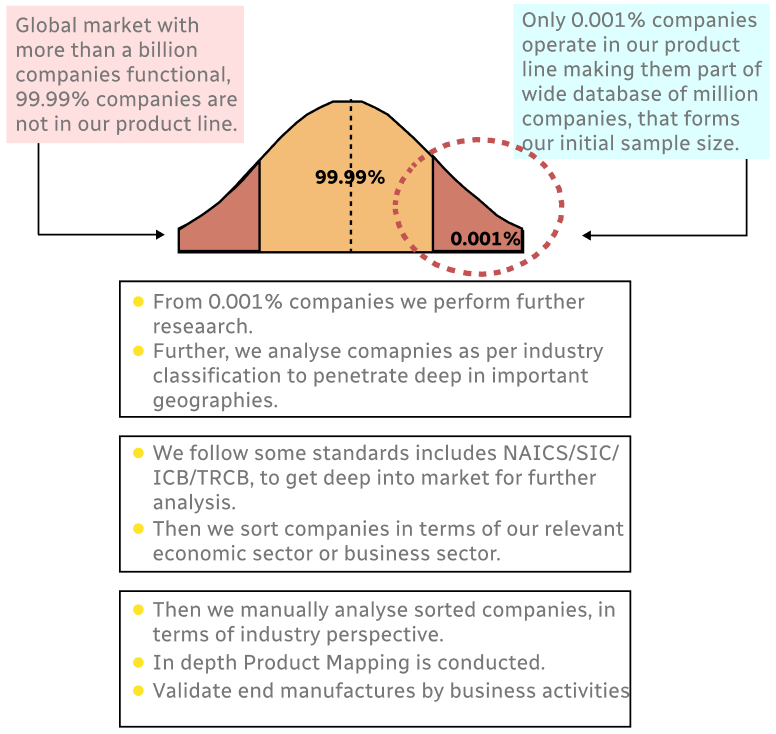
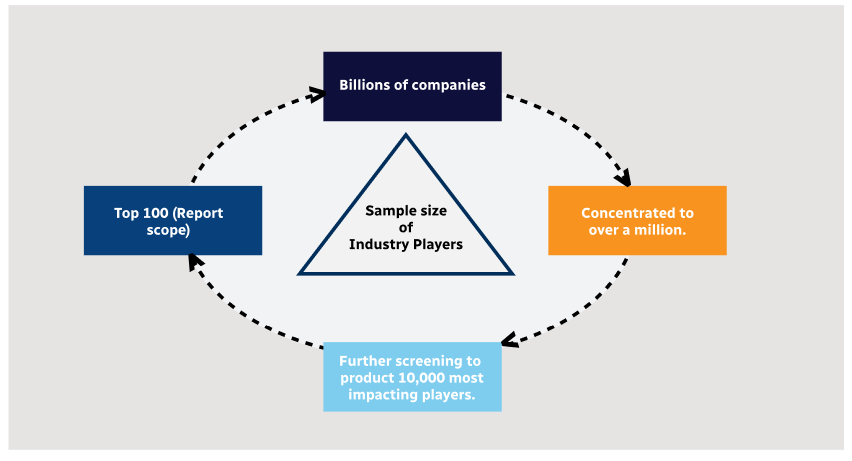
Step 1 - Identification of Relevant Samples Size from Population Database
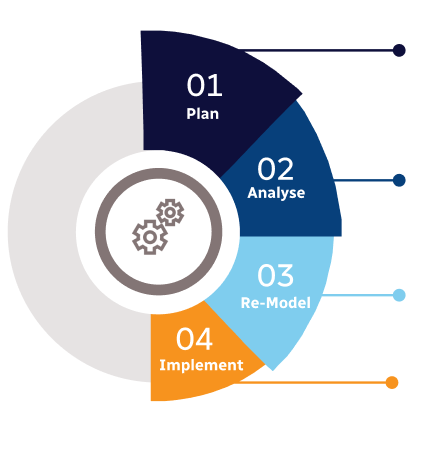
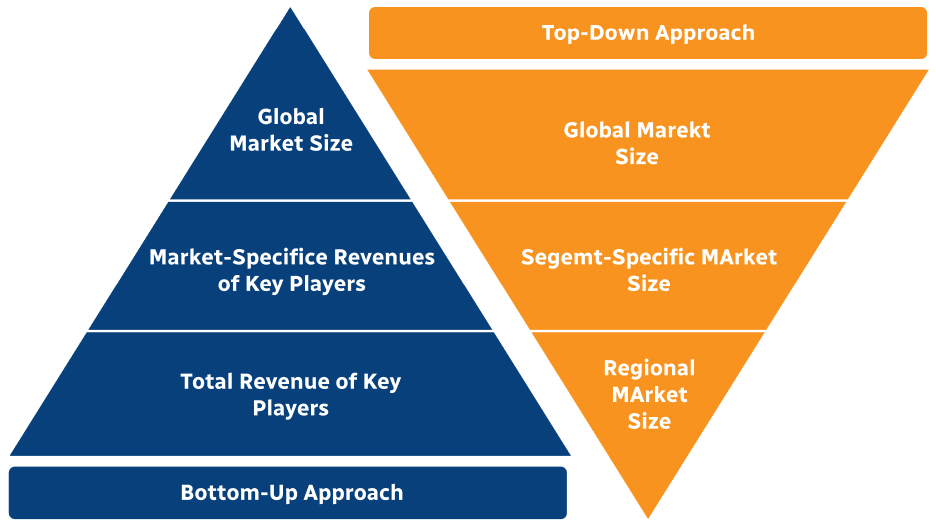
Step 2 - Approaches for Defining Global Market Size (Value, Volume* & Price*)
Note*: In applicable scenarios
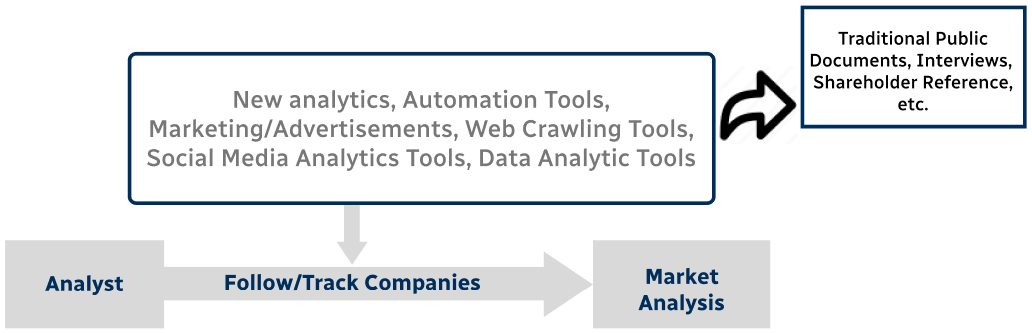
Step 3 - Data Sources
Primary Research
- Web Analytics
- Survey Reports
- Research Institute
- Latest Research Reports
- Opinion Leaders
Secondary Research
- Annual Reports
- White Paper
- Latest Press Release
- Industry Association
- Paid Database
- Investor Presentations
Step 4 - Data Triangulation
Involves using different sources of information in order to increase the validity of a study
These sources are likely to be stakeholders in a program - participants, other researchers, program staff, other community members, and so on.
Then we put all data in single framework & apply various statistical tools to find out the dynamic on the market.
During the analysis stage, feedback from the stakeholder groups would be compared to determine areas of agreement as well as areas of divergence