
Key Insights
The global Highway Noise Barrier market is projected to experience substantial growth, with an estimated market size of approximately $5,200 million in 2025, driven by increasing infrastructure development and stringent environmental regulations worldwide. The market is anticipated to expand at a Compound Annual Growth Rate (CAGR) of roughly 7.5% from 2025 to 2033. This growth is fueled by the escalating demand for enhanced traffic management solutions and the growing public awareness regarding noise pollution from transportation networks. Key drivers include government initiatives promoting quieter urban environments, advancements in material science leading to more effective and aesthetically pleasing soundproofing solutions, and the continuous expansion of road and highway networks in both developed and emerging economies. The increasing emphasis on sustainable development and citizen well-being further propels the adoption of highway noise barriers as essential infrastructure components.
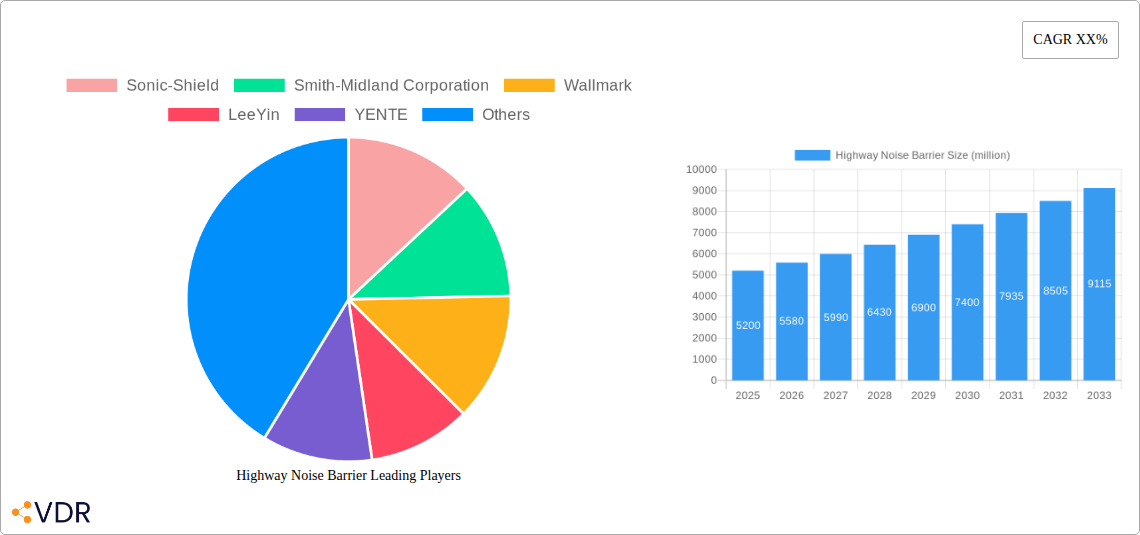
Highway Noise Barrier Market Size (In Billion)

The market is segmented into various applications, with highways constituting the dominant segment, followed by second-class highways and other specialized applications. In terms of types, the Microporous Highway Soundproof Wall segment is expected to witness robust demand due to its superior sound absorption capabilities. However, the Metal Shutter Highway Sound Insulation Wall also holds significant market share, particularly in regions where durability and weather resistance are paramount. Geographically, the Asia Pacific region is poised to emerge as a major growth engine, driven by rapid urbanization and massive infrastructure investments in countries like China and India. North America and Europe, with their established infrastructure and mature markets, will continue to be significant contributors, focusing on retrofitting and upgrading existing noise barriers. Challenges such as high installation costs and the availability of alternative noise reduction methods present some restraints, but the overall market trajectory remains strongly positive due to the undeniable benefits of noise mitigation.
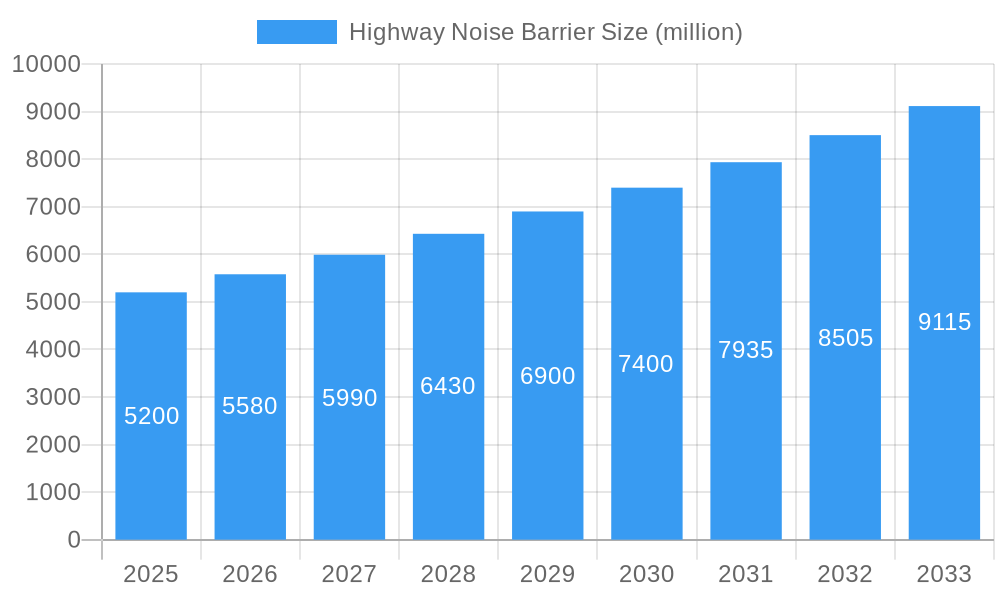
Highway Noise Barrier Company Market Share
Highway Noise Barrier Market Report: Comprehensive Analysis and Future Outlook (2019-2033)
This in-depth report provides an exhaustive analysis of the global Highway Noise Barrier market, encompassing its current dynamics, historical performance, and projected trajectory through 2033. Designed for industry professionals, urban planners, construction firms, and environmental consultants, this study offers critical insights into market size, growth drivers, segmentation, competitive landscape, and emerging opportunities. With a focus on high-traffic SEO keywords, this report ensures maximum visibility for stakeholders seeking to understand and capitalize on the evolving highway noise mitigation sector.
Highway Noise Barrier Market Dynamics & Structure
The Highway Noise Barrier market is characterized by a moderately concentrated structure, with a few key players like Sonic-Shield, Smith-Midland Corporation, and Wallmark holding significant market shares. Technological innovation is a primary driver, particularly in the development of lighter, more durable, and aesthetically pleasing barrier materials, alongside advancements in sound absorption and reflection technologies. Regulatory frameworks, driven by increasing public concern over noise pollution and stringent environmental standards, are compelling infrastructure projects to incorporate noise mitigation solutions. Competitive product substitutes include natural barriers like trees and earth berms, but engineered noise barriers offer superior and predictable performance. End-user demographics are predominantly public infrastructure agencies and highway authorities, with a growing interest from private developers for projects near residential areas. Mergers and acquisitions (M&A) trends are observable, with larger companies acquiring smaller innovators to expand their product portfolios and market reach, a trend expected to continue.
- Market Concentration: Moderately concentrated with key players.
- Technological Innovation Drivers: Development of advanced materials, soundproofing techniques, and smart barrier solutions.
- Regulatory Frameworks: Increasingly stringent noise pollution regulations and environmental impact assessments.
- Competitive Product Substitutes: Natural landscaping, earth berms, but with limitations.
- End-User Demographics: Government agencies, highway authorities, urban developers.
- M&A Trends: Strategic acquisitions for product expansion and market consolidation.
Highway Noise Barrier Growth Trends & Insights
The global Highway Noise Barrier market is projected to experience robust growth, driven by escalating urbanization, increased traffic volumes, and a heightened awareness of the detrimental health effects of noise pollution. The market size is estimated to reach USD 6,700 million in 2025, with a projected Compound Annual Growth Rate (CAGR) of 6.8% during the forecast period of 2025–2033. Adoption rates for highway noise barriers are steadily increasing as governments and infrastructure planners prioritize noise mitigation strategies in new road construction and retrofitting projects. Technological disruptions are emerging, with innovations in modular barrier systems, smart materials that adapt to environmental conditions, and bio-integrated barriers that blend with the landscape. Consumer behavior shifts are also playing a role, with residents in proximity to major roadways increasingly demanding quieter living environments, putting pressure on authorities to implement effective noise reduction measures. The market penetration of specialized noise barrier solutions is expanding beyond major highways to include second-class highways and urban road networks, reflecting a broader commitment to acoustic comfort.
Dominant Regions, Countries, or Segments in Highway Noise Barrier
The Highway application segment is unequivocally dominant within the global Highway Noise Barrier market, driven by the sheer scale of public road infrastructure development and the critical need to mitigate noise from high-speed and high-volume traffic. Within this segment, developed economies in North America and Europe currently lead the market due to established infrastructure, stringent environmental regulations, and significant public investment in transportation networks.
In North America, the United States stands out as a major market due to its extensive highway system and continuous expansion projects. Key drivers include the Federal Highway Administration's initiatives promoting noise abatement programs and increasing demand from urbanized areas with high population density. The market share for highway noise barriers in the US is substantial, estimated at 28% of the global market in 2025.
Europe, particularly countries like Germany, the United Kingdom, and France, also exhibits strong demand. These regions are characterized by dense road networks, advanced infrastructure, and a long-standing focus on environmental quality. Stringent EU directives on environmental noise necessitate the implementation of noise barriers along major transportation routes. The European market is anticipated to hold approximately 25% of the global market share in 2025.
The Microporous Highway Soundproof Wall type is witnessing significant adoption due to its superior sound absorption capabilities and lightweight construction, making installation more efficient and cost-effective. Its effectiveness in reducing noise transmission makes it a preferred choice for applications where noise reflection is a concern. This segment is expected to grow at a CAGR of 7.2% from 2025 to 2033.
- Dominant Application: Highway application, accounting for an estimated 75% of the total market in 2025.
- Leading Regions: North America (primarily the United States) and Europe (Germany, UK, France).
- Key Drivers in Dominant Regions:
- Extensive existing and expanding highway infrastructure.
- Strict governmental regulations and environmental standards.
- High population density and associated noise concerns.
- Significant public and private investment in transportation projects.
- Dominant Product Type: Microporous Highway Soundproof Wall, favored for its absorption properties and ease of installation.
- Growth Potential: Emerging markets in Asia-Pacific are showing increasing potential due to rapid infrastructure development.
Highway Noise Barrier Product Landscape
The Highway Noise Barrier product landscape is characterized by continuous innovation aimed at enhancing acoustic performance, durability, and aesthetic integration. Key product advancements include the development of high-performance absorptive and reflective materials, such as advanced composites and specially engineered concrete mixtures. Modular barrier systems are gaining traction, offering faster installation and greater flexibility. Companies like Sonic-Shield are leading the charge with lightweight, weather-resistant panels that boast excellent sound attenuation. Smith-Midland Corporation is known for its precast concrete noise walls, offering robust durability and long-term performance. The market is also seeing a rise in visually appealing barriers that incorporate landscaping elements or artistic designs to better blend with the surrounding environment. Performance metrics such as sound transmission class (STC) ratings and noise reduction coefficients (NRC) are crucial for product differentiation.
Key Drivers, Barriers & Challenges in Highway Noise Barrier
Key Drivers:
- Stringent Environmental Regulations: Growing global emphasis on noise pollution control and public health mandates the installation of noise barriers.
- Infrastructure Development: Continued investment in new highway construction and expansion projects worldwide directly fuels demand.
- Urbanization: Increasing population density in urban areas intensifies noise impact, necessitating mitigation solutions.
- Technological Advancements: Development of more efficient, durable, and aesthetically pleasing barrier materials.
- Public Awareness: Greater understanding of the negative impacts of noise pollution on well-being.
Barriers & Challenges:
- High Initial Cost: The upfront investment for noise barrier installation can be substantial, posing a challenge for some projects.
- Permitting and Approval Processes: Lengthy and complex regulatory hurdles can delay project timelines.
- Environmental Impact Assessments: Ensuring barriers do not negatively impact wildlife or visual aesthetics requires careful planning.
- Maintenance and Durability: Ensuring long-term performance and managing maintenance needs across vast stretches of road.
- Supply Chain Disruptions: Availability and cost fluctuations of raw materials can impact production and project feasibility, with potential impacts estimated at 5-10% on project costs during periods of disruption.
Emerging Opportunities in Highway Noise Barrier
Emerging opportunities in the Highway Noise Barrier market lie in the development of smart noise barriers equipped with sensors for real-time noise monitoring and adaptive sound dampening capabilities. The integration of sustainable and recycled materials, such as recycled plastics and reclaimed aggregates, presents a significant avenue for growth, aligning with increasing environmental consciousness. Furthermore, the expansion into urban transit corridors and railway lines beyond just highways offers untapped market potential. The demand for customizable and aesthetically pleasing solutions that integrate seamlessly with urban landscapes is also on the rise, creating opportunities for specialized design and manufacturing firms.
Growth Accelerators in the Highway Noise Barrier Industry
Several key factors are accelerating growth in the Highway Noise Barrier industry. Technological breakthroughs in material science, leading to lighter, stronger, and more acoustically effective barriers, are a primary accelerator. Strategic partnerships between barrier manufacturers and infrastructure development companies ensure integrated solutions from the design phase. Market expansion strategies focusing on emerging economies with rapidly developing transportation infrastructure are also crucial. The increasing adoption of modular and pre-fabricated systems accelerates installation times, making projects more cost-effective and efficient. Furthermore, government incentives and grants for noise reduction projects act as significant growth catalysts.
Key Players Shaping the Highway Noise Barrier Market
- Sonic-Shield
- Smith-Midland Corporation
- Wallmark
- LeeYin
- YENTE
- Sound Fighter Systems
- Easi-Set
- Motorwaycare
Notable Milestones in Highway Noise Barrier Sector
- 2019: Increased regulatory focus on noise pollution across Europe leading to stricter implementation mandates.
- 2020: Launch of advanced composite noise barrier materials offering improved sound absorption and durability by leading manufacturers.
- 2021: Significant investment in smart city initiatives that include noise mitigation technologies.
- 2022: Several key M&A activities as larger companies acquired specialized noise barrier solution providers.
- 2023: Growing adoption of modular and pre-fabricated noise barrier systems for faster project deployment.
- 2024: Focus on sustainable materials and bio-integrated noise barrier solutions gains momentum.
In-Depth Highway Noise Barrier Market Outlook
The Highway Noise Barrier market is poised for sustained growth, driven by ongoing urbanization, stringent environmental regulations, and continuous technological innovation. The increasing demand for quieter living and working environments, coupled with substantial global investment in infrastructure development, creates a fertile ground for market expansion. Key accelerators such as the development of advanced acoustic materials, efficient modular systems, and a growing emphasis on sustainable solutions will shape the future trajectory. Strategic collaborations and a focus on emerging markets represent significant opportunities for stakeholders to capitalize on the expanding need for effective noise mitigation solutions. The market is projected to see continued innovation and consolidation, solidifying its importance in sustainable urban planning.
Highway Noise Barrier Segmentation
-
1. Application
- 1.1. Highway
- 1.2. Second-class Highway
- 1.3. Other
-
2. Types
- 2.1. Microporous Highway Soundproof Wall
- 2.2. Metal Shutter Highway Sound Insulation Wall
- 2.3. Other
Highway Noise Barrier Segmentation By Geography
-
1. North America
- 1.1. United States
- 1.2. Canada
- 1.3. Mexico
-
2. South America
- 2.1. Brazil
- 2.2. Argentina
- 2.3. Rest of South America
-
3. Europe
- 3.1. United Kingdom
- 3.2. Germany
- 3.3. France
- 3.4. Italy
- 3.5. Spain
- 3.6. Russia
- 3.7. Benelux
- 3.8. Nordics
- 3.9. Rest of Europe
-
4. Middle East & Africa
- 4.1. Turkey
- 4.2. Israel
- 4.3. GCC
- 4.4. North Africa
- 4.5. South Africa
- 4.6. Rest of Middle East & Africa
-
5. Asia Pacific
- 5.1. China
- 5.2. India
- 5.3. Japan
- 5.4. South Korea
- 5.5. ASEAN
- 5.6. Oceania
- 5.7. Rest of Asia Pacific
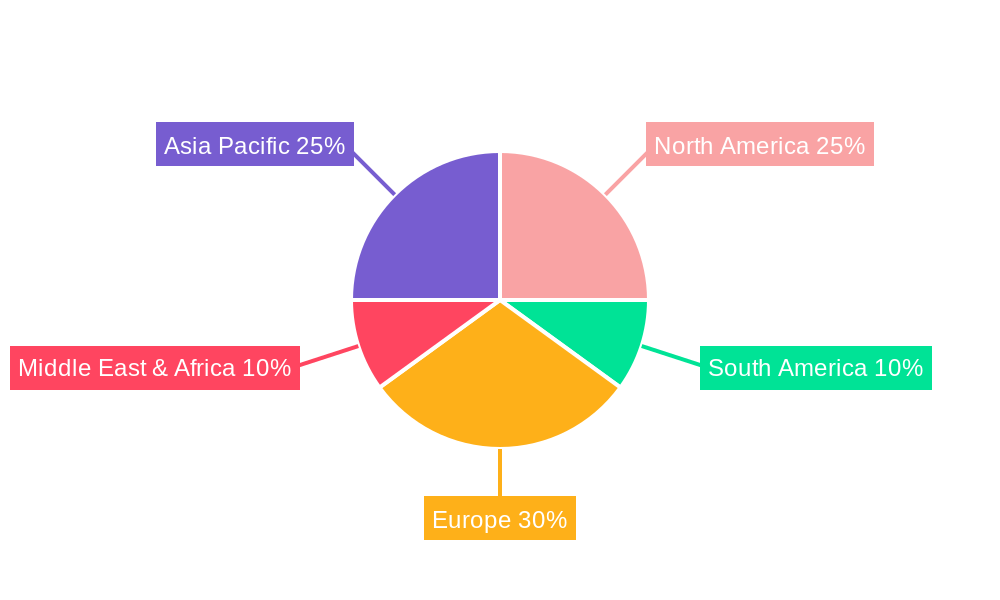
Highway Noise Barrier Regional Market Share
Geographic Coverage of Highway Noise Barrier
Highway Noise Barrier REPORT HIGHLIGHTS
| Aspects | Details |
|---|---|
| Study Period | 2020-2034 |
| Base Year | 2025 |
| Estimated Year | 2026 |
| Forecast Period | 2026-2034 |
| Historical Period | 2020-2025 |
| Growth Rate | CAGR of XX% from 2020-2034 |
| Segmentation |
|
Table of Contents
- 1. Introduction
- 1.1. Research Scope
- 1.2. Market Segmentation
- 1.3. Research Methodology
- 1.4. Definitions and Assumptions
- 2. Executive Summary
- 2.1. Introduction
- 3. Market Dynamics
- 3.1. Introduction
- 3.2. Market Drivers
- 3.3. Market Restrains
- 3.4. Market Trends
- 4. Market Factor Analysis
- 4.1. Porters Five Forces
- 4.2. Supply/Value Chain
- 4.3. PESTEL analysis
- 4.4. Market Entropy
- 4.5. Patent/Trademark Analysis
- 5. Global Highway Noise Barrier Analysis, Insights and Forecast, 2020-2032
- 5.1. Market Analysis, Insights and Forecast - by Application
- 5.1.1. Highway
- 5.1.2. Second-class Highway
- 5.1.3. Other
- 5.2. Market Analysis, Insights and Forecast - by Types
- 5.2.1. Microporous Highway Soundproof Wall
- 5.2.2. Metal Shutter Highway Sound Insulation Wall
- 5.2.3. Other
- 5.3. Market Analysis, Insights and Forecast - by Region
- 5.3.1. North America
- 5.3.2. South America
- 5.3.3. Europe
- 5.3.4. Middle East & Africa
- 5.3.5. Asia Pacific
- 5.1. Market Analysis, Insights and Forecast - by Application
- 6. North America Highway Noise Barrier Analysis, Insights and Forecast, 2020-2032
- 6.1. Market Analysis, Insights and Forecast - by Application
- 6.1.1. Highway
- 6.1.2. Second-class Highway
- 6.1.3. Other
- 6.2. Market Analysis, Insights and Forecast - by Types
- 6.2.1. Microporous Highway Soundproof Wall
- 6.2.2. Metal Shutter Highway Sound Insulation Wall
- 6.2.3. Other
- 6.1. Market Analysis, Insights and Forecast - by Application
- 7. South America Highway Noise Barrier Analysis, Insights and Forecast, 2020-2032
- 7.1. Market Analysis, Insights and Forecast - by Application
- 7.1.1. Highway
- 7.1.2. Second-class Highway
- 7.1.3. Other
- 7.2. Market Analysis, Insights and Forecast - by Types
- 7.2.1. Microporous Highway Soundproof Wall
- 7.2.2. Metal Shutter Highway Sound Insulation Wall
- 7.2.3. Other
- 7.1. Market Analysis, Insights and Forecast - by Application
- 8. Europe Highway Noise Barrier Analysis, Insights and Forecast, 2020-2032
- 8.1. Market Analysis, Insights and Forecast - by Application
- 8.1.1. Highway
- 8.1.2. Second-class Highway
- 8.1.3. Other
- 8.2. Market Analysis, Insights and Forecast - by Types
- 8.2.1. Microporous Highway Soundproof Wall
- 8.2.2. Metal Shutter Highway Sound Insulation Wall
- 8.2.3. Other
- 8.1. Market Analysis, Insights and Forecast - by Application
- 9. Middle East & Africa Highway Noise Barrier Analysis, Insights and Forecast, 2020-2032
- 9.1. Market Analysis, Insights and Forecast - by Application
- 9.1.1. Highway
- 9.1.2. Second-class Highway
- 9.1.3. Other
- 9.2. Market Analysis, Insights and Forecast - by Types
- 9.2.1. Microporous Highway Soundproof Wall
- 9.2.2. Metal Shutter Highway Sound Insulation Wall
- 9.2.3. Other
- 9.1. Market Analysis, Insights and Forecast - by Application
- 10. Asia Pacific Highway Noise Barrier Analysis, Insights and Forecast, 2020-2032
- 10.1. Market Analysis, Insights and Forecast - by Application
- 10.1.1. Highway
- 10.1.2. Second-class Highway
- 10.1.3. Other
- 10.2. Market Analysis, Insights and Forecast - by Types
- 10.2.1. Microporous Highway Soundproof Wall
- 10.2.2. Metal Shutter Highway Sound Insulation Wall
- 10.2.3. Other
- 10.1. Market Analysis, Insights and Forecast - by Application
- 11. Competitive Analysis
- 11.1. Global Market Share Analysis 2025
- 11.2. Company Profiles
- 11.2.1 Sonic-Shield
- 11.2.1.1. Overview
- 11.2.1.2. Products
- 11.2.1.3. SWOT Analysis
- 11.2.1.4. Recent Developments
- 11.2.1.5. Financials (Based on Availability)
- 11.2.2 Smith-Midland Corporation
- 11.2.2.1. Overview
- 11.2.2.2. Products
- 11.2.2.3. SWOT Analysis
- 11.2.2.4. Recent Developments
- 11.2.2.5. Financials (Based on Availability)
- 11.2.3 Wallmark
- 11.2.3.1. Overview
- 11.2.3.2. Products
- 11.2.3.3. SWOT Analysis
- 11.2.3.4. Recent Developments
- 11.2.3.5. Financials (Based on Availability)
- 11.2.4 LeeYin
- 11.2.4.1. Overview
- 11.2.4.2. Products
- 11.2.4.3. SWOT Analysis
- 11.2.4.4. Recent Developments
- 11.2.4.5. Financials (Based on Availability)
- 11.2.5 YENTE
- 11.2.5.1. Overview
- 11.2.5.2. Products
- 11.2.5.3. SWOT Analysis
- 11.2.5.4. Recent Developments
- 11.2.5.5. Financials (Based on Availability)
- 11.2.6 Sound Fighter Systems
- 11.2.6.1. Overview
- 11.2.6.2. Products
- 11.2.6.3. SWOT Analysis
- 11.2.6.4. Recent Developments
- 11.2.6.5. Financials (Based on Availability)
- 11.2.7 Easi-Set
- 11.2.7.1. Overview
- 11.2.7.2. Products
- 11.2.7.3. SWOT Analysis
- 11.2.7.4. Recent Developments
- 11.2.7.5. Financials (Based on Availability)
- 11.2.8 Motorwaycare
- 11.2.8.1. Overview
- 11.2.8.2. Products
- 11.2.8.3. SWOT Analysis
- 11.2.8.4. Recent Developments
- 11.2.8.5. Financials (Based on Availability)
- 11.2.1 Sonic-Shield
List of Figures
- Figure 1: Global Highway Noise Barrier Revenue Breakdown (million, %) by Region 2025 & 2033
- Figure 2: North America Highway Noise Barrier Revenue (million), by Application 2025 & 2033
- Figure 3: North America Highway Noise Barrier Revenue Share (%), by Application 2025 & 2033
- Figure 4: North America Highway Noise Barrier Revenue (million), by Types 2025 & 2033
- Figure 5: North America Highway Noise Barrier Revenue Share (%), by Types 2025 & 2033
- Figure 6: North America Highway Noise Barrier Revenue (million), by Country 2025 & 2033
- Figure 7: North America Highway Noise Barrier Revenue Share (%), by Country 2025 & 2033
- Figure 8: South America Highway Noise Barrier Revenue (million), by Application 2025 & 2033
- Figure 9: South America Highway Noise Barrier Revenue Share (%), by Application 2025 & 2033
- Figure 10: South America Highway Noise Barrier Revenue (million), by Types 2025 & 2033
- Figure 11: South America Highway Noise Barrier Revenue Share (%), by Types 2025 & 2033
- Figure 12: South America Highway Noise Barrier Revenue (million), by Country 2025 & 2033
- Figure 13: South America Highway Noise Barrier Revenue Share (%), by Country 2025 & 2033
- Figure 14: Europe Highway Noise Barrier Revenue (million), by Application 2025 & 2033
- Figure 15: Europe Highway Noise Barrier Revenue Share (%), by Application 2025 & 2033
- Figure 16: Europe Highway Noise Barrier Revenue (million), by Types 2025 & 2033
- Figure 17: Europe Highway Noise Barrier Revenue Share (%), by Types 2025 & 2033
- Figure 18: Europe Highway Noise Barrier Revenue (million), by Country 2025 & 2033
- Figure 19: Europe Highway Noise Barrier Revenue Share (%), by Country 2025 & 2033
- Figure 20: Middle East & Africa Highway Noise Barrier Revenue (million), by Application 2025 & 2033
- Figure 21: Middle East & Africa Highway Noise Barrier Revenue Share (%), by Application 2025 & 2033
- Figure 22: Middle East & Africa Highway Noise Barrier Revenue (million), by Types 2025 & 2033
- Figure 23: Middle East & Africa Highway Noise Barrier Revenue Share (%), by Types 2025 & 2033
- Figure 24: Middle East & Africa Highway Noise Barrier Revenue (million), by Country 2025 & 2033
- Figure 25: Middle East & Africa Highway Noise Barrier Revenue Share (%), by Country 2025 & 2033
- Figure 26: Asia Pacific Highway Noise Barrier Revenue (million), by Application 2025 & 2033
- Figure 27: Asia Pacific Highway Noise Barrier Revenue Share (%), by Application 2025 & 2033
- Figure 28: Asia Pacific Highway Noise Barrier Revenue (million), by Types 2025 & 2033
- Figure 29: Asia Pacific Highway Noise Barrier Revenue Share (%), by Types 2025 & 2033
- Figure 30: Asia Pacific Highway Noise Barrier Revenue (million), by Country 2025 & 2033
- Figure 31: Asia Pacific Highway Noise Barrier Revenue Share (%), by Country 2025 & 2033
List of Tables
- Table 1: Global Highway Noise Barrier Revenue million Forecast, by Application 2020 & 2033
- Table 2: Global Highway Noise Barrier Revenue million Forecast, by Types 2020 & 2033
- Table 3: Global Highway Noise Barrier Revenue million Forecast, by Region 2020 & 2033
- Table 4: Global Highway Noise Barrier Revenue million Forecast, by Application 2020 & 2033
- Table 5: Global Highway Noise Barrier Revenue million Forecast, by Types 2020 & 2033
- Table 6: Global Highway Noise Barrier Revenue million Forecast, by Country 2020 & 2033
- Table 7: United States Highway Noise Barrier Revenue (million) Forecast, by Application 2020 & 2033
- Table 8: Canada Highway Noise Barrier Revenue (million) Forecast, by Application 2020 & 2033
- Table 9: Mexico Highway Noise Barrier Revenue (million) Forecast, by Application 2020 & 2033
- Table 10: Global Highway Noise Barrier Revenue million Forecast, by Application 2020 & 2033
- Table 11: Global Highway Noise Barrier Revenue million Forecast, by Types 2020 & 2033
- Table 12: Global Highway Noise Barrier Revenue million Forecast, by Country 2020 & 2033
- Table 13: Brazil Highway Noise Barrier Revenue (million) Forecast, by Application 2020 & 2033
- Table 14: Argentina Highway Noise Barrier Revenue (million) Forecast, by Application 2020 & 2033
- Table 15: Rest of South America Highway Noise Barrier Revenue (million) Forecast, by Application 2020 & 2033
- Table 16: Global Highway Noise Barrier Revenue million Forecast, by Application 2020 & 2033
- Table 17: Global Highway Noise Barrier Revenue million Forecast, by Types 2020 & 2033
- Table 18: Global Highway Noise Barrier Revenue million Forecast, by Country 2020 & 2033
- Table 19: United Kingdom Highway Noise Barrier Revenue (million) Forecast, by Application 2020 & 2033
- Table 20: Germany Highway Noise Barrier Revenue (million) Forecast, by Application 2020 & 2033
- Table 21: France Highway Noise Barrier Revenue (million) Forecast, by Application 2020 & 2033
- Table 22: Italy Highway Noise Barrier Revenue (million) Forecast, by Application 2020 & 2033
- Table 23: Spain Highway Noise Barrier Revenue (million) Forecast, by Application 2020 & 2033
- Table 24: Russia Highway Noise Barrier Revenue (million) Forecast, by Application 2020 & 2033
- Table 25: Benelux Highway Noise Barrier Revenue (million) Forecast, by Application 2020 & 2033
- Table 26: Nordics Highway Noise Barrier Revenue (million) Forecast, by Application 2020 & 2033
- Table 27: Rest of Europe Highway Noise Barrier Revenue (million) Forecast, by Application 2020 & 2033
- Table 28: Global Highway Noise Barrier Revenue million Forecast, by Application 2020 & 2033
- Table 29: Global Highway Noise Barrier Revenue million Forecast, by Types 2020 & 2033
- Table 30: Global Highway Noise Barrier Revenue million Forecast, by Country 2020 & 2033
- Table 31: Turkey Highway Noise Barrier Revenue (million) Forecast, by Application 2020 & 2033
- Table 32: Israel Highway Noise Barrier Revenue (million) Forecast, by Application 2020 & 2033
- Table 33: GCC Highway Noise Barrier Revenue (million) Forecast, by Application 2020 & 2033
- Table 34: North Africa Highway Noise Barrier Revenue (million) Forecast, by Application 2020 & 2033
- Table 35: South Africa Highway Noise Barrier Revenue (million) Forecast, by Application 2020 & 2033
- Table 36: Rest of Middle East & Africa Highway Noise Barrier Revenue (million) Forecast, by Application 2020 & 2033
- Table 37: Global Highway Noise Barrier Revenue million Forecast, by Application 2020 & 2033
- Table 38: Global Highway Noise Barrier Revenue million Forecast, by Types 2020 & 2033
- Table 39: Global Highway Noise Barrier Revenue million Forecast, by Country 2020 & 2033
- Table 40: China Highway Noise Barrier Revenue (million) Forecast, by Application 2020 & 2033
- Table 41: India Highway Noise Barrier Revenue (million) Forecast, by Application 2020 & 2033
- Table 42: Japan Highway Noise Barrier Revenue (million) Forecast, by Application 2020 & 2033
- Table 43: South Korea Highway Noise Barrier Revenue (million) Forecast, by Application 2020 & 2033
- Table 44: ASEAN Highway Noise Barrier Revenue (million) Forecast, by Application 2020 & 2033
- Table 45: Oceania Highway Noise Barrier Revenue (million) Forecast, by Application 2020 & 2033
- Table 46: Rest of Asia Pacific Highway Noise Barrier Revenue (million) Forecast, by Application 2020 & 2033
Frequently Asked Questions
1. What is the projected Compound Annual Growth Rate (CAGR) of the Highway Noise Barrier?
The projected CAGR is approximately XX%.
2. Which companies are prominent players in the Highway Noise Barrier?
Key companies in the market include Sonic-Shield, Smith-Midland Corporation, Wallmark, LeeYin, YENTE, Sound Fighter Systems, Easi-Set, Motorwaycare.
3. What are the main segments of the Highway Noise Barrier?
The market segments include Application, Types.
4. Can you provide details about the market size?
The market size is estimated to be USD XXX million as of 2022.
5. What are some drivers contributing to market growth?
N/A
6. What are the notable trends driving market growth?
N/A
7. Are there any restraints impacting market growth?
N/A
8. Can you provide examples of recent developments in the market?
N/A
9. What pricing options are available for accessing the report?
Pricing options include single-user, multi-user, and enterprise licenses priced at USD 4900.00, USD 7350.00, and USD 9800.00 respectively.
10. Is the market size provided in terms of value or volume?
The market size is provided in terms of value, measured in million.
11. Are there any specific market keywords associated with the report?
Yes, the market keyword associated with the report is "Highway Noise Barrier," which aids in identifying and referencing the specific market segment covered.
12. How do I determine which pricing option suits my needs best?
The pricing options vary based on user requirements and access needs. Individual users may opt for single-user licenses, while businesses requiring broader access may choose multi-user or enterprise licenses for cost-effective access to the report.
13. Are there any additional resources or data provided in the Highway Noise Barrier report?
While the report offers comprehensive insights, it's advisable to review the specific contents or supplementary materials provided to ascertain if additional resources or data are available.
14. How can I stay updated on further developments or reports in the Highway Noise Barrier?
To stay informed about further developments, trends, and reports in the Highway Noise Barrier, consider subscribing to industry newsletters, following relevant companies and organizations, or regularly checking reputable industry news sources and publications.
Methodology
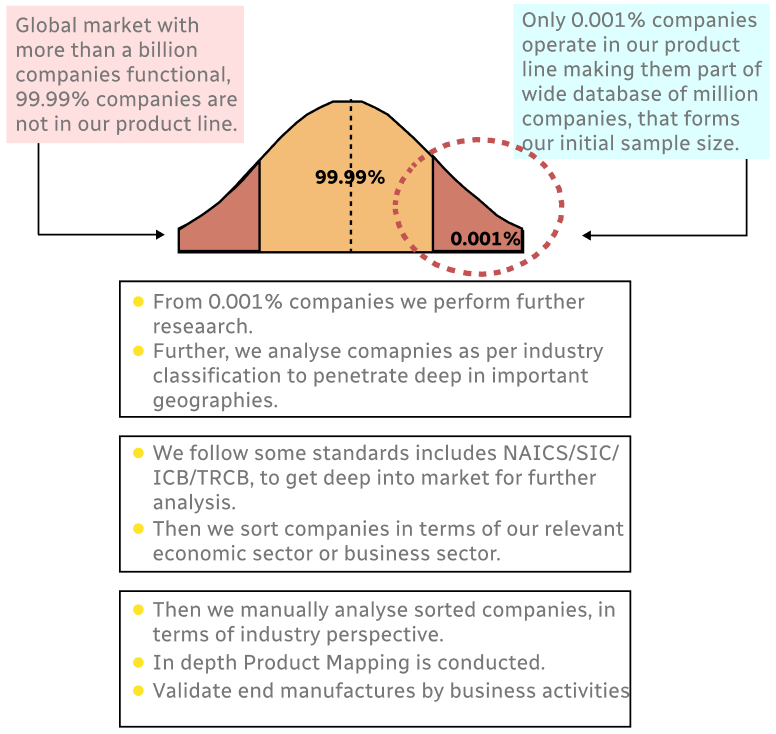
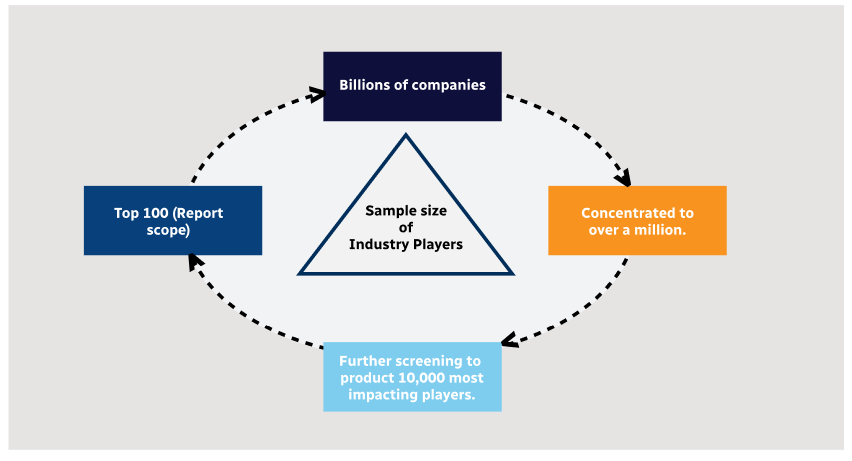
Step 1 - Identification of Relevant Samples Size from Population Database
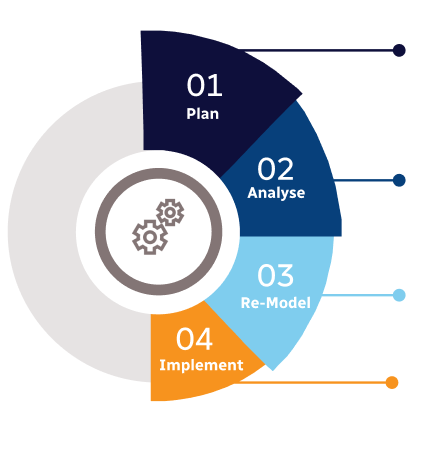
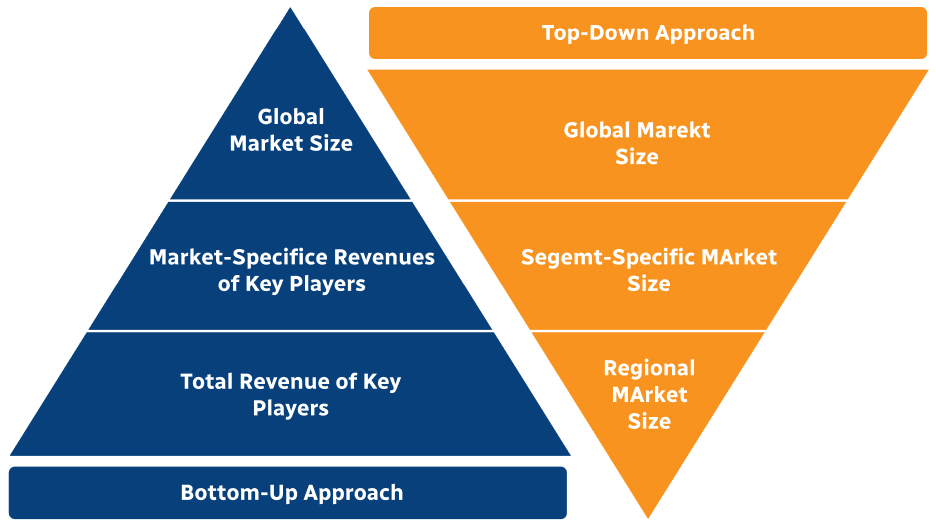
Step 2 - Approaches for Defining Global Market Size (Value, Volume* & Price*)
Note*: In applicable scenarios
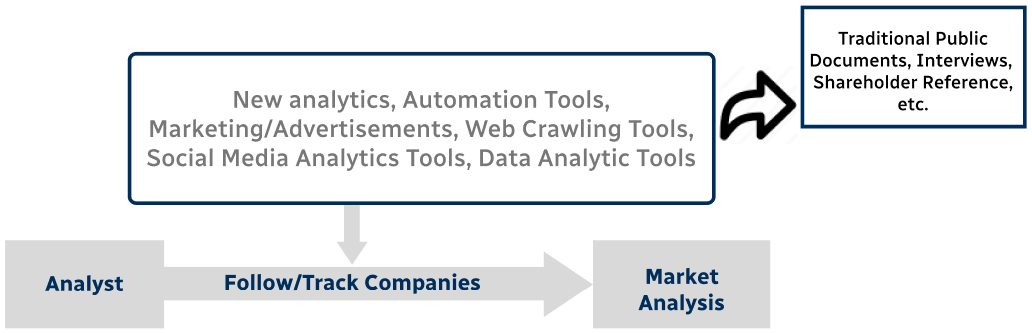
Step 3 - Data Sources
Primary Research
- Web Analytics
- Survey Reports
- Research Institute
- Latest Research Reports
- Opinion Leaders
Secondary Research
- Annual Reports
- White Paper
- Latest Press Release
- Industry Association
- Paid Database
- Investor Presentations
Step 4 - Data Triangulation
Involves using different sources of information in order to increase the validity of a study
These sources are likely to be stakeholders in a program - participants, other researchers, program staff, other community members, and so on.
Then we put all data in single framework & apply various statistical tools to find out the dynamic on the market.
During the analysis stage, feedback from the stakeholder groups would be compared to determine areas of agreement as well as areas of divergence