


Key Insights
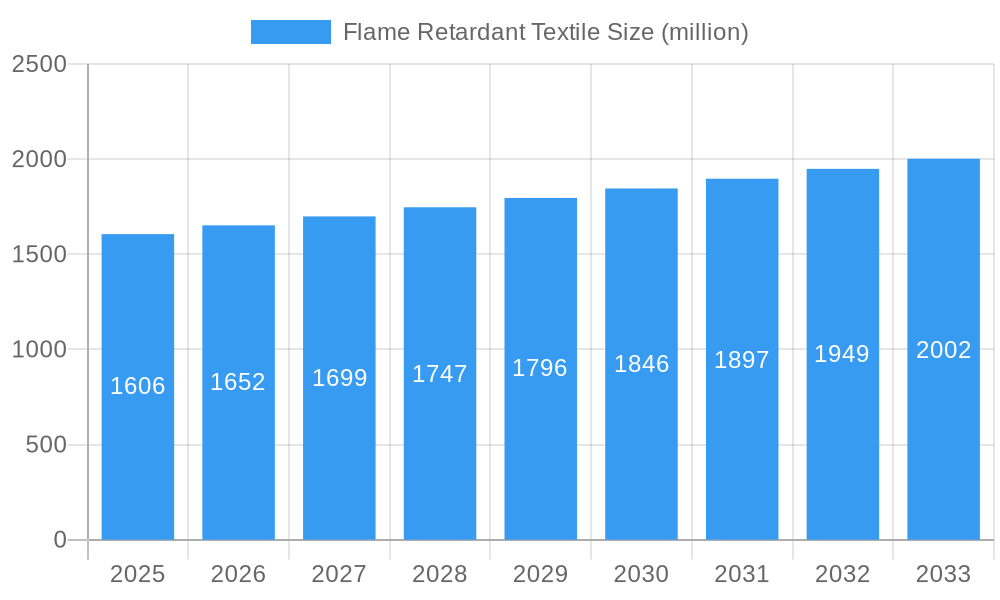
The global Flame Retardant Textile market is poised for steady growth, projected to reach a substantial market size. Driven by increasing safety regulations and a heightened awareness of fire hazards across various industries, the demand for protective fabrics continues to expand. The Oil & Gas and Military sectors are significant contributors, demanding high-performance flame retardant textiles for critical applications where worker safety and operational integrity are paramount. The Chemical Industry also presents a robust demand due to the inherent risks associated with handling hazardous materials. While the Fire Fighting sector is a foundational market, its continued reliance on advanced flame retardant solutions ensures sustained growth. The Power Industry, with its focus on worker safety in high-risk environments, further bolsters market expansion. Emerging applications and evolving standards are expected to fuel this upward trajectory, with a projected Compound Annual Growth Rate (CAGR) of 2.9% over the forecast period.
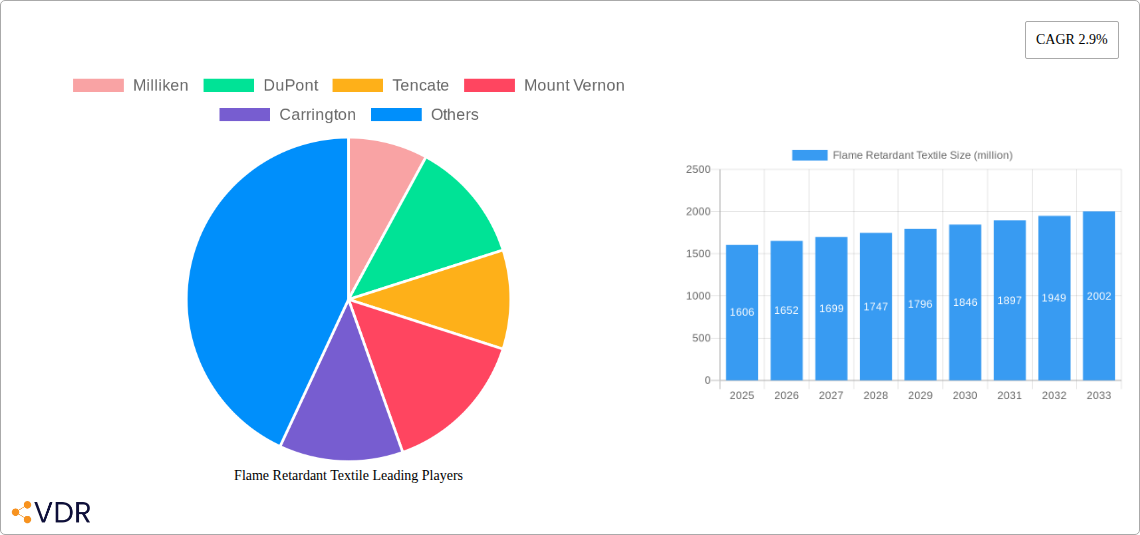
Flame Retardant Textile Market Size (In Billion)

The market's evolution is characterized by a diversification in fabric types, with Aramid Flame Retardant Fabrics leading the charge due to their exceptional thermal stability and strength. Cotton Flame Retardant Fabrics and Polyester/Cotton blends remain popular for their balance of performance, comfort, and cost-effectiveness, particularly in workwear. Acrylic and Nylon/Cotton variants cater to specific performance requirements and niche applications. Geographically, Asia Pacific, led by China and India, is emerging as a significant growth engine, driven by rapid industrialization and increasing investments in worker safety initiatives. North America and Europe, with their established safety standards and mature industrial bases, continue to represent substantial market shares. Key players like Milliken, DuPont, and TenCate are at the forefront, investing in research and development to innovate and introduce advanced flame retardant solutions that meet stringent global safety benchmarks, thereby navigating the market's complexities and driving overall expansion.
Flame Retardant Textile Company Market Share
Flame Retardant Textile Market: Comprehensive Analysis and Growth Outlook (2019-2033)
This comprehensive report provides an in-depth analysis of the global Flame Retardant Textile market, encompassing market dynamics, growth trends, regional dominance, product landscape, key drivers, challenges, opportunities, and a detailed outlook for the period 2019–2033, with 2025 serving as the base and estimated year. Focusing on high-traffic keywords such as "flame retardant fabric," "FR textiles," "protective clothing materials," and "industrial safety fabrics," this report is optimized for search engines and designed to engage industry professionals, procurement managers, and strategic decision-makers. We delve into parent and child market segments, offering unparalleled insights into market evolution and future potential.
Flame Retardant Textile Market Dynamics & Structure
The Flame Retardant Textile market exhibits a moderately concentrated structure, with leading players like Milliken, DuPont, Tencate, Mount Vernon, Carrington, Indorama Ventures, and Syensqo holding significant market shares. Technological innovation remains a primary driver, fueled by advancements in chemical treatments, inherently flame-resistant fibers such as aramid and modacrylics, and novel weaving techniques that enhance durability and comfort without compromising safety. Regulatory frameworks, particularly those governing occupational safety in high-risk industries like Oil & Gas, Chemical Industry, and Fire Fighting, are critical in shaping market demand. Competitive product substitutes include traditional materials with topical FR treatments, which are often lower in cost but less durable, and the growing adoption of advanced FR solutions. End-user demographics are diverse, ranging from industrial workers requiring robust protection to consumers seeking enhanced fire safety in home furnishings. Mergers and acquisitions (M&A) are a recurring trend, with recent activities indicating consolidation and strategic vertical integration. For instance, the acquisition of a specialty fabric producer by a major chemical company for an estimated $50 million in 2023 highlights the drive for enhanced R&D and market access. Barriers to innovation include the high cost of developing and certifying new FR technologies and the need for extensive testing to meet stringent global standards.
- Market Concentration: Moderately concentrated with key players dominating.
- Technological Innovation: Driven by advanced FR chemicals, inherently FR fibers, and novel fabric constructions.
- Regulatory Influence: Strict occupational safety regulations in hazardous industries are a major demand driver.
- Competitive Landscape: Competition from topical treatments versus inherently FR solutions.
- End-User Diversity: Industrial sectors and consumer markets.
- M&A Activity: Strategic acquisitions to enhance capabilities and market reach. For example, an estimated $100 million in M&A deal volume was observed in the last two years.
Flame Retardant Textile Growth Trends & Insights
The Flame Retardant Textile market is poised for substantial growth, projected to reach an estimated $12,500 million by 2033, exhibiting a Compound Annual Growth Rate (CAGR) of approximately 7.2% during the forecast period. This expansion is propelled by increasing global awareness of workplace safety, stricter legislative mandates across various industries, and a growing demand for enhanced personal protective equipment (PPE). The adoption rates for advanced FR textiles are steadily rising, particularly in sectors with inherent fire risks. Technological disruptions, such as the development of halogen-free flame retardants and bio-based FR solutions, are gaining traction due to environmental concerns and regulatory pressures. Consumer behavior is also shifting, with an increasing preference for textiles that offer superior safety features alongside comfort and aesthetics, especially in the Military and Power Industry applications. The market penetration of specialized FR fabrics is expanding beyond traditional applications into areas like transportation, construction, and hospitality, driven by evolving safety standards and a proactive approach to risk mitigation. The estimated market size for 2025 is $7,800 million, with significant contributions from the Oil & Gas and Fire Fighting segments. The increasing demand for sustainable and high-performance FR textiles is a key trend influencing product development and market strategies.
Dominant Regions, Countries, or Segments in Flame Retardant Textile
The Asia-Pacific region is projected to be the dominant force in the Flame Retardant Textile market throughout the forecast period, driven by rapid industrialization, a burgeoning manufacturing sector, and increasing investments in worker safety initiatives. Countries such as China, India, and South Korea are at the forefront of this growth, fueled by robust demand from the Oil & Gas, Chemical Industry, and Power Industry sectors. The Fire Fighting segment, a crucial application, also sees significant traction due to government-led initiatives to enhance emergency response capabilities.
Within the Type segment, Aramid Flame Retardant Fabric and Polyester/Cotton Flame Retardant Fabric are expected to lead market growth. Aramid fibers, known for their exceptional thermal stability and inherent flame resistance, are vital for high-performance protective clothing in demanding environments. The market share for Aramid FR fabrics is estimated to be around 30% of the total market by 2025. Polyester/Cotton blends offer a balance of durability, comfort, and cost-effectiveness, making them widely adopted across various industrial applications. The estimated market size for the Asia-Pacific region in 2025 is projected to be $3,200 million, with a projected CAGR of 7.8% from 2025-2033.
- Dominant Region: Asia-Pacific, driven by industrial growth and safety regulations.
- Key Countries: China, India, South Korea.
- Leading Application Segment: Oil & Gas, Chemical Industry, Fire Fighting.
- Leading Type Segment: Aramid Flame Retardant Fabric, Polyester/Cotton Flame Retardant Fabric.
- Market Share (Aramid FR): Approximately 30% by 2025.
- Regional Market Size (Asia-Pacific, 2025): Estimated at $3,200 million.
Flame Retardant Textile Product Landscape
The Flame Retardant Textile product landscape is characterized by continuous innovation focused on enhancing safety, comfort, and sustainability. Leading companies are actively developing advanced FR finishes and intrinsically flame-resistant fibers that offer superior performance under extreme conditions. Innovations include the development of lighter-weight, more breathable fabrics for improved wearer comfort in demanding applications like Fire Fighting and Military operations. Furthermore, there's a strong emphasis on eco-friendly FR solutions, such as halogen-free treatments and bio-based materials, to meet stringent environmental regulations and consumer preferences. Product differentiation often lies in the durability of the FR treatment, its resistance to washing and wear, and its impact on the fabric's tactile properties.
Key Drivers, Barriers & Challenges in Flame Retardant Textile
The Flame Retardant Textile market is primarily propelled by the increasing stringency of safety regulations worldwide, particularly in high-risk industrial sectors like Oil & Gas and the Chemical Industry. Growing awareness of workplace hazards and the rising demand for high-performance Personal Protective Equipment (PPE) are significant growth accelerators. Technological advancements in FR fiber technology and chemical treatments are also crucial drivers.
However, the market faces several barriers and challenges. The high cost associated with advanced FR textile production and certification remains a significant restraint. Supply chain disruptions, as witnessed in recent years, can impact raw material availability and cost, affecting market stability. Regulatory hurdles, though a driver, also present a challenge due to varying international standards and the continuous need for compliance updates. Competitive pressures from lower-cost alternatives and the need to balance FR performance with wearer comfort and fabric aesthetics pose ongoing challenges for manufacturers. The estimated cost of compliance for new FR formulations can range from $500,000 to $2 million.
Emerging Opportunities in Flame Retardant Textile
Emerging opportunities in the Flame Retardant Textile market lie in the development of smart textiles with integrated FR properties for enhanced safety monitoring and communication. The growing demand for sustainable and bio-based FR solutions presents a significant untapped market, driven by evolving consumer preferences and stricter environmental regulations. Furthermore, expanding applications into niche sectors like electric vehicle (EV) battery protection and advanced aerospace components offers substantial growth potential. The increasing trend towards durable FR finishes that can withstand multiple industrial washes is another area ripe for innovation and market penetration.
Growth Accelerators in the Flame Retardant Textile Industry
Long-term growth in the Flame Retardant Textile industry will be significantly accelerated by continued technological breakthroughs in developing inherently flame-resistant fibers with improved performance characteristics, such as enhanced tensile strength and chemical resistance. Strategic partnerships between chemical manufacturers, textile producers, and end-users will foster innovation and streamline the adoption of new FR technologies. Market expansion into emerging economies, driven by their rapid industrial development and increasing focus on occupational safety, will also serve as a crucial growth catalyst. The development of multi-functional FR textiles that offer additional benefits like moisture-wicking, anti-microbial properties, and enhanced durability will further drive adoption and market value.
Key Players Shaping the Flame Retardant Textile Market
- Milliken
- DuPont
- Tencate
- Mount Vernon
- Carrington
- Shumer Textil GmbH
- Indorama Ventures
- SSM Industries
- IBENA
- Stedfast
- Klopman
- Gore
- Safety Components
- Daletec
- Syensqo
- Marina
- Waubridge Specialty Fabrics
- Glen Raven
- Wilkie
- Yulong Textile
- Xinxiang Hushen
- Xiangxin Xinke
- Xinxiang Zhuocheng
- Shanghai Sro Protective Equipment
- Taiwan KK Corp
- Wujiang Youtong Textile
- Shandong Lushi Special Fabric Technology
Notable Milestones in Flame Retardant Textile Sector
- 2019: Launch of a new generation of halogen-free FR treatments by a major chemical company, offering enhanced environmental compatibility.
- 2020: Increased demand for FR fabrics in medical applications due to the global pandemic, leading to new product developments and capacity expansions.
- 2021: A significant acquisition in the FR textile sector, with a strategic player acquiring a niche manufacturer to strengthen its product portfolio, valued at an estimated $75 million.
- 2022: Introduction of bio-based FR solutions by several key players, responding to growing market demand for sustainable textiles.
- 2023: Development of advanced aramid fiber blends offering superior thermal protection and enhanced comfort for Fire Fighting gear.
- 2024: Increased regulatory focus on stricter flammability standards for textiles in public spaces and transportation, driving innovation and market growth.
In-Depth Flame Retardant Textile Market Outlook
The future market outlook for Flame Retardant Textile is exceptionally promising, driven by escalating global safety standards and persistent industrial growth in critical sectors. Key growth accelerators will include sustained investment in R&D for high-performance, sustainable FR materials, alongside strategic market expansion into developing economies with a growing emphasis on worker protection. The increasing demand for multi-functional textiles, integrating FR properties with other performance characteristics, presents significant strategic opportunities for market leaders. The market is projected to continue its upward trajectory, offering substantial returns for innovators and early adopters of advanced FR textile technologies. The estimated total market value is expected to reach $12,500 million by 2033.
Flame Retardant Textile Segmentation
-
1. Application
- 1.1. Fire Fighting
- 1.2. Oil & Gas
- 1.3. Military
- 1.4. Chemical Industry
- 1.5. Power Industry
- 1.6. Other
-
2. Type
- 2.1. Aramid Flame Retardant Fabric
- 2.2. Cotton Flame Retardant Fabric
- 2.3. Polyester/Cotton Flame Retardant Fabric
- 2.4. Acrylic Flame Retardant Fabric
- 2.5. Nylon/Cotton Flame Retardant Fabric
- 2.6. Other
Flame Retardant Textile Segmentation By Geography
-
1. North America
- 1.1. United States
- 1.2. Canada
- 1.3. Mexico
-
2. South America
- 2.1. Brazil
- 2.2. Argentina
- 2.3. Rest of South America
-
3. Europe
- 3.1. United Kingdom
- 3.2. Germany
- 3.3. France
- 3.4. Italy
- 3.5. Spain
- 3.6. Russia
- 3.7. Benelux
- 3.8. Nordics
- 3.9. Rest of Europe
-
4. Middle East & Africa
- 4.1. Turkey
- 4.2. Israel
- 4.3. GCC
- 4.4. North Africa
- 4.5. South Africa
- 4.6. Rest of Middle East & Africa
-
5. Asia Pacific
- 5.1. China
- 5.2. India
- 5.3. Japan
- 5.4. South Korea
- 5.5. ASEAN
- 5.6. Oceania
- 5.7. Rest of Asia Pacific
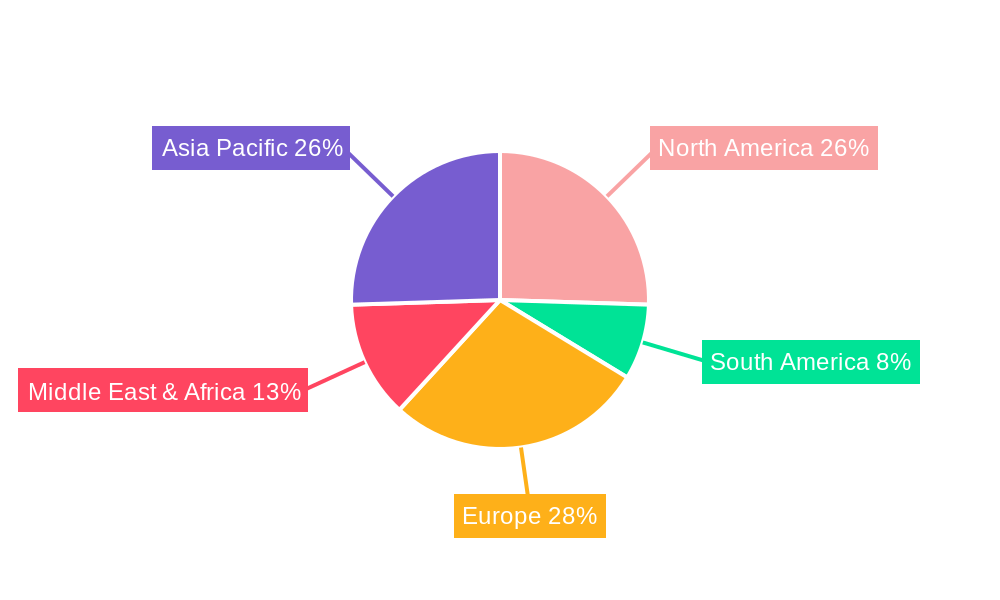
Flame Retardant Textile Regional Market Share
Geographic Coverage of Flame Retardant Textile
Flame Retardant Textile REPORT HIGHLIGHTS
| Aspects | Details |
|---|---|
| Study Period | 2020-2034 |
| Base Year | 2025 |
| Estimated Year | 2026 |
| Forecast Period | 2026-2034 |
| Historical Period | 2020-2025 |
| Growth Rate | CAGR of 2.9% from 2020-2034 |
| Segmentation |
|
Table of Contents
- 1. Introduction
- 1.1. Research Scope
- 1.2. Market Segmentation
- 1.3. Research Methodology
- 1.4. Definitions and Assumptions
- 2. Executive Summary
- 2.1. Introduction
- 3. Market Dynamics
- 3.1. Introduction
- 3.2. Market Drivers
- 3.3. Market Restrains
- 3.4. Market Trends
- 4. Market Factor Analysis
- 4.1. Porters Five Forces
- 4.2. Supply/Value Chain
- 4.3. PESTEL analysis
- 4.4. Market Entropy
- 4.5. Patent/Trademark Analysis
- 5. Global Flame Retardant Textile Analysis, Insights and Forecast, 2020-2032
- 5.1. Market Analysis, Insights and Forecast - by Application
- 5.1.1. Fire Fighting
- 5.1.2. Oil & Gas
- 5.1.3. Military
- 5.1.4. Chemical Industry
- 5.1.5. Power Industry
- 5.1.6. Other
- 5.2. Market Analysis, Insights and Forecast - by Type
- 5.2.1. Aramid Flame Retardant Fabric
- 5.2.2. Cotton Flame Retardant Fabric
- 5.2.3. Polyester/Cotton Flame Retardant Fabric
- 5.2.4. Acrylic Flame Retardant Fabric
- 5.2.5. Nylon/Cotton Flame Retardant Fabric
- 5.2.6. Other
- 5.3. Market Analysis, Insights and Forecast - by Region
- 5.3.1. North America
- 5.3.2. South America
- 5.3.3. Europe
- 5.3.4. Middle East & Africa
- 5.3.5. Asia Pacific
- 5.1. Market Analysis, Insights and Forecast - by Application
- 6. North America Flame Retardant Textile Analysis, Insights and Forecast, 2020-2032
- 6.1. Market Analysis, Insights and Forecast - by Application
- 6.1.1. Fire Fighting
- 6.1.2. Oil & Gas
- 6.1.3. Military
- 6.1.4. Chemical Industry
- 6.1.5. Power Industry
- 6.1.6. Other
- 6.2. Market Analysis, Insights and Forecast - by Type
- 6.2.1. Aramid Flame Retardant Fabric
- 6.2.2. Cotton Flame Retardant Fabric
- 6.2.3. Polyester/Cotton Flame Retardant Fabric
- 6.2.4. Acrylic Flame Retardant Fabric
- 6.2.5. Nylon/Cotton Flame Retardant Fabric
- 6.2.6. Other
- 6.1. Market Analysis, Insights and Forecast - by Application
- 7. South America Flame Retardant Textile Analysis, Insights and Forecast, 2020-2032
- 7.1. Market Analysis, Insights and Forecast - by Application
- 7.1.1. Fire Fighting
- 7.1.2. Oil & Gas
- 7.1.3. Military
- 7.1.4. Chemical Industry
- 7.1.5. Power Industry
- 7.1.6. Other
- 7.2. Market Analysis, Insights and Forecast - by Type
- 7.2.1. Aramid Flame Retardant Fabric
- 7.2.2. Cotton Flame Retardant Fabric
- 7.2.3. Polyester/Cotton Flame Retardant Fabric
- 7.2.4. Acrylic Flame Retardant Fabric
- 7.2.5. Nylon/Cotton Flame Retardant Fabric
- 7.2.6. Other
- 7.1. Market Analysis, Insights and Forecast - by Application
- 8. Europe Flame Retardant Textile Analysis, Insights and Forecast, 2020-2032
- 8.1. Market Analysis, Insights and Forecast - by Application
- 8.1.1. Fire Fighting
- 8.1.2. Oil & Gas
- 8.1.3. Military
- 8.1.4. Chemical Industry
- 8.1.5. Power Industry
- 8.1.6. Other
- 8.2. Market Analysis, Insights and Forecast - by Type
- 8.2.1. Aramid Flame Retardant Fabric
- 8.2.2. Cotton Flame Retardant Fabric
- 8.2.3. Polyester/Cotton Flame Retardant Fabric
- 8.2.4. Acrylic Flame Retardant Fabric
- 8.2.5. Nylon/Cotton Flame Retardant Fabric
- 8.2.6. Other
- 8.1. Market Analysis, Insights and Forecast - by Application
- 9. Middle East & Africa Flame Retardant Textile Analysis, Insights and Forecast, 2020-2032
- 9.1. Market Analysis, Insights and Forecast - by Application
- 9.1.1. Fire Fighting
- 9.1.2. Oil & Gas
- 9.1.3. Military
- 9.1.4. Chemical Industry
- 9.1.5. Power Industry
- 9.1.6. Other
- 9.2. Market Analysis, Insights and Forecast - by Type
- 9.2.1. Aramid Flame Retardant Fabric
- 9.2.2. Cotton Flame Retardant Fabric
- 9.2.3. Polyester/Cotton Flame Retardant Fabric
- 9.2.4. Acrylic Flame Retardant Fabric
- 9.2.5. Nylon/Cotton Flame Retardant Fabric
- 9.2.6. Other
- 9.1. Market Analysis, Insights and Forecast - by Application
- 10. Asia Pacific Flame Retardant Textile Analysis, Insights and Forecast, 2020-2032
- 10.1. Market Analysis, Insights and Forecast - by Application
- 10.1.1. Fire Fighting
- 10.1.2. Oil & Gas
- 10.1.3. Military
- 10.1.4. Chemical Industry
- 10.1.5. Power Industry
- 10.1.6. Other
- 10.2. Market Analysis, Insights and Forecast - by Type
- 10.2.1. Aramid Flame Retardant Fabric
- 10.2.2. Cotton Flame Retardant Fabric
- 10.2.3. Polyester/Cotton Flame Retardant Fabric
- 10.2.4. Acrylic Flame Retardant Fabric
- 10.2.5. Nylon/Cotton Flame Retardant Fabric
- 10.2.6. Other
- 10.1. Market Analysis, Insights and Forecast - by Application
- 11. Competitive Analysis
- 11.1. Global Market Share Analysis 2025
- 11.2. Company Profiles
- 11.2.1 Milliken
- 11.2.1.1. Overview
- 11.2.1.2. Products
- 11.2.1.3. SWOT Analysis
- 11.2.1.4. Recent Developments
- 11.2.1.5. Financials (Based on Availability)
- 11.2.2 DuPont
- 11.2.2.1. Overview
- 11.2.2.2. Products
- 11.2.2.3. SWOT Analysis
- 11.2.2.4. Recent Developments
- 11.2.2.5. Financials (Based on Availability)
- 11.2.3 Tencate
- 11.2.3.1. Overview
- 11.2.3.2. Products
- 11.2.3.3. SWOT Analysis
- 11.2.3.4. Recent Developments
- 11.2.3.5. Financials (Based on Availability)
- 11.2.4 Mount Vernon
- 11.2.4.1. Overview
- 11.2.4.2. Products
- 11.2.4.3. SWOT Analysis
- 11.2.4.4. Recent Developments
- 11.2.4.5. Financials (Based on Availability)
- 11.2.5 Carrington
- 11.2.5.1. Overview
- 11.2.5.2. Products
- 11.2.5.3. SWOT Analysis
- 11.2.5.4. Recent Developments
- 11.2.5.5. Financials (Based on Availability)
- 11.2.6 Shumer Textil GmbH
- 11.2.6.1. Overview
- 11.2.6.2. Products
- 11.2.6.3. SWOT Analysis
- 11.2.6.4. Recent Developments
- 11.2.6.5. Financials (Based on Availability)
- 11.2.7 Indorama Ventures
- 11.2.7.1. Overview
- 11.2.7.2. Products
- 11.2.7.3. SWOT Analysis
- 11.2.7.4. Recent Developments
- 11.2.7.5. Financials (Based on Availability)
- 11.2.8 SSM Industries
- 11.2.8.1. Overview
- 11.2.8.2. Products
- 11.2.8.3. SWOT Analysis
- 11.2.8.4. Recent Developments
- 11.2.8.5. Financials (Based on Availability)
- 11.2.9 IBENA
- 11.2.9.1. Overview
- 11.2.9.2. Products
- 11.2.9.3. SWOT Analysis
- 11.2.9.4. Recent Developments
- 11.2.9.5. Financials (Based on Availability)
- 11.2.10 Stedfast
- 11.2.10.1. Overview
- 11.2.10.2. Products
- 11.2.10.3. SWOT Analysis
- 11.2.10.4. Recent Developments
- 11.2.10.5. Financials (Based on Availability)
- 11.2.11 Klopman
- 11.2.11.1. Overview
- 11.2.11.2. Products
- 11.2.11.3. SWOT Analysis
- 11.2.11.4. Recent Developments
- 11.2.11.5. Financials (Based on Availability)
- 11.2.12 Gore
- 11.2.12.1. Overview
- 11.2.12.2. Products
- 11.2.12.3. SWOT Analysis
- 11.2.12.4. Recent Developments
- 11.2.12.5. Financials (Based on Availability)
- 11.2.13 Safety Components
- 11.2.13.1. Overview
- 11.2.13.2. Products
- 11.2.13.3. SWOT Analysis
- 11.2.13.4. Recent Developments
- 11.2.13.5. Financials (Based on Availability)
- 11.2.14 Daletec
- 11.2.14.1. Overview
- 11.2.14.2. Products
- 11.2.14.3. SWOT Analysis
- 11.2.14.4. Recent Developments
- 11.2.14.5. Financials (Based on Availability)
- 11.2.15 Syensqo
- 11.2.15.1. Overview
- 11.2.15.2. Products
- 11.2.15.3. SWOT Analysis
- 11.2.15.4. Recent Developments
- 11.2.15.5. Financials (Based on Availability)
- 11.2.16 Marina
- 11.2.16.1. Overview
- 11.2.16.2. Products
- 11.2.16.3. SWOT Analysis
- 11.2.16.4. Recent Developments
- 11.2.16.5. Financials (Based on Availability)
- 11.2.17 Waubridge Specialty Fabrics
- 11.2.17.1. Overview
- 11.2.17.2. Products
- 11.2.17.3. SWOT Analysis
- 11.2.17.4. Recent Developments
- 11.2.17.5. Financials (Based on Availability)
- 11.2.18 Glen Raven
- 11.2.18.1. Overview
- 11.2.18.2. Products
- 11.2.18.3. SWOT Analysis
- 11.2.18.4. Recent Developments
- 11.2.18.5. Financials (Based on Availability)
- 11.2.19 Wilkie
- 11.2.19.1. Overview
- 11.2.19.2. Products
- 11.2.19.3. SWOT Analysis
- 11.2.19.4. Recent Developments
- 11.2.19.5. Financials (Based on Availability)
- 11.2.20 Yulong Textile
- 11.2.20.1. Overview
- 11.2.20.2. Products
- 11.2.20.3. SWOT Analysis
- 11.2.20.4. Recent Developments
- 11.2.20.5. Financials (Based on Availability)
- 11.2.21 Xinxiang Hushen
- 11.2.21.1. Overview
- 11.2.21.2. Products
- 11.2.21.3. SWOT Analysis
- 11.2.21.4. Recent Developments
- 11.2.21.5. Financials (Based on Availability)
- 11.2.22 Xiangxin Xinke
- 11.2.22.1. Overview
- 11.2.22.2. Products
- 11.2.22.3. SWOT Analysis
- 11.2.22.4. Recent Developments
- 11.2.22.5. Financials (Based on Availability)
- 11.2.23 Xinxiang Zhuocheng
- 11.2.23.1. Overview
- 11.2.23.2. Products
- 11.2.23.3. SWOT Analysis
- 11.2.23.4. Recent Developments
- 11.2.23.5. Financials (Based on Availability)
- 11.2.24 Shanghai Sro Protective Equipment
- 11.2.24.1. Overview
- 11.2.24.2. Products
- 11.2.24.3. SWOT Analysis
- 11.2.24.4. Recent Developments
- 11.2.24.5. Financials (Based on Availability)
- 11.2.25 Taiwan KK Corp
- 11.2.25.1. Overview
- 11.2.25.2. Products
- 11.2.25.3. SWOT Analysis
- 11.2.25.4. Recent Developments
- 11.2.25.5. Financials (Based on Availability)
- 11.2.26 Wujiang Youtong Textile
- 11.2.26.1. Overview
- 11.2.26.2. Products
- 11.2.26.3. SWOT Analysis
- 11.2.26.4. Recent Developments
- 11.2.26.5. Financials (Based on Availability)
- 11.2.27 Shandong Lushi Special Fabric Technology
- 11.2.27.1. Overview
- 11.2.27.2. Products
- 11.2.27.3. SWOT Analysis
- 11.2.27.4. Recent Developments
- 11.2.27.5. Financials (Based on Availability)
- 11.2.1 Milliken
List of Figures
- Figure 1: Global Flame Retardant Textile Revenue Breakdown (million, %) by Region 2025 & 2033
- Figure 2: North America Flame Retardant Textile Revenue (million), by Application 2025 & 2033
- Figure 3: North America Flame Retardant Textile Revenue Share (%), by Application 2025 & 2033
- Figure 4: North America Flame Retardant Textile Revenue (million), by Type 2025 & 2033
- Figure 5: North America Flame Retardant Textile Revenue Share (%), by Type 2025 & 2033
- Figure 6: North America Flame Retardant Textile Revenue (million), by Country 2025 & 2033
- Figure 7: North America Flame Retardant Textile Revenue Share (%), by Country 2025 & 2033
- Figure 8: South America Flame Retardant Textile Revenue (million), by Application 2025 & 2033
- Figure 9: South America Flame Retardant Textile Revenue Share (%), by Application 2025 & 2033
- Figure 10: South America Flame Retardant Textile Revenue (million), by Type 2025 & 2033
- Figure 11: South America Flame Retardant Textile Revenue Share (%), by Type 2025 & 2033
- Figure 12: South America Flame Retardant Textile Revenue (million), by Country 2025 & 2033
- Figure 13: South America Flame Retardant Textile Revenue Share (%), by Country 2025 & 2033
- Figure 14: Europe Flame Retardant Textile Revenue (million), by Application 2025 & 2033
- Figure 15: Europe Flame Retardant Textile Revenue Share (%), by Application 2025 & 2033
- Figure 16: Europe Flame Retardant Textile Revenue (million), by Type 2025 & 2033
- Figure 17: Europe Flame Retardant Textile Revenue Share (%), by Type 2025 & 2033
- Figure 18: Europe Flame Retardant Textile Revenue (million), by Country 2025 & 2033
- Figure 19: Europe Flame Retardant Textile Revenue Share (%), by Country 2025 & 2033
- Figure 20: Middle East & Africa Flame Retardant Textile Revenue (million), by Application 2025 & 2033
- Figure 21: Middle East & Africa Flame Retardant Textile Revenue Share (%), by Application 2025 & 2033
- Figure 22: Middle East & Africa Flame Retardant Textile Revenue (million), by Type 2025 & 2033
- Figure 23: Middle East & Africa Flame Retardant Textile Revenue Share (%), by Type 2025 & 2033
- Figure 24: Middle East & Africa Flame Retardant Textile Revenue (million), by Country 2025 & 2033
- Figure 25: Middle East & Africa Flame Retardant Textile Revenue Share (%), by Country 2025 & 2033
- Figure 26: Asia Pacific Flame Retardant Textile Revenue (million), by Application 2025 & 2033
- Figure 27: Asia Pacific Flame Retardant Textile Revenue Share (%), by Application 2025 & 2033
- Figure 28: Asia Pacific Flame Retardant Textile Revenue (million), by Type 2025 & 2033
- Figure 29: Asia Pacific Flame Retardant Textile Revenue Share (%), by Type 2025 & 2033
- Figure 30: Asia Pacific Flame Retardant Textile Revenue (million), by Country 2025 & 2033
- Figure 31: Asia Pacific Flame Retardant Textile Revenue Share (%), by Country 2025 & 2033
List of Tables
- Table 1: Global Flame Retardant Textile Revenue million Forecast, by Application 2020 & 2033
- Table 2: Global Flame Retardant Textile Revenue million Forecast, by Type 2020 & 2033
- Table 3: Global Flame Retardant Textile Revenue million Forecast, by Region 2020 & 2033
- Table 4: Global Flame Retardant Textile Revenue million Forecast, by Application 2020 & 2033
- Table 5: Global Flame Retardant Textile Revenue million Forecast, by Type 2020 & 2033
- Table 6: Global Flame Retardant Textile Revenue million Forecast, by Country 2020 & 2033
- Table 7: United States Flame Retardant Textile Revenue (million) Forecast, by Application 2020 & 2033
- Table 8: Canada Flame Retardant Textile Revenue (million) Forecast, by Application 2020 & 2033
- Table 9: Mexico Flame Retardant Textile Revenue (million) Forecast, by Application 2020 & 2033
- Table 10: Global Flame Retardant Textile Revenue million Forecast, by Application 2020 & 2033
- Table 11: Global Flame Retardant Textile Revenue million Forecast, by Type 2020 & 2033
- Table 12: Global Flame Retardant Textile Revenue million Forecast, by Country 2020 & 2033
- Table 13: Brazil Flame Retardant Textile Revenue (million) Forecast, by Application 2020 & 2033
- Table 14: Argentina Flame Retardant Textile Revenue (million) Forecast, by Application 2020 & 2033
- Table 15: Rest of South America Flame Retardant Textile Revenue (million) Forecast, by Application 2020 & 2033
- Table 16: Global Flame Retardant Textile Revenue million Forecast, by Application 2020 & 2033
- Table 17: Global Flame Retardant Textile Revenue million Forecast, by Type 2020 & 2033
- Table 18: Global Flame Retardant Textile Revenue million Forecast, by Country 2020 & 2033
- Table 19: United Kingdom Flame Retardant Textile Revenue (million) Forecast, by Application 2020 & 2033
- Table 20: Germany Flame Retardant Textile Revenue (million) Forecast, by Application 2020 & 2033
- Table 21: France Flame Retardant Textile Revenue (million) Forecast, by Application 2020 & 2033
- Table 22: Italy Flame Retardant Textile Revenue (million) Forecast, by Application 2020 & 2033
- Table 23: Spain Flame Retardant Textile Revenue (million) Forecast, by Application 2020 & 2033
- Table 24: Russia Flame Retardant Textile Revenue (million) Forecast, by Application 2020 & 2033
- Table 25: Benelux Flame Retardant Textile Revenue (million) Forecast, by Application 2020 & 2033
- Table 26: Nordics Flame Retardant Textile Revenue (million) Forecast, by Application 2020 & 2033
- Table 27: Rest of Europe Flame Retardant Textile Revenue (million) Forecast, by Application 2020 & 2033
- Table 28: Global Flame Retardant Textile Revenue million Forecast, by Application 2020 & 2033
- Table 29: Global Flame Retardant Textile Revenue million Forecast, by Type 2020 & 2033
- Table 30: Global Flame Retardant Textile Revenue million Forecast, by Country 2020 & 2033
- Table 31: Turkey Flame Retardant Textile Revenue (million) Forecast, by Application 2020 & 2033
- Table 32: Israel Flame Retardant Textile Revenue (million) Forecast, by Application 2020 & 2033
- Table 33: GCC Flame Retardant Textile Revenue (million) Forecast, by Application 2020 & 2033
- Table 34: North Africa Flame Retardant Textile Revenue (million) Forecast, by Application 2020 & 2033
- Table 35: South Africa Flame Retardant Textile Revenue (million) Forecast, by Application 2020 & 2033
- Table 36: Rest of Middle East & Africa Flame Retardant Textile Revenue (million) Forecast, by Application 2020 & 2033
- Table 37: Global Flame Retardant Textile Revenue million Forecast, by Application 2020 & 2033
- Table 38: Global Flame Retardant Textile Revenue million Forecast, by Type 2020 & 2033
- Table 39: Global Flame Retardant Textile Revenue million Forecast, by Country 2020 & 2033
- Table 40: China Flame Retardant Textile Revenue (million) Forecast, by Application 2020 & 2033
- Table 41: India Flame Retardant Textile Revenue (million) Forecast, by Application 2020 & 2033
- Table 42: Japan Flame Retardant Textile Revenue (million) Forecast, by Application 2020 & 2033
- Table 43: South Korea Flame Retardant Textile Revenue (million) Forecast, by Application 2020 & 2033
- Table 44: ASEAN Flame Retardant Textile Revenue (million) Forecast, by Application 2020 & 2033
- Table 45: Oceania Flame Retardant Textile Revenue (million) Forecast, by Application 2020 & 2033
- Table 46: Rest of Asia Pacific Flame Retardant Textile Revenue (million) Forecast, by Application 2020 & 2033
Frequently Asked Questions
1. What is the projected Compound Annual Growth Rate (CAGR) of the Flame Retardant Textile?
The projected CAGR is approximately 2.9%.
2. Which companies are prominent players in the Flame Retardant Textile?
Key companies in the market include Milliken, DuPont, Tencate, Mount Vernon, Carrington, Shumer Textil GmbH, Indorama Ventures, SSM Industries, IBENA, Stedfast, Klopman, Gore, Safety Components, Daletec, Syensqo, Marina, Waubridge Specialty Fabrics, Glen Raven, Wilkie, Yulong Textile, Xinxiang Hushen, Xiangxin Xinke, Xinxiang Zhuocheng, Shanghai Sro Protective Equipment, Taiwan KK Corp, Wujiang Youtong Textile, Shandong Lushi Special Fabric Technology.
3. What are the main segments of the Flame Retardant Textile?
The market segments include Application, Type.
4. Can you provide details about the market size?
The market size is estimated to be USD 1606 million as of 2022.
5. What are some drivers contributing to market growth?
N/A
6. What are the notable trends driving market growth?
N/A
7. Are there any restraints impacting market growth?
N/A
8. Can you provide examples of recent developments in the market?
N/A
9. What pricing options are available for accessing the report?
Pricing options include single-user, multi-user, and enterprise licenses priced at USD 5900.00, USD 8850.00, and USD 11800.00 respectively.
10. Is the market size provided in terms of value or volume?
The market size is provided in terms of value, measured in million.
11. Are there any specific market keywords associated with the report?
Yes, the market keyword associated with the report is "Flame Retardant Textile," which aids in identifying and referencing the specific market segment covered.
12. How do I determine which pricing option suits my needs best?
The pricing options vary based on user requirements and access needs. Individual users may opt for single-user licenses, while businesses requiring broader access may choose multi-user or enterprise licenses for cost-effective access to the report.
13. Are there any additional resources or data provided in the Flame Retardant Textile report?
While the report offers comprehensive insights, it's advisable to review the specific contents or supplementary materials provided to ascertain if additional resources or data are available.
14. How can I stay updated on further developments or reports in the Flame Retardant Textile?
To stay informed about further developments, trends, and reports in the Flame Retardant Textile, consider subscribing to industry newsletters, following relevant companies and organizations, or regularly checking reputable industry news sources and publications.
Methodology
Step 1 - Identification of Relevant Samples Size from Population Database



Step 2 - Approaches for Defining Global Market Size (Value, Volume* & Price*)

Note*: In applicable scenarios
Step 3 - Data Sources
Primary Research
- Web Analytics
- Survey Reports
- Research Institute
- Latest Research Reports
- Opinion Leaders
Secondary Research
- Annual Reports
- White Paper
- Latest Press Release
- Industry Association
- Paid Database
- Investor Presentations

Step 4 - Data Triangulation
Involves using different sources of information in order to increase the validity of a study
These sources are likely to be stakeholders in a program - participants, other researchers, program staff, other community members, and so on.
Then we put all data in single framework & apply various statistical tools to find out the dynamic on the market.
During the analysis stage, feedback from the stakeholder groups would be compared to determine areas of agreement as well as areas of divergence