
Key Insights
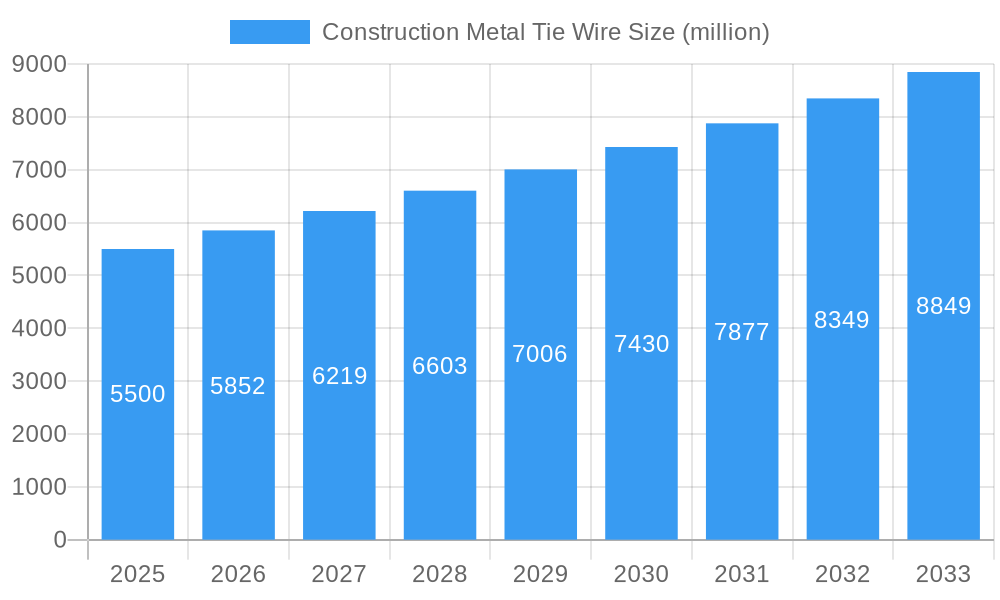
The global Construction Metal Tie Wire market is poised for significant expansion, projected to reach an estimated market size of USD 5,500 million by 2025, with a robust Compound Annual Growth Rate (CAGR) of 6.5% anticipated from 2025 to 2033. This growth is primarily fueled by the escalating demand for reinforced concrete structures across residential and commercial building projects worldwide. Key drivers include rapid urbanization, increasing infrastructure development initiatives, and the growing need for reliable and durable construction materials. The market's trajectory is further bolstered by advancements in manufacturing technologies, leading to improved product quality and cost-effectiveness. The versatility of metal tie wires in binding reinforcing bars, ensuring structural integrity, and their cost-efficiency compared to alternative binding methods contribute significantly to their widespread adoption.
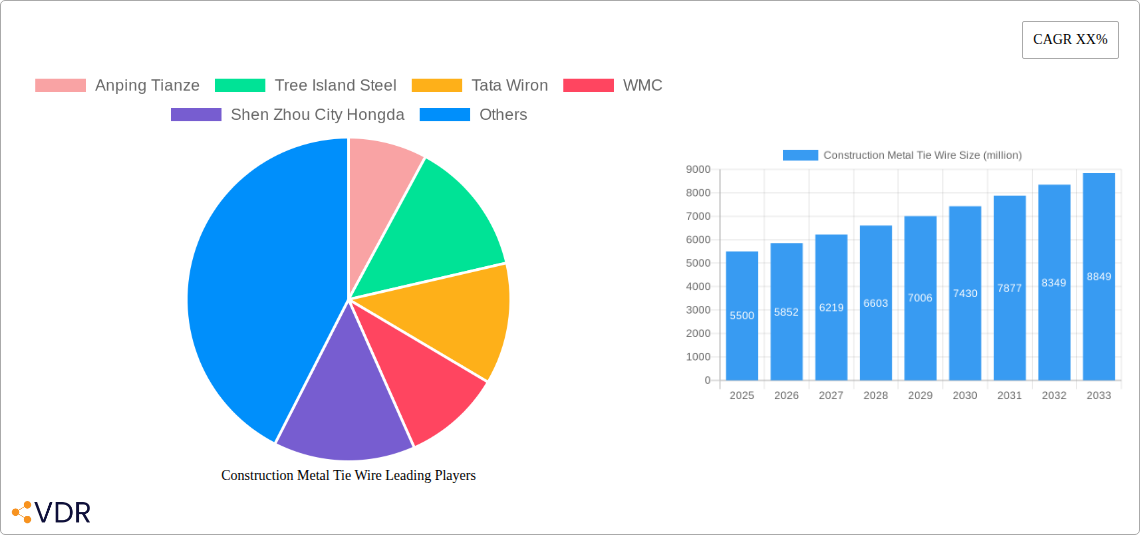
Construction Metal Tie Wire Market Size (In Billion)

However, the market is not without its challenges. Fluctuations in raw material prices, particularly steel, can impact profit margins for manufacturers and potentially influence pricing strategies. Stringent environmental regulations related to metal production and waste management could also present operational hurdles. Despite these restraints, the inherent advantages of metal tie wires in construction, coupled with continuous innovation in material science and production processes, are expected to sustain market growth. The Asia Pacific region, driven by burgeoning economies and extensive construction activities in countries like China and India, is anticipated to lead market expansion, followed by North America and Europe, which are experiencing steady development in their infrastructure and real estate sectors.
Construction Metal Tie Wire Company Market Share
Construction Metal Tie Wire Market Dynamics & Structure
The global construction metal tie wire market exhibits a moderately consolidated structure, characterized by the presence of established global manufacturers and a significant number of regional players. Market concentration is influenced by economies of scale in production, particularly for galvanized tie wire. Technological innovation, while not revolutionary, focuses on improving wire strength, corrosion resistance, and manufacturing efficiency, driven by advancements in steel alloys and galvanization processes. Regulatory frameworks primarily revolve around construction safety standards and environmental regulations concerning manufacturing emissions and material sourcing, creating a level playing field for compliant producers. Competitive product substitutes include plastic ties and alternative fastening systems, though metal tie wire's inherent strength, durability, and cost-effectiveness in demanding applications maintain its dominance. End-user demographics span construction professionals, DIY enthusiasts, and industrial fabricators, with a growing segment of environmentally conscious builders seeking durable and recyclable materials. Mergers and acquisitions (M&A) activity, though not excessively high, often targets companies with specialized manufacturing capabilities or strong regional distribution networks to enhance market reach and portfolio diversification. For instance, Anping Tianze's acquisition of a smaller regional supplier could signify an effort to bolster its presence in specific construction segments.
- Market Concentration: Moderate, with a few key players holding substantial market share, particularly in bulk galvanized tie wire production.
- Technological Innovation: Focus on material science for enhanced tensile strength and corrosion resistance, and process optimization for cost reduction.
- Regulatory Frameworks: Emphasis on construction safety standards (e.g., ASTM, EN) and environmental compliance.
- Competitive Substitutes: Plastic ties, wire mesh fasteners, and increasingly, automated fastening systems.
- End-User Demographics: Broad, from large-scale commercial developers to individual contractors and industrial users.
- M&A Trends: Strategic acquisitions to expand product lines, geographical reach, or technological expertise.
Construction Metal Tie Wire Growth Trends & Insights
The construction metal tie wire market is projected to witness steady growth, underpinned by robust global infrastructure development and a sustained demand for residential and commercial building projects. The market size is expected to evolve significantly from approximately \$3.1 billion in 2024 to an estimated \$4.2 billion by 2033, exhibiting a Compound Annual Growth Rate (CAGR) of around 3.5%. Adoption rates for metal tie wire remain high, particularly in regions with stringent building codes that prioritize structural integrity and material longevity. Technological disruptions, such as advancements in automated wire bending and tying machines, are indirectly boosting the demand for precisely manufactured tie wire, enhancing its usability and efficiency on job sites. Consumer behavior shifts are also contributing, with a growing awareness of the long-term cost-effectiveness and environmental benefits of durable construction materials. The trend towards prefabrication in construction is also influencing demand, requiring consistent quality and supply of tie wire for modular components. Furthermore, the increasing focus on disaster-resilient construction in earthquake-prone and hurricane-prone regions will necessitate the use of high-strength tie wire for reinforced concrete structures, driving market penetration. The parent market, encompassing all types of construction fasteners, provides a vast landscape for metal tie wire, while the child market, focusing on specialized tie wire for unique applications like rebar tying, shows rapid niche growth. The availability of diverse tie wire types, from basic black annealed to high-strength galvanized options, caters to a wide spectrum of construction needs, further solidifying its market position.
Dominant Regions, Countries, or Segments in Construction Metal Tie Wire
The Commercial Building segment, within the application category, is emerging as a significant driver of growth for the global construction metal tie wire market. This dominance is fueled by extensive investments in commercial infrastructure projects, including office complexes, retail centers, hotels, and industrial facilities worldwide. The sheer scale and complexity of these projects necessitate a substantial volume of high-quality tie wire for reinforcing concrete structures, securing formwork, and various other binding applications. Countries leading in commercial construction, such as China, the United States, India, and various European nations, are consequently key markets for metal tie wire. China, with its ongoing urbanization and infrastructure expansion, represents a colossal market, accounting for an estimated 28% of the global tie wire market share in 2025. The Galvanized Tie Wire type is also a dominant force, owing to its superior corrosion resistance, making it ideal for both interior and exterior applications, particularly in environments exposed to moisture and harsh weather conditions. The forecast period (2025–2033) anticipates continued expansion in commercial construction, driven by economic growth, job creation, and the need for modernizing existing commercial spaces. Furthermore, the increasing adoption of sustainable building practices in commercial developments often favors durable and long-lasting materials like galvanized tie wire. The market share for galvanized tie wire is projected to be around 65% of the total market in 2025.
- Dominant Segment (Application): Commercial Building.
- Key Drivers: Large-scale infrastructure projects, office development, retail expansion, industrial facility construction.
- Market Share (2025): Estimated 45% of the total application market.
- Growth Potential: Strong, driven by economic development and urbanization.
- Dominant Type: Galvanized Tie Wire.
- Key Drivers: Superior corrosion resistance, durability in varied environments, widespread use in reinforced concrete.
- Market Share (2025): Estimated 65% of the total tie wire type market.
- Growth Potential: Sustained high demand due to its versatility and performance.
- Leading Regions/Countries: China, United States, India, European Union.
- Dominance Factors: High construction expenditure, significant FDI in infrastructure, favorable government policies.
- Market Share (China, 2025): Estimated 28% of the global market.
Construction Metal Tie Wire Product Landscape
The construction metal tie wire product landscape is characterized by continuous refinement in material properties and manufacturing processes. Key innovations focus on enhancing tensile strength for greater load-bearing capacity, improving ductility for easier bending and manipulation on-site, and superior corrosion resistance through advanced galvanization techniques or specialized coatings. Performance metrics such as breaking strength (measured in pounds per square inch or Newtons), diameter consistency, and coating thickness are crucial differentiators. Unique selling propositions often lie in providing wire with specific tensile strengths tailored for demanding applications like seismic reinforcement or in specialized finishing for enhanced grip and ease of use with automated tying tools. Technological advancements are enabling the production of tie wire with tighter diameter tolerances, leading to more consistent performance and reduced material waste.
Key Drivers, Barriers & Challenges in Construction Metal Tie Wire
Key Drivers: The construction metal tie wire market is propelled by robust global infrastructure development, a sustained demand for residential and commercial construction projects, and the inherent durability and cost-effectiveness of metal tie wire in structural applications. Growing emphasis on disaster-resilient construction in seismic and hurricane-prone areas further amplifies the need for high-strength tie wire. Technological advancements in manufacturing, leading to improved material properties like higher tensile strength and enhanced corrosion resistance, also act as significant drivers.
Barriers & Challenges: Key challenges include the volatility of raw material prices, particularly steel, which can impact profit margins and price competitiveness. Supply chain disruptions, as witnessed in recent years, can lead to material shortages and delivery delays. Stringent environmental regulations concerning steel production and galvanization processes can increase manufacturing costs. Furthermore, the emergence of alternative fastening solutions, while not yet posing a significant threat, represents a potential long-term challenge.
Emerging Opportunities in Construction Metal Tie Wire
Emerging opportunities lie in the growing demand for specialized tie wire formulations for high-performance construction applications, such as pre-stressed concrete and advanced composite structures. The increasing focus on sustainable construction practices presents an opportunity for manufacturers to develop and promote tie wire made from recycled steel or with environmentally friendly coatings. Untapped markets in developing regions with rapidly expanding construction sectors also offer significant growth potential. Furthermore, the integration of tie wire with smart construction technologies, such as embedded sensors for structural monitoring, represents a futuristic avenue for innovation.
Growth Accelerators in the Construction Metal Tie Wire Industry
Catalysts driving long-term growth in the construction metal tie wire industry include continued global urbanization and the associated need for massive infrastructure and housing projects. Strategic partnerships between tie wire manufacturers and construction technology firms to develop integrated solutions for automated rebar tying systems are significant growth accelerators. Market expansion strategies, focusing on penetrating underserved geographical regions with substantial construction pipelines, also play a crucial role. Technological breakthroughs in metallurgy, leading to lighter, stronger, and more corrosion-resistant tie wire, will continue to push the boundaries of its application and demand.
Key Players Shaping the Construction Metal Tie Wire Market
- Anping Tianze
- Tree Island Steel
- Tata Wiron
- WMC
- Shen Zhou City Hongda
- Wanzhi Steel
- DAVIS WIRE CORPORATION
- HY-TEN Ltd
- Tianjin Xintie
- MAR-MAC
- Tianjin Bluekin Industries
- Shandong Xingying Environmental Energy Technology
- American Wire Tie
- Andaluza
- Anping Shengsen
- Jingda
- RFA-Tech
- Tie & Wire
Notable Milestones in Construction Metal Tie Wire Sector
- 2020: Wanzhi Steel significantly expands its steel production capacity, increasing the global supply of raw materials for tie wire.
- 2021: Tata Wiron launches a new line of high-tensile strength tie wire, catering to specialized infrastructure projects.
- 2022: MAR-MAC invests in advanced galvanization technology to improve the corrosion resistance and lifespan of its tie wire products.
- 2023: Anping Tianze acquires a regional competitor, strengthening its market presence in East Asia.
- 2024: Tree Island Steel announces plans for further automation in its manufacturing facilities to enhance production efficiency and product consistency.
In-Depth Construction Metal Tie Wire Market Outlook
The future outlook for the construction metal tie wire market is exceptionally promising, driven by a confluence of global megatrends. Continued urbanization and massive infrastructure investments worldwide will ensure a consistent and growing demand for reliable construction materials. The increasing focus on sustainability and resilience in construction presents opportunities for manufacturers to innovate with eco-friendly materials and products designed for extreme environments. Strategic partnerships and technological advancements in manufacturing will lead to the development of higher-performing, more efficient tie wire solutions. Emerging markets offer significant untapped potential, while developed economies will see demand sustained by renovation and modernization projects. The market is poised for steady, robust growth, making it an attractive sector for investment and innovation.
Construction Metal Tie Wire Segmentation
-
1. Application
- 1.1. Residential Building
- 1.2. Commercial Building
- 1.3. Others
-
2. Types
- 2.1. Black Annealed Tie Wire
- 2.2. Galvanized Tie Wire
- 2.3. Others
Construction Metal Tie Wire Segmentation By Geography
-
1. North America
- 1.1. United States
- 1.2. Canada
- 1.3. Mexico
-
2. South America
- 2.1. Brazil
- 2.2. Argentina
- 2.3. Rest of South America
-
3. Europe
- 3.1. United Kingdom
- 3.2. Germany
- 3.3. France
- 3.4. Italy
- 3.5. Spain
- 3.6. Russia
- 3.7. Benelux
- 3.8. Nordics
- 3.9. Rest of Europe
-
4. Middle East & Africa
- 4.1. Turkey
- 4.2. Israel
- 4.3. GCC
- 4.4. North Africa
- 4.5. South Africa
- 4.6. Rest of Middle East & Africa
-
5. Asia Pacific
- 5.1. China
- 5.2. India
- 5.3. Japan
- 5.4. South Korea
- 5.5. ASEAN
- 5.6. Oceania
- 5.7. Rest of Asia Pacific
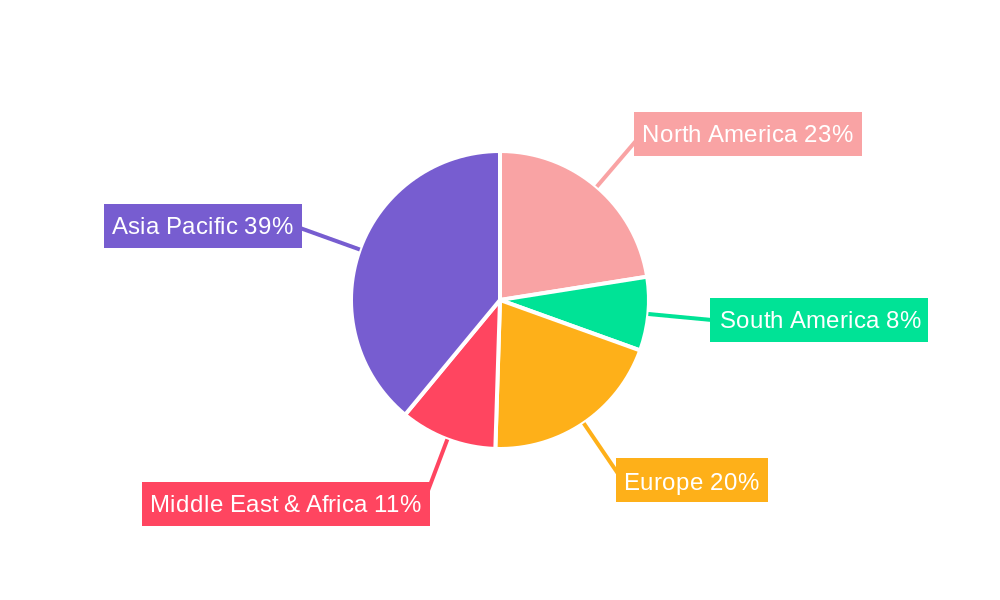
Construction Metal Tie Wire Regional Market Share
Geographic Coverage of Construction Metal Tie Wire
Construction Metal Tie Wire REPORT HIGHLIGHTS
| Aspects | Details |
|---|---|
| Study Period | 2020-2034 |
| Base Year | 2025 |
| Estimated Year | 2026 |
| Forecast Period | 2026-2034 |
| Historical Period | 2020-2025 |
| Growth Rate | CAGR of 8.15% from 2020-2034 |
| Segmentation |
|
Table of Contents
- 1. Introduction
- 1.1. Research Scope
- 1.2. Market Segmentation
- 1.3. Research Methodology
- 1.4. Definitions and Assumptions
- 2. Executive Summary
- 2.1. Introduction
- 3. Market Dynamics
- 3.1. Introduction
- 3.2. Market Drivers
- 3.3. Market Restrains
- 3.4. Market Trends
- 4. Market Factor Analysis
- 4.1. Porters Five Forces
- 4.2. Supply/Value Chain
- 4.3. PESTEL analysis
- 4.4. Market Entropy
- 4.5. Patent/Trademark Analysis
- 5. Global Construction Metal Tie Wire Analysis, Insights and Forecast, 2020-2032
- 5.1. Market Analysis, Insights and Forecast - by Application
- 5.1.1. Residential Building
- 5.1.2. Commercial Building
- 5.1.3. Others
- 5.2. Market Analysis, Insights and Forecast - by Types
- 5.2.1. Black Annealed Tie Wire
- 5.2.2. Galvanized Tie Wire
- 5.2.3. Others
- 5.3. Market Analysis, Insights and Forecast - by Region
- 5.3.1. North America
- 5.3.2. South America
- 5.3.3. Europe
- 5.3.4. Middle East & Africa
- 5.3.5. Asia Pacific
- 5.1. Market Analysis, Insights and Forecast - by Application
- 6. North America Construction Metal Tie Wire Analysis, Insights and Forecast, 2020-2032
- 6.1. Market Analysis, Insights and Forecast - by Application
- 6.1.1. Residential Building
- 6.1.2. Commercial Building
- 6.1.3. Others
- 6.2. Market Analysis, Insights and Forecast - by Types
- 6.2.1. Black Annealed Tie Wire
- 6.2.2. Galvanized Tie Wire
- 6.2.3. Others
- 6.1. Market Analysis, Insights and Forecast - by Application
- 7. South America Construction Metal Tie Wire Analysis, Insights and Forecast, 2020-2032
- 7.1. Market Analysis, Insights and Forecast - by Application
- 7.1.1. Residential Building
- 7.1.2. Commercial Building
- 7.1.3. Others
- 7.2. Market Analysis, Insights and Forecast - by Types
- 7.2.1. Black Annealed Tie Wire
- 7.2.2. Galvanized Tie Wire
- 7.2.3. Others
- 7.1. Market Analysis, Insights and Forecast - by Application
- 8. Europe Construction Metal Tie Wire Analysis, Insights and Forecast, 2020-2032
- 8.1. Market Analysis, Insights and Forecast - by Application
- 8.1.1. Residential Building
- 8.1.2. Commercial Building
- 8.1.3. Others
- 8.2. Market Analysis, Insights and Forecast - by Types
- 8.2.1. Black Annealed Tie Wire
- 8.2.2. Galvanized Tie Wire
- 8.2.3. Others
- 8.1. Market Analysis, Insights and Forecast - by Application
- 9. Middle East & Africa Construction Metal Tie Wire Analysis, Insights and Forecast, 2020-2032
- 9.1. Market Analysis, Insights and Forecast - by Application
- 9.1.1. Residential Building
- 9.1.2. Commercial Building
- 9.1.3. Others
- 9.2. Market Analysis, Insights and Forecast - by Types
- 9.2.1. Black Annealed Tie Wire
- 9.2.2. Galvanized Tie Wire
- 9.2.3. Others
- 9.1. Market Analysis, Insights and Forecast - by Application
- 10. Asia Pacific Construction Metal Tie Wire Analysis, Insights and Forecast, 2020-2032
- 10.1. Market Analysis, Insights and Forecast - by Application
- 10.1.1. Residential Building
- 10.1.2. Commercial Building
- 10.1.3. Others
- 10.2. Market Analysis, Insights and Forecast - by Types
- 10.2.1. Black Annealed Tie Wire
- 10.2.2. Galvanized Tie Wire
- 10.2.3. Others
- 10.1. Market Analysis, Insights and Forecast - by Application
- 11. Competitive Analysis
- 11.1. Global Market Share Analysis 2025
- 11.2. Company Profiles
- 11.2.1 Anping Tianze
- 11.2.1.1. Overview
- 11.2.1.2. Products
- 11.2.1.3. SWOT Analysis
- 11.2.1.4. Recent Developments
- 11.2.1.5. Financials (Based on Availability)
- 11.2.2 Tree Island Steel
- 11.2.2.1. Overview
- 11.2.2.2. Products
- 11.2.2.3. SWOT Analysis
- 11.2.2.4. Recent Developments
- 11.2.2.5. Financials (Based on Availability)
- 11.2.3 Tata Wiron
- 11.2.3.1. Overview
- 11.2.3.2. Products
- 11.2.3.3. SWOT Analysis
- 11.2.3.4. Recent Developments
- 11.2.3.5. Financials (Based on Availability)
- 11.2.4 WMC
- 11.2.4.1. Overview
- 11.2.4.2. Products
- 11.2.4.3. SWOT Analysis
- 11.2.4.4. Recent Developments
- 11.2.4.5. Financials (Based on Availability)
- 11.2.5 Shen Zhou City Hongda
- 11.2.5.1. Overview
- 11.2.5.2. Products
- 11.2.5.3. SWOT Analysis
- 11.2.5.4. Recent Developments
- 11.2.5.5. Financials (Based on Availability)
- 11.2.6 Wanzhi Steel
- 11.2.6.1. Overview
- 11.2.6.2. Products
- 11.2.6.3. SWOT Analysis
- 11.2.6.4. Recent Developments
- 11.2.6.5. Financials (Based on Availability)
- 11.2.7 DAVIS WIRE CORPORATION
- 11.2.7.1. Overview
- 11.2.7.2. Products
- 11.2.7.3. SWOT Analysis
- 11.2.7.4. Recent Developments
- 11.2.7.5. Financials (Based on Availability)
- 11.2.8 HY-TEN Ltd
- 11.2.8.1. Overview
- 11.2.8.2. Products
- 11.2.8.3. SWOT Analysis
- 11.2.8.4. Recent Developments
- 11.2.8.5. Financials (Based on Availability)
- 11.2.9 Tianjin Xintie
- 11.2.9.1. Overview
- 11.2.9.2. Products
- 11.2.9.3. SWOT Analysis
- 11.2.9.4. Recent Developments
- 11.2.9.5. Financials (Based on Availability)
- 11.2.10 MAR-MAC
- 11.2.10.1. Overview
- 11.2.10.2. Products
- 11.2.10.3. SWOT Analysis
- 11.2.10.4. Recent Developments
- 11.2.10.5. Financials (Based on Availability)
- 11.2.11 Tianjin Bluekin Industries
- 11.2.11.1. Overview
- 11.2.11.2. Products
- 11.2.11.3. SWOT Analysis
- 11.2.11.4. Recent Developments
- 11.2.11.5. Financials (Based on Availability)
- 11.2.12 Shandong Xingying Environmental Energy Technology
- 11.2.12.1. Overview
- 11.2.12.2. Products
- 11.2.12.3. SWOT Analysis
- 11.2.12.4. Recent Developments
- 11.2.12.5. Financials (Based on Availability)
- 11.2.13 American Wire Tie
- 11.2.13.1. Overview
- 11.2.13.2. Products
- 11.2.13.3. SWOT Analysis
- 11.2.13.4. Recent Developments
- 11.2.13.5. Financials (Based on Availability)
- 11.2.14 Andaluza
- 11.2.14.1. Overview
- 11.2.14.2. Products
- 11.2.14.3. SWOT Analysis
- 11.2.14.4. Recent Developments
- 11.2.14.5. Financials (Based on Availability)
- 11.2.15 Anping Shengsen
- 11.2.15.1. Overview
- 11.2.15.2. Products
- 11.2.15.3. SWOT Analysis
- 11.2.15.4. Recent Developments
- 11.2.15.5. Financials (Based on Availability)
- 11.2.16 Jingda
- 11.2.16.1. Overview
- 11.2.16.2. Products
- 11.2.16.3. SWOT Analysis
- 11.2.16.4. Recent Developments
- 11.2.16.5. Financials (Based on Availability)
- 11.2.17 RFA-Tech
- 11.2.17.1. Overview
- 11.2.17.2. Products
- 11.2.17.3. SWOT Analysis
- 11.2.17.4. Recent Developments
- 11.2.17.5. Financials (Based on Availability)
- 11.2.18 Tie & Wire
- 11.2.18.1. Overview
- 11.2.18.2. Products
- 11.2.18.3. SWOT Analysis
- 11.2.18.4. Recent Developments
- 11.2.18.5. Financials (Based on Availability)
- 11.2.1 Anping Tianze
List of Figures
- Figure 1: Global Construction Metal Tie Wire Revenue Breakdown (undefined, %) by Region 2025 & 2033
- Figure 2: North America Construction Metal Tie Wire Revenue (undefined), by Application 2025 & 2033
- Figure 3: North America Construction Metal Tie Wire Revenue Share (%), by Application 2025 & 2033
- Figure 4: North America Construction Metal Tie Wire Revenue (undefined), by Types 2025 & 2033
- Figure 5: North America Construction Metal Tie Wire Revenue Share (%), by Types 2025 & 2033
- Figure 6: North America Construction Metal Tie Wire Revenue (undefined), by Country 2025 & 2033
- Figure 7: North America Construction Metal Tie Wire Revenue Share (%), by Country 2025 & 2033
- Figure 8: South America Construction Metal Tie Wire Revenue (undefined), by Application 2025 & 2033
- Figure 9: South America Construction Metal Tie Wire Revenue Share (%), by Application 2025 & 2033
- Figure 10: South America Construction Metal Tie Wire Revenue (undefined), by Types 2025 & 2033
- Figure 11: South America Construction Metal Tie Wire Revenue Share (%), by Types 2025 & 2033
- Figure 12: South America Construction Metal Tie Wire Revenue (undefined), by Country 2025 & 2033
- Figure 13: South America Construction Metal Tie Wire Revenue Share (%), by Country 2025 & 2033
- Figure 14: Europe Construction Metal Tie Wire Revenue (undefined), by Application 2025 & 2033
- Figure 15: Europe Construction Metal Tie Wire Revenue Share (%), by Application 2025 & 2033
- Figure 16: Europe Construction Metal Tie Wire Revenue (undefined), by Types 2025 & 2033
- Figure 17: Europe Construction Metal Tie Wire Revenue Share (%), by Types 2025 & 2033
- Figure 18: Europe Construction Metal Tie Wire Revenue (undefined), by Country 2025 & 2033
- Figure 19: Europe Construction Metal Tie Wire Revenue Share (%), by Country 2025 & 2033
- Figure 20: Middle East & Africa Construction Metal Tie Wire Revenue (undefined), by Application 2025 & 2033
- Figure 21: Middle East & Africa Construction Metal Tie Wire Revenue Share (%), by Application 2025 & 2033
- Figure 22: Middle East & Africa Construction Metal Tie Wire Revenue (undefined), by Types 2025 & 2033
- Figure 23: Middle East & Africa Construction Metal Tie Wire Revenue Share (%), by Types 2025 & 2033
- Figure 24: Middle East & Africa Construction Metal Tie Wire Revenue (undefined), by Country 2025 & 2033
- Figure 25: Middle East & Africa Construction Metal Tie Wire Revenue Share (%), by Country 2025 & 2033
- Figure 26: Asia Pacific Construction Metal Tie Wire Revenue (undefined), by Application 2025 & 2033
- Figure 27: Asia Pacific Construction Metal Tie Wire Revenue Share (%), by Application 2025 & 2033
- Figure 28: Asia Pacific Construction Metal Tie Wire Revenue (undefined), by Types 2025 & 2033
- Figure 29: Asia Pacific Construction Metal Tie Wire Revenue Share (%), by Types 2025 & 2033
- Figure 30: Asia Pacific Construction Metal Tie Wire Revenue (undefined), by Country 2025 & 2033
- Figure 31: Asia Pacific Construction Metal Tie Wire Revenue Share (%), by Country 2025 & 2033
List of Tables
- Table 1: Global Construction Metal Tie Wire Revenue undefined Forecast, by Application 2020 & 2033
- Table 2: Global Construction Metal Tie Wire Revenue undefined Forecast, by Types 2020 & 2033
- Table 3: Global Construction Metal Tie Wire Revenue undefined Forecast, by Region 2020 & 2033
- Table 4: Global Construction Metal Tie Wire Revenue undefined Forecast, by Application 2020 & 2033
- Table 5: Global Construction Metal Tie Wire Revenue undefined Forecast, by Types 2020 & 2033
- Table 6: Global Construction Metal Tie Wire Revenue undefined Forecast, by Country 2020 & 2033
- Table 7: United States Construction Metal Tie Wire Revenue (undefined) Forecast, by Application 2020 & 2033
- Table 8: Canada Construction Metal Tie Wire Revenue (undefined) Forecast, by Application 2020 & 2033
- Table 9: Mexico Construction Metal Tie Wire Revenue (undefined) Forecast, by Application 2020 & 2033
- Table 10: Global Construction Metal Tie Wire Revenue undefined Forecast, by Application 2020 & 2033
- Table 11: Global Construction Metal Tie Wire Revenue undefined Forecast, by Types 2020 & 2033
- Table 12: Global Construction Metal Tie Wire Revenue undefined Forecast, by Country 2020 & 2033
- Table 13: Brazil Construction Metal Tie Wire Revenue (undefined) Forecast, by Application 2020 & 2033
- Table 14: Argentina Construction Metal Tie Wire Revenue (undefined) Forecast, by Application 2020 & 2033
- Table 15: Rest of South America Construction Metal Tie Wire Revenue (undefined) Forecast, by Application 2020 & 2033
- Table 16: Global Construction Metal Tie Wire Revenue undefined Forecast, by Application 2020 & 2033
- Table 17: Global Construction Metal Tie Wire Revenue undefined Forecast, by Types 2020 & 2033
- Table 18: Global Construction Metal Tie Wire Revenue undefined Forecast, by Country 2020 & 2033
- Table 19: United Kingdom Construction Metal Tie Wire Revenue (undefined) Forecast, by Application 2020 & 2033
- Table 20: Germany Construction Metal Tie Wire Revenue (undefined) Forecast, by Application 2020 & 2033
- Table 21: France Construction Metal Tie Wire Revenue (undefined) Forecast, by Application 2020 & 2033
- Table 22: Italy Construction Metal Tie Wire Revenue (undefined) Forecast, by Application 2020 & 2033
- Table 23: Spain Construction Metal Tie Wire Revenue (undefined) Forecast, by Application 2020 & 2033
- Table 24: Russia Construction Metal Tie Wire Revenue (undefined) Forecast, by Application 2020 & 2033
- Table 25: Benelux Construction Metal Tie Wire Revenue (undefined) Forecast, by Application 2020 & 2033
- Table 26: Nordics Construction Metal Tie Wire Revenue (undefined) Forecast, by Application 2020 & 2033
- Table 27: Rest of Europe Construction Metal Tie Wire Revenue (undefined) Forecast, by Application 2020 & 2033
- Table 28: Global Construction Metal Tie Wire Revenue undefined Forecast, by Application 2020 & 2033
- Table 29: Global Construction Metal Tie Wire Revenue undefined Forecast, by Types 2020 & 2033
- Table 30: Global Construction Metal Tie Wire Revenue undefined Forecast, by Country 2020 & 2033
- Table 31: Turkey Construction Metal Tie Wire Revenue (undefined) Forecast, by Application 2020 & 2033
- Table 32: Israel Construction Metal Tie Wire Revenue (undefined) Forecast, by Application 2020 & 2033
- Table 33: GCC Construction Metal Tie Wire Revenue (undefined) Forecast, by Application 2020 & 2033
- Table 34: North Africa Construction Metal Tie Wire Revenue (undefined) Forecast, by Application 2020 & 2033
- Table 35: South Africa Construction Metal Tie Wire Revenue (undefined) Forecast, by Application 2020 & 2033
- Table 36: Rest of Middle East & Africa Construction Metal Tie Wire Revenue (undefined) Forecast, by Application 2020 & 2033
- Table 37: Global Construction Metal Tie Wire Revenue undefined Forecast, by Application 2020 & 2033
- Table 38: Global Construction Metal Tie Wire Revenue undefined Forecast, by Types 2020 & 2033
- Table 39: Global Construction Metal Tie Wire Revenue undefined Forecast, by Country 2020 & 2033
- Table 40: China Construction Metal Tie Wire Revenue (undefined) Forecast, by Application 2020 & 2033
- Table 41: India Construction Metal Tie Wire Revenue (undefined) Forecast, by Application 2020 & 2033
- Table 42: Japan Construction Metal Tie Wire Revenue (undefined) Forecast, by Application 2020 & 2033
- Table 43: South Korea Construction Metal Tie Wire Revenue (undefined) Forecast, by Application 2020 & 2033
- Table 44: ASEAN Construction Metal Tie Wire Revenue (undefined) Forecast, by Application 2020 & 2033
- Table 45: Oceania Construction Metal Tie Wire Revenue (undefined) Forecast, by Application 2020 & 2033
- Table 46: Rest of Asia Pacific Construction Metal Tie Wire Revenue (undefined) Forecast, by Application 2020 & 2033
Frequently Asked Questions
1. What is the projected Compound Annual Growth Rate (CAGR) of the Construction Metal Tie Wire?
The projected CAGR is approximately 8.15%.
2. Which companies are prominent players in the Construction Metal Tie Wire?
Key companies in the market include Anping Tianze, Tree Island Steel, Tata Wiron, WMC, Shen Zhou City Hongda, Wanzhi Steel, DAVIS WIRE CORPORATION, HY-TEN Ltd, Tianjin Xintie, MAR-MAC, Tianjin Bluekin Industries, Shandong Xingying Environmental Energy Technology, American Wire Tie, Andaluza, Anping Shengsen, Jingda, RFA-Tech, Tie & Wire.
3. What are the main segments of the Construction Metal Tie Wire?
The market segments include Application, Types.
4. Can you provide details about the market size?
The market size is estimated to be USD XXX N/A as of 2022.
5. What are some drivers contributing to market growth?
N/A
6. What are the notable trends driving market growth?
N/A
7. Are there any restraints impacting market growth?
N/A
8. Can you provide examples of recent developments in the market?
N/A
9. What pricing options are available for accessing the report?
Pricing options include single-user, multi-user, and enterprise licenses priced at USD 4900.00, USD 7350.00, and USD 9800.00 respectively.
10. Is the market size provided in terms of value or volume?
The market size is provided in terms of value, measured in N/A.
11. Are there any specific market keywords associated with the report?
Yes, the market keyword associated with the report is "Construction Metal Tie Wire," which aids in identifying and referencing the specific market segment covered.
12. How do I determine which pricing option suits my needs best?
The pricing options vary based on user requirements and access needs. Individual users may opt for single-user licenses, while businesses requiring broader access may choose multi-user or enterprise licenses for cost-effective access to the report.
13. Are there any additional resources or data provided in the Construction Metal Tie Wire report?
While the report offers comprehensive insights, it's advisable to review the specific contents or supplementary materials provided to ascertain if additional resources or data are available.
14. How can I stay updated on further developments or reports in the Construction Metal Tie Wire?
To stay informed about further developments, trends, and reports in the Construction Metal Tie Wire, consider subscribing to industry newsletters, following relevant companies and organizations, or regularly checking reputable industry news sources and publications.
Methodology
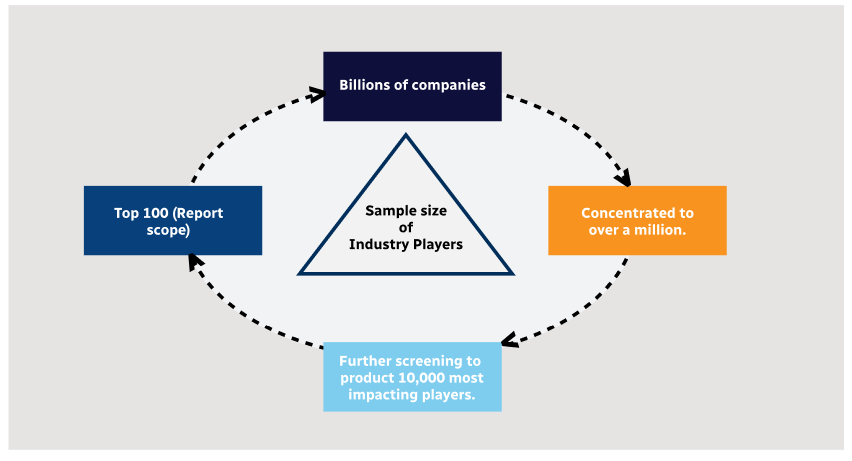
Step 1 - Identification of Relevant Samples Size from Population Database

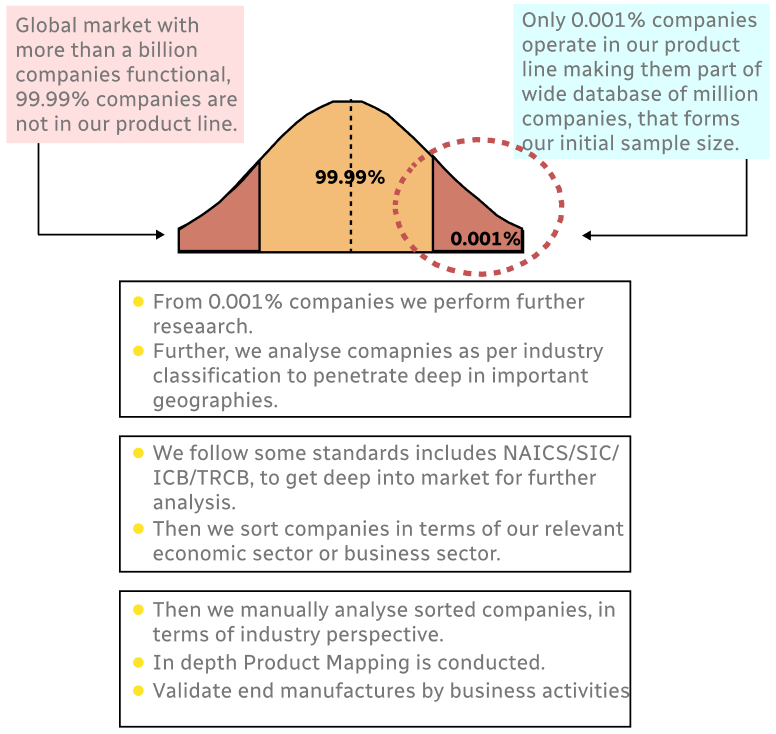
Step 2 - Approaches for Defining Global Market Size (Value, Volume* & Price*)
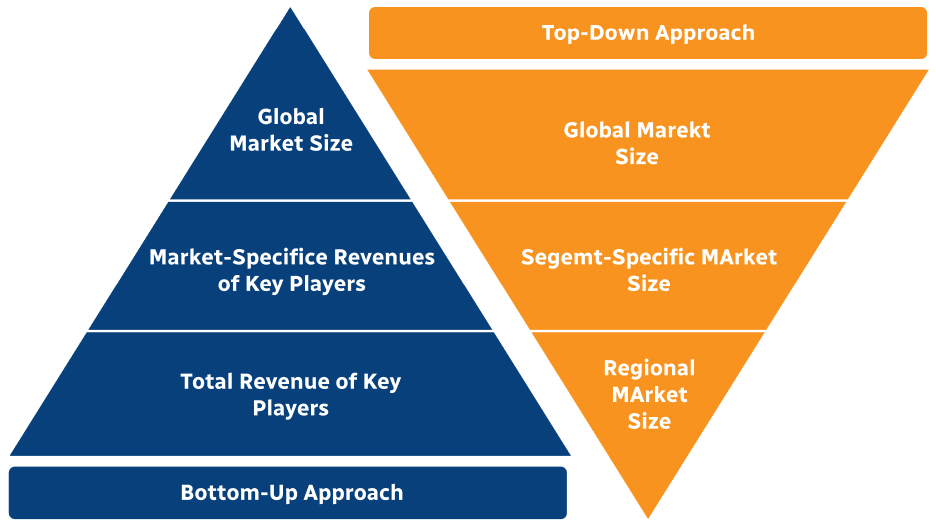
Note*: In applicable scenarios
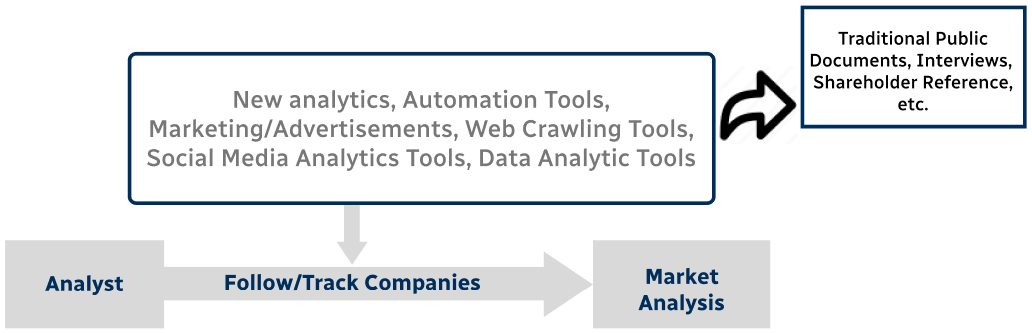
Step 3 - Data Sources
Primary Research
- Web Analytics
- Survey Reports
- Research Institute
- Latest Research Reports
- Opinion Leaders
Secondary Research
- Annual Reports
- White Paper
- Latest Press Release
- Industry Association
- Paid Database
- Investor Presentations
Step 4 - Data Triangulation
Involves using different sources of information in order to increase the validity of a study
These sources are likely to be stakeholders in a program - participants, other researchers, program staff, other community members, and so on.
Then we put all data in single framework & apply various statistical tools to find out the dynamic on the market.
During the analysis stage, feedback from the stakeholder groups would be compared to determine areas of agreement as well as areas of divergence