


Key Insights
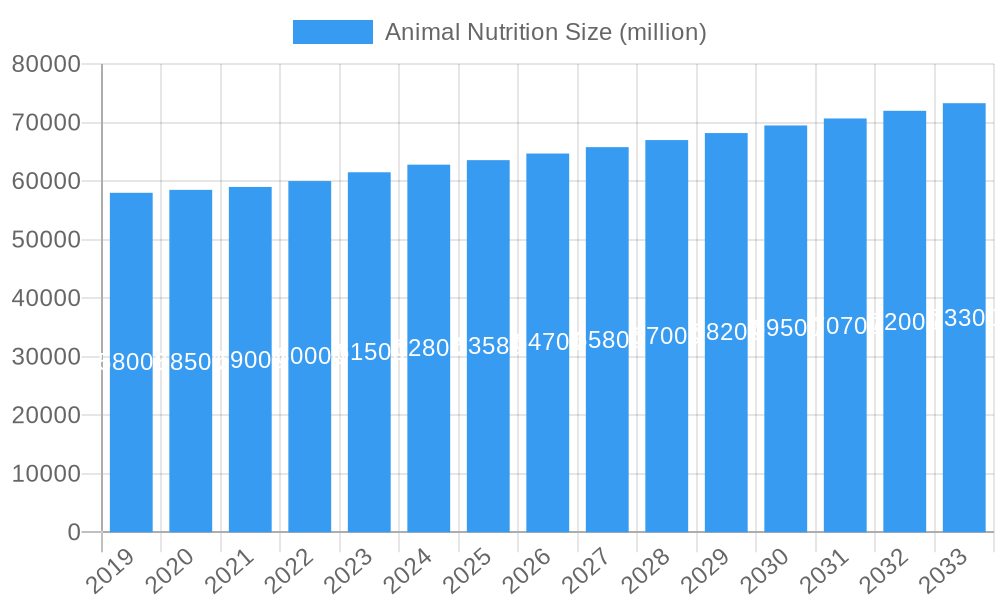
The global Animal Nutrition market is poised for steady growth, projected to reach an estimated market size of approximately USD 63,580 million by 2025. With a Compound Annual Growth Rate (CAGR) of 1.8% anticipated throughout the study period of 2019-2033, this sector demonstrates resilience and sustained demand. This incremental expansion is primarily fueled by the escalating global demand for animal protein, driven by a growing population and increasing disposable incomes in emerging economies. Furthermore, a heightened awareness among consumers regarding the link between animal feed quality and the health, productivity, and safety of end-products like meat, milk, and eggs is a significant catalyst. This trend is pushing the industry towards the adoption of innovative feed additives, supplements, and specialized nutrition solutions. Regulatory pressures promoting the reduction of antibiotic use in animal husbandry are also steering innovation towards alternatives like probiotics, prebiotics, and organic acids, which are projected to witness substantial adoption in the coming years.
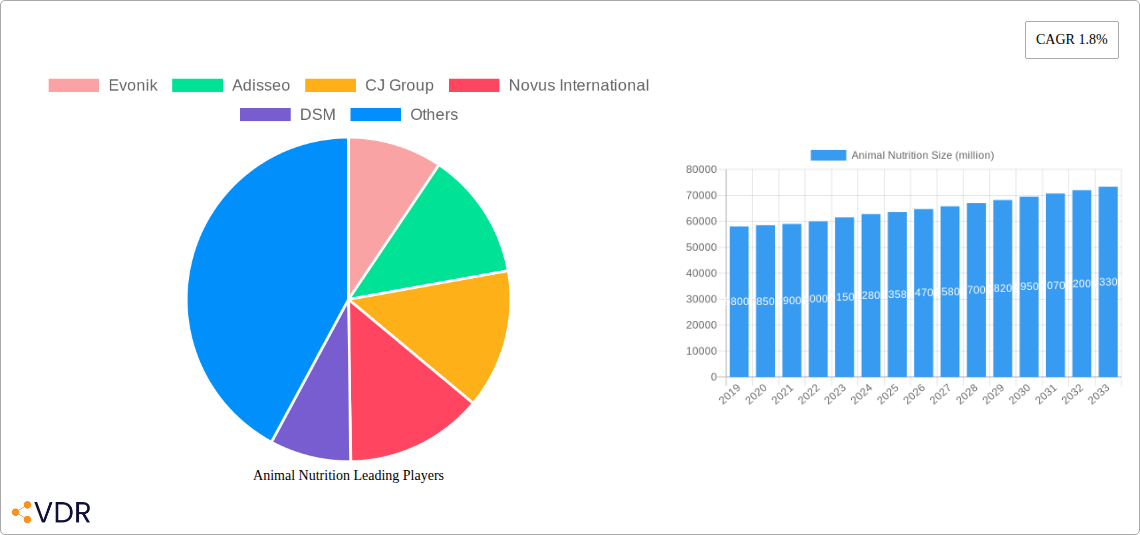
Animal Nutrition Market Size (In Billion)

The market is characterized by dynamic trends that are reshaping its landscape. A key driver is the continuous innovation in feed formulation to enhance animal health, optimize nutrient utilization, and improve overall animal performance, thereby increasing profitability for livestock producers. The growing emphasis on sustainable animal farming practices is also a significant trend, with a focus on reducing the environmental footprint of livestock production. This includes the development of feed ingredients that minimize waste, improve digestibility, and reduce greenhouse gas emissions. Technological advancements in precision nutrition, utilizing data analytics and artificial intelligence to tailor feed regimens to specific animal needs, are also gaining traction. Conversely, the market faces certain restraints. Volatility in raw material prices, such as grains and protein meals, can impact profitability and market stability. Stringent regulatory frameworks governing feed safety and ingredient approvals in different regions can also pose challenges, requiring significant investment in research and development for compliance.
Animal Nutrition Company Market Share
Animal Nutrition Market: A Comprehensive Analysis and Forecast (2019-2033)
This in-depth report provides an indispensable analysis of the global animal nutrition market, meticulously examining its current state, historical trajectory, and projected future. Delving into the animal feed additives, feed ingredients, and animal health nutrition segments, this research offers critical insights for stakeholders across the entire value chain, from poultry nutrition and aquaculture nutrition to ruminant nutrition and pet nutrition. With a particular focus on key companies such as Evonik, Adisseo, CJ Group, Novus International, DSM, Meihua Group, Kemin Industries, Zoetis, BASF, Sumitomo Chemical, ADM, Alltech, Biomin, Lonza, Lesaffre, Nutreco, DuPont, and Novozymes, this report unpacks market dynamics, growth drivers, and emerging opportunities.
Animal Nutrition Market Dynamics & Structure
The global animal nutrition market is characterized by a moderately concentrated landscape, with leading players like Evonik, Adisseo, and CJ Group holding significant market share in various product segments. Technological innovation remains a primary driver, fueled by advancements in feed enzymes, amino acids, and probiotics aimed at enhancing animal health, improving feed conversion ratios, and reducing environmental impact. Regulatory frameworks, particularly concerning feed safety, antibiotic reduction, and sustainable sourcing, are increasingly shaping market strategies. Competitive product substitutes, such as novel feed ingredients and alternative protein sources, are emerging, pushing established players to innovate. End-user demographics are shifting towards a greater demand for sustainably produced animal protein, influencing ingredient choices and production methods. Mergers and acquisitions (M&A) trends indicate a strategic consolidation, with recent years witnessing significant deal volumes as companies seek to expand their product portfolios and geographical reach. For instance, the acquisition of Biomin by DSM in 2020, valued at an estimated $XXX million, highlights this consolidation trend and the strategic importance of expanding into gut health solutions. Barriers to innovation include high R&D costs, lengthy product development cycles, and stringent regulatory approval processes.
- Market Concentration: Fragmented yet with notable consolidation amongst top players, representing approximately 65% of the market value.
- Technological Innovation Drivers:
- Development of novel enzymes for improved nutrient digestibility.
- Advancements in precision nutrition for tailored feed formulations.
- Research into sustainable and alternative feed ingredients.
- Regulatory Frameworks: Increasing emphasis on feed safety certifications, traceability, and restrictions on antibiotic use.
- Competitive Product Substitutes: Growing adoption of plant-based protein alternatives and insect-based ingredients.
- End-User Demographics: Rising demand for antibiotic-free and sustainably raised animal products.
- M&A Trends: Strategic acquisitions to broaden product offerings and gain market share, with an estimated XX billion units in deal value over the historical period.
Animal Nutrition Growth Trends & Insights
The global animal nutrition market is poised for robust growth, projected to expand from approximately $XXX billion in 2019 to an estimated $XXX billion by 2033, exhibiting a Compound Annual Growth Rate (CAGR) of XX% during the forecast period. This expansion is underpinned by a confluence of factors, including a burgeoning global population, increasing disposable incomes, and a subsequent rise in demand for animal protein across both developed and emerging economies. The adoption rates of advanced feed additives, such as enzymes and probiotics, are steadily increasing as producers recognize their efficacy in optimizing animal performance, enhancing gut health, and mitigating the need for antibiotics. Technological disruptions are a significant catalyst, with ongoing research and development yielding novel solutions like precision nutrition technologies, which enable highly customized feed formulations based on specific animal needs and life stages. This precision approach not only improves efficiency but also contributes to reduced environmental footprints.
Consumer behavior shifts are playing a pivotal role, with a growing segment of consumers actively seeking out animal products that are perceived as healthier, more ethically produced, and environmentally sustainable. This trend is driving demand for naturally derived feed ingredients and functional feed additives that promote animal welfare and reduce disease incidence. The shift away from routine antibiotic use in animal agriculture, driven by regulatory pressures and consumer concerns, has further accelerated the demand for alternative solutions like prebiotics, probiotics, and essential oils. The animal feed micronutrients segment, encompassing vitamins and minerals, is also experiencing sustained growth due to its critical role in supporting overall animal health and productivity. Furthermore, the increasing focus on reducing waste and improving the sustainability of the animal feed industry is fostering innovation in the utilization of by-products and novel feed sources. The animal feed raw materials segment continues to be a cornerstone of the market, with a focus on quality and sustainability driving sourcing strategies. The market penetration of specialized feed formulations for different animal species, including swine nutrition and equine nutrition, is also on an upward trajectory, reflecting a more sophisticated approach to animal husbandry. The increasing investment in R&D by key players like BASF and DuPont is a testament to the dynamic and evolving nature of the market, with significant advancements expected in areas such as microbiome management and immune modulation.
Dominant Regions, Countries, or Segments in Animal Nutrition
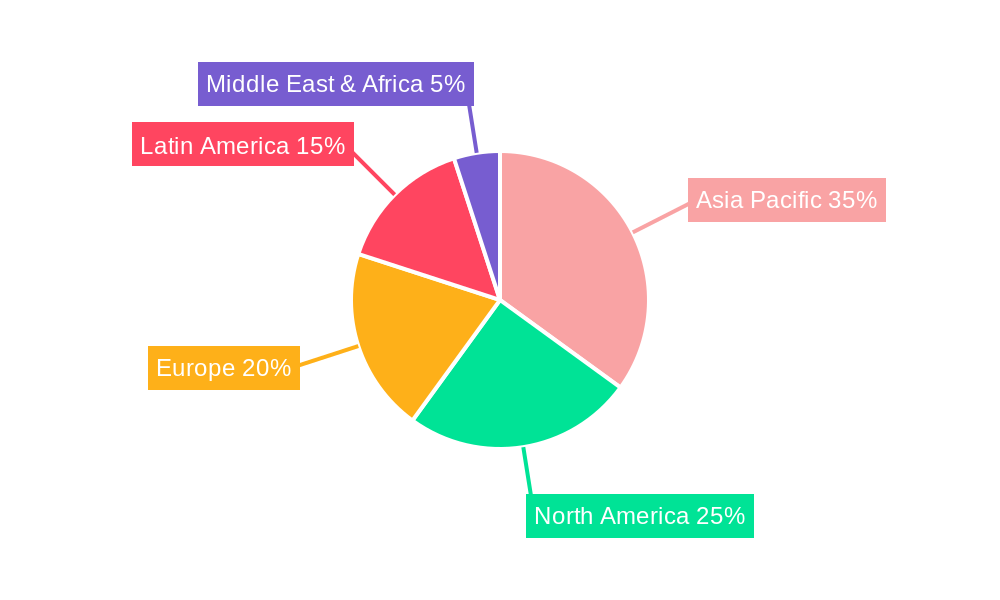
The Asia-Pacific region is emerging as a dominant force in the global animal nutrition market, driven by a rapidly expanding population, increasing per capita income, and a growing demand for animal protein. China, in particular, stands out as a significant growth engine due to its large livestock population, substantial agricultural output, and increasing adoption of modern animal husbandry practices. Economic policies supporting agricultural modernization, coupled with substantial investments in infrastructure, including advanced feed production facilities, are further bolstering the region's dominance. The poultry nutrition segment, within the broader Application category, is a key driver of this regional growth. Asia-Pacific's vast poultry production for both domestic consumption and export markets necessitates efficient and cost-effective feed solutions, making it a prime market for feed additives and high-quality feed ingredients.
Dominant Region: Asia-Pacific
- Key Drivers:
- Rapid population growth leading to increased protein demand.
- Rising disposable incomes and urbanization.
- Government initiatives promoting agricultural modernization and food security.
- Significant investments in livestock and aquaculture sectors.
- Expanding middle class with increasing purchasing power.
- Market Share: Asia-Pacific accounts for approximately 38% of the global animal nutrition market value.
- Growth Potential: High growth potential driven by the ongoing transition towards more industrialized farming and a greater focus on animal health and productivity.
- Key Drivers:
Dominant Application Segment: Poultry Nutrition
- Key Drivers:
- Poultry's efficiency in feed conversion and shorter production cycles.
- Lower cost of production compared to other animal proteins.
- Consumer preference for lean protein sources.
- Technological advancements in broiler and layer management.
- Market Share: Poultry nutrition represents a significant portion, estimated at around 28%, of the total animal nutrition market by application.
- Growth Potential: Sustained growth expected due to its established position in global protein supply chains and ongoing demand.
- Key Drivers:
Dominant Type Segment: Feed Additives
- Key Drivers:
- Increasing focus on improving feed efficiency and nutrient utilization.
- Demand for antibiotic alternatives to promote gut health and immunity.
- Technological innovations in enzyme, probiotic, and amino acid formulations.
- Regulatory pressures to reduce the environmental impact of animal agriculture.
- Market Share: Feed additives constitute a substantial segment, estimated at 45% of the animal nutrition market by type.
- Growth Potential: Robust growth anticipated from continuous innovation and the expanding need for specialized nutritional solutions.
- Key Drivers:
Animal Nutrition Product Landscape
The animal nutrition product landscape is characterized by continuous innovation, focusing on enhancing animal health, optimizing performance, and promoting sustainability. Key product categories include feed enzymes, which improve nutrient digestibility and reduce feed costs; amino acids, essential for protein synthesis and animal growth; probiotics and prebiotics, vital for gut health and immune function; and vitamins and minerals, crucial for overall metabolic processes. Emerging products include mycotoxin binders, essential oils for improving gut health and reducing pathogen load, and specialized functional ingredients targeting specific health challenges in livestock and aquaculture. Technological advancements are driving the development of more targeted and effective solutions, such as encapsulated nutrients for controlled release and precision-formulated micronutrient premixes.
Key Drivers, Barriers & Challenges in Animal Nutrition
Key Drivers:
- Growing Global Protein Demand: A burgeoning global population and rising disposable incomes are driving the demand for animal protein, directly increasing the need for animal nutrition products.
- Technological Advancements: Innovations in feed formulation, ingredient processing, and additive development are enhancing efficiency, sustainability, and animal health.
- Focus on Animal Health and Welfare: Increasing consumer awareness and regulatory pressures are pushing the industry towards more health-focused and welfare-conscious nutrition solutions, including antibiotic alternatives.
- Sustainable Agriculture Initiatives: Growing emphasis on reducing the environmental impact of animal agriculture is driving demand for feed ingredients and additives that improve resource utilization and reduce waste.
Barriers & Challenges:
- Volatile Raw Material Prices: Fluctuations in the cost of key feed ingredients like corn, soybean meal, and grains can impact profitability and market stability.
- Stringent Regulatory Landscape: Navigating complex and evolving regulations regarding feed safety, labeling, and the use of certain additives can be challenging and costly.
- Supply Chain Disruptions: Global events and geopolitical factors can disrupt the supply chain for raw materials and finished products, leading to shortages and price volatility.
- Consumer Perception and Demand for Transparency: Negative consumer perceptions regarding conventional animal agriculture practices and a demand for increased transparency can influence product acceptance and market dynamics.
- Resistance to New Technologies: In some regions or segments, there can be resistance to adopting new technologies or feed additives due to cost concerns or a lack of awareness regarding their benefits.
Emerging Opportunities in Animal Nutrition
Emerging opportunities in the animal nutrition market lie in the burgeoning demand for sustainable and natural feed solutions. The development of novel protein sources, such as insect-based proteins and algae, presents a significant untapped market with excellent nutritional profiles and a lower environmental footprint. Furthermore, the increasing consumer preference for "clean label" products is driving the demand for feed additives derived from natural sources, such as botanical extracts and essential oils, for their antimicrobial and antioxidant properties. Precision nutrition, leveraging digital technologies and data analytics, offers a substantial opportunity to tailor feed formulations to individual animal needs, optimizing performance and reducing waste. The aquaculture sector, with its rapidly growing global footprint, presents a significant frontier for specialized nutrition solutions addressing specific species requirements and environmental challenges. Investment in research and development for gut health management, including advanced probiotic and prebiotic formulations, is also poised to unlock new market segments.
Growth Accelerators in the Animal Nutrition Industry
Several key factors are acting as growth accelerators for the animal nutrition industry. Technological breakthroughs in genetic selection and breeding are leading to animals with improved feed conversion efficiencies, thereby increasing the demand for precisely formulated nutritional inputs. Strategic partnerships between feed manufacturers, ingredient suppliers, and research institutions are fostering collaborative innovation, leading to the faster development and commercialization of novel products. The global expansion of the middle class, particularly in emerging economies, is a significant market expansion strategy, driving increased per capita consumption of animal protein and, consequently, animal feed. Furthermore, government policies that support the development of sustainable agriculture and food security are creating a favorable environment for industry growth, encouraging investments in advanced animal nutrition technologies and practices. The increasing focus on animal health and disease prevention, driven by economic and ethical considerations, is also accelerating the adoption of functional feed additives and supplements.
Key Players Shaping the Animal Nutrition Market
- Evonik
- Adisseo
- CJ Group
- Novus International
- DSM
- Meihua Group
- Kemin Industries
- Zoetis
- BASF
- Sumitomo Chemical
- ADM
- Alltech
- Biomin
- Lonza
- Lesaffre
- Nutreco
- DuPont
- Novozymes
Notable Milestones in Animal Nutrition Sector
- 2019: DSM completes its acquisition of Erber Group's Biomin Holding, a major player in animal gut health and mycotoxin risk management.
- 2020: Evonik launches its new generation of methionine, MetAMINO® TAA, offering enhanced sustainability and performance.
- 2021: Novozymes introduces a new range of enzymes for improved feed efficiency in poultry.
- 2022: BASF expands its animal nutrition portfolio with a focus on sustainable and digital solutions.
- 2023: ADM invests in a new feed additive production facility to meet growing global demand.
- 2023: Nutreco announces strategic partnerships aimed at advancing sustainable aquaculture nutrition.
- 2024: Kemin Industries launches innovative solutions for gut health and immunity in swine.
- 2024: CJ Group expands its global reach in amino acid production, focusing on advanced fermentation technologies.
- 2024: Alltech introduces a new line of feed ingredients derived from natural sources.
In-Depth Animal Nutrition Market Outlook
The animal nutrition market outlook remains exceptionally promising, driven by sustained global demand for animal protein and a persistent drive towards more sustainable and efficient animal agriculture. Growth accelerators, including technological innovation in precision nutrition and the development of alternative protein sources, will continue to reshape the industry landscape. Strategic partnerships and market expansion into emerging economies will further fuel growth. Companies are expected to invest heavily in R&D to address the evolving needs of animal health, welfare, and environmental sustainability. The increasing adoption of digital solutions for farm management and feed optimization presents a significant opportunity for market players to enhance their offerings and provide greater value to end-users. The future of animal nutrition is intrinsically linked to the global pursuit of food security and responsible resource management.
Animal Nutrition Segmentation
-
1. Application
- 1.1. undefined
-
2. Type
- 2.1. undefined
Animal Nutrition Segmentation By Geography
- 1. undefined
- 2. undefined
- 3. undefined
- 4. undefined
- 5. undefined
Animal Nutrition Regional Market Share
Geographic Coverage of Animal Nutrition
Animal Nutrition REPORT HIGHLIGHTS
| Aspects | Details |
|---|---|
| Study Period | 2020-2034 |
| Base Year | 2025 |
| Estimated Year | 2026 |
| Forecast Period | 2026-2034 |
| Historical Period | 2020-2025 |
| Growth Rate | CAGR of 1.8% from 2020-2034 |
| Segmentation |
|
Table of Contents
- 1. Introduction
- 1.1. Research Scope
- 1.2. Market Segmentation
- 1.3. Research Methodology
- 1.4. Definitions and Assumptions
- 2. Executive Summary
- 2.1. Introduction
- 3. Market Dynamics
- 3.1. Introduction
- 3.2. Market Drivers
- 3.3. Market Restrains
- 3.4. Market Trends
- 4. Market Factor Analysis
- 4.1. Porters Five Forces
- 4.2. Supply/Value Chain
- 4.3. PESTEL analysis
- 4.4. Market Entropy
- 4.5. Patent/Trademark Analysis
- 5. Global Animal Nutrition Analysis, Insights and Forecast, 2020-2032
- 5.1. Market Analysis, Insights and Forecast - by Application
- 5.1.1.
- 5.2. Market Analysis, Insights and Forecast - by Type
- 5.2.1.
- 5.3. Market Analysis, Insights and Forecast - by Region
- 5.3.1.
- 5.3.2.
- 5.3.3.
- 5.3.4.
- 5.3.5.
- 5.1. Market Analysis, Insights and Forecast - by Application
- 6. undefined Animal Nutrition Analysis, Insights and Forecast, 2020-2032
- 6.1. Market Analysis, Insights and Forecast - by Application
- 6.1.1.
- 6.2. Market Analysis, Insights and Forecast - by Type
- 6.2.1.
- 6.1. Market Analysis, Insights and Forecast - by Application
- 7. undefined Animal Nutrition Analysis, Insights and Forecast, 2020-2032
- 7.1. Market Analysis, Insights and Forecast - by Application
- 7.1.1.
- 7.2. Market Analysis, Insights and Forecast - by Type
- 7.2.1.
- 7.1. Market Analysis, Insights and Forecast - by Application
- 8. undefined Animal Nutrition Analysis, Insights and Forecast, 2020-2032
- 8.1. Market Analysis, Insights and Forecast - by Application
- 8.1.1.
- 8.2. Market Analysis, Insights and Forecast - by Type
- 8.2.1.
- 8.1. Market Analysis, Insights and Forecast - by Application
- 9. undefined Animal Nutrition Analysis, Insights and Forecast, 2020-2032
- 9.1. Market Analysis, Insights and Forecast - by Application
- 9.1.1.
- 9.2. Market Analysis, Insights and Forecast - by Type
- 9.2.1.
- 9.1. Market Analysis, Insights and Forecast - by Application
- 10. undefined Animal Nutrition Analysis, Insights and Forecast, 2020-2032
- 10.1. Market Analysis, Insights and Forecast - by Application
- 10.1.1.
- 10.2. Market Analysis, Insights and Forecast - by Type
- 10.2.1.
- 10.1. Market Analysis, Insights and Forecast - by Application
- 11. Competitive Analysis
- 11.1. Global Market Share Analysis 2025
- 11.2. Company Profiles
- 11.2.1 Evonik
- 11.2.1.1. Overview
- 11.2.1.2. Products
- 11.2.1.3. SWOT Analysis
- 11.2.1.4. Recent Developments
- 11.2.1.5. Financials (Based on Availability)
- 11.2.2 Adisseo
- 11.2.2.1. Overview
- 11.2.2.2. Products
- 11.2.2.3. SWOT Analysis
- 11.2.2.4. Recent Developments
- 11.2.2.5. Financials (Based on Availability)
- 11.2.3 CJ Group
- 11.2.3.1. Overview
- 11.2.3.2. Products
- 11.2.3.3. SWOT Analysis
- 11.2.3.4. Recent Developments
- 11.2.3.5. Financials (Based on Availability)
- 11.2.4 Novus International
- 11.2.4.1. Overview
- 11.2.4.2. Products
- 11.2.4.3. SWOT Analysis
- 11.2.4.4. Recent Developments
- 11.2.4.5. Financials (Based on Availability)
- 11.2.5 DSM
- 11.2.5.1. Overview
- 11.2.5.2. Products
- 11.2.5.3. SWOT Analysis
- 11.2.5.4. Recent Developments
- 11.2.5.5. Financials (Based on Availability)
- 11.2.6 Meihua Group
- 11.2.6.1. Overview
- 11.2.6.2. Products
- 11.2.6.3. SWOT Analysis
- 11.2.6.4. Recent Developments
- 11.2.6.5. Financials (Based on Availability)
- 11.2.7 Kemin Industries
- 11.2.7.1. Overview
- 11.2.7.2. Products
- 11.2.7.3. SWOT Analysis
- 11.2.7.4. Recent Developments
- 11.2.7.5. Financials (Based on Availability)
- 11.2.8 Zoetis
- 11.2.8.1. Overview
- 11.2.8.2. Products
- 11.2.8.3. SWOT Analysis
- 11.2.8.4. Recent Developments
- 11.2.8.5. Financials (Based on Availability)
- 11.2.9 BASF
- 11.2.9.1. Overview
- 11.2.9.2. Products
- 11.2.9.3. SWOT Analysis
- 11.2.9.4. Recent Developments
- 11.2.9.5. Financials (Based on Availability)
- 11.2.10 Sumitomo Chemical
- 11.2.10.1. Overview
- 11.2.10.2. Products
- 11.2.10.3. SWOT Analysis
- 11.2.10.4. Recent Developments
- 11.2.10.5. Financials (Based on Availability)
- 11.2.11 ADM
- 11.2.11.1. Overview
- 11.2.11.2. Products
- 11.2.11.3. SWOT Analysis
- 11.2.11.4. Recent Developments
- 11.2.11.5. Financials (Based on Availability)
- 11.2.12 Alltech
- 11.2.12.1. Overview
- 11.2.12.2. Products
- 11.2.12.3. SWOT Analysis
- 11.2.12.4. Recent Developments
- 11.2.12.5. Financials (Based on Availability)
- 11.2.13 Biomin
- 11.2.13.1. Overview
- 11.2.13.2. Products
- 11.2.13.3. SWOT Analysis
- 11.2.13.4. Recent Developments
- 11.2.13.5. Financials (Based on Availability)
- 11.2.14 Lonza
- 11.2.14.1. Overview
- 11.2.14.2. Products
- 11.2.14.3. SWOT Analysis
- 11.2.14.4. Recent Developments
- 11.2.14.5. Financials (Based on Availability)
- 11.2.15 Lesaffre
- 11.2.15.1. Overview
- 11.2.15.2. Products
- 11.2.15.3. SWOT Analysis
- 11.2.15.4. Recent Developments
- 11.2.15.5. Financials (Based on Availability)
- 11.2.16 Nutreco
- 11.2.16.1. Overview
- 11.2.16.2. Products
- 11.2.16.3. SWOT Analysis
- 11.2.16.4. Recent Developments
- 11.2.16.5. Financials (Based on Availability)
- 11.2.17 DuPont
- 11.2.17.1. Overview
- 11.2.17.2. Products
- 11.2.17.3. SWOT Analysis
- 11.2.17.4. Recent Developments
- 11.2.17.5. Financials (Based on Availability)
- 11.2.18 Novozymes
- 11.2.18.1. Overview
- 11.2.18.2. Products
- 11.2.18.3. SWOT Analysis
- 11.2.18.4. Recent Developments
- 11.2.18.5. Financials (Based on Availability)
- 11.2.1 Evonik
List of Figures
- Figure 1: Global Animal Nutrition Revenue Breakdown (million, %) by Region 2025 & 2033
- Figure 2: undefined Animal Nutrition Revenue (million), by Application 2025 & 2033
- Figure 3: undefined Animal Nutrition Revenue Share (%), by Application 2025 & 2033
- Figure 4: undefined Animal Nutrition Revenue (million), by Type 2025 & 2033
- Figure 5: undefined Animal Nutrition Revenue Share (%), by Type 2025 & 2033
- Figure 6: undefined Animal Nutrition Revenue (million), by Country 2025 & 2033
- Figure 7: undefined Animal Nutrition Revenue Share (%), by Country 2025 & 2033
- Figure 8: undefined Animal Nutrition Revenue (million), by Application 2025 & 2033
- Figure 9: undefined Animal Nutrition Revenue Share (%), by Application 2025 & 2033
- Figure 10: undefined Animal Nutrition Revenue (million), by Type 2025 & 2033
- Figure 11: undefined Animal Nutrition Revenue Share (%), by Type 2025 & 2033
- Figure 12: undefined Animal Nutrition Revenue (million), by Country 2025 & 2033
- Figure 13: undefined Animal Nutrition Revenue Share (%), by Country 2025 & 2033
- Figure 14: undefined Animal Nutrition Revenue (million), by Application 2025 & 2033
- Figure 15: undefined Animal Nutrition Revenue Share (%), by Application 2025 & 2033
- Figure 16: undefined Animal Nutrition Revenue (million), by Type 2025 & 2033
- Figure 17: undefined Animal Nutrition Revenue Share (%), by Type 2025 & 2033
- Figure 18: undefined Animal Nutrition Revenue (million), by Country 2025 & 2033
- Figure 19: undefined Animal Nutrition Revenue Share (%), by Country 2025 & 2033
- Figure 20: undefined Animal Nutrition Revenue (million), by Application 2025 & 2033
- Figure 21: undefined Animal Nutrition Revenue Share (%), by Application 2025 & 2033
- Figure 22: undefined Animal Nutrition Revenue (million), by Type 2025 & 2033
- Figure 23: undefined Animal Nutrition Revenue Share (%), by Type 2025 & 2033
- Figure 24: undefined Animal Nutrition Revenue (million), by Country 2025 & 2033
- Figure 25: undefined Animal Nutrition Revenue Share (%), by Country 2025 & 2033
- Figure 26: undefined Animal Nutrition Revenue (million), by Application 2025 & 2033
- Figure 27: undefined Animal Nutrition Revenue Share (%), by Application 2025 & 2033
- Figure 28: undefined Animal Nutrition Revenue (million), by Type 2025 & 2033
- Figure 29: undefined Animal Nutrition Revenue Share (%), by Type 2025 & 2033
- Figure 30: undefined Animal Nutrition Revenue (million), by Country 2025 & 2033
- Figure 31: undefined Animal Nutrition Revenue Share (%), by Country 2025 & 2033
List of Tables
- Table 1: Global Animal Nutrition Revenue million Forecast, by Application 2020 & 2033
- Table 2: Global Animal Nutrition Revenue million Forecast, by Type 2020 & 2033
- Table 3: Global Animal Nutrition Revenue million Forecast, by Region 2020 & 2033
- Table 4: Global Animal Nutrition Revenue million Forecast, by Application 2020 & 2033
- Table 5: Global Animal Nutrition Revenue million Forecast, by Type 2020 & 2033
- Table 6: Global Animal Nutrition Revenue million Forecast, by Country 2020 & 2033
- Table 7: Global Animal Nutrition Revenue million Forecast, by Application 2020 & 2033
- Table 8: Global Animal Nutrition Revenue million Forecast, by Type 2020 & 2033
- Table 9: Global Animal Nutrition Revenue million Forecast, by Country 2020 & 2033
- Table 10: Global Animal Nutrition Revenue million Forecast, by Application 2020 & 2033
- Table 11: Global Animal Nutrition Revenue million Forecast, by Type 2020 & 2033
- Table 12: Global Animal Nutrition Revenue million Forecast, by Country 2020 & 2033
- Table 13: Global Animal Nutrition Revenue million Forecast, by Application 2020 & 2033
- Table 14: Global Animal Nutrition Revenue million Forecast, by Type 2020 & 2033
- Table 15: Global Animal Nutrition Revenue million Forecast, by Country 2020 & 2033
- Table 16: Global Animal Nutrition Revenue million Forecast, by Application 2020 & 2033
- Table 17: Global Animal Nutrition Revenue million Forecast, by Type 2020 & 2033
- Table 18: Global Animal Nutrition Revenue million Forecast, by Country 2020 & 2033
Frequently Asked Questions
1. What is the projected Compound Annual Growth Rate (CAGR) of the Animal Nutrition?
The projected CAGR is approximately 1.8%.
2. Which companies are prominent players in the Animal Nutrition?
Key companies in the market include Evonik, Adisseo, CJ Group, Novus International, DSM, Meihua Group, Kemin Industries, Zoetis, BASF, Sumitomo Chemical, ADM, Alltech, Biomin, Lonza, Lesaffre, Nutreco, DuPont, Novozymes.
3. What are the main segments of the Animal Nutrition?
The market segments include Application, Type.
4. Can you provide details about the market size?
The market size is estimated to be USD 63580 million as of 2022.
5. What are some drivers contributing to market growth?
N/A
6. What are the notable trends driving market growth?
N/A
7. Are there any restraints impacting market growth?
N/A
8. Can you provide examples of recent developments in the market?
N/A
9. What pricing options are available for accessing the report?
Pricing options include single-user, multi-user, and enterprise licenses priced at USD 4250.00, USD 6375.00, and USD 8500.00 respectively.
10. Is the market size provided in terms of value or volume?
The market size is provided in terms of value, measured in million.
11. Are there any specific market keywords associated with the report?
Yes, the market keyword associated with the report is "Animal Nutrition," which aids in identifying and referencing the specific market segment covered.
12. How do I determine which pricing option suits my needs best?
The pricing options vary based on user requirements and access needs. Individual users may opt for single-user licenses, while businesses requiring broader access may choose multi-user or enterprise licenses for cost-effective access to the report.
13. Are there any additional resources or data provided in the Animal Nutrition report?
While the report offers comprehensive insights, it's advisable to review the specific contents or supplementary materials provided to ascertain if additional resources or data are available.
14. How can I stay updated on further developments or reports in the Animal Nutrition?
To stay informed about further developments, trends, and reports in the Animal Nutrition, consider subscribing to industry newsletters, following relevant companies and organizations, or regularly checking reputable industry news sources and publications.
Methodology
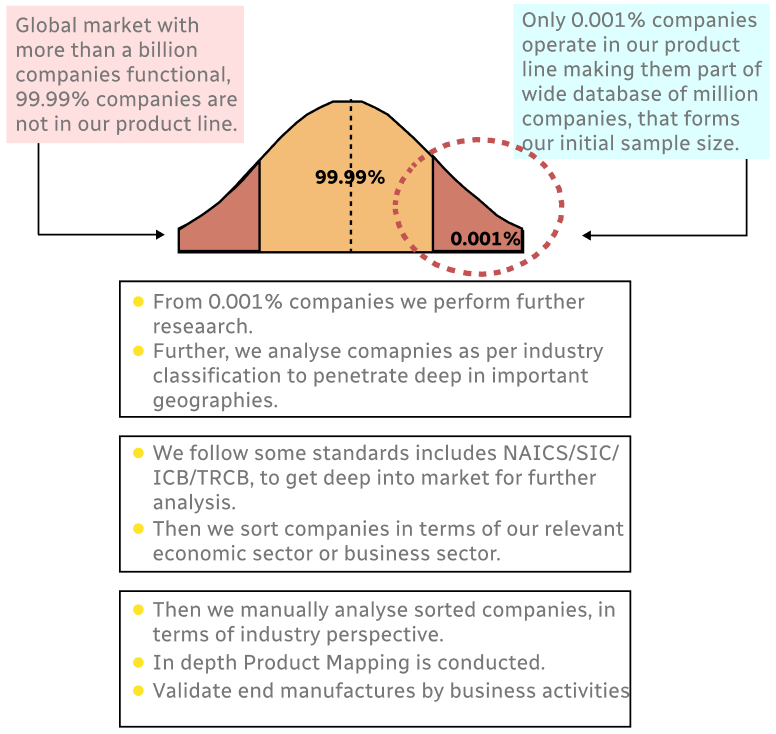
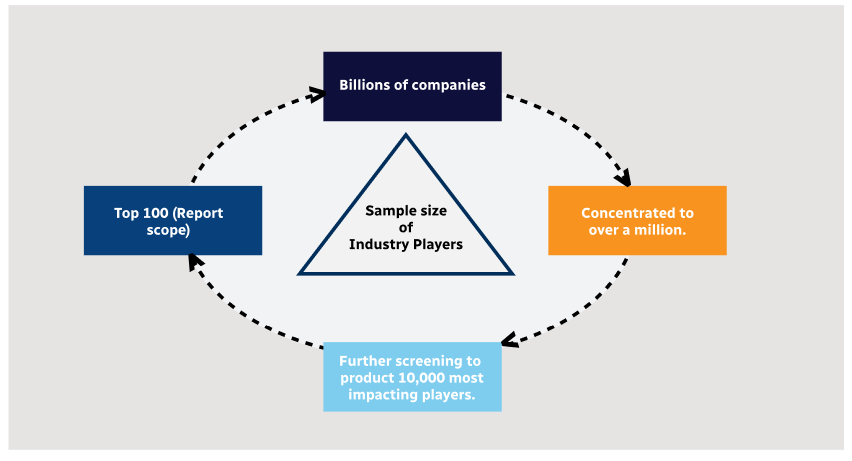
Step 1 - Identification of Relevant Samples Size from Population Database
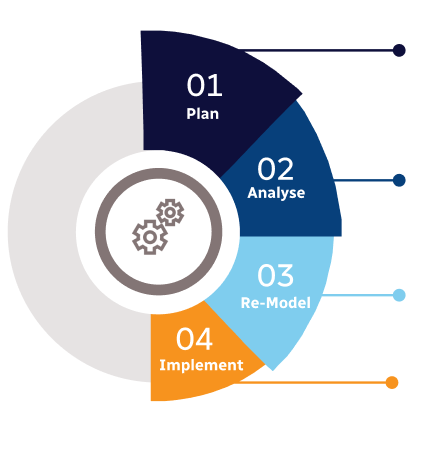
Step 2 - Approaches for Defining Global Market Size (Value, Volume* & Price*)
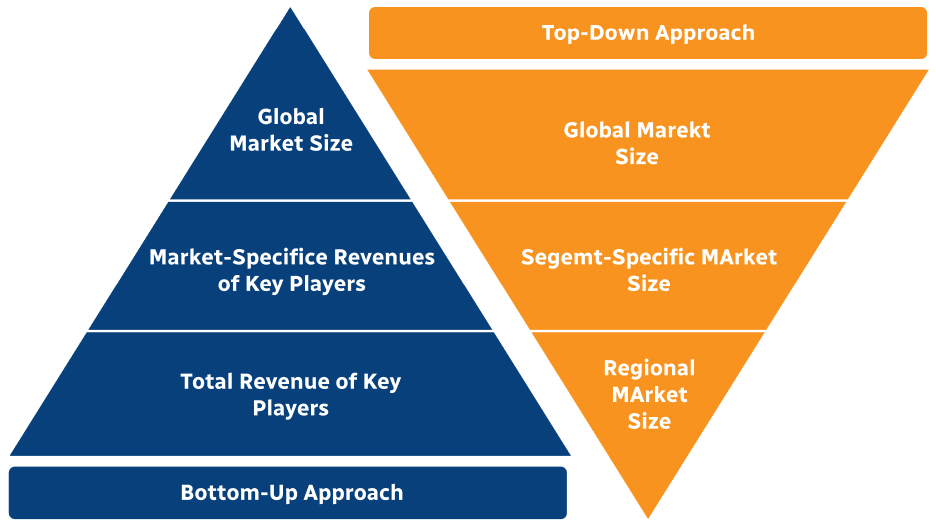
Note*: In applicable scenarios
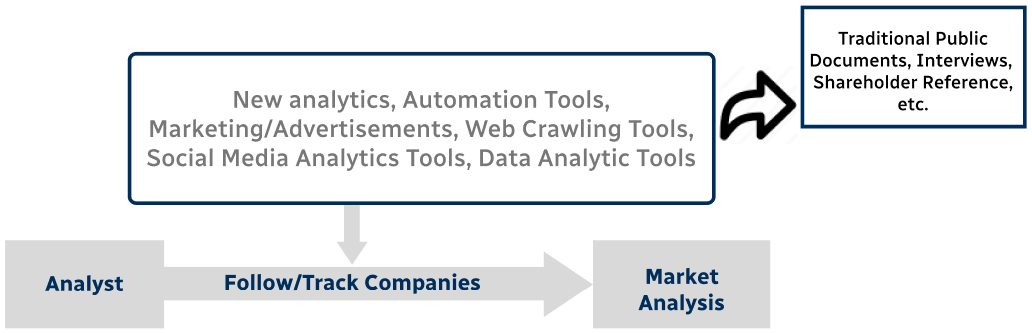
Step 3 - Data Sources
Primary Research
- Web Analytics
- Survey Reports
- Research Institute
- Latest Research Reports
- Opinion Leaders
Secondary Research
- Annual Reports
- White Paper
- Latest Press Release
- Industry Association
- Paid Database
- Investor Presentations
Step 4 - Data Triangulation
Involves using different sources of information in order to increase the validity of a study
These sources are likely to be stakeholders in a program - participants, other researchers, program staff, other community members, and so on.
Then we put all data in single framework & apply various statistical tools to find out the dynamic on the market.
During the analysis stage, feedback from the stakeholder groups would be compared to determine areas of agreement as well as areas of divergence