


Key Insights
The global Aerospace Billets market is poised for significant expansion, projected to reach a substantial valuation. Driven by the relentless growth in air travel demand and the subsequent need for fleet expansion and modernization across commercial aviation, as well as ongoing investments in defense and space exploration, the market is experiencing robust momentum. Key growth enablers include the increasing use of advanced aluminum alloys for their lightweight properties, which enhance fuel efficiency and reduce emissions in aircraft. Furthermore, advancements in manufacturing technologies, such as precision extrusion and forging, are enabling the production of high-performance billets that meet the stringent requirements of the aerospace industry. The continuous innovation in aircraft design, incorporating more complex and integrated structures, further fuels the demand for specialized billet forms.
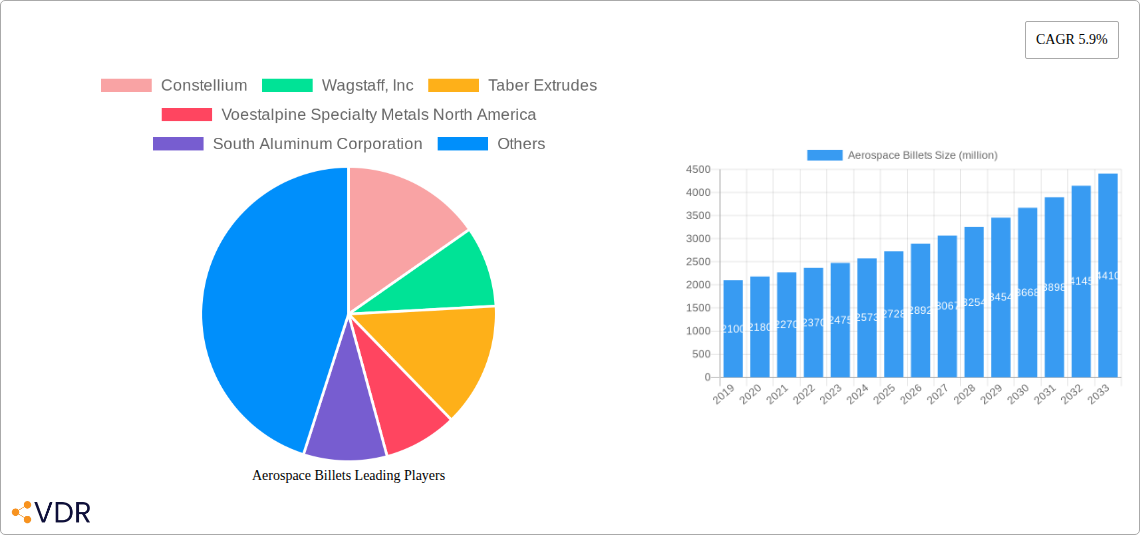
Aerospace Billets Market Size (In Billion)

The market's trajectory is also influenced by evolving industry standards for material performance and sustainability. Manufacturers are increasingly focusing on developing billets with superior strength-to-weight ratios, corrosion resistance, and fatigue life. Emerging trends such as the rise of electric and hybrid-electric aircraft, alongside the burgeoning space tourism sector, are opening up new avenues for aerospace billet applications. While challenges such as raw material price volatility and the complex regulatory landscape persist, the overarching industry commitment to technological advancement and the pursuit of lighter, more durable, and efficient aircraft components will continue to propel the aerospace billets market forward. The strategic importance of these components in ensuring aircraft safety and performance underscores their indispensable role in the aerospace value chain.
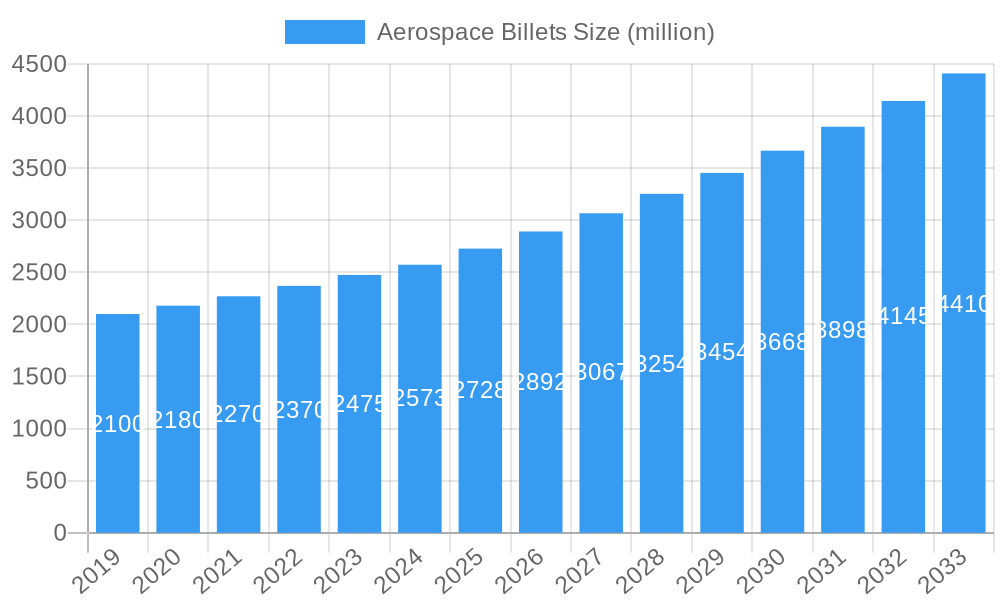
Aerospace Billets Company Market Share
Aerospace Billets Market: Global Industry Analysis, Size, Share, Growth, Trends, and Forecast 2019-2033
This comprehensive report offers an in-depth analysis of the global aerospace billets market, providing critical insights into market dynamics, growth trends, regional dominance, product innovations, key players, and future outlook. Leveraging high-traffic keywords like "aerospace aluminum billets," "titanium aerospace billets," "aircraft component materials," and "aerospace manufacturing," this report is optimized for search engine visibility and designed to engage industry professionals, procurement managers, R&D specialists, and investors. We delve into parent and child market structures, exploring the intricate relationships between raw material supply, billet processing, and the final application in aircraft. With detailed quantitative data and qualitative analysis, this report serves as an indispensable resource for understanding the current landscape and forecasting the future trajectory of the aerospace billets sector.
Aerospace Billets Market Dynamics & Structure
The global aerospace billets market exhibits a moderately concentrated structure, with a few dominant players accounting for a significant portion of the global output. Technological innovation is a primary driver, fueled by the relentless demand for lighter, stronger, and more fuel-efficient aircraft. Advancements in alloying technologies and precision manufacturing processes are crucial for meeting stringent aerospace specifications. Regulatory frameworks, particularly those from the FAA and EASA, play a pivotal role in dictating material standards, safety protocols, and environmental compliance, influencing market entry and operational costs. Competitive product substitutes, such as advanced composites, pose an ongoing challenge, prompting billet manufacturers to continuously innovate in material properties and cost-effectiveness. End-user demographics are shifting towards an increasing demand for larger aircraft and the expansion of regional air travel, impacting the types and volumes of billets required. Mergers and acquisitions (M&A) are strategic maneuvers aimed at consolidating market share, expanding technological capabilities, and securing supply chains. In the historical period (2019-2024), an estimated $2.5 billion in M&A deals were observed within the broader aerospace materials sector, with a focus on integrated supply chains. For instance, the Constellium and Wagstaff, Inc. partnerships highlight efforts to optimize production and material properties. Innovation barriers include the high cost of R&D, lengthy qualification processes for new materials, and the capital-intensive nature of advanced manufacturing.
- Market Concentration: Dominated by a mix of global aerospace material giants and specialized regional producers.
- Technological Innovation: Driven by material science advancements, additive manufacturing integration, and advanced processing techniques for enhanced performance.
- Regulatory Frameworks: Stringent safety, quality, and environmental standards imposed by aviation authorities worldwide.
- Competitive Product Substitutes: Increasing adoption of advanced composites and other high-performance materials.
- End-User Demographics: Growing demand for larger aircraft, increased air travel, and evolving aircraft designs influencing material requirements.
- M&A Trends: Strategic consolidation for supply chain integration, technology acquisition, and market expansion.
Aerospace Billets Growth Trends & Insights
The aerospace billets market is poised for substantial growth, projected to expand at a Compound Annual Growth Rate (CAGR) of approximately 5.2% from 2025 to 2033. The global market size for aerospace billets reached an estimated $18.2 billion in the base year of 2025 and is forecasted to reach $27.8 billion by the end of the forecast period in 2033. This growth trajectory is underpinned by a robust increase in global air passenger traffic, which has now surpassed pre-pandemic levels, driving demand for new aircraft production and MRO (Maintenance, Repair, and Overhaul) activities. The adoption rates of advanced aluminum and titanium alloys are accelerating, as manufacturers prioritize weight reduction to enhance fuel efficiency and reduce emissions. Technological disruptions, such as advancements in additive manufacturing (3D printing) for aerospace components, are creating new opportunities for specialized billet forms and materials, although traditional billet manufacturing remains dominant for bulk structural parts. Consumer behavior shifts, characterized by an increasing emphasis on sustainable aviation and passenger comfort, are influencing aircraft design and, consequently, the demand for specific material properties. The market penetration of high-strength, low-weight aluminum alloys like Al-Li is steadily increasing, particularly for fuselage and wing structures. Similarly, the demand for titanium alloys in critical engine components and landing gear remains strong due to their superior strength-to-weight ratio and high-temperature resistance. The historical period (2019-2024) saw a market size of approximately $16.5 billion in 2019, experiencing a moderate dip during the pandemic, followed by a strong recovery to an estimated $18.2 billion in 2025. This recovery is indicative of the resilience and long-term growth potential of the aerospace sector. The increasing production rates of narrow-body and wide-body aircraft by major OEMs like Boeing and Airbus are direct catalysts for sustained demand in the aerospace billets market. The ongoing development of next-generation aircraft programs, with their emphasis on advanced materials and aerodynamic efficiency, further solidifies the positive growth outlook.
Dominant Regions, Countries, or Segments in Aerospace Billets
The North America region stands as the dominant force in the global aerospace billets market, driven by its extensive aerospace manufacturing ecosystem, significant government investment in defense and commercial aviation, and the presence of major aircraft manufacturers and their extensive supply chains. Within North America, the United States accounts for a substantial market share, estimated at over 35% of the global aerospace billets market value in 2025. Key drivers for this dominance include a robust aerospace R&D infrastructure, a high rate of aircraft production, and a strong demand for both commercial and military aircraft components. The Engine segment, particularly for commercial aircraft, is a significant growth driver within the application category, representing an estimated 30% of the total aerospace billets market value in 2025, due to the intricate and demanding material requirements for high-performance turbine engines. In terms of billet type, Diameter > 10 Inches billets are crucial for manufacturing large structural components such as fuselage sections and wing spars, representing an estimated 45% of the market value. Economic policies in the US, such as tax incentives for manufacturing and R&D, coupled with substantial defense spending, further bolster the market. The infrastructure supporting advanced manufacturing, including specialized foundries and processing facilities operated by companies like Wagstaff, Inc. and Voestalpine Specialty Metals North America, is unparalleled. The region's ability to innovate and adapt to new material requirements, such as advanced aluminum alloys for weight reduction and titanium alloys for high-temperature applications, underpins its sustained leadership. Furthermore, the MRO sector in North America is substantial, contributing to a consistent demand for replacement parts and, consequently, aerospace billets. The region's proactive approach to adopting new technologies and its strong governmental support for the aerospace industry solidify its position as the leading market.
- Dominant Region: North America, with the United States as the leading country.
- Key Application Segment: Engine, driven by the demand for high-performance materials in jet engines.
- Dominant Billet Type: Diameter > 10 Inches, essential for large structural aircraft components.
- Dominance Factors:
- Extensive aerospace manufacturing base and OEM presence.
- High levels of R&D investment and technological innovation.
- Strong government support through defense contracts and incentives.
- Mature MRO market contributing to consistent demand.
- Advanced processing capabilities and a skilled workforce.
Aerospace Billets Product Landscape
The aerospace billets product landscape is characterized by continuous innovation focused on enhancing material properties and processing efficiencies. Manufacturers are developing advanced aluminum alloys, such as those with lithium (Al-Li) content, offering superior strength-to-weight ratios and improved fatigue resistance essential for fuselage and wing structures. Titanium alloys continue to be refined for applications in engines and landing gear, demanding high-temperature strength and corrosion resistance. Specialized forging and extrusion techniques are employed by companies like Taber Extrudes and South Aluminum Corporation to produce billets with precise microstructures and dimensional accuracy, minimizing post-processing requirements. The development of larger diameter billets is a key trend, enabling the production of monolithic structural components, thereby reducing assembly time and weight. Furthermore, efforts are underway to improve the sustainability of billet production through enhanced recycling processes and reduced energy consumption, aligning with the broader aerospace industry's environmental goals.
Key Drivers, Barriers & Challenges in Aerospace Billets
Key Drivers:
- Growing Air Travel Demand: Resurgence in passenger traffic fuels new aircraft orders and MRO activities.
- Technological Advancements: Development of high-strength, lightweight alloys like Al-Li and advanced titanium grades.
- Fuel Efficiency Mandates: Constant pressure to reduce aircraft weight for improved fuel economy and lower emissions.
- Defense Spending: Significant government investment in military aircraft programs.
- Emergence of New Aircraft Designs: Focus on advanced materials for next-generation platforms.
Barriers & Challenges:
- High Cost of Raw Materials: Volatility in aluminum and titanium prices impacts manufacturing costs.
- Stringent Regulatory Approvals: Lengthy and expensive qualification processes for new materials and suppliers.
- Supply Chain Disruptions: Geopolitical events and logistical challenges can impact raw material availability.
- Intense Competition: Pressure from alternative materials like composites and from lower-cost producers.
- Capital Investment: High upfront costs for advanced manufacturing equipment and R&D.
- Skilled Workforce Shortage: Demand for specialized metallurgists and manufacturing engineers.
Emerging Opportunities in Aerospace Billets
Emerging opportunities in the aerospace billets market lie in the development of tailor-made alloy compositions for specific applications, particularly for the rapidly growing drone and eVTOL (electric Vertical Take-Off and Landing) sectors, which require specialized lightweight materials. The integration of Industry 4.0 technologies, such as AI-driven process optimization and digital twin simulations, offers opportunities for enhanced quality control and reduced waste in billet manufacturing. Furthermore, the growing focus on sustainability presents a significant avenue for companies that can develop and implement more environmentally friendly production methods, including advanced recycling of aerospace-grade alloys. The expansion of the MRO market in developing economies also signifies untapped potential for suppliers of aerospace billets and related materials. The increasing adoption of additive manufacturing for complex aerospace components also creates a niche opportunity for highly specialized, smaller-diameter billets with tailored microstructures.
Growth Accelerators in the Aerospace Billets Industry
The long-term growth of the aerospace billets industry is significantly accelerated by ongoing technological breakthroughs in material science, leading to the development of alloys with unprecedented strength-to-weight ratios and high-temperature capabilities. Strategic partnerships between billet manufacturers, aircraft OEMs, and research institutions are crucial for fostering innovation and ensuring that material development aligns with future aircraft design needs. Market expansion strategies, including establishing a presence in rapidly growing aerospace manufacturing hubs and diversifying product portfolios to cater to emerging segments like space exploration and advanced UAVs, are key growth accelerators. The continuous drive for enhanced fuel efficiency and reduced environmental impact across the aviation sector will perpetually necessitate the use of advanced, lightweight materials, thereby sustaining and accelerating demand for high-quality aerospace billets.
Key Players Shaping the Aerospace Billets Market
- Constellium
- Wagstaff, Inc.
- Taber Extrudes
- Voestalpine Specialty Metals North America
- South Aluminum Corporation
- SeAH Aerospace and Defense
- Henan Chalco
- Taiwan Hodaka
- SenJun
- TIMET
- Aluminum Die Cast Co, Inc
Notable Milestones in Aerospace Billets Sector
- 2019: Increased investment in R&D for advanced aluminum-lithium alloys.
- 2020: Supply chain disruptions due to global pandemic impacting production rates.
- 2021: Strong recovery in aerospace manufacturing driving demand for billets.
- 2022: Focus on sustainability and eco-friendly production processes gaining traction.
- 2023: Advancements in extrusion technologies enabling larger diameter billets.
- 2024: Increased integration of digital technologies (Industry 4.0) in billet manufacturing for enhanced quality control.
In-Depth Aerospace Billets Market Outlook
The aerospace billets market is characterized by robust growth accelerators, primarily driven by continuous technological advancements in material science and the persistent global demand for more fuel-efficient and sustainable aircraft. The increasing focus on lightweighting initiatives by aircraft manufacturers, coupled with significant investments in next-generation aircraft programs and a thriving defense sector, ensures a strong and sustained demand for high-performance aerospace billets. Strategic partnerships and collaborations will continue to be instrumental in driving innovation and market penetration, while the expansion into emerging aviation segments like eVTOL and commercial spaceflight presents significant future growth opportunities. The market outlook is exceptionally positive, projecting continued expansion fueled by innovation, strategic market positioning, and the intrinsic role of advanced materials in the evolution of aviation.
Aerospace Billets Segmentation
-
1. Application
- 1.1. Engine
- 1.2. Landing Gear
- 1.3. Fuselage
- 1.4. Others
-
2. Type
- 2.1. Diameter ≤ 10 Inches
- 2.2. Diameter > 10 Inches
Aerospace Billets Segmentation By Geography
-
1. North America
- 1.1. United States
- 1.2. Canada
- 1.3. Mexico
-
2. South America
- 2.1. Brazil
- 2.2. Argentina
- 2.3. Rest of South America
-
3. Europe
- 3.1. United Kingdom
- 3.2. Germany
- 3.3. France
- 3.4. Italy
- 3.5. Spain
- 3.6. Russia
- 3.7. Benelux
- 3.8. Nordics
- 3.9. Rest of Europe
-
4. Middle East & Africa
- 4.1. Turkey
- 4.2. Israel
- 4.3. GCC
- 4.4. North Africa
- 4.5. South Africa
- 4.6. Rest of Middle East & Africa
-
5. Asia Pacific
- 5.1. China
- 5.2. India
- 5.3. Japan
- 5.4. South Korea
- 5.5. ASEAN
- 5.6. Oceania
- 5.7. Rest of Asia Pacific
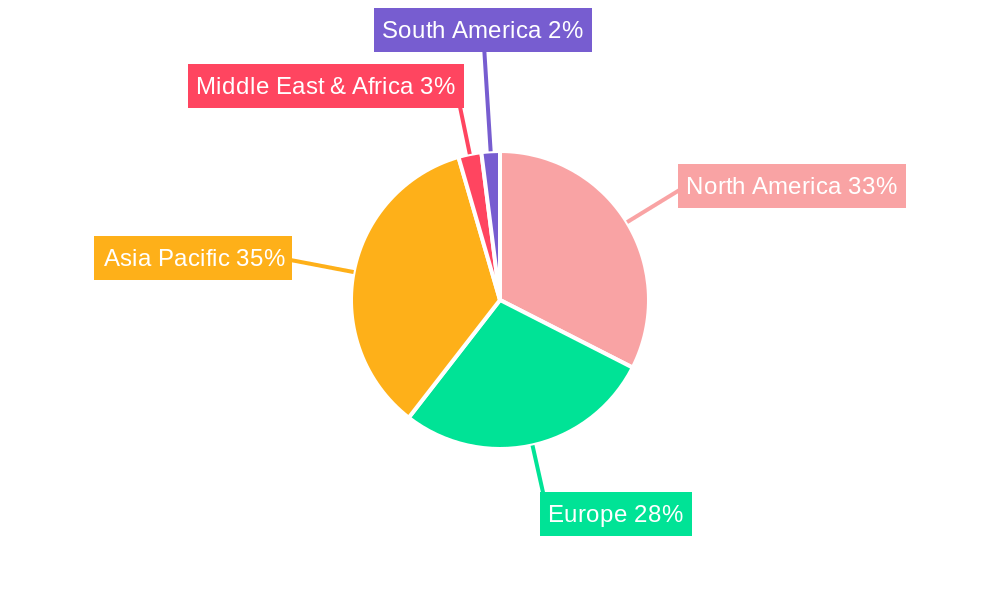
Aerospace Billets Regional Market Share
Geographic Coverage of Aerospace Billets
Aerospace Billets REPORT HIGHLIGHTS
| Aspects | Details |
|---|---|
| Study Period | 2020-2034 |
| Base Year | 2025 |
| Estimated Year | 2026 |
| Forecast Period | 2026-2034 |
| Historical Period | 2020-2025 |
| Growth Rate | CAGR of 5.9% from 2020-2034 |
| Segmentation |
|
Table of Contents
- 1. Introduction
- 1.1. Research Scope
- 1.2. Market Segmentation
- 1.3. Research Methodology
- 1.4. Definitions and Assumptions
- 2. Executive Summary
- 2.1. Introduction
- 3. Market Dynamics
- 3.1. Introduction
- 3.2. Market Drivers
- 3.3. Market Restrains
- 3.4. Market Trends
- 4. Market Factor Analysis
- 4.1. Porters Five Forces
- 4.2. Supply/Value Chain
- 4.3. PESTEL analysis
- 4.4. Market Entropy
- 4.5. Patent/Trademark Analysis
- 5. Global Aerospace Billets Analysis, Insights and Forecast, 2020-2032
- 5.1. Market Analysis, Insights and Forecast - by Application
- 5.1.1. Engine
- 5.1.2. Landing Gear
- 5.1.3. Fuselage
- 5.1.4. Others
- 5.2. Market Analysis, Insights and Forecast - by Type
- 5.2.1. Diameter ≤ 10 Inches
- 5.2.2. Diameter > 10 Inches
- 5.3. Market Analysis, Insights and Forecast - by Region
- 5.3.1. North America
- 5.3.2. South America
- 5.3.3. Europe
- 5.3.4. Middle East & Africa
- 5.3.5. Asia Pacific
- 5.1. Market Analysis, Insights and Forecast - by Application
- 6. North America Aerospace Billets Analysis, Insights and Forecast, 2020-2032
- 6.1. Market Analysis, Insights and Forecast - by Application
- 6.1.1. Engine
- 6.1.2. Landing Gear
- 6.1.3. Fuselage
- 6.1.4. Others
- 6.2. Market Analysis, Insights and Forecast - by Type
- 6.2.1. Diameter ≤ 10 Inches
- 6.2.2. Diameter > 10 Inches
- 6.1. Market Analysis, Insights and Forecast - by Application
- 7. South America Aerospace Billets Analysis, Insights and Forecast, 2020-2032
- 7.1. Market Analysis, Insights and Forecast - by Application
- 7.1.1. Engine
- 7.1.2. Landing Gear
- 7.1.3. Fuselage
- 7.1.4. Others
- 7.2. Market Analysis, Insights and Forecast - by Type
- 7.2.1. Diameter ≤ 10 Inches
- 7.2.2. Diameter > 10 Inches
- 7.1. Market Analysis, Insights and Forecast - by Application
- 8. Europe Aerospace Billets Analysis, Insights and Forecast, 2020-2032
- 8.1. Market Analysis, Insights and Forecast - by Application
- 8.1.1. Engine
- 8.1.2. Landing Gear
- 8.1.3. Fuselage
- 8.1.4. Others
- 8.2. Market Analysis, Insights and Forecast - by Type
- 8.2.1. Diameter ≤ 10 Inches
- 8.2.2. Diameter > 10 Inches
- 8.1. Market Analysis, Insights and Forecast - by Application
- 9. Middle East & Africa Aerospace Billets Analysis, Insights and Forecast, 2020-2032
- 9.1. Market Analysis, Insights and Forecast - by Application
- 9.1.1. Engine
- 9.1.2. Landing Gear
- 9.1.3. Fuselage
- 9.1.4. Others
- 9.2. Market Analysis, Insights and Forecast - by Type
- 9.2.1. Diameter ≤ 10 Inches
- 9.2.2. Diameter > 10 Inches
- 9.1. Market Analysis, Insights and Forecast - by Application
- 10. Asia Pacific Aerospace Billets Analysis, Insights and Forecast, 2020-2032
- 10.1. Market Analysis, Insights and Forecast - by Application
- 10.1.1. Engine
- 10.1.2. Landing Gear
- 10.1.3. Fuselage
- 10.1.4. Others
- 10.2. Market Analysis, Insights and Forecast - by Type
- 10.2.1. Diameter ≤ 10 Inches
- 10.2.2. Diameter > 10 Inches
- 10.1. Market Analysis, Insights and Forecast - by Application
- 11. Competitive Analysis
- 11.1. Global Market Share Analysis 2025
- 11.2. Company Profiles
- 11.2.1 Constellium
- 11.2.1.1. Overview
- 11.2.1.2. Products
- 11.2.1.3. SWOT Analysis
- 11.2.1.4. Recent Developments
- 11.2.1.5. Financials (Based on Availability)
- 11.2.2 Wagstaff Inc
- 11.2.2.1. Overview
- 11.2.2.2. Products
- 11.2.2.3. SWOT Analysis
- 11.2.2.4. Recent Developments
- 11.2.2.5. Financials (Based on Availability)
- 11.2.3 Taber Extrudes
- 11.2.3.1. Overview
- 11.2.3.2. Products
- 11.2.3.3. SWOT Analysis
- 11.2.3.4. Recent Developments
- 11.2.3.5. Financials (Based on Availability)
- 11.2.4 Voestalpine Specialty Metals North America
- 11.2.4.1. Overview
- 11.2.4.2. Products
- 11.2.4.3. SWOT Analysis
- 11.2.4.4. Recent Developments
- 11.2.4.5. Financials (Based on Availability)
- 11.2.5 South Aluminum Corporation
- 11.2.5.1. Overview
- 11.2.5.2. Products
- 11.2.5.3. SWOT Analysis
- 11.2.5.4. Recent Developments
- 11.2.5.5. Financials (Based on Availability)
- 11.2.6 SeAH Aerospace and Defense
- 11.2.6.1. Overview
- 11.2.6.2. Products
- 11.2.6.3. SWOT Analysis
- 11.2.6.4. Recent Developments
- 11.2.6.5. Financials (Based on Availability)
- 11.2.7 Henan Chalco
- 11.2.7.1. Overview
- 11.2.7.2. Products
- 11.2.7.3. SWOT Analysis
- 11.2.7.4. Recent Developments
- 11.2.7.5. Financials (Based on Availability)
- 11.2.8 Taiwan Hodaka
- 11.2.8.1. Overview
- 11.2.8.2. Products
- 11.2.8.3. SWOT Analysis
- 11.2.8.4. Recent Developments
- 11.2.8.5. Financials (Based on Availability)
- 11.2.9 SenJun
- 11.2.9.1. Overview
- 11.2.9.2. Products
- 11.2.9.3. SWOT Analysis
- 11.2.9.4. Recent Developments
- 11.2.9.5. Financials (Based on Availability)
- 11.2.10 TIMET
- 11.2.10.1. Overview
- 11.2.10.2. Products
- 11.2.10.3. SWOT Analysis
- 11.2.10.4. Recent Developments
- 11.2.10.5. Financials (Based on Availability)
- 11.2.11 Aluminum Die Cast Co Inc
- 11.2.11.1. Overview
- 11.2.11.2. Products
- 11.2.11.3. SWOT Analysis
- 11.2.11.4. Recent Developments
- 11.2.11.5. Financials (Based on Availability)
- 11.2.1 Constellium
List of Figures
- Figure 1: Global Aerospace Billets Revenue Breakdown (million, %) by Region 2025 & 2033
- Figure 2: North America Aerospace Billets Revenue (million), by Application 2025 & 2033
- Figure 3: North America Aerospace Billets Revenue Share (%), by Application 2025 & 2033
- Figure 4: North America Aerospace Billets Revenue (million), by Type 2025 & 2033
- Figure 5: North America Aerospace Billets Revenue Share (%), by Type 2025 & 2033
- Figure 6: North America Aerospace Billets Revenue (million), by Country 2025 & 2033
- Figure 7: North America Aerospace Billets Revenue Share (%), by Country 2025 & 2033
- Figure 8: South America Aerospace Billets Revenue (million), by Application 2025 & 2033
- Figure 9: South America Aerospace Billets Revenue Share (%), by Application 2025 & 2033
- Figure 10: South America Aerospace Billets Revenue (million), by Type 2025 & 2033
- Figure 11: South America Aerospace Billets Revenue Share (%), by Type 2025 & 2033
- Figure 12: South America Aerospace Billets Revenue (million), by Country 2025 & 2033
- Figure 13: South America Aerospace Billets Revenue Share (%), by Country 2025 & 2033
- Figure 14: Europe Aerospace Billets Revenue (million), by Application 2025 & 2033
- Figure 15: Europe Aerospace Billets Revenue Share (%), by Application 2025 & 2033
- Figure 16: Europe Aerospace Billets Revenue (million), by Type 2025 & 2033
- Figure 17: Europe Aerospace Billets Revenue Share (%), by Type 2025 & 2033
- Figure 18: Europe Aerospace Billets Revenue (million), by Country 2025 & 2033
- Figure 19: Europe Aerospace Billets Revenue Share (%), by Country 2025 & 2033
- Figure 20: Middle East & Africa Aerospace Billets Revenue (million), by Application 2025 & 2033
- Figure 21: Middle East & Africa Aerospace Billets Revenue Share (%), by Application 2025 & 2033
- Figure 22: Middle East & Africa Aerospace Billets Revenue (million), by Type 2025 & 2033
- Figure 23: Middle East & Africa Aerospace Billets Revenue Share (%), by Type 2025 & 2033
- Figure 24: Middle East & Africa Aerospace Billets Revenue (million), by Country 2025 & 2033
- Figure 25: Middle East & Africa Aerospace Billets Revenue Share (%), by Country 2025 & 2033
- Figure 26: Asia Pacific Aerospace Billets Revenue (million), by Application 2025 & 2033
- Figure 27: Asia Pacific Aerospace Billets Revenue Share (%), by Application 2025 & 2033
- Figure 28: Asia Pacific Aerospace Billets Revenue (million), by Type 2025 & 2033
- Figure 29: Asia Pacific Aerospace Billets Revenue Share (%), by Type 2025 & 2033
- Figure 30: Asia Pacific Aerospace Billets Revenue (million), by Country 2025 & 2033
- Figure 31: Asia Pacific Aerospace Billets Revenue Share (%), by Country 2025 & 2033
List of Tables
- Table 1: Global Aerospace Billets Revenue million Forecast, by Application 2020 & 2033
- Table 2: Global Aerospace Billets Revenue million Forecast, by Type 2020 & 2033
- Table 3: Global Aerospace Billets Revenue million Forecast, by Region 2020 & 2033
- Table 4: Global Aerospace Billets Revenue million Forecast, by Application 2020 & 2033
- Table 5: Global Aerospace Billets Revenue million Forecast, by Type 2020 & 2033
- Table 6: Global Aerospace Billets Revenue million Forecast, by Country 2020 & 2033
- Table 7: United States Aerospace Billets Revenue (million) Forecast, by Application 2020 & 2033
- Table 8: Canada Aerospace Billets Revenue (million) Forecast, by Application 2020 & 2033
- Table 9: Mexico Aerospace Billets Revenue (million) Forecast, by Application 2020 & 2033
- Table 10: Global Aerospace Billets Revenue million Forecast, by Application 2020 & 2033
- Table 11: Global Aerospace Billets Revenue million Forecast, by Type 2020 & 2033
- Table 12: Global Aerospace Billets Revenue million Forecast, by Country 2020 & 2033
- Table 13: Brazil Aerospace Billets Revenue (million) Forecast, by Application 2020 & 2033
- Table 14: Argentina Aerospace Billets Revenue (million) Forecast, by Application 2020 & 2033
- Table 15: Rest of South America Aerospace Billets Revenue (million) Forecast, by Application 2020 & 2033
- Table 16: Global Aerospace Billets Revenue million Forecast, by Application 2020 & 2033
- Table 17: Global Aerospace Billets Revenue million Forecast, by Type 2020 & 2033
- Table 18: Global Aerospace Billets Revenue million Forecast, by Country 2020 & 2033
- Table 19: United Kingdom Aerospace Billets Revenue (million) Forecast, by Application 2020 & 2033
- Table 20: Germany Aerospace Billets Revenue (million) Forecast, by Application 2020 & 2033
- Table 21: France Aerospace Billets Revenue (million) Forecast, by Application 2020 & 2033
- Table 22: Italy Aerospace Billets Revenue (million) Forecast, by Application 2020 & 2033
- Table 23: Spain Aerospace Billets Revenue (million) Forecast, by Application 2020 & 2033
- Table 24: Russia Aerospace Billets Revenue (million) Forecast, by Application 2020 & 2033
- Table 25: Benelux Aerospace Billets Revenue (million) Forecast, by Application 2020 & 2033
- Table 26: Nordics Aerospace Billets Revenue (million) Forecast, by Application 2020 & 2033
- Table 27: Rest of Europe Aerospace Billets Revenue (million) Forecast, by Application 2020 & 2033
- Table 28: Global Aerospace Billets Revenue million Forecast, by Application 2020 & 2033
- Table 29: Global Aerospace Billets Revenue million Forecast, by Type 2020 & 2033
- Table 30: Global Aerospace Billets Revenue million Forecast, by Country 2020 & 2033
- Table 31: Turkey Aerospace Billets Revenue (million) Forecast, by Application 2020 & 2033
- Table 32: Israel Aerospace Billets Revenue (million) Forecast, by Application 2020 & 2033
- Table 33: GCC Aerospace Billets Revenue (million) Forecast, by Application 2020 & 2033
- Table 34: North Africa Aerospace Billets Revenue (million) Forecast, by Application 2020 & 2033
- Table 35: South Africa Aerospace Billets Revenue (million) Forecast, by Application 2020 & 2033
- Table 36: Rest of Middle East & Africa Aerospace Billets Revenue (million) Forecast, by Application 2020 & 2033
- Table 37: Global Aerospace Billets Revenue million Forecast, by Application 2020 & 2033
- Table 38: Global Aerospace Billets Revenue million Forecast, by Type 2020 & 2033
- Table 39: Global Aerospace Billets Revenue million Forecast, by Country 2020 & 2033
- Table 40: China Aerospace Billets Revenue (million) Forecast, by Application 2020 & 2033
- Table 41: India Aerospace Billets Revenue (million) Forecast, by Application 2020 & 2033
- Table 42: Japan Aerospace Billets Revenue (million) Forecast, by Application 2020 & 2033
- Table 43: South Korea Aerospace Billets Revenue (million) Forecast, by Application 2020 & 2033
- Table 44: ASEAN Aerospace Billets Revenue (million) Forecast, by Application 2020 & 2033
- Table 45: Oceania Aerospace Billets Revenue (million) Forecast, by Application 2020 & 2033
- Table 46: Rest of Asia Pacific Aerospace Billets Revenue (million) Forecast, by Application 2020 & 2033
Frequently Asked Questions
1. What is the projected Compound Annual Growth Rate (CAGR) of the Aerospace Billets?
The projected CAGR is approximately 5.9%.
2. Which companies are prominent players in the Aerospace Billets?
Key companies in the market include Constellium, Wagstaff, Inc, Taber Extrudes, Voestalpine Specialty Metals North America, South Aluminum Corporation, SeAH Aerospace and Defense, Henan Chalco, Taiwan Hodaka, SenJun, TIMET, Aluminum Die Cast Co, Inc.
3. What are the main segments of the Aerospace Billets?
The market segments include Application, Type.
4. Can you provide details about the market size?
The market size is estimated to be USD 2573 million as of 2022.
5. What are some drivers contributing to market growth?
N/A
6. What are the notable trends driving market growth?
N/A
7. Are there any restraints impacting market growth?
N/A
8. Can you provide examples of recent developments in the market?
N/A
9. What pricing options are available for accessing the report?
Pricing options include single-user, multi-user, and enterprise licenses priced at USD 2900.00, USD 4350.00, and USD 5800.00 respectively.
10. Is the market size provided in terms of value or volume?
The market size is provided in terms of value, measured in million.
11. Are there any specific market keywords associated with the report?
Yes, the market keyword associated with the report is "Aerospace Billets," which aids in identifying and referencing the specific market segment covered.
12. How do I determine which pricing option suits my needs best?
The pricing options vary based on user requirements and access needs. Individual users may opt for single-user licenses, while businesses requiring broader access may choose multi-user or enterprise licenses for cost-effective access to the report.
13. Are there any additional resources or data provided in the Aerospace Billets report?
While the report offers comprehensive insights, it's advisable to review the specific contents or supplementary materials provided to ascertain if additional resources or data are available.
14. How can I stay updated on further developments or reports in the Aerospace Billets?
To stay informed about further developments, trends, and reports in the Aerospace Billets, consider subscribing to industry newsletters, following relevant companies and organizations, or regularly checking reputable industry news sources and publications.
Methodology
Step 1 - Identification of Relevant Samples Size from Population Database



Step 2 - Approaches for Defining Global Market Size (Value, Volume* & Price*)

Note*: In applicable scenarios
Step 3 - Data Sources
Primary Research
- Web Analytics
- Survey Reports
- Research Institute
- Latest Research Reports
- Opinion Leaders
Secondary Research
- Annual Reports
- White Paper
- Latest Press Release
- Industry Association
- Paid Database
- Investor Presentations

Step 4 - Data Triangulation
Involves using different sources of information in order to increase the validity of a study
These sources are likely to be stakeholders in a program - participants, other researchers, program staff, other community members, and so on.
Then we put all data in single framework & apply various statistical tools to find out the dynamic on the market.
During the analysis stage, feedback from the stakeholder groups would be compared to determine areas of agreement as well as areas of divergence