


Key Insights
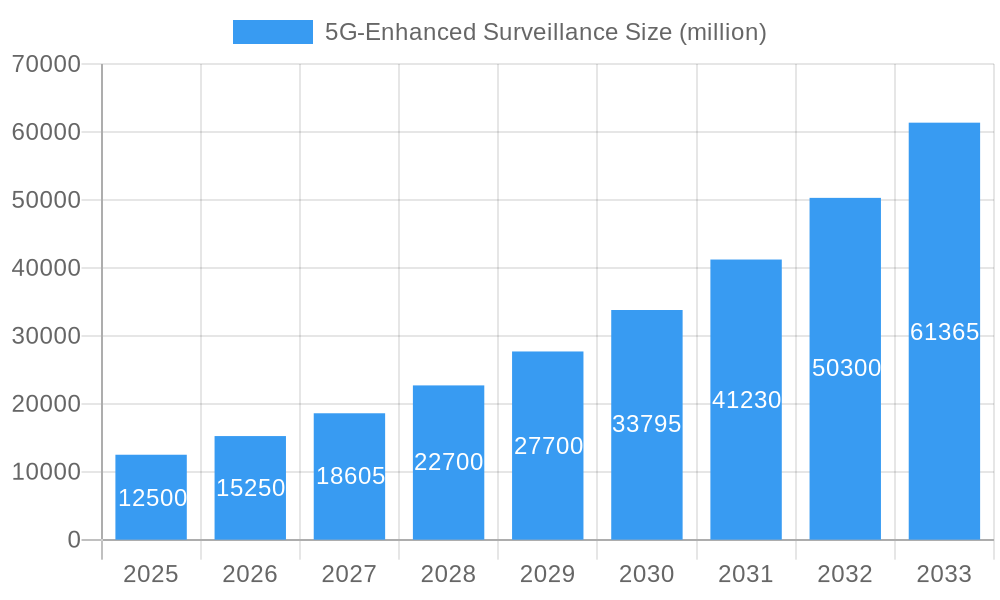
The global 5G-Enhanced Surveillance market is projected to reach a market size of $12.89 billion by 2025, exhibiting a Compound Annual Growth Rate (CAGR) of 9.04%. This significant expansion is driven by the increasing demand for real-time, high-definition video analytics, the adoption of AI and machine learning for intelligent operations, and the growing need for enhanced security across various sectors. 5G's inherent capabilities, including ultra-low latency, high bandwidth, and massive device connectivity, are revolutionizing surveillance, enabling more efficient monitoring and response for public safety and critical infrastructure protection.
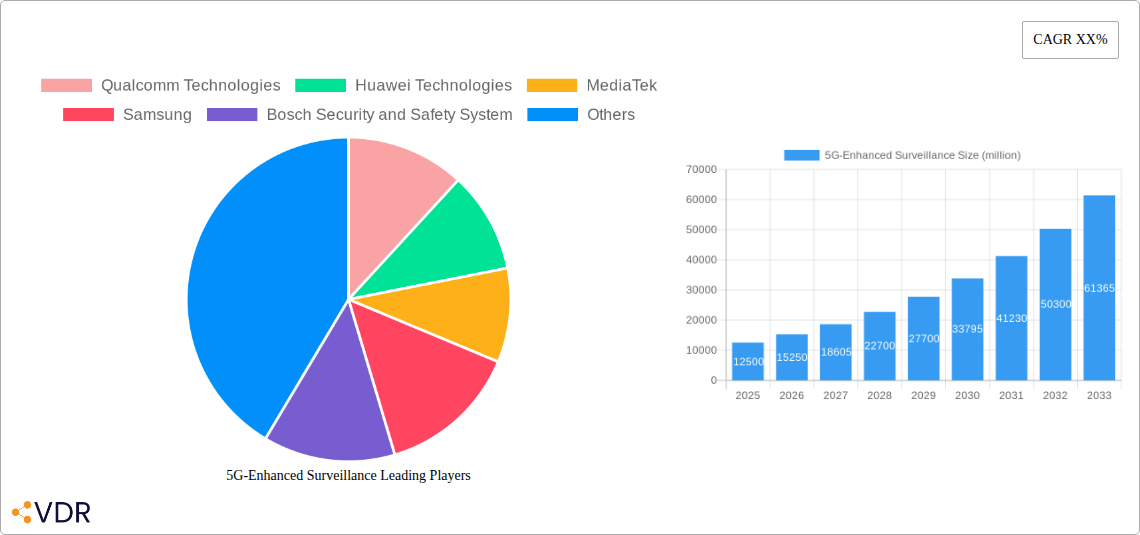
5G-Enhanced Surveillance Market Size (In Billion)

Key application segments include Commercial and Military & Defense, anticipated to lead market share due to substantial security requirements and investment in advanced technologies. Residential and Public Facility applications are also set for considerable growth. On the technology front, Hardware, Software, and Service segments will experience robust development, with Services and Software expected to accelerate as sophisticated analytics and integration become critical. Installation & Maintenance will align with hardware and software adoption. Leading industry players such as Qualcomm Technologies, Huawei Technologies, Samsung, and Bosch Security and Safety Systems are driving innovation. Geographically, Asia Pacific (especially China and India), North America, and Europe are expected to dominate market adoption, fueled by smart city initiatives, advanced infrastructure, and a strong focus on national security.
5G-Enhanced Surveillance Company Market Share
5G-Enhanced Surveillance Market Dynamics & Structure
The 5G-Enhanced Surveillance market is characterized by a moderate concentration, with key players like Qualcomm Technologies, Huawei Technologies, MediaTek, and Samsung leading in chipsets and network infrastructure, while Bosch Security and Safety Systems, Pelco, NEC, and Genetec dominate the hardware, software, and service segments. Technological innovation is a primary driver, fueled by the increasing demand for real-time, high-definition video analytics, AI integration, and the expansion of the Internet of Things (IoT) ecosystem. Regulatory frameworks are evolving to address data privacy concerns and to standardize 5G deployment, influencing adoption rates across different regions. Competitive product substitutes, primarily existing 4G-based surveillance systems, are gradually being phased out as the superior capabilities of 5G become apparent. End-user demographics are diverse, spanning commercial enterprises, military and defense organizations, residential security providers, and public facility management. Merger and acquisition (M&A) trends indicate a consolidation phase, with larger entities acquiring innovative startups to bolster their product portfolios and market reach. For instance, an estimated 15 M&A deals in this sector were observed between 2023 and 2024, totaling an estimated value of $550 million. The primary barrier to widespread adoption remains the high initial investment cost for 5G infrastructure and compatible surveillance devices.
- Market Concentration: Moderate, with a blend of established technology giants and specialized surveillance solution providers.
- Innovation Drivers: AI-powered analytics, ultra-high-definition video, edge computing, and the growing need for proactive security.
- Regulatory Landscape: Evolving data privacy laws (e.g., GDPR, CCPA) and 5G spectrum allocation policies are shaping market access and operational frameworks.
- Competitive Landscape: Substitution from mature 4G solutions is a challenge, but 5G's latency and bandwidth advantages are compelling.
- End-User Focus: A broad spectrum from critical infrastructure protection to smart home security.
- M&A Activity: Driven by the desire to acquire advanced AI capabilities and integrated 5G solutions.
5G-Enhanced Surveillance Growth Trends & Insights
The global 5G-Enhanced Surveillance market is poised for explosive growth, driven by the transformative capabilities that fifth-generation wireless technology brings to the security landscape. This report projects the market to surge from an estimated $5.8 billion in 2025 to a staggering $22.5 billion by 2033, exhibiting a Compound Annual Growth Rate (CAGR) of approximately 18.5% during the forecast period. This robust expansion is underpinned by a significant increase in the adoption rates of 5G-enabled surveillance solutions across various sectors. The inherent advantages of 5G, including ultra-low latency, massive bandwidth, and enhanced reliability, are enabling unprecedented levels of real-time video streaming, advanced video analytics powered by AI and machine learning at the edge, and the seamless integration of a vast array of IoT devices for comprehensive situational awareness.
Technological disruptions are at the forefront of this growth. The deployment of standalone 5G networks (SA 5G) is enabling mission-critical applications that demand predictable performance, which is vital for high-stakes surveillance scenarios in military and defense, public safety, and critical infrastructure monitoring. Furthermore, the convergence of 5G with technologies like edge computing is allowing for sophisticated data processing closer to the source, reducing reliance on cloud infrastructure and enabling faster threat detection and response times. Consumer behavior is also shifting, with a growing demand for more intelligent, integrated, and remotely accessible security systems for both commercial and residential properties. The increasing awareness of the need for proactive security measures, rather than reactive responses, is driving investment in advanced surveillance technologies.
The market penetration of 5G-enhanced surveillance solutions, which was approximately 12% in 2025, is projected to climb to over 35% by 2033. This signifies a substantial shift from traditional surveillance systems to more dynamic and intelligent 5G-powered alternatives. The development of new use cases, such as real-time crowd monitoring for public events, autonomous vehicle surveillance, and sophisticated intrusion detection in remote areas, is further accelerating adoption. As 5G infrastructure continues to expand globally, the cost of deploying and maintaining these advanced surveillance systems is expected to become more accessible, encouraging broader adoption across smaller businesses and residential segments. The increasing sophistication of cyber threats also necessitates more robust and resilient security solutions, positioning 5G-enhanced surveillance as a critical component of modern security strategies. This evolution marks a paradigm shift from simple monitoring to intelligent, predictive, and actionable security insights.
Dominant Regions, Countries, or Segments in 5G-Enhanced Surveillance
The Commercial segment is emerging as the most dominant force in the 5G-Enhanced Surveillance market, projected to capture a significant market share, estimated at 35% of the total market value by 2025, and expected to grow substantially to 40% by 2033. This dominance is fueled by a confluence of factors, including the escalating need for enhanced security in retail, manufacturing, logistics, and corporate environments. The ability of 5G to support high-definition video streams, real-time analytics for loss prevention, operational efficiency monitoring, and access control is proving invaluable for businesses seeking to optimize their operations and mitigate risks. For instance, retailers are leveraging 5G-enabled cameras for foot traffic analysis and customer behavior insights, while manufacturers are utilizing them for quality control and to ensure worker safety on the factory floor.
- Commercial Segment Dominance: Driven by increased adoption in retail, manufacturing, logistics, and corporate security.
- Market Share (2025): Estimated 35%
- Projected Market Share (2033): Estimated 40%
- Key Applications: Real-time inventory management, loss prevention, operational efficiency, access control, employee safety monitoring.
- North America's Leading Position: The region is anticipated to maintain its stronghold, contributing over 30% of the global market revenue by 2025 and continuing to expand its lead.
- Driving Factors: Strong economic policies supporting technological adoption, extensive 5G infrastructure rollout, and high demand for advanced security solutions in enterprise and public sectors.
- Key Countries: United States and Canada, with significant investments in smart city initiatives and enterprise security upgrades.
- Hardware Segment's Crucial Role: While software and services are vital, the hardware segment, encompassing cameras, sensors, and 5G-enabled devices, will remain a foundational element, accounting for an estimated 30% of the market by 2025.
- Innovation Focus: Development of 5G-integrated cameras with AI capabilities, robust outdoor surveillance devices, and miniaturized sensors for covert operations.
- Market Value (2025): Estimated $1.74 billion.
The Military & Defense segment also presents a substantial growth opportunity, driven by the critical need for enhanced situational awareness, border security, and real-time intelligence gathering. The deployment of 5G in defense applications allows for secure, high-bandwidth communication for drones, autonomous vehicles, and battlefield surveillance systems. Public Facility applications, including smart city initiatives, traffic management, and public safety monitoring, are also witnessing accelerated adoption, with governments investing heavily in upgrading their surveillance infrastructure to leverage 5G capabilities for improved urban management and emergency response.
5G-Enhanced Surveillance Product Landscape
The 5G-Enhanced Surveillance product landscape is characterized by the integration of advanced technologies to deliver unparalleled real-time monitoring and analytics. Innovations include 8K resolution cameras offering exceptional detail, AI-powered edge analytics for immediate threat detection and facial recognition, and robust, weather-resistant devices designed for harsh environments. The synergy between 5G connectivity and these hardware components enables low-latency video transmission, crucial for autonomous systems and real-time command and control. Software solutions are increasingly focused on intelligent video analytics, predictive threat assessment, and seamless integration with existing security platforms. Service offerings are evolving to include managed surveillance solutions, predictive maintenance for hardware, and cloud-based data management, all enhanced by the reliability and speed of 5G networks.
Key Drivers, Barriers & Challenges in 5G-Enhanced Surveillance
The 5G-Enhanced Surveillance market is propelled by several key drivers, including the escalating demand for real-time, high-definition video analytics, the proliferation of smart city initiatives, and the critical need for enhanced security in commercial and defense sectors. The inherent benefits of 5G, such as ultra-low latency and massive bandwidth, enable advanced applications like AI-powered object detection and predictive threat assessment. Technological advancements in sensor technology and edge computing further enhance these capabilities, making proactive surveillance a reality.
However, the market faces significant barriers and challenges. The high initial cost of 5G infrastructure deployment and compatible surveillance equipment remains a primary restraint, particularly for small and medium-sized enterprises. Regulatory hurdles related to data privacy and cybersecurity, coupled with the complexity of integrating new 5G systems with legacy infrastructure, also pose considerable challenges. Supply chain disruptions can impact the availability and cost of critical components, further exacerbating these issues. The competitive pressure from established 4G solutions, while diminishing, still presents a challenge for rapid market penetration.
Emerging Opportunities in 5G-Enhanced Surveillance
Emerging opportunities in 5G-Enhanced Surveillance are vast and diverse. The growing adoption of AI and machine learning within surveillance systems presents a significant avenue for growth, enabling predictive analytics for crime prevention and enhanced operational efficiency. The expansion of smart city projects globally is creating a robust demand for integrated surveillance solutions that can manage traffic, monitor public spaces, and improve emergency response. Furthermore, the increasing use of drones for aerial surveillance in sectors like agriculture, infrastructure inspection, and law enforcement, powered by 5G's real-time data capabilities, is an untapped market with immense potential. The development of specialized 5G solutions for industrial IoT (IIoT) environments, focusing on asset tracking and predictive maintenance, also represents a promising frontier.
Growth Accelerators in the 5G-Enhanced Surveillance Industry
Several catalysts are accelerating the growth of the 5G-Enhanced Surveillance industry. Technological breakthroughs in AI, computer vision, and edge computing are continuously enhancing the intelligence and efficiency of surveillance systems. Strategic partnerships between telecom providers, security firms, and technology manufacturers are crucial for developing integrated solutions and expanding market reach. The increasing global focus on public safety and homeland security, coupled with government investments in smart city infrastructure, is creating substantial demand. Furthermore, the evolving threat landscape necessitates more sophisticated and proactive security measures, which 5G-enhanced surveillance is uniquely positioned to provide. The ongoing global rollout of 5G networks is also a fundamental growth accelerator, making advanced surveillance capabilities more accessible and cost-effective.
Key Players Shaping the 5G-Enhanced Surveillance Market
- Qualcomm Technologies
- Huawei Technologies
- MediaTek
- Samsung
- Bosch Security and Safety Systems
- Pelco
- NEC
- Genetec
Notable Milestones in 5G-Enhanced Surveillance Sector
- 2019: First commercial deployments of 5G networks begin, laying the groundwork for advanced surveillance applications.
- 2020: Introduction of AI-powered edge analytics solutions designed for 5G-enabled surveillance cameras.
- 2021: Significant advancements in 8K video resolution for surveillance cameras, offering unprecedented detail.
- 2022: Increased M&A activity as larger companies acquire AI and 5G-focused surveillance startups.
- 2023: Expanded adoption of 5G for drone-based surveillance in commercial and public safety applications.
- 2024: Rollout of standalone 5G networks (SA 5G) enabling mission-critical surveillance capabilities.
In-Depth 5G-Enhanced Surveillance Market Outlook
The future outlook for the 5G-Enhanced Surveillance market is exceptionally bright, driven by a persistent demand for advanced security solutions and the transformative capabilities of 5G technology. Growth accelerators such as continuous innovation in AI, the expansive development of smart cities, and robust governmental investments in public safety will continue to fuel market expansion. Strategic collaborations between key industry players will foster the development of more integrated and comprehensive surveillance ecosystems, while the ongoing global 5G network rollout will make these advanced solutions more accessible. The market is poised for significant evolution, moving beyond traditional monitoring to intelligent, predictive, and proactive security paradigms, presenting substantial strategic opportunities for stakeholders.
5G-Enhanced Surveillance Segmentation
-
1. Application
- 1.1. Commercial
- 1.2. Military & Defense
- 1.3. Residential
- 1.4. Public Facility
-
2. Types
- 2.1. Hardware
- 2.2. Software
- 2.3. Service
- 2.4. Installation & Maintenance
5G-Enhanced Surveillance Segmentation By Geography
-
1. North America
- 1.1. United States
- 1.2. Canada
- 1.3. Mexico
-
2. South America
- 2.1. Brazil
- 2.2. Argentina
- 2.3. Rest of South America
-
3. Europe
- 3.1. United Kingdom
- 3.2. Germany
- 3.3. France
- 3.4. Italy
- 3.5. Spain
- 3.6. Russia
- 3.7. Benelux
- 3.8. Nordics
- 3.9. Rest of Europe
-
4. Middle East & Africa
- 4.1. Turkey
- 4.2. Israel
- 4.3. GCC
- 4.4. North Africa
- 4.5. South Africa
- 4.6. Rest of Middle East & Africa
-
5. Asia Pacific
- 5.1. China
- 5.2. India
- 5.3. Japan
- 5.4. South Korea
- 5.5. ASEAN
- 5.6. Oceania
- 5.7. Rest of Asia Pacific
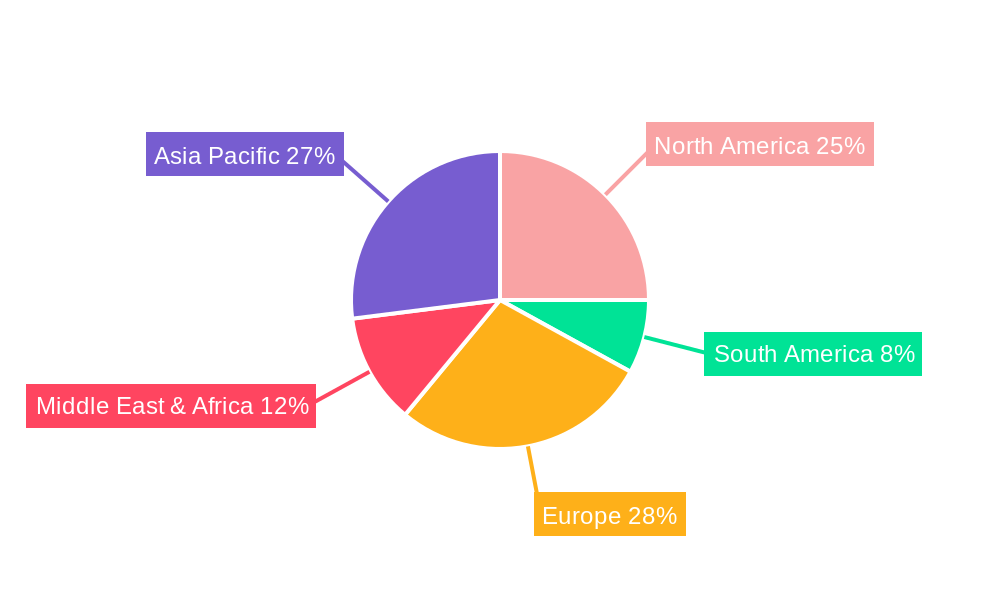
5G-Enhanced Surveillance Regional Market Share
Geographic Coverage of 5G-Enhanced Surveillance
5G-Enhanced Surveillance REPORT HIGHLIGHTS
| Aspects | Details |
|---|---|
| Study Period | 2020-2034 |
| Base Year | 2025 |
| Estimated Year | 2026 |
| Forecast Period | 2026-2034 |
| Historical Period | 2020-2025 |
| Growth Rate | CAGR of 9.04% from 2020-2034 |
| Segmentation |
|
Table of Contents
- 1. Introduction
- 1.1. Research Scope
- 1.2. Market Segmentation
- 1.3. Research Methodology
- 1.4. Definitions and Assumptions
- 2. Executive Summary
- 2.1. Introduction
- 3. Market Dynamics
- 3.1. Introduction
- 3.2. Market Drivers
- 3.3. Market Restrains
- 3.4. Market Trends
- 4. Market Factor Analysis
- 4.1. Porters Five Forces
- 4.2. Supply/Value Chain
- 4.3. PESTEL analysis
- 4.4. Market Entropy
- 4.5. Patent/Trademark Analysis
- 5. Global 5G-Enhanced Surveillance Analysis, Insights and Forecast, 2020-2032
- 5.1. Market Analysis, Insights and Forecast - by Application
- 5.1.1. Commercial
- 5.1.2. Military & Defense
- 5.1.3. Residential
- 5.1.4. Public Facility
- 5.2. Market Analysis, Insights and Forecast - by Types
- 5.2.1. Hardware
- 5.2.2. Software
- 5.2.3. Service
- 5.2.4. Installation & Maintenance
- 5.3. Market Analysis, Insights and Forecast - by Region
- 5.3.1. North America
- 5.3.2. South America
- 5.3.3. Europe
- 5.3.4. Middle East & Africa
- 5.3.5. Asia Pacific
- 5.1. Market Analysis, Insights and Forecast - by Application
- 6. North America 5G-Enhanced Surveillance Analysis, Insights and Forecast, 2020-2032
- 6.1. Market Analysis, Insights and Forecast - by Application
- 6.1.1. Commercial
- 6.1.2. Military & Defense
- 6.1.3. Residential
- 6.1.4. Public Facility
- 6.2. Market Analysis, Insights and Forecast - by Types
- 6.2.1. Hardware
- 6.2.2. Software
- 6.2.3. Service
- 6.2.4. Installation & Maintenance
- 6.1. Market Analysis, Insights and Forecast - by Application
- 7. South America 5G-Enhanced Surveillance Analysis, Insights and Forecast, 2020-2032
- 7.1. Market Analysis, Insights and Forecast - by Application
- 7.1.1. Commercial
- 7.1.2. Military & Defense
- 7.1.3. Residential
- 7.1.4. Public Facility
- 7.2. Market Analysis, Insights and Forecast - by Types
- 7.2.1. Hardware
- 7.2.2. Software
- 7.2.3. Service
- 7.2.4. Installation & Maintenance
- 7.1. Market Analysis, Insights and Forecast - by Application
- 8. Europe 5G-Enhanced Surveillance Analysis, Insights and Forecast, 2020-2032
- 8.1. Market Analysis, Insights and Forecast - by Application
- 8.1.1. Commercial
- 8.1.2. Military & Defense
- 8.1.3. Residential
- 8.1.4. Public Facility
- 8.2. Market Analysis, Insights and Forecast - by Types
- 8.2.1. Hardware
- 8.2.2. Software
- 8.2.3. Service
- 8.2.4. Installation & Maintenance
- 8.1. Market Analysis, Insights and Forecast - by Application
- 9. Middle East & Africa 5G-Enhanced Surveillance Analysis, Insights and Forecast, 2020-2032
- 9.1. Market Analysis, Insights and Forecast - by Application
- 9.1.1. Commercial
- 9.1.2. Military & Defense
- 9.1.3. Residential
- 9.1.4. Public Facility
- 9.2. Market Analysis, Insights and Forecast - by Types
- 9.2.1. Hardware
- 9.2.2. Software
- 9.2.3. Service
- 9.2.4. Installation & Maintenance
- 9.1. Market Analysis, Insights and Forecast - by Application
- 10. Asia Pacific 5G-Enhanced Surveillance Analysis, Insights and Forecast, 2020-2032
- 10.1. Market Analysis, Insights and Forecast - by Application
- 10.1.1. Commercial
- 10.1.2. Military & Defense
- 10.1.3. Residential
- 10.1.4. Public Facility
- 10.2. Market Analysis, Insights and Forecast - by Types
- 10.2.1. Hardware
- 10.2.2. Software
- 10.2.3. Service
- 10.2.4. Installation & Maintenance
- 10.1. Market Analysis, Insights and Forecast - by Application
- 11. Competitive Analysis
- 11.1. Global Market Share Analysis 2025
- 11.2. Company Profiles
- 11.2.1 Qualcomm Technologies
- 11.2.1.1. Overview
- 11.2.1.2. Products
- 11.2.1.3. SWOT Analysis
- 11.2.1.4. Recent Developments
- 11.2.1.5. Financials (Based on Availability)
- 11.2.2 Huawei Technologies
- 11.2.2.1. Overview
- 11.2.2.2. Products
- 11.2.2.3. SWOT Analysis
- 11.2.2.4. Recent Developments
- 11.2.2.5. Financials (Based on Availability)
- 11.2.3 MediaTek
- 11.2.3.1. Overview
- 11.2.3.2. Products
- 11.2.3.3. SWOT Analysis
- 11.2.3.4. Recent Developments
- 11.2.3.5. Financials (Based on Availability)
- 11.2.4 Samsung
- 11.2.4.1. Overview
- 11.2.4.2. Products
- 11.2.4.3. SWOT Analysis
- 11.2.4.4. Recent Developments
- 11.2.4.5. Financials (Based on Availability)
- 11.2.5 Bosch Security and Safety System
- 11.2.5.1. Overview
- 11.2.5.2. Products
- 11.2.5.3. SWOT Analysis
- 11.2.5.4. Recent Developments
- 11.2.5.5. Financials (Based on Availability)
- 11.2.6 Pelco
- 11.2.6.1. Overview
- 11.2.6.2. Products
- 11.2.6.3. SWOT Analysis
- 11.2.6.4. Recent Developments
- 11.2.6.5. Financials (Based on Availability)
- 11.2.7 NEC
- 11.2.7.1. Overview
- 11.2.7.2. Products
- 11.2.7.3. SWOT Analysis
- 11.2.7.4. Recent Developments
- 11.2.7.5. Financials (Based on Availability)
- 11.2.8 Genetec
- 11.2.8.1. Overview
- 11.2.8.2. Products
- 11.2.8.3. SWOT Analysis
- 11.2.8.4. Recent Developments
- 11.2.8.5. Financials (Based on Availability)
- 11.2.1 Qualcomm Technologies
List of Figures
- Figure 1: Global 5G-Enhanced Surveillance Revenue Breakdown (billion, %) by Region 2025 & 2033
- Figure 2: North America 5G-Enhanced Surveillance Revenue (billion), by Application 2025 & 2033
- Figure 3: North America 5G-Enhanced Surveillance Revenue Share (%), by Application 2025 & 2033
- Figure 4: North America 5G-Enhanced Surveillance Revenue (billion), by Types 2025 & 2033
- Figure 5: North America 5G-Enhanced Surveillance Revenue Share (%), by Types 2025 & 2033
- Figure 6: North America 5G-Enhanced Surveillance Revenue (billion), by Country 2025 & 2033
- Figure 7: North America 5G-Enhanced Surveillance Revenue Share (%), by Country 2025 & 2033
- Figure 8: South America 5G-Enhanced Surveillance Revenue (billion), by Application 2025 & 2033
- Figure 9: South America 5G-Enhanced Surveillance Revenue Share (%), by Application 2025 & 2033
- Figure 10: South America 5G-Enhanced Surveillance Revenue (billion), by Types 2025 & 2033
- Figure 11: South America 5G-Enhanced Surveillance Revenue Share (%), by Types 2025 & 2033
- Figure 12: South America 5G-Enhanced Surveillance Revenue (billion), by Country 2025 & 2033
- Figure 13: South America 5G-Enhanced Surveillance Revenue Share (%), by Country 2025 & 2033
- Figure 14: Europe 5G-Enhanced Surveillance Revenue (billion), by Application 2025 & 2033
- Figure 15: Europe 5G-Enhanced Surveillance Revenue Share (%), by Application 2025 & 2033
- Figure 16: Europe 5G-Enhanced Surveillance Revenue (billion), by Types 2025 & 2033
- Figure 17: Europe 5G-Enhanced Surveillance Revenue Share (%), by Types 2025 & 2033
- Figure 18: Europe 5G-Enhanced Surveillance Revenue (billion), by Country 2025 & 2033
- Figure 19: Europe 5G-Enhanced Surveillance Revenue Share (%), by Country 2025 & 2033
- Figure 20: Middle East & Africa 5G-Enhanced Surveillance Revenue (billion), by Application 2025 & 2033
- Figure 21: Middle East & Africa 5G-Enhanced Surveillance Revenue Share (%), by Application 2025 & 2033
- Figure 22: Middle East & Africa 5G-Enhanced Surveillance Revenue (billion), by Types 2025 & 2033
- Figure 23: Middle East & Africa 5G-Enhanced Surveillance Revenue Share (%), by Types 2025 & 2033
- Figure 24: Middle East & Africa 5G-Enhanced Surveillance Revenue (billion), by Country 2025 & 2033
- Figure 25: Middle East & Africa 5G-Enhanced Surveillance Revenue Share (%), by Country 2025 & 2033
- Figure 26: Asia Pacific 5G-Enhanced Surveillance Revenue (billion), by Application 2025 & 2033
- Figure 27: Asia Pacific 5G-Enhanced Surveillance Revenue Share (%), by Application 2025 & 2033
- Figure 28: Asia Pacific 5G-Enhanced Surveillance Revenue (billion), by Types 2025 & 2033
- Figure 29: Asia Pacific 5G-Enhanced Surveillance Revenue Share (%), by Types 2025 & 2033
- Figure 30: Asia Pacific 5G-Enhanced Surveillance Revenue (billion), by Country 2025 & 2033
- Figure 31: Asia Pacific 5G-Enhanced Surveillance Revenue Share (%), by Country 2025 & 2033
List of Tables
- Table 1: Global 5G-Enhanced Surveillance Revenue billion Forecast, by Application 2020 & 2033
- Table 2: Global 5G-Enhanced Surveillance Revenue billion Forecast, by Types 2020 & 2033
- Table 3: Global 5G-Enhanced Surveillance Revenue billion Forecast, by Region 2020 & 2033
- Table 4: Global 5G-Enhanced Surveillance Revenue billion Forecast, by Application 2020 & 2033
- Table 5: Global 5G-Enhanced Surveillance Revenue billion Forecast, by Types 2020 & 2033
- Table 6: Global 5G-Enhanced Surveillance Revenue billion Forecast, by Country 2020 & 2033
- Table 7: United States 5G-Enhanced Surveillance Revenue (billion) Forecast, by Application 2020 & 2033
- Table 8: Canada 5G-Enhanced Surveillance Revenue (billion) Forecast, by Application 2020 & 2033
- Table 9: Mexico 5G-Enhanced Surveillance Revenue (billion) Forecast, by Application 2020 & 2033
- Table 10: Global 5G-Enhanced Surveillance Revenue billion Forecast, by Application 2020 & 2033
- Table 11: Global 5G-Enhanced Surveillance Revenue billion Forecast, by Types 2020 & 2033
- Table 12: Global 5G-Enhanced Surveillance Revenue billion Forecast, by Country 2020 & 2033
- Table 13: Brazil 5G-Enhanced Surveillance Revenue (billion) Forecast, by Application 2020 & 2033
- Table 14: Argentina 5G-Enhanced Surveillance Revenue (billion) Forecast, by Application 2020 & 2033
- Table 15: Rest of South America 5G-Enhanced Surveillance Revenue (billion) Forecast, by Application 2020 & 2033
- Table 16: Global 5G-Enhanced Surveillance Revenue billion Forecast, by Application 2020 & 2033
- Table 17: Global 5G-Enhanced Surveillance Revenue billion Forecast, by Types 2020 & 2033
- Table 18: Global 5G-Enhanced Surveillance Revenue billion Forecast, by Country 2020 & 2033
- Table 19: United Kingdom 5G-Enhanced Surveillance Revenue (billion) Forecast, by Application 2020 & 2033
- Table 20: Germany 5G-Enhanced Surveillance Revenue (billion) Forecast, by Application 2020 & 2033
- Table 21: France 5G-Enhanced Surveillance Revenue (billion) Forecast, by Application 2020 & 2033
- Table 22: Italy 5G-Enhanced Surveillance Revenue (billion) Forecast, by Application 2020 & 2033
- Table 23: Spain 5G-Enhanced Surveillance Revenue (billion) Forecast, by Application 2020 & 2033
- Table 24: Russia 5G-Enhanced Surveillance Revenue (billion) Forecast, by Application 2020 & 2033
- Table 25: Benelux 5G-Enhanced Surveillance Revenue (billion) Forecast, by Application 2020 & 2033
- Table 26: Nordics 5G-Enhanced Surveillance Revenue (billion) Forecast, by Application 2020 & 2033
- Table 27: Rest of Europe 5G-Enhanced Surveillance Revenue (billion) Forecast, by Application 2020 & 2033
- Table 28: Global 5G-Enhanced Surveillance Revenue billion Forecast, by Application 2020 & 2033
- Table 29: Global 5G-Enhanced Surveillance Revenue billion Forecast, by Types 2020 & 2033
- Table 30: Global 5G-Enhanced Surveillance Revenue billion Forecast, by Country 2020 & 2033
- Table 31: Turkey 5G-Enhanced Surveillance Revenue (billion) Forecast, by Application 2020 & 2033
- Table 32: Israel 5G-Enhanced Surveillance Revenue (billion) Forecast, by Application 2020 & 2033
- Table 33: GCC 5G-Enhanced Surveillance Revenue (billion) Forecast, by Application 2020 & 2033
- Table 34: North Africa 5G-Enhanced Surveillance Revenue (billion) Forecast, by Application 2020 & 2033
- Table 35: South Africa 5G-Enhanced Surveillance Revenue (billion) Forecast, by Application 2020 & 2033
- Table 36: Rest of Middle East & Africa 5G-Enhanced Surveillance Revenue (billion) Forecast, by Application 2020 & 2033
- Table 37: Global 5G-Enhanced Surveillance Revenue billion Forecast, by Application 2020 & 2033
- Table 38: Global 5G-Enhanced Surveillance Revenue billion Forecast, by Types 2020 & 2033
- Table 39: Global 5G-Enhanced Surveillance Revenue billion Forecast, by Country 2020 & 2033
- Table 40: China 5G-Enhanced Surveillance Revenue (billion) Forecast, by Application 2020 & 2033
- Table 41: India 5G-Enhanced Surveillance Revenue (billion) Forecast, by Application 2020 & 2033
- Table 42: Japan 5G-Enhanced Surveillance Revenue (billion) Forecast, by Application 2020 & 2033
- Table 43: South Korea 5G-Enhanced Surveillance Revenue (billion) Forecast, by Application 2020 & 2033
- Table 44: ASEAN 5G-Enhanced Surveillance Revenue (billion) Forecast, by Application 2020 & 2033
- Table 45: Oceania 5G-Enhanced Surveillance Revenue (billion) Forecast, by Application 2020 & 2033
- Table 46: Rest of Asia Pacific 5G-Enhanced Surveillance Revenue (billion) Forecast, by Application 2020 & 2033
Frequently Asked Questions
1. What is the projected Compound Annual Growth Rate (CAGR) of the 5G-Enhanced Surveillance?
The projected CAGR is approximately 9.04%.
2. Which companies are prominent players in the 5G-Enhanced Surveillance?
Key companies in the market include Qualcomm Technologies, Huawei Technologies, MediaTek, Samsung, Bosch Security and Safety System, Pelco, NEC, Genetec.
3. What are the main segments of the 5G-Enhanced Surveillance?
The market segments include Application, Types.
4. Can you provide details about the market size?
The market size is estimated to be USD 12.89 billion as of 2022.
5. What are some drivers contributing to market growth?
N/A
6. What are the notable trends driving market growth?
N/A
7. Are there any restraints impacting market growth?
N/A
8. Can you provide examples of recent developments in the market?
N/A
9. What pricing options are available for accessing the report?
Pricing options include single-user, multi-user, and enterprise licenses priced at USD 3350.00, USD 5025.00, and USD 6700.00 respectively.
10. Is the market size provided in terms of value or volume?
The market size is provided in terms of value, measured in billion.
11. Are there any specific market keywords associated with the report?
Yes, the market keyword associated with the report is "5G-Enhanced Surveillance," which aids in identifying and referencing the specific market segment covered.
12. How do I determine which pricing option suits my needs best?
The pricing options vary based on user requirements and access needs. Individual users may opt for single-user licenses, while businesses requiring broader access may choose multi-user or enterprise licenses for cost-effective access to the report.
13. Are there any additional resources or data provided in the 5G-Enhanced Surveillance report?
While the report offers comprehensive insights, it's advisable to review the specific contents or supplementary materials provided to ascertain if additional resources or data are available.
14. How can I stay updated on further developments or reports in the 5G-Enhanced Surveillance?
To stay informed about further developments, trends, and reports in the 5G-Enhanced Surveillance, consider subscribing to industry newsletters, following relevant companies and organizations, or regularly checking reputable industry news sources and publications.
Methodology
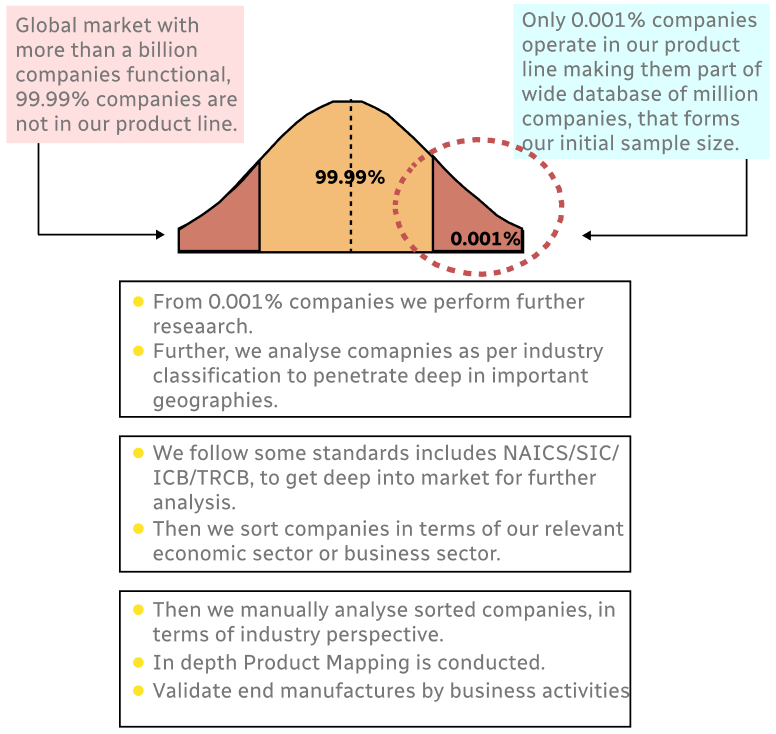
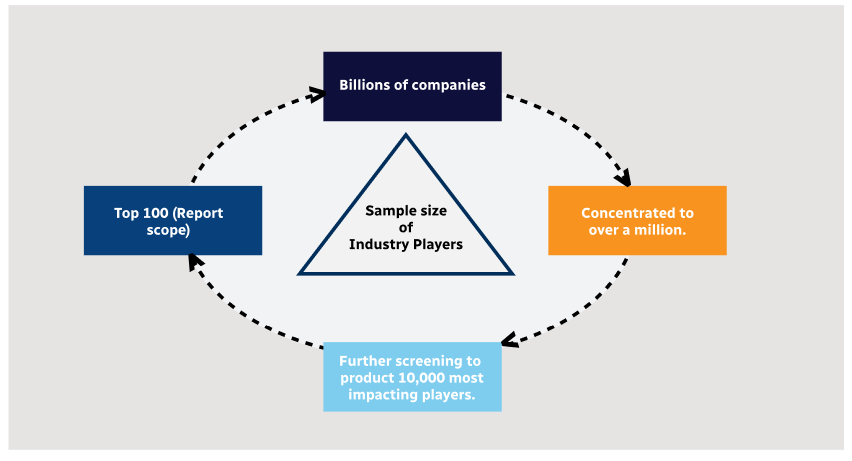
Step 1 - Identification of Relevant Samples Size from Population Database
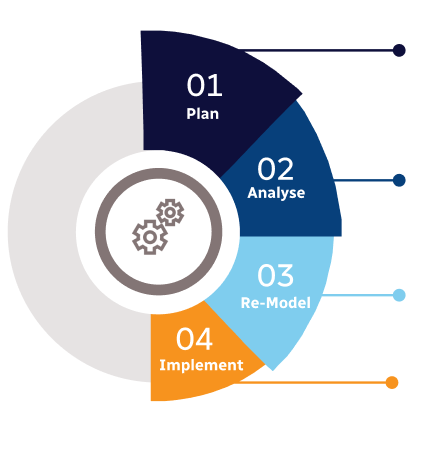
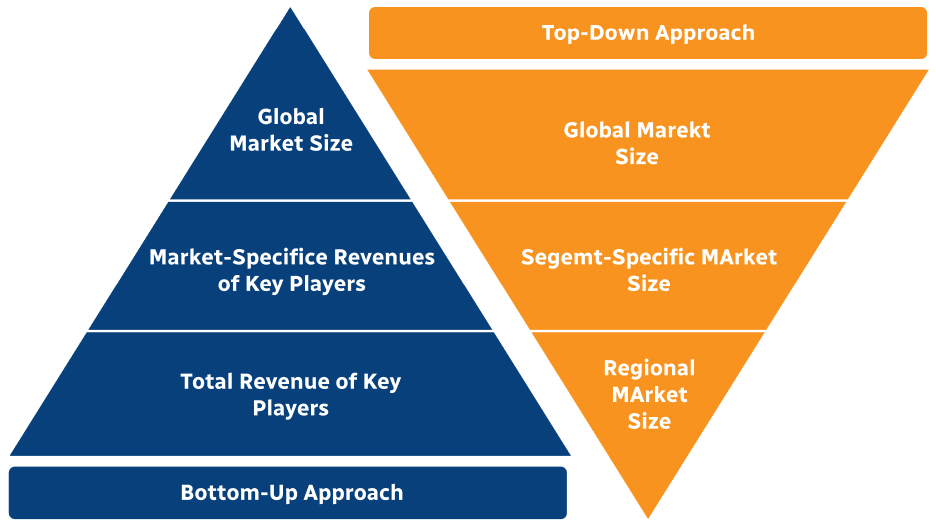
Step 2 - Approaches for Defining Global Market Size (Value, Volume* & Price*)
Note*: In applicable scenarios
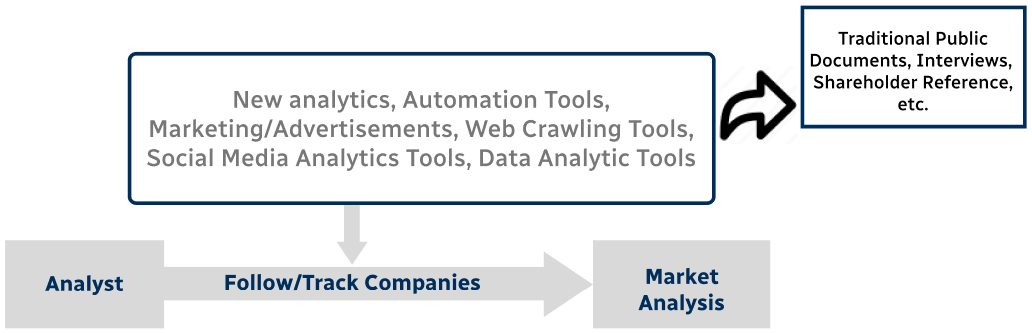
Step 3 - Data Sources
Primary Research
- Web Analytics
- Survey Reports
- Research Institute
- Latest Research Reports
- Opinion Leaders
Secondary Research
- Annual Reports
- White Paper
- Latest Press Release
- Industry Association
- Paid Database
- Investor Presentations
Step 4 - Data Triangulation
Involves using different sources of information in order to increase the validity of a study
These sources are likely to be stakeholders in a program - participants, other researchers, program staff, other community members, and so on.
Then we put all data in single framework & apply various statistical tools to find out the dynamic on the market.
During the analysis stage, feedback from the stakeholder groups would be compared to determine areas of agreement as well as areas of divergence