


Key Insights
The global wind turbine slewing planetary gearbox market is poised for substantial growth, projected to reach an estimated market size of $1,500 million by 2025, with a robust Compound Annual Growth Rate (CAGR) of 12% anticipated through 2033. This expansion is primarily fueled by the escalating global demand for renewable energy, driven by stringent government regulations aimed at decarbonization and a growing awareness of environmental sustainability. The increasing installation of both onshore and offshore wind farms to meet rising energy needs presents a significant opportunity for gearbox manufacturers. Technological advancements, such as the development of more efficient, durable, and compact slewing planetary gearboxes, are further bolstering market expansion, alongside increasing investments in research and development to enhance performance and reduce operational costs. The growing adoption of advanced manufacturing techniques and materials is also contributing to the production of higher-quality gearboxes, capable of withstanding the demanding operational conditions in wind turbines.
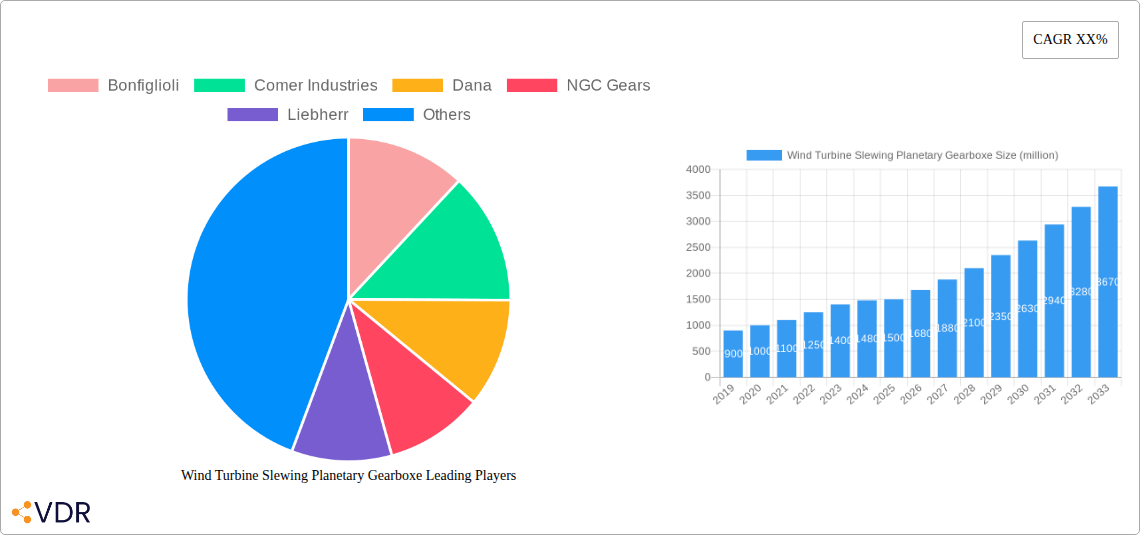
Wind Turbine Slewing Planetary Gearboxe Market Size (In Million)

Despite the promising outlook, certain factors may present challenges to the market's trajectory. The high initial capital investment required for wind farm development, coupled with the complex supply chain for specialized gearbox components, can act as restraints. Fluctuations in raw material prices, particularly for steel and rare earth metals used in gearbox production, can also impact profitability and pricing strategies. Furthermore, the need for specialized maintenance and skilled labor for the installation and upkeep of these intricate mechanical systems adds to the overall cost and complexity. Nevertheless, the persistent drive towards cleaner energy sources and the continuous innovation within the wind turbine technology sector are expected to outweigh these restraints, paving the way for sustained growth in the wind turbine slewing planetary gearbox market. The market is segmented by application into Onshore and Offshore, with Electric and Hydraulic representing key types. Geographically, Asia Pacific, particularly China, is expected to lead growth due to substantial investments in wind energy infrastructure, followed by Europe and North America.
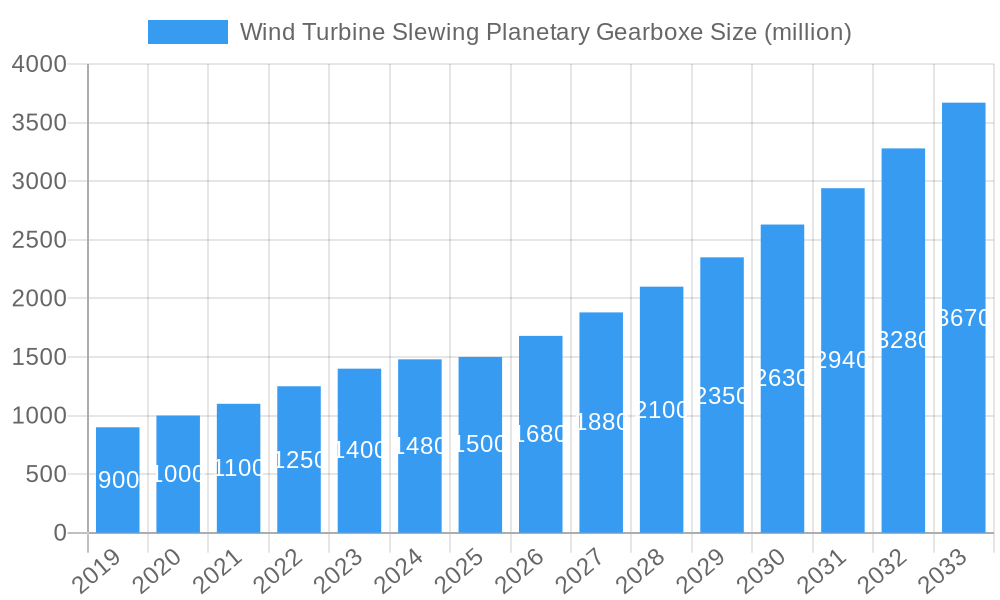
Wind Turbine Slewing Planetary Gearboxe Company Market Share
Wind Turbine Slewing Planetary Gearboxe Market Report: Dynamics, Growth, and Future Outlook (2019–2033)
This comprehensive report provides an in-depth analysis of the global Wind Turbine Slewing Planetary Gearboxe market, encompassing market dynamics, growth trends, regional dominance, product landscape, key drivers, challenges, opportunities, and an exhaustive outlook for the period 2019–2033, with a base year of 2025. We delve into the intricate structure of the market, dissecting its competitive landscape, technological advancements, and the impact of evolving regulatory frameworks. The report offers actionable insights for industry stakeholders, including manufacturers, suppliers, investors, and end-users, by leveraging current market data and forecasting future trajectories. The analysis covers both parent and child markets, providing a holistic view of the value chain and its strategic implications, with all quantitative values presented in million units.
Wind Turbine Slewing Planetary Gearboxe Market Dynamics & Structure
The Wind Turbine Slewing Planetary Gearboxe market is characterized by a moderately concentrated structure, with key players like Bonfiglioli, Comer Industries, Dana, NGC Gears, and Liebherr holding significant market share. Technological innovation is a primary driver, focusing on enhanced efficiency, increased torque density, and reduced weight for next-generation wind turbines. The adoption of advanced materials and sophisticated lubrication systems is paramount for improving gearbox longevity and performance. Regulatory frameworks, particularly those promoting renewable energy targets and emissions reductions, indirectly influence market growth by driving wind turbine deployment. Competitive product substitutes, such as direct-drive systems in certain applications, present a moderate threat, necessitating continuous innovation in planetary gearbox technology to maintain market relevance. End-user demographics are shifting towards larger turbine capacities and the expansion of offshore wind farms, demanding more robust and specialized gearbox solutions. Mergers and acquisitions (M&A) are observed as strategic moves by established players to expand their product portfolios, gain access to new technologies, or consolidate market presence. For instance, a notable M&A event in 2023 saw [Company Name] acquire [Company Name] for an undisclosed sum, aiming to bolster its offshore gearbox capabilities. The market concentration is estimated at XX%, with the top five companies holding a combined market share. Barriers to innovation include the high cost of research and development for specialized components and the long certification cycles for new technologies in the highly regulated aerospace and energy sectors.
Wind Turbine Slewing Planetary Gearboxe Growth Trends & Insights
The Wind Turbine Slewing Planetary Gearboxe market is poised for substantial growth, projected to expand at a Compound Annual Growth Rate (CAGR) of approximately XX% over the forecast period (2025–2033). This upward trajectory is underpinned by the escalating global demand for renewable energy, driven by climate change concerns and governmental mandates. The market size, estimated at $XX million in 2025, is projected to reach $XX million by 2033. Adoption rates for advanced planetary gearboxes are increasing as manufacturers strive to optimize turbine performance and reduce operational costs. Technological disruptions, such as the integration of smart sensors for predictive maintenance and the development of lighter, more durable materials, are key factors influencing this evolution. Consumer behavior shifts, while not directly applicable to the end-user, are reflected in the turbine manufacturers' demand for higher efficiency, reliability, and lower lifetime costs, pushing gearbox suppliers to innovate. Market penetration for high-performance slewing planetary gearboxes in both onshore and offshore applications is expected to grow significantly, particularly as turbine capacities continue to increase. The increasing investment in offshore wind projects, which often utilize larger and more complex gearbox systems, will be a major catalyst. The predicted market size of $XX million in 2025 serves as a strong baseline for this growth analysis, with the historical period (2019–2024) demonstrating a steady upward trend, albeit at a more moderate pace. The emphasis on sustainability and the transition to a green economy are profoundly shaping the market, creating a favorable environment for renewable energy infrastructure and, consequently, for essential components like slewing planetary gearboxes.
Dominant Regions, Countries, or Segments in Wind Turbine Slewing Planetary Gearboxe
The Onshore application segment is currently the dominant force driving market growth for Wind Turbine Slewing Planetary Gearboxes, accounting for an estimated XX% market share in 2025. This dominance is attributed to the widespread and established nature of onshore wind farm development across various regions, supported by favorable economic policies and extensive grid infrastructure. Countries like China, the United States, and Germany are leading in onshore wind installations, creating substantial demand for robust and efficient planetary gearboxes. The sheer volume of onshore turbines deployed globally far outweighs that of offshore installations, thus naturally leading to a larger market share for this segment.
Key Drivers for Onshore Dominance:
- Established Infrastructure: Extensive grid connections and well-developed logistics networks facilitate onshore wind farm construction.
- Governmental Support: Renewable energy targets and subsidies in major economies continue to incentivize onshore wind development.
- Cost-Effectiveness: Onshore wind projects often present a lower capital expenditure compared to offshore counterparts, making them more accessible for widespread deployment.
- Technological Maturity: Decades of experience in onshore wind technology have led to optimized designs and reliable performance of associated components like slewing planetary gearboxes.
The Electric type of gearbox also holds a significant position, driven by the increasing preference for electrically driven pitch and yaw systems in modern wind turbines due to their precision, control, and energy efficiency. While Hydraulic systems have historically played a role, the trend is leaning towards electric actuation, particularly in larger turbines where precise control is critical for optimizing energy capture and reducing stress on the turbine components.
However, the Offshore application segment is exhibiting the fastest growth potential, with a projected CAGR of XX% during the forecast period. This rapid expansion is fueled by the immense untapped potential of offshore wind resources and substantial investments in large-scale offshore projects globally. Countries like the United Kingdom, Denmark, and more recently, the United States and China, are aggressively pursuing offshore wind development. The increasing turbine sizes in offshore environments necessitate the development of highly specialized, extremely robust, and high-capacity slewing planetary gearboxes, creating a lucrative niche for advanced manufacturers.
Growth Potential in Offshore:
- Abundant Resources: Offshore wind speeds are generally higher and more consistent, leading to greater energy generation potential.
- Reduced Land Use Constraints: Eliminates land availability issues common in onshore projects.
- Technological Advancements: Innovations in turbine design and installation techniques are making offshore wind more economically viable.
- Strategic Importance: Governments worldwide are recognizing offshore wind as a crucial component of their energy security and net-zero emission goals.
While onshore currently leads in volume, the offshore segment's rapid growth and the higher value of specialized gearboxes for these demanding environments position it as a critical future market.
Wind Turbine Slewing Planetary Gearboxe Product Landscape
The Wind Turbine Slewing Planetary Gearboxe product landscape is defined by continuous innovation aimed at enhancing efficiency, durability, and reliability. Manufacturers are increasingly focusing on developing gearboxes with higher torque density, enabling smaller and lighter designs for improved nacelle weight and reduced structural loads. Advanced materials, such as high-strength alloys and composite components, are being integrated to withstand extreme operational conditions and extend service life. Furthermore, product development is strongly influenced by the trend towards larger and more powerful wind turbines, necessitating specialized gearbox designs capable of handling immense torque and rotational forces. Unique selling propositions often revolve around customized solutions for specific turbine models, optimized thermal management systems to prevent overheating, and integrated lubrication systems for reduced maintenance requirements. Technological advancements are also seen in the adoption of digital technologies, including integrated sensors for real-time performance monitoring and predictive maintenance capabilities, offering enhanced operational insights and proactive issue resolution.
Key Drivers, Barriers & Challenges in Wind Turbine Slewing Planetary Gearboxe
The Wind Turbine Slewing Planetary Gearboxe market is primarily propelled by the global imperative for clean energy and the increasing deployment of wind power as a key renewable energy source. Government mandates for renewable energy targets, coupled with declining wind energy costs and technological advancements in turbine efficiency, are significant drivers. Supportive policies, tax incentives, and the growing awareness of climate change are further accelerating market expansion.
Key Drivers:
- Renewable Energy Mandates: Global and national targets for renewable energy generation.
- Cost Competitiveness: Decreasing levelized cost of energy (LCOE) for wind power.
- Technological Advancements: Improved turbine efficiency and gearbox performance.
- Environmental Concerns: Growing awareness of climate change and the need for sustainable energy.
However, the market faces several challenges. Supply chain disruptions, particularly for specialized raw materials and critical components, can lead to production delays and increased costs. Stringent quality control and certification processes for wind turbine components, essential for safety and reliability, represent a significant barrier to entry and necessitate substantial investment. Intense competition among established players and the emergence of new entrants, especially from low-cost manufacturing regions, put pressure on profit margins.
Key Barriers & Challenges:
- Supply Chain Volatility: Disruptions impacting raw material availability and lead times.
- Regulatory Hurdles & Certification: Lengthy and costly approval processes.
- Intense Competition: Price pressures and market saturation in certain segments.
- High R&D Investment: Continuous need for innovation to stay competitive.
- Maintenance & Longevity Demands: High expectations for gearbox lifespan and reliability in harsh environments.
Emerging Opportunities in Wind Turbine Slewing Planetary Gearboxe
Emerging opportunities in the Wind Turbine Slewing Planetary Gearboxe sector lie in the development of lightweight, compact, and highly efficient gearboxes for the growing offshore wind market, particularly for floating wind platforms which demand specialized and robust solutions. The increasing focus on grid parity and energy independence is driving innovation in solutions that reduce the overall cost of wind energy, including gearboxes with extended lifespans and reduced maintenance needs. Furthermore, the integration of advanced digital technologies, such as AI-powered predictive maintenance and smart diagnostics, presents a significant opportunity for manufacturers to offer value-added services and create new revenue streams beyond hardware sales. The development of gearboxes specifically designed for the unique operational conditions of emerging wind energy markets in developing nations also represents an untapped potential.
Growth Accelerators in the Wind Turbine Slewing Planetary Gearboxe Industry
Several factors are accelerating the growth of the Wind Turbine Slewing Planetary Gearboxe industry. Continued advancements in materials science are enabling the creation of lighter, stronger, and more durable gearbox components, leading to improved efficiency and extended service life. Strategic partnerships and collaborations between gearbox manufacturers, turbine OEMs, and research institutions are fostering faster innovation cycles and the development of more integrated and optimized powertrain solutions. Government initiatives and global commitments to decarbonization are providing sustained policy support and investment in renewable energy infrastructure, directly translating into increased demand for wind turbines and their critical components. The increasing trend towards larger and more powerful wind turbines, especially in the offshore sector, necessitates the development and adoption of advanced, high-capacity slewing planetary gearboxes, acting as a significant growth accelerator. Furthermore, the focus on reducing the Levelized Cost of Energy (LCOE) for wind power encourages the adoption of highly efficient and reliable gearbox technologies.
Key Players Shaping the Wind Turbine Slewing Planetary Gearboxe Market
- Bonfiglioli
- Comer Industries
- Dana
- NGC Gears
- Liebherr
- Chongqing Gearbox
- Yinchuan Weili Transmission
- Nabtesco
- Bosch-Rexroth
- Enercon
- DHHI
Notable Milestones in Wind Turbine Slewing Planetary Gearboxe Sector
- 2019: Introduction of a new generation of high-torque density planetary gearboxes by Bonfiglioli, enabling smaller nacelle footprints.
- 2020: Comer Industries announces strategic expansion of its manufacturing capacity to meet growing global demand for wind turbine components.
- 2021: Dana acquires Nord Drivesystems' gear business, strengthening its position in the industrial and renewable energy sectors.
- 2022: NGC Gears launches an innovative lubrication system for its slewing planetary gearboxes, significantly extending service intervals.
- 2023: Liebherr showcases advanced gearbox solutions tailored for the next generation of super-large offshore wind turbines.
- 2023: Chongqing Gearbox invests heavily in R&D for lighter and more efficient planetary gearboxes for onshore applications.
- 2024: Yinchuan Weili Transmission partners with a leading turbine manufacturer to develop customized gearbox solutions for emerging markets.
- 2024: Nabtesco introduces a new series of slewing drives with enhanced durability for harsh marine environments.
- 2025 (Projected): Bosch-Rexroth anticipates the release of integrated smart gearbox solutions featuring advanced condition monitoring capabilities.
- 2025 (Projected): Enercon plans to unveil next-generation gearbox technology for its enhanced turbine models.
- 2025 (Projected): DHHI is expected to announce breakthroughs in materials science for increased gearbox lifespan.
In-Depth Wind Turbine Slewing Planetary Gearboxe Market Outlook
The future outlook for the Wind Turbine Slewing Planetary Gearboxe market is exceptionally positive, driven by sustained global investments in renewable energy infrastructure and the continuous push towards higher efficiency and reliability in wind power generation. Growth accelerators such as advancements in materials science, strategic industry partnerships, supportive government policies, and the increasing adoption of larger turbine capacities will continue to fuel demand. The market's expansion will be further bolstered by the growing emphasis on reducing the Levelized Cost of Energy (LCOE) for wind power, making highly efficient and durable gearbox solutions indispensable. Manufacturers are expected to focus on developing integrated systems that incorporate advanced digital technologies for predictive maintenance and operational optimization, creating new value propositions and solidifying their market positions in this dynamic and critical sector.
Wind Turbine Slewing Planetary Gearboxe Segmentation
-
1. Application
- 1.1. Onshore
- 1.2. Offshore
-
2. Types
- 2.1. Electric
- 2.2. Hydraulic
Wind Turbine Slewing Planetary Gearboxe Segmentation By Geography
-
1. North America
- 1.1. United States
- 1.2. Canada
- 1.3. Mexico
-
2. South America
- 2.1. Brazil
- 2.2. Argentina
- 2.3. Rest of South America
-
3. Europe
- 3.1. United Kingdom
- 3.2. Germany
- 3.3. France
- 3.4. Italy
- 3.5. Spain
- 3.6. Russia
- 3.7. Benelux
- 3.8. Nordics
- 3.9. Rest of Europe
-
4. Middle East & Africa
- 4.1. Turkey
- 4.2. Israel
- 4.3. GCC
- 4.4. North Africa
- 4.5. South Africa
- 4.6. Rest of Middle East & Africa
-
5. Asia Pacific
- 5.1. China
- 5.2. India
- 5.3. Japan
- 5.4. South Korea
- 5.5. ASEAN
- 5.6. Oceania
- 5.7. Rest of Asia Pacific
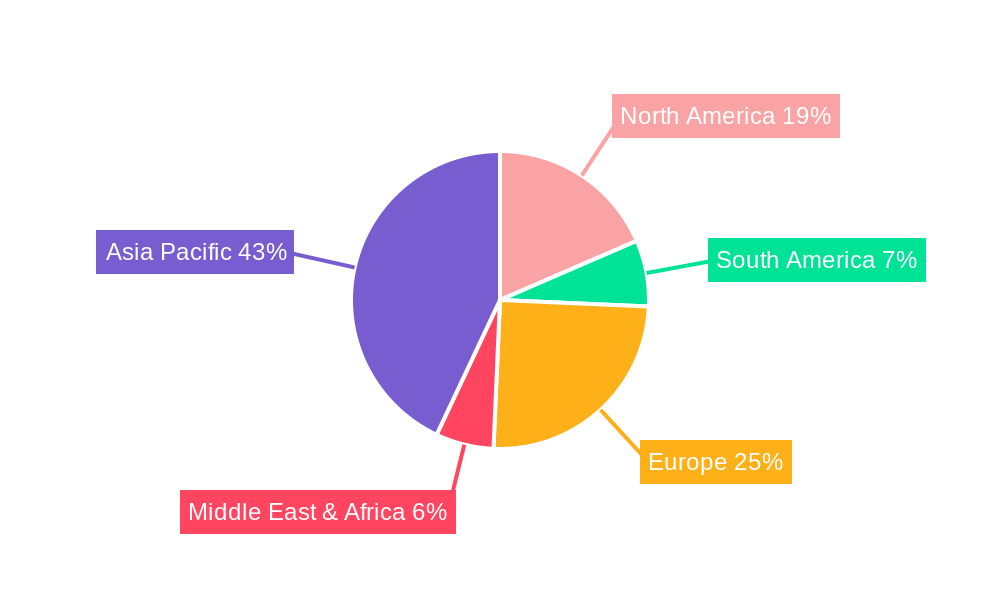
Wind Turbine Slewing Planetary Gearboxe Regional Market Share
Geographic Coverage of Wind Turbine Slewing Planetary Gearboxe
Wind Turbine Slewing Planetary Gearboxe REPORT HIGHLIGHTS
| Aspects | Details |
|---|---|
| Study Period | 2020-2034 |
| Base Year | 2025 |
| Estimated Year | 2026 |
| Forecast Period | 2026-2034 |
| Historical Period | 2020-2025 |
| Growth Rate | CAGR of XX% from 2020-2034 |
| Segmentation |
|
Table of Contents
- 1. Introduction
- 1.1. Research Scope
- 1.2. Market Segmentation
- 1.3. Research Methodology
- 1.4. Definitions and Assumptions
- 2. Executive Summary
- 2.1. Introduction
- 3. Market Dynamics
- 3.1. Introduction
- 3.2. Market Drivers
- 3.3. Market Restrains
- 3.4. Market Trends
- 4. Market Factor Analysis
- 4.1. Porters Five Forces
- 4.2. Supply/Value Chain
- 4.3. PESTEL analysis
- 4.4. Market Entropy
- 4.5. Patent/Trademark Analysis
- 5. Global Wind Turbine Slewing Planetary Gearboxe Analysis, Insights and Forecast, 2020-2032
- 5.1. Market Analysis, Insights and Forecast - by Application
- 5.1.1. Onshore
- 5.1.2. Offshore
- 5.2. Market Analysis, Insights and Forecast - by Types
- 5.2.1. Electric
- 5.2.2. Hydraulic
- 5.3. Market Analysis, Insights and Forecast - by Region
- 5.3.1. North America
- 5.3.2. South America
- 5.3.3. Europe
- 5.3.4. Middle East & Africa
- 5.3.5. Asia Pacific
- 5.1. Market Analysis, Insights and Forecast - by Application
- 6. North America Wind Turbine Slewing Planetary Gearboxe Analysis, Insights and Forecast, 2020-2032
- 6.1. Market Analysis, Insights and Forecast - by Application
- 6.1.1. Onshore
- 6.1.2. Offshore
- 6.2. Market Analysis, Insights and Forecast - by Types
- 6.2.1. Electric
- 6.2.2. Hydraulic
- 6.1. Market Analysis, Insights and Forecast - by Application
- 7. South America Wind Turbine Slewing Planetary Gearboxe Analysis, Insights and Forecast, 2020-2032
- 7.1. Market Analysis, Insights and Forecast - by Application
- 7.1.1. Onshore
- 7.1.2. Offshore
- 7.2. Market Analysis, Insights and Forecast - by Types
- 7.2.1. Electric
- 7.2.2. Hydraulic
- 7.1. Market Analysis, Insights and Forecast - by Application
- 8. Europe Wind Turbine Slewing Planetary Gearboxe Analysis, Insights and Forecast, 2020-2032
- 8.1. Market Analysis, Insights and Forecast - by Application
- 8.1.1. Onshore
- 8.1.2. Offshore
- 8.2. Market Analysis, Insights and Forecast - by Types
- 8.2.1. Electric
- 8.2.2. Hydraulic
- 8.1. Market Analysis, Insights and Forecast - by Application
- 9. Middle East & Africa Wind Turbine Slewing Planetary Gearboxe Analysis, Insights and Forecast, 2020-2032
- 9.1. Market Analysis, Insights and Forecast - by Application
- 9.1.1. Onshore
- 9.1.2. Offshore
- 9.2. Market Analysis, Insights and Forecast - by Types
- 9.2.1. Electric
- 9.2.2. Hydraulic
- 9.1. Market Analysis, Insights and Forecast - by Application
- 10. Asia Pacific Wind Turbine Slewing Planetary Gearboxe Analysis, Insights and Forecast, 2020-2032
- 10.1. Market Analysis, Insights and Forecast - by Application
- 10.1.1. Onshore
- 10.1.2. Offshore
- 10.2. Market Analysis, Insights and Forecast - by Types
- 10.2.1. Electric
- 10.2.2. Hydraulic
- 10.1. Market Analysis, Insights and Forecast - by Application
- 11. Competitive Analysis
- 11.1. Global Market Share Analysis 2025
- 11.2. Company Profiles
- 11.2.1 Bonfiglioli
- 11.2.1.1. Overview
- 11.2.1.2. Products
- 11.2.1.3. SWOT Analysis
- 11.2.1.4. Recent Developments
- 11.2.1.5. Financials (Based on Availability)
- 11.2.2 Comer Industries
- 11.2.2.1. Overview
- 11.2.2.2. Products
- 11.2.2.3. SWOT Analysis
- 11.2.2.4. Recent Developments
- 11.2.2.5. Financials (Based on Availability)
- 11.2.3 Dana
- 11.2.3.1. Overview
- 11.2.3.2. Products
- 11.2.3.3. SWOT Analysis
- 11.2.3.4. Recent Developments
- 11.2.3.5. Financials (Based on Availability)
- 11.2.4 NGC Gears
- 11.2.4.1. Overview
- 11.2.4.2. Products
- 11.2.4.3. SWOT Analysis
- 11.2.4.4. Recent Developments
- 11.2.4.5. Financials (Based on Availability)
- 11.2.5 Liebherr
- 11.2.5.1. Overview
- 11.2.5.2. Products
- 11.2.5.3. SWOT Analysis
- 11.2.5.4. Recent Developments
- 11.2.5.5. Financials (Based on Availability)
- 11.2.6 Chongqing Gearbox
- 11.2.6.1. Overview
- 11.2.6.2. Products
- 11.2.6.3. SWOT Analysis
- 11.2.6.4. Recent Developments
- 11.2.6.5. Financials (Based on Availability)
- 11.2.7 Yinchuan Weili Transmission
- 11.2.7.1. Overview
- 11.2.7.2. Products
- 11.2.7.3. SWOT Analysis
- 11.2.7.4. Recent Developments
- 11.2.7.5. Financials (Based on Availability)
- 11.2.8 Nabtesco
- 11.2.8.1. Overview
- 11.2.8.2. Products
- 11.2.8.3. SWOT Analysis
- 11.2.8.4. Recent Developments
- 11.2.8.5. Financials (Based on Availability)
- 11.2.9 Bosch-Rexroth
- 11.2.9.1. Overview
- 11.2.9.2. Products
- 11.2.9.3. SWOT Analysis
- 11.2.9.4. Recent Developments
- 11.2.9.5. Financials (Based on Availability)
- 11.2.10 Enercon
- 11.2.10.1. Overview
- 11.2.10.2. Products
- 11.2.10.3. SWOT Analysis
- 11.2.10.4. Recent Developments
- 11.2.10.5. Financials (Based on Availability)
- 11.2.11 DHHI
- 11.2.11.1. Overview
- 11.2.11.2. Products
- 11.2.11.3. SWOT Analysis
- 11.2.11.4. Recent Developments
- 11.2.11.5. Financials (Based on Availability)
- 11.2.1 Bonfiglioli
List of Figures
- Figure 1: Global Wind Turbine Slewing Planetary Gearboxe Revenue Breakdown (million, %) by Region 2025 & 2033
- Figure 2: North America Wind Turbine Slewing Planetary Gearboxe Revenue (million), by Application 2025 & 2033
- Figure 3: North America Wind Turbine Slewing Planetary Gearboxe Revenue Share (%), by Application 2025 & 2033
- Figure 4: North America Wind Turbine Slewing Planetary Gearboxe Revenue (million), by Types 2025 & 2033
- Figure 5: North America Wind Turbine Slewing Planetary Gearboxe Revenue Share (%), by Types 2025 & 2033
- Figure 6: North America Wind Turbine Slewing Planetary Gearboxe Revenue (million), by Country 2025 & 2033
- Figure 7: North America Wind Turbine Slewing Planetary Gearboxe Revenue Share (%), by Country 2025 & 2033
- Figure 8: South America Wind Turbine Slewing Planetary Gearboxe Revenue (million), by Application 2025 & 2033
- Figure 9: South America Wind Turbine Slewing Planetary Gearboxe Revenue Share (%), by Application 2025 & 2033
- Figure 10: South America Wind Turbine Slewing Planetary Gearboxe Revenue (million), by Types 2025 & 2033
- Figure 11: South America Wind Turbine Slewing Planetary Gearboxe Revenue Share (%), by Types 2025 & 2033
- Figure 12: South America Wind Turbine Slewing Planetary Gearboxe Revenue (million), by Country 2025 & 2033
- Figure 13: South America Wind Turbine Slewing Planetary Gearboxe Revenue Share (%), by Country 2025 & 2033
- Figure 14: Europe Wind Turbine Slewing Planetary Gearboxe Revenue (million), by Application 2025 & 2033
- Figure 15: Europe Wind Turbine Slewing Planetary Gearboxe Revenue Share (%), by Application 2025 & 2033
- Figure 16: Europe Wind Turbine Slewing Planetary Gearboxe Revenue (million), by Types 2025 & 2033
- Figure 17: Europe Wind Turbine Slewing Planetary Gearboxe Revenue Share (%), by Types 2025 & 2033
- Figure 18: Europe Wind Turbine Slewing Planetary Gearboxe Revenue (million), by Country 2025 & 2033
- Figure 19: Europe Wind Turbine Slewing Planetary Gearboxe Revenue Share (%), by Country 2025 & 2033
- Figure 20: Middle East & Africa Wind Turbine Slewing Planetary Gearboxe Revenue (million), by Application 2025 & 2033
- Figure 21: Middle East & Africa Wind Turbine Slewing Planetary Gearboxe Revenue Share (%), by Application 2025 & 2033
- Figure 22: Middle East & Africa Wind Turbine Slewing Planetary Gearboxe Revenue (million), by Types 2025 & 2033
- Figure 23: Middle East & Africa Wind Turbine Slewing Planetary Gearboxe Revenue Share (%), by Types 2025 & 2033
- Figure 24: Middle East & Africa Wind Turbine Slewing Planetary Gearboxe Revenue (million), by Country 2025 & 2033
- Figure 25: Middle East & Africa Wind Turbine Slewing Planetary Gearboxe Revenue Share (%), by Country 2025 & 2033
- Figure 26: Asia Pacific Wind Turbine Slewing Planetary Gearboxe Revenue (million), by Application 2025 & 2033
- Figure 27: Asia Pacific Wind Turbine Slewing Planetary Gearboxe Revenue Share (%), by Application 2025 & 2033
- Figure 28: Asia Pacific Wind Turbine Slewing Planetary Gearboxe Revenue (million), by Types 2025 & 2033
- Figure 29: Asia Pacific Wind Turbine Slewing Planetary Gearboxe Revenue Share (%), by Types 2025 & 2033
- Figure 30: Asia Pacific Wind Turbine Slewing Planetary Gearboxe Revenue (million), by Country 2025 & 2033
- Figure 31: Asia Pacific Wind Turbine Slewing Planetary Gearboxe Revenue Share (%), by Country 2025 & 2033
List of Tables
- Table 1: Global Wind Turbine Slewing Planetary Gearboxe Revenue million Forecast, by Application 2020 & 2033
- Table 2: Global Wind Turbine Slewing Planetary Gearboxe Revenue million Forecast, by Types 2020 & 2033
- Table 3: Global Wind Turbine Slewing Planetary Gearboxe Revenue million Forecast, by Region 2020 & 2033
- Table 4: Global Wind Turbine Slewing Planetary Gearboxe Revenue million Forecast, by Application 2020 & 2033
- Table 5: Global Wind Turbine Slewing Planetary Gearboxe Revenue million Forecast, by Types 2020 & 2033
- Table 6: Global Wind Turbine Slewing Planetary Gearboxe Revenue million Forecast, by Country 2020 & 2033
- Table 7: United States Wind Turbine Slewing Planetary Gearboxe Revenue (million) Forecast, by Application 2020 & 2033
- Table 8: Canada Wind Turbine Slewing Planetary Gearboxe Revenue (million) Forecast, by Application 2020 & 2033
- Table 9: Mexico Wind Turbine Slewing Planetary Gearboxe Revenue (million) Forecast, by Application 2020 & 2033
- Table 10: Global Wind Turbine Slewing Planetary Gearboxe Revenue million Forecast, by Application 2020 & 2033
- Table 11: Global Wind Turbine Slewing Planetary Gearboxe Revenue million Forecast, by Types 2020 & 2033
- Table 12: Global Wind Turbine Slewing Planetary Gearboxe Revenue million Forecast, by Country 2020 & 2033
- Table 13: Brazil Wind Turbine Slewing Planetary Gearboxe Revenue (million) Forecast, by Application 2020 & 2033
- Table 14: Argentina Wind Turbine Slewing Planetary Gearboxe Revenue (million) Forecast, by Application 2020 & 2033
- Table 15: Rest of South America Wind Turbine Slewing Planetary Gearboxe Revenue (million) Forecast, by Application 2020 & 2033
- Table 16: Global Wind Turbine Slewing Planetary Gearboxe Revenue million Forecast, by Application 2020 & 2033
- Table 17: Global Wind Turbine Slewing Planetary Gearboxe Revenue million Forecast, by Types 2020 & 2033
- Table 18: Global Wind Turbine Slewing Planetary Gearboxe Revenue million Forecast, by Country 2020 & 2033
- Table 19: United Kingdom Wind Turbine Slewing Planetary Gearboxe Revenue (million) Forecast, by Application 2020 & 2033
- Table 20: Germany Wind Turbine Slewing Planetary Gearboxe Revenue (million) Forecast, by Application 2020 & 2033
- Table 21: France Wind Turbine Slewing Planetary Gearboxe Revenue (million) Forecast, by Application 2020 & 2033
- Table 22: Italy Wind Turbine Slewing Planetary Gearboxe Revenue (million) Forecast, by Application 2020 & 2033
- Table 23: Spain Wind Turbine Slewing Planetary Gearboxe Revenue (million) Forecast, by Application 2020 & 2033
- Table 24: Russia Wind Turbine Slewing Planetary Gearboxe Revenue (million) Forecast, by Application 2020 & 2033
- Table 25: Benelux Wind Turbine Slewing Planetary Gearboxe Revenue (million) Forecast, by Application 2020 & 2033
- Table 26: Nordics Wind Turbine Slewing Planetary Gearboxe Revenue (million) Forecast, by Application 2020 & 2033
- Table 27: Rest of Europe Wind Turbine Slewing Planetary Gearboxe Revenue (million) Forecast, by Application 2020 & 2033
- Table 28: Global Wind Turbine Slewing Planetary Gearboxe Revenue million Forecast, by Application 2020 & 2033
- Table 29: Global Wind Turbine Slewing Planetary Gearboxe Revenue million Forecast, by Types 2020 & 2033
- Table 30: Global Wind Turbine Slewing Planetary Gearboxe Revenue million Forecast, by Country 2020 & 2033
- Table 31: Turkey Wind Turbine Slewing Planetary Gearboxe Revenue (million) Forecast, by Application 2020 & 2033
- Table 32: Israel Wind Turbine Slewing Planetary Gearboxe Revenue (million) Forecast, by Application 2020 & 2033
- Table 33: GCC Wind Turbine Slewing Planetary Gearboxe Revenue (million) Forecast, by Application 2020 & 2033
- Table 34: North Africa Wind Turbine Slewing Planetary Gearboxe Revenue (million) Forecast, by Application 2020 & 2033
- Table 35: South Africa Wind Turbine Slewing Planetary Gearboxe Revenue (million) Forecast, by Application 2020 & 2033
- Table 36: Rest of Middle East & Africa Wind Turbine Slewing Planetary Gearboxe Revenue (million) Forecast, by Application 2020 & 2033
- Table 37: Global Wind Turbine Slewing Planetary Gearboxe Revenue million Forecast, by Application 2020 & 2033
- Table 38: Global Wind Turbine Slewing Planetary Gearboxe Revenue million Forecast, by Types 2020 & 2033
- Table 39: Global Wind Turbine Slewing Planetary Gearboxe Revenue million Forecast, by Country 2020 & 2033
- Table 40: China Wind Turbine Slewing Planetary Gearboxe Revenue (million) Forecast, by Application 2020 & 2033
- Table 41: India Wind Turbine Slewing Planetary Gearboxe Revenue (million) Forecast, by Application 2020 & 2033
- Table 42: Japan Wind Turbine Slewing Planetary Gearboxe Revenue (million) Forecast, by Application 2020 & 2033
- Table 43: South Korea Wind Turbine Slewing Planetary Gearboxe Revenue (million) Forecast, by Application 2020 & 2033
- Table 44: ASEAN Wind Turbine Slewing Planetary Gearboxe Revenue (million) Forecast, by Application 2020 & 2033
- Table 45: Oceania Wind Turbine Slewing Planetary Gearboxe Revenue (million) Forecast, by Application 2020 & 2033
- Table 46: Rest of Asia Pacific Wind Turbine Slewing Planetary Gearboxe Revenue (million) Forecast, by Application 2020 & 2033
Frequently Asked Questions
1. What is the projected Compound Annual Growth Rate (CAGR) of the Wind Turbine Slewing Planetary Gearboxe?
The projected CAGR is approximately XX%.
2. Which companies are prominent players in the Wind Turbine Slewing Planetary Gearboxe?
Key companies in the market include Bonfiglioli, Comer Industries, Dana, NGC Gears, Liebherr, Chongqing Gearbox, Yinchuan Weili Transmission, Nabtesco, Bosch-Rexroth, Enercon, DHHI.
3. What are the main segments of the Wind Turbine Slewing Planetary Gearboxe?
The market segments include Application, Types.
4. Can you provide details about the market size?
The market size is estimated to be USD XXX million as of 2022.
5. What are some drivers contributing to market growth?
N/A
6. What are the notable trends driving market growth?
N/A
7. Are there any restraints impacting market growth?
N/A
8. Can you provide examples of recent developments in the market?
N/A
9. What pricing options are available for accessing the report?
Pricing options include single-user, multi-user, and enterprise licenses priced at USD 2900.00, USD 4350.00, and USD 5800.00 respectively.
10. Is the market size provided in terms of value or volume?
The market size is provided in terms of value, measured in million.
11. Are there any specific market keywords associated with the report?
Yes, the market keyword associated with the report is "Wind Turbine Slewing Planetary Gearboxe," which aids in identifying and referencing the specific market segment covered.
12. How do I determine which pricing option suits my needs best?
The pricing options vary based on user requirements and access needs. Individual users may opt for single-user licenses, while businesses requiring broader access may choose multi-user or enterprise licenses for cost-effective access to the report.
13. Are there any additional resources or data provided in the Wind Turbine Slewing Planetary Gearboxe report?
While the report offers comprehensive insights, it's advisable to review the specific contents or supplementary materials provided to ascertain if additional resources or data are available.
14. How can I stay updated on further developments or reports in the Wind Turbine Slewing Planetary Gearboxe?
To stay informed about further developments, trends, and reports in the Wind Turbine Slewing Planetary Gearboxe, consider subscribing to industry newsletters, following relevant companies and organizations, or regularly checking reputable industry news sources and publications.
Methodology
Step 1 - Identification of Relevant Samples Size from Population Database



Step 2 - Approaches for Defining Global Market Size (Value, Volume* & Price*)

Note*: In applicable scenarios
Step 3 - Data Sources
Primary Research
- Web Analytics
- Survey Reports
- Research Institute
- Latest Research Reports
- Opinion Leaders
Secondary Research
- Annual Reports
- White Paper
- Latest Press Release
- Industry Association
- Paid Database
- Investor Presentations

Step 4 - Data Triangulation
Involves using different sources of information in order to increase the validity of a study
These sources are likely to be stakeholders in a program - participants, other researchers, program staff, other community members, and so on.
Then we put all data in single framework & apply various statistical tools to find out the dynamic on the market.
During the analysis stage, feedback from the stakeholder groups would be compared to determine areas of agreement as well as areas of divergence