


Key Insights
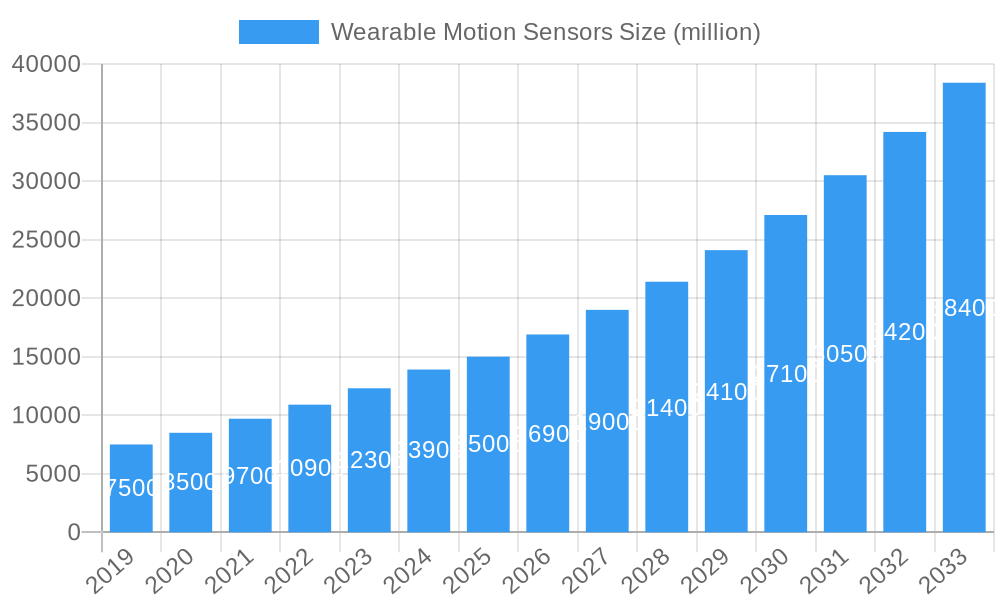
The global wearable motion sensors market is poised for significant expansion, projected to reach an estimated USD 15,000 million by 2025 and grow at a robust compound annual growth rate (CAGR) of 12.5% through 2033. This surge is primarily fueled by the escalating adoption of smart wearables across diverse applications, including smartwatches, smart bands, smart clothing, and smart glasses. The increasing consumer demand for advanced health monitoring, fitness tracking, and immersive augmented reality experiences is a key catalyst. Furthermore, technological advancements in sensor miniaturization, power efficiency, and data processing capabilities are driving innovation and making wearable motion sensors more sophisticated and versatile. The integration of these sensors into everyday devices enables a more intuitive and personalized user experience, contributing to their widespread market penetration.
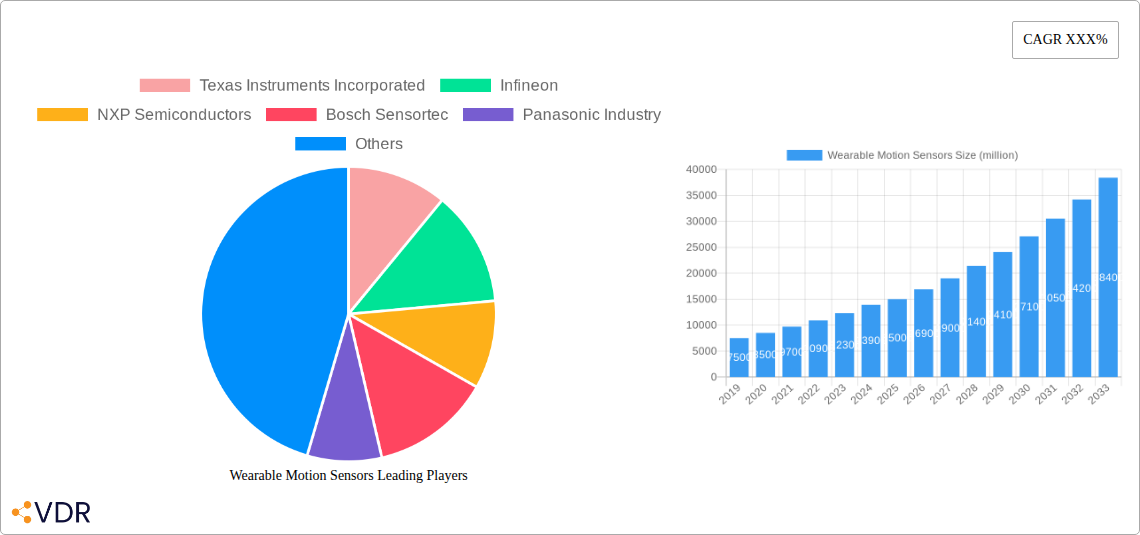
Wearable Motion Sensors Market Size (In Billion)

The market is characterized by a dynamic competitive landscape with key players such as Texas Instruments Incorporated, Infineon, NXP Semiconductors, Bosch Sensortec, and Samsung investing heavily in research and development to introduce next-generation motion sensing solutions. While the market exhibits strong growth potential, certain restraints, such as the high cost of advanced sensor integration and potential data privacy concerns, need to be strategically addressed. However, the burgeoning demand in emerging economies, coupled with continuous product innovation and strategic collaborations, is expected to offset these challenges. The market is segmented by application and type, with accelerometers and gyroscopes dominating the current landscape, while advancements in magnetic sensors and other novel sensing technologies are anticipated to shape future growth trajectories. The Asia Pacific region, particularly China and India, is expected to be a major growth engine, driven by a large consumer base and increasing disposable incomes.
Wearable Motion Sensors Company Market Share
This report provides an in-depth analysis of the global wearable motion sensors market, offering critical insights into market dynamics, growth trends, regional dominance, product landscape, and key players. Leveraging extensive data from 2019-2033, including a base year of 2025 and a forecast period of 2025-2033, this report is an indispensable resource for industry professionals seeking to understand and capitalize on the evolving opportunities in this high-growth sector. All market sizes and unit figures are presented in millions.
Wearable Motion Sensors Market Dynamics & Structure
The global wearable motion sensors market exhibits a moderately concentrated structure, with a few key players dominating innovation and supply. Technological advancements in miniaturization, power efficiency, and accuracy are the primary innovation drivers, fueled by increasing consumer demand for sophisticated health tracking and personalized user experiences. Regulatory frameworks primarily focus on data privacy and security for wearable devices, indirectly influencing sensor integration and feature sets. Competitive product substitutes, while limited for core motion sensing functionalities, are emerging in the form of advanced integrated biometric sensors and AI-powered predictive analytics. End-user demographics are increasingly diverse, spanning fitness enthusiasts, individuals with chronic health conditions, professional athletes, and the general population seeking convenient health monitoring. Mergers and acquisitions (M&A) are a significant trend, with larger semiconductor manufacturers acquiring specialized sensor companies to enhance their product portfolios and market reach. For instance, several strategic acquisitions in the past two years have aimed to consolidate expertise in MEMS technology and embedded AI for sensor fusion.
- Market Concentration: Moderately concentrated with key players holding significant market share.
- Innovation Drivers: Miniaturization, power efficiency, sensor fusion, on-device AI processing.
- Regulatory Frameworks: Data privacy (e.g., GDPR, HIPAA), device safety standards.
- Competitive Substitutes: Advanced biometric sensors, AI-driven analytics platforms.
- End-User Demographics: Broad spectrum including fitness users, healthcare patients, athletes, and general consumers.
- M&A Trends: Active consolidation, strategic partnerships for technology integration. For example, an estimated 15 M&A deals were observed between 2022 and 2024, primarily focused on acquiring AI capabilities for sensor data interpretation.
Wearable Motion Sensors Growth Trends & Insights
The wearable motion sensors market is poised for robust growth, driven by escalating consumer adoption of smart wearables and increasing demand for advanced health and fitness monitoring solutions. The market size is projected to expand significantly from $X,XXX million in 2019 to an estimated $XX,XXX million by 2033, showcasing a compelling Compound Annual Growth Rate (CAGR) of approximately 18.5% during the forecast period (2025-2033). This impressive growth trajectory is underpinned by several key factors.
Firstly, the increasing penetration of smartwatches and fitness bands globally is directly translating into higher demand for integrated motion sensors like accelerometers and gyroscopes. These sensors are fundamental for tracking activities, measuring steps, detecting falls, and enabling intuitive gesture controls, making them indispensable components of these popular devices. The market penetration for wearable motion sensors within the smartwatch and smart band segment is estimated to reach over 95% by 2025.
Secondly, technological disruptions are continuously enhancing the capabilities and applications of wearable motion sensors. Advancements in MEMS (Micro-Electro-Mechanical Systems) technology have led to smaller, more power-efficient, and highly accurate sensors. Furthermore, the integration of sophisticated algorithms and artificial intelligence (AI) for sensor fusion is enabling devices to interpret complex motion patterns, providing deeper insights into user behavior, health status, and environmental interactions. For example, the development of advanced algorithms for sleep stage analysis and stress detection, utilizing data from accelerometers and gyroscopes, is a significant disruptive trend.
Thirdly, evolving consumer behavior plays a crucial role in market expansion. There is a growing awareness and prioritization of personal health and well-being, leading consumers to embrace wearable technology for proactive health management, fitness tracking, and performance optimization. This trend is further amplified by the increasing prevalence of sedentary lifestyles and the desire for data-driven insights into personal activity levels and overall health. Consumer spending on health and fitness-related wearable devices is expected to witness a 22% year-over-year increase from 2025 to 2028.
Beyond the primary consumer segments, emerging applications in smart clothing, smart glasses, and advanced medical wearables are also contributing to market growth. Smart clothing integrated with motion sensors offers unparalleled opportunities for precise athletic performance analysis and remote patient monitoring. Similarly, smart glasses are leveraging motion sensors for immersive augmented reality (AR) experiences and hands-free control. The adoption rate for motion sensors in smart clothing is projected to grow from 15% in 2025 to 40% by 2030.
The estimated market size for wearable motion sensors is projected to reach $10,500 million in the base year 2025, with a significant portion attributed to accelerometers and gyroscopes, accounting for approximately 70% of the total sensor market. Magnetic sensors are expected to capture 15%, and other specialized sensors will make up the remaining 15%. The continuous innovation in sensor technology, coupled with the expanding application landscape and shifting consumer preferences towards health-conscious lifestyles, firmly positions the wearable motion sensors market for sustained and substantial growth in the coming years.
Dominant Regions, Countries, or Segments in Wearable Motion Sensors
The wearable motion sensors market is experiencing dominant growth driven by specific regions, countries, and application segments, with North America and Asia Pacific leading the charge. Within the application segment, Smart Watches and Smart Bands are overwhelmingly driving market expansion, accounting for an estimated 85% of the total market share in 2025. The increasing consumer demand for advanced fitness tracking, health monitoring, and connected features in these form factors directly fuels the need for sophisticated motion sensing technologies.
Dominant Application Segment: Smart Watches & Smart Bands
- Market Share (2025): Approximately 85% of the total wearable motion sensor market.
- Key Drivers:
- High consumer adoption rates driven by health, fitness, and connectivity trends.
- Integration of advanced features like ECG, SpO2, and fall detection, heavily reliant on motion sensor data.
- Continuous innovation in smartwatch form factors and functionalities.
- Increasing affordability and accessibility of these devices globally.
- Growth Potential: Continues to be the largest segment, with ongoing innovation promising further market penetration. Expected to grow at a CAGR of 17% from 2025 to 2033.
Dominant Type Segment: Accelerometers & Gyroscopes
- Market Share (2025): Combined, these sensors represent an estimated 70% of the total wearable motion sensor market.
- Key Drivers:
- Essential for core functionalities like step counting, activity recognition, gesture control, and navigation.
- High integration density due to their versatility and relatively low cost.
- Continuous improvements in accuracy, power efficiency, and miniaturization.
- Growth Potential: Remain fundamental, with growth driven by increased sensor count per device and enhanced algorithmic processing.
Leading Regions:
- North America:
- Market Share (2025): Estimated 35% of the global market.
- Dominance Factors: High disposable income, early adoption of new technologies, strong presence of leading wearable device manufacturers (e.g., Apple, Garmin), robust healthcare infrastructure driving demand for health-focused wearables. Government initiatives promoting digital health also contribute to market growth.
- Growth Potential: Steady growth driven by premium product adoption and increasing interest in preventative healthcare.
- Asia Pacific:
- Market Share (2025): Estimated 30% of the global market, with rapid expansion.
- Dominance Factors: Large population base, growing middle class with increasing purchasing power, significant manufacturing capabilities for wearable devices and components, rising health consciousness, and government support for technological innovation. Countries like China, South Korea, and India are key contributors.
- Growth Potential: Highest growth potential due to rapidly increasing adoption rates and expanding device ecosystems. Expected to outpace other regions in terms of unit volume growth.
- North America:
Emerging Applications Driving Growth:
- Smart Clothing: Growing interest in seamless integration for athletic performance monitoring and physiotherapy. The market for motion sensors in smart clothing is projected to grow from $200 million in 2025 to $1,200 million by 2033.
- Smart Glasses: Increasing adoption for AR/VR experiences and hands-free control, leveraging motion sensors for spatial tracking and user interaction.
The dominance of smartwatches and smart bands, coupled with the foundational role of accelerometers and gyroscopes, forms the bedrock of the wearable motion sensors market. North America's mature market and Asia Pacific's rapid expansion create a dynamic landscape, with emerging applications poised to contribute significantly to future growth.
Wearable Motion Sensors Product Landscape
The wearable motion sensors product landscape is characterized by continuous innovation in miniaturization, power efficiency, and enhanced sensing capabilities. Accelerometers and gyroscopes remain the most prevalent types, integrated into virtually all smartwatches and fitness bands to enable activity tracking, gesture recognition, and fall detection. Bosch Sensortec's advanced MEMS accelerometers, for instance, offer industry-leading accuracy and low power consumption. Innovations in magnetic sensors are enabling more sophisticated compass functionalities and spatial awareness. Emerging products are also focusing on multi-sensor fusion, where data from different sensor types is combined to derive richer insights. For example, the integration of a 6-axis inertial measurement unit (IMU) incorporating both accelerometer and gyroscope offers comprehensive motion data for complex activity analysis. Companies are actively developing smaller footprints and lower power solutions to extend device battery life and enable integration into even more discreet form factors like smart clothing and advanced medical devices.
Key Drivers, Barriers & Challenges in Wearable Motion Sensors
The wearable motion sensors market is propelled by several key drivers, primarily the escalating demand for health and fitness monitoring, coupled with advancements in sensor technology. The increasing adoption of smart wearables across diverse consumer segments, from athletes to the elderly, fuels the need for accurate and reliable motion data. Furthermore, the integration of AI and machine learning for sophisticated data analysis is unlocking new applications and user experiences, acting as a significant growth accelerator. The proliferation of smart devices and the growing acceptance of wearable technology for proactive health management are also critical drivers.
However, the market faces significant challenges. High development costs associated with advanced sensor technologies and miniaturization present a barrier. Stringent regulatory compliance for medical-grade devices and data privacy concerns can slow down product development and market entry. Supply chain disruptions, particularly for specialized components, can impact production volumes and lead times. Additionally, intense competition among established players and emerging startups necessitates continuous innovation and cost optimization. The limited battery life of wearables, directly impacted by sensor power consumption, remains a persistent challenge for feature-rich devices.
Emerging Opportunities in Wearable Motion Sensors
Emerging opportunities in the wearable motion sensors sector lie in the expansion into specialized healthcare applications, such as remote patient monitoring for chronic conditions (e.g., Parkinson's disease tremors, rehabilitation tracking) and advanced diagnostics. The integration of motion sensors into smart textiles and apparel for real-time physiological monitoring and performance analytics in sports and professional settings presents a significant untapped market. Furthermore, the growing interest in extended reality (XR) applications, including augmented and virtual reality, offers new avenues for motion sensors to enable immersive and intuitive user interactions. The development of low-power, highly accurate, and context-aware sensors capable of advanced gesture recognition and activity classification will be crucial for capitalizing on these emerging opportunities. The market for motion sensors in smart medical devices is projected to grow from $500 million in 2025 to $2,500 million by 2033.
Growth Accelerators in the Wearable Motion Sensors Industry
Several factors are accelerating the growth of the wearable motion sensors industry. Technological breakthroughs in MEMS fabrication, leading to smaller, more energy-efficient, and cost-effective sensors, are foundational. Strategic partnerships between sensor manufacturers and wearable device OEMs are crucial for co-developing innovative solutions tailored to specific product needs and accelerating time-to-market. The increasing integration of on-device AI and machine learning capabilities within sensor hubs allows for faster data processing and reduced reliance on cloud connectivity, enhancing user experience and privacy. Furthermore, the expansion of the wearable ecosystem, with more third-party app developers leveraging sensor data, creates new use cases and drives consumer demand. Growing consumer awareness and the proactive approach to health and wellness are also significant accelerators.
Key Players Shaping the Wearable Motion Sensors Market
- Texas Instruments Incorporated
- Infineon
- NXP Semiconductors
- Bosch Sensortec
- Panasonic Industry
- Samsung
- STMicroelectronics
- Garmin
- Broadcom
- Flex Logix Technologies
- Xilinx
- Intel
- Microchip Technology
- Lattice Semiconductor
- Quicklogic
- TSMC
- S2C
- United Microelectronics
- Cypress Semiconductor
- Achronix
- Globalfoundries
- Celerix Technologies
- Emupro
- National Instruments
Notable Milestones in Wearable Motion Sensors Sector
- 2019: Release of advanced IMUs with improved accuracy and lower power consumption, enabling more sophisticated activity tracking in wearables.
- 2020: Introduction of AI-powered sensor fusion algorithms that allowed for more nuanced health insights, such as stress detection and sleep stage analysis.
- 2021 (Q3): Significant advancements in miniaturization of MEMS accelerometers, allowing for integration into smaller and more flexible form factors like smart clothing patches.
- 2022 (Q1): Major semiconductor companies expanded their portfolio with new generations of low-power motion sensors, addressing battery life concerns in smartwatches and fitness bands.
- 2023 (Q4): Increased focus on contextual awareness in motion sensors, enabling devices to differentiate between various activities with higher precision.
- 2024 (Ongoing): Growing trend of on-device edge AI processing for motion sensor data, enhancing real-time analytics and user privacy.
In-Depth Wearable Motion Sensors Market Outlook
The future outlook for the wearable motion sensors market is exceptionally bright, characterized by sustained high growth and expanding application horizons. Key growth accelerators, including ongoing technological innovations in sensor design, power efficiency, and AI integration, will continue to drive adoption. Strategic partnerships between semiconductor giants and wearable device manufacturers will foster the development of next-generation products, pushing the boundaries of what wearable technology can achieve. The increasing consumer demand for personalized health insights, proactive wellness monitoring, and immersive digital experiences will fuel market expansion across both established and emerging segments. The market is poised to witness significant growth, with estimated market value reaching $XX,XXX million by 2033, driven by a projected CAGR of 18.5%. Strategic opportunities lie in further penetrating the healthcare sector, advancing smart textile integration, and supporting the burgeoning XR ecosystem.
Wearable Motion Sensors Segmentation
-
1. Application
- 1.1. Smart Watches
- 1.2. Smart Bands
- 1.3. Smart Clothing
- 1.4. Smart Glasses
-
2. Type
- 2.1. Accelerometers
- 2.2. Gyroscopes
- 2.3. Magnetic
- 2.4. Others
Wearable Motion Sensors Segmentation By Geography
-
1. North America
- 1.1. United States
- 1.2. Canada
- 1.3. Mexico
-
2. South America
- 2.1. Brazil
- 2.2. Argentina
- 2.3. Rest of South America
-
3. Europe
- 3.1. United Kingdom
- 3.2. Germany
- 3.3. France
- 3.4. Italy
- 3.5. Spain
- 3.6. Russia
- 3.7. Benelux
- 3.8. Nordics
- 3.9. Rest of Europe
-
4. Middle East & Africa
- 4.1. Turkey
- 4.2. Israel
- 4.3. GCC
- 4.4. North Africa
- 4.5. South Africa
- 4.6. Rest of Middle East & Africa
-
5. Asia Pacific
- 5.1. China
- 5.2. India
- 5.3. Japan
- 5.4. South Korea
- 5.5. ASEAN
- 5.6. Oceania
- 5.7. Rest of Asia Pacific
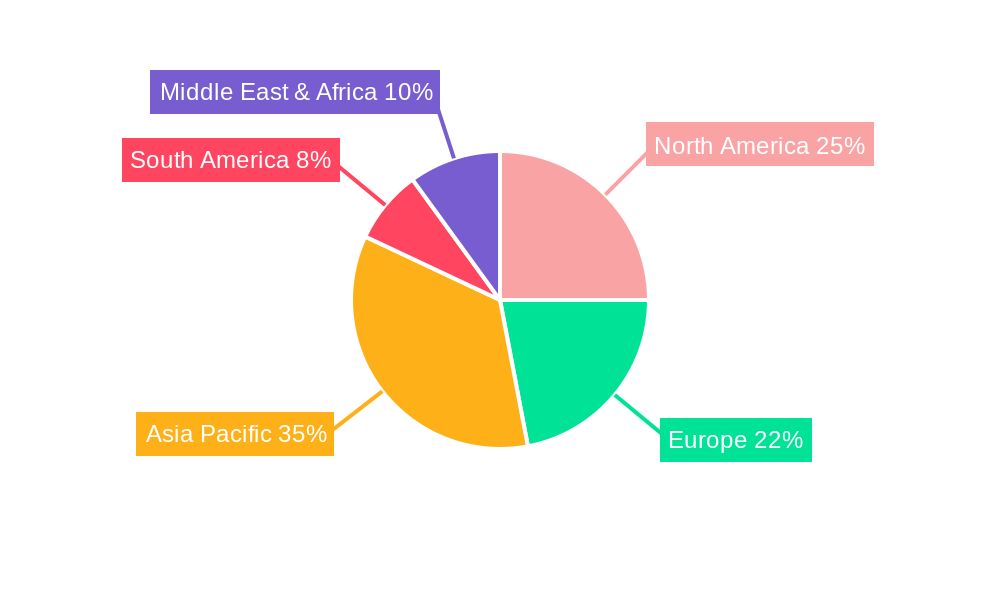
Wearable Motion Sensors Regional Market Share
Geographic Coverage of Wearable Motion Sensors
Wearable Motion Sensors REPORT HIGHLIGHTS
| Aspects | Details |
|---|---|
| Study Period | 2020-2034 |
| Base Year | 2025 |
| Estimated Year | 2026 |
| Forecast Period | 2026-2034 |
| Historical Period | 2020-2025 |
| Growth Rate | CAGR of 16.4% from 2020-2034 |
| Segmentation |
|
Table of Contents
- 1. Introduction
- 1.1. Research Scope
- 1.2. Market Segmentation
- 1.3. Research Methodology
- 1.4. Definitions and Assumptions
- 2. Executive Summary
- 2.1. Introduction
- 3. Market Dynamics
- 3.1. Introduction
- 3.2. Market Drivers
- 3.3. Market Restrains
- 3.4. Market Trends
- 4. Market Factor Analysis
- 4.1. Porters Five Forces
- 4.2. Supply/Value Chain
- 4.3. PESTEL analysis
- 4.4. Market Entropy
- 4.5. Patent/Trademark Analysis
- 5. Global Wearable Motion Sensors Analysis, Insights and Forecast, 2020-2032
- 5.1. Market Analysis, Insights and Forecast - by Application
- 5.1.1. Smart Watches
- 5.1.2. Smart Bands
- 5.1.3. Smart Clothing
- 5.1.4. Smart Glasses
- 5.2. Market Analysis, Insights and Forecast - by Type
- 5.2.1. Accelerometers
- 5.2.2. Gyroscopes
- 5.2.3. Magnetic
- 5.2.4. Others
- 5.3. Market Analysis, Insights and Forecast - by Region
- 5.3.1. North America
- 5.3.2. South America
- 5.3.3. Europe
- 5.3.4. Middle East & Africa
- 5.3.5. Asia Pacific
- 5.1. Market Analysis, Insights and Forecast - by Application
- 6. North America Wearable Motion Sensors Analysis, Insights and Forecast, 2020-2032
- 6.1. Market Analysis, Insights and Forecast - by Application
- 6.1.1. Smart Watches
- 6.1.2. Smart Bands
- 6.1.3. Smart Clothing
- 6.1.4. Smart Glasses
- 6.2. Market Analysis, Insights and Forecast - by Type
- 6.2.1. Accelerometers
- 6.2.2. Gyroscopes
- 6.2.3. Magnetic
- 6.2.4. Others
- 6.1. Market Analysis, Insights and Forecast - by Application
- 7. South America Wearable Motion Sensors Analysis, Insights and Forecast, 2020-2032
- 7.1. Market Analysis, Insights and Forecast - by Application
- 7.1.1. Smart Watches
- 7.1.2. Smart Bands
- 7.1.3. Smart Clothing
- 7.1.4. Smart Glasses
- 7.2. Market Analysis, Insights and Forecast - by Type
- 7.2.1. Accelerometers
- 7.2.2. Gyroscopes
- 7.2.3. Magnetic
- 7.2.4. Others
- 7.1. Market Analysis, Insights and Forecast - by Application
- 8. Europe Wearable Motion Sensors Analysis, Insights and Forecast, 2020-2032
- 8.1. Market Analysis, Insights and Forecast - by Application
- 8.1.1. Smart Watches
- 8.1.2. Smart Bands
- 8.1.3. Smart Clothing
- 8.1.4. Smart Glasses
- 8.2. Market Analysis, Insights and Forecast - by Type
- 8.2.1. Accelerometers
- 8.2.2. Gyroscopes
- 8.2.3. Magnetic
- 8.2.4. Others
- 8.1. Market Analysis, Insights and Forecast - by Application
- 9. Middle East & Africa Wearable Motion Sensors Analysis, Insights and Forecast, 2020-2032
- 9.1. Market Analysis, Insights and Forecast - by Application
- 9.1.1. Smart Watches
- 9.1.2. Smart Bands
- 9.1.3. Smart Clothing
- 9.1.4. Smart Glasses
- 9.2. Market Analysis, Insights and Forecast - by Type
- 9.2.1. Accelerometers
- 9.2.2. Gyroscopes
- 9.2.3. Magnetic
- 9.2.4. Others
- 9.1. Market Analysis, Insights and Forecast - by Application
- 10. Asia Pacific Wearable Motion Sensors Analysis, Insights and Forecast, 2020-2032
- 10.1. Market Analysis, Insights and Forecast - by Application
- 10.1.1. Smart Watches
- 10.1.2. Smart Bands
- 10.1.3. Smart Clothing
- 10.1.4. Smart Glasses
- 10.2. Market Analysis, Insights and Forecast - by Type
- 10.2.1. Accelerometers
- 10.2.2. Gyroscopes
- 10.2.3. Magnetic
- 10.2.4. Others
- 10.1. Market Analysis, Insights and Forecast - by Application
- 11. Competitive Analysis
- 11.1. Global Market Share Analysis 2025
- 11.2. Company Profiles
- 11.2.1 Texas Instruments Incorporated
- 11.2.1.1. Overview
- 11.2.1.2. Products
- 11.2.1.3. SWOT Analysis
- 11.2.1.4. Recent Developments
- 11.2.1.5. Financials (Based on Availability)
- 11.2.2 Infineon
- 11.2.2.1. Overview
- 11.2.2.2. Products
- 11.2.2.3. SWOT Analysis
- 11.2.2.4. Recent Developments
- 11.2.2.5. Financials (Based on Availability)
- 11.2.3 NXP Semiconductors
- 11.2.3.1. Overview
- 11.2.3.2. Products
- 11.2.3.3. SWOT Analysis
- 11.2.3.4. Recent Developments
- 11.2.3.5. Financials (Based on Availability)
- 11.2.4 Bosch Sensortec
- 11.2.4.1. Overview
- 11.2.4.2. Products
- 11.2.4.3. SWOT Analysis
- 11.2.4.4. Recent Developments
- 11.2.4.5. Financials (Based on Availability)
- 11.2.5 Panasonic Industry
- 11.2.5.1. Overview
- 11.2.5.2. Products
- 11.2.5.3. SWOT Analysis
- 11.2.5.4. Recent Developments
- 11.2.5.5. Financials (Based on Availability)
- 11.2.6 Samsung
- 11.2.6.1. Overview
- 11.2.6.2. Products
- 11.2.6.3. SWOT Analysis
- 11.2.6.4. Recent Developments
- 11.2.6.5. Financials (Based on Availability)
- 11.2.7 STMicroelectronics
- 11.2.7.1. Overview
- 11.2.7.2. Products
- 11.2.7.3. SWOT Analysis
- 11.2.7.4. Recent Developments
- 11.2.7.5. Financials (Based on Availability)
- 11.2.8 Garmin
- 11.2.8.1. Overview
- 11.2.8.2. Products
- 11.2.8.3. SWOT Analysis
- 11.2.8.4. Recent Developments
- 11.2.8.5. Financials (Based on Availability)
- 11.2.9 Broadcom
- 11.2.9.1. Overview
- 11.2.9.2. Products
- 11.2.9.3. SWOT Analysis
- 11.2.9.4. Recent Developments
- 11.2.9.5. Financials (Based on Availability)
- 11.2.10 Flex Logix Technologies
- 11.2.10.1. Overview
- 11.2.10.2. Products
- 11.2.10.3. SWOT Analysis
- 11.2.10.4. Recent Developments
- 11.2.10.5. Financials (Based on Availability)
- 11.2.11 Xilinx
- 11.2.11.1. Overview
- 11.2.11.2. Products
- 11.2.11.3. SWOT Analysis
- 11.2.11.4. Recent Developments
- 11.2.11.5. Financials (Based on Availability)
- 11.2.12 Intel
- 11.2.12.1. Overview
- 11.2.12.2. Products
- 11.2.12.3. SWOT Analysis
- 11.2.12.4. Recent Developments
- 11.2.12.5. Financials (Based on Availability)
- 11.2.13 Microchip Technology
- 11.2.13.1. Overview
- 11.2.13.2. Products
- 11.2.13.3. SWOT Analysis
- 11.2.13.4. Recent Developments
- 11.2.13.5. Financials (Based on Availability)
- 11.2.14 Lattice Semiconductor
- 11.2.14.1. Overview
- 11.2.14.2. Products
- 11.2.14.3. SWOT Analysis
- 11.2.14.4. Recent Developments
- 11.2.14.5. Financials (Based on Availability)
- 11.2.15 Quicklogic
- 11.2.15.1. Overview
- 11.2.15.2. Products
- 11.2.15.3. SWOT Analysis
- 11.2.15.4. Recent Developments
- 11.2.15.5. Financials (Based on Availability)
- 11.2.16 TSMC
- 11.2.16.1. Overview
- 11.2.16.2. Products
- 11.2.16.3. SWOT Analysis
- 11.2.16.4. Recent Developments
- 11.2.16.5. Financials (Based on Availability)
- 11.2.17 S2C
- 11.2.17.1. Overview
- 11.2.17.2. Products
- 11.2.17.3. SWOT Analysis
- 11.2.17.4. Recent Developments
- 11.2.17.5. Financials (Based on Availability)
- 11.2.18 United Microelectronics
- 11.2.18.1. Overview
- 11.2.18.2. Products
- 11.2.18.3. SWOT Analysis
- 11.2.18.4. Recent Developments
- 11.2.18.5. Financials (Based on Availability)
- 11.2.19 Cypress Semiconductor
- 11.2.19.1. Overview
- 11.2.19.2. Products
- 11.2.19.3. SWOT Analysis
- 11.2.19.4. Recent Developments
- 11.2.19.5. Financials (Based on Availability)
- 11.2.20 Achronix
- 11.2.20.1. Overview
- 11.2.20.2. Products
- 11.2.20.3. SWOT Analysis
- 11.2.20.4. Recent Developments
- 11.2.20.5. Financials (Based on Availability)
- 11.2.21 Globalfoundries
- 11.2.21.1. Overview
- 11.2.21.2. Products
- 11.2.21.3. SWOT Analysis
- 11.2.21.4. Recent Developments
- 11.2.21.5. Financials (Based on Availability)
- 11.2.22 Celerix Technologies
- 11.2.22.1. Overview
- 11.2.22.2. Products
- 11.2.22.3. SWOT Analysis
- 11.2.22.4. Recent Developments
- 11.2.22.5. Financials (Based on Availability)
- 11.2.23 Emupro
- 11.2.23.1. Overview
- 11.2.23.2. Products
- 11.2.23.3. SWOT Analysis
- 11.2.23.4. Recent Developments
- 11.2.23.5. Financials (Based on Availability)
- 11.2.24 National Instruments
- 11.2.24.1. Overview
- 11.2.24.2. Products
- 11.2.24.3. SWOT Analysis
- 11.2.24.4. Recent Developments
- 11.2.24.5. Financials (Based on Availability)
- 11.2.1 Texas Instruments Incorporated
List of Figures
- Figure 1: Global Wearable Motion Sensors Revenue Breakdown (undefined, %) by Region 2025 & 2033
- Figure 2: North America Wearable Motion Sensors Revenue (undefined), by Application 2025 & 2033
- Figure 3: North America Wearable Motion Sensors Revenue Share (%), by Application 2025 & 2033
- Figure 4: North America Wearable Motion Sensors Revenue (undefined), by Type 2025 & 2033
- Figure 5: North America Wearable Motion Sensors Revenue Share (%), by Type 2025 & 2033
- Figure 6: North America Wearable Motion Sensors Revenue (undefined), by Country 2025 & 2033
- Figure 7: North America Wearable Motion Sensors Revenue Share (%), by Country 2025 & 2033
- Figure 8: South America Wearable Motion Sensors Revenue (undefined), by Application 2025 & 2033
- Figure 9: South America Wearable Motion Sensors Revenue Share (%), by Application 2025 & 2033
- Figure 10: South America Wearable Motion Sensors Revenue (undefined), by Type 2025 & 2033
- Figure 11: South America Wearable Motion Sensors Revenue Share (%), by Type 2025 & 2033
- Figure 12: South America Wearable Motion Sensors Revenue (undefined), by Country 2025 & 2033
- Figure 13: South America Wearable Motion Sensors Revenue Share (%), by Country 2025 & 2033
- Figure 14: Europe Wearable Motion Sensors Revenue (undefined), by Application 2025 & 2033
- Figure 15: Europe Wearable Motion Sensors Revenue Share (%), by Application 2025 & 2033
- Figure 16: Europe Wearable Motion Sensors Revenue (undefined), by Type 2025 & 2033
- Figure 17: Europe Wearable Motion Sensors Revenue Share (%), by Type 2025 & 2033
- Figure 18: Europe Wearable Motion Sensors Revenue (undefined), by Country 2025 & 2033
- Figure 19: Europe Wearable Motion Sensors Revenue Share (%), by Country 2025 & 2033
- Figure 20: Middle East & Africa Wearable Motion Sensors Revenue (undefined), by Application 2025 & 2033
- Figure 21: Middle East & Africa Wearable Motion Sensors Revenue Share (%), by Application 2025 & 2033
- Figure 22: Middle East & Africa Wearable Motion Sensors Revenue (undefined), by Type 2025 & 2033
- Figure 23: Middle East & Africa Wearable Motion Sensors Revenue Share (%), by Type 2025 & 2033
- Figure 24: Middle East & Africa Wearable Motion Sensors Revenue (undefined), by Country 2025 & 2033
- Figure 25: Middle East & Africa Wearable Motion Sensors Revenue Share (%), by Country 2025 & 2033
- Figure 26: Asia Pacific Wearable Motion Sensors Revenue (undefined), by Application 2025 & 2033
- Figure 27: Asia Pacific Wearable Motion Sensors Revenue Share (%), by Application 2025 & 2033
- Figure 28: Asia Pacific Wearable Motion Sensors Revenue (undefined), by Type 2025 & 2033
- Figure 29: Asia Pacific Wearable Motion Sensors Revenue Share (%), by Type 2025 & 2033
- Figure 30: Asia Pacific Wearable Motion Sensors Revenue (undefined), by Country 2025 & 2033
- Figure 31: Asia Pacific Wearable Motion Sensors Revenue Share (%), by Country 2025 & 2033
List of Tables
- Table 1: Global Wearable Motion Sensors Revenue undefined Forecast, by Application 2020 & 2033
- Table 2: Global Wearable Motion Sensors Revenue undefined Forecast, by Type 2020 & 2033
- Table 3: Global Wearable Motion Sensors Revenue undefined Forecast, by Region 2020 & 2033
- Table 4: Global Wearable Motion Sensors Revenue undefined Forecast, by Application 2020 & 2033
- Table 5: Global Wearable Motion Sensors Revenue undefined Forecast, by Type 2020 & 2033
- Table 6: Global Wearable Motion Sensors Revenue undefined Forecast, by Country 2020 & 2033
- Table 7: United States Wearable Motion Sensors Revenue (undefined) Forecast, by Application 2020 & 2033
- Table 8: Canada Wearable Motion Sensors Revenue (undefined) Forecast, by Application 2020 & 2033
- Table 9: Mexico Wearable Motion Sensors Revenue (undefined) Forecast, by Application 2020 & 2033
- Table 10: Global Wearable Motion Sensors Revenue undefined Forecast, by Application 2020 & 2033
- Table 11: Global Wearable Motion Sensors Revenue undefined Forecast, by Type 2020 & 2033
- Table 12: Global Wearable Motion Sensors Revenue undefined Forecast, by Country 2020 & 2033
- Table 13: Brazil Wearable Motion Sensors Revenue (undefined) Forecast, by Application 2020 & 2033
- Table 14: Argentina Wearable Motion Sensors Revenue (undefined) Forecast, by Application 2020 & 2033
- Table 15: Rest of South America Wearable Motion Sensors Revenue (undefined) Forecast, by Application 2020 & 2033
- Table 16: Global Wearable Motion Sensors Revenue undefined Forecast, by Application 2020 & 2033
- Table 17: Global Wearable Motion Sensors Revenue undefined Forecast, by Type 2020 & 2033
- Table 18: Global Wearable Motion Sensors Revenue undefined Forecast, by Country 2020 & 2033
- Table 19: United Kingdom Wearable Motion Sensors Revenue (undefined) Forecast, by Application 2020 & 2033
- Table 20: Germany Wearable Motion Sensors Revenue (undefined) Forecast, by Application 2020 & 2033
- Table 21: France Wearable Motion Sensors Revenue (undefined) Forecast, by Application 2020 & 2033
- Table 22: Italy Wearable Motion Sensors Revenue (undefined) Forecast, by Application 2020 & 2033
- Table 23: Spain Wearable Motion Sensors Revenue (undefined) Forecast, by Application 2020 & 2033
- Table 24: Russia Wearable Motion Sensors Revenue (undefined) Forecast, by Application 2020 & 2033
- Table 25: Benelux Wearable Motion Sensors Revenue (undefined) Forecast, by Application 2020 & 2033
- Table 26: Nordics Wearable Motion Sensors Revenue (undefined) Forecast, by Application 2020 & 2033
- Table 27: Rest of Europe Wearable Motion Sensors Revenue (undefined) Forecast, by Application 2020 & 2033
- Table 28: Global Wearable Motion Sensors Revenue undefined Forecast, by Application 2020 & 2033
- Table 29: Global Wearable Motion Sensors Revenue undefined Forecast, by Type 2020 & 2033
- Table 30: Global Wearable Motion Sensors Revenue undefined Forecast, by Country 2020 & 2033
- Table 31: Turkey Wearable Motion Sensors Revenue (undefined) Forecast, by Application 2020 & 2033
- Table 32: Israel Wearable Motion Sensors Revenue (undefined) Forecast, by Application 2020 & 2033
- Table 33: GCC Wearable Motion Sensors Revenue (undefined) Forecast, by Application 2020 & 2033
- Table 34: North Africa Wearable Motion Sensors Revenue (undefined) Forecast, by Application 2020 & 2033
- Table 35: South Africa Wearable Motion Sensors Revenue (undefined) Forecast, by Application 2020 & 2033
- Table 36: Rest of Middle East & Africa Wearable Motion Sensors Revenue (undefined) Forecast, by Application 2020 & 2033
- Table 37: Global Wearable Motion Sensors Revenue undefined Forecast, by Application 2020 & 2033
- Table 38: Global Wearable Motion Sensors Revenue undefined Forecast, by Type 2020 & 2033
- Table 39: Global Wearable Motion Sensors Revenue undefined Forecast, by Country 2020 & 2033
- Table 40: China Wearable Motion Sensors Revenue (undefined) Forecast, by Application 2020 & 2033
- Table 41: India Wearable Motion Sensors Revenue (undefined) Forecast, by Application 2020 & 2033
- Table 42: Japan Wearable Motion Sensors Revenue (undefined) Forecast, by Application 2020 & 2033
- Table 43: South Korea Wearable Motion Sensors Revenue (undefined) Forecast, by Application 2020 & 2033
- Table 44: ASEAN Wearable Motion Sensors Revenue (undefined) Forecast, by Application 2020 & 2033
- Table 45: Oceania Wearable Motion Sensors Revenue (undefined) Forecast, by Application 2020 & 2033
- Table 46: Rest of Asia Pacific Wearable Motion Sensors Revenue (undefined) Forecast, by Application 2020 & 2033
Frequently Asked Questions
1. What is the projected Compound Annual Growth Rate (CAGR) of the Wearable Motion Sensors?
The projected CAGR is approximately 16.4%.
2. Which companies are prominent players in the Wearable Motion Sensors?
Key companies in the market include Texas Instruments Incorporated, Infineon, NXP Semiconductors, Bosch Sensortec, Panasonic Industry, Samsung, STMicroelectronics, Garmin, Broadcom, Flex Logix Technologies, Xilinx, Intel, Microchip Technology, Lattice Semiconductor, Quicklogic, TSMC, S2C, United Microelectronics, Cypress Semiconductor, Achronix, Globalfoundries, Celerix Technologies, Emupro, National Instruments.
3. What are the main segments of the Wearable Motion Sensors?
The market segments include Application, Type.
4. Can you provide details about the market size?
The market size is estimated to be USD XXX N/A as of 2022.
5. What are some drivers contributing to market growth?
N/A
6. What are the notable trends driving market growth?
N/A
7. Are there any restraints impacting market growth?
N/A
8. Can you provide examples of recent developments in the market?
N/A
9. What pricing options are available for accessing the report?
Pricing options include single-user, multi-user, and enterprise licenses priced at USD 4250.00, USD 6375.00, and USD 8500.00 respectively.
10. Is the market size provided in terms of value or volume?
The market size is provided in terms of value, measured in N/A.
11. Are there any specific market keywords associated with the report?
Yes, the market keyword associated with the report is "Wearable Motion Sensors," which aids in identifying and referencing the specific market segment covered.
12. How do I determine which pricing option suits my needs best?
The pricing options vary based on user requirements and access needs. Individual users may opt for single-user licenses, while businesses requiring broader access may choose multi-user or enterprise licenses for cost-effective access to the report.
13. Are there any additional resources or data provided in the Wearable Motion Sensors report?
While the report offers comprehensive insights, it's advisable to review the specific contents or supplementary materials provided to ascertain if additional resources or data are available.
14. How can I stay updated on further developments or reports in the Wearable Motion Sensors?
To stay informed about further developments, trends, and reports in the Wearable Motion Sensors, consider subscribing to industry newsletters, following relevant companies and organizations, or regularly checking reputable industry news sources and publications.
Methodology
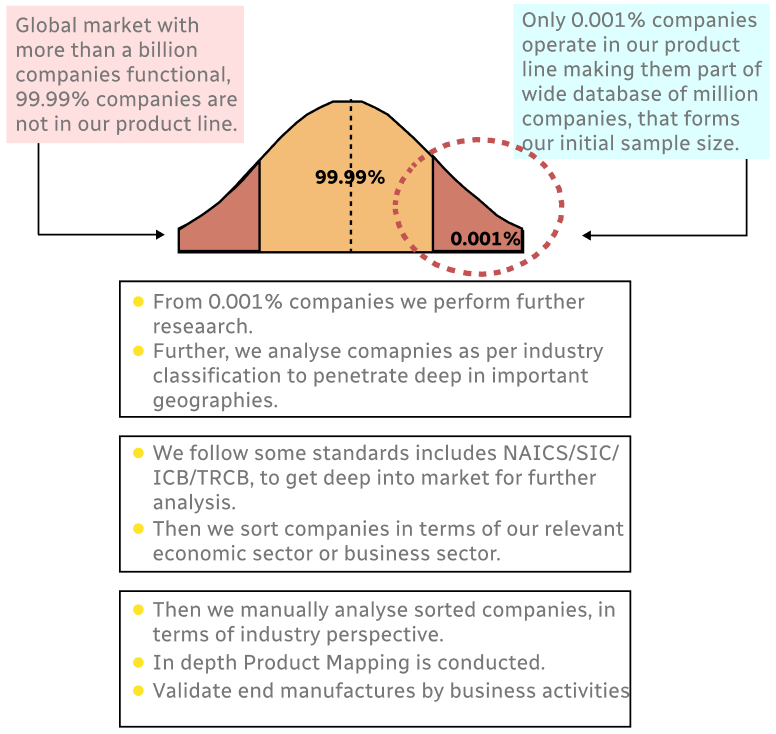
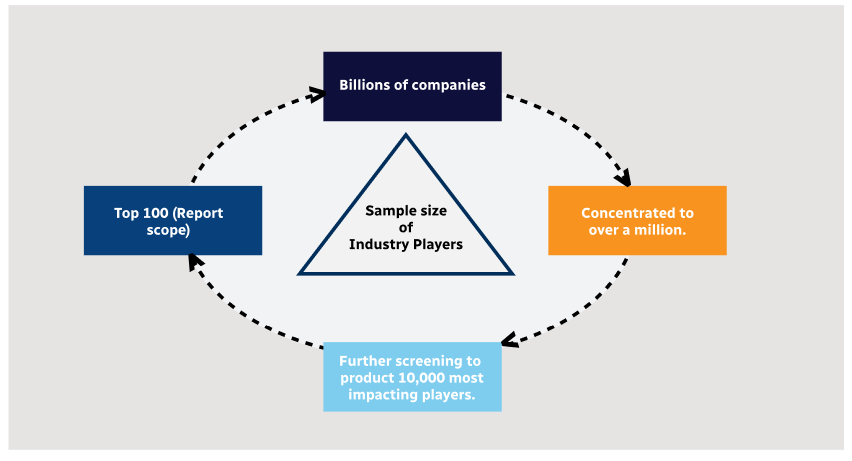
Step 1 - Identification of Relevant Samples Size from Population Database
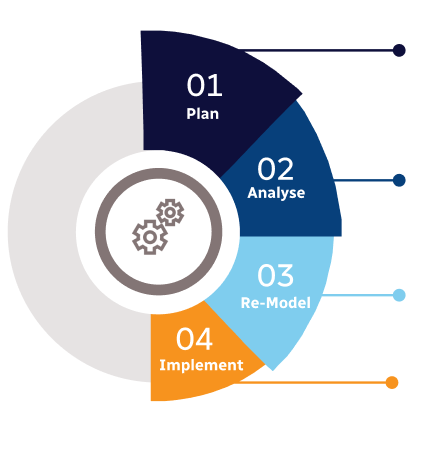
Step 2 - Approaches for Defining Global Market Size (Value, Volume* & Price*)
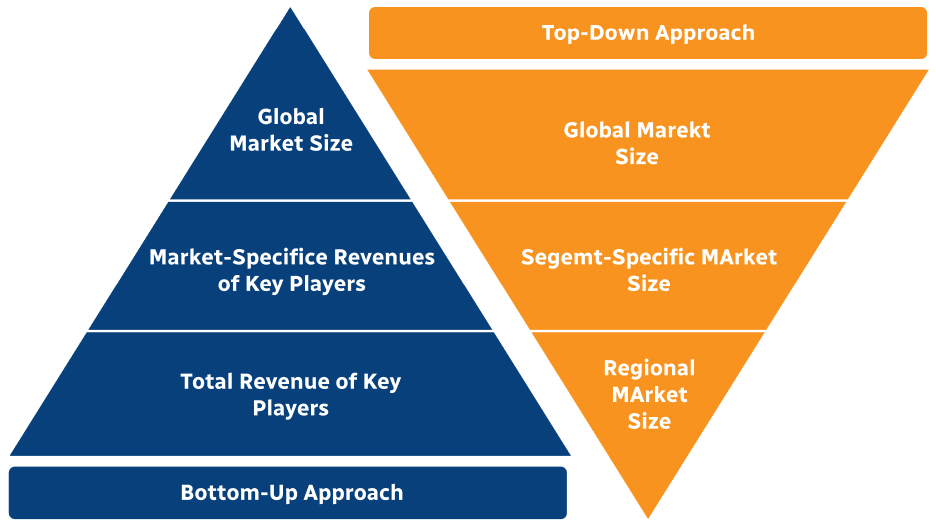
Note*: In applicable scenarios
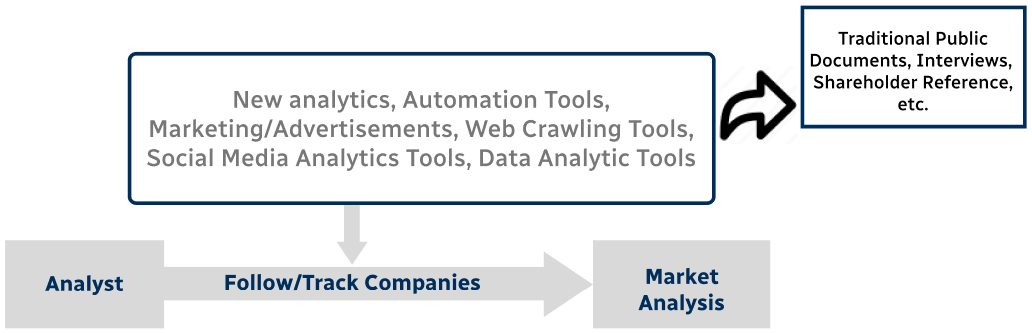
Step 3 - Data Sources
Primary Research
- Web Analytics
- Survey Reports
- Research Institute
- Latest Research Reports
- Opinion Leaders
Secondary Research
- Annual Reports
- White Paper
- Latest Press Release
- Industry Association
- Paid Database
- Investor Presentations
Step 4 - Data Triangulation
Involves using different sources of information in order to increase the validity of a study
These sources are likely to be stakeholders in a program - participants, other researchers, program staff, other community members, and so on.
Then we put all data in single framework & apply various statistical tools to find out the dynamic on the market.
During the analysis stage, feedback from the stakeholder groups would be compared to determine areas of agreement as well as areas of divergence