
Key Insights
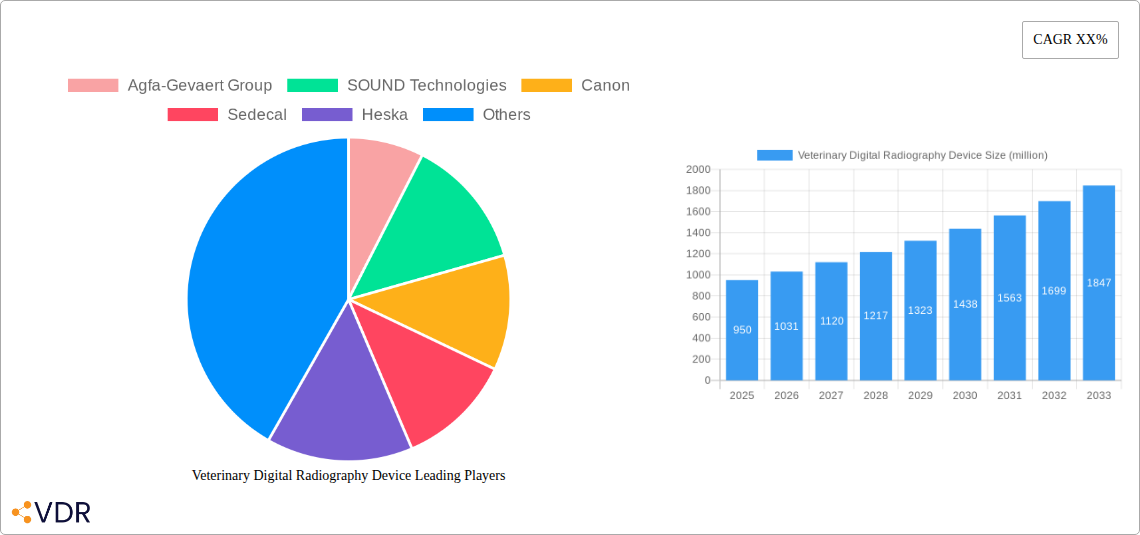
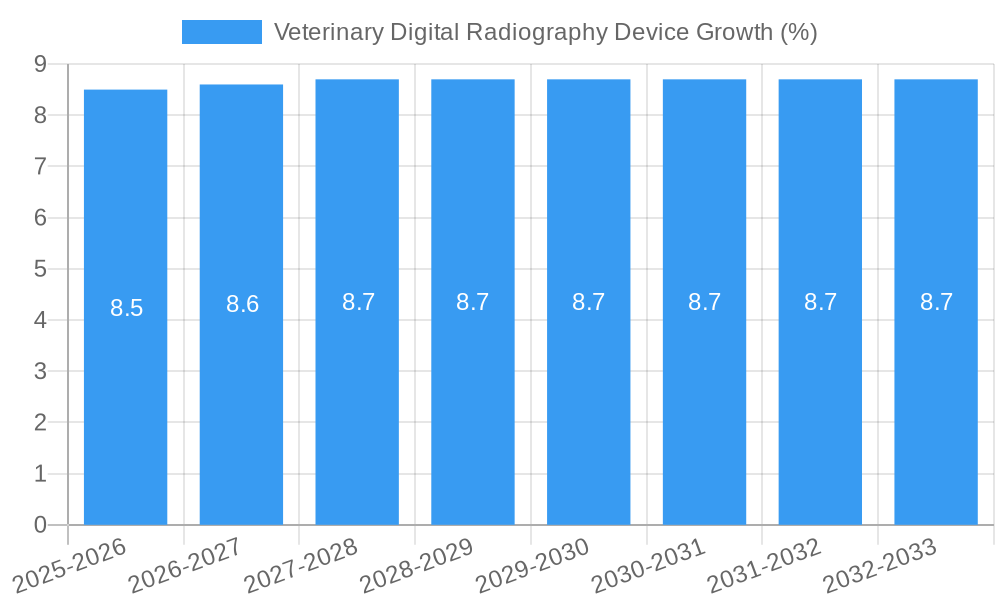
The global Veterinary Digital Radiography Device market is poised for significant expansion, projected to reach an estimated market size of USD 950 million by 2025. This growth is underpinned by a robust Compound Annual Growth Rate (CAGR) of approximately 8.5%, indicating a sustained upward trajectory through the forecast period ending in 2033. The increasing adoption of advanced diagnostic tools in veterinary medicine, driven by a rising global pet population and greater awareness of animal healthcare, are primary catalysts. Furthermore, the expanding livestock industry, particularly in developing regions, necessitates efficient and accurate imaging solutions for disease detection and management, further fueling market demand. The market is segmented by application into Pet and Large Animals, with the pet segment currently holding a dominant share due to the increasing humanization of pets and the subsequent demand for specialized veterinary care. The Fixed Type devices lead in market preference owing to their established reliability and imaging quality, while the Mobile Type segment is witnessing a surge in adoption, driven by the need for on-site diagnostics and improved accessibility in diverse veterinary settings.
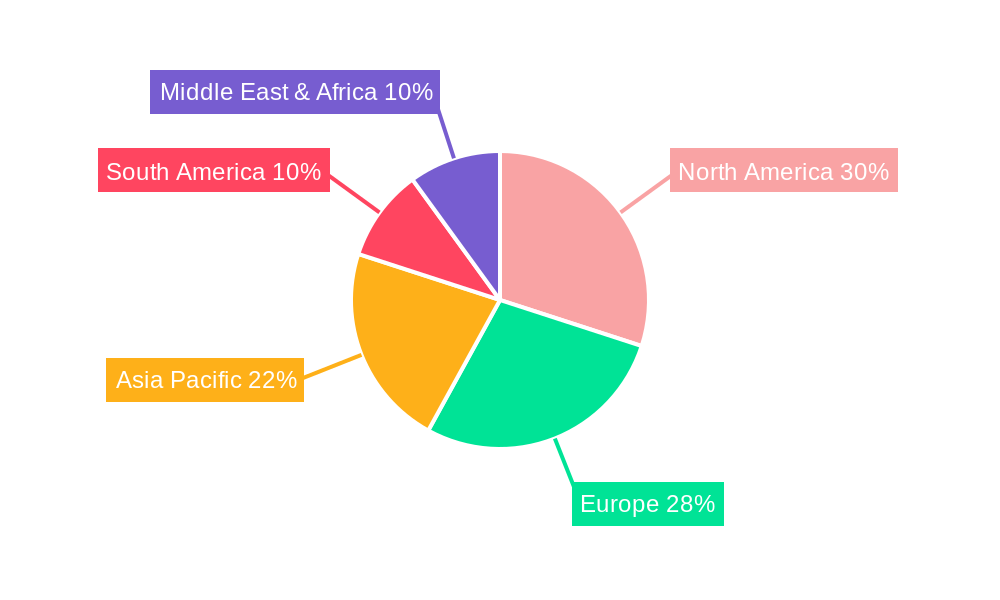
The market's growth is further propelled by technological advancements, including the integration of artificial intelligence for image analysis and improved workflow efficiency. Major players like Agfa-Gevaert Group, Canon, and Heska are actively investing in research and development to introduce innovative and user-friendly digital radiography solutions. However, the market faces certain restraints, including the high initial investment cost of digital radiography systems and the need for skilled personnel to operate and interpret the images. Despite these challenges, the expanding veterinary infrastructure, particularly in emerging economies like China and India, coupled with favorable government initiatives promoting animal health, are expected to create substantial growth opportunities. North America and Europe currently dominate the market, driven by advanced healthcare infrastructure and high pet ownership rates. The Asia Pacific region, however, presents the fastest-growing market due to increasing disposable incomes, a burgeoning pet care industry, and growing government focus on animal husbandry.
Veterinary Digital Radiography Device Market Dynamics & Structure
The global veterinary digital radiography device market is characterized by a moderate to high level of concentration, with leading players investing heavily in research and development to drive technological innovation. Key drivers include the increasing demand for advanced diagnostic tools in companion animal care, advancements in imaging technology such as AI-powered image analysis and portable radiography units, and a growing awareness among pet owners regarding animal health and wellness. Regulatory frameworks, while evolving to ensure safety and efficacy, are generally supportive of market growth by establishing standards for veterinary medical devices. Competitive product substitutes, primarily traditional analog radiography and ultrasound, are gradually being displaced by the superior image quality, reduced radiation exposure, and faster workflow offered by digital systems. End-user demographics are shifting towards a younger, more affluent pet-owning population willing to invest in premium veterinary care, alongside a continued need for robust solutions in large animal practices. Mergers and acquisitions (M&A) trends indicate strategic consolidation, with larger companies acquiring smaller innovators to expand their product portfolios and market reach.
- Market Concentration: Dominated by a few key players, with Agfa-Gevaert Group, Canon, and SOUND Technologies holding significant market shares.
- Technological Innovation Drivers: AI integration for image enhancement, portable and wireless radiography, and lower radiation dose technologies.
- Regulatory Frameworks: Growing emphasis on digital image archiving standards and data security.
- Competitive Product Substitutes: Analog radiography (declining), ultrasound (complementary).
- End-User Demographics: Increasing disposable income for pet care, rising demand for specialized veterinary services.
- M&A Trends: Strategic acquisitions of specialized imaging companies by larger veterinary technology providers.
Veterinary Digital Radiography Device Growth Trends & Insights
The veterinary digital radiography device market is poised for robust expansion, fueled by a confluence of factors that are reshaping the landscape of animal diagnostics. The market size, valued at approximately $1.5 billion in 2024, is projected to experience a compound annual growth rate (CAGR) of around 7.5% throughout the forecast period of 2025–2033. This upward trajectory is underpinned by escalating adoption rates of digital radiography (DR) and computed radiography (CR) systems across veterinary clinics and hospitals globally. Technological disruptions are central to this growth, with advancements in detector technology, such as the widespread adoption of cesium iodide (CsI) and complementary metal-oxide-semiconductor (CMOS) sensors, leading to improved image resolution, reduced exposure times, and enhanced patient comfort. Furthermore, the integration of artificial intelligence (AI) algorithms for automated image processing, defect detection, and preliminary diagnosis is revolutionizing workflow efficiency and diagnostic accuracy, making digital radiography indispensable for modern veterinary practices.
Consumer behavior shifts are also playing a pivotal role. The humanization of pets has led to increased spending on veterinary healthcare, mirroring human medical standards. Pet owners are actively seeking out facilities equipped with the latest diagnostic technologies, thereby driving demand for digital radiography solutions. This trend is particularly pronounced in developed markets, where the prevalence of chronic diseases in pets and the growing popularity of advanced surgical procedures necessitate precise and detailed imaging. The market penetration of digital radiography systems, currently estimated at around 60% for companion animals and 40% for large animals, is expected to continue its ascent as the cost-effectiveness and benefits of digital imaging become more widely recognized and accessible. Mobile radiography units are also gaining traction, offering greater flexibility for on-site diagnostics, especially in large animal practices and for emergency services, further contributing to the market's impressive growth trajectory. The continuous evolution of software capabilities, including enhanced PACS (Picture Archiving and Communication System) integration and cloud-based storage solutions, further streamlines data management and inter-practice collaboration, solidifying the indispensable role of digital radiography in contemporary veterinary medicine.
Dominant Regions, Countries, or Segments in Veterinary Digital Radiography Device
The Pet Application segment stands out as the primary growth engine and dominant force within the global veterinary digital radiography device market, driven by a confluence of demographic, economic, and technological factors. The increasing humanization of pets across developed and emerging economies has fostered a significant rise in expenditure on companion animal healthcare, positioning pets as integral family members deserving of advanced medical attention. This sentiment translates directly into higher demand for sophisticated diagnostic tools like digital radiography, which offers superior image quality for early disease detection, precise treatment planning, and effective monitoring of therapeutic outcomes. The North American region, spearheaded by the United States, currently holds the largest market share, estimated at approximately 35% of the global market. This dominance is attributed to factors such as high pet ownership rates, a well-established and affluent pet-owner base willing to invest in premium veterinary care, a dense network of advanced veterinary clinics and specialty hospitals, and strong government support for animal health research and development.
The Fixed Type segment within the "Types" category also plays a crucial role in driving market growth, particularly in established veterinary facilities. These systems, often comprising dedicated X-ray rooms, offer unparalleled image stability and diagnostic capabilities, making them the preferred choice for high-volume practices and referral centers. However, the Mobile Type segment is experiencing a more rapid growth rate, driven by its inherent flexibility and cost-effectiveness, especially for mixed-practice and large animal veterinarians. Mobile units are increasingly being adopted for on-farm diagnostics, emergency care, and within clinics that seek to optimize space utilization or cater to animals that cannot be easily transported. In terms of the "Application" segment, the Pet Application segment commands a substantial market share, estimated at over 70% of the total market value. This is followed by the Large Animals segment, which, while smaller in market share (estimated around 30%), is witnessing significant growth due to advancements in portable radiography and the increasing need for diagnostics in equine, bovine, and other livestock industries. Economic policies promoting animal welfare and food safety, coupled with the growing scale of livestock operations, are contributing factors to the expansion of the large animal segment. The technological advancements in detector sensitivity and software integration are further enhancing the utility and accessibility of digital radiography for both pet and large animal applications, ensuring continued market expansion across all segments.
Veterinary Digital Radiography Device Product Landscape
The veterinary digital radiography device product landscape is characterized by continuous innovation, focusing on delivering enhanced diagnostic accuracy, improved workflow efficiency, and reduced radiation exposure for both animals and veterinary professionals. Key product advancements include the integration of wireless detector technology, offering greater flexibility in patient positioning and reducing cable management complexities. High-resolution flat-panel detectors, leveraging advanced scintillator materials like cesium iodide and amorphous silicon, are now standard, providing superior image clarity and detail crucial for diagnosing subtle pathologies. Furthermore, the development of AI-powered image analysis software is transforming the interpretation of radiographic images, offering automated measurement tools, anomaly detection, and even preliminary diagnostic suggestions, thereby streamlining the diagnostic process. Portable and compact radiography units are also becoming increasingly sophisticated, enabling on-site diagnostics in various environments, from small clinics to large animal farms.
Key Drivers, Barriers & Challenges in Veterinary Digital Radiography Device
Key Drivers:
- Rising Pet Ownership & Humanization: Increased spending on companion animal healthcare fuels demand for advanced diagnostics.
- Technological Advancements: Innovations in detector technology, AI integration, and portable systems enhance capabilities.
- Improved Diagnostic Accuracy & Efficiency: Digital radiography offers superior image quality and faster workflow compared to analog methods.
- Growing Awareness of Animal Health: Pet owners are more proactive in seeking comprehensive veterinary care.
- Veterinary Professional Demand: Vets recognize the benefits of digital imaging for better patient outcomes.
Key Barriers & Challenges:
- High Initial Investment Cost: The upfront cost of digital radiography systems can be a significant barrier for smaller practices.
- Need for Training & Infrastructure: Implementing digital systems requires staff training and compatible IT infrastructure.
- Regulatory Compliance: Adhering to evolving data privacy and imaging standards can be complex.
- Maintenance & Upgrades: Ongoing costs for software updates, detector maintenance, and eventual hardware upgrades.
- Market Saturation in Developed Regions: While growth continues, some developed markets are approaching saturation for basic digital radiography systems.
Emerging Opportunities in Veterinary Digital Radiography Device
Emerging opportunities within the veterinary digital radiography device market are primarily driven by advancements in artificial intelligence and the expansion of specialized veterinary services. The integration of AI for automated image analysis, quantitative measurements, and even predictive diagnostics presents a significant growth avenue, promising to further enhance efficiency and accuracy. The development of more advanced, lower-dose portable and handheld radiography devices opens up new possibilities for field diagnostics, particularly for large animals and in remote areas. Furthermore, the increasing demand for sub-specialized veterinary care, such as cardiology, neurology, and oncology, creates a need for highly detailed and precise imaging capabilities, driving the adoption of premium digital radiography systems. The growing market for exotic pet care also presents an untapped opportunity, requiring specialized equipment and expertise for imaging smaller and more delicate anatomies.
Growth Accelerators in the Veterinary Digital Radiography Device Industry
Several key catalysts are accelerating the growth of the veterinary digital radiography device industry. Technological breakthroughs, particularly in detector sensitivity and AI-driven image processing, are making digital radiography more powerful, intuitive, and cost-effective. Strategic partnerships between radiography manufacturers and veterinary software providers are fostering seamless integration of imaging systems with practice management and PACS solutions, enhancing workflow and data accessibility. Market expansion strategies, including the introduction of more affordable entry-level digital radiography options and the development of subscription-based models, are making advanced imaging technologies accessible to a broader range of veterinary practices. The increasing prevalence of zoonotic diseases and the growing importance of companion animal welfare globally also serve as indirect growth accelerators, pushing for higher standards in veterinary diagnostics.
Key Players Shaping the Veterinary Digital Radiography Device Market
- Agfa-Gevaert Group
- SOUND Technologies
- Canon
- Sedecal
- Heska
- Protec
- InnoVet
- Examion
- Shantou Institute of Ultrasonic Instruments
- MIKASA
- VISTAS
Notable Milestones in Veterinary Digital Radiography Device Sector
- 2019: Introduction of advanced AI algorithms for automated X-ray image analysis in veterinary diagnostics.
- 2020: Launch of ultra-portable, battery-powered digital radiography units designed for field use.
- 2021: Significant advancements in CsI detector technology leading to improved image quality and reduced radiation dose.
- 2022: Increased adoption of cloud-based PACS solutions for veterinary radiography, enhancing data accessibility and collaboration.
- 2023: Introduction of integrated veterinary radiography software with advanced measurement and reporting tools.
- 2024: Focus on miniaturization and improved ergonomics for mobile and handheld veterinary radiography devices.
- 2025 (Estimated): Increased integration of machine learning for predictive diagnostics based on radiographic imaging.
In-Depth Veterinary Digital Radiography Device Market Outlook
The future outlook for the veterinary digital radiography device market is exceptionally promising, driven by sustained innovation and an expanding global demand for high-quality animal healthcare. Growth accelerators such as breakthroughs in AI for enhanced image interpretation and predictive analytics, coupled with the development of more accessible and portable imaging solutions, will continue to propel market expansion. Strategic collaborations between hardware manufacturers and software developers will further optimize workflows and data management. The increasing awareness of animal welfare and the ongoing trend of pet humanization will sustain a robust demand for advanced diagnostic tools. Emerging opportunities in specialized veterinary fields and the growing potential in underserved geographical markets present significant avenues for future growth, ensuring the veterinary digital radiography device market remains a dynamic and lucrative sector.
Veterinary Digital Radiography Device Segmentation
-
1. Application
- 1.1. Pet
- 1.2. Large Animals
-
2. Types
- 2.1. Fixed Type
- 2.2. Mobile Type
Veterinary Digital Radiography Device Segmentation By Geography
-
1. North America
- 1.1. United States
- 1.2. Canada
- 1.3. Mexico
-
2. South America
- 2.1. Brazil
- 2.2. Argentina
- 2.3. Rest of South America
-
3. Europe
- 3.1. United Kingdom
- 3.2. Germany
- 3.3. France
- 3.4. Italy
- 3.5. Spain
- 3.6. Russia
- 3.7. Benelux
- 3.8. Nordics
- 3.9. Rest of Europe
-
4. Middle East & Africa
- 4.1. Turkey
- 4.2. Israel
- 4.3. GCC
- 4.4. North Africa
- 4.5. South Africa
- 4.6. Rest of Middle East & Africa
-
5. Asia Pacific
- 5.1. China
- 5.2. India
- 5.3. Japan
- 5.4. South Korea
- 5.5. ASEAN
- 5.6. Oceania
- 5.7. Rest of Asia Pacific
Veterinary Digital Radiography Device REPORT HIGHLIGHTS
| Aspects | Details |
|---|---|
| Study Period | 2019-2033 |
| Base Year | 2024 |
| Estimated Year | 2025 |
| Forecast Period | 2025-2033 |
| Historical Period | 2019-2024 |
| Growth Rate | CAGR of XX% from 2019-2033 |
| Segmentation |
|
Table of Contents
- 1. Introduction
- 1.1. Research Scope
- 1.2. Market Segmentation
- 1.3. Research Methodology
- 1.4. Definitions and Assumptions
- 2. Executive Summary
- 2.1. Introduction
- 3. Market Dynamics
- 3.1. Introduction
- 3.2. Market Drivers
- 3.3. Market Restrains
- 3.4. Market Trends
- 4. Market Factor Analysis
- 4.1. Porters Five Forces
- 4.2. Supply/Value Chain
- 4.3. PESTEL analysis
- 4.4. Market Entropy
- 4.5. Patent/Trademark Analysis
- 5. Global Veterinary Digital Radiography Device Analysis, Insights and Forecast, 2019-2031
- 5.1. Market Analysis, Insights and Forecast - by Application
- 5.1.1. Pet
- 5.1.2. Large Animals
- 5.2. Market Analysis, Insights and Forecast - by Types
- 5.2.1. Fixed Type
- 5.2.2. Mobile Type
- 5.3. Market Analysis, Insights and Forecast - by Region
- 5.3.1. North America
- 5.3.2. South America
- 5.3.3. Europe
- 5.3.4. Middle East & Africa
- 5.3.5. Asia Pacific
- 5.1. Market Analysis, Insights and Forecast - by Application
- 6. North America Veterinary Digital Radiography Device Analysis, Insights and Forecast, 2019-2031
- 6.1. Market Analysis, Insights and Forecast - by Application
- 6.1.1. Pet
- 6.1.2. Large Animals
- 6.2. Market Analysis, Insights and Forecast - by Types
- 6.2.1. Fixed Type
- 6.2.2. Mobile Type
- 6.1. Market Analysis, Insights and Forecast - by Application
- 7. South America Veterinary Digital Radiography Device Analysis, Insights and Forecast, 2019-2031
- 7.1. Market Analysis, Insights and Forecast - by Application
- 7.1.1. Pet
- 7.1.2. Large Animals
- 7.2. Market Analysis, Insights and Forecast - by Types
- 7.2.1. Fixed Type
- 7.2.2. Mobile Type
- 7.1. Market Analysis, Insights and Forecast - by Application
- 8. Europe Veterinary Digital Radiography Device Analysis, Insights and Forecast, 2019-2031
- 8.1. Market Analysis, Insights and Forecast - by Application
- 8.1.1. Pet
- 8.1.2. Large Animals
- 8.2. Market Analysis, Insights and Forecast - by Types
- 8.2.1. Fixed Type
- 8.2.2. Mobile Type
- 8.1. Market Analysis, Insights and Forecast - by Application
- 9. Middle East & Africa Veterinary Digital Radiography Device Analysis, Insights and Forecast, 2019-2031
- 9.1. Market Analysis, Insights and Forecast - by Application
- 9.1.1. Pet
- 9.1.2. Large Animals
- 9.2. Market Analysis, Insights and Forecast - by Types
- 9.2.1. Fixed Type
- 9.2.2. Mobile Type
- 9.1. Market Analysis, Insights and Forecast - by Application
- 10. Asia Pacific Veterinary Digital Radiography Device Analysis, Insights and Forecast, 2019-2031
- 10.1. Market Analysis, Insights and Forecast - by Application
- 10.1.1. Pet
- 10.1.2. Large Animals
- 10.2. Market Analysis, Insights and Forecast - by Types
- 10.2.1. Fixed Type
- 10.2.2. Mobile Type
- 10.1. Market Analysis, Insights and Forecast - by Application
- 11. Competitive Analysis
- 11.1. Global Market Share Analysis 2024
- 11.2. Company Profiles
- 11.2.1 Agfa-Gevaert Group
- 11.2.1.1. Overview
- 11.2.1.2. Products
- 11.2.1.3. SWOT Analysis
- 11.2.1.4. Recent Developments
- 11.2.1.5. Financials (Based on Availability)
- 11.2.2 SOUND Technologies
- 11.2.2.1. Overview
- 11.2.2.2. Products
- 11.2.2.3. SWOT Analysis
- 11.2.2.4. Recent Developments
- 11.2.2.5. Financials (Based on Availability)
- 11.2.3 Canon
- 11.2.3.1. Overview
- 11.2.3.2. Products
- 11.2.3.3. SWOT Analysis
- 11.2.3.4. Recent Developments
- 11.2.3.5. Financials (Based on Availability)
- 11.2.4 Sedecal
- 11.2.4.1. Overview
- 11.2.4.2. Products
- 11.2.4.3. SWOT Analysis
- 11.2.4.4. Recent Developments
- 11.2.4.5. Financials (Based on Availability)
- 11.2.5 Heska
- 11.2.5.1. Overview
- 11.2.5.2. Products
- 11.2.5.3. SWOT Analysis
- 11.2.5.4. Recent Developments
- 11.2.5.5. Financials (Based on Availability)
- 11.2.6 Protec
- 11.2.6.1. Overview
- 11.2.6.2. Products
- 11.2.6.3. SWOT Analysis
- 11.2.6.4. Recent Developments
- 11.2.6.5. Financials (Based on Availability)
- 11.2.7 InnoVet
- 11.2.7.1. Overview
- 11.2.7.2. Products
- 11.2.7.3. SWOT Analysis
- 11.2.7.4. Recent Developments
- 11.2.7.5. Financials (Based on Availability)
- 11.2.8 Examion
- 11.2.8.1. Overview
- 11.2.8.2. Products
- 11.2.8.3. SWOT Analysis
- 11.2.8.4. Recent Developments
- 11.2.8.5. Financials (Based on Availability)
- 11.2.9 Shantou Institute of Ultrasonic Instruments
- 11.2.9.1. Overview
- 11.2.9.2. Products
- 11.2.9.3. SWOT Analysis
- 11.2.9.4. Recent Developments
- 11.2.9.5. Financials (Based on Availability)
- 11.2.10 MIKASA
- 11.2.10.1. Overview
- 11.2.10.2. Products
- 11.2.10.3. SWOT Analysis
- 11.2.10.4. Recent Developments
- 11.2.10.5. Financials (Based on Availability)
- 11.2.1 Agfa-Gevaert Group
List of Figures
- Figure 1: Global Veterinary Digital Radiography Device Revenue Breakdown (million, %) by Region 2024 & 2032
- Figure 2: North America Veterinary Digital Radiography Device Revenue (million), by Application 2024 & 2032
- Figure 3: North America Veterinary Digital Radiography Device Revenue Share (%), by Application 2024 & 2032
- Figure 4: North America Veterinary Digital Radiography Device Revenue (million), by Types 2024 & 2032
- Figure 5: North America Veterinary Digital Radiography Device Revenue Share (%), by Types 2024 & 2032
- Figure 6: North America Veterinary Digital Radiography Device Revenue (million), by Country 2024 & 2032
- Figure 7: North America Veterinary Digital Radiography Device Revenue Share (%), by Country 2024 & 2032
- Figure 8: South America Veterinary Digital Radiography Device Revenue (million), by Application 2024 & 2032
- Figure 9: South America Veterinary Digital Radiography Device Revenue Share (%), by Application 2024 & 2032
- Figure 10: South America Veterinary Digital Radiography Device Revenue (million), by Types 2024 & 2032
- Figure 11: South America Veterinary Digital Radiography Device Revenue Share (%), by Types 2024 & 2032
- Figure 12: South America Veterinary Digital Radiography Device Revenue (million), by Country 2024 & 2032
- Figure 13: South America Veterinary Digital Radiography Device Revenue Share (%), by Country 2024 & 2032
- Figure 14: Europe Veterinary Digital Radiography Device Revenue (million), by Application 2024 & 2032
- Figure 15: Europe Veterinary Digital Radiography Device Revenue Share (%), by Application 2024 & 2032
- Figure 16: Europe Veterinary Digital Radiography Device Revenue (million), by Types 2024 & 2032
- Figure 17: Europe Veterinary Digital Radiography Device Revenue Share (%), by Types 2024 & 2032
- Figure 18: Europe Veterinary Digital Radiography Device Revenue (million), by Country 2024 & 2032
- Figure 19: Europe Veterinary Digital Radiography Device Revenue Share (%), by Country 2024 & 2032
- Figure 20: Middle East & Africa Veterinary Digital Radiography Device Revenue (million), by Application 2024 & 2032
- Figure 21: Middle East & Africa Veterinary Digital Radiography Device Revenue Share (%), by Application 2024 & 2032
- Figure 22: Middle East & Africa Veterinary Digital Radiography Device Revenue (million), by Types 2024 & 2032
- Figure 23: Middle East & Africa Veterinary Digital Radiography Device Revenue Share (%), by Types 2024 & 2032
- Figure 24: Middle East & Africa Veterinary Digital Radiography Device Revenue (million), by Country 2024 & 2032
- Figure 25: Middle East & Africa Veterinary Digital Radiography Device Revenue Share (%), by Country 2024 & 2032
- Figure 26: Asia Pacific Veterinary Digital Radiography Device Revenue (million), by Application 2024 & 2032
- Figure 27: Asia Pacific Veterinary Digital Radiography Device Revenue Share (%), by Application 2024 & 2032
- Figure 28: Asia Pacific Veterinary Digital Radiography Device Revenue (million), by Types 2024 & 2032
- Figure 29: Asia Pacific Veterinary Digital Radiography Device Revenue Share (%), by Types 2024 & 2032
- Figure 30: Asia Pacific Veterinary Digital Radiography Device Revenue (million), by Country 2024 & 2032
- Figure 31: Asia Pacific Veterinary Digital Radiography Device Revenue Share (%), by Country 2024 & 2032
List of Tables
- Table 1: Global Veterinary Digital Radiography Device Revenue million Forecast, by Region 2019 & 2032
- Table 2: Global Veterinary Digital Radiography Device Revenue million Forecast, by Application 2019 & 2032
- Table 3: Global Veterinary Digital Radiography Device Revenue million Forecast, by Types 2019 & 2032
- Table 4: Global Veterinary Digital Radiography Device Revenue million Forecast, by Region 2019 & 2032
- Table 5: Global Veterinary Digital Radiography Device Revenue million Forecast, by Application 2019 & 2032
- Table 6: Global Veterinary Digital Radiography Device Revenue million Forecast, by Types 2019 & 2032
- Table 7: Global Veterinary Digital Radiography Device Revenue million Forecast, by Country 2019 & 2032
- Table 8: United States Veterinary Digital Radiography Device Revenue (million) Forecast, by Application 2019 & 2032
- Table 9: Canada Veterinary Digital Radiography Device Revenue (million) Forecast, by Application 2019 & 2032
- Table 10: Mexico Veterinary Digital Radiography Device Revenue (million) Forecast, by Application 2019 & 2032
- Table 11: Global Veterinary Digital Radiography Device Revenue million Forecast, by Application 2019 & 2032
- Table 12: Global Veterinary Digital Radiography Device Revenue million Forecast, by Types 2019 & 2032
- Table 13: Global Veterinary Digital Radiography Device Revenue million Forecast, by Country 2019 & 2032
- Table 14: Brazil Veterinary Digital Radiography Device Revenue (million) Forecast, by Application 2019 & 2032
- Table 15: Argentina Veterinary Digital Radiography Device Revenue (million) Forecast, by Application 2019 & 2032
- Table 16: Rest of South America Veterinary Digital Radiography Device Revenue (million) Forecast, by Application 2019 & 2032
- Table 17: Global Veterinary Digital Radiography Device Revenue million Forecast, by Application 2019 & 2032
- Table 18: Global Veterinary Digital Radiography Device Revenue million Forecast, by Types 2019 & 2032
- Table 19: Global Veterinary Digital Radiography Device Revenue million Forecast, by Country 2019 & 2032
- Table 20: United Kingdom Veterinary Digital Radiography Device Revenue (million) Forecast, by Application 2019 & 2032
- Table 21: Germany Veterinary Digital Radiography Device Revenue (million) Forecast, by Application 2019 & 2032
- Table 22: France Veterinary Digital Radiography Device Revenue (million) Forecast, by Application 2019 & 2032
- Table 23: Italy Veterinary Digital Radiography Device Revenue (million) Forecast, by Application 2019 & 2032
- Table 24: Spain Veterinary Digital Radiography Device Revenue (million) Forecast, by Application 2019 & 2032
- Table 25: Russia Veterinary Digital Radiography Device Revenue (million) Forecast, by Application 2019 & 2032
- Table 26: Benelux Veterinary Digital Radiography Device Revenue (million) Forecast, by Application 2019 & 2032
- Table 27: Nordics Veterinary Digital Radiography Device Revenue (million) Forecast, by Application 2019 & 2032
- Table 28: Rest of Europe Veterinary Digital Radiography Device Revenue (million) Forecast, by Application 2019 & 2032
- Table 29: Global Veterinary Digital Radiography Device Revenue million Forecast, by Application 2019 & 2032
- Table 30: Global Veterinary Digital Radiography Device Revenue million Forecast, by Types 2019 & 2032
- Table 31: Global Veterinary Digital Radiography Device Revenue million Forecast, by Country 2019 & 2032
- Table 32: Turkey Veterinary Digital Radiography Device Revenue (million) Forecast, by Application 2019 & 2032
- Table 33: Israel Veterinary Digital Radiography Device Revenue (million) Forecast, by Application 2019 & 2032
- Table 34: GCC Veterinary Digital Radiography Device Revenue (million) Forecast, by Application 2019 & 2032
- Table 35: North Africa Veterinary Digital Radiography Device Revenue (million) Forecast, by Application 2019 & 2032
- Table 36: South Africa Veterinary Digital Radiography Device Revenue (million) Forecast, by Application 2019 & 2032
- Table 37: Rest of Middle East & Africa Veterinary Digital Radiography Device Revenue (million) Forecast, by Application 2019 & 2032
- Table 38: Global Veterinary Digital Radiography Device Revenue million Forecast, by Application 2019 & 2032
- Table 39: Global Veterinary Digital Radiography Device Revenue million Forecast, by Types 2019 & 2032
- Table 40: Global Veterinary Digital Radiography Device Revenue million Forecast, by Country 2019 & 2032
- Table 41: China Veterinary Digital Radiography Device Revenue (million) Forecast, by Application 2019 & 2032
- Table 42: India Veterinary Digital Radiography Device Revenue (million) Forecast, by Application 2019 & 2032
- Table 43: Japan Veterinary Digital Radiography Device Revenue (million) Forecast, by Application 2019 & 2032
- Table 44: South Korea Veterinary Digital Radiography Device Revenue (million) Forecast, by Application 2019 & 2032
- Table 45: ASEAN Veterinary Digital Radiography Device Revenue (million) Forecast, by Application 2019 & 2032
- Table 46: Oceania Veterinary Digital Radiography Device Revenue (million) Forecast, by Application 2019 & 2032
- Table 47: Rest of Asia Pacific Veterinary Digital Radiography Device Revenue (million) Forecast, by Application 2019 & 2032
Frequently Asked Questions
1. What is the projected Compound Annual Growth Rate (CAGR) of the Veterinary Digital Radiography Device?
The projected CAGR is approximately XX%.
2. Which companies are prominent players in the Veterinary Digital Radiography Device?
Key companies in the market include Agfa-Gevaert Group, SOUND Technologies, Canon, Sedecal, Heska, Protec, InnoVet, Examion, Shantou Institute of Ultrasonic Instruments, MIKASA.
3. What are the main segments of the Veterinary Digital Radiography Device?
The market segments include Application, Types.
4. Can you provide details about the market size?
The market size is estimated to be USD XXX million as of 2022.
5. What are some drivers contributing to market growth?
N/A
6. What are the notable trends driving market growth?
N/A
7. Are there any restraints impacting market growth?
N/A
8. Can you provide examples of recent developments in the market?
N/A
9. What pricing options are available for accessing the report?
Pricing options include single-user, multi-user, and enterprise licenses priced at USD 2900.00, USD 4350.00, and USD 5800.00 respectively.
10. Is the market size provided in terms of value or volume?
The market size is provided in terms of value, measured in million.
11. Are there any specific market keywords associated with the report?
Yes, the market keyword associated with the report is "Veterinary Digital Radiography Device," which aids in identifying and referencing the specific market segment covered.
12. How do I determine which pricing option suits my needs best?
The pricing options vary based on user requirements and access needs. Individual users may opt for single-user licenses, while businesses requiring broader access may choose multi-user or enterprise licenses for cost-effective access to the report.
13. Are there any additional resources or data provided in the Veterinary Digital Radiography Device report?
While the report offers comprehensive insights, it's advisable to review the specific contents or supplementary materials provided to ascertain if additional resources or data are available.
14. How can I stay updated on further developments or reports in the Veterinary Digital Radiography Device?
To stay informed about further developments, trends, and reports in the Veterinary Digital Radiography Device, consider subscribing to industry newsletters, following relevant companies and organizations, or regularly checking reputable industry news sources and publications.
Methodology
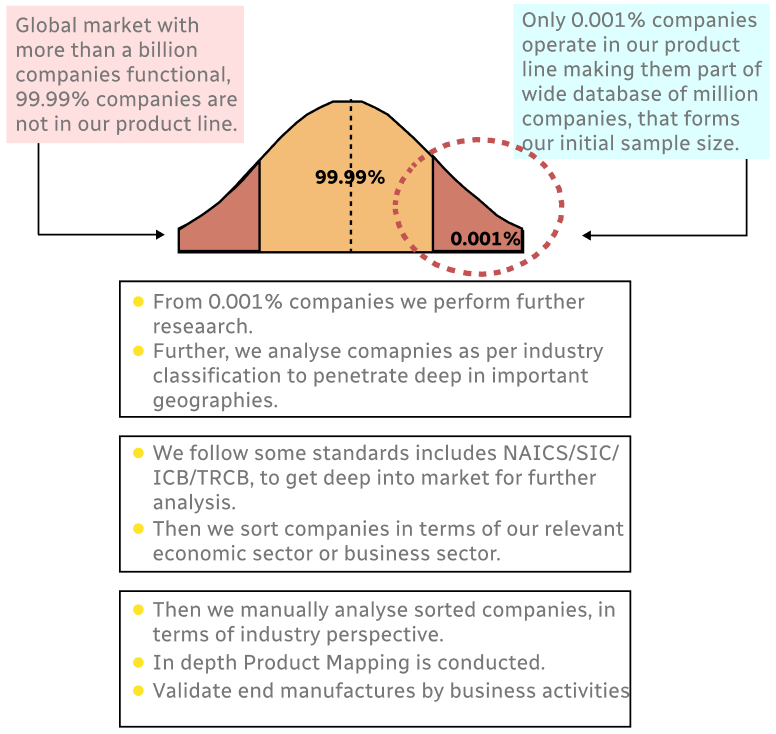
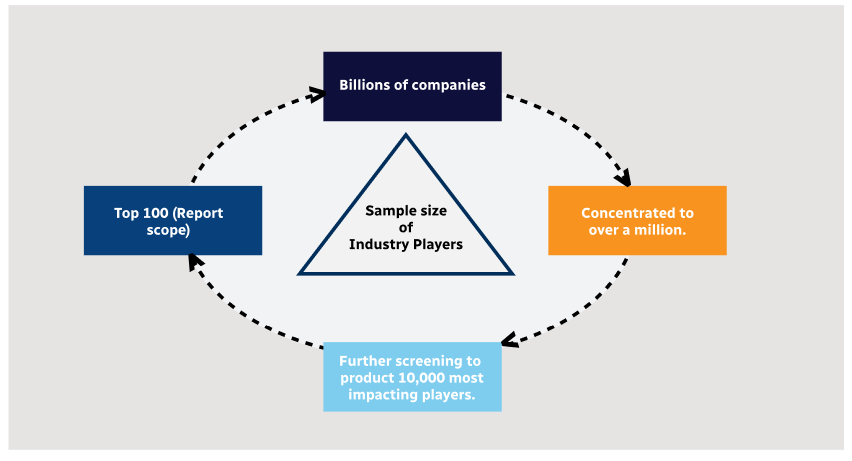
Step 1 - Identification of Relevant Samples Size from Population Database
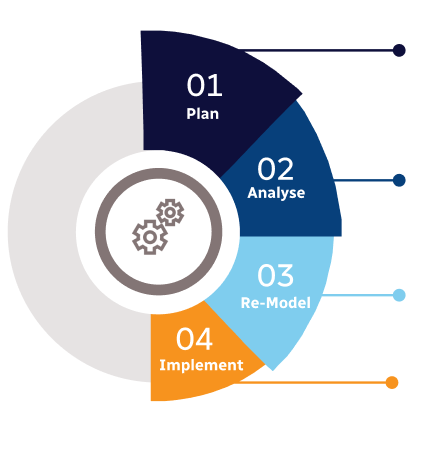
Step 2 - Approaches for Defining Global Market Size (Value, Volume* & Price*)
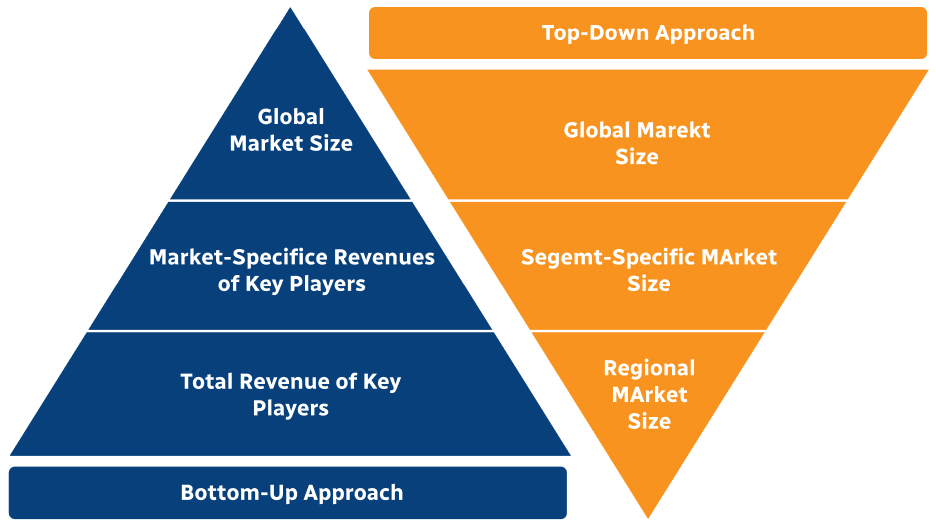
Note*: In applicable scenarios
Step 3 - Data Sources
Primary Research
- Web Analytics
- Survey Reports
- Research Institute
- Latest Research Reports
- Opinion Leaders
Secondary Research
- Annual Reports
- White Paper
- Latest Press Release
- Industry Association
- Paid Database
- Investor Presentations
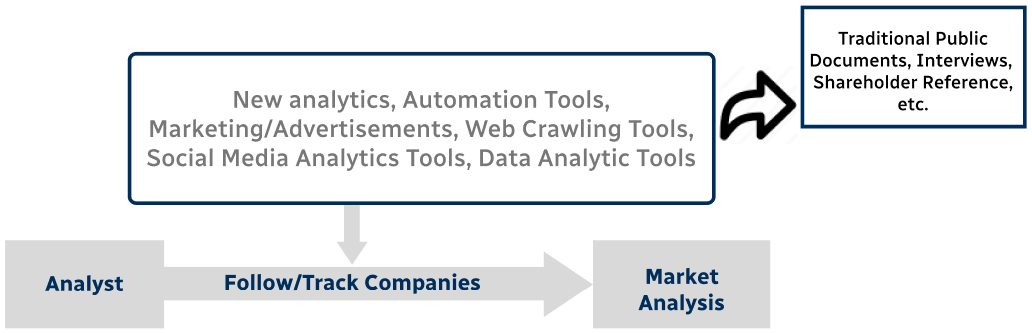
Step 4 - Data Triangulation
Involves using different sources of information in order to increase the validity of a study
These sources are likely to be stakeholders in a program - participants, other researchers, program staff, other community members, and so on.
Then we put all data in single framework & apply various statistical tools to find out the dynamic on the market.
During the analysis stage, feedback from the stakeholder groups would be compared to determine areas of agreement as well as areas of divergence