


Key Insights
The global Temperature and Humidity Transmitters market is projected for significant growth, anticipated to reach 4083.2 million by 2025. This expansion is primarily driven by escalating industrial automation across key sectors such as Oil & Gas, Food & Beverage, Water & Wastewater, and Chemical processing. The imperative for accurate environmental monitoring is crucial for maintaining product quality, optimizing process efficiency, and ensuring regulatory adherence. In the Food & Beverage industry, stringent quality control mandates precise temperature and humidity tracking throughout the supply chain. Likewise, the Water & Wastewater sector leverages these transmitters to refine treatment processes and safeguard equipment. The Oil & Gas sector employs them for critical process control and safety in demanding environments. Furthermore, burgeoning manufacturing and infrastructure development in emerging economies are accelerating the adoption of advanced sensing technologies, contributing to overall market expansion.
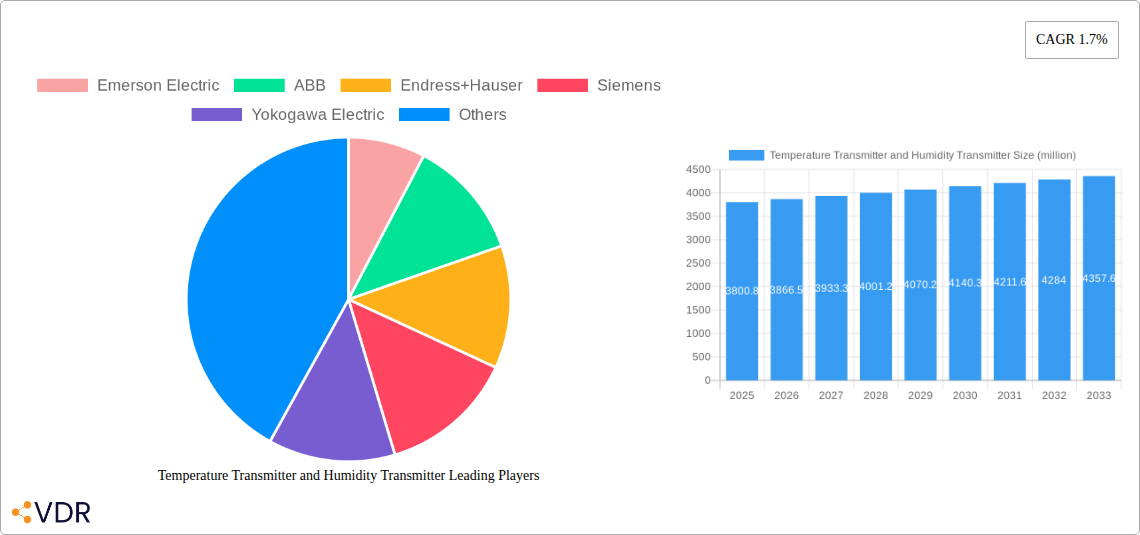
Temperature Transmitter and Humidity Transmitter Market Size (In Billion)

The market is forecasted to experience a compound annual growth rate (CAGR) of 6.2% from 2025 to 2033. While this indicates a robust upward trend, potential restraints include the high initial investment for advanced transmitter systems and integration complexities with existing infrastructure. However, ongoing technological innovations, including smart transmitters with advanced connectivity and predictive maintenance features, are expected to offset these challenges. Resistance Temperature Detectors (RTDs) and Thermocouples currently dominate the product landscape, owing to their proven reliability and cost-effectiveness. The Universal and Multichannel transmitter segments are also gaining prominence, offering enhanced flexibility and data integration for intricate industrial applications. Geographically, the Asia Pacific region is poised to become a major growth driver, fueled by rapid industrialization in China and India, while North America and Europe are expected to maintain substantial market shares due to their established industrial bases and high technology adoption rates.
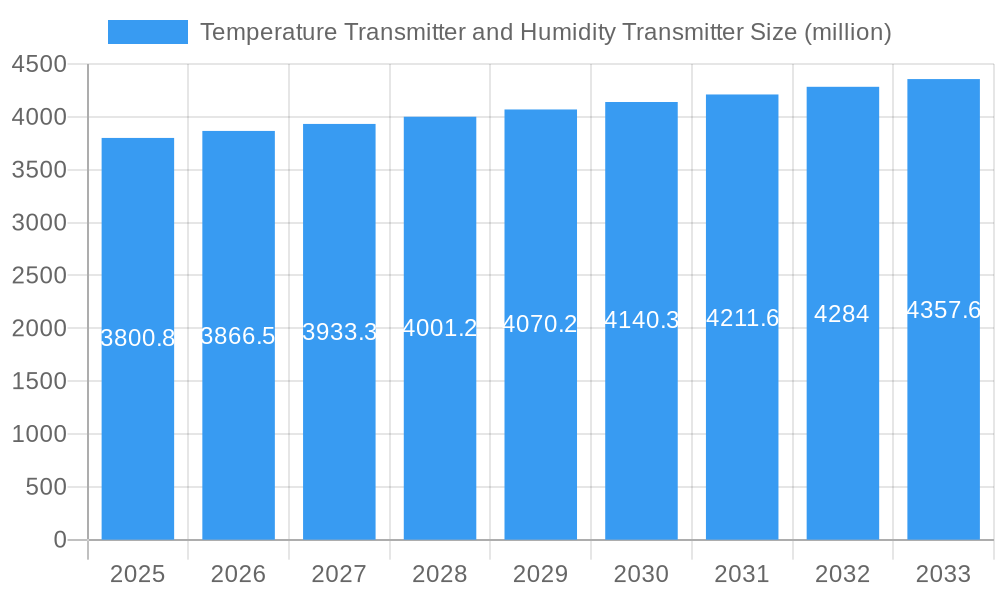
Temperature Transmitter and Humidity Transmitter Company Market Share
Temperature Transmitter and Humidity Transmitter Market Report: Dynamics, Growth, and Future Outlook
This comprehensive report provides an in-depth analysis of the global Temperature Transmitter and Humidity Transmitter market, offering critical insights for industry stakeholders. Covering a study period from 2019 to 2033, with a base year of 2025 and a forecast period from 2025 to 2033, this report meticulously examines market dynamics, growth trends, regional dominance, product landscape, key drivers and challenges, emerging opportunities, and a detailed outlook of leading players.
Temperature Transmitter and Humidity Transmitter Market Dynamics & Structure
The global Temperature Transmitter and Humidity Transmitter market exhibits a moderately concentrated structure, with a few key players like Emerson Electric, ABB, Endress+Hauser, Siemens, and Yokogawa Electric dominating significant market shares. Technological innovation remains a primary driver, fueled by the increasing demand for precise and reliable process control across various industries, including Oil & Gas, Food & Beverage, and Pharmaceutical sectors. Advancements in digital communication protocols (HART, Foundation Fieldbus, Profibus), IoT integration for remote monitoring, and miniaturization of sensor technology are pushing the boundaries of performance and efficiency. Regulatory frameworks, particularly those concerning safety and environmental compliance in industries like Chemical and Power, indirectly influence product development and adoption. Competitive product substitutes, while present, often lack the integrated functionality and accuracy of dedicated temperature and humidity transmitters. End-user demographics reveal a growing reliance on smart and connected devices, demanding solutions that offer enhanced data analytics and predictive maintenance capabilities. Mergers and acquisitions (M&A) are a notable trend, with companies seeking to expand their product portfolios, geographical reach, and technological expertise. For instance, the recent consolidation activities indicate a strategic move towards offering end-to-end solutions. Barriers to innovation include high R&D costs and the need for rigorous testing and certification to meet industry-specific standards.
- Market Concentration: Moderately concentrated, with key players holding substantial market share.
- Technological Innovation Drivers: Demand for precision control, IoT integration, digital protocols, miniaturization.
- Regulatory Frameworks: Safety and environmental compliance in Chemical, Power, and Pharmaceutical industries.
- Competitive Product Substitutes: Limited, often lacking integrated functionality and accuracy.
- End-User Demographics: Growing demand for smart, connected devices with advanced analytics.
- M&A Trends: Strategic consolidation for portfolio expansion and technological enhancement.
- Innovation Barriers: High R&D costs, stringent testing and certification requirements.
Temperature Transmitter and Humidity Transmitter Growth Trends & Insights
The global Temperature Transmitter and Humidity Transmitter market is poised for robust growth, driven by an escalating demand for accurate environmental monitoring and process control across a myriad of industrial applications. The market size, estimated at approximately $5,500 million in the base year of 2025, is projected to witness a Compound Annual Growth Rate (CAGR) of 6.2% during the forecast period of 2025–2033. This expansion is underpinned by the increasing adoption of automation and digitalization initiatives within industries such as Food & Beverage and Pharmaceuticals, where precise temperature and humidity control are paramount for product quality, shelf-life, and regulatory compliance. Technological disruptions, including the advent of advanced sensor technologies offering higher accuracy, faster response times, and enhanced durability, are significantly contributing to market penetration. The integration of these transmitters with the Industrial Internet of Things (IIoT) platforms is a major catalyst, enabling real-time data collection, remote monitoring, and predictive maintenance, thereby optimizing operational efficiency and reducing downtime. Consumer behavior shifts are also playing a crucial role, with end-users increasingly prioritizing integrated solutions that offer seamless connectivity and sophisticated data analytics capabilities. The growing emphasis on energy efficiency and sustainability is further propelling the adoption of smart transmitters that can optimize heating, ventilation, and air conditioning (HVAC) systems and reduce energy consumption. The market penetration of advanced transmitter types, such as multichannel and universal transmitters, is also on an upward trajectory as industries seek versatile and cost-effective solutions. The historical growth from 2019–2024, valued at approximately $4,200 million by the end of 2024, sets a strong foundation for the projected expansion.
Dominant Regions, Countries, or Segments in Temperature Transmitter and Humidity Transmitter
The Asia-Pacific region is emerging as the dominant force in the global Temperature Transmitter and Humidity Transmitter market, driven by rapid industrialization, increasing investments in infrastructure, and supportive government policies across key economies like China and India. Within the Application segment, the Oil & Gas sector continues to be a significant contributor due to the stringent requirements for monitoring and controlling temperature and pressure in exploration, production, and refining processes. However, the Food & Beverage and Pharmaceutical industries are exhibiting exceptionally high growth rates, fueled by escalating consumer demand for safe and high-quality products, coupled with increasingly rigorous regulatory mandates for process control and environmental monitoring. In terms of Types, Resistance Temperature Detectors (RTDs) and Thermocouples remain foundational, owing to their widespread use and cost-effectiveness in numerous applications. Nevertheless, the adoption of Universal and Multichannel transmitters is rapidly accelerating. Universal transmitters offer flexibility and reduce inventory costs for end-users by accommodating various sensor inputs, while multichannel transmitters provide integrated solutions for complex monitoring needs, reducing installation complexity and cost. The market share in the Asia-Pacific region is estimated to reach approximately 35% of the global market by 2028. Economic policies promoting manufacturing and technological advancement, coupled with substantial investments in automation across sectors like manufacturing and power generation, are key drivers. Furthermore, the burgeoning middle class in these regions is spurring demand for processed goods, directly impacting the Food & Beverage sector's need for advanced monitoring equipment.
- Dominant Region: Asia-Pacific.
- Key Drivers: Rapid industrialization, infrastructure investment, supportive government policies in China and India.
- Market Share: Projected to reach ~35% by 2028.
- High-Growth Application Segments: Food & Beverage, Pharmaceutical.
- Drivers: Consumer demand for quality, stringent regulatory compliance, shelf-life preservation.
- Dominant Transmitter Types (Historically & Growing): Resistance Temperature Detectors (RTDs), Thermocouples.
- Attributes: Cost-effectiveness, widespread application.
- Rapidly Growing Transmitter Types: Universal, Multichannel.
- Benefits: Flexibility, integrated solutions, reduced complexity and cost.
- Country-Specific Dominance: China and India leading growth within Asia-Pacific.
- Factors: Manufacturing hubs, automation adoption, growing domestic consumption.
Temperature Transmitter and Humidity Transmitter Product Landscape
The product landscape for Temperature and Humidity Transmitters is characterized by continuous innovation aimed at enhancing accuracy, reliability, and connectivity. Manufacturers are focusing on developing transmitters with wider operating temperature ranges, improved resistance to harsh environmental conditions, and advanced diagnostic capabilities. For instance, the integration of artificial intelligence (AI) and machine learning (ML) algorithms is enabling predictive maintenance by analyzing sensor data for anomalies. Wireless communication protocols like LoRaWAN and Wi-Fi are gaining traction, simplifying installation and enabling real-time data access for remote monitoring in sectors such as Food & Beverage and Pharmaceutical. New materials and sensor designs are improving long-term stability and reducing drift. Key product innovations include intrinsically safe transmitters for hazardous environments and compact, highly integrated modules for space-constrained applications. The trend towards multi-parameter transmitters that measure temperature, humidity, pressure, and other variables in a single device is also gaining momentum, offering cost and installation benefits.
Key Drivers, Barriers & Challenges in Temperature Transmitter and Humidity Transmitter
The global Temperature Transmitter and Humidity Transmitter market is propelled by several key drivers, including the burgeoning demand for automation and IIoT integration across industries, the increasing need for stringent quality control and regulatory compliance in sectors like Food & Beverage and Pharmaceuticals, and the continuous advancements in sensor technology leading to higher accuracy and reliability. Government initiatives promoting industrial digitalization and energy efficiency also play a significant role.
- Key Drivers:
- IIoT and automation adoption.
- Stringent quality control and regulatory compliance.
- Advancements in sensor technology.
- Government initiatives for digitalization and energy efficiency.
Conversely, the market faces significant barriers and challenges. The high initial investment cost for advanced transmitters and the complexity of integrating them into legacy systems can hinder widespread adoption, particularly for small and medium-sized enterprises. Supply chain disruptions, exacerbated by geopolitical events and material shortages, can impact production and lead times, affecting market availability. Intense competition among established players and emerging low-cost manufacturers can lead to price erosion, impacting profitability. Furthermore, the need for skilled personnel to install, calibrate, and maintain sophisticated transmitter systems presents a workforce challenge.
- Key Barriers & Challenges:
- High initial investment costs.
- Integration complexity with legacy systems.
- Supply chain disruptions and material shortages.
- Intense competitive landscape and price erosion.
- Requirement for skilled workforce.
Emerging Opportunities in Temperature Transmitter and Humidity Transmitter
Emerging opportunities in the Temperature Transmitter and Humidity Transmitter market lie in the increasing demand for smart, connected sensors for remote and unattended operations. The growing focus on sustainability and energy management across industries presents a significant avenue for transmitters that can optimize HVAC systems and industrial processes for reduced energy consumption. The expansion of cold chain logistics in the Food & Beverage and Pharmaceutical sectors creates a substantial market for reliable temperature monitoring solutions. Furthermore, the development of specialized transmitters for extreme environments, such as those found in the Oil & Gas and Metal & Mining industries, offers untapped potential. The application of edge computing with transmitters, enabling localized data processing and decision-making, is another promising area for growth.
Growth Accelerators in the Temperature Transmitter and Humidity Transmitter Industry
The Temperature Transmitter and Humidity Transmitter industry's long-term growth is significantly accelerated by rapid technological breakthroughs, particularly in sensor materials and digital communication protocols, enabling greater accuracy and remote accessibility. Strategic partnerships between transmitter manufacturers and IIoT platform providers are crucial for offering integrated solutions that simplify data management and analytics for end-users. Market expansion strategies, including the penetration into emerging economies and niche industrial applications, are also key accelerators. Furthermore, the increasing adoption of Industry 4.0 principles across manufacturing and process industries is creating a sustained demand for intelligent sensing devices that can contribute to operational efficiency and predictive maintenance.
Key Players Shaping the Temperature Transmitter and Humidity Transmitter Market
- Emerson Electric
- ABB
- Endress+Hauser
- Siemens
- Yokogawa Electric
- Wika Alexander Wiegand
- Johnson Controls
- Honeywell
- Schneider Electric
- Vaisala
Notable Milestones in Temperature Transmitter and Humidity Transmitter Sector
- 2021, Q3: Emerson Electric launches its new line of advanced wireless temperature and humidity transmitters with enhanced cybersecurity features.
- 2022, Q1: ABB announces its strategic acquisition of a leading IIoT analytics company, further strengthening its smart sensor capabilities.
- 2022, Q4: Endress+Hauser introduces a new generation of field instruments with improved diagnostic functions and faster commissioning times.
- 2023, Q2: Siemens expands its portfolio with the release of highly accurate and robust transmitters designed for demanding chemical processing environments.
- 2023, Q3: Vaisala introduces a novel humidity transmitter utilizing a unique capacitive sensor technology, offering superior long-term stability and accuracy.
- 2024, Q1: Yokogawa Electric announces a collaboration with a major energy company to deploy advanced transmitters for optimized plant operations.
In-Depth Temperature Transmitter and Humidity Transmitter Market Outlook
The future of the Temperature Transmitter and Humidity Transmitter market is exceptionally promising, driven by an unwavering demand for industrial automation, the pervasive integration of IIoT technologies, and the critical need for precise environmental control in sensitive applications. Growth accelerators such as relentless technological innovation in sensor accuracy and wireless communication, coupled with strategic market expansion into underserved regions and industries, will continue to fuel upward trajectory. The increasing focus on data-driven decision-making and predictive maintenance within enterprises globally will further solidify the position of these intelligent transmitters as indispensable components of modern industrial infrastructure. Strategic collaborations and a commitment to developing sustainable and energy-efficient solutions will pave the way for continued market leadership and innovation.
Temperature Transmitter and Humidity Transmitter Segmentation
-
1. Application
- 1.1. Oil & Gas
- 1.2. Food & Beverage
- 1.3. Water & Wastewater
- 1.4. Pulp & Paper
- 1.5. Metal & Mining
- 1.6. Chemical
- 1.7. Power
- 1.8. Pharmaceutical
- 1.9. Others
-
2. Types
- 2.1. Resistance Temperature Detector
- 2.2. Thermocouple
- 2.3. Universal
- 2.4. Multichannel
Temperature Transmitter and Humidity Transmitter Segmentation By Geography
-
1. North America
- 1.1. United States
- 1.2. Canada
- 1.3. Mexico
-
2. South America
- 2.1. Brazil
- 2.2. Argentina
- 2.3. Rest of South America
-
3. Europe
- 3.1. United Kingdom
- 3.2. Germany
- 3.3. France
- 3.4. Italy
- 3.5. Spain
- 3.6. Russia
- 3.7. Benelux
- 3.8. Nordics
- 3.9. Rest of Europe
-
4. Middle East & Africa
- 4.1. Turkey
- 4.2. Israel
- 4.3. GCC
- 4.4. North Africa
- 4.5. South Africa
- 4.6. Rest of Middle East & Africa
-
5. Asia Pacific
- 5.1. China
- 5.2. India
- 5.3. Japan
- 5.4. South Korea
- 5.5. ASEAN
- 5.6. Oceania
- 5.7. Rest of Asia Pacific
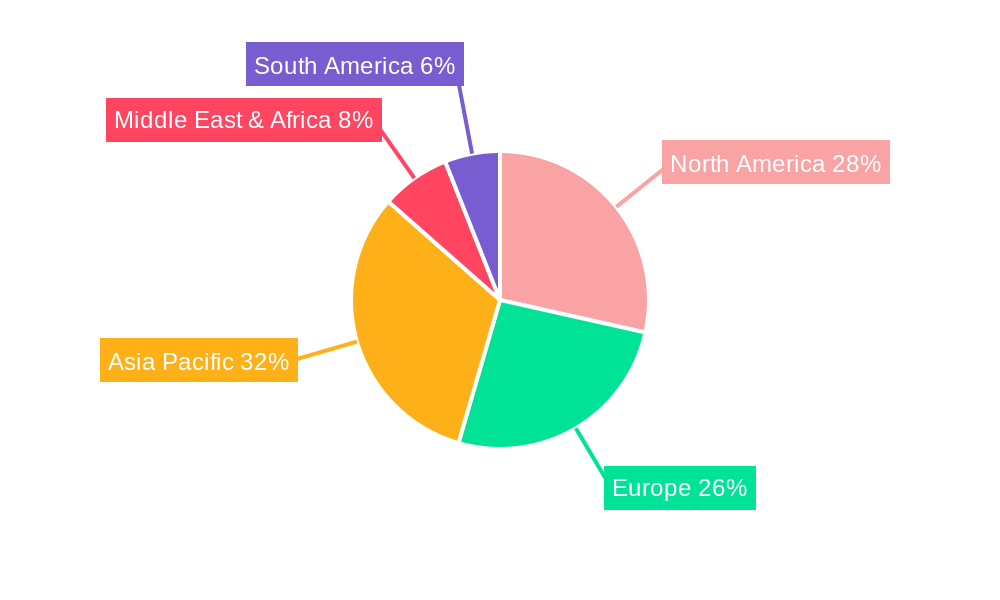
Temperature Transmitter and Humidity Transmitter Regional Market Share
Geographic Coverage of Temperature Transmitter and Humidity Transmitter
Temperature Transmitter and Humidity Transmitter REPORT HIGHLIGHTS
| Aspects | Details |
|---|---|
| Study Period | 2020-2034 |
| Base Year | 2025 |
| Estimated Year | 2026 |
| Forecast Period | 2026-2034 |
| Historical Period | 2020-2025 |
| Growth Rate | CAGR of 6.2% from 2020-2034 |
| Segmentation |
|
Table of Contents
- 1. Introduction
- 1.1. Research Scope
- 1.2. Market Segmentation
- 1.3. Research Methodology
- 1.4. Definitions and Assumptions
- 2. Executive Summary
- 2.1. Introduction
- 3. Market Dynamics
- 3.1. Introduction
- 3.2. Market Drivers
- 3.3. Market Restrains
- 3.4. Market Trends
- 4. Market Factor Analysis
- 4.1. Porters Five Forces
- 4.2. Supply/Value Chain
- 4.3. PESTEL analysis
- 4.4. Market Entropy
- 4.5. Patent/Trademark Analysis
- 5. Global Temperature Transmitter and Humidity Transmitter Analysis, Insights and Forecast, 2020-2032
- 5.1. Market Analysis, Insights and Forecast - by Application
- 5.1.1. Oil & Gas
- 5.1.2. Food & Beverage
- 5.1.3. Water & Wastewater
- 5.1.4. Pulp & Paper
- 5.1.5. Metal & Mining
- 5.1.6. Chemical
- 5.1.7. Power
- 5.1.8. Pharmaceutical
- 5.1.9. Others
- 5.2. Market Analysis, Insights and Forecast - by Types
- 5.2.1. Resistance Temperature Detector
- 5.2.2. Thermocouple
- 5.2.3. Universal
- 5.2.4. Multichannel
- 5.3. Market Analysis, Insights and Forecast - by Region
- 5.3.1. North America
- 5.3.2. South America
- 5.3.3. Europe
- 5.3.4. Middle East & Africa
- 5.3.5. Asia Pacific
- 5.1. Market Analysis, Insights and Forecast - by Application
- 6. North America Temperature Transmitter and Humidity Transmitter Analysis, Insights and Forecast, 2020-2032
- 6.1. Market Analysis, Insights and Forecast - by Application
- 6.1.1. Oil & Gas
- 6.1.2. Food & Beverage
- 6.1.3. Water & Wastewater
- 6.1.4. Pulp & Paper
- 6.1.5. Metal & Mining
- 6.1.6. Chemical
- 6.1.7. Power
- 6.1.8. Pharmaceutical
- 6.1.9. Others
- 6.2. Market Analysis, Insights and Forecast - by Types
- 6.2.1. Resistance Temperature Detector
- 6.2.2. Thermocouple
- 6.2.3. Universal
- 6.2.4. Multichannel
- 6.1. Market Analysis, Insights and Forecast - by Application
- 7. South America Temperature Transmitter and Humidity Transmitter Analysis, Insights and Forecast, 2020-2032
- 7.1. Market Analysis, Insights and Forecast - by Application
- 7.1.1. Oil & Gas
- 7.1.2. Food & Beverage
- 7.1.3. Water & Wastewater
- 7.1.4. Pulp & Paper
- 7.1.5. Metal & Mining
- 7.1.6. Chemical
- 7.1.7. Power
- 7.1.8. Pharmaceutical
- 7.1.9. Others
- 7.2. Market Analysis, Insights and Forecast - by Types
- 7.2.1. Resistance Temperature Detector
- 7.2.2. Thermocouple
- 7.2.3. Universal
- 7.2.4. Multichannel
- 7.1. Market Analysis, Insights and Forecast - by Application
- 8. Europe Temperature Transmitter and Humidity Transmitter Analysis, Insights and Forecast, 2020-2032
- 8.1. Market Analysis, Insights and Forecast - by Application
- 8.1.1. Oil & Gas
- 8.1.2. Food & Beverage
- 8.1.3. Water & Wastewater
- 8.1.4. Pulp & Paper
- 8.1.5. Metal & Mining
- 8.1.6. Chemical
- 8.1.7. Power
- 8.1.8. Pharmaceutical
- 8.1.9. Others
- 8.2. Market Analysis, Insights and Forecast - by Types
- 8.2.1. Resistance Temperature Detector
- 8.2.2. Thermocouple
- 8.2.3. Universal
- 8.2.4. Multichannel
- 8.1. Market Analysis, Insights and Forecast - by Application
- 9. Middle East & Africa Temperature Transmitter and Humidity Transmitter Analysis, Insights and Forecast, 2020-2032
- 9.1. Market Analysis, Insights and Forecast - by Application
- 9.1.1. Oil & Gas
- 9.1.2. Food & Beverage
- 9.1.3. Water & Wastewater
- 9.1.4. Pulp & Paper
- 9.1.5. Metal & Mining
- 9.1.6. Chemical
- 9.1.7. Power
- 9.1.8. Pharmaceutical
- 9.1.9. Others
- 9.2. Market Analysis, Insights and Forecast - by Types
- 9.2.1. Resistance Temperature Detector
- 9.2.2. Thermocouple
- 9.2.3. Universal
- 9.2.4. Multichannel
- 9.1. Market Analysis, Insights and Forecast - by Application
- 10. Asia Pacific Temperature Transmitter and Humidity Transmitter Analysis, Insights and Forecast, 2020-2032
- 10.1. Market Analysis, Insights and Forecast - by Application
- 10.1.1. Oil & Gas
- 10.1.2. Food & Beverage
- 10.1.3. Water & Wastewater
- 10.1.4. Pulp & Paper
- 10.1.5. Metal & Mining
- 10.1.6. Chemical
- 10.1.7. Power
- 10.1.8. Pharmaceutical
- 10.1.9. Others
- 10.2. Market Analysis, Insights and Forecast - by Types
- 10.2.1. Resistance Temperature Detector
- 10.2.2. Thermocouple
- 10.2.3. Universal
- 10.2.4. Multichannel
- 10.1. Market Analysis, Insights and Forecast - by Application
- 11. Competitive Analysis
- 11.1. Global Market Share Analysis 2025
- 11.2. Company Profiles
- 11.2.1 Emerson Electric
- 11.2.1.1. Overview
- 11.2.1.2. Products
- 11.2.1.3. SWOT Analysis
- 11.2.1.4. Recent Developments
- 11.2.1.5. Financials (Based on Availability)
- 11.2.2 ABB
- 11.2.2.1. Overview
- 11.2.2.2. Products
- 11.2.2.3. SWOT Analysis
- 11.2.2.4. Recent Developments
- 11.2.2.5. Financials (Based on Availability)
- 11.2.3 Endress+Hauser
- 11.2.3.1. Overview
- 11.2.3.2. Products
- 11.2.3.3. SWOT Analysis
- 11.2.3.4. Recent Developments
- 11.2.3.5. Financials (Based on Availability)
- 11.2.4 Siemens
- 11.2.4.1. Overview
- 11.2.4.2. Products
- 11.2.4.3. SWOT Analysis
- 11.2.4.4. Recent Developments
- 11.2.4.5. Financials (Based on Availability)
- 11.2.5 Yokogawa Electric
- 11.2.5.1. Overview
- 11.2.5.2. Products
- 11.2.5.3. SWOT Analysis
- 11.2.5.4. Recent Developments
- 11.2.5.5. Financials (Based on Availability)
- 11.2.6 Wika Alexander Wiegand
- 11.2.6.1. Overview
- 11.2.6.2. Products
- 11.2.6.3. SWOT Analysis
- 11.2.6.4. Recent Developments
- 11.2.6.5. Financials (Based on Availability)
- 11.2.7 Johnson Controls
- 11.2.7.1. Overview
- 11.2.7.2. Products
- 11.2.7.3. SWOT Analysis
- 11.2.7.4. Recent Developments
- 11.2.7.5. Financials (Based on Availability)
- 11.2.8 Honeywell
- 11.2.8.1. Overview
- 11.2.8.2. Products
- 11.2.8.3. SWOT Analysis
- 11.2.8.4. Recent Developments
- 11.2.8.5. Financials (Based on Availability)
- 11.2.9 Schneider Electric
- 11.2.9.1. Overview
- 11.2.9.2. Products
- 11.2.9.3. SWOT Analysis
- 11.2.9.4. Recent Developments
- 11.2.9.5. Financials (Based on Availability)
- 11.2.10 Vaisala
- 11.2.10.1. Overview
- 11.2.10.2. Products
- 11.2.10.3. SWOT Analysis
- 11.2.10.4. Recent Developments
- 11.2.10.5. Financials (Based on Availability)
- 11.2.1 Emerson Electric
List of Figures
- Figure 1: Global Temperature Transmitter and Humidity Transmitter Revenue Breakdown (million, %) by Region 2025 & 2033
- Figure 2: North America Temperature Transmitter and Humidity Transmitter Revenue (million), by Application 2025 & 2033
- Figure 3: North America Temperature Transmitter and Humidity Transmitter Revenue Share (%), by Application 2025 & 2033
- Figure 4: North America Temperature Transmitter and Humidity Transmitter Revenue (million), by Types 2025 & 2033
- Figure 5: North America Temperature Transmitter and Humidity Transmitter Revenue Share (%), by Types 2025 & 2033
- Figure 6: North America Temperature Transmitter and Humidity Transmitter Revenue (million), by Country 2025 & 2033
- Figure 7: North America Temperature Transmitter and Humidity Transmitter Revenue Share (%), by Country 2025 & 2033
- Figure 8: South America Temperature Transmitter and Humidity Transmitter Revenue (million), by Application 2025 & 2033
- Figure 9: South America Temperature Transmitter and Humidity Transmitter Revenue Share (%), by Application 2025 & 2033
- Figure 10: South America Temperature Transmitter and Humidity Transmitter Revenue (million), by Types 2025 & 2033
- Figure 11: South America Temperature Transmitter and Humidity Transmitter Revenue Share (%), by Types 2025 & 2033
- Figure 12: South America Temperature Transmitter and Humidity Transmitter Revenue (million), by Country 2025 & 2033
- Figure 13: South America Temperature Transmitter and Humidity Transmitter Revenue Share (%), by Country 2025 & 2033
- Figure 14: Europe Temperature Transmitter and Humidity Transmitter Revenue (million), by Application 2025 & 2033
- Figure 15: Europe Temperature Transmitter and Humidity Transmitter Revenue Share (%), by Application 2025 & 2033
- Figure 16: Europe Temperature Transmitter and Humidity Transmitter Revenue (million), by Types 2025 & 2033
- Figure 17: Europe Temperature Transmitter and Humidity Transmitter Revenue Share (%), by Types 2025 & 2033
- Figure 18: Europe Temperature Transmitter and Humidity Transmitter Revenue (million), by Country 2025 & 2033
- Figure 19: Europe Temperature Transmitter and Humidity Transmitter Revenue Share (%), by Country 2025 & 2033
- Figure 20: Middle East & Africa Temperature Transmitter and Humidity Transmitter Revenue (million), by Application 2025 & 2033
- Figure 21: Middle East & Africa Temperature Transmitter and Humidity Transmitter Revenue Share (%), by Application 2025 & 2033
- Figure 22: Middle East & Africa Temperature Transmitter and Humidity Transmitter Revenue (million), by Types 2025 & 2033
- Figure 23: Middle East & Africa Temperature Transmitter and Humidity Transmitter Revenue Share (%), by Types 2025 & 2033
- Figure 24: Middle East & Africa Temperature Transmitter and Humidity Transmitter Revenue (million), by Country 2025 & 2033
- Figure 25: Middle East & Africa Temperature Transmitter and Humidity Transmitter Revenue Share (%), by Country 2025 & 2033
- Figure 26: Asia Pacific Temperature Transmitter and Humidity Transmitter Revenue (million), by Application 2025 & 2033
- Figure 27: Asia Pacific Temperature Transmitter and Humidity Transmitter Revenue Share (%), by Application 2025 & 2033
- Figure 28: Asia Pacific Temperature Transmitter and Humidity Transmitter Revenue (million), by Types 2025 & 2033
- Figure 29: Asia Pacific Temperature Transmitter and Humidity Transmitter Revenue Share (%), by Types 2025 & 2033
- Figure 30: Asia Pacific Temperature Transmitter and Humidity Transmitter Revenue (million), by Country 2025 & 2033
- Figure 31: Asia Pacific Temperature Transmitter and Humidity Transmitter Revenue Share (%), by Country 2025 & 2033
List of Tables
- Table 1: Global Temperature Transmitter and Humidity Transmitter Revenue million Forecast, by Application 2020 & 2033
- Table 2: Global Temperature Transmitter and Humidity Transmitter Revenue million Forecast, by Types 2020 & 2033
- Table 3: Global Temperature Transmitter and Humidity Transmitter Revenue million Forecast, by Region 2020 & 2033
- Table 4: Global Temperature Transmitter and Humidity Transmitter Revenue million Forecast, by Application 2020 & 2033
- Table 5: Global Temperature Transmitter and Humidity Transmitter Revenue million Forecast, by Types 2020 & 2033
- Table 6: Global Temperature Transmitter and Humidity Transmitter Revenue million Forecast, by Country 2020 & 2033
- Table 7: United States Temperature Transmitter and Humidity Transmitter Revenue (million) Forecast, by Application 2020 & 2033
- Table 8: Canada Temperature Transmitter and Humidity Transmitter Revenue (million) Forecast, by Application 2020 & 2033
- Table 9: Mexico Temperature Transmitter and Humidity Transmitter Revenue (million) Forecast, by Application 2020 & 2033
- Table 10: Global Temperature Transmitter and Humidity Transmitter Revenue million Forecast, by Application 2020 & 2033
- Table 11: Global Temperature Transmitter and Humidity Transmitter Revenue million Forecast, by Types 2020 & 2033
- Table 12: Global Temperature Transmitter and Humidity Transmitter Revenue million Forecast, by Country 2020 & 2033
- Table 13: Brazil Temperature Transmitter and Humidity Transmitter Revenue (million) Forecast, by Application 2020 & 2033
- Table 14: Argentina Temperature Transmitter and Humidity Transmitter Revenue (million) Forecast, by Application 2020 & 2033
- Table 15: Rest of South America Temperature Transmitter and Humidity Transmitter Revenue (million) Forecast, by Application 2020 & 2033
- Table 16: Global Temperature Transmitter and Humidity Transmitter Revenue million Forecast, by Application 2020 & 2033
- Table 17: Global Temperature Transmitter and Humidity Transmitter Revenue million Forecast, by Types 2020 & 2033
- Table 18: Global Temperature Transmitter and Humidity Transmitter Revenue million Forecast, by Country 2020 & 2033
- Table 19: United Kingdom Temperature Transmitter and Humidity Transmitter Revenue (million) Forecast, by Application 2020 & 2033
- Table 20: Germany Temperature Transmitter and Humidity Transmitter Revenue (million) Forecast, by Application 2020 & 2033
- Table 21: France Temperature Transmitter and Humidity Transmitter Revenue (million) Forecast, by Application 2020 & 2033
- Table 22: Italy Temperature Transmitter and Humidity Transmitter Revenue (million) Forecast, by Application 2020 & 2033
- Table 23: Spain Temperature Transmitter and Humidity Transmitter Revenue (million) Forecast, by Application 2020 & 2033
- Table 24: Russia Temperature Transmitter and Humidity Transmitter Revenue (million) Forecast, by Application 2020 & 2033
- Table 25: Benelux Temperature Transmitter and Humidity Transmitter Revenue (million) Forecast, by Application 2020 & 2033
- Table 26: Nordics Temperature Transmitter and Humidity Transmitter Revenue (million) Forecast, by Application 2020 & 2033
- Table 27: Rest of Europe Temperature Transmitter and Humidity Transmitter Revenue (million) Forecast, by Application 2020 & 2033
- Table 28: Global Temperature Transmitter and Humidity Transmitter Revenue million Forecast, by Application 2020 & 2033
- Table 29: Global Temperature Transmitter and Humidity Transmitter Revenue million Forecast, by Types 2020 & 2033
- Table 30: Global Temperature Transmitter and Humidity Transmitter Revenue million Forecast, by Country 2020 & 2033
- Table 31: Turkey Temperature Transmitter and Humidity Transmitter Revenue (million) Forecast, by Application 2020 & 2033
- Table 32: Israel Temperature Transmitter and Humidity Transmitter Revenue (million) Forecast, by Application 2020 & 2033
- Table 33: GCC Temperature Transmitter and Humidity Transmitter Revenue (million) Forecast, by Application 2020 & 2033
- Table 34: North Africa Temperature Transmitter and Humidity Transmitter Revenue (million) Forecast, by Application 2020 & 2033
- Table 35: South Africa Temperature Transmitter and Humidity Transmitter Revenue (million) Forecast, by Application 2020 & 2033
- Table 36: Rest of Middle East & Africa Temperature Transmitter and Humidity Transmitter Revenue (million) Forecast, by Application 2020 & 2033
- Table 37: Global Temperature Transmitter and Humidity Transmitter Revenue million Forecast, by Application 2020 & 2033
- Table 38: Global Temperature Transmitter and Humidity Transmitter Revenue million Forecast, by Types 2020 & 2033
- Table 39: Global Temperature Transmitter and Humidity Transmitter Revenue million Forecast, by Country 2020 & 2033
- Table 40: China Temperature Transmitter and Humidity Transmitter Revenue (million) Forecast, by Application 2020 & 2033
- Table 41: India Temperature Transmitter and Humidity Transmitter Revenue (million) Forecast, by Application 2020 & 2033
- Table 42: Japan Temperature Transmitter and Humidity Transmitter Revenue (million) Forecast, by Application 2020 & 2033
- Table 43: South Korea Temperature Transmitter and Humidity Transmitter Revenue (million) Forecast, by Application 2020 & 2033
- Table 44: ASEAN Temperature Transmitter and Humidity Transmitter Revenue (million) Forecast, by Application 2020 & 2033
- Table 45: Oceania Temperature Transmitter and Humidity Transmitter Revenue (million) Forecast, by Application 2020 & 2033
- Table 46: Rest of Asia Pacific Temperature Transmitter and Humidity Transmitter Revenue (million) Forecast, by Application 2020 & 2033
Frequently Asked Questions
1. What is the projected Compound Annual Growth Rate (CAGR) of the Temperature Transmitter and Humidity Transmitter?
The projected CAGR is approximately 6.2%.
2. Which companies are prominent players in the Temperature Transmitter and Humidity Transmitter?
Key companies in the market include Emerson Electric, ABB, Endress+Hauser, Siemens, Yokogawa Electric, Wika Alexander Wiegand, Johnson Controls, Honeywell, Schneider Electric, Vaisala.
3. What are the main segments of the Temperature Transmitter and Humidity Transmitter?
The market segments include Application, Types.
4. Can you provide details about the market size?
The market size is estimated to be USD 4083.2 million as of 2022.
5. What are some drivers contributing to market growth?
N/A
6. What are the notable trends driving market growth?
N/A
7. Are there any restraints impacting market growth?
N/A
8. Can you provide examples of recent developments in the market?
N/A
9. What pricing options are available for accessing the report?
Pricing options include single-user, multi-user, and enterprise licenses priced at USD 4900.00, USD 7350.00, and USD 9800.00 respectively.
10. Is the market size provided in terms of value or volume?
The market size is provided in terms of value, measured in million.
11. Are there any specific market keywords associated with the report?
Yes, the market keyword associated with the report is "Temperature Transmitter and Humidity Transmitter," which aids in identifying and referencing the specific market segment covered.
12. How do I determine which pricing option suits my needs best?
The pricing options vary based on user requirements and access needs. Individual users may opt for single-user licenses, while businesses requiring broader access may choose multi-user or enterprise licenses for cost-effective access to the report.
13. Are there any additional resources or data provided in the Temperature Transmitter and Humidity Transmitter report?
While the report offers comprehensive insights, it's advisable to review the specific contents or supplementary materials provided to ascertain if additional resources or data are available.
14. How can I stay updated on further developments or reports in the Temperature Transmitter and Humidity Transmitter?
To stay informed about further developments, trends, and reports in the Temperature Transmitter and Humidity Transmitter, consider subscribing to industry newsletters, following relevant companies and organizations, or regularly checking reputable industry news sources and publications.
Methodology
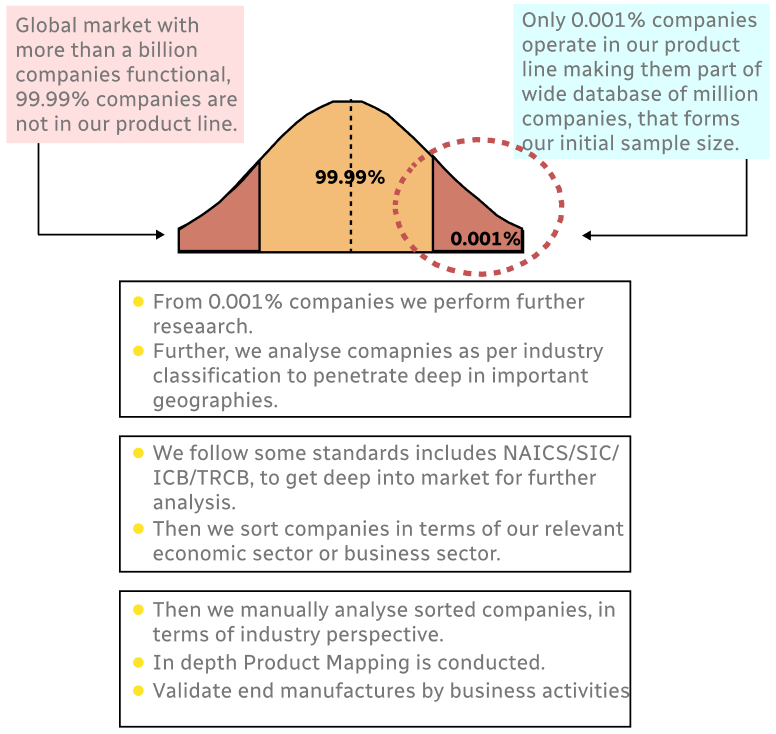
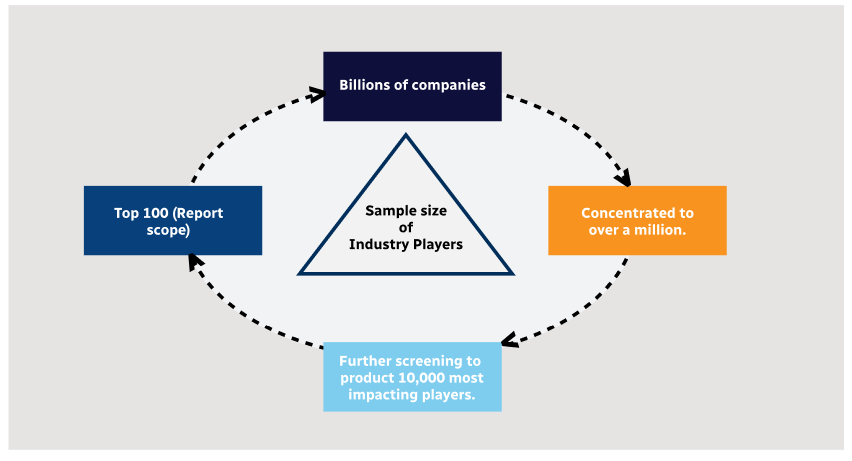
Step 1 - Identification of Relevant Samples Size from Population Database
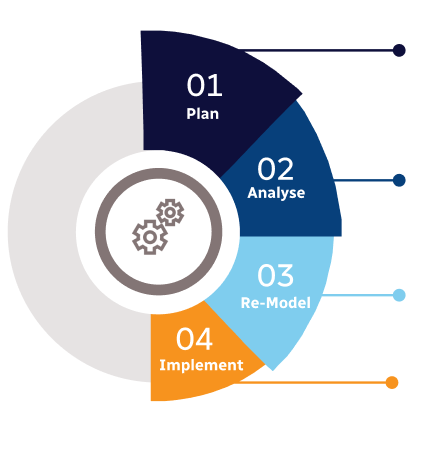
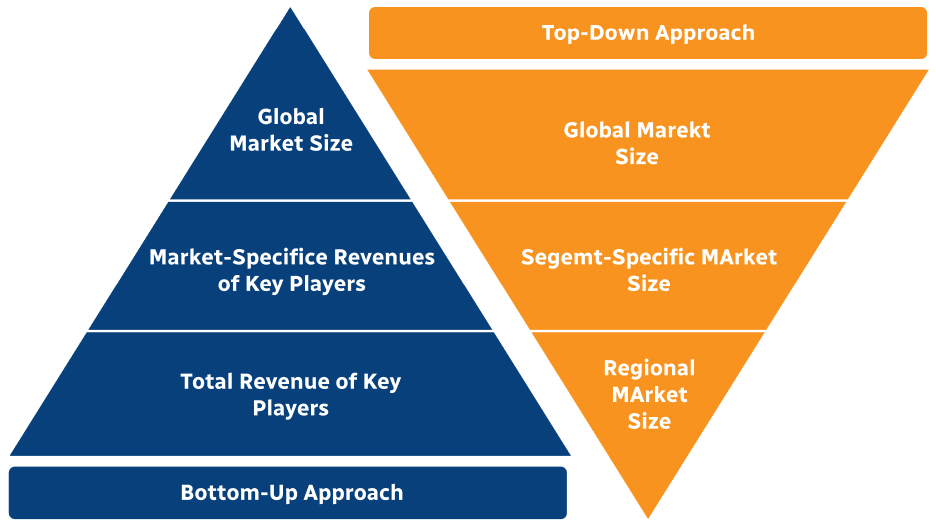
Step 2 - Approaches for Defining Global Market Size (Value, Volume* & Price*)
Note*: In applicable scenarios
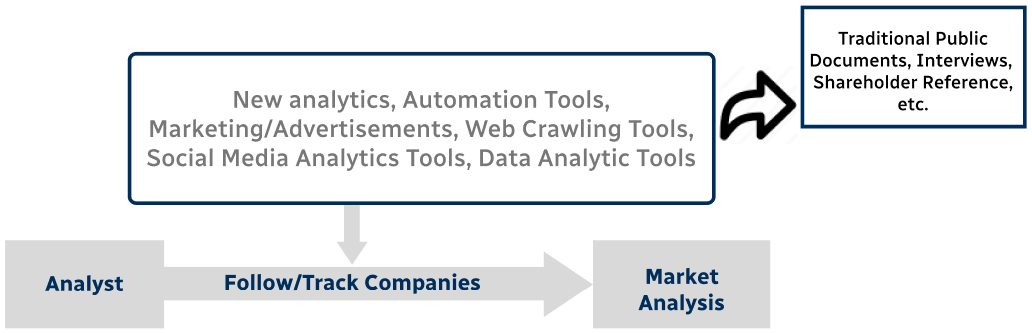
Step 3 - Data Sources
Primary Research
- Web Analytics
- Survey Reports
- Research Institute
- Latest Research Reports
- Opinion Leaders
Secondary Research
- Annual Reports
- White Paper
- Latest Press Release
- Industry Association
- Paid Database
- Investor Presentations
Step 4 - Data Triangulation
Involves using different sources of information in order to increase the validity of a study
These sources are likely to be stakeholders in a program - participants, other researchers, program staff, other community members, and so on.
Then we put all data in single framework & apply various statistical tools to find out the dynamic on the market.
During the analysis stage, feedback from the stakeholder groups would be compared to determine areas of agreement as well as areas of divergence