


Key Insights
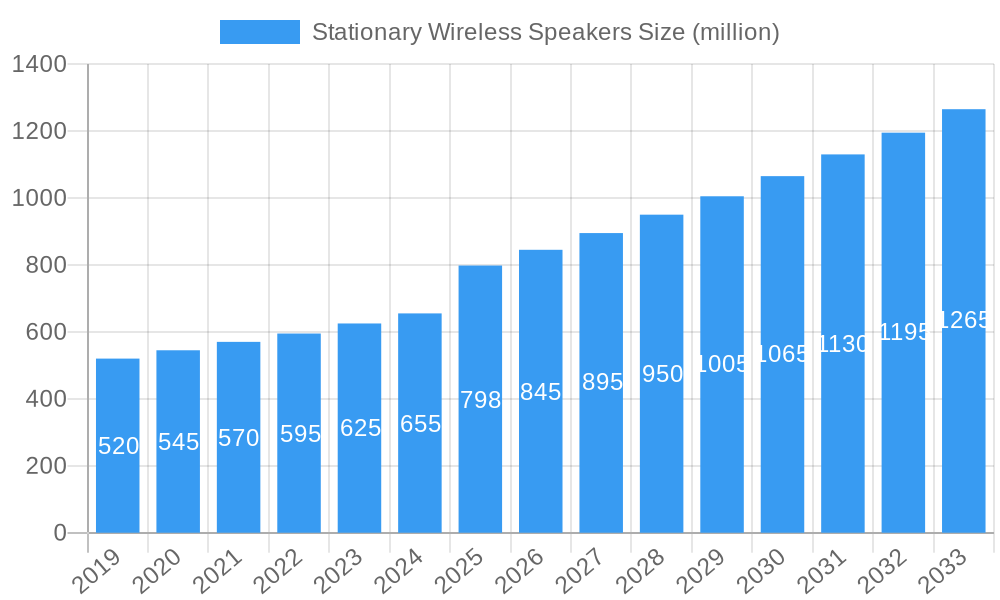
The global market for Stationary Wireless Speakers is projected for robust expansion, poised to reach an estimated $798 million by 2025. This growth is fueled by a compelling Compound Annual Growth Rate (CAGR) of 5.7% anticipated over the forecast period of 2025-2033. A primary driver of this upward trajectory is the increasing consumer demand for high-fidelity audio experiences coupled with the convenience and aesthetic appeal of wireless technology. The proliferation of smart home ecosystems further bolsters the market, as these speakers are increasingly integrated into connected living spaces, offering seamless control and enhanced functionality. Both online and offline sales channels are expected to witness substantial growth, catering to diverse consumer purchasing habits. The adoption of Bluetooth and Wi-Fi connectivity will continue to dominate, providing users with versatile and reliable audio streaming options.
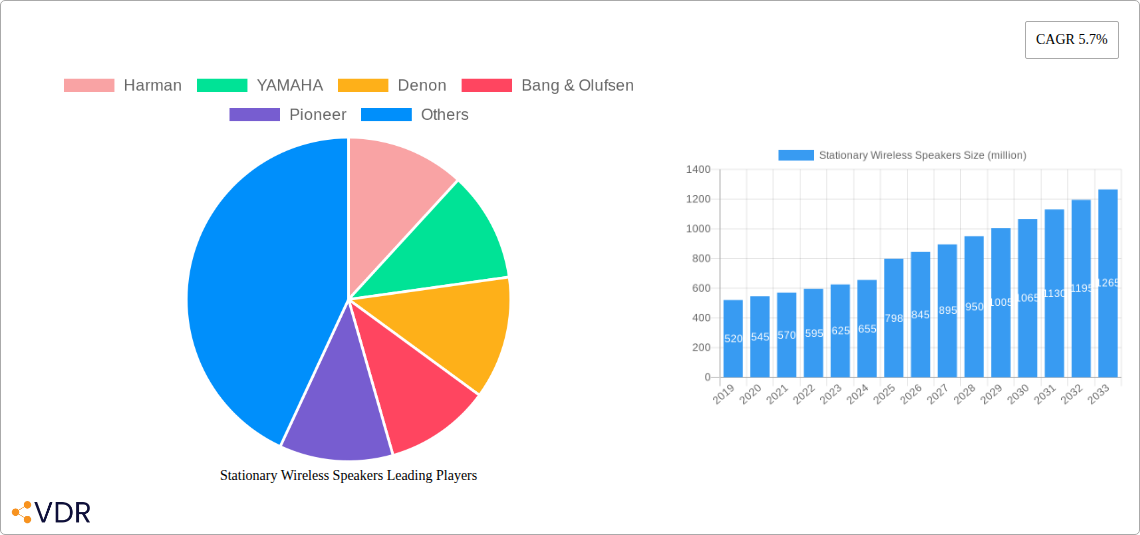
Stationary Wireless Speakers Market Size (In Million)

The competitive landscape for stationary wireless speakers is dynamic, featuring established giants such as Harman, YAMAHA, Denon, and Bang & Olufsen, alongside innovative players like Edifier and Devialet. These companies are continuously investing in research and development to introduce advanced features, superior sound quality, and aesthetically pleasing designs, thereby capturing a larger market share. Emerging economies in the Asia Pacific region, particularly China and India, are anticipated to be significant growth engines due to a rising disposable income and a burgeoning middle class with a penchant for premium audio products. While the market is characterized by strong demand, potential restraints could emerge from increasing price sensitivity in certain segments and the need for continuous innovation to stay ahead of rapid technological advancements and evolving consumer preferences.
Stationary Wireless Speakers Company Market Share
Stationary Wireless Speakers Market Dynamics & Structure
The stationary wireless speakers market is characterized by a moderately concentrated landscape, driven by continuous technological innovation and evolving consumer demand for premium audio experiences. Key players like Harman, YAMAHA, Denon, Bang & Olufsen, Pioneer, Edifier, Devialet, Sennheiser, Ultimate Ears, Terratec, and Naim Audio are actively investing in research and development to enhance audio fidelity, connectivity options, and smart home integration. Regulatory frameworks are largely supportive, with a focus on wireless spectrum allocation and product safety standards. Competitive product substitutes, including wired speaker systems and portable Bluetooth speakers, present a dynamic competitive environment, although stationary wireless speakers offer a distinct blend of convenience and audio performance. End-user demographics are shifting towards younger, tech-savvy consumers and audiophiles seeking high-quality, multi-room audio solutions. Mergers and acquisitions (M&A) activity remains a significant trend, with larger conglomerates acquiring niche brands to expand their product portfolios and market reach. For instance, the acquisition of specific audio brands by major tech companies has been observed, indicating a consolidation trend aimed at capturing market share and technological expertise.
- Market Concentration: Moderately concentrated, with a few dominant players and several niche manufacturers.
- Technological Innovation Drivers: Advancements in Bluetooth and Wi-Fi connectivity, multi-room audio technology, AI integration for voice control, and high-resolution audio codecs.
- Regulatory Frameworks: Focus on wireless spectrum, energy efficiency, and consumer electronics safety standards.
- Competitive Product Substitutes: Wired speaker systems, portable Bluetooth speakers, soundbars.
- End-User Demographics: Tech-savvy millennials and Gen Z, audiophiles, smart home enthusiasts.
- M&A Trends: Strategic acquisitions to expand product portfolios and gain market share.
Stationary Wireless Speakers Growth Trends & Insights
The global stationary wireless speakers market is poised for robust expansion, projected to witness a Compound Annual Growth Rate (CAGR) of approximately 8.5% from 2025 to 2033. This growth will be propelled by a substantial increase in market size, estimated to grow from $12.5 billion in 2025 to over $23.8 billion by 2033. The adoption rates for wireless audio solutions are surging, driven by the seamless integration of smart home ecosystems and the growing demand for high-fidelity audio experiences in residential spaces. Technological disruptions are continuously reshaping the landscape, with advancements in Wi-Fi 7, Bluetooth 5.3, and the proliferation of lossless audio streaming services significantly enhancing sound quality and connectivity reliability. Consumer behavior is shifting towards prioritizing convenience, immersive audio, and aesthetically pleasing designs that complement modern home décor. The increasing penetration of smart assistants like Amazon Alexa and Google Assistant into everyday lives further fuels the demand for voice-controlled wireless speaker systems. The historical period from 2019 to 2024 saw steady growth, with the market size reaching an estimated $11.8 billion in 2024, laying a strong foundation for future expansion. The base year of 2025 marks a pivotal point, with significant market penetration expected across developed and emerging economies. The forecast period from 2025 to 2033 anticipates accelerated adoption due to decreasing product costs, expanding feature sets, and a wider availability of high-quality streaming content. Market penetration, currently around 65% in developed regions, is expected to climb to over 80% by 2033, reflecting a broad consumer embrace of this technology.
Dominant Regions, Countries, or Segments in Stationary Wireless Speakers
North America, particularly the United States, is projected to maintain its dominance in the global stationary wireless speakers market, driven by a combination of strong economic policies, advanced technological infrastructure, and a high disposable income among its consumer base. The region's market share is estimated to be around 35% in 2025, with significant contributions from both online and offline sales channels. The prevalence of early technology adoption and a mature smart home ecosystem further solidify North America's leading position.
Within the Application segment, Online Sales are expected to exhibit a higher growth rate compared to Offline Sales, driven by the convenience of e-commerce platforms and the increasing preference for direct-to-consumer purchasing. Online sales are anticipated to account for approximately 55% of the total market revenue in 2025, with a projected CAGR of 9.2% through 2033. This growth is fueled by extensive product variety, competitive pricing, and efficient delivery networks.
In terms of Types, Wi-Fi speakers are predicted to outpace Bluetooth speakers in terms of revenue growth and market penetration in the stationary segment. While Bluetooth speakers, estimated to hold a 45% market share in 2025, offer portability and ease of use, Wi-Fi speakers provide superior audio quality, multi-room synchronization capabilities, and seamless integration with home networks, making them the preferred choice for stationary audio setups. Wi-Fi speakers are expected to capture a 55% market share by 2025 and grow at a CAGR of 8.8% through 2033. The availability of high-resolution audio streaming services and the growing adoption of smart home hubs further bolster the demand for Wi-Fi-enabled stationary wireless speakers.
- Leading Region: North America (primarily USA).
- Key Drivers in North America: High disposable income, advanced tech infrastructure, strong smart home ecosystem, early technology adoption.
- Dominant Application Segment: Online Sales.
- Growth Drivers for Online Sales: E-commerce convenience, direct-to-consumer models, competitive pricing, efficient logistics.
- Dominant Type Segment: Wi-Fi speakers.
- Growth Drivers for Wi-Fi Speakers: Superior audio quality, multi-room capabilities, smart home integration, lossless audio support.
Stationary Wireless Speakers Product Landscape
The stationary wireless speakers product landscape is defined by continuous innovation aimed at delivering superior audio fidelity, enhanced connectivity, and seamless user experiences. Manufacturers are increasingly focusing on integrating advanced acoustic technologies, such as custom-engineered drivers, passive radiators, and spatial audio support, to produce immersive and room-filling sound. Key product innovations include the adoption of next-generation Bluetooth codecs (e.g., aptX Lossless, LDAC) and Wi-Fi standards (e.g., Wi-Fi 6/6E) for uncompromised wireless audio transmission. Furthermore, the integration of AI-powered voice assistants and smart home platform compatibility (e.g., Apple HomeKit, Google Assistant, Amazon Alexa) is becoming a standard feature, offering intuitive control and personalized listening experiences. Products are also evolving to include multi-room audio capabilities, allowing users to synchronize multiple speakers throughout their homes for a cohesive audio experience. Performance metrics such as signal-to-noise ratio, frequency response, and total harmonic distortion are key differentiators, with premium brands pushing the boundaries of audio accuracy. Unique selling propositions often revolve around artisanal design, premium build materials, and proprietary sound tuning technologies.
Key Drivers, Barriers & Challenges in Stationary Wireless Speakers
Key Drivers:
- Technological Advancements: Continuous improvements in wireless connectivity (Bluetooth, Wi-Fi), audio codecs, and smart home integration are enhancing performance and user experience.
- Growing Demand for Premium Audio: Consumers are increasingly seeking high-fidelity sound and immersive audio experiences for entertainment and home use.
- Smart Home Ecosystem Expansion: The proliferation of smart home devices and voice assistants fuels demand for seamlessly integrated wireless speakers.
- Increasing Disposable Income: Rising global incomes enable consumers to invest in higher-priced, feature-rich audio equipment.
Barriers & Challenges:
- Supply Chain Disruptions: Global semiconductor shortages and logistics issues can impact production volumes and lead times, affecting product availability.
- High Cost of Premium Components: Advanced audio drivers, processing chips, and premium materials contribute to higher manufacturing costs, potentially limiting affordability for some segments.
- Intense Market Competition: A crowded market with established brands and emerging players necessitates continuous innovation and competitive pricing strategies.
- Evolving Consumer Preferences: Rapid shifts in consumer tastes and the emergence of new audio technologies require manufacturers to remain agile and responsive.
- Interoperability Issues: Ensuring seamless compatibility across different brands and platforms can be a persistent challenge for manufacturers.
Emerging Opportunities in Stationary Wireless Speakers
Emerging opportunities in the stationary wireless speakers market lie in the untapped potential of developing economies, where the adoption of premium audio technology is still in its nascent stages. The growing middle class in regions like Southeast Asia and Latin America presents a significant opportunity for market expansion. Furthermore, the integration of advanced AI features beyond basic voice commands, such as personalized sound profiles based on user habits or environmental acoustics, offers a unique value proposition. The development of eco-friendly and sustainable speaker designs, utilizing recycled materials and energy-efficient technologies, aligns with growing consumer consciousness and presents another avenue for innovation. The expansion of dedicated home theater systems leveraging wireless rear speakers and soundbars, providing a more immersive cinematic experience without complex wiring, is also a promising niche.
Growth Accelerators in the Stationary Wireless Speakers Industry
Several catalysts are accelerating the long-term growth of the stationary wireless speakers industry. Technological breakthroughs in digital signal processing (DSP) are enabling manufacturers to achieve unprecedented levels of audio clarity and dynamic range, setting new benchmarks for sound quality. Strategic partnerships between audio technology companies and major streaming service providers are leading to optimized playback experiences and bundled offers, further incentivizing consumers to invest in high-quality wireless audio hardware. Market expansion strategies, including the development of more affordable yet feature-rich product lines and targeted marketing campaigns in emerging markets, are crucial for broadening the consumer base. The increasing consumer awareness of the benefits of high-resolution audio and multi-room audio systems, coupled with the ongoing miniaturization and cost reduction of advanced wireless components, are also significant growth accelerators.
Key Players Shaping the Stationary Wireless Speakers Market
- Harman
- YAMAHA
- Denon
- Bang & Olufsen
- Pioneer
- Edifier
- Devialet
- Sennheiser
- Ultimate Ears
- Terratec
- Naim Audio
Notable Milestones in Stationary Wireless Speakers Sector
- 2019: Introduction of Wi-Fi 6 standard, enabling faster and more stable wireless connections, benefiting multi-room audio.
- 2020: Widespread adoption of voice assistants (Alexa, Google Assistant) as standard features in mid-range to high-end stationary wireless speakers.
- 2021: Increased focus on sustainable materials and eco-friendly manufacturing processes by several key brands.
- 2022: Advancements in lossless audio streaming technology leading to higher demand for speakers capable of reproducing Hi-Res audio.
- 2023: Launch of new proprietary spatial audio technologies by major players to enhance immersive sound experiences.
- Early 2024: Significant M&A activity within the premium audio segment, leading to consolidation and expanded product portfolios.
In-Depth Stationary Wireless Speakers Market Outlook
The future outlook for the stationary wireless speakers market is exceptionally promising, driven by a confluence of sustained technological innovation and evolving consumer desires for superior audio experiences. Growth accelerators, including the relentless pursuit of acoustic perfection through advanced DSP and the strategic integration of AI for personalized sound, will continue to redefine product capabilities. The industry is poised for significant expansion, with key players actively forging partnerships with streaming services and expanding into underserved geographical markets. The continuous evolution of wireless connectivity standards, coupled with the increasing affordability of high-fidelity components, will democratize access to premium audio, ensuring a robust trajectory for market growth and innovation in the coming years.
Stationary Wireless Speakers Segmentation
-
1. Application
- 1.1. Online Sales
- 1.2. Offline Sales
-
2. Types
- 2.1. Bluetooth
- 2.2. Wifi
Stationary Wireless Speakers Segmentation By Geography
-
1. North America
- 1.1. United States
- 1.2. Canada
- 1.3. Mexico
-
2. South America
- 2.1. Brazil
- 2.2. Argentina
- 2.3. Rest of South America
-
3. Europe
- 3.1. United Kingdom
- 3.2. Germany
- 3.3. France
- 3.4. Italy
- 3.5. Spain
- 3.6. Russia
- 3.7. Benelux
- 3.8. Nordics
- 3.9. Rest of Europe
-
4. Middle East & Africa
- 4.1. Turkey
- 4.2. Israel
- 4.3. GCC
- 4.4. North Africa
- 4.5. South Africa
- 4.6. Rest of Middle East & Africa
-
5. Asia Pacific
- 5.1. China
- 5.2. India
- 5.3. Japan
- 5.4. South Korea
- 5.5. ASEAN
- 5.6. Oceania
- 5.7. Rest of Asia Pacific
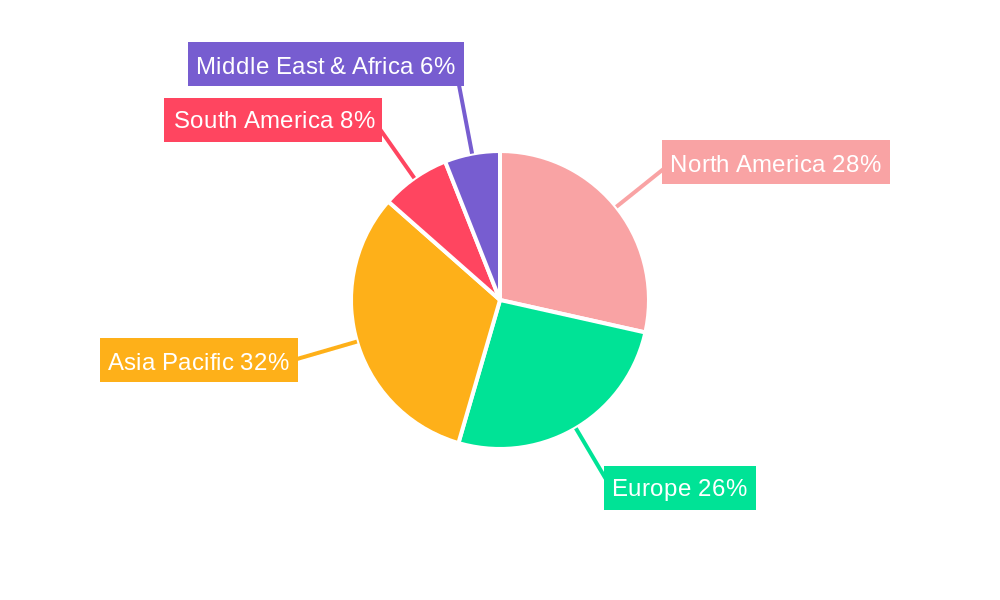
Stationary Wireless Speakers Regional Market Share
Geographic Coverage of Stationary Wireless Speakers
Stationary Wireless Speakers REPORT HIGHLIGHTS
| Aspects | Details |
|---|---|
| Study Period | 2020-2034 |
| Base Year | 2025 |
| Estimated Year | 2026 |
| Forecast Period | 2026-2034 |
| Historical Period | 2020-2025 |
| Growth Rate | CAGR of 12.01% from 2020-2034 |
| Segmentation |
|
Table of Contents
- 1. Introduction
- 1.1. Research Scope
- 1.2. Market Segmentation
- 1.3. Research Methodology
- 1.4. Definitions and Assumptions
- 2. Executive Summary
- 2.1. Introduction
- 3. Market Dynamics
- 3.1. Introduction
- 3.2. Market Drivers
- 3.3. Market Restrains
- 3.4. Market Trends
- 4. Market Factor Analysis
- 4.1. Porters Five Forces
- 4.2. Supply/Value Chain
- 4.3. PESTEL analysis
- 4.4. Market Entropy
- 4.5. Patent/Trademark Analysis
- 5. Global Stationary Wireless Speakers Analysis, Insights and Forecast, 2020-2032
- 5.1. Market Analysis, Insights and Forecast - by Application
- 5.1.1. Online Sales
- 5.1.2. Offline Sales
- 5.2. Market Analysis, Insights and Forecast - by Types
- 5.2.1. Bluetooth
- 5.2.2. Wifi
- 5.3. Market Analysis, Insights and Forecast - by Region
- 5.3.1. North America
- 5.3.2. South America
- 5.3.3. Europe
- 5.3.4. Middle East & Africa
- 5.3.5. Asia Pacific
- 5.1. Market Analysis, Insights and Forecast - by Application
- 6. North America Stationary Wireless Speakers Analysis, Insights and Forecast, 2020-2032
- 6.1. Market Analysis, Insights and Forecast - by Application
- 6.1.1. Online Sales
- 6.1.2. Offline Sales
- 6.2. Market Analysis, Insights and Forecast - by Types
- 6.2.1. Bluetooth
- 6.2.2. Wifi
- 6.1. Market Analysis, Insights and Forecast - by Application
- 7. South America Stationary Wireless Speakers Analysis, Insights and Forecast, 2020-2032
- 7.1. Market Analysis, Insights and Forecast - by Application
- 7.1.1. Online Sales
- 7.1.2. Offline Sales
- 7.2. Market Analysis, Insights and Forecast - by Types
- 7.2.1. Bluetooth
- 7.2.2. Wifi
- 7.1. Market Analysis, Insights and Forecast - by Application
- 8. Europe Stationary Wireless Speakers Analysis, Insights and Forecast, 2020-2032
- 8.1. Market Analysis, Insights and Forecast - by Application
- 8.1.1. Online Sales
- 8.1.2. Offline Sales
- 8.2. Market Analysis, Insights and Forecast - by Types
- 8.2.1. Bluetooth
- 8.2.2. Wifi
- 8.1. Market Analysis, Insights and Forecast - by Application
- 9. Middle East & Africa Stationary Wireless Speakers Analysis, Insights and Forecast, 2020-2032
- 9.1. Market Analysis, Insights and Forecast - by Application
- 9.1.1. Online Sales
- 9.1.2. Offline Sales
- 9.2. Market Analysis, Insights and Forecast - by Types
- 9.2.1. Bluetooth
- 9.2.2. Wifi
- 9.1. Market Analysis, Insights and Forecast - by Application
- 10. Asia Pacific Stationary Wireless Speakers Analysis, Insights and Forecast, 2020-2032
- 10.1. Market Analysis, Insights and Forecast - by Application
- 10.1.1. Online Sales
- 10.1.2. Offline Sales
- 10.2. Market Analysis, Insights and Forecast - by Types
- 10.2.1. Bluetooth
- 10.2.2. Wifi
- 10.1. Market Analysis, Insights and Forecast - by Application
- 11. Competitive Analysis
- 11.1. Global Market Share Analysis 2025
- 11.2. Company Profiles
- 11.2.1 Harman
- 11.2.1.1. Overview
- 11.2.1.2. Products
- 11.2.1.3. SWOT Analysis
- 11.2.1.4. Recent Developments
- 11.2.1.5. Financials (Based on Availability)
- 11.2.2 YAMAHA
- 11.2.2.1. Overview
- 11.2.2.2. Products
- 11.2.2.3. SWOT Analysis
- 11.2.2.4. Recent Developments
- 11.2.2.5. Financials (Based on Availability)
- 11.2.3 Denon
- 11.2.3.1. Overview
- 11.2.3.2. Products
- 11.2.3.3. SWOT Analysis
- 11.2.3.4. Recent Developments
- 11.2.3.5. Financials (Based on Availability)
- 11.2.4 Bang & Olufsen
- 11.2.4.1. Overview
- 11.2.4.2. Products
- 11.2.4.3. SWOT Analysis
- 11.2.4.4. Recent Developments
- 11.2.4.5. Financials (Based on Availability)
- 11.2.5 Pioneer
- 11.2.5.1. Overview
- 11.2.5.2. Products
- 11.2.5.3. SWOT Analysis
- 11.2.5.4. Recent Developments
- 11.2.5.5. Financials (Based on Availability)
- 11.2.6 Edifier
- 11.2.6.1. Overview
- 11.2.6.2. Products
- 11.2.6.3. SWOT Analysis
- 11.2.6.4. Recent Developments
- 11.2.6.5. Financials (Based on Availability)
- 11.2.7 Devialet
- 11.2.7.1. Overview
- 11.2.7.2. Products
- 11.2.7.3. SWOT Analysis
- 11.2.7.4. Recent Developments
- 11.2.7.5. Financials (Based on Availability)
- 11.2.8 Sennheiser
- 11.2.8.1. Overview
- 11.2.8.2. Products
- 11.2.8.3. SWOT Analysis
- 11.2.8.4. Recent Developments
- 11.2.8.5. Financials (Based on Availability)
- 11.2.9 Ultimate Ears
- 11.2.9.1. Overview
- 11.2.9.2. Products
- 11.2.9.3. SWOT Analysis
- 11.2.9.4. Recent Developments
- 11.2.9.5. Financials (Based on Availability)
- 11.2.10 Terratec
- 11.2.10.1. Overview
- 11.2.10.2. Products
- 11.2.10.3. SWOT Analysis
- 11.2.10.4. Recent Developments
- 11.2.10.5. Financials (Based on Availability)
- 11.2.11 Naim Audio
- 11.2.11.1. Overview
- 11.2.11.2. Products
- 11.2.11.3. SWOT Analysis
- 11.2.11.4. Recent Developments
- 11.2.11.5. Financials (Based on Availability)
- 11.2.1 Harman
List of Figures
- Figure 1: Global Stationary Wireless Speakers Revenue Breakdown (undefined, %) by Region 2025 & 2033
- Figure 2: Global Stationary Wireless Speakers Volume Breakdown (K, %) by Region 2025 & 2033
- Figure 3: North America Stationary Wireless Speakers Revenue (undefined), by Application 2025 & 2033
- Figure 4: North America Stationary Wireless Speakers Volume (K), by Application 2025 & 2033
- Figure 5: North America Stationary Wireless Speakers Revenue Share (%), by Application 2025 & 2033
- Figure 6: North America Stationary Wireless Speakers Volume Share (%), by Application 2025 & 2033
- Figure 7: North America Stationary Wireless Speakers Revenue (undefined), by Types 2025 & 2033
- Figure 8: North America Stationary Wireless Speakers Volume (K), by Types 2025 & 2033
- Figure 9: North America Stationary Wireless Speakers Revenue Share (%), by Types 2025 & 2033
- Figure 10: North America Stationary Wireless Speakers Volume Share (%), by Types 2025 & 2033
- Figure 11: North America Stationary Wireless Speakers Revenue (undefined), by Country 2025 & 2033
- Figure 12: North America Stationary Wireless Speakers Volume (K), by Country 2025 & 2033
- Figure 13: North America Stationary Wireless Speakers Revenue Share (%), by Country 2025 & 2033
- Figure 14: North America Stationary Wireless Speakers Volume Share (%), by Country 2025 & 2033
- Figure 15: South America Stationary Wireless Speakers Revenue (undefined), by Application 2025 & 2033
- Figure 16: South America Stationary Wireless Speakers Volume (K), by Application 2025 & 2033
- Figure 17: South America Stationary Wireless Speakers Revenue Share (%), by Application 2025 & 2033
- Figure 18: South America Stationary Wireless Speakers Volume Share (%), by Application 2025 & 2033
- Figure 19: South America Stationary Wireless Speakers Revenue (undefined), by Types 2025 & 2033
- Figure 20: South America Stationary Wireless Speakers Volume (K), by Types 2025 & 2033
- Figure 21: South America Stationary Wireless Speakers Revenue Share (%), by Types 2025 & 2033
- Figure 22: South America Stationary Wireless Speakers Volume Share (%), by Types 2025 & 2033
- Figure 23: South America Stationary Wireless Speakers Revenue (undefined), by Country 2025 & 2033
- Figure 24: South America Stationary Wireless Speakers Volume (K), by Country 2025 & 2033
- Figure 25: South America Stationary Wireless Speakers Revenue Share (%), by Country 2025 & 2033
- Figure 26: South America Stationary Wireless Speakers Volume Share (%), by Country 2025 & 2033
- Figure 27: Europe Stationary Wireless Speakers Revenue (undefined), by Application 2025 & 2033
- Figure 28: Europe Stationary Wireless Speakers Volume (K), by Application 2025 & 2033
- Figure 29: Europe Stationary Wireless Speakers Revenue Share (%), by Application 2025 & 2033
- Figure 30: Europe Stationary Wireless Speakers Volume Share (%), by Application 2025 & 2033
- Figure 31: Europe Stationary Wireless Speakers Revenue (undefined), by Types 2025 & 2033
- Figure 32: Europe Stationary Wireless Speakers Volume (K), by Types 2025 & 2033
- Figure 33: Europe Stationary Wireless Speakers Revenue Share (%), by Types 2025 & 2033
- Figure 34: Europe Stationary Wireless Speakers Volume Share (%), by Types 2025 & 2033
- Figure 35: Europe Stationary Wireless Speakers Revenue (undefined), by Country 2025 & 2033
- Figure 36: Europe Stationary Wireless Speakers Volume (K), by Country 2025 & 2033
- Figure 37: Europe Stationary Wireless Speakers Revenue Share (%), by Country 2025 & 2033
- Figure 38: Europe Stationary Wireless Speakers Volume Share (%), by Country 2025 & 2033
- Figure 39: Middle East & Africa Stationary Wireless Speakers Revenue (undefined), by Application 2025 & 2033
- Figure 40: Middle East & Africa Stationary Wireless Speakers Volume (K), by Application 2025 & 2033
- Figure 41: Middle East & Africa Stationary Wireless Speakers Revenue Share (%), by Application 2025 & 2033
- Figure 42: Middle East & Africa Stationary Wireless Speakers Volume Share (%), by Application 2025 & 2033
- Figure 43: Middle East & Africa Stationary Wireless Speakers Revenue (undefined), by Types 2025 & 2033
- Figure 44: Middle East & Africa Stationary Wireless Speakers Volume (K), by Types 2025 & 2033
- Figure 45: Middle East & Africa Stationary Wireless Speakers Revenue Share (%), by Types 2025 & 2033
- Figure 46: Middle East & Africa Stationary Wireless Speakers Volume Share (%), by Types 2025 & 2033
- Figure 47: Middle East & Africa Stationary Wireless Speakers Revenue (undefined), by Country 2025 & 2033
- Figure 48: Middle East & Africa Stationary Wireless Speakers Volume (K), by Country 2025 & 2033
- Figure 49: Middle East & Africa Stationary Wireless Speakers Revenue Share (%), by Country 2025 & 2033
- Figure 50: Middle East & Africa Stationary Wireless Speakers Volume Share (%), by Country 2025 & 2033
- Figure 51: Asia Pacific Stationary Wireless Speakers Revenue (undefined), by Application 2025 & 2033
- Figure 52: Asia Pacific Stationary Wireless Speakers Volume (K), by Application 2025 & 2033
- Figure 53: Asia Pacific Stationary Wireless Speakers Revenue Share (%), by Application 2025 & 2033
- Figure 54: Asia Pacific Stationary Wireless Speakers Volume Share (%), by Application 2025 & 2033
- Figure 55: Asia Pacific Stationary Wireless Speakers Revenue (undefined), by Types 2025 & 2033
- Figure 56: Asia Pacific Stationary Wireless Speakers Volume (K), by Types 2025 & 2033
- Figure 57: Asia Pacific Stationary Wireless Speakers Revenue Share (%), by Types 2025 & 2033
- Figure 58: Asia Pacific Stationary Wireless Speakers Volume Share (%), by Types 2025 & 2033
- Figure 59: Asia Pacific Stationary Wireless Speakers Revenue (undefined), by Country 2025 & 2033
- Figure 60: Asia Pacific Stationary Wireless Speakers Volume (K), by Country 2025 & 2033
- Figure 61: Asia Pacific Stationary Wireless Speakers Revenue Share (%), by Country 2025 & 2033
- Figure 62: Asia Pacific Stationary Wireless Speakers Volume Share (%), by Country 2025 & 2033
List of Tables
- Table 1: Global Stationary Wireless Speakers Revenue undefined Forecast, by Application 2020 & 2033
- Table 2: Global Stationary Wireless Speakers Volume K Forecast, by Application 2020 & 2033
- Table 3: Global Stationary Wireless Speakers Revenue undefined Forecast, by Types 2020 & 2033
- Table 4: Global Stationary Wireless Speakers Volume K Forecast, by Types 2020 & 2033
- Table 5: Global Stationary Wireless Speakers Revenue undefined Forecast, by Region 2020 & 2033
- Table 6: Global Stationary Wireless Speakers Volume K Forecast, by Region 2020 & 2033
- Table 7: Global Stationary Wireless Speakers Revenue undefined Forecast, by Application 2020 & 2033
- Table 8: Global Stationary Wireless Speakers Volume K Forecast, by Application 2020 & 2033
- Table 9: Global Stationary Wireless Speakers Revenue undefined Forecast, by Types 2020 & 2033
- Table 10: Global Stationary Wireless Speakers Volume K Forecast, by Types 2020 & 2033
- Table 11: Global Stationary Wireless Speakers Revenue undefined Forecast, by Country 2020 & 2033
- Table 12: Global Stationary Wireless Speakers Volume K Forecast, by Country 2020 & 2033
- Table 13: United States Stationary Wireless Speakers Revenue (undefined) Forecast, by Application 2020 & 2033
- Table 14: United States Stationary Wireless Speakers Volume (K) Forecast, by Application 2020 & 2033
- Table 15: Canada Stationary Wireless Speakers Revenue (undefined) Forecast, by Application 2020 & 2033
- Table 16: Canada Stationary Wireless Speakers Volume (K) Forecast, by Application 2020 & 2033
- Table 17: Mexico Stationary Wireless Speakers Revenue (undefined) Forecast, by Application 2020 & 2033
- Table 18: Mexico Stationary Wireless Speakers Volume (K) Forecast, by Application 2020 & 2033
- Table 19: Global Stationary Wireless Speakers Revenue undefined Forecast, by Application 2020 & 2033
- Table 20: Global Stationary Wireless Speakers Volume K Forecast, by Application 2020 & 2033
- Table 21: Global Stationary Wireless Speakers Revenue undefined Forecast, by Types 2020 & 2033
- Table 22: Global Stationary Wireless Speakers Volume K Forecast, by Types 2020 & 2033
- Table 23: Global Stationary Wireless Speakers Revenue undefined Forecast, by Country 2020 & 2033
- Table 24: Global Stationary Wireless Speakers Volume K Forecast, by Country 2020 & 2033
- Table 25: Brazil Stationary Wireless Speakers Revenue (undefined) Forecast, by Application 2020 & 2033
- Table 26: Brazil Stationary Wireless Speakers Volume (K) Forecast, by Application 2020 & 2033
- Table 27: Argentina Stationary Wireless Speakers Revenue (undefined) Forecast, by Application 2020 & 2033
- Table 28: Argentina Stationary Wireless Speakers Volume (K) Forecast, by Application 2020 & 2033
- Table 29: Rest of South America Stationary Wireless Speakers Revenue (undefined) Forecast, by Application 2020 & 2033
- Table 30: Rest of South America Stationary Wireless Speakers Volume (K) Forecast, by Application 2020 & 2033
- Table 31: Global Stationary Wireless Speakers Revenue undefined Forecast, by Application 2020 & 2033
- Table 32: Global Stationary Wireless Speakers Volume K Forecast, by Application 2020 & 2033
- Table 33: Global Stationary Wireless Speakers Revenue undefined Forecast, by Types 2020 & 2033
- Table 34: Global Stationary Wireless Speakers Volume K Forecast, by Types 2020 & 2033
- Table 35: Global Stationary Wireless Speakers Revenue undefined Forecast, by Country 2020 & 2033
- Table 36: Global Stationary Wireless Speakers Volume K Forecast, by Country 2020 & 2033
- Table 37: United Kingdom Stationary Wireless Speakers Revenue (undefined) Forecast, by Application 2020 & 2033
- Table 38: United Kingdom Stationary Wireless Speakers Volume (K) Forecast, by Application 2020 & 2033
- Table 39: Germany Stationary Wireless Speakers Revenue (undefined) Forecast, by Application 2020 & 2033
- Table 40: Germany Stationary Wireless Speakers Volume (K) Forecast, by Application 2020 & 2033
- Table 41: France Stationary Wireless Speakers Revenue (undefined) Forecast, by Application 2020 & 2033
- Table 42: France Stationary Wireless Speakers Volume (K) Forecast, by Application 2020 & 2033
- Table 43: Italy Stationary Wireless Speakers Revenue (undefined) Forecast, by Application 2020 & 2033
- Table 44: Italy Stationary Wireless Speakers Volume (K) Forecast, by Application 2020 & 2033
- Table 45: Spain Stationary Wireless Speakers Revenue (undefined) Forecast, by Application 2020 & 2033
- Table 46: Spain Stationary Wireless Speakers Volume (K) Forecast, by Application 2020 & 2033
- Table 47: Russia Stationary Wireless Speakers Revenue (undefined) Forecast, by Application 2020 & 2033
- Table 48: Russia Stationary Wireless Speakers Volume (K) Forecast, by Application 2020 & 2033
- Table 49: Benelux Stationary Wireless Speakers Revenue (undefined) Forecast, by Application 2020 & 2033
- Table 50: Benelux Stationary Wireless Speakers Volume (K) Forecast, by Application 2020 & 2033
- Table 51: Nordics Stationary Wireless Speakers Revenue (undefined) Forecast, by Application 2020 & 2033
- Table 52: Nordics Stationary Wireless Speakers Volume (K) Forecast, by Application 2020 & 2033
- Table 53: Rest of Europe Stationary Wireless Speakers Revenue (undefined) Forecast, by Application 2020 & 2033
- Table 54: Rest of Europe Stationary Wireless Speakers Volume (K) Forecast, by Application 2020 & 2033
- Table 55: Global Stationary Wireless Speakers Revenue undefined Forecast, by Application 2020 & 2033
- Table 56: Global Stationary Wireless Speakers Volume K Forecast, by Application 2020 & 2033
- Table 57: Global Stationary Wireless Speakers Revenue undefined Forecast, by Types 2020 & 2033
- Table 58: Global Stationary Wireless Speakers Volume K Forecast, by Types 2020 & 2033
- Table 59: Global Stationary Wireless Speakers Revenue undefined Forecast, by Country 2020 & 2033
- Table 60: Global Stationary Wireless Speakers Volume K Forecast, by Country 2020 & 2033
- Table 61: Turkey Stationary Wireless Speakers Revenue (undefined) Forecast, by Application 2020 & 2033
- Table 62: Turkey Stationary Wireless Speakers Volume (K) Forecast, by Application 2020 & 2033
- Table 63: Israel Stationary Wireless Speakers Revenue (undefined) Forecast, by Application 2020 & 2033
- Table 64: Israel Stationary Wireless Speakers Volume (K) Forecast, by Application 2020 & 2033
- Table 65: GCC Stationary Wireless Speakers Revenue (undefined) Forecast, by Application 2020 & 2033
- Table 66: GCC Stationary Wireless Speakers Volume (K) Forecast, by Application 2020 & 2033
- Table 67: North Africa Stationary Wireless Speakers Revenue (undefined) Forecast, by Application 2020 & 2033
- Table 68: North Africa Stationary Wireless Speakers Volume (K) Forecast, by Application 2020 & 2033
- Table 69: South Africa Stationary Wireless Speakers Revenue (undefined) Forecast, by Application 2020 & 2033
- Table 70: South Africa Stationary Wireless Speakers Volume (K) Forecast, by Application 2020 & 2033
- Table 71: Rest of Middle East & Africa Stationary Wireless Speakers Revenue (undefined) Forecast, by Application 2020 & 2033
- Table 72: Rest of Middle East & Africa Stationary Wireless Speakers Volume (K) Forecast, by Application 2020 & 2033
- Table 73: Global Stationary Wireless Speakers Revenue undefined Forecast, by Application 2020 & 2033
- Table 74: Global Stationary Wireless Speakers Volume K Forecast, by Application 2020 & 2033
- Table 75: Global Stationary Wireless Speakers Revenue undefined Forecast, by Types 2020 & 2033
- Table 76: Global Stationary Wireless Speakers Volume K Forecast, by Types 2020 & 2033
- Table 77: Global Stationary Wireless Speakers Revenue undefined Forecast, by Country 2020 & 2033
- Table 78: Global Stationary Wireless Speakers Volume K Forecast, by Country 2020 & 2033
- Table 79: China Stationary Wireless Speakers Revenue (undefined) Forecast, by Application 2020 & 2033
- Table 80: China Stationary Wireless Speakers Volume (K) Forecast, by Application 2020 & 2033
- Table 81: India Stationary Wireless Speakers Revenue (undefined) Forecast, by Application 2020 & 2033
- Table 82: India Stationary Wireless Speakers Volume (K) Forecast, by Application 2020 & 2033
- Table 83: Japan Stationary Wireless Speakers Revenue (undefined) Forecast, by Application 2020 & 2033
- Table 84: Japan Stationary Wireless Speakers Volume (K) Forecast, by Application 2020 & 2033
- Table 85: South Korea Stationary Wireless Speakers Revenue (undefined) Forecast, by Application 2020 & 2033
- Table 86: South Korea Stationary Wireless Speakers Volume (K) Forecast, by Application 2020 & 2033
- Table 87: ASEAN Stationary Wireless Speakers Revenue (undefined) Forecast, by Application 2020 & 2033
- Table 88: ASEAN Stationary Wireless Speakers Volume (K) Forecast, by Application 2020 & 2033
- Table 89: Oceania Stationary Wireless Speakers Revenue (undefined) Forecast, by Application 2020 & 2033
- Table 90: Oceania Stationary Wireless Speakers Volume (K) Forecast, by Application 2020 & 2033
- Table 91: Rest of Asia Pacific Stationary Wireless Speakers Revenue (undefined) Forecast, by Application 2020 & 2033
- Table 92: Rest of Asia Pacific Stationary Wireless Speakers Volume (K) Forecast, by Application 2020 & 2033
Frequently Asked Questions
1. What is the projected Compound Annual Growth Rate (CAGR) of the Stationary Wireless Speakers?
The projected CAGR is approximately 12.01%.
2. Which companies are prominent players in the Stationary Wireless Speakers?
Key companies in the market include Harman, YAMAHA, Denon, Bang & Olufsen, Pioneer, Edifier, Devialet, Sennheiser, Ultimate Ears, Terratec, Naim Audio.
3. What are the main segments of the Stationary Wireless Speakers?
The market segments include Application, Types.
4. Can you provide details about the market size?
The market size is estimated to be USD XXX N/A as of 2022.
5. What are some drivers contributing to market growth?
N/A
6. What are the notable trends driving market growth?
N/A
7. Are there any restraints impacting market growth?
N/A
8. Can you provide examples of recent developments in the market?
N/A
9. What pricing options are available for accessing the report?
Pricing options include single-user, multi-user, and enterprise licenses priced at USD 3350.00, USD 5025.00, and USD 6700.00 respectively.
10. Is the market size provided in terms of value or volume?
The market size is provided in terms of value, measured in N/A and volume, measured in K.
11. Are there any specific market keywords associated with the report?
Yes, the market keyword associated with the report is "Stationary Wireless Speakers," which aids in identifying and referencing the specific market segment covered.
12. How do I determine which pricing option suits my needs best?
The pricing options vary based on user requirements and access needs. Individual users may opt for single-user licenses, while businesses requiring broader access may choose multi-user or enterprise licenses for cost-effective access to the report.
13. Are there any additional resources or data provided in the Stationary Wireless Speakers report?
While the report offers comprehensive insights, it's advisable to review the specific contents or supplementary materials provided to ascertain if additional resources or data are available.
14. How can I stay updated on further developments or reports in the Stationary Wireless Speakers?
To stay informed about further developments, trends, and reports in the Stationary Wireless Speakers, consider subscribing to industry newsletters, following relevant companies and organizations, or regularly checking reputable industry news sources and publications.
Methodology
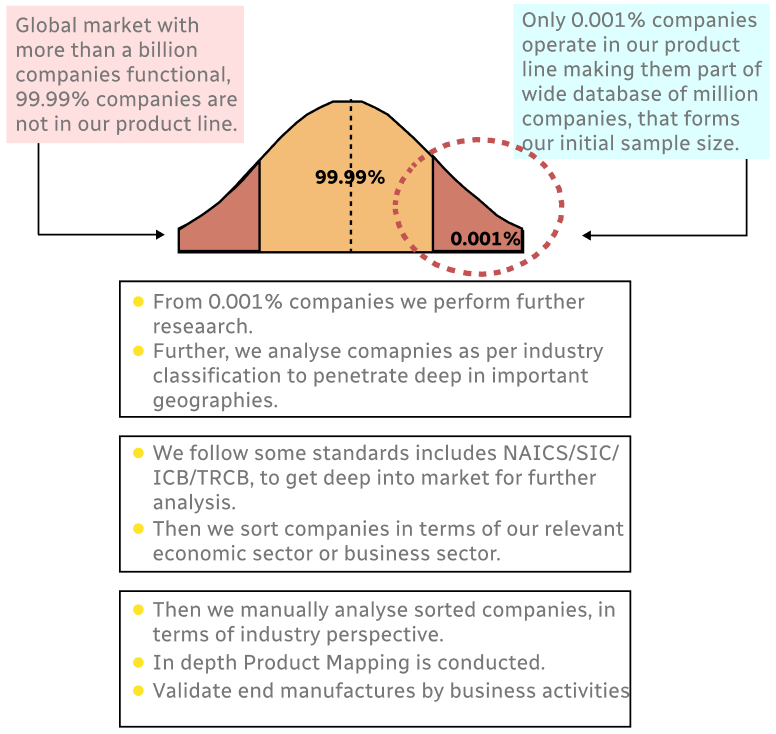
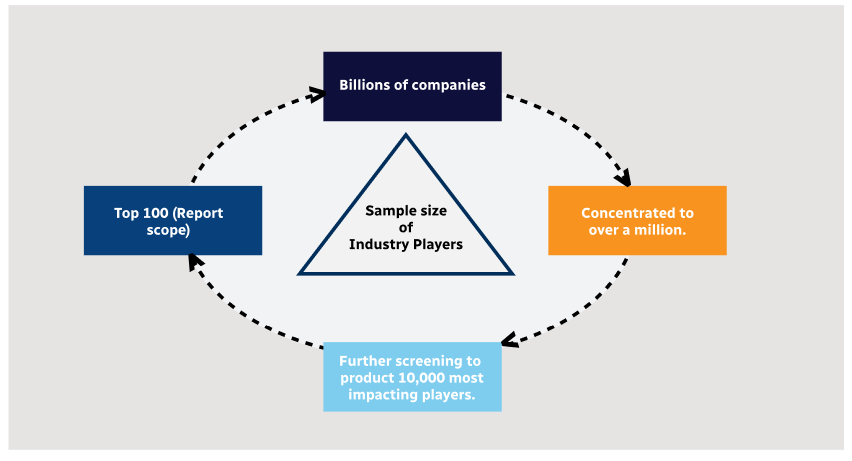
Step 1 - Identification of Relevant Samples Size from Population Database
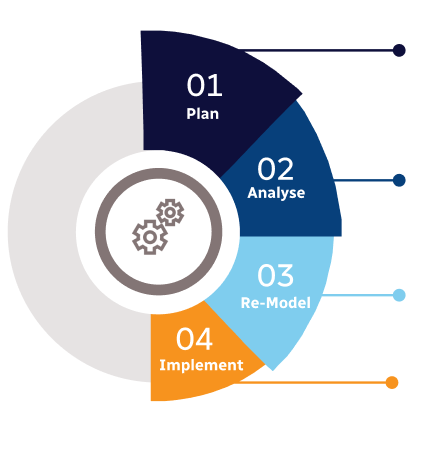
Step 2 - Approaches for Defining Global Market Size (Value, Volume* & Price*)
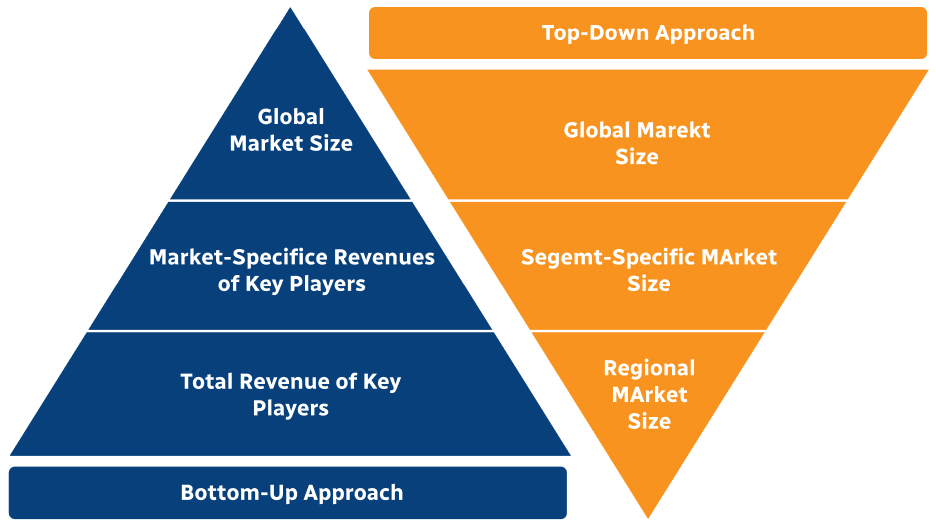
Note*: In applicable scenarios
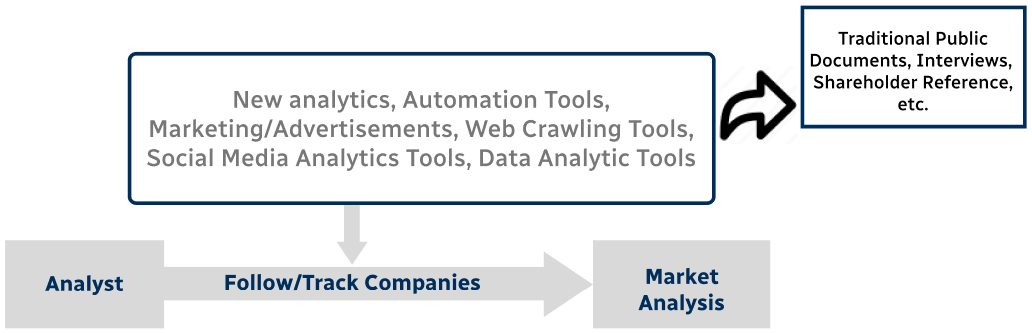
Step 3 - Data Sources
Primary Research
- Web Analytics
- Survey Reports
- Research Institute
- Latest Research Reports
- Opinion Leaders
Secondary Research
- Annual Reports
- White Paper
- Latest Press Release
- Industry Association
- Paid Database
- Investor Presentations
Step 4 - Data Triangulation
Involves using different sources of information in order to increase the validity of a study
These sources are likely to be stakeholders in a program - participants, other researchers, program staff, other community members, and so on.
Then we put all data in single framework & apply various statistical tools to find out the dynamic on the market.
During the analysis stage, feedback from the stakeholder groups would be compared to determine areas of agreement as well as areas of divergence