


Key Insights
The global Smart Contract Development Services market is poised for significant expansion, estimated at $15,500 million in 2025, with an anticipated Compound Annual Growth Rate (CAGR) of 23.5% through 2033. This robust growth trajectory is propelled by the increasing adoption of blockchain technology across diverse industries seeking enhanced security, transparency, and efficiency in their operations. Key drivers include the escalating demand for automated and tamper-proof agreements in sectors like finance and insurance, where smart contracts streamline processes such as claims processing and loan origination. The supply chain industry is also a major beneficiary, leveraging smart contracts for automated payments, inventory tracking, and dispute resolution, thereby minimizing operational complexities and reducing fraud. Furthermore, the growing need for secure and decentralized digital identities and the burgeoning metaverse and Web3 ecosystems are creating new avenues for smart contract utilization.
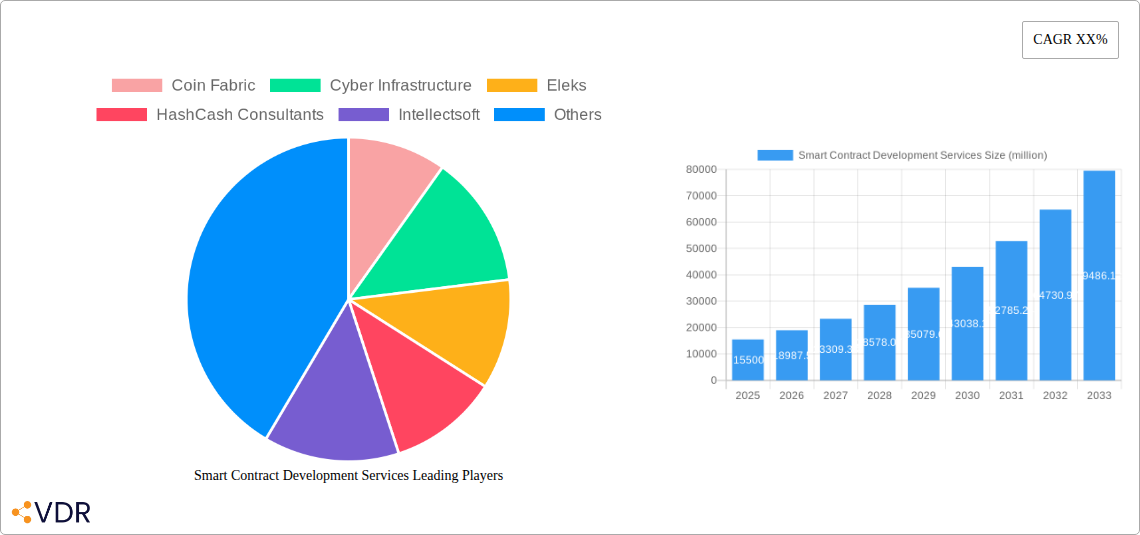
Smart Contract Development Services Market Size (In Billion)

The market's expansion is further fueled by an increasing focus on regulatory compliance and the desire to reduce transactional costs. While public blockchains offer unparalleled decentralization and transparency, private and consortium blockchains are gaining traction, particularly within enterprises that require greater control over network access and data privacy. The competitive landscape is characterized by a growing number of specialized service providers and technology firms like Coin Fabric, Eleks, and Intellectsoft, offering tailored smart contract solutions. Emerging trends such as the integration of AI with smart contracts for predictive analytics and the development of cross-chain interoperability solutions are expected to shape the market's future. However, challenges such as the complexity of smart contract auditing, the potential for coding errors, and evolving regulatory frameworks pose as restraints, necessitating continuous innovation and robust security practices from service providers.
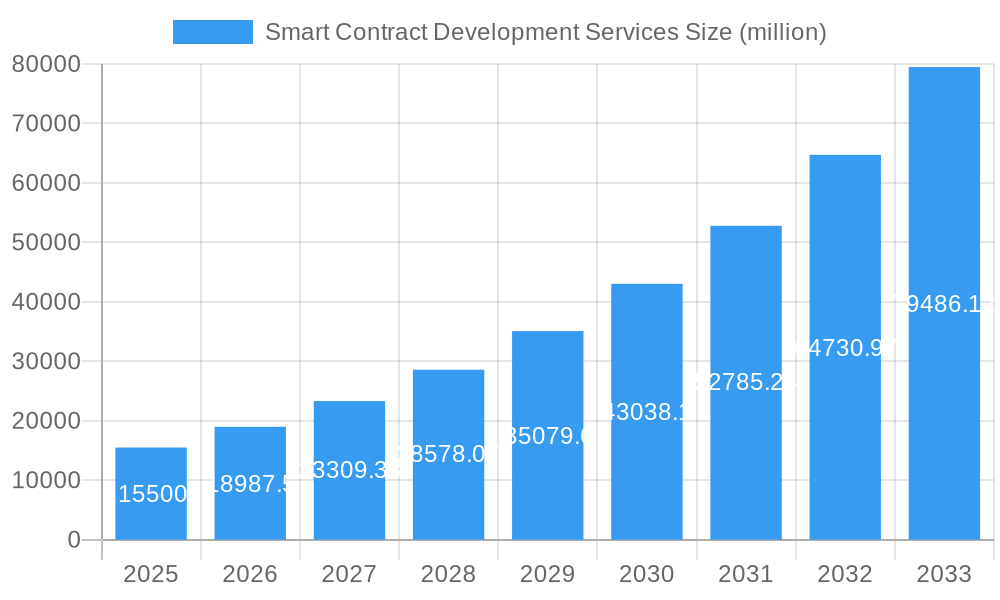
Smart Contract Development Services Company Market Share
This report offers an in-depth analysis of the global Smart Contract Development Services market, providing critical insights into market dynamics, growth trends, regional dominance, product landscape, key drivers and challenges, emerging opportunities, growth accelerators, and a comprehensive overview of key players and notable milestones. Leveraging extensive data spanning the historical period (2019-2024), base year (2025), and forecast period (2025-2033), this report is an indispensable resource for industry professionals seeking to understand and capitalize on the burgeoning smart contract ecosystem. The estimated market size for Smart Contract Development Services is projected to reach approximately XX million units by 2025, with a robust CAGR of XX% during the forecast period.
Smart Contract Development Services Market Dynamics & Structure
The Smart Contract Development Services market is characterized by a dynamic interplay of technological innovation, evolving regulatory landscapes, and a competitive product substitute environment. Market concentration is moderate, with a growing number of specialized service providers emerging alongside established blockchain development firms. Technological innovation is a primary driver, fueled by advancements in blockchain protocols, secure coding practices, and the increasing demand for automated, transparent, and secure transactions across various industries. Regulatory frameworks are still maturing globally, presenting both opportunities for compliant solutions and challenges related to legal clarity and standardization. Competitive product substitutes include traditional centralized systems and evolving decentralized application (dApp) development tools. End-user demographics are broadening, encompassing enterprises seeking to streamline operations, financial institutions exploring decentralized finance (DeFi) applications, and government agencies aiming for enhanced transparency and efficiency. Mergers and acquisitions (M&A) trends are observed as larger players seek to consolidate expertise and expand their service offerings in this rapidly growing sector.
- Market Concentration: Moderate, with a fragmented landscape of niche players and established IT service providers.
- Technological Innovation Drivers: Advancements in blockchain scalability, interoperability, and security protocols; rising demand for dApps and DeFi solutions.
- Regulatory Frameworks: Ongoing development and interpretation of regulations concerning smart contract enforceability and data privacy.
- Competitive Product Substitutes: Traditional legal contracts, escrow services, and off-chain automation solutions.
- End-User Demographics: Growing adoption across Financial Services, Healthcare, Supply Chain, and Government sectors.
- M&A Trends: Strategic acquisitions to gain market share, acquire specialized talent, and expand service portfolios.
Smart Contract Development Services Growth Trends & Insights
The Smart Contract Development Services market is experiencing exponential growth, driven by increasing awareness of blockchain technology's potential and the inherent benefits of automated, self-executing contracts. The market size has witnessed a significant evolution from its nascent stages, with adoption rates accelerating across diverse industries. Technological disruptions, such as the advent of layer-2 scaling solutions and zero-knowledge proofs, are further enhancing the capabilities and applicability of smart contracts, making them more scalable and privacy-preserving. Consumer behavior is shifting towards demanding more transparency, efficiency, and security in transactions, which smart contracts directly address. The global market is projected to reach XX million units by 2025, with a projected Compound Annual Growth Rate (CAGR) of XX% from 2025 to 2033. Market penetration is steadily increasing, as more businesses recognize the transformative power of smart contracts in automating business logic, reducing operational costs, and mitigating risks. Key industry developments are shaping this trajectory, including the continuous refinement of blockchain platforms for enterprise-grade applications and the growing demand for specialized development expertise. The increasing integration of smart contracts into existing business processes signifies a maturation of the market, moving beyond experimental phases to widespread adoption. The development of user-friendly smart contract templates and no-code/low-code platforms is also democratizing access, further fueling growth. The foundational technologies underpinning smart contracts, such as decentralized identifiers (DIDs) and verifiable credentials, are also gaining traction, paving the way for more sophisticated and secure digital interactions.
Dominant Regions, Countries, or Segments in Smart Contract Development Services
The Financial sector, leveraging Public Blockchain and increasingly Private Blockchain solutions, stands as a dominant segment driving growth in the Smart Contract Development Services market. This dominance is propelled by the inherent need for secure, transparent, and automated transaction processing, crucial for financial operations. The global financial industry, with its immense transaction volumes and stringent regulatory requirements, presents a fertile ground for smart contract adoption.
- Financial Sector Dominance: The Financial segment is leading the charge due to the inherent benefits smart contracts offer in automating complex financial instruments, reducing counterparty risk, facilitating faster settlements, and enabling new decentralized finance (DeFi) applications. Market share within this segment is substantial, estimated to be around XX% of the total market by 2025, with projected growth to XX% by 2033. Key drivers include the development of decentralized exchanges (DEXs), lending protocols, stablecoins, and tokenized assets.
- Public vs. Private Blockchain: While Public Blockchains (like Ethereum) are instrumental in DeFi innovation and broader accessibility, Private Blockchains are gaining significant traction within enterprises for their control over participants and transaction speed. The adoption of both types within the financial sector highlights its adaptability. Public blockchain applications are estimated to hold a XX% market share in financial services by 2025, while Private blockchains are projected to capture XX%.
- Key Drivers in Dominance:
- Economic Policies & Innovation: Financial institutions are actively investing in blockchain R&D and adopting smart contracts to gain a competitive edge and explore new revenue streams.
- Infrastructure Development: Robust financial infrastructure globally is readily adaptable to integrate smart contract solutions.
- Regulatory Interest: While evolving, regulatory bodies are showing increasing interest in exploring how blockchain and smart contracts can enhance compliance and transparency in finance.
- Cost Efficiency & Risk Reduction: The ability of smart contracts to automate processes and reduce manual intervention directly translates to significant cost savings and minimized operational risks.
- Growth Potential: The growth potential within the financial sector is immense, with projections indicating a market value of XX million units by 2033, driven by the continuous innovation in DeFi, central bank digital currencies (CBDCs), and the tokenization of real-world assets. The Government and Supply Chain segments are also showing significant growth potential, with adoption driven by transparency, efficiency, and fraud prevention needs.
Smart Contract Development Services Product Landscape
The product landscape of Smart Contract Development Services is characterized by continuous innovation focused on security, efficiency, and broader applicability. Leading service providers are developing custom smart contracts for diverse use cases, ranging from decentralized finance (DeFi) protocols and non-fungible token (NFT) marketplaces to supply chain management solutions and digital identity verification systems. Performance metrics are increasingly emphasizing transaction speed, gas efficiency, and robust security auditing to prevent vulnerabilities. Unique selling propositions often lie in specialized expertise in specific blockchain protocols (e.g., Ethereum, Solana, Polygon), compliance with industry-specific regulations, and the ability to seamlessly integrate smart contracts into existing enterprise systems. Technological advancements include the use of formal verification methods for enhanced security and the development of interoperable smart contracts that can communicate across different blockchains.
Key Drivers, Barriers & Challenges in Smart Contract Development Services
Key Drivers:
- Technological Advancements: Continuous innovation in blockchain technology, including layer-2 scaling solutions, interoperability protocols, and improved consensus mechanisms, is making smart contracts more efficient and accessible.
- Demand for Automation & Efficiency: Businesses across industries are seeking to automate processes, reduce operational costs, and enhance transaction speed, making smart contracts an attractive solution.
- Increased Transparency & Security Needs: The inherent immutability and transparency of blockchain technology, coupled with the deterministic nature of smart contracts, address growing demands for secure and trustworthy transactions.
- Growth of Decentralized Finance (DeFi): The burgeoning DeFi ecosystem, with its reliance on smart contracts for lending, borrowing, trading, and insurance, is a significant market accelerator.
Barriers & Challenges:
- Regulatory Uncertainty: The lack of standardized and clear global regulations surrounding smart contract enforceability and liability poses a significant hurdle for widespread adoption.
- Security Vulnerabilities & Auditing Costs: Smart contracts are susceptible to bugs and exploits, requiring rigorous security audits, which can be costly and time-consuming. The estimated cost of security audits can range from $XX,XXX to $XXX,XXX per project, depending on complexity.
- Scalability Limitations: While improving, some blockchain networks still face scalability issues, impacting the speed and cost of executing a high volume of smart contract transactions.
- Talent Shortage: A scarcity of skilled smart contract developers and blockchain architects can lead to longer development cycles and increased project costs.
- Integration Complexity: Integrating smart contracts with legacy systems can be complex and resource-intensive for many enterprises.
Emerging Opportunities in Smart Contract Development Services
Emerging opportunities in the Smart Contract Development Services sector are abundant, fueled by the expanding utility of blockchain technology. Untapped markets include the development of sophisticated supply chain management solutions that track goods from origin to consumption with immutable provenance, and healthcare applications for secure patient data management, verifiable credentialing, and streamlined insurance claims processing. Innovative applications like digital identity solutions, where smart contracts manage verifiable credentials for enhanced security and privacy, are gaining significant traction. Evolving consumer preferences for ownership in digital assets, leading to the growth of decentralized autonomous organizations (DAOs) and the metaverse, present substantial opportunities for custom smart contract development. Furthermore, the tokenization of real-world assets, from real estate to art, opens up new avenues for smart contract creation and management, promising to unlock liquidity and create new investment opportunities.
Growth Accelerators in the Smart Contract Development Services Industry
Several catalysts are propelling long-term growth in the Smart Contract Development Services industry. Technological breakthroughs in interoperability, allowing blockchains to communicate seamlessly, are expanding the reach and utility of smart contracts. Strategic partnerships between established enterprises and specialized blockchain development firms are accelerating adoption and integration into mainstream business operations. Market expansion strategies, including the development of industry-specific smart contract frameworks and developer-friendly tools, are lowering the barrier to entry. The increasing institutional adoption of blockchain and digital assets is further validating the technology and driving demand for expert smart contract development. Furthermore, the development of more efficient and cost-effective blockchain networks, alongside advancements in zero-knowledge proofs for privacy, are poised to unlock new use cases and accelerate mainstream adoption.
Key Players Shaping the Smart Contract Development Services Market
- Coin Fabric
- Cyber Infrastructure
- Eleks
- HashCash Consultants
- Intellectsoft
- Leeway Hertz
- Quest Global Technologies
- S-Pro
- Solulab Inc
- Sumatosoft
- Uniwebb
- H‑X Technologies
- ScienceSoft
Notable Milestones in Smart Contract Development Services Sector
- 2019: Significant increase in ICOs and the development of smart contracts for fundraising and token issuance.
- 2020: Rise of Decentralized Finance (DeFi) explodes, with smart contracts becoming the backbone of lending, borrowing, and decentralized exchanges.
- 2021: Boom in Non-Fungible Tokens (NFTs), driving demand for smart contract development for digital asset creation, ownership, and trading.
- 2022: Growing enterprise adoption of private and consortium blockchains for supply chain, identity, and data management, leading to tailored smart contract solutions.
- 2023: Focus on smart contract security auditing and best practices intensifies due to high-profile exploits. Development of Layer-2 scaling solutions gains momentum to improve transaction speeds and reduce costs.
- 2024: Increased exploration of smart contracts for Central Bank Digital Currencies (CBDCs) and the tokenization of real-world assets. Maturation of cross-chain communication protocols.
In-Depth Smart Contract Development Services Market Outlook
The future outlook for the Smart Contract Development Services market remains exceptionally bright, with sustained growth anticipated through 2033. The market is poised for significant expansion driven by the relentless pace of technological innovation and the ever-increasing demand for secure, automated, and transparent business processes. Key growth accelerators, such as advancements in blockchain interoperability and the development of more scalable and cost-effective networks, will continue to unlock new use cases and broaden market penetration. Strategic partnerships between technology providers and industry leaders will further integrate smart contract solutions into mainstream operations. The ongoing evolution of regulatory frameworks, while presenting initial challenges, will ultimately provide a more stable environment for widespread adoption. The market is expected to witness substantial growth in the Financial, Government, Healthcare, and Supply Chain sectors, each presenting unique opportunities for tailored smart contract solutions. The increasing demand for custom smart contract development, combined with the growing need for robust security auditing, will ensure a robust and dynamic market for specialized service providers.
Smart Contract Development Services Segmentation
-
1. Application
- 1.1. Financial
- 1.2. Government
- 1.3. Insurance
- 1.4. Healthcare
- 1.5. Supply Chain
- 1.6. Others
-
2. Types
- 2.1. Public Blockchain
- 2.2. Private Blockchain
- 2.3. Others
Smart Contract Development Services Segmentation By Geography
-
1. North America
- 1.1. United States
- 1.2. Canada
- 1.3. Mexico
-
2. South America
- 2.1. Brazil
- 2.2. Argentina
- 2.3. Rest of South America
-
3. Europe
- 3.1. United Kingdom
- 3.2. Germany
- 3.3. France
- 3.4. Italy
- 3.5. Spain
- 3.6. Russia
- 3.7. Benelux
- 3.8. Nordics
- 3.9. Rest of Europe
-
4. Middle East & Africa
- 4.1. Turkey
- 4.2. Israel
- 4.3. GCC
- 4.4. North Africa
- 4.5. South Africa
- 4.6. Rest of Middle East & Africa
-
5. Asia Pacific
- 5.1. China
- 5.2. India
- 5.3. Japan
- 5.4. South Korea
- 5.5. ASEAN
- 5.6. Oceania
- 5.7. Rest of Asia Pacific
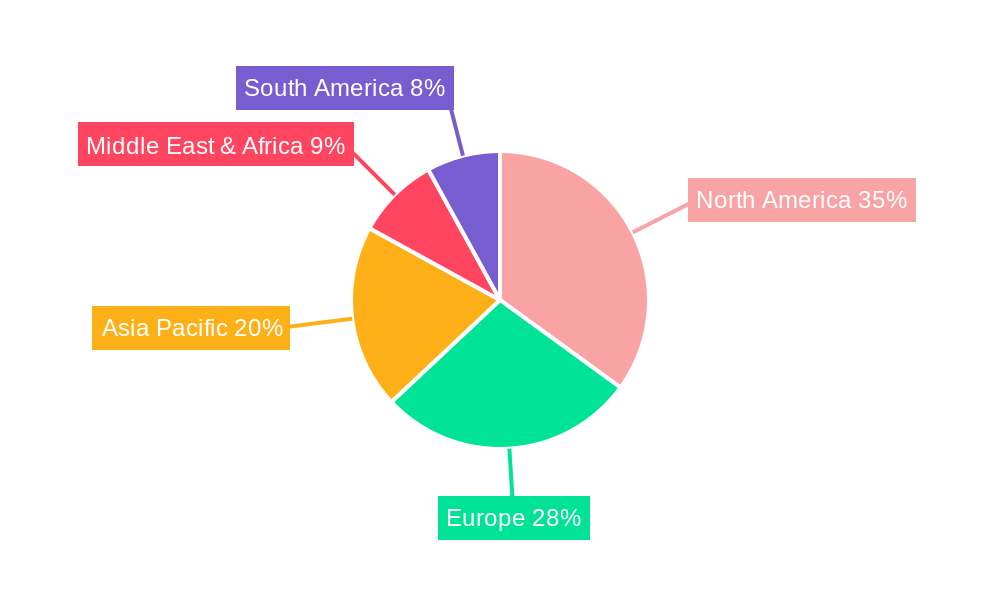
Smart Contract Development Services Regional Market Share
Geographic Coverage of Smart Contract Development Services
Smart Contract Development Services REPORT HIGHLIGHTS
| Aspects | Details |
|---|---|
| Study Period | 2020-2034 |
| Base Year | 2025 |
| Estimated Year | 2026 |
| Forecast Period | 2026-2034 |
| Historical Period | 2020-2025 |
| Growth Rate | CAGR of XX% from 2020-2034 |
| Segmentation |
|
Table of Contents
- 1. Introduction
- 1.1. Research Scope
- 1.2. Market Segmentation
- 1.3. Research Methodology
- 1.4. Definitions and Assumptions
- 2. Executive Summary
- 2.1. Introduction
- 3. Market Dynamics
- 3.1. Introduction
- 3.2. Market Drivers
- 3.3. Market Restrains
- 3.4. Market Trends
- 4. Market Factor Analysis
- 4.1. Porters Five Forces
- 4.2. Supply/Value Chain
- 4.3. PESTEL analysis
- 4.4. Market Entropy
- 4.5. Patent/Trademark Analysis
- 5. Global Smart Contract Development Services Analysis, Insights and Forecast, 2020-2032
- 5.1. Market Analysis, Insights and Forecast - by Application
- 5.1.1. Financial
- 5.1.2. Government
- 5.1.3. Insurance
- 5.1.4. Healthcare
- 5.1.5. Supply Chain
- 5.1.6. Others
- 5.2. Market Analysis, Insights and Forecast - by Types
- 5.2.1. Public Blockchain
- 5.2.2. Private Blockchain
- 5.2.3. Others
- 5.3. Market Analysis, Insights and Forecast - by Region
- 5.3.1. North America
- 5.3.2. South America
- 5.3.3. Europe
- 5.3.4. Middle East & Africa
- 5.3.5. Asia Pacific
- 5.1. Market Analysis, Insights and Forecast - by Application
- 6. North America Smart Contract Development Services Analysis, Insights and Forecast, 2020-2032
- 6.1. Market Analysis, Insights and Forecast - by Application
- 6.1.1. Financial
- 6.1.2. Government
- 6.1.3. Insurance
- 6.1.4. Healthcare
- 6.1.5. Supply Chain
- 6.1.6. Others
- 6.2. Market Analysis, Insights and Forecast - by Types
- 6.2.1. Public Blockchain
- 6.2.2. Private Blockchain
- 6.2.3. Others
- 6.1. Market Analysis, Insights and Forecast - by Application
- 7. South America Smart Contract Development Services Analysis, Insights and Forecast, 2020-2032
- 7.1. Market Analysis, Insights and Forecast - by Application
- 7.1.1. Financial
- 7.1.2. Government
- 7.1.3. Insurance
- 7.1.4. Healthcare
- 7.1.5. Supply Chain
- 7.1.6. Others
- 7.2. Market Analysis, Insights and Forecast - by Types
- 7.2.1. Public Blockchain
- 7.2.2. Private Blockchain
- 7.2.3. Others
- 7.1. Market Analysis, Insights and Forecast - by Application
- 8. Europe Smart Contract Development Services Analysis, Insights and Forecast, 2020-2032
- 8.1. Market Analysis, Insights and Forecast - by Application
- 8.1.1. Financial
- 8.1.2. Government
- 8.1.3. Insurance
- 8.1.4. Healthcare
- 8.1.5. Supply Chain
- 8.1.6. Others
- 8.2. Market Analysis, Insights and Forecast - by Types
- 8.2.1. Public Blockchain
- 8.2.2. Private Blockchain
- 8.2.3. Others
- 8.1. Market Analysis, Insights and Forecast - by Application
- 9. Middle East & Africa Smart Contract Development Services Analysis, Insights and Forecast, 2020-2032
- 9.1. Market Analysis, Insights and Forecast - by Application
- 9.1.1. Financial
- 9.1.2. Government
- 9.1.3. Insurance
- 9.1.4. Healthcare
- 9.1.5. Supply Chain
- 9.1.6. Others
- 9.2. Market Analysis, Insights and Forecast - by Types
- 9.2.1. Public Blockchain
- 9.2.2. Private Blockchain
- 9.2.3. Others
- 9.1. Market Analysis, Insights and Forecast - by Application
- 10. Asia Pacific Smart Contract Development Services Analysis, Insights and Forecast, 2020-2032
- 10.1. Market Analysis, Insights and Forecast - by Application
- 10.1.1. Financial
- 10.1.2. Government
- 10.1.3. Insurance
- 10.1.4. Healthcare
- 10.1.5. Supply Chain
- 10.1.6. Others
- 10.2. Market Analysis, Insights and Forecast - by Types
- 10.2.1. Public Blockchain
- 10.2.2. Private Blockchain
- 10.2.3. Others
- 10.1. Market Analysis, Insights and Forecast - by Application
- 11. Competitive Analysis
- 11.1. Global Market Share Analysis 2025
- 11.2. Company Profiles
- 11.2.1 Coin Fabric
- 11.2.1.1. Overview
- 11.2.1.2. Products
- 11.2.1.3. SWOT Analysis
- 11.2.1.4. Recent Developments
- 11.2.1.5. Financials (Based on Availability)
- 11.2.2 Cyber Infrastructure
- 11.2.2.1. Overview
- 11.2.2.2. Products
- 11.2.2.3. SWOT Analysis
- 11.2.2.4. Recent Developments
- 11.2.2.5. Financials (Based on Availability)
- 11.2.3 Eleks
- 11.2.3.1. Overview
- 11.2.3.2. Products
- 11.2.3.3. SWOT Analysis
- 11.2.3.4. Recent Developments
- 11.2.3.5. Financials (Based on Availability)
- 11.2.4 HashCash Consultants
- 11.2.4.1. Overview
- 11.2.4.2. Products
- 11.2.4.3. SWOT Analysis
- 11.2.4.4. Recent Developments
- 11.2.4.5. Financials (Based on Availability)
- 11.2.5 Intellectsoft
- 11.2.5.1. Overview
- 11.2.5.2. Products
- 11.2.5.3. SWOT Analysis
- 11.2.5.4. Recent Developments
- 11.2.5.5. Financials (Based on Availability)
- 11.2.6 Leeway Hertz
- 11.2.6.1. Overview
- 11.2.6.2. Products
- 11.2.6.3. SWOT Analysis
- 11.2.6.4. Recent Developments
- 11.2.6.5. Financials (Based on Availability)
- 11.2.7 Quest Global Technologies
- 11.2.7.1. Overview
- 11.2.7.2. Products
- 11.2.7.3. SWOT Analysis
- 11.2.7.4. Recent Developments
- 11.2.7.5. Financials (Based on Availability)
- 11.2.8 S-Pro
- 11.2.8.1. Overview
- 11.2.8.2. Products
- 11.2.8.3. SWOT Analysis
- 11.2.8.4. Recent Developments
- 11.2.8.5. Financials (Based on Availability)
- 11.2.9 Solulab Inc
- 11.2.9.1. Overview
- 11.2.9.2. Products
- 11.2.9.3. SWOT Analysis
- 11.2.9.4. Recent Developments
- 11.2.9.5. Financials (Based on Availability)
- 11.2.10 Sumatosoft
- 11.2.10.1. Overview
- 11.2.10.2. Products
- 11.2.10.3. SWOT Analysis
- 11.2.10.4. Recent Developments
- 11.2.10.5. Financials (Based on Availability)
- 11.2.11 Uniwebb
- 11.2.11.1. Overview
- 11.2.11.2. Products
- 11.2.11.3. SWOT Analysis
- 11.2.11.4. Recent Developments
- 11.2.11.5. Financials (Based on Availability)
- 11.2.12 H‑X Technologies
- 11.2.12.1. Overview
- 11.2.12.2. Products
- 11.2.12.3. SWOT Analysis
- 11.2.12.4. Recent Developments
- 11.2.12.5. Financials (Based on Availability)
- 11.2.13 ScienceSoft
- 11.2.13.1. Overview
- 11.2.13.2. Products
- 11.2.13.3. SWOT Analysis
- 11.2.13.4. Recent Developments
- 11.2.13.5. Financials (Based on Availability)
- 11.2.1 Coin Fabric
List of Figures
- Figure 1: Global Smart Contract Development Services Revenue Breakdown (million, %) by Region 2025 & 2033
- Figure 2: North America Smart Contract Development Services Revenue (million), by Application 2025 & 2033
- Figure 3: North America Smart Contract Development Services Revenue Share (%), by Application 2025 & 2033
- Figure 4: North America Smart Contract Development Services Revenue (million), by Types 2025 & 2033
- Figure 5: North America Smart Contract Development Services Revenue Share (%), by Types 2025 & 2033
- Figure 6: North America Smart Contract Development Services Revenue (million), by Country 2025 & 2033
- Figure 7: North America Smart Contract Development Services Revenue Share (%), by Country 2025 & 2033
- Figure 8: South America Smart Contract Development Services Revenue (million), by Application 2025 & 2033
- Figure 9: South America Smart Contract Development Services Revenue Share (%), by Application 2025 & 2033
- Figure 10: South America Smart Contract Development Services Revenue (million), by Types 2025 & 2033
- Figure 11: South America Smart Contract Development Services Revenue Share (%), by Types 2025 & 2033
- Figure 12: South America Smart Contract Development Services Revenue (million), by Country 2025 & 2033
- Figure 13: South America Smart Contract Development Services Revenue Share (%), by Country 2025 & 2033
- Figure 14: Europe Smart Contract Development Services Revenue (million), by Application 2025 & 2033
- Figure 15: Europe Smart Contract Development Services Revenue Share (%), by Application 2025 & 2033
- Figure 16: Europe Smart Contract Development Services Revenue (million), by Types 2025 & 2033
- Figure 17: Europe Smart Contract Development Services Revenue Share (%), by Types 2025 & 2033
- Figure 18: Europe Smart Contract Development Services Revenue (million), by Country 2025 & 2033
- Figure 19: Europe Smart Contract Development Services Revenue Share (%), by Country 2025 & 2033
- Figure 20: Middle East & Africa Smart Contract Development Services Revenue (million), by Application 2025 & 2033
- Figure 21: Middle East & Africa Smart Contract Development Services Revenue Share (%), by Application 2025 & 2033
- Figure 22: Middle East & Africa Smart Contract Development Services Revenue (million), by Types 2025 & 2033
- Figure 23: Middle East & Africa Smart Contract Development Services Revenue Share (%), by Types 2025 & 2033
- Figure 24: Middle East & Africa Smart Contract Development Services Revenue (million), by Country 2025 & 2033
- Figure 25: Middle East & Africa Smart Contract Development Services Revenue Share (%), by Country 2025 & 2033
- Figure 26: Asia Pacific Smart Contract Development Services Revenue (million), by Application 2025 & 2033
- Figure 27: Asia Pacific Smart Contract Development Services Revenue Share (%), by Application 2025 & 2033
- Figure 28: Asia Pacific Smart Contract Development Services Revenue (million), by Types 2025 & 2033
- Figure 29: Asia Pacific Smart Contract Development Services Revenue Share (%), by Types 2025 & 2033
- Figure 30: Asia Pacific Smart Contract Development Services Revenue (million), by Country 2025 & 2033
- Figure 31: Asia Pacific Smart Contract Development Services Revenue Share (%), by Country 2025 & 2033
List of Tables
- Table 1: Global Smart Contract Development Services Revenue million Forecast, by Application 2020 & 2033
- Table 2: Global Smart Contract Development Services Revenue million Forecast, by Types 2020 & 2033
- Table 3: Global Smart Contract Development Services Revenue million Forecast, by Region 2020 & 2033
- Table 4: Global Smart Contract Development Services Revenue million Forecast, by Application 2020 & 2033
- Table 5: Global Smart Contract Development Services Revenue million Forecast, by Types 2020 & 2033
- Table 6: Global Smart Contract Development Services Revenue million Forecast, by Country 2020 & 2033
- Table 7: United States Smart Contract Development Services Revenue (million) Forecast, by Application 2020 & 2033
- Table 8: Canada Smart Contract Development Services Revenue (million) Forecast, by Application 2020 & 2033
- Table 9: Mexico Smart Contract Development Services Revenue (million) Forecast, by Application 2020 & 2033
- Table 10: Global Smart Contract Development Services Revenue million Forecast, by Application 2020 & 2033
- Table 11: Global Smart Contract Development Services Revenue million Forecast, by Types 2020 & 2033
- Table 12: Global Smart Contract Development Services Revenue million Forecast, by Country 2020 & 2033
- Table 13: Brazil Smart Contract Development Services Revenue (million) Forecast, by Application 2020 & 2033
- Table 14: Argentina Smart Contract Development Services Revenue (million) Forecast, by Application 2020 & 2033
- Table 15: Rest of South America Smart Contract Development Services Revenue (million) Forecast, by Application 2020 & 2033
- Table 16: Global Smart Contract Development Services Revenue million Forecast, by Application 2020 & 2033
- Table 17: Global Smart Contract Development Services Revenue million Forecast, by Types 2020 & 2033
- Table 18: Global Smart Contract Development Services Revenue million Forecast, by Country 2020 & 2033
- Table 19: United Kingdom Smart Contract Development Services Revenue (million) Forecast, by Application 2020 & 2033
- Table 20: Germany Smart Contract Development Services Revenue (million) Forecast, by Application 2020 & 2033
- Table 21: France Smart Contract Development Services Revenue (million) Forecast, by Application 2020 & 2033
- Table 22: Italy Smart Contract Development Services Revenue (million) Forecast, by Application 2020 & 2033
- Table 23: Spain Smart Contract Development Services Revenue (million) Forecast, by Application 2020 & 2033
- Table 24: Russia Smart Contract Development Services Revenue (million) Forecast, by Application 2020 & 2033
- Table 25: Benelux Smart Contract Development Services Revenue (million) Forecast, by Application 2020 & 2033
- Table 26: Nordics Smart Contract Development Services Revenue (million) Forecast, by Application 2020 & 2033
- Table 27: Rest of Europe Smart Contract Development Services Revenue (million) Forecast, by Application 2020 & 2033
- Table 28: Global Smart Contract Development Services Revenue million Forecast, by Application 2020 & 2033
- Table 29: Global Smart Contract Development Services Revenue million Forecast, by Types 2020 & 2033
- Table 30: Global Smart Contract Development Services Revenue million Forecast, by Country 2020 & 2033
- Table 31: Turkey Smart Contract Development Services Revenue (million) Forecast, by Application 2020 & 2033
- Table 32: Israel Smart Contract Development Services Revenue (million) Forecast, by Application 2020 & 2033
- Table 33: GCC Smart Contract Development Services Revenue (million) Forecast, by Application 2020 & 2033
- Table 34: North Africa Smart Contract Development Services Revenue (million) Forecast, by Application 2020 & 2033
- Table 35: South Africa Smart Contract Development Services Revenue (million) Forecast, by Application 2020 & 2033
- Table 36: Rest of Middle East & Africa Smart Contract Development Services Revenue (million) Forecast, by Application 2020 & 2033
- Table 37: Global Smart Contract Development Services Revenue million Forecast, by Application 2020 & 2033
- Table 38: Global Smart Contract Development Services Revenue million Forecast, by Types 2020 & 2033
- Table 39: Global Smart Contract Development Services Revenue million Forecast, by Country 2020 & 2033
- Table 40: China Smart Contract Development Services Revenue (million) Forecast, by Application 2020 & 2033
- Table 41: India Smart Contract Development Services Revenue (million) Forecast, by Application 2020 & 2033
- Table 42: Japan Smart Contract Development Services Revenue (million) Forecast, by Application 2020 & 2033
- Table 43: South Korea Smart Contract Development Services Revenue (million) Forecast, by Application 2020 & 2033
- Table 44: ASEAN Smart Contract Development Services Revenue (million) Forecast, by Application 2020 & 2033
- Table 45: Oceania Smart Contract Development Services Revenue (million) Forecast, by Application 2020 & 2033
- Table 46: Rest of Asia Pacific Smart Contract Development Services Revenue (million) Forecast, by Application 2020 & 2033
Frequently Asked Questions
1. What is the projected Compound Annual Growth Rate (CAGR) of the Smart Contract Development Services?
The projected CAGR is approximately XX%.
2. Which companies are prominent players in the Smart Contract Development Services?
Key companies in the market include Coin Fabric, Cyber Infrastructure, Eleks, HashCash Consultants, Intellectsoft, Leeway Hertz, Quest Global Technologies, S-Pro, Solulab Inc, Sumatosoft, Uniwebb, H‑X Technologies, ScienceSoft.
3. What are the main segments of the Smart Contract Development Services?
The market segments include Application, Types.
4. Can you provide details about the market size?
The market size is estimated to be USD XXX million as of 2022.
5. What are some drivers contributing to market growth?
N/A
6. What are the notable trends driving market growth?
N/A
7. Are there any restraints impacting market growth?
N/A
8. Can you provide examples of recent developments in the market?
N/A
9. What pricing options are available for accessing the report?
Pricing options include single-user, multi-user, and enterprise licenses priced at USD 3950.00, USD 5925.00, and USD 7900.00 respectively.
10. Is the market size provided in terms of value or volume?
The market size is provided in terms of value, measured in million.
11. Are there any specific market keywords associated with the report?
Yes, the market keyword associated with the report is "Smart Contract Development Services," which aids in identifying and referencing the specific market segment covered.
12. How do I determine which pricing option suits my needs best?
The pricing options vary based on user requirements and access needs. Individual users may opt for single-user licenses, while businesses requiring broader access may choose multi-user or enterprise licenses for cost-effective access to the report.
13. Are there any additional resources or data provided in the Smart Contract Development Services report?
While the report offers comprehensive insights, it's advisable to review the specific contents or supplementary materials provided to ascertain if additional resources or data are available.
14. How can I stay updated on further developments or reports in the Smart Contract Development Services?
To stay informed about further developments, trends, and reports in the Smart Contract Development Services, consider subscribing to industry newsletters, following relevant companies and organizations, or regularly checking reputable industry news sources and publications.
Methodology
Step 1 - Identification of Relevant Samples Size from Population Database



Step 2 - Approaches for Defining Global Market Size (Value, Volume* & Price*)

Note*: In applicable scenarios
Step 3 - Data Sources
Primary Research
- Web Analytics
- Survey Reports
- Research Institute
- Latest Research Reports
- Opinion Leaders
Secondary Research
- Annual Reports
- White Paper
- Latest Press Release
- Industry Association
- Paid Database
- Investor Presentations

Step 4 - Data Triangulation
Involves using different sources of information in order to increase the validity of a study
These sources are likely to be stakeholders in a program - participants, other researchers, program staff, other community members, and so on.
Then we put all data in single framework & apply various statistical tools to find out the dynamic on the market.
During the analysis stage, feedback from the stakeholder groups would be compared to determine areas of agreement as well as areas of divergence