


Key Insights
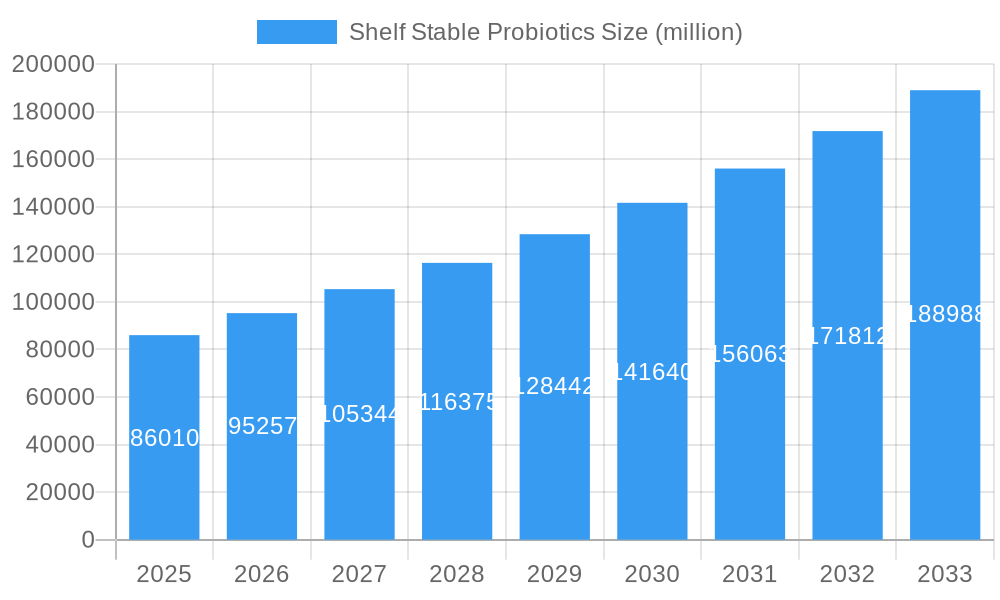
The global Shelf Stable Probiotics market is poised for significant expansion, projected to reach USD 86.01 billion in 2025, demonstrating robust growth with a Compound Annual Growth Rate (CAGR) of 10.7% from 2019 to 2033. This upward trajectory is primarily fueled by increasing consumer awareness regarding the multifaceted health benefits of probiotics, including improved gut health, enhanced immunity, and potential contributions to mental well-being. The demand for convenient and accessible probiotic solutions, particularly those that do not require refrigeration, is a major driving force. This convenience caters to busy lifestyles and facilitates broader adoption across various demographics. The food and beverage sector, a dominant application segment, is witnessing a surge in probiotic-fortified products, ranging from yogurts and dairy alternatives to functional beverages and even baked goods. The rising prevalence of lifestyle-related health issues and a proactive approach to preventive healthcare further bolster the market's growth.
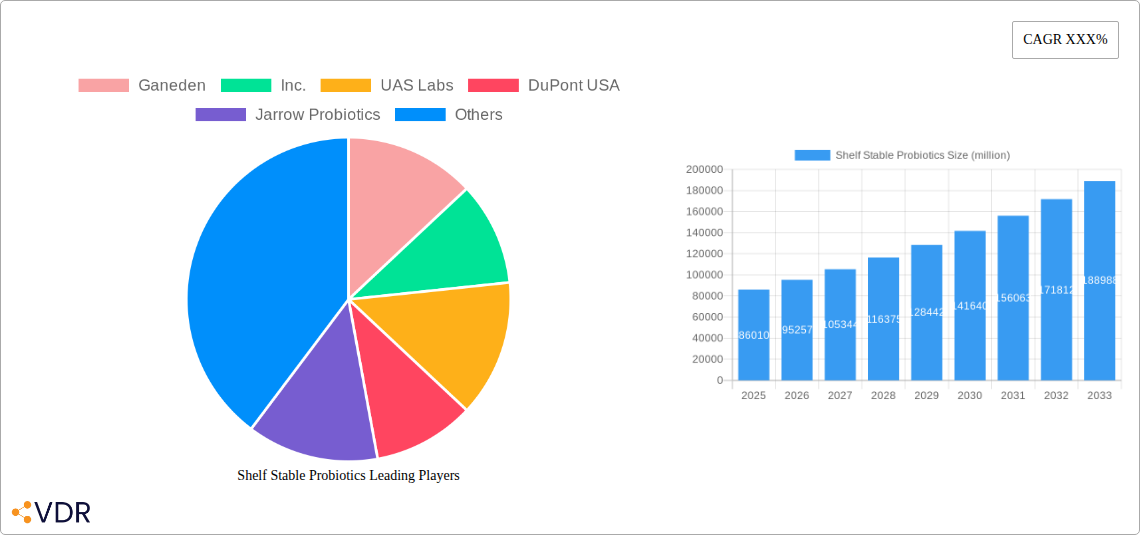
Shelf Stable Probiotics Market Size (In Billion)

Key market trends indicate a continuous innovation in probiotic strains, with a focus on shelf-stable formulations that maintain efficacy over extended periods. Bifidobacterium and Lactobacillus species are expected to remain leading types due to their well-established health benefits and widespread research. Emerging applications beyond traditional food and beverages, such as dietary supplements and even pet care, are also contributing to market diversification. While the market exhibits strong growth potential, challenges such as stringent regulatory landscapes in certain regions and the need for sustained research to validate specific health claims present areas requiring strategic attention. Nevertheless, the inherent demand for natural and health-promoting ingredients, coupled with ongoing technological advancements in probiotic encapsulation and formulation, ensures a dynamic and promising future for the shelf-stable probiotics market.
Shelf Stable Probiotics Company Market Share
Shelf Stable Probiotics Market Report: Comprehensive Analysis and Future Outlook (2019–2033)
This in-depth report provides a comprehensive analysis of the global Shelf Stable Probiotics market, covering market dynamics, growth trends, regional dominance, product landscape, key drivers, barriers, challenges, emerging opportunities, growth accelerators, key players, notable milestones, and an extensive market outlook. We delve into the intricate workings of this rapidly expanding sector, offering actionable insights for industry professionals, investors, and stakeholders. The report leverages high-traffic keywords and analyzes both parent and child markets to maximize search engine visibility and attract relevant industry attention.
Shelf Stable Probiotics Market Dynamics & Structure
The global Shelf Stable Probiotics market exhibits a moderately concentrated structure, with a blend of large, established players and agile niche manufacturers. Technological innovation is a primary driver, focusing on enhancing probiotic strain viability, efficacy, and shelf life without refrigeration. Regulatory frameworks, particularly those governing food and dietary supplement safety and labeling (e.g., FDA regulations in the US, EFSA in Europe), play a crucial role in market entry and product development. Competitive product substitutes, including other functional food ingredients and conventional dietary supplements, exert pressure, necessitating clear differentiation through scientific backing and superior product performance. End-user demographics are diverse, with a growing demand from health-conscious consumers across all age groups, particularly millennials and Gen Z seeking preventative health solutions. Merger and acquisition (M&A) trends are evident as larger companies seek to expand their portfolios and gain access to novel technologies and market segments. The market witnessed approximately 5-7 significant M&A deals in the historical period, with an estimated 8-10 anticipated in the forecast period, reflecting consolidation and strategic growth. Innovation barriers include the high cost of R&D for strain development and clinical validation, along with stringent quality control requirements.
Shelf Stable Probiotics Growth Trends & Insights
The global Shelf Stable Probiotics market is poised for robust expansion, driven by a confluence of escalating consumer awareness regarding gut health and the inherent advantages of shelf-stable formulations. The market size, valued at an estimated $3.8 billion in the base year 2025, is projected to grow at a Compound Annual Growth Rate (CAGR) of approximately 8.5% through 2033. This significant growth is underpinned by increasing adoption rates across various applications, from functional foods and beverages to dietary supplements. Technological disruptions are continuously refining probiotic delivery systems, enhancing strain survivability and bioavailability, and broadening the spectrum of health benefits offered. Consumer behavior is shifting demonstrably towards proactive health management, with a greater emphasis on natural ingredients and scientifically validated health solutions. This trend is fueling demand for probiotics that offer convenience and long-term usability without the need for cold chain logistics. The market penetration of shelf-stable probiotics is expected to rise from 25% in the historical period to over 40% by the end of the forecast period, as product innovation addresses consumer pain points related to accessibility and ease of use. The increasing prevalence of digestive disorders, a growing elderly population, and the rising awareness of the gut-brain axis are further accelerating market growth. Furthermore, the perceived health benefits extending beyond digestive health, such as immune support and mood enhancement, are attracting a wider consumer base. The development of novel probiotic strains with targeted functionalities and improved stability in ambient conditions remains a key area of innovation, contributing to sustained market expansion. The integration of probiotics into everyday food and beverage products, from dairy alternatives to baked goods and snacks, is a significant trend expanding the reach and accessibility of these beneficial microorganisms. The market size is anticipated to reach approximately $7.2 billion by 2033.
Dominant Regions, Countries, or Segments in Shelf Stable Probiotics
North America currently dominates the global Shelf Stable Probiotics market, driven by a highly health-conscious consumer base, strong regulatory support for dietary supplements, and significant investment in R&D by key industry players. The United States, in particular, is a frontrunner, accounting for an estimated 40% of the North American market share. Factors contributing to this dominance include widespread consumer education on the benefits of probiotics, a mature e-commerce distribution network facilitating easy access to products, and a proactive approach by manufacturers in developing and marketing innovative shelf-stable formulations. The Application: Food segment is experiencing rapid growth within North America, with probiotics being incorporated into a wide array of products such as yogurt, granola bars, cereals, and plant-based alternatives. This segment is projected to capture approximately 35% of the total shelf-stable probiotic market by 2033. The Type: Lactobacillus strains remain the most popular, due to their well-documented efficacy in digestive health, but Type: Bifidobacterium and Type: Bacillus are gaining traction for their broader health benefits, including immune support and stress management. Economic policies that encourage innovation in the food and health sectors, coupled with robust retail and online infrastructure, further solidify North America's leading position.
The Asia-Pacific region is emerging as a high-growth market, propelled by a rapidly expanding middle class, increasing disposable income, and a growing awareness of preventive healthcare. Countries like China and India are witnessing substantial market expansion, fueled by the traditional use of fermented foods and a rising demand for modern dietary supplements. Government initiatives aimed at promoting healthier lifestyles and the increasing prevalence of lifestyle-related diseases are also contributing to this growth. The Application: Beverages segment is particularly robust in Asia-Pacific, with a strong preference for probiotic-infused juices, teas, and dairy drinks. This segment is expected to witness a CAGR of 9.8% from 2025 to 2033, outperforming other regions. The Type: Bacillus strains are gaining popularity in this region due to their natural occurrence in fermented foods and their resilience, aligning with consumer preferences for natural ingredients. Market share in the Asia-Pacific is projected to reach 28% by 2033.
Europe also represents a significant market for shelf-stable probiotics, characterized by a mature regulatory landscape and a strong emphasis on scientific validation. Germany, the UK, and France are key contributors, with consumers actively seeking products that offer specific health benefits backed by clinical research. The Application: Others segment, encompassing dietary supplements and specialized nutritional products, holds a substantial share in Europe, reflecting the established market for supplements and functional foods. Growth in this segment is driven by the aging population and the rising incidence of chronic diseases. The Type: Enterococcus strains, known for their role in gut health and immune modulation, are seeing increased demand. Europe is projected to maintain a market share of approximately 25% by 2033.
Shelf Stable Probiotics Product Landscape
Innovations in the shelf-stable probiotics sector are primarily focused on enhancing strain stability and efficacy without compromising on consumer appeal. Manufacturers are developing advanced encapsulation technologies and fermentation techniques to protect delicate probiotic strains from environmental stressors like heat, moisture, and oxygen, thereby extending their shelf life at room temperature. Unique selling propositions often revolve around specific health benefits, such as improved digestive regularity, enhanced immune function, or even mental well-being, supported by robust scientific research. Technological advancements include the development of spore-forming probiotics (e.g., certain Bacillus strains) that naturally possess superior heat and acid resistance. Novel delivery formats, such as powder-filled capsules, chewable tablets, and even shelf-stable gummies, are expanding product accessibility and consumer choice. The performance metrics are increasingly scrutinized, with a focus on quantifiable outcomes like colony-forming units (CFUs) per serving, strain-specific efficacy data, and documented stability over extended periods under ambient conditions.
Key Drivers, Barriers & Challenges in Shelf Stable Probiotics
Key Drivers:
- Growing Consumer Awareness: Increasing understanding of gut health's impact on overall well-being.
- Demand for Convenience: Shelf-stable formulations eliminate the need for refrigeration, appealing to busy lifestyles.
- Technological Advancements: Improved encapsulation and formulation techniques enhance probiotic viability and efficacy.
- Preventive Healthcare Trend: Consumers are proactively seeking solutions to maintain health and prevent diseases.
- Expansion of Applications: Integration into a wider range of food, beverages, and supplements.
Key Barriers & Challenges:
- Strain Viability and Efficacy: Maintaining the effectiveness of probiotics over extended shelf life remains a technical challenge, impacting consumer trust and product performance.
- Regulatory Hurdles: Navigating differing regulations across regions for health claims and product labeling can be complex and costly.
- Cost of R&D and Clinical Trials: Developing and validating new probiotic strains requires significant investment.
- Consumer Education: Despite growing awareness, a substantial segment of consumers still lacks a deep understanding of probiotic benefits and selection criteria.
- Competition from Refrigerated Products: Established refrigerated probiotic products may retain a perception of higher efficacy for some consumers.
- Supply Chain Disruptions: Ensuring consistent availability of high-quality raw materials and maintaining quality control throughout the supply chain can be challenging. Quantifiable impacts include potential product recalls due to instability, estimated at 0.5%-1% of affected batches annually, and increased manufacturing costs by 10-15% to ensure stability.
Emerging Opportunities in Shelf Stable Probiotics
Emerging opportunities lie in the development of probiotics with targeted functionalities beyond basic digestive health, such as enhanced mood, cognitive function, and improved sleep quality, aligning with the growing interest in the gut-brain axis. Untapped markets in developing economies, where awareness is rising and purchasing power is increasing, present significant growth potential. The innovation of novel delivery systems, including bio-available powders for easy incorporation into home cooking or personalized probiotic formulations based on individual microbiome analysis, are key areas to explore. Evolving consumer preferences for natural, organic, and sustainably sourced ingredients will also drive demand for probiotics that meet these criteria. Furthermore, strategic partnerships between probiotic manufacturers and mainstream food and beverage companies can accelerate market penetration and consumer adoption by integrating probiotics into familiar and widely consumed products.
Growth Accelerators in the Shelf Stable Probiotics Industry
Long-term growth in the shelf-stable probiotics industry will be propelled by continuous technological breakthroughs in strain development and stabilization. This includes identifying and isolating novel probiotic strains with superior resilience and a wider range of health benefits. Strategic partnerships and collaborations between probiotic ingredient suppliers, food and beverage manufacturers, and supplement brands will be crucial for expanding product portfolios and market reach. Market expansion strategies focused on emerging economies, where awareness of gut health is rapidly growing, will unlock significant new consumer bases. The increasing investment in clinical research and the publication of more robust scientific evidence validating the efficacy of shelf-stable probiotics will further build consumer confidence and drive demand, cementing their position as an essential component of a healthy lifestyle.
Key Players Shaping the Shelf Stable Probiotics Market
- Ganeden, Inc.
- UAS Labs
- DuPont USA
- Jarrow Probiotics
- DSM Human Nutrition and Health
- Klaire Labs
- Virun
- Chr. Hansen A/S
Notable Milestones in Shelf Stable Probiotics Sector
- 2019: Ganeden, Inc. announces enhanced stability for its GanedenBC30® probiotic in baked goods.
- 2020: DuPont USA expands its probiotic portfolio with novel strains for immune support.
- 2021: UAS Labs launches a new range of clinically studied shelf-stable probiotic supplements.
- 2022: Chr. Hansen A/S invests significantly in R&D to develop next-generation stable probiotic strains.
- 2023: DSM Human Nutrition and Health acquires a stake in a biotechnology firm specializing in probiotic fermentation.
- January 2024: Jarrow Probiotics introduces a new line of shelf-stable probiotic capsules with increased CFU counts.
- February 2024: Virun develops a patented process for incorporating probiotics into clear beverages without compromising stability.
- March 2024: Klaire Labs releases a novel shelf-stable probiotic formulation for targeted gut health support.
In-Depth Shelf Stable Probiotics Market Outlook
The future of the shelf-stable probiotics market is exceptionally promising, driven by sustained innovation and evolving consumer demand for convenient, health-promoting products. Growth accelerators such as cutting-edge biotechnology, strategic alliances across the value chain, and targeted market penetration in high-potential regions will continue to fuel expansion. The market is set to witness significant value creation as more consumers embrace shelf-stable probiotics as a staple for maintaining optimal gut health and overall well-being. This trajectory indicates a robust and enduring growth phase, offering substantial opportunities for stakeholders to capitalize on the increasing global focus on preventive health and functional nutrition.
Shelf Stable Probiotics Segmentation
-
1. Application
- 1.1. Food
- 1.2. Beverages
- 1.3. Others
-
2. Type
- 2.1. Bifidobacterium
- 2.2. Lactobacillus
- 2.3. Bacillus
- 2.4. Enterococcus
- 2.5. Others
Shelf Stable Probiotics Segmentation By Geography
-
1. North America
- 1.1. United States
- 1.2. Canada
- 1.3. Mexico
-
2. South America
- 2.1. Brazil
- 2.2. Argentina
- 2.3. Rest of South America
-
3. Europe
- 3.1. United Kingdom
- 3.2. Germany
- 3.3. France
- 3.4. Italy
- 3.5. Spain
- 3.6. Russia
- 3.7. Benelux
- 3.8. Nordics
- 3.9. Rest of Europe
-
4. Middle East & Africa
- 4.1. Turkey
- 4.2. Israel
- 4.3. GCC
- 4.4. North Africa
- 4.5. South Africa
- 4.6. Rest of Middle East & Africa
-
5. Asia Pacific
- 5.1. China
- 5.2. India
- 5.3. Japan
- 5.4. South Korea
- 5.5. ASEAN
- 5.6. Oceania
- 5.7. Rest of Asia Pacific
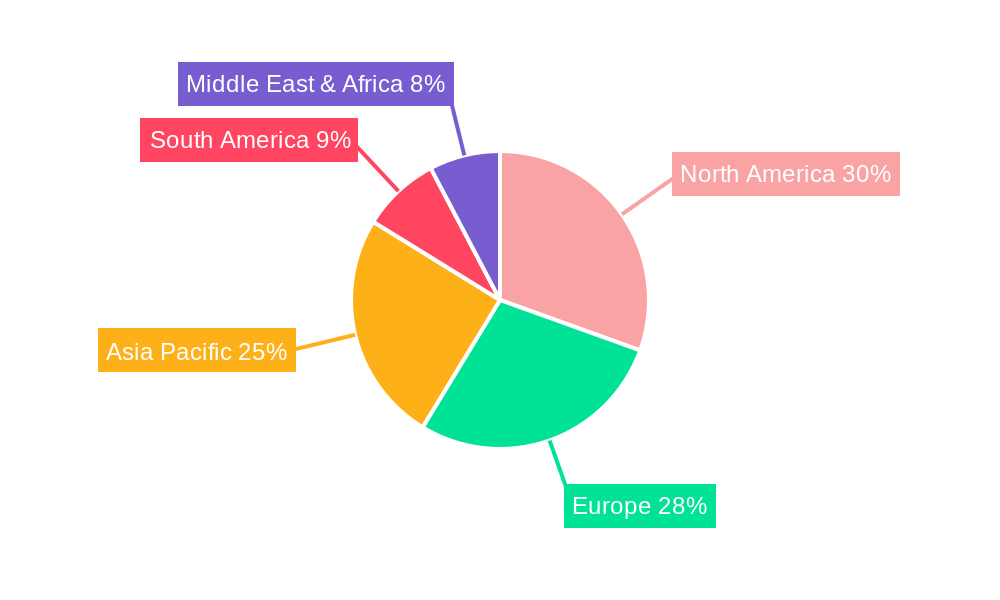
Shelf Stable Probiotics Regional Market Share
Geographic Coverage of Shelf Stable Probiotics
Shelf Stable Probiotics REPORT HIGHLIGHTS
| Aspects | Details |
|---|---|
| Study Period | 2020-2034 |
| Base Year | 2025 |
| Estimated Year | 2026 |
| Forecast Period | 2026-2034 |
| Historical Period | 2020-2025 |
| Growth Rate | CAGR of 8.3% from 2020-2034 |
| Segmentation |
|
Table of Contents
- 1. Introduction
- 1.1. Research Scope
- 1.2. Market Segmentation
- 1.3. Research Methodology
- 1.4. Definitions and Assumptions
- 2. Executive Summary
- 2.1. Introduction
- 3. Market Dynamics
- 3.1. Introduction
- 3.2. Market Drivers
- 3.3. Market Restrains
- 3.4. Market Trends
- 4. Market Factor Analysis
- 4.1. Porters Five Forces
- 4.2. Supply/Value Chain
- 4.3. PESTEL analysis
- 4.4. Market Entropy
- 4.5. Patent/Trademark Analysis
- 5. Global Shelf Stable Probiotics Analysis, Insights and Forecast, 2020-2032
- 5.1. Market Analysis, Insights and Forecast - by Application
- 5.1.1. Food
- 5.1.2. Beverages
- 5.1.3. Others
- 5.2. Market Analysis, Insights and Forecast - by Type
- 5.2.1. Bifidobacterium
- 5.2.2. Lactobacillus
- 5.2.3. Bacillus
- 5.2.4. Enterococcus
- 5.2.5. Others
- 5.3. Market Analysis, Insights and Forecast - by Region
- 5.3.1. North America
- 5.3.2. South America
- 5.3.3. Europe
- 5.3.4. Middle East & Africa
- 5.3.5. Asia Pacific
- 5.1. Market Analysis, Insights and Forecast - by Application
- 6. North America Shelf Stable Probiotics Analysis, Insights and Forecast, 2020-2032
- 6.1. Market Analysis, Insights and Forecast - by Application
- 6.1.1. Food
- 6.1.2. Beverages
- 6.1.3. Others
- 6.2. Market Analysis, Insights and Forecast - by Type
- 6.2.1. Bifidobacterium
- 6.2.2. Lactobacillus
- 6.2.3. Bacillus
- 6.2.4. Enterococcus
- 6.2.5. Others
- 6.1. Market Analysis, Insights and Forecast - by Application
- 7. South America Shelf Stable Probiotics Analysis, Insights and Forecast, 2020-2032
- 7.1. Market Analysis, Insights and Forecast - by Application
- 7.1.1. Food
- 7.1.2. Beverages
- 7.1.3. Others
- 7.2. Market Analysis, Insights and Forecast - by Type
- 7.2.1. Bifidobacterium
- 7.2.2. Lactobacillus
- 7.2.3. Bacillus
- 7.2.4. Enterococcus
- 7.2.5. Others
- 7.1. Market Analysis, Insights and Forecast - by Application
- 8. Europe Shelf Stable Probiotics Analysis, Insights and Forecast, 2020-2032
- 8.1. Market Analysis, Insights and Forecast - by Application
- 8.1.1. Food
- 8.1.2. Beverages
- 8.1.3. Others
- 8.2. Market Analysis, Insights and Forecast - by Type
- 8.2.1. Bifidobacterium
- 8.2.2. Lactobacillus
- 8.2.3. Bacillus
- 8.2.4. Enterococcus
- 8.2.5. Others
- 8.1. Market Analysis, Insights and Forecast - by Application
- 9. Middle East & Africa Shelf Stable Probiotics Analysis, Insights and Forecast, 2020-2032
- 9.1. Market Analysis, Insights and Forecast - by Application
- 9.1.1. Food
- 9.1.2. Beverages
- 9.1.3. Others
- 9.2. Market Analysis, Insights and Forecast - by Type
- 9.2.1. Bifidobacterium
- 9.2.2. Lactobacillus
- 9.2.3. Bacillus
- 9.2.4. Enterococcus
- 9.2.5. Others
- 9.1. Market Analysis, Insights and Forecast - by Application
- 10. Asia Pacific Shelf Stable Probiotics Analysis, Insights and Forecast, 2020-2032
- 10.1. Market Analysis, Insights and Forecast - by Application
- 10.1.1. Food
- 10.1.2. Beverages
- 10.1.3. Others
- 10.2. Market Analysis, Insights and Forecast - by Type
- 10.2.1. Bifidobacterium
- 10.2.2. Lactobacillus
- 10.2.3. Bacillus
- 10.2.4. Enterococcus
- 10.2.5. Others
- 10.1. Market Analysis, Insights and Forecast - by Application
- 11. Competitive Analysis
- 11.1. Global Market Share Analysis 2025
- 11.2. Company Profiles
- 11.2.1 Ganeden
- 11.2.1.1. Overview
- 11.2.1.2. Products
- 11.2.1.3. SWOT Analysis
- 11.2.1.4. Recent Developments
- 11.2.1.5. Financials (Based on Availability)
- 11.2.2 Inc.
- 11.2.2.1. Overview
- 11.2.2.2. Products
- 11.2.2.3. SWOT Analysis
- 11.2.2.4. Recent Developments
- 11.2.2.5. Financials (Based on Availability)
- 11.2.3 UAS Labs
- 11.2.3.1. Overview
- 11.2.3.2. Products
- 11.2.3.3. SWOT Analysis
- 11.2.3.4. Recent Developments
- 11.2.3.5. Financials (Based on Availability)
- 11.2.4 DuPont USA
- 11.2.4.1. Overview
- 11.2.4.2. Products
- 11.2.4.3. SWOT Analysis
- 11.2.4.4. Recent Developments
- 11.2.4.5. Financials (Based on Availability)
- 11.2.5 Jarrow Probiotics
- 11.2.5.1. Overview
- 11.2.5.2. Products
- 11.2.5.3. SWOT Analysis
- 11.2.5.4. Recent Developments
- 11.2.5.5. Financials (Based on Availability)
- 11.2.6 DSM Human Nutrition and Health
- 11.2.6.1. Overview
- 11.2.6.2. Products
- 11.2.6.3. SWOT Analysis
- 11.2.6.4. Recent Developments
- 11.2.6.5. Financials (Based on Availability)
- 11.2.7 Klaire Labs
- 11.2.7.1. Overview
- 11.2.7.2. Products
- 11.2.7.3. SWOT Analysis
- 11.2.7.4. Recent Developments
- 11.2.7.5. Financials (Based on Availability)
- 11.2.8 Virun
- 11.2.8.1. Overview
- 11.2.8.2. Products
- 11.2.8.3. SWOT Analysis
- 11.2.8.4. Recent Developments
- 11.2.8.5. Financials (Based on Availability)
- 11.2.9 Chr. Hansen A/S
- 11.2.9.1. Overview
- 11.2.9.2. Products
- 11.2.9.3. SWOT Analysis
- 11.2.9.4. Recent Developments
- 11.2.9.5. Financials (Based on Availability)
- 11.2.1 Ganeden
List of Figures
- Figure 1: Global Shelf Stable Probiotics Revenue Breakdown (undefined, %) by Region 2025 & 2033
- Figure 2: North America Shelf Stable Probiotics Revenue (undefined), by Application 2025 & 2033
- Figure 3: North America Shelf Stable Probiotics Revenue Share (%), by Application 2025 & 2033
- Figure 4: North America Shelf Stable Probiotics Revenue (undefined), by Type 2025 & 2033
- Figure 5: North America Shelf Stable Probiotics Revenue Share (%), by Type 2025 & 2033
- Figure 6: North America Shelf Stable Probiotics Revenue (undefined), by Country 2025 & 2033
- Figure 7: North America Shelf Stable Probiotics Revenue Share (%), by Country 2025 & 2033
- Figure 8: South America Shelf Stable Probiotics Revenue (undefined), by Application 2025 & 2033
- Figure 9: South America Shelf Stable Probiotics Revenue Share (%), by Application 2025 & 2033
- Figure 10: South America Shelf Stable Probiotics Revenue (undefined), by Type 2025 & 2033
- Figure 11: South America Shelf Stable Probiotics Revenue Share (%), by Type 2025 & 2033
- Figure 12: South America Shelf Stable Probiotics Revenue (undefined), by Country 2025 & 2033
- Figure 13: South America Shelf Stable Probiotics Revenue Share (%), by Country 2025 & 2033
- Figure 14: Europe Shelf Stable Probiotics Revenue (undefined), by Application 2025 & 2033
- Figure 15: Europe Shelf Stable Probiotics Revenue Share (%), by Application 2025 & 2033
- Figure 16: Europe Shelf Stable Probiotics Revenue (undefined), by Type 2025 & 2033
- Figure 17: Europe Shelf Stable Probiotics Revenue Share (%), by Type 2025 & 2033
- Figure 18: Europe Shelf Stable Probiotics Revenue (undefined), by Country 2025 & 2033
- Figure 19: Europe Shelf Stable Probiotics Revenue Share (%), by Country 2025 & 2033
- Figure 20: Middle East & Africa Shelf Stable Probiotics Revenue (undefined), by Application 2025 & 2033
- Figure 21: Middle East & Africa Shelf Stable Probiotics Revenue Share (%), by Application 2025 & 2033
- Figure 22: Middle East & Africa Shelf Stable Probiotics Revenue (undefined), by Type 2025 & 2033
- Figure 23: Middle East & Africa Shelf Stable Probiotics Revenue Share (%), by Type 2025 & 2033
- Figure 24: Middle East & Africa Shelf Stable Probiotics Revenue (undefined), by Country 2025 & 2033
- Figure 25: Middle East & Africa Shelf Stable Probiotics Revenue Share (%), by Country 2025 & 2033
- Figure 26: Asia Pacific Shelf Stable Probiotics Revenue (undefined), by Application 2025 & 2033
- Figure 27: Asia Pacific Shelf Stable Probiotics Revenue Share (%), by Application 2025 & 2033
- Figure 28: Asia Pacific Shelf Stable Probiotics Revenue (undefined), by Type 2025 & 2033
- Figure 29: Asia Pacific Shelf Stable Probiotics Revenue Share (%), by Type 2025 & 2033
- Figure 30: Asia Pacific Shelf Stable Probiotics Revenue (undefined), by Country 2025 & 2033
- Figure 31: Asia Pacific Shelf Stable Probiotics Revenue Share (%), by Country 2025 & 2033
List of Tables
- Table 1: Global Shelf Stable Probiotics Revenue undefined Forecast, by Application 2020 & 2033
- Table 2: Global Shelf Stable Probiotics Revenue undefined Forecast, by Type 2020 & 2033
- Table 3: Global Shelf Stable Probiotics Revenue undefined Forecast, by Region 2020 & 2033
- Table 4: Global Shelf Stable Probiotics Revenue undefined Forecast, by Application 2020 & 2033
- Table 5: Global Shelf Stable Probiotics Revenue undefined Forecast, by Type 2020 & 2033
- Table 6: Global Shelf Stable Probiotics Revenue undefined Forecast, by Country 2020 & 2033
- Table 7: United States Shelf Stable Probiotics Revenue (undefined) Forecast, by Application 2020 & 2033
- Table 8: Canada Shelf Stable Probiotics Revenue (undefined) Forecast, by Application 2020 & 2033
- Table 9: Mexico Shelf Stable Probiotics Revenue (undefined) Forecast, by Application 2020 & 2033
- Table 10: Global Shelf Stable Probiotics Revenue undefined Forecast, by Application 2020 & 2033
- Table 11: Global Shelf Stable Probiotics Revenue undefined Forecast, by Type 2020 & 2033
- Table 12: Global Shelf Stable Probiotics Revenue undefined Forecast, by Country 2020 & 2033
- Table 13: Brazil Shelf Stable Probiotics Revenue (undefined) Forecast, by Application 2020 & 2033
- Table 14: Argentina Shelf Stable Probiotics Revenue (undefined) Forecast, by Application 2020 & 2033
- Table 15: Rest of South America Shelf Stable Probiotics Revenue (undefined) Forecast, by Application 2020 & 2033
- Table 16: Global Shelf Stable Probiotics Revenue undefined Forecast, by Application 2020 & 2033
- Table 17: Global Shelf Stable Probiotics Revenue undefined Forecast, by Type 2020 & 2033
- Table 18: Global Shelf Stable Probiotics Revenue undefined Forecast, by Country 2020 & 2033
- Table 19: United Kingdom Shelf Stable Probiotics Revenue (undefined) Forecast, by Application 2020 & 2033
- Table 20: Germany Shelf Stable Probiotics Revenue (undefined) Forecast, by Application 2020 & 2033
- Table 21: France Shelf Stable Probiotics Revenue (undefined) Forecast, by Application 2020 & 2033
- Table 22: Italy Shelf Stable Probiotics Revenue (undefined) Forecast, by Application 2020 & 2033
- Table 23: Spain Shelf Stable Probiotics Revenue (undefined) Forecast, by Application 2020 & 2033
- Table 24: Russia Shelf Stable Probiotics Revenue (undefined) Forecast, by Application 2020 & 2033
- Table 25: Benelux Shelf Stable Probiotics Revenue (undefined) Forecast, by Application 2020 & 2033
- Table 26: Nordics Shelf Stable Probiotics Revenue (undefined) Forecast, by Application 2020 & 2033
- Table 27: Rest of Europe Shelf Stable Probiotics Revenue (undefined) Forecast, by Application 2020 & 2033
- Table 28: Global Shelf Stable Probiotics Revenue undefined Forecast, by Application 2020 & 2033
- Table 29: Global Shelf Stable Probiotics Revenue undefined Forecast, by Type 2020 & 2033
- Table 30: Global Shelf Stable Probiotics Revenue undefined Forecast, by Country 2020 & 2033
- Table 31: Turkey Shelf Stable Probiotics Revenue (undefined) Forecast, by Application 2020 & 2033
- Table 32: Israel Shelf Stable Probiotics Revenue (undefined) Forecast, by Application 2020 & 2033
- Table 33: GCC Shelf Stable Probiotics Revenue (undefined) Forecast, by Application 2020 & 2033
- Table 34: North Africa Shelf Stable Probiotics Revenue (undefined) Forecast, by Application 2020 & 2033
- Table 35: South Africa Shelf Stable Probiotics Revenue (undefined) Forecast, by Application 2020 & 2033
- Table 36: Rest of Middle East & Africa Shelf Stable Probiotics Revenue (undefined) Forecast, by Application 2020 & 2033
- Table 37: Global Shelf Stable Probiotics Revenue undefined Forecast, by Application 2020 & 2033
- Table 38: Global Shelf Stable Probiotics Revenue undefined Forecast, by Type 2020 & 2033
- Table 39: Global Shelf Stable Probiotics Revenue undefined Forecast, by Country 2020 & 2033
- Table 40: China Shelf Stable Probiotics Revenue (undefined) Forecast, by Application 2020 & 2033
- Table 41: India Shelf Stable Probiotics Revenue (undefined) Forecast, by Application 2020 & 2033
- Table 42: Japan Shelf Stable Probiotics Revenue (undefined) Forecast, by Application 2020 & 2033
- Table 43: South Korea Shelf Stable Probiotics Revenue (undefined) Forecast, by Application 2020 & 2033
- Table 44: ASEAN Shelf Stable Probiotics Revenue (undefined) Forecast, by Application 2020 & 2033
- Table 45: Oceania Shelf Stable Probiotics Revenue (undefined) Forecast, by Application 2020 & 2033
- Table 46: Rest of Asia Pacific Shelf Stable Probiotics Revenue (undefined) Forecast, by Application 2020 & 2033
Frequently Asked Questions
1. What is the projected Compound Annual Growth Rate (CAGR) of the Shelf Stable Probiotics?
The projected CAGR is approximately 8.3%.
2. Which companies are prominent players in the Shelf Stable Probiotics?
Key companies in the market include Ganeden, Inc., UAS Labs, DuPont USA, Jarrow Probiotics, DSM Human Nutrition and Health, Klaire Labs, Virun, Chr. Hansen A/S.
3. What are the main segments of the Shelf Stable Probiotics?
The market segments include Application, Type.
4. Can you provide details about the market size?
The market size is estimated to be USD XXX N/A as of 2022.
5. What are some drivers contributing to market growth?
N/A
6. What are the notable trends driving market growth?
N/A
7. Are there any restraints impacting market growth?
N/A
8. Can you provide examples of recent developments in the market?
N/A
9. What pricing options are available for accessing the report?
Pricing options include single-user, multi-user, and enterprise licenses priced at USD 3950.00, USD 5925.00, and USD 7900.00 respectively.
10. Is the market size provided in terms of value or volume?
The market size is provided in terms of value, measured in N/A.
11. Are there any specific market keywords associated with the report?
Yes, the market keyword associated with the report is "Shelf Stable Probiotics," which aids in identifying and referencing the specific market segment covered.
12. How do I determine which pricing option suits my needs best?
The pricing options vary based on user requirements and access needs. Individual users may opt for single-user licenses, while businesses requiring broader access may choose multi-user or enterprise licenses for cost-effective access to the report.
13. Are there any additional resources or data provided in the Shelf Stable Probiotics report?
While the report offers comprehensive insights, it's advisable to review the specific contents or supplementary materials provided to ascertain if additional resources or data are available.
14. How can I stay updated on further developments or reports in the Shelf Stable Probiotics?
To stay informed about further developments, trends, and reports in the Shelf Stable Probiotics, consider subscribing to industry newsletters, following relevant companies and organizations, or regularly checking reputable industry news sources and publications.
Methodology
Step 1 - Identification of Relevant Samples Size from Population Database



Step 2 - Approaches for Defining Global Market Size (Value, Volume* & Price*)

Note*: In applicable scenarios
Step 3 - Data Sources
Primary Research
- Web Analytics
- Survey Reports
- Research Institute
- Latest Research Reports
- Opinion Leaders
Secondary Research
- Annual Reports
- White Paper
- Latest Press Release
- Industry Association
- Paid Database
- Investor Presentations

Step 4 - Data Triangulation
Involves using different sources of information in order to increase the validity of a study
These sources are likely to be stakeholders in a program - participants, other researchers, program staff, other community members, and so on.
Then we put all data in single framework & apply various statistical tools to find out the dynamic on the market.
During the analysis stage, feedback from the stakeholder groups would be compared to determine areas of agreement as well as areas of divergence