


Key Insights
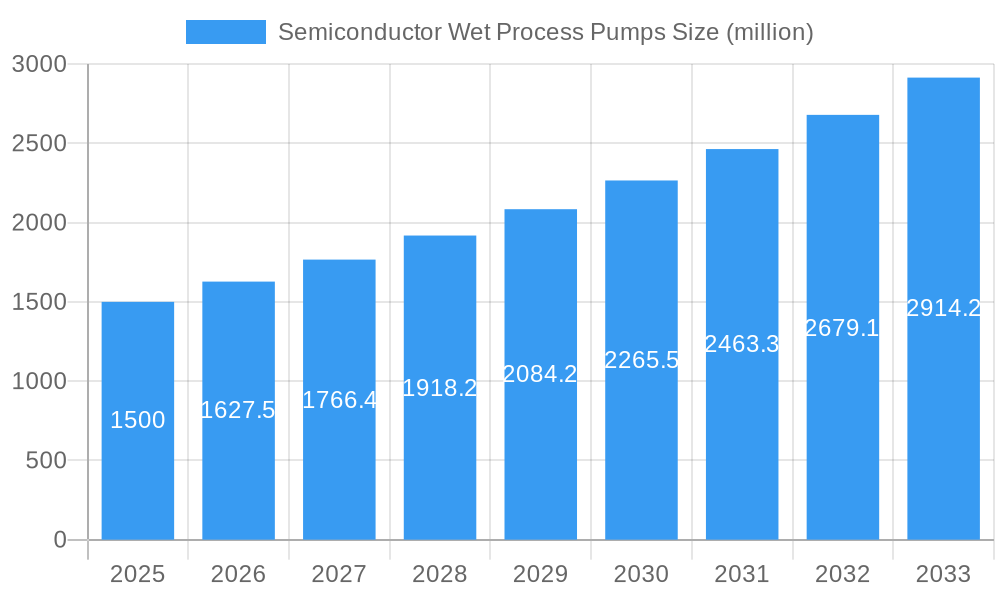
The global Semiconductor Wet Process Pumps market is experiencing robust growth, projected to reach an estimated $1,500 million by 2025, with a compelling Compound Annual Growth Rate (CAGR) of approximately 8.5% through 2033. This expansion is primarily driven by the relentless demand for advanced semiconductors across a multitude of burgeoning industries, including artificial intelligence, 5G, the Internet of Things (IoT), and electric vehicles. The increasing complexity of semiconductor manufacturing processes, particularly in wafer cleaning, wafer CMP (Chemical Mechanical Planarization), and wafer electroplating, necessitates sophisticated and high-performance pumping solutions to ensure precision, purity, and efficiency. The development of novel pump technologies, such as Maglev pumps, offering superior durability, contamination control, and energy efficiency, is a significant trend shaping the market. These advanced pumps are crucial for handling aggressive chemicals and maintaining ultra-clean environments essential for cutting-edge chip fabrication.
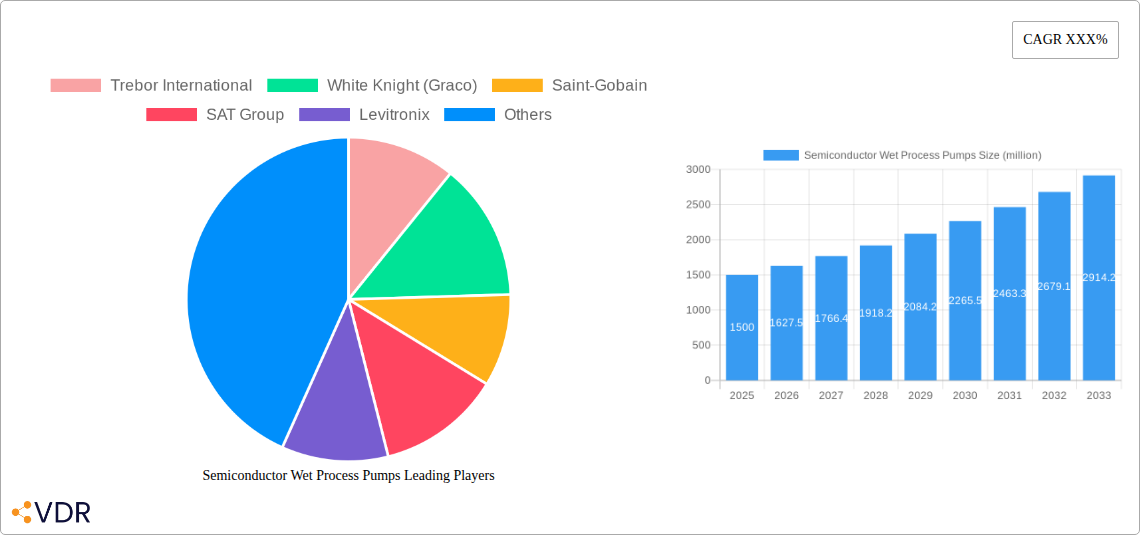
Semiconductor Wet Process Pumps Market Size (In Billion)

However, the market is not without its challenges. Stringent environmental regulations concerning chemical disposal and energy consumption can pose restraints, pushing manufacturers towards developing more sustainable and compliant pumping solutions. The high initial investment cost associated with advanced wet process pumps can also be a deterrent for smaller players. Geographically, the Asia Pacific region, led by China, Japan, and South Korea, is expected to dominate the market due to its concentration of semiconductor manufacturing facilities and significant investments in R&D. North America and Europe also represent substantial markets, driven by technological advancements and the presence of major semiconductor companies. The market is segmented by application, with Wafer Cleaning and Wafer CMP applications holding the largest share, and by type, where Maglev pumps are gaining traction over traditional Diaphragm and Bellows pumps due to their performance advantages. Key players are continuously investing in innovation and strategic partnerships to enhance their product portfolios and expand their global reach.
Semiconductor Wet Process Pumps Company Market Share
Unleash Precision: The Definitive Report on Semiconductor Wet Process Pumps (2019-2033)
This comprehensive market research report offers an in-depth analysis of the global Semiconductor Wet Process Pumps market, a critical component in advanced semiconductor manufacturing. Covering the historical period of 2019-2024, the base year of 2025, and a robust forecast period extending to 2033, this report provides unparalleled insights into market dynamics, growth trends, regional dominance, product landscapes, and future opportunities. With a focus on high-traffic keywords like "semiconductor wet process pumps," "wafer cleaning pumps," "CMP pumps," "maglev pumps," "diaphragm pumps," and "semiconductor equipment market," this report is engineered for maximum SEO visibility and to engage industry professionals seeking strategic intelligence. We delve into parent and child market interdependencies, presenting all values in million units for clear financial comprehension.
Semiconductor Wet Process Pumps Market Dynamics & Structure
The global semiconductor wet process pumps market exhibits a moderate concentration, characterized by a blend of established multinational corporations and emerging regional players. Technological innovation serves as a primary driver, with continuous advancements in pump design aimed at achieving higher purity, reduced particle generation, and enhanced chemical resistance, crucial for sophisticated wafer fabrication processes. Regulatory frameworks, particularly those focusing on environmental compliance and hazardous material handling, also influence product development and adoption. Competitive product substitutes, while limited in direct replacement for specialized wet process applications, can emerge from advancements in alternative process chemistries or equipment integration. End-user demographics are predominantly semiconductor fabrication facilities (fabs) requiring highly reliable and precise fluid handling solutions for wafer cleaning, Chemical Mechanical Planarization (CMP), electroplating, wet etching, and stripping. Mergers and acquisitions (M&A) trends, though not always high in volume, are strategically significant, often driven by the acquisition of specialized technological capabilities or market access.
- Market Concentration: Moderate, with key players holding substantial market share, but increasing competition from specialized manufacturers.
- Technological Innovation Drivers: Need for ultra-high purity, particle reduction, chemical compatibility, and increased flow rates.
- Regulatory Frameworks: Stringent environmental regulations (e.g., REACH, RoHS) and safety standards for handling corrosive chemicals.
- Competitive Product Substitutes: Indirect competition from novel process chemistries or integrated fluid management systems.
- End-User Demographics: Semiconductor fabs (integrated device manufacturers, foundries, and outsourced semiconductor assembly and test facilities).
- M&A Trends: Strategic acquisitions focused on technology enhancement and market expansion.
Semiconductor Wet Process Pumps Growth Trends & Insights
The semiconductor wet process pumps market is poised for significant expansion, driven by the relentless demand for advanced semiconductor devices and the associated growth in wafer fabrication capacity. The market size is projected to witness a substantial evolution, fueled by increasing investments in cutting-edge manufacturing technologies, particularly in the context of artificial intelligence, 5G, and the Internet of Things (IoT). Adoption rates for high-performance pumps, such as maglev pumps known for their zero-friction operation and superior contamination control, are expected to rise considerably. Technological disruptions, including the development of more energy-efficient pumps and pumps with advanced diagnostics for predictive maintenance, will play a crucial role in shaping market trends. Consumer behavior shifts, manifested in the growing preference of semiconductor manufacturers for pumps offering enhanced reliability, longer service life, and reduced total cost of ownership, will further accelerate market penetration. The projected Compound Annual Growth Rate (CAGR) for the forecast period is estimated to be in the range of 7.5% to 9.0%, indicating robust and sustained growth.
The market's trajectory is intrinsically linked to the broader semiconductor industry's output. As global chip demand escalates, wafer production volumes are set to increase, directly translating into a higher demand for essential wet processing equipment, including specialized pumps. The continuous push for miniaturization and increased performance in integrated circuits necessitates more intricate and precise wet processing steps, creating a sustained need for advanced pump technologies. For instance, wafer cleaning processes, fundamental to removing microscopic contaminants at every stage of fabrication, rely heavily on the purity and flow control offered by specialized pumps. Similarly, Chemical Mechanical Planarization (CMP), a critical process for achieving planar surfaces essential for multi-layer chip construction, demands pumps capable of handling abrasive slurries with exceptional precision and consistency.
Technological advancements are not merely incremental; they are transformative. The increasing adoption of maglev pumps, which eliminate the wear and tear associated with traditional mechanical seals and impellers, is a prime example. This leads to significantly reduced particle generation, a critical factor in achieving higher yields in advanced node manufacturing. Furthermore, innovations in material science are leading to the development of pumps with enhanced resistance to a wider range of aggressive chemicals used in modern etching and stripping processes, thereby extending pump lifespan and reducing maintenance downtime. The shift towards intelligent pumps, equipped with sophisticated sensors and connectivity features for real-time performance monitoring and predictive maintenance, is another significant trend, allowing fabs to optimize their operations and minimize unexpected failures.
The evolving preferences of semiconductor manufacturers also contribute to market dynamics. There is a discernible trend towards consolidating procurement from fewer, highly reliable suppliers who can offer integrated solutions and comprehensive support. This preference is driven by the need to simplify supply chains, ensure consistent quality, and leverage the expertise of specialized pump manufacturers. Total Cost of Ownership (TCO) is becoming a more significant consideration than the initial purchase price, with manufacturers evaluating factors such as energy consumption, maintenance requirements, and the potential cost of yield loss due to pump failure. Consequently, companies investing in R&D to develop pumps with longer MTBF (Mean Time Between Failures) and lower operating costs are well-positioned for market success.
Dominant Regions, Countries, or Segments in Semiconductor Wet Process Pumps
The Asia-Pacific region stands as the dominant force in the global semiconductor wet process pumps market, with Taiwan, South Korea, and China leading the charge in driving market growth. This regional dominance is underpinned by several critical factors, including the concentration of major semiconductor manufacturing hubs, significant government investments in the semiconductor industry, and favorable economic policies aimed at fostering domestic production and innovation. The sheer volume of wafer fabrication facilities operating within these countries, particularly for leading-edge logic and memory chips, directly translates into substantial demand for semiconductor wet process pumps across various applications.
Within the application segment, Wafer Cleaning emerges as the largest and most crucial application driving market growth. This segment is characterized by its pervasive use throughout the entire semiconductor manufacturing process, from front-end wafer preparation to back-end processing. The escalating complexity of integrated circuits and the continuous drive for higher yields necessitate ultra-pure and precise cleaning methodologies, making reliable and contamination-free pumps indispensable. The global market for wafer cleaning pumps is estimated to be in the range of $600 million to $750 million in 2025.
- Regional Dominance: Asia-Pacific, particularly Taiwan, South Korea, and China.
- Key Drivers: Presence of major semiconductor fabs, substantial government support, and rapid expansion of manufacturing capacity.
- Market Share: Asia-Pacific accounts for over 60% of the global market share.
- Growth Potential: Continued investment in advanced node manufacturing and government initiatives to boost self-sufficiency in semiconductor supply chains will fuel sustained growth.
- Dominant Application Segment: Wafer Cleaning (estimated market size: $600 million - $750 million in 2025).
- Key Drivers: Essential for removing microscopic contaminants at multiple stages of wafer fabrication, driving demand for high-purity and precision pumps.
- Market Share: Wafer Cleaning represents approximately 35-40% of the total wet process pumps market.
- Growth Potential: Increasing complexity of chip designs and the need for defect-free wafers ensure continuous demand for advanced cleaning solutions.
- Dominant Pump Type: Maglev Pumps are gaining significant traction due to their superior performance in ultra-high purity applications.
- Key Drivers: Zero particle generation, enhanced chemical resistance, and longer service life compared to traditional pumps.
- Market Share: Maglev pumps are projected to capture 25-30% of the market share by 2028, with significant growth potential.
- Growth Potential: As semiconductor nodes shrink, the demand for contamination-free processes will drive the adoption of maglev technology.
Other critical applications, such as Wafer CMP, Wafer Electroplating, and Wafer Wet Etching, also contribute significantly to market demand, each with its specific requirements for fluid handling precision and chemical compatibility. The growth in these segments is closely tied to the expansion of advanced packaging technologies, next-generation semiconductor materials, and the development of specialized chip architectures. The overall expansion of semiconductor manufacturing capacity globally, coupled with the increasing sophistication of wafer processing techniques, ensures a robust and growing demand for all types of semiconductor wet process pumps.
Semiconductor Wet Process Pumps Product Landscape
The product landscape of semiconductor wet process pumps is characterized by continuous innovation focused on achieving ultra-high purity, enhanced chemical resistance, and superior operational efficiency. Manufacturers are actively developing pumps with advanced materials, such as fluoropolymers and ceramics, to withstand aggressive chemicals and prevent particle generation. Maglev pumps, offering frictionless operation and reduced contamination, are a prime example of technological advancement, witnessing increasing adoption for critical cleaning and etching applications. Diaphragm pumps continue to be a workhorse, offering reliability and chemical compatibility, while bellows pumps provide pulsation-free flow for delicate processes. Unique selling propositions often lie in the pumps' ability to maintain consistent flow rates under varying conditions, their compact designs for space-constrained cleanrooms, and integrated smart features for real-time monitoring and diagnostics.
Key Drivers, Barriers & Challenges in Semiconductor Wet Process Pumps
Key Drivers:
- Growing Global Demand for Semiconductors: The exponential rise in demand for semiconductors driven by AI, 5G, IoT, and automotive electronics directly fuels the need for increased wafer fabrication capacity, consequently boosting the demand for wet process pumps.
- Technological Advancements in Chip Manufacturing: The continuous push towards smaller, more powerful, and energy-efficient chips necessitates more sophisticated and precise wet processing steps, driving innovation in pump technology.
- Increased Investment in Advanced Semiconductor Facilities: Governments and private entities are making substantial investments in building new fabs and upgrading existing ones, creating a direct demand surge for essential equipment.
- Focus on High Purity and Contamination Control: Achieving higher yields in advanced semiconductor nodes requires stringent control over particle generation, making ultra-pure fluid handling solutions paramount.
Barriers & Challenges:
- High Capital Expenditure for Fabs: The immense cost of building and equipping semiconductor fabrication facilities can lead to cautious investment decisions, potentially impacting the immediate uptake of new pump technologies.
- Stringent Qualification and Validation Processes: Semiconductor manufacturers have rigorous qualification processes for all equipment, including pumps, which can extend the time-to-market for new product introductions.
- Supply Chain Disruptions and Material Scarcity: Global supply chain vulnerabilities and potential scarcity of specialized materials can impact production timelines and cost of components for pump manufacturers.
- Intense Competition and Price Pressures: While innovation is key, the market also faces competition that can lead to price pressures, particularly for established pump types.
- Skilled Workforce Shortage: The availability of skilled engineers and technicians for the design, manufacturing, and maintenance of advanced semiconductor equipment, including pumps, can be a challenge.
Emerging Opportunities in Semiconductor Wet Process Pumps
Emerging opportunities in the semiconductor wet process pumps market lie in the development of sustainable and environmentally friendly pump solutions, catering to the growing emphasis on green manufacturing practices within the semiconductor industry. The increasing complexity of wafer substrates, including advanced materials like silicon carbide (SiC) and gallium nitride (GaN), presents a demand for pumps capable of handling specialized chemicals and slurries with enhanced precision. Furthermore, the miniaturization of semiconductor devices and the rise of specialized chip architectures are opening avenues for more compact and integrated pump designs. Untapped markets in emerging semiconductor manufacturing regions and the increasing demand for retrofitting older fabs with advanced pump technologies also represent significant growth potential.
Growth Accelerators in the Semiconductor Wet Process Pumps Industry
Long-term growth in the semiconductor wet process pumps industry will be significantly accelerated by breakthroughs in ultra-high purity fluid handling technologies, such as enhanced maglev pump designs and novel diaphragm materials that offer superior chemical resistance and longevity. Strategic partnerships between pump manufacturers and semiconductor equipment providers will be crucial for developing integrated solutions that optimize process efficiency and reduce downtime. The increasing adoption of Industry 4.0 principles, including AI-powered predictive maintenance and remote diagnostics for pumps, will enhance operational reliability and customer value. Market expansion into new geographical regions with burgeoning semiconductor manufacturing capabilities, alongside the development of pumps tailored for emerging applications like advanced packaging and next-generation memory technologies, will further propel sustained growth.
Key Players Shaping the Semiconductor Wet Process Pumps Market
- Trebor International
- White Knight (Graco)
- Saint-Gobain
- SAT Group
- Levitronix
- IWAKI
- Yamada Pump
- Nippon Pillar
- Dino Technology
- Shenzhen Sicarrier Technologies
- Shengyi Semiconductor Technology
- Panther Tech
- Zhejiang Cheer Technology
- Suzhou Supermag Intelligent Technology
- Ningbo Zhongjie Laitong Technology
- FUXUELAI
- Changzhou Ruize Microelectronics
- Nantong CSE Semiconductor Equipment
- FURAC
- Besilan
- Yanmu Technology
- Jiangsu Minglisi Semiconductor
Notable Milestones in Semiconductor Wet Process Pumps Sector
- 2019: Increased adoption of maglev pump technology for ultra-high purity applications in advanced logic node manufacturing.
- 2020: Launch of new diaphragm pump models with enhanced chemical resistance for aggressive etching processes.
- 2021: Significant growth in demand for pumps supporting wafer cleaning applications driven by increased chip production.
- 2022: Strategic collaborations between pump manufacturers and semiconductor equipment OEMs to integrate advanced fluid handling solutions.
- 2023: Focus on developing more energy-efficient pump designs to meet sustainability goals in semiconductor manufacturing.
- 2024 (Estimated): Continued innovation in smart pump technologies with advanced diagnostics for predictive maintenance and enhanced process control.
In-Depth Semiconductor Wet Process Pumps Market Outlook
The future outlook for the semiconductor wet process pumps market is exceptionally bright, driven by sustained global demand for semiconductors and relentless technological advancement in chip manufacturing. Growth accelerators such as the maturation of maglev pump technology, expansion into emerging semiconductor markets, and the integration of AI for operational optimization will significantly shape the market trajectory. Strategic initiatives by key players, including product innovation, capacity expansion, and strategic partnerships, will further fuel growth. The market is expected to witness a strong CAGR, driven by the critical role these pumps play in ensuring the precision and purity required for next-generation semiconductor devices. This report offers a comprehensive roadmap for stakeholders to capitalize on the evolving opportunities within this dynamic and essential sector of the semiconductor industry.
Semiconductor Wet Process Pumps Segmentation
-
1. Application
- 1.1. Wafer Cleaning
- 1.2. Wafer CMP
- 1.3. Wafer Electroplating
- 1.4. Wafer Wet Etching
- 1.5. Wafer Stripping
- 1.6. Others
-
2. Type
- 2.1. Maglev Pumps
- 2.2. Diaphragm Pumps
- 2.3. Bellows Pumps
Semiconductor Wet Process Pumps Segmentation By Geography
-
1. North America
- 1.1. United States
- 1.2. Canada
- 1.3. Mexico
-
2. South America
- 2.1. Brazil
- 2.2. Argentina
- 2.3. Rest of South America
-
3. Europe
- 3.1. United Kingdom
- 3.2. Germany
- 3.3. France
- 3.4. Italy
- 3.5. Spain
- 3.6. Russia
- 3.7. Benelux
- 3.8. Nordics
- 3.9. Rest of Europe
-
4. Middle East & Africa
- 4.1. Turkey
- 4.2. Israel
- 4.3. GCC
- 4.4. North Africa
- 4.5. South Africa
- 4.6. Rest of Middle East & Africa
-
5. Asia Pacific
- 5.1. China
- 5.2. India
- 5.3. Japan
- 5.4. South Korea
- 5.5. ASEAN
- 5.6. Oceania
- 5.7. Rest of Asia Pacific
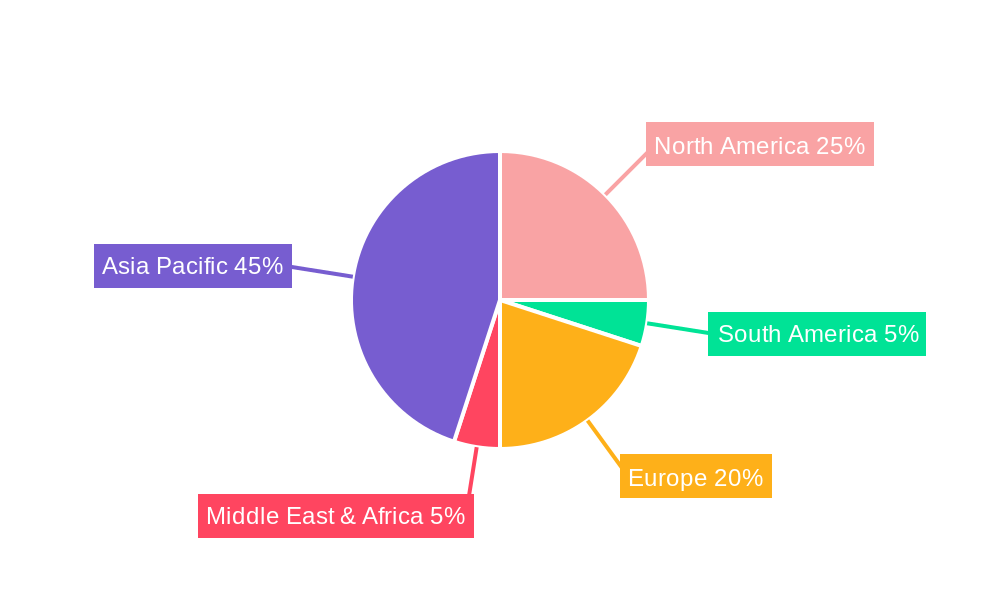
Semiconductor Wet Process Pumps Regional Market Share
Geographic Coverage of Semiconductor Wet Process Pumps
Semiconductor Wet Process Pumps REPORT HIGHLIGHTS
| Aspects | Details |
|---|---|
| Study Period | 2020-2034 |
| Base Year | 2025 |
| Estimated Year | 2026 |
| Forecast Period | 2026-2034 |
| Historical Period | 2020-2025 |
| Growth Rate | CAGR of 8% from 2020-2034 |
| Segmentation |
|
Table of Contents
- 1. Introduction
- 1.1. Research Scope
- 1.2. Market Segmentation
- 1.3. Research Methodology
- 1.4. Definitions and Assumptions
- 2. Executive Summary
- 2.1. Introduction
- 3. Market Dynamics
- 3.1. Introduction
- 3.2. Market Drivers
- 3.3. Market Restrains
- 3.4. Market Trends
- 4. Market Factor Analysis
- 4.1. Porters Five Forces
- 4.2. Supply/Value Chain
- 4.3. PESTEL analysis
- 4.4. Market Entropy
- 4.5. Patent/Trademark Analysis
- 5. Global Semiconductor Wet Process Pumps Analysis, Insights and Forecast, 2020-2032
- 5.1. Market Analysis, Insights and Forecast - by Application
- 5.1.1. Wafer Cleaning
- 5.1.2. Wafer CMP
- 5.1.3. Wafer Electroplating
- 5.1.4. Wafer Wet Etching
- 5.1.5. Wafer Stripping
- 5.1.6. Others
- 5.2. Market Analysis, Insights and Forecast - by Type
- 5.2.1. Maglev Pumps
- 5.2.2. Diaphragm Pumps
- 5.2.3. Bellows Pumps
- 5.3. Market Analysis, Insights and Forecast - by Region
- 5.3.1. North America
- 5.3.2. South America
- 5.3.3. Europe
- 5.3.4. Middle East & Africa
- 5.3.5. Asia Pacific
- 5.1. Market Analysis, Insights and Forecast - by Application
- 6. North America Semiconductor Wet Process Pumps Analysis, Insights and Forecast, 2020-2032
- 6.1. Market Analysis, Insights and Forecast - by Application
- 6.1.1. Wafer Cleaning
- 6.1.2. Wafer CMP
- 6.1.3. Wafer Electroplating
- 6.1.4. Wafer Wet Etching
- 6.1.5. Wafer Stripping
- 6.1.6. Others
- 6.2. Market Analysis, Insights and Forecast - by Type
- 6.2.1. Maglev Pumps
- 6.2.2. Diaphragm Pumps
- 6.2.3. Bellows Pumps
- 6.1. Market Analysis, Insights and Forecast - by Application
- 7. South America Semiconductor Wet Process Pumps Analysis, Insights and Forecast, 2020-2032
- 7.1. Market Analysis, Insights and Forecast - by Application
- 7.1.1. Wafer Cleaning
- 7.1.2. Wafer CMP
- 7.1.3. Wafer Electroplating
- 7.1.4. Wafer Wet Etching
- 7.1.5. Wafer Stripping
- 7.1.6. Others
- 7.2. Market Analysis, Insights and Forecast - by Type
- 7.2.1. Maglev Pumps
- 7.2.2. Diaphragm Pumps
- 7.2.3. Bellows Pumps
- 7.1. Market Analysis, Insights and Forecast - by Application
- 8. Europe Semiconductor Wet Process Pumps Analysis, Insights and Forecast, 2020-2032
- 8.1. Market Analysis, Insights and Forecast - by Application
- 8.1.1. Wafer Cleaning
- 8.1.2. Wafer CMP
- 8.1.3. Wafer Electroplating
- 8.1.4. Wafer Wet Etching
- 8.1.5. Wafer Stripping
- 8.1.6. Others
- 8.2. Market Analysis, Insights and Forecast - by Type
- 8.2.1. Maglev Pumps
- 8.2.2. Diaphragm Pumps
- 8.2.3. Bellows Pumps
- 8.1. Market Analysis, Insights and Forecast - by Application
- 9. Middle East & Africa Semiconductor Wet Process Pumps Analysis, Insights and Forecast, 2020-2032
- 9.1. Market Analysis, Insights and Forecast - by Application
- 9.1.1. Wafer Cleaning
- 9.1.2. Wafer CMP
- 9.1.3. Wafer Electroplating
- 9.1.4. Wafer Wet Etching
- 9.1.5. Wafer Stripping
- 9.1.6. Others
- 9.2. Market Analysis, Insights and Forecast - by Type
- 9.2.1. Maglev Pumps
- 9.2.2. Diaphragm Pumps
- 9.2.3. Bellows Pumps
- 9.1. Market Analysis, Insights and Forecast - by Application
- 10. Asia Pacific Semiconductor Wet Process Pumps Analysis, Insights and Forecast, 2020-2032
- 10.1. Market Analysis, Insights and Forecast - by Application
- 10.1.1. Wafer Cleaning
- 10.1.2. Wafer CMP
- 10.1.3. Wafer Electroplating
- 10.1.4. Wafer Wet Etching
- 10.1.5. Wafer Stripping
- 10.1.6. Others
- 10.2. Market Analysis, Insights and Forecast - by Type
- 10.2.1. Maglev Pumps
- 10.2.2. Diaphragm Pumps
- 10.2.3. Bellows Pumps
- 10.1. Market Analysis, Insights and Forecast - by Application
- 11. Competitive Analysis
- 11.1. Global Market Share Analysis 2025
- 11.2. Company Profiles
- 11.2.1 Trebor International
- 11.2.1.1. Overview
- 11.2.1.2. Products
- 11.2.1.3. SWOT Analysis
- 11.2.1.4. Recent Developments
- 11.2.1.5. Financials (Based on Availability)
- 11.2.2 White Knight (Graco)
- 11.2.2.1. Overview
- 11.2.2.2. Products
- 11.2.2.3. SWOT Analysis
- 11.2.2.4. Recent Developments
- 11.2.2.5. Financials (Based on Availability)
- 11.2.3 Saint-Gobain
- 11.2.3.1. Overview
- 11.2.3.2. Products
- 11.2.3.3. SWOT Analysis
- 11.2.3.4. Recent Developments
- 11.2.3.5. Financials (Based on Availability)
- 11.2.4 SAT Group
- 11.2.4.1. Overview
- 11.2.4.2. Products
- 11.2.4.3. SWOT Analysis
- 11.2.4.4. Recent Developments
- 11.2.4.5. Financials (Based on Availability)
- 11.2.5 Levitronix
- 11.2.5.1. Overview
- 11.2.5.2. Products
- 11.2.5.3. SWOT Analysis
- 11.2.5.4. Recent Developments
- 11.2.5.5. Financials (Based on Availability)
- 11.2.6 IWAKI
- 11.2.6.1. Overview
- 11.2.6.2. Products
- 11.2.6.3. SWOT Analysis
- 11.2.6.4. Recent Developments
- 11.2.6.5. Financials (Based on Availability)
- 11.2.7 Yamada Pump
- 11.2.7.1. Overview
- 11.2.7.2. Products
- 11.2.7.3. SWOT Analysis
- 11.2.7.4. Recent Developments
- 11.2.7.5. Financials (Based on Availability)
- 11.2.8 Nippon Pillar
- 11.2.8.1. Overview
- 11.2.8.2. Products
- 11.2.8.3. SWOT Analysis
- 11.2.8.4. Recent Developments
- 11.2.8.5. Financials (Based on Availability)
- 11.2.9 Dino Technology
- 11.2.9.1. Overview
- 11.2.9.2. Products
- 11.2.9.3. SWOT Analysis
- 11.2.9.4. Recent Developments
- 11.2.9.5. Financials (Based on Availability)
- 11.2.10 Shenzhen Sicarrier Technologies
- 11.2.10.1. Overview
- 11.2.10.2. Products
- 11.2.10.3. SWOT Analysis
- 11.2.10.4. Recent Developments
- 11.2.10.5. Financials (Based on Availability)
- 11.2.11 Shengyi Semiconductor Technology
- 11.2.11.1. Overview
- 11.2.11.2. Products
- 11.2.11.3. SWOT Analysis
- 11.2.11.4. Recent Developments
- 11.2.11.5. Financials (Based on Availability)
- 11.2.12 Panther Tech
- 11.2.12.1. Overview
- 11.2.12.2. Products
- 11.2.12.3. SWOT Analysis
- 11.2.12.4. Recent Developments
- 11.2.12.5. Financials (Based on Availability)
- 11.2.13 Zhejiang Cheer Technology
- 11.2.13.1. Overview
- 11.2.13.2. Products
- 11.2.13.3. SWOT Analysis
- 11.2.13.4. Recent Developments
- 11.2.13.5. Financials (Based on Availability)
- 11.2.14 Suzhou Supermag Intelligent Technology
- 11.2.14.1. Overview
- 11.2.14.2. Products
- 11.2.14.3. SWOT Analysis
- 11.2.14.4. Recent Developments
- 11.2.14.5. Financials (Based on Availability)
- 11.2.15 Ningbo Zhongjie Laitong Technology
- 11.2.15.1. Overview
- 11.2.15.2. Products
- 11.2.15.3. SWOT Analysis
- 11.2.15.4. Recent Developments
- 11.2.15.5. Financials (Based on Availability)
- 11.2.16 FUXUELAI
- 11.2.16.1. Overview
- 11.2.16.2. Products
- 11.2.16.3. SWOT Analysis
- 11.2.16.4. Recent Developments
- 11.2.16.5. Financials (Based on Availability)
- 11.2.17 Changzhou Ruize Microelectronics
- 11.2.17.1. Overview
- 11.2.17.2. Products
- 11.2.17.3. SWOT Analysis
- 11.2.17.4. Recent Developments
- 11.2.17.5. Financials (Based on Availability)
- 11.2.18 Nantong CSE Semiconductor Equipment
- 11.2.18.1. Overview
- 11.2.18.2. Products
- 11.2.18.3. SWOT Analysis
- 11.2.18.4. Recent Developments
- 11.2.18.5. Financials (Based on Availability)
- 11.2.19 FURAC
- 11.2.19.1. Overview
- 11.2.19.2. Products
- 11.2.19.3. SWOT Analysis
- 11.2.19.4. Recent Developments
- 11.2.19.5. Financials (Based on Availability)
- 11.2.20 Besilan
- 11.2.20.1. Overview
- 11.2.20.2. Products
- 11.2.20.3. SWOT Analysis
- 11.2.20.4. Recent Developments
- 11.2.20.5. Financials (Based on Availability)
- 11.2.21 Yanmu Technology
- 11.2.21.1. Overview
- 11.2.21.2. Products
- 11.2.21.3. SWOT Analysis
- 11.2.21.4. Recent Developments
- 11.2.21.5. Financials (Based on Availability)
- 11.2.22 Jiangsu Minglisi Semiconductor
- 11.2.22.1. Overview
- 11.2.22.2. Products
- 11.2.22.3. SWOT Analysis
- 11.2.22.4. Recent Developments
- 11.2.22.5. Financials (Based on Availability)
- 11.2.1 Trebor International
List of Figures
- Figure 1: Global Semiconductor Wet Process Pumps Revenue Breakdown (undefined, %) by Region 2025 & 2033
- Figure 2: Global Semiconductor Wet Process Pumps Volume Breakdown (K, %) by Region 2025 & 2033
- Figure 3: North America Semiconductor Wet Process Pumps Revenue (undefined), by Application 2025 & 2033
- Figure 4: North America Semiconductor Wet Process Pumps Volume (K), by Application 2025 & 2033
- Figure 5: North America Semiconductor Wet Process Pumps Revenue Share (%), by Application 2025 & 2033
- Figure 6: North America Semiconductor Wet Process Pumps Volume Share (%), by Application 2025 & 2033
- Figure 7: North America Semiconductor Wet Process Pumps Revenue (undefined), by Type 2025 & 2033
- Figure 8: North America Semiconductor Wet Process Pumps Volume (K), by Type 2025 & 2033
- Figure 9: North America Semiconductor Wet Process Pumps Revenue Share (%), by Type 2025 & 2033
- Figure 10: North America Semiconductor Wet Process Pumps Volume Share (%), by Type 2025 & 2033
- Figure 11: North America Semiconductor Wet Process Pumps Revenue (undefined), by Country 2025 & 2033
- Figure 12: North America Semiconductor Wet Process Pumps Volume (K), by Country 2025 & 2033
- Figure 13: North America Semiconductor Wet Process Pumps Revenue Share (%), by Country 2025 & 2033
- Figure 14: North America Semiconductor Wet Process Pumps Volume Share (%), by Country 2025 & 2033
- Figure 15: South America Semiconductor Wet Process Pumps Revenue (undefined), by Application 2025 & 2033
- Figure 16: South America Semiconductor Wet Process Pumps Volume (K), by Application 2025 & 2033
- Figure 17: South America Semiconductor Wet Process Pumps Revenue Share (%), by Application 2025 & 2033
- Figure 18: South America Semiconductor Wet Process Pumps Volume Share (%), by Application 2025 & 2033
- Figure 19: South America Semiconductor Wet Process Pumps Revenue (undefined), by Type 2025 & 2033
- Figure 20: South America Semiconductor Wet Process Pumps Volume (K), by Type 2025 & 2033
- Figure 21: South America Semiconductor Wet Process Pumps Revenue Share (%), by Type 2025 & 2033
- Figure 22: South America Semiconductor Wet Process Pumps Volume Share (%), by Type 2025 & 2033
- Figure 23: South America Semiconductor Wet Process Pumps Revenue (undefined), by Country 2025 & 2033
- Figure 24: South America Semiconductor Wet Process Pumps Volume (K), by Country 2025 & 2033
- Figure 25: South America Semiconductor Wet Process Pumps Revenue Share (%), by Country 2025 & 2033
- Figure 26: South America Semiconductor Wet Process Pumps Volume Share (%), by Country 2025 & 2033
- Figure 27: Europe Semiconductor Wet Process Pumps Revenue (undefined), by Application 2025 & 2033
- Figure 28: Europe Semiconductor Wet Process Pumps Volume (K), by Application 2025 & 2033
- Figure 29: Europe Semiconductor Wet Process Pumps Revenue Share (%), by Application 2025 & 2033
- Figure 30: Europe Semiconductor Wet Process Pumps Volume Share (%), by Application 2025 & 2033
- Figure 31: Europe Semiconductor Wet Process Pumps Revenue (undefined), by Type 2025 & 2033
- Figure 32: Europe Semiconductor Wet Process Pumps Volume (K), by Type 2025 & 2033
- Figure 33: Europe Semiconductor Wet Process Pumps Revenue Share (%), by Type 2025 & 2033
- Figure 34: Europe Semiconductor Wet Process Pumps Volume Share (%), by Type 2025 & 2033
- Figure 35: Europe Semiconductor Wet Process Pumps Revenue (undefined), by Country 2025 & 2033
- Figure 36: Europe Semiconductor Wet Process Pumps Volume (K), by Country 2025 & 2033
- Figure 37: Europe Semiconductor Wet Process Pumps Revenue Share (%), by Country 2025 & 2033
- Figure 38: Europe Semiconductor Wet Process Pumps Volume Share (%), by Country 2025 & 2033
- Figure 39: Middle East & Africa Semiconductor Wet Process Pumps Revenue (undefined), by Application 2025 & 2033
- Figure 40: Middle East & Africa Semiconductor Wet Process Pumps Volume (K), by Application 2025 & 2033
- Figure 41: Middle East & Africa Semiconductor Wet Process Pumps Revenue Share (%), by Application 2025 & 2033
- Figure 42: Middle East & Africa Semiconductor Wet Process Pumps Volume Share (%), by Application 2025 & 2033
- Figure 43: Middle East & Africa Semiconductor Wet Process Pumps Revenue (undefined), by Type 2025 & 2033
- Figure 44: Middle East & Africa Semiconductor Wet Process Pumps Volume (K), by Type 2025 & 2033
- Figure 45: Middle East & Africa Semiconductor Wet Process Pumps Revenue Share (%), by Type 2025 & 2033
- Figure 46: Middle East & Africa Semiconductor Wet Process Pumps Volume Share (%), by Type 2025 & 2033
- Figure 47: Middle East & Africa Semiconductor Wet Process Pumps Revenue (undefined), by Country 2025 & 2033
- Figure 48: Middle East & Africa Semiconductor Wet Process Pumps Volume (K), by Country 2025 & 2033
- Figure 49: Middle East & Africa Semiconductor Wet Process Pumps Revenue Share (%), by Country 2025 & 2033
- Figure 50: Middle East & Africa Semiconductor Wet Process Pumps Volume Share (%), by Country 2025 & 2033
- Figure 51: Asia Pacific Semiconductor Wet Process Pumps Revenue (undefined), by Application 2025 & 2033
- Figure 52: Asia Pacific Semiconductor Wet Process Pumps Volume (K), by Application 2025 & 2033
- Figure 53: Asia Pacific Semiconductor Wet Process Pumps Revenue Share (%), by Application 2025 & 2033
- Figure 54: Asia Pacific Semiconductor Wet Process Pumps Volume Share (%), by Application 2025 & 2033
- Figure 55: Asia Pacific Semiconductor Wet Process Pumps Revenue (undefined), by Type 2025 & 2033
- Figure 56: Asia Pacific Semiconductor Wet Process Pumps Volume (K), by Type 2025 & 2033
- Figure 57: Asia Pacific Semiconductor Wet Process Pumps Revenue Share (%), by Type 2025 & 2033
- Figure 58: Asia Pacific Semiconductor Wet Process Pumps Volume Share (%), by Type 2025 & 2033
- Figure 59: Asia Pacific Semiconductor Wet Process Pumps Revenue (undefined), by Country 2025 & 2033
- Figure 60: Asia Pacific Semiconductor Wet Process Pumps Volume (K), by Country 2025 & 2033
- Figure 61: Asia Pacific Semiconductor Wet Process Pumps Revenue Share (%), by Country 2025 & 2033
- Figure 62: Asia Pacific Semiconductor Wet Process Pumps Volume Share (%), by Country 2025 & 2033
List of Tables
- Table 1: Global Semiconductor Wet Process Pumps Revenue undefined Forecast, by Application 2020 & 2033
- Table 2: Global Semiconductor Wet Process Pumps Volume K Forecast, by Application 2020 & 2033
- Table 3: Global Semiconductor Wet Process Pumps Revenue undefined Forecast, by Type 2020 & 2033
- Table 4: Global Semiconductor Wet Process Pumps Volume K Forecast, by Type 2020 & 2033
- Table 5: Global Semiconductor Wet Process Pumps Revenue undefined Forecast, by Region 2020 & 2033
- Table 6: Global Semiconductor Wet Process Pumps Volume K Forecast, by Region 2020 & 2033
- Table 7: Global Semiconductor Wet Process Pumps Revenue undefined Forecast, by Application 2020 & 2033
- Table 8: Global Semiconductor Wet Process Pumps Volume K Forecast, by Application 2020 & 2033
- Table 9: Global Semiconductor Wet Process Pumps Revenue undefined Forecast, by Type 2020 & 2033
- Table 10: Global Semiconductor Wet Process Pumps Volume K Forecast, by Type 2020 & 2033
- Table 11: Global Semiconductor Wet Process Pumps Revenue undefined Forecast, by Country 2020 & 2033
- Table 12: Global Semiconductor Wet Process Pumps Volume K Forecast, by Country 2020 & 2033
- Table 13: United States Semiconductor Wet Process Pumps Revenue (undefined) Forecast, by Application 2020 & 2033
- Table 14: United States Semiconductor Wet Process Pumps Volume (K) Forecast, by Application 2020 & 2033
- Table 15: Canada Semiconductor Wet Process Pumps Revenue (undefined) Forecast, by Application 2020 & 2033
- Table 16: Canada Semiconductor Wet Process Pumps Volume (K) Forecast, by Application 2020 & 2033
- Table 17: Mexico Semiconductor Wet Process Pumps Revenue (undefined) Forecast, by Application 2020 & 2033
- Table 18: Mexico Semiconductor Wet Process Pumps Volume (K) Forecast, by Application 2020 & 2033
- Table 19: Global Semiconductor Wet Process Pumps Revenue undefined Forecast, by Application 2020 & 2033
- Table 20: Global Semiconductor Wet Process Pumps Volume K Forecast, by Application 2020 & 2033
- Table 21: Global Semiconductor Wet Process Pumps Revenue undefined Forecast, by Type 2020 & 2033
- Table 22: Global Semiconductor Wet Process Pumps Volume K Forecast, by Type 2020 & 2033
- Table 23: Global Semiconductor Wet Process Pumps Revenue undefined Forecast, by Country 2020 & 2033
- Table 24: Global Semiconductor Wet Process Pumps Volume K Forecast, by Country 2020 & 2033
- Table 25: Brazil Semiconductor Wet Process Pumps Revenue (undefined) Forecast, by Application 2020 & 2033
- Table 26: Brazil Semiconductor Wet Process Pumps Volume (K) Forecast, by Application 2020 & 2033
- Table 27: Argentina Semiconductor Wet Process Pumps Revenue (undefined) Forecast, by Application 2020 & 2033
- Table 28: Argentina Semiconductor Wet Process Pumps Volume (K) Forecast, by Application 2020 & 2033
- Table 29: Rest of South America Semiconductor Wet Process Pumps Revenue (undefined) Forecast, by Application 2020 & 2033
- Table 30: Rest of South America Semiconductor Wet Process Pumps Volume (K) Forecast, by Application 2020 & 2033
- Table 31: Global Semiconductor Wet Process Pumps Revenue undefined Forecast, by Application 2020 & 2033
- Table 32: Global Semiconductor Wet Process Pumps Volume K Forecast, by Application 2020 & 2033
- Table 33: Global Semiconductor Wet Process Pumps Revenue undefined Forecast, by Type 2020 & 2033
- Table 34: Global Semiconductor Wet Process Pumps Volume K Forecast, by Type 2020 & 2033
- Table 35: Global Semiconductor Wet Process Pumps Revenue undefined Forecast, by Country 2020 & 2033
- Table 36: Global Semiconductor Wet Process Pumps Volume K Forecast, by Country 2020 & 2033
- Table 37: United Kingdom Semiconductor Wet Process Pumps Revenue (undefined) Forecast, by Application 2020 & 2033
- Table 38: United Kingdom Semiconductor Wet Process Pumps Volume (K) Forecast, by Application 2020 & 2033
- Table 39: Germany Semiconductor Wet Process Pumps Revenue (undefined) Forecast, by Application 2020 & 2033
- Table 40: Germany Semiconductor Wet Process Pumps Volume (K) Forecast, by Application 2020 & 2033
- Table 41: France Semiconductor Wet Process Pumps Revenue (undefined) Forecast, by Application 2020 & 2033
- Table 42: France Semiconductor Wet Process Pumps Volume (K) Forecast, by Application 2020 & 2033
- Table 43: Italy Semiconductor Wet Process Pumps Revenue (undefined) Forecast, by Application 2020 & 2033
- Table 44: Italy Semiconductor Wet Process Pumps Volume (K) Forecast, by Application 2020 & 2033
- Table 45: Spain Semiconductor Wet Process Pumps Revenue (undefined) Forecast, by Application 2020 & 2033
- Table 46: Spain Semiconductor Wet Process Pumps Volume (K) Forecast, by Application 2020 & 2033
- Table 47: Russia Semiconductor Wet Process Pumps Revenue (undefined) Forecast, by Application 2020 & 2033
- Table 48: Russia Semiconductor Wet Process Pumps Volume (K) Forecast, by Application 2020 & 2033
- Table 49: Benelux Semiconductor Wet Process Pumps Revenue (undefined) Forecast, by Application 2020 & 2033
- Table 50: Benelux Semiconductor Wet Process Pumps Volume (K) Forecast, by Application 2020 & 2033
- Table 51: Nordics Semiconductor Wet Process Pumps Revenue (undefined) Forecast, by Application 2020 & 2033
- Table 52: Nordics Semiconductor Wet Process Pumps Volume (K) Forecast, by Application 2020 & 2033
- Table 53: Rest of Europe Semiconductor Wet Process Pumps Revenue (undefined) Forecast, by Application 2020 & 2033
- Table 54: Rest of Europe Semiconductor Wet Process Pumps Volume (K) Forecast, by Application 2020 & 2033
- Table 55: Global Semiconductor Wet Process Pumps Revenue undefined Forecast, by Application 2020 & 2033
- Table 56: Global Semiconductor Wet Process Pumps Volume K Forecast, by Application 2020 & 2033
- Table 57: Global Semiconductor Wet Process Pumps Revenue undefined Forecast, by Type 2020 & 2033
- Table 58: Global Semiconductor Wet Process Pumps Volume K Forecast, by Type 2020 & 2033
- Table 59: Global Semiconductor Wet Process Pumps Revenue undefined Forecast, by Country 2020 & 2033
- Table 60: Global Semiconductor Wet Process Pumps Volume K Forecast, by Country 2020 & 2033
- Table 61: Turkey Semiconductor Wet Process Pumps Revenue (undefined) Forecast, by Application 2020 & 2033
- Table 62: Turkey Semiconductor Wet Process Pumps Volume (K) Forecast, by Application 2020 & 2033
- Table 63: Israel Semiconductor Wet Process Pumps Revenue (undefined) Forecast, by Application 2020 & 2033
- Table 64: Israel Semiconductor Wet Process Pumps Volume (K) Forecast, by Application 2020 & 2033
- Table 65: GCC Semiconductor Wet Process Pumps Revenue (undefined) Forecast, by Application 2020 & 2033
- Table 66: GCC Semiconductor Wet Process Pumps Volume (K) Forecast, by Application 2020 & 2033
- Table 67: North Africa Semiconductor Wet Process Pumps Revenue (undefined) Forecast, by Application 2020 & 2033
- Table 68: North Africa Semiconductor Wet Process Pumps Volume (K) Forecast, by Application 2020 & 2033
- Table 69: South Africa Semiconductor Wet Process Pumps Revenue (undefined) Forecast, by Application 2020 & 2033
- Table 70: South Africa Semiconductor Wet Process Pumps Volume (K) Forecast, by Application 2020 & 2033
- Table 71: Rest of Middle East & Africa Semiconductor Wet Process Pumps Revenue (undefined) Forecast, by Application 2020 & 2033
- Table 72: Rest of Middle East & Africa Semiconductor Wet Process Pumps Volume (K) Forecast, by Application 2020 & 2033
- Table 73: Global Semiconductor Wet Process Pumps Revenue undefined Forecast, by Application 2020 & 2033
- Table 74: Global Semiconductor Wet Process Pumps Volume K Forecast, by Application 2020 & 2033
- Table 75: Global Semiconductor Wet Process Pumps Revenue undefined Forecast, by Type 2020 & 2033
- Table 76: Global Semiconductor Wet Process Pumps Volume K Forecast, by Type 2020 & 2033
- Table 77: Global Semiconductor Wet Process Pumps Revenue undefined Forecast, by Country 2020 & 2033
- Table 78: Global Semiconductor Wet Process Pumps Volume K Forecast, by Country 2020 & 2033
- Table 79: China Semiconductor Wet Process Pumps Revenue (undefined) Forecast, by Application 2020 & 2033
- Table 80: China Semiconductor Wet Process Pumps Volume (K) Forecast, by Application 2020 & 2033
- Table 81: India Semiconductor Wet Process Pumps Revenue (undefined) Forecast, by Application 2020 & 2033
- Table 82: India Semiconductor Wet Process Pumps Volume (K) Forecast, by Application 2020 & 2033
- Table 83: Japan Semiconductor Wet Process Pumps Revenue (undefined) Forecast, by Application 2020 & 2033
- Table 84: Japan Semiconductor Wet Process Pumps Volume (K) Forecast, by Application 2020 & 2033
- Table 85: South Korea Semiconductor Wet Process Pumps Revenue (undefined) Forecast, by Application 2020 & 2033
- Table 86: South Korea Semiconductor Wet Process Pumps Volume (K) Forecast, by Application 2020 & 2033
- Table 87: ASEAN Semiconductor Wet Process Pumps Revenue (undefined) Forecast, by Application 2020 & 2033
- Table 88: ASEAN Semiconductor Wet Process Pumps Volume (K) Forecast, by Application 2020 & 2033
- Table 89: Oceania Semiconductor Wet Process Pumps Revenue (undefined) Forecast, by Application 2020 & 2033
- Table 90: Oceania Semiconductor Wet Process Pumps Volume (K) Forecast, by Application 2020 & 2033
- Table 91: Rest of Asia Pacific Semiconductor Wet Process Pumps Revenue (undefined) Forecast, by Application 2020 & 2033
- Table 92: Rest of Asia Pacific Semiconductor Wet Process Pumps Volume (K) Forecast, by Application 2020 & 2033
Frequently Asked Questions
1. What is the projected Compound Annual Growth Rate (CAGR) of the Semiconductor Wet Process Pumps?
The projected CAGR is approximately 8%.
2. Which companies are prominent players in the Semiconductor Wet Process Pumps?
Key companies in the market include Trebor International, White Knight (Graco), Saint-Gobain, SAT Group, Levitronix, IWAKI, Yamada Pump, Nippon Pillar, Dino Technology, Shenzhen Sicarrier Technologies, Shengyi Semiconductor Technology, Panther Tech, Zhejiang Cheer Technology, Suzhou Supermag Intelligent Technology, Ningbo Zhongjie Laitong Technology, FUXUELAI, Changzhou Ruize Microelectronics, Nantong CSE Semiconductor Equipment, FURAC, Besilan, Yanmu Technology, Jiangsu Minglisi Semiconductor.
3. What are the main segments of the Semiconductor Wet Process Pumps?
The market segments include Application, Type.
4. Can you provide details about the market size?
The market size is estimated to be USD XXX N/A as of 2022.
5. What are some drivers contributing to market growth?
N/A
6. What are the notable trends driving market growth?
N/A
7. Are there any restraints impacting market growth?
N/A
8. Can you provide examples of recent developments in the market?
N/A
9. What pricing options are available for accessing the report?
Pricing options include single-user, multi-user, and enterprise licenses priced at USD 3950.00, USD 5925.00, and USD 7900.00 respectively.
10. Is the market size provided in terms of value or volume?
The market size is provided in terms of value, measured in N/A and volume, measured in K.
11. Are there any specific market keywords associated with the report?
Yes, the market keyword associated with the report is "Semiconductor Wet Process Pumps," which aids in identifying and referencing the specific market segment covered.
12. How do I determine which pricing option suits my needs best?
The pricing options vary based on user requirements and access needs. Individual users may opt for single-user licenses, while businesses requiring broader access may choose multi-user or enterprise licenses for cost-effective access to the report.
13. Are there any additional resources or data provided in the Semiconductor Wet Process Pumps report?
While the report offers comprehensive insights, it's advisable to review the specific contents or supplementary materials provided to ascertain if additional resources or data are available.
14. How can I stay updated on further developments or reports in the Semiconductor Wet Process Pumps?
To stay informed about further developments, trends, and reports in the Semiconductor Wet Process Pumps, consider subscribing to industry newsletters, following relevant companies and organizations, or regularly checking reputable industry news sources and publications.
Methodology
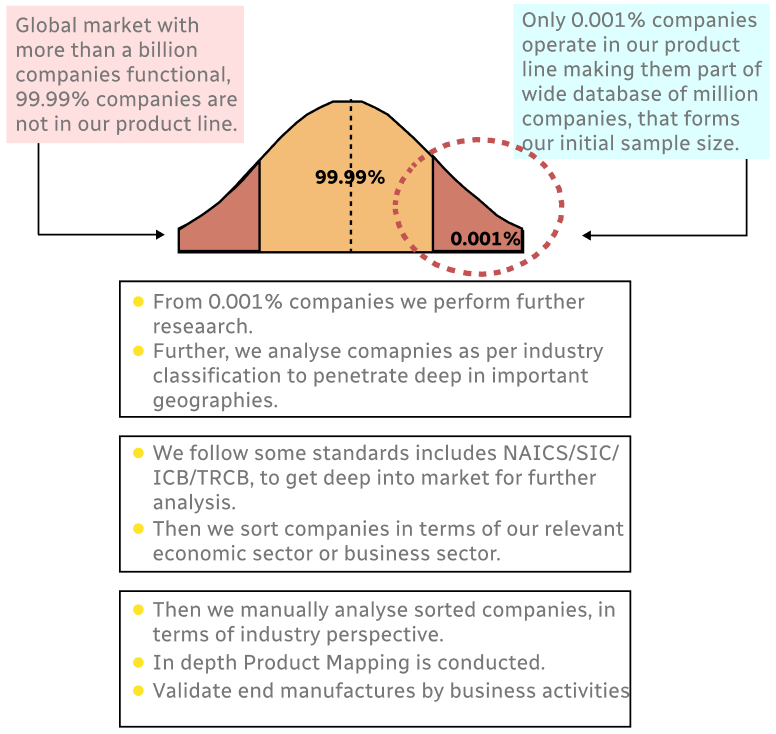
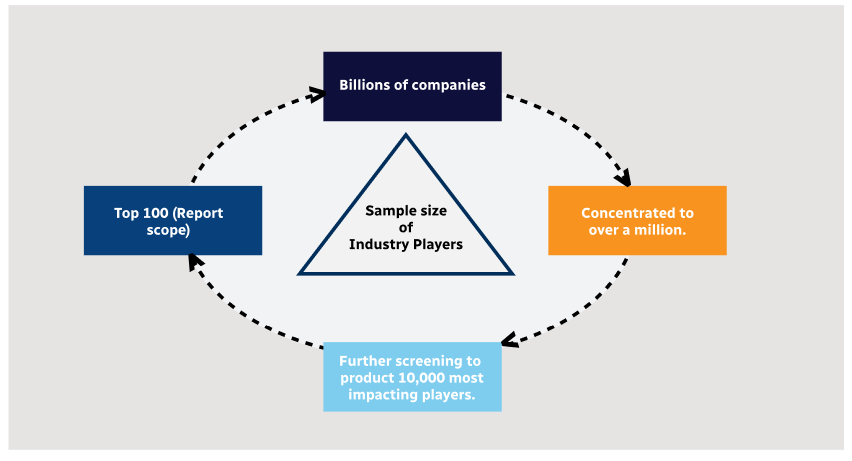
Step 1 - Identification of Relevant Samples Size from Population Database
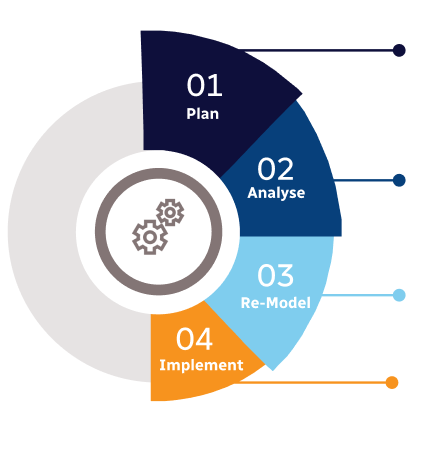
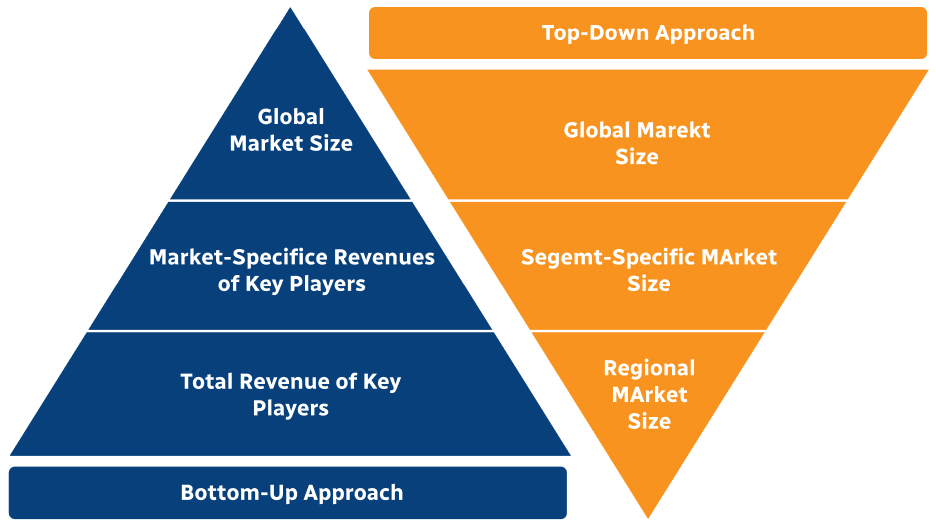
Step 2 - Approaches for Defining Global Market Size (Value, Volume* & Price*)
Note*: In applicable scenarios
Step 3 - Data Sources
Primary Research
- Web Analytics
- Survey Reports
- Research Institute
- Latest Research Reports
- Opinion Leaders
Secondary Research
- Annual Reports
- White Paper
- Latest Press Release
- Industry Association
- Paid Database
- Investor Presentations
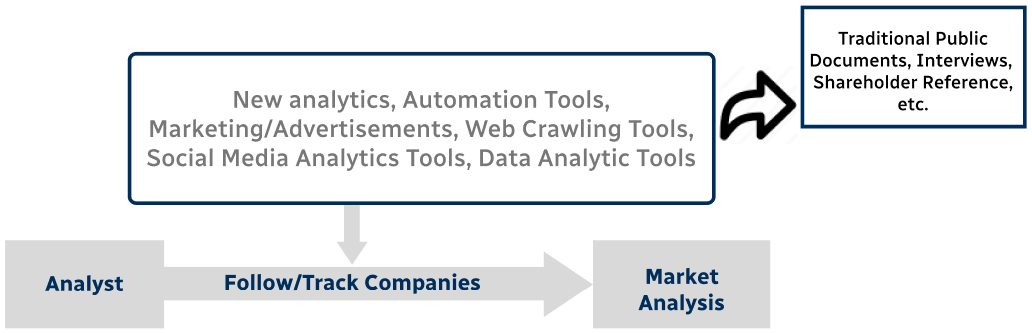
Step 4 - Data Triangulation
Involves using different sources of information in order to increase the validity of a study
These sources are likely to be stakeholders in a program - participants, other researchers, program staff, other community members, and so on.
Then we put all data in single framework & apply various statistical tools to find out the dynamic on the market.
During the analysis stage, feedback from the stakeholder groups would be compared to determine areas of agreement as well as areas of divergence