
Key Insights
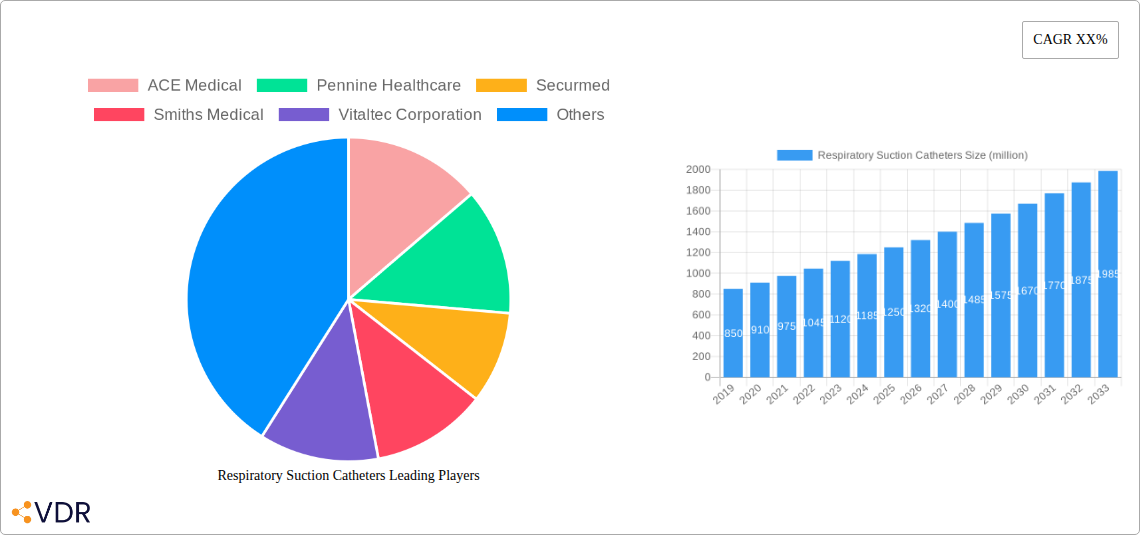
The global Respiratory Suction Catheters market is experiencing robust growth, projected to reach an estimated market size of approximately USD 1,250 million by 2025, with a Compound Annual Growth Rate (CAGR) of around 7.5% through 2033. This expansion is primarily fueled by the increasing prevalence of respiratory diseases such as Chronic Obstructive Pulmonary Disease (COPD), pneumonia, and cystic fibrosis, particularly among aging populations worldwide. The rising incidence of hospital-acquired infections and the growing demand for effective airway management solutions in critical care settings further bolster market demand. Technological advancements in catheter design, including the development of antimicrobial coatings, enhanced tip configurations for improved patient comfort and efficacy, and the introduction of specialized catheters for specific applications like neonatal care, are also significant drivers. The increasing focus on home healthcare and the growing adoption of portable suction devices are creating new avenues for market penetration.
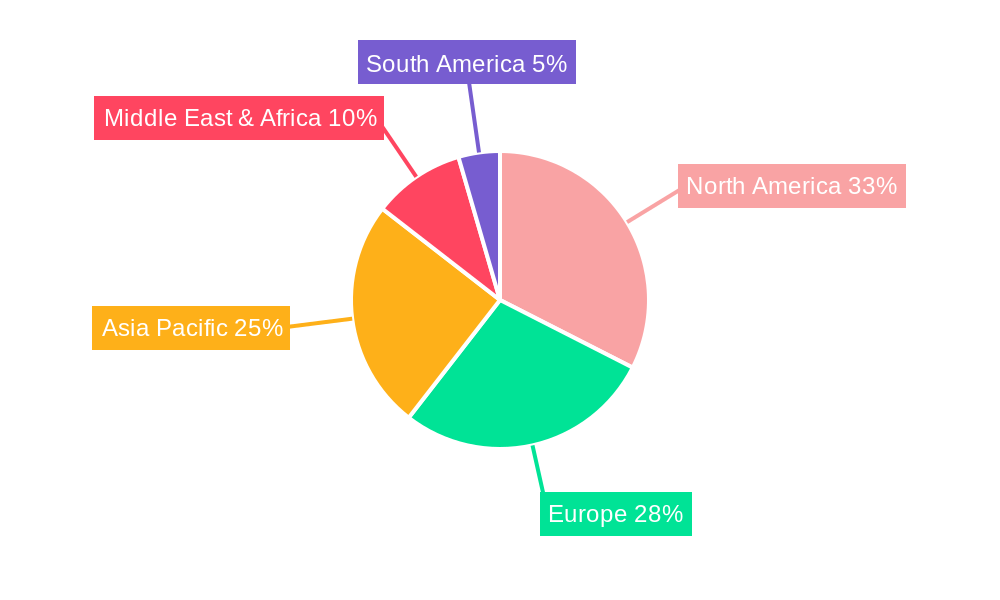
Key market restraints include stringent regulatory approvals for medical devices and the potential for hospital budget constraints, which can impact procurement cycles. However, these are largely offset by the continuous innovation in product features and the expanding application scope of respiratory suction catheters across various medical disciplines beyond traditional pulmonary and ENT uses, including neurology and critical care. The market segmentation by type indicates a steady demand for both single-lumen and double-lumen catheters, with the former holding a larger share due to its widespread use in basic suctioning procedures. Geographically, North America and Europe currently dominate the market, driven by advanced healthcare infrastructure, high healthcare expenditure, and a large patient pool. However, the Asia Pacific region is poised for significant growth, fueled by increasing healthcare awareness, improving access to medical facilities, and a rising burden of respiratory ailments. Key players like Smiths Medical, Vyaire Medical, and Vygon are actively engaged in research and development and strategic collaborations to expand their market presence and cater to evolving clinical needs.
Respiratory Suction Catheters Market Dynamics & Structure
The global respiratory suction catheter market is characterized by a moderate to high level of concentration, with a few key players dominating the landscape. Technological innovation remains a significant driver, focusing on enhanced patient comfort, reduced infection risk, and improved efficacy in airway clearance. Regulatory frameworks, particularly those from the FDA and EMA, play a crucial role in dictating product approvals, quality standards, and market access, impacting both the parent market and child market segments. Competitive product substitutes, such as mechanical insufflation-exsufflation devices, present a minor but growing challenge. End-user demographics are shifting towards an aging population with increasing prevalence of respiratory conditions, driving demand for effective suction solutions. Mergers and acquisitions (M&A) activity, while not extensive, has been observed as companies seek to expand their product portfolios and geographical reach.
- Market Concentration: Dominated by approximately 6-8 major global manufacturers.
- Technological Innovation Drivers: Advanced materials for reduced friction, integrated antimicrobial coatings, and ergonomic designs.
- Regulatory Frameworks: Stringent FDA and CE marking requirements influence product development and market entry timelines.
- Competitive Product Substitutes: Mechanical insufflation-exsufflation devices and advanced airway clearance systems.
- End-User Demographics: Growing elderly population and increased incidence of chronic obstructive pulmonary disease (COPD) and pneumonia.
- M&A Trends: Targeted acquisitions to gain market share in niche applications or specific regions.
Respiratory Suction Catheters Growth Trends & Insights
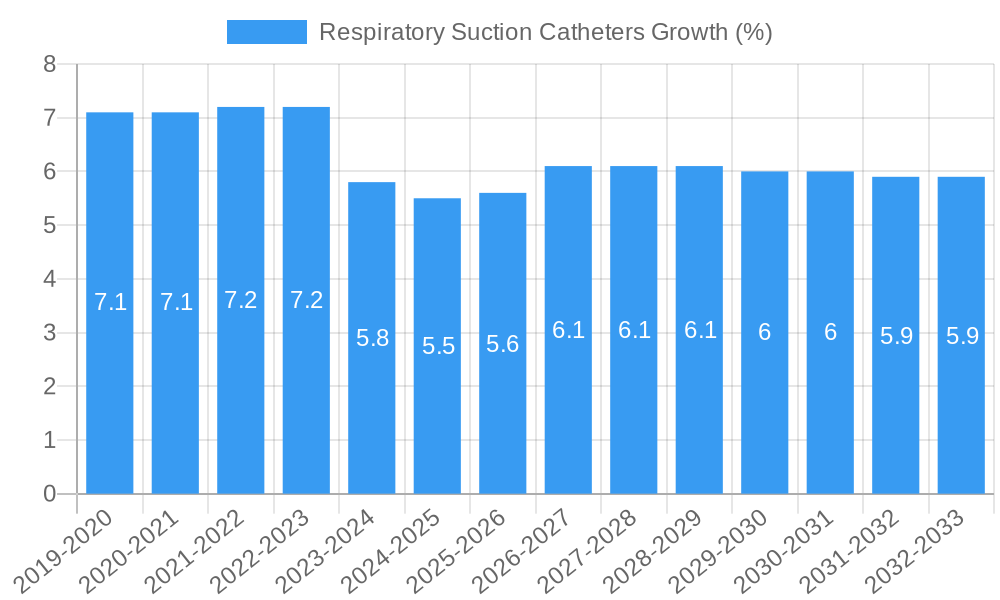
The respiratory suction catheter market is poised for robust growth, projected to expand from an estimated USD 1,850 million in 2025 to USD 2,500 million by 2033, exhibiting a Compound Annual Growth Rate (CAGR) of approximately 3.8%. This expansion is underpinned by a confluence of factors, including the escalating global burden of respiratory diseases, advancements in medical technology, and a growing emphasis on patient-centric care. The increasing prevalence of conditions such as Chronic Obstructive Pulmonary Disease (COPD), pneumonia, and cystic fibrosis, particularly among aging populations and individuals with compromised immune systems, directly fuels the demand for effective airway management solutions like respiratory suction catheters.
Adoption rates for advanced suction catheters, featuring enhanced designs for improved patient comfort and reduced risk of trauma, are on an upward trajectory. Technological disruptions are manifesting in the development of antimicrobial-coated catheters, reducing the incidence of hospital-acquired infections, and single-use, sterile designs becoming the standard of care. Furthermore, the integration of smart features, though nascent, is an emerging trend. Consumer behavior shifts are driven by a greater awareness among healthcare providers and patients regarding the importance of efficient airway clearance for improved treatment outcomes and reduced hospital stays. The pulmonary application segment is expected to remain the largest contributor to market size, driven by its widespread use in managing conditions like pneumonia and COPD.
The ENT application segment also presents significant growth potential, particularly in procedures requiring clear airways for diagnosis and treatment. The increasing number of ENT surgeries, coupled with the management of airway secretions in critical care settings, is a key driver for this segment. In terms of product types, single-lumen suction catheters continue to dominate the market due to their cost-effectiveness and broad applicability in routine suctioning. However, double-lumen suction catheters are gaining traction in specific clinical scenarios requiring continuous suction and irrigation, showcasing a growing adoption for specialized needs. The market penetration of respiratory suction catheters is expected to deepen across both developed and emerging economies as healthcare infrastructure improves and awareness of respiratory care best practices spreads.
Dominant Regions, Countries, or Segments in Respiratory Suction Catheters
The North America region stands as a dominant force in the global respiratory suction catheter market, driven by a robust healthcare infrastructure, high per capita healthcare spending, and a disproportionately large aging population prone to respiratory ailments. The United States, in particular, contributes significantly to this dominance, with advanced healthcare systems, widespread adoption of medical technologies, and a high incidence of respiratory diseases like COPD and pneumonia. Favorable reimbursement policies and a strong presence of leading medical device manufacturers further bolster the market's strength in this region.
The pulmonary application segment is overwhelmingly the largest and most dominant segment within the respiratory suction catheter market. This is directly attributable to the critical need for effective airway clearance in managing a wide spectrum of pulmonary conditions, ranging from acute exacerbations of COPD and asthma to post-operative care and the management of ventilators. The sheer volume of patients requiring pulmonary toilet procedures, often multiple times a day, makes this application the primary demand driver. The single-lumen suction catheter type continues to hold a commanding market share due to its versatility, cost-effectiveness, and suitability for the majority of standard suctioning needs across various healthcare settings, from hospitals to home care.
Key drivers for the dominance of North America and the pulmonary application segment include:
North America:
- Economic Policies: High healthcare expenditure and supportive reimbursement frameworks for respiratory care devices.
- Infrastructure: Well-established hospital networks and advanced critical care units.
- Demographics: A large and growing elderly population with a higher prevalence of chronic respiratory diseases.
- Technological Adoption: Early and widespread adoption of advanced medical technologies and disposable devices.
- Market Share: North America is estimated to hold approximately 35-40% of the global respiratory suction catheter market share.
- Growth Potential: Continued steady growth driven by an aging population and increasing focus on home healthcare.
Pulmonary Application Segment:
- Clinical Necessity: Essential for managing secretions in critical respiratory conditions.
- Patient Volume: A vast number of patients requiring airway clearance procedures.
- Cost-Effectiveness: Widely adopted across all healthcare settings.
- Market Share: This segment is projected to account for over 60% of the total market revenue.
- Growth Potential: Sustained growth driven by the persistent burden of respiratory diseases.
Single-Lumen Catheters:
- Versatility: Suitable for a broad range of suctioning applications.
- Affordability: Lower cost compared to specialized catheter types.
- Availability: Widely available and preferred for routine use.
- Market Share: Holds an estimated 70-75% share within the catheter types segment.
- Growth Potential: Continues to be the workhorse of the market, experiencing consistent demand.
Respiratory Suction Catheters Product Landscape
The respiratory suction catheter product landscape is characterized by continuous innovation aimed at enhancing patient safety, clinical efficacy, and ease of use. Manufacturers are focusing on developing catheters with advanced hydrophilic coatings for reduced friction and minimized mucosal trauma, particularly crucial for patients requiring frequent suctioning. Antimicrobial coatings are increasingly being incorporated to combat the risk of healthcare-associated infections. Ergonomic designs, such as angled tips and flexible shafts, improve maneuverability and patient comfort during procedures. Furthermore, the market is seeing a trend towards integrated features, like specialized valve systems for precise suction control and connection adapters for seamless integration with suction machines.
Key Drivers, Barriers & Challenges in Respiratory Suction Catheters
Key Drivers:
- Rising Prevalence of Respiratory Diseases: The escalating global incidence of COPD, pneumonia, asthma, and other respiratory conditions is a primary growth driver.
- Aging Global Population: An increasing elderly demographic is more susceptible to respiratory issues, leading to higher demand for suction management.
- Technological Advancements: Innovations in catheter design, materials, and coatings improve efficacy and patient comfort, driving adoption of advanced products.
- Hospital-Acquired Infection (HAI) Prevention: Growing focus on reducing HAIs is promoting the use of sterile, single-use, and potentially antimicrobial-coated suction catheters.
- Home Healthcare Expansion: The shift towards home-based care for chronic respiratory patients increases the demand for accessible and user-friendly suction devices.
Barriers & Challenges:
- Stringent Regulatory Approvals: The rigorous approval processes for medical devices can prolong market entry and increase development costs.
- Price Sensitivity: Cost-effectiveness remains a significant consideration for many healthcare providers, particularly in budget-constrained markets, limiting the adoption of premium products.
- Availability of Substitutes: While less prevalent, alternative airway clearance methods can pose a challenge in certain clinical scenarios.
- Supply Chain Disruptions: Global supply chain vulnerabilities, as highlighted by recent events, can impact the availability and cost of raw materials and finished products.
- Reimbursement Policies: Inconsistent or unfavorable reimbursement policies in certain regions can hinder market growth.
Emerging Opportunities in Respiratory Suction Catheters
Emerging opportunities in the respiratory suction catheter market lie in the development of smart catheters equipped with real-time monitoring capabilities for secretion viscosity or airway pressure, offering clinicians more data for personalized patient care. Untapped markets in developing economies, where healthcare infrastructure is rapidly evolving and the burden of respiratory diseases is high, present significant growth potential. Furthermore, the increasing demand for homecare solutions opens avenues for the development of user-friendly, portable, and disposable suction catheter kits tailored for patient self-administration or caregiver use. Innovative applications in specialized medical fields, such as post-surgical airway management in complex procedures, also represent promising areas for product development and market expansion.
Growth Accelerators in the Respiratory Suction Catheters Industry
The respiratory suction catheter industry is experiencing significant growth acceleration driven by several key catalysts. Continuous technological breakthroughs, leading to the development of advanced materials and designs, are enhancing product performance and patient outcomes, thereby stimulating market demand. Strategic partnerships and collaborations between manufacturers, healthcare institutions, and research bodies are fostering innovation and expediting the introduction of novel products. Market expansion strategies, particularly targeting emerging economies with growing healthcare expenditures and a rising incidence of respiratory conditions, are opening up new revenue streams. The increasing adoption of telemedicine and remote patient monitoring also indirectly fuels the need for reliable and efficient respiratory support devices, including suction catheters, for patients being managed outside of traditional hospital settings.
Key Players Shaping the Respiratory Suction Catheters Market
- ACE Medical
- Pennine Healthcare
- Securmed
- Smiths Medical
- Vitaltec Corporation
- Vyaire Medical
- Vygon
- CardioMed Supplies
- GAMA Group
- KindWell Medical
- Novatech
- Summit Medical
- Troge Medical
Notable Milestones in Respiratory Suction Catheters Sector
- 2019: Introduction of advanced antimicrobial-coated suction catheters, aimed at reducing catheter-associated infections.
- 2020: Increased focus on sterile, single-use suction catheter packaging due to the global pandemic, enhancing safety protocols.
- 2021: Development of more flexible and atraumatic catheter tip designs to minimize patient discomfort and tissue damage.
- 2022: Emergence of early-stage prototypes for smart suction catheters with integrated pressure sensing capabilities.
- 2023: Expansion of product lines by key manufacturers to include a wider range of specialized suction catheters for pediatric and neonatal applications.
- 2024: Growing emphasis on sustainable manufacturing practices and the development of more environmentally friendly packaging solutions.
In-Depth Respiratory Suction Catheters Market Outlook
The respiratory suction catheter market is projected for sustained and robust growth, driven by an ever-increasing global demand for effective airway management solutions. The persistent burden of respiratory diseases, coupled with an aging population, forms the bedrock of this expanding market. Future growth will be significantly accelerated by ongoing technological advancements, such as the integration of smart functionalities and the widespread adoption of antimicrobial coatings, which not only improve clinical outcomes but also address critical infection control measures. Strategic market expansion into emerging economies, where healthcare access and infrastructure are rapidly improving, presents a substantial untapped opportunity. Furthermore, the growing trend of home healthcare and the increasing need for user-friendly devices will fuel demand for innovative, patient-centric suction catheter solutions, solidifying the market's positive trajectory for the foreseeable future.
Respiratory Suction Catheters Segmentation
-
1. Application
- 1.1. Pulmonary
- 1.2. ENT
- 1.3. Others
-
2. Types
- 2.1. Single-lumen
- 2.2. Double-lumen
Respiratory Suction Catheters Segmentation By Geography
-
1. North America
- 1.1. United States
- 1.2. Canada
- 1.3. Mexico
-
2. South America
- 2.1. Brazil
- 2.2. Argentina
- 2.3. Rest of South America
-
3. Europe
- 3.1. United Kingdom
- 3.2. Germany
- 3.3. France
- 3.4. Italy
- 3.5. Spain
- 3.6. Russia
- 3.7. Benelux
- 3.8. Nordics
- 3.9. Rest of Europe
-
4. Middle East & Africa
- 4.1. Turkey
- 4.2. Israel
- 4.3. GCC
- 4.4. North Africa
- 4.5. South Africa
- 4.6. Rest of Middle East & Africa
-
5. Asia Pacific
- 5.1. China
- 5.2. India
- 5.3. Japan
- 5.4. South Korea
- 5.5. ASEAN
- 5.6. Oceania
- 5.7. Rest of Asia Pacific
Respiratory Suction Catheters REPORT HIGHLIGHTS
| Aspects | Details |
|---|---|
| Study Period | 2019-2033 |
| Base Year | 2024 |
| Estimated Year | 2025 |
| Forecast Period | 2025-2033 |
| Historical Period | 2019-2024 |
| Growth Rate | CAGR of XX% from 2019-2033 |
| Segmentation |
|
Table of Contents
- 1. Introduction
- 1.1. Research Scope
- 1.2. Market Segmentation
- 1.3. Research Methodology
- 1.4. Definitions and Assumptions
- 2. Executive Summary
- 2.1. Introduction
- 3. Market Dynamics
- 3.1. Introduction
- 3.2. Market Drivers
- 3.3. Market Restrains
- 3.4. Market Trends
- 4. Market Factor Analysis
- 4.1. Porters Five Forces
- 4.2. Supply/Value Chain
- 4.3. PESTEL analysis
- 4.4. Market Entropy
- 4.5. Patent/Trademark Analysis
- 5. Global Respiratory Suction Catheters Analysis, Insights and Forecast, 2019-2031
- 5.1. Market Analysis, Insights and Forecast - by Application
- 5.1.1. Pulmonary
- 5.1.2. ENT
- 5.1.3. Others
- 5.2. Market Analysis, Insights and Forecast - by Types
- 5.2.1. Single-lumen
- 5.2.2. Double-lumen
- 5.3. Market Analysis, Insights and Forecast - by Region
- 5.3.1. North America
- 5.3.2. South America
- 5.3.3. Europe
- 5.3.4. Middle East & Africa
- 5.3.5. Asia Pacific
- 5.1. Market Analysis, Insights and Forecast - by Application
- 6. North America Respiratory Suction Catheters Analysis, Insights and Forecast, 2019-2031
- 6.1. Market Analysis, Insights and Forecast - by Application
- 6.1.1. Pulmonary
- 6.1.2. ENT
- 6.1.3. Others
- 6.2. Market Analysis, Insights and Forecast - by Types
- 6.2.1. Single-lumen
- 6.2.2. Double-lumen
- 6.1. Market Analysis, Insights and Forecast - by Application
- 7. South America Respiratory Suction Catheters Analysis, Insights and Forecast, 2019-2031
- 7.1. Market Analysis, Insights and Forecast - by Application
- 7.1.1. Pulmonary
- 7.1.2. ENT
- 7.1.3. Others
- 7.2. Market Analysis, Insights and Forecast - by Types
- 7.2.1. Single-lumen
- 7.2.2. Double-lumen
- 7.1. Market Analysis, Insights and Forecast - by Application
- 8. Europe Respiratory Suction Catheters Analysis, Insights and Forecast, 2019-2031
- 8.1. Market Analysis, Insights and Forecast - by Application
- 8.1.1. Pulmonary
- 8.1.2. ENT
- 8.1.3. Others
- 8.2. Market Analysis, Insights and Forecast - by Types
- 8.2.1. Single-lumen
- 8.2.2. Double-lumen
- 8.1. Market Analysis, Insights and Forecast - by Application
- 9. Middle East & Africa Respiratory Suction Catheters Analysis, Insights and Forecast, 2019-2031
- 9.1. Market Analysis, Insights and Forecast - by Application
- 9.1.1. Pulmonary
- 9.1.2. ENT
- 9.1.3. Others
- 9.2. Market Analysis, Insights and Forecast - by Types
- 9.2.1. Single-lumen
- 9.2.2. Double-lumen
- 9.1. Market Analysis, Insights and Forecast - by Application
- 10. Asia Pacific Respiratory Suction Catheters Analysis, Insights and Forecast, 2019-2031
- 10.1. Market Analysis, Insights and Forecast - by Application
- 10.1.1. Pulmonary
- 10.1.2. ENT
- 10.1.3. Others
- 10.2. Market Analysis, Insights and Forecast - by Types
- 10.2.1. Single-lumen
- 10.2.2. Double-lumen
- 10.1. Market Analysis, Insights and Forecast - by Application
- 11. Competitive Analysis
- 11.1. Global Market Share Analysis 2024
- 11.2. Company Profiles
- 11.2.1 ACE Medical
- 11.2.1.1. Overview
- 11.2.1.2. Products
- 11.2.1.3. SWOT Analysis
- 11.2.1.4. Recent Developments
- 11.2.1.5. Financials (Based on Availability)
- 11.2.2 Pennine Healthcare
- 11.2.2.1. Overview
- 11.2.2.2. Products
- 11.2.2.3. SWOT Analysis
- 11.2.2.4. Recent Developments
- 11.2.2.5. Financials (Based on Availability)
- 11.2.3 Securmed
- 11.2.3.1. Overview
- 11.2.3.2. Products
- 11.2.3.3. SWOT Analysis
- 11.2.3.4. Recent Developments
- 11.2.3.5. Financials (Based on Availability)
- 11.2.4 Smiths Medical
- 11.2.4.1. Overview
- 11.2.4.2. Products
- 11.2.4.3. SWOT Analysis
- 11.2.4.4. Recent Developments
- 11.2.4.5. Financials (Based on Availability)
- 11.2.5 Vitaltec Corporation
- 11.2.5.1. Overview
- 11.2.5.2. Products
- 11.2.5.3. SWOT Analysis
- 11.2.5.4. Recent Developments
- 11.2.5.5. Financials (Based on Availability)
- 11.2.6 Vyaire Medical
- 11.2.6.1. Overview
- 11.2.6.2. Products
- 11.2.6.3. SWOT Analysis
- 11.2.6.4. Recent Developments
- 11.2.6.5. Financials (Based on Availability)
- 11.2.7 Vygon
- 11.2.7.1. Overview
- 11.2.7.2. Products
- 11.2.7.3. SWOT Analysis
- 11.2.7.4. Recent Developments
- 11.2.7.5. Financials (Based on Availability)
- 11.2.8 CardioMed Supplies
- 11.2.8.1. Overview
- 11.2.8.2. Products
- 11.2.8.3. SWOT Analysis
- 11.2.8.4. Recent Developments
- 11.2.8.5. Financials (Based on Availability)
- 11.2.9 GAMA Group
- 11.2.9.1. Overview
- 11.2.9.2. Products
- 11.2.9.3. SWOT Analysis
- 11.2.9.4. Recent Developments
- 11.2.9.5. Financials (Based on Availability)
- 11.2.10 KindWell Medical
- 11.2.10.1. Overview
- 11.2.10.2. Products
- 11.2.10.3. SWOT Analysis
- 11.2.10.4. Recent Developments
- 11.2.10.5. Financials (Based on Availability)
- 11.2.11 Novatech
- 11.2.11.1. Overview
- 11.2.11.2. Products
- 11.2.11.3. SWOT Analysis
- 11.2.11.4. Recent Developments
- 11.2.11.5. Financials (Based on Availability)
- 11.2.12 Summit Medical
- 11.2.12.1. Overview
- 11.2.12.2. Products
- 11.2.12.3. SWOT Analysis
- 11.2.12.4. Recent Developments
- 11.2.12.5. Financials (Based on Availability)
- 11.2.13 Troge Medical
- 11.2.13.1. Overview
- 11.2.13.2. Products
- 11.2.13.3. SWOT Analysis
- 11.2.13.4. Recent Developments
- 11.2.13.5. Financials (Based on Availability)
- 11.2.1 ACE Medical
List of Figures
- Figure 1: Global Respiratory Suction Catheters Revenue Breakdown (million, %) by Region 2024 & 2032
- Figure 2: Global Respiratory Suction Catheters Volume Breakdown (K, %) by Region 2024 & 2032
- Figure 3: North America Respiratory Suction Catheters Revenue (million), by Application 2024 & 2032
- Figure 4: North America Respiratory Suction Catheters Volume (K), by Application 2024 & 2032
- Figure 5: North America Respiratory Suction Catheters Revenue Share (%), by Application 2024 & 2032
- Figure 6: North America Respiratory Suction Catheters Volume Share (%), by Application 2024 & 2032
- Figure 7: North America Respiratory Suction Catheters Revenue (million), by Types 2024 & 2032
- Figure 8: North America Respiratory Suction Catheters Volume (K), by Types 2024 & 2032
- Figure 9: North America Respiratory Suction Catheters Revenue Share (%), by Types 2024 & 2032
- Figure 10: North America Respiratory Suction Catheters Volume Share (%), by Types 2024 & 2032
- Figure 11: North America Respiratory Suction Catheters Revenue (million), by Country 2024 & 2032
- Figure 12: North America Respiratory Suction Catheters Volume (K), by Country 2024 & 2032
- Figure 13: North America Respiratory Suction Catheters Revenue Share (%), by Country 2024 & 2032
- Figure 14: North America Respiratory Suction Catheters Volume Share (%), by Country 2024 & 2032
- Figure 15: South America Respiratory Suction Catheters Revenue (million), by Application 2024 & 2032
- Figure 16: South America Respiratory Suction Catheters Volume (K), by Application 2024 & 2032
- Figure 17: South America Respiratory Suction Catheters Revenue Share (%), by Application 2024 & 2032
- Figure 18: South America Respiratory Suction Catheters Volume Share (%), by Application 2024 & 2032
- Figure 19: South America Respiratory Suction Catheters Revenue (million), by Types 2024 & 2032
- Figure 20: South America Respiratory Suction Catheters Volume (K), by Types 2024 & 2032
- Figure 21: South America Respiratory Suction Catheters Revenue Share (%), by Types 2024 & 2032
- Figure 22: South America Respiratory Suction Catheters Volume Share (%), by Types 2024 & 2032
- Figure 23: South America Respiratory Suction Catheters Revenue (million), by Country 2024 & 2032
- Figure 24: South America Respiratory Suction Catheters Volume (K), by Country 2024 & 2032
- Figure 25: South America Respiratory Suction Catheters Revenue Share (%), by Country 2024 & 2032
- Figure 26: South America Respiratory Suction Catheters Volume Share (%), by Country 2024 & 2032
- Figure 27: Europe Respiratory Suction Catheters Revenue (million), by Application 2024 & 2032
- Figure 28: Europe Respiratory Suction Catheters Volume (K), by Application 2024 & 2032
- Figure 29: Europe Respiratory Suction Catheters Revenue Share (%), by Application 2024 & 2032
- Figure 30: Europe Respiratory Suction Catheters Volume Share (%), by Application 2024 & 2032
- Figure 31: Europe Respiratory Suction Catheters Revenue (million), by Types 2024 & 2032
- Figure 32: Europe Respiratory Suction Catheters Volume (K), by Types 2024 & 2032
- Figure 33: Europe Respiratory Suction Catheters Revenue Share (%), by Types 2024 & 2032
- Figure 34: Europe Respiratory Suction Catheters Volume Share (%), by Types 2024 & 2032
- Figure 35: Europe Respiratory Suction Catheters Revenue (million), by Country 2024 & 2032
- Figure 36: Europe Respiratory Suction Catheters Volume (K), by Country 2024 & 2032
- Figure 37: Europe Respiratory Suction Catheters Revenue Share (%), by Country 2024 & 2032
- Figure 38: Europe Respiratory Suction Catheters Volume Share (%), by Country 2024 & 2032
- Figure 39: Middle East & Africa Respiratory Suction Catheters Revenue (million), by Application 2024 & 2032
- Figure 40: Middle East & Africa Respiratory Suction Catheters Volume (K), by Application 2024 & 2032
- Figure 41: Middle East & Africa Respiratory Suction Catheters Revenue Share (%), by Application 2024 & 2032
- Figure 42: Middle East & Africa Respiratory Suction Catheters Volume Share (%), by Application 2024 & 2032
- Figure 43: Middle East & Africa Respiratory Suction Catheters Revenue (million), by Types 2024 & 2032
- Figure 44: Middle East & Africa Respiratory Suction Catheters Volume (K), by Types 2024 & 2032
- Figure 45: Middle East & Africa Respiratory Suction Catheters Revenue Share (%), by Types 2024 & 2032
- Figure 46: Middle East & Africa Respiratory Suction Catheters Volume Share (%), by Types 2024 & 2032
- Figure 47: Middle East & Africa Respiratory Suction Catheters Revenue (million), by Country 2024 & 2032
- Figure 48: Middle East & Africa Respiratory Suction Catheters Volume (K), by Country 2024 & 2032
- Figure 49: Middle East & Africa Respiratory Suction Catheters Revenue Share (%), by Country 2024 & 2032
- Figure 50: Middle East & Africa Respiratory Suction Catheters Volume Share (%), by Country 2024 & 2032
- Figure 51: Asia Pacific Respiratory Suction Catheters Revenue (million), by Application 2024 & 2032
- Figure 52: Asia Pacific Respiratory Suction Catheters Volume (K), by Application 2024 & 2032
- Figure 53: Asia Pacific Respiratory Suction Catheters Revenue Share (%), by Application 2024 & 2032
- Figure 54: Asia Pacific Respiratory Suction Catheters Volume Share (%), by Application 2024 & 2032
- Figure 55: Asia Pacific Respiratory Suction Catheters Revenue (million), by Types 2024 & 2032
- Figure 56: Asia Pacific Respiratory Suction Catheters Volume (K), by Types 2024 & 2032
- Figure 57: Asia Pacific Respiratory Suction Catheters Revenue Share (%), by Types 2024 & 2032
- Figure 58: Asia Pacific Respiratory Suction Catheters Volume Share (%), by Types 2024 & 2032
- Figure 59: Asia Pacific Respiratory Suction Catheters Revenue (million), by Country 2024 & 2032
- Figure 60: Asia Pacific Respiratory Suction Catheters Volume (K), by Country 2024 & 2032
- Figure 61: Asia Pacific Respiratory Suction Catheters Revenue Share (%), by Country 2024 & 2032
- Figure 62: Asia Pacific Respiratory Suction Catheters Volume Share (%), by Country 2024 & 2032
List of Tables
- Table 1: Global Respiratory Suction Catheters Revenue million Forecast, by Region 2019 & 2032
- Table 2: Global Respiratory Suction Catheters Volume K Forecast, by Region 2019 & 2032
- Table 3: Global Respiratory Suction Catheters Revenue million Forecast, by Application 2019 & 2032
- Table 4: Global Respiratory Suction Catheters Volume K Forecast, by Application 2019 & 2032
- Table 5: Global Respiratory Suction Catheters Revenue million Forecast, by Types 2019 & 2032
- Table 6: Global Respiratory Suction Catheters Volume K Forecast, by Types 2019 & 2032
- Table 7: Global Respiratory Suction Catheters Revenue million Forecast, by Region 2019 & 2032
- Table 8: Global Respiratory Suction Catheters Volume K Forecast, by Region 2019 & 2032
- Table 9: Global Respiratory Suction Catheters Revenue million Forecast, by Application 2019 & 2032
- Table 10: Global Respiratory Suction Catheters Volume K Forecast, by Application 2019 & 2032
- Table 11: Global Respiratory Suction Catheters Revenue million Forecast, by Types 2019 & 2032
- Table 12: Global Respiratory Suction Catheters Volume K Forecast, by Types 2019 & 2032
- Table 13: Global Respiratory Suction Catheters Revenue million Forecast, by Country 2019 & 2032
- Table 14: Global Respiratory Suction Catheters Volume K Forecast, by Country 2019 & 2032
- Table 15: United States Respiratory Suction Catheters Revenue (million) Forecast, by Application 2019 & 2032
- Table 16: United States Respiratory Suction Catheters Volume (K) Forecast, by Application 2019 & 2032
- Table 17: Canada Respiratory Suction Catheters Revenue (million) Forecast, by Application 2019 & 2032
- Table 18: Canada Respiratory Suction Catheters Volume (K) Forecast, by Application 2019 & 2032
- Table 19: Mexico Respiratory Suction Catheters Revenue (million) Forecast, by Application 2019 & 2032
- Table 20: Mexico Respiratory Suction Catheters Volume (K) Forecast, by Application 2019 & 2032
- Table 21: Global Respiratory Suction Catheters Revenue million Forecast, by Application 2019 & 2032
- Table 22: Global Respiratory Suction Catheters Volume K Forecast, by Application 2019 & 2032
- Table 23: Global Respiratory Suction Catheters Revenue million Forecast, by Types 2019 & 2032
- Table 24: Global Respiratory Suction Catheters Volume K Forecast, by Types 2019 & 2032
- Table 25: Global Respiratory Suction Catheters Revenue million Forecast, by Country 2019 & 2032
- Table 26: Global Respiratory Suction Catheters Volume K Forecast, by Country 2019 & 2032
- Table 27: Brazil Respiratory Suction Catheters Revenue (million) Forecast, by Application 2019 & 2032
- Table 28: Brazil Respiratory Suction Catheters Volume (K) Forecast, by Application 2019 & 2032
- Table 29: Argentina Respiratory Suction Catheters Revenue (million) Forecast, by Application 2019 & 2032
- Table 30: Argentina Respiratory Suction Catheters Volume (K) Forecast, by Application 2019 & 2032
- Table 31: Rest of South America Respiratory Suction Catheters Revenue (million) Forecast, by Application 2019 & 2032
- Table 32: Rest of South America Respiratory Suction Catheters Volume (K) Forecast, by Application 2019 & 2032
- Table 33: Global Respiratory Suction Catheters Revenue million Forecast, by Application 2019 & 2032
- Table 34: Global Respiratory Suction Catheters Volume K Forecast, by Application 2019 & 2032
- Table 35: Global Respiratory Suction Catheters Revenue million Forecast, by Types 2019 & 2032
- Table 36: Global Respiratory Suction Catheters Volume K Forecast, by Types 2019 & 2032
- Table 37: Global Respiratory Suction Catheters Revenue million Forecast, by Country 2019 & 2032
- Table 38: Global Respiratory Suction Catheters Volume K Forecast, by Country 2019 & 2032
- Table 39: United Kingdom Respiratory Suction Catheters Revenue (million) Forecast, by Application 2019 & 2032
- Table 40: United Kingdom Respiratory Suction Catheters Volume (K) Forecast, by Application 2019 & 2032
- Table 41: Germany Respiratory Suction Catheters Revenue (million) Forecast, by Application 2019 & 2032
- Table 42: Germany Respiratory Suction Catheters Volume (K) Forecast, by Application 2019 & 2032
- Table 43: France Respiratory Suction Catheters Revenue (million) Forecast, by Application 2019 & 2032
- Table 44: France Respiratory Suction Catheters Volume (K) Forecast, by Application 2019 & 2032
- Table 45: Italy Respiratory Suction Catheters Revenue (million) Forecast, by Application 2019 & 2032
- Table 46: Italy Respiratory Suction Catheters Volume (K) Forecast, by Application 2019 & 2032
- Table 47: Spain Respiratory Suction Catheters Revenue (million) Forecast, by Application 2019 & 2032
- Table 48: Spain Respiratory Suction Catheters Volume (K) Forecast, by Application 2019 & 2032
- Table 49: Russia Respiratory Suction Catheters Revenue (million) Forecast, by Application 2019 & 2032
- Table 50: Russia Respiratory Suction Catheters Volume (K) Forecast, by Application 2019 & 2032
- Table 51: Benelux Respiratory Suction Catheters Revenue (million) Forecast, by Application 2019 & 2032
- Table 52: Benelux Respiratory Suction Catheters Volume (K) Forecast, by Application 2019 & 2032
- Table 53: Nordics Respiratory Suction Catheters Revenue (million) Forecast, by Application 2019 & 2032
- Table 54: Nordics Respiratory Suction Catheters Volume (K) Forecast, by Application 2019 & 2032
- Table 55: Rest of Europe Respiratory Suction Catheters Revenue (million) Forecast, by Application 2019 & 2032
- Table 56: Rest of Europe Respiratory Suction Catheters Volume (K) Forecast, by Application 2019 & 2032
- Table 57: Global Respiratory Suction Catheters Revenue million Forecast, by Application 2019 & 2032
- Table 58: Global Respiratory Suction Catheters Volume K Forecast, by Application 2019 & 2032
- Table 59: Global Respiratory Suction Catheters Revenue million Forecast, by Types 2019 & 2032
- Table 60: Global Respiratory Suction Catheters Volume K Forecast, by Types 2019 & 2032
- Table 61: Global Respiratory Suction Catheters Revenue million Forecast, by Country 2019 & 2032
- Table 62: Global Respiratory Suction Catheters Volume K Forecast, by Country 2019 & 2032
- Table 63: Turkey Respiratory Suction Catheters Revenue (million) Forecast, by Application 2019 & 2032
- Table 64: Turkey Respiratory Suction Catheters Volume (K) Forecast, by Application 2019 & 2032
- Table 65: Israel Respiratory Suction Catheters Revenue (million) Forecast, by Application 2019 & 2032
- Table 66: Israel Respiratory Suction Catheters Volume (K) Forecast, by Application 2019 & 2032
- Table 67: GCC Respiratory Suction Catheters Revenue (million) Forecast, by Application 2019 & 2032
- Table 68: GCC Respiratory Suction Catheters Volume (K) Forecast, by Application 2019 & 2032
- Table 69: North Africa Respiratory Suction Catheters Revenue (million) Forecast, by Application 2019 & 2032
- Table 70: North Africa Respiratory Suction Catheters Volume (K) Forecast, by Application 2019 & 2032
- Table 71: South Africa Respiratory Suction Catheters Revenue (million) Forecast, by Application 2019 & 2032
- Table 72: South Africa Respiratory Suction Catheters Volume (K) Forecast, by Application 2019 & 2032
- Table 73: Rest of Middle East & Africa Respiratory Suction Catheters Revenue (million) Forecast, by Application 2019 & 2032
- Table 74: Rest of Middle East & Africa Respiratory Suction Catheters Volume (K) Forecast, by Application 2019 & 2032
- Table 75: Global Respiratory Suction Catheters Revenue million Forecast, by Application 2019 & 2032
- Table 76: Global Respiratory Suction Catheters Volume K Forecast, by Application 2019 & 2032
- Table 77: Global Respiratory Suction Catheters Revenue million Forecast, by Types 2019 & 2032
- Table 78: Global Respiratory Suction Catheters Volume K Forecast, by Types 2019 & 2032
- Table 79: Global Respiratory Suction Catheters Revenue million Forecast, by Country 2019 & 2032
- Table 80: Global Respiratory Suction Catheters Volume K Forecast, by Country 2019 & 2032
- Table 81: China Respiratory Suction Catheters Revenue (million) Forecast, by Application 2019 & 2032
- Table 82: China Respiratory Suction Catheters Volume (K) Forecast, by Application 2019 & 2032
- Table 83: India Respiratory Suction Catheters Revenue (million) Forecast, by Application 2019 & 2032
- Table 84: India Respiratory Suction Catheters Volume (K) Forecast, by Application 2019 & 2032
- Table 85: Japan Respiratory Suction Catheters Revenue (million) Forecast, by Application 2019 & 2032
- Table 86: Japan Respiratory Suction Catheters Volume (K) Forecast, by Application 2019 & 2032
- Table 87: South Korea Respiratory Suction Catheters Revenue (million) Forecast, by Application 2019 & 2032
- Table 88: South Korea Respiratory Suction Catheters Volume (K) Forecast, by Application 2019 & 2032
- Table 89: ASEAN Respiratory Suction Catheters Revenue (million) Forecast, by Application 2019 & 2032
- Table 90: ASEAN Respiratory Suction Catheters Volume (K) Forecast, by Application 2019 & 2032
- Table 91: Oceania Respiratory Suction Catheters Revenue (million) Forecast, by Application 2019 & 2032
- Table 92: Oceania Respiratory Suction Catheters Volume (K) Forecast, by Application 2019 & 2032
- Table 93: Rest of Asia Pacific Respiratory Suction Catheters Revenue (million) Forecast, by Application 2019 & 2032
- Table 94: Rest of Asia Pacific Respiratory Suction Catheters Volume (K) Forecast, by Application 2019 & 2032
Frequently Asked Questions
1. What is the projected Compound Annual Growth Rate (CAGR) of the Respiratory Suction Catheters?
The projected CAGR is approximately XX%.
2. Which companies are prominent players in the Respiratory Suction Catheters?
Key companies in the market include ACE Medical, Pennine Healthcare, Securmed, Smiths Medical, Vitaltec Corporation, Vyaire Medical, Vygon, CardioMed Supplies, GAMA Group, KindWell Medical, Novatech, Summit Medical, Troge Medical.
3. What are the main segments of the Respiratory Suction Catheters?
The market segments include Application, Types.
4. Can you provide details about the market size?
The market size is estimated to be USD XXX million as of 2022.
5. What are some drivers contributing to market growth?
N/A
6. What are the notable trends driving market growth?
N/A
7. Are there any restraints impacting market growth?
N/A
8. Can you provide examples of recent developments in the market?
N/A
9. What pricing options are available for accessing the report?
Pricing options include single-user, multi-user, and enterprise licenses priced at USD 3350.00, USD 5025.00, and USD 6700.00 respectively.
10. Is the market size provided in terms of value or volume?
The market size is provided in terms of value, measured in million and volume, measured in K.
11. Are there any specific market keywords associated with the report?
Yes, the market keyword associated with the report is "Respiratory Suction Catheters," which aids in identifying and referencing the specific market segment covered.
12. How do I determine which pricing option suits my needs best?
The pricing options vary based on user requirements and access needs. Individual users may opt for single-user licenses, while businesses requiring broader access may choose multi-user or enterprise licenses for cost-effective access to the report.
13. Are there any additional resources or data provided in the Respiratory Suction Catheters report?
While the report offers comprehensive insights, it's advisable to review the specific contents or supplementary materials provided to ascertain if additional resources or data are available.
14. How can I stay updated on further developments or reports in the Respiratory Suction Catheters?
To stay informed about further developments, trends, and reports in the Respiratory Suction Catheters, consider subscribing to industry newsletters, following relevant companies and organizations, or regularly checking reputable industry news sources and publications.
Methodology
Step 1 - Identification of Relevant Samples Size from Population Database



Step 2 - Approaches for Defining Global Market Size (Value, Volume* & Price*)

Note*: In applicable scenarios
Step 3 - Data Sources
Primary Research
- Web Analytics
- Survey Reports
- Research Institute
- Latest Research Reports
- Opinion Leaders
Secondary Research
- Annual Reports
- White Paper
- Latest Press Release
- Industry Association
- Paid Database
- Investor Presentations

Step 4 - Data Triangulation
Involves using different sources of information in order to increase the validity of a study
These sources are likely to be stakeholders in a program - participants, other researchers, program staff, other community members, and so on.
Then we put all data in single framework & apply various statistical tools to find out the dynamic on the market.
During the analysis stage, feedback from the stakeholder groups would be compared to determine areas of agreement as well as areas of divergence


