


Key Insights
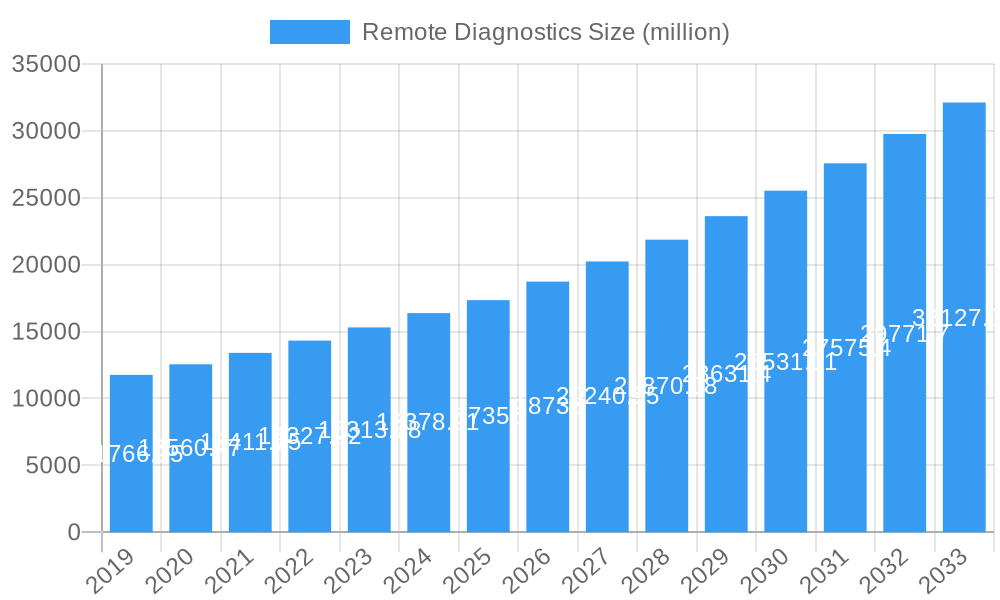
The global Remote Diagnostics market is poised for robust expansion, currently valued at an estimated $17,350 million and projected to grow at a Compound Annual Growth Rate (CAGR) of 8.4% through 2033. This significant growth is fueled by an increasing adoption of advanced vehicle technologies and a growing demand for proactive vehicle maintenance and enhanced safety features. Key drivers include the surge in connected car technology, the proliferation of sophisticated telematics systems, and a heightened consumer awareness regarding vehicle health and performance. The market is segmented into diverse applications, with Roadside Assistance and Vehicle Tracking emerging as dominant segments, leveraging real-time data for prompt service and improved fleet management. Vehicle State Alerts and Crash Notifications are also gaining traction due to their critical role in improving driver safety and enabling faster emergency response. The market's trajectory is further supported by advancements in communication technologies, with Bluetooth, 3G/4G, and Wi-Fi playing crucial roles in enabling seamless data transmission for remote diagnostics.
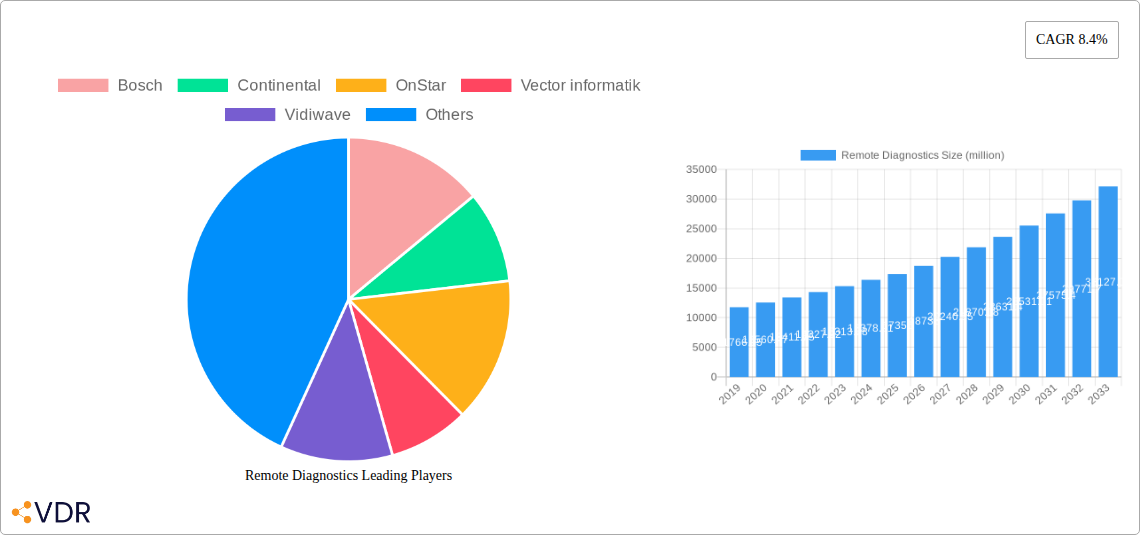
Remote Diagnostics Market Size (In Billion)

The competitive landscape features established automotive giants like Bosch, Continental, and OnStar, alongside specialized players such as Vector Informatik and Delphi, all actively innovating and expanding their offerings in the remote diagnostics space. While the market benefits from strong demand for improved vehicle safety, efficiency, and predictive maintenance, it also faces certain restraints. These include the initial high cost of implementing advanced telematics systems, concerns regarding data privacy and security, and the need for standardized protocols across different vehicle manufacturers. Geographically, North America and Europe are expected to lead the market due to their early adoption of connected car technologies and stringent safety regulations. However, the Asia Pacific region, driven by the rapid growth of its automotive sector and increasing disposable incomes, presents substantial untapped potential for market expansion in the coming years.
Remote Diagnostics Company Market Share
Remote Diagnostics Market Report Description
This comprehensive report offers an in-depth analysis of the global Remote Diagnostics market, a critical component of the evolving automotive and connected device ecosystems. Covering the Study Period 2019–2033, with Base Year 2025 and a Forecast Period 2025–2033, this report leverages historical data from 2019–2024 to provide unparalleled insights into market dynamics, growth trends, and future opportunities. Our analysis delves into the intricate interplay of technological advancements, regulatory landscapes, and consumer adoption, making it an indispensable resource for industry professionals, strategists, and investors. We examine the parent market of automotive electronics and the child market of telematics, providing a holistic view of the remote diagnostics value chain.
Remote Diagnostics Market Dynamics & Structure
The global Remote Diagnostics market is characterized by a dynamic and moderately consolidated structure, driven by relentless technological innovation and increasing demand for proactive vehicle maintenance and safety. Key players like Bosch, Continental, OnStar, Vector Informatik, Vidiwave, Magneti Marelli, Texan, AVL DiTEST, Car Shield, Delphi, EASE Diagnostics, Mercedes-Benz, and VoX International are actively shaping the competitive landscape. Market concentration is influenced by the high capital expenditure required for advanced R&D and the establishment of robust data infrastructure. Technological innovation, particularly in areas like artificial intelligence (AI) for predictive failure analysis and enhanced connectivity solutions, serves as a primary growth driver. Evolving regulatory frameworks, focusing on data privacy and cybersecurity, also play a crucial role in dictating market entry and operational strategies.
- Market Concentration: Moderately consolidated, with a few key players holding significant market share.
- Technological Innovation Drivers: AI for predictive analytics, advancements in 5G connectivity, IoT integration, and over-the-air (OTA) updates.
- Regulatory Frameworks: Growing emphasis on data privacy (e.g., GDPR), cybersecurity standards, and vehicle safety regulations.
- Competitive Product Substitutes: While direct substitutes are limited, traditional in-person diagnostics and basic OBD-II readers represent indirect competition.
- End-User Demographics: Increasing adoption across passenger vehicles, commercial fleets, and specialized industrial equipment, with a growing segment of tech-savvy consumers demanding advanced vehicle insights.
- M&A Trends: Strategic acquisitions and partnerships are observed as companies seek to expand their technological capabilities, market reach, and service portfolios. For instance, recent years have seen an estimated 5-8 significant M&A deals within the broader telematics and automotive diagnostics space, valued in the hundreds of millions of dollars collectively.
Remote Diagnostics Growth Trends & Insights
The Remote Diagnostics market is poised for substantial growth, driven by a confluence of technological advancements, shifting consumer preferences towards proactive vehicle management, and the increasing integration of connected car technologies. The market size is projected to witness a robust expansion, fueled by rising adoption rates across diverse automotive segments. Current estimates suggest the global remote diagnostics market size was approximately USD 25,000 million in 2024, and it is anticipated to reach over USD 70,000 million by 2033, exhibiting a Compound Annual Growth Rate (CAGR) of approximately 12% during the forecast period. This upward trajectory is underpinned by several key trends.
Firstly, the increasing sophistication of vehicle electronics and the subsequent rise in potential fault points necessitate advanced diagnostic capabilities. Remote diagnostics offer a cost-effective and time-efficient solution for identifying and resolving issues before they escalate. The penetration of connected car features, such as telematics control units (TCUs) and advanced sensor arrays, is a primary enabler, providing the necessary data streams for remote analysis. Consumer behavior is also evolving, with a growing demand for convenience and transparency in vehicle maintenance. Owners are increasingly willing to embrace solutions that offer early warnings, reduce unexpected breakdowns, and optimize vehicle performance.
Technological disruptions, including the advent of 5G networks, are set to further accelerate adoption by enabling faster data transmission and more complex diagnostic procedures. Over-the-air (OTA) updates are becoming standard, allowing for remote software fixes and feature enhancements, further solidifying the role of remote diagnostics. The integration of AI and machine learning algorithms is transforming predictive maintenance, moving beyond simple fault detection to anticipate potential failures with remarkable accuracy. For example, predictive maintenance capabilities are estimated to reduce unscheduled downtime in commercial fleets by up to 15%.
The expanding ecosystem of IoT devices within vehicles also contributes to the growth, generating a wealth of data that can be leveraged for remote diagnostics. This data, when analyzed effectively, provides granular insights into vehicle health, driving patterns, and component wear. The increasing focus on fleet management efficiency, particularly in logistics and transportation sectors, is another significant driver, as remote diagnostics help minimize operational disruptions and optimize fleet uptime, leading to substantial cost savings estimated at 5-10% per vehicle annually for optimized fleets. The ongoing electrification of vehicles also introduces new diagnostic challenges and opportunities, with remote monitoring becoming crucial for battery health, charging systems, and electric powertrain components, further expanding the scope and market potential of remote diagnostics.
Dominant Regions, Countries, or Segments in Remote Diagnostics
The Remote Diagnostics market is experiencing robust growth across multiple regions, driven by a combination of advanced automotive infrastructure, high consumer adoption of connected technologies, and supportive regulatory environments. North America, particularly the United States, currently holds a dominant position in terms of market share and is projected to continue its leadership throughout the forecast period. This dominance is attributed to the early and widespread adoption of connected car services, a large and affluent consumer base, and a mature automotive aftermarket focused on innovation and efficiency. The parent market's strength in vehicle sales and the prevalence of advanced telematics solutions in this region significantly boost the child market of remote diagnostics.
The Application: Vehicle Tracking segment is emerging as a significant growth driver, alongside Vehicle State Alert. The increasing demand for fleet management solutions, asset tracking, and enhanced safety features for personal vehicles fuels the adoption of these applications. In North America, the estimated market share for Vehicle Tracking within remote diagnostics applications is approximately 30%, with a projected CAGR of 13%. Vehicle State Alert, encompassing proactive notifications about potential vehicle issues, is also rapidly gaining traction, with an estimated market share of 25% and a similar growth trajectory.
Types: 3G/4G connectivity remains the backbone of current remote diagnostics solutions, offering a reliable and widespread network for data transmission. However, the market is witnessing a gradual but significant shift towards Wi-Fi for more localized and advanced diagnostics, particularly for in-garage diagnostics and software updates, and the impending widespread adoption of 5G is expected to revolutionize the speed and capabilities of remote diagnostics, enabling real-time, high-bandwidth data analysis. Currently, 3G/4G technologies command an estimated 55% market share in the remote diagnostics connectivity segment, while Wi-Fi accounts for 25%. The transition to 5G is expected to grow from a nascent 20% share to a significant portion of the market by the end of the forecast period.
Key drivers in North America include strong economic policies supporting technological innovation, extensive road infrastructure, and a high disposable income that allows consumers to invest in advanced vehicle features. The presence of major automotive manufacturers and technology providers like Bosch, Continental, and OnStar in this region further solidifies its leading position.
Beyond North America, Europe is also a significant market, characterized by stringent emission regulations and a growing emphasis on fuel efficiency and vehicle safety, driving the demand for advanced diagnostics. Asia-Pacific, particularly China and South Korea, is the fastest-growing region, propelled by rapid urbanization, a burgeoning automotive industry, and increasing government initiatives promoting smart mobility and connected vehicles. The growth potential in these emerging markets is immense, with opportunities for significant market share gains in the coming years. The economic policies favoring digital transformation and the substantial investments in automotive R&D within these regions are critical factors for future market expansion.
Remote Diagnostics Product Landscape
The Remote Diagnostics product landscape is characterized by a rapid evolution of intelligent systems designed for proactive vehicle health monitoring and issue resolution. Innovations are centered around sophisticated algorithms, enhanced connectivity, and user-friendly interfaces. Products now offer real-time data analytics for predictive maintenance, enabling early detection of potential component failures and minimizing unscheduled downtime. Key technological advancements include the integration of machine learning to analyze vast datasets, leading to more accurate fault predictions. Over-the-air (OTA) update capabilities are becoming standard, allowing for seamless software enhancements and remote troubleshooting. Performance metrics are increasingly focused on diagnostic accuracy, speed of data transmission, and the depth of insights provided to both vehicle owners and service centers. Unique selling propositions revolve around reduced repair costs, improved vehicle reliability, and enhanced driver safety.
Key Drivers, Barriers & Challenges in Remote Diagnostics
Key Drivers:
The Remote Diagnostics market is propelled by several critical forces. Technological advancements, particularly in AI, machine learning, and 5G connectivity, are enabling more sophisticated and accurate diagnostic capabilities. The growing adoption of connected car technologies, with increasing in-vehicle data generation, provides the raw material for these diagnostics. Furthermore, the increasing consumer demand for convenience, proactive maintenance, and enhanced vehicle safety is a significant market pull. For businesses, the drive for operational efficiency, reduced fleet downtime, and optimized maintenance costs are paramount. Government initiatives promoting smart mobility and cybersecurity standards also contribute positively.
Barriers & Challenges:
Despite the strong growth potential, the market faces significant hurdles. Cybersecurity concerns and data privacy issues are paramount, requiring robust security measures and compliance with evolving regulations. The high cost of initial investment for advanced diagnostic hardware and software can be a barrier, especially for smaller service providers and individual consumers. Interoperability issues between different vehicle manufacturers' systems and diagnostic platforms can also hinder seamless integration. Lack of standardization in data formats and communication protocols presents a challenge for widespread adoption. Moreover, customer education and awareness regarding the benefits and functionality of remote diagnostics are crucial for market penetration. Supply chain disruptions, as witnessed in recent years, can impact the availability of critical components and delay product deployment. Regulatory complexities and the time required for certification in different regions add another layer of challenge.
Emerging Opportunities in Remote Diagnostics
The Remote Diagnostics market is ripe with emerging opportunities. The increasing electrification of vehicles presents a significant new avenue, with the need for specialized remote diagnostics for batteries, electric powertrains, and charging infrastructure. The expansion of autonomous driving technology will further necessitate sophisticated remote monitoring and diagnostic capabilities to ensure the safety and reliability of these complex systems. The growing demand for subscription-based services and integrated mobility platforms offers opportunities for new business models. Furthermore, the untapped potential in commercial vehicle fleets across emerging economies represents a substantial growth frontier. The development of more affordable and accessible diagnostic solutions for the used car market and aftermarket services also presents a significant opportunity for broader market penetration.
Growth Accelerators in the Remote Diagnostics Industry
Several key accelerators are poised to drive long-term growth in the Remote Diagnostics industry. The continued advancement of AI and machine learning algorithms will enable even more precise predictive maintenance, moving towards self-healing vehicle systems. The widespread rollout and adoption of 5G networks will revolutionize data transmission speeds, enabling real-time, high-definition diagnostics and complex remote interventions. Strategic partnerships between automotive OEMs, technology providers, and telematics service providers will foster innovation and expand service offerings. Market expansion strategies targeting underdeveloped regions with growing automotive sectors will unlock new customer bases. The development of standardized diagnostic platforms and protocols will streamline integration and reduce friction for adoption.
Key Players Shaping the Remote Diagnostics Market
- Bosch
- Continental
- OnStar
- Vector Informatik
- Vidiwave
- Magneti Marelli
- Texan
- AVL DiTEST
- Car Shield
- Delphi
- EASE Diagnostics
- Mercedes-Benz
- VoX International
Notable Milestones in Remote Diagnostics Sector
- 2019: Increased integration of over-the-air (OTA) update capabilities by major OEMs for infotainment and critical vehicle systems.
- 2020: Enhanced focus on cybersecurity measures in telematics solutions following increased data breaches in the automotive sector.
- 2021: Significant investments in AI-driven predictive maintenance solutions by leading diagnostic providers, showcasing accuracy improvements.
- 2022: Expansion of remote diagnostics for electric vehicle (EV) battery health monitoring and charging infrastructure.
- 2023: Introduction of more sophisticated roadside assistance features integrated with remote diagnostics for faster problem resolution.
- 2024 (Early): Growing adoption of advanced driver-assistance systems (ADAS) leading to increased demand for remote monitoring and diagnostics of these complex systems.
In-Depth Remote Diagnostics Market Outlook
The Remote Diagnostics market is set for an impressive growth trajectory, driven by a synergistic combination of technological innovation and evolving market demands. The increasing penetration of connected vehicles, coupled with advancements in AI and 5G connectivity, will solidify remote diagnostics as an indispensable feature for vehicle maintenance, safety, and operational efficiency. The burgeoning electric vehicle segment presents a significant new frontier, demanding specialized diagnostic solutions for battery management and powertrain health. Strategic alliances and the development of standardized platforms will further accelerate adoption and market integration. The future of remote diagnostics lies in proactive, predictive, and seamlessly integrated solutions that enhance the overall ownership experience and drive significant value across the automotive ecosystem.
Remote Diagnostics Segmentation
-
1. Application
- 1.1. Roadside Assistance
- 1.2. Vehicle Tracking
- 1.3. Vehicle State Alert
- 1.4. Crash Notification
- 1.5. Training Assistance
-
2. Types
- 2.1. Bluetooth
- 2.2. 3G/4G
- 2.3. Wi-Fi
Remote Diagnostics Segmentation By Geography
-
1. North America
- 1.1. United States
- 1.2. Canada
- 1.3. Mexico
-
2. South America
- 2.1. Brazil
- 2.2. Argentina
- 2.3. Rest of South America
-
3. Europe
- 3.1. United Kingdom
- 3.2. Germany
- 3.3. France
- 3.4. Italy
- 3.5. Spain
- 3.6. Russia
- 3.7. Benelux
- 3.8. Nordics
- 3.9. Rest of Europe
-
4. Middle East & Africa
- 4.1. Turkey
- 4.2. Israel
- 4.3. GCC
- 4.4. North Africa
- 4.5. South Africa
- 4.6. Rest of Middle East & Africa
-
5. Asia Pacific
- 5.1. China
- 5.2. India
- 5.3. Japan
- 5.4. South Korea
- 5.5. ASEAN
- 5.6. Oceania
- 5.7. Rest of Asia Pacific
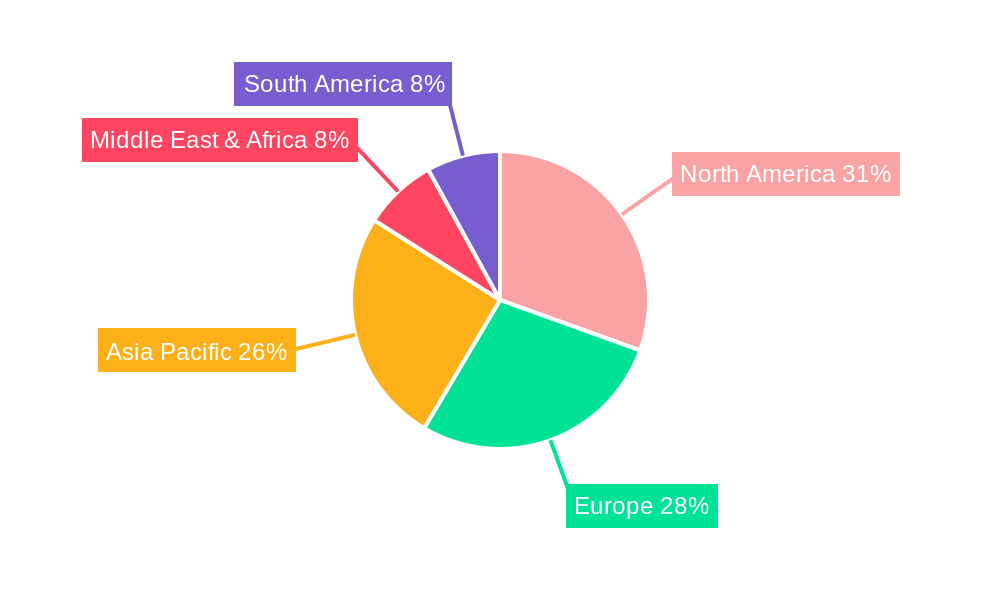
Remote Diagnostics Regional Market Share
Geographic Coverage of Remote Diagnostics
Remote Diagnostics REPORT HIGHLIGHTS
| Aspects | Details |
|---|---|
| Study Period | 2020-2034 |
| Base Year | 2025 |
| Estimated Year | 2026 |
| Forecast Period | 2026-2034 |
| Historical Period | 2020-2025 |
| Growth Rate | CAGR of 8.4% from 2020-2034 |
| Segmentation |
|
Table of Contents
- 1. Introduction
- 1.1. Research Scope
- 1.2. Market Segmentation
- 1.3. Research Methodology
- 1.4. Definitions and Assumptions
- 2. Executive Summary
- 2.1. Introduction
- 3. Market Dynamics
- 3.1. Introduction
- 3.2. Market Drivers
- 3.3. Market Restrains
- 3.4. Market Trends
- 4. Market Factor Analysis
- 4.1. Porters Five Forces
- 4.2. Supply/Value Chain
- 4.3. PESTEL analysis
- 4.4. Market Entropy
- 4.5. Patent/Trademark Analysis
- 5. Global Remote Diagnostics Analysis, Insights and Forecast, 2020-2032
- 5.1. Market Analysis, Insights and Forecast - by Application
- 5.1.1. Roadside Assistance
- 5.1.2. Vehicle Tracking
- 5.1.3. Vehicle State Alert
- 5.1.4. Crash Notification
- 5.1.5. Training Assistance
- 5.2. Market Analysis, Insights and Forecast - by Types
- 5.2.1. Bluetooth
- 5.2.2. 3G/4G
- 5.2.3. Wi-Fi
- 5.3. Market Analysis, Insights and Forecast - by Region
- 5.3.1. North America
- 5.3.2. South America
- 5.3.3. Europe
- 5.3.4. Middle East & Africa
- 5.3.5. Asia Pacific
- 5.1. Market Analysis, Insights and Forecast - by Application
- 6. North America Remote Diagnostics Analysis, Insights and Forecast, 2020-2032
- 6.1. Market Analysis, Insights and Forecast - by Application
- 6.1.1. Roadside Assistance
- 6.1.2. Vehicle Tracking
- 6.1.3. Vehicle State Alert
- 6.1.4. Crash Notification
- 6.1.5. Training Assistance
- 6.2. Market Analysis, Insights and Forecast - by Types
- 6.2.1. Bluetooth
- 6.2.2. 3G/4G
- 6.2.3. Wi-Fi
- 6.1. Market Analysis, Insights and Forecast - by Application
- 7. South America Remote Diagnostics Analysis, Insights and Forecast, 2020-2032
- 7.1. Market Analysis, Insights and Forecast - by Application
- 7.1.1. Roadside Assistance
- 7.1.2. Vehicle Tracking
- 7.1.3. Vehicle State Alert
- 7.1.4. Crash Notification
- 7.1.5. Training Assistance
- 7.2. Market Analysis, Insights and Forecast - by Types
- 7.2.1. Bluetooth
- 7.2.2. 3G/4G
- 7.2.3. Wi-Fi
- 7.1. Market Analysis, Insights and Forecast - by Application
- 8. Europe Remote Diagnostics Analysis, Insights and Forecast, 2020-2032
- 8.1. Market Analysis, Insights and Forecast - by Application
- 8.1.1. Roadside Assistance
- 8.1.2. Vehicle Tracking
- 8.1.3. Vehicle State Alert
- 8.1.4. Crash Notification
- 8.1.5. Training Assistance
- 8.2. Market Analysis, Insights and Forecast - by Types
- 8.2.1. Bluetooth
- 8.2.2. 3G/4G
- 8.2.3. Wi-Fi
- 8.1. Market Analysis, Insights and Forecast - by Application
- 9. Middle East & Africa Remote Diagnostics Analysis, Insights and Forecast, 2020-2032
- 9.1. Market Analysis, Insights and Forecast - by Application
- 9.1.1. Roadside Assistance
- 9.1.2. Vehicle Tracking
- 9.1.3. Vehicle State Alert
- 9.1.4. Crash Notification
- 9.1.5. Training Assistance
- 9.2. Market Analysis, Insights and Forecast - by Types
- 9.2.1. Bluetooth
- 9.2.2. 3G/4G
- 9.2.3. Wi-Fi
- 9.1. Market Analysis, Insights and Forecast - by Application
- 10. Asia Pacific Remote Diagnostics Analysis, Insights and Forecast, 2020-2032
- 10.1. Market Analysis, Insights and Forecast - by Application
- 10.1.1. Roadside Assistance
- 10.1.2. Vehicle Tracking
- 10.1.3. Vehicle State Alert
- 10.1.4. Crash Notification
- 10.1.5. Training Assistance
- 10.2. Market Analysis, Insights and Forecast - by Types
- 10.2.1. Bluetooth
- 10.2.2. 3G/4G
- 10.2.3. Wi-Fi
- 10.1. Market Analysis, Insights and Forecast - by Application
- 11. Competitive Analysis
- 11.1. Global Market Share Analysis 2025
- 11.2. Company Profiles
- 11.2.1 Bosch
- 11.2.1.1. Overview
- 11.2.1.2. Products
- 11.2.1.3. SWOT Analysis
- 11.2.1.4. Recent Developments
- 11.2.1.5. Financials (Based on Availability)
- 11.2.2 Continental
- 11.2.2.1. Overview
- 11.2.2.2. Products
- 11.2.2.3. SWOT Analysis
- 11.2.2.4. Recent Developments
- 11.2.2.5. Financials (Based on Availability)
- 11.2.3 OnStar
- 11.2.3.1. Overview
- 11.2.3.2. Products
- 11.2.3.3. SWOT Analysis
- 11.2.3.4. Recent Developments
- 11.2.3.5. Financials (Based on Availability)
- 11.2.4 Vector informatik
- 11.2.4.1. Overview
- 11.2.4.2. Products
- 11.2.4.3. SWOT Analysis
- 11.2.4.4. Recent Developments
- 11.2.4.5. Financials (Based on Availability)
- 11.2.5 Vidiwave
- 11.2.5.1. Overview
- 11.2.5.2. Products
- 11.2.5.3. SWOT Analysis
- 11.2.5.4. Recent Developments
- 11.2.5.5. Financials (Based on Availability)
- 11.2.6 Magneti Marelli
- 11.2.6.1. Overview
- 11.2.6.2. Products
- 11.2.6.3. SWOT Analysis
- 11.2.6.4. Recent Developments
- 11.2.6.5. Financials (Based on Availability)
- 11.2.7 Texan
- 11.2.7.1. Overview
- 11.2.7.2. Products
- 11.2.7.3. SWOT Analysis
- 11.2.7.4. Recent Developments
- 11.2.7.5. Financials (Based on Availability)
- 11.2.8 AVL DiTEST
- 11.2.8.1. Overview
- 11.2.8.2. Products
- 11.2.8.3. SWOT Analysis
- 11.2.8.4. Recent Developments
- 11.2.8.5. Financials (Based on Availability)
- 11.2.9 Car Shield
- 11.2.9.1. Overview
- 11.2.9.2. Products
- 11.2.9.3. SWOT Analysis
- 11.2.9.4. Recent Developments
- 11.2.9.5. Financials (Based on Availability)
- 11.2.10 Delphi
- 11.2.10.1. Overview
- 11.2.10.2. Products
- 11.2.10.3. SWOT Analysis
- 11.2.10.4. Recent Developments
- 11.2.10.5. Financials (Based on Availability)
- 11.2.11 EASE Diagnostics
- 11.2.11.1. Overview
- 11.2.11.2. Products
- 11.2.11.3. SWOT Analysis
- 11.2.11.4. Recent Developments
- 11.2.11.5. Financials (Based on Availability)
- 11.2.12 Mercedes-Benz
- 11.2.12.1. Overview
- 11.2.12.2. Products
- 11.2.12.3. SWOT Analysis
- 11.2.12.4. Recent Developments
- 11.2.12.5. Financials (Based on Availability)
- 11.2.13 VoX International
- 11.2.13.1. Overview
- 11.2.13.2. Products
- 11.2.13.3. SWOT Analysis
- 11.2.13.4. Recent Developments
- 11.2.13.5. Financials (Based on Availability)
- 11.2.1 Bosch
List of Figures
- Figure 1: Global Remote Diagnostics Revenue Breakdown (million, %) by Region 2025 & 2033
- Figure 2: North America Remote Diagnostics Revenue (million), by Application 2025 & 2033
- Figure 3: North America Remote Diagnostics Revenue Share (%), by Application 2025 & 2033
- Figure 4: North America Remote Diagnostics Revenue (million), by Types 2025 & 2033
- Figure 5: North America Remote Diagnostics Revenue Share (%), by Types 2025 & 2033
- Figure 6: North America Remote Diagnostics Revenue (million), by Country 2025 & 2033
- Figure 7: North America Remote Diagnostics Revenue Share (%), by Country 2025 & 2033
- Figure 8: South America Remote Diagnostics Revenue (million), by Application 2025 & 2033
- Figure 9: South America Remote Diagnostics Revenue Share (%), by Application 2025 & 2033
- Figure 10: South America Remote Diagnostics Revenue (million), by Types 2025 & 2033
- Figure 11: South America Remote Diagnostics Revenue Share (%), by Types 2025 & 2033
- Figure 12: South America Remote Diagnostics Revenue (million), by Country 2025 & 2033
- Figure 13: South America Remote Diagnostics Revenue Share (%), by Country 2025 & 2033
- Figure 14: Europe Remote Diagnostics Revenue (million), by Application 2025 & 2033
- Figure 15: Europe Remote Diagnostics Revenue Share (%), by Application 2025 & 2033
- Figure 16: Europe Remote Diagnostics Revenue (million), by Types 2025 & 2033
- Figure 17: Europe Remote Diagnostics Revenue Share (%), by Types 2025 & 2033
- Figure 18: Europe Remote Diagnostics Revenue (million), by Country 2025 & 2033
- Figure 19: Europe Remote Diagnostics Revenue Share (%), by Country 2025 & 2033
- Figure 20: Middle East & Africa Remote Diagnostics Revenue (million), by Application 2025 & 2033
- Figure 21: Middle East & Africa Remote Diagnostics Revenue Share (%), by Application 2025 & 2033
- Figure 22: Middle East & Africa Remote Diagnostics Revenue (million), by Types 2025 & 2033
- Figure 23: Middle East & Africa Remote Diagnostics Revenue Share (%), by Types 2025 & 2033
- Figure 24: Middle East & Africa Remote Diagnostics Revenue (million), by Country 2025 & 2033
- Figure 25: Middle East & Africa Remote Diagnostics Revenue Share (%), by Country 2025 & 2033
- Figure 26: Asia Pacific Remote Diagnostics Revenue (million), by Application 2025 & 2033
- Figure 27: Asia Pacific Remote Diagnostics Revenue Share (%), by Application 2025 & 2033
- Figure 28: Asia Pacific Remote Diagnostics Revenue (million), by Types 2025 & 2033
- Figure 29: Asia Pacific Remote Diagnostics Revenue Share (%), by Types 2025 & 2033
- Figure 30: Asia Pacific Remote Diagnostics Revenue (million), by Country 2025 & 2033
- Figure 31: Asia Pacific Remote Diagnostics Revenue Share (%), by Country 2025 & 2033
List of Tables
- Table 1: Global Remote Diagnostics Revenue million Forecast, by Application 2020 & 2033
- Table 2: Global Remote Diagnostics Revenue million Forecast, by Types 2020 & 2033
- Table 3: Global Remote Diagnostics Revenue million Forecast, by Region 2020 & 2033
- Table 4: Global Remote Diagnostics Revenue million Forecast, by Application 2020 & 2033
- Table 5: Global Remote Diagnostics Revenue million Forecast, by Types 2020 & 2033
- Table 6: Global Remote Diagnostics Revenue million Forecast, by Country 2020 & 2033
- Table 7: United States Remote Diagnostics Revenue (million) Forecast, by Application 2020 & 2033
- Table 8: Canada Remote Diagnostics Revenue (million) Forecast, by Application 2020 & 2033
- Table 9: Mexico Remote Diagnostics Revenue (million) Forecast, by Application 2020 & 2033
- Table 10: Global Remote Diagnostics Revenue million Forecast, by Application 2020 & 2033
- Table 11: Global Remote Diagnostics Revenue million Forecast, by Types 2020 & 2033
- Table 12: Global Remote Diagnostics Revenue million Forecast, by Country 2020 & 2033
- Table 13: Brazil Remote Diagnostics Revenue (million) Forecast, by Application 2020 & 2033
- Table 14: Argentina Remote Diagnostics Revenue (million) Forecast, by Application 2020 & 2033
- Table 15: Rest of South America Remote Diagnostics Revenue (million) Forecast, by Application 2020 & 2033
- Table 16: Global Remote Diagnostics Revenue million Forecast, by Application 2020 & 2033
- Table 17: Global Remote Diagnostics Revenue million Forecast, by Types 2020 & 2033
- Table 18: Global Remote Diagnostics Revenue million Forecast, by Country 2020 & 2033
- Table 19: United Kingdom Remote Diagnostics Revenue (million) Forecast, by Application 2020 & 2033
- Table 20: Germany Remote Diagnostics Revenue (million) Forecast, by Application 2020 & 2033
- Table 21: France Remote Diagnostics Revenue (million) Forecast, by Application 2020 & 2033
- Table 22: Italy Remote Diagnostics Revenue (million) Forecast, by Application 2020 & 2033
- Table 23: Spain Remote Diagnostics Revenue (million) Forecast, by Application 2020 & 2033
- Table 24: Russia Remote Diagnostics Revenue (million) Forecast, by Application 2020 & 2033
- Table 25: Benelux Remote Diagnostics Revenue (million) Forecast, by Application 2020 & 2033
- Table 26: Nordics Remote Diagnostics Revenue (million) Forecast, by Application 2020 & 2033
- Table 27: Rest of Europe Remote Diagnostics Revenue (million) Forecast, by Application 2020 & 2033
- Table 28: Global Remote Diagnostics Revenue million Forecast, by Application 2020 & 2033
- Table 29: Global Remote Diagnostics Revenue million Forecast, by Types 2020 & 2033
- Table 30: Global Remote Diagnostics Revenue million Forecast, by Country 2020 & 2033
- Table 31: Turkey Remote Diagnostics Revenue (million) Forecast, by Application 2020 & 2033
- Table 32: Israel Remote Diagnostics Revenue (million) Forecast, by Application 2020 & 2033
- Table 33: GCC Remote Diagnostics Revenue (million) Forecast, by Application 2020 & 2033
- Table 34: North Africa Remote Diagnostics Revenue (million) Forecast, by Application 2020 & 2033
- Table 35: South Africa Remote Diagnostics Revenue (million) Forecast, by Application 2020 & 2033
- Table 36: Rest of Middle East & Africa Remote Diagnostics Revenue (million) Forecast, by Application 2020 & 2033
- Table 37: Global Remote Diagnostics Revenue million Forecast, by Application 2020 & 2033
- Table 38: Global Remote Diagnostics Revenue million Forecast, by Types 2020 & 2033
- Table 39: Global Remote Diagnostics Revenue million Forecast, by Country 2020 & 2033
- Table 40: China Remote Diagnostics Revenue (million) Forecast, by Application 2020 & 2033
- Table 41: India Remote Diagnostics Revenue (million) Forecast, by Application 2020 & 2033
- Table 42: Japan Remote Diagnostics Revenue (million) Forecast, by Application 2020 & 2033
- Table 43: South Korea Remote Diagnostics Revenue (million) Forecast, by Application 2020 & 2033
- Table 44: ASEAN Remote Diagnostics Revenue (million) Forecast, by Application 2020 & 2033
- Table 45: Oceania Remote Diagnostics Revenue (million) Forecast, by Application 2020 & 2033
- Table 46: Rest of Asia Pacific Remote Diagnostics Revenue (million) Forecast, by Application 2020 & 2033
Frequently Asked Questions
1. What is the projected Compound Annual Growth Rate (CAGR) of the Remote Diagnostics?
The projected CAGR is approximately 8.4%.
2. Which companies are prominent players in the Remote Diagnostics?
Key companies in the market include Bosch, Continental, OnStar, Vector informatik, Vidiwave, Magneti Marelli, Texan, AVL DiTEST, Car Shield, Delphi, EASE Diagnostics, Mercedes-Benz, VoX International.
3. What are the main segments of the Remote Diagnostics?
The market segments include Application, Types.
4. Can you provide details about the market size?
The market size is estimated to be USD 17350 million as of 2022.
5. What are some drivers contributing to market growth?
N/A
6. What are the notable trends driving market growth?
N/A
7. Are there any restraints impacting market growth?
N/A
8. Can you provide examples of recent developments in the market?
N/A
9. What pricing options are available for accessing the report?
Pricing options include single-user, multi-user, and enterprise licenses priced at USD 2900.00, USD 4350.00, and USD 5800.00 respectively.
10. Is the market size provided in terms of value or volume?
The market size is provided in terms of value, measured in million.
11. Are there any specific market keywords associated with the report?
Yes, the market keyword associated with the report is "Remote Diagnostics," which aids in identifying and referencing the specific market segment covered.
12. How do I determine which pricing option suits my needs best?
The pricing options vary based on user requirements and access needs. Individual users may opt for single-user licenses, while businesses requiring broader access may choose multi-user or enterprise licenses for cost-effective access to the report.
13. Are there any additional resources or data provided in the Remote Diagnostics report?
While the report offers comprehensive insights, it's advisable to review the specific contents or supplementary materials provided to ascertain if additional resources or data are available.
14. How can I stay updated on further developments or reports in the Remote Diagnostics?
To stay informed about further developments, trends, and reports in the Remote Diagnostics, consider subscribing to industry newsletters, following relevant companies and organizations, or regularly checking reputable industry news sources and publications.
Methodology
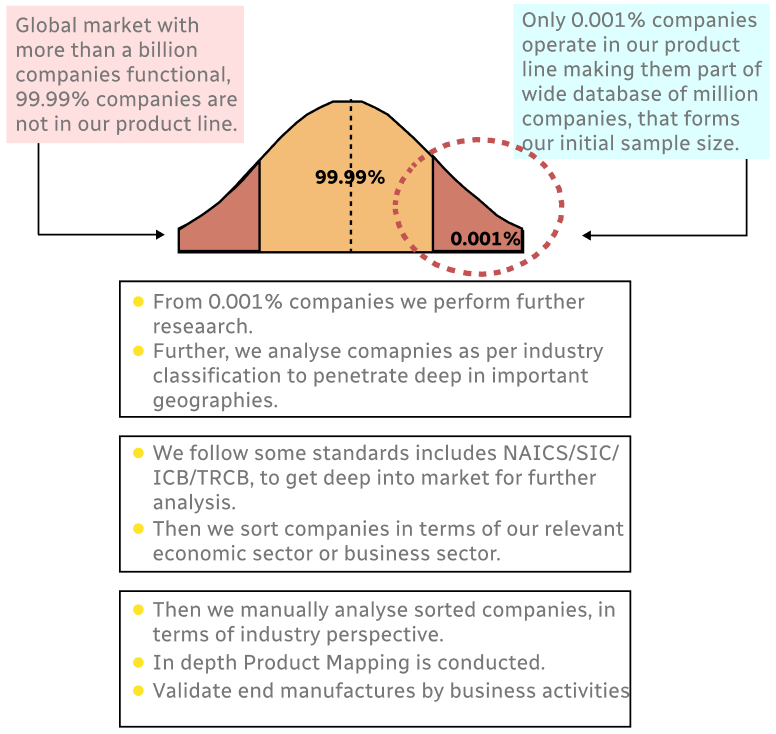
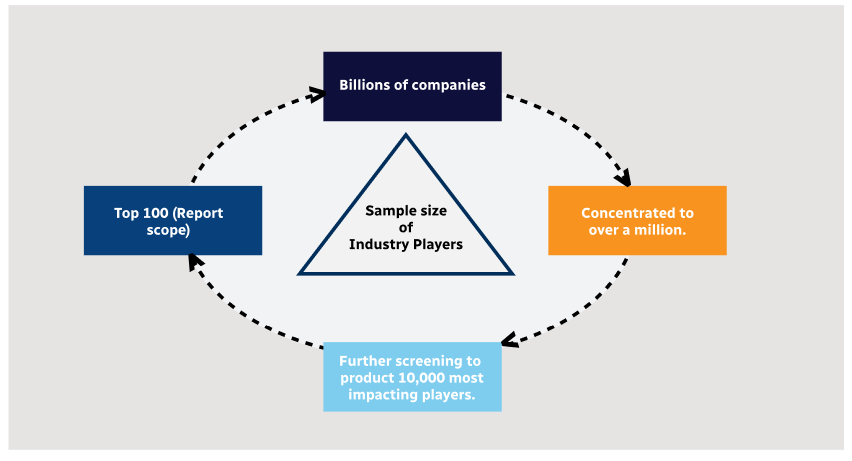
Step 1 - Identification of Relevant Samples Size from Population Database
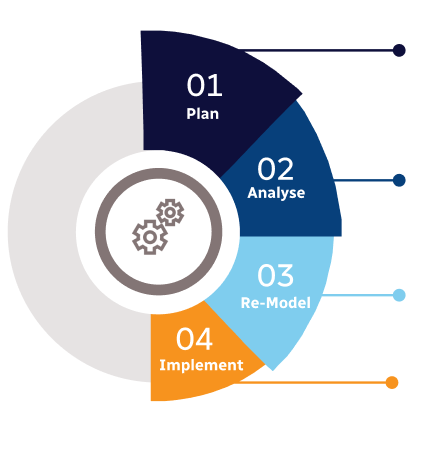
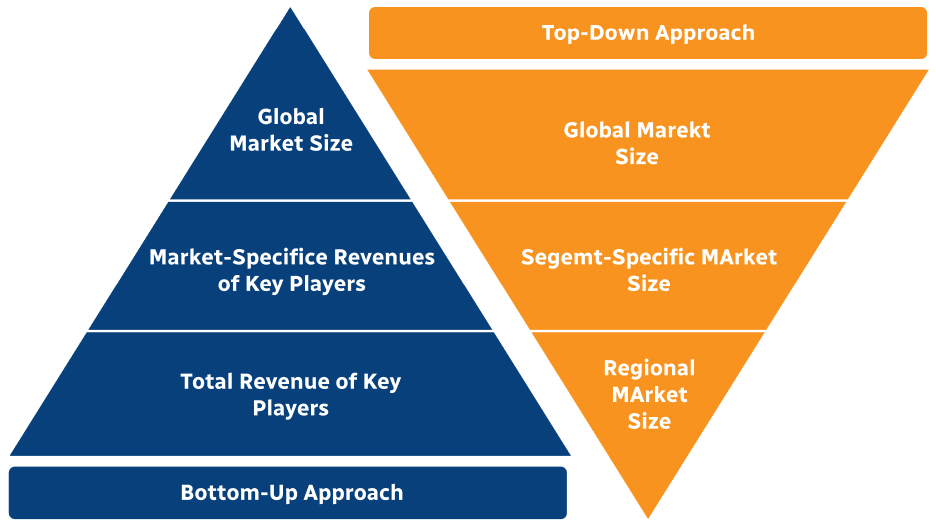
Step 2 - Approaches for Defining Global Market Size (Value, Volume* & Price*)
Note*: In applicable scenarios
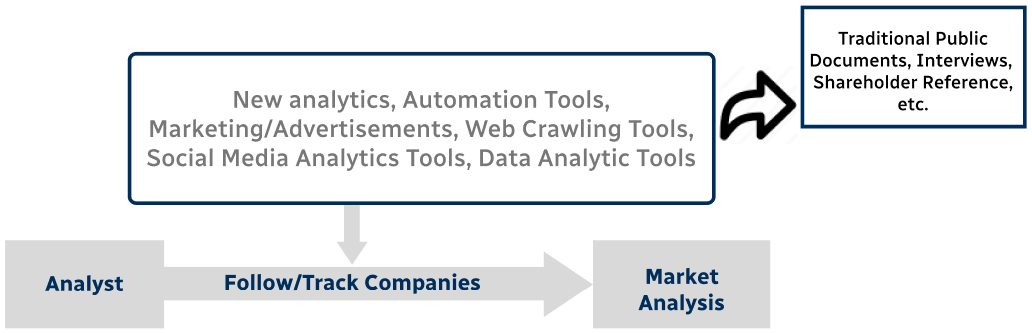
Step 3 - Data Sources
Primary Research
- Web Analytics
- Survey Reports
- Research Institute
- Latest Research Reports
- Opinion Leaders
Secondary Research
- Annual Reports
- White Paper
- Latest Press Release
- Industry Association
- Paid Database
- Investor Presentations
Step 4 - Data Triangulation
Involves using different sources of information in order to increase the validity of a study
These sources are likely to be stakeholders in a program - participants, other researchers, program staff, other community members, and so on.
Then we put all data in single framework & apply various statistical tools to find out the dynamic on the market.
During the analysis stage, feedback from the stakeholder groups would be compared to determine areas of agreement as well as areas of divergence