


Key Insights
The global Ready Mix Concrete market is poised for robust expansion, projected to reach a substantial USD 873.19 billion by 2025, with an anticipated Compound Annual Growth Rate (CAGR) of 7% during the forecast period of 2025-2033. This significant market size underscores the indispensable role of ready-mix concrete in modern construction across various sectors. The primary drivers fueling this growth include accelerating urbanization, particularly in emerging economies, and the sustained demand for infrastructure development, encompassing roads, bridges, and public utilities. Furthermore, the increasing adoption of pre-fabricated and modular construction techniques, where ready-mix concrete plays a pivotal role in ensuring consistent quality and on-site efficiency, is a key trend. The residential and commercial construction sectors also continue to be major consumers, benefiting from the convenience, cost-effectiveness, and environmental advantages offered by ready-mix concrete, such as reduced on-site waste and optimized resource utilization.
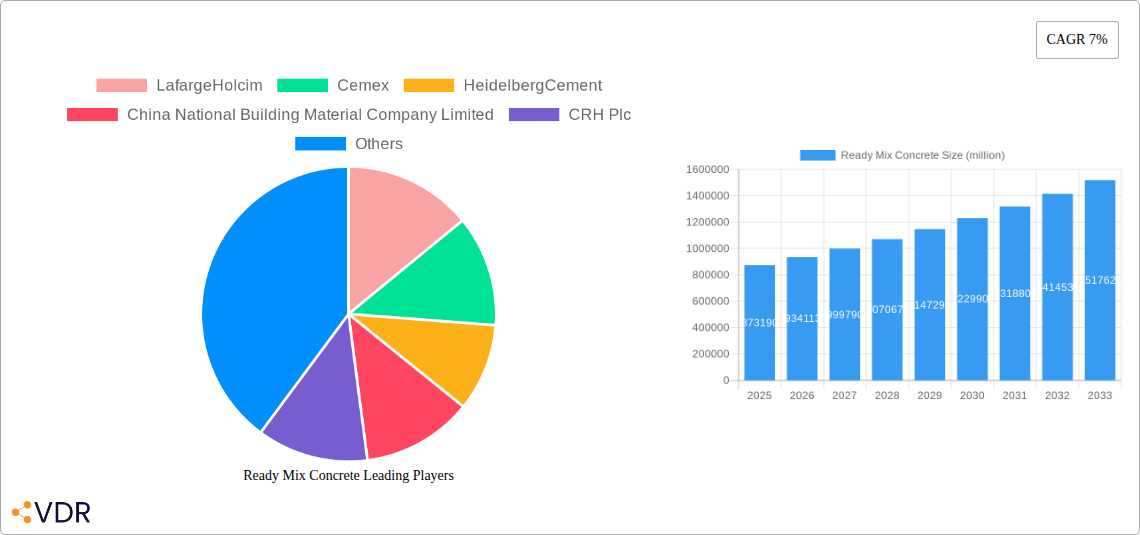
Ready Mix Concrete Market Size (In Billion)

Despite the positive outlook, certain restraints could temper the market's full potential. Fluctuations in raw material prices, particularly cement and aggregates, can impact profitability and pricing strategies for ready-mix concrete manufacturers. Stringent environmental regulations concerning carbon emissions during cement production and transportation also present a challenge, necessitating investment in greener technologies and sustainable practices. However, the market is actively responding to these challenges through innovations in concrete formulations, such as the development of low-carbon concrete and advanced admixtures that enhance durability and performance. The market is segmented by Application into Residential Use, Commercial Use, Infrastructure Use, and Industrial Use, with Infrastructure Use expected to dominate due to ongoing global development initiatives. By Type, Transit Mixed Concrete, Shrink Mixed Concrete, and Central Mixed Concrete cater to diverse construction needs. A highly competitive landscape features major global players like LafargeHolcim, Cemex, and HeidelbergCement, alongside significant regional entities, driving innovation and market penetration.
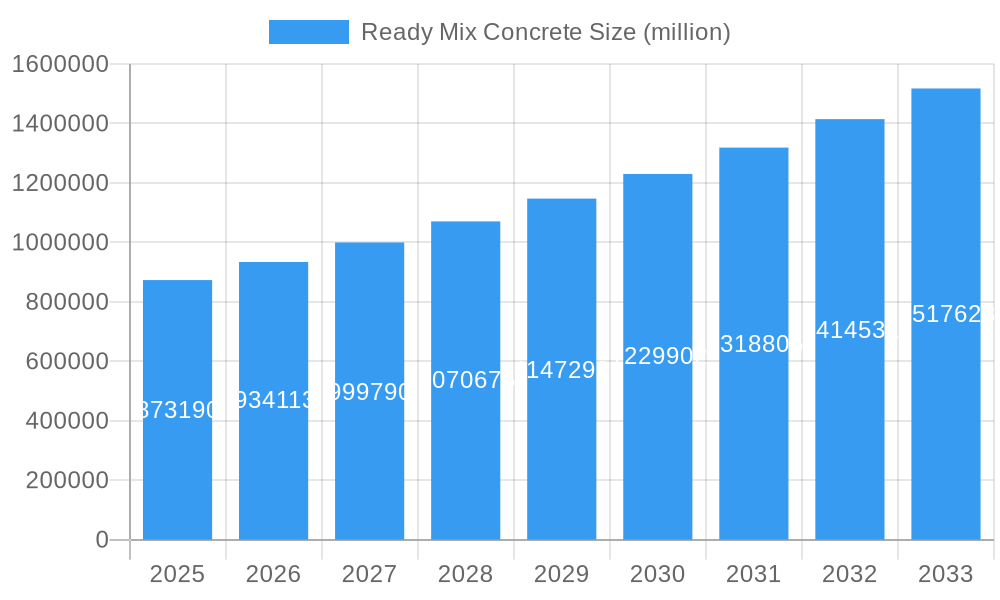
Ready Mix Concrete Company Market Share
Ready Mix Concrete Market: Comprehensive Analysis and Future Outlook (2019-2033)
This comprehensive report delivers an in-depth analysis of the global Ready Mix Concrete (RMC) market, providing critical insights for industry stakeholders, investors, and decision-makers. Spanning from 2019 to 2033, the study meticulously examines market dynamics, growth trends, regional dominance, product innovations, key drivers, emerging opportunities, and the competitive landscape. With a base year of 2025 and a forecast period extending to 2033, this report offers a data-driven roadmap for navigating the evolving RMC industry. This report is designed for immediate use, requiring no further modification.
Ready Mix Concrete Market Dynamics & Structure
The global Ready Mix Concrete market is characterized by a moderately concentrated structure, with several key players holding significant market share. Leading companies like LafargeHolcim, Cemex, HeidelbergCement, China National Building Material Company Limited, CRH Plc, and China West Construction Group Co., Ltd. exert considerable influence. Technological innovation is a primary driver, focusing on developing advanced concrete formulations with enhanced durability, strength, and sustainability. Regulatory frameworks, particularly those pertaining to environmental standards and building codes, play a crucial role in shaping market access and product development. Competitive product substitutes, though less direct, include traditional on-site concrete mixing, but the convenience and quality control of RMC largely outweigh these alternatives. End-user demographics are shifting, with increasing demand from urbanization and infrastructure development projects. Mergers and acquisitions (M&A) are a notable trend, with companies consolidating to achieve economies of scale, expand geographic reach, and acquire technological capabilities. In 2023, an estimated 35 significant M&A deals were completed, with a combined deal value of over $4,500 million. Innovation barriers, such as the high cost of research and development for novel concrete admixtures and the long lifecycle of construction projects, present challenges for smaller players.
- Market Concentration: Moderate, dominated by a few global players.
- Technological Innovation Drivers: Enhanced durability, strength, sustainability, and ease of use.
- Regulatory Frameworks: Environmental compliance, building codes, and safety standards.
- Competitive Product Substitutes: Traditional on-site mixing (limited direct competition).
- End-User Demographics: Urbanization, infrastructure expansion, and growing construction activities.
- M&A Trends: Consolidation for scale, market expansion, and technological acquisition.
- Innovation Barriers: High R&D costs, long project lifecycles.
Ready Mix Concrete Growth Trends & Insights
The global Ready Mix Concrete market is poised for robust growth, driven by relentless urbanization, significant infrastructure development initiatives, and a burgeoning construction sector worldwide. The market size, valued at approximately $280,000 million in 2024, is projected to expand at a Compound Annual Growth Rate (CAGR) of around 5.8% during the forecast period of 2025–2033, reaching an estimated $440,000 million by 2033. Adoption rates of RMC are steadily increasing, as developers and contractors increasingly recognize its benefits in terms of quality consistency, reduced labor costs, and accelerated construction timelines. Technological disruptions are playing a pivotal role, with advancements in admixture technologies enabling the production of high-performance concrete, self-healing concrete, and low-carbon concrete solutions. These innovations are not only improving the performance of concrete structures but also addressing the industry's environmental footprint. Consumer behavior shifts are evident, with a growing preference for sustainable building materials and efficient construction processes, which RMC effectively caters to. The market penetration of RMC continues to deepen, particularly in emerging economies where traditional construction methods are being phased out in favor of more industrialized and efficient approaches. Emerging applications in precast construction and specialized concrete solutions are further contributing to market expansion. The focus on reducing carbon emissions in the construction sector is driving demand for eco-friendly RMC options, influencing product development and adoption patterns. Global investments in smart cities and resilient infrastructure are further bolstering the demand for high-quality, durable concrete solutions. The increasing complexity of modern architectural designs also necessitates the use of RMC to achieve intricate shapes and structural requirements.
Dominant Regions, Countries, or Segments in Ready Mix Concrete
The Infrastructure Use segment, particularly within the Application category, is a significant driver of growth and dominance in the global Ready Mix Concrete market. This segment's prominence is fueled by substantial government investments in public works, transportation networks, and utility projects across the globe. Regions like Asia-Pacific, North America, and Europe are leading this charge, with countries such as China, India, the United States, and Germany spearheading large-scale infrastructure development. The sheer volume and scale of projects, including highways, bridges, airports, dams, and renewable energy installations, create a perpetual demand for RMC. In 2025, the Infrastructure Use segment is estimated to account for approximately 38% of the total RMC market value.
- Key Drivers for Infrastructure Dominance:
- Government Spending: Massive public sector investments in transportation, utilities, and urban development.
- Urbanization: The need for robust infrastructure to support growing urban populations.
- Economic Growth: Expansion of economies necessitates improved connectivity and resource management.
- Technological Advancements: Development of specialized concrete for extreme conditions and longevity.
- Environmental Regulations: Demand for sustainable infrastructure solutions, often met by advanced RMC.
The Transit Mixed Concrete type also holds a dominant position, forming the backbone of the RMC supply chain. Its widespread availability, versatility, and ability to deliver consistent quality make it the preferred choice for a vast array of construction projects, including those in infrastructure. The logistical efficiency of transit mixers allows for on-demand delivery to job sites, minimizing on-site storage and waste. This segment is projected to constitute around 65% of the total RMC market volume in 2025.
- Dominance Factors for Transit Mixed Concrete:
- Versatility: Suitable for a broad spectrum of applications, from small residential projects to large-scale infrastructure.
- Quality Control: Centralized batching ensures consistent concrete properties.
- Logistical Efficiency: On-demand delivery reduces site congestion and waste.
- Cost-Effectiveness: Optimized production and transportation contribute to competitive pricing.
- Industry Standards: Widely accepted and understood by construction professionals globally.
The Asia-Pacific region, particularly China and India, emerges as the dominant geographical market for Ready Mix Concrete. This dominance is driven by rapid economic growth, massive urbanization, and unprecedented government investments in infrastructure development. The sheer scale of construction activities, from residential buildings to high-speed rail networks and smart cities, underpins this regional leadership. In 2025, the Asia-Pacific RMC market is estimated to be valued at over $120,000 million.
- Dominance Factors for Asia-Pacific:
- Rapid Urbanization: High demand for residential and commercial buildings.
- Infrastructure Boom: Extensive government-led projects for transportation, energy, and utilities.
- Favorable Economic Policies: Supportive government initiatives for the construction sector.
- Growing Population: Increased demand for housing and public amenities.
- Technological Adoption: Increasing use of modern construction techniques and materials.
Ready Mix Concrete Product Landscape
The Ready Mix Concrete product landscape is defined by continuous innovation aimed at enhancing performance, sustainability, and application-specific properties. Key product innovations include high-strength concrete, engineered for demanding structural applications, and self-consolidating concrete (SCC), which flows easily into place without vibration, reducing labor and improving finish quality. Furthermore, the development of sustainable concrete options, such as those utilizing supplementary cementitious materials (SCMs) like fly ash and slag, or incorporating recycled aggregates, is gaining significant traction. These eco-friendly formulations not only reduce the carbon footprint of construction projects but also offer comparable or superior performance characteristics. Performance metrics such as compressive strength, durability, workability, and resistance to environmental factors are continuously being optimized.
Key Drivers, Barriers & Challenges in Ready Mix Concrete
Key Drivers: The Ready Mix Concrete market is propelled by several significant forces. Rapid urbanization and infrastructure development globally are fundamental drivers, creating sustained demand for construction materials. Technological advancements in concrete admixtures and formulations, leading to enhanced performance and sustainability, are also key accelerators. Government initiatives supporting construction and infrastructure projects, coupled with economic growth in various regions, further bolster market expansion. The increasing adoption of prefabricated construction methods also favors the use of RMC for its quality and consistency.
Key Barriers & Challenges: Despite its growth, the RMC market faces considerable challenges. Fluctuations in raw material prices, particularly cement and aggregates, can significantly impact profitability and pricing strategies, with an estimated impact of up to 10% on production costs during volatile periods. Stringent environmental regulations regarding carbon emissions and waste management necessitate investment in cleaner production technologies, adding to operational costs. Logistical complexities and transportation costs, especially in remote areas, can also pose challenges. Intense competition among RMC suppliers, often leading to price wars, puts pressure on profit margins. Supply chain disruptions, as witnessed in recent global events, can lead to material shortages and project delays.
Emerging Opportunities in Ready Mix Concrete
Emerging opportunities in the Ready Mix Concrete market lie in the development and adoption of sustainable and green concrete solutions. This includes concrete made with recycled materials, low-carbon cements, and innovative admixtures that reduce water and energy consumption during production and construction. The growth of modular and prefabricated construction presents a significant opportunity for RMC suppliers who can provide high-quality, precisely formulated concrete for off-site manufacturing. Furthermore, the increasing demand for smart and resilient infrastructure, designed to withstand extreme weather conditions and enhance urban living, opens avenues for specialized, high-performance concrete applications. The expansion into developing economies with burgeoning construction sectors also offers substantial untapped market potential.
Growth Accelerators in the Ready Mix Concrete Industry
Several factors are acting as growth accelerators for the Ready Mix Concrete industry. Continued global investment in infrastructure, particularly in transportation, energy, and telecommunications, is a primary catalyst. The push towards sustainability and circular economy principles in construction is driving innovation in eco-friendly RMC, creating new market segments and consumer preferences. Technological breakthroughs in material science, leading to stronger, more durable, and versatile concrete, are expanding the scope of RMC applications. Strategic partnerships and collaborations between RMC producers, technology providers, and construction firms are fostering innovation and market penetration. Furthermore, favorable government policies and incentives promoting the use of modern construction materials and sustainable practices are significantly accelerating market growth.
Key Players Shaping the Ready Mix Concrete Market
- LafargeHolcim
- Cemex
- HeidelbergCement
- China National Building Material Company Limited
- CRH Plc
- China West Construction Group Co., Ltd
- US Concrete
- Buzzi Unicem
- Siam Cement Group
- Votorantim
- BBMG Corporation
- China Resources Cement Limited
- Cimpor
- Shanghai Construction Group (SCG)
Notable Milestones in Ready Mix Concrete Sector
- 2019: Increased adoption of digital technologies for batching and logistics optimization, improving efficiency by an estimated 5%.
- 2020: Growing emphasis on sustainable concrete mixes and the use of supplementary cementitious materials (SCMs) to reduce carbon footprint.
- 2021: Significant investments in R&D for self-healing and high-performance concrete formulations.
- 2022: Mergers and acquisitions activity remained strong as companies sought to expand market share and geographical presence.
- 2023: Enhanced focus on supply chain resilience and diversification of raw material sourcing.
- 2024 (projected): Continued growth in the Infrastructure Use segment driven by global development projects.
In-Depth Ready Mix Concrete Market Outlook
The future of the Ready Mix Concrete market is characterized by sustained growth, driven by a confluence of powerful factors. The ongoing global push for enhanced infrastructure, coupled with significant investments in urban development and renewable energy projects, will continue to fuel demand. The increasing imperative for sustainable construction practices is a major growth accelerator, propelling innovation in eco-friendly concrete formulations and production methods. Technological advancements in material science are expected to unlock new applications and further enhance the performance and durability of RMC. Strategic alliances and market expansion initiatives by key players will solidify their positions and drive industry consolidation. The market's trajectory indicates a strong upward trend, presenting lucrative opportunities for stakeholders adept at leveraging these growth catalysts and navigating the evolving industry landscape.
Ready Mix Concrete Segmentation
-
1. Application
- 1.1. Residential Use
- 1.2. Commercial Use
- 1.3. Infrastructure Use
- 1.4. Industrial Use
-
2. Type
- 2.1. Transit Mixed Concrete
- 2.2. Shrink Mixed Concrete
- 2.3. Central Mixed Concrete
Ready Mix Concrete Segmentation By Geography
-
1. North America
- 1.1. United States
- 1.2. Canada
- 1.3. Mexico
-
2. South America
- 2.1. Brazil
- 2.2. Argentina
- 2.3. Rest of South America
-
3. Europe
- 3.1. United Kingdom
- 3.2. Germany
- 3.3. France
- 3.4. Italy
- 3.5. Spain
- 3.6. Russia
- 3.7. Benelux
- 3.8. Nordics
- 3.9. Rest of Europe
-
4. Middle East & Africa
- 4.1. Turkey
- 4.2. Israel
- 4.3. GCC
- 4.4. North Africa
- 4.5. South Africa
- 4.6. Rest of Middle East & Africa
-
5. Asia Pacific
- 5.1. China
- 5.2. India
- 5.3. Japan
- 5.4. South Korea
- 5.5. ASEAN
- 5.6. Oceania
- 5.7. Rest of Asia Pacific
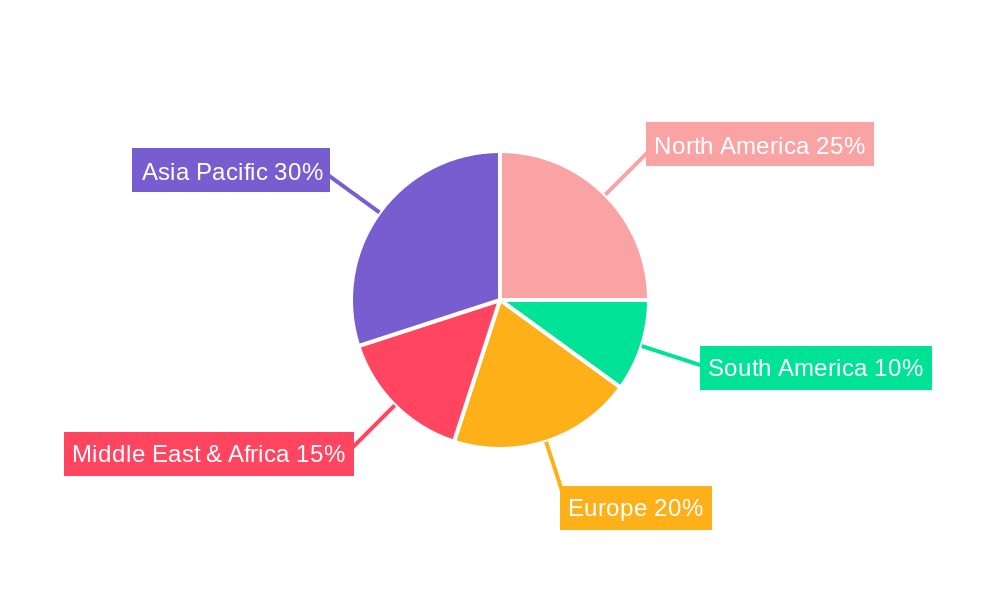
Ready Mix Concrete Regional Market Share
Geographic Coverage of Ready Mix Concrete
Ready Mix Concrete REPORT HIGHLIGHTS
| Aspects | Details |
|---|---|
| Study Period | 2020-2034 |
| Base Year | 2025 |
| Estimated Year | 2026 |
| Forecast Period | 2026-2034 |
| Historical Period | 2020-2025 |
| Growth Rate | CAGR of 7% from 2020-2034 |
| Segmentation |
|
Table of Contents
- 1. Introduction
- 1.1. Research Scope
- 1.2. Market Segmentation
- 1.3. Research Methodology
- 1.4. Definitions and Assumptions
- 2. Executive Summary
- 2.1. Introduction
- 3. Market Dynamics
- 3.1. Introduction
- 3.2. Market Drivers
- 3.3. Market Restrains
- 3.4. Market Trends
- 4. Market Factor Analysis
- 4.1. Porters Five Forces
- 4.2. Supply/Value Chain
- 4.3. PESTEL analysis
- 4.4. Market Entropy
- 4.5. Patent/Trademark Analysis
- 5. Global Ready Mix Concrete Analysis, Insights and Forecast, 2020-2032
- 5.1. Market Analysis, Insights and Forecast - by Application
- 5.1.1. Residential Use
- 5.1.2. Commercial Use
- 5.1.3. Infrastructure Use
- 5.1.4. Industrial Use
- 5.2. Market Analysis, Insights and Forecast - by Type
- 5.2.1. Transit Mixed Concrete
- 5.2.2. Shrink Mixed Concrete
- 5.2.3. Central Mixed Concrete
- 5.3. Market Analysis, Insights and Forecast - by Region
- 5.3.1. North America
- 5.3.2. South America
- 5.3.3. Europe
- 5.3.4. Middle East & Africa
- 5.3.5. Asia Pacific
- 5.1. Market Analysis, Insights and Forecast - by Application
- 6. North America Ready Mix Concrete Analysis, Insights and Forecast, 2020-2032
- 6.1. Market Analysis, Insights and Forecast - by Application
- 6.1.1. Residential Use
- 6.1.2. Commercial Use
- 6.1.3. Infrastructure Use
- 6.1.4. Industrial Use
- 6.2. Market Analysis, Insights and Forecast - by Type
- 6.2.1. Transit Mixed Concrete
- 6.2.2. Shrink Mixed Concrete
- 6.2.3. Central Mixed Concrete
- 6.1. Market Analysis, Insights and Forecast - by Application
- 7. South America Ready Mix Concrete Analysis, Insights and Forecast, 2020-2032
- 7.1. Market Analysis, Insights and Forecast - by Application
- 7.1.1. Residential Use
- 7.1.2. Commercial Use
- 7.1.3. Infrastructure Use
- 7.1.4. Industrial Use
- 7.2. Market Analysis, Insights and Forecast - by Type
- 7.2.1. Transit Mixed Concrete
- 7.2.2. Shrink Mixed Concrete
- 7.2.3. Central Mixed Concrete
- 7.1. Market Analysis, Insights and Forecast - by Application
- 8. Europe Ready Mix Concrete Analysis, Insights and Forecast, 2020-2032
- 8.1. Market Analysis, Insights and Forecast - by Application
- 8.1.1. Residential Use
- 8.1.2. Commercial Use
- 8.1.3. Infrastructure Use
- 8.1.4. Industrial Use
- 8.2. Market Analysis, Insights and Forecast - by Type
- 8.2.1. Transit Mixed Concrete
- 8.2.2. Shrink Mixed Concrete
- 8.2.3. Central Mixed Concrete
- 8.1. Market Analysis, Insights and Forecast - by Application
- 9. Middle East & Africa Ready Mix Concrete Analysis, Insights and Forecast, 2020-2032
- 9.1. Market Analysis, Insights and Forecast - by Application
- 9.1.1. Residential Use
- 9.1.2. Commercial Use
- 9.1.3. Infrastructure Use
- 9.1.4. Industrial Use
- 9.2. Market Analysis, Insights and Forecast - by Type
- 9.2.1. Transit Mixed Concrete
- 9.2.2. Shrink Mixed Concrete
- 9.2.3. Central Mixed Concrete
- 9.1. Market Analysis, Insights and Forecast - by Application
- 10. Asia Pacific Ready Mix Concrete Analysis, Insights and Forecast, 2020-2032
- 10.1. Market Analysis, Insights and Forecast - by Application
- 10.1.1. Residential Use
- 10.1.2. Commercial Use
- 10.1.3. Infrastructure Use
- 10.1.4. Industrial Use
- 10.2. Market Analysis, Insights and Forecast - by Type
- 10.2.1. Transit Mixed Concrete
- 10.2.2. Shrink Mixed Concrete
- 10.2.3. Central Mixed Concrete
- 10.1. Market Analysis, Insights and Forecast - by Application
- 11. Competitive Analysis
- 11.1. Global Market Share Analysis 2025
- 11.2. Company Profiles
- 11.2.1 LafargeHolcim
- 11.2.1.1. Overview
- 11.2.1.2. Products
- 11.2.1.3. SWOT Analysis
- 11.2.1.4. Recent Developments
- 11.2.1.5. Financials (Based on Availability)
- 11.2.2 Cemex
- 11.2.2.1. Overview
- 11.2.2.2. Products
- 11.2.2.3. SWOT Analysis
- 11.2.2.4. Recent Developments
- 11.2.2.5. Financials (Based on Availability)
- 11.2.3 HeidelbergCement
- 11.2.3.1. Overview
- 11.2.3.2. Products
- 11.2.3.3. SWOT Analysis
- 11.2.3.4. Recent Developments
- 11.2.3.5. Financials (Based on Availability)
- 11.2.4 China National Building Material Company Limited
- 11.2.4.1. Overview
- 11.2.4.2. Products
- 11.2.4.3. SWOT Analysis
- 11.2.4.4. Recent Developments
- 11.2.4.5. Financials (Based on Availability)
- 11.2.5 CRH Plc
- 11.2.5.1. Overview
- 11.2.5.2. Products
- 11.2.5.3. SWOT Analysis
- 11.2.5.4. Recent Developments
- 11.2.5.5. Financials (Based on Availability)
- 11.2.6 China West Construction Group Co. Ltd
- 11.2.6.1. Overview
- 11.2.6.2. Products
- 11.2.6.3. SWOT Analysis
- 11.2.6.4. Recent Developments
- 11.2.6.5. Financials (Based on Availability)
- 11.2.7 US Concrete
- 11.2.7.1. Overview
- 11.2.7.2. Products
- 11.2.7.3. SWOT Analysis
- 11.2.7.4. Recent Developments
- 11.2.7.5. Financials (Based on Availability)
- 11.2.8 Buzzi Unicem
- 11.2.8.1. Overview
- 11.2.8.2. Products
- 11.2.8.3. SWOT Analysis
- 11.2.8.4. Recent Developments
- 11.2.8.5. Financials (Based on Availability)
- 11.2.9 Siam Cement Group
- 11.2.9.1. Overview
- 11.2.9.2. Products
- 11.2.9.3. SWOT Analysis
- 11.2.9.4. Recent Developments
- 11.2.9.5. Financials (Based on Availability)
- 11.2.10 Votorantim
- 11.2.10.1. Overview
- 11.2.10.2. Products
- 11.2.10.3. SWOT Analysis
- 11.2.10.4. Recent Developments
- 11.2.10.5. Financials (Based on Availability)
- 11.2.11 BBMG Corporation
- 11.2.11.1. Overview
- 11.2.11.2. Products
- 11.2.11.3. SWOT Analysis
- 11.2.11.4. Recent Developments
- 11.2.11.5. Financials (Based on Availability)
- 11.2.12 China Resources Cement Limited
- 11.2.12.1. Overview
- 11.2.12.2. Products
- 11.2.12.3. SWOT Analysis
- 11.2.12.4. Recent Developments
- 11.2.12.5. Financials (Based on Availability)
- 11.2.13 Cimpor
- 11.2.13.1. Overview
- 11.2.13.2. Products
- 11.2.13.3. SWOT Analysis
- 11.2.13.4. Recent Developments
- 11.2.13.5. Financials (Based on Availability)
- 11.2.14 Shanghai Construction Group (SCG)
- 11.2.14.1. Overview
- 11.2.14.2. Products
- 11.2.14.3. SWOT Analysis
- 11.2.14.4. Recent Developments
- 11.2.14.5. Financials (Based on Availability)
- 11.2.1 LafargeHolcim
List of Figures
- Figure 1: Global Ready Mix Concrete Revenue Breakdown (million, %) by Region 2025 & 2033
- Figure 2: North America Ready Mix Concrete Revenue (million), by Application 2025 & 2033
- Figure 3: North America Ready Mix Concrete Revenue Share (%), by Application 2025 & 2033
- Figure 4: North America Ready Mix Concrete Revenue (million), by Type 2025 & 2033
- Figure 5: North America Ready Mix Concrete Revenue Share (%), by Type 2025 & 2033
- Figure 6: North America Ready Mix Concrete Revenue (million), by Country 2025 & 2033
- Figure 7: North America Ready Mix Concrete Revenue Share (%), by Country 2025 & 2033
- Figure 8: South America Ready Mix Concrete Revenue (million), by Application 2025 & 2033
- Figure 9: South America Ready Mix Concrete Revenue Share (%), by Application 2025 & 2033
- Figure 10: South America Ready Mix Concrete Revenue (million), by Type 2025 & 2033
- Figure 11: South America Ready Mix Concrete Revenue Share (%), by Type 2025 & 2033
- Figure 12: South America Ready Mix Concrete Revenue (million), by Country 2025 & 2033
- Figure 13: South America Ready Mix Concrete Revenue Share (%), by Country 2025 & 2033
- Figure 14: Europe Ready Mix Concrete Revenue (million), by Application 2025 & 2033
- Figure 15: Europe Ready Mix Concrete Revenue Share (%), by Application 2025 & 2033
- Figure 16: Europe Ready Mix Concrete Revenue (million), by Type 2025 & 2033
- Figure 17: Europe Ready Mix Concrete Revenue Share (%), by Type 2025 & 2033
- Figure 18: Europe Ready Mix Concrete Revenue (million), by Country 2025 & 2033
- Figure 19: Europe Ready Mix Concrete Revenue Share (%), by Country 2025 & 2033
- Figure 20: Middle East & Africa Ready Mix Concrete Revenue (million), by Application 2025 & 2033
- Figure 21: Middle East & Africa Ready Mix Concrete Revenue Share (%), by Application 2025 & 2033
- Figure 22: Middle East & Africa Ready Mix Concrete Revenue (million), by Type 2025 & 2033
- Figure 23: Middle East & Africa Ready Mix Concrete Revenue Share (%), by Type 2025 & 2033
- Figure 24: Middle East & Africa Ready Mix Concrete Revenue (million), by Country 2025 & 2033
- Figure 25: Middle East & Africa Ready Mix Concrete Revenue Share (%), by Country 2025 & 2033
- Figure 26: Asia Pacific Ready Mix Concrete Revenue (million), by Application 2025 & 2033
- Figure 27: Asia Pacific Ready Mix Concrete Revenue Share (%), by Application 2025 & 2033
- Figure 28: Asia Pacific Ready Mix Concrete Revenue (million), by Type 2025 & 2033
- Figure 29: Asia Pacific Ready Mix Concrete Revenue Share (%), by Type 2025 & 2033
- Figure 30: Asia Pacific Ready Mix Concrete Revenue (million), by Country 2025 & 2033
- Figure 31: Asia Pacific Ready Mix Concrete Revenue Share (%), by Country 2025 & 2033
List of Tables
- Table 1: Global Ready Mix Concrete Revenue million Forecast, by Application 2020 & 2033
- Table 2: Global Ready Mix Concrete Revenue million Forecast, by Type 2020 & 2033
- Table 3: Global Ready Mix Concrete Revenue million Forecast, by Region 2020 & 2033
- Table 4: Global Ready Mix Concrete Revenue million Forecast, by Application 2020 & 2033
- Table 5: Global Ready Mix Concrete Revenue million Forecast, by Type 2020 & 2033
- Table 6: Global Ready Mix Concrete Revenue million Forecast, by Country 2020 & 2033
- Table 7: United States Ready Mix Concrete Revenue (million) Forecast, by Application 2020 & 2033
- Table 8: Canada Ready Mix Concrete Revenue (million) Forecast, by Application 2020 & 2033
- Table 9: Mexico Ready Mix Concrete Revenue (million) Forecast, by Application 2020 & 2033
- Table 10: Global Ready Mix Concrete Revenue million Forecast, by Application 2020 & 2033
- Table 11: Global Ready Mix Concrete Revenue million Forecast, by Type 2020 & 2033
- Table 12: Global Ready Mix Concrete Revenue million Forecast, by Country 2020 & 2033
- Table 13: Brazil Ready Mix Concrete Revenue (million) Forecast, by Application 2020 & 2033
- Table 14: Argentina Ready Mix Concrete Revenue (million) Forecast, by Application 2020 & 2033
- Table 15: Rest of South America Ready Mix Concrete Revenue (million) Forecast, by Application 2020 & 2033
- Table 16: Global Ready Mix Concrete Revenue million Forecast, by Application 2020 & 2033
- Table 17: Global Ready Mix Concrete Revenue million Forecast, by Type 2020 & 2033
- Table 18: Global Ready Mix Concrete Revenue million Forecast, by Country 2020 & 2033
- Table 19: United Kingdom Ready Mix Concrete Revenue (million) Forecast, by Application 2020 & 2033
- Table 20: Germany Ready Mix Concrete Revenue (million) Forecast, by Application 2020 & 2033
- Table 21: France Ready Mix Concrete Revenue (million) Forecast, by Application 2020 & 2033
- Table 22: Italy Ready Mix Concrete Revenue (million) Forecast, by Application 2020 & 2033
- Table 23: Spain Ready Mix Concrete Revenue (million) Forecast, by Application 2020 & 2033
- Table 24: Russia Ready Mix Concrete Revenue (million) Forecast, by Application 2020 & 2033
- Table 25: Benelux Ready Mix Concrete Revenue (million) Forecast, by Application 2020 & 2033
- Table 26: Nordics Ready Mix Concrete Revenue (million) Forecast, by Application 2020 & 2033
- Table 27: Rest of Europe Ready Mix Concrete Revenue (million) Forecast, by Application 2020 & 2033
- Table 28: Global Ready Mix Concrete Revenue million Forecast, by Application 2020 & 2033
- Table 29: Global Ready Mix Concrete Revenue million Forecast, by Type 2020 & 2033
- Table 30: Global Ready Mix Concrete Revenue million Forecast, by Country 2020 & 2033
- Table 31: Turkey Ready Mix Concrete Revenue (million) Forecast, by Application 2020 & 2033
- Table 32: Israel Ready Mix Concrete Revenue (million) Forecast, by Application 2020 & 2033
- Table 33: GCC Ready Mix Concrete Revenue (million) Forecast, by Application 2020 & 2033
- Table 34: North Africa Ready Mix Concrete Revenue (million) Forecast, by Application 2020 & 2033
- Table 35: South Africa Ready Mix Concrete Revenue (million) Forecast, by Application 2020 & 2033
- Table 36: Rest of Middle East & Africa Ready Mix Concrete Revenue (million) Forecast, by Application 2020 & 2033
- Table 37: Global Ready Mix Concrete Revenue million Forecast, by Application 2020 & 2033
- Table 38: Global Ready Mix Concrete Revenue million Forecast, by Type 2020 & 2033
- Table 39: Global Ready Mix Concrete Revenue million Forecast, by Country 2020 & 2033
- Table 40: China Ready Mix Concrete Revenue (million) Forecast, by Application 2020 & 2033
- Table 41: India Ready Mix Concrete Revenue (million) Forecast, by Application 2020 & 2033
- Table 42: Japan Ready Mix Concrete Revenue (million) Forecast, by Application 2020 & 2033
- Table 43: South Korea Ready Mix Concrete Revenue (million) Forecast, by Application 2020 & 2033
- Table 44: ASEAN Ready Mix Concrete Revenue (million) Forecast, by Application 2020 & 2033
- Table 45: Oceania Ready Mix Concrete Revenue (million) Forecast, by Application 2020 & 2033
- Table 46: Rest of Asia Pacific Ready Mix Concrete Revenue (million) Forecast, by Application 2020 & 2033
Frequently Asked Questions
1. What is the projected Compound Annual Growth Rate (CAGR) of the Ready Mix Concrete?
The projected CAGR is approximately 7%.
2. Which companies are prominent players in the Ready Mix Concrete?
Key companies in the market include LafargeHolcim, Cemex, HeidelbergCement, China National Building Material Company Limited, CRH Plc, China West Construction Group Co., Ltd, US Concrete, Buzzi Unicem, Siam Cement Group, Votorantim, BBMG Corporation, China Resources Cement Limited, Cimpor, Shanghai Construction Group (SCG).
3. What are the main segments of the Ready Mix Concrete?
The market segments include Application, Type.
4. Can you provide details about the market size?
The market size is estimated to be USD 873190 million as of 2022.
5. What are some drivers contributing to market growth?
N/A
6. What are the notable trends driving market growth?
N/A
7. Are there any restraints impacting market growth?
N/A
8. Can you provide examples of recent developments in the market?
N/A
9. What pricing options are available for accessing the report?
Pricing options include single-user, multi-user, and enterprise licenses priced at USD 5900.00, USD 8850.00, and USD 11800.00 respectively.
10. Is the market size provided in terms of value or volume?
The market size is provided in terms of value, measured in million.
11. Are there any specific market keywords associated with the report?
Yes, the market keyword associated with the report is "Ready Mix Concrete," which aids in identifying and referencing the specific market segment covered.
12. How do I determine which pricing option suits my needs best?
The pricing options vary based on user requirements and access needs. Individual users may opt for single-user licenses, while businesses requiring broader access may choose multi-user or enterprise licenses for cost-effective access to the report.
13. Are there any additional resources or data provided in the Ready Mix Concrete report?
While the report offers comprehensive insights, it's advisable to review the specific contents or supplementary materials provided to ascertain if additional resources or data are available.
14. How can I stay updated on further developments or reports in the Ready Mix Concrete?
To stay informed about further developments, trends, and reports in the Ready Mix Concrete, consider subscribing to industry newsletters, following relevant companies and organizations, or regularly checking reputable industry news sources and publications.
Methodology
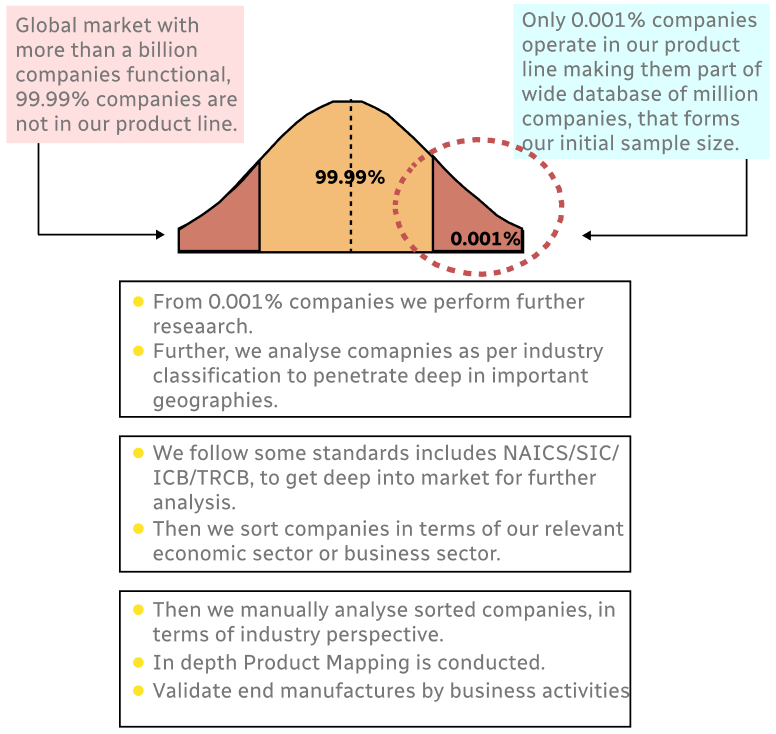
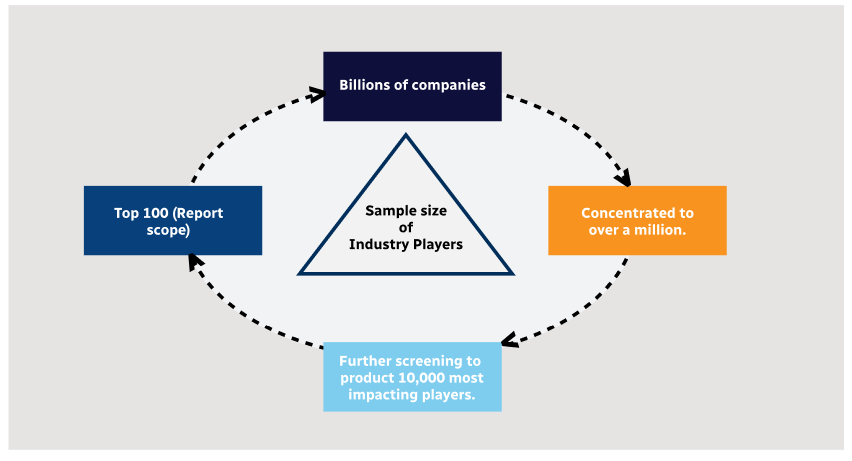
Step 1 - Identification of Relevant Samples Size from Population Database
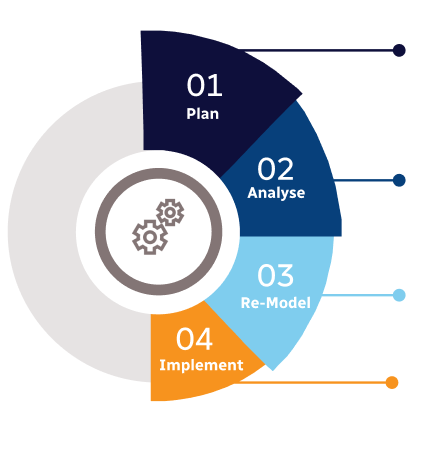
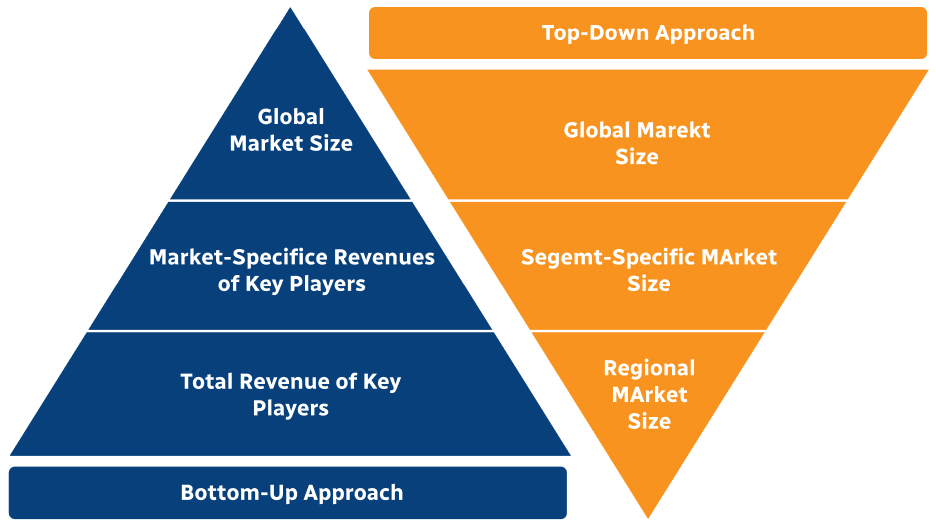
Step 2 - Approaches for Defining Global Market Size (Value, Volume* & Price*)
Note*: In applicable scenarios
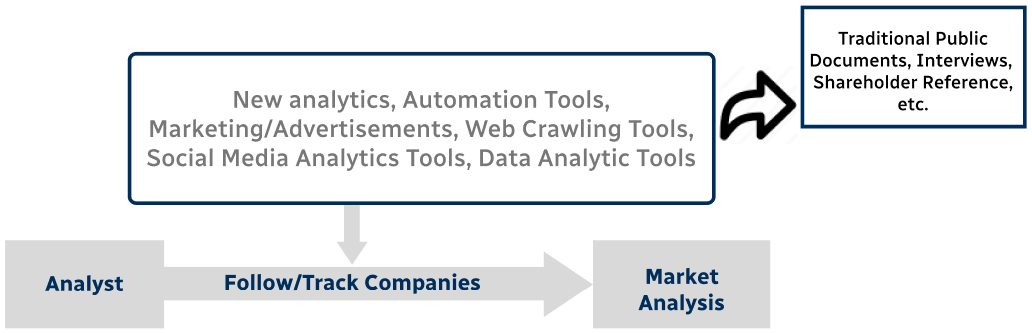
Step 3 - Data Sources
Primary Research
- Web Analytics
- Survey Reports
- Research Institute
- Latest Research Reports
- Opinion Leaders
Secondary Research
- Annual Reports
- White Paper
- Latest Press Release
- Industry Association
- Paid Database
- Investor Presentations
Step 4 - Data Triangulation
Involves using different sources of information in order to increase the validity of a study
These sources are likely to be stakeholders in a program - participants, other researchers, program staff, other community members, and so on.
Then we put all data in single framework & apply various statistical tools to find out the dynamic on the market.
During the analysis stage, feedback from the stakeholder groups would be compared to determine areas of agreement as well as areas of divergence