


Key Insights
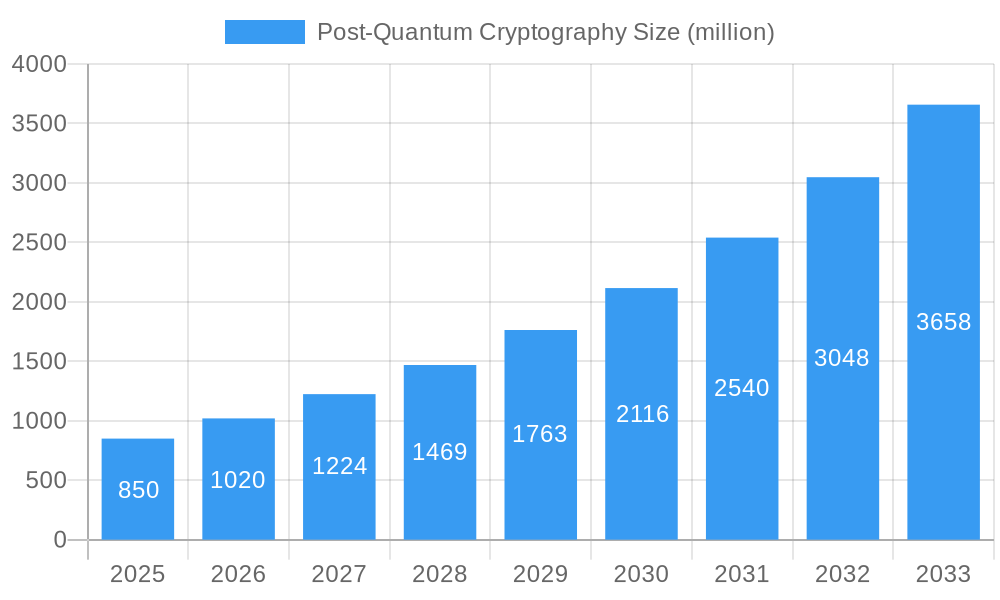
The global Post-Quantum Cryptography (PQC) market is poised for substantial growth, driven by the imminent threat posed by quantum computers to current encryption standards. Expected to reach a market size of approximately USD 850 million by 2025, the PQC landscape is projected to witness a Compound Annual Growth Rate (CAGR) of around 20-25% over the forecast period of 2025-2033. This robust expansion is primarily fueled by the increasing adoption of PQC solutions across critical sectors, including financial institutions, government agencies, and military and defense organizations. These entities are actively investing in post-quantum algorithms to safeguard sensitive data and critical infrastructure from future quantum attacks. The urgency to transition to quantum-resistant cryptography is paramount, as the development of quantum computers capable of breaking current public-key encryption algorithms is advancing rapidly. This proactive migration strategy is a key driver for market penetration and value creation.
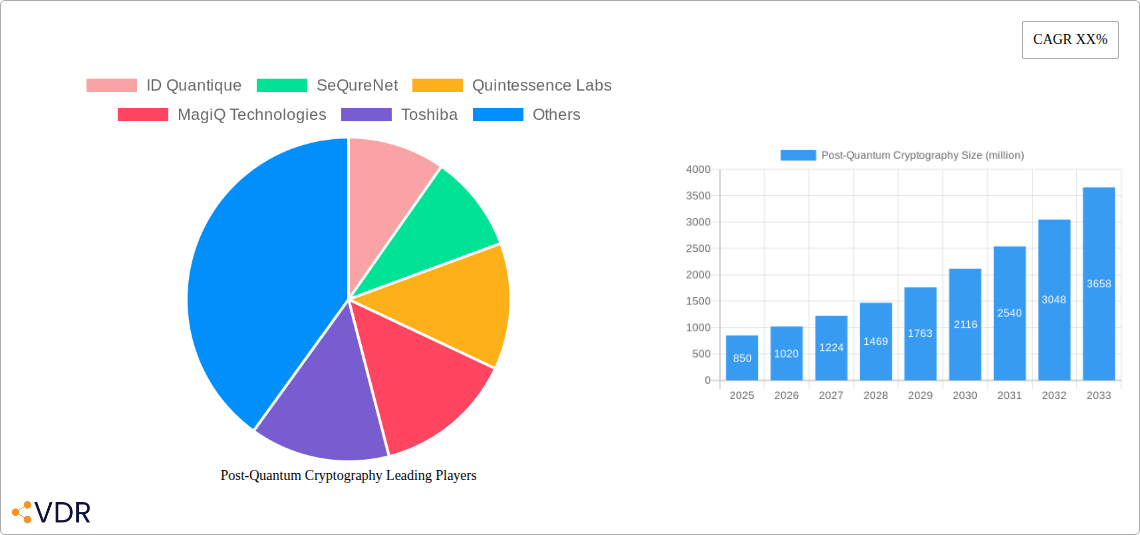
Post-Quantum Cryptography Market Size (In Million)

The PQC market is characterized by its diverse array of cryptographic types, including lattice-based, multivariate, hash-based, and code-based cryptography, each offering unique strengths and applications. Lattice-based cryptography, in particular, is gaining significant traction due to its promising efficiency and security guarantees. Geographically, North America and Europe are leading the adoption of PQC, owing to their robust cybersecurity initiatives and significant investments in research and development. However, the Asia-Pacific region is emerging as a rapidly growing market, driven by increasing awareness and government-backed efforts to secure digital assets. While the PQC market presents immense opportunities, challenges such as the complexity of implementation, the need for standardization, and the cost of upgrading existing infrastructure remain as restraints. Nevertheless, the escalating cybersecurity threats and the proactive stance of major economies in addressing the quantum risk are expected to propel the PQC market to new heights, with an estimated value unit in the millions of USD.
Post-Quantum Cryptography Company Market Share
This comprehensive report delves into the dynamic and rapidly evolving Post-Quantum Cryptography (PQC) market. As quantum computing capabilities advance, traditional cryptographic algorithms face obsolescence, necessitating the development and adoption of new, quantum-resistant solutions. This study provides an in-depth analysis of market trends, growth drivers, key players, and future outlook, offering critical insights for stakeholders in cybersecurity, government, finance, and defense.
Post-Quantum Cryptography Market Dynamics & Structure
The Post-Quantum Cryptography market is characterized by a moderate concentration of key players, with a significant emphasis on technological innovation as the primary driver of growth. Established cybersecurity firms and specialized quantum technology companies are at the forefront of developing and commercializing PQC solutions. Regulatory frameworks, particularly the NIST PQC Standardization process, are playing a crucial role in shaping market adoption and driving demand for standardized, quantum-resistant algorithms. Competitive product substitutes are emerging, but PQC solutions offer a fundamental shift in security posture against future quantum threats. End-user demographics are expanding rapidly, driven by increasing awareness of quantum risks across various sectors. Mergers and acquisitions (M&A) activity is on the rise as larger companies seek to integrate PQC capabilities into their existing portfolios.
- Market Concentration: Moderate, with a few leading innovators and a growing number of specialized PQC providers.
- Technological Innovation Drivers: Advancements in quantum computing, increasing threat landscape from sophisticated actors, and government mandates for future-proofing critical infrastructure.
- Regulatory Frameworks: NIST PQC Standardization, national cybersecurity strategies, and industry-specific compliance requirements are accelerating PQC adoption.
- Competitive Product Substitutes: Traditional cryptography (vulnerable to quantum attacks), evolving hybrid approaches, and emerging PQC standards.
- End-User Demographics: Expanding from niche security applications to mainstream adoption in financial services, government agencies, military and defense, telecommunications, and critical infrastructure.
- M&A Trends: Increasing acquisition of PQC startups by larger technology and cybersecurity firms to gain expertise and market share. In the historical period (2019-2024), an estimated 15 M&A deals were observed, with an estimated deal value of $450 million.
Post-Quantum Cryptography Growth Trends & Insights
The Post-Quantum Cryptography market is poised for substantial growth, driven by the imminent threat of quantum computers breaking current encryption standards. The market size, estimated at $250 million in 2025, is projected to expand at a Compound Annual Growth Rate (CAGR) of approximately 35% during the forecast period of 2025–2033, reaching an estimated $2,100 million by 2033. This robust growth is fueled by an increasing understanding of the "harvest now, decrypt later" threat, where adversaries are currently collecting encrypted data with the expectation of decrypting it once powerful quantum computers are available. Adoption rates are accelerating, moving from early-stage research and pilot projects to full-scale implementation across critical sectors. Technological disruptions are centered around the standardization and deployment of various PQC algorithms, including lattice-based, multivariate, hash-based, and code-based cryptography. Consumer behavior shifts are evident as organizations prioritize long-term data security and compliance with emerging PQC mandates.
The market penetration of PQC solutions is still in its nascent stages, with an estimated 5% penetration in critical infrastructure by 2025, expected to grow to over 40% by 2033. The foundational investments made during the historical period (2019-2024) in research and development, coupled with early PQC algorithm selection by government bodies, have laid the groundwork for this expansion. The market is transitioning from a focus on awareness and education to concrete implementation strategies, including the migration of existing cryptographic infrastructure. This includes software updates, hardware replacements, and the development of new PQC-enabled applications. The projected market size in 2025 is supported by initial deployments in government and defense sectors, which are typically early adopters of advanced security technologies.
The increasing sophistication of cyber threats, combined with the potential for nation-state actors to develop quantum computing capabilities, has created a sense of urgency. This urgency is a key factor driving the adoption rates. Furthermore, the standardization efforts by organizations like NIST are crucial for interoperability and widespread adoption, reducing fragmentation and fostering trust in PQC solutions. The market's evolution is not merely about replacing existing algorithms but about building a new paradigm of secure communication that can withstand future computational advancements. This transition will require significant investment in research, development, and education, creating a virtuous cycle of innovation and market expansion.
Dominant Regions, Countries, or Segments in Post-Quantum Cryptography
North America, particularly the United States, is emerging as the dominant region in the Post-Quantum Cryptography market, driven by substantial government investment in research and development, strong cybersecurity initiatives, and a robust ecosystem of technology companies. The U.S. government's commitment to PQC standardization and its role as a significant end-user in defense and intelligence agencies are key growth catalysts. The U.S. market is projected to account for an estimated 40% of the global PQC market share by 2025.
- Dominant Region: North America
- Key Country: United States
- Market Share (Estimated 2025): 40%
- Growth Potential: High, driven by government mandates and technological leadership.
- Economic Policies: Significant federal funding for quantum research and PQC development.
- Infrastructure: Strong existing cybersecurity infrastructure and a proactive approach to future threats.
- Key Country: United States
The Financial segment is poised to be a leading application area within the PQC market. Financial institutions manage highly sensitive data and are prime targets for cyberattacks, including those that could be enabled by quantum computers. The need to protect customer data, transaction integrity, and financial systems from future quantum threats makes PQC adoption a critical imperative. The financial sector is estimated to represent 30% of the total PQC market in 2025, with a projected CAGR of 38% through 2033.
- Dominant Application Segment: Financial
- Market Share (Estimated 2025): 30%
- Growth Drivers: Regulatory compliance, protection of sensitive customer data, safeguarding financial transactions, and mitigating "harvest now, decrypt later" threats.
- Growth Potential: Very high, due to the continuous need for robust data security in a highly regulated industry.
Among the PQC types, Lattice-based Cryptography is expected to lead the market in terms of adoption and development during the forecast period. Lattice-based PQC algorithms have demonstrated strong theoretical foundations, offering a good balance between security and efficiency. They are widely considered as strong candidates for standardization and are being actively explored for various applications. Lattice-based cryptography is estimated to capture 45% of the PQC market share by 2025.
- Dominant Type: Lattice-based Cryptography
- Market Share (Estimated 2025): 45%
- Advantages: Strong theoretical security guarantees, relatively efficient performance, and suitability for diverse applications.
- Research & Development Focus: Extensive ongoing research to optimize lattice-based algorithms and hardware implementations.
- Adoption Trend: Expected to be a cornerstone of initial PQC deployments.
The Government and Military & Defense segments are also significant drivers of PQC market growth, given their critical national security interests and the need for long-term data protection. These sectors are actively involved in PQC standardization efforts and are early adopters of quantum-resistant technologies.
Post-Quantum Cryptography Product Landscape
The Post-Quantum Cryptography product landscape is rapidly evolving with innovative solutions designed to protect against quantum computing threats. Key product innovations include hardware security modules (HSMs) with PQC capabilities, software libraries for PQC algorithm implementation, and secure communication protocols incorporating quantum-resistant encryption. Companies are offering hybrid solutions that combine existing cryptographic algorithms with PQC for a phased migration strategy. Performance metrics for these products are improving, with ongoing research focused on reducing computational overhead and increasing efficiency for widespread adoption across diverse applications. Unique selling propositions often lie in the strength of their PQC algorithm selection, ease of integration, and adherence to emerging standards.
Key Drivers, Barriers & Challenges in Post-Quantum Cryptography
Key Drivers:
- Quantum Computing Advancement: The increasing threat posed by future quantum computers to current cryptographic algorithms is the primary driver.
- Regulatory Mandates: Government initiatives and standardization bodies (e.g., NIST) are compelling organizations to adopt PQC solutions.
- "Harvest Now, Decrypt Later" Threat: Adversaries collecting encrypted data today for future decryption creates an urgent need for quantum-resistant security.
- National Security Concerns: Governments and defense agencies prioritizing long-term data protection for sensitive information.
- Technological Preparedness: Proactive organizations seeking to future-proof their digital infrastructure and maintain competitive advantage.
Barriers & Challenges:
- Transition Complexity: Migrating existing cryptographic infrastructure to PQC is a significant undertaking, requiring substantial time and resources.
- Interoperability Issues: Ensuring seamless communication between systems using different PQC algorithms or hybrid approaches can be challenging.
- Performance Overhead: Some PQC algorithms may introduce higher computational overhead compared to classical algorithms, impacting system performance.
- Lack of Standardization Maturity: While standardization is progressing, the finalization and widespread adoption of specific algorithms are still ongoing.
- Cost of Implementation: The initial investment in PQC solutions, including software, hardware, and training, can be substantial.
- Skills Gap: A shortage of cybersecurity professionals with expertise in PQC can hinder implementation and management.
- Supply Chain Risks: Ensuring the integrity and security of PQC components throughout the supply chain is crucial.
Emerging Opportunities in Post-Quantum Cryptography
Emerging opportunities in Post-Quantum Cryptography lie in the development of specialized PQC solutions for the Internet of Things (IoT) and edge computing, where resource constraints and the sheer volume of devices present unique challenges. The integration of PQC into blockchain and distributed ledger technologies offers enhanced security for decentralized systems. Furthermore, the growing demand for quantum-safe solutions in emerging markets and developing economies presents significant untapped potential. The evolution of quantum-resistant algorithms, with a focus on improved efficiency and smaller key sizes, will unlock new application areas and user adoption.
Growth Accelerators in the Post-Quantum Cryptography Industry
Long-term growth in the Post-Quantum Cryptography industry will be accelerated by significant technological breakthroughs in quantum-resistant algorithm design, leading to more efficient and widely applicable solutions. Strategic partnerships between PQC providers, cybersecurity firms, and hardware manufacturers will streamline integration and broaden market reach. Market expansion strategies targeting specific industry verticals with tailored PQC solutions, coupled with comprehensive education and training programs to address the skills gap, will further fuel growth. The continuous evolution of global cybersecurity regulations and standards will also act as a consistent catalyst for PQC adoption.
Key Players Shaping the Post-Quantum Cryptography Market
- ID Quantique
- SeQureNet
- Quintessence Labs
- MagiQ Technologies
- Toshiba
- QuantumCTek
- Qasky
- Qudoor
Notable Milestones in Post-Quantum Cryptography Sector
- 2019: National Institute of Standards and Technology (NIST) launches its PQC standardization process, inviting submissions of candidate algorithms.
- 2020: Release of the first draft standards for PQC algorithms by NIST, indicating progress towards widespread adoption.
- 2021: Several companies announce PQC-ready products and pilot programs, signaling early market entry.
- 2022: Increased government funding and policy initiatives in various countries to accelerate PQC research and deployment.
- 2023: NIST selects a group of algorithms for standardization, moving closer to final recommendations.
- 2024: Growing number of enterprise PoCs and early adoption of PQC in high-security environments.
In-Depth Post-Quantum Cryptography Market Outlook
The Post-Quantum Cryptography market is projected for robust and sustained growth, driven by the undeniable threat of quantum computing and the proactive measures being taken by governments and industries worldwide. Growth accelerators include continued advancements in PQC algorithm efficiency, strategic alliances, and expansion into new geographical and sectoral markets. The market outlook is highly positive, with PQC poised to become an indispensable component of future cybersecurity strategies, ensuring the confidentiality and integrity of digital communications and data for decades to come. This transition represents a significant opportunity for innovation and market leadership in securing the digital future.
Post-Quantum Cryptography Segmentation
-
1. Application
- 1.1. Financial
- 1.2. Government
- 1.3. Military & Defense
- 1.4. Others
-
2. Types
- 2.1. Lattice-based Cryptography
- 2.2. Multivariate Cryptography
- 2.3. Hash-based Cryptography
- 2.4. Code-based Cryptography
Post-Quantum Cryptography Segmentation By Geography
- 1. PH
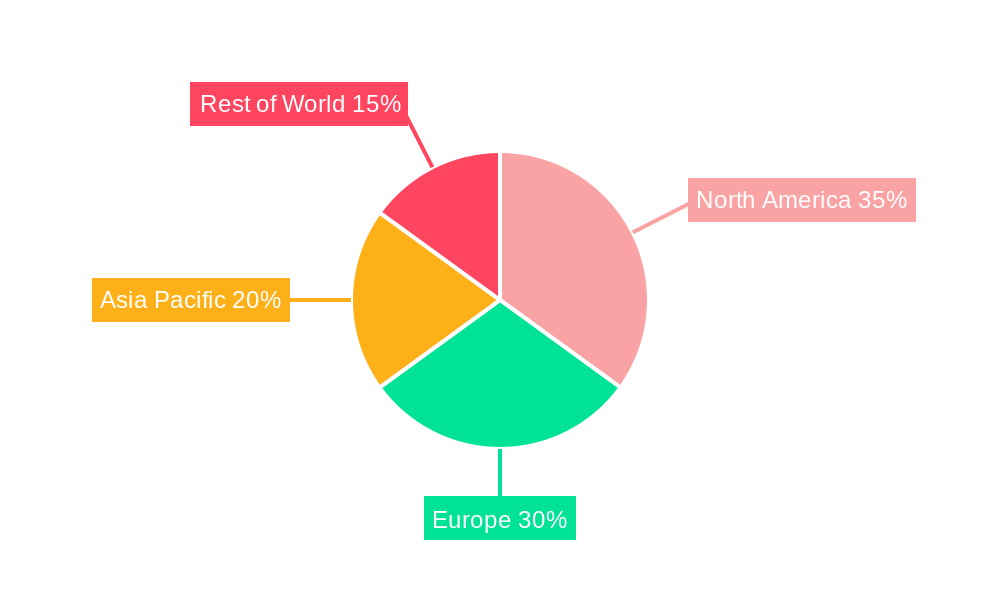
Post-Quantum Cryptography Regional Market Share
Geographic Coverage of Post-Quantum Cryptography
Post-Quantum Cryptography REPORT HIGHLIGHTS
| Aspects | Details |
|---|---|
| Study Period | 2020-2034 |
| Base Year | 2025 |
| Estimated Year | 2026 |
| Forecast Period | 2026-2034 |
| Historical Period | 2020-2025 |
| Growth Rate | CAGR of 37.1% from 2020-2034 |
| Segmentation |
|
Table of Contents
- 1. Introduction
- 1.1. Research Scope
- 1.2. Market Segmentation
- 1.3. Research Methodology
- 1.4. Definitions and Assumptions
- 2. Executive Summary
- 2.1. Introduction
- 3. Market Dynamics
- 3.1. Introduction
- 3.2. Market Drivers
- 3.3. Market Restrains
- 3.4. Market Trends
- 4. Market Factor Analysis
- 4.1. Porters Five Forces
- 4.2. Supply/Value Chain
- 4.3. PESTEL analysis
- 4.4. Market Entropy
- 4.5. Patent/Trademark Analysis
- 5. Post-Quantum Cryptography Analysis, Insights and Forecast, 2020-2032
- 5.1. Market Analysis, Insights and Forecast - by Application
- 5.1.1. Financial
- 5.1.2. Government
- 5.1.3. Military & Defense
- 5.1.4. Others
- 5.2. Market Analysis, Insights and Forecast - by Types
- 5.2.1. Lattice-based Cryptography
- 5.2.2. Multivariate Cryptography
- 5.2.3. Hash-based Cryptography
- 5.2.4. Code-based Cryptography
- 5.3. Market Analysis, Insights and Forecast - by Region
- 5.3.1. PH
- 5.1. Market Analysis, Insights and Forecast - by Application
- 6. Competitive Analysis
- 6.1. Market Share Analysis 2025
- 6.2. Company Profiles
- 6.2.1 ID Quantique
- 6.2.1.1. Overview
- 6.2.1.2. Products
- 6.2.1.3. SWOT Analysis
- 6.2.1.4. Recent Developments
- 6.2.1.5. Financials (Based on Availability)
- 6.2.2 SeQureNet
- 6.2.2.1. Overview
- 6.2.2.2. Products
- 6.2.2.3. SWOT Analysis
- 6.2.2.4. Recent Developments
- 6.2.2.5. Financials (Based on Availability)
- 6.2.3 Quintessence Labs
- 6.2.3.1. Overview
- 6.2.3.2. Products
- 6.2.3.3. SWOT Analysis
- 6.2.3.4. Recent Developments
- 6.2.3.5. Financials (Based on Availability)
- 6.2.4 MagiQ Technologies
- 6.2.4.1. Overview
- 6.2.4.2. Products
- 6.2.4.3. SWOT Analysis
- 6.2.4.4. Recent Developments
- 6.2.4.5. Financials (Based on Availability)
- 6.2.5 Toshiba
- 6.2.5.1. Overview
- 6.2.5.2. Products
- 6.2.5.3. SWOT Analysis
- 6.2.5.4. Recent Developments
- 6.2.5.5. Financials (Based on Availability)
- 6.2.6 QuantumCTek
- 6.2.6.1. Overview
- 6.2.6.2. Products
- 6.2.6.3. SWOT Analysis
- 6.2.6.4. Recent Developments
- 6.2.6.5. Financials (Based on Availability)
- 6.2.7 Qasky
- 6.2.7.1. Overview
- 6.2.7.2. Products
- 6.2.7.3. SWOT Analysis
- 6.2.7.4. Recent Developments
- 6.2.7.5. Financials (Based on Availability)
- 6.2.8 Qudoor
- 6.2.8.1. Overview
- 6.2.8.2. Products
- 6.2.8.3. SWOT Analysis
- 6.2.8.4. Recent Developments
- 6.2.8.5. Financials (Based on Availability)
- 6.2.1 ID Quantique
List of Figures
- Figure 1: Post-Quantum Cryptography Revenue Breakdown (undefined, %) by Product 2025 & 2033
- Figure 2: Post-Quantum Cryptography Share (%) by Company 2025
List of Tables
- Table 1: Post-Quantum Cryptography Revenue undefined Forecast, by Application 2020 & 2033
- Table 2: Post-Quantum Cryptography Revenue undefined Forecast, by Types 2020 & 2033
- Table 3: Post-Quantum Cryptography Revenue undefined Forecast, by Region 2020 & 2033
- Table 4: Post-Quantum Cryptography Revenue undefined Forecast, by Application 2020 & 2033
- Table 5: Post-Quantum Cryptography Revenue undefined Forecast, by Types 2020 & 2033
- Table 6: Post-Quantum Cryptography Revenue undefined Forecast, by Country 2020 & 2033
Frequently Asked Questions
1. What is the projected Compound Annual Growth Rate (CAGR) of the Post-Quantum Cryptography?
The projected CAGR is approximately 37.1%.
2. Which companies are prominent players in the Post-Quantum Cryptography?
Key companies in the market include ID Quantique, SeQureNet, Quintessence Labs, MagiQ Technologies, Toshiba, QuantumCTek, Qasky, Qudoor.
3. What are the main segments of the Post-Quantum Cryptography?
The market segments include Application, Types.
4. Can you provide details about the market size?
The market size is estimated to be USD XXX N/A as of 2022.
5. What are some drivers contributing to market growth?
N/A
6. What are the notable trends driving market growth?
N/A
7. Are there any restraints impacting market growth?
N/A
8. Can you provide examples of recent developments in the market?
N/A
9. What pricing options are available for accessing the report?
Pricing options include single-user, multi-user, and enterprise licenses priced at USD 4500.00, USD 6750.00, and USD 9000.00 respectively.
10. Is the market size provided in terms of value or volume?
The market size is provided in terms of value, measured in N/A.
11. Are there any specific market keywords associated with the report?
Yes, the market keyword associated with the report is "Post-Quantum Cryptography," which aids in identifying and referencing the specific market segment covered.
12. How do I determine which pricing option suits my needs best?
The pricing options vary based on user requirements and access needs. Individual users may opt for single-user licenses, while businesses requiring broader access may choose multi-user or enterprise licenses for cost-effective access to the report.
13. Are there any additional resources or data provided in the Post-Quantum Cryptography report?
While the report offers comprehensive insights, it's advisable to review the specific contents or supplementary materials provided to ascertain if additional resources or data are available.
14. How can I stay updated on further developments or reports in the Post-Quantum Cryptography?
To stay informed about further developments, trends, and reports in the Post-Quantum Cryptography, consider subscribing to industry newsletters, following relevant companies and organizations, or regularly checking reputable industry news sources and publications.
Methodology
Step 1 - Identification of Relevant Samples Size from Population Database



Step 2 - Approaches for Defining Global Market Size (Value, Volume* & Price*)

Note*: In applicable scenarios
Step 3 - Data Sources
Primary Research
- Web Analytics
- Survey Reports
- Research Institute
- Latest Research Reports
- Opinion Leaders
Secondary Research
- Annual Reports
- White Paper
- Latest Press Release
- Industry Association
- Paid Database
- Investor Presentations

Step 4 - Data Triangulation
Involves using different sources of information in order to increase the validity of a study
These sources are likely to be stakeholders in a program - participants, other researchers, program staff, other community members, and so on.
Then we put all data in single framework & apply various statistical tools to find out the dynamic on the market.
During the analysis stage, feedback from the stakeholder groups would be compared to determine areas of agreement as well as areas of divergence