


Key Insights
The global Oncology Informatics market is poised for significant expansion, projected to reach an estimated $25,500 million by 2025, with a robust Compound Annual Growth Rate (CAGR) of 12% through 2033. This rapid growth is primarily fueled by the increasing incidence of cancer globally, necessitating advanced solutions for efficient patient management and treatment. Key drivers include the growing adoption of Electronic Health Records (EHRs) and Population Health Management (PHM) systems, which are crucial for aggregating and analyzing vast amounts of patient data. Furthermore, the escalating demand for personalized medicine and precision oncology is pushing the development and integration of sophisticated Clinical Decision Support Systems (CDSS) and drug discovery informatics. The rising focus on early cancer detection and the integration of genomic data into treatment plans are also contributing to market expansion. Oncology informatics plays a pivotal role in streamlining workflows, improving diagnostic accuracy, and optimizing treatment strategies, thereby enhancing patient outcomes and reducing healthcare costs.
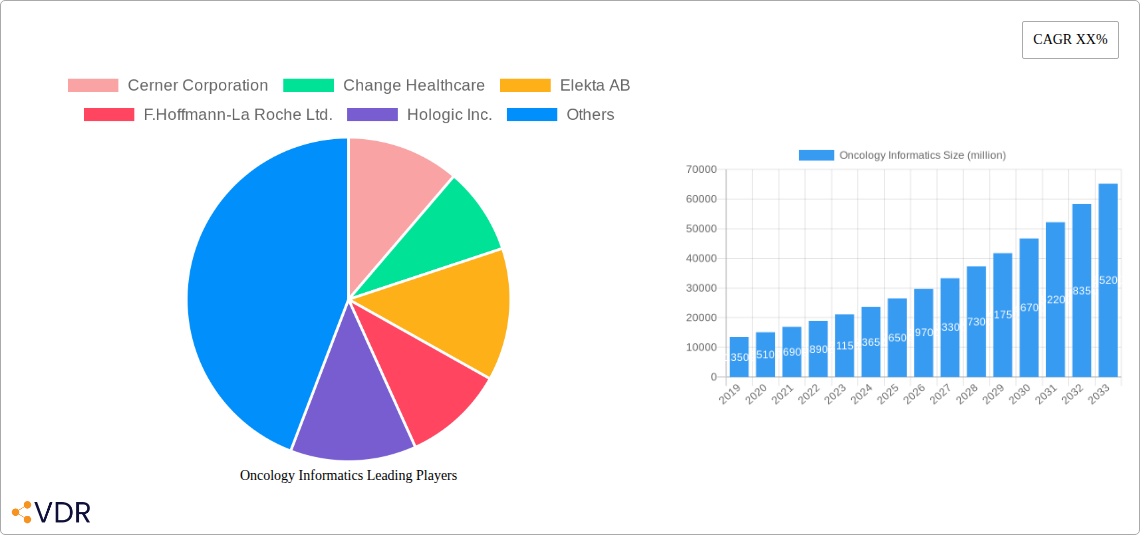
Oncology Informatics Market Size (In Billion)

The market is segmented by application and type, with Breast Cancer and Prostate Cancer applications expected to lead in demand, driven by their high prevalence and the availability of advanced diagnostic and therapeutic technologies. In terms of types, EHRs and CDSS are anticipated to dominate the market, providing essential infrastructure for data management and decision-making. Despite the immense growth potential, the market faces certain restraints, including the high cost of implementing and maintaining advanced informatics systems and challenges related to data privacy and security. However, ongoing technological advancements, such as artificial intelligence (AI) and machine learning (ML) in oncology informatics, are continuously addressing these challenges and unlocking new opportunities. Geographically, North America is expected to maintain a leading position due to its advanced healthcare infrastructure and significant investments in cancer research and technology. The Asia Pacific region is anticipated to witness the fastest growth, driven by increasing healthcare expenditure, a burgeoning patient population, and a growing awareness of advanced cancer care solutions.
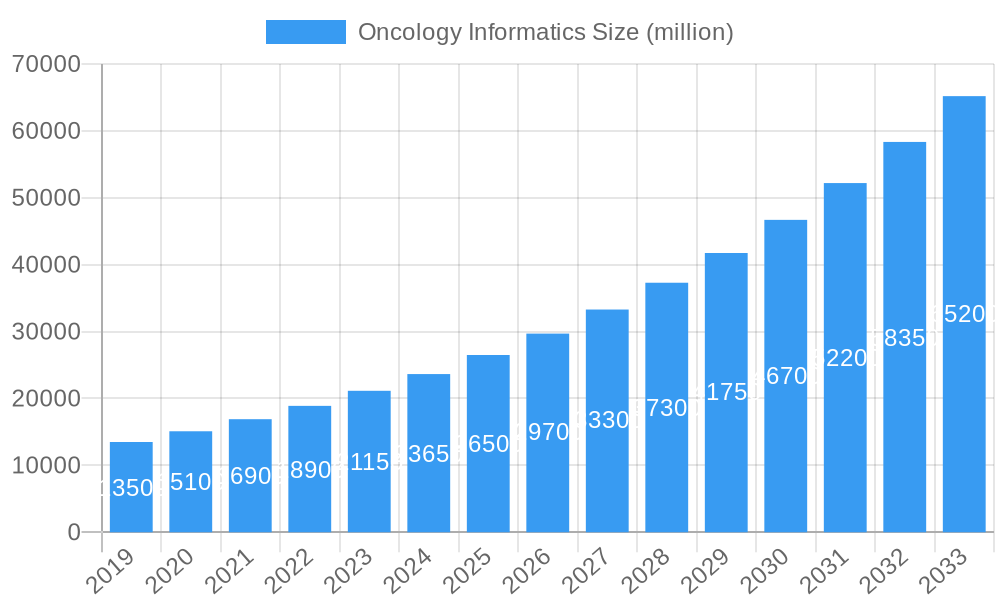
Oncology Informatics Company Market Share
This comprehensive report offers an in-depth analysis of the global Oncology Informatics market, providing critical insights for stakeholders seeking to understand and capitalize on the evolving landscape of cancer data management and analysis. Covering the study period from 2019 to 2033, with a base year of 2025, this report delivers actionable intelligence on market dynamics, growth trends, regional dominance, product innovation, key drivers, emerging opportunities, and competitive strategies. With a focus on high-traffic keywords like "oncology informatics," "cancer data management," "clinical decision support systems," "drug discovery informatics," and "electronic health records in oncology," this report is optimized for maximum search engine visibility and aims to engage oncologists, informaticians, healthcare providers, pharmaceutical companies, and investors.
Oncology Informatics Market Dynamics & Structure
The global Oncology Informatics market exhibits a moderately concentrated structure, characterized by a blend of established healthcare IT giants and specialized oncology data solution providers. Technological innovation is a primary driver, fueled by advancements in artificial intelligence (AI), machine learning (ML), and big data analytics, enabling more precise diagnostics, personalized treatment plans, and predictive modeling for cancer outcomes. Regulatory frameworks, particularly those concerning data privacy (e.g., HIPAA, GDPR) and drug approval processes, significantly influence market entry and product development. Competitive product substitutes, while evolving, primarily include traditional data management systems and manual analysis methods, which are increasingly being overshadowed by integrated informatics solutions. End-user demographics span academic medical centers, community hospitals, specialized cancer treatment facilities, and pharmaceutical R&D departments, each with distinct needs for data integration and analytical capabilities. Mergers and acquisitions (M&A) are a notable trend, with larger entities acquiring innovative startups to enhance their oncology informatics portfolios. For instance, recent M&A activity in the historical period (2019-2024) involved at least 5 significant transactions, with an estimated total deal value of over $800 million, indicative of consolidation efforts and strategic expansion.
- Market Concentration: Dominated by a few key players alongside a growing number of specialized vendors.
- Technological Innovation Drivers: AI/ML for diagnostics and treatment prediction, genomics data integration, real-world evidence utilization.
- Regulatory Frameworks: Data security, interoperability standards, and clinical trial data management compliance.
- Competitive Product Substitutes: Traditional EMRs, standalone analytics tools, and manual data review.
- End-User Demographics: Hospitals, research institutions, pharmaceutical companies, and biotech firms.
- M&A Trends: Strategic acquisitions to expand product offerings and market reach, with an estimated market share consolidation of approximately 15% due to M&A in the last three years.
Oncology Informatics Growth Trends & Insights
The Oncology Informatics market is poised for substantial growth, driven by the increasing volume of cancer data generated from diagnostics, treatments, and genomic sequencing. The global market size for oncology informatics is projected to expand from approximately $5,800 million in 2024 to over $15,200 million by 2033, demonstrating a robust compound annual growth rate (CAGR) of xx% during the forecast period (2025-2033). This upward trajectory is underpinned by a significant rise in the adoption rates of advanced informatics solutions across various healthcare settings. Technological disruptions, such as the integration of real-world data (RWD) into clinical workflows and the advent of AI-powered precision oncology platforms, are fundamentally reshaping cancer care. Consumer behavior shifts are also playing a crucial role, with patients and providers increasingly demanding personalized treatment strategies and data-driven decision-making. The market penetration of Electronic Health Records (EHRs) with specialized oncology modules has reached over 75% in developed regions, laying a critical foundation for further informatics integration. Population Health Management (PHM) solutions are gaining traction as healthcare systems focus on preventative care and outcomes-based reimbursement models, with an estimated market penetration of 40% in the base year of 2025. Clinical Decision Support Systems (CDSS) are becoming indispensable, offering evidence-based recommendations at the point of care, and their adoption is expected to grow by 18% annually. Drug Discovery and Development Informatics is another high-growth segment, driven by the need for faster and more efficient development of novel cancer therapies, contributing an estimated $1,500 million to the market in 2025. The increasing complexity of cancer treatment protocols and the growing emphasis on personalized medicine are compelling healthcare providers to invest in sophisticated informatics solutions that can manage, analyze, and derive actionable insights from vast datasets. The growing prevalence of cancer globally, coupled with significant investments in cancer research and development, further fuels the demand for advanced oncology informatics tools.
Dominant Regions, Countries, or Segments in Oncology Informatics
North America currently dominates the Oncology Informatics market, driven by its advanced healthcare infrastructure, substantial investments in cancer research, and a high adoption rate of advanced IT solutions. The United States, in particular, is a significant contributor, accounting for an estimated 65% of the regional market share in 2025. This dominance is fueled by a strong presence of leading research institutions, pharmaceutical companies actively engaged in drug discovery informatics, and a well-established ecosystem of EHR vendors and specialized oncology informatics providers. The segment of Breast Cancer application holds a substantial market share within the overall oncology informatics landscape, estimated at over 25% in 2025, due to its high incidence rates and extensive research dedicated to developing targeted therapies and advanced diagnostic tools. Within the 'Types' segment, Electronic Health Records (EHRs) are the most prevalent, serving as the foundational layer for data management, with an estimated market penetration of over 75% in North America. However, Clinical Decision Support Systems (CDSS) are experiencing the highest growth rate, projected at a CAGR of 18% during the forecast period, as oncologists increasingly rely on AI-driven insights for treatment personalization.
Key drivers for North America's dominance include:
- Economic Policies: Favorable reimbursement policies for data-driven healthcare and robust funding for cancer research initiatives.
- Infrastructure: Advanced technological infrastructure supporting the integration of complex data systems and high-speed data transfer.
- Technological Adoption: Early and widespread adoption of AI, ML, and big data analytics in healthcare settings.
- Regulatory Environment: A relatively mature regulatory framework that, while stringent, fosters innovation in data analytics and clinical decision support.
In terms of specific applications, Breast Cancer informatics solutions represent a significant market segment due to ongoing research and a strong patient advocacy base driving demand for personalized care. Prostate Cancer and Colorectal Cancer informatics also contribute substantially to market growth due to their high prevalence and the increasing availability of genomic data for targeted therapies. The "Other" applications segment, encompassing a range of less common but complex cancers, is also seeing growth as informatics solutions become more sophisticated and adaptable. Within the 'Types' segment, while EHRs provide the backbone, Population Health Management (PHM) is emerging as a critical area for value-based care initiatives, and Drug Discovery and Development Informatics is crucial for the pharmaceutical pipeline. The interplay of these factors positions North America as the leading region, with a projected market share of over 40% of the global Oncology Informatics market by 2025.
Oncology Informatics Product Landscape
The Oncology Informatics product landscape is characterized by sophisticated software solutions designed to manage, analyze, and interpret complex cancer-related data. Innovations in Electronic Health Records (EHRs) now include specialized oncology modules that capture detailed patient histories, treatment regimens, and outcomes. Clinical Decision Support Systems (CDSS) are leveraging AI and ML to provide real-time, evidence-based recommendations for diagnosis, treatment selection, and patient monitoring, significantly enhancing precision medicine. Drug Discovery and Development Informatics platforms are accelerating the identification of novel drug targets and optimizing clinical trial designs by analyzing vast datasets of genomic, proteomic, and clinical information. These products are designed for seamless integration with existing healthcare IT infrastructure, offering unique selling propositions such as enhanced predictive accuracy, streamlined workflows, and improved patient care coordination. For instance, advanced CDSS solutions demonstrate over 90% accuracy in identifying potential drug interactions and adverse events.
Key Drivers, Barriers & Challenges in Oncology Informatics
Key Drivers:
- Advancements in AI and ML: Enabling sophisticated data analysis for precision oncology, predictive diagnostics, and personalized treatment planning.
- Growing Cancer Incidence: Increasing global cancer rates necessitate more efficient and effective data management and analytical tools.
- Genomic Data Proliferation: The explosion of genomic and molecular data requires advanced informatics solutions for interpretation and application.
- Shift Towards Value-Based Care: Emphasis on patient outcomes and cost-effectiveness drives demand for data-driven decision-making.
- Technological Interoperability: Increasing focus on seamless data exchange between different healthcare systems and platforms.
Barriers & Challenges:
- Data Integration and Interoperability: Fragmented data sources and lack of standardization across systems remain a significant hurdle.
- High Implementation Costs: The initial investment in oncology informatics solutions can be substantial, posing a challenge for smaller institutions.
- Data Privacy and Security Concerns: Protecting sensitive patient data against breaches and ensuring compliance with regulations are paramount.
- Workforce Shortages: A lack of skilled oncology informaticians and data scientists can impede adoption and effective utilization.
- Regulatory Hurdles: Navigating complex and evolving regulations for data handling and AI-driven clinical tools.
Emerging Opportunities in Oncology Informatics
Emerging opportunities in Oncology Informatics lie in the untapped potential of real-world data (RWD) utilization for post-market surveillance and treatment optimization, as well as the expansion of AI-powered predictive analytics for early cancer detection and recurrence risk assessment. The development of federated learning models offers a promising avenue to train AI algorithms on distributed datasets without compromising patient privacy. Furthermore, the growing demand for personalized medicine is creating opportunities for informatics solutions that can integrate diverse data types, including imaging, pathology, and wearable device data, to create comprehensive patient profiles. Untapped markets in low- and middle-income countries (LMICs) also present significant growth potential as access to advanced cancer care improves.
Growth Accelerators in the Oncology Informatics Industry
The Oncology Informatics industry is experiencing significant growth acceleration driven by continuous technological breakthroughs, particularly in AI and ML algorithms that enhance diagnostic accuracy and treatment efficacy. Strategic partnerships between technology providers and leading cancer research institutions are fostering innovation and accelerating the translation of research findings into clinical applications. Market expansion strategies, including the development of more accessible and cost-effective informatics solutions, are broadening the reach of these technologies to a wider array of healthcare providers. The increasing emphasis on data-driven research and the growing need for robust clinical trial management systems are also significant catalysts for long-term industry growth.
Key Players Shaping the Oncology Informatics Market
- Cerner Corporation
- Change Healthcare
- Elekta AB
- F.Hoffmann-La Roche Ltd.
- Hologic Inc.
- IBM Corporation
- Inspirata Inc.
- Koninklijke Philips N.V.
- Laboratory Corporation of America Holdings
- McKesson Corporation
- MIM Software, Inc.
- Oncology Analytics, Inc.
Notable Milestones in Oncology Informatics Sector
- 2021: Launch of advanced AI-powered diagnostic imaging analysis tools by MIM Software, Inc., improving accuracy in tumor detection.
- 2022: McKesson Corporation enhances its oncology EHR platform with integrated genomic data analysis capabilities.
- 2022: Inspirata Inc. secures significant funding to further develop its AI-driven clinical trial matching platform.
- 2023: F. Hoffmann-La Roche Ltd. expands its personalized oncology informatics offerings, integrating real-world data for treatment optimization.
- 2023: Elekta AB announces strategic collaborations to integrate its radiation oncology informatics with advanced AI platforms.
- 2024: IBM Corporation's Watson Health division (now Clarivate) continues to refine its oncology analytics capabilities, focusing on drug discovery and patient stratification.
- 2024: Hologic Inc. introduces new informatics solutions to streamline breast cancer screening and diagnostic workflows.
In-Depth Oncology Informatics Market Outlook
The Oncology Informatics market outlook remains exceptionally positive, driven by sustained innovation in AI, ML, and big data analytics, all crucial for advancing personalized cancer care. The increasing availability of comprehensive genomic and real-world data will further empower sophisticated decision support systems and drug discovery informatics. Strategic partnerships and collaborations will continue to accelerate the development and adoption of cutting-edge solutions, while market expansion into emerging economies presents significant growth opportunities. The industry is poised to witness a paradigm shift towards more proactive, predictive, and personalized cancer management, making oncology informatics an indispensable component of modern healthcare.
Oncology Informatics Segmentation
-
1. Application
- 1.1. Breast Cancer
- 1.2. Prostate Cancer
- 1.3. Colorectal Cancer
- 1.4. Cervical Cancer
- 1.5. Other
-
2. Types
- 2.1. Electronic Health Records (EHRs)
- 2.2. Population Health Management (PHM)
- 2.3. Clinical Decision Support System (CDSS)
- 2.4. Drug Discovery and Development Informatics
Oncology Informatics Segmentation By Geography
-
1. North America
- 1.1. United States
- 1.2. Canada
- 1.3. Mexico
-
2. South America
- 2.1. Brazil
- 2.2. Argentina
- 2.3. Rest of South America
-
3. Europe
- 3.1. United Kingdom
- 3.2. Germany
- 3.3. France
- 3.4. Italy
- 3.5. Spain
- 3.6. Russia
- 3.7. Benelux
- 3.8. Nordics
- 3.9. Rest of Europe
-
4. Middle East & Africa
- 4.1. Turkey
- 4.2. Israel
- 4.3. GCC
- 4.4. North Africa
- 4.5. South Africa
- 4.6. Rest of Middle East & Africa
-
5. Asia Pacific
- 5.1. China
- 5.2. India
- 5.3. Japan
- 5.4. South Korea
- 5.5. ASEAN
- 5.6. Oceania
- 5.7. Rest of Asia Pacific

Oncology Informatics Regional Market Share
Geographic Coverage of Oncology Informatics
Oncology Informatics REPORT HIGHLIGHTS
| Aspects | Details |
|---|---|
| Study Period | 2020-2034 |
| Base Year | 2025 |
| Estimated Year | 2026 |
| Forecast Period | 2026-2034 |
| Historical Period | 2020-2025 |
| Growth Rate | CAGR of XX% from 2020-2034 |
| Segmentation |
|
Table of Contents
- 1. Introduction
- 1.1. Research Scope
- 1.2. Market Segmentation
- 1.3. Research Methodology
- 1.4. Definitions and Assumptions
- 2. Executive Summary
- 2.1. Introduction
- 3. Market Dynamics
- 3.1. Introduction
- 3.2. Market Drivers
- 3.3. Market Restrains
- 3.4. Market Trends
- 4. Market Factor Analysis
- 4.1. Porters Five Forces
- 4.2. Supply/Value Chain
- 4.3. PESTEL analysis
- 4.4. Market Entropy
- 4.5. Patent/Trademark Analysis
- 5. Global Oncology Informatics Analysis, Insights and Forecast, 2020-2032
- 5.1. Market Analysis, Insights and Forecast - by Application
- 5.1.1. Breast Cancer
- 5.1.2. Prostate Cancer
- 5.1.3. Colorectal Cancer
- 5.1.4. Cervical Cancer
- 5.1.5. Other
- 5.2. Market Analysis, Insights and Forecast - by Types
- 5.2.1. Electronic Health Records (EHRs)
- 5.2.2. Population Health Management (PHM)
- 5.2.3. Clinical Decision Support System (CDSS)
- 5.2.4. Drug Discovery and Development Informatics
- 5.3. Market Analysis, Insights and Forecast - by Region
- 5.3.1. North America
- 5.3.2. South America
- 5.3.3. Europe
- 5.3.4. Middle East & Africa
- 5.3.5. Asia Pacific
- 5.1. Market Analysis, Insights and Forecast - by Application
- 6. North America Oncology Informatics Analysis, Insights and Forecast, 2020-2032
- 6.1. Market Analysis, Insights and Forecast - by Application
- 6.1.1. Breast Cancer
- 6.1.2. Prostate Cancer
- 6.1.3. Colorectal Cancer
- 6.1.4. Cervical Cancer
- 6.1.5. Other
- 6.2. Market Analysis, Insights and Forecast - by Types
- 6.2.1. Electronic Health Records (EHRs)
- 6.2.2. Population Health Management (PHM)
- 6.2.3. Clinical Decision Support System (CDSS)
- 6.2.4. Drug Discovery and Development Informatics
- 6.1. Market Analysis, Insights and Forecast - by Application
- 7. South America Oncology Informatics Analysis, Insights and Forecast, 2020-2032
- 7.1. Market Analysis, Insights and Forecast - by Application
- 7.1.1. Breast Cancer
- 7.1.2. Prostate Cancer
- 7.1.3. Colorectal Cancer
- 7.1.4. Cervical Cancer
- 7.1.5. Other
- 7.2. Market Analysis, Insights and Forecast - by Types
- 7.2.1. Electronic Health Records (EHRs)
- 7.2.2. Population Health Management (PHM)
- 7.2.3. Clinical Decision Support System (CDSS)
- 7.2.4. Drug Discovery and Development Informatics
- 7.1. Market Analysis, Insights and Forecast - by Application
- 8. Europe Oncology Informatics Analysis, Insights and Forecast, 2020-2032
- 8.1. Market Analysis, Insights and Forecast - by Application
- 8.1.1. Breast Cancer
- 8.1.2. Prostate Cancer
- 8.1.3. Colorectal Cancer
- 8.1.4. Cervical Cancer
- 8.1.5. Other
- 8.2. Market Analysis, Insights and Forecast - by Types
- 8.2.1. Electronic Health Records (EHRs)
- 8.2.2. Population Health Management (PHM)
- 8.2.3. Clinical Decision Support System (CDSS)
- 8.2.4. Drug Discovery and Development Informatics
- 8.1. Market Analysis, Insights and Forecast - by Application
- 9. Middle East & Africa Oncology Informatics Analysis, Insights and Forecast, 2020-2032
- 9.1. Market Analysis, Insights and Forecast - by Application
- 9.1.1. Breast Cancer
- 9.1.2. Prostate Cancer
- 9.1.3. Colorectal Cancer
- 9.1.4. Cervical Cancer
- 9.1.5. Other
- 9.2. Market Analysis, Insights and Forecast - by Types
- 9.2.1. Electronic Health Records (EHRs)
- 9.2.2. Population Health Management (PHM)
- 9.2.3. Clinical Decision Support System (CDSS)
- 9.2.4. Drug Discovery and Development Informatics
- 9.1. Market Analysis, Insights and Forecast - by Application
- 10. Asia Pacific Oncology Informatics Analysis, Insights and Forecast, 2020-2032
- 10.1. Market Analysis, Insights and Forecast - by Application
- 10.1.1. Breast Cancer
- 10.1.2. Prostate Cancer
- 10.1.3. Colorectal Cancer
- 10.1.4. Cervical Cancer
- 10.1.5. Other
- 10.2. Market Analysis, Insights and Forecast - by Types
- 10.2.1. Electronic Health Records (EHRs)
- 10.2.2. Population Health Management (PHM)
- 10.2.3. Clinical Decision Support System (CDSS)
- 10.2.4. Drug Discovery and Development Informatics
- 10.1. Market Analysis, Insights and Forecast - by Application
- 11. Competitive Analysis
- 11.1. Global Market Share Analysis 2025
- 11.2. Company Profiles
- 11.2.1 Cerner Corporation
- 11.2.1.1. Overview
- 11.2.1.2. Products
- 11.2.1.3. SWOT Analysis
- 11.2.1.4. Recent Developments
- 11.2.1.5. Financials (Based on Availability)
- 11.2.2 Change Healthcare
- 11.2.2.1. Overview
- 11.2.2.2. Products
- 11.2.2.3. SWOT Analysis
- 11.2.2.4. Recent Developments
- 11.2.2.5. Financials (Based on Availability)
- 11.2.3 Elekta AB
- 11.2.3.1. Overview
- 11.2.3.2. Products
- 11.2.3.3. SWOT Analysis
- 11.2.3.4. Recent Developments
- 11.2.3.5. Financials (Based on Availability)
- 11.2.4 F.Hoffmann-La Roche Ltd.
- 11.2.4.1. Overview
- 11.2.4.2. Products
- 11.2.4.3. SWOT Analysis
- 11.2.4.4. Recent Developments
- 11.2.4.5. Financials (Based on Availability)
- 11.2.5 Hologic Inc.
- 11.2.5.1. Overview
- 11.2.5.2. Products
- 11.2.5.3. SWOT Analysis
- 11.2.5.4. Recent Developments
- 11.2.5.5. Financials (Based on Availability)
- 11.2.6 IBM Corporation
- 11.2.6.1. Overview
- 11.2.6.2. Products
- 11.2.6.3. SWOT Analysis
- 11.2.6.4. Recent Developments
- 11.2.6.5. Financials (Based on Availability)
- 11.2.7 Inspirata Inc.
- 11.2.7.1. Overview
- 11.2.7.2. Products
- 11.2.7.3. SWOT Analysis
- 11.2.7.4. Recent Developments
- 11.2.7.5. Financials (Based on Availability)
- 11.2.8 Koninklijke Philips N.V.
- 11.2.8.1. Overview
- 11.2.8.2. Products
- 11.2.8.3. SWOT Analysis
- 11.2.8.4. Recent Developments
- 11.2.8.5. Financials (Based on Availability)
- 11.2.9 Laboratory Corporation of America Holdings
- 11.2.9.1. Overview
- 11.2.9.2. Products
- 11.2.9.3. SWOT Analysis
- 11.2.9.4. Recent Developments
- 11.2.9.5. Financials (Based on Availability)
- 11.2.10 McKesson Corporation
- 11.2.10.1. Overview
- 11.2.10.2. Products
- 11.2.10.3. SWOT Analysis
- 11.2.10.4. Recent Developments
- 11.2.10.5. Financials (Based on Availability)
- 11.2.11 MIM Software
- 11.2.11.1. Overview
- 11.2.11.2. Products
- 11.2.11.3. SWOT Analysis
- 11.2.11.4. Recent Developments
- 11.2.11.5. Financials (Based on Availability)
- 11.2.12 Inc.
- 11.2.12.1. Overview
- 11.2.12.2. Products
- 11.2.12.3. SWOT Analysis
- 11.2.12.4. Recent Developments
- 11.2.12.5. Financials (Based on Availability)
- 11.2.13 Oncology Analytics
- 11.2.13.1. Overview
- 11.2.13.2. Products
- 11.2.13.3. SWOT Analysis
- 11.2.13.4. Recent Developments
- 11.2.13.5. Financials (Based on Availability)
- 11.2.14 Inc.
- 11.2.14.1. Overview
- 11.2.14.2. Products
- 11.2.14.3. SWOT Analysis
- 11.2.14.4. Recent Developments
- 11.2.14.5. Financials (Based on Availability)
- 11.2.1 Cerner Corporation
List of Figures
- Figure 1: Global Oncology Informatics Revenue Breakdown (million, %) by Region 2025 & 2033
- Figure 2: North America Oncology Informatics Revenue (million), by Application 2025 & 2033
- Figure 3: North America Oncology Informatics Revenue Share (%), by Application 2025 & 2033
- Figure 4: North America Oncology Informatics Revenue (million), by Types 2025 & 2033
- Figure 5: North America Oncology Informatics Revenue Share (%), by Types 2025 & 2033
- Figure 6: North America Oncology Informatics Revenue (million), by Country 2025 & 2033
- Figure 7: North America Oncology Informatics Revenue Share (%), by Country 2025 & 2033
- Figure 8: South America Oncology Informatics Revenue (million), by Application 2025 & 2033
- Figure 9: South America Oncology Informatics Revenue Share (%), by Application 2025 & 2033
- Figure 10: South America Oncology Informatics Revenue (million), by Types 2025 & 2033
- Figure 11: South America Oncology Informatics Revenue Share (%), by Types 2025 & 2033
- Figure 12: South America Oncology Informatics Revenue (million), by Country 2025 & 2033
- Figure 13: South America Oncology Informatics Revenue Share (%), by Country 2025 & 2033
- Figure 14: Europe Oncology Informatics Revenue (million), by Application 2025 & 2033
- Figure 15: Europe Oncology Informatics Revenue Share (%), by Application 2025 & 2033
- Figure 16: Europe Oncology Informatics Revenue (million), by Types 2025 & 2033
- Figure 17: Europe Oncology Informatics Revenue Share (%), by Types 2025 & 2033
- Figure 18: Europe Oncology Informatics Revenue (million), by Country 2025 & 2033
- Figure 19: Europe Oncology Informatics Revenue Share (%), by Country 2025 & 2033
- Figure 20: Middle East & Africa Oncology Informatics Revenue (million), by Application 2025 & 2033
- Figure 21: Middle East & Africa Oncology Informatics Revenue Share (%), by Application 2025 & 2033
- Figure 22: Middle East & Africa Oncology Informatics Revenue (million), by Types 2025 & 2033
- Figure 23: Middle East & Africa Oncology Informatics Revenue Share (%), by Types 2025 & 2033
- Figure 24: Middle East & Africa Oncology Informatics Revenue (million), by Country 2025 & 2033
- Figure 25: Middle East & Africa Oncology Informatics Revenue Share (%), by Country 2025 & 2033
- Figure 26: Asia Pacific Oncology Informatics Revenue (million), by Application 2025 & 2033
- Figure 27: Asia Pacific Oncology Informatics Revenue Share (%), by Application 2025 & 2033
- Figure 28: Asia Pacific Oncology Informatics Revenue (million), by Types 2025 & 2033
- Figure 29: Asia Pacific Oncology Informatics Revenue Share (%), by Types 2025 & 2033
- Figure 30: Asia Pacific Oncology Informatics Revenue (million), by Country 2025 & 2033
- Figure 31: Asia Pacific Oncology Informatics Revenue Share (%), by Country 2025 & 2033
List of Tables
- Table 1: Global Oncology Informatics Revenue million Forecast, by Application 2020 & 2033
- Table 2: Global Oncology Informatics Revenue million Forecast, by Types 2020 & 2033
- Table 3: Global Oncology Informatics Revenue million Forecast, by Region 2020 & 2033
- Table 4: Global Oncology Informatics Revenue million Forecast, by Application 2020 & 2033
- Table 5: Global Oncology Informatics Revenue million Forecast, by Types 2020 & 2033
- Table 6: Global Oncology Informatics Revenue million Forecast, by Country 2020 & 2033
- Table 7: United States Oncology Informatics Revenue (million) Forecast, by Application 2020 & 2033
- Table 8: Canada Oncology Informatics Revenue (million) Forecast, by Application 2020 & 2033
- Table 9: Mexico Oncology Informatics Revenue (million) Forecast, by Application 2020 & 2033
- Table 10: Global Oncology Informatics Revenue million Forecast, by Application 2020 & 2033
- Table 11: Global Oncology Informatics Revenue million Forecast, by Types 2020 & 2033
- Table 12: Global Oncology Informatics Revenue million Forecast, by Country 2020 & 2033
- Table 13: Brazil Oncology Informatics Revenue (million) Forecast, by Application 2020 & 2033
- Table 14: Argentina Oncology Informatics Revenue (million) Forecast, by Application 2020 & 2033
- Table 15: Rest of South America Oncology Informatics Revenue (million) Forecast, by Application 2020 & 2033
- Table 16: Global Oncology Informatics Revenue million Forecast, by Application 2020 & 2033
- Table 17: Global Oncology Informatics Revenue million Forecast, by Types 2020 & 2033
- Table 18: Global Oncology Informatics Revenue million Forecast, by Country 2020 & 2033
- Table 19: United Kingdom Oncology Informatics Revenue (million) Forecast, by Application 2020 & 2033
- Table 20: Germany Oncology Informatics Revenue (million) Forecast, by Application 2020 & 2033
- Table 21: France Oncology Informatics Revenue (million) Forecast, by Application 2020 & 2033
- Table 22: Italy Oncology Informatics Revenue (million) Forecast, by Application 2020 & 2033
- Table 23: Spain Oncology Informatics Revenue (million) Forecast, by Application 2020 & 2033
- Table 24: Russia Oncology Informatics Revenue (million) Forecast, by Application 2020 & 2033
- Table 25: Benelux Oncology Informatics Revenue (million) Forecast, by Application 2020 & 2033
- Table 26: Nordics Oncology Informatics Revenue (million) Forecast, by Application 2020 & 2033
- Table 27: Rest of Europe Oncology Informatics Revenue (million) Forecast, by Application 2020 & 2033
- Table 28: Global Oncology Informatics Revenue million Forecast, by Application 2020 & 2033
- Table 29: Global Oncology Informatics Revenue million Forecast, by Types 2020 & 2033
- Table 30: Global Oncology Informatics Revenue million Forecast, by Country 2020 & 2033
- Table 31: Turkey Oncology Informatics Revenue (million) Forecast, by Application 2020 & 2033
- Table 32: Israel Oncology Informatics Revenue (million) Forecast, by Application 2020 & 2033
- Table 33: GCC Oncology Informatics Revenue (million) Forecast, by Application 2020 & 2033
- Table 34: North Africa Oncology Informatics Revenue (million) Forecast, by Application 2020 & 2033
- Table 35: South Africa Oncology Informatics Revenue (million) Forecast, by Application 2020 & 2033
- Table 36: Rest of Middle East & Africa Oncology Informatics Revenue (million) Forecast, by Application 2020 & 2033
- Table 37: Global Oncology Informatics Revenue million Forecast, by Application 2020 & 2033
- Table 38: Global Oncology Informatics Revenue million Forecast, by Types 2020 & 2033
- Table 39: Global Oncology Informatics Revenue million Forecast, by Country 2020 & 2033
- Table 40: China Oncology Informatics Revenue (million) Forecast, by Application 2020 & 2033
- Table 41: India Oncology Informatics Revenue (million) Forecast, by Application 2020 & 2033
- Table 42: Japan Oncology Informatics Revenue (million) Forecast, by Application 2020 & 2033
- Table 43: South Korea Oncology Informatics Revenue (million) Forecast, by Application 2020 & 2033
- Table 44: ASEAN Oncology Informatics Revenue (million) Forecast, by Application 2020 & 2033
- Table 45: Oceania Oncology Informatics Revenue (million) Forecast, by Application 2020 & 2033
- Table 46: Rest of Asia Pacific Oncology Informatics Revenue (million) Forecast, by Application 2020 & 2033
Frequently Asked Questions
1. What is the projected Compound Annual Growth Rate (CAGR) of the Oncology Informatics?
The projected CAGR is approximately XX%.
2. Which companies are prominent players in the Oncology Informatics?
Key companies in the market include Cerner Corporation, Change Healthcare, Elekta AB, F.Hoffmann-La Roche Ltd., Hologic Inc., IBM Corporation, Inspirata Inc., Koninklijke Philips N.V., Laboratory Corporation of America Holdings, McKesson Corporation, MIM Software, Inc., Oncology Analytics, Inc..
3. What are the main segments of the Oncology Informatics?
The market segments include Application, Types.
4. Can you provide details about the market size?
The market size is estimated to be USD XXX million as of 2022.
5. What are some drivers contributing to market growth?
N/A
6. What are the notable trends driving market growth?
N/A
7. Are there any restraints impacting market growth?
N/A
8. Can you provide examples of recent developments in the market?
N/A
9. What pricing options are available for accessing the report?
Pricing options include single-user, multi-user, and enterprise licenses priced at USD 2900.00, USD 4350.00, and USD 5800.00 respectively.
10. Is the market size provided in terms of value or volume?
The market size is provided in terms of value, measured in million.
11. Are there any specific market keywords associated with the report?
Yes, the market keyword associated with the report is "Oncology Informatics," which aids in identifying and referencing the specific market segment covered.
12. How do I determine which pricing option suits my needs best?
The pricing options vary based on user requirements and access needs. Individual users may opt for single-user licenses, while businesses requiring broader access may choose multi-user or enterprise licenses for cost-effective access to the report.
13. Are there any additional resources or data provided in the Oncology Informatics report?
While the report offers comprehensive insights, it's advisable to review the specific contents or supplementary materials provided to ascertain if additional resources or data are available.
14. How can I stay updated on further developments or reports in the Oncology Informatics?
To stay informed about further developments, trends, and reports in the Oncology Informatics, consider subscribing to industry newsletters, following relevant companies and organizations, or regularly checking reputable industry news sources and publications.
Methodology
Step 1 - Identification of Relevant Samples Size from Population Database



Step 2 - Approaches for Defining Global Market Size (Value, Volume* & Price*)

Note*: In applicable scenarios
Step 3 - Data Sources
Primary Research
- Web Analytics
- Survey Reports
- Research Institute
- Latest Research Reports
- Opinion Leaders
Secondary Research
- Annual Reports
- White Paper
- Latest Press Release
- Industry Association
- Paid Database
- Investor Presentations

Step 4 - Data Triangulation
Involves using different sources of information in order to increase the validity of a study
These sources are likely to be stakeholders in a program - participants, other researchers, program staff, other community members, and so on.
Then we put all data in single framework & apply various statistical tools to find out the dynamic on the market.
During the analysis stage, feedback from the stakeholder groups would be compared to determine areas of agreement as well as areas of divergence