


Key Insights
The global Oil-Liquid Chemical Terminals and Related Logistics market is poised for robust expansion, projected to reach an estimated USD 550 million by 2025, with a compelling Compound Annual Growth Rate (CAGR) of 8.5% anticipated through 2033. This significant growth is primarily fueled by the escalating global demand for crude oil and refined products, driven by industrialization, growing economies, and increased energy consumption worldwide. Furthermore, the burgeoning chemical industry, with its ever-expanding production and distribution networks, presents a substantial opportunity for terminal operators and logistics providers. The expansion of existing port infrastructure, coupled with strategic investments in new, state-of-the-art terminal facilities equipped with advanced handling and storage capabilities, is a key driver. The trend towards larger vessel sizes also necessitates enhanced terminal capacity and efficiency, further stimulating market growth.
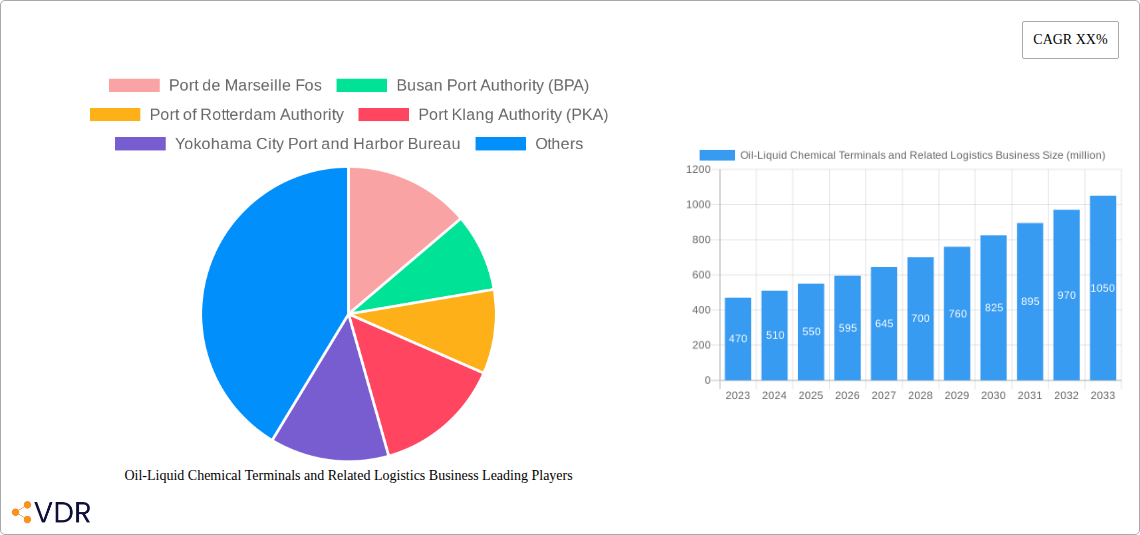
Oil-Liquid Chemical Terminals and Related Logistics Business Market Size (In Million)

However, the market is not without its challenges. Stringent environmental regulations and the increasing focus on sustainability are prompting terminal operators to invest in cleaner technologies and greener logistics solutions, potentially increasing operational costs. Geopolitical instability and fluctuating crude oil prices can impact trade volumes and investment decisions, posing a degree of restraint. Despite these factors, the intrinsic necessity of efficient and secure handling of oil and liquid chemicals ensures continued market resilience. Key segments such as crude oil and refined oil handling, alongside liquid chemicals, will dominate the market, supported by crucial logistics operations including loading/unloading, storage, and shipment. Asia Pacific is expected to lead regional growth due to its rapidly expanding industrial base and significant seaborne trade volumes.
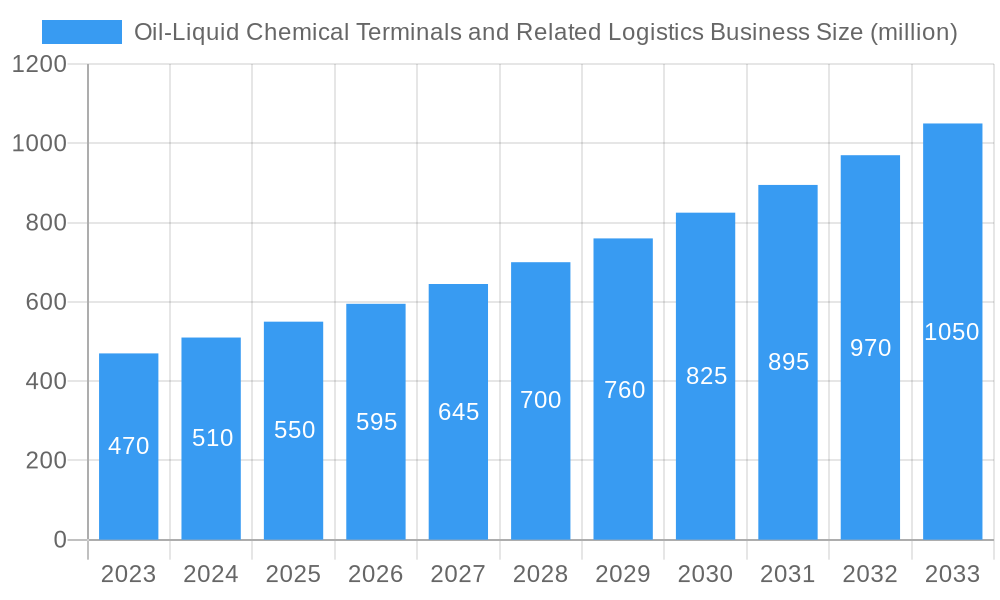
Oil-Liquid Chemical Terminals and Related Logistics Business Company Market Share
Comprehensive Report: Oil-Liquid Chemical Terminals and Related Logistics Business Market Dynamics, Growth, and Outlook (2019–2033)
This in-depth report provides a thorough analysis of the global Oil-Liquid Chemical Terminals and Related Logistics Business market, covering market dynamics, growth trends, regional dominance, product landscape, key drivers, challenges, emerging opportunities, and the competitive landscape. Designed for industry professionals, investors, and stakeholders, this report leverages high-traffic keywords and a structured format to deliver actionable insights and maximize search engine visibility. The analysis spans the historical period of 2019–2024, with a base year of 2025 and a comprehensive forecast extending from 2025 to 2033, all presented in millions of units where applicable.
Oil-Liquid Chemical Terminals and Related Logistics Business Market Dynamics & Structure
The global oil-liquid chemical terminals and related logistics business is characterized by a moderately concentrated market structure, driven by significant capital investment requirements and stringent regulatory oversight. Technological innovation plays a pivotal role, with advancements in automation, digital tracking, and safety protocols continuously shaping operational efficiencies. The regulatory framework, encompassing environmental compliance, safety standards, and port governance, significantly influences market entry and operational strategies for key players like Port of Rotterdam Authority, Busan Port Authority (BPA), and Port Klang Authority (PKA). Competitive product substitutes, primarily alternative transportation modes and evolving energy sources, are also a factor, albeit with limited immediate impact on the core terminal operations. End-user demographics are diverse, ranging from major oil and gas corporations and petrochemical manufacturers to specialized chemical distributors. Mergers and acquisitions (M&A) are a recurring trend, with strategic consolidations aimed at expanding geographical reach and optimizing supply chain integration. For instance, notable M&A activities within the last five years have seen an estimated transaction volume of over $5,000 million, reflecting the industry's drive towards scale and synergistic benefits. Innovation barriers include the high cost of implementing new technologies and the lengthy approval processes for infrastructure upgrades.
- Market Concentration: Moderately concentrated, dominated by a few large players and regional operators.
- Technological Innovation: Focus on automation, IoT for tracking, advanced safety systems, and digital twin technology.
- Regulatory Framework: Stringent environmental, health, and safety (EHS) regulations; port authority mandates.
- Competitive Substitutes: Limited for bulk liquid handling, but evolving energy transition presents long-term considerations.
- End-User Demographics: Oil & Gas majors, chemical manufacturers, downstream distributors, and bulk commodity traders.
- M&A Trends: Strategic acquisitions for market expansion, vertical integration, and port infrastructure development.
- Innovation Barriers: High capital expenditure for technology adoption, long lead times for infrastructure projects, and regulatory compliance costs.
Oil-Liquid Chemical Terminals and Related Logistics Business Growth Trends & Insights
The oil-liquid chemical terminals and related logistics business market is projected to exhibit robust growth, driven by increasing global energy demands and the expanding petrochemical industry. The market size evolution is a key indicator, with an estimated CAGR of 5.8% projected from 2025 to 2033. Adoption rates for advanced digital solutions and automation within terminals are on an upward trajectory, aiming to enhance operational efficiency and safety. Technological disruptions, such as the integration of AI for predictive maintenance and blockchain for enhanced supply chain transparency, are becoming increasingly prevalent. Consumer behavior shifts are indirectly influencing the market, with growing demand for sustainable products and a greater emphasis on transparent and ethical supply chains. The market penetration of specialized liquid chemical logistics solutions is expanding, moving beyond traditional refined oil products. The market size is estimated to grow from approximately $50,000 million in 2024 to an estimated $80,000 million by 2033, reflecting consistent expansion. Furthermore, the increasing complexity of global supply chains and the need for specialized handling of various liquid chemicals are driving consistent demand for sophisticated terminal services and related logistics.
Dominant Regions, Countries, or Segments in Oil-Liquid Chemical Terminals and Related Logistics Business
The Application: Refined Oil segment is a dominant force in the oil-liquid chemical terminals and related logistics business, largely due to the pervasive global reliance on refined petroleum products for transportation, energy, and industrial feedstock. This segment's dominance is amplified by the sheer volume of crude oil processed and distributed worldwide, necessitating extensive terminal infrastructure. Key drivers for this dominance include robust economic policies supporting fossil fuel consumption and ongoing investments in refining capacity and associated logistics networks. Countries like China, with its massive refining and petrochemical industries, are home to some of the world's largest and busiest ports for these operations, including Ningbo Zhoushan Port and Guangzhou Port. The Type: Loading and Unloading segment also holds significant sway, as it represents the fundamental function of any terminal, directly supporting the movement of these vast quantities of refined oils and liquid chemicals.
- Dominant Application Segment: Refined Oil, driven by global energy demand and extensive refining infrastructure.
- Dominant Type Segment: Loading and Unloading, representing the core operational throughput of terminals.
- Key Regions and Countries: Asia-Pacific (especially China, with ports like Ningbo Zhoushan Port and Guangzhou Port), followed by Europe (Port of Rotterdam Authority) and North America (Member of the Long Beach Port Authority).
- Drivers of Dominance:
- Economic Policies: Favorable policies supporting energy production and consumption.
- Infrastructure Development: Continuous investment in port facilities, pipelines, and storage capacities.
- Industrial Demand: High demand for refined oil as fuel and feedstock for industries.
- Trade Volumes: Significant international trade in refined petroleum products.
- Growth Potential: While mature, the refined oil segment is expected to see steady growth, with potential shifts towards specialized products and cleaner fuels.
The parent market, encompassing all liquid cargo terminals, is substantial, valued at approximately $100,000 million in 2024, with the oil and chemical segment forming a significant child market within it. The child market for oil and liquid chemical terminals and logistics is estimated to be around $70,000 million, showcasing its crucial economic importance. Within this child market, the dominance of Refined Oil is evident, accounting for an estimated 60% of the segment's value, followed by Crude Oil at 25%, and Liquid Chemicals at 15%. The geographical landscape sees the Asia-Pacific region leading, contributing over 40% of the global market share, propelled by rapid industrialization and increasing energy consumption. China's dominance within Asia is unparalleled, with its major ports handling colossal volumes of liquid cargo.
Oil-Liquid Chemical Terminals and Related Logistics Business Product Landscape
The product landscape of the oil-liquid chemical terminals and related logistics business centers on the efficient and safe handling, storage, and transportation of bulk liquid commodities. Innovations are geared towards enhancing throughput, minimizing environmental impact, and ensuring product integrity. This includes specialized berthing facilities, advanced pumping systems, sophisticated tank farm management, and integrated logistics solutions for seamless transfer to and from various modes of transport. Performance metrics are rigorously monitored, focusing on turnaround times, storage capacity utilization, safety incident rates, and adherence to stringent quality control standards for diverse products ranging from crude oil to highly reactive liquid chemicals. The unique selling propositions lie in operational reliability, advanced safety protocols, and comprehensive service offerings that cater to the specific needs of oil majors and chemical manufacturers.
Key Drivers, Barriers & Challenges in Oil-Liquid Chemical Terminals and Related Logistics Business
Key Drivers: The oil-liquid chemical terminals and related logistics business is propelled by several critical factors. The ever-increasing global demand for energy, particularly for refined oil products, remains a primary driver. Concurrently, the expansion of the petrochemical industry necessitates robust infrastructure for handling a wide array of liquid chemicals. Technological advancements, such as automation and digitalization, are enhancing operational efficiency and safety, further stimulating growth. Government investments in port infrastructure and trade facilitation policies also play a crucial role in expanding terminal capacities and improving logistical networks. Strategic partnerships between port authorities and private operators are crucial for financing and executing large-scale projects.
Key Barriers & Challenges: Despite strong growth prospects, the industry faces significant challenges. High capital expenditure for terminal development and upgrades presents a substantial barrier to entry and expansion. Stringent environmental regulations and the growing emphasis on sustainability necessitate continuous investment in cleaner technologies and emission reduction measures, impacting operational costs. Geopolitical instability and fluctuating crude oil prices can lead to unpredictable demand and affect investment decisions. Supply chain disruptions, as evidenced by recent global events, can significantly impact the seamless flow of goods through terminals. Furthermore, the complex and often lengthy permitting processes for new infrastructure projects can impede timely development. Competition among ports and logistics providers is intense, putting pressure on pricing and service delivery.
Emerging Opportunities in Oil-Liquid Chemical Terminals and Related Logistics Business
Emerging opportunities in the oil-liquid chemical terminals and related logistics business lie in the growing demand for specialized handling of high-value liquid chemicals, including biofuels and renewable energy feedstocks. The expansion of intermodal logistics solutions, integrating rail, road, and sea transport, presents untapped potential for creating more efficient and cost-effective supply chains. Digitalization and the adoption of Industry 4.0 technologies offer opportunities for optimizing terminal operations, enhancing safety, and providing real-time visibility to stakeholders. The development of new shipping routes and the exploration of unconventional energy sources will also create demand for new terminal infrastructure and logistics services in previously underserved regions. Furthermore, an increasing focus on circular economy principles may lead to the development of facilities for the recycling and repurposing of certain liquid chemical by-products.
Growth Accelerators in the Oil-Liquid Chemical Terminals and Related Logistics Business Industry
Long-term growth in the oil-liquid chemical terminals and related logistics business is being accelerated by significant technological breakthroughs and strategic market expansion initiatives. The development and widespread adoption of autonomous vessel navigation and loading/unloading systems promise to dramatically increase throughput and reduce operational costs. Investments in advanced cybersecurity measures are crucial for protecting sensitive logistics data and ensuring uninterrupted operations, thereby fostering trust and reliability. Furthermore, strategic partnerships between major port authorities, such as Port of Rotterdam Authority and Port Klang Authority (PKA), and leading logistics providers are driving the development of integrated logistics hubs and expanding global network reach. The increasing focus on ESG (Environmental, Social, and Governance) compliance is also acting as a growth accelerator, pushing for greener technologies and sustainable practices, which in turn opens up new markets and investment opportunities.
Key Players Shaping the Oil-Liquid Chemical Terminals and Related Logistics Business Market
- Port de Marseille Fos
- Busan Port Authority (BPA)
- Port of Rotterdam Authority
- Port Klang Authority (PKA)
- Yokohama City Port and Harbor Bureau
- Member of the Long Beach Port Authority
- indonesian port company
- Saigon Newport Company
- Jawaharlal Nehru Port Trust
- bremenports
- Saudi Ports Authority
- Port of Trieste
- Port of Genoa
- Dalian Port
- Tianjin Port
- Liaoning Port
- Shandong Port
- Guangzhou Port
- Ningbo Zhoushan Port
Notable Milestones in Oil-Liquid Chemical Terminals and Related Logistics Business Sector
- 2019: Significant expansion of LNG import terminals in Europe and Asia, driven by energy diversification strategies.
- 2020: Increased adoption of digital twin technology for terminal operations simulation and optimization.
- 2021: Major investments in automation and robotics for hazardous chemical handling at ports in North America.
- 2022: Launch of new green shipping corridors and associated bunkering facilities at key Asian ports.
- 2023: Port of Rotterdam Authority announces ambitious plans for a new hydrogen import terminal, signaling a shift towards new energy vectors.
- 2024: Increased M&A activity focusing on specialized chemical logistics providers and integrated supply chain solutions.
In-Depth Oil-Liquid Chemical Terminals and Related Logistics Business Market Outlook
The future outlook for the oil-liquid chemical terminals and related logistics business is exceptionally positive, driven by sustained global energy demand and the burgeoning petrochemical sector. Growth accelerators such as advanced automation, digitalization, and a strong emphasis on ESG compliance will continue to shape operational efficiencies and market expansion. Strategic partnerships and investments in infrastructure, particularly in emerging economies and for new energy sources like hydrogen and biofuels, are poised to unlock significant growth potential. The industry is evolving towards more integrated and sustainable logistics solutions, offering substantial opportunities for innovation and market leadership. The market is expected to witness continued expansion, with a focus on enhancing safety, environmental performance, and supply chain resilience.
Oil-Liquid Chemical Terminals and Related Logistics Business Segmentation
-
1. Application
- 1.1. Crude
- 1.2. Refined Oil
- 1.3. Liquid Chemicals
- 1.4. Others
-
2. Types
- 2.1. Loading and Unloading
- 2.2. Storage
- 2.3. Shipment
- 2.4. Others
Oil-Liquid Chemical Terminals and Related Logistics Business Segmentation By Geography
-
1. North America
- 1.1. United States
- 1.2. Canada
- 1.3. Mexico
-
2. South America
- 2.1. Brazil
- 2.2. Argentina
- 2.3. Rest of South America
-
3. Europe
- 3.1. United Kingdom
- 3.2. Germany
- 3.3. France
- 3.4. Italy
- 3.5. Spain
- 3.6. Russia
- 3.7. Benelux
- 3.8. Nordics
- 3.9. Rest of Europe
-
4. Middle East & Africa
- 4.1. Turkey
- 4.2. Israel
- 4.3. GCC
- 4.4. North Africa
- 4.5. South Africa
- 4.6. Rest of Middle East & Africa
-
5. Asia Pacific
- 5.1. China
- 5.2. India
- 5.3. Japan
- 5.4. South Korea
- 5.5. ASEAN
- 5.6. Oceania
- 5.7. Rest of Asia Pacific
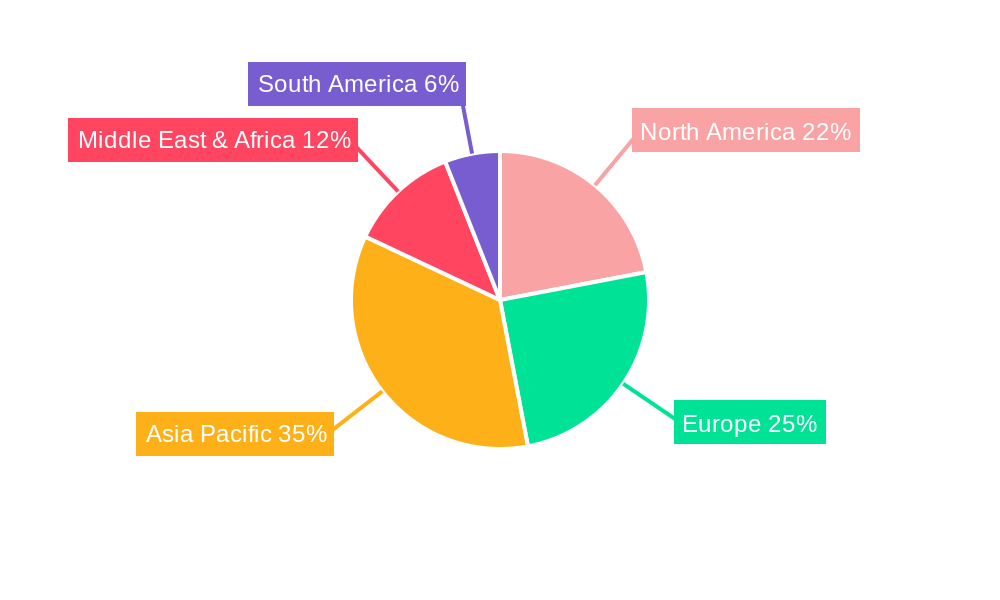
Oil-Liquid Chemical Terminals and Related Logistics Business Regional Market Share
Geographic Coverage of Oil-Liquid Chemical Terminals and Related Logistics Business
Oil-Liquid Chemical Terminals and Related Logistics Business REPORT HIGHLIGHTS
| Aspects | Details |
|---|---|
| Study Period | 2020-2034 |
| Base Year | 2025 |
| Estimated Year | 2026 |
| Forecast Period | 2026-2034 |
| Historical Period | 2020-2025 |
| Growth Rate | CAGR of 6% from 2020-2034 |
| Segmentation |
|
Table of Contents
- 1. Introduction
- 1.1. Research Scope
- 1.2. Market Segmentation
- 1.3. Research Methodology
- 1.4. Definitions and Assumptions
- 2. Executive Summary
- 2.1. Introduction
- 3. Market Dynamics
- 3.1. Introduction
- 3.2. Market Drivers
- 3.3. Market Restrains
- 3.4. Market Trends
- 4. Market Factor Analysis
- 4.1. Porters Five Forces
- 4.2. Supply/Value Chain
- 4.3. PESTEL analysis
- 4.4. Market Entropy
- 4.5. Patent/Trademark Analysis
- 5. Global Oil-Liquid Chemical Terminals and Related Logistics Business Analysis, Insights and Forecast, 2020-2032
- 5.1. Market Analysis, Insights and Forecast - by Application
- 5.1.1. Crude
- 5.1.2. Refined Oil
- 5.1.3. Liquid Chemicals
- 5.1.4. Others
- 5.2. Market Analysis, Insights and Forecast - by Types
- 5.2.1. Loading and Unloading
- 5.2.2. Storage
- 5.2.3. Shipment
- 5.2.4. Others
- 5.3. Market Analysis, Insights and Forecast - by Region
- 5.3.1. North America
- 5.3.2. South America
- 5.3.3. Europe
- 5.3.4. Middle East & Africa
- 5.3.5. Asia Pacific
- 5.1. Market Analysis, Insights and Forecast - by Application
- 6. North America Oil-Liquid Chemical Terminals and Related Logistics Business Analysis, Insights and Forecast, 2020-2032
- 6.1. Market Analysis, Insights and Forecast - by Application
- 6.1.1. Crude
- 6.1.2. Refined Oil
- 6.1.3. Liquid Chemicals
- 6.1.4. Others
- 6.2. Market Analysis, Insights and Forecast - by Types
- 6.2.1. Loading and Unloading
- 6.2.2. Storage
- 6.2.3. Shipment
- 6.2.4. Others
- 6.1. Market Analysis, Insights and Forecast - by Application
- 7. South America Oil-Liquid Chemical Terminals and Related Logistics Business Analysis, Insights and Forecast, 2020-2032
- 7.1. Market Analysis, Insights and Forecast - by Application
- 7.1.1. Crude
- 7.1.2. Refined Oil
- 7.1.3. Liquid Chemicals
- 7.1.4. Others
- 7.2. Market Analysis, Insights and Forecast - by Types
- 7.2.1. Loading and Unloading
- 7.2.2. Storage
- 7.2.3. Shipment
- 7.2.4. Others
- 7.1. Market Analysis, Insights and Forecast - by Application
- 8. Europe Oil-Liquid Chemical Terminals and Related Logistics Business Analysis, Insights and Forecast, 2020-2032
- 8.1. Market Analysis, Insights and Forecast - by Application
- 8.1.1. Crude
- 8.1.2. Refined Oil
- 8.1.3. Liquid Chemicals
- 8.1.4. Others
- 8.2. Market Analysis, Insights and Forecast - by Types
- 8.2.1. Loading and Unloading
- 8.2.2. Storage
- 8.2.3. Shipment
- 8.2.4. Others
- 8.1. Market Analysis, Insights and Forecast - by Application
- 9. Middle East & Africa Oil-Liquid Chemical Terminals and Related Logistics Business Analysis, Insights and Forecast, 2020-2032
- 9.1. Market Analysis, Insights and Forecast - by Application
- 9.1.1. Crude
- 9.1.2. Refined Oil
- 9.1.3. Liquid Chemicals
- 9.1.4. Others
- 9.2. Market Analysis, Insights and Forecast - by Types
- 9.2.1. Loading and Unloading
- 9.2.2. Storage
- 9.2.3. Shipment
- 9.2.4. Others
- 9.1. Market Analysis, Insights and Forecast - by Application
- 10. Asia Pacific Oil-Liquid Chemical Terminals and Related Logistics Business Analysis, Insights and Forecast, 2020-2032
- 10.1. Market Analysis, Insights and Forecast - by Application
- 10.1.1. Crude
- 10.1.2. Refined Oil
- 10.1.3. Liquid Chemicals
- 10.1.4. Others
- 10.2. Market Analysis, Insights and Forecast - by Types
- 10.2.1. Loading and Unloading
- 10.2.2. Storage
- 10.2.3. Shipment
- 10.2.4. Others
- 10.1. Market Analysis, Insights and Forecast - by Application
- 11. Competitive Analysis
- 11.1. Global Market Share Analysis 2025
- 11.2. Company Profiles
- 11.2.1 Port de Marseille Fos
- 11.2.1.1. Overview
- 11.2.1.2. Products
- 11.2.1.3. SWOT Analysis
- 11.2.1.4. Recent Developments
- 11.2.1.5. Financials (Based on Availability)
- 11.2.2 Busan Port Authority (BPA)
- 11.2.2.1. Overview
- 11.2.2.2. Products
- 11.2.2.3. SWOT Analysis
- 11.2.2.4. Recent Developments
- 11.2.2.5. Financials (Based on Availability)
- 11.2.3 Port of Rotterdam Authority
- 11.2.3.1. Overview
- 11.2.3.2. Products
- 11.2.3.3. SWOT Analysis
- 11.2.3.4. Recent Developments
- 11.2.3.5. Financials (Based on Availability)
- 11.2.4 Port Klang Authority (PKA)
- 11.2.4.1. Overview
- 11.2.4.2. Products
- 11.2.4.3. SWOT Analysis
- 11.2.4.4. Recent Developments
- 11.2.4.5. Financials (Based on Availability)
- 11.2.5 Yokohama City Port and Harbor Bureau
- 11.2.5.1. Overview
- 11.2.5.2. Products
- 11.2.5.3. SWOT Analysis
- 11.2.5.4. Recent Developments
- 11.2.5.5. Financials (Based on Availability)
- 11.2.6 Member of the Long Beach Port Authority
- 11.2.6.1. Overview
- 11.2.6.2. Products
- 11.2.6.3. SWOT Analysis
- 11.2.6.4. Recent Developments
- 11.2.6.5. Financials (Based on Availability)
- 11.2.7 indonesian port company
- 11.2.7.1. Overview
- 11.2.7.2. Products
- 11.2.7.3. SWOT Analysis
- 11.2.7.4. Recent Developments
- 11.2.7.5. Financials (Based on Availability)
- 11.2.8 Saigon Newport Company
- 11.2.8.1. Overview
- 11.2.8.2. Products
- 11.2.8.3. SWOT Analysis
- 11.2.8.4. Recent Developments
- 11.2.8.5. Financials (Based on Availability)
- 11.2.9 Jawaharlal Nehru Port Trust
- 11.2.9.1. Overview
- 11.2.9.2. Products
- 11.2.9.3. SWOT Analysis
- 11.2.9.4. Recent Developments
- 11.2.9.5. Financials (Based on Availability)
- 11.2.10 bremenports
- 11.2.10.1. Overview
- 11.2.10.2. Products
- 11.2.10.3. SWOT Analysis
- 11.2.10.4. Recent Developments
- 11.2.10.5. Financials (Based on Availability)
- 11.2.11 Saudi Ports Authority
- 11.2.11.1. Overview
- 11.2.11.2. Products
- 11.2.11.3. SWOT Analysis
- 11.2.11.4. Recent Developments
- 11.2.11.5. Financials (Based on Availability)
- 11.2.12 Port of Trieste
- 11.2.12.1. Overview
- 11.2.12.2. Products
- 11.2.12.3. SWOT Analysis
- 11.2.12.4. Recent Developments
- 11.2.12.5. Financials (Based on Availability)
- 11.2.13 Port of Genoa
- 11.2.13.1. Overview
- 11.2.13.2. Products
- 11.2.13.3. SWOT Analysis
- 11.2.13.4. Recent Developments
- 11.2.13.5. Financials (Based on Availability)
- 11.2.14 Dalian Port
- 11.2.14.1. Overview
- 11.2.14.2. Products
- 11.2.14.3. SWOT Analysis
- 11.2.14.4. Recent Developments
- 11.2.14.5. Financials (Based on Availability)
- 11.2.15 Tianjin Port
- 11.2.15.1. Overview
- 11.2.15.2. Products
- 11.2.15.3. SWOT Analysis
- 11.2.15.4. Recent Developments
- 11.2.15.5. Financials (Based on Availability)
- 11.2.16 Liaoning Port
- 11.2.16.1. Overview
- 11.2.16.2. Products
- 11.2.16.3. SWOT Analysis
- 11.2.16.4. Recent Developments
- 11.2.16.5. Financials (Based on Availability)
- 11.2.17 Shandong Port
- 11.2.17.1. Overview
- 11.2.17.2. Products
- 11.2.17.3. SWOT Analysis
- 11.2.17.4. Recent Developments
- 11.2.17.5. Financials (Based on Availability)
- 11.2.18 Guangzhou Port
- 11.2.18.1. Overview
- 11.2.18.2. Products
- 11.2.18.3. SWOT Analysis
- 11.2.18.4. Recent Developments
- 11.2.18.5. Financials (Based on Availability)
- 11.2.19 Ningbo Zhoushan Port
- 11.2.19.1. Overview
- 11.2.19.2. Products
- 11.2.19.3. SWOT Analysis
- 11.2.19.4. Recent Developments
- 11.2.19.5. Financials (Based on Availability)
- 11.2.1 Port de Marseille Fos
List of Figures
- Figure 1: Global Oil-Liquid Chemical Terminals and Related Logistics Business Revenue Breakdown (undefined, %) by Region 2025 & 2033
- Figure 2: North America Oil-Liquid Chemical Terminals and Related Logistics Business Revenue (undefined), by Application 2025 & 2033
- Figure 3: North America Oil-Liquid Chemical Terminals and Related Logistics Business Revenue Share (%), by Application 2025 & 2033
- Figure 4: North America Oil-Liquid Chemical Terminals and Related Logistics Business Revenue (undefined), by Types 2025 & 2033
- Figure 5: North America Oil-Liquid Chemical Terminals and Related Logistics Business Revenue Share (%), by Types 2025 & 2033
- Figure 6: North America Oil-Liquid Chemical Terminals and Related Logistics Business Revenue (undefined), by Country 2025 & 2033
- Figure 7: North America Oil-Liquid Chemical Terminals and Related Logistics Business Revenue Share (%), by Country 2025 & 2033
- Figure 8: South America Oil-Liquid Chemical Terminals and Related Logistics Business Revenue (undefined), by Application 2025 & 2033
- Figure 9: South America Oil-Liquid Chemical Terminals and Related Logistics Business Revenue Share (%), by Application 2025 & 2033
- Figure 10: South America Oil-Liquid Chemical Terminals and Related Logistics Business Revenue (undefined), by Types 2025 & 2033
- Figure 11: South America Oil-Liquid Chemical Terminals and Related Logistics Business Revenue Share (%), by Types 2025 & 2033
- Figure 12: South America Oil-Liquid Chemical Terminals and Related Logistics Business Revenue (undefined), by Country 2025 & 2033
- Figure 13: South America Oil-Liquid Chemical Terminals and Related Logistics Business Revenue Share (%), by Country 2025 & 2033
- Figure 14: Europe Oil-Liquid Chemical Terminals and Related Logistics Business Revenue (undefined), by Application 2025 & 2033
- Figure 15: Europe Oil-Liquid Chemical Terminals and Related Logistics Business Revenue Share (%), by Application 2025 & 2033
- Figure 16: Europe Oil-Liquid Chemical Terminals and Related Logistics Business Revenue (undefined), by Types 2025 & 2033
- Figure 17: Europe Oil-Liquid Chemical Terminals and Related Logistics Business Revenue Share (%), by Types 2025 & 2033
- Figure 18: Europe Oil-Liquid Chemical Terminals and Related Logistics Business Revenue (undefined), by Country 2025 & 2033
- Figure 19: Europe Oil-Liquid Chemical Terminals and Related Logistics Business Revenue Share (%), by Country 2025 & 2033
- Figure 20: Middle East & Africa Oil-Liquid Chemical Terminals and Related Logistics Business Revenue (undefined), by Application 2025 & 2033
- Figure 21: Middle East & Africa Oil-Liquid Chemical Terminals and Related Logistics Business Revenue Share (%), by Application 2025 & 2033
- Figure 22: Middle East & Africa Oil-Liquid Chemical Terminals and Related Logistics Business Revenue (undefined), by Types 2025 & 2033
- Figure 23: Middle East & Africa Oil-Liquid Chemical Terminals and Related Logistics Business Revenue Share (%), by Types 2025 & 2033
- Figure 24: Middle East & Africa Oil-Liquid Chemical Terminals and Related Logistics Business Revenue (undefined), by Country 2025 & 2033
- Figure 25: Middle East & Africa Oil-Liquid Chemical Terminals and Related Logistics Business Revenue Share (%), by Country 2025 & 2033
- Figure 26: Asia Pacific Oil-Liquid Chemical Terminals and Related Logistics Business Revenue (undefined), by Application 2025 & 2033
- Figure 27: Asia Pacific Oil-Liquid Chemical Terminals and Related Logistics Business Revenue Share (%), by Application 2025 & 2033
- Figure 28: Asia Pacific Oil-Liquid Chemical Terminals and Related Logistics Business Revenue (undefined), by Types 2025 & 2033
- Figure 29: Asia Pacific Oil-Liquid Chemical Terminals and Related Logistics Business Revenue Share (%), by Types 2025 & 2033
- Figure 30: Asia Pacific Oil-Liquid Chemical Terminals and Related Logistics Business Revenue (undefined), by Country 2025 & 2033
- Figure 31: Asia Pacific Oil-Liquid Chemical Terminals and Related Logistics Business Revenue Share (%), by Country 2025 & 2033
List of Tables
- Table 1: Global Oil-Liquid Chemical Terminals and Related Logistics Business Revenue undefined Forecast, by Application 2020 & 2033
- Table 2: Global Oil-Liquid Chemical Terminals and Related Logistics Business Revenue undefined Forecast, by Types 2020 & 2033
- Table 3: Global Oil-Liquid Chemical Terminals and Related Logistics Business Revenue undefined Forecast, by Region 2020 & 2033
- Table 4: Global Oil-Liquid Chemical Terminals and Related Logistics Business Revenue undefined Forecast, by Application 2020 & 2033
- Table 5: Global Oil-Liquid Chemical Terminals and Related Logistics Business Revenue undefined Forecast, by Types 2020 & 2033
- Table 6: Global Oil-Liquid Chemical Terminals and Related Logistics Business Revenue undefined Forecast, by Country 2020 & 2033
- Table 7: United States Oil-Liquid Chemical Terminals and Related Logistics Business Revenue (undefined) Forecast, by Application 2020 & 2033
- Table 8: Canada Oil-Liquid Chemical Terminals and Related Logistics Business Revenue (undefined) Forecast, by Application 2020 & 2033
- Table 9: Mexico Oil-Liquid Chemical Terminals and Related Logistics Business Revenue (undefined) Forecast, by Application 2020 & 2033
- Table 10: Global Oil-Liquid Chemical Terminals and Related Logistics Business Revenue undefined Forecast, by Application 2020 & 2033
- Table 11: Global Oil-Liquid Chemical Terminals and Related Logistics Business Revenue undefined Forecast, by Types 2020 & 2033
- Table 12: Global Oil-Liquid Chemical Terminals and Related Logistics Business Revenue undefined Forecast, by Country 2020 & 2033
- Table 13: Brazil Oil-Liquid Chemical Terminals and Related Logistics Business Revenue (undefined) Forecast, by Application 2020 & 2033
- Table 14: Argentina Oil-Liquid Chemical Terminals and Related Logistics Business Revenue (undefined) Forecast, by Application 2020 & 2033
- Table 15: Rest of South America Oil-Liquid Chemical Terminals and Related Logistics Business Revenue (undefined) Forecast, by Application 2020 & 2033
- Table 16: Global Oil-Liquid Chemical Terminals and Related Logistics Business Revenue undefined Forecast, by Application 2020 & 2033
- Table 17: Global Oil-Liquid Chemical Terminals and Related Logistics Business Revenue undefined Forecast, by Types 2020 & 2033
- Table 18: Global Oil-Liquid Chemical Terminals and Related Logistics Business Revenue undefined Forecast, by Country 2020 & 2033
- Table 19: United Kingdom Oil-Liquid Chemical Terminals and Related Logistics Business Revenue (undefined) Forecast, by Application 2020 & 2033
- Table 20: Germany Oil-Liquid Chemical Terminals and Related Logistics Business Revenue (undefined) Forecast, by Application 2020 & 2033
- Table 21: France Oil-Liquid Chemical Terminals and Related Logistics Business Revenue (undefined) Forecast, by Application 2020 & 2033
- Table 22: Italy Oil-Liquid Chemical Terminals and Related Logistics Business Revenue (undefined) Forecast, by Application 2020 & 2033
- Table 23: Spain Oil-Liquid Chemical Terminals and Related Logistics Business Revenue (undefined) Forecast, by Application 2020 & 2033
- Table 24: Russia Oil-Liquid Chemical Terminals and Related Logistics Business Revenue (undefined) Forecast, by Application 2020 & 2033
- Table 25: Benelux Oil-Liquid Chemical Terminals and Related Logistics Business Revenue (undefined) Forecast, by Application 2020 & 2033
- Table 26: Nordics Oil-Liquid Chemical Terminals and Related Logistics Business Revenue (undefined) Forecast, by Application 2020 & 2033
- Table 27: Rest of Europe Oil-Liquid Chemical Terminals and Related Logistics Business Revenue (undefined) Forecast, by Application 2020 & 2033
- Table 28: Global Oil-Liquid Chemical Terminals and Related Logistics Business Revenue undefined Forecast, by Application 2020 & 2033
- Table 29: Global Oil-Liquid Chemical Terminals and Related Logistics Business Revenue undefined Forecast, by Types 2020 & 2033
- Table 30: Global Oil-Liquid Chemical Terminals and Related Logistics Business Revenue undefined Forecast, by Country 2020 & 2033
- Table 31: Turkey Oil-Liquid Chemical Terminals and Related Logistics Business Revenue (undefined) Forecast, by Application 2020 & 2033
- Table 32: Israel Oil-Liquid Chemical Terminals and Related Logistics Business Revenue (undefined) Forecast, by Application 2020 & 2033
- Table 33: GCC Oil-Liquid Chemical Terminals and Related Logistics Business Revenue (undefined) Forecast, by Application 2020 & 2033
- Table 34: North Africa Oil-Liquid Chemical Terminals and Related Logistics Business Revenue (undefined) Forecast, by Application 2020 & 2033
- Table 35: South Africa Oil-Liquid Chemical Terminals and Related Logistics Business Revenue (undefined) Forecast, by Application 2020 & 2033
- Table 36: Rest of Middle East & Africa Oil-Liquid Chemical Terminals and Related Logistics Business Revenue (undefined) Forecast, by Application 2020 & 2033
- Table 37: Global Oil-Liquid Chemical Terminals and Related Logistics Business Revenue undefined Forecast, by Application 2020 & 2033
- Table 38: Global Oil-Liquid Chemical Terminals and Related Logistics Business Revenue undefined Forecast, by Types 2020 & 2033
- Table 39: Global Oil-Liquid Chemical Terminals and Related Logistics Business Revenue undefined Forecast, by Country 2020 & 2033
- Table 40: China Oil-Liquid Chemical Terminals and Related Logistics Business Revenue (undefined) Forecast, by Application 2020 & 2033
- Table 41: India Oil-Liquid Chemical Terminals and Related Logistics Business Revenue (undefined) Forecast, by Application 2020 & 2033
- Table 42: Japan Oil-Liquid Chemical Terminals and Related Logistics Business Revenue (undefined) Forecast, by Application 2020 & 2033
- Table 43: South Korea Oil-Liquid Chemical Terminals and Related Logistics Business Revenue (undefined) Forecast, by Application 2020 & 2033
- Table 44: ASEAN Oil-Liquid Chemical Terminals and Related Logistics Business Revenue (undefined) Forecast, by Application 2020 & 2033
- Table 45: Oceania Oil-Liquid Chemical Terminals and Related Logistics Business Revenue (undefined) Forecast, by Application 2020 & 2033
- Table 46: Rest of Asia Pacific Oil-Liquid Chemical Terminals and Related Logistics Business Revenue (undefined) Forecast, by Application 2020 & 2033
Frequently Asked Questions
1. What is the projected Compound Annual Growth Rate (CAGR) of the Oil-Liquid Chemical Terminals and Related Logistics Business?
The projected CAGR is approximately 6%.
2. Which companies are prominent players in the Oil-Liquid Chemical Terminals and Related Logistics Business?
Key companies in the market include Port de Marseille Fos, Busan Port Authority (BPA), Port of Rotterdam Authority, Port Klang Authority (PKA), Yokohama City Port and Harbor Bureau, Member of the Long Beach Port Authority, indonesian port company, Saigon Newport Company, Jawaharlal Nehru Port Trust, bremenports, Saudi Ports Authority, Port of Trieste, Port of Genoa, Dalian Port, Tianjin Port, Liaoning Port, Shandong Port, Guangzhou Port, Ningbo Zhoushan Port.
3. What are the main segments of the Oil-Liquid Chemical Terminals and Related Logistics Business?
The market segments include Application, Types.
4. Can you provide details about the market size?
The market size is estimated to be USD XXX N/A as of 2022.
5. What are some drivers contributing to market growth?
N/A
6. What are the notable trends driving market growth?
N/A
7. Are there any restraints impacting market growth?
N/A
8. Can you provide examples of recent developments in the market?
N/A
9. What pricing options are available for accessing the report?
Pricing options include single-user, multi-user, and enterprise licenses priced at USD 4900.00, USD 7350.00, and USD 9800.00 respectively.
10. Is the market size provided in terms of value or volume?
The market size is provided in terms of value, measured in N/A.
11. Are there any specific market keywords associated with the report?
Yes, the market keyword associated with the report is "Oil-Liquid Chemical Terminals and Related Logistics Business," which aids in identifying and referencing the specific market segment covered.
12. How do I determine which pricing option suits my needs best?
The pricing options vary based on user requirements and access needs. Individual users may opt for single-user licenses, while businesses requiring broader access may choose multi-user or enterprise licenses for cost-effective access to the report.
13. Are there any additional resources or data provided in the Oil-Liquid Chemical Terminals and Related Logistics Business report?
While the report offers comprehensive insights, it's advisable to review the specific contents or supplementary materials provided to ascertain if additional resources or data are available.
14. How can I stay updated on further developments or reports in the Oil-Liquid Chemical Terminals and Related Logistics Business?
To stay informed about further developments, trends, and reports in the Oil-Liquid Chemical Terminals and Related Logistics Business, consider subscribing to industry newsletters, following relevant companies and organizations, or regularly checking reputable industry news sources and publications.
Methodology
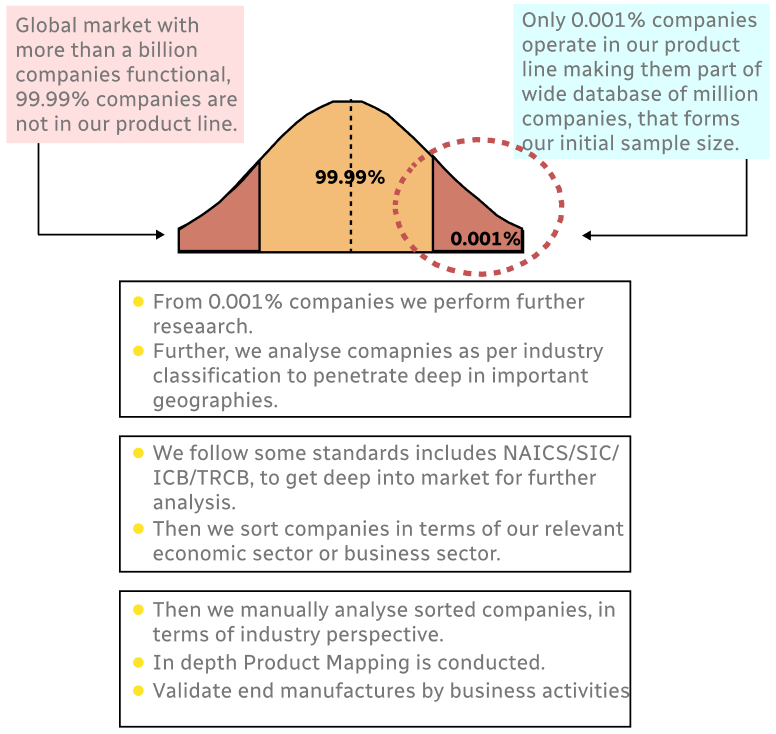
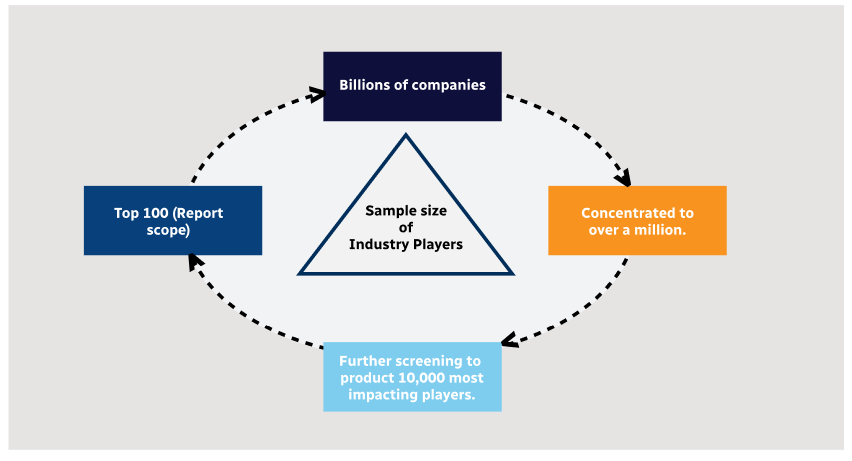
Step 1 - Identification of Relevant Samples Size from Population Database
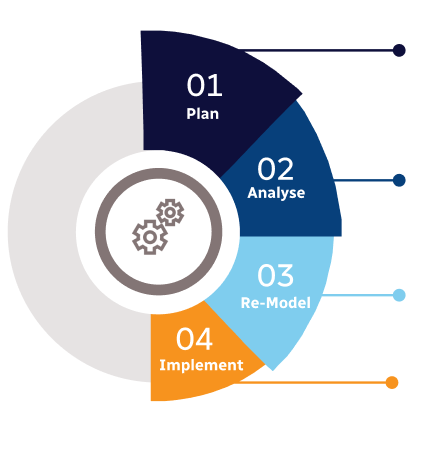
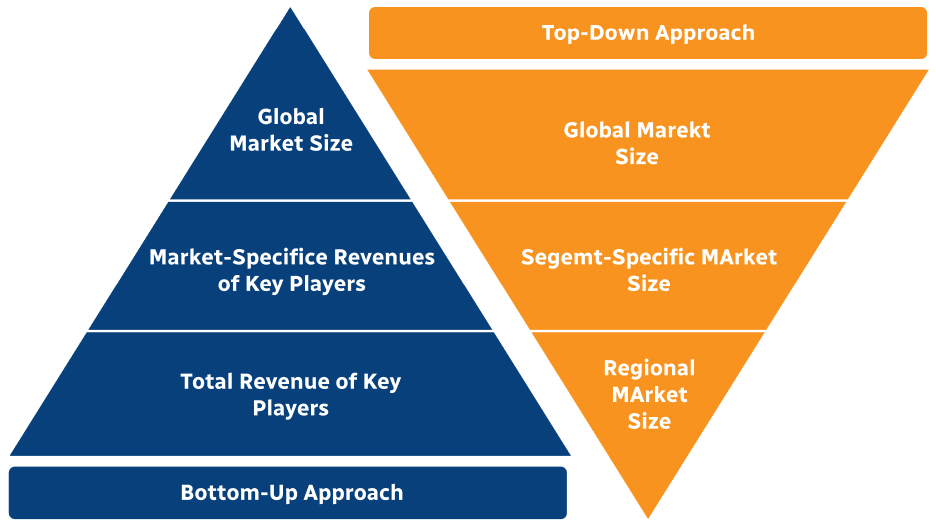
Step 2 - Approaches for Defining Global Market Size (Value, Volume* & Price*)
Note*: In applicable scenarios
Step 3 - Data Sources
Primary Research
- Web Analytics
- Survey Reports
- Research Institute
- Latest Research Reports
- Opinion Leaders
Secondary Research
- Annual Reports
- White Paper
- Latest Press Release
- Industry Association
- Paid Database
- Investor Presentations
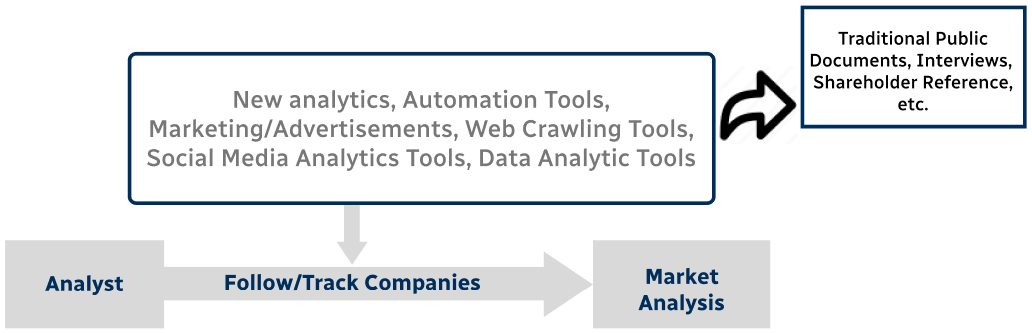
Step 4 - Data Triangulation
Involves using different sources of information in order to increase the validity of a study
These sources are likely to be stakeholders in a program - participants, other researchers, program staff, other community members, and so on.
Then we put all data in single framework & apply various statistical tools to find out the dynamic on the market.
During the analysis stage, feedback from the stakeholder groups would be compared to determine areas of agreement as well as areas of divergence