


Key Insights
The global Nanorobotics Market is set for significant expansion, projected to reach $8.51 billion by 2033, with a Compound Annual Growth Rate (CAGR) of 10.91% from a base year of 2024. Key growth drivers include advancements in manufacturing, particularly biochips and bacteria-based nanobots, and increasing demand for precision in healthcare for drug delivery and monitoring. The potential for nanorobots in data storage and cellular replication offers further growth opportunities. As research progresses, nanorobots will become integral across various sectors, including medicine and advanced manufacturing, signifying their transformative impact.
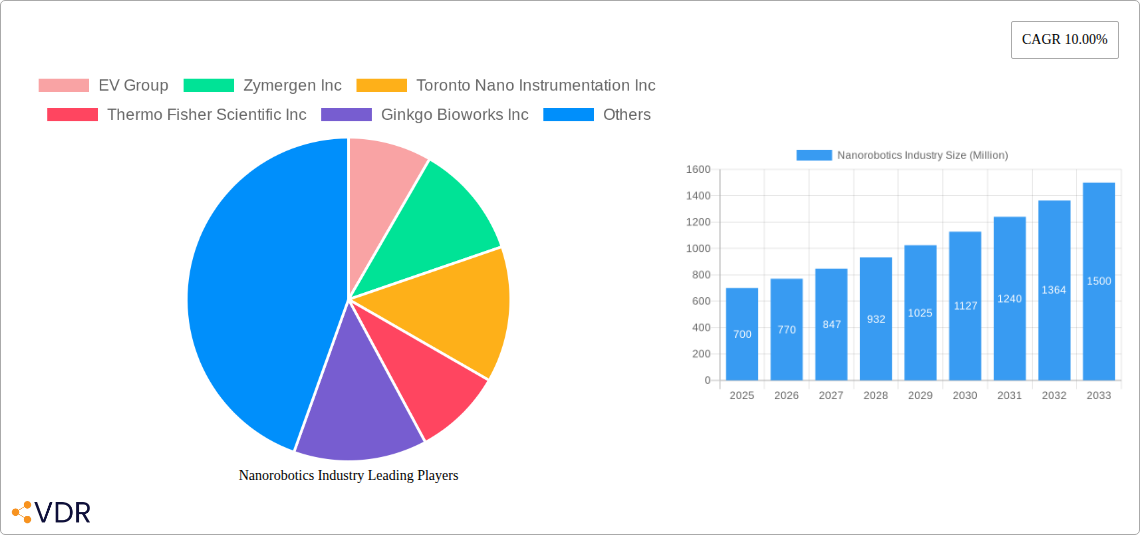
Nanorobotics Industry Market Size (In Billion)

Despite robust growth potential, market expansion may be moderated by high research, development, and manufacturing costs. Regulatory challenges and the need for stringent safety and ethical guidelines, especially for biological applications, also present hurdles. However, ongoing efforts to address these challenges, supported by significant investments from industry leaders such as EV Group, Thermo Fisher Scientific Inc., and Ginkgo Bioworks Inc., are expected to mitigate these restraints. Geographically, North America and Europe are anticipated to lead due to advanced R&D infrastructure and healthcare expenditure, while the Asia Pacific region, fueled by rapid technological progress in China and India, is poised for substantial growth.

Nanorobotics Industry Company Market Share
This comprehensive report provides an in-depth analysis of the global Nanorobotics Industry, examining its current status and forecasting its future trajectory to 2033. It covers critical segments including Biochips, Nubots, Bacteria-based Nanobots, and applications such as Medical Imaging, Drug Delivery, and Health Sensors. This report is an indispensable tool for stakeholders seeking insights into market dynamics, technological innovations, and emerging prospects. Data analysis spans the historical period (2019-2024) and the forecast period (2025-2033), utilizing 2024 as the base year for projections.
Nanorobotics Industry Market Dynamics & Structure
The Nanorobotics Industry exhibits a dynamic and evolving market structure, characterized by a blend of highly specialized players and emerging innovators. Market concentration is moderately fragmented, with several key companies actively investing in research and development. Technological innovation serves as the primary driver, fueled by advancements in nanotechnology, material science, and artificial intelligence, leading to the development of increasingly sophisticated nanodevices. Regulatory frameworks are still developing but are crucial for ensuring safety and efficacy, particularly in medical applications. Competitive product substitutes are limited in the current landscape, given the nascent nature of advanced nanorobotic solutions, but indirect competition from advanced conventional technologies exists. End-user demographics are diverse, spanning healthcare, defense, environmental monitoring, and manufacturing sectors, with a growing interest from academic research institutions. Mergers & Acquisitions (M&A) trends are indicative of consolidation and strategic partnerships aimed at expanding technological capabilities and market reach. For instance, the sector witnessed xx M&A deals in the historical period, with an estimated xx million units in transaction value. Key barriers to innovation include high R&D costs, the need for extensive clinical trials, and the complexity of manufacturing at the nanoscale.
- Market Concentration: Moderately fragmented with key established players and emerging startups.
- Technological Innovation Drivers: Nanotechnology, AI, advanced materials science.
- Regulatory Frameworks: Developing, with a focus on safety and efficacy, especially in medical applications.
- Competitive Product Substitutes: Limited direct substitutes, but indirect competition from advanced conventional technologies.
- End-User Demographics: Healthcare, defense, environmental, manufacturing, academic research.
- M&A Trends: Active consolidation and strategic partnerships for capability expansion.
Nanorobotics Industry Growth Trends & Insights
The Nanorobotics Industry is poised for significant growth, projected to expand at a robust Compound Annual Growth Rate (CAGR) of XX% from 2025 to 2033. This expansion is driven by a confluence of factors including rapid technological advancements, increasing demand for targeted and minimally invasive medical treatments, and a growing emphasis on precision manufacturing. The market size is expected to reach an estimated $XXX,XXX Million units by 2033, a substantial increase from the estimated $XXX,XXX Million units in the base year of 2025. Adoption rates are steadily climbing, particularly within the healthcare sector, as nanorobots demonstrate their potential in revolutionizing diagnostics, drug delivery, and therapeutic interventions. Technological disruptions, such as the development of self-assembling nanobots and AI-powered navigation systems, are further accelerating this adoption. Consumer behavior shifts are also playing a role, with a growing preference for personalized medicine and advanced healthcare solutions that offer improved patient outcomes and reduced recovery times. The penetration of nanorobotic solutions in niche applications, such as targeted cancer therapy and in-vivo imaging, is expected to witness a surge. Furthermore, advancements in the manufacturing of biochips and nubots are crucial for scaling production and reducing costs, thereby democratizing access to these cutting-edge technologies. The integration of nanorobotics in information storage and health sensors is also anticipated to create new market avenues, responding to the increasing demand for miniaturized and highly efficient data management and health monitoring systems. The evolving landscape of materials science, enabling the creation of biocompatible and functional nanorobots, is a critical underlying factor supporting these growth trends.
Dominant Regions, Countries, or Segments in Nanorobotics Industry
The Nanorobotics Industry's growth is currently propelled by a combination of leading regions and specific manufacturing types and applications. North America, particularly the United States, is emerging as a dominant region, driven by substantial government funding for R&D, a robust healthcare infrastructure, and the presence of leading research institutions and innovative companies like Thermo Fisher Scientific Inc. and Ginkgo Bioworks Inc. The country’s advanced technological ecosystem and strong venture capital support foster rapid innovation and commercialization.
Among the Type of Manufacturing, Biochips are exhibiting significant market dominance. This is attributed to their widespread application in diagnostics, genomics, and personalized medicine. The increasing demand for rapid and accurate disease detection, coupled with the miniaturization of analytical tools, makes biochips a cornerstone of nanorobotic development. The market for biochips is projected to reach $XX,XXX Million units by 2033.
In terms of Application, Medical Imaging and Drug Delivery are the leading segments. Nanorobots offer unparalleled precision in visualizing cellular structures and delivering therapeutic agents directly to targeted sites, minimizing side effects and maximizing efficacy. The projected market size for Medical Imaging is estimated to reach $XX,XXX Million units by 2033, while Drug Delivery is expected to follow closely with an estimated $XX,XXX Million units. The development of advanced nanorobotic systems for these applications is a key focus for companies like EV Group and Oxford Instruments. The ongoing research into Bacteria-based Nanobots and the advancements in 3D Printing for nanorobot fabrication are also critical, though currently at earlier stages of widespread adoption compared to biochips and established medical applications. These segments hold significant future potential, with expected growth rates to outpace the overall market in the long term.
- Dominant Region: North America (United States)
- Key Drivers: Government R&D funding, strong healthcare infrastructure, leading research institutions, venture capital support.
- Dominant Segment (Type of Manufacturing): Biochips
- Drivers: Demand for diagnostics, genomics, personalized medicine, miniaturization of analytical tools.
- Dominant Segments (Application): Medical Imaging, Drug Delivery
- Drivers: Precision in visualization and targeted therapy, reduced side effects, enhanced efficacy.
- Future Potential Segments: Bacteria-based Nanobots, 3D Printing.
Nanorobotics Industry Product Landscape
The Nanorobotics Industry is characterized by a rapidly evolving product landscape, showcasing remarkable innovation. Companies are developing nanorobots with diverse functionalities, including targeted drug delivery systems capable of navigating the bloodstream to precisely release medication, microscopic imaging agents that provide unprecedented cellular-level detail, and responsive nanodevices for environmental remediation. Key product innovations include self-propelling nanobots, bio-integrated nanorobotic platforms for continuous health monitoring, and highly efficient nano-actuators for nanoscale manufacturing. For instance, products like Imina Technologies SA's advanced microscopy solutions and Synthace Limited's automation platforms are pushing the boundaries of what's possible. The performance metrics of these products, such as speed, accuracy, biocompatibility, and payload capacity, are continually being improved, driving their adoption across various demanding applications.
Key Drivers, Barriers & Challenges in Nanorobotics Industry
Key Drivers:
The Nanorobotics Industry is propelled by significant technological breakthroughs in nanotechnology and artificial intelligence, enabling the creation of increasingly sophisticated and autonomous nanodevices. Growing demand for precision medicine, minimally invasive surgical procedures, and advanced diagnostics in healthcare is a major catalyst. Furthermore, substantial investments in R&D from both government bodies and private enterprises, coupled with increasing applications in environmental monitoring and defense, are fueling market expansion. The development of novel biocompatible materials is also critical for enhancing the safety and efficacy of nanorobots.
- Technological Advancements: AI, nanotechnology, advanced materials.
- Healthcare Demand: Precision medicine, minimally invasive surgery, advanced diagnostics.
- R&D Investments: Government and private sector funding.
- Emerging Applications: Environmental monitoring, defense.
Barriers & Challenges:
Despite promising advancements, the Nanorobotics Industry faces considerable challenges. High manufacturing costs associated with nanoscale precision and the complexities of mass production remain significant hurdles, limiting widespread adoption. Stringent regulatory approvals, particularly for medical applications, necessitate extensive and time-consuming testing, adding to development timelines and costs. Ethical concerns regarding the potential misuse of nanorobotic technology and potential environmental impacts also require careful consideration and robust oversight. Supply chain issues for specialized nanomaterials can also impact production scalability. The estimated cost of developing a single advanced nanorobot application can range from $XX Million to $XXX Million units.
- Manufacturing Costs: High cost of nanoscale precision and mass production.
- Regulatory Hurdles: Stringent approvals for medical use.
- Ethical Concerns: Potential misuse and environmental impact.
- Supply Chain Issues: Availability of specialized nanomaterials.
Emerging Opportunities in Nanorobotics Industry
The Nanorobotics Industry is brimming with emerging opportunities. The untapped potential of personalized cancer therapies, where nanorobots can deliver chemotherapy directly to tumor cells, presents a significant growth avenue. Furthermore, the development of nanorobotic systems for in-vivo diagnostics and real-time monitoring of chronic diseases offers immense promise in revolutionizing patient care. Opportunities also lie in environmental applications, such as nanorobots designed to clean up pollutants in water and soil. The integration of nanorobotics with the Internet of Things (IoT) for smart manufacturing and advanced data storage solutions represents another frontier for innovation and market penetration.
Growth Accelerators in the Nanorobotics Industry Industry
Several key factors are accelerating the long-term growth of the Nanorobotics Industry. Continued breakthroughs in miniaturization and automation are making nanorobots more capable and versatile. Strategic partnerships between academic institutions and industry players are fostering innovation and speeding up the translation of research into commercial products. The increasing adoption of nanorobotic solutions in non-medical fields, such as agriculture for targeted pesticide delivery and advanced materials science for novel product development, will broaden market reach. Furthermore, a growing global emphasis on sustainable technologies is likely to drive demand for nanorobots in environmental remediation and resource efficiency applications.
Key Players Shaping the Nanorobotics Industry Market
- EV Group
- Zymergen Inc
- Toronto Nano Instrumentation Inc
- Thermo Fisher Scientific Inc
- Ginkgo Bioworks Inc
- Oxford Instruments
- Imina Technologies SA
- Synthace Limited
- Illumina Inc
- Nanoics Imaging Limited
Notable Milestones in Nanorobotics Industry Sector
- 2019: Launch of advanced nanoscale imaging techniques enabling higher resolution visualization of cellular processes.
- 2020: Significant progress in biocompatible nanocarrier development for targeted drug delivery, paving the way for clinical trials.
- 2021: Introduction of self-assembling nanobots for potential use in tissue engineering and regenerative medicine.
- 2022: Major funding rounds for companies focusing on nanorobotic applications in diagnostics and healthcare.
- 2023: Development of AI-powered navigation systems for nanorobots, enhancing their autonomy and precision.
- 2024: First successful in-vivo demonstration of nanorobots performing intricate surgical tasks in preclinical models.
In-Depth Nanorobotics Industry Market Outlook
The future outlook for the Nanorobotics Industry is exceptionally promising, driven by an ongoing surge in technological innovation and expanding application horizons. Accelerated advancements in AI, materials science, and molecular engineering will continue to fuel the development of more sophisticated and cost-effective nanorobotic systems. Strategic collaborations, including mergers and acquisitions, will play a pivotal role in consolidating expertise and market presence, enabling faster commercialization of cutting-edge technologies. The increasing demand for personalized healthcare, environmental solutions, and high-performance materials will act as significant growth accelerators, opening up new market segments and driving sustained expansion. Investors and industry stakeholders can anticipate a period of rapid growth and transformative impact as nanorobotics move from theoretical possibilities to practical, everyday applications.
Nanorobotics Industry Segmentation
-
1. Type of Manufacuturing
- 1.1. Biochips
- 1.2. Nubots
- 1.3. Bacteria-based Nanobots
- 1.4. 3D Printing
- 1.5. Other Types
-
2. Application
- 2.1. Medical Imaging
- 2.2. Information Storage
- 2.3. Drug Delivery
- 2.4. Health Sensors and Replicators
- 2.5. Other Applications
Nanorobotics Industry Segmentation By Geography
-
1. North America
- 1.1. Unites States
- 1.2. Canada
-
2. Europe
- 2.1. Germany
- 2.2. United Kingdom
- 2.3. France
- 2.4. Rest of Europe
-
3. Asia Pacific
- 3.1. India
- 3.2. China
- 3.3. Japan
- 3.4. Rest of Asia Pacific
-
4. Rest of the World
- 4.1. Latin America
- 4.2. Middle East and Africa
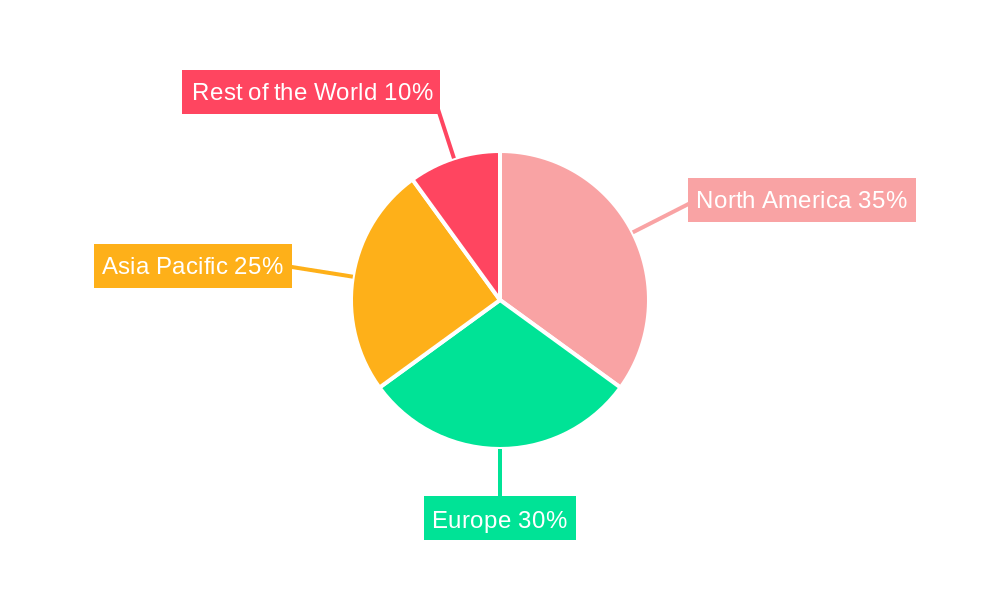
Nanorobotics Industry Regional Market Share
Geographic Coverage of Nanorobotics Industry
Nanorobotics Industry REPORT HIGHLIGHTS
| Aspects | Details |
|---|---|
| Study Period | 2020-2034 |
| Base Year | 2025 |
| Estimated Year | 2026 |
| Forecast Period | 2026-2034 |
| Historical Period | 2020-2025 |
| Growth Rate | CAGR of 10.91% from 2020-2034 |
| Segmentation |
|
Table of Contents
- 1. Introduction
- 1.1. Research Scope
- 1.2. Market Segmentation
- 1.3. Research Methodology
- 1.4. Definitions and Assumptions
- 2. Executive Summary
- 2.1. Introduction
- 3. Market Dynamics
- 3.1. Introduction
- 3.2. Market Drivers
- 3.2.1. ; Increasing Investment in Technology by Governments and Universities; Growing Demand for Advanced Medical Treatments
- 3.3. Market Restrains
- 3.3.1. ; High Manufacturing and Development Costs
- 3.4. Market Trends
- 3.4.1. Drug Delivery Application is Expected to Witness Significant Growth Rate
- 4. Market Factor Analysis
- 4.1. Porters Five Forces
- 4.2. Supply/Value Chain
- 4.3. PESTEL analysis
- 4.4. Market Entropy
- 4.5. Patent/Trademark Analysis
- 5. Global Nanorobotics Industry Analysis, Insights and Forecast, 2020-2032
- 5.1. Market Analysis, Insights and Forecast - by Type of Manufacuturing
- 5.1.1. Biochips
- 5.1.2. Nubots
- 5.1.3. Bacteria-based Nanobots
- 5.1.4. 3D Printing
- 5.1.5. Other Types
- 5.2. Market Analysis, Insights and Forecast - by Application
- 5.2.1. Medical Imaging
- 5.2.2. Information Storage
- 5.2.3. Drug Delivery
- 5.2.4. Health Sensors and Replicators
- 5.2.5. Other Applications
- 5.3. Market Analysis, Insights and Forecast - by Region
- 5.3.1. North America
- 5.3.2. Europe
- 5.3.3. Asia Pacific
- 5.3.4. Rest of the World
- 5.1. Market Analysis, Insights and Forecast - by Type of Manufacuturing
- 6. North America Nanorobotics Industry Analysis, Insights and Forecast, 2020-2032
- 6.1. Market Analysis, Insights and Forecast - by Type of Manufacuturing
- 6.1.1. Biochips
- 6.1.2. Nubots
- 6.1.3. Bacteria-based Nanobots
- 6.1.4. 3D Printing
- 6.1.5. Other Types
- 6.2. Market Analysis, Insights and Forecast - by Application
- 6.2.1. Medical Imaging
- 6.2.2. Information Storage
- 6.2.3. Drug Delivery
- 6.2.4. Health Sensors and Replicators
- 6.2.5. Other Applications
- 6.1. Market Analysis, Insights and Forecast - by Type of Manufacuturing
- 7. Europe Nanorobotics Industry Analysis, Insights and Forecast, 2020-2032
- 7.1. Market Analysis, Insights and Forecast - by Type of Manufacuturing
- 7.1.1. Biochips
- 7.1.2. Nubots
- 7.1.3. Bacteria-based Nanobots
- 7.1.4. 3D Printing
- 7.1.5. Other Types
- 7.2. Market Analysis, Insights and Forecast - by Application
- 7.2.1. Medical Imaging
- 7.2.2. Information Storage
- 7.2.3. Drug Delivery
- 7.2.4. Health Sensors and Replicators
- 7.2.5. Other Applications
- 7.1. Market Analysis, Insights and Forecast - by Type of Manufacuturing
- 8. Asia Pacific Nanorobotics Industry Analysis, Insights and Forecast, 2020-2032
- 8.1. Market Analysis, Insights and Forecast - by Type of Manufacuturing
- 8.1.1. Biochips
- 8.1.2. Nubots
- 8.1.3. Bacteria-based Nanobots
- 8.1.4. 3D Printing
- 8.1.5. Other Types
- 8.2. Market Analysis, Insights and Forecast - by Application
- 8.2.1. Medical Imaging
- 8.2.2. Information Storage
- 8.2.3. Drug Delivery
- 8.2.4. Health Sensors and Replicators
- 8.2.5. Other Applications
- 8.1. Market Analysis, Insights and Forecast - by Type of Manufacuturing
- 9. Rest of the World Nanorobotics Industry Analysis, Insights and Forecast, 2020-2032
- 9.1. Market Analysis, Insights and Forecast - by Type of Manufacuturing
- 9.1.1. Biochips
- 9.1.2. Nubots
- 9.1.3. Bacteria-based Nanobots
- 9.1.4. 3D Printing
- 9.1.5. Other Types
- 9.2. Market Analysis, Insights and Forecast - by Application
- 9.2.1. Medical Imaging
- 9.2.2. Information Storage
- 9.2.3. Drug Delivery
- 9.2.4. Health Sensors and Replicators
- 9.2.5. Other Applications
- 9.1. Market Analysis, Insights and Forecast - by Type of Manufacuturing
- 10. Competitive Analysis
- 10.1. Global Market Share Analysis 2025
- 10.2. Company Profiles
- 10.2.1 EV Group
- 10.2.1.1. Overview
- 10.2.1.2. Products
- 10.2.1.3. SWOT Analysis
- 10.2.1.4. Recent Developments
- 10.2.1.5. Financials (Based on Availability)
- 10.2.2 Zymergen Inc
- 10.2.2.1. Overview
- 10.2.2.2. Products
- 10.2.2.3. SWOT Analysis
- 10.2.2.4. Recent Developments
- 10.2.2.5. Financials (Based on Availability)
- 10.2.3 Toronto Nano Instrumentation Inc
- 10.2.3.1. Overview
- 10.2.3.2. Products
- 10.2.3.3. SWOT Analysis
- 10.2.3.4. Recent Developments
- 10.2.3.5. Financials (Based on Availability)
- 10.2.4 Thermo Fisher Scientific Inc
- 10.2.4.1. Overview
- 10.2.4.2. Products
- 10.2.4.3. SWOT Analysis
- 10.2.4.4. Recent Developments
- 10.2.4.5. Financials (Based on Availability)
- 10.2.5 Ginkgo Bioworks Inc
- 10.2.5.1. Overview
- 10.2.5.2. Products
- 10.2.5.3. SWOT Analysis
- 10.2.5.4. Recent Developments
- 10.2.5.5. Financials (Based on Availability)
- 10.2.6 Oxford Instruments
- 10.2.6.1. Overview
- 10.2.6.2. Products
- 10.2.6.3. SWOT Analysis
- 10.2.6.4. Recent Developments
- 10.2.6.5. Financials (Based on Availability)
- 10.2.7 Imina Technologies SA
- 10.2.7.1. Overview
- 10.2.7.2. Products
- 10.2.7.3. SWOT Analysis
- 10.2.7.4. Recent Developments
- 10.2.7.5. Financials (Based on Availability)
- 10.2.8 Synthace Limited
- 10.2.8.1. Overview
- 10.2.8.2. Products
- 10.2.8.3. SWOT Analysis
- 10.2.8.4. Recent Developments
- 10.2.8.5. Financials (Based on Availability)
- 10.2.9 Illumina Inc
- 10.2.9.1. Overview
- 10.2.9.2. Products
- 10.2.9.3. SWOT Analysis
- 10.2.9.4. Recent Developments
- 10.2.9.5. Financials (Based on Availability)
- 10.2.10 Nanoics Imaging Limited
- 10.2.10.1. Overview
- 10.2.10.2. Products
- 10.2.10.3. SWOT Analysis
- 10.2.10.4. Recent Developments
- 10.2.10.5. Financials (Based on Availability)
- 10.2.1 EV Group
List of Figures
- Figure 1: Global Nanorobotics Industry Revenue Breakdown (billion, %) by Region 2025 & 2033
- Figure 2: North America Nanorobotics Industry Revenue (billion), by Type of Manufacuturing 2025 & 2033
- Figure 3: North America Nanorobotics Industry Revenue Share (%), by Type of Manufacuturing 2025 & 2033
- Figure 4: North America Nanorobotics Industry Revenue (billion), by Application 2025 & 2033
- Figure 5: North America Nanorobotics Industry Revenue Share (%), by Application 2025 & 2033
- Figure 6: North America Nanorobotics Industry Revenue (billion), by Country 2025 & 2033
- Figure 7: North America Nanorobotics Industry Revenue Share (%), by Country 2025 & 2033
- Figure 8: Europe Nanorobotics Industry Revenue (billion), by Type of Manufacuturing 2025 & 2033
- Figure 9: Europe Nanorobotics Industry Revenue Share (%), by Type of Manufacuturing 2025 & 2033
- Figure 10: Europe Nanorobotics Industry Revenue (billion), by Application 2025 & 2033
- Figure 11: Europe Nanorobotics Industry Revenue Share (%), by Application 2025 & 2033
- Figure 12: Europe Nanorobotics Industry Revenue (billion), by Country 2025 & 2033
- Figure 13: Europe Nanorobotics Industry Revenue Share (%), by Country 2025 & 2033
- Figure 14: Asia Pacific Nanorobotics Industry Revenue (billion), by Type of Manufacuturing 2025 & 2033
- Figure 15: Asia Pacific Nanorobotics Industry Revenue Share (%), by Type of Manufacuturing 2025 & 2033
- Figure 16: Asia Pacific Nanorobotics Industry Revenue (billion), by Application 2025 & 2033
- Figure 17: Asia Pacific Nanorobotics Industry Revenue Share (%), by Application 2025 & 2033
- Figure 18: Asia Pacific Nanorobotics Industry Revenue (billion), by Country 2025 & 2033
- Figure 19: Asia Pacific Nanorobotics Industry Revenue Share (%), by Country 2025 & 2033
- Figure 20: Rest of the World Nanorobotics Industry Revenue (billion), by Type of Manufacuturing 2025 & 2033
- Figure 21: Rest of the World Nanorobotics Industry Revenue Share (%), by Type of Manufacuturing 2025 & 2033
- Figure 22: Rest of the World Nanorobotics Industry Revenue (billion), by Application 2025 & 2033
- Figure 23: Rest of the World Nanorobotics Industry Revenue Share (%), by Application 2025 & 2033
- Figure 24: Rest of the World Nanorobotics Industry Revenue (billion), by Country 2025 & 2033
- Figure 25: Rest of the World Nanorobotics Industry Revenue Share (%), by Country 2025 & 2033
List of Tables
- Table 1: Global Nanorobotics Industry Revenue billion Forecast, by Type of Manufacuturing 2020 & 2033
- Table 2: Global Nanorobotics Industry Revenue billion Forecast, by Application 2020 & 2033
- Table 3: Global Nanorobotics Industry Revenue billion Forecast, by Region 2020 & 2033
- Table 4: Global Nanorobotics Industry Revenue billion Forecast, by Type of Manufacuturing 2020 & 2033
- Table 5: Global Nanorobotics Industry Revenue billion Forecast, by Application 2020 & 2033
- Table 6: Global Nanorobotics Industry Revenue billion Forecast, by Country 2020 & 2033
- Table 7: Unites States Nanorobotics Industry Revenue (billion) Forecast, by Application 2020 & 2033
- Table 8: Canada Nanorobotics Industry Revenue (billion) Forecast, by Application 2020 & 2033
- Table 9: Global Nanorobotics Industry Revenue billion Forecast, by Type of Manufacuturing 2020 & 2033
- Table 10: Global Nanorobotics Industry Revenue billion Forecast, by Application 2020 & 2033
- Table 11: Global Nanorobotics Industry Revenue billion Forecast, by Country 2020 & 2033
- Table 12: Germany Nanorobotics Industry Revenue (billion) Forecast, by Application 2020 & 2033
- Table 13: United Kingdom Nanorobotics Industry Revenue (billion) Forecast, by Application 2020 & 2033
- Table 14: France Nanorobotics Industry Revenue (billion) Forecast, by Application 2020 & 2033
- Table 15: Rest of Europe Nanorobotics Industry Revenue (billion) Forecast, by Application 2020 & 2033
- Table 16: Global Nanorobotics Industry Revenue billion Forecast, by Type of Manufacuturing 2020 & 2033
- Table 17: Global Nanorobotics Industry Revenue billion Forecast, by Application 2020 & 2033
- Table 18: Global Nanorobotics Industry Revenue billion Forecast, by Country 2020 & 2033
- Table 19: India Nanorobotics Industry Revenue (billion) Forecast, by Application 2020 & 2033
- Table 20: China Nanorobotics Industry Revenue (billion) Forecast, by Application 2020 & 2033
- Table 21: Japan Nanorobotics Industry Revenue (billion) Forecast, by Application 2020 & 2033
- Table 22: Rest of Asia Pacific Nanorobotics Industry Revenue (billion) Forecast, by Application 2020 & 2033
- Table 23: Global Nanorobotics Industry Revenue billion Forecast, by Type of Manufacuturing 2020 & 2033
- Table 24: Global Nanorobotics Industry Revenue billion Forecast, by Application 2020 & 2033
- Table 25: Global Nanorobotics Industry Revenue billion Forecast, by Country 2020 & 2033
- Table 26: Latin America Nanorobotics Industry Revenue (billion) Forecast, by Application 2020 & 2033
- Table 27: Middle East and Africa Nanorobotics Industry Revenue (billion) Forecast, by Application 2020 & 2033
Frequently Asked Questions
1. What is the projected Compound Annual Growth Rate (CAGR) of the Nanorobotics Industry?
The projected CAGR is approximately 10.91%.
2. Which companies are prominent players in the Nanorobotics Industry?
Key companies in the market include EV Group, Zymergen Inc, Toronto Nano Instrumentation Inc , Thermo Fisher Scientific Inc, Ginkgo Bioworks Inc, Oxford Instruments, Imina Technologies SA, Synthace Limited, Illumina Inc, Nanoics Imaging Limited.
3. What are the main segments of the Nanorobotics Industry?
The market segments include Type of Manufacuturing, Application.
4. Can you provide details about the market size?
The market size is estimated to be USD 8.51 billion as of 2022.
5. What are some drivers contributing to market growth?
; Increasing Investment in Technology by Governments and Universities; Growing Demand for Advanced Medical Treatments.
6. What are the notable trends driving market growth?
Drug Delivery Application is Expected to Witness Significant Growth Rate.
7. Are there any restraints impacting market growth?
; High Manufacturing and Development Costs.
8. Can you provide examples of recent developments in the market?
N/A
9. What pricing options are available for accessing the report?
Pricing options include single-user, multi-user, and enterprise licenses priced at USD 4750, USD 5250, and USD 8750 respectively.
10. Is the market size provided in terms of value or volume?
The market size is provided in terms of value, measured in billion.
11. Are there any specific market keywords associated with the report?
Yes, the market keyword associated with the report is "Nanorobotics Industry," which aids in identifying and referencing the specific market segment covered.
12. How do I determine which pricing option suits my needs best?
The pricing options vary based on user requirements and access needs. Individual users may opt for single-user licenses, while businesses requiring broader access may choose multi-user or enterprise licenses for cost-effective access to the report.
13. Are there any additional resources or data provided in the Nanorobotics Industry report?
While the report offers comprehensive insights, it's advisable to review the specific contents or supplementary materials provided to ascertain if additional resources or data are available.
14. How can I stay updated on further developments or reports in the Nanorobotics Industry?
To stay informed about further developments, trends, and reports in the Nanorobotics Industry, consider subscribing to industry newsletters, following relevant companies and organizations, or regularly checking reputable industry news sources and publications.
Methodology
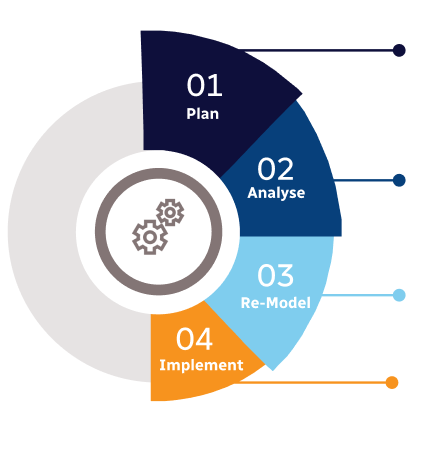
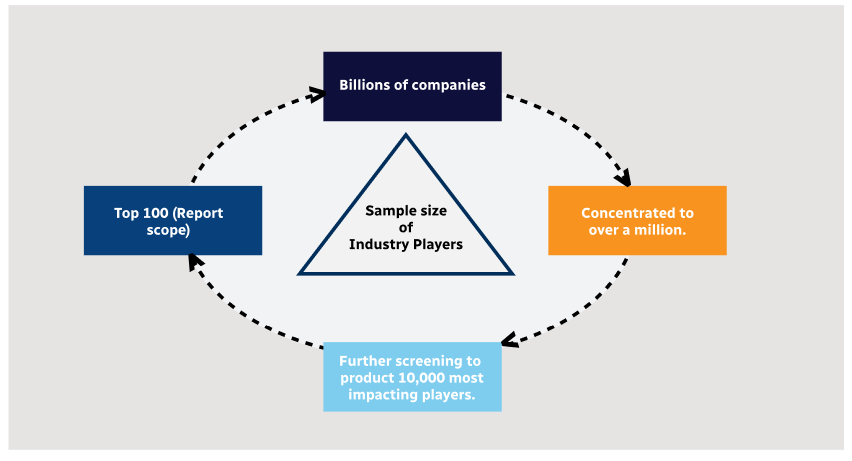
Step 1 - Identification of Relevant Samples Size from Population Database
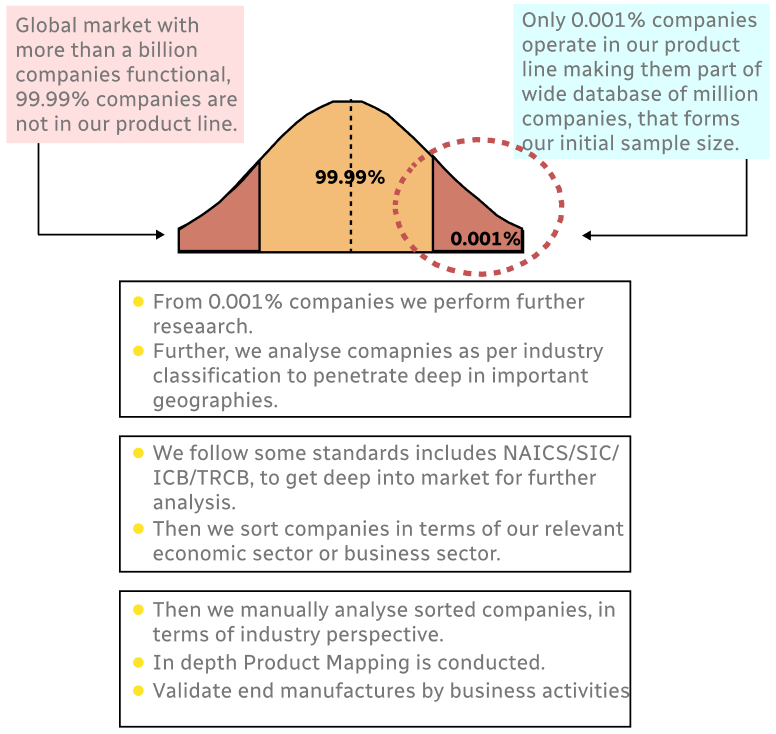
Step 2 - Approaches for Defining Global Market Size (Value, Volume* & Price*)
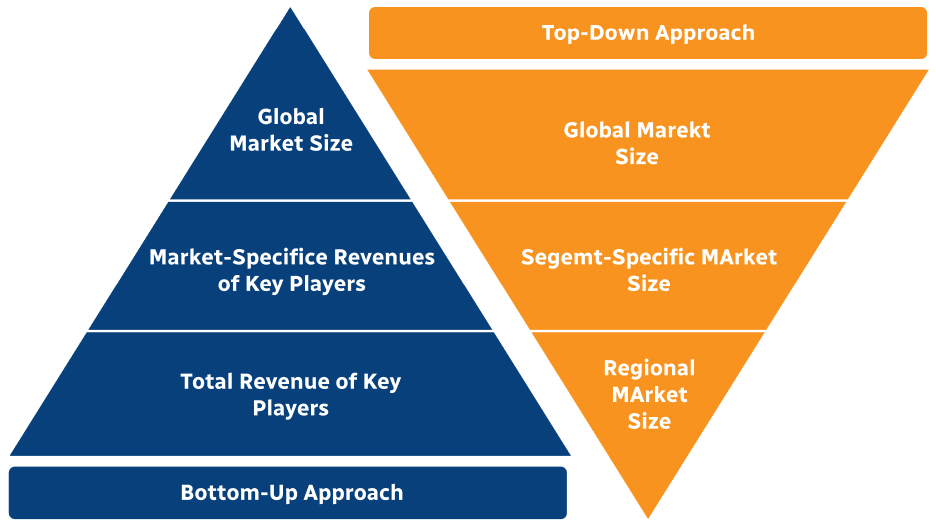
Note*: In applicable scenarios
Step 3 - Data Sources
Primary Research
- Web Analytics
- Survey Reports
- Research Institute
- Latest Research Reports
- Opinion Leaders
Secondary Research
- Annual Reports
- White Paper
- Latest Press Release
- Industry Association
- Paid Database
- Investor Presentations
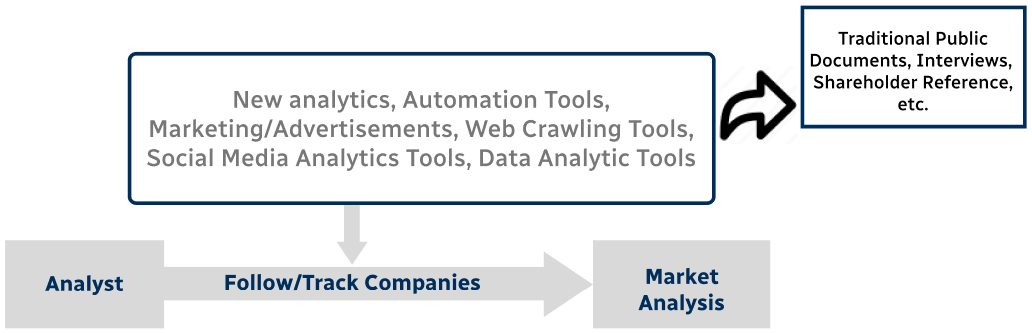
Step 4 - Data Triangulation
Involves using different sources of information in order to increase the validity of a study
These sources are likely to be stakeholders in a program - participants, other researchers, program staff, other community members, and so on.
Then we put all data in single framework & apply various statistical tools to find out the dynamic on the market.
During the analysis stage, feedback from the stakeholder groups would be compared to determine areas of agreement as well as areas of divergence