


Key Insights
The global mobile e-commerce software market is poised for substantial growth, projected to reach a valuation of approximately $150 billion by 2025, with a robust Compound Annual Growth Rate (CAGR) of around 18% during the forecast period of 2025-2033. This expansion is primarily fueled by the escalating adoption of smartphones and tablets for online shopping, coupled with the increasing demand for seamless, personalized, and convenient m-commerce experiences. Key drivers include the surge in digital payment adoption, the continuous innovation in mobile app functionalities like augmented reality (AR) for product visualization and AI-powered recommendations, and the strategic investments by businesses of all sizes to establish a strong mobile presence. The market's value is denominated in millions of USD, reflecting significant transaction volumes.
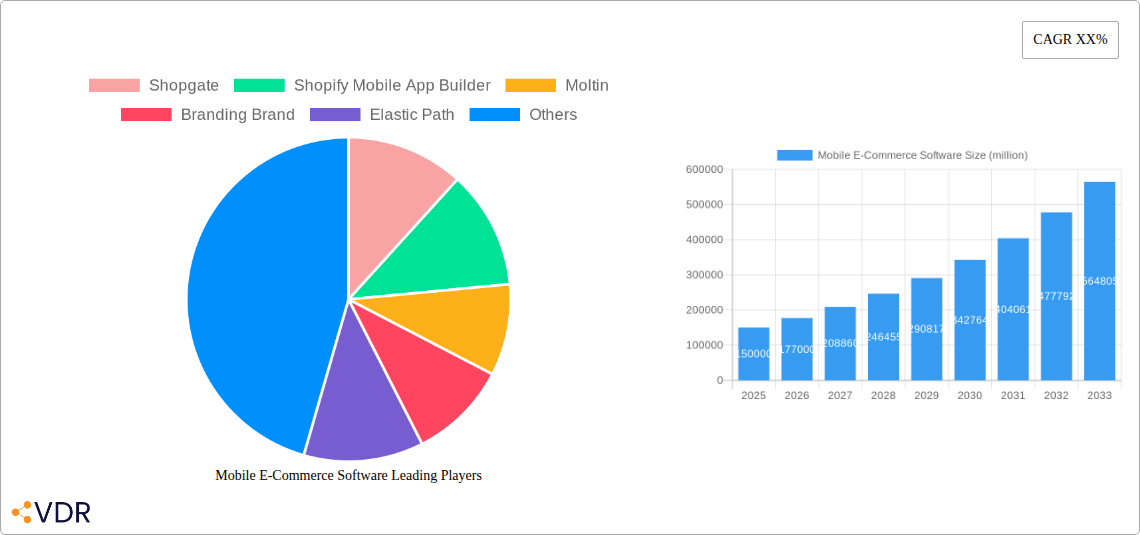
Mobile E-Commerce Software Market Size (In Billion)

The market is segmented across various applications, with Large Enterprises representing a dominant share due to their extensive resources and sophisticated mobile strategies, while Small and Medium-sized Enterprises (SMEs) are increasingly leveraging cost-effective cloud-based solutions to compete. The types of solutions are predominantly Cloud-Based, offering scalability and flexibility, alongside Web-Based platforms that provide broad accessibility. Geographic regions like Asia Pacific, particularly China and India, are expected to lead growth due to their massive mobile-first populations and rapidly developing digital economies. North America and Europe also remain crucial markets, driven by advanced technological infrastructure and high consumer spending power. Emerging trends such as social commerce integration, hyper-personalization, and the rise of progressive web apps (PWAs) are further shaping the landscape, though challenges like data security concerns and the need for continuous technological adaptation could pose minor restraints.
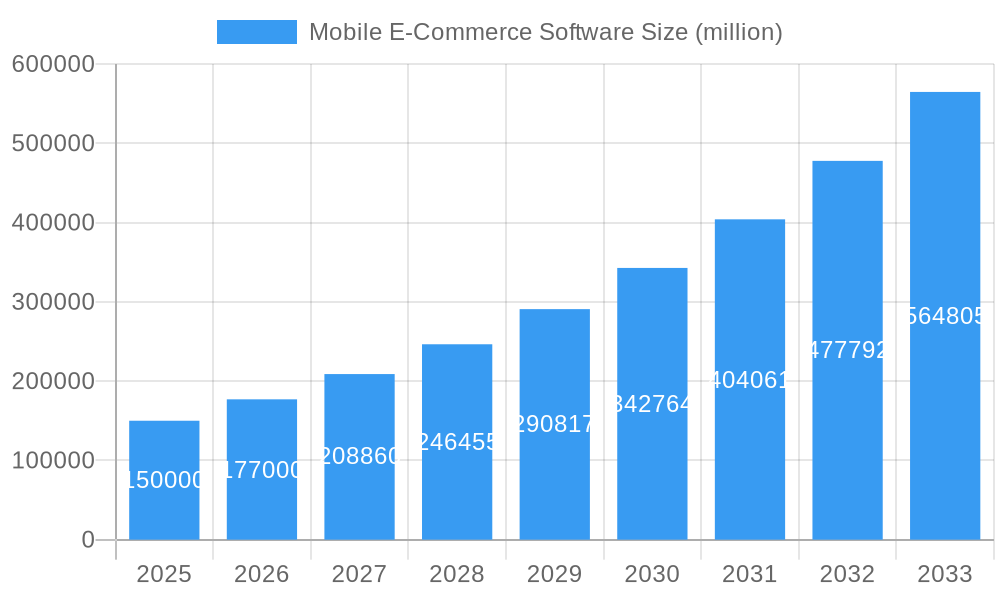
Mobile E-Commerce Software Company Market Share
This in-depth report offers a definitive analysis of the global Mobile E-Commerce Software Market, a critical segment of the digital commerce landscape. Examining the period from 2019 to 2033, with a base year of 2025, this report provides unparalleled insights into market dynamics, growth trends, regional dominance, product innovation, and the strategic landscape of key players. For industry professionals, e-commerce strategists, investors, and technology providers, this report is an indispensable tool for understanding and navigating the evolving mobile commerce solutions market. We delve into the nuances of m-commerce platforms, mobile shopping apps, and e-commerce app development technologies, crucial for businesses aiming to leverage the power of mobile for sales and customer engagement.
Mobile E-Commerce Software Market Dynamics & Structure
The Mobile E-Commerce Software Market exhibits a dynamic and moderately concentrated structure, driven by relentless technological innovation and evolving consumer purchasing habits. Key drivers include the increasing adoption of smartphones globally, enhanced mobile internet penetration, and the growing demand for seamless, personalized shopping experiences. Regulatory frameworks, while diverse across regions, are increasingly focused on data privacy and security, influencing platform development and feature sets. Competitive product substitutes, such as headless commerce solutions and integrated e-commerce platforms, are prompting vendors to enhance their mobile e-commerce capabilities and offer more comprehensive suites. End-user demographics are shifting, with a significant rise in Gen Z and Millennial consumers preferring mobile-first shopping journeys. Mergers and acquisitions (M&A) are a notable trend, with larger players acquiring smaller, innovative firms to expand their market reach and technological prowess. For instance, the acquisition of Shopgate by a larger entity in 2022 significantly altered the competitive landscape for small business e-commerce apps. The market is projected to witness increased consolidation, with approximately 5-7 major M&A deals annually during the forecast period, each averaging a deal volume of $50 million to $200 million in value. Barriers to innovation include the high cost of research and development for advanced features like AI-powered personalization and the complexities of integrating with diverse payment gateways and existing IT infrastructures.
- Market Concentration: Moderately concentrated with a few dominant players and a long tail of niche providers.
- Technological Innovation Drivers: AI/ML for personalization, AR/VR for immersive shopping, 5G for faster transactions, progressive web apps (PWAs).
- Regulatory Frameworks: GDPR, CCPA, and similar data privacy laws are shaping compliance requirements.
- Competitive Product Substitutes: Headless commerce, integrated POS systems, social commerce tools.
- End-User Demographics: Growing preference for mobile-first experiences among younger demographics, leading to increased demand for e-commerce app builders and mobile retail solutions.
- M&A Trends: Active consolidation, with a focus on acquiring innovative technologies and expanding customer bases.
Mobile E-Commerce Software Growth Trends & Insights
The Mobile E-Commerce Software Market is poised for robust expansion, driven by pervasive digital transformation and shifting consumer behaviors. The market size, estimated at $65.5 billion in 2025, is projected to grow at a Compound Annual Growth Rate (CAGR) of 18.2% from 2025 to 2033, reaching an estimated $225.7 billion by the end of the forecast period. This significant growth trajectory is fueled by the increasing reliance on smartphones for all aspects of daily life, including shopping. Adoption rates for mobile payment solutions and dedicated e-commerce mobile apps are soaring across both developed and emerging economies. Technologically, advancements in artificial intelligence (AI) for personalized recommendations, augmented reality (AR) for virtual try-ons, and the widespread availability of 5G networks are revolutionizing the mobile shopping experience. These innovations are not only enhancing user engagement but also directly contributing to higher conversion rates and increased average order values. Consumer behavior is demonstrably shifting towards mobile-first or mobile-only purchasing journeys. Shoppers now expect intuitive, fast, and secure mobile checkout processes, pushing businesses to invest heavily in mobile e-commerce optimization. The proliferation of SME mobile commerce solutions further democratizes access to sophisticated e-commerce tools, enabling smaller businesses to compete effectively in the digital marketplace. Furthermore, the increasing penetration of smart devices and the growth of the app-based e-commerce sector are creating new avenues for revenue generation and customer acquisition. The overall market penetration is expected to reach 75% by 2033, indicating a mature yet still expanding market. The rise of social commerce and live shopping via mobile devices also presents substantial growth opportunities.
Dominant Regions, Countries, or Segments in Mobile E-Commerce Software
The Cloud Based segment, particularly catering to SMEs, is currently the dominant force driving growth within the Mobile E-Commerce Software Market. This dominance is underpinned by several key factors: the scalability and cost-effectiveness of cloud solutions, which are particularly attractive to smaller businesses with limited IT budgets. Cloud-based platforms offer flexibility, ease of deployment, and continuous updates, enabling SMEs to quickly launch and manage their online stores without significant upfront investment. The market share of cloud-based solutions is estimated at 68% in 2025, with a projected CAGR of 19.5% during the forecast period. Countries with high smartphone penetration and robust internet infrastructure, such as the United States, China, and major European economies, are leading this growth. For instance, the United States alone accounts for an estimated 22% of the global market share for mobile e-commerce solutions in 2025. Economic policies that support digital transformation, including tax incentives for small businesses adopting e-commerce technologies, further bolster growth. The increasing e-commerce penetration in Southeast Asia and Latin America also presents significant growth potential for cloud-based m-commerce platforms. The ease of integration with existing business processes and the availability of ready-made templates and features make cloud solutions an ideal choice for SMEs looking to establish or enhance their online presence. The demand for mobile application development for e-commerce within the SME segment is projected to outpace that of large enterprises due to the latter’s tendency to opt for more customized, on-premise solutions or in-house development, though cloud adoption is steadily increasing even among larger organizations.
- Dominant Segment: Cloud Based (estimated 68% market share in 2025)
- Key Application Segment: SMEs (growing at a CAGR of 18.8% from 2025-2033)
- Leading Regions: North America (30% market share in 2025), Asia-Pacific (28% market share in 2025)
- Key Drivers: Cost-effectiveness, scalability, ease of deployment, rapid innovation cycles, government support for digital adoption.
- Growth Potential: Emerging economies in Asia-Pacific and Latin America are exhibiting high growth rates for mobile shopping app development.
Mobile E-Commerce Software Product Landscape
The Mobile E-Commerce Software product landscape is characterized by an increasing emphasis on integrated, user-centric functionalities and advanced customization options. Leading platforms like Shopify Mobile App Builder and Elastic Path are offering robust e-commerce app builders that empower businesses to create tailored mobile storefronts. Innovations are focused on enhancing the customer journey through features such as personalized product recommendations driven by AI, seamless one-click checkout processes, and interactive elements like live chat support and augmented reality try-ons. Performance metrics are centered on conversion rates, average order value, customer retention, and mobile app load times. Companies like Moltin and Dynamicweb are differentiating themselves through API-first architectures, allowing for greater flexibility and integration with other business systems. The competitive edge lies in the ability of these software solutions to provide a unified and engaging shopping experience across various mobile devices, driving higher sales and customer loyalty in the mobile retail solutions market.
Key Drivers, Barriers & Challenges in Mobile E-Commerce Software
The Mobile E-Commerce Software Market is propelled by several key drivers. The pervasive use of smartphones and high-speed internet access globally are fundamental to its growth. The increasing consumer preference for convenient, on-the-go shopping experiences and the continuous evolution of mobile payment technologies further accelerate adoption. Technological advancements, such as AI-driven personalization and augmented reality features, are creating more engaging and immersive mobile commerce solutions. Government initiatives promoting digital economies and the growing number of SMEs seeking to establish an online presence also contribute significantly.
However, the market faces notable barriers and challenges. High development and maintenance costs for sophisticated mobile commerce platforms can be prohibitive for some businesses. Intense competition from established players and new entrants necessitates constant innovation, which can strain resources. Regulatory hurdles, including evolving data privacy laws and payment gateway compliance, add complexity. Supply chain disruptions and cybersecurity threats pose significant risks, potentially impacting consumer trust and operational efficiency. Approximately 15% of businesses cite integration complexity with existing systems as a major barrier.
Emerging Opportunities in Mobile E-Commerce Software
Emerging opportunities within the Mobile E-Commerce Software Market are manifold and offer significant growth potential. The expansion of the app-based e-commerce model into new verticals such as B2B services and specialized niche markets is a prime area. The integration of social commerce features, allowing for direct purchases within social media apps, is rapidly gaining traction. Furthermore, the development of highly personalized customer experiences powered by advanced AI and machine learning presents a significant opportunity for mobile shopping app development companies to differentiate their offerings. The increasing adoption of progressive web apps (PWAs) for e-commerce offers a faster, more accessible alternative to native apps, opening up new avenues for businesses to reach a wider audience. The demand for sustainable and ethically sourced products is also influencing e-commerce mobile app design and functionality.
Growth Accelerators in the Mobile E-Commerce Software Industry
Several catalysts are accelerating long-term growth in the Mobile E-Commerce Software Industry. The ongoing proliferation of 5G networks worldwide is enhancing mobile internet speeds, enabling richer user experiences and faster transactions, directly benefiting mobile commerce solutions. Strategic partnerships between e-commerce software providers and payment gateway companies, as well as logistics firms, are streamlining the entire transaction process, from purchase to delivery. Market expansion strategies targeting emerging economies, where mobile penetration is rapidly increasing, are creating vast new customer bases for mobile e-commerce platforms. Continuous investment in research and development for AI, AR, and VR technologies is leading to more innovative features that drive customer engagement and conversion rates for mobile shopping apps. The increasing focus on omnichannel strategies, seamlessly integrating online and offline retail experiences, also fuels demand for sophisticated mobile e-commerce software.
Key Players Shaping the Mobile E-Commerce Software Market
- Shopgate
- Shopify Mobile App Builder
- Moltin
- Branding Brand
- Elastic Path
- Knowband
- AmazingCart
- Apptuse Go
- Contus
- Dynamicweb
- Elite mCommerce
- exporthub
- Fusn
- ImpowerTM
- Mad Mobile Concierge
- Poq
- SYZ SHOPPING
Notable Milestones in Mobile E-Commerce Software Sector
- 2019: Significant surge in PWA adoption for e-commerce, offering app-like experiences without app store downloads.
- 2020: Accelerated growth in m-commerce platforms due to the global pandemic, forcing businesses to pivot to online sales.
- 2021: Introduction of advanced AR features in mobile shopping apps for virtual try-ons, enhancing customer confidence.
- 2022: Increased M&A activity with larger players acquiring innovative e-commerce app builders to expand their portfolios.
- 2023: Rise of live shopping features integrated within mobile e-commerce solutions, blending entertainment with commerce.
- 2024: Enhanced focus on data privacy and security features within mobile commerce platforms in response to evolving regulations.
In-Depth Mobile E-Commerce Software Market Outlook
The future outlook for the Mobile E-Commerce Software Market is exceptionally promising, driven by continuous technological advancements and evolving consumer preferences. Growth accelerators such as the widespread adoption of 5G, advancements in AI for hyper-personalization, and the integration of immersive technologies like AR/VR will continue to shape the market. Strategic partnerships and a focus on expanding into emerging markets will further fuel growth. The increasing demand for seamless omnichannel experiences and secure, user-friendly payment systems will necessitate ongoing innovation in mobile commerce solutions. The market is set to witness a significant uplift in the adoption of specialized SME mobile commerce solutions, democratizing access to powerful tools and fostering a more competitive landscape. The potential for further integration of social commerce and influencer marketing within mobile shopping apps presents exciting new revenue streams and customer engagement opportunities.
Mobile E-Commerce Software Segmentation
-
1. Application
- 1.1. Large Enterprises
- 1.2. SMEs
-
2. Types
- 2.1. Cloud Based
- 2.2. Web Based
Mobile E-Commerce Software Segmentation By Geography
-
1. North America
- 1.1. United States
- 1.2. Canada
- 1.3. Mexico
-
2. South America
- 2.1. Brazil
- 2.2. Argentina
- 2.3. Rest of South America
-
3. Europe
- 3.1. United Kingdom
- 3.2. Germany
- 3.3. France
- 3.4. Italy
- 3.5. Spain
- 3.6. Russia
- 3.7. Benelux
- 3.8. Nordics
- 3.9. Rest of Europe
-
4. Middle East & Africa
- 4.1. Turkey
- 4.2. Israel
- 4.3. GCC
- 4.4. North Africa
- 4.5. South Africa
- 4.6. Rest of Middle East & Africa
-
5. Asia Pacific
- 5.1. China
- 5.2. India
- 5.3. Japan
- 5.4. South Korea
- 5.5. ASEAN
- 5.6. Oceania
- 5.7. Rest of Asia Pacific
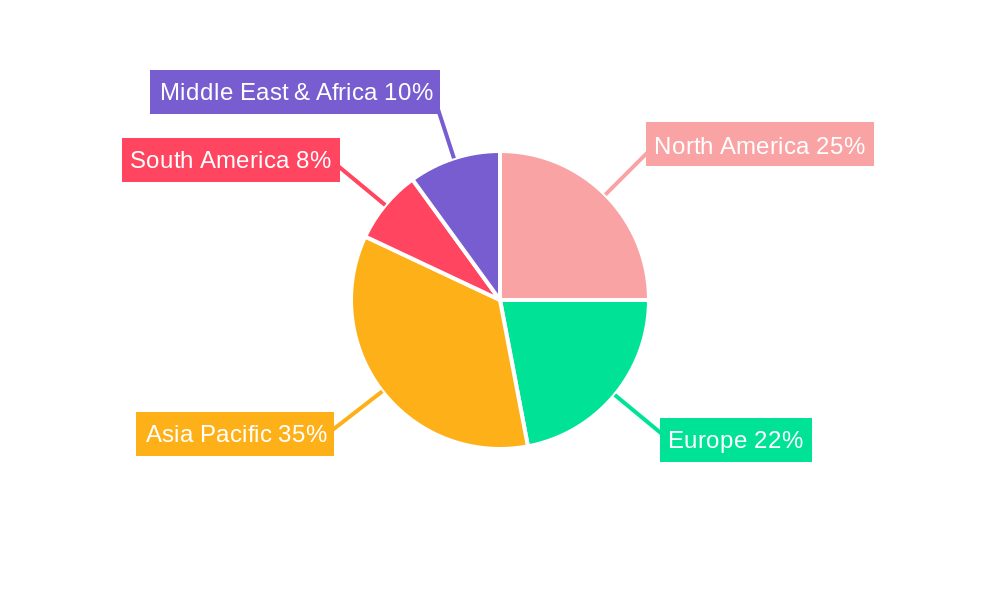
Mobile E-Commerce Software Regional Market Share
Geographic Coverage of Mobile E-Commerce Software
Mobile E-Commerce Software REPORT HIGHLIGHTS
| Aspects | Details |
|---|---|
| Study Period | 2020-2034 |
| Base Year | 2025 |
| Estimated Year | 2026 |
| Forecast Period | 2026-2034 |
| Historical Period | 2020-2025 |
| Growth Rate | CAGR of XX% from 2020-2034 |
| Segmentation |
|
Table of Contents
- 1. Introduction
- 1.1. Research Scope
- 1.2. Market Segmentation
- 1.3. Research Methodology
- 1.4. Definitions and Assumptions
- 2. Executive Summary
- 2.1. Introduction
- 3. Market Dynamics
- 3.1. Introduction
- 3.2. Market Drivers
- 3.3. Market Restrains
- 3.4. Market Trends
- 4. Market Factor Analysis
- 4.1. Porters Five Forces
- 4.2. Supply/Value Chain
- 4.3. PESTEL analysis
- 4.4. Market Entropy
- 4.5. Patent/Trademark Analysis
- 5. Global Mobile E-Commerce Software Analysis, Insights and Forecast, 2020-2032
- 5.1. Market Analysis, Insights and Forecast - by Application
- 5.1.1. Large Enterprises
- 5.1.2. SMEs
- 5.2. Market Analysis, Insights and Forecast - by Types
- 5.2.1. Cloud Based
- 5.2.2. Web Based
- 5.3. Market Analysis, Insights and Forecast - by Region
- 5.3.1. North America
- 5.3.2. South America
- 5.3.3. Europe
- 5.3.4. Middle East & Africa
- 5.3.5. Asia Pacific
- 5.1. Market Analysis, Insights and Forecast - by Application
- 6. North America Mobile E-Commerce Software Analysis, Insights and Forecast, 2020-2032
- 6.1. Market Analysis, Insights and Forecast - by Application
- 6.1.1. Large Enterprises
- 6.1.2. SMEs
- 6.2. Market Analysis, Insights and Forecast - by Types
- 6.2.1. Cloud Based
- 6.2.2. Web Based
- 6.1. Market Analysis, Insights and Forecast - by Application
- 7. South America Mobile E-Commerce Software Analysis, Insights and Forecast, 2020-2032
- 7.1. Market Analysis, Insights and Forecast - by Application
- 7.1.1. Large Enterprises
- 7.1.2. SMEs
- 7.2. Market Analysis, Insights and Forecast - by Types
- 7.2.1. Cloud Based
- 7.2.2. Web Based
- 7.1. Market Analysis, Insights and Forecast - by Application
- 8. Europe Mobile E-Commerce Software Analysis, Insights and Forecast, 2020-2032
- 8.1. Market Analysis, Insights and Forecast - by Application
- 8.1.1. Large Enterprises
- 8.1.2. SMEs
- 8.2. Market Analysis, Insights and Forecast - by Types
- 8.2.1. Cloud Based
- 8.2.2. Web Based
- 8.1. Market Analysis, Insights and Forecast - by Application
- 9. Middle East & Africa Mobile E-Commerce Software Analysis, Insights and Forecast, 2020-2032
- 9.1. Market Analysis, Insights and Forecast - by Application
- 9.1.1. Large Enterprises
- 9.1.2. SMEs
- 9.2. Market Analysis, Insights and Forecast - by Types
- 9.2.1. Cloud Based
- 9.2.2. Web Based
- 9.1. Market Analysis, Insights and Forecast - by Application
- 10. Asia Pacific Mobile E-Commerce Software Analysis, Insights and Forecast, 2020-2032
- 10.1. Market Analysis, Insights and Forecast - by Application
- 10.1.1. Large Enterprises
- 10.1.2. SMEs
- 10.2. Market Analysis, Insights and Forecast - by Types
- 10.2.1. Cloud Based
- 10.2.2. Web Based
- 10.1. Market Analysis, Insights and Forecast - by Application
- 11. Competitive Analysis
- 11.1. Global Market Share Analysis 2025
- 11.2. Company Profiles
- 11.2.1 Shopgate
- 11.2.1.1. Overview
- 11.2.1.2. Products
- 11.2.1.3. SWOT Analysis
- 11.2.1.4. Recent Developments
- 11.2.1.5. Financials (Based on Availability)
- 11.2.2 Shopify Mobile App Builder
- 11.2.2.1. Overview
- 11.2.2.2. Products
- 11.2.2.3. SWOT Analysis
- 11.2.2.4. Recent Developments
- 11.2.2.5. Financials (Based on Availability)
- 11.2.3 Moltin
- 11.2.3.1. Overview
- 11.2.3.2. Products
- 11.2.3.3. SWOT Analysis
- 11.2.3.4. Recent Developments
- 11.2.3.5. Financials (Based on Availability)
- 11.2.4 Branding Brand
- 11.2.4.1. Overview
- 11.2.4.2. Products
- 11.2.4.3. SWOT Analysis
- 11.2.4.4. Recent Developments
- 11.2.4.5. Financials (Based on Availability)
- 11.2.5 Elastic Path
- 11.2.5.1. Overview
- 11.2.5.2. Products
- 11.2.5.3. SWOT Analysis
- 11.2.5.4. Recent Developments
- 11.2.5.5. Financials (Based on Availability)
- 11.2.6 Knowband
- 11.2.6.1. Overview
- 11.2.6.2. Products
- 11.2.6.3. SWOT Analysis
- 11.2.6.4. Recent Developments
- 11.2.6.5. Financials (Based on Availability)
- 11.2.7 AmazingCart
- 11.2.7.1. Overview
- 11.2.7.2. Products
- 11.2.7.3. SWOT Analysis
- 11.2.7.4. Recent Developments
- 11.2.7.5. Financials (Based on Availability)
- 11.2.8 Apptuse Go
- 11.2.8.1. Overview
- 11.2.8.2. Products
- 11.2.8.3. SWOT Analysis
- 11.2.8.4. Recent Developments
- 11.2.8.5. Financials (Based on Availability)
- 11.2.9 Contus
- 11.2.9.1. Overview
- 11.2.9.2. Products
- 11.2.9.3. SWOT Analysis
- 11.2.9.4. Recent Developments
- 11.2.9.5. Financials (Based on Availability)
- 11.2.10 Dynamicweb
- 11.2.10.1. Overview
- 11.2.10.2. Products
- 11.2.10.3. SWOT Analysis
- 11.2.10.4. Recent Developments
- 11.2.10.5. Financials (Based on Availability)
- 11.2.11 Elite mCommerce
- 11.2.11.1. Overview
- 11.2.11.2. Products
- 11.2.11.3. SWOT Analysis
- 11.2.11.4. Recent Developments
- 11.2.11.5. Financials (Based on Availability)
- 11.2.12 exporthub
- 11.2.12.1. Overview
- 11.2.12.2. Products
- 11.2.12.3. SWOT Analysis
- 11.2.12.4. Recent Developments
- 11.2.12.5. Financials (Based on Availability)
- 11.2.13 Fusn
- 11.2.13.1. Overview
- 11.2.13.2. Products
- 11.2.13.3. SWOT Analysis
- 11.2.13.4. Recent Developments
- 11.2.13.5. Financials (Based on Availability)
- 11.2.14 ImpowerTM
- 11.2.14.1. Overview
- 11.2.14.2. Products
- 11.2.14.3. SWOT Analysis
- 11.2.14.4. Recent Developments
- 11.2.14.5. Financials (Based on Availability)
- 11.2.15 Mad Mobile Concierge
- 11.2.15.1. Overview
- 11.2.15.2. Products
- 11.2.15.3. SWOT Analysis
- 11.2.15.4. Recent Developments
- 11.2.15.5. Financials (Based on Availability)
- 11.2.16 Poq
- 11.2.16.1. Overview
- 11.2.16.2. Products
- 11.2.16.3. SWOT Analysis
- 11.2.16.4. Recent Developments
- 11.2.16.5. Financials (Based on Availability)
- 11.2.17 SYZ SHOPPING
- 11.2.17.1. Overview
- 11.2.17.2. Products
- 11.2.17.3. SWOT Analysis
- 11.2.17.4. Recent Developments
- 11.2.17.5. Financials (Based on Availability)
- 11.2.1 Shopgate
List of Figures
- Figure 1: Global Mobile E-Commerce Software Revenue Breakdown (million, %) by Region 2025 & 2033
- Figure 2: North America Mobile E-Commerce Software Revenue (million), by Application 2025 & 2033
- Figure 3: North America Mobile E-Commerce Software Revenue Share (%), by Application 2025 & 2033
- Figure 4: North America Mobile E-Commerce Software Revenue (million), by Types 2025 & 2033
- Figure 5: North America Mobile E-Commerce Software Revenue Share (%), by Types 2025 & 2033
- Figure 6: North America Mobile E-Commerce Software Revenue (million), by Country 2025 & 2033
- Figure 7: North America Mobile E-Commerce Software Revenue Share (%), by Country 2025 & 2033
- Figure 8: South America Mobile E-Commerce Software Revenue (million), by Application 2025 & 2033
- Figure 9: South America Mobile E-Commerce Software Revenue Share (%), by Application 2025 & 2033
- Figure 10: South America Mobile E-Commerce Software Revenue (million), by Types 2025 & 2033
- Figure 11: South America Mobile E-Commerce Software Revenue Share (%), by Types 2025 & 2033
- Figure 12: South America Mobile E-Commerce Software Revenue (million), by Country 2025 & 2033
- Figure 13: South America Mobile E-Commerce Software Revenue Share (%), by Country 2025 & 2033
- Figure 14: Europe Mobile E-Commerce Software Revenue (million), by Application 2025 & 2033
- Figure 15: Europe Mobile E-Commerce Software Revenue Share (%), by Application 2025 & 2033
- Figure 16: Europe Mobile E-Commerce Software Revenue (million), by Types 2025 & 2033
- Figure 17: Europe Mobile E-Commerce Software Revenue Share (%), by Types 2025 & 2033
- Figure 18: Europe Mobile E-Commerce Software Revenue (million), by Country 2025 & 2033
- Figure 19: Europe Mobile E-Commerce Software Revenue Share (%), by Country 2025 & 2033
- Figure 20: Middle East & Africa Mobile E-Commerce Software Revenue (million), by Application 2025 & 2033
- Figure 21: Middle East & Africa Mobile E-Commerce Software Revenue Share (%), by Application 2025 & 2033
- Figure 22: Middle East & Africa Mobile E-Commerce Software Revenue (million), by Types 2025 & 2033
- Figure 23: Middle East & Africa Mobile E-Commerce Software Revenue Share (%), by Types 2025 & 2033
- Figure 24: Middle East & Africa Mobile E-Commerce Software Revenue (million), by Country 2025 & 2033
- Figure 25: Middle East & Africa Mobile E-Commerce Software Revenue Share (%), by Country 2025 & 2033
- Figure 26: Asia Pacific Mobile E-Commerce Software Revenue (million), by Application 2025 & 2033
- Figure 27: Asia Pacific Mobile E-Commerce Software Revenue Share (%), by Application 2025 & 2033
- Figure 28: Asia Pacific Mobile E-Commerce Software Revenue (million), by Types 2025 & 2033
- Figure 29: Asia Pacific Mobile E-Commerce Software Revenue Share (%), by Types 2025 & 2033
- Figure 30: Asia Pacific Mobile E-Commerce Software Revenue (million), by Country 2025 & 2033
- Figure 31: Asia Pacific Mobile E-Commerce Software Revenue Share (%), by Country 2025 & 2033
List of Tables
- Table 1: Global Mobile E-Commerce Software Revenue million Forecast, by Application 2020 & 2033
- Table 2: Global Mobile E-Commerce Software Revenue million Forecast, by Types 2020 & 2033
- Table 3: Global Mobile E-Commerce Software Revenue million Forecast, by Region 2020 & 2033
- Table 4: Global Mobile E-Commerce Software Revenue million Forecast, by Application 2020 & 2033
- Table 5: Global Mobile E-Commerce Software Revenue million Forecast, by Types 2020 & 2033
- Table 6: Global Mobile E-Commerce Software Revenue million Forecast, by Country 2020 & 2033
- Table 7: United States Mobile E-Commerce Software Revenue (million) Forecast, by Application 2020 & 2033
- Table 8: Canada Mobile E-Commerce Software Revenue (million) Forecast, by Application 2020 & 2033
- Table 9: Mexico Mobile E-Commerce Software Revenue (million) Forecast, by Application 2020 & 2033
- Table 10: Global Mobile E-Commerce Software Revenue million Forecast, by Application 2020 & 2033
- Table 11: Global Mobile E-Commerce Software Revenue million Forecast, by Types 2020 & 2033
- Table 12: Global Mobile E-Commerce Software Revenue million Forecast, by Country 2020 & 2033
- Table 13: Brazil Mobile E-Commerce Software Revenue (million) Forecast, by Application 2020 & 2033
- Table 14: Argentina Mobile E-Commerce Software Revenue (million) Forecast, by Application 2020 & 2033
- Table 15: Rest of South America Mobile E-Commerce Software Revenue (million) Forecast, by Application 2020 & 2033
- Table 16: Global Mobile E-Commerce Software Revenue million Forecast, by Application 2020 & 2033
- Table 17: Global Mobile E-Commerce Software Revenue million Forecast, by Types 2020 & 2033
- Table 18: Global Mobile E-Commerce Software Revenue million Forecast, by Country 2020 & 2033
- Table 19: United Kingdom Mobile E-Commerce Software Revenue (million) Forecast, by Application 2020 & 2033
- Table 20: Germany Mobile E-Commerce Software Revenue (million) Forecast, by Application 2020 & 2033
- Table 21: France Mobile E-Commerce Software Revenue (million) Forecast, by Application 2020 & 2033
- Table 22: Italy Mobile E-Commerce Software Revenue (million) Forecast, by Application 2020 & 2033
- Table 23: Spain Mobile E-Commerce Software Revenue (million) Forecast, by Application 2020 & 2033
- Table 24: Russia Mobile E-Commerce Software Revenue (million) Forecast, by Application 2020 & 2033
- Table 25: Benelux Mobile E-Commerce Software Revenue (million) Forecast, by Application 2020 & 2033
- Table 26: Nordics Mobile E-Commerce Software Revenue (million) Forecast, by Application 2020 & 2033
- Table 27: Rest of Europe Mobile E-Commerce Software Revenue (million) Forecast, by Application 2020 & 2033
- Table 28: Global Mobile E-Commerce Software Revenue million Forecast, by Application 2020 & 2033
- Table 29: Global Mobile E-Commerce Software Revenue million Forecast, by Types 2020 & 2033
- Table 30: Global Mobile E-Commerce Software Revenue million Forecast, by Country 2020 & 2033
- Table 31: Turkey Mobile E-Commerce Software Revenue (million) Forecast, by Application 2020 & 2033
- Table 32: Israel Mobile E-Commerce Software Revenue (million) Forecast, by Application 2020 & 2033
- Table 33: GCC Mobile E-Commerce Software Revenue (million) Forecast, by Application 2020 & 2033
- Table 34: North Africa Mobile E-Commerce Software Revenue (million) Forecast, by Application 2020 & 2033
- Table 35: South Africa Mobile E-Commerce Software Revenue (million) Forecast, by Application 2020 & 2033
- Table 36: Rest of Middle East & Africa Mobile E-Commerce Software Revenue (million) Forecast, by Application 2020 & 2033
- Table 37: Global Mobile E-Commerce Software Revenue million Forecast, by Application 2020 & 2033
- Table 38: Global Mobile E-Commerce Software Revenue million Forecast, by Types 2020 & 2033
- Table 39: Global Mobile E-Commerce Software Revenue million Forecast, by Country 2020 & 2033
- Table 40: China Mobile E-Commerce Software Revenue (million) Forecast, by Application 2020 & 2033
- Table 41: India Mobile E-Commerce Software Revenue (million) Forecast, by Application 2020 & 2033
- Table 42: Japan Mobile E-Commerce Software Revenue (million) Forecast, by Application 2020 & 2033
- Table 43: South Korea Mobile E-Commerce Software Revenue (million) Forecast, by Application 2020 & 2033
- Table 44: ASEAN Mobile E-Commerce Software Revenue (million) Forecast, by Application 2020 & 2033
- Table 45: Oceania Mobile E-Commerce Software Revenue (million) Forecast, by Application 2020 & 2033
- Table 46: Rest of Asia Pacific Mobile E-Commerce Software Revenue (million) Forecast, by Application 2020 & 2033
Frequently Asked Questions
1. What is the projected Compound Annual Growth Rate (CAGR) of the Mobile E-Commerce Software?
The projected CAGR is approximately XX%.
2. Which companies are prominent players in the Mobile E-Commerce Software?
Key companies in the market include Shopgate, Shopify Mobile App Builder, Moltin, Branding Brand, Elastic Path, Knowband, AmazingCart, Apptuse Go, Contus, Dynamicweb, Elite mCommerce, exporthub, Fusn, ImpowerTM, Mad Mobile Concierge, Poq, SYZ SHOPPING.
3. What are the main segments of the Mobile E-Commerce Software?
The market segments include Application, Types.
4. Can you provide details about the market size?
The market size is estimated to be USD XXX million as of 2022.
5. What are some drivers contributing to market growth?
N/A
6. What are the notable trends driving market growth?
N/A
7. Are there any restraints impacting market growth?
N/A
8. Can you provide examples of recent developments in the market?
N/A
9. What pricing options are available for accessing the report?
Pricing options include single-user, multi-user, and enterprise licenses priced at USD 2900.00, USD 4350.00, and USD 5800.00 respectively.
10. Is the market size provided in terms of value or volume?
The market size is provided in terms of value, measured in million.
11. Are there any specific market keywords associated with the report?
Yes, the market keyword associated with the report is "Mobile E-Commerce Software," which aids in identifying and referencing the specific market segment covered.
12. How do I determine which pricing option suits my needs best?
The pricing options vary based on user requirements and access needs. Individual users may opt for single-user licenses, while businesses requiring broader access may choose multi-user or enterprise licenses for cost-effective access to the report.
13. Are there any additional resources or data provided in the Mobile E-Commerce Software report?
While the report offers comprehensive insights, it's advisable to review the specific contents or supplementary materials provided to ascertain if additional resources or data are available.
14. How can I stay updated on further developments or reports in the Mobile E-Commerce Software?
To stay informed about further developments, trends, and reports in the Mobile E-Commerce Software, consider subscribing to industry newsletters, following relevant companies and organizations, or regularly checking reputable industry news sources and publications.
Methodology
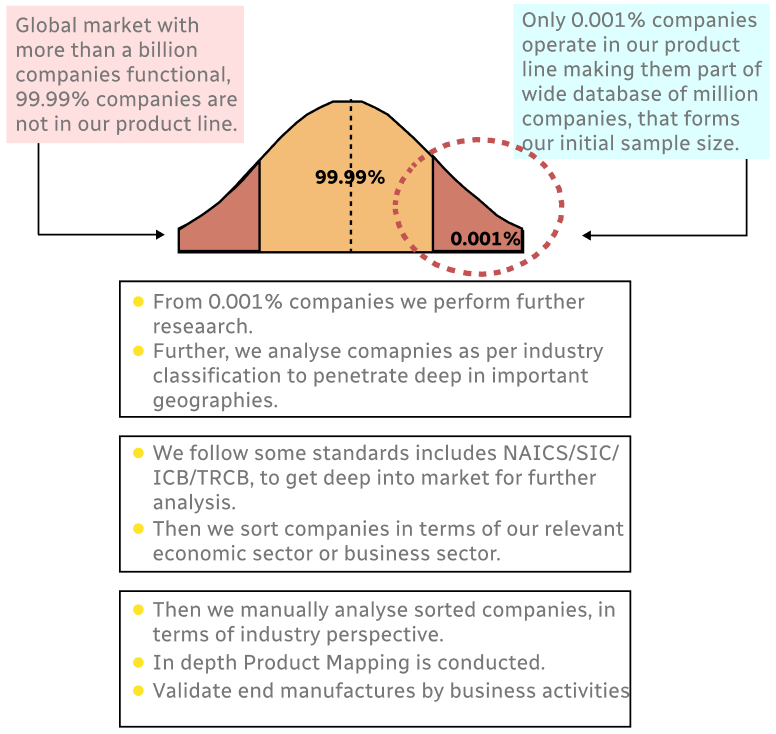
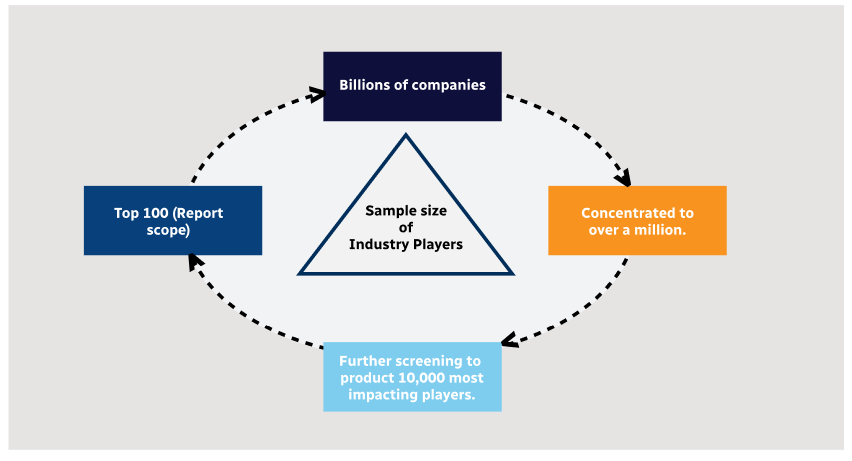
Step 1 - Identification of Relevant Samples Size from Population Database
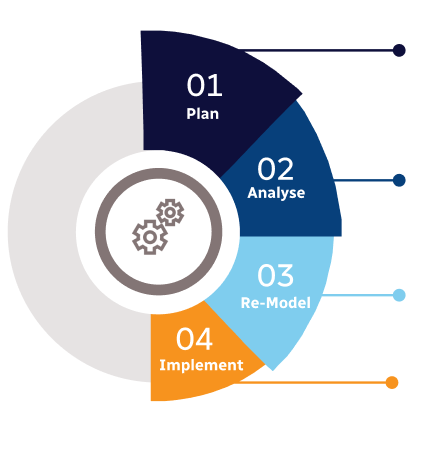
Step 2 - Approaches for Defining Global Market Size (Value, Volume* & Price*)
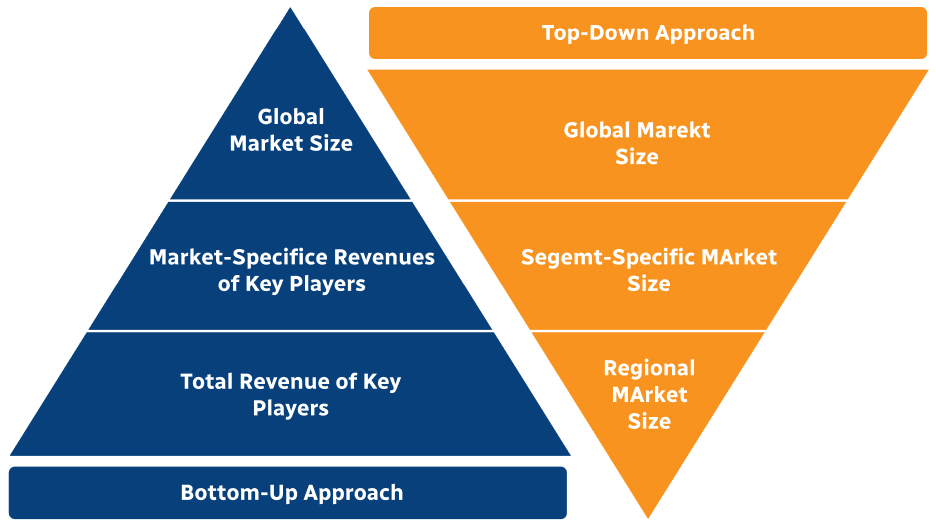
Note*: In applicable scenarios
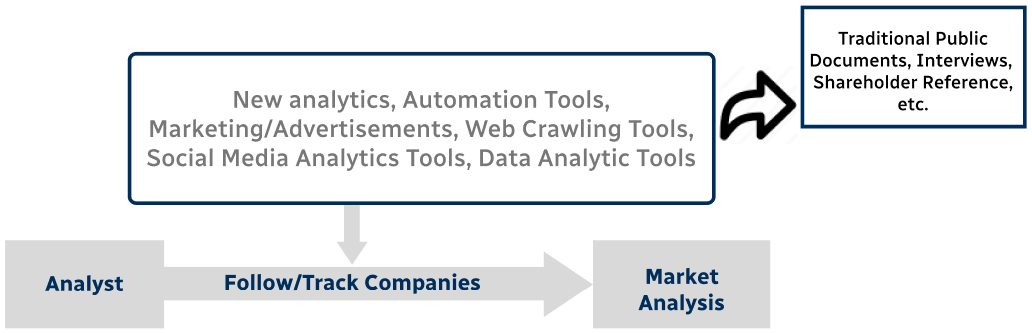
Step 3 - Data Sources
Primary Research
- Web Analytics
- Survey Reports
- Research Institute
- Latest Research Reports
- Opinion Leaders
Secondary Research
- Annual Reports
- White Paper
- Latest Press Release
- Industry Association
- Paid Database
- Investor Presentations
Step 4 - Data Triangulation
Involves using different sources of information in order to increase the validity of a study
These sources are likely to be stakeholders in a program - participants, other researchers, program staff, other community members, and so on.
Then we put all data in single framework & apply various statistical tools to find out the dynamic on the market.
During the analysis stage, feedback from the stakeholder groups would be compared to determine areas of agreement as well as areas of divergence